Article

Assessing the Potential and Risks of AI-Based Tools in Higher Education: Results from an eSurvey and SWOT Analysis


Department of Engineering and Computer Science, Institute Patient-Centered Digital Health, Bern University of Applied Sciences, 3012 Bern, Switzerland
*
Author to whom correspondence should be addressed.
Trends High. Educ. 2023, 2(4), 667-688; https://doi.org/10.3390/higheredu2040039

Submission received: 3 November 2023 / Revised: 29 November 2023 / Accepted: 4 December 2023 / Published: 6 December 2023

Abstract

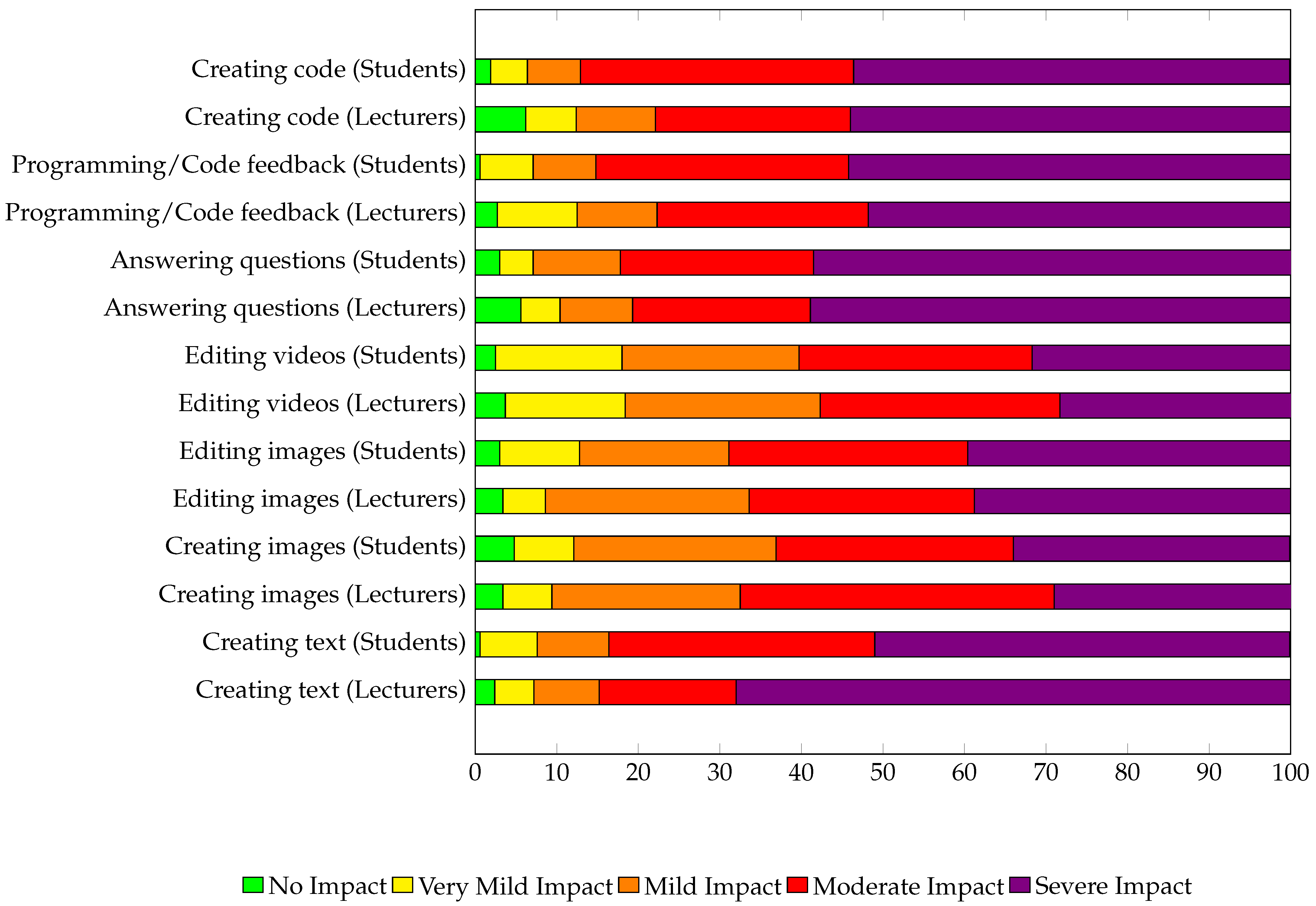
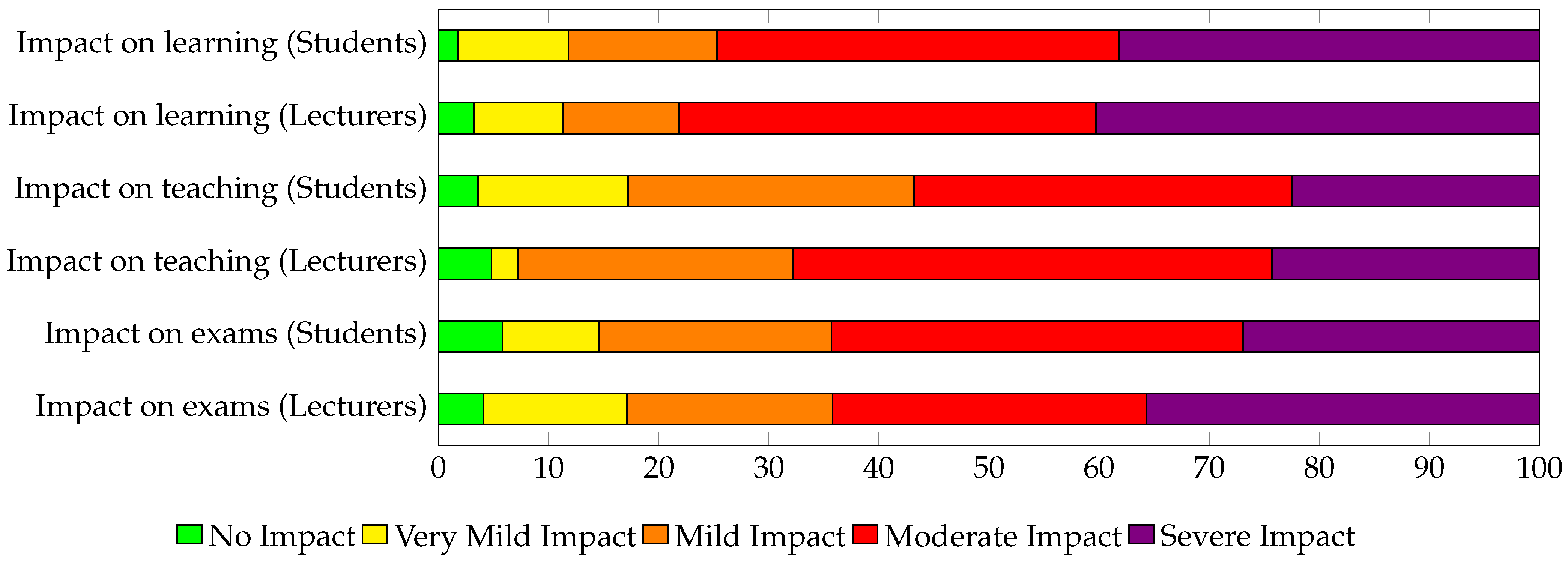
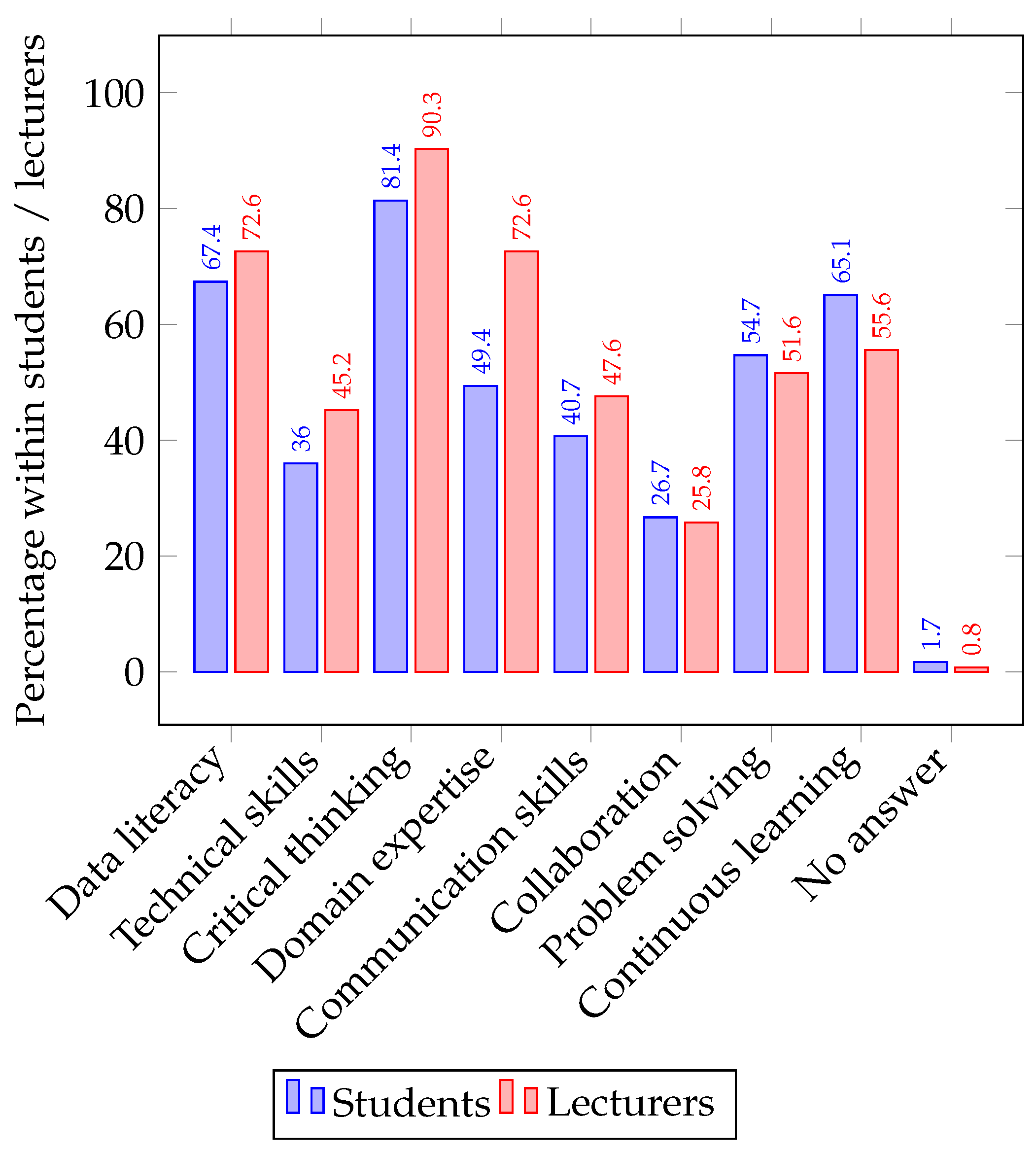
Recent developments related to tools based on artificial intelligence (AI) have raised interests in many areas, including higher education. While machine translation tools have been available and in use for many years in teaching and learning, generative AI models have sparked concerns within the academic community. The objective of this paper is to identify the strengths, weaknesses, opportunities and threats (SWOT) of using AI-based tools (ABTs) in higher education contexts. We employed a mixed methods approach to achieve our objectives; we conducted a survey and used the results to perform a SWOT analysis. For the survey, we asked lecturers and students to answer 27 questions (Likert scale, free text, etc.) on their experiences and viewpoints related to AI-based tools in higher education. A total of 305 people from different countries and with different backgrounds answered the questionnaire. The results show that a moderate to high future impact of ABTs on teaching, learning and exams is expected by the participants. ABT strengths are seen as the personalization of the learning experience or increased efficiency via automation of repetitive tasks. Several use cases are envisioned but are still not yet used in daily practice. Challenges include skills teaching, data protection and bias. We conclude that research is needed to study the unintended consequences of ABT usage in higher education in particular for developing countermeasures and to demonstrate the benefits of ABT usage in higher education. Furthermore, we suggest defining a competence model specifying the required skills that ensure the responsible and efficient use of ABTs by students and lecturers.
Keywords: artificial intelligence; SWOT; technology-enhanced learning; higher education artificial intelligence; SWOT; technology-enhanced learning; higher education