
Assessing the Potential of Hydrotreated Vegetable Oil (HVO) for Transport Decarbonization: Experimental Results from Real-Driving Conditions in Local Public Transport


 , and
, and
Abstract
1. Introduction
2. Materials and Methods
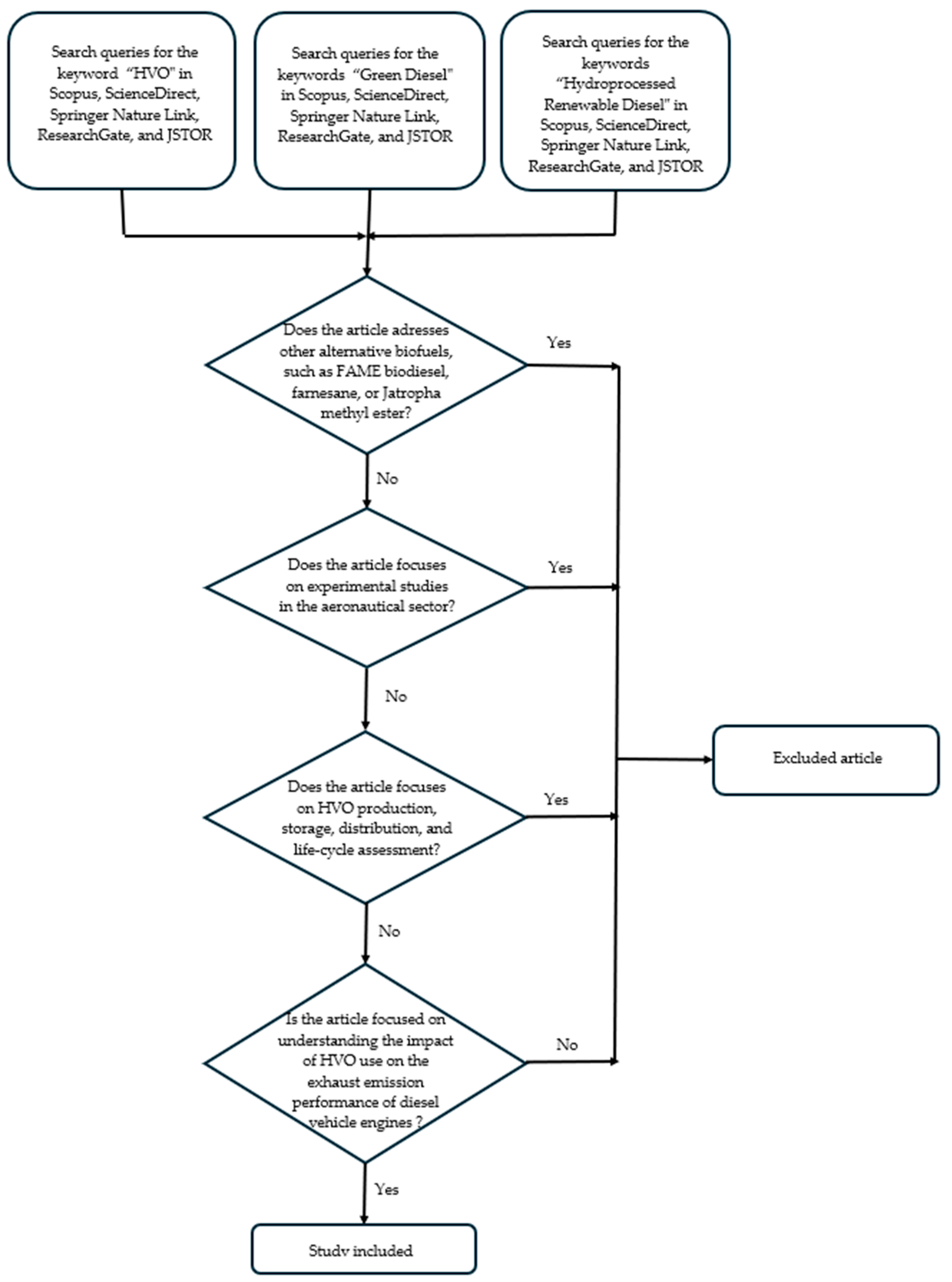
2.1. Preliminary Literature Review
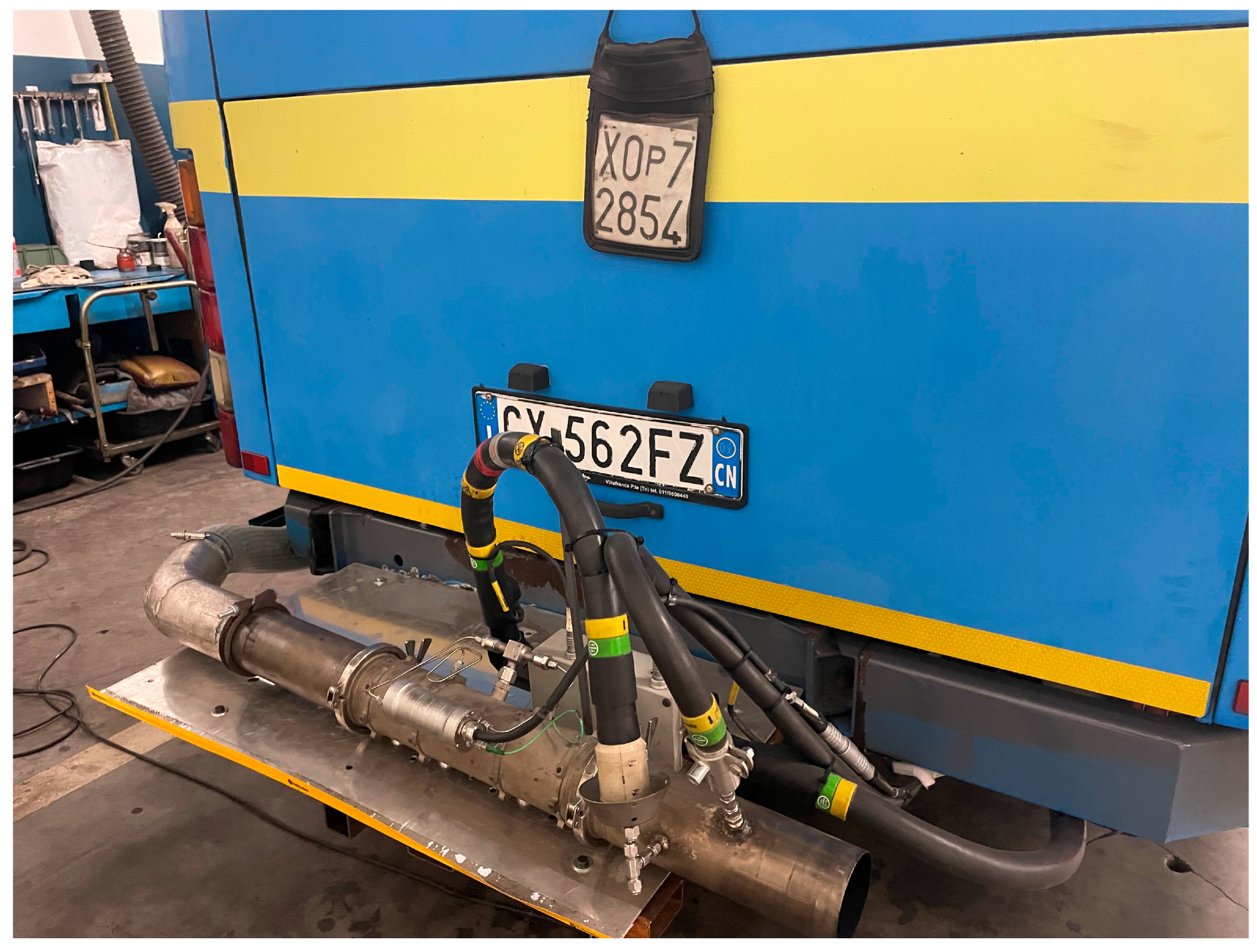
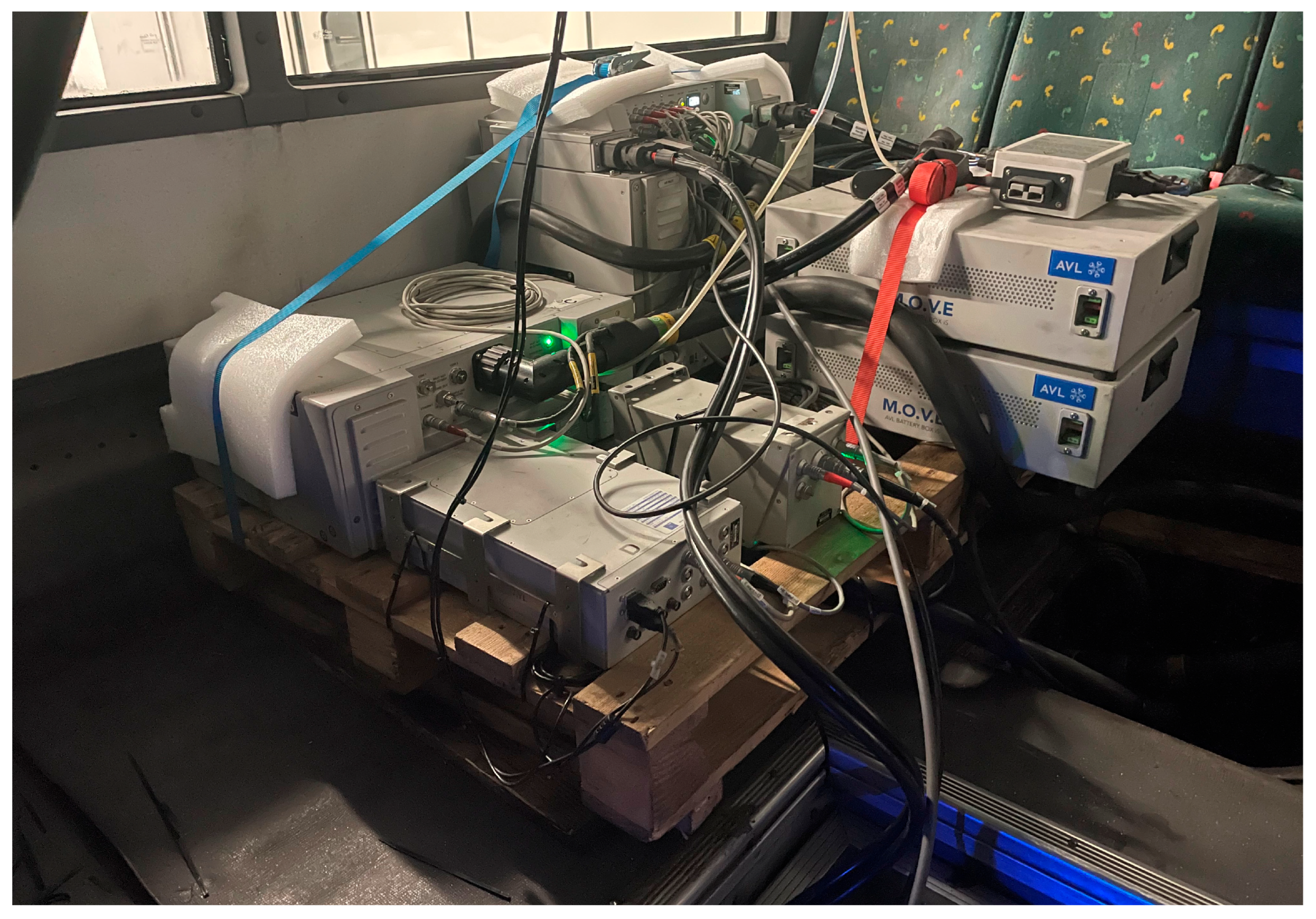
2.2. Experimental Setup


2.3. Fuels Used in Experimental Campaigns
3. Literature Review on the Use of HVO in Internal Combustion Engines and Its Effect on Emissions
3.1. NOx Emissions Reduction
3.2. Particulate Matter Emissions Reduction
3.3. Polycyclic Aromatic Hydrocarbons Emissions Reduction
3.4. Tank-to-Wheel and Well-to-Wheel CO2 Emissions Reduction
4. Results of the Experimental Campaigns
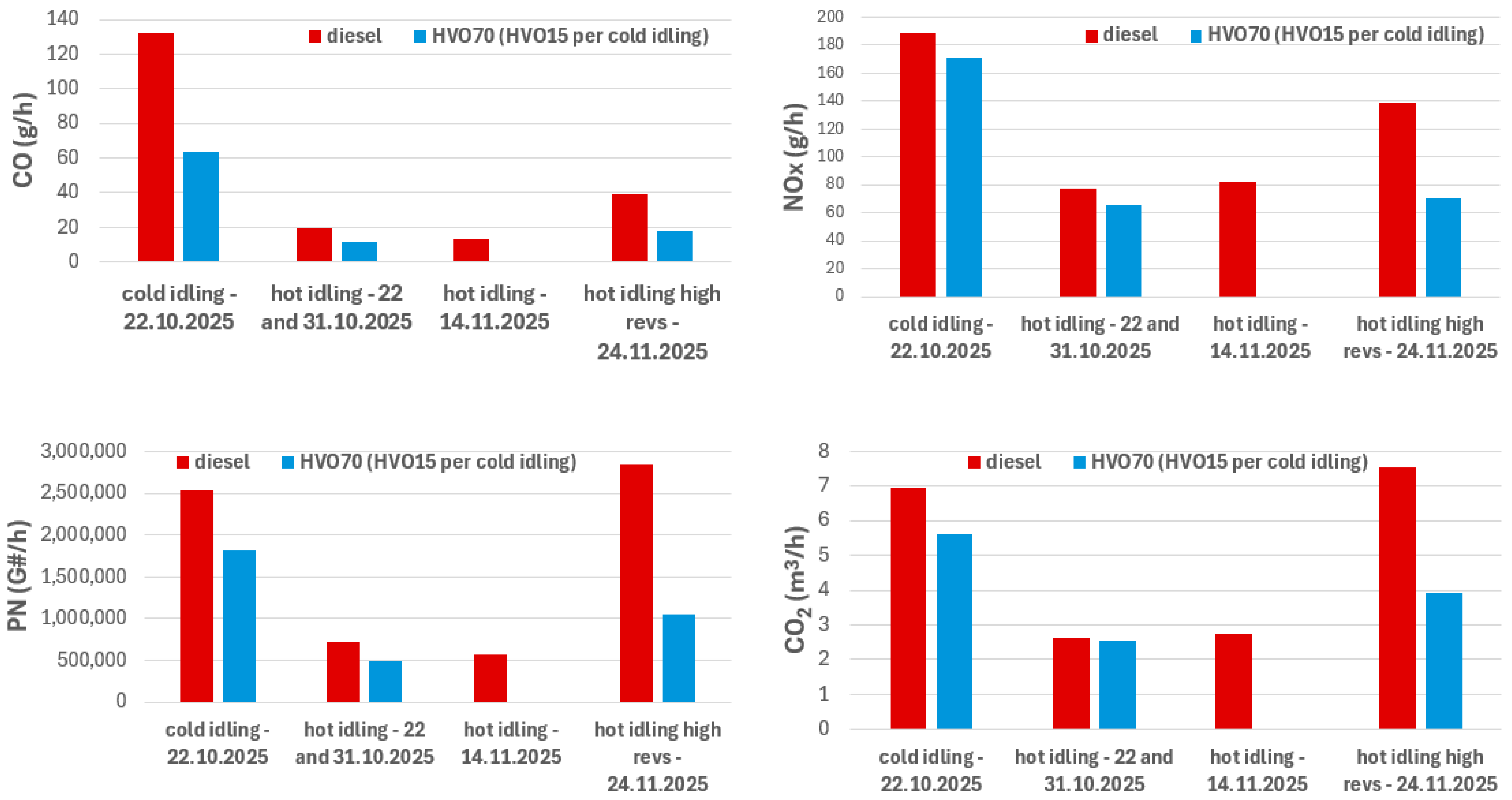
4.1. Engine Idle Phase Measurements
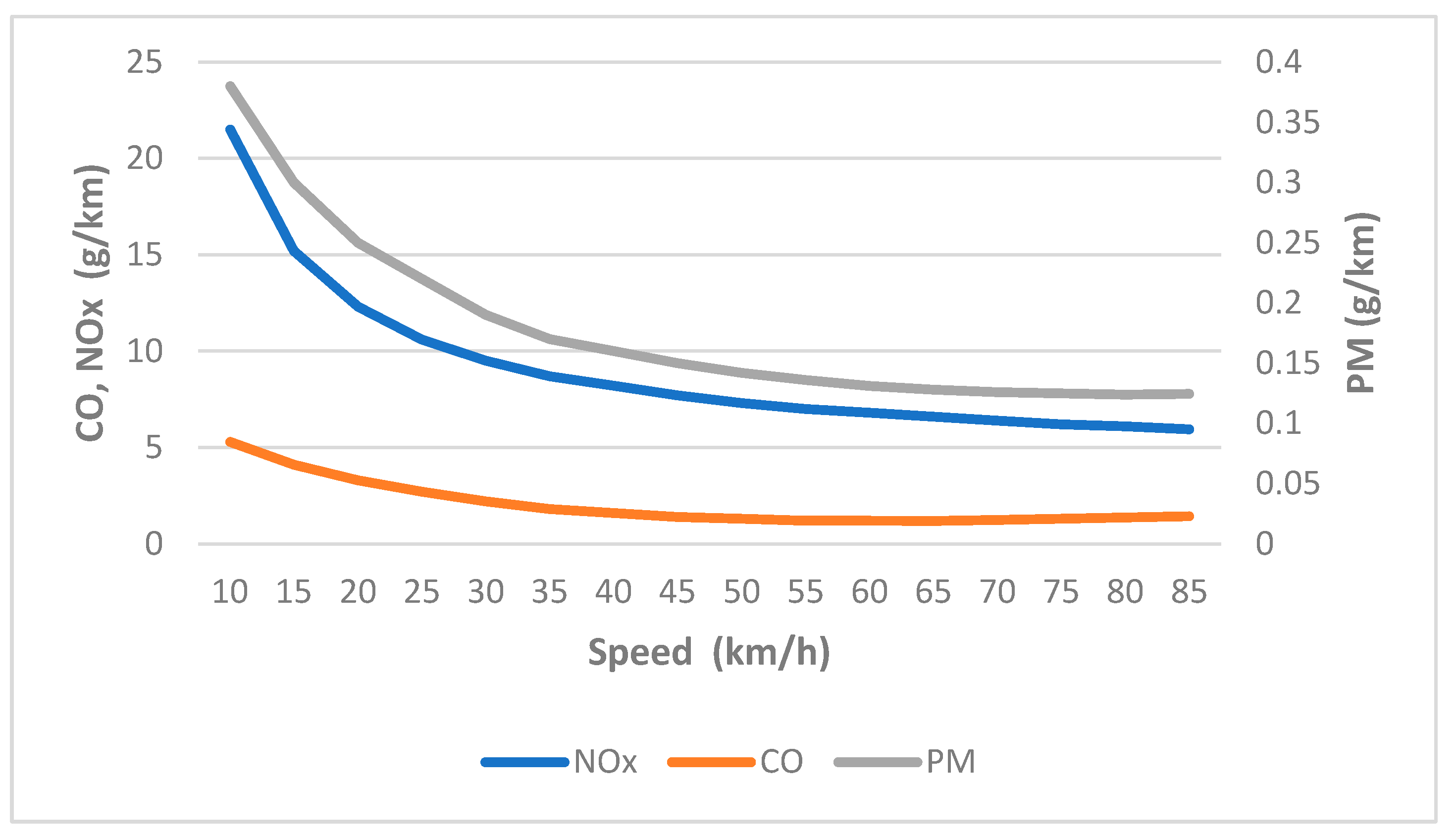
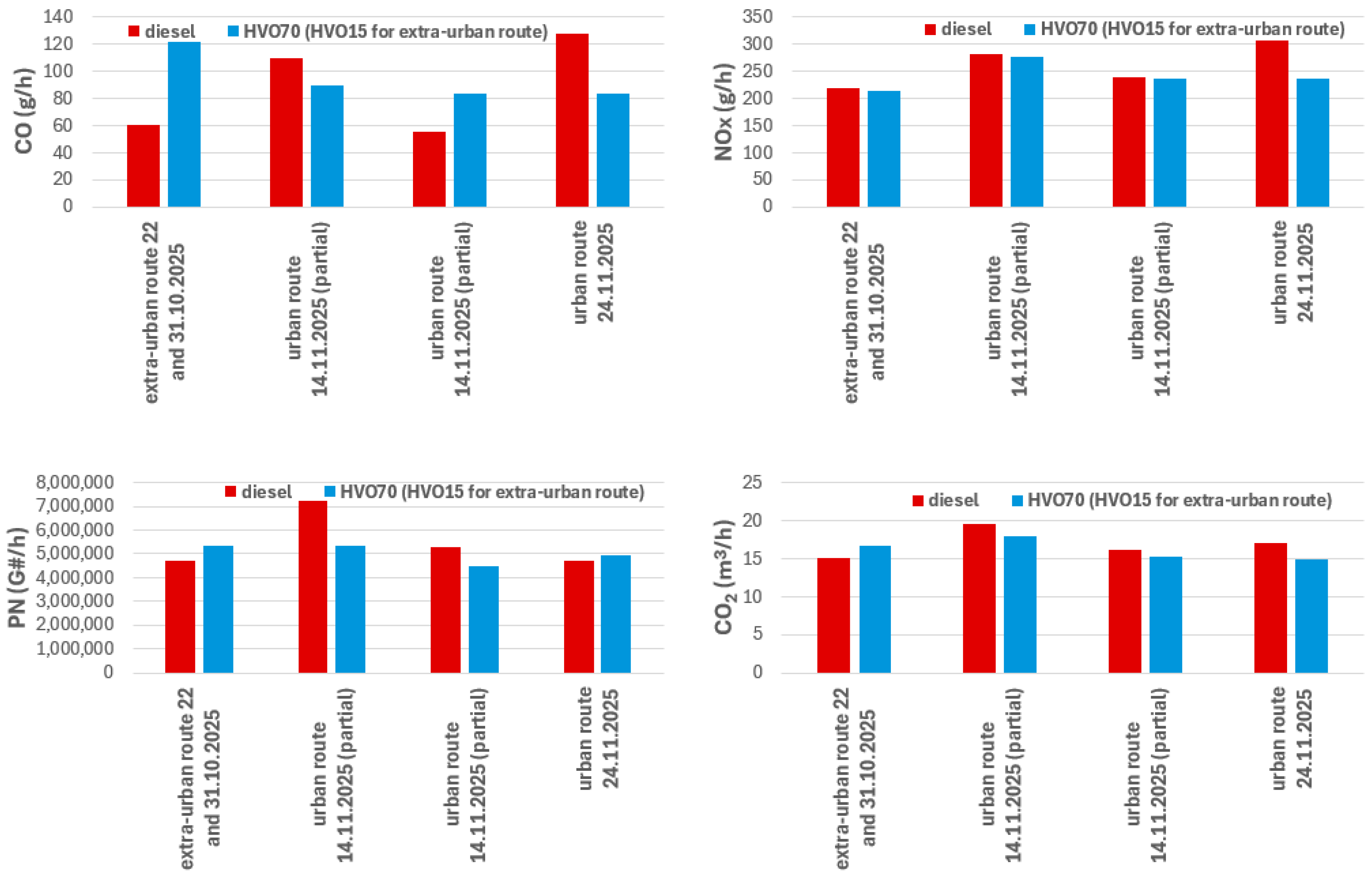
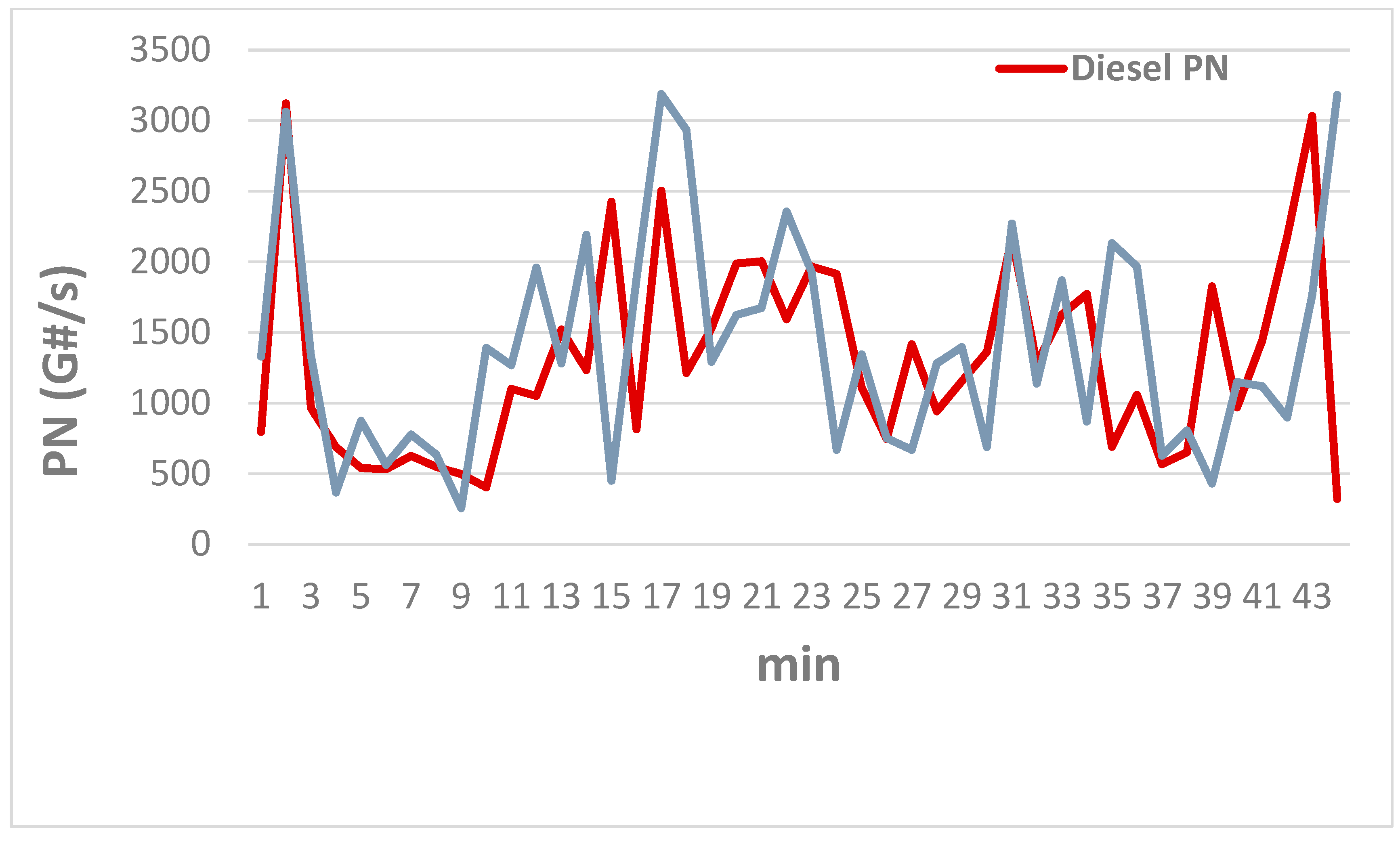
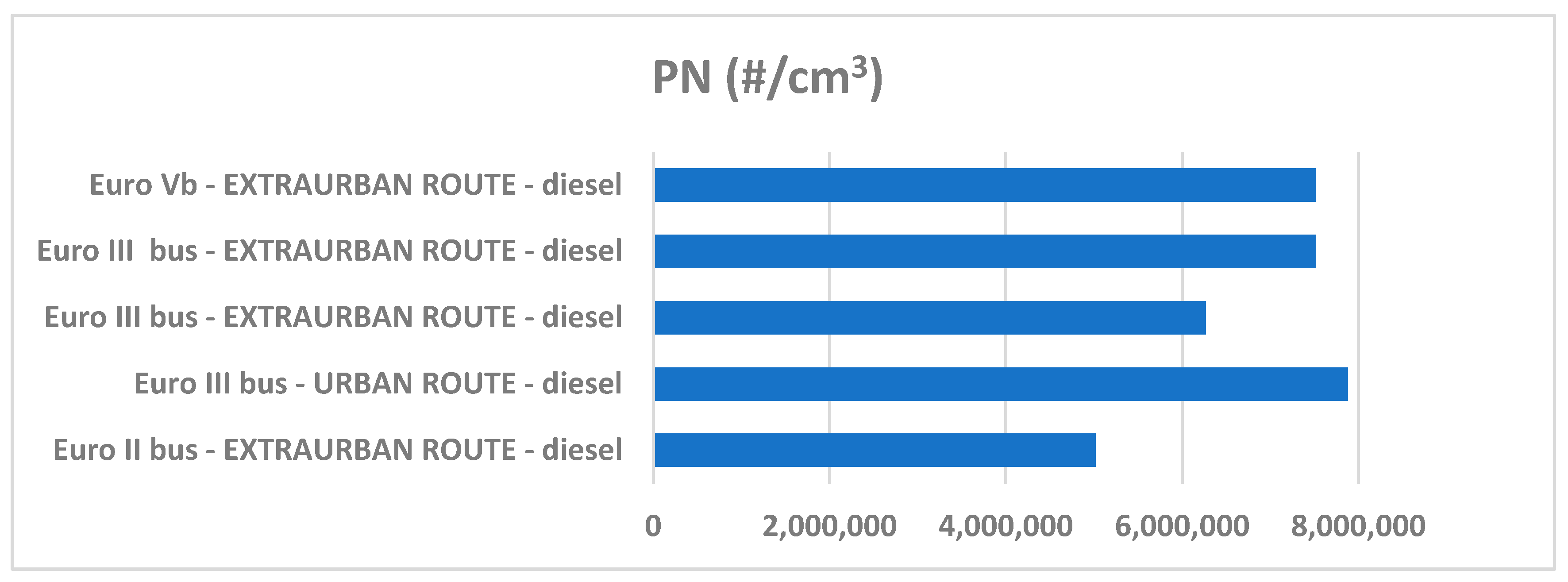
4.2. Real Driving Measurements
5. Conclusions
Author Contributions
Funding
Institutional Review Board Statement
Informed Consent Statement
Data Availability Statement
Use of Artificial Intelligence
Acknowledgments
Conflicts of Interest
Abbreviations
| HVO | Hydrotreated Vegetable Oil |
| FAME | Fatty Acid Methyl Esters |
| TtW | Tank-to-Wheel |
| WtW | Well-to-Wheel |
| PEMS | Portable Emissions Monitoring System |
| RDE | Real Driving Emissions |
| EGR | Exaust Gas Recirculation |
| ADC | Advanced Diffusion Charger |
| HDV | Heavy-Duty Vehicle |
| LCV | Light Commercial Vehicle |
| LNT | Low-NOx Trap |
| PM | Particulate Matter |
| PAH | Polycyclic aromatic hydrocarbons |
| HACA | Hydrogen Abstraction–C2H2 Addition |
| HC | Hydrocarbons |
| PN | Particulate Number |
| RED | Renewable Energy Directive |
| RFNBO | Renewable fuels of non-biological origin |
References
- Sunde, K.; Brekke, A.; Solberg, B. Environmental impacts and costs of Hydrotreated vegetable oils, trans esterified lipids and woody BTL—A review. Energies 2011, 4, 845–877. [Google Scholar]
- Vasquez, M.C.; Silva, E.E.; Castillo, E.F. Hydrotreatment of vegetable oils: A review of the technologies and its developments for jet biofuel production. Biomass Bioenergy 2017, 105, 197–206. [Google Scholar] [CrossRef]
- Bohl, T.; Smallbone, A.; Tian, G.; Roskilly, A.P. Particulate number and NOx trade-off comparisons between HVO and mineral diesel in HD applications. Fuel 2018, 215, 90–101. [Google Scholar]
- Kim, D.; Kim, S.; Oh, S.; No, S.Y. Engine performance and emission characteristics of hydrotreated vegetable oil in light duty diesel engines. Fuel 2014, 125, 36–43. [Google Scholar] [CrossRef]
- Characteristics of the AVL PEMS Used. Available online: https://www.avl.com/en/testing-solutions/all-testing-products-and-software/emission-analysis-and-measurement (accessed on 30 May 2026).
- Douvartzides, S.L.; Charisiou, N.D.; Papageridis, K.N.; Goula, M.A. Green Diesel: Biomass Feedstocks, Production Technologies, Catalytic Research, Fuel Properties and Performance in Compression Ignition Internal Combustion Engines. Energies 2019, 12, 809. [Google Scholar] [CrossRef]
- Singh, D.; Subramanian, K.A.; Garg, M.O. Comprehensive review of combustion, performance and emissions characteristics of a compression ignition engine fueled with hydroprocessed renewable diesel. Renew. Sustain. Energy Rev. 2018, 81, 2947–2954. [Google Scholar] [CrossRef]
- Sonthalia, A.; Kumar, N. Hydroprocessed vegetable oil as a fuel for transportation sector: A review. J. Energy Inst. 2019, 92, 1–17. [Google Scholar] [CrossRef]
- Szeto, W.; Leung, D.Y.C. Is hydrotreated vegetable oil a superior substitute for fossil diesel? A comprehensive review on physicochemical properties, engine performance and emissions. Fuel 2022, 327, 125065. [Google Scholar] [CrossRef]
- Gomes, D.M.; Costa Neto, R.; Baptista, P.; Pereira Ramos, C.; Borges Correia, C.; Rocha, R. A review of advanced techniques in hydrotreated vegetable oils production and life cycle analysis. Biomass Bioenergy 2025, 194, 107689. [Google Scholar] [CrossRef]
- Engman, A.; Hartikka, T.; Honkanen, M.; Kiiski, U.; Kuronen, M.; Lehto, K.; Mikkonen, S.; Nortio, J.; Nuottimäki, J.; Saikkonen, P. Neste Renewable Diesel Handbook; Neste Proprietary Publication: Espoo, Finland, 2016. [Google Scholar]
- Erkkilä, K.; Nylund, N.; Hulkkonen, T.; Tilli, A.; Mikkonen, S.; Saikkonen, P.; Makinen, R.; Amberla, A. Emission Performance of Paraffinic HVO Diesel Fuel in Heavy Duty Vehicles. In Proceedings of the SAE International Powertrains, Fuels and Lubricants Meeting, Kyoto, Japan, 30 August 2011. [Google Scholar]
- Kuronen, M.; Mikkonen, S.; Aakko, P.; Murtonen, T. Hydrotreated Vegetable Oil as Fuel for Heavy Duty Diesel Engines. In SAE 2007 Commercial Vehicle Engineering Congress & Exhibition, Rosemont, Illinois, United States, October 30, 2007; and Powertrain & Fluid Systems Conference and Exhibition, Chicago, Illinois, United States, October 29, 2007; SAE International: Warrendale, PA, USA, 2007. [Google Scholar]
- Aatola, H.; Larmi, M.; Sarjovaara, T.; Mikkonen, S. Hydrotreated vegetable oil (HVO) as a renewable diesel fuel: Trade-off between NOx, particulate emission, and fuel consumption of a heavy duty engine. SAE Int. J. Engines 2008, 1, 1251–1262. [Google Scholar] [CrossRef]
- Hajbabaei, M.; Johnson, K.C.; Okamoto, R.A.; Mitchell, A.; Pullman, M.; Durbin, T.D. Evaluation of the impacts of biodiesel and second generation biofuels on NOx emissions for CARB diesel fuels. Environ. Sci. Technol. 2012, 46, 9163–9173. [Google Scholar] [CrossRef] [PubMed]
- Westphal, G.A.; Krahl, J.; Munack, A.; Rosenkranz, N.; Schröder, O.; Schaak, J.; Pabst, C.; Brüning, T.; Bünger, J. Combustion of hydrotreated vegetable oil and jatropha methyl ester in a heavy duty engine: Emissions and bacterial mutagenicity. Environ. Sci. Technol. 2013, 47, 6038–6046. [Google Scholar] [CrossRef] [PubMed]
- Tipanluisa, L.; Prati, M.V.; Costagliola, M.A. Impact of diesel/renewable fuels blend on gaseous and particle emissions of a light-duty vehicle under real driving emissions. Renew. Energy 2024, 230, 120819. [Google Scholar]
- Demuynck, J.; Kufferath, A.; Kastner, O.; Brauer, M.; Fiebig, M. Improving Air Quality and Climate through Modern Diesel Vehicles. MTZ Worldw. 2020, 81, 52–59. [Google Scholar] [CrossRef]
- Williams, R.; Dauphin, R.; Andersson, J.; Ziman, P.; Rogerson, J.; Hamje, H. Fuel Effects on Regulated and Unregulated Emissions from Three Light-Duty Euro 5 and Euro 6 Diesel Passenger Cars. SAE Int. J. Adv. Curr. Prac. Mobil. 2021, 3, 428–451. [Google Scholar]
- Hernández, J.J.; Rodríguez-Fernández, J.; Calle-Asensio, A. Performance and regulated gaseous emissions of a Euro 6 diesel vehicle with Lean NOx Trap at different ambient conditions: Sensitivity to the type of fuel. Energy Convers. Manag. 2020, 219, 113023. [Google Scholar] [CrossRef]
- McCaffery, C.; Zhua, H.; Sabbir Ahmed, C.M.; Canchola, A.; Chen, J.Y.; Li, C.; Johnsona, K.C.; Durbina, T.D.; Linc, Y.-H.; Karavalakisa, G. Effects off hydrogenated vegetable oil (HVO) and HVO/biodiesel blends on the physicochemical and toxicological properties of emissions from an off-road heavy-duty diesel engine. Fuel 2022, 323, 124283. [Google Scholar] [PubMed]
- Dimitriadis, A.; Natsios, I.; Dimaratos, A.; Katsaounis, D.; Samaras, Z.; Bezergianni, S.; Lehto, K. Evaluation of a Hydrotreated Vegetable Oil (HVO) and Effects on Emissions of a Passenger Car Diesel Engine. Front. Mech. Eng. 2018, 4, 368686. [Google Scholar] [CrossRef]
- Bortel, I.; Vávra, J.; Takáts, M. Effect of HVO fuel mixtures on emissions and performance of a passenger car size diesel engine. Renew. Energy 2019, 140, 680–691. [Google Scholar] [CrossRef]
- Žaglinskis, J.; Rimkus, A. Research on the Performance Parameters of a Compression-Ignition Engine Fueled by Blends of Diesel Fuel, Rapeseed Methyl Ester and Hydrotreated Vegetable Oil. Sustainability 2023, 15, 14690. [Google Scholar] [CrossRef]
- Suarez-Bertoa, R.; Kousoulidou, M.; Clairotte, M.; Giechaskiel, B.; Nuottimäki, J.; Sarjovaara, T.; Lonza, L. Impact of HVO blends on modern diesel passenger cars emissions during real world operation. Fuel 2019, 235, 1427–1435. [Google Scholar] [CrossRef]
- Pirjola, L.; Kuuluvainen, H.; Timonen, H.; Saarikoski, S.; Teinilä, K.; Salo, L.; Datta, A.; Simonen, P.; Karjalainen, P.; Kulmala, K.; et al. Potential of renewable fuel to reduce diesel exhaust particle emissions. Appl. Energy 2019, 254, 113636. [Google Scholar] [CrossRef]
- Mancarella, A.; Marello, O. Effect of Coolant Temperature on Performance and Emissions of a Compression Ignition Engine Running on Conventional Diesel and Hydrotreated Vegetable Oil (HVO). Energies 2023, 16, 144. [Google Scholar]
- Knost, F.; Beidl, C. Potential of HVO in Diesel Engines with Miller Operation and Internal Exhaust Gas Recirculation. MTZ Worldw. 2024, 85, 16–23. [Google Scholar] [CrossRef]
- Wu, Y.; Ferns, J.; Li, H.; Andrews, G. Investigation of Combustion and Emission Performance of Hydrogenated Vegetable Oil (HVO) Diesel. SAE Int. J. Fuels Lubr. 2017, 10, 895–903. [Google Scholar] [CrossRef]
- Smigins, R.; Sondors, K.; Pirs, V.; Dukulis, I.; Birzietis, G. Studies of Engine Performance and Emissions at Full-Load Mode Using HVO, Diesel Fuel, and HVO5. Energies 2023, 16, 4785. [Google Scholar] [CrossRef]
- Sugiyama, K.; Goto, I.; Kitano, K.; Mogi, K.; Honkanen, M. Effects of hydrotreated vegetable oil (HVO) as renewable diesel fuel on combustion and exhaust emissions in diesel engine. SAE Int. J. Fuels Lubr. 2011, 5, 205–217. [Google Scholar] [CrossRef]
- Demuynck, J.; Dauphin, R.; Yugo, M.; Mendoza Villafuerte, P.; Bosteels, D. Advanced Emission Controls and Sustainable Renewable Fuels for Low Pollutant and CO2 Emissions on a Diesel Passenger Car. Sustainability 2021, 13, 12711. [Google Scholar] [CrossRef]
- Murtonen, T.; Aakko-Saksa, P.; Kuronen, M.; Mikkonen, S.; Lehtoranta, K. Emissions with heavy-duty diesel engines and vehicles using FAME, HVO and GTL fuels with and without DOC + POC aftertreatment. SAE Int. J. Fuels Lubr. 2009, 2, 147–166. [Google Scholar]
- Presentation of Experimental Results on the Use of Neat HVO, Carried Out by the German Automobile Club. Available online: https://www.adac.de/verkehr/tanken-kraftstoff-antrieb/alternative-antriebe/hvo-100-test/ (accessed on 14 December 2025).
- Lakanen, L.; Grönman, K.; Väisänen, S.; Kasurinen, H.; Soininen, A.; Soukka, R. Applying the handprint approach to assess the air pollutant reduction potential of paraffinic renewable diesel fuel in the car fleet of the city of Helsinki. J. Clean. Prod. 2021, 290, 125786. [Google Scholar] [CrossRef]
- Hartikka, T.; Kuronen, M.; Kiiski, U. Technical Performance of HVO (Hydrotreated Vegetable Oil) in Diesel Engines. In Proceedings of the SAE 2012 International Powertrains, Fuels & Lubricants Meeting, Malmo, Sweden, 18 September 2012. [Google Scholar]
- Kumar, V.; Sindhu, R.K.; Kumar, S. Comparative analysis of green diesel versus petro-diesel in compression ignition engine. Biosci. Biotechnol. Res. Commun. 2018, 11, 128–135. [Google Scholar] [CrossRef]
- Ogunkoya, D.; Roberts, W.L.; Fang, T.; Thapaliya, N. Investigation of the effects of renewable diesel fuels onengine performance, combustion, and emissions. Fuel 2015, 140, 541–554. [Google Scholar]
- Mangus, M.; Mattson, J.; Depcik, C. Performance and emissions characteristics of hydroprocessed renewable jet fuel blends in a single-cylinder compression ignition engine with electronically controlled fuel injection. Combust. Sci. Technol. 2015, 187, 857–873. [Google Scholar]
- Happonen, M.; Heikkilä, J.; Murtonen, T.; Lehto, K.; Sarjovaara, T.; Larmi, M.; Keskinen, J.; Virtanen, A. Reductions in particulate and NOx emissions by diesel engine parameter adjustments with HVO fuel. Environ. Sci. Technol. 2012, 46, 6198–6204. [Google Scholar] [CrossRef] [PubMed]
- AParravicini, M.; Barro, C.; Boulouchos, K. Experimental characterization of GTL, HVO, and OME based alternative fuels for diesel engines. Fuel 2021, 292, 120177. [Google Scholar] [CrossRef]
- Krivopolianskii, V.; Bjørgen, K.; Emberson, D.; Ushakov, S.; Æsøy, V.; Løvås, T. Experimental Study of Ignition Delay, Combustion, and NO Emission Characteristics of Hydrogenated Vegetable Oil. SAE Int. J. Fuels Lubr. 2019, 12, 29–42. [Google Scholar] [CrossRef]
- Roque, L.F.A.; da Costa, R.B.R.; de Souza, T.A.Z.; Coronado, C.J.R.; Pinto, G.M.; Cintra, A.J.A.; Raats, O.O.; Oliveira, B.M.; Frez, G.V.; Alves, L.F.R. Experimental analysis and life cycle assessment of green diesel (HVO) in dual-fuel operation with bioethanol. J. Clean. Prod. 2023, 389, 135989. [Google Scholar] [CrossRef]
- Pinto, G.M.; de Souza, T.A.Z.; da Costa, R.B.R.; Roque, L.F.A.; Frez, G.V.; Coronado, C.J.R. Combustion, performance and emission analyses of a CI engine operating with renewable diesel fuels (HVO/FARNESANE) under dual-fuel mode through hydrogen port injection. Int. J. Hydrogen Energy 2023, 48, 19713–19732. [Google Scholar]
- Da Costa, R.B.R.; Roque, L.F.A.; de Souza, T.A.Z.; Coronado, C.J.R.; Pinto, G.M.; Cintra, A.J.A.; Raats, O.O.; Oliveira, B.M.; Frez, G.V.; da Silva, M.H. Experimental assessment of renewable diesel fuels (HVO/Farnesane) and bioethanol on dual-fuel mode. Energy Convers. Manag. 2022, 258, 115554. [Google Scholar]
- Stumborg, M.; Wong, A.; Hogan, E. Hydroprocessed vegetable oils for diesel fuel improvement. Bioresour. Technol. 2013, 56, 13–18. [Google Scholar]
- Singh, D.; Subramanian, K.A.; Bal, R.; Singh, S.P.; Badola, R. Combustion and emission characteristics of a light duty diesel engine fueled with hydro-processed renewable diesel. Energy 2018, 154, 498–507. [Google Scholar] [CrossRef]
- Hemanandh, J.; Narayanan, K.V. Production of Green Diesel by Hydrotreatment Using Jatropha Oil: Performance and Emission Analysis. Waste Biomass Valoriz. 2017, 8, 1931–1939. [Google Scholar]
- Armas, O.; García-Contreras, R.; Ramos, A.; López, A.F. Impact of animal fat biodiesel, GTL, and HVO fuels on combustion, performance, and pollutant emissions of a light-duty diesel vehicle tested under the NEDC. J. Energy Eng. 2015, 141, C4014009. [Google Scholar] [CrossRef]
- Pflaum, H.; Hofmann, P.; Geringer, B.; Weissel, W. Potential of Hydrogenated Vegetable Oil (HVO) in a Modern Diesel Engine. In Proceedings of the Small Engine Technology Conference & Exposition, Linz, Austria, 28 September 2010. [Google Scholar]
- Athanasios, D.; Athanasios, D.; Stylianos, D.; Stella, B.; Samarazis, Z. Emissions Optimization Potential of a Diesel Engine Running on HVO: A Combined Experimental and Simulation Investigation. In Proceedings of the 14th International Conference on Engines & Vehicles, Capri, Italy, 15–19 September 2019. [Google Scholar]
- Di Blasio, G.; Ianniello, R.; Beatrice, C. Hydrotreated vegetable oil as enabler for high-efficient and ultra-low emission vehicles in the view of 2030 targets. Fuel 2022, 310, 122206. [Google Scholar]
- Dimitriadis, A.; Seljak, T.; Vihar, R.; Baškovič, U.Z.; Dimaratos, A.; Bezergianni, S.; Samaras, Z.; Katrašnik, T. Improving PM-NOx trade-off with paraffinic fuels: A study towards diesel engine optimization with HVO. Fuel 2020, 265, 116921. [Google Scholar] [CrossRef]
- Dobrzyńska, E.; Szewczyńska, M.; Pośniak, M.; Szczotka, A.; Puchałka, B.; Woodburn, J. Exhaust emissions from diesel engines fueled by different blends with the addition of nanomodifiers and hydrotreated vegetable oil HVO. Environ. Pollut. 2020, 259, 113772. [Google Scholar] [CrossRef] [PubMed]
- Singh, D.; Subramanian, K.A.; Singal, S.K. Emissions and fuel consumption characteristics of a heavy duty diesel engine fueled with hydroprocessed renewable diesel and biodiesel. Appl. Energy 2015, 155, 440–446. [Google Scholar] [CrossRef]
- Gómez-Doménech, D.; Herrero, L.; Ballesteros, R.; Lapuerta, M. Perspective on the use and benefits of a fossil-free advanced diesel fuel: An effective low-emission alternative to electrification. Biomass Bioenergy 2025, 200, 107965. [Google Scholar]
- Zubel, M.; Bhardwaj, O.P.; Heuser, B.; Holderbaum, B.; Doerr, S.; Nuottimäki, J. Advanced fuel formulation approach using blends of paraffinic and oxygenated biofuels: Analysis of emission reduction potential in a high efficiency diesel combustion system. SAE Int. J. Fuels Lubr. 2016, 9, 481–492. [Google Scholar] [CrossRef]
- D’Ambrosio, S.; Mancarella, A.; Marello, O. Characterization of Hydrotreated Vegetable Oil (HVO) in a Euro 6 diesel engine as a drop-in fuel and with dedicated calibration. J. Phys. Conf. Ser. 2023, 2648, 012074. [Google Scholar] [CrossRef]
- D’Ambrosio, S.; Mancarella, A.; Manelli, A. Utilization of Hydrotreated Vegetable Oil (HVO) in a Euro 6 Dual-Loop EGR Diesel Engine: Behavior as a Drop-In Fuel and Potentialities along Calibration Parameter Sweeps. Energies 2022, 15, 7202. [Google Scholar] [CrossRef]
- Ushakov, S.; Lefebvre, N. Assesment of Hydrotreated Vegetable Oil Applicability as an alternative Marine Fuel based on its performance and Emission Characteristic. SAE Int. J. Fuels Lubr. 2019, 12, 109–120. [Google Scholar]
- Liu, D.; Hongming, X.; Tian, J.; Tan, C.; Li, Y. Cold and warm start characteristics using HVO and RME blends in a V6 diesel engine. SAE Int. J. Fuels Lubr. 2013, 6, 478–485. [Google Scholar] [CrossRef]
- Imperato, M.; Tilli, A.; Sarjovaara, T.; Larmi, M. Large-Bore Compression-Ignition Engines: High NOx Reduction Achieved at Low Load with Hydro-Treated Vegetable Oil. SAE Int. J. Fuels Lubr. 2012, 5, 225–232. [Google Scholar]
- Omari, A.; Pischinger, S.; Bhardwaj, O.P.; Holderbaum, B.; Nuottimaki, J. Improving Engine Efficiency and Emission Reduction Potential of HVO by Fuel-Specific Engine Calibration in Modern Passenger Car Diesel Applications. SAE Int. J. Fuels Lubr. 2017, 10, 756–767. [Google Scholar] [CrossRef]
- Karavalakis, G.; Jiang, Y.; Yang, J.; Durbin, T.; Nuottimäki, J.; Lehto, K. Emissions and Fuel Economy Evaluation from Two Current Technology Heavy-Duty Trucks Operated on HVO and FAME Blends. SAE Int. J. Fuels Lubr. 2016, 9, 177–190. [Google Scholar] [CrossRef]
- Bodemer, O. Comparative Analysis of Electric Cars and Diesel Cars Using Hydrotreated Vegetable Oil (HVO). TechRxiv 2023, 25. [Google Scholar]
- Dimitriadis, A.; Žvar Baškovič, U.; Vihar, R.; Seljak, T.; Dimaratos, A.; Bezergianni, S.; Samaras, Z.; Katrašnik, T. Emission reduction in a light-duty compression ignition engine using Hydrotreated Vegetable Oils (HVO) through recalibration of exhaust gas recirculation rate and main injection timing. J. Energy Inst. 2026, 126, 102475. [Google Scholar] [CrossRef]
- Pechout, M.; Kotek, M.; Jindra, P.; Macoun, D.; Hart, J.; Vojtisek-Lom, M. bComparison of hydrogenated vegetable oil and biodiesel effects on combustion, unregulated and regulated gaseous pollutants and DPF regeneration procedure in a Euro6 car. Sci. Total Environ. 2019, 696, 133748. [Google Scholar] [PubMed]
- Klinkaew, N.; Wiangkham, A.; Ariyarit, A.; Aengchuan, P.; Pumpuang, A.; Sripratum, S.; Maneedaeng, A.; Srisertpol, J.; Sukjit, E. Strategic optimization of engine performance and emissions with bio-hydrogenated diesel and biodiesel: A RVEA-GRNNs framework. Results Eng. 2024, 24, 103072. [Google Scholar]
- Moeltner, L.; Konstantinoff, L.; Schallhart, V. Hydrotreated Vegetable Oils, Biomass to Liquid and Fatty Acid Methyl Ester as Biogen Admixtures for Diesel Engines in Passenger Car. SAE Int. J. Fuels Lubr. 2017, 10, 251–261. [Google Scholar] [CrossRef]
- Puricelli, S.; Cardellini, G.; Casadei, S.; Faedo, D.; van den Oever, A.E.M.; Grosso, M. A review on biofuels for light-duty vehicles in Europe. Renew. Sustain. Energy Rev. 2021, 137, 110398. [Google Scholar] [CrossRef]
- García, A.; Monsalve-Serrano, J.; Guzmán-Mendoza, M.G.; Iñiguez, E. Technical evaluation of low-carbon fuels as a decarbonization pathway of the light-duty transport sector. Fuel 2024, 369, 131772. [Google Scholar]
- Stengel, B.; Flügge, E.; Wichmann, V.; Harndorf, H. Potentials of Biofuels for Passenger Car and Non-road Applications. ATZextra Worldw. 2016, 21, 26–31. [Google Scholar] [CrossRef]
- Diezemann, M.; Tzschentke, M.; Garbe, T.; Kemski, T. HVO100—The Pathway to a CO2-neutral Future for Diesel Engine Drives. MTZ Worldw. 2025, 86, 44–49. [Google Scholar]
- Bhardwaj, O.; Omari, A.; Nuottimäki, J.; Hervé, R. Optimizing Engine Calibration for Renewable Diesel Fuels. MTZ Worldw. 2018, 79, 26–33. [Google Scholar] [CrossRef]
- Jaworski, A.; Kuszewski, H.; Szpica, D.; Wo, P.; Balawender, K.; Ustrzycki, A.; Krzeminski, A.; Jakubowski, M.; Mieczkowski, G.; Borawski, A.; et al. Comparative Study on the Effects of Diesel Fuel, Hydrotreated Vegetable Oil, and Its Blends with Hyrolytic Oils on Pollutant Emissions and Fuel Consumption of a Diesel Engine Under WLTC Dynamic Test Conditions. Energies 2025, 18, 5038. [Google Scholar]
- Serrano, L.; Santana, B.; Pires, N.; Correia, C. Performance, Emissions, and Efficiency of Biodiesel versus Hydrotreated Vegetable Oils (HVO), Considering Different Driving Cycles Sensitivity Analysis (NEDC and WLTP). Fuels 2021, 2, 448–470. [Google Scholar] [CrossRef]
- Chiavola, O.; Matijošius, J.; Palmieri, F.; Recco, E. Engine and Emission Performance of Renewable Fuels in a Small Displacement Turbocharged Diesel Engine. Energies 2024, 17, 6443. [Google Scholar] [CrossRef]
- Gren, L.; Malmborg, V.B.; Jacobsen, N.R.; Shukla, P.C.; Bendtsen, K.M.; Eriksson, A.C.; Essig, Y.J.; Krais, A.M.; Loeschner, K.; Shamun, S.; et al. Effect of Renewable Fuels and Intake O2 Concentration on Diesel Engine Emission Characteristics and Reactive Oxygen Species (ROS) Formation. Atmosphere 2020, 11, 641. [Google Scholar] [CrossRef]
- Rimkus, A.; Žaglinskis, J.; Stravinskas, S.; Rapalis, P.; Matijošius, J.; Bereczky, Á. Research on the Combustion, Energy and Emission Parameters of Various Concentration Blends of Hydrotreated Vegetable Oil Biofuel and Diesel Fuel in a Compression-Ignition Engine. Energies 2019, 12, 2978. [Google Scholar] [CrossRef]
- Shukla, P.C.; Shamun, S.; Gren, L.; Malmborg, V.; Pagels, J.; Tuner, M. Investigation of Particle Number Emission Characteristics in a Heavy-Duty Compression Ignition Engine Fueled with Hydrotreated Vegetable Oil (HVO). SAE Int. J. Fuels Lubr. 2018, 11, 495–505. [Google Scholar] [CrossRef]
- Colangeli, C.; d’Ambrosio, S.; Mancarella, A.; Marello, O.; Salamone, N. Emissions, Performance and Vibro-Acoustic Analysis of a Compression-Ignition Engine Running on Hydrotreated Vegetable Oil (HVO). In Proceedings of the ASME 2024 ICE Forward Conference, San Antonio, TX, USA, 20–23 October 2024. [Google Scholar]
- Mancarella, A.; Marello, O.; d’Ambrosio, S.; Manelli, A. Emission reduction potential of hydrotreated vegetable oil (HVO) in a dual-loop EGR diesel engine with fuel-specific optimized calibration. Int. J. Engine Res. 2026. [Google Scholar] [CrossRef]





| Parameter | Unit | EN590 Diesel | HVO15 | HVO70 | HVO100 |
|---|---|---|---|---|---|
| Density at 15 °C | kg/m3 | 830.6 | 822.68 | 793.64 | 777.8 |
| Kinematic viscosity | mm2/s | 2.969 | 2.921 | 2.743 | 2.646 |
| Dynamic viscosity | Pa × s | 0.00247 | 0.00241 | 0.00218 | 0.00206 |
| Cetane number | - | 54.6 | 58.4 | 72.1 | 79.6 |
| Monoaromatic | %v/v | 20.1 | 17.2 | 6.4 | 0.5 |
| Polyaromatic | %v/v | 3.0 | 2.6 | 0.9 | 0 |
| Total aromatic | %v/v | 23.1 | 19.6 | 6.9 | 0 |
| Flammability | °C | 74.0 | 72.0 | 64.6 | 60.5 |
| Lower heating value | MJ/kg | 42.7 | 42.9 | 43.8 | 44.35 |
| Hydrogen | %m/m | 13.7 | 13.9 | 14.6 | 15 |
| Carbon | %m/m | 85.7 | 85.6 | 85.2 | 85 |
| Oxygen | %m/m | 0.6 | 0.5 | 0.2 | 0 |
| Sulfur | mg/kg | 6.5 | 5.6 | 2.3 | 0.53 |
| FAME | %v/v | 5.0 | 4.3 | 1.5 | 0.05 |
| Approx. formula | - | C13H24O0.06 | - | - | C13H28 |
| Manufacturer Model | Pollutant Measured | Measurement Principle | Measurement Range | Measurement Accuracy |
|---|---|---|---|---|
| AVL M.O.V.E. Is + “GAS PEMS 492” | CO, CO2, NO, NO2 | NO, NO2: NDUV (non-dispersive ultraviolet); CO, CO2: NDIR (non-dispersive infrared) | NO: 0–5000 ppm NO2: 0–2500 ppm CO: 0–5 vol. % CO2: 0–20 vol. % N2O: 0–2000 ppm | NO: ±5% NO2: ±5% CO: ±5% CO2: ±2% N2O: ±5% |
| AVL M.O.V.E. Is + “PN PEMS 496” | PN (particle number, ≥10 nm) | Unipolar diffusion charging (corona discharge) followed by signal measurement with an electrometer in a Faraday cage | ~1500–2.5 × 10⁷ [#/cm3] | ±25–35% |
| AVL M.O.V.E. Is + “EFM” | Exhaust flow rate and temperature | Differential pressure (Pitot tube) and thermocouple | ~10–4000 kg/h (@100 °C; 2” to 6”) | ±2% of reading or ±0.3% of full scale, whichever is greater |
| PM | NOx | CO2 TTW | CO2 WTW | HC | PAH | |
|---|---|---|---|---|---|---|
| mean | 43% | 11.86% | 5.6% | 68.6% | 42.99% | 68.20% |
| median | 38% | 12.35% | 3.7% | 64.3% | 42.00% | 60.00% |
| standard deviation | 16% | 6.80% | 7.4% | 7.7% | 13.46% | 18.02% |
| min | 16% | −5% | 0.0% | 64.0% | 24% | 57% |
| max | 70% | 30% | 26.3% | 77.5% | 68% | 100% |
| Test n. | Date | Test Type | Route | Length (km) | Fuel |
|---|---|---|---|---|---|
| 1 | 22 October 2025 | Cold idling | stationary test | - | Diesel |
| 3 | 22 October 2025 | Cold idling | stationary test | - | HVO15 |
| 3 | 22 October 2025 | Extra-urban | Cuneo–Magliano Alpi | 12 | Diesel |
| 4 | 22 October 2025 | Hot idling | Cuneo | 12 | Diesel |
| 5 | 31 October 2025 | Extra-urban | Cuneo–Magliano Alpi | 12 | HVO15 |
| 6 | 31 October 2025 | Hot idling | stationary test | - | HVO70 |
| 7 | 14 November 2025 | Urban | Cuneo–Borgo San Dalmazzo–Cuneo | 12 | HVO70 |
| 8 | 14 November 2025 | Urban | Cuneo–Borgo San Dalmazzo–Cuneo | 12 | Diesel |
| 9 | 14 November 2025 | Hot idling | stationary test | - | Diesel |
| 10 | 24 November 2025 | Urban | Cuneo–Borgo San Dalmazzo–Cuneo | 12 | Diesel |
| 11 | 24 November 2025 | Hot idling | stationary test | - | Diesel |
| 12 | 24 November 2025 | Urban | Cuneo–Borgo San Dalmazzo–Cuneo | 12 | HVO70 |
| 13 | 24 November 2025 | Hot idling | stationary test | - | HVO70 |
| Cold Idling | Diesel | HVO15 | Δ% |
|---|---|---|---|
| CO | 100 | 48 | −52% |
| NO | 100 | 90.1 | −10% |
| NO2 | 100 | 93 | −7% |
| NOx | 100 | 90.4 | −10% |
| PN | 100 | 71.9 | −28% |
| Hot Idling | Diesel | HVO70 | Δ% |
|---|---|---|---|
| CO | 100 | 59.2 | −41% |
| NO | 100 | 86.1 | −14% |
| NO2 | 100 | 67 | −33% |
| NOx | 100 | 83.9 | −16% |
| PN | 100 | 68.5 | −32% |
| Time Interval [s] | Fuel | Speed [km/h] | Flow Rate [m3/s] | CO [kg/h] | CO2 [kg/h] | NO [kg/h] | NO2 [kg/h] | NOx [kg/h] | PN [G#/h] |
|---|---|---|---|---|---|---|---|---|---|
| 1010 | HVO70 | 28.40 | 0.094 | 0.090 | 17.956 | 0.266 | 0.009 | 0.275 | 5,346,719 |
| 870 | diesel | 33.14 | 0.103 | 0.109 | 19.594 | 0.273 | 0.009 | 0.281 | 7,207,141 |
| −14.3% | −18.8% | −8.4% | −2.5% | 9.6% | −2.1% | −25.8% | |||
| Correctionfor speed difference | −16.8% | −10.8% | −13.6% | ||||||
| Reduction after speed correction | −35.6% | −12.9% | −39.4% | ||||||
| Time Interval [s] | Fuel | Speed [km/h] | Flow Rate [m3/s] | CO [kg/h] | CO2 [kg/h] | NO [kg/h] | NO2 [kg/h] | NOx [kg/h] | PN [G#/h] |
|---|---|---|---|---|---|---|---|---|---|
| 630 | HVO70 | 22.22 | 0.08 | 0.083 | 15.28 | 0.224 | 0.011 | 0.235 | 4,475,314 |
| 490 | diesel | 27.73 | 0.088 | 0.056 | 16.205 | 0.226 | 0.012 | 0.238 | 5,302,854 |
| −19.9% | +49.9% | −5.7% | −0.9% | −10.5% | −1.4% | −15.6% | |||
| Correction for speed difference | −25.0% | −16.6% | −18.4% | ||||||
| Reduction after speed correction | +24.9% | −18.0% | −34.0% | ||||||
| Time Interval [s] | Fuel | Speed [km/h] | Flow Rate [m3/s] | CO [kg/h] | CO2 [kg/h] | NO [kg/h] | NO2 [kg/h] | NOx [kg/h] | PN [G#/h] |
|---|---|---|---|---|---|---|---|---|---|
| 2750 | HVO70 | 29.24 | 0.087 | 0.083 | 14.905 | 0.226 | 0.010 | 0.235 | 4,957,839 |
| 2650 | diesel | 30.31 | 0.091 | 0.128 | 17.017 | 0.294 | 0.012 | 0.306 | 5,718,193 |
| −3.5% | −34.9% | −12.4% | −23.3% | −17.1% | −23.0% | 5.1% |
| Cold Idling 22 October 2025 | |||||||||
| Time Interval [s] | Fuel | Speed [km/h] | Flow Rate [m3/s] | CO [kg/h] | CO2 [kg/h] | NO [kg/h] | NO2 [kg/h] | NOx [kg/h] | PN [G#/h] |
| 626 | diesel | - | 0.039 | 0.132 | 6.965 | 0.168 | 0.021 | 0.189 | 2,525,540 |
| 1013 | HVO15 | - | 0.031 | 0.063 | 5.619 | 0.151 | 0.020 | 0.171 | 1,816,878 |
| Hot Idling 22 October 2025 (diesel), 31 October 2025 (HVO70) and 14 November 2025 (diesel) | |||||||||
| 2758 | diesel | - | 0.031 | 0.019 | 2.625 | 0.069 | 0.009 | 0.078 | 718,760 |
| 1426 | HVO70 | - | 0.031 | 0.011 | 2.556 | 0.059 | 0.006 | 0.065 | 492,373 |
| 1375 | diesel | - | 0.031 | 0.013 | 2.733 | 0.074 | 0.008 | 0.082 | 581,651 |
| Hot Idling (high revs.) 24 November 2025 | |||||||||
| 360 | diesel | - | 0.085 | 0.039 | 7.543 | 0.121 | 0.018 | 0.139 | 2,837,382 |
| 360 | HVO70 | - | 0.051 | 0.018 | 3.93 | 0.062 | 0.008 | 0.070 | 1,051,543 |
| Extra-Urban Route Cuneo–Magliano Alpi 31 October 2025 | |||||||||
| Time Interval [s] | Fuel | Speed [km/h] | Flow Rate [m3/s] | CO [kg/h] | CO2 [kg/h] | NO [kg/h] | NO2 [kg/h] | NOx [kg/h] | PN [G#/h] |
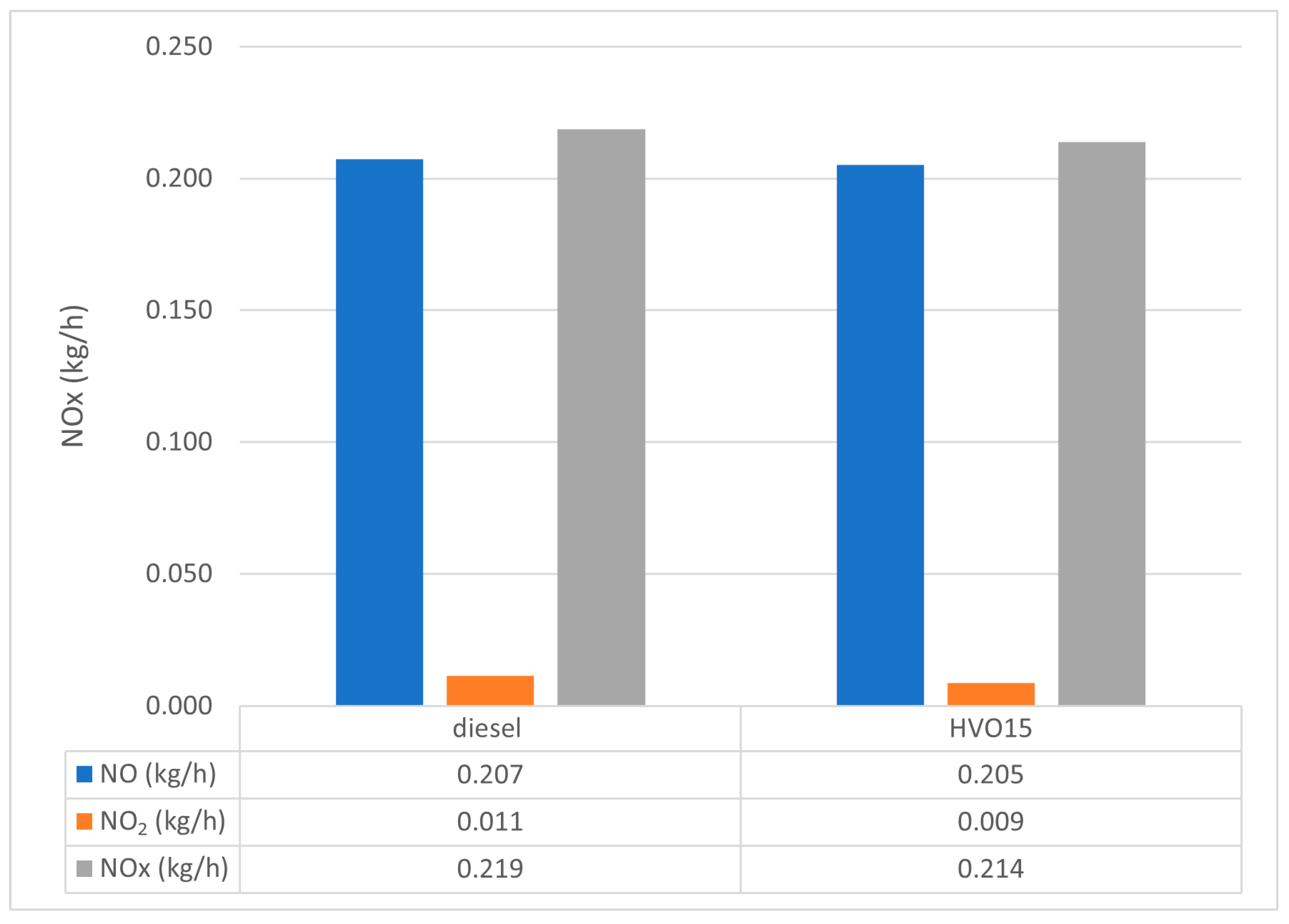
| 3974 | diesel | 39.31 | 0.096 | 0.060 | 15.078 | 0.207 | 0.011 | 0.219 | 4,690,535 |
| 4023 | HVO15 | 40.26 | 0.092 | 0.121 | 16.711 | 0.205 | 0.009 | 0.214 | 5,367,884 |
| Urban Route Cuneo–Borgo San Dalmazzo–Cuneo 14 November 2025 (partial) | |||||||||
| 870 | diesel | 33.14 | 0.103 | 0.109 | 19.594 | 0.273 | 0.009 | 0.281 | 7,207,141 |
| 1010 | HVO70 | 28.40 | 0.094 | 0.09 | 17.956 | 0.266 | 0.009 | 0.275 | 5,346,719 |
| Urban Route Cuneo–Borgo San Dalmazzo–Cuneo 14 November 2025 (partial) | |||||||||
| 490 | diesel | 27.73 | 0.088 | 0.056 | 16.205 | 0.226 | 0.012 | 0.238 | 5,302,854 |
| 630 | HVO70 | 22.22 | 0.080 | 0.083 | 15.280 | 0.224 | 0.011 | 0.235 | 4,475,314 |
| Urban Route Cuneo–Borgo San Dalmazzo–Cuneo 24 November 2025 | |||||||||
| 2650 | diesel | 30.34 | 0.091 | 0.128 | 17.017 | 0.294 | 0.012 | 0.306 | 4,718,193 |
| 2750 | HVO70 | 29.39 | 0.087 | 0.083 | 14.905 | 0.226 | 0.010 | 0.235 | 4,957,839 |
Disclaimer/Publisher’s Note: The statements, opinions and data contained in all publications are solely those of the individual author(s) and contributor(s) and not of MDPI and/or the editor(s). MDPI and/or the editor(s) disclaim responsibility for any injury to people or property resulting from any ideas, methods, instructions or products referred to in the content. |
© 2026 by the authors. Licensee MDPI, Basel, Switzerland. This article is an open access article distributed under the terms and conditions of the Creative Commons Attribution (CC BY) license.
Share and Cite
Robotto, A.; Bargero, C.; Racca, E.; Brizio, E.; Barbero, S.P. Assessing the Potential of Hydrotreated Vegetable Oil (HVO) for Transport Decarbonization: Experimental Results from Real-Driving Conditions in Local Public Transport. Air 2026, 4, 14. https://doi.org/10.3390/air4030014
Robotto A, Bargero C, Racca E, Brizio E, Barbero SP. Assessing the Potential of Hydrotreated Vegetable Oil (HVO) for Transport Decarbonization: Experimental Results from Real-Driving Conditions in Local Public Transport. Air. 2026; 4(3):14. https://doi.org/10.3390/air4030014
Chicago/Turabian StyleRobotto, Angelo, Cristina Bargero, Enrico Racca, Enrico Brizio, and Secondo Paolo Barbero. 2026. "Assessing the Potential of Hydrotreated Vegetable Oil (HVO) for Transport Decarbonization: Experimental Results from Real-Driving Conditions in Local Public Transport" Air 4, no. 3: 14. https://doi.org/10.3390/air4030014
APA StyleRobotto, A., Bargero, C., Racca, E., Brizio, E., & Barbero, S. P. (2026). Assessing the Potential of Hydrotreated Vegetable Oil (HVO) for Transport Decarbonization: Experimental Results from Real-Driving Conditions in Local Public Transport. Air, 4(3), 14. https://doi.org/10.3390/air4030014