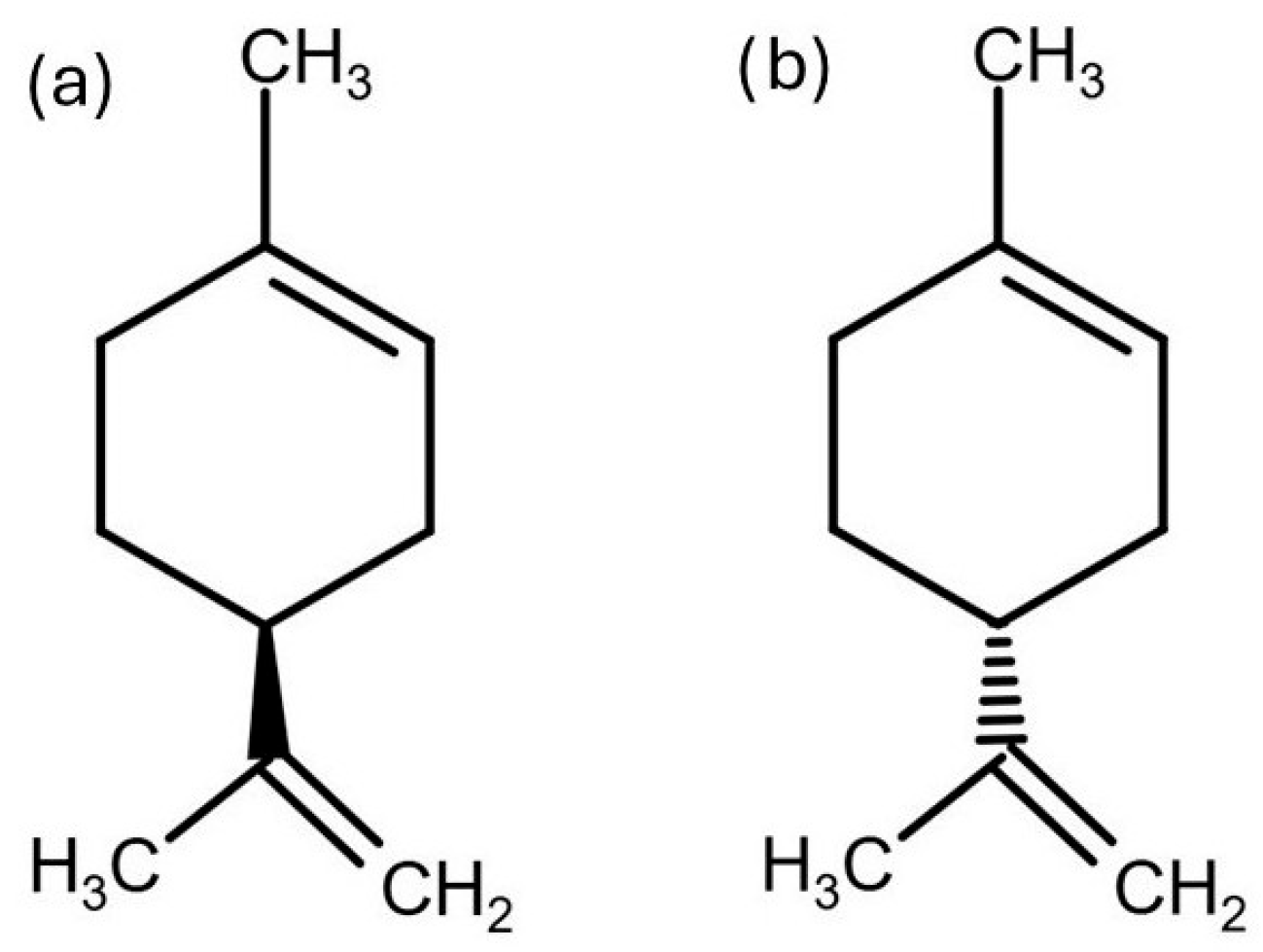

Limonene: A Resource or a Danger




Abstract
1. Introduction
2. Legislation
3. Production
3.1. Industrial Extraction
3.2. Chemical Synthesis
3.3. Microbial Production
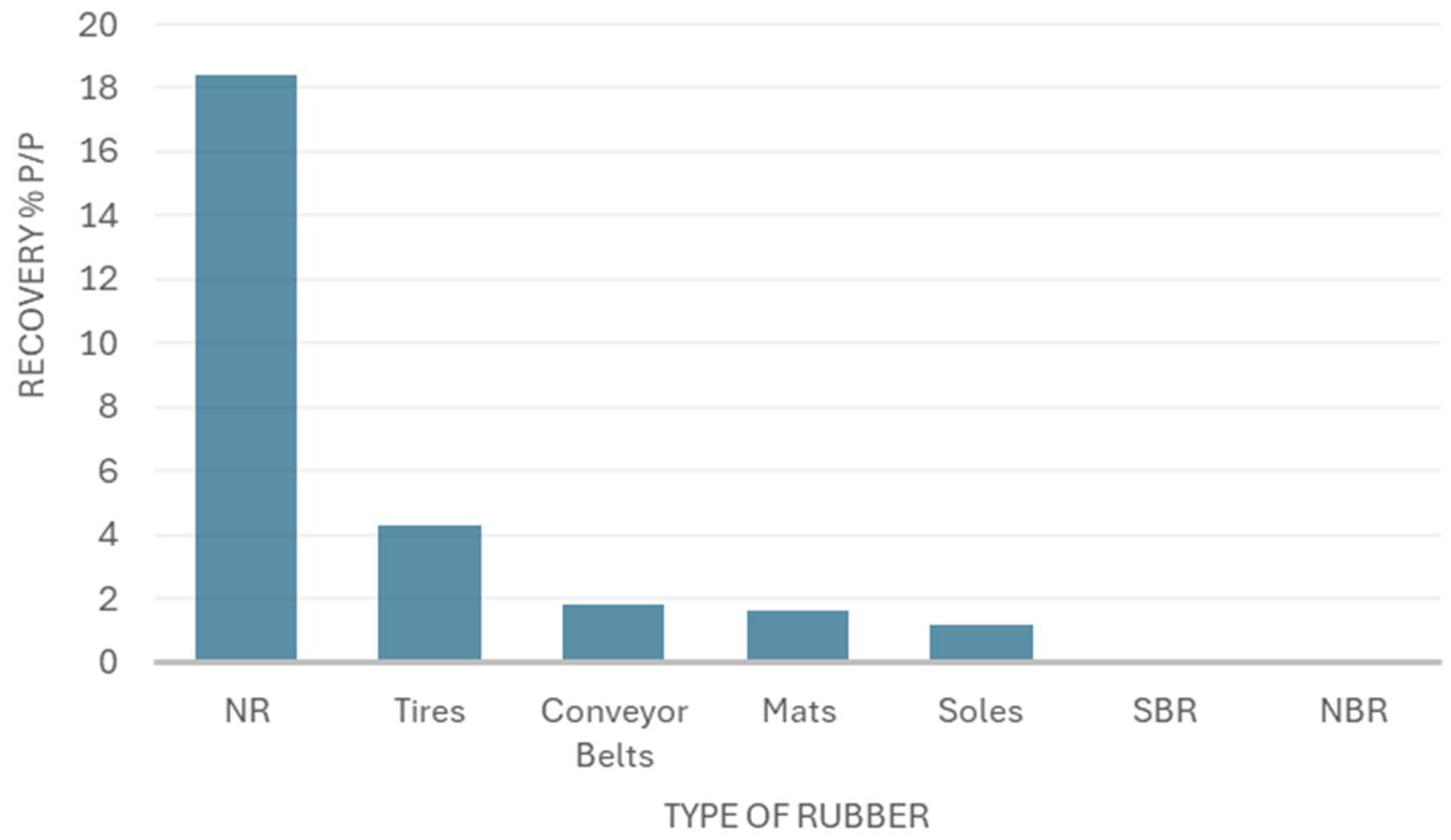
3.4. Pyrolysis of Waste Products
4. Uses and Effects
4.1. Industrial Application
4.2. Biological Activity
4.3. Packaging Effects
5. Risks and Dangers
5.1. Limonene in Indoor Environments
5.2. Contraindications and Side Effects of Limonene
6. L-Limonene: Benefits, Applications, and Specific Risks
7. Conclusions
Author Contributions
Funding
Institutional Review Board Statement
Informed Consent Statement
Data Availability Statement
Conflicts of Interest
References
- Lebedev, A.T.; Detenchuk, E.A.; Latkin, T.B.; Bavcon Kralj, M.; Trebše, P. Aqueous Chlorination of D-Limonene. Molecules 2022, 27, 2988. [Google Scholar] [CrossRef] [PubMed]
- Lin, H.; Li, Z.; Sun, Y.; Zhang, Y.; Wang, S.; Zhang, Q.; Cai, T.; Xiang, W.; Zeng, C.; Tang, J. D-Limonene: Promising and Sustainable Natural Bioactive Compound. Appl. Sci. 2024, 14, 4605. [Google Scholar] [CrossRef]
- Ciriminna, R.; Lomeli Rodriguez, M.; Demma Carà, P.; Lopez Sanchez, J.A.; Pagliaro, M. Limonene: A Versatile Chemical of the Bioeconomy. Chem. Commun. 2014, 50, 15288–15296. [Google Scholar] [CrossRef]
- Solórzano-García, L.A.; Hernández-Paniagua, I.Y.; Andraca-Ayala, G.L.; Ruiz-Suárez, L.G. A Simple and Robust Method for the Comprehensive Analysis of VOCs in Liquid Household Products. Atmos. Pollut. Res. 2025, 16, 102378. [Google Scholar] [CrossRef]
- Sharmeen, J.B.; Mahomoodally, F.M.; Zengin, G.; Maggi, F. Essential Oils as Natural Sources of Fragrance Compounds for Cosmetics and Cosmeceuticals. Molecules 2021, 26, 666. [Google Scholar] [CrossRef]
- Masyita, A.; Mustika Sari, R.; Dwi Astuti, A.; Yasir, B.; Rahma Rumata, N.; Emran, T.B.; Nainu, F.; Simal-Gandara, J. Terpenes and Terpenoids as Main Bioactive Compounds of Essential Oils, Their Roles in Human Health and Potential Application as Natural Food Preservatives. Food Chem. X 2022, 13, 100217. [Google Scholar] [CrossRef]
- Fang, Y.-S.; Shan, D.-M.; Liu, J.-W.; Xu, W.; Li, C.-L.; Wu, H.-Z.; Ji, G. Effect of Constituents from Fructus Aurantii Immaturus and Radix Paeoniae Alba on Gastrointestinal Movement. Planta Medica 2009, 75, 24–31. [Google Scholar] [CrossRef]
- Eddin, L.B.; Jha, N.K.; Meeran, M.F.N.; Kesari, K.K.; Beiram, R.; Ojha, S. Neuroprotective Potential of Limonene and Limonene Containing Natural Products. Molecules 2021, 26, 4535. [Google Scholar] [CrossRef]
- Zhang, Y.-P.; Xu, X.; Lyu, Y.-T.; Huang, J.-Q.; Wang, S.-D.; Xi, L.-Z.; Wang, D.-D.; Liu, C. Mechanism of Lemon Essential Oil in Mitigation of Anxiety Based on Network Pharmacology and Experimental Validation. Tianran Chanwu Yanjiu Yu Kaifa 2024, 36, 336–347. [Google Scholar] [CrossRef]
- Assaggaf, H.; Hachlafi, N.E.; Mrabti, N.N.; Taibi, M.; Elbouzidi, A.; Qasem, A.; Attar, A.; Alshabrmi, F.M.; Ming, L.C.; Moshawih, S.; et al. Rosmarinus Officinalis Suppresses Cancer Cell Viability and Inflammatory Mediators in RAW 264.7 Cells: In Vitro and in Silico Analysis. Discov. Oncol. 2025, 16, 1219. [Google Scholar] [CrossRef] [PubMed]
- Panda, S.; Sahoo, S.; Tripathy, K.; Singh, Y.D.; Sarma, M.K.; Babu, P.J.; Singh, M.C. Essential Oils and Their Pharmacotherapeutics Applications in Human Diseases. Adv. Trad. Med. 2022, 22, 1–15. [Google Scholar] [CrossRef]
- Manzur, M.; Luciardi, M.C.; Blázquez, M.A.; Alberto, M.R.; Cartagena, E.; Arena, M.E. Citrus Sinensis Essential Oils an Innovative Antioxidant and Antipathogenic Dual Strategy in Food Preservation against Spoliage Bacteria. Antioxidants 2023, 12, 246. [Google Scholar] [CrossRef]
- AlSaffar, R.M.; Rashid, S.; Ahmad, S.B.; Rehman, M.U.; Hussain, I.; Parvaiz Ahmad, S.; Ganaie, M.A. D-Limonene (5 (One-Methyl-Four-[1-Methylethenyl]) Cyclohexane) Diminishes CCl4-Induced Cardiac Toxicity by Alleviating Oxidative Stress, Inflammatory and Cardiac Markers. Redox Rep. 2022, 27, 92–99. [Google Scholar] [CrossRef]
- Substance Information-ECHA. Available online: https://echa.europa.eu/it/substance-information/-/substanceinfo/100.004.856 (accessed on 7 October 2025).
- Marquezin, C.A.; de Oliveira, C.M.A.; Vandresen, F.; Duarte, E.L.; Lamy, M.T.; Vequi-Suplicy, C.C. The Interaction of a Thiosemicarbazone Derived from R-(+)-Limonene with Lipid Membranes. Chem. Phys. Lipids 2021, 234, 105018. [Google Scholar] [CrossRef]
- Espina, L.; Gelaw, T.K.; de Lamo-Castellví, S.; Pagán, R.; García-Gonzalo, D. Mechanism of Bacterial Inactivation by (+)-Limonene and Its Potential Use in Food Preservation Combined Processes. PLoS ONE 2013, 8, 56769. [Google Scholar] [CrossRef]
- De Carvalho, R.d.C.V.; de Sousa, V.C.; Santos, L.P.; dos Santos, I.L.; Diniz, R.C.; Rodrigues, R.R.L.; de Medeiros, M.d.G.F.; Rodrigues, K.A.d.F.; Alves, M.M.d.M.; Arcanjo, D.D.R.; et al. Limonene-Carvacrol: A Combination of Monoterpenes with Enhanced Antileishmanial Activity. Toxicol. Vitr. 2021, 74, 105158. [Google Scholar] [CrossRef]
- ICSC 0918-D-LIMONENE. Available online: https://chemicalsafety.ilo.org/dyn/icsc/showcard.display?p_lang=it&p_card_id=0918 (accessed on 3 September 2025).
- Limonene; Filipsson, A.F.; International Programme on Chemical Safety (Eds.) Concise International Chemical Assessment Document; World Health Organization: Geneva, Switzerland, 1998; ISBN 978-92-4-153005-7. [Google Scholar]
- Regolamento (CE) n. 1272/2008 del Parlamento Europeo e Del C. Available online: https://eur-lex.europa.eu/IT/legal-content/summary/classification-packaging-and-labelling-of-chemical-substances-and-mixtures.html (accessed on 3 September 2025).
- Commission Regulation (EU) 2023/1545 of 26 July 2023 Amending Regulation (EC) No 1223/2009 of the European Parliament and of the Council as Regards Labelling of Fragrance Allergens in Cosmetic Products. Available online: https://eur-lex.europa.eu/eli/reg/2023/1545/oj/eng (accessed on 29 October 2025).
- US EPA-Pesticides-Reregistration Eligibility Decision (RED) for Limonene. Available online: https://www3.epa.gov/pesticides/chem_search/reg_actions/reregistration/red_PC-079701_1-Sep-94.pdf?utm_source=chatgpt.com (accessed on 29 October 2025).
- Hazardous Substance Assessment–D-Limonene. Available online: https://www.canada.ca/en/health-canada/services/environmental-workplace-health/occupational-health-safety/workplace-hazardous-materials-information-system/hazardous-substance-assessments/d-limonene.html (accessed on 29 October 2025).
- Details. Available online: https://hcis.safeworkaustralia.gov.au/HazardousChemical/Details?chemicalID=4812&utm_source=chatgpt.com (accessed on 29 October 2025).
- GB 2760-2011; Food Safety National Standards for the Usage of Food Additives. Standards Press of China: Beijing China, 2011. Available online: https://www.cirs-reach.com/China_Chemical_Regulation/GB_2760-2011_Food_Safety_National_Standards_for_the_Usage_of_Food_Additives.html?utm_source=chatgpt.com (accessed on 29 October 2025).
- Ferhat, M.A.; Meklati, B.Y.; Chemat, F. Comparison of Different Isolation Methods of Essential Oil from Citrus Fruits: Cold Pressing, Hydrodistillation and Microwave “dry” Distillation. Flavour Fragr. J. 2007, 22, 494–504. [Google Scholar] [CrossRef]
- Park, M.K.; Cha, J.Y.; Kang, M.-C.; Jang, H.W.; Choi, Y.-S. The Effects of Different Extraction Methods on Essential Oils from Orange and Tangor: From the Peel to the Essential Oil. Food Sci. Nutr. 2024, 12, 804–814. [Google Scholar] [CrossRef]
- Ferhat, M.; Boukhatem, M.N.; Hazzit, M.; Meklati, B.; Chemat, F. Cold Pressing, Hydrodistillation and Microwave Dry Distillation of Citrus Essential Oil from Algeria: A Comparative Study. Electron. J. Biol. 2016, S1, 30–41. [Google Scholar]
- Bozova, B.; Gölükcü, M.; Giuffrè, A.M. The Effect of Different Hydrodistillation Times on the Composition and Yield of Bergamot (Citrus Bergamia Risso) Peel Essential Oil and a Comparison of the Cold-Pressing Method. Flavour Fragr. J. 2024, 39, 263–270. [Google Scholar] [CrossRef]
- Viñas-Ospino, A.; López-Malo, D.; Esteve, M.J.; Frígola, A.; Blesa, J. Green Solvents: Emerging Alternatives for Carotenoid Extraction from Fruit and Vegetable By-Products. Foods 2023, 12, 863. [Google Scholar] [CrossRef]
- Romano, R.; De Luca, L.; Aiello, A.; Rossi, D.; Pizzolongo, F.; Masi, P. Bioactive Compounds Extracted by Liquid and Supercritical Carbon Dioxide from Citrus Peels. Int. J. Food Sci. Technol. 2022, 57, 3826–3837. [Google Scholar] [CrossRef]
- Akpolat, O.; Gündüz, G.; Ozkan, F.; Beşün, N. Isomerization of α-Pinene over Calcined Natural Zeolites. Appl. Catal. A Gen. 2004, 265, 11–22. [Google Scholar] [CrossRef]
- Stolle, A.; Bonrath, W.; Ondruschka, B. Kinetic and Mechanistic Aspects of Myrcene Production via Thermal-Induced β-Pinene Rearrangement. J. Anal. Appl. Pyrolysis 2008, 83, 26–36. [Google Scholar] [CrossRef]
- Woodroffe, J.D.; Harvey, B.G. Thermal Cyclodimerization of Isoprene for the Production of High-Performance Sustainable Aviation Fuel. Energy Adv. 2022, 1, 338–343. [Google Scholar] [CrossRef]
- Rolf, J.; Julsing, M.K.; Rosenthal, K.; Lütz, S. A Gram-Scale Limonene Production Process with Engineered Escherichia Coli. Molecules 2020, 25, 1881. [Google Scholar] [CrossRef] [PubMed]
- Zhang, X.; Liu, X.; Meng, Y.; Zhang, L.; Qiao, J.; Zhao, G.-R. Combinatorial Engineering of Saccharomyces Cerevisiae for Improving Limonene Production. Biochem. Eng. J. 2021, 176, 108155. [Google Scholar] [CrossRef]
- Arnesen, J.A.; Kildegaard, K.R.; Cernuda Pastor, M.; Jayachandran, S.; Kristensen, M.; Borodina, I. Yarrowia Lipolytica Strains Engineered for the Production of Terpenoids. Front. Bioeng. Biotechnol. 2020, 8, 945. [Google Scholar] [CrossRef]
- Yang, L.; Liu, H.; Jin, Y.; Liu, J.; Deng, L.; Wang, F. Recent Advances in Multiple Strategies for the Synthesis of Terpenes by Engineered Yeast. Fermentation 2022, 8, 615. [Google Scholar] [CrossRef]
- Hu, Z.; Li, H.; Weng, Y.; Li, P.; Zhang, C.; Xiao, D. Improve the Production of D-Limonene by Regulating the Mevalonate Pathway of Saccharomyces Cerevisiae during Alcoholic Beverage Fermentation. J. Ind. Microbiol. Biotechnol. 2020, 47, 1083–1097. [Google Scholar] [CrossRef]
- Lin, P.-C.; Zhang, F.; Pakrasi, H.B. Enhanced Limonene Production in a Fast-Growing Cyanobacterium through Combinatorial Metabolic Engineering. Metab. Eng. Commun. 2021, 12, 164. [Google Scholar] [CrossRef]
- Han, Y.; Chen, W.; Sun, Z. Antimicrobial Activity and Mechanism of Limonene against Staphylococcus Aureus. J. Food Saf. 2021, 41, e12918. [Google Scholar] [CrossRef]
- Tan, K.W.; Sia, B.S.Q.; Tey, K.Y.; Kon, T.W.; Lam, J.E.; Tan, P.C.; Mohd, N. Turning Waste into Wealth: A Conceptual Design of Limonene Production Plant from Waste Rubber Tyre. J. Kejuruter. 2024, 36, 1035–1053. [Google Scholar] [CrossRef]
- Tang, X.; Chen, Z.; Liu, J.; Chen, Z.; Xie, W.; Evrendilek, F.; Buyukada, M. Dynamic Pyrolysis Behaviors, Products, and Mechanisms of Waste Rubber and Polyurethane Bicycle Tires. J. Hazard. Mater. 2021, 402, 123516. [Google Scholar] [CrossRef]
- Januszewicz, K.; Kazimierski, P.; Suchocki, T.; Kardaś, D.; Lewandowski, W.; Klugmann-Radziemska, E.; Łuczak, J. Waste Rubber Pyrolysis: Product Yields and Limonene Concentration. Materials 2020, 13, 4435. [Google Scholar] [CrossRef] [PubMed]
- Soni, S. Limonene Production: Insights, Techniques, and Future Directions. Ind. Biotechnol. 2025, 21, 119–130. [Google Scholar] [CrossRef]
- Baiocco, D.; Zhang, Z. Microplastic-Free Microcapsules to Encapsulate Health-Promoting Limonene Oil. Molecules 2022, 27, 7215. [Google Scholar] [CrossRef]
- Anandakumar, P.; Kamaraj, S.; Vanitha, M.K. D-Limonene: A Multifunctional Compound with Potent Therapeutic Effects. J. Food Biochem. 2021, 45, e13566. [Google Scholar] [CrossRef]
- De Groot, A.C. Fragrances: Contact Allergy and Other Adverse Effects. Dermatitis 2020, 31, 13–35. [Google Scholar] [CrossRef]
- Pagliaro, M.; Fabiano-Tixier, A.-S.; Ciriminna, R. Limonene as a Natural Product Extraction Solvent. Green Chem. 2023, 25, 6108–6119. [Google Scholar] [CrossRef]
- Espinosa, M.G.; Zavala-Arriaga, M.; Ramírez-González, P.V. Enhanced Oil Recovery with D-Limonene Diluted in Brine. J. Pet. Sci. Eng. 2022, 210, 110110. [Google Scholar] [CrossRef]
- Lan, W.; Wang, S.; Chen, M.; Sameen, D.E.; Lee, K.; Liu, Y. Developing Poly(Vinyl Alcohol)/Chitosan Films Incorporate with D-Limonene: Study of Structural, Antibacterial, and Fruit Preservation Properties. Int. J. Biol. Macromol. 2020, 145, 722–732. [Google Scholar] [CrossRef] [PubMed]
- El Hachlafi, N.; Elbouzidi, A.; Batbat, A.; Taibi, M.; Jeddi, M.; Addi, M.; Naceiri Mrabti, H.; Fikri-Benbrahim, K. Chemical Composition and Assessment of the Anti-Inflammatory, Antioxidant, Cytotoxic and Skin Enzyme Inhibitory Activities of Citrus Sinensis (L.) Osbeck Essential Oil and Its Major Compound Limonene. Pharmaceuticals 2024, 17, 1652. [Google Scholar] [CrossRef]
- Klimek-szczykutowicz, M.; Szopa, A.; Ekiert, H. Citrus Limon (Lemon) Phenomenon—A Review of the Chemistry, Pharmacological Properties, Applications in the Modern Pharmaceutical, Food, and Cosmetics Industries, and Biotechnological Studies. Plants 2020, 9, 119. [Google Scholar] [CrossRef]
- Abdo, D.M.; Mangialardi, T.; Medici, F.; Piga, L. D-Limonene as a Promising Green Solvent for the Detachment of End-of-Life Photovoltaic Solar Panels under Sonication. Processes 2023, 11, 1848. [Google Scholar] [CrossRef]
- Kumar, A.R.M.; Kannan, M.; Nataraj, G. A Study on Performance, Emission and Combustion Characteristics of Diesel Engine Powered by Nano-Emulsion of Waste Orange Peel Oil Biodiesel. Renew. Energy 2020, 146, 1781–1795. [Google Scholar] [CrossRef]
- Peng, B.; Esquirol, L.; Lu, Z.; Shen, Q.; Cheah, L.C.; Howard, C.B.; Scott, C.; Trau, M.; Dumsday, G.; Vickers, C.E. An in Vivo Gene Amplification System for High Level Expression in Saccharomyces Cerevisiae. Nat. Commun. 2022, 13, 2895. [Google Scholar] [CrossRef]
- Limonene Market-Size, Share & Analysis 2025–2030. Available online: https://www.mordorintelligence.com/industry-reports/limonene-market (accessed on 29 October 2025).
- Limonene Market Size & Growth, Forecast [2034]. Available online: https://www.industryresearch.biz/market-reports/limonene-market-111343?utm_source=chatgpt.com (accessed on 29 October 2025).
- Yu, H.; Lin, Z.-X.; Xiang, W.-L.; Huang, M.; Tang, J.; Lu, Y.; Zhao, Q.-H.; Zhang, Q.; Rao, Y.; Liu, L. Antifungal Activity and Mechanism of D-Limonene against Foodborne Opportunistic Pathogen Candida Tropicalis. LWT 2022, 159, 113144. [Google Scholar] [CrossRef]
- Basavegowda, N.; Baek, K.-H. Synergistic Antioxidant and Antibacterial Advantages of Essential Oils for Food Packaging Applications. Biomolecules 2021, 11, 1267. [Google Scholar] [CrossRef]
- Lin, X.; Cao, S.; Sun, J.; Lu, D.; Zhong, B.; Chun, J. The Chemical Compositions, and Antibacterial and Antioxidant Activities of Four Types of Citrus Essential Oils. Molecules 2021, 26, 3412. [Google Scholar] [CrossRef]
- Chu, T.W.; Ho, C.-C.; Chiu, H.-P.; Hsu, Y.-J.; Hung, C.-T.; Sung, C.-H.; Chang, D.-C.; Chang, H.-H.; Hung, C.-F. D-Limonene Inhibits Cytokines and Chemokines Expression by Regulating NF-kappaB and STAT in HaCat Cells and DNCB-Induced Atopic Dermatitis in BALB/c Mice. Int. Immunopharmacol. 2025, 148, 114082. [Google Scholar] [CrossRef] [PubMed]
- Chaudhry, G.-E.-S.; Md Akim, A.; Sung, Y.Y.; Sifzizul, T.M.T. Cancer and Apoptosis: The Apoptotic Activity of Plant and Marine Natural Products and Their Potential as Targeted Cancer Therapeutics. Front. Pharmacol. 2022, 13, 842376. [Google Scholar] [CrossRef]
- Ye, Z.; Liang, Z.; Mi, Q.; Guo, Y. Limonene Terpenoid Obstructs Human Bladder Cancer Cell (T24 Cell Line) Growth by Inducing Cellular Apoptosis, Caspase Activation, G2/M Phase Cell Cycle Arrest and Stops Cancer Metastasis. J. BUON 2020, 25, 280–285. [Google Scholar]
- Rasool, S.; Ibrahim, M.; Hussain, M.; Shah, M.A.; Amin, A. Plant Essential Oils in the Treatment of Gastroint-Estinal Cancers. In Phytonutrients in the Treatment of Gastrointestinal Cancer; Khan, H., Ed.; Bentham Science Publishers: Sharjah, United Arab Emirates, 2023; pp. 209–230. ISBN 978-981-5049-64-0. [Google Scholar]
- Álvarez-Martínez, F.J.; Barrajón-Catalán, E.; Herranz-López, M.; Micol, V. Antibacterial Plant Compounds, Extracts and Essential Oils: An Updated Review on Their Effects and Putative Mechanisms of Action. Phytomedicine 2021, 90, 153626. [Google Scholar] [CrossRef] [PubMed]
- Seo, S.; Song, Y.; Gu, S.M.; Min, H.K.; Hong, J.T.; Cha, H.J.; Yun, J. D-Limonene Inhibits Pentylenetetrazole-Induced Seizure via Adenosine A2a Receptor Modulation on Gabaergic Neuronal Activity. Int. J. Mol. Sci. 2020, 21, 9277. [Google Scholar] [CrossRef]
- Giarratana, F.; Muscolino, D.; Beninati, C.; Ziino, G.; Giuffrida, A.; Panebianco, A. Activity of R(+) Limonene on the Maximum Growth Rate of Fish Spoilage Organisms and Related Effects on Shelf-Life Prolongation of Fresh Gilthead Sea Bream Fillets. Int. J. Food Contam. 2016, 237, 23. [Google Scholar] [CrossRef] [PubMed]
- Salafranca, J.; Pezo, D.; Nerín, C. Assessment of Specific Migration to Aqueous Simulants of a New Active Food Packaging Containing Essential Oils by Means of an Automatic Multiple Dynamic Hollow Fibre Liquid Phase Microextraction System. J. Chromatogr. A 2009, 1216, 3731–3739. [Google Scholar] [CrossRef]
- Limm, W.; Begley, T.H.; Lickly, T.; Hentges, S.G. Diffusion of Limonene in Polyethylene. Food Addit. Contam. 2006, 23, 738–746. [Google Scholar] [CrossRef]
- Bonamigo Moreira, V.; Rintjema, J.; Bravo, F.; Kleij, A.W.; Franco, L.; Puiggalí, J.; Alemán, C.; Armelin, E. Novel Biobased Epoxy Thermosets and Coatings from Poly(Limonene Carbonate) Oxide and Synthetic Hardeners. ACS Sustain. Chem. Eng. 2022, 10, 2708–2719. [Google Scholar] [CrossRef] [PubMed]
- Charoensumran, P.; Ajiro, H. Cationic Moieties in Polystyrene Gels Swollen with D-Limonene Improved Transdermal Delivery System. Polymers 2018, 10, 1200. [Google Scholar] [CrossRef]
- Hernández-García, E.; Pacheco-Romeralo, M.; Zomeño, P.; Viscusi, G.; Malvano, F.; Gorrasi, G.; Torres-Giner, S. Development and Characterization of Thermoformed Bilayer Trays of Paper and Renewable Succinic Acid Derived Biopolyester Blends and Their Application to Preserve Fresh Pasta. Materials 2023, 16, 3872. [Google Scholar] [CrossRef]
- Sun, B.; Lu, L.; Zhu, Y.; Sun, B.; Lu, L.; Zhu, Y. Molecular Dynamics Simulation on the Diffusion of Flavor, O2 and H2O Molecules in LDPE Film. Materials 2019, 12, 3515. [Google Scholar] [CrossRef] [PubMed]
- WHO Global Air Quality Guidelines: Particulate Matter (PM2.5 and PM10), Ozone, Nitrogen Dioxide, Sulfur Dioxide and Carbon Monoxide. Available online: https://www.who.int/publications/i/item/9789240034228 (accessed on 17 September 2025).
- Baloch, R.M.; Maesano, C.N.; Christoffersen, J.; Banerjee, S.; Gabriel, M.; Csobod, É.; de Oliveira Fernandes, E.; Annesi-Maesano, I.; Szuppinger, P.; Prokai, R.; et al. Indoor Air Pollution, Physical and Comfort Parameters Related to Schoolchildren’s Health: Data from the European SINPHONIE Study. Sci. Total Environ. 2020, 739, 139870. [Google Scholar] [CrossRef]
- Vartiainen, E.; Kulmala, M.; Ruuskanen, T.M.; Taipale, R.; Rinne, J.; Vehkamäki, H. Formation and growth of indoor air aerosol particles as a result of D-limonene oxidation. Atmos. Environ. 2006, 40, 7882–7892. [Google Scholar] [CrossRef]
- Singer, B.C.; Destaillats, H.; Hodgson, A.T.; Nazaroff, W.W. Cleaning Products and Air Fresheners: Emissions and Resulting Concentrations of Glycol Ethers and Terpenoids. Indoor Air 2006, 16, 179–191. [Google Scholar] [CrossRef]
- Beran, F.; Köllner, T.G.; Gershenzon, J.; Tholl, D. Chemical Convergence between Plants and Insects: Biosynthetic Origins and Functions of Common Secondary Metabolites. New Phytol. 2019, 223, 52–67. [Google Scholar] [CrossRef]
- Gu, S.; Luo, W.; Charmchi, A.; McWhirter, K.J.; Rosenstiel, T.; Pankow, J.; Faiola, C.L. Limonene Enantiomeric Ratios from Anthropogenic and Biogenic Emission Sources. Environ. Sci. Technol. Lett. 2024, 11, 130–135. [Google Scholar] [CrossRef]
- Dbouk, Z.; Belhadj, N.; Lailliau, M.; Benoit, R.; Dagaut, P. On the Autoxidation of Terpenes: Detection of Oxygenated and Aromatic Products. Fuel 2024, 358, 130306. [Google Scholar] [CrossRef]
- Thevenet, F.; Verriele, M.; Harb, P.; Thlaijeh, S.; Brun, R.; Nicolas, M.; Angulo-Milhem, S. The Indoor Fate of Terpenes: Quantification of the Limonene Uptake by Materials. Build. Environ. 2021, 188, 107433. [Google Scholar] [CrossRef]
- Hansen, J.S.; Nørgaard, A.W.; Koponen, I.K.; Sørli, J.B.; Paidi, M.D.; Hansen, S.W.K.; Clausen, P.A.; Nielsen, G.D.; Wolkoff, P.; Larsen, S.T. Limonene and Its Ozone-Initiated Reaction Products Attenuate Allergic Lung Inflammation in Mice. J. Immunotoxicol. 2016, 13, 793–803. [Google Scholar] [CrossRef]
- Fan, Z.; Lioy, P.; Weschler, C.; Fiedler, N.; Kipen, H.; Zhang, J. Ozone-Initiated Reactions with Mixtures of Volatile Organic Compounds under Simulated Indoor Conditions. Environ. Sci. Technol. 2003, 37, 1811–1821. [Google Scholar] [CrossRef]
- Francisco-Márquez, M.; Galano, A. Limonene: A Scented and Versatile Tropospheric Free Radical Deactivator. Int. J. Quantum Chem. 2023, 123, e27103. [Google Scholar] [CrossRef]
- Rosales, C.M.F.; Jiang, J.; Lahib, A.; Bottorff, B.P.; Reidy, E.K.; Kumar, V.; Tasoglou, A.; Huber, H.; Dusanter, S.; Tomas, A.; et al. Chemistry and Human Exposure Implications of Secondary Organic Aerosol Production from Indoor Terpene Ozonolysis. Sci. Adv. 2022, 8, eabj9156. [Google Scholar] [CrossRef] [PubMed]
- Sarwar, G.; Corsi, R. The Effects of Ozone/Limonene Reactions on Indoor Secondary Organic Aerosols. Atmos. Environ. 2007, 41, 959–973. [Google Scholar] [CrossRef]
- Rösch, C.; Wissenbach, D.K.; Franck, U.; Wendisch, M.; Schlink, U. Degradation of Indoor Limonene by Outdoor Ozone: A Cascade of Secondary Organic Aerosols. Environ. Poll. 2017, 226, 463–472. [Google Scholar] [CrossRef] [PubMed]
- Sui, X.; Xu, B.; Yao, J.; Kostko, O.; Ahmed, M.; Yu, X.-Y. New Insights into Secondary Organic Aerosol Formation at the Air–Liquid Interface. J. Phys. Chem. Lett. 2021, 12, 324–329. [Google Scholar] [CrossRef]
- Weschler, C.J.; Shields, H.C. Indoor Ozone/Terpene Reactions as a Source of Indoor Particles. Atmos. Environ. 1999, 33, 2301–2312. [Google Scholar] [CrossRef]
- Wainman, T.; Zhang, J.; Weschler, C.J.; Lioy, P.J. Ozone and Limonene in Indoor Air: A Source of Submicron Particle Exposure. Environ. Health Perspect. 2000, 108, 1139–1145. [Google Scholar] [CrossRef] [PubMed]
- Wang, Q.; Wang, S.; Cheng, Y.Y.; Chen, H.; Zhang, Z.; Li, J.; Gu, D.; Wang, Z.; Yu, J.Z. Chemical Evolution of Secondary Organic Aerosol Tracers during High-PM2.5 Episodes at a Suburban Site in Hong Kong over 4 Months of Continuous Measurement. Atmos. Chem. Phys. 2022, 22, 11239–11253. [Google Scholar] [CrossRef]
- Langer, S.; Moldanová, J.; Arrhenius, K.; Ljungström, E.; Ekberg, L. Ultrafine Particles Produced by Ozone/Limonene Reactions in Indoor Air under Low/Closed Ventilation Conditions. Atmos. Environ. 2008, 42, 4149–4159. [Google Scholar] [CrossRef]
- Waring, M.S.; Wells, J.R. Volatile Organic Compound Conversion by Ozone, Hydroxyl Radicals, and Nitrate Radicals in Residential Indoor Air: Magnitudes and Impacts of Oxidant Sources. Atmos. Environ. 2015, 106, 382–391. [Google Scholar] [CrossRef]
- EDIAQI Project-Evidence Driven Indoor Air Quality Improvement. Available online: https://ediaqi.eu (accessed on 18 September 2025).
- Lovrić, M.; Gajski, G.; Fernández-Agüera, J.; Pöhlker, M.; Gursch, H.; Switters, J.; Borg, A.; Mureddu, F.; Auguštin, D.H.; Šunić, I.; et al. Evidence Driven Indoor Air Quality Improvement: An Innovative and Interdisciplinary Approach to Improving Indoor Air Quality. BioFactors 2025, 51, 2126. [Google Scholar] [CrossRef]
- Salim, E.I.; Alabasy, M.M.; Nashar, E.M.E.; Al-Zahrani, N.S.; Alzahrani, M.A.; Guo, Z.; Beltagy, D.M.; Shahen, M. Molecular Interactions between Metformin and D-Limonene Inhibit Proliferation and Promote Apoptosis in Breast and Liver Cancer Cells. BMC Complement. Med. Ther. 2024, 24, 185. [Google Scholar] [CrossRef]
- Hajagos-Tóth, J.; Hódi, Á.; Seres, A.B.; Gáspár, R. Effects of D- and l-Limonene on the Pregnant Rat Myometrium in Vitro. Croat. Med. J. 2015, 56, 431–438. [Google Scholar] [CrossRef]
- Bråred Christensson, J.; Andersen, K.E.; Bruze, M.; Johansen, J.D.; Garcia-Bravo, B.; Giménez-Arnau, A.; Goh, C.-L.; Nixon, R.; White, I.R. An International Multicentre Study on the Allergenic Activity of Air-Oxidized R-Limonene. Contact Dermat. 2013, 68, 214–223. [Google Scholar] [CrossRef] [PubMed]
- Dittmar, D.; Schuttelaar, M.L.A. Contact Sensitization to Hydroperoxides of Limonene and Linalool: Results of Consecutive Patch Testing and Clinical Relevance. Contact Dermat. 2019, 80, 101–109. [Google Scholar] [CrossRef] [PubMed]
- Pesonen, M.; Suomela, S.; Kuuliala, O.; Henriks-Eckerman, M.L.; Aalto-Korte, K. Occupational contact dermatitis caused by D-limonene. Contact Dermat. 2014, 71, 273–279. [Google Scholar] [CrossRef]
- Nath, N.S.; Liu, B.; Green, C.; Atwater, A.R. Contact Allergy to Hydroperoxides of Linalool and D-Limonene in a US Population. Dermatitis 2017, 28, 313–316. [Google Scholar] [CrossRef]
- D-Limonene for GERD: Effectiveness, Safety, and Dosage. Available online: https://www.medicalnewstoday.com/articles/d-limonene-for-gerd (accessed on 22 September 2025).
- Ravichandran, C.; Badgujar, P.C.; Gundev, P.; Upadhyay, A. Review of Toxicological Assessment of D-Limonene, a Food and Cosmetics Additive. Food Chem. Toxicol. 2018, 120, 668–680. [Google Scholar] [CrossRef]
- Rossi, A.; Spagnoli, E.; Tralli, F.; Marzocchi, M.; Guidi, V.; Fabbri, B. New Approach for the Detection of Sub-Ppm Limonene: An Investigation through Chemoresistive Metal-Oxide Semiconductors. Sensors 2023, 23, 6291. [Google Scholar] [CrossRef] [PubMed]
- Walser, M.; Desyaterik, Y.; Laskin, J.; Laskin, A.; Nizkorodov, S. High-Resolution Mass Spectrometric Analysis of Secondary Organic Aerosol Produced by Ozonation of Limonene. Phys. Chem. Chem. Phys. PCCP 2008, 10, 1009–1022. [Google Scholar] [CrossRef] [PubMed]



| Ext. Time | Surrender | Aroma Quality | Main Merit | Main Defect | Ref. | |
|---|---|---|---|---|---|---|
| Cold Pressing | 1.5 h | 0.05% | Excellent | Fidelity of aroma | Very low yield | [26,27] |
| Hydrodistillation | 3 h | 0.21% | Pungent | Good performance at low cost | Thermal damage to oil | [28,29] |
| Microwave Distillation | 30 min | 0.24% | Good aroma reproduction | Speed, quality and sustainability | Requires precise control | [30] |
| Main Strategy | Carbon Source | Limonene Title (g L−1) | Productivity mg L−1 h−1 | Ref. | |
|---|---|---|---|---|---|
| Escherichia coli | Process engineering, in situ removal | Glycerol | 3.6 | 151 | [35] |
| Saccharomyces cerevisiae | Combinatorial genetic engineering | Glucose/Ethanol | 2.23 | 13.27 | [36] |
| Yarrowia lipolytica | Plug-and-play platform strain | Glucose | 0.036 | / | [37] |
| Scope | Main Uses | Benefits/Functions | Ref. |
|---|---|---|---|
| Food industry | Additive in drinks and desserts | It imparts natural flavor; stabilizes food products | [6] |
| Fatty foods | Snacks, baked goods, oils | Antioxidant action; maintains freshness, aroma and stability | [47] |
| Food deodorization | Production processes; vegetable oils and foods with unpleasant odors | Reduces unwanted odors and aftertastes; improves sensory quality | [48] |
| Solvent and aroma carrier | Flavor extraction; dispersion in fatty products | Natural lipophilic solvent; improves the distribution of aromas | [49] |
| Degreasing agent | Natural cleaning | Effective fat removal | [50] |
| Biodegradable materials and packaging | Biodegradable films, edible coatings for fruit and vegetables | Protection from microbial contamination; reduction in moisture loss | [51] |
| Cosmetics and perfumery | Fragrances, personal care products | Improves skin appearance | [52] |
| Green chemistry | Ecological solvent | Improves the extensibility of paints and adhesives; facilitates separation and cleaning processes | [53] |
| Energy and biofuels | Renewable fuel additive or fuel | High potential as a biofuel | [55] |
| Biotechnology | Production by S. cerevisiae | Generating limonene from sucrose with reduced costs and greater efficiency | [56] |
| Application | Estimated Share | Ref. |
|---|---|---|
| Food and beverage | 33–43% | [57] |
| Pharmaceutical and cosmetics | 20–35% | [58] |
| Industrial chemicals/solvents | 14–27% | [57] |
| Agriculture, Aromatherapy, Biofuels, etc. | 7–8% | [57] |
| Reference | Value |
|---|---|
| ADI | 1.5 mg kg−1 b.w. day−1 |
| Adult 70 kg | ~105 mg g−1 |
| Child 20 kg | ~30 mg g−1 |
| NOAEL | ~215–250 mg kg−1 b.w. g−1 |
Disclaimer/Publisher’s Note: The statements, opinions and data contained in all publications are solely those of the individual author(s) and contributor(s) and not of MDPI and/or the editor(s). MDPI and/or the editor(s) disclaim responsibility for any injury to people or property resulting from any ideas, methods, instructions or products referred to in the content. |
© 2026 by the authors. Licensee MDPI, Basel, Switzerland. This article is an open access article distributed under the terms and conditions of the Creative Commons Attribution (CC BY) license.
Share and Cite
Notardonato, I.; Lovrić, M.; Avino, P. Limonene: A Resource or a Danger. Air 2026, 4, 3. https://doi.org/10.3390/air4010003
Notardonato I, Lovrić M, Avino P. Limonene: A Resource or a Danger. Air. 2026; 4(1):3. https://doi.org/10.3390/air4010003
Chicago/Turabian StyleNotardonato, Ivan, Mario Lovrić, and Pasquale Avino. 2026. "Limonene: A Resource or a Danger" Air 4, no. 1: 3. https://doi.org/10.3390/air4010003
APA StyleNotardonato, I., Lovrić, M., & Avino, P. (2026). Limonene: A Resource or a Danger. Air, 4(1), 3. https://doi.org/10.3390/air4010003