1. Introduction
Forage crops form the nutritional basis of livestock production systems worldwide, supporting the production of meat, milk, and fiber and providing income for millions of smallholder farmers [
1,
2]. The continuous availability of high-quality forage is a major determinant of livestock productivity because plant nutritional composition directly influences animal growth, reproduction, health, and product quality [
3,
4]. Consequently, the agronomic management of forage crops is a key strategy for improving livestock productivity while increasing the sustainability of production systems [
5,
6].
Leucaena leucocephala is a multipurpose forage legume widely used in tropical livestock systems because of its high protein content, digestibility, and capacity for biological nitrogen fixation [
7]. Its condensed tannins may also influence digestibility, ruminal fermentation, and enteric methane emissions [
8].
Megathyrsus maximus cv. Mombasa is a tropical forage grass valued for its high biomass production, nutritional quality, and adaptation to diverse environmental conditions [
9]. These species can be integrated into silvopastoral systems, in which the legume contributes nitrogen and protein while the grass supplies a large proportion of the forage biomass. Under such conditions, agronomic interventions are often applied to the forage system as a whole rather than being selected independently for each plant component.
Within sustainable agricultural approaches, plant growth-promoting microorganisms (PGPM) represent a biological strategy for improving crop growth and development [
10]. Species of
Bacillus and
Pseudomonas can promote germination and plant growth through phytohormone production, phosphorus solubilization, and 1-aminocyclopropane-1-carboxylate deaminase activity [
11,
12]. They may also produce siderophores, volatile compounds, and antimicrobial metabolites involved in pathogen suppression [
13,
14]. Similarly,
Trichoderma species can act as plant growth promoters and biological control agents through mycoparasitism, hydrolytic enzyme production, and the release of secondary metabolites. They can also modulate plant hormonal networks, improve nutrient acquisition, and increase biomass production [
15]. A meta-analysis comprising 71 studies and 1125 effect sizes found an overall positive effect of microbial inoculation on quantitative plant traits, although the magnitude of the response was significantly influenced by both the plant trait evaluated and the taxonomic identity of the microorganism [
16].
Despite this potential, PGPM responses are not consistently transferable across experimental settings. The same meta-analysis reported larger effect sizes in sterilized substrates than in non-sterilized substrates or field soil, as well as stronger responses in experiments lasting less than one month than in those lasting more than three months [
16]. Pot and greenhouse experiments may therefore overestimate inoculant effectiveness because they reduce environmental variability and part of the ecological complexity and competition associated with resident microbial communities. PGPM performance consequently depends on several interacting factors, including host species, plant trait, strain identity, substrate characteristics, and environmental conditions [
17,
18]. Replicated nursery experiments provide an important intermediate step for identifying host- and trait-specific responses before microbial inoculants are evaluated in randomized and independently replicated field trials.
Evidence regarding the use of PGPM in tropical forage grasses and legumes remains fragmented. Most studies have evaluated individual forage species in monoculture or treated forage associations as a single productive unit, limiting direct comparisons between their individual plant components. Lopes et al. (2018) [
19], for example, evaluated the response of
Brachiaria brizantha to
Pseudomonas fluorescens and
Burkholderia pyrrocinia under different light conditions, but the experiment was conducted as a monoculture in a semi-controlled environment. Costa et al. (2022) [
20] examined the coinoculation of
Trichoderma asperellum and
Bacillus subtilis in Marandu grass, which was also evaluated as an individual crop. Espinales-Suárez et al. (2021) [
21] investigated rhizobacterial inoculation in associations of
Brachiaria and
Clitoria ternatea, although their assessment was based on destructive sampling conducted 45 and 60 days after transplantation.
Collectively, these studies indicate that forage responses to microbial inoculants can vary among plant species and experimental conditions. However, comparative studies evaluating the same set of bacterial and fungal inoculants in a tropical forage grass and a forage legume under replicated early-growth conditions remain limited. This knowledge gap is relevant to silvopastoral systems because an inoculant selected for the system as a whole may benefit one plant component while producing weak, neutral, or contrasting responses in another. Such differential responses could make a uniform inoculation strategy inappropriate for mixed forage systems because preferential stimulation of one plant component could alter interspecific competitive relationships and potentially affect overall system productivity and stability [
22].
This study evaluated the effects of four plant growth-promoting microorganisms,
Bacillus subtilis,
Pseudomonas putida,
Trichoderma harzianum, and
Trichoderma viride, on the germination and nursery growth of
Leucaena leucocephala and
Megathyrsus maximus cv. Mombasa in replicated experiments. Because
B. subtilis and
P. putida were originally isolated from the rhizosphere of
Persea americana [
23], their performance in an herbaceous grass and a forage legume was also examined as an exploratory objective. We hypothesized that responses to microbial inoculation would differ between the two host species and among the germination and growth traits evaluated. Preliminary field observations were additionally conducted in an established silvopastoral plot. Because treatments were not randomized and each treatment × species combination was represented by a single row, these observations were considered descriptive and hypothesis-generating only, and were used to inform future randomized and independently replicated field trials.
2. Materials and Methods
2.1. Study Site
The study was conducted at the El Chira Agricultural Experimental Station (EEA El Chira) of the National Institute for Agrarian Innovation (INIA), located in the Piura Region of northern Peru, within the seasonally dry tropical forest ecosystem of the northern coast. The area is characterized by a warm and dry climate during most of the year, with mean annual temperatures ranging from 24 to 26 °C. Rainfall is low and irregular, generally ranging from 100 to 300 mm annually and occurring mainly during the austral summer. The germination, nursery, and preliminary field phases were conducted between November 2025 and January 2026 at EEA El Chira.
The soil of the agrostological garden containing the experimental plot was characterized using eight samples collected from five sampling points on 9 October 2025. The samples were analyzed by the Soil, Water, and Foliar Analysis Laboratory (LABSAF) of EEA El Chira, which is accredited by the National Institute of Quality of Peru under NTP-ISO/IEC 17025:2017. Soil reaction ranged from neutral to slightly alkaline, with pH values of 7.3–7.8. Soil texture ranged from clay loam to clay, with organic matter contents of 2.1–2.8%. Available phosphorus was variable (<0.7–12.8 mg kg−1), and available potassium ranged from moderate to high (183.6–351.6 mg kg−1). Calcium carbonate equivalent ranged from 1.0 to 3.9%, whereas exchangeable acidity and aluminum were below the limits of quantification. Soil texture ranged from clay loam to clay. Electrical conductivity varied considerably among sampling points (0.09–2.79 dS m−1), as did exchangeable sodium (1.8–10.8 cmol (+) kg−1), indicating edaphic heterogeneity and the presence of moderately saline sectors within the agrostological garden.
2.2. Plant Material and Microorganisms
Seeds of
Leucaena leucocephala and
Megathyrsus maximus cv. Mombasa were provided by EEA El Chira, INIA. The
Bacillus subtilis and
Pseudomonas putida strains used in this study were originally isolated from the rhizosphere of
Persea americana. Both strains were identified by sequencing, and their sequences are available in GenBank under accession numbers MT982637 and MT982624, respectively [
23]. These bacterial strains were originally characterized using a woody dicotyledonous host that is taxonomically unrelated to the forage species evaluated in the present study. The fungal strains
Trichoderma harzianum and
Trichoderma viride were provided by INIA La Molina.
2.3. Experimental Treatments
Five experimental treatments were applied consistently throughout the germination, nursery, and field phases: (1) a non-inoculated control, (2) B. subtilis, (3) P. putida, (4) T. harzianum, and (5) T. viride. The control consisted of seeds or plants treated only with sterile distilled water, without microbial inoculation.
2.4. Inoculum Preparation and Seed Surface Disinfection
Pseudomonas putida and B. subtilis were cultured separately in 250 mL of nutrient broth at 30 °C for 24 h. Trichoderma harzianum and T. viride were cultured separately in 250 mL of liquid medium supplemented with 1% molasses at 25 °C for 48 h. All cultures were incubated in an orbital shaker (Biobase SK-0330-Pro, Biobase, Jinan, China) at 130 rpm. The final suspensions used for seed inoculation were adjusted to approximately 1 × 10⁸ colony-forming units (CFU) mL−1 for the bacterial strains and 1 × 10⁸ spores mL−1 for the fungal strains.
Seeds of
M. maximus cv. Mombasa and
L. leucocephala were surface-disinfected by immersion in 70% ethanol for 1 min, followed by immersion in 2% sodium hypochlorite for 2 min. The seeds were then rinsed three times with sterile distilled water [
24].
2.5. Seed Inoculation and Germination Assay
Surface-disinfected seeds were immersed in the bacterial or fungal suspension corresponding to each treatment for 45 min at 25 °C. Control seeds were immersed in sterile distilled water under the same conditions. The treated seeds were subsequently placed in Petri dishes, and germination was monitored daily for 10 days [
25]. At the end of the 10-day germination period, root and shoot lengths were measured in seedlings with measurable tissue using a digital caliper. When more than one seedling was available within a replicate, individual measurements were averaged to obtain a single mean value for that replicate.
The experiment comprised three replicates per treatment and species. This limited number of experimental replicates reduced the statistical power available to detect treatment differences and was considered when interpreting the results of the germination phase, as described in
Section 2.10.
2.6. Nursery Experiment
The nursery experiment comprised 70 pots, with one plant per pot. Seven replicate pots were established for each treatment and species, and each pot represented one experimental unit. Microbial inoculation was performed by applying 100 mL of the corresponding suspension to each plant. Three applications were conducted at 15-day intervals. The bacterial suspensions were adjusted to 1 × 10⁶ CFU mL−1, and the fungal suspensions were adjusted to 1 × 10⁶ spores mL−1.
Plant growth was evaluated every 15 days under ambient nursery conditions, and the same plant in each pot was measured throughout the repeated evaluations. Evaluations were scheduled according to fixed time intervals rather than predefined phenological stages; phenological stage was not recorded as a separate variable. For L. leucocephala, plant height and number of leaves were recorded at each evaluation. At the final assessment, biomass, leaf weight, root length, root weight, and total weight were also recorded. For M. maximus cv. Mombasa, plant height, number of leaves, number of tillers, leaf width, and leaf length were recorded at each evaluation. Biomass, root length, root weight, crown weight, basal perimeter, and total weight were recorded at the final assessment.
2.7. Preliminary Field Assessment Design
A complementary field assessment was conducted in an established 0.88 ha silvopastoral plot planted in October 2023 with alternating rows of
L. leucocephala and
M. maximus cv. Mombasa. The treatment-associated rows occupied a 287 m
2 sector. Five pairs of adjacent rows were selected, with each pair comprising one row of each forage species and receiving one of the five microbial treatments. Each row contained 30 plants. The spatial arrangement of the treatment-associated rows is shown in
Supplementary Figure S1.
Microbial inoculation was performed by applying 200 mL of the corresponding suspension to each plant on three occasions at 15-day intervals. Bacterial suspensions were adjusted to approximately 1 × 10
6 CFU mL
−1 and fungal suspensions to 1 × 10
6 spores mL
−1 [
26]. Measurements were obtained 45 days after the first application from all 30 plants present in each treatment-associated row. No individual plants were selected on the basis of size, vigor, or apparent response. Measurements were scheduled according to time after inoculation rather than a predefined phenological stage, and phenological stage was not recorded as a separate variable. Plant height, biomass, and crown diameter were recorded for
M. maximus cv. Mombasa, whereas plant height, biomass, number of shoots, and basal perimeter were recorded for
L. leucocephala.
Because the assessment was conducted on pre-existing rows, treatments were not randomly allocated, and each treatment × species combination was represented by a single row. Individual plants within each row were therefore considered subsamples rather than independent experimental replicates. Consequently, treatment identity was confounded with row position and potential spatial variation in soil and environmental conditions. The field component was therefore considered a preliminary, descriptive, and hypothesis-generating assessment. Field measurements were summarized only to characterize numerical patterns associated with the treatment rows and were not used to infer causal effects of microbial inoculation. Baseline populations of native Trichoderma spp. in the field soil were not quantified before inoculation; therefore, the abundance of indigenous Trichoderma and the establishment or persistence of the applied fungal inoculants could not be determined.
2.8. Germination and Seedling Growth Assessment
Germination dynamics were monitored daily for 10 days. The cumulative number of germinated seeds was recorded for each replicate. Final germination percentage (FGP) and mean germination time (MGT) were calculated using the GerminaR package [
27], version 2.1.6, in R.
Final germination percentage was calculated as follows:
Mean germination time was calculated as follows:
where n
i is the number of seeds that germinated on day t
i. Mean germination time was calculated only for replicates in which at least one seed germinated. This criterion resulted in unequal effective sample sizes among treatments. For
B. subtilis in
M. maximus cv. Mombasa, the MGT value was based on a single replicate and was therefore interpreted cautiously.
Final germination percentage was analyzed separately for each plant species using an analysis of variance that included treatment as the main factor and replicate as a blocking factor. Mean germination time was analyzed using a one-way analysis of variance with treatment as the explanatory factor and only replicates with at least one germinated seed included in the analysis. When the overall treatment effect was significant, means were compared using the Student–Newman–Keuls test at p < 0.05.
Measurements from individual seedlings were averaged within each replicate, and the replicate means were used as the experimental observations in the statistical analyses. Individual seedlings within a replicate were considered subsamples. The absence of measurable plant tissue was recorded as missing data rather than as a length of zero.
Root and shoot lengths were analyzed for L. leucocephala. For M. maximus cv. Mombasa, root length was analyzed across the five treatments, although the effective number of replicates was unequal. Shoot length in this species was summarized descriptively because too few replicates contained measurable aboveground tissue and the number of observations was highly unequal among treatments. Root length in both species and shoot length in L. leucocephala were analyzed using separate one-way analyses of variance, with treatment as the explanatory factor and replicate means as the experimental observations. The Student–Newman–Keuls test was applied only when the overall treatment effect was significant.
2.9. Chemical Composition of the Forage
Proximate and physicochemical analyses were conducted on the plant material. The analyzed material consisted of the edible forage fraction, including leaves and tender stems or shoots. One composite sample was prepared for each species × treatment combination, resulting in 10 composite samples in total. Analyses were performed by Microservilab (Lambayeque, Peru) using standard laboratory equipment corresponding to the cited methods.
Dry matter was determined gravimetrically according to AOAC method 934.01 [
28], moisture according to AOAC 930.15 [
28], crude protein by the Kjeldahl procedure according to AOAC 984.13 [
28], crude fiber by digestion according to AOAC 978.10 [
28], ether extract by Soxhlet extraction according to AOAC 920.39 [
28], and total ash by incineration according to AOAC 942.05. Nitrogen-free extract was estimated by difference using the Weende system.
Neutral detergent fiber was determined according to AOAC 2002.04 [
28], whereas acid detergent fiber and acid detergent lignin were determined according to AOAC 973.18 [
28]. The pH was measured potentiometrically according to AOAC 981.12 [
28]. Short-chain fatty acids were quantified by gas chromatography according to Erwin et al. (1961) [
29]. In vitro gas production was determined according to Menke and Steingass (1988) [
30], methane production was measured by gas chromatography according to Blümmel et al. (1997) [
31], and in vitro digestibility was evaluated according to Tilley and Terry (1963) [
32].
One composite sample was processed for each species × treatment combination, without analytical or field replication. No analytical replicates were performed. This assessment was intended as an exploratory characterization of the chemical and nutritional characteristics of the plant material rather than as a statistical comparison of microbial treatments. Consequently, no inferential statistical tests were applied to these data. Numerical differences among treatment-associated samples could not be distinguished from sampling variability or analytical uncertainty.
2.10. Statistical Analysis
Statistical analyses were conducted using R [
33] version 4.4.0. Germination and seedling measurements were analyzed as described in
Section 2.8.
For the nursery experiment, each pot was considered an experimental unit. Variables measured repeatedly during the three evaluation times were analyzed using linear mixed-effects models. Treatment, evaluation time, and their interaction were included as fixed effects, and pot identity was included as a random effect to account for repeated measurements of the same experimental unit. Fixed effects were evaluated using Type III tests with the Satterthwaite approximation for the denominator degrees of freedom. When significant effects were detected, pairwise comparisons of estimated marginal means were conducted using Tukey adjustment.
Variables recorded only at the final nursery assessment were analyzed separately for each species using one-way analysis of variance, with treatment as the explanatory factor. Tukey-adjusted multiple comparisons were conducted when the overall treatment effect was significant. Only experimental units containing measurable plant material for the corresponding variable were included. Missing observations resulting from the absence of measurable plant material were not replaced with zero.
Of the 70 pots initially established, 60 provided complete observations for the four final variables common to both species. These comprised 30 of 35 pots for L. leucocephala and 30 of 35 pots for M. maximus cv. Mombasa. Biomass, root length, root weight, and total weight were analyzed jointly using a Type III multivariate analysis of variance based on Pillai’s trace. Plant species, treatment, and their interaction were included as fixed effects. Each response variable was subsequently analyzed using a Type III two-way analysis of variance with the same fixed-effects structure.
Because the treatment-associated field rows were neither randomized nor independently replicated, the preliminary field measurements were not subjected to inferential statistical analysis. Each row represented one experimental unit, and individual plants within rows were treated as subsamples. For each treatment-associated row, measurements were summarized using the number of observations, mean, standard deviation, and range. Plants that exhibited no growth were retained as biologically valid zero values, whereas missing measurements were left as missing and were not imputed. No statistical tests of differences among treatments or multivariate ordination analyses were performed.
3. Results
3.1. Germination Phase
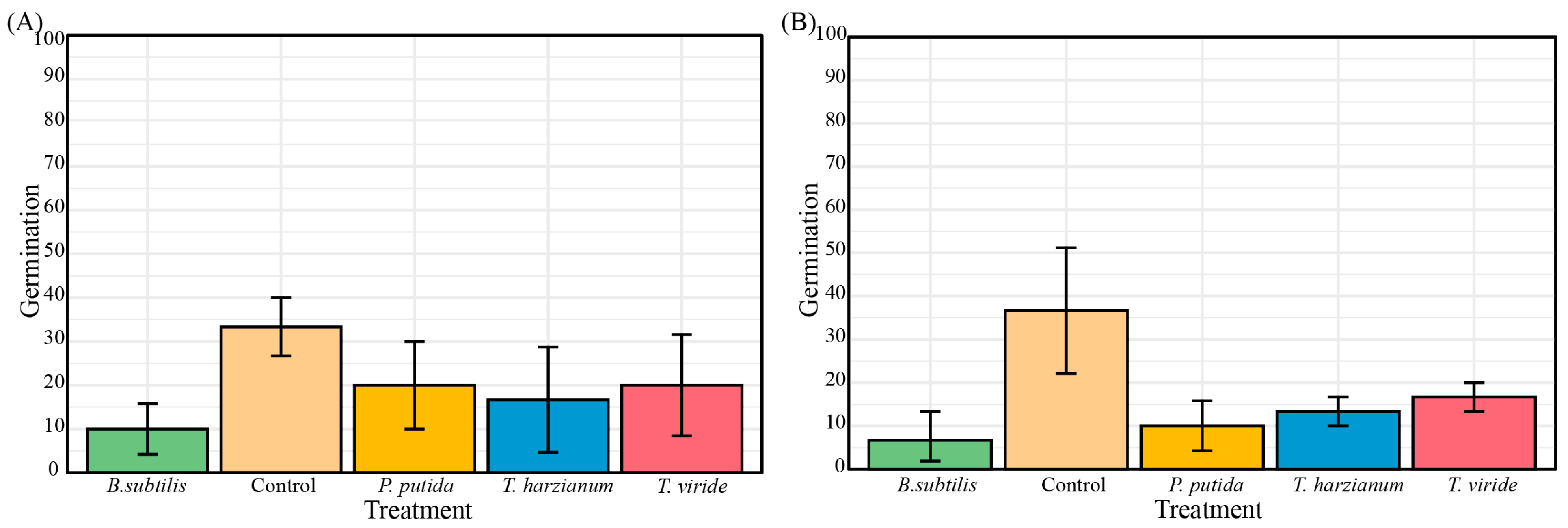
The final germination percentage (FGP) of
L. leucocephala ranged from 10.00% under
B. subtilis inoculation to 33.33% in the non-inoculated control (
Table 1;
Figure 1A). No significant differences among treatments were detected (
p = 0.154). However, the effect of the replicate was significant (
p = 0.006), indicating substantial variability among experimental units (
Supplementary Table S1). Mean germination time (MGT) ranged from 6.00 days under
T. harzianum inoculation to 8.75 days under
B. subtilis inoculation, with no significant differences among treatments (
Table 1).
For
M. maximus cv. Mombasa, FGP ranged from 6.67% under
B. subtilis inoculation to 36.67% in the control (
Table 1;
Figure 1B). Neither treatment (
p = 0.192) nor replicate had a significant effect on FGP (
Supplementary Table S1). Mean germination time ranged from 2.67 ± 0.33 days under
T. harzianum inoculation to 4.11 ± 0.73 days in the control, without significant differences among treatments (
Table 1). The MGT value for the
B. subtilis treatment was based on the only replicate in which germination occurred.
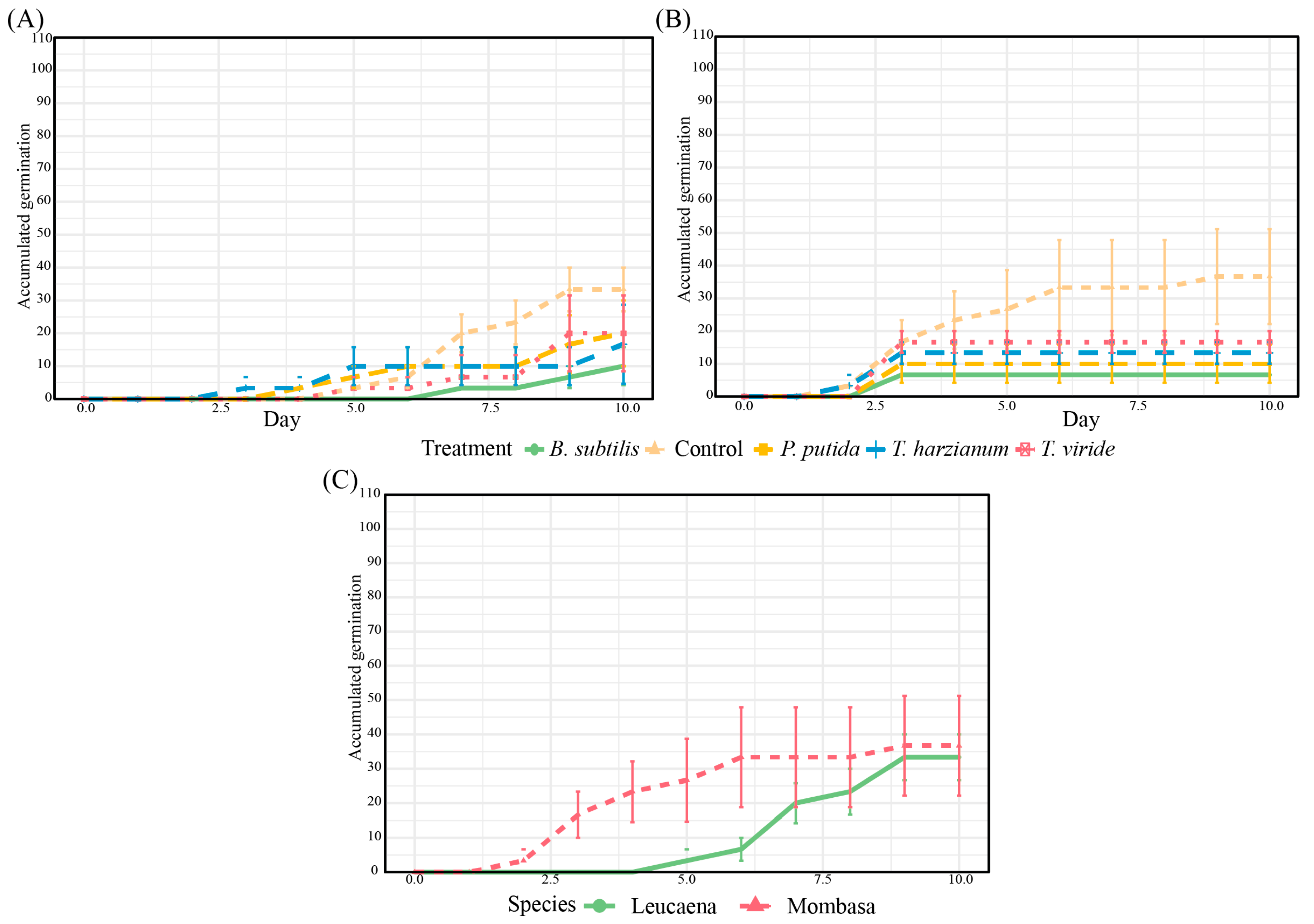
Cumulative germination curves showed that germination began at approximately day 3 in both species (
Figure 2). In
L. leucocephala, cumulative germination increased gradually throughout the 10-day evaluation period (
Figure 2A). In
M. maximus cv. Mombasa, the control continued to increase until the end of the observation period and reached a higher numerical final percentage than the inoculated treatments (
Figure 2B). The interspecific comparison under the control treatment showed earlier germination in
M. maximus cv. Mombasa and an initial delay in
L. leucocephala, although the two species reached similar final germination percentages (
Figure 2C). The comparatively large standard errors observed for
L. leucocephala reflected the variability among replicates detected in the analysis of variance (
Supplementary Table S1).
For
L. leucocephala, mean root length calculated from the effective replicates ranged from 34.31 ± 7.03 mm under
B. subtilis inoculation to 76.68 ± 29.42 mm under
T. harzianum inoculation. No significant differences among treatments were detected (
Supplementary Tables S2 and S3). Mean shoot length ranged from 6.15 ± 1.22 mm in the control to 14.05 ± 5.15 mm under
T. harzianum inoculation, also without a significant treatment effect (
Supplementary Tables S4 and S5). The number of effective replicates differed among treatments because some experimental units did not produce measurable plant tissue.
For
M. maximus cv. Mombasa, mean root length ranged from 1.43 mm under
B. subtilis inoculation to 20.98 ± 13.94 mm under
P. putida inoculation, with no significant differences among treatments (
Supplementary Tables S1 and S2). The
B. subtilis treatment was represented by a single replicate with measurable roots; therefore, its standard error could not be calculated. Shoot length was summarized descriptively and was not subjected to statistical analysis because measurable shoots were obtained in only three treatments and the number of effective replicates was both insufficient and unequal.
Overall, microbial inoculation did not significantly modify final germination percentage, mean germination time, root length, or shoot length in either forage species under the conditions of the germination assay.
3.2. Nursery Phase
At the final nursery assessment, 60 of the 70 pots contained at least one plant, representing 85.7% of the experimental units. This corresponded to 30 of the 35 pots established for each forage species. Accordingly, the analyses of final growth traits included 30 experimental units per species, with five to seven pots represented in each treatment.
For
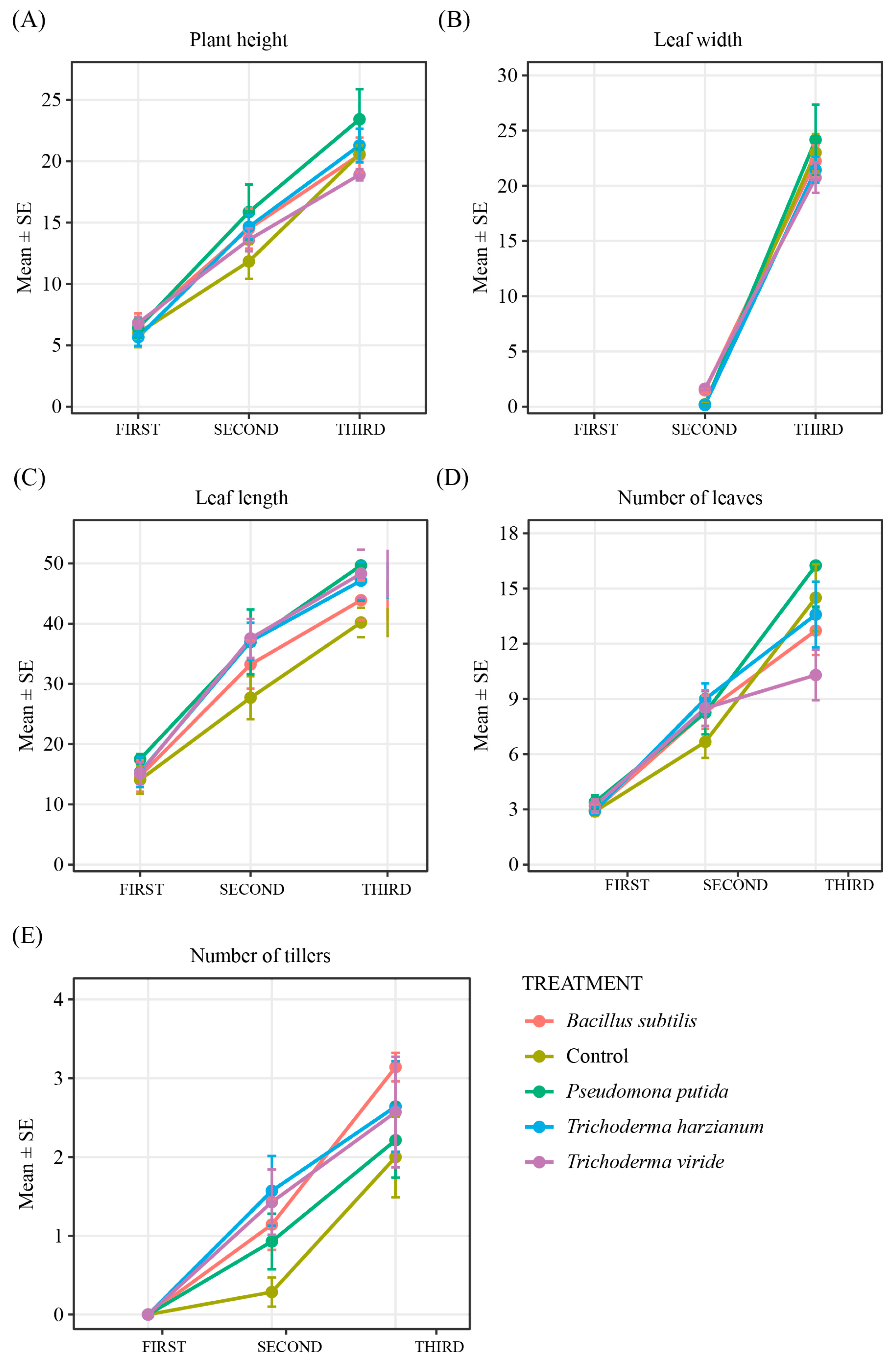
M. maximus cv. Mombasa, the linear mixed-effects models detected a significant effect of evaluation time on all growth variables (
p < 0.001;
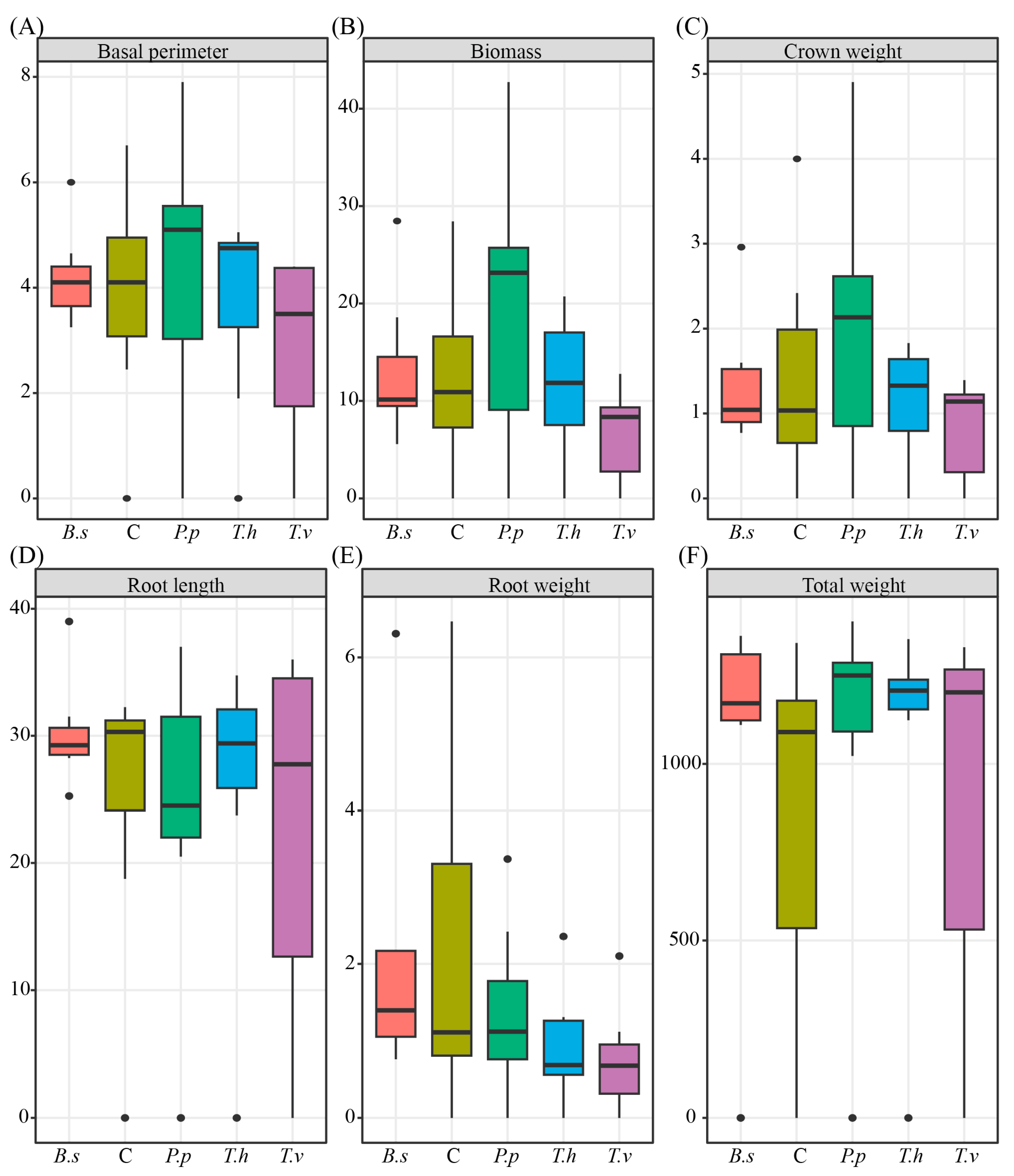
Supplementary Table S6). Neither microbial treatment nor the treatment × time interaction significantly affected any of the variables. Thus, plant height, number of leaves, number of tillers, leaf width, and leaf length changed over the nursery period, but their temporal trajectories did not differ significantly among treatments (
Figure 3). Similarly, none of the growth traits measured at the final assessment differed significantly among treatments (
Supplementary Table S7;
Figure 4).
For
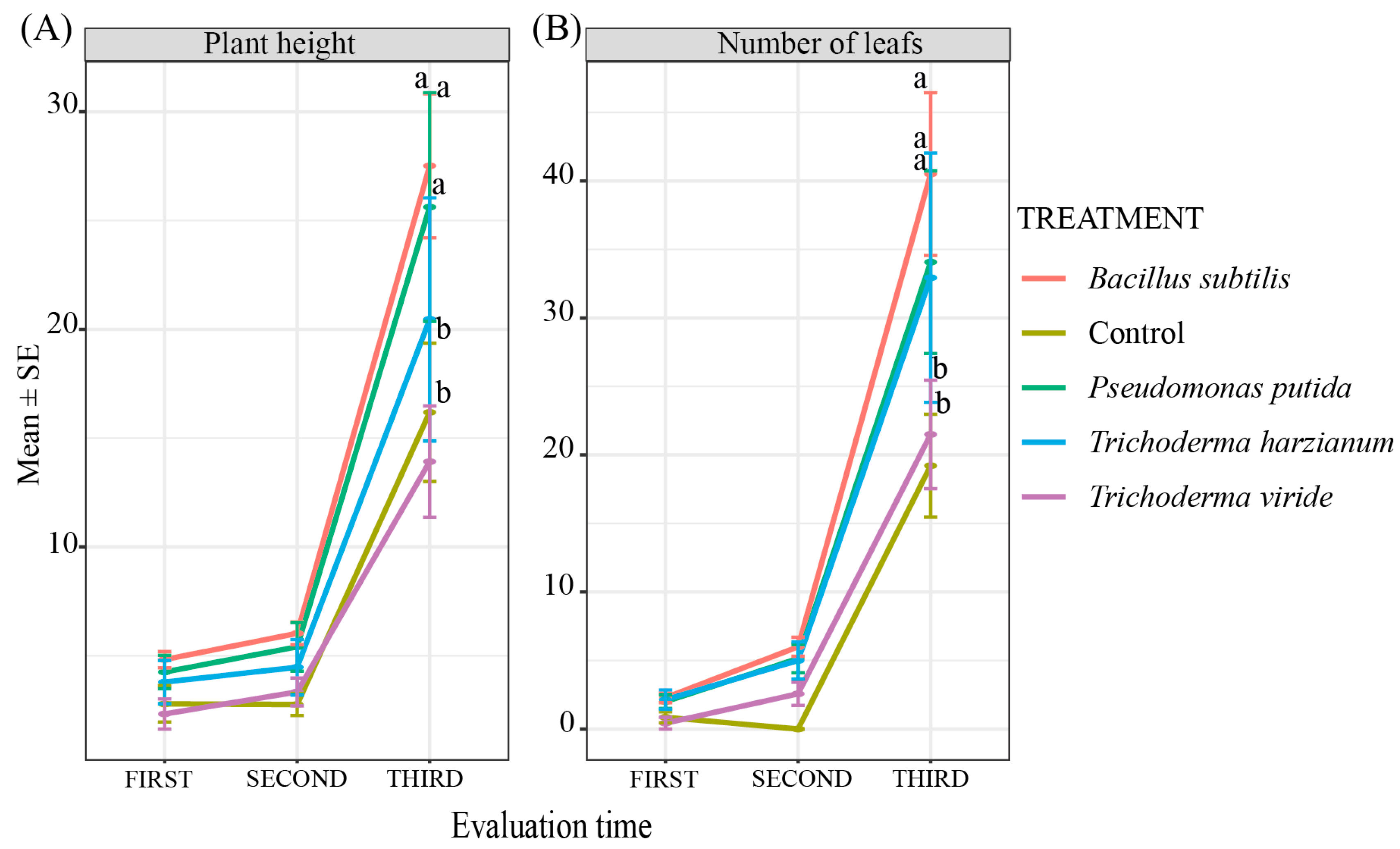
L. leucocephala, significant effects of microbial treatment, evaluation time, and their interaction were detected for both plant height and number of leaves (
Supplementary Table S8;
Figure 5). These interactions indicated that the temporal trajectories of both growth variables differed among treatments. No pairwise differences among treatments were detected at the first evaluation. At the third evaluation, plant height and number of leaves were significantly greater under
B. subtilis,
P. putida, and
T. harzianum than under the control and
T. viride. The three former treatments did not differ significantly from one another, and the control did not differ significantly from
T. viride.
For number of leaves, the Control × second evaluation combination contained no measurable observations. Comparisons involving the control at that evaluation could therefore not be estimated, and the Type III results for this variable should be interpreted cautiously.
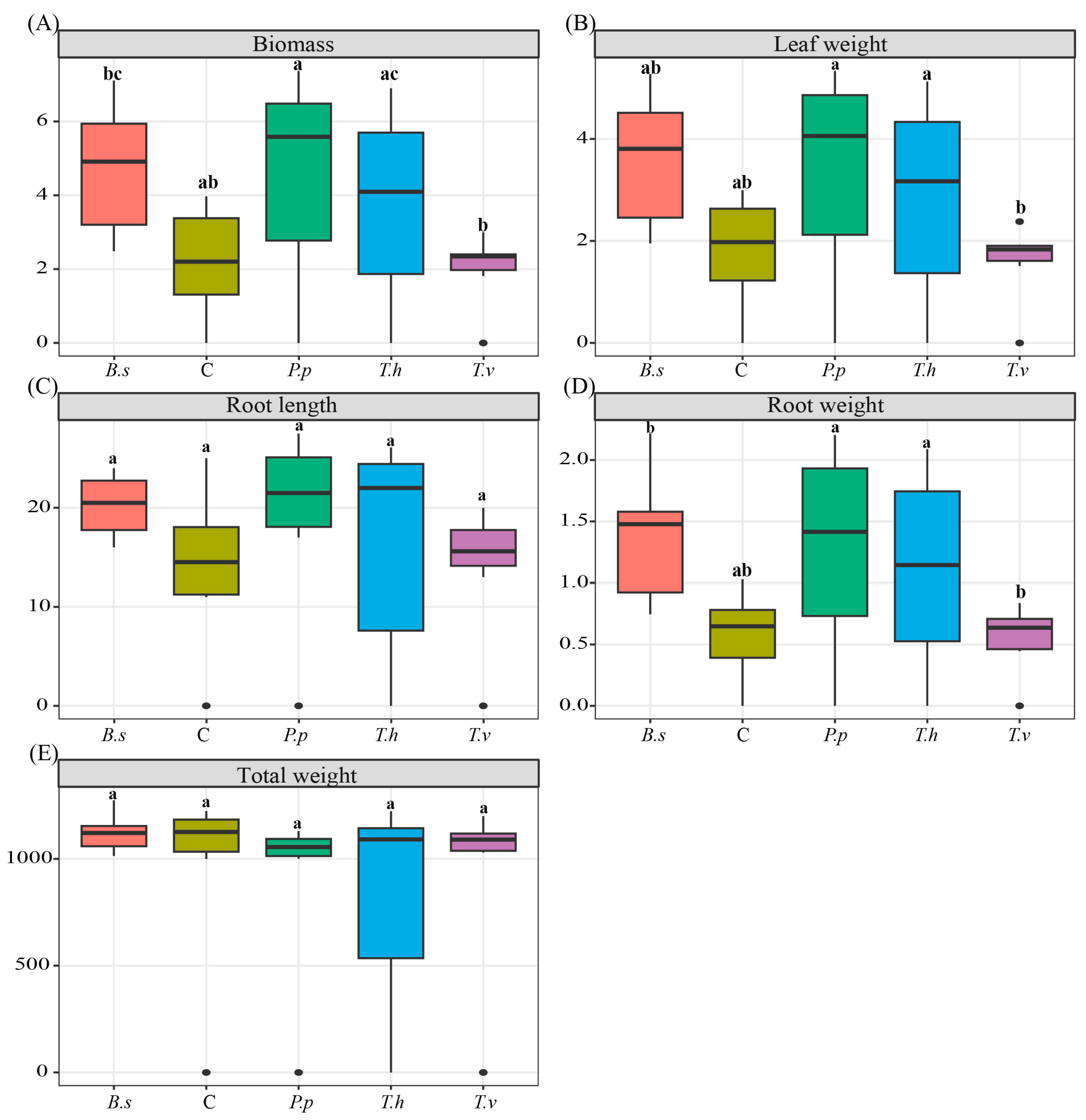
At the final nursery assessment, microbial treatment significantly affected biomass, leaf weight, root length, and root weight in
L. leucocephala, whereas total weight did not differ significantly among treatments (
Supplementary Table S9;
Figure 6). Tukey-adjusted comparisons showed that biomass was greater under
P. putida than under the control and
T. viride, and greater under
T. harzianum than under
T. viride. Leaf weight was greater under
P. putida and
T. harzianum than under
T. viride. Although the overall treatment effect on root length was significant, none of the individual pairwise comparisons remained significant after Tukey adjustment. Root weight was greater under
P. putida and
T. harzianum than under both the control and
T. viride.
The Type III multivariate analysis of variance detected a significant effect of plant species on the combined set of final growth variables (
p < 0.001;
Supplementary Table S10). Significant multivariate effects were also detected for microbial treatment (
p = 0.0126) and the species × treatment interaction (
p = 0.0016). These results indicate that the combined profile of final growth responses differed between species and among microbial treatments.
The subsequent univariate two-way analyses detected significant species effects on biomass and root length (
p < 0.001) and on root weight (
p = 0.0477;
Supplementary Table S11). Total weight did not differ significantly between species. Among the individual response variables, only biomass showed a significant treatment effect (
p = 0.0497). No species × treatment interaction was significant for any individual variable. Thus, the significant multivariate interaction reflected differences in the joint response profile rather than a statistically significant interaction for any single growth trait.
Overall, nursery growth in M. maximus cv. Mombasa was primarily associated with evaluation time, without significant treatment-dependent trajectories or final treatment effects. In contrast, L. leucocephala showed treatment-dependent temporal trajectories and significant treatment effects on several final growth traits. The multivariate analysis further indicated that the joint response to microbial inoculation differed between the legume and the grass.
3.3. Preliminary Field Assessment Results
Field measurements were interpreted descriptively because treatment placement followed the pre-existing arrangement of the silvopastoral system and each treatment × species combination was represented by a single non-randomized row. Individual plants within each row were considered subsamples rather than independent experimental replicates. Consequently, treatment identity was confounded with row position, and no inferential comparisons among treatments were performed.
Descriptive summaries of the treatment-associated rows are presented in
Table 2, with the distributions of individual plant measurements shown in
Supplementary Figures S2 and S3. In
M. maximus cv. Mombasa, the row associated with
P. putida had the largest numerical mean values for plant height and biomass, whereas the row associated
with T. harzianum had the largest numerical mean crown diameter. In
L. leucocephala, the row associated with
T. viride had the largest numerical means for all four measured traits, whereas the row associated with
T. harzianum had the smallest numerical means.
The numerical patterns observed among treatment-associated rows differed between the two forage species. However, because treatment identity was confounded with row position, these patterns cannot be attributed to microbial inoculation and should be considered preliminary observations, hypothesis-generating requiring confirmation in randomized and independently replicated field trials.
3.4. Descriptive Forage Chemical Composition and In Vitro Digestibility
Chemical composition and in vitro fermentation analyses were performed using one composite sample for each species × treatment combination, without analytical or field replication. Accordingly, the results were summarized descriptively, no inferential statistical analyses were conducted, and the observed numerical differences cannot be attributed to the microbial treatments. Proximate composition is presented in
Table 3, fiber fractions in
Table 4, and in vitro ruminal fermentation and digestibility parameters in
Table 5.
Among the analyzed composite samples, the most notable numerical contrasts between the two forage species were observed for crude protein, acid detergent lignin, and in vitro organic matter digestibility. Across the composite samples, crude protein ranged from 19.15% to 28.73% in
L. leucocephala and from 16.76% to 18.35% in
M. maximus cv. Mombasa (
Table 3). Acid detergent lignin ranged from 3.60% to 3.90% in
L. leucocephala and from 4.00% to 4.20% in
M. maximus cv. Mombasa (
Table 4). In vitro organic matter digestibility ranged from 78% to 81% in
L. leucocephala and from 75% to 77% in
M. maximus cv. Mombasa (
Table 5). These values describe only the analyzed composite samples and should not be interpreted as evidence of microbial treatment effects or as statistically demonstrated differences between the forage species.
4. Discussion
4.1. Germination Phase Responses
No significant differences among microbial treatments were detected in the final germination percentage of either forage species. Thus, the germination phase did not provide evidence of a treatment-dependent response under the conditions evaluated. This result differs from controlled studies reporting improvements in seed germination and early seedling growth following inoculation with selected plant growth-promoting rhizobacteria, as well as from the biostimulatory potential described for
Trichoderma species [
25,
34,
35]. However, microbial effects on germination depend on the plant species, microbial strain, inoculation procedure, seed characteristics, and experimental conditions. Therefore, these previous findings are not directly comparable with the forage species and inoculants evaluated in the present study.
Dos Santos Lopes et al. (2018) [
36] found that the inoculation of
Brachiaria brizantha with
Pseudomonas fluorescens and
Burkholderia pyrrocinia through soil drenching at the seedling stage was more effective than inoculation applied only to the seeds or sequentially to both seeds and soil. The authors proposed that the limited response to seed inoculation could be related to the recognition of microbial compounds by the plant, the activation of defense-related responses, and the allelopathic potential of
Brachiaria, although these mechanisms were not directly measured. In the present study, the inoculants were applied to seeds during the germination phase and to the growth substrate during the subsequent nursery and field phases. These phases cannot be used to determine whether one inoculation method was more effective because they also differed in plant developmental stage, substrate, experimental duration, inoculum concentration, and environmental conditions. Moreover, a recent meta-analysis found no overall differences in effect size among seed, seedling, root-zone, and growth-medium inoculation methods when results from multiple plant–microorganism systems were integrated [
16]. Consequently, the absence of a response during germination cannot be attributed solely to seed inoculation.
In
L. leucocephala, the low germination percentage may also partly reflect physical dormancy imposed by the resistant and water-impermeable seed coat because no specific scarification treatment was applied before inoculation. Previous germination assays with this species showed that untreated seeds germinated poorly, whereas mechanical or chemical scarification substantially increased germination [
37]. Nevertheless, dormancy was not assessed directly in the present study, and seed viability was not evaluated independently; therefore, the relative contributions of dormancy, seed-lot quality, and experimental conditions cannot be separated.
The germination experiment included only three replicates per treatment, and germination was low in both species. These conditions reduced statistical power and produced unequal effective sample sizes for mean germination time and seedling-growth measurements. No consistent treatment-associated pattern was detected for root length in either species or for shoot length in L. leucocephala. In M. maximus cv. Mombasa, the small and unequal number of replicates containing measurable shoots prevented statistical analysis of shoot length. Accordingly, the absence of significant differences should not be interpreted as conclusive evidence that the inoculants had no biological effect, but the numerical variation observed is insufficient to support a consistent germination-promoting response. In practical production systems, L. leucocephala seeds are commonly scarified before sowing; therefore, future studies should evaluate scarification and microbial inoculation together to determine the contribution of inoculation under more realistic sowing conditions.
Future germination studies should increase the number of independent replicates, assess the initial viability of the seed lots, and combine an appropriate scarification treatment with microbial inoculation in L. leucocephala to evaluate inoculant effects under more realistic sowing conditions.
4.2. Host Species-Dependent Responses in the Nursery
During the nursery phase, the response to microbial inoculation depended on the plant species and the growth trait evaluated. In L. leucocephala, microbial treatments were associated with differences in the temporal development of plant height and leaf number and with variation in several final aboveground and root traits. By contrast, growth variation in M. maximus cv. Mombasa was primarily associated with evaluation time, without consistent treatment-dependent responses. Thus, the growth measurements indicate contrasting response patterns between the two forage species. In L. leucocephala, responses were expressed in both aboveground and belowground growth components, whereas the absence of a treatment effect on total weight indicates that these responses did not represent a uniform increase in whole-plant growth. In M. maximus cv. Mombasa, the marked temporal changes in the measured growth traits, together with the absence of consistent treatment effects, indicate that plant development over the evaluation period was the main source of growth variation under nursery conditions.
After accounting for the overall species effect, the multivariate analysis detected a species × treatment interaction, indicating that the joint growth-response profile differed between the two forage species. However, the corresponding univariate interactions were not significant. The multivariate result should therefore not be interpreted as evidence of a species-specific treatment effect for every individual trait.
This host- and trait-dependent pattern is consistent with evidence showing that microbial inoculation outcomes vary according to both the plant characteristic evaluated and the taxonomic identity of the inoculated microorganism [
16]. Using the same
Pseudomonas strain in two plant families, Kuhl-Nagel et al. (2022) [
38] observed changes in root architecture and growth in
Arabidopsis thaliana, whereas inoculation increased plant fresh weight in wheat. Although that experimental system is not directly comparable with the forage species evaluated here, it illustrates that the response to a microbial isolate may be expressed through different growth components depending on the host plant.
The preliminary field observations could not be used to determine whether the nursery responses were reproduced under field conditions because each treatment × species combination was represented by a single non-randomized row. Field performance of microbial inoculants can be influenced by soil properties, climatic conditions, resident microbial communities, and inoculant establishment and persistence [
39,
40,
41]. However, these factors were not measured in the present study, and treatment identity was confounded with row position. The numerical patterns observed among field rows should therefore be regarded only as preliminary, descriptive, and hypothesis-generating observations. Testing whether these patterns reflect microbial treatment effects will require randomized field trials with independently replicated rows and, where feasible, measurements of inoculant establishment and persistence.
4.3. Origin of the Bacterial Isolates and Host-Dependent Variation in Nursery Responses
Bacillus subtilis and
Pseudomonas putida were originally isolated from the rhizosphere of
Persea americana and evaluated as plant growth-promoting bacteria in avocado seedlings [
23]. Their performance in the original host does not imply that they will produce an equivalent response in taxonomically and functionally different plant species. Solórzano-Acosta and Quispe (2024) [
23] documented differences among the bacterial isolates evaluated in their effects on nutrient acquisition and avocado seedling growth, supporting the need to assess candidate inoculants in the intended crop rather than extrapolating their performance from the host in which they were initially characterized. Because these bacterial isolates originated from the avocado rhizosphere, their establishment and functional interactions may differ when introduced into taxonomically and functionally distinct forage hosts, potentially contributing to the contrasting nursery responses observed. However, microbial colonization and persistence were not measured; therefore, this interpretation remains hypothetical.
Evidence from other plant systems also indicates that inoculation responses can vary with host identity and genotype. Kuhl-Nagel et al. (2022) [
38] found that the same Pseudomonas strain modified root architecture and increased fresh weight in
Arabidopsis thaliana, whereas in wheat it increased root and shoot fresh weight without significantly affecting dry weight. Thus, the response was expressed through different growth components in the two hosts. Schlemper et al. (2018) [
42] similarly reported that the effects of
Burkholderia tropica and
Herbaspirillum frisingense varied among sorghum cultivars. Both strains increased biomass in some cultivars, whereas changes in root diameter were detected in only one cultivar and comparable growth responses were not observed in the others. More recently, Rotoni et al. (2024) [
43] found that the effects of bacterial and arbuscular mycorrhizal inoculation on chrysanthemum root biomass ranged from positive to negative depending on the cultivar. Collectively, these studies indicate that inoculant performance may depend on host identity and genotype.
In the present nursery experiment, significant treatment effects were detected for a greater number of growth traits in
L. leucocephala than in
M. maximus cv. Mombasa. The multivariate species × treatment interaction further indicated that the joint growth-response profile differed between the two forage species after accounting for their overall growth differences. This interpretation is consistent with broader evidence that responses to microbial inoculation vary according to the plant trait evaluated and the taxonomic identity of the microorganism [
16]. Nevertheless, the corresponding univariate species × treatment interactions were not significant, and the multivariate analysis evaluated the four microorganisms jointly. The observed pattern therefore cannot be attributed to a particular host–strain combination and does not demonstrate that any inoculant was specifically compatible with either forage species.
The nursery results are consistent with host-dependent variation in the overall response to inoculation, but they do not demonstrate host–strain specificity or identify the mechanisms underlying the contrasting response profiles. Root colonization, inoculant persistence, and interactions with resident microbial communities were not measured. Demonstrating specific compatibility would require experiments designed to compare each strain across both forage species while quantifying microbial establishment and persistence. Subsequent field validation would additionally require randomized allocation and independently replicated experimental units.
4.4. Forage Chemical Composition
The bromatological characterization was based on one composite sample for each species × treatment combination, without analytical or field replication. Consequently, the numerical variation among samples cannot be attributed to microbial inoculation, and the apparent differences between forage species cannot be regarded as statistically demonstrated. Across the analyzed composite samples, numerically higher crude protein and in vitro organic matter digestibility values were observed for
L. leucocephala than for
M. maximus cv. Mombasa. The numerically higher crude protein values observed in the
L. leucocephala composite samples are consistent with the recognized nutritional profile of this species as a protein-rich tropical forage legume [
7]. Nevertheless, the present sampling design does not allow the factors underlying the observed numerical differences in composition and digestibility to be identified.
Although condensed tannins are characteristic secondary compounds of
L. leucocephala, their presence should not be invoked as an explanation for the numerically higher digestibility observed in the composite samples. The effects of condensed tannins on nutrient utilization and ruminal fermentation depend on their concentration and the composition of the complete diet. Montoya-Flores et al. (2020) [
8], for example, reported reductions in the apparent digestibility of organic matter, neutral detergent fiber, and energy as the dietary inclusion of dried
Leucaena leaves increased, although moderate inclusion improved digestible protein and reduced enteric methane production. Because condensed tannin concentrations were not measured in the present study, no mechanistic relationship can be established between these compounds and the observed digestibility or fermentation values.
Accordingly, the chemical composition and in vitro fermentation results provide a descriptive reference for the forage material collected during the study, rather than evidence that microbial inoculation modified forage nutritional quality. Replicated sampling and analytical determinations would be required to evaluate treatment effects and to distinguish them from natural variation in plant material.
4.5. Limitations
The preliminary field assessment lacked treatment randomization and independent replication because each treatment × species combination was represented by a single row and individual plants within rows were subsamples rather than independent experimental replicates. Consequently, numerical differences among rows cannot be attributed causally to microbial inoculation and may reflect spatial heterogeneity within the site [
44]. The field observations should therefore be regarded as preliminary and hypothesis-generating. In the nursery experiment, unequal numbers of pots with measurable plant material and model limitations for some repeated measurements warrant cautious interpretation. The germination assay included only three replicates per treatment and showed low germination, reducing statistical power. Chemical composition was determined from one composite sample per species × treatment combination and was therefore descriptive. Finally, the study was conducted at one site and during one growing season, without measurements of root colonization or inoculant persistence. The nursery findings require confirmation in additional replicated experiments, whereas testing whether the observed field patterns reflect microbial treatment effects will require randomized treatment allocation and independently replicated experimental units across sites and seasons.



 ,
,