Article

Genotype-Dependent Fermentation Efficiency, Nutrient Losses, and Silage Quality of Sweet Potato Vines Under Semi-Arid Conditions


by
Christiano Bosco Xavier de Lima
1,
Izaias da Silva Lima Neto
1,
Osmar Vieira de Carvalho Júnior
2,
Carlos Alberto da Silva Ledo
3,
Glayciane Costa Gois
4,
Daniel Ribeiro Menezes
5,
Augusto Henryque Costa Souza
6,
Elisvaldo José Silva Alencar
6,
Tamires Marcelino da Silva Felix
7 and
Mário Adriano Ávila Queiroz
6,*
1
Department of Agronomic Engineering, Federal University of the São Francisco Valley, Petrolina 56304-917, PE, Brazil
2
Department of Agronomic Engineering, State University of Bahia, Juazeiro 48904-711, BA, Brazil
3
Brazilian Agricultural Research Corporation, National Centre for Cassava and Tropical Fruit Research, Cruz das Almas 44380-000, BA, Brazil
4
Postgraduate Programme in Animal Science, Federal University of Maranhão, Chapadinha 65500-000, MA, Brazil
5
Department of Veterinary Medicine, Federal University of the São Francisco Valley, Petrolina 56304-917, PE, Brazil
6
Department of Animal Science, Federal University of the São Francisco Valley, Petrolina 56304-917, PE, Brazil
7
MCassab Nutrição Animal, Jarinu 13242-630, SP, Brazil
*
Author to whom correspondence should be addressed.
Grasses 2026, 5(3), 24; https://doi.org/10.3390/grasses5030024 (registering DOI)
Submission received: 7 May 2026 / Revised: 14 June 2026 / Accepted: 16 June 2026 / Published: 24 June 2026

Abstract

Sweet potato (Ipomoea batatas (L.) Lam.) aerial biomass has potential as an alternative forage resource for ruminants in semi-arid regions; however, the fermentative behavior of different genotypes remains poorly understood. This study evaluated the fermentation profile, nutrient losses, and chemical composition of silages produced from the aerial parts of ten sweet potato accessions cultivated under agroecological conditions. Wilted biomass from each accession was pooled, homogenized, and ensiled in four mini-silos used as subsamples for fermentation characterization. Hierarchical clustering identified two distinct groups, indicating clear genotype-dependent variation in silage performance. Accessions BGH-UNIVASF 8 and 16 showed superior fermentation efficiency, characterized by greater dry matter recovery, lower effluent and gas losses, and more stable fermentation profiles. In contrast, several high-yielding accessions exhibited greater fermentation losses, indicating a trade-off between biomass productivity and preservation efficiency. Total digestible nutrients varied among accessions but were not consistently associated with fermentation quality. Overall, the results demonstrate that silage quality in sweet potato is strongly genotype-dependent and highlight the importance of integrating agronomic, nutritional, and fermentative traits when selecting accessions for silage production under semi-arid conditions.

1. Introduction

Arid and semi-arid regions are characterized by marked climatic variability, which directly affects plant productivity and limits forage availability for ruminant feeding [1]. In this context, the use of forage conservation technologies based on alternative crops with low water requirements may contribute to improving the sustainability and efficiency of livestock systems under water-limited conditions [2].
Sweet potato (Ipomoea batatas (L.) Lam.) is one of the most widely cultivated food crops worldwide and has considerable potential for use in animal feeding systems. Its adaptability to diverse soil and climatic conditions, drought tolerance, short production cycle, and relatively low production costs make this crop particularly attractive for semi-arid regions [3,4].
Globally, sweet potato ranks among the most important root and tuber crops and is widely cultivated throughout tropical and subtropical regions because of its adaptability, nutritional value, and versatility for human consumption [3,4]. Although production systems focus primarily on harvesting storage roots, aerial biomass and non-commercial tubers may represent up to 50% of the total plant biomass, generating a substantial amount of underutilized material with potential for animal feeding [5]. This biomass is often underutilized despite its recognized potential as a forage resource for ruminants and its suitability for hay and silage production [4,5]. In many livestock production systems, silage production relies predominantly on conventional crops such as maize, sorghum, tropical grasses, and, more recently, forage cactus in semi-arid environments [2]. However, increasing pressure on water resources and the need to enhance the utilization of agricultural by-products have stimulated interest in alternative forage sources capable of sustaining animal production under semi-arid conditions [1,2,6].
The utilization of agricultural by-products in ruminant nutrition has received increasing attention because of its potential to reduce feeding costs and improve the sustainability of livestock production systems [6]. Sweet potato aerial biomass presents favorable nutritional characteristics, including moderate to high crude protein concentrations, satisfactory digestibility, and adequate fiber levels for ruminant feeding [4,7]. Consequently, these materials can be used either fresh or conserved as silage [8].
The selection of sweet potato genotypes is strongly influenced by environmental conditions, cultivation objectives, and agronomic performance. Approximately 6500 sweet potato cultivars are distributed worldwide, including at least 32 officially registered cultivars in Brazil [9,10]. The hexaploid and highly heterozygous nature of sweet potato contributes to substantial genetic variability, resulting in marked differences in chemical composition, biomass production, and metabolic profiles among accessions [11,12]. Previous studies have reported considerable variation in dry matter content, crude protein concentration, starch accumulation, and bioactive compounds among sweet potato genotypes [13,14,15].
Recent studies have demonstrated that silage quality and fermentative profile of sweet potato aerial biomass are influenced by cultivar characteristics and harvest stage [16]. In addition, the initial chemical composition of the forage, particularly dry matter concentration, soluble carbohydrates, and fiber fractions, plays a central role in determining fermentation dynamics and nutrient preservation during ensiling [17,18]. Despite these advances, information regarding genotype-dependent variation in fermentation efficiency and nutrient losses of sweet potato vine silages remains limited, especially under semi-arid conditions.
Based on the wide genetic variability of sweet potato and its known effects on chemical composition and metabolic pathways, we hypothesized that different accessions would exhibit distinct fermentation patterns and silage quality traits. Specifically, accessions with higher dry matter concentration and more favorable compositional characteristics were expected to promote more efficient fermentation and lower nutrient losses during ensiling.
Therefore, this study aimed to evaluate the fermentation profile, nutrient losses, and nutritional composition of silages produced from the aerial biomass of different sweet potato accessions cultivated under semi-arid conditions.

2. Materials and Methods

2.1. Experimental Area and Soil Characterization

The experiment was conducted at the Federal University of the São Francisco Valley (UNIVASF), Campus of Agricultural Sciences, Petrolina, Pernambuco, Brazil (9°19′13.6″ S, 40°33′45.5″ W; 396 m altitude). The region has a semi-arid climate (BSh, Köppen classification), characterized by high temperatures, low relative humidity, and irregular rainfall distribution. During the experimental period, minimum and maximum temperatures ranged from 22.3 to 39.5 °C, respectively, with mean relative humidity of 63% and accumulated rainfall of 45 mm.
The experimental area (500 m2) was prepared by plowing and harrowing. Soil was classified as a dystrophic Yellow Argisol with sandy texture [19]. Soil samples collected from the 0–20 cm layer were analyzed for physicochemical characteristics according to [20] (Table 1).

2.2. Experimental Design and Crop Establishment

The field experiment was conducted under open-field conditions using a randomized complete block design with ten treatments and three blocks. Treatments corresponded to ten sweet potato accessions (BGH-UNIVASF 8, 10, 11, 12, 14, 15, 16, 17, 18, and 22) obtained from the Active Germplasm Bank (BGH) of the Federal University of the São Francisco Valley (UNIVASF), Brazil. Blocks were established to account for spatial variability within the experimental area, particularly differences in soil and field conditions.
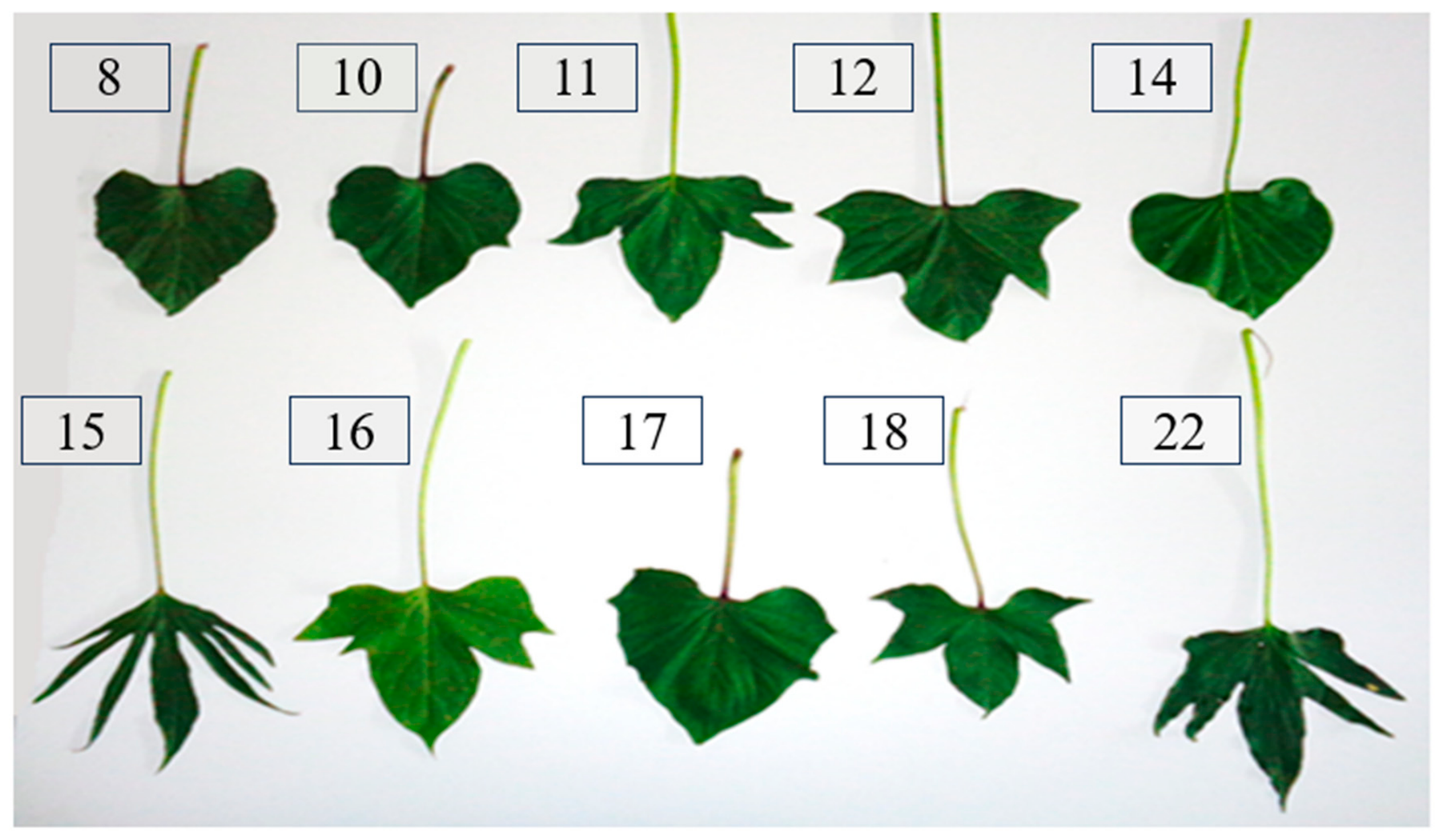
The marked variation in leaf morphology among accessions (Figure 1) illustrates the phenotypic diversity present within the germplasm collection, which may contribute to differences in biomass production, chemical composition, and silage characteristics.
The numerical designations correspond to accession identification codes maintained within the germplasm collection and do not represent commercial cultivars. These accessions were selected because they represent genetically distinct materials with previously identified agronomic potential, including tolerance to pests and diseases and adaptation to semi-arid and water-limited environments.
A total of 30 experimental plots were established, each measuring 4.0 × 0.5 × 0.3 m, with 1.60 m spacing between plots. Plants were spaced 0.4 m apart within each plot, totaling 10 plants per experimental unit, of which the six central plants were used for evaluation.
Planting was performed using standardized vine cuttings containing eight nodes, with three to four nodes buried in pre-composted ridges. Cultivation followed agroecological practices, including the use of mulching for weed suppression until complete soil coverage by the vines. No phytosanitary products were applied during the experimental period.
Irrigation was performed daily using a semi-fixed sprinkler system with 1 m nozzle height, 6 × 6 m spacing, flow rate of 0.55 m3 h−1, average water depth of 7.29 mm h−1, and Christiansen uniformity coefficient of 88.09%.
For the silage evaluation, biomass harvested from each accession was used to prepare experimental silos arranged in a completely randomized design with ten treatments (accessions) and four experimental silos per treatment, totaling 40 silos. Four mini-silos were prepared from each accession-specific biomass pool and used as subsamples for fermentation characterization.

2.3. Silage Preparation and Ensiling

After harvest (169 days after planting), aerial biomass was wilted under shade for 24 h and chopped to approximately 2–3 cm particle size using a stationary forage chopper (Nogueira Pecus 9004, Itapira, SP, Brazil). Samples were collected before and after wilting to determine dry matter concentration (Table 2). Fresh matter was determined from the harvested biomass obtained in each experimental plot and expressed on a hectare basis (t ha−1) by extrapolation from the harvested plot area, following standard agronomic procedures for forage productivity assessment.
After harvest, aerial biomass obtained from the three field plots corresponding to each accession was combined to obtain sufficient material for silage production and to standardize the forage offered to the experimental silos. The homogenized biomass was subsequently divided among four mini-silos prepared from each accession-specific biomass pool. These mini-silos were used as technical subsamples to characterize fermentation responses. Because fresh matter exhibited low dry matter concentration, the material was wilted prior to ensiling. Subsequently, four mini-silos were prepared from each homogenized accession-specific biomass pool and randomly assigned during the ensiling process. A 24-h shade-wilting period was adopted because the fresh matter exhibited low dry matter concentrations, which could increase the risk of excessive effluent production and undesirable fermentation during ensiling. No microbial inoculants or additives were applied because the objective was to evaluate the intrinsic fermentation characteristics of each accession under standardized ensiling conditions.
Wilted material was manually homogenized and ensiled in polyvinyl chloride silos (3.6 L capacity) at a target density of 530 kg fresh matter m−3. Silos were fitted with Bunsen valves to allow gas release. A 1 kg layer of dry sand separated by nylon mesh was placed at the bottom of each silo to quantify effluent losses. Silos were sealed and stored under ambient conditions for 75 days, which was considered sufficient to ensure fermentation stabilization.

2.4. Fermentation Losses and Density

After 75 days of ensiling, silos were weighed again to determine silage density, effluent losses, gas losses, dry matter recovery, and total dry matter losses according to [21].
Silage density (D; kg fresh matter m−3) was calculated as:
D = m/V
where m is the mass of ensiled material (kg) and V is the silo volume (m3).
Effluent losses (EL; kg t−1 fresh matter) were calculated as:
EL = {[(ESWO − SW) − (ESWC − SW)]/FMC} × 1000
where ESWO is the empty silo plus sand weight at opening (kg); ESWC is the empty silo plus sand weight at closure (kg); SW is the empty silo weight (kg); and FMC is the fresh matter at closure (kg).
Gas losses (GL; % dry matter) were determined as:
GL = [(SWC − SWO)/(FMC × DMC)] × 100
where SWC is the total silo weight at closure (kg); SWO is the total silo weight at opening (kg); FMC is the fresh matter at closure (kg); and DMC is the dry matter concentration of forage at closure.
Dry matter recovery (DMR; %) was calculated as:
DMR = [(FMO × DMO)/(FMC × DMC)] × 100
where FMO is the fresh matter at opening (kg); DMO is the dry matter concentration at opening; FMC is the fresh matter at closure (kg); and DMC is the dry matter concentration at closure.
Total dry matter loss (TDML; %) was calculated as:
TDML = 100 − DMR

2.5. Fermentation Profile of Silages

Samples collected at silo opening were used to determine pH and fermentation metabolites. For pH determination, 25 g of silage was homogenized with 225 mL of deionized water for 1 min, followed by immediate measurement using a digital potentiometer (Marconi equipment, model MA522, Piracicaba, Brazil), according to [22].
Concentrations of acetic acid (AA), propionic acid (PA), butyric acid (BA), and ethanol were determined by gas chromatography (GC) following the methodologies described by [23,24]. Lactic acid (LA) concentration was determined by high-performance liquid chromatography (HPLC) according to [23].
HPLC analyses were performed using a Shimadzu Prominence LC-20A/i-Series system (Shimadzu, Kyoto, Japan) equipped with an Aminex HPX-87H column (Bio-Rad, Hercules, CA, USA) and refractive index detector. The mobile phase consisted of 0.005 N H2SO4, with column temperature maintained at 65 °C.
Gas chromatography analyses were performed using a TRACE 1300 gas chromatograph (Thermo Fisher Scientific, Waltham, MA, USA) equipped with a Stabilwax® capillary column (Restek, Bellefonte, PA, USA) and flame ionization detector (FID). Helium was used as the carrier gas.

2.6. Chemical Analysis

Samples were pre-dried in a forced-air oven at 55 °C for 72 h and ground in a Wiley mill (Marconi equipment, model MA580, Piracicaba, Brazil) to pass through a 1 mm sieve.
Dry matter (DM) was determined by oven drying at 105 °C for 24 h (AOAC method 930.15), while ash concentration was determined by incineration at 550 °C for 4 h (AOAC method 942.05). Crude protein (CP) was analyzed using the Kjeldahl method (AOAC method 984.13), and acid detergent fiber (ADF) was determined according to AOAC method 973.18 [22].
Neutral detergent fiber (NDF) was analyzed according to [25], using heat-stable α-amylase without sodium sulfite, and values were corrected for residual ash. Soluble carbohydrates (SC) were quantified using the phenol–sulfuric acid method described by [26]. Total digestible nutrients (TDN) were estimated according to [27] using the following equation:
TDN = 82.75 − (0.704 × ADF)

2.7. Statistical Analysis

For fresh matter evaluation, data were analyzed using a randomized block design (RBD) with ten sweet potato accessions and three replicates according to the following model:
Yij = μ + τi + βj + εij
where Yij is the observed value corresponding to the i-th treatment in the j-th block; μ is the overall mean; τi is the fixed effect of the i-th accession (i = 1, 2, …, 10); βj is the effect of the j-th block (j = 1, 2, 3); and εij is the experimental error, assuming εij~N(0, σ2).
For silage variables, four mini-silos were prepared from each accession-specific biomass pool and used to characterize fermentation responses. Statistical comparisons were performed among accessions, whereas mini-silos were treated as subsamples used to estimate within-accession variability according to the following model:
Yij = μ + τi + εij
where Yij is the observed value corresponding to the i-th treatment in the j-th replicate; μ is the overall mean; τi is the fixed effect of the i-th accession (i = 1, 2, …, 10); and εij is the experimental error, assuming εij~N(0, σ2).
For fresh matter, the experimental unit was the field plot and data were analyzed using a randomized complete block design with three blocks. For silage evaluation, the accession-specific biomass pool was considered the biological experimental unit, whereas the four mini-silos were used as technical subsamples to characterize fermentation responses. The two phases were analyzed separately because they addressed distinct biological questions: field productivity and silage fermentation performance. Consequently, statistical inference is restricted to comparisons among accessions and does not represent an estimate of field-to-field variability.
Data were subjected to analysis of variance (ANOVA), and treatment means were compared using Tukey’s test at the 5% significance level.
The objective of the cluster analysis was to identify accessions with similar overall agronomic, fermentative, and nutritional performance. The data matrix included fresh matter, pH, density, effluent losses, gas losses, dry matter recovery, soluble carbohydrates before and after ensiling, organic acids, ethanol concentration, dry matter, ash, crude protein, NDF, ADF, and estimated TDN. Hierarchical clustering was performed using Mahalanobis distance and the UPGMA algorithm [28]. Cluster consistency was evaluated using the cophenetic correlation coefficient [29] and Mantel test with 1000 permutations. The optimal number of clusters was determined using the pseudo-t2 criterion implemented in the NbClust package in R software (version 2025.09.1) [30,31].

3. Results

3.1. Dry Matter Content Before and After Wilting

Wilting effectively increased dry matter concentration in all accessions, with values ranging from 28.3 to 45.1% on an as-fed basis after the 24-h drying period (Table 2). Despite accession-dependent variation, all materials showed substantial increases in dry matter concentration compared with fresh matter.

3.2. Similarity Dendrogram

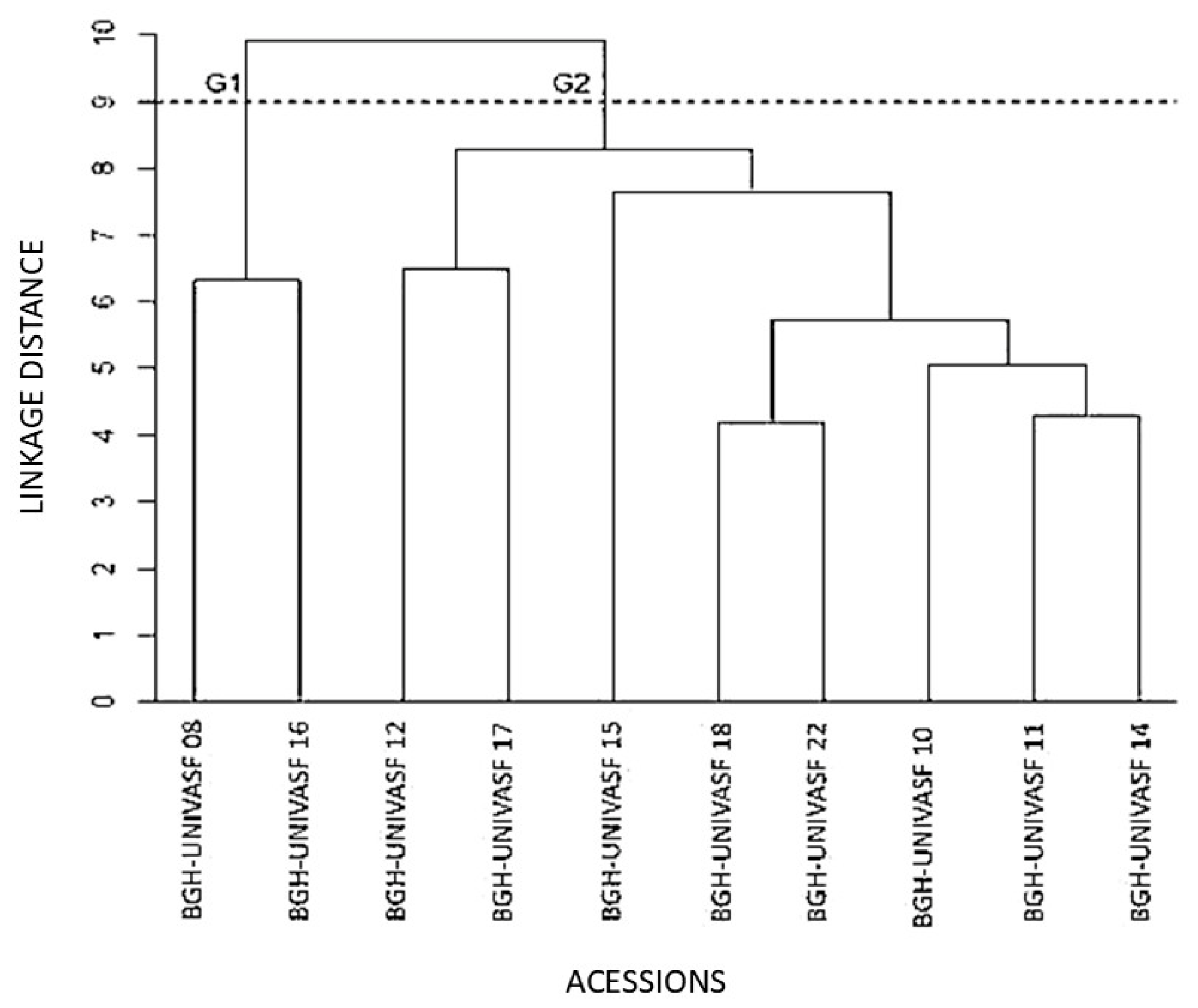
The clustering analysis integrated agronomic performance, fermentation characteristics, nutrient losses, organic acids, and chemical composition variables, providing an overall assessment of accession similarity. Therefore, the identified groups should be interpreted as performance-based clusters rather than genetic relationships among accessions. Hierarchical clustering analysis identified two distinct groups at a linkage distance of 9. Group 1 (G1) comprised accessions BGH-UNIVASF 8 and 16, whereas Group 2 (G2) included accessions BGH-UNIVASF 10, 11, 12, 14, 15, 17, 18, and 22. The cophenetic correlation coefficient (r = 0.827) indicated strong agreement between the dissimilarity matrix and the clustering structure, supporting the consistency and reliability of the dendrogram (Figure 2).
The dendrogram illustrates the phenotypic similarity among accessions, with branch lengths proportional to dissimilarity (linkage distance = 9). Group G1 (BGH-UNIVASF 8 and 16) and Group G2 (remaining accessions) highlight distinct clusters, validated by a high cophenetic correlation coefficient (r = 0.83).

3.3. Fresh Matter, pH, Density, and Fermentation Losses of Silages

Fresh matter differed among accessions (p = 0.012). BGH-UNIVASF 17 exhibited markedly greater forage productivity than the other accessions, producing more than two-fold higher biomass, whereas no significant differences were detected among the remaining materials (Table 3).
Silage pH differed among accessions (p < 0.001), indicating substantial variation in fermentation quality. Accessions BGH-UNIVASF 12, 16, and 17 exhibited the most favorable fermentation profiles, with pH values close to those generally considered adequate for well-preserved silages, whereas BGH-UNIVASF 11 and 15 showed less desirable fermentation conditions (Table 3).
Silage density also varied among accessions (p = 0.025), although the observed differences were relatively small compared with the variation detected for fermentation losses and nutrient preservation indicators.
Accession significantly influenced effluent losses, gas losses, total dry matter losses, and dry matter recovery (p ≤ 0.032). In general, BGH-UNIVASF 8 and 16 consistently exhibited the most favorable preservation characteristics, combining lower fermentation losses with greater dry matter recovery. Conversely, BGH-UNIVASF 15, 17, 18, and 22 showed greater losses during ensiling and reduced recovery of dry matter. The remaining accessions presented intermediate responses, indicating substantial variability in silage preservation efficiency among the evaluated materials.

3.4. Soluble Carbohydrates, Organic Acids, and Ethanol Before and After Ensiling

Before ensiling, soluble carbohydrate concentration differed among accessions (p < 0.001). The highest concentrations were observed in BGH-UNIVASF 16 and 8, whereas the least concentrated accessions contained approximately one-third less fermentable substrate, highlighting substantial variation in the potential for fermentation among materials (Table 4).
After ensiling, soluble carbohydrate concentrations decreased markedly in all accessions (p < 0.001), reflecting the utilization of fermentable substrates during the fermentation process. Nevertheless, BGH-UNIVASF 8 and 16 retained greater concentrations of residual soluble carbohydrates than the other accessions, suggesting improved preservation of fermentable nutrients (Table 4).
Fermentation end-products also varied among accessions. Lactic acid concentrations differed significantly (p = 0.014), although elevated lactic acid production was not consistently associated with improved fermentation quality. For example, accessions exhibiting greater lactic acid concentrations also showed increased concentrations of acetic acid, propionic acid, butyric acid, ethanol, or greater dry matter losses. In contrast, BGH-UNIVASF 8 and 16 combined relatively low concentrations of undesirable fermentation products with greater nutrient preservation. Acetic acid, propionic acid, butyric acid, and ethanol concentrations were generally higher in BGH-UNIVASF 10, 11, and 15, indicating less efficient fermentation patterns and greater substrate conversion into secondary fermentation products (Table 4).

3.5. Silage Chemical Composition

Chemical composition differed markedly among accessions (p ≤ 0.042; Table 5), indicating substantial variation in nutritional characteristics and forage preservation potential. BGH-UNIVASF 16 exhibited the greatest dry matter concentration, whereas BGH-UNIVASF 10 showed the lowest value. Ash concentration was generally lower in BGH-UNIVASF 12, 16, and 17 and greater in BGH-UNIVASF 15.
Crude protein concentration also varied considerably among accessions (p < 0.001). The greatest protein concentrations were observed in BGH-UNIVASF 8, 11, and 14, whereas BGH-UNIVASF 17 exhibited substantially lower protein content than the remaining accessions.
Fiber fractions differed among accessions (p ≤ 0.014), with BGH-UNIVASF 10, 11, 14, 18, and 22 generally presenting greater NDF and ADF concentrations, while BGH-UNIVASF 12 consistently exhibited lower fiber concentrations. Consequently, estimated total digestible nutrients also differed among accessions (p = 0.033), with BGH-UNIVASF 12 showing the greatest estimated energy value and BGH-UNIVASF 10 and 22 the lowest (Table 5).

4. Discussion

The high cophenetic correlation coefficient (r > 0.8) obtained in the cluster analysis indicates that the UPGMA method adequately represented the dissimilarity structure among the evaluated accessions [28]. This statistical consistency supports the existence of two distinct groups (G1 and G2), reflecting relevant phenotypic and functional heterogeneity among accessions. The separation of BGH-UNIVASF 8 and 16 into G1 suggests that these accessions share structural and biochemical characteristics associated with improved fermentation efficiency, including reduced dry matter (DM) losses and greater DM recovery. Similar clustering patterns among sweet potato accessions have been reported previously, demonstrating that phenotypic variability among accessions may contribute to differences in agronomic performance, nutritional composition, and forage utilization potential [15,32].
The contrast between groups highlights an important trade-off between biomass productivity and silage quality. Although G2 accessions generally showed greater fresh matter, their fermentation performance was less favorable, as evidenced by higher effluent and gas losses and lower DM recovery. This relationship has been increasingly recognized in forage systems, where high-yielding genotypes do not necessarily result in improved preservation efficiency, particularly under semi-arid conditions [2,33]. Studies emphasize that differences in dry matter concentration, soluble carbohydrate availability, fiber composition, and fermentation dynamics are primary determinants of silage quality rather than biomass yield alone [34].
The present results clearly demonstrate that agronomic productivity and silage preservation efficiency should be considered distinct traits. For example, accession BGH-UNIVASF 17 produced the greatest fresh matter (43.5 t ha−1) but exhibited lower dry matter recovery and greater fermentation losses than accessions BGH-UNIVASF 8 and 16. Conversely, accessions BGH-UNIVASF 8 and 16 were not among the highest-yielding materials but showed superior nutrient preservation during ensiling. These findings indicate that forage production potential alone is not sufficient to predict silage performance and reinforce the importance of integrating agronomic and fermentative traits when selecting sweet potato accessions for forage conservation systems.
The cluster analysis was particularly useful because it integrated agronomic, fermentative, and nutritional variables into a single multivariate framework, allowing the identification of accessions with similar overall performance profiles. Rather than representing genetic relationships among accessions, the resulting groups reflected similarities in forage production, nutrient preservation, fermentation characteristics, and estimated nutritional value. Consequently, the clustering approach facilitated the identification of contrasting strategies among accessions and reinforced the distinction between biomass productivity and silage preservation efficiency.
The superior performance of accessions 8 and 16 was largely associated with their greater DM concentration after wilting (>300 g kg−1), which is considered adequate for favoring desirable fermentation end-products while reducing fermentation losses during ensiling [35]. Appropriate DM concentrations reduce water activity and are generally associated with improved fermentation efficiency and reduced nutrient losses during ensiling. This effect has been consistently reported in recent studies identifying forage DM concentration as a central factor influencing fermentation efficiency and nutrient preservation [36,37]. In contrast, accessions with lower DM concentration exhibited greater effluent production, resulting in nutrient leaching and reduced silage quality.
The chemical composition of the accessions further supports these findings. Crude protein (CP) and fiber fractions (NDF and ADF) varied considerably among genotypes, influencing both fermentation dynamics and nutritional value. Accessions with greater CP concentration, such as BGH-UNIVASF 8, 11, and 14, likely provided more favorable conditions for microbial activity during fermentation. However, elevated CP concentration may also increase forage buffering capacity, slowing pH decline because of ammonia release during protein degradation [38,39]. Recent studies have demonstrated that efficient fermentation depends on the balance between fermentable carbohydrates and buffering compounds rather than on isolated nutritional components [36].
Conversely, greater fiber concentrations, particularly NDF and ADF, are associated with lower fermentability and increased resistance to microbial degradation. In the present study, accession BGH-UNIVASF 17 combined high biomass yield with lower CP concentration and relatively elevated fiber content, which likely contributed to less efficient fermentation. Similar responses have been reported in tropical forage silages, where increased structural carbohydrate concentration is associated with reduced fermentation efficiency and greater preservation losses [40].
The relatively high NDF and ADF concentrations observed in some accessions may be partially explained by the use of the entire aerial biomass (leaves, petioles, and stems) during ensiling. In sweet potato vines, stems contribute substantially to the structural carbohydrate fraction, resulting in greater fiber concentrations even when the biomass presents relatively high moisture content.
Differences among accessions also suggest that the availability of soluble carbohydrates alone did not determine fermentation outcomes. For example, BGH-UNIVASF 15 exhibited relatively low concentrations of soluble carbohydrates before ensiling but generated elevated concentrations of acetic acid and ethanol, indicating substantial substrate conversion through less efficient fermentation pathways. Conversely, BGH-UNIVASF 16 presented greater initial soluble carbohydrate concentrations while maintaining lower concentrations of fermentation products and greater dry matter recovery. These results suggest that fermentation efficiency was influenced not only by substrate availability but also by the capacity to preserve nutrients and limit undesirable fermentative losses during ensiling.
The fermentation profile reinforces these interpretations. The fermentation profile revealed that lactic acid concentration alone was not a sufficient indicator of fermentation quality. Although some accessions exhibited elevated lactic acid concentrations, these responses were not always accompanied by improved preservation characteristics. For example, accessions presenting high lactic acid concentrations also showed increased acetic acid, ethanol, butyric acid, and dry matter losses, indicating the occurrence of mixed fermentation pathways. Therefore, fermentation efficiency should be interpreted using an integrated assessment of fermentation products, dry matter recovery, and nutrient losses rather than relying exclusively on lactic acid concentration [34]. In contrast, accessions such as BGH-UNIVASF 8 and 16 combined relatively low concentrations of undesirable fermentation products with greater dry matter recovery, suggesting more efficient preservation of nutrients during ensiling.
Although fermentation products and nutrient preservation indicators provided a comprehensive assessment of silage quality, future studies incorporating microbiological characterization may help elucidate the microbial mechanisms underlying the accession-dependent fermentation patterns observed in the present study.
Gas losses observed in this study (6.2–14.9% DM) exceeded the classical threshold of 3–6% proposed for well-preserved silages [35], indicating suboptimal fermentation in several accessions. These losses are primarily associated with CO2 production during heterofermentation and ethanol synthesis by yeasts. Recent studies demonstrate that such losses are strongly influenced by substrate composition, particularly soluble carbohydrate availability and forage DM concentration [36,37]. The greater gas and total DM losses observed in G2 accessions reinforce the importance of selecting genotypes with favorable fermentative characteristics rather than relying exclusively on biomass yield.
Silage density also influenced fermentation responses, although its effect appeared secondary to DM concentration. The lower density observed for accession 8 did not impair fermentation efficiency, suggesting that adequate forage DM concentration may partially compensate for reduced compaction. Similar interactions between physical structure and moisture content have been reported in recent studies evaluating tropical forage silages [34,41].
An additional aspect deserving consideration is the variation observed in total digestible nutrients (TDN). Although differences among accessions were statistically significant, TDN was not consistently associated with fermentation efficiency. Accessions with greater TDN concentration, such as BGH-UNIVASF 12, tended to present favorable nutritional profiles; however, this did not systematically translate into improved fermentation performance. Recent studies have emphasized that, although TDN is a useful indicator of energy value, it does not fully explain fermentation efficiency, which is more directly influenced by DM concentration, soluble carbohydrates, and microbial activity [34,36]. It should be noted that TDN values were estimated from ADF concentration using a predictive equation and were not directly measured through digestibility or animal performance evaluations. Therefore, silage quality should be interpreted as a multidimensional trait in which nutritive value and fermentative efficiency interact but are not necessarily directly coupled.
The dendrogram analysis provided an integrated perspective of these relationships by grouping accessions according to overall similarity across multiple variables. Although clustering efficiently identified genotype-dependent patterns, it does not fully explain the relationships among individual variables. Recent studies suggest that combining clustering approaches with multivariate techniques, such as principal component analysis, may provide deeper insights into the interactions among chemical composition, fermentation profile, and nutrient losses [15,34]. Such approaches may further elucidate the mechanisms underlying the differences observed among accessions.
Overall, the results demonstrate that silage quality in sweet potato accessions is strongly genotype-dependent and influenced by the interaction among forage DM concentration, chemical composition, and fermentation pathways. Accessions BGH-UNIVASF 8, 12, and 16 showed the most favorable combination of characteristics, including adequate DM concentration, reduced fermentation losses, and balanced nutritional composition, indicating strong potential for silage production under semi-arid conditions.
These findings reinforce the importance of integrating agronomic performance, chemical composition, and fermentation characteristics when selecting forage genotypes for silage production. Future studies should validate these findings under practical production conditions, including large-scale ensiling and animal performance evaluations. In addition, microbiological characterization may help elucidate the microbial mechanisms underlying the distinct fermentation patterns observed among accessions, providing a more comprehensive understanding of the relationships among biomass composition, fermentation pathways, nutrient preservation, and silage quality.

5. Conclusions

The results demonstrate that silage quality in sweet potato accessions is strongly genotype-dependent and cannot be inferred solely from biomass yield. Accessions BGH-UNIVASF 8 and 16 showed superior fermentation efficiency, characterized by greater dry matter recovery, reduced gas and effluent losses, and more stable fermentation profiles, largely associated with higher dry matter concentration at ensiling. In contrast, several high-yielding accessions exhibited greater fermentation losses and lower preservation efficiency, highlighting a trade-off between productivity and silage quality.
Although total digestible nutrients differed among accessions, this variable was not consistently associated with fermentation performance, indicating that silage quality is more strongly influenced by the interaction among dry matter concentration, chemical composition, and fermentation pathways than by energy value alone.
Accessions BGH-UNIVASF 8 and 16 exhibited the most favorable combination of fermentation characteristics, including lower nutrient losses and greater dry matter recovery, indicating superior silage preservation. In contrast, accession BGH-UNIVASF 12 stood out because of its lower fiber concentration and greater estimated nutritive value. Thus, accessions 8 and 16 appear to be the most promising materials for silage production, whereas accession 12 may be particularly attractive when nutritional quality is a primary selection criterion.

Author Contributions

Conceptualization, C.B.X.d.L. and M.A.Á.Q.; methodology, C.B.X.d.L., I.d.S.L.N. and M.A.Á.Q.; formal analysis, M.A.Á.Q. and C.B.X.d.L.; investigation, C.B.X.d.L., O.V.d.C.J., C.A.d.S.L., A.H.C.S., E.J.S.A. and T.M.d.S.F.; data curation, C.B.X.d.L. and M.A.Á.Q.; writing—original draft preparation, C.B.X.d.L. and M.A.Á.Q.; writing—review and editing, I.d.S.L.N., D.R.M. and G.C.G.; visualization, M.A.Á.Q.; supervision, M.A.Á.Q.; project administration, M.A.Á.Q. All authors have read and agreed to the published version of the manuscript.

Funding

This research received no external funding.

Data Availability Statement

The data presented in this study are available from the corresponding author upon reasonable request.

Acknowledgments

The authors acknowledge the Federal University of the São Francisco Valley (UNIVASF) for providing infrastructure and technical support for this study. During the preparation of this study, the authors used OpenAI (GPT-5.5) for English language editing and grammar refinement, and to generate the illustrative image of the open plastic silo included in the graphical abstract. Canva was used for figure design and layout. The authors reviewed and edited all generated content and take full responsibility for the content of this publication.

Conflicts of Interest

Author Carlos Alberto da Silva Ledo is an employee of EMBRAPA. Author Tamires Marcelino da Silva Felix is an employee of MCassab Nutrição Animal. The remaining authors declare that the research was conducted in the absence of any commercial or financial relationships that could be construed as a potential conflict of interest.

References

  1. De Paula Sousa Júnior, V.; Sparacino, J.; De Espindola, G.M.; Sousa De Assis, R.J. Land-Use and Land-Cover Dynamics in the Brazilian Caatinga Dry Tropical Forest. Conservation 2022, 2, 739–752. [Google Scholar] [CrossRef]
  2. Hassan, M.U.; Vastolo, A.; Gannuscio, R.; Maniaci, G.; Mancuso, I.; Calabrò, S.; Gallo, A.; Todaro, M.; Cutrignelli, M.I. Effects of Feeding Prickly Pear By-Product Silage as a Partial Replacement of Concentrate on Dairy Ewes: Milk Characteristics, Nutrient Utilisation and in Vitro Ruminal Fermentation. Anim. Feed Sci. Technol. 2025, 324, 116330. [Google Scholar] [CrossRef]
  3. Cardoso, A.I.I.; Nasser, M.D.; Nakada-Freitas, P.G.; Vieites, R.L.; Martins, B.N.; Ramos, J.A.; Furlaneto, K.A.; Rós, A.B. Productivity and Quality of Sweet Potato Roots Propagated by Mini-Cuttings with Different Trays and Seedling Ages. Hortic. Bras. 2021, 39, 140–145. [Google Scholar] [CrossRef]
  4. Pereira, R.C.; Dornas, M.F.S.; Ribeiro, K.G.; De Souza, I.A.; Agarussi, M.C.N.; Da Silva, V.P.; De Andrade Junior, V.C.; Pereira, O.G. Nutritive Value, Fermentation Profile and Effluent Loss in Sweet Potato Vine Silage, with or without Microbial Inoculant. Grassl. Sci. 2021, 67, 41–47. [Google Scholar] [CrossRef]
  5. Donato, L.M.S.; Andrade Junior, V.C.D.; Brito, O.G.; Fialho, C.M.T.; Silva, A.J.M.D.; Azevedo, A.M. Uso de Ramas de Batata-Doce Para Produção de Feno. Ciênc. Anim. Bras. 2020, 21, e-53493. [Google Scholar] [CrossRef]
  6. Fávaro, V.R.; Fonseca Rech, Â. Utilização de Resíduos Agroindustriais Na Alimentação de Ruminantes. Agropecuária Catarin. 2022, 35, 14–16. [Google Scholar] [CrossRef]
  7. Galla, N.A.; Nampija, Z.; Lutwama, V.; Mayanja, S.; Grant, F.; Kyalo, G.; Kiggundu, M.; Zziwa, E.; Nambi-Kasozi, J. Effects of Inclusion Levels of Sweet Potato Vine Silage on Feed Intake, Milk Production and Profitability of Lactating Crossbred Dairy Cows. Open J. Anim. Sci. 2020, 10, 608–617. [Google Scholar] [CrossRef]
  8. Laveriano-Santos, E.P.; López-Yerena, A.; Jaime-Rodríguez, C.; González-Coria, J.; Lamuela-Raventós, R.M.; Vallverdú-Queralt, A.; Romanyà, J.; Pérez, M. Sweet Potato Is Not Simply an Abundant Food Crop: A Comprehensive Review of Its Phytochemical Constituents, Biological Activities, and the Effects of Processing. Antioxidants 2022, 11, 1648. [Google Scholar] [CrossRef] [PubMed]
  9. Oliveira, A.F.D.; Soares, J.M.; Silva, É.C.D.; Loubet Filho, P.S.; Candido, C.J.; Amaral, L.A.D.; Santos, E.F.D.; Resende, J.T.V.D.; Schwarz, K.; Novello, D. Evaluation of the Chemical, Physical and Nutritional Composition and Sensory Acceptability of Different Sweet Potato Cultivars. Semin. Ciências Agrárias 2019, 40, 1127. [Google Scholar] [CrossRef]
  10. Ministério da Agricultura e Pecuária (MAPA). Registro Nacional de Cultivares (RNC)—CultivarWeb. Available online: https://sistemas.agricultura.gov.br/snpc/cultivarweb/cultivares_registradas.php (accessed on 14 June 2026).
  11. Vargas, P.F.; Engelking, E.W.; Almeida, L.C.F.D.; Ferreira, E.A.; Charlo, H.C.D.O. Genetic Diversity among Sweet Potato Crops Cultivated by Traditional Farmers. Rev. Caatinga 2018, 31, 779–790. [Google Scholar] [CrossRef]
  12. Mello, A.F.S.; Silva, G.O.D.; Nunes, M.U.C.; Celestino Filho, P.; Silva, W.B.; Moita, A.W.; Carvalho, J.L.V.D.; Nuti, M.R. Performance of Sweet Potato Genotypes in Brazilian Regions. Sci. Agric. 2022, 79, e20210082. [Google Scholar] [CrossRef]
  13. Andrade Júnior, V.C.D.; Elsayed, A.Y.A.M.; Azevedo, A.M.; Santos, E.A.D.; Ferreira, M.A.M. Potential Quantitativo e Qualitativo de Genótipos Batata-Doce. Sci. Agrar. 2018, 19, 28. [Google Scholar] [CrossRef]
  14. Ochieng, L.A. Biochemical Diversity of Sweetpotato Genotypes. J. Hortic. Plant Res. 2019, 6, 1–10. [Google Scholar]
  15. Zhao, S.; Zhong, L.; Li, X.; Qin, L.; Zhou, Y.; Lei, X.; Zheng, X.; Jin, K.; Pu, Z.; Hou, X.; et al. Comparative Analysis of Nutrients, Phytochemicals, and Minerals in Colored Sweet Potato (Ipomoea batatas L.) Roots. Foods 2024, 13, 3636. [Google Scholar] [CrossRef] [PubMed]
  16. Drapal, M.; Rossel, G.; Heider, B.; Fraser, P.D. Metabolic Diversity in Sweet Potato (Ipomoea batatas, Lam.) Leaves and Storage Roots. Hortic. Res. 2019, 6, 2. [Google Scholar] [CrossRef] [PubMed]
  17. Woldetsadik, K.T.; Gebre, Y.M.; Becho, M.B. Effect of Varieties and Harvest and Stages on Silage Qualities of Sweet Potato Vines. Trop. Subtrop. Agroecosyst. 2024, 27, 107. [Google Scholar] [CrossRef]
  18. Del Barrio, A.; Lualhati, C.; Turaja, K.; Saldajeno, R.J.; Bayubay, M., Jr.; Elenterio, C.; Salazar, B.; Guadayo, G.; Lavadia, K.Z.; Loresco, M.M. Physico-Chemical Characteristics of Ensiled Cassava (Manihot esculenta Crantz) and Sweetpotato (Ipomoea batatas L. (Lam.)) Foliage, and Fermentation Kinetics of Cassava Silage. Philipp. Agric. Sci. 2023, 106, 157–165. [Google Scholar] [CrossRef]
  19. EMBRAPA. Sistema Brasileiro de Classificação de Solos, 3rd ed.; Centro Nacional de Pesquisa de Solos: Rio de Janeiro, Brazil, 2013. [Google Scholar]
  20. Silva, K.A.D.; Rodrigues, M.S.; Cunha, J.C.; Alves, D.C.; Freitas, H.R.; Lima, A.M.N. Levantamento de Solos Utilizando Geoestatística Em Uma Área de Experimentação Agrícola Em Petrolina-PE. Com. Sci. 2017, 8, 175. [Google Scholar] [CrossRef]
  21. Reis, L.O.; Gois, G.C.; Felix, W.P.; Araújo, C.F.; Dos Santos Nunes, T.S.; Bezerra, H.F.C.; Ramos, E.J.N.; Rodrigues, A.C.; Da Penha, L.G.; Almeida, B.A.D.S.; et al. Fermentative Profile and Nutritional Composition of Sugarcane Silages Associated with Different Levels of Moringa Hay. Agron. J. 2022, 114, 2787–2795. [Google Scholar] [CrossRef]
  22. Latimer, G.W. Official Methods of Analysis of AOAC International, 20th ed.; AOAC International, Ed.; Oxford University Press: New York, NY, USA, 2023; ISBN 978-0-19-761013-8. [Google Scholar]
  23. Kung, L.; Shaver, R.D.; Grant, R.J.; Schmidt, R.J. Silage Review: Interpretation of Chemical, Microbial, and Organoleptic Components of Silages. J. Dairy Sci. 2018, 101, 4020–4033. [Google Scholar] [CrossRef] [PubMed]
  24. Olivier, F.C.; Singels, A.; Eksteen, A.B. Water and Radiation Use Efficiency of Sugarcane for Bioethanol Production in South Africa, Benchmarked against Other Selected Crops. S. Afr. J. Plant Soil 2016, 33, 1–11. [Google Scholar] [CrossRef]
  25. Mertens, D.R.; Collaborators. Mertens Gravimetric Determination of Amylase-Treated Neutral Detergent Fiber in Feeds with Refluxing in Beakers or Crucibles: Collaborative Study. J. AOAC Int. 2002, 85, 1217–1240. [Google Scholar]
  26. Nielsen, S.S. (Ed.) Phenol-Sulfuric Acid Method for Total Carbohydrates. In Food Analysis Laboratory Manual; Food Science Texts Series; Springer: Boston, MA, USA, 2010; pp. 47–53. ISBN 978-1-4419-1462-0. [Google Scholar]
  27. Harlan, D.W.; Holter, J.B.; Hayes, H.H. Detergent Fiber Traits to Predict Productive Energy of Forages Fed Free Choice to Nonlactating Dairy Cattle. J. Dairy Sci. 1991, 74, 1337–1353. [Google Scholar] [CrossRef] [PubMed]
  28. Sneath, P.H.A.; Sokal, R.R. Numerical Taxonomy: The Principles and Practice of Numerical Classification; WF Freeman & Co.: San Francisco, CA, USA, 1973. [Google Scholar]
  29. Sokal, R.R.; Rohlf, F.J. The Comparison of Dendrograms by Objetive Methods. Taxon 1962, 11, 33–40. [Google Scholar] [CrossRef] [PubMed]
  30. Mingoti, S.A. Análise de Dados Através de Métodos de Estatística Multivariada: Uma Abordagem Aplicada; Mingoti: Sueli Aparecida, Brazil, 2005. [Google Scholar]
  31. Charrad, M.; Ghazzali, N.; Boiteau, V.; Niknafs, A. NbClust: An R Package for Determining the Relevant Number of Clusters in a Data Set. J. Stat. Soft. 2014, 61, 1–36. [Google Scholar] [CrossRef]
  32. Liu, C.; Zhao, N.; Jiang, Z.; Zhang, H.; Zhai, H.; He, S.; Gao, S.; Liu, Q. Analysis of Genetic Diversity and Population Structure in Sweetpotato Using SSR Markers. J. Integr. Agric. 2023, 22, 3408–3415. [Google Scholar] [CrossRef]
  33. Diogénes, L.V.; Pereira Filho, J.M.; Edvan, R.L.; De Oliveira, J.P.F.; Nascimento, R.R.D.; Santos, E.M.; Alencar, E.J.S.; Mazza, P.H.S.; Oliveira, R.L.; Bezerra, L.R. Effect of Different Additives on the Quality of Rehydrated Corn Grain Silage: A Systematic Review. Ruminants 2023, 3, 425–444. [Google Scholar] [CrossRef]
  34. Borreani, G.; Tabacco, E.; Schmidt, R.J.; Holmes, B.J.; Muck, R.E. Silage Review: Factors Affecting Dry Matter and Quality Losses in Silages. J. Dairy Sci. 2018, 101, 3952–3979. [Google Scholar] [CrossRef] [PubMed]
  35. McDonald, P.; Henderson, A.R.; Heron, S.J.E. The Biochemistry of Silage, 2nd ed.; Chalcombe Publications: Bucks, UK, 1991. [Google Scholar]
  36. Wróbel, B.; Nowak, J.; Fabiszewska, A.; Paszkiewicz-Jasińska, A.; Przystupa, W. Dry Matter Losses in Silages Resulting from Epiphytic Microbiota Activity—A Comprehensive Study. Agronomy 2023, 13, 450. [Google Scholar] [CrossRef]
  37. Nascimento, R.R.D.; Edvan, R.L.; Nascimento, K.D.S.; Alves Barros, D.M.; Rocha, A.M.; Dias E Silva, T.P.; Santos, E.M.; Miranda, R.D.S.; Biagiotti, D.; Araújo, M.J.D. Fermentation Profile, Nutritional Quality and Microbial Populations of Melon Plant Biomass Silage Ensiled with Corn Bran. Agronomy 2023, 13, 1049. [Google Scholar] [CrossRef]
  38. Ramos, J.P.F.; Santos, E.M.; Santos, A.P.M. Ensiling of Forage Crops in Semiarid Regions. In Advances in Silage Production and Utilization; Da Silva, T., Santos, E.M., Eds.; InTech: Rijeka, Croatia, 2016; ISBN 978-953-51-2777-2. [Google Scholar]
  39. Araújo, C.D.A.; Novaes, J.J.D.S.; De Araújo, J.S.; De Macedo, A.; Silva, C.D.S.; Da Silva, T.D.C.; Emerenciano Neto, J.V.; Leal De Araújo, G.G.; Campos, F.S.; Gois, G.C. Perfil Fermentativo, Calidad Nutricional y Estabilidad Aerobia de Ensilajes Mezclados de Hierba Elefante (Pennisetum Purpureum Schum) y Maní Forrajero (Arachis Pintoi). Rev. MVZ Córdoba 2024, 27, e2549. [Google Scholar] [CrossRef]
  40. Pereira, G.S.; Amankwaah, V.A.; Ketavi, M.; Oloka, B.M.; Nair, A.G.H.; Da Mata, A.P.; Da Silva, C.C.; Dos Santos, I.G.; Rosa, J.R.B.F.; Campos, H. Sweetpotato: Nutritional Constituents and Genetic Composition. In Compendium of Crop Genome Designing for Nutraceuticals; Kole, C., Ed.; Springer Nature: Singapore, 2023; pp. 1545–1587. ISBN 978-981-19-4168-9. [Google Scholar]
  41. Sun, L.; Na, N.; Li, X.; Li, Z.; Wang, C.; Wu, X.; Xiao, Y.; Yin, G.; Liu, S.; Liu, Z.; et al. Impact of Packing Density on the Bacterial Community, Fermentation, and In Vitro Digestibility of Whole-Crop Barley Silage. Agriculture 2021, 11, 672. [Google Scholar] [CrossRef]
Figure 1. Morphological variation in leaf shape among the ten sweet potato accessions evaluated in this study. The accessions represent genetically distinct materials from the UNIVASF Active Germplasm Bank and illustrate the phenotypic diversity underlying differences in agronomic performance, fermentation characteristics, and nutritional composition.
Grasses 05 00024 g001
Figure 2. Hierarchical clustering dendrogram of ten sweet potato vine accessions based on agronomic, fermentation, and nutritional traits using Mahalanobis distance and the UPGMA method. The dashed horizontal line represents the clustering cut-off point selected according to the pseudo-t2 criterion, defining two major groups (G1 and G2).
Grasses 05 00024 g002
Table 1. Soil chemical analysis of the experimental area (0–20 cm layer).
pHECOMPK+Ca2+Mg2+Na+SBH + AlTAl3+V
dSmg/kgmg/dm3Cmol/dm3%
6.99.9225.012.338.33.82.20.7815.081.1216.2093.0
EC = electrical conductivity of the saturation extract; OM = Organic matter; P = available Phosphorus extracted by Mehlich; K = exchangeable Potassium; Ca = exchangeable calcium; Mg = exchangeable magnesium; Na = exchangeable sodium; SB = Sum of bases; H + Al = Potential acidity; T = SB + (H + Al); Al = exchangeable aluminum; V = Base saturation.
Table 2. Dry matter content (% as-fed basis) of composite sweet potato aerial biomass samples before and after wilting. Values represent accession-level composite samples obtained prior to silage preparation and are presented descriptively.
Accessions BGH-UNIVASFDry Matter Content (%As-Fed Basis)
Before WiltingAfter Wilting
811.136.0
1012.228.3
1110.530.3
1211.432.6
1410.634.9
1511.032.7
1610.145.1
1711.838.6
1810.735.9
2211.031.0
Table 3. Agronomic and fermentation characteristics of silages produced from sweet potato aerial biomass.
Accessions BGH-UNIVASFFBY (t ha−1)pHD (kg FM m−3)Effluent Loss (kg t−1 FM)Gas Loss (% DM)Total DM Loss (%)DMR (%)
820.4 b4.8 e488.9 c0.8 b7.2 c7.9 c92.7 a
1028.3 b5.1 bc517.9 ab4.1 b10.2 b10.6 b89.4 b
1117.4 b5.2 ab516.4 ab2.7 b10.6 b10.9 b89.1 b
1225.0 b4.2 f512.8 ab2.2 b10.8 b11.0 b89.0 b
1415.2 b4.8 de510.3 ab1.6 b8.8 b8.9 b91.0 b
1525.2 b5.2 a519.5 a7.6 a14.2 a14.8 a85.2 c
1618.8 b4.1 f509.3 b2.4 b6.2 c6.4 c93.6 a
1743.5 a4.0 g516.0 a4.3 b12.6 ab13.0 ab87.0 c
1826.4 b5.1 bc515.1 a2.7 b14.9 a15.1 a84.9 c
2227.5 b5.0 cd516.2 a4.6 b12.5 ab12.9 ab87.1 c
Means24.84.7512.43.310.811.188.9
SEM2.570.0261.8111.0140.7890.7940.753
p value0.012<0.0010.025<0.0010.032<0.0010.010
FBY = Fresh biomass yield; D = Density; Effluent Loss = Effluent losses (kg/ton fresh matter); Gas Loss = Gas losses (% DM); Total DM Loss = Total dry matter loss; DMR = Dry matter recovery; SEM = Standard error of the mean; Means followed by the same letter in a column belong to the same group by the Tukey test (p < 0.05). Fresh biomass yield was obtained from the field experiment (n = 3 plots per accession), whereas fermentation variables were obtained from silage evaluations (four mini-silos per accession).
Table 4. Soluble carbohydrates before and after ensiling (% DM), and fermentation products (g kg−1 DM) in silages produced from sweet potato aerial biomass.
Accessions BGH-UNIVASFSC Before Ensiling (% DM)SC After Ensiling (% DM)Organic Acids (g kg−1 DM)Ethanol (g kg−1 DM)
LAAAPABA
87.75 b1.41 a10.7 c13.9 c1.1 b0.5 c26.0 d
106.00 cd1.10 c15.8 bc14.0 c2.3 a0.8 b55.8 a
116.50 cd1.15 bcd16.0 bc28.6 b2.3 a0.8 b48.2 b
125.75 d1.05 d24.1 a13.1 c1.3 b0.7 b8.1 e
146.00 cd1.10 c11.2 c14.3 c1.3 b0.8 b38.0 c
155.75 d1.05 d23.6 a38.3 a2.0 a1.1 a45.5 b
169.20 a1.49 a12.2 c11.2 c0.7 c0.4 d5.4 e
177.00 c1.20 bc14.6 bc16.6 c0.6 c0.6 c4.3 e
187.00 c1.20 bc21.1 ab27.7 b1.3 b0.6 c35.1 c
226.50 cd1.25 b20.9 ab15.4 c1.6 b0.9 b38.3 c
SEM0.1460.0211.391.310.130.071.57
p value<0.001<0.0010.0140.0250.0180.0350.041
SC = Soluble carbohydrates; LA = Lactic acid; AA = Acetic acid; PA = Propionic acid; BA = Butyric acid. SEM = Standard error of the mean. Means followed by the same letter in a column belong to the same group by the Tukey test (p < 0.05).
Table 5. Chemical composition of silages produced from sweet potato aerial biomass. Dry matter is expressed as g kg−1 fresh matter, whereas ash, crude protein, NDF, ADF, and estimated TDN are expressed as g kg−1 dry matter.
Accessions BGH-UNIVASFDMAshCPNDFADFTDN
8317 b159 e180 a497 c469 bc469 ab
10224 d156 f158 b517 ab511 ab437 cd
11263 c194 b179 a524 ab501 ab445 bc
12282 c145 g159 b490 bc443 c488 a
14294 b181 c179 a516 bc498 bc449 bc
15276 c203 a107 c503 bc463 bc473 ab
16383 a143 g103 cd507 bc466 bc475 ab
17297 b148 f92 d483 c465 bc474 ab
18286 c176 c97 d516 bc486 bc455 ab
22267 c173 c99 cd528 a514 a434 d
SEM7.21.52.55.78.56.2
p value<0.0010.042<0.0010.0140.0050.033
Dry matter (DM) is expressed as g kg−1 fresh matter (FM), whereas ash, crude protein (CP), Neutral detergent fiber (NDF), mineral matter (Ash), Acid detergent fiber (ADF), and estimated Total digestible nutrients (TDN) are expressed as g kg−1 dry matter (DM); SEM = Standard error of the mean. Means followed by the same letter in a column belong to the same group by the Tukey test (p < 0.05).
Disclaimer/Publisher’s Note: The statements, opinions and data contained in all publications are solely those of the individual author(s) and contributor(s) and not of MDPI and/or the editor(s). MDPI and/or the editor(s) disclaim responsibility for any injury to people or property resulting from any ideas, methods, instructions or products referred to in the content.