Article

Influence of Tall Fescue Ecotype on Biomass Production, Radiation Interception and Use Efficiency in Alfalfa-Based Pasture Mixtures


by
Juan Mattera
1,2,*,
Jorge Gonzalo Nicolas Irisarri
3,4,5,
Gabriela Beatriz Cordon
3,6,
Alejandra Lorena Cuatrin
7 and
Agustín Alberto Grimoldi
3,5
1
Estación Experimental Agropecuaria Pergamino, Instituto Nacional de Tecnología Agropecuaria (INTA), Pergamino 2700, Argentina
2
Department of Engineering and Technology, Universidad Nacional de San Antonio de Areco (UNSAdA), San Antonio de Areco 2760, Argentina
3
Instituto de Investigaciones Fisiológicas y Ecológicas Vinculadas a la Agricultura (IFEVA), Consejo Nacional de Investigaciones Científicas y Técnicas (CONICET), Buenos Aires C1417DSE, Argentina
4
Department of Ecosystem Science and Management, University of Wyoming, Laramie, WY 82071, USA
5
Cátedra de Forrajicultura, Facultad de Agronomía, Universidad de Buenos Aires, Buenos Aires C1417DSE, Argentina
6
Área de Educación Agropecuaria y Ambiental, Facultad de Agronomía, Universidad de Buenos Aires, Buenos Aires C1417DSE, Argentina
7
Estación Experimental Agropecuaria Paraná, Instituto Nacional de Tecnología Agropecuaria (INTA), Paraná 3101, Argentina
*
Author to whom correspondence should be addressed.
Grasses 2026, 5(2), 19; https://doi.org/10.3390/grasses5020019
Submission received: 16 February 2026 / Revised: 13 April 2026 / Accepted: 22 April 2026 / Published: 27 April 2026
(This article belongs to the Special Issue Feature Papers in Grasses)

Abstract

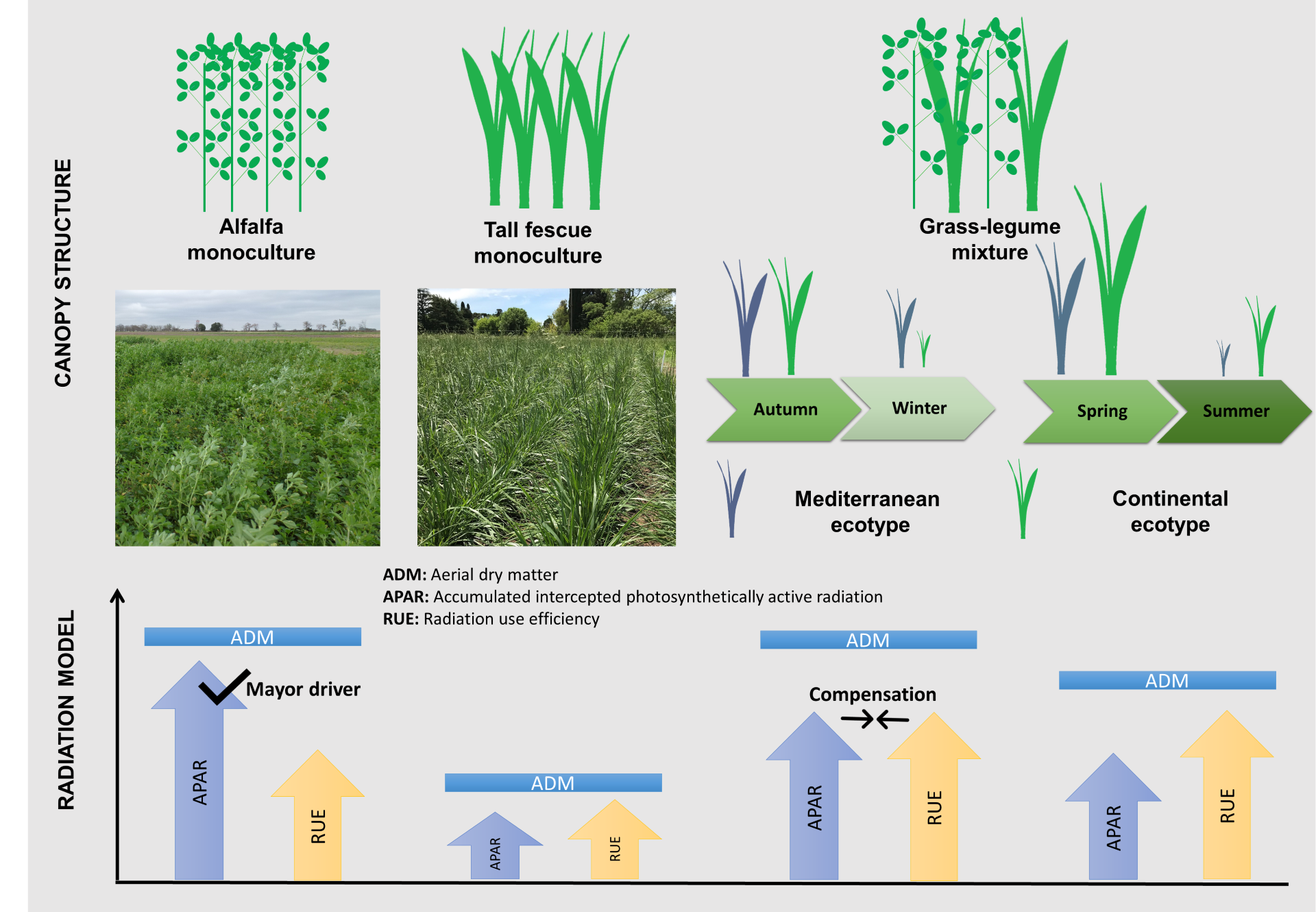
Ecotypic variation in tall fescue (Lolium arundinaceum (Schreb.) Darbysh.), with differences in phenology, may affect the performance of mixtures with alfalfa (Medicago sativa L.). However, the effects of ecotypic variation within mixtures remain largely unexplored. The aim of this study was to evaluate the aerial dry matter (ADM) production and radiation model components of alfalfa–tall fescue mixtures, with particular emphasis on their implications for radiation interception and radiation use efficiency (RUE) at the canopy level. We evaluated from March 2017 to May 2018 in the Pampas (Argentina) monocultures of alfalfa and tall fescue Mediterranean and Continental ecotypes, and their mixtures with a sowing ratio 1:1 under frequent defoliation without fertilization. ADM was higher in alfalfa monoculture and mixture with the Mediterranean ecotype than the mixture with the Continental ecotype (+20%; 3225 kg ha−1). Alfalfa monoculture exhibited the highest radiation interception, whereas the mixture with the Mediterranean ecotype compensated for reduced interception through increased RUE (≈10%). The Continental mixture exhibited lower interception indicating stronger interspecific competition. Tall fescue monocultures were the least productive due to low interception and RUE. These findings highlight the potential of Mediterranean tall fescue ecotype and the importance of species/ecotype selection for grassland productivity.

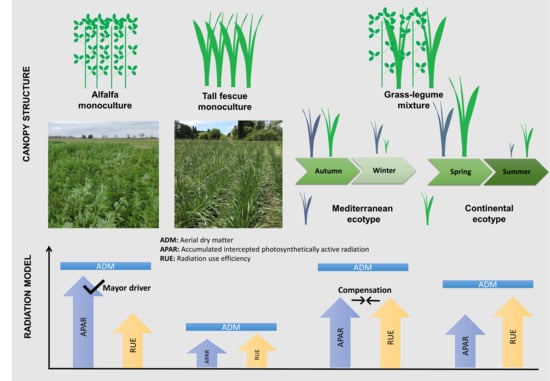
Graphical Abstract

1. Introduction

In livestock grazing systems, perennial temperate pastures are a major component of the animal diet because they provide large quantities of high-quality forage at a relatively low cost. Mixtures of grasses and legumes are a common combination due to their advantages, such as complementarity in forage production [1] and stability [2], biological nitrogen fixation [3] and reduction in bloat risk [4]. Together, these benefits make grass–legume mixtures a key component of sustainable forage-based livestock systems, but the success of mixtures largely depends on the combination of species and cultivars. However, there exists a lack of information on the topic and it is essential to identify the most productive mixtures and the mechanisms that determine their performance.
The Pampas region (Argentina), characterized by a temperate climate and fertile soils, is highly important for livestock production, sustaining approximately 19 million head in Buenos Aires Province (SAGyP). There is a consensus that mixtures of alfalfa (Medicago sativa L.) and grasses including tall fescue (Lolium arundinaceum (Schreb.) Darbysh.) provide year-round production, reduces bloat risk, and improves forage quality [5,6]. On one hand, alfalfa is the most widely used forage species in Argentina and particularly in Pampas region due to its high productivity, nutritive value and adaptation to wide range of environments [7]. On the other hand, tall fescue is the most important perennial grass in this region. Unlike other temperate grasses, tall fescue exhibits a much broader ecological tolerance, including greater resistance to summer drought conditions [8,9,10]. This capacity to withstand a wider range of environmental stresses has contributed to its extensive use across diverse management systems.
The complementarity of grass–legume mixtures is influenced by both physiological and morphological traits [11]. Among the physiological traits, the growth cycle and its seasonal dynamics play a key role. In tall fescue, these traits vary between ecotypes: the Mediterranean ecotype grows more actively during winter, while the Continental ecotype exhibits higher growth during spring and summer [12,13]. Morphologically, the Mediterranean ecotype presents smaller plant size and a greater number of tillers compared to the Continental ecotype [14]. However, the potential effects of intraspecific variation, such as differences among ecotypes, remain largely unexplored. This knowledge gap is the focus of the present study, particularly regarding how these differences affect light interception and radiation use efficiency at the canopy level when tall fescue is grown in mixture with summer-growing legumes.
The Monteith radiation model [15] integrates the incident photosynthetically active radiation (PAR), the fraction of PAR intercepted by the canopy (fPARi), and the radiation use efficiency (RUE). Whereas fPARi is closely linked to leaf area index (LAI), which depends on morphogenetic traits of the species [16], RUE reflects the sensitivity of photosynthesis to optimum temperature ranges [17] and changes in assimilate partitioning toward belowground structures during different growth stages [18]. This approach can be applied to mixed seeding systems because the inclusion of different tall fescue ecotypes may modify radiation model components through different growth seasonal dynamics and different structural attributes.
Previous studies have shown that interactions among species and management within a mixture can modify radiation model components. In a mixture of white clover (Trifolium repens L.) and perennial ryegrass (Lolium perenne L.) under different nitrogen levels total biomass production was similar between treatments due to compensatory effects between fPARi and RUE [19]. Furthermore, total biomass in various species-mixture combination was not associated with changes in radiation model components but with asynchronous growth cycles among species [20]. Without N fertilization, mixtures of alfalfa and tall fescue increased productivity in comparison to tall fescue monocultures due to a higher RUE [21]. Conversely, when mixtures and tall fescue monocultures were fertilized with N the RUE and productivity equal to those of the mixtures [21], or even increased [22]. These contrasting results indicate that the net effect of mixtures on aerial biomass production relative to monocultures is context dependent, with species phenology playing a key role in radiation-driven processes.
The aim of this study was to evaluate the aerial dry matter (ADM) production and radiation model components of alfalfa–tall fescue mixtures, with particular emphasis on their implications for radiation interception and radiation use efficiency (RUE) at the canopy level. The hypothesis was that the inclusion of tall fescue Mediterranean ecotype in the mixture with alfalfa increases aerial biomass production due to complementary growth cycles with increased fPARi and RUE during winter season. The practical value of the study’s findings for the Pampas region grassland production is that we provide information to identify better-adapted options of grass–legume mixtures that efficiently uses radiation to enhance forage production for grazing livestock systems.

2. Materials and Methods

2.1. Experimental Site

The experiment was carried out from May 2016 to May 2018 at the INTA Experimental Station (Pergamino, Buenos Aires, Argentina). Ecologically, this region is part of the Rio de la Plata grasslands [23], one of the largest subhumid grassland regions in the world [24]. This vast ecological area is subdivided into five sub-regions [23], where the study site is located within the ecological sub-region denominated the Rolling Pampas. The area is dominated by Typic Argiudoll soils. Due to this soil type, most of this region has historically transitioned from native grassland to arable annual crops and sown pasture rotations [25], where the length of each land-use has changed over the decades [26]. This subregion has a temperate climate with a mean annual temperature of 16.6 °C. Average monthly temperatures range from 9.8 °C in July to 23.3 °C in January. Long-term (1967–2017) mean annual precipitation is 986 mm. The experimental site exceeded this average, reaching 1148 mm in 2016, 1115 mm in 2017 and 1100 mm in 2018. Global solar radiation was estimated from the hours of sunlight registered daily at the meteorological station of INTA and for the year 2017 ranged between a minimum of 7.7 MJ day−1 in July and a maximum of 24 MJ day−1 in January. The experimental site soil was a Typic Argiudoll (Pergamino series) with 2.9% organic matter (Walkley–Black method), pH 6.0 (in water), and 24.7 ppm extractable phosphorus (Bray and Kurtz I).

2.2. Experimental Design

The alfalfa (Medicago sativa L.) cultivar was ‘Barpal 9242’ (Barenbrug–Palaversich S.A., Pergamino, Argentina; fall dormancy 9). Seeds were coated and inoculated with Sinorhizobium meliloti (thousand-seed weight = 4 g; germination = 94%). Two tall fescue (Lolium arundinaceum (Schreb.) Darbysh.) cultivars were used: ‘Palenque Plus INTA’ (Picasso S.A., Buenos Aires, Argentina; Continental ecotype; thousand-seed weight = 2.5 g; 93% germination) and ‘Flecha’ (Gentos S.A., Pergamino, Argentina; Mediterranean ecotype; thousand-seed weight = 1.5 g; 84% germination). Both tall fescue cultivars were uncoated. The cultivars are still currently available on the market as forage species have a slow cultivar turnover. The experimental design was a randomized complete block design with five replicates to account for variability in slope gradient in the experimental site. Each plot measured 1.5 m × 5 m (7.5 m2). Seven canopy compositions were evaluated (7 treatments × 5 blocks; 35 plots total) (Table 1). All pastures were sown at a target density of 300 seedlings m−2, using an establishment coefficient based on empirical data of 0.6 to account for potential losses that represent, according to Equation 1, a density of 21.3, 13.4 and 8.9 kg ha−1 for alfalfa and tall fescue Continental and Mediterranean ecotype, respectively. In mixtures, grasses and legumes were sown in alternating rows spaced 17.5 cm apart at a 1:1 mixing ratio. For treatments including both tall fescue ecotypes, their seeds were thoroughly mixed prior to sowing to ensure co-occurrence within the same rows. This procedure was applied in both alfalfa–tall fescue pastures and tall fescue mixtures.
Density   kg   ha 1 = Target   density   seedling   m 2 × Thousand   seed   weight Germination   % × Establishment   coefficient
Pastures were hand-sown in May 2016 without fertilization. The seedbed was prepared by disk plowing followed by tine harrowing to ensure a fine and uniform surface for sowing. After seeding pre-emergence herbicide Flumetsulam was applied at a dose of 0.5 L ha−1 to control weeds during the establishment phase. A sprinkler irrigation system was used during the establishment phase to maintain adequate soil moisture, applying five irrigations totaling 55 mm between May and September 2016, and two additional irrigations (24 mm) in the first spring. Occasional irrigations were also applied in late spring and summer of the second year to prevent drought stress. No pests or diseases were detected during the experimental period.

2.3. Measurements

2.3.1. Aerial Biomass Production

Measurements began one year after sowing and included eight regrowth periods (March 2017–May 2018) (Table 2). During spring and summer, the cutting defoliation threshold was applied every 450 ± 50-degree days to avoid leaf senescence [27,28] considering a base temperature of 5° C. The phenology at harvest corresponded to pre-flowering to 10% flowering in alfalfa and three expanded leaves in tall fescue. In autumn, cuts were performed at higher degree days sum (above 700-degree days) to allow carbohydrate reserve replenishment, since excessive defoliation can reduce partitioning to below-ground organs and decrease photosynthetic capacity [29]. Aerial dry matter (ADM) production was determined at all harvests. Herbage was clipped manually from a 1 m2 quadrat located at the plot center, cutting at 5 cm height. After sampling, all plots were uniformed to a 5 cm stubble height. In mixed canopies, samples were manually separated by component (alfalfa and tall fescue). Fresh weight was recorded, and subsamples were oven dried at 60 °C for 48 h to determine dry matter content. When present, weeds or senescent material were separated and quantified (consider in another component named others).

2.3.2. Radiation Interception (fPARi) and Radiation Use Efficiency (RUE)

Radiation interception was monitored periodically throughout the eight regrowth periods. On clear days between 12:00 and 14:00 h, incident and transmitted photosynthetically active radiation (PAR) were measured using photon flux ceptometer BAR-RAD 50 (Cavadevices, Buenos Aires, Argentina) that uses a method that integrates the photon flux received in 50 cm. Five readings per plot were taken at ground level below the canopy and one reading above the canopy, perpendicular and centered relative to sowing rows. The number of measurements within each regrowth period ranged from three to six, depending on its duration. The fraction of intercepted PAR (fPARi) was calculated according to Equation (2). Daily fPARi values were linearly interpolated between measurement dates according to Equation (3). Accumulated intercepted PAR (APAR) for each regrowth period and total was obtained according to Equation (4). Incident PAR was derived from global solar radiation recorded at the INTA EEA Pergamino weather station using a conversion factor of 0.45 [30]. Seasonal radiation use efficiency (RUEs) was then calculated according to Equation (5).
f PAR i = 1 f PAR t
where fPARi is the fraction of intercepted PAR and fPARt is the fraction of transmitted PAR,
Daily   f PAR i = f PAR i 1 f PAR i 2     Days + f P A R ix
where fPARi1 is the first measurement and fPARi2 is the second measurement and fPARix represents the previous day of the day estimated,
APAR t   s = Σ   Incident   PAR   ×   Daily   f PAR i
where APARt (MJ m−2) is total for all the experimental period and APARs is seasonal for each regrowth,
RUE   s   g = ADM   s   t APAR s   t
where RUEg (g DM MJ−1) is global for all the experimental period and RUEs is seasonal for each regrowth.

2.4. Statistical Analysis

To characterize the overall performance of the pastures’ total ADM accumulation, APARt and RUEg were analyzed by ANOVA including treatment and block as factors. The assumptions of normality and homogeneity of variance were verified. When significant treatment effects were detected, means were compared using the least significant difference (LSD) test at p < 0.05. Seasonal evolution of the radiation-model components (APARs and RUEs) was analyzed using a randomized complete block design with repeated measures over regrowth periods. The statistical model included treatment, regrowth period, and their interaction as fixed effects, and block as a random effect. Analyses were performed using the MIXED procedure in SAS v9.1.3 (SAS Institute, Cary, NC, USA). Based on previous findings, the relationship between fPARi and accumulated thermal time was analyzed to standardize canopy responses across seasons, as temperature is the main regulating factor. Non-linear two-phase models with a plateau were selected and fitted to fPARi versus degree-day accumulation according to usual radiation interception patterns to represent the timing of radiation interception saturation [31]. Data visualization and analysis were performed with R Core Team. Linear-plateau models were fitted individually for each of the treatments using segmented multiple linear regression. The mathematical model was:
f PAR i = α + β _ 1 × min Degree   days   sum ,   γ
where α represents the intercept, β_1 the linear slope up to the breakpoint γ, and the maximum plateau defined as β_1 × γ.
For each treatment, a grid search of 20 equidistant points within the degree days sum range (excluding 10% extremes) identified the optimal γ value that minimized the Akaike Information Criterion (AIC). Model fit was assessed using R2, AIC, BIC, and RMSE. Maximum plateaus (β1 × γ) and linear slope (β1) were compared among treatments using 95% confidence intervals derived from sample variance. Treatments with overlapping intervals were deemed statistically equal [32].

3. Results

3.1. Aerial Biomass Production (ADM), Total Accumulated Intercepted PAR (APARt) and Global Radiation Use Efficiency (RUEg)

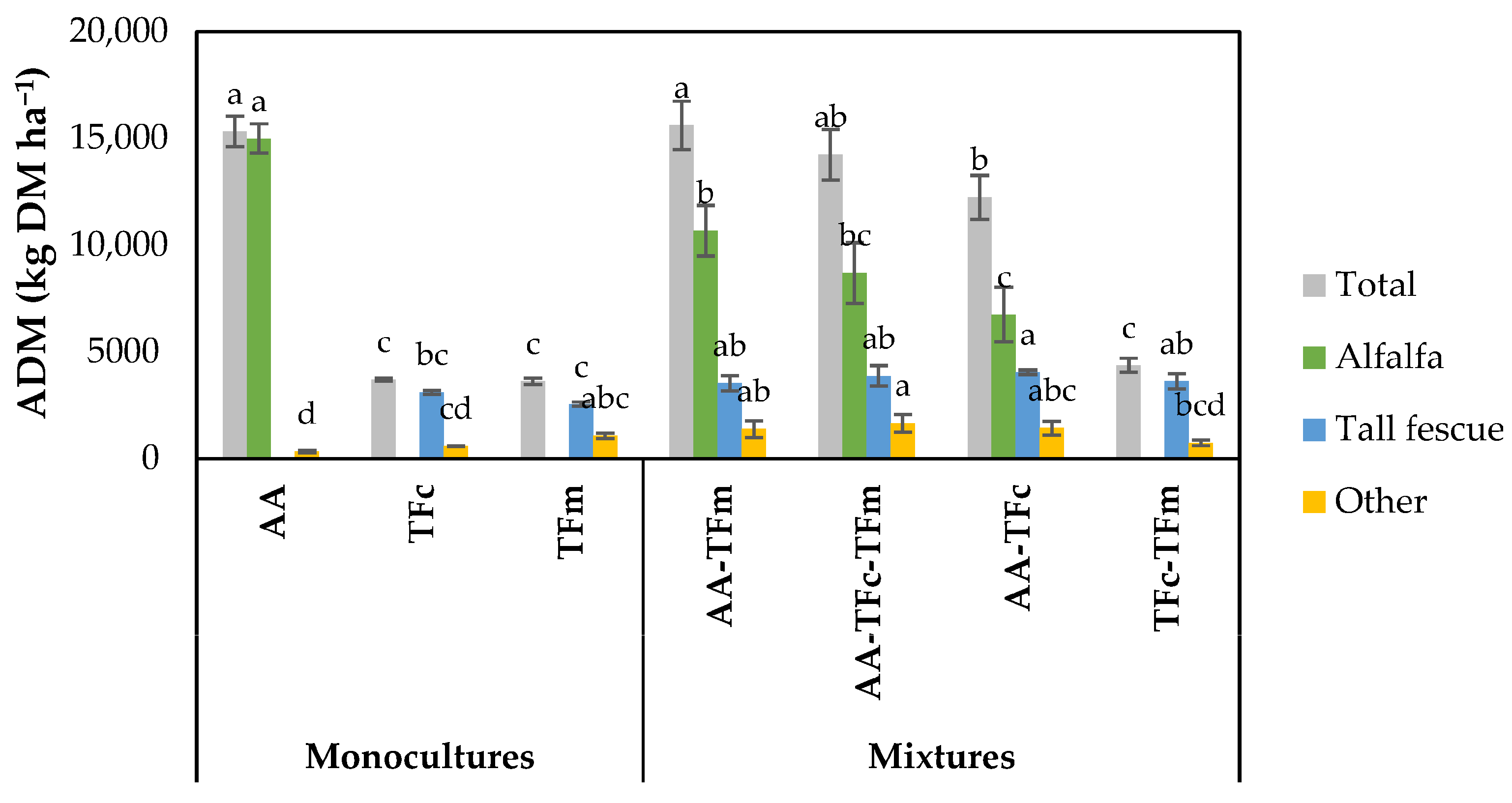
Total accumulated aerial dry matter (ADM) was highest in the alfalfa monoculture (AA) and in the mixture of alfalfa with the Mediterranean ecotype (AA-TFm) without significant difference between them, but both were significantly higher than the mixtures of alfalfa with the Continental ecotype (AA-TFc), and the mixture of both tall fescue ecotypes (TFc-TFm) (p < 0.0001; Figure 1). Lastly, tall fescue monocultures showed the lowest productivity (p < 0.05). The combination of both tall fescue ecotypes and tall fescue monocultures showed ADM values approximately 75% lower than the maximum observed (−11,705 kg ha−1).
When analyzing ADM of individual components within mixtures (Figure 1), the effect of the ecotype was evident. Alfalfa accumulated 37% more ADM when grown with the Mediterranean ecotype than with the Continental ecotype (p = 0.0002), whereas the mixture containing both ecotypes did not differ from either alfalfa–tall fescue mixtures.
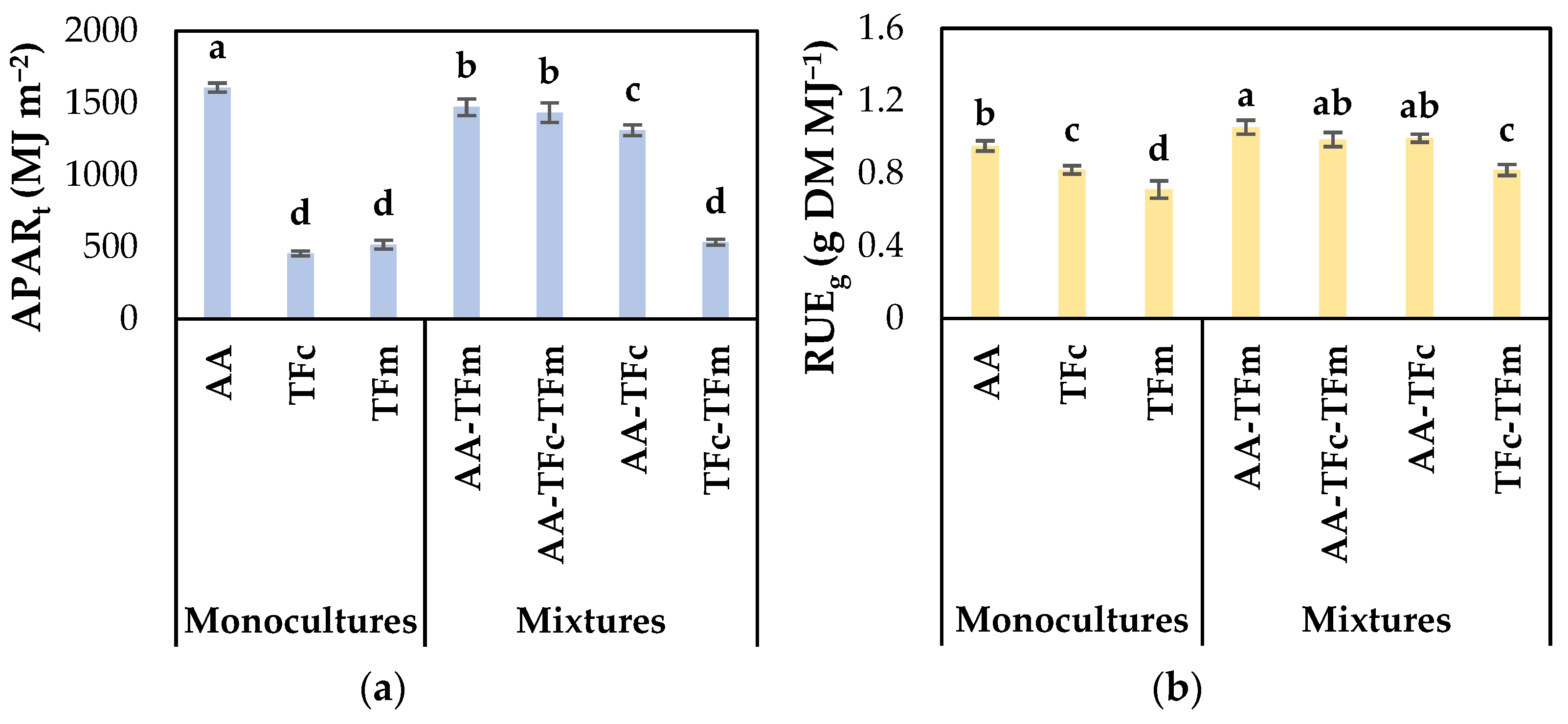
The alfalfa monoculture canopy captured the highest amount of radiation (Figure 2a), this level of accumulation of APARt was significantly higher than in all other canopies including grasses. Mixtures of alfalfa with the presence of tall fescue Mediterranean ecotype (AA-TFm and AA-TFc-TFm) were significantly higher than the mixture of alfalfa with tall fescue Continental ecotype (AA-TFc). Tall fescue monocultures had significantly lower APARt.
The mixture of alfalfa and tall fescue Mediterranean ecotype had higher RUEg than the alfalfa monoculture (Figure 2b), whereas mixtures of alfalfa and tall fescue did not differ between them. Tall fescue monocultures had significantly lower RUEg, with the lowest RUEg in tall fescue Mediterranean ecotype.

3.2. Radiation Interception (fPARi)

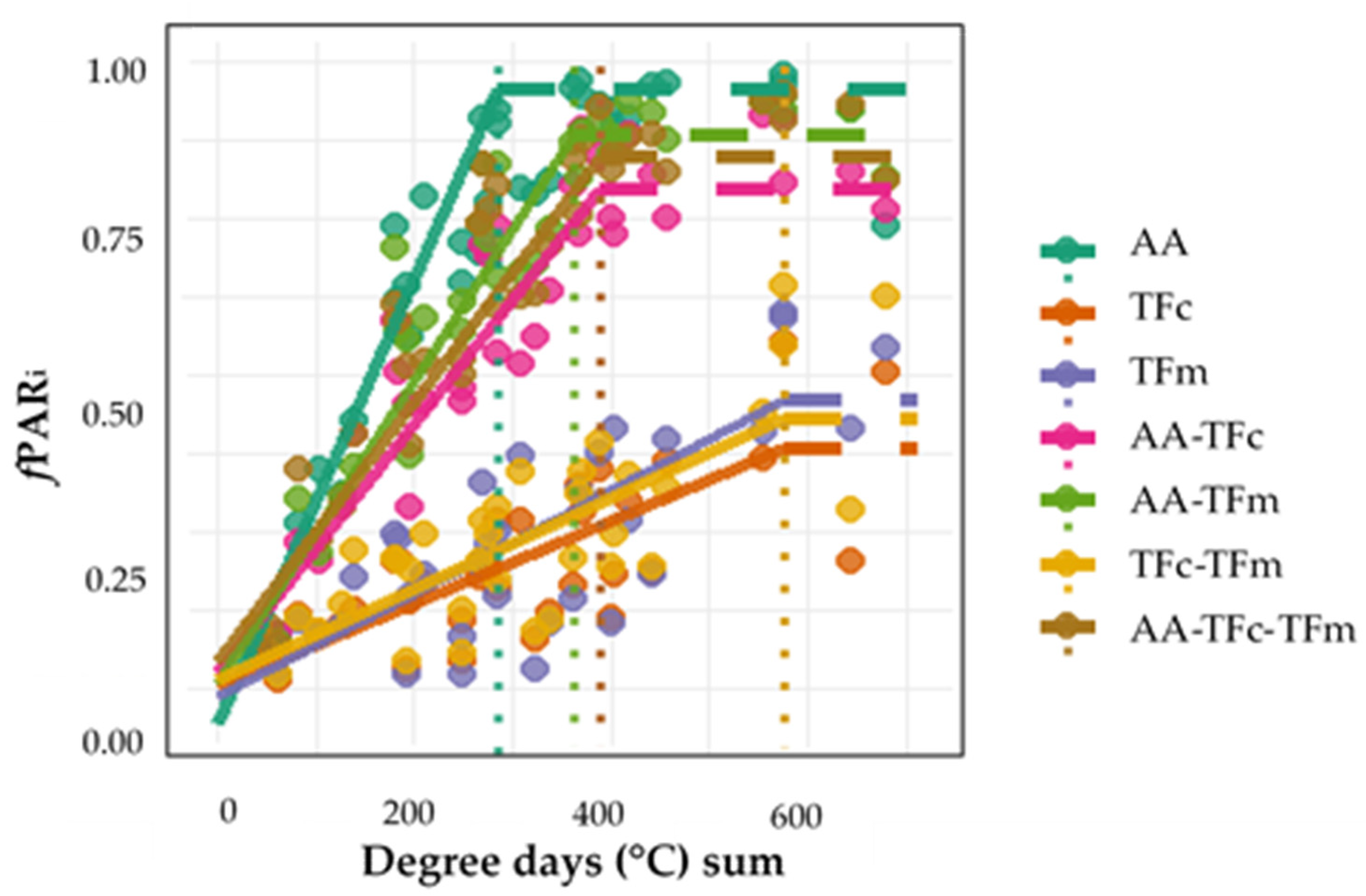
The greatest APAR accumulation in the alfalfa monoculture was associated with its rapid attainment of high fPARi values (Figure 3). Furthermore, tall fescue ecotype strongly influenced canopy light interception in mixtures. Mixtures with tall fescue Mediterranean ecotype showed faster fPARi progression than those including the Continental ecotype. This was evidenced by the parameter beta of the fitted models, which represents the slope of the relationship between fPARi and degree-day accumulation that was similar between alfalfa monoculture and the mixture of alfalfa and tall fescue Mediterranean ecotype (Table 3) and higher than the mixtures with the tall fescue Continental ecotype. Tall fescue monocultures and their mixture had the lowest beta parameter, representing a slow fPARi progression.
According to the fitted non-linear models, fPARi reached saturation (i.e., stabilization) similarly in alfalfa monoculture and mixtures of alfalfa and tall fescue, but significantly higher than tall fescue monoculture and the mixture of tall fescue ecotypes. Alfalfa monocultures reached critical interception (fPARi = 0.95), indicative of a fully closed canopy, while mixtures reached the saturation in a lower fPARi value according to tall fescue ecotype. The mixtures with Mediterranean ecotype were closest to alfalfa saturation value. In addition, the tall fescue monocultures and their mixtures never reached the critical threshold of 0.95, and the fPARi stabilization occurred after in the regrowth.

3.3. Seasonal Accumulated Intercepted PAR (APARs)

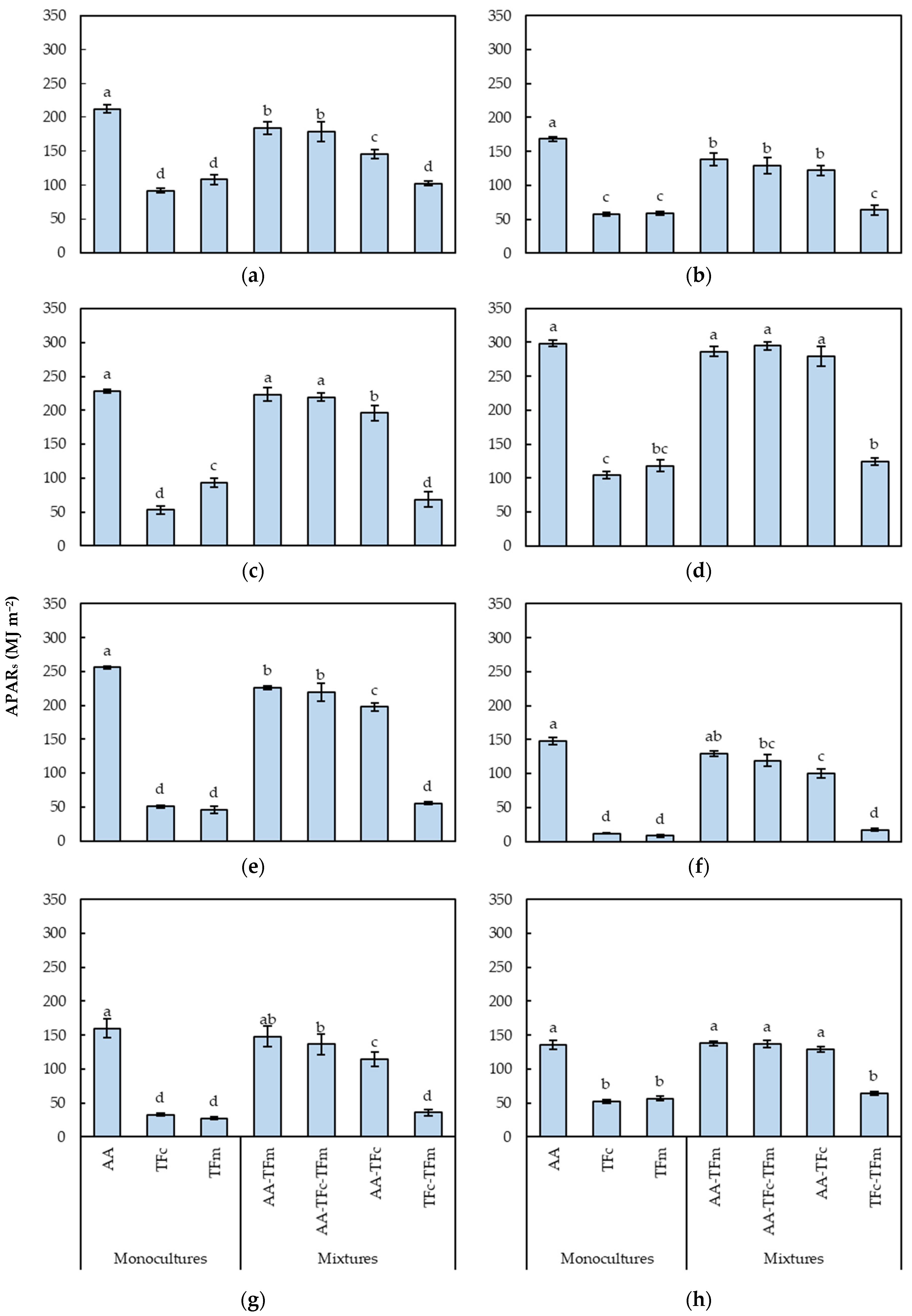
A strong treatment × regrowth period interaction (F value = 2.72, p < 0.0001) indicated that APARs varied seasonally among canopies (Figure 4). The alfalfa monoculture maintained the highest APARs across most periods, particularly when fPARi reached the critical threshold (0.95). Mixtures containing tall fescue Mediterranean ecotype were closest to alfalfa monoculture values, whereas mixtures with tall fescue Continental ecotype were consistently lower. Mixtures with both ecotypes exhibited intermediate APARs. Tall fescue monocultures consistently showed the lowest APARs. Unlike ADM, seasonal patterns in tall fescue monocultures were evident: tall fescue Mediterranean ecotype achieved higher APARs in winter, while the mixture of both ecotypes peaked in late winter.

3.4. Seasonal Radiation Use Efficiency (RUEs)

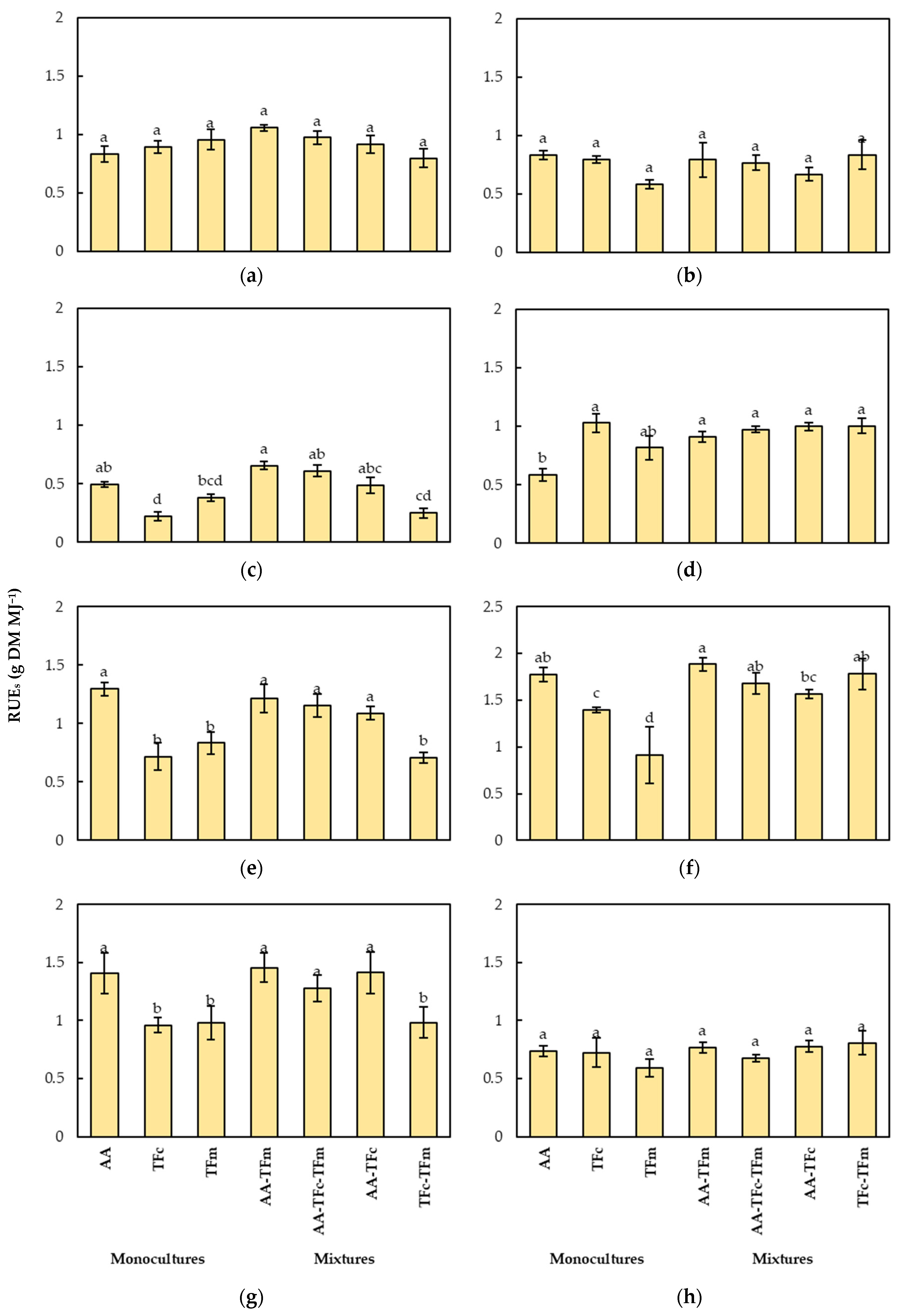
A significant treatment × regrowth period interaction (F value = 10.36, p < 0.0001) confirmed temporal variability (Figure 5). In five regrowth periods, species had significant effects on RUEs (p < 0.005). Alfalfa monocultures and alfalfa–tall fescue mixtures showed similar RUEs values, except in late winter when mixtures outperformed the alfalfa monoculture. Among mixtures, differences were observed only in late spring, with tall fescue Mediterranean ecotype mixture exhibiting higher RUEs. Tall fescue monocultures and their mixture showed lower RUEs in half of the regrowth periods (winter, spring, late spring, and summer). Ecotype-specific differences were also apparent: in late spring, tall fescue Mediterranean ecotype monoculture had the lowest RUEs, possibly reflecting earlier entry into dormancy relative to tall fescue Continental ecotype.

4. Discussion

4.1. Greater Productivity Differences Are Driven by Radiation Interception

Total ADM production (Figure 1) indicated that alfalfa monoculture and its mixture with tall fescue Mediterranean ecotype achieved the highest productive potential. Regarding the alfalfa monoculture, its high ADM is consistent with its well-known yield potential on fertile soils [7,33]. Furthermore, our results indicate that maximum productivity was associated with greater radiation interception driven by alfalfa growth, both in monocultures and mixtures. Alfalfa forms a more planophilous canopy with a higher light extinction coefficient (k) [34] than tall fescue [35], and exhibits leaf angle variation within the canopy [36] and leaflet movement following solar position [37]. These canopy traits enhance radiation capture, as reflected in the steeper fPARi–degree-day slope and earlier canopy closure. Precipitations during the experiment were favorable for growth, so species could express their productive potential. The impact of interannual climate variability on the data can modify relationships between species components of the mixtures. Thus, the results obtained may be extrapolated cautiously to normal or above normal precipitation conditions and so dataset was limited for an over-yielding analysis of perennial pastures. These results provide relevant information for the identification of highly productive mixtures that are comparable to alfalfa monoculture but also provide other benefit for the development of more sustainable livestock grazing systems.
Regarding its mixture with the Mediterranean ecotype, its high ADM was driven by high fPARi, APARs and APARt (Figure 2, Figure 3 and Figure 4). This likely reflects a morphological mechanism, as the smaller size of tall fescue Mediterranean ecotype may reduce competition with winter-active alfalfa [14]. Moreover, the decline in alfalfa ADM was smaller when associated with tall fescue Mediterranean ecotype than with the Continental one, suggesting lower interspecific competition. However, under more temperate conditions [21], we found no differences between alfalfa and alfalfa–tall fescue Continental ecotype mixtures, consistent with observations that alfalfa yield potential under rainfed conditions declines with increasing latitude [38]. The high cutting frequency used in our study, as defined by a low thermal time between harvests, probably favored radiation interception of alfalfa over tall fescue, as the latter’s erectophile leaves can maintain high LAI with limited self-shading [39], yet frequent defoliation restricts LAI expansion. Conversely, alfalfa canopy features previously described determine a rapid LAI recovery after cutting with a higher radiation interception than tall fescue. Nonetheless, such management is also recommended for tall fescue, promoting shorter, younger leaves and maintaining high forage quality [40]. The identification of tall fescue Mediterranean ecotype with superior performance in the mixture suggests a potential for breeding this species/ecotype for developing outstanding cultivars.
Finally, tall fescue monocultures and the mixture of both ecotypes produced substantially lower ADM than alfalfa monoculture and the alfalfa–tall fescue mixtures. It should be emphasized that this experiment was conducted without nitrogen fertilization, which likely constrained tall fescue growth, a species with a well-documented response to N supply in the region [41]. Furthermore, the maintenance or increase in tall fescue ADM in combination with alfalfa compared with their monocultures suggests a better nutritional status of tall fescue, possibly due to nitrogen transfer from alfalfa residues. Tall fescue plants mixed with alfalfa had a higher nutrition index and a different isotopic composition 15N in comparison with tall fescue plants growing alone, confirming the contribution of the legume to the grass nutrition [42].

4.2. Radiation Use Efficiency Offsets Reduced APAR in Alfalfa–Tall Fescue Mixtures Depending on Ecotype

Global radiation use efficiency (RUEg) was higher in alfalfa–tall fescue Mediterranean mixtures and compensated for lower interception (Figure 2b, ≈10%), particularly during late winter, when favorable temperature conditions enhanced seasonal radiation use efficiency (RUEs) (Figure 5d). This coincides with a recent study where nitrogen fertilized tall fescue Continental ecotype monoculture had the highest RUE, the mixture of alfalfa and tall fescue intermediate and alfalfa monoculture the lowest [22]. The authors interpret that decreasing RUE was due to a greater partition to belowground structures in alfalfa. In our work, mixtures with alfalfa involving the Mediterranean ecotype, as well as those including both ecotypes, effectively compensated for reduced APARt through increased RUEg, resulting in comparable total ADM. In this sense, our results agree with previous reports on white clover and perennial ryegrass mixtures where a compensation between radiation model under different N fertilization treatments result in similar total ADM [19]. Under low N, white clover intercepted more radiation through vertical dominance in the canopy, whereas under high N level reduced the vertical dominance but increased EUR due to an increased photosynthetic efficiency of partially shaded clover leaves.
Conversely, the alfalfa–tall fescue Continental ecotype mixture did not fully offset its lower APARt with a proportional RUEg increase. Although seasonal RUE was higher during winter, the global RUE did not differ from alfalfa monoculture. This agrees with previous report on Pampas region where they found similar RUEg and RUEs between tall fescue Continental ecotype and alfalfa monocultures and its mixture [21]. Another work on diverse mixtures [20] did not find an association between total ADM production and radiative model components and the highest production of the mixtures was due to an increased asynchrony in growth cycles of the species. The cause of the divergence may be that species growth cycles were less overlapping than in our study due to species identity (i.e., red clover instead of alfalfa).
In mixtures with winter-active alfalfa, tall fescue growth differences became apparent only in late winter, when higher RUEs were observed in alfalfa–tall fescue mixtures than alfalfa monoculture but without a clear distinction between ecotypes. Under these conditions, the Mediterranean ecotype did not fully express its expected advantage in winter (i.e., higher fPARi), probably because alfalfa maintained canopy dominance, where alfalfa structural canopy characteristics would have outcompeted tall fescue. Previous studies in the region [5] have shown growth cycle complementarity between Mediterranean tall fescue and alfalfa cultivars of intermediate dormancy (group 6), less winter-active than the cultivar used here (group 9). It is likely that the extended growth cycle of highly winter-active alfalfa restricted temporal complementarity between species under the temperate conditions of the Pampas region. Future research should clarify this limitation and explore management, in addition to genetic options, to enhance the tall fescue contribution in mixtures as N fertilization in autumn–winter to promote grass outcompeting the legume, according to its greater response to N (42) and favored ADM trough and increase in both radiation model components.

5. Conclusions

This study is the first to disentangle the effects of tall fescue ecotypes in the mixtures on radiation use. Alfalfa monoculture and the alfalfa–tall fescue Mediterranean ecotype mixture showed the highest productivity, whereas in alfalfa it was mainly driven by high radiation interception all over the year. In the mixtures with tall fescue Mediterranean ecotype, a more favorable canopy structure was developed that reduced interspecific competition and allowed alfalfa to dominate and efficiently intercept radiation and the presence of tall-fescue-enhanced radiation use efficiency. In contrast, mixtures with the Continental ecotype had significantly lower productivity than the mixture with Mediterranean ecotype due to reduced radiation interception, indicating stronger interspecific competitive effects. Thus, the degree of compensation between radiation interception and radiation use efficiency varied depending on the ecotype. Radiation interception reduction was fully compensated with the Mediterranean ecotype and partially with the Continental ecotype. In summary, our results demonstrate that ecotypic variation in tall fescue has a decisive influence on the performance of alfalfa–tall fescue mixtures to a greater extent through morphological mechanisms (i.e., radiation interception) and to a lesser extent through physiological ones (i.e., radiation use efficiency).
The identification of suitable species/ecotype for designing successful grass–legume mixtures represent an innovation to develop sustainable grassland production systems. The mixtures of alfalfa with Mediterranean tall fescue, therefore, represent a recommended productive option for temperate grassland that combine highest productivity with the well-known benefits of mixed swards. These findings highlight the potential of these associations that would require the dissemination across productive systems.
In conclusion, the selection of companion grasses according to their compatibility with alfalfa can enhance the canopy efficiency of the mixture. Future research should focus on three areas: (1) identifying outstanding Mediterranean cultivars that express the ecotypic advantage in winter season with increased radiation interception besides high radiation use efficiency, (2) refining management practices, such as defoliation regimes and nitrogen supply strategies that favored tall fescue growth during winter, to maximize these positive interactions, and (3) evaluate these canopies along different years to account for climate interannual variability.

Author Contributions

Conceptualization, J.M. and A.A.G.; Methodology, J.M., A.L.C. and A.A.G.; Formal Analysis, J.M., A.L.C. and A.A.G.; Investigation, J.M., J.G.N.I., G.B.C., A.L.C. and A.A.G.; Data Curation, J.M. and A.L.C.; Writing—Original Draft Preparation, J.M.; Writing—Review and Editing, J.G.N.I., G.B.C., A.L.C. and A.A.G.; Funding Acquisition, J.M. All authors have read and agreed to the published version of the manuscript.

Funding

This research was supported by grants from INTA [2019-PE-E1-I007–001] and [2023-PD-L01-I098].

Data Availability Statement

The datasets generated during and/or analyzed during the current study are contained within the article.

Acknowledgments

During the preparation of this manuscript, the authors used ChatGPT (OpenAI) based on the GPT-5.3 model for the purposes of grammar optimization. The authors have reviewed and edited the output and take full responsibility for the content of this publication.

Conflicts of Interest

The authors declare no conflicts of interest.

Abbreviations

The following abbreviations are used in this manuscript:
ADMAerial dry matter
RUERadiation use efficiency
GHGGreenhouse gases
PARPhotosynthetically active radiation
fPARiFraction of photosynthetically active radiation intercepted
LAILeaf area index
AAAlfalfa
TFcTall fescue Continental ecotype
TFmTall fescue Mediterranean ecotype
fPARtFraction of photosynthetically active radiation transmitted
APARAccumulated intercepted PAR
RUEsSeasonal radiation use efficiency
APARsSeasonal accumulated intercepted PAR
RUEgGlobal radiation use efficiency
APARtTotal accumulated intercepted PAR
LSDLeast significant difference
kLight extinction coefficient

References

  1. Aponte, A.; Samarappuli, D.; Berti, M.T. Alfalfa–grass mixtures in comparison to grass and alfalfa monocultures. Agron. J. 2019, 111, 628–638. [Google Scholar] [CrossRef]
  2. Haughey, E.; Suter, M.; Hofer, D.; Hoekstra, N.J.; McElwain, J.C.; Lüscher, A.; Finn, J.A. Higher species richness enhances yield stability in intensively managed grasslands with experimental disturbance. Sci. Rep. 2018, 8, 15047. [Google Scholar] [CrossRef]
  3. Zhao, Y.; Tian, Y.; Li, X.; Song, M.; Fang, X.; Jiang, Y.; Xu, X. Nitrogen fixation and transfer between legumes and cereals under various cropping regimes. Rhizosphere 2022, 22, 100546. [Google Scholar] [CrossRef]
  4. McAllister, T.A.; Ribeiro, G.; Stanford, K.; Wang, Y. Forage-induced animal disorders. In Forages: The Science of Grassland Agriculture, 7th ed.; Moore, K.J., Collins, M., Nelson, C.J., Redfearn, D.D., Eds.; John Wiley & Sons Ltd.: West Sussex, UK, 2020; pp. 839–860. [Google Scholar]
  5. Scheneiter, J.O.; Améndola, C. Beef production of alfalfa-tall fescue mixtures with different seasonal pattern of herbage accumulation. RAPA 2009, 29, 119–129. [Google Scholar]
  6. Kloster, A.M.; Zurbriggen, G.A. Production and persistence of a mixture of alfalfa (Medicago sativa L.) and high fescue (Festuca arundinacea Schreb.) under contrasting intensities and grazing frequencies. RIA 2019, 45, 44–51. [Google Scholar]
  7. Basigalup, D.H.; Rossanigo, R.; Ballario, M.V. El Cultivo de la Alfalfa en la Argentina, 1st ed.; Ediciones INTA: Buenos Aires, Argentina, 2007; p. 479. [Google Scholar]
  8. Reed, K.F.M. Improving the adaptation of perennial ryegrass, tall fescue, phalaris, and cocksfoot for Australia. N. Z. J. Agric. Res. 1996, 39, 457–464. [Google Scholar] [CrossRef]
  9. Anderson, L.B. Grasslands Roa’ tall fescue (Festuca arundinacea Schreb.). N. Z. J. Exp. Agric. 1982, 10, 269–273. [Google Scholar] [CrossRef]
  10. Scheneiter, J.O.; Kaufmann, I.I.; Ferreyra, A.R.; Llorente, R.T. The herbage productivity of tall fescue in the Pampas region of Argentina is correlated to its ecological niche. Grass Forage Sci. 2016, 71, 403–412. [Google Scholar] [CrossRef]
  11. Haynes, R.J. Competitive aspects of the grass-legume association. Adv. Agron. 1980, 33, 227–261. [Google Scholar]
  12. Mazzanti, A.; Arosteguy, J.C. Comparación del rendimiento estacional de forraje de cultivares de Festuca arundinacea Schreb. RAPA 1985, 5, 691–697. [Google Scholar]
  13. Lattanzi, F.A.; Wade, M.H. Seasonal animal production of temperate and Mediterranean tall fescue cultivars under continuous variable stocking with close control of sward state. Aust. J. Agric. Res. 2007, 58, 203–213. [Google Scholar] [CrossRef]
  14. Assuero, S.G.; Matthew, C.; Kemp, P.D.; Latch, G.C.M.; Barker, D.J.; Haslett, S.J. Morphological and physiological effects of water deficit and endophyte infection on contrasting tall fescue cultivars. N. Z. J. Agric. Res. 2000, 43, 49–61. [Google Scholar] [CrossRef][Green Version]
  15. Monteith, J.L.; Moss, C.J. Climate and the Efficiency of Crop Production in Britain. Philos. Trans. R. Soc. 1977, 281, 277–294. [Google Scholar] [CrossRef]
  16. Lemaire, G.; Agnusdei, M. Leaf tissue turnover and efficiency of herbage utilization. In Grassland Ecophysiology and Grazing Ecology, 1st ed.; Lemaire, G., Hodgson, J., de Moraes, A., Carvalho, P.C.F., Nabinger, F., Eds.; CABI Publishing: Wallingford, Inglaterra, 2000; pp. 265–287. [Google Scholar]
  17. Collino, D.J.; Dardanelli, J.L.; De Luca, M.J.; Racca, R.W. Temperature and water availability effects on radiation and water use efficiencies in alfalfa (Medicago sativa L.). Aust. J. Exp. Agric. 2005, 45, 383–390. [Google Scholar] [CrossRef]
  18. Brown, H.E.; Moot, D.J.; Teixeira, E.I. Radiation use efficiency and biomass partitioning of lucerne (Medicago sativa) in a temperate climate. Eur. J. Agron. 2006, 25, 319–327. [Google Scholar] [CrossRef]
  19. Faurie, O.; Soussana, J.F.; Sinoquet, H. Radiation interception, partitioning and use in grass–clover mixtures. Ann. Bot. 1996, 77, 35–46. [Google Scholar] [CrossRef]
  20. Husse, S.; Huguenin-Elie, O.; Buchmann, N.; Lüscher, A. Larger yields of mixtures than monocultures of cultivated grassland species match with asynchrony in shoot growth among species but not with increased light interception. Field Crops Res. 2016, 194, 1–11. [Google Scholar] [CrossRef]
  21. Ojeda, J.J.; Caviglia, O.P.; Agnusdei, M.G.; Errecart, P.M. Forage yield, water-and solar radiation-productivities of perennial pastures and annual crops sequences in the south-eastern Pampas of Argentina. Field Crops Res. 2018, 221, 19–31. [Google Scholar] [CrossRef]
  22. Zhang, S.; Lærke, P.E.; Andersen, M.N.; Jørgensen, U.; Manevski, K. Tailoring defoliation and nitrogen management for large canopy radiation use and biomass production of perennial systems destined for biorefinery. Agric. For. Meteorol. 2024, 356, 110159. [Google Scholar] [CrossRef]
  23. Soriano, A. Río de la Plata grasslands. In Natural Grasslands Introduction and Western Hemisphere, 1st ed.; Coupland, R., Ed.; Elsevier: Amsterdam, The Netherlands, 1991; pp. 367–407. [Google Scholar]
  24. Keith, D.A.; Ferrer-Paris, J.R.; Nicholson, E.; Bishop, M.J.; Polidoro, B.A.; Ramirez-Llodra, E.; Tozer, M.G.; Nel, J.L.; Nally, R.M.; Gregr, E.J.; et al. A function-based typology for Earth’s ecosystems. Nature 2022, 610, 513–518. [Google Scholar] [CrossRef] [PubMed]
  25. Viglizzo, E.F.; Frank, F.C.; Carreño, L.V.; Jobbagy, E.G.; Pereyra, H.; Clatt, J.; Pincén, D.; Ricard, M.F. Ecological and environmental footprint of 50 years of agricultural expansion in Argentina. Glob. Change Biol. 2011, 17, 959–973. [Google Scholar] [CrossRef]
  26. Piquer-Rodríguez, M.; Butsic, V.; Gärtner, P.; Macchi, L.; Baumann, M.; Pizarro, G.G.; Volante, J.N.; Gasparri, I.N.; Kuemmerle, T. Drivers of agricultural land-use change in the Argentine Pampas and Chaco regions. Appl. Geogr. 2018, 91, 111–122. [Google Scholar] [CrossRef]
  27. Lemaire, G.; Da Silva, S.C.; Agnusdei, M.; Wade, M.; Hodgson, J. Interactions between leaf lifespan and defoliation frequency in temperate and tropical pastures: A review. Grass Forage Sci. 2009, 64, 341–353. [Google Scholar] [CrossRef]
  28. Brown, H.E.; Moot, D.J.; Teixeira, E.I. The components of lucerne (Medicago sativa) leaf area index respond to temperature and photoperiod in a temperate environment. Eur. J. Agron. 2005, 23, 348–358. [Google Scholar] [CrossRef]
  29. Teixeira, E.I.; Moot, D.J.; Brown, H.E. Defoliation frequency and season affected radiation use efficiency and dry matter partitioning to roots of lucerne (Medicago sativa L.) crops. Eur. J. Agron. 2008, 28, 103–111. [Google Scholar] [CrossRef]
  30. Monteith, J.L. Solar radiation and productivity in tropical ecosystems. J. Appl. Ecol. 1972, 9, 747–766. [Google Scholar] [CrossRef]
  31. Mattera, J.; Romero, J.M.; Irisarri, J.G.N.; Grimoldi, A.A.; Cordon, G.B. Deciphering the link between SIF, ANPP and RUE dynamics in perennial forage crop mixtures. Agric. For. Meteorol. 2025, 369, 110569. [Google Scholar] [CrossRef]
  32. Payton, M.E.; Greenstone, M.H.; Schenker, N. Overlapping confidence intervals or standard error intervals: What do they mean in terms of statistical significance? J. Insect Sci. 2003, 3, 34. [Google Scholar] [CrossRef]
  33. Arolfo, V.; Odorizzi, A. Avances en Alfalfa: Ensayos Territoriales, 1st ed.; Ediciones INTA: Córdoba, Argentina, 2019; pp. 1–29. [Google Scholar]
  34. Teixeira, E.I.; Moot, D.J.; Brown, H.E.; Pollock, K.M. How does defoliation management impact on yield, canopy forming processes and light interception of Lucerne (Medicago sativa L.) crops? Eur. J. Agron. 2007, 27, 154–164. [Google Scholar] [CrossRef]
  35. Sugiyama, S.; Yoneyama, M.; Takahashi, N.; Gotoh, K. Canopy structure and productivity of Festuca arundinacea Schreb. swards during vegetative and reproductive growth. Grass Forage Sci. 1985, 40, 49–55. [Google Scholar] [CrossRef]
  36. Heichel, G.H.; Delaney, R.H.; Cralle, H.T. Carbon assimilation, partioning, and utilization. In Alfalfa and Alfalfa Improvement, 1st ed.; Hanson, A.A., Barnes, D.K., Hill, R.R., Jr., Eds.; Agronomy Monograph: Madison, WI, USA, 1988; Volume 29, pp. 195–228. [Google Scholar]
  37. Travis, R.L.; Reed, R. The solar tracking pattern in a closed alfalfa canopy. Crop Sci. 1983, 23, 664–668. [Google Scholar] [CrossRef]
  38. Jáuregui, J.M.; Ojeda, J.J.; Berone, G.D.; Lattanzi, F.A.; Baudracco, J.; Fariña, S.R.; Moot, D.J. Yield gaps of lucerne (Medicago sativa L.) in livestock systems of Argentina. Ann. Appl. Biol. 2022, 181, 22–32. [Google Scholar] [CrossRef]
  39. Duncan, W.G. Leaf Angles, Leaf Area, and Canopy Photosynthesis. Crop Sci. 1971, 11, 482–485. [Google Scholar] [CrossRef]
  40. Insúa, J.R.; Agnusdei, M.G.; Utsumi, S.A.; Berone, G.D. Morphological, environmental and management factors affecting nutritive value of tall fescue (Lolium arundinaceum). Crop Pasture Sci. 2018, 69, 1165–1172. [Google Scholar] [CrossRef]
  41. Scheneiter, J.O.; Agnusdei, M.G. The role of N in meat production: Some experiences in the humid and sub-humid regions of Argentina Pampas. In Fertilization of Pastures in the North of the Province of Buenos Aires, 1st ed.; Scheneiter, J.O., Mendez, D.G., Eds.; Ediciones INTA: General Villegas, Argentina, 2011; pp. 50–69. [Google Scholar]
  42. Louarn, G.; Pereira-Lopès, E.; Fustec, J.; Mary, B.; Voisin, A.S.; Faccio Carvalho, P.C.; Gastal, F. The amounts and dynamics of nitrogen transfer to grasses differ in alfalfa and white clover-based grass-legume mixtures as a result of rooting strategies and rhizodeposit quality. Plant Soil 2015, 389, 289–305. [Google Scholar] [CrossRef]
Figure 1. Total and species component aerial dry matter accumulation (ADM; kg ha−1) over eight regrowth periods (autumn 2017–autumn 2018) for contrasting canopies of monoculture forage species (alfalfa AA, tall fescue Continental ecotype TFc and Mediterranean ecotype TFm) and their mixtures (alfalfa + tall fescue Continental ecotype AA-TFc, alfalfa + tall fescue Mediterranean ecotype AA-TFm, alfalfa + tall fescue Continental ecotype + tall fescue Mediterranean ecotype AA-TFc-TFm, and tall fescue Continental ecotype + tall fescue Mediterranean ecotype TFc-TFm). Values are means ± SE of five replicates. Lowercase letters represent comparison among treatments for total ADM by LSD test separately for each species component (p < 0.05).
Grasses 05 00019 g001
Figure 2. (a) Total Photosynthetically Active Radiation intercepted and Accumulated (APARt) and (b) global Radiation Use Efficiency (RUEg) for contrasting canopies of monoculture forage species (alfalfa AA, tall fescue Continental ecotype TFc and Mediterranean ecotype TFm) and their mixtures (alfalfa + tall fescue Continental ecotype AA-TFc, alfalfa + tall fescue Mediterranean ecotype AA-TFm, alfalfa + tall fescue Continental ecotype + tall fescue Mediterranean ecotype AA-TFc-TFm and tall fescue Continental ecotype + tall fescue Mediterranean ecotype TFc-TFm). Values are means ± SE of five replicates. Lowercase letters represent comparison among treatments by LSD test (p < 0.05).
Grasses 05 00019 g002
Figure 3. Fraction of Photosynthetically Active Radiation interception (fPARi) along eight regrowth periods (late summer 2017–autumn 2018) for contrasting canopies of forage species monocultures (alfalfa AA, tall fescue Continental ecotype TFc and Mediterranean ecotype TFm) and their mixtures (alfalfa + tall fescue Continental ecotype AA-TFc, alfalfa + tall fescue Mediterranean ecotype AA-TFm, alfalfa + tall fescue Continental ecotype + tall fescue Mediterranean ecotype AA-TFc-TFm and tall fescue Continental ecotype + tall fescue Mediterranean ecotype TFc-TFm). Values are the average of five replicates and different symbols represent different treatments.
Grasses 05 00019 g003
Figure 4. Seasonal Photosynthetically Active Radiation intercepted and Accumulated (APARs) along eight regrowth periods: (a) late summer, (b) autumn 1st year, (c) winter, (d) late winter, (e) spring, (f) late spring, (g) summer, and (h) autumn 2nd year, for contrasting canopies of forage species monocultures (alfalfa AA, tall fescue Continental ecotype TFc and Mediterranean ecotype TFm) and their mixtures (alfalfa + tall fescue Continental ecotype AA-TFc, alfalfa + tall fescue Mediterranean ecotype AA-TFm, alfalfa + tall fescue Continental ecotype + tall fescue Mediterranean ecotype AA-TFc-TFm and tall fescue Continental ecotype + tall fescue Mediterranean ecotype TFc-TFm). Values are means ± SE of five replicates. Lowercase letters represent comparison among treatments by LSD test (p < 0.05).
Grasses 05 00019 g004
Figure 5. Seasonal Radiation Use Efficiency (RUEs) along eight regrowth periods: (a) late summer, (b) autumn 1st year, (c) winter, (d) late winter, (e) spring, (f) late spring, (g) summer, and (h) autumn 2nd year, for contrasting canopies of forage species monocultures (alfalfa AA, tall fescue Continental ecotype TFc and Mediterranean ecotype TFm) and their mixtures (alfalfa + tall fescue Continental ecotype AA-TFc, alfalfa + tall fescue Mediterranean ecotype AA-TFm, alfalfa + tall fescue Continental ecotype + tall fescue Mediterranean ecotype AA-TFc-TFm and tall fescue Continental ecotype + tall fescue Mediterranean ecotype TFc-TFm). Values are means ± SE of five replicates. Lowercase letters represent comparison among treatments by LSD test (p < 0.05).
Grasses 05 00019 g005
Table 1. Experimental design including seven canopies composition, three monocultures (alfalfa AA, tall fescue Continental ecotype TFc and Mediterranean ecotype TFm), and four mixtures (alfalfa + tall fescue Continental ecotype AA-TFc, alfalfa + tall fescue Mediterranean ecotype AA-TFm, alfalfa + tall fescue Continental ecotype + tall fescue Mediterranean ecotype AA-TFc-TFm, and tall fescue Continental ecotype + tall fescue Mediterranean ecotype TFc-TFm).
CanopySpecies CompositionID
MonoculturesAlfalfaAA
Tall fescue Continental ecotypeTFc
Tall fescue Mediterranean ecotypeTFm
MixturesAlfalfa + Tall fescue Mediterranean ecotypeAA-TFm
Alfalfa + Tall fescue Continental ecotype + Tall fescue Mediterranean ecotypeAA-TFc-TFm
Alfalfa + Tall fescue Continental ecotypeAA-TFc
Tall fescue Continental ecotype + Tall fescue Mediterranean ecotypeTFc-TFm
Table 2. Cutting date and thermal time accumulation during the experimental period.
SeasonRegrowth StartCutting DateDays Between CuttingsDegree Days (°C) Sum
Late summer20 February 20174 April 201743575
Autumn 1st year4 April 201723 May 201749576
Winter23 May 201717 August 201786644
Late winter17 August 201718 October 201762554
Spring18 October 201723 November 201736442
Late spring23 November 201721 December 201728401
Summer26 February 201827 March 201829420
Autumn 2nd year27 March 201715 May 201849679
Average 48536
Table 3. Linear-plateau model’s parameters and fit developed to represent fPARi progression to degree days (°C) sum for contrasting canopies of monoculture forage species (alfalfa AA, tall fescue Continental ecotype TFc and Mediterranean ecotype TFm) and their mixtures (alfalfa + tall fescue Conti-nental ecotype AA-TFc, alfalfa + tall fescue Mediterranean ecotype AA-TFm, alfalfa + tall fescue Continental ecotype + tall fescue Mediterranean ecotype AA-TFc-TFm and tall fescue Conti-nental ecotype + tall fescue Mediterranean ecotype TFc-TFm).
ParameterModel Fit
TreatmentBetaPlateauAICR2RMSE
AA0.0034 a0.9567 a−78.250.670.174
TFc0.0007 c0.3826 b−71.450.600.086
TFm0.0008 c0.4601 b−59.850.620.099
AA-TFm0.0025 ab0.8848 a−75.430.740.143
AA-TFc-TFm0.0022 b0.848 a−70.820.760.134
AA-TFc0.0021 b0.7962 a−70.10.750.129
TFc-TFm0.0008 c0.4307 b−65.430.630.092
Lowercase letters represent differences among treatments using 95% confidence intervals.
Disclaimer/Publisher’s Note: The statements, opinions and data contained in all publications are solely those of the individual author(s) and contributor(s) and not of MDPI and/or the editor(s). MDPI and/or the editor(s) disclaim responsibility for any injury to people or property resulting from any ideas, methods, instructions or products referred to in the content.