You are currently viewing a new version of our website. To view the old version click .
Lymphatics
  • Review
  • Open Access

3 December 2025

Lymphatic Spread of Non-Small-Cell Lung Cancer: Mechanisms, Patterns, Staging, and Diagnosis

,
,
,
and
1
Department of Pulmonary, Critical Care, and Sleep Medicine, SUNY Upstate Medical University, Syracuse, NY 13210, USA
2
Department of Medicine, SUNY Upstate Medical University, Syracuse, NY 13210, USA
3
Pulmonary and Critical Care Department, Ochsner Rush Health, Meridian, MS 39301, USA
4
Department of Pulmonary, Allergy, Critical Care, and Sleep Medicine, University of Minnesota, Minneapolis, MN 55455, USA

Abstract

Lung cancer is the leading cause of cancer-related death worldwide. Lymph node involvement affects staging and, therefore, prognosis. Understanding lymph node drainage, metastatic patterns, and different sampling techniques contributes to the overall care of lung cancer patients. Non-small-cell lung cancer is the most common type of lung cancer; appropriate staging is vital to determine treatment modalities which includes surgery, radiation therapy, chemotherapy, or a combination of these. In this review, we aim to describe the pathogenesis of lymph node metastasis, current guidelines for lymph node sampling, patterns of lymph node spread, new and novel lymph node sampling techniques, and their diagnostic yields.

1. Introduction

Lung cancer is the leading cause of cancer death in both males and females [1]. It is estimated that in 2025 over 200,000 new cases of lung cancer will be diagnosed in the US alone and that over 100,000 people will die from lung cancer [2]. Non-small-cell lung cancer (NSCLC) is the most common type of lung cancer. It is further divided into three main subtypes: adenocarcinomas, squamous cell carcinomas, and large cell carcinomas [3]. Lung adenocarcinoma is the most common histologic subtype of NSCLC, with invasive non-mucinous adenocarcinomas being the most common subtype of lung cancer per the 2021 World Health Organization (WHO) Classifications of Lung Cancer [4,5].
Accurate staging of lung cancer is essential because it directly influences both the choice of treatment and the expected patient outcome. There are multiple modalities that assist in making these determinations, with Positron Emission Tomography (PET) scans taking a much more prominent role in line with current guidelines [6]. Nodal metastasis is graded from N0 to N3, representing no nodal metastasis to tumor involvement in the contralateral mediastinal, contralateral hilar, scalene, or supraclavicular lymph node station. Prognosis gets progressively worse as nodal metastasis advances [7]. Treatment options also vary depending on tumor staging. For patients with stage I or II NSCLC, which accounts for approximately 30% of patients with NSCLC, surgical resection is an important consideration [8]. For non-surgical candidates, stereotactic body radiation therapy has a well-established role in treatment [9]. Progression of the tumor to stage III often necessitates the initiation of systemic therapy. For more advanced stage IV cancer, systemic therapy is the mainstay.
Another important factor in determining the treatment of NSCLC is genetic analysis. There are numerous genetic mutations that contribute to the pathogenesis of NSCLC. The most frequently observed mutation across all histologic subtypes is TP53, although this alteration is currently considered non-actionable [10]. Among the actionable mutations, KRAS, EGFR, and MET are among the most prevalent and are particularly common in lung adenocarcinoma. Additional significant mutations include LRP1B, FAT3, and KMT2D, with mutation prevalence varying according to histologic subtype, ethnicity, and smoking status [11]. Given the therapeutic implications of these genomic alterations, the National Comprehensive Cancer Network (NCCN) recommends comprehensive molecular profiling for all patients with advanced NSCLC to identify actionable mutations and guide targeted therapy [12].
Molecular profiling, which has become standard of care for NSCLC management, uses multiple different analytical platforms including PCR, DNA sequencing, immunohistochemistry, and FISH [13]. Mutations of EGFR, BRAF, MET, and analysis of ROS1, RET, NTRK, and ALK are currently part of the NSCLC diagnostic standards, and there are emerging biomarkers, e.g., KRAS G12C substitutions and HER2 activating alterations, that may enter NSCLC guidelines once corresponding therapies are approved [13]. Currently there are multiple molecular assays that provide a full molecular analysis, and there are efforts to integrate multiple assays into one diagnostic path [13].
In this review we will explore the thoracic lymphatic anatomy, the mechanisms of lymphatic spread, patterns of lymphatic spread in NSCLC, and nodal staging within the TNM framework. Furthermore, we will discuss the current and emerging diagnostic techniques for accurate staging in NSCLC. The role of endobronchial ultrasound-guided transbronchial needle aspiration (EBUS-TBNA) will be covered in detail. Next, we delve into the technical aspects of EBUS-TBNA and how it performs in comparison to other modalities for diagnosis. In addition, strategies for optimizing tissue yield for molecular profiling with EBUS-TBNA, its pitfalls, and new diagnostic techniques will be covered. This expanded review integrates evidence from landmark trials, meta-analyses, and expert opinion and is intended to serve as a practical, data-driven resource for clinicians, researchers, and trainees.

2. Lymphangiogenesis in NSCLC

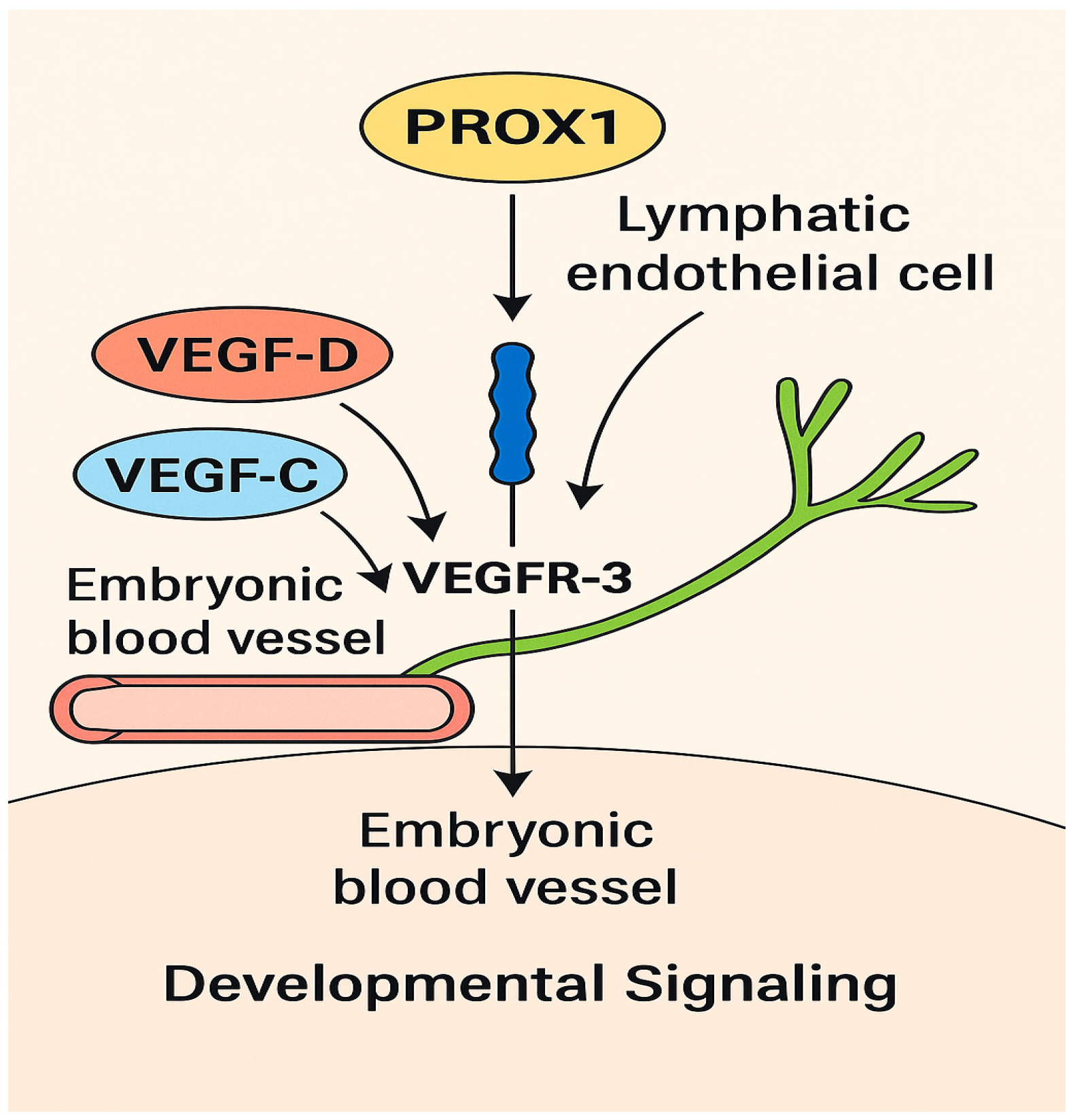
Lymphangiogenesis is essential in the lymphatic spread of NSCLC. In adults, lymphangiogenesis mainly occurs with inflammation and in the setting of malignancy. Lymphatic endothelial cells stem from venous endothelium under the control of Prospero Homeobox 1 (PROX1), a transcription factor which controls the expression of lymphangiogenic receptors [14]. A study performed by Makinen et al. found that blocking VEGFR-3 signaling in transgenic mice produced a reduction in lymphatic vessel formation; this research confirmed the importance of the VEGF-C/VEGF-D/VEGFR-3 pathway in the proliferation of lymphatics (Figure 1) [15]. Bi et al. found that expression rates of CXCR4 and VEGF-C mRNA in metastatic lymph nodes were 84.8% and 66.7%, respectively. Logistic regression analysis was performed and showed that CXCR4 and VEGF-C expression levels were significantly correlated with lymph node metastasis in NSCLC [16]. Cancer cells use a chemokine gradient to enter lymphatic vessels through defects in the endothelium. Sentinel lymph nodes undergo lymphangiogenesis, creating an environment that supports cancer cells within the lymph node [14]. As nodal micro metastasis may not be detected using standard histologic techniques, lymph node mapping using technetium-99m, indocyanine green (ICG), or near-infrared fluorescence imaging is being explored in NSCLC. This is being used to identify initial draining lymph nodes and potentially reduce the need for extensive nodal dissection. Liptay et al. found that intraoperative sentinel lymph node mapping with technetium-99m is an accurate method of finding the first site of lymphatic lymph node drainage in NSCLC. While several studies have found promising results, sentinel lymph node mapping has not reached the reliability and standardization seen in other cancers such as breast cancer and is not currently standard of care [17].
Figure 1. Developmental signaling pathways in lymphangiogenesis. Original illustration by the author, digitally rendered with the assistance of ChatGPT.

3. Normal Lymphatic Drainage Pathways

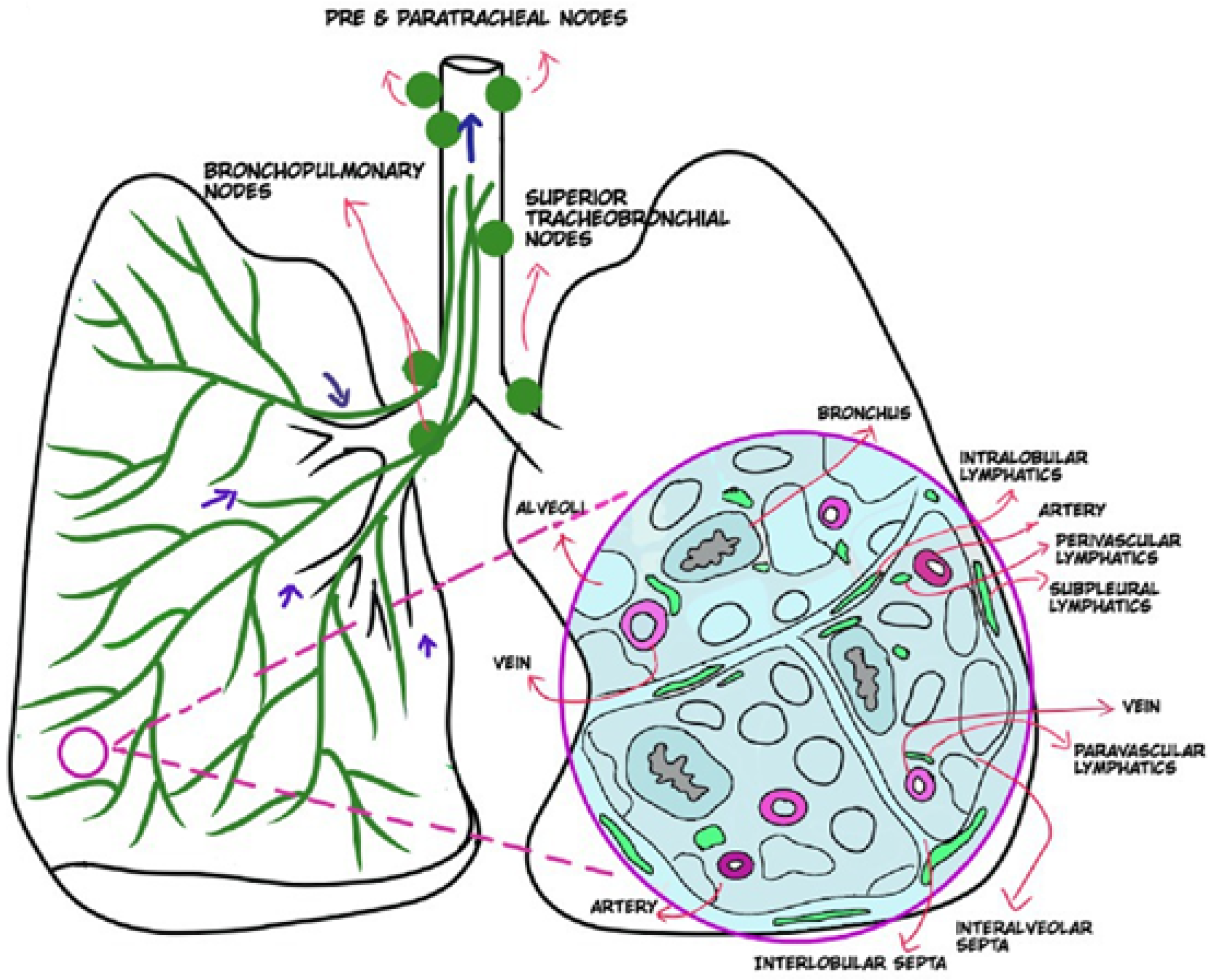
Lymphatic drainage in the body converges in two main drainage pathways: the thoracic duct and the right lymphatic duct [18]. Drainage from the lung begins at the lymphatic capillaries, which do not contain a continuous basement membrane and are composed of a single layer of overlapping lymphatic endothelial cells [19]. The lymphatic ducts follow respiratory bronchioles as they combine and eventually drain into the thoracic duct, and right lymphatic duct (Figure 2). While most lung segments drain into intrapulmonary lymph nodes, approximately 20–25% have been shown to have direct passage into mediastinal lymph nodes [20]. The segments that were noted to have direct passage to the mediastinal lymph nodes were more frequently observed in the upper lobes [20].
Figure 2. Schematic representation of pulmonary lymphatic drainage pathways. Adapted from Trivedi A, Outtz Reed H. “The lymphatic vasculature in lung function and respiratory disease.” Frontiers in Medicine. Licensed under CC BY 4.0 [21].

4. Patterns of Nodal Metastasis and Staging in NSCLC

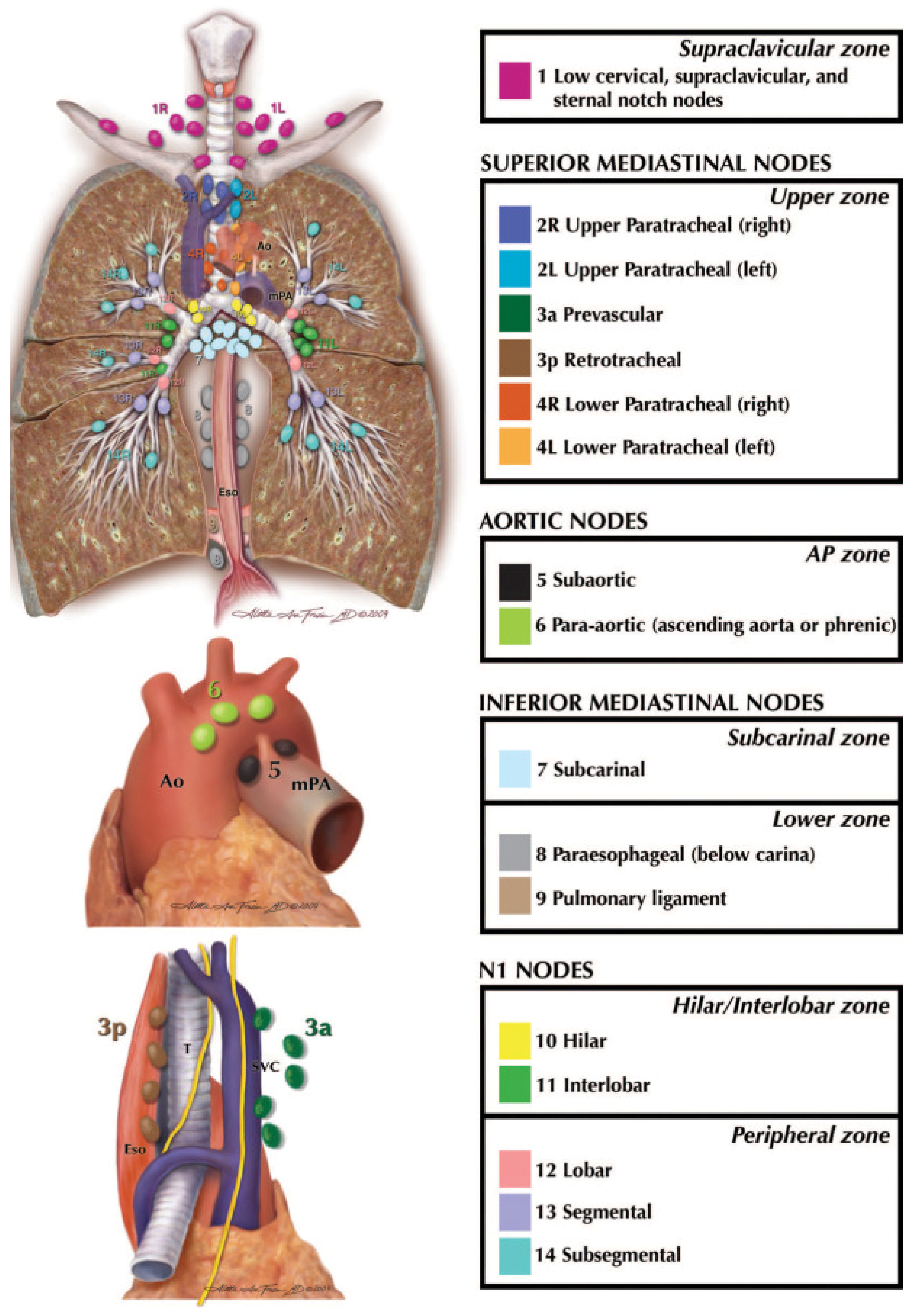
The International Association for the Study of Lung Cancer (IASLC) lymph node map is the global standard, defining 14 nodal stations for staging (Figure 3). Given that this review centers on lymphatic spread in NSCLC, the discussion will primarily focus on the nodal (N) component of the TNM staging system. The map aids in staging, specifically the “N” component, which is based on the anatomical location of lymph node metastasis rather than the number of lymph nodes it has spread to, and is integrated into the TNM staging system. A significant proportion of patients (up to 20%) with radiographically normal mediastinal lymph nodes (PET-negative) may have occult N2/N3 metastases, which are frequently missed by imaging but can be detected by EBUS-TBNA, thereby avoiding understaging and inappropriate treatment. PET-CT alone is not sufficient for staging due to limited sensitivity and specificity; pathologic confirmation is required. EBUS-TBNA is now the preferred initial invasive staging modality, offering high sensitivity and low complication rates. EBUS-TBNA is superior in detecting PET-occult nodal metastases, especially in small or morphologically normal nodes. Mediastinoscopy remains valuable for confirmation or when EBUS is non-diagnostic, but its role as first-line staging is diminishing [22,23]. EBUS-TBNA enables real-time sampling of mediastinal and hilar lymph nodes, systematic sampling of all nodes from N3 to N1 is the recommended method for highest accuracy in comparison with only targeting PET-positive lymph nodes [24]. The IASLC lymph node map shows N1 nodes are ipsilateral peribronchial and/or hilar lymph nodes (stations 10–14). Spread to N1 lymph nodes indicates involvement close to the primary tumor and is associated with a more favorable prognosis compared with N2 or N3 disease. N2 lymph node involvement signifies involvement of subcarinal and mediastinal lymph nodes, indicating more advanced spread of the disease and is an important factor in determining resectability. By definition, N3 involvement refers to spread in the contralateral hilar, contralateral mediastinal, supraclavicular, or scalene lymph nodes, which indicates advanced spread, and these patients are generally not candidates for surgical resection [25,26].
Figure 3. The International Association for the Study of Lung Cancer (IASLC) lymph node map, including the proposed grouping of lymph node stations. Reproduced from Rusch VW, Asamura H, Watanabe H, Giroux DJ, Rami-Porta R, Goldstraw P. “The IASLC Lung Cancer Staging Project: A Proposal for a New International Lymph Node Map in the Forthcoming Seventh Edition of the TNM Classification for Lung Cancer.” J. Thorac. Oncol.© 2009 Elsevier. Reproduced with permission. License number 6134370351903 [27].

5. How Tumor Location Influences Nodal Spread

Lymphatic drainage in non-small-cell lung cancer (NSCLC) follows predictable patterns: upper lobe tumors preferentially spread to superior mediastinal nodes, while lower lobe tumors often involve subcarinal and inferior mediastinal nodes [28]. Tumor location strongly influences nodal spread, with central tumors more likely to involve mediastinal nodes early [29]. This predictable pattern is fundamental for both staging and surgical planning. However, there are variations in drainage pathways and anatomical variants, which present a challenge in clinical practice. In particular, skip metastasis can occur where N2 lymph nodes are involved without preceding N1 involvement. Notably it has been found that skip N2(SN2) metastasis was associated with a better prognosis than patients with N1 to N2 metastasis [30]. Recognizing these nuances is essential for accurate staging and risk stratification, especially in minimally invasive procedures where sampling may be limited. In a 2020 series of NSCLC tumors that were <2 cm, Wu et al. found that (SN2) occurred in 39.7% (25/63) of cases, while non-skip N2 occurred in 60.3%. Drainage mapping revealed that right upper lobe tumors metastasized to paratracheal lymph nodes (stations 2R and 4R), while right middle and lower lobe tumor spread to 2R/4R and subcarinal (station 7) lymph nodes. While spread from the upper lobe to the lower zone and vice versa was seen in 10.9% of patients, suggesting that selective lobe-specific dissection can miss occult metastasis even in small tumors [31].

6. Subtype-Specific Distribution

Patterns of lymphatic spread can vary by histologic subtype. Adenocarcinoma is more likely to exhibit skip metastasis and involve contralateral nodes. Deng et al. found that adenocarcinoma had a higher rate of lymph node metastases in comparison to squamous cell carcinoma [32]. Other studies have shown that squamous cell carcinoma had a higher rate of skip metastasis in comparison to adenocarcinoma [33]. Further understanding of the patterns of lymphatic spread of different subtypes of NSCLC can guide more strategic sampling.

7. Clinical Prediction Tools for Nodal Metastasis

Clinical prediction models are useful for estimating the probability of lymph node metastases in NSCLC. The Help with Oncologic Mediastinal Evaluation for Radiation (HOMER) model is an externally validated clinical prediction tool. It integrates clinical imaging, and procedural data to estimate the probability of nodal metastasis. It takes into account tumor size, location, and imaging findings to estimate nodal metastasis risk, assisting in the management of patients to predict the probability of N0 vs. N1 vs. N2 nodal metastasis. This is particularly useful in patients under consideration for stereotactic body radiation therapy. The HOMER calculator is accessible online through the MD Anderson website and is a useful clinical tool. Incorporating this tool allows for a more nuanced discussion with patients, improved procedural planning, and optimizes use of resources [34].

8. Advances in Lymph Node Sampling and Diagnostic Techniques

EBUS-TBNA has transformed the mediastinal staging algorithm, offering a minimally invasive procedure to patients with a high diagnostic yield. The convex EBUS scope allows direct visualization of mediastinal and hilar lymph nodes and facilitates targeted sampling of the visualized lymph nodes [35]. The ASTER trial established the superiority of an endosonographic-based strategy over mediastinoscopy, showing improved sensitivity, and decreasing the amount of unnecessary thoracotomies [36]. Not only has EBUS-TBNA proven to be clinically effective, EBUS-TBNA has also been shown to be more cost-effective [37]. Meta-analysis performed by Gu et al. found that EBUS-TBNA had a pooled sensitivity of 0.93 (95%CI, 0.91–0.94) and a pooled specificity of 1.00 (95%CI, 0.99–1.00) [38]. The combination of EBUS-TBNA and EUS provides access to most mediastinal and hilar lymph nodes, with the exception of the aortopulmonary and para-aortic lymph nodes, which require VATS for sampling. Complication rates with EBUS-TBNA are generally found to be around 1–2%, with bleeding being the most common. Other complications include infections and pneumothorax, which occur less frequently [39]. Operator experience also correlates with diagnostic yield, emphasizing the importance of structured training and ongoing competency assessment. Despite some of its limitations and pitfalls, EBUS offers unmatched advantages, allowing highly sensitive and specific sampling of multiple lymph node stations in one session, with relatively low complication rates and reduced costs for patients.
The choice of needle gauge in EBUS-TBNA plays a significant role in determining sample adequacy and diagnostic yield. Current CHEST guidelines recommend use of 21 gauge (G) or 22G needles in patients with suspected malignant disease such as NSCLC [40]. Oki et al. performed a prospective study and found no significant difference between using a 21G or 22G needle [41]. The guidelines reflect concerns about increased bleeding and tissue contamination with larger needles. However, some data suggest that larger size needles may also be appropriate in the diagnosis of NSCLC. Wolters et al. compared 19G and 22G needles in patients undergoing EBUS-TBNA for suspected lung cancer and found that 19G needles produced significantly higher tissue yield and higher tumor cell counts in NSCLC-positive samples (p = 0.0312) [42]. Although tissue yield and tumor cell count increased, there was no difference in sample adequacy and no significant increase in bleeding. While 21 and 22G needles may be adequate, using a larger 19G needle may offer advantages in obtaining more tissue sampling for further molecular testing and next-generation sequencing.
A major factor influencing tissue yield and adequacy for further testing is the number of passes performed on the lymph node. The current recommendation for the number of passes at a sampling site is three if rapid-on site evaluation (ROSE) is not available, with additional samples sent for molecular testing [43]. Zhao et al. conducted a meta-analysis which included 21 studies with a total of 1175 patients and found that 77% of EBUS-TBNA samples were adequate for next-generation-sequencing; adequacy increased to 95% when the number of passes increased to six [44]. Balancing the number of passes with blood contamination and procedural time make three to four passes a practical approach.
Lymph node size is an important criterion in radiological and clinical assessment of lymph node metastasis in NSCLC. The most widely used criterion is a short-axis lymph node diameter of greater than 1 cm on transverse CT imaging [45]. While size may help as a predictor of metastasis, smaller lymph nodes may also have metastasis. Systematic sampling of lymph nodes regardless of size is the recommended method of sampling [43]. EBUS-TBNA enables sampling of lymph nodes with high sensitivity and specificity. Sampling of lymph nodes with a short-axis diameter cut-off of 5mm and a short-to-long-axis ratio of 0.5 achieves approximately 100% sensitivity for malignant lymph node detection [46].
Mediastinoscopy remains valuable as a confirmatory procedure when EBUS-TBNA is negative but there is a high level of suspicion for N2/N3 disease, or when EBUS-TBNA is non-diagnostic [45]. Bousema et al. conducted a systematic review and meta-analysis which found that undergoing mediastinoscopy after negative EBUS-TBNA did not significantly decrease the rate of unforeseen N2 disease in patients with resectable NSCLC [47]. The study also showed that mediastinoscopy was associated with a higher risk (6.0%) of complications. These findings suggest that mediastinoscopy may not be necessary. Although official guidance is for patients to undergo mediastinoscopy if there is a high suspicion of N2/N3 disease, there may be limited diagnostic value for patients who have undergone EBUS-TBNA and a higher risk of complications [47]. While surgical staging techniques are not first-line for diagnosis of lymphatic spread, they still play a role. VATS, chamberlain, and extended cervical mediastinoscopy are sometimes required to biopsy lymph nodes that are not accessible by EBUS-TBNA. This is specifically important in the setting of left upper lobe cancers, which have a predilection to spread to the aortopulmonary window lymph node (station 5), and for these patients an invasive method of lymph node sampling should be pursued to biopsy this lymph node for accurate staging of disease [45].
Emerging techniques of lymph node sampling such as EBUS-guided transbronchial cryobiopsy (EBUS-TBCB), which may have a higher tissue yield, particularly for benign or lymphoproliferative disease, are not routinely used in NSCLC [48]. There may be a bigger role for cyropbiopsy in the future, especially with the need for more tissue samples for molecular sampling, immunohistochemistry, and next-generation-sequencing [49]. Cryobiopsy is performed after obtaining a tissue sample using a TBNA needle by inserting a cryoprobe through the working channel instead of using an EBUS-TBNA needle through the same orifice from which the initial sample was obtained [50]. Zhang et al. conducted a randomized clinical trial involving 197 patients with mediastinal lesions 1 cm or larger, comparing EBUS-TBNA alone to EBUS-TBNA combined with EBUS-TBCB. They found that addition of cryobiopsy achieved a higher diagnostic yield compared to TBNA only (91.8% vs. 79.9%, p = 0.001). Both methods showed similarly high yields for metastatic lymphadenopathy; however, cryobiopsy was significantly better at detecting less common tumors such as carcinoid, sarcoid, seminomas, and thymic cancers. (91.7% vs. 25.0%, p = 0.001). Despite the higher yield, there was no difference when analyzing the more common lung cancer subtypes, with both modalities showing similar diagnostic yields [51].

9. Conclusions

Lymphatic spread in NSCLC is a key prognostic factor that follows lobe-specific drainage patterns but may be variable. Invasive lymph node staging with EBUS-TBNA, at times complemented by EUS or mediastinoscopy, remains standard in the diagnosis of lymphatic spread given its ability to diagnose and stage a significant number of patients with PET-occult nodal metastasis. Lymph nodes are biopsied in a systemic fashion from N3 to N0, using a recommended 21G or 22G needle. Advances in obtaining lymph node samples such as cryobiopsy may improve diagnostic yield and tissue adequacy for molecular testing, but require further study specifically in NSCLC. Accurate diagnosis and staging of NSCLC require a collaborative effort from a variety of disciplines such as pulmonology, thoracic surgery, radiology, oncology, and pathology. Multidisciplinary tumor boards are essential for integrating imaging, invasive staging, and treatment sequencing.
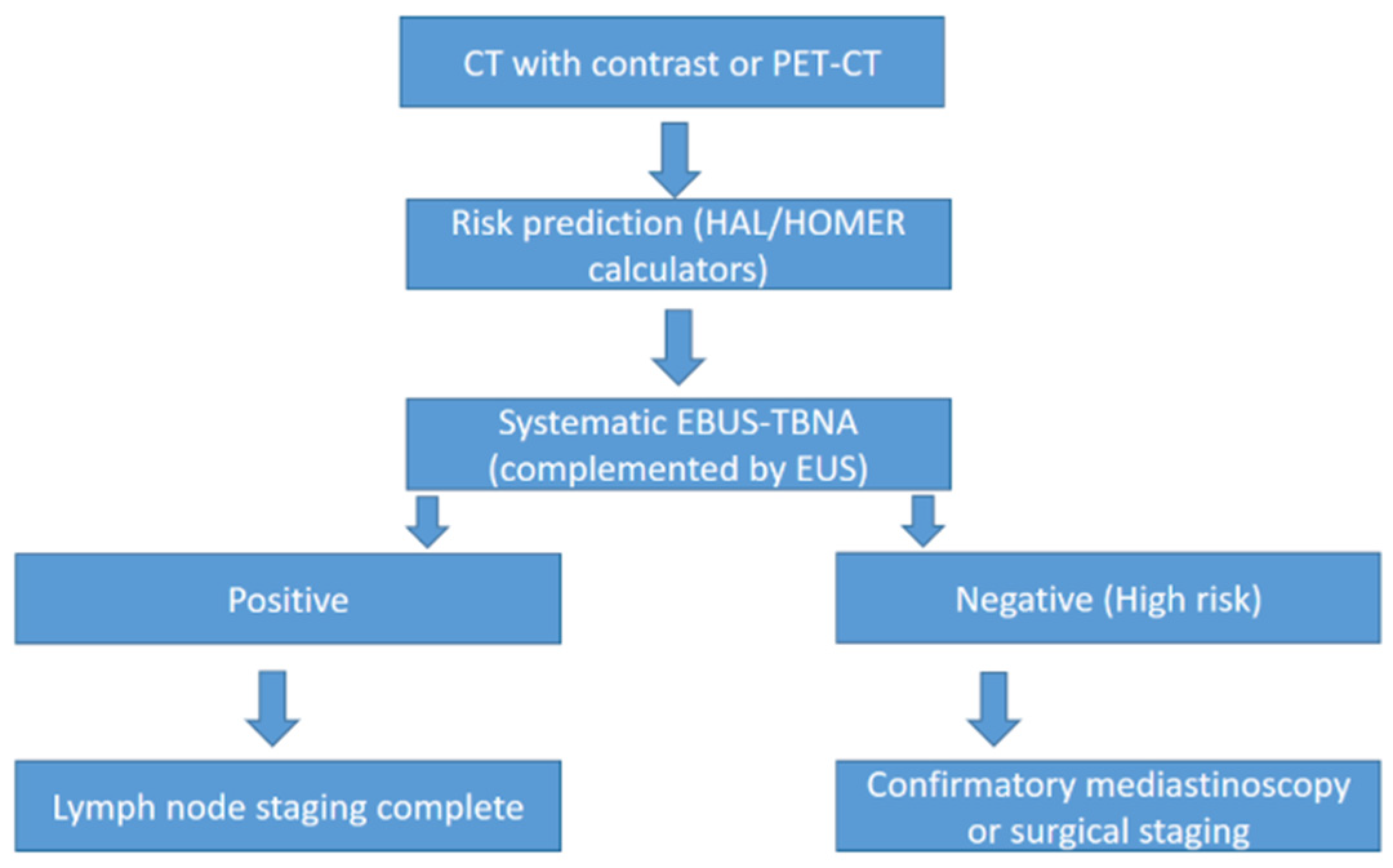
A practical staging algorithm begins with high-quality imaging (contrast-enhanced CT and PET-CT) to define the anatomic and metabolic landscape. Risk prediction using HAL or HOMER informs procedural planning by highlighting stations with elevated probabilities of metastasis, including those without overt radiographic abnormalities. Systematic EBUS-TBNA, ideally complemented by EUS follows, with negative results in high-risk patients warranting confirmatory mediastinoscopy or surgical staging (Figure 4). This integrated approach maximizes diagnostic accuracy, minimizes invasive procedures, and ensures that management decisions are grounded in the most accurate staging data available.
Figure 4. Proposed algorithm for lymph node staging in NSCLC.

Author Contributions

Conceptualization, M.S.M., S.C., A.K., A.N. and R.O.-P.; writing-original draft, M.S.M. and S.C.; writing-review and editing, A.K., A.N. and R.O.-P.; supervision, R.O.-P. All authors have read and agreed to the published version of the manuscript.

Funding

This research received no external funding.

Data Availability Statement

No new data were created or analyzed in this study. Data sharing is not applicable to this review.

Acknowledgments

During the preparation of this manuscript, the authors used ChatGPT 5 (OpenAI, San Francisco, CA, USA) for the purposes of digitally rendering an original illustration by the author. The software was used solely for image rendering. The authors have reviewed and edited the output and take full responsibility for the content of this publication.

Conflicts of Interest

The authors declare no conflicts of interest.

References

  1. Siegel, R.L.; Giaquinto, A.N.; Jemal, A. Cancer statistics, 2024. CA Cancer J. Clin. 2024, 74, 12–49, Erratum in CA Cancer J. Clin. 2024, 74, 203. https://doi.org/10.3322/caac.21830. [Google Scholar] [CrossRef] [PubMed]
  2. Siegel, R.L.; Kratzer, T.B.; Giaquinto, A.N.; Sung, H.; Jemal, A. Cancer statistics, 2025. CA Cancer J. Clin. 2025, 75, 10–45. [Google Scholar] [CrossRef] [PubMed] [PubMed Central]
  3. Sankar, V.; Kothai, R.; Vanisri, N.; Akilandeswari, S.; Anandharaj, G. Lung cancer—A review. Int. J. Health Sci. Res. 2023, 13, 307–315. [Google Scholar] [CrossRef]
  4. Wang, C.; Wu, Y.; Shao, J.; Liu, D.; Li, W. Clinicopathological variables influencing overall survival, recurrence and post-recurrence survival in resected stage I non-small-cell lung cancer. BMC Cancer 2020, 20, 150. [Google Scholar] [CrossRef] [PubMed] [PubMed Central]
  5. Nicholson, A.G.; Tsao, M.S.; Beasley, M.B.; Borczuk, A.C.; Brambilla, E.; Cooper, W.A.; Dacic, S.; Jain, D.; Kerr, K.M.; Lantuejoul, S.; et al. The 2021 WHO Classification of Lung Tumors: Impact of Advances Since 2015. J. Thorac. Oncol. 2022, 17, 362–387. [Google Scholar] [CrossRef] [PubMed]
  6. Detterbeck, F.C.; Boffa, D.J.; Kim, A.W.; Tanoue, L.T. The Eighth Edition Lung Cancer Stage Classification. Chest 2017, 151, 193–203. [Google Scholar] [CrossRef] [PubMed]
  7. Klug, M.; Kirshenboim, Z.; Truong, M.T.; Sorin, V.; Ofek, E.; Agrawal, R.; Marom, E.M. Proposed Ninth Edition TNM Staging System for Lung Cancer: Guide for Radiologists. RadioGraphics 2024, 44, e240057. [Google Scholar] [CrossRef] [PubMed]
  8. Goldstraw, P.; Chansky, K.; Crowley, J.; Rami-Porta, R.; Asamura, H.; Eberhardt, W.E.; Nicholson, A.G.; Groome, P.; Mitchell, A.; Bolejack, V.; et al. The IASLC Lung Cancer Staging Project: Proposals for Revision of the TNM Stage Groupings in the Forthcoming (Eighth) Edition of the TNM Classification for Lung Cancer. J. Thorac. Oncol. 2016, 11, 39–51. [Google Scholar] [CrossRef] [PubMed]
  9. Schneider, B.J.; Daly, M.E.; Kennedy, E.B.; Antonoff, M.B.; Broderick, S.; Feldman, J.; Jolly, S.; Meyers, B.; Rocco, G.; Rusthoven, C.; et al. Stereotactic Body Radiotherapy for Early-Stage Non-Small-Cell Lung Cancer: American Society of Clinical Oncology Endorsement of the American Society for Radiation Oncology Evidence-Based Guideline. J. Clin. Oncol. 2018, 36, 710–719. [Google Scholar] [CrossRef] [PubMed]
  10. Swanton, C.; Govindan, R. Clinical implications of genomic discoveries in lung cancer. N. Engl. J. Med. 2016, 374, 1864–1873. [Google Scholar] [CrossRef]
  11. Singal, G.; Miller, P.G.; Agarwala, V.; Li, G.; Kaushik, G.; Backenroth, D.; Gossai, A.; Frampton, G.M.; Torres, A.Z.; Lehnert, E.M.; et al. Association of Patient Characteristics and Tumor Genomics with Clinical Outcomes Among Patients with Non–Small Cell Lung Cancer Using a Clinicogenomic Database. JAMA 2019, 321, 1391–1399. [Google Scholar] [CrossRef]
  12. Ettinger, D.S.; Wood, D.E.; Aisner, D.L.; Akerley, W.; Bauman, J.R.; Bharat, A.; Bruno, D.S.; Chang, J.Y.; Chirieac, L.R.; DeCamp, M.; et al. NCCN Guidelines® Insights: Non-Small Cell Lung Cancer, Version 2.2023. J. Natl. Compr. Cancer Netw. 2023, 21, 340–350. [Google Scholar] [CrossRef]
  13. Imyanitov, E.N.; Iyevleva, A.G.; Levchenko, E.V. Molecular testing and targeted therapy for non-small cell lung cancer: Current status and perspectives. Crit. Rev. Oncol. Hematol. 2021, 157, 103194. [Google Scholar] [CrossRef] [PubMed]
  14. Alitalo, A.; Detmar, M. Interaction of tumor cells and lymphatic vessels in cancer progression. Oncogene 2012, 31, 4499–4508. [Google Scholar] [CrossRef] [PubMed]
  15. Mäkinen, T.; Jussila, L.; Veikkola, T.; Karpanen, T.; Kettunen, M.I.; Pulkkanen, K.J.; Kauppinen, R.; Jackson, D.G.; Kubo, H.; Nishikawa, S.-I.; et al. Inhibition of lymphangiogenesis with resulting lymphedema in transgenic mice expressing soluble VEGF receptor-3. Nat. Med. 2001, 7, 199–205. [Google Scholar] [CrossRef] [PubMed]
  16. Bi, M.M.; Shang, B.; Wang, Z.; Chen, G. Expression of CXCR4 and VEGF-C is correlated with lymph node metastasis in non-small cell lung cancer. Thorac. Cancer 2017, 8, 634–641. [Google Scholar] [CrossRef] [PubMed] [PubMed Central]
  17. Liptay, M.J.; Grondin, S.C.; Fry, W.A.; Pozdol, C.; Carson, D.; Knop, C.; Masters, G.A.; Perlman, R.M.; Watkin, W. Intraoperative sentinel lymph node mapping in non-small-cell lung cancer improves detection of micrometastases. J. Clin. Oncol. 2002, 20, 1984–1988. [Google Scholar] [CrossRef] [PubMed]
  18. Lee, G.M.; Stowell, J.T.; Pope, K.; Carter, B.W.; Walker, C.M. Lymphatic Pathways of the Thorax: Predictable Patterns of Spread. AJR Am. J. Roentgenol. 2021, 216, 649–658. [Google Scholar] [CrossRef] [PubMed]
  19. Cui, Y.; Liu, K.; Lamattina, A.M.; Visner, G.; El-Chemaly, S. Lymphatic Vessels: The Next Frontier in Lung Transplant. Ann. Am. Thorac. Soc. 2017, 14 (Suppl. S3), S226–S232. [Google Scholar] [CrossRef] [PubMed] [PubMed Central]
  20. Riquet, M.; Hidden, G.; Debesse, B. Direct lymphatic drainage of lung segments to the mediastinal nodes. An anatomic study on 260 adults. J. Thorac. Cardiovasc. Surg. 1989, 97, 623–632. [Google Scholar] [CrossRef] [PubMed]
  21. Trivedi, A.; Reed, H.O. The lymphatic vasculature in lung function and respiratory disease. Front. Med. 2023, 10, 1118583. [Google Scholar] [CrossRef]
  22. Rodriguez, G.R.; Trachiotis, G.D.; Mullenix, P.S.; Antevil, J.L. Minimally Invasive with Maximal Yield: A Narrative Review of Current Practices in Mediastinal Lymph Node Staging in Non-Small Cell Lung Cancer. J. Laparoendosc. Adv. Surg. Tech. 2024, 34, 773–785. [Google Scholar] [CrossRef] [PubMed]
  23. Zhang, L.; Wu, F.; Zhu, R.; Wu, D.; Ding, Y.; Zhang, Z.; Gao, Y.; Wan, Y. Application of computed tomography, positron emission tomography-computed tomography, magnetic resonance imaging, endobronchial ultrasound, and mediastinoscopy in the diagnosis of mediastinal lymph node staging of non-small-cell lung cancer: A protocol for a systematic review. Medicine 2020, 99, e19314. [Google Scholar] [CrossRef] [PubMed] [PubMed Central]
  24. Sanz-Santos, J.; Serra, P.; Torky, M.; Andreo, F.; Centeno, C.; Mendiluce, L.; Martínez-Barenys, C.; de Castro, P.L.; Ruiz-Manzano, J. Systematic Compared with Targeted Staging with Endobronchial Ultrasound in Patients with Lung Cancer. Ann. Thorac. Surg. 2018, 106, 398–403. [Google Scholar] [CrossRef] [PubMed]
  25. Asamura, H.; Chansky, K.; Crowley, J.; Goldstraw, P.; Rusch, V.W.; Vansteenkiste, J.F.; Watanabe, H.; Wu, Y.-L.; Zielinski, M.; Ball, D.; et al. The International Association for the Study of Lung Cancer Lung Cancer Staging Project: Proposals for the Revision of the N Descriptors in the Forthcoming 8th Edition of the TNM Classification for Lung Cancer. J. Thorac. Oncol. 2015, 10, 1675–1684. [Google Scholar] [CrossRef] [PubMed]
  26. Song, H.; Yoon, S.H.; Kim, J.; Kim, J.; Lee, K.W.; Lee, W.; Lee, S.; Kim, K.; Lee, C.-T.; Chung, J.-H.; et al. Application of N Descriptors Proposed by the International Association for the Study of Lung Cancer in Clinical Staging. Radiology 2021, 300, 450–457. [Google Scholar] [CrossRef] [PubMed]
  27. Rusch, V.W.; Asamura, H.; Watanabe, H.; Giroux, D.J.; Rami-Porta, R.; Goldstraw, P. The IASLC lung cancer staging project: A proposal for a new international lymph node map in the forthcoming seventh edition of the TNM classification for lung cancer. J. Thorac. Oncol. 2009, 4, 568–577. [Google Scholar] [CrossRef]
  28. Lin, B. Narrative review of patterns of lymphatic drainage in early-stage non-small cell lung cancer. AME Med. J. 2021, 6. [Google Scholar] [CrossRef]
  29. Sharma, A.; Fidias, P.; Hayman, L.A.; Loomis, S.L.; Taber, K.H.; Aquino, S.L. Patterns of lymphadenopathy in thoracic malignancies. RadioGraphics 2004, 24, 419–434. [Google Scholar] [CrossRef] [PubMed]
  30. Wang, S.; Xie, S.; Han, Y.; Gao, M.; Su, X.; Liu, Q. Role of skip N2 lymph node metastasis for patients with the stage III-N2 lung adenocarcinoma: A propensity score matching analysis. BMC Pulm. Med. 2023, 23, 147. [Google Scholar] [CrossRef] [PubMed] [PubMed Central]
  31. Wu, Y.; Han, C.; Gong, L.; Wang, Z.; Liu, J.; Liu, X.; Chen, X.; Chong, Y.; Liang, N.; Li, S. Metastatic Patterns of Mediastinal Lymph Nodes in Small-Size Non-small Cell Lung Cancer (T1b). Front. Surg. 2020, 7, 580203. [Google Scholar] [CrossRef] [PubMed] [PubMed Central]
  32. Deng, H.Y.; Zeng, M.; Li, G.; Alai, G.; Luo, J.; Liu, L.X.; Zhou, Q.; Lin, Y.D. Lung Adenocarcinoma has a Higher Risk of Lymph Node Metastasis than Squamous Cell Carcinoma: A Propensity Score-Matched Analysis. World J. Surg. 2019, 43, 955–962. [Google Scholar] [CrossRef] [PubMed]
  33. Wang, Z.; Cheng, J.; Huang, W.; Cheng, D.; Liu, Y.; Pu, Q.; Reticker-Flynn, N.E.; Liu, L. Skip metastasis in mediastinal lymph node is a favorable prognostic factor in N2 lung cancer patients: A meta-analysis. Ann. Transl. Med. 2021, 9, 218. [Google Scholar] [CrossRef] [PubMed] [PubMed Central]
  34. Martinez-Zayas, G.; Almeida, F.A.; Simoff, M.J.; Yarmus, L.; Molina, S.; Young, B.; Feller-Kopman, D.; Sagar, A.-E.S.; Gildea, T.; Debiane, L.G.; et al. A Prediction Model to Help with Oncologic Mediastinal Evaluation for Radiation: HOMER. Am. J. Respir. Crit. Care Med. 2020, 201, 212–223. [Google Scholar] [CrossRef] [PubMed] [PubMed Central]
  35. Aziz, F. Endobronchial ultrasound-guided transbronchial needle aspiration for staging of lung cancer: A concise review. Transl. Lung Cancer Res. 2012, 1, 208–213. [Google Scholar] [CrossRef] [PubMed] [PubMed Central]
  36. Annema, J.T.; van Meerbeeck, J.P.; Rintoul, R.C.; Dooms, C.; Deschepper, E.; Dekkers, O.M.; De Leyn, P.; Braun, J.; Carroll, N.R.; Praet, M.; et al. Mediastinoscopy vs endosonography for mediastinal nodal staging of lung cancer: A randomized trial. JAMA 2010, 304, 2245–2252. [Google Scholar] [CrossRef] [PubMed]
  37. Sharples, L.D.; Jackson, C.; Wheaton, E.; Griffith, G.; Annema, J.T.; Dooms, C.; Tournoy, K.G.; Deschepper, E.; Hughes, V.; Magee, L.; et al. Clinical effectiveness and cost-effectiveness of endobronchial and endoscopic ultrasound relative to surgical staging in potentially resectable lung cancer: Results from the ASTER randomised controlled trial. Health Technol. Assess. 2012, 16, 1–75, iii–iv. [Google Scholar] [CrossRef] [PubMed]
  38. Gu, P.; Zhao, Y.-Z.; Jiang, L.-Y.; Zhang, W.; Xin, Y.; Han, B.-H. Endobronchial ultrasound-guided transbronchial needle aspiration for staging of lung cancer: A systematic review and meta-analysis. Eur. J. Cancer 2009, 45, 1389–1396. [Google Scholar] [CrossRef] [PubMed]
  39. Asano, F.; Aoe, M.; Ohsaki, Y.; Okada, Y.; Sasada, S.; Sato, S.; Suzuki, E.; Semba, H.; Fukuoka, K.; Fujino, S.; et al. Complications associated with endobronchial ultrasound-guided transbronchial needle aspiration: A nationwide survey by the Japan Society for Respiratory Endoscopy. Respir. Res. 2013, 14, 50. [Google Scholar] [CrossRef] [PubMed] [PubMed Central]
  40. Gilbert, C.R.; Dust, C.; Argento, A.C.; Feller-Kopman, D.; Gonzalez, A.V.; Herth, F.; Iaccarino, J.M.; Illei, P.; O’Neil, K.; Pastis, N.; et al. Acquisition and Handling of Endobronchial Ultrasound Transbronchial Needle Samples: An American College of Chest Physicians Clinical Practice Guideline. Chest 2025, 167, 899–909. [Google Scholar] [CrossRef] [PubMed]
  41. Oki, M.; Saka, H.; Kitagawa, C.; Kogure, Y.; Murata, N.; Ichihara, S.; Moritani, S.; Ando, M. Randomized Study of 21-gauge Versus 22-gauge Endobronchial Ultrasound-guided Transbronchial Needle Aspiration Needles for Sampling Histology Specimens. J. Bronchol. Interv. Pulmonol. 2011, 18, 306–310. [Google Scholar] [CrossRef] [PubMed]
  42. Wolters, C.; Darwiche, K.; Franzen, D.; Hager, T.; Bode-Lesnievska, B.; Kneuertz, P.J.; He, K.; Koenig, M.; Freitag, L.; Wei, L.; et al. A Prospective, Randomized Trial for the Comparison of 19-G and 22-G Endobronchial Ultrasound-Guided Transbronchial Aspiration Needles; Introducing a Novel End Point of Sample Weight Corrected for Blood Content. Clin. Lung Cancer 2019, 20, e265–e273. [Google Scholar] [CrossRef] [PubMed]
  43. Wahidi, M.M.; Herth, F.; Yasufuku, K.; Shepherd, R.W.; Yarmus, L.; Chawla, M.; Lamb, C.; Casey, K.R.; Patel, S.; Silvestri, G.A.; et al. Technical Aspects of Endobronchial Ultrasound-Guided Transbronchial Needle Aspiration: CHEST Guideline and Expert Panel Report. Chest 2016, 149, 816–835. [Google Scholar] [CrossRef] [PubMed]
  44. Zhao, J.J.; Chan, H.P.; Soon, Y.Y.; Huang, Y.; A Soo, R.; Kee, A.C.L. A systematic review and meta-analysis of the adequacy of endobronchial ultrasound transbronchial needle aspiration for next-generation sequencing in patients with non-small cell lung cancer. Lung Cancer 2022, 166, 17–26. [Google Scholar] [CrossRef] [PubMed]
  45. Silvestri, G.A.; Gonzalez, A.V.; Jantz, M.A.; Margolis, M.L.; Gould, M.K.; Tanoue, L.T.; Harris, L.J.; Detterbeck, F.C. Methods for staging non-small cell lung cancer: Diagnosis and management of lung cancer, 3rd ed: American College of Chest Physicians evidence-based clinical practice guidelines. Chest 2013, 143 (Suppl. S5), e211S–e250S. [Google Scholar] [CrossRef] [PubMed]
  46. Garcia-Olivé, I.; Monsó, E.; Andreo, F.; Sanz, J.; Castellà, E.; Llatjós, M.; de Miguel, E.; Astudillo, J. Sensitivity of linear endobronchial ultrasonography and guided transbronchial needle aspiration for the identification of nodal metastasis in lung cancer staging. Ultrasound Med. Biol. 2009, 35, 1271–1277. [Google Scholar] [CrossRef] [PubMed]
  47. Bousema, J.E.; van Dorp, M.; Noyez, V.J.; Dijkgraaf, M.G.; Annema, J.T.; van den Broek, F.J.C. Unforeseen N2 Disease after Negative Endosonography Findings with or without Confirmatory Mediastinoscopy in Resectable Non-Small Cell Lung Cancer: A Systematic Review and Meta-Analysis. J. Thorac. Oncol. 2019, 14, 979–992. [Google Scholar] [CrossRef] [PubMed]
  48. Botana-Rial, M.; Lojo-Rodríguez, I.; Leiro-Fernández, V.; Ramos-Hernández, C.; González-Montaos, A.; Pazos-Area, L.; Núñez-Delgado, M.; Fernández-Villar, A. Is the diagnostic yield of mediastinal lymph node cryobiopsy (cryoEBUS) better for diagnosing mediastinal node involvement compared to endobronchial ultrasound-guided transbronchial needle aspiration (EBUS-TBNA)? A systematic review. Respir. Med. 2023, 218, 107389. [Google Scholar] [CrossRef] [PubMed]
  49. Kim, L.; Tsao, M.S. Tumour tissue sampling for lung cancer management in the era of personalised therapy: What is good enough for molecular testing? Eur. Respir. J. 2014, 44, 1011–1022. [Google Scholar] [CrossRef] [PubMed]
  50. Gonuguntla, H.K.; Shah, M.; Gupta, N.; Agrawal, S.; Poletti, V.; Nacheli, G.C. Endobronchial ultrasound-guided transbronchial cryo-nodal biopsy: A novel approach for mediastinal lymph node sampling. Respirol. Case Rep. 2021, 9, e00808. [Google Scholar] [CrossRef] [PubMed] [PubMed Central]
  51. Zhang, J.; Guo, J.-R.; Huang, Z.-S.; Fu, W.-L.; Wu, X.-L.; Wu, N.; Kuebler, W.M.; Herth, F.J.; Fan, Y. Transbronchial mediastinal cryobiopsy in the diagnosis of mediastinal lesions: A randomised trial. Eur. Respir. J. 2021, 58, 2100055. [Google Scholar] [CrossRef] [PubMed]
Disclaimer/Publisher’s Note: The statements, opinions and data contained in all publications are solely those of the individual author(s) and contributor(s) and not of MDPI and/or the editor(s). MDPI and/or the editor(s) disclaim responsibility for any injury to people or property resulting from any ideas, methods, instructions or products referred to in the content.

Article Metrics

Citations

Article Access Statistics

Article metric data becomes available approximately 24 hours after publication online.