Article

Phytotoxic Effects of Ciprofloxacin on Early Growth and Photosynthetic Pigments of Purple Maize (Zea mays L.): An Interdisciplinary Approach to Agricultural Ecopharmacovigilance


by
Rafael Manuel de Jesús Mex-Álvarez
1,*,
María Magali Guillen-Morales
1,
David Yanez-Nava
1,
Patricia Margarita Garma-Quen
1,
Fernando Gaspar Ortiz-Ballina
2 and
Roger Enrique Chan Martínez
1
1
Área de Farmacia, Facultad de Ciencias Químico Biológicas, Universidad Autónoma de Campeche, San Francisco de Campeche 24039, Campeche, Mexico
2
Departamento de Química y Bioquímica, Instituto Tecnológico de Campeche (Tecnológico Nacional de México), Lerma 24500, Campeche, Mexico
*
Author to whom correspondence should be addressed.
Agrochemicals 2026, 5(2), 19; https://doi.org/10.3390/agrochemicals5020019

Submission received: 8 March 2026 / Revised: 2 April 2026 / Accepted: 9 April 2026 / Published: 14 April 2026
(This article belongs to the Topic Soil Health and Nutrient Management for Crop Productivity)

Abstract

Pharmaceuticals are increasingly recognized as emerging contaminants with potential impacts on agroecosystems. Among these, antibiotics such as ciprofloxacin (CPX) persist in wastewater and may enter agricultural soils through irrigation or fertilization practices, yet their effects on crop plants remain poorly understood. This study evaluated the phytotoxic effects of ciprofloxacin on early growth and photosynthetic pigment content in purple maize (Zea mays L.), a variety of nutritional and cultural importance. Seeds were germinated in an agar-based medium (0.5%) and exposed to three concentrations of ciprofloxacin (3, 10, and 30 mg·L−1) for seven days under controlled conditions. Germination percentage, seedling fresh weight, organ length (root, stem, and leaf), and photosynthetic pigment concentrations (chlorophylls a and b, and carotenoids) were determined. Ciprofloxacin exposure resulted in dose-dependent reductions in germination (from 83% at 3 mg·L−1 to 50% at 30 mg·L−1) and root elongation, while stem length remained unaffected. Chlorophyll content decreased with increasing ciprofloxacin concentration, with the lowest values observed at 30 mg·L−1, while carotenoid levels remained stable, with no statistically significant differences observed. Although ciprofloxacin is typically detected in environmental matrices at ng–µg L−1 levels, higher concentrations may occur in localized contamination hotspots; ciprofloxacin affected early developmental and physiological processes in maize under these elevated exposure conditions. These findings highlight the importance of integrating phytotoxicity assessments into agricultural ecopharmacovigilance strategies and contribute to understanding the risks associated with pharmaceutical contamination in crop production systems.

1. Introduction

In recent decades, pharmaceuticals have been increasingly recognized as emerging environmental contaminants of global concern [1,2]. Their continuous release into the environment, primarily through domestic, hospital, and industrial wastewater, has raised questions about their potential ecological impacts. Even at low concentrations, these compounds can promote the development of antibiotic-resistant bacteria, disrupt microbial community dynamics, and persist in natural ecosystems, particularly in aquatic environments and agricultural soils [3,4,5]. Notably, conventional wastewater treatment plants are often inefficient at completely removing these substances, leading to their detectable presence in treated effluents and receiving water bodies [6,7].
Treated wastewater is frequently reused for agricultural irrigation, and livestock manure—often containing antibiotic residues—is commonly applied as fertilizer. These practices create direct pathways for pharmaceuticals to enter agroecosystems [8,9]. Although regulations establish permissible limits for certain chemical contaminants, there are currently no specific guidelines defining safe concentrations of pharmaceutical residues in reclaimed water or amended soils. Consequently, antibiotics and other drugs may accumulate in agricultural environments, contributing to environmental pollution and increasing the likelihood of their entry into food chains [10,11]. While the ecological effects of many pharmaceuticals remain insufficiently characterized, existing evidence indicates that these compounds can interfere with the growth, development, and physiological processes of exposed plants and soil organisms [12,13].
Among the most frequently detected antibiotics in environmental samples, ciprofloxacin (CPX) deserves particular attention. This broad-spectrum fluoroquinolone exerts its antibacterial activity by inhibiting bacterial DNA gyrase and topoisomerase IV [14]. Ciprofloxacin is known for its environmental persistence and its incomplete removal during conventional wastewater treatment processes. Concentrations ranging from 5 to 10 μg L−1 have been routinely reported in hospital effluents, and its presence has also been documented in surface waters, groundwater, and agricultural soils at variable concentrations [15,16,17,18]. In some cases, levels up to milligram per liter ranges have been detected in industrial discharges, raising concerns about potential phytotoxic effects in crops irrigated with contaminated water [19].
Despite its widespread occurrence, information regarding the specific effects of ciprofloxacin on early plant development under controlled exposure conditions remains limited. Most studies have focused on aquatic organisms or soil microbiota, while direct phytotoxicity assessments in crop species are comparatively scarce. Maize (Zea mays L.) is one of the most important cereal crops worldwide, serving as a staple food, livestock feed, and industrial raw material [20,21]. In Mexico, maize holds particular cultural and nutritional significance, with native varieties—such as purple maize—being valued for their anthocyanin content and associated health benefits [22]. Purple maize pigmentation results from the accumulation of anthocyanins, which are bioactive compounds with antioxidant properties, making this variety not only nutritionally relevant but also potentially sensitive to environmental stressors [23].
Monocotyledonous species like Zea mays are particularly suitable for studying leaf growth responses to contaminants because their development is predominantly unidirectional, facilitating the detection of morphological alterations [24]. Environmental stressors, including chemical contaminants, can modify leaf structure and metabolism, although plants may exhibit adaptive responses, such as the synthesis of protective enzymes and secondary metabolites [25]. Previous studies have shown that various soil contaminants can affect germination, root elongation, biomass accumulation, and photosynthetic capacity in plants [26,27]. Specifically, antibiotics have been reported to interfere with mitochondrial function in plant cells, potentially disrupting energy metabolism and early developmental processes [28].
Photosynthetic pigments—chlorophylls and carotenoids—are sensitive indicators of plant physiological status. Chlorophyll content reflects photosynthetic capacity and overall plant health, while carotenoids play essential roles in light harvesting and photoprotection against oxidative stress [29,30]. Alterations in pigment concentrations or ratios (e.g., chlorophyll a/b ratio) can signal early stress responses before visible symptoms appear. Therefore, quantifying these pigments provides valuable insights into the sublethal effects of contaminants on plant physiology [31,32].
Given this background, there is a clear need to integrate phytotoxicity assessments into broader frameworks such as ecopharmacovigilance—a discipline aimed at monitoring and managing the environmental impacts of pharmaceuticals [33]. Extending this concept to agricultural systems, agricultural ecopharmacovigilance emerges as an interdisciplinary approach to evaluate and mitigate risks associated with pharmaceutical contamination in crop production [34,35]. Understanding how antibiotics like ciprofloxacin affect early plant development is essential for developing evidence-based guidelines and sustainable agricultural practices.
Therefore, the aim of this study was to evaluate the phytotoxic effects of ciprofloxacin on early growth parameters and photosynthetic pigment production in purple maize (Zea mays L.) during germination under an agar-based cultivation system. We hypothesized that: (i) ciprofloxacin exposure would exert a dose-dependent inhibitory effect on seedling growth, particularly on root elongation; and (ii) photosynthetic pigments would exhibit differential sensitivity to ciprofloxacin during early developmental stages, with chlorophylls being more affected than carotenoids. This work contributes to the emerging field of agricultural ecopharmacovigilance by providing baseline data on the phytotoxicity of a widely used antibiotic in a nutritionally and culturally significant crop variety.
Although ciprofloxacin is typically detected in environmental matrices at concentrations in the ng–µg L−1 range, substantially higher levels have been reported in localized contamination hotspots, such as hospital effluents, pharmaceutical manufacturing discharges, and untreated or inadequately treated wastewater used for irrigation. In such scenarios, concentrations may reach the mg·L−1 range, representing potential high-exposure conditions for crop plants. Therefore, the concentration range evaluated in this study (3–30 mg·L−1) was selected to simulate worst-case exposure scenarios and to provide insight into the phytotoxic thresholds and physiological responses of maize seedlings under elevated ciprofloxacin stress. This approach contributes to a more comprehensive risk assessment framework within agricultural ecopharmacovigilance.

2. Materials and Methods

2.1. Plant Material and Seed Disinfection

Seeds of purple variety corn (Zea mays L.) were visually selected based on physical integrity, excluding those showing signs of damage, discoloration, or decomposition. Selected seeds were thoroughly washed with running tap water to remove surface dust and debris. Subsequently, surface disinfection was performed by immersing the seeds in a 5% (v/v) aqueous sodium hypochlorite solution for 5 min, followed by five consecutive rinses with sterile distilled water to eliminate residual disinfectant. The disinfected seeds were placed on sterile absorbent paper and allowed to air-dry at room temperature prior to sowing.

2.2. Agar-Based Cultivation System and Ciprofloxacin Exposure

A 0.5% (w/v) agar–agar suspension was prepared in sterile distilled water and heated to boiling for 10 min under continuous stirring to ensure complete dissolution. The final volume was adjusted with sterile distilled water to compensate for evaporative losses. The medium was then dispensed into sterile 12-well culture plates (Camco Manufacturing, USA), with each well containing 20 mL of agar to allow for individualized seedling growth and to prevent root entanglement.
Ciprofloxacin (CPX) stock solutions were prepared at appropriate concentrations to achieve the desired final concentrations in the wells. After agar solidification, 100 µL of the corresponding CPX stock solution were carefully dispensed onto the surface of each well and allowed to diffuse, yielding final nominal concentrations of 3, 10, and 30 mg·L−1. These concentrations were selected based on preliminary range-finding tests and literature reports of ciprofloxacin levels detected in contaminated environments [19,28]. Wells assigned to the negative control group received 100 µL of sterile distilled water without CPX. One disinfected seed was placed per well, and each treatment was replicated in 12 independent wells (n = 12 per treatment).
Culture plates were placed inside transparent acrylic germination chambers containing sterile distilled water at the bottom to maintain high relative humidity and prevent the desiccation of the solid medium. Seeds were incubated for seven days under natural light conditions (approximately 12 h photoperiod) at a controlled temperature of 25 ± 1 °C and a light intensity of approximately 150–200 µmol·m−2·s−1. The pH of the agar medium was adjusted to approximately 6.0 prior to solidification. Ciprofloxacin stock solutions were prepared using sterile distilled water; therefore, no solvent control was required.

2.3. Seedling Harvest and Growth Measurements

After seven days of cultivation, germinated seedlings were carefully removed from the agar substrate. Roots were gently washed with distilled water to remove residual agar and blotted dry using absorbent paper. Digital photographs of each seedling were taken alongside a calibrated scale reference, and total seedling length as well as individual organ lengths (root, stem, and leaf) were determined using ImageJ® software (National Institutes of Health, Bethesda, MD, USA, version 1.54k). Manual measurements using a digital vernier caliper were also performed to verify ImageJ-derived values.
Each seedling was individually weighed using an analytical balance (precision ± 0.1 mg) to record total fresh biomass. Subsequently, plants were dissected into roots, stems, and leaves, and the fresh weight of each organ was recorded separately. Germination percentage was calculated for each treatment as the proportion of seeds that successfully germinated and produced visible seedlings.

2.4. Extraction and Quantification of Photosynthetic Pigments

Leaves were processed separately for pigment extraction. Fresh tissue samples were weighed and immediately macerated in absolute methanol using a mortar and pestle at a weight-to-volume ratio of 1:5 (g·mL−1). The homogenates were allowed to stand for 30 min at room temperature in the dark to ensure complete pigment extraction. The extracts were then filtered through Whatman No. 1 filter paper and centrifuged at 14,000 rpm for 10 min at 4 °C to remove debris.
Chlorophyll and carotenoid concentrations were determined spectrophotometrically by measuring absorbance at 649, 665, and 470 nm using a UV-Vis spectrophotometer, model VE-5600UV (Velab, Pharr, TX, USA). Since extractions were performed in absolute methanol, pigment concentrations were calculated using the equations proposed by Lichtenthaler (2001) for 100% methanol [36]:
Ca = 16.72 × A665 − 9.16 × A649
Cb = 34.09 × A649 − 15.28 × A665
Cc = (1000 × A470 − 1.63 × Ca − 104.96 × Cb)/221
Pigment concentrations were expressed as milligrams per gram of fresh weight (mg·g−1 FW). All pigment determinations were performed in triplicate for each sample.

2.5. Statistical Analysis

The experiment followed a completely randomized design using three independent trays per treatment, with each tray containing 12 wells with one seed per well, resulting in a total of 36 seeds per treatment. Germination percentage was calculated at the tray level; therefore, each tray was considered one experimental unit (n = 3 per treatment).
For growth-related parameters (seedling length, organ length, and fresh weight), each individual seedling was considered an independent experimental unit (n = 36 per treatment).
For photosynthetic pigment analysis, plant material was processed at the tray level. All seedlings from each tray were pooled to obtain one biological replicate, resulting in three independent biological replicates per treatment (n = 3). Each extract was measured in triplicate (technical replicates).
Data were tested for normality and homogeneity of variance using the Shapiro–Wilk test and Levene’s test, respectively. Since assumptions were met, one-way analysis of variance (ANOVA) was performed to evaluate the effect of ciprofloxacin concentration on each parameter. When significant differences were detected (p ≤ 0.05), Tukey’s honestly significant difference (HSD) test was applied for multiple comparisons. ANOVA indicated significant effects of ciprofloxacin concentration for the evaluated parameters.
All statistical analyses were performed using GraphPad Prism® software (version 10.4.2, GraphPad Software, Boston, MA, USA). Data are presented as mean ± standard deviation (SD), and the value of n is specified in each figure legend.

3. Results

3.1. General Observations and Seedling Phenotype

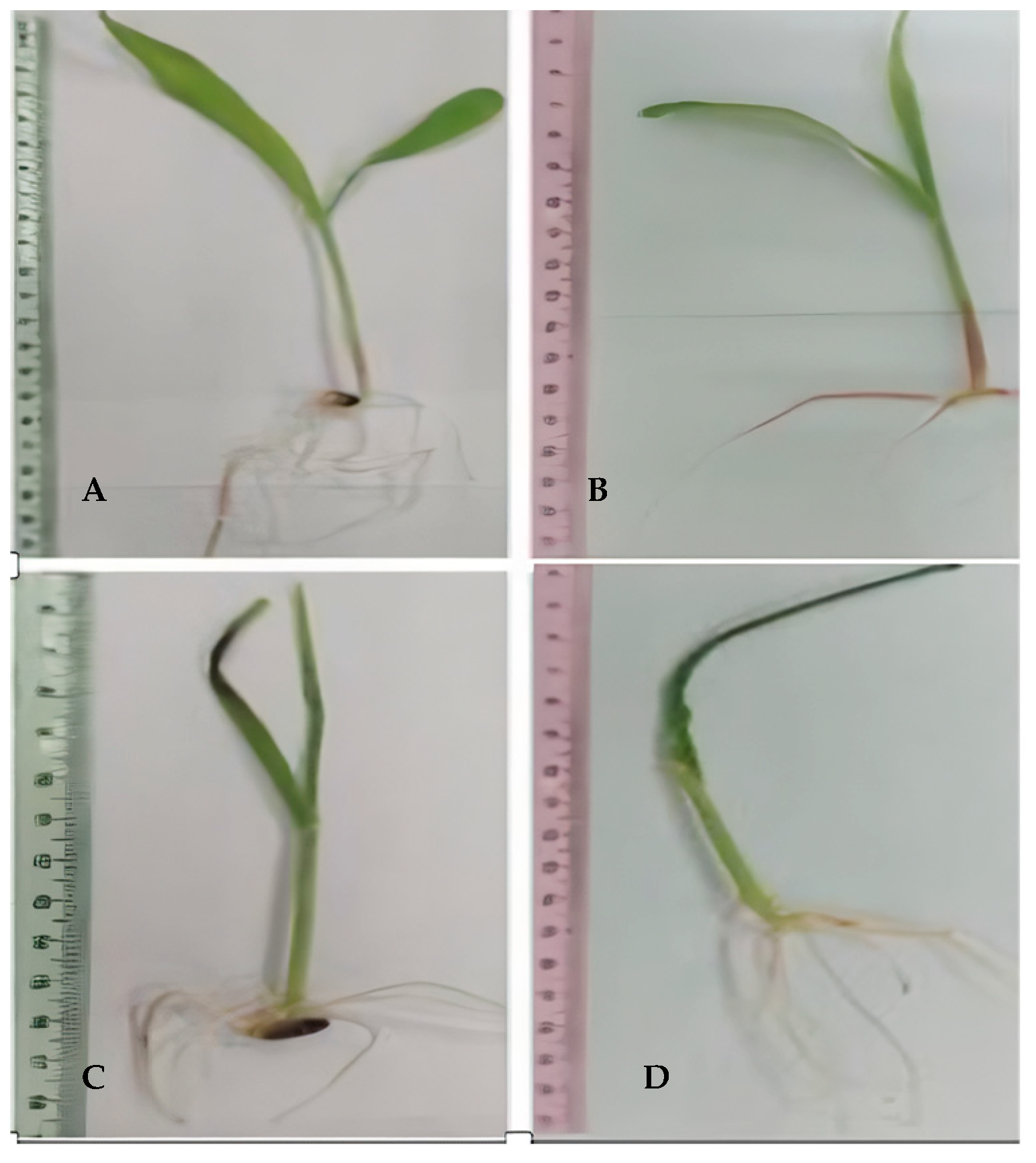
After seven days of cultivation, purple maize seedlings exhibited characteristic anthocyanin pigmentation in roots and stems, which was visually evident across all treatments (Figure 1). No visible signs of chlorosis or necrosis were observed in any of the treatment groups, although seedlings exposed to higher ciprofloxacin concentrations showed reduced overall size.

3.2. Germination Percentage

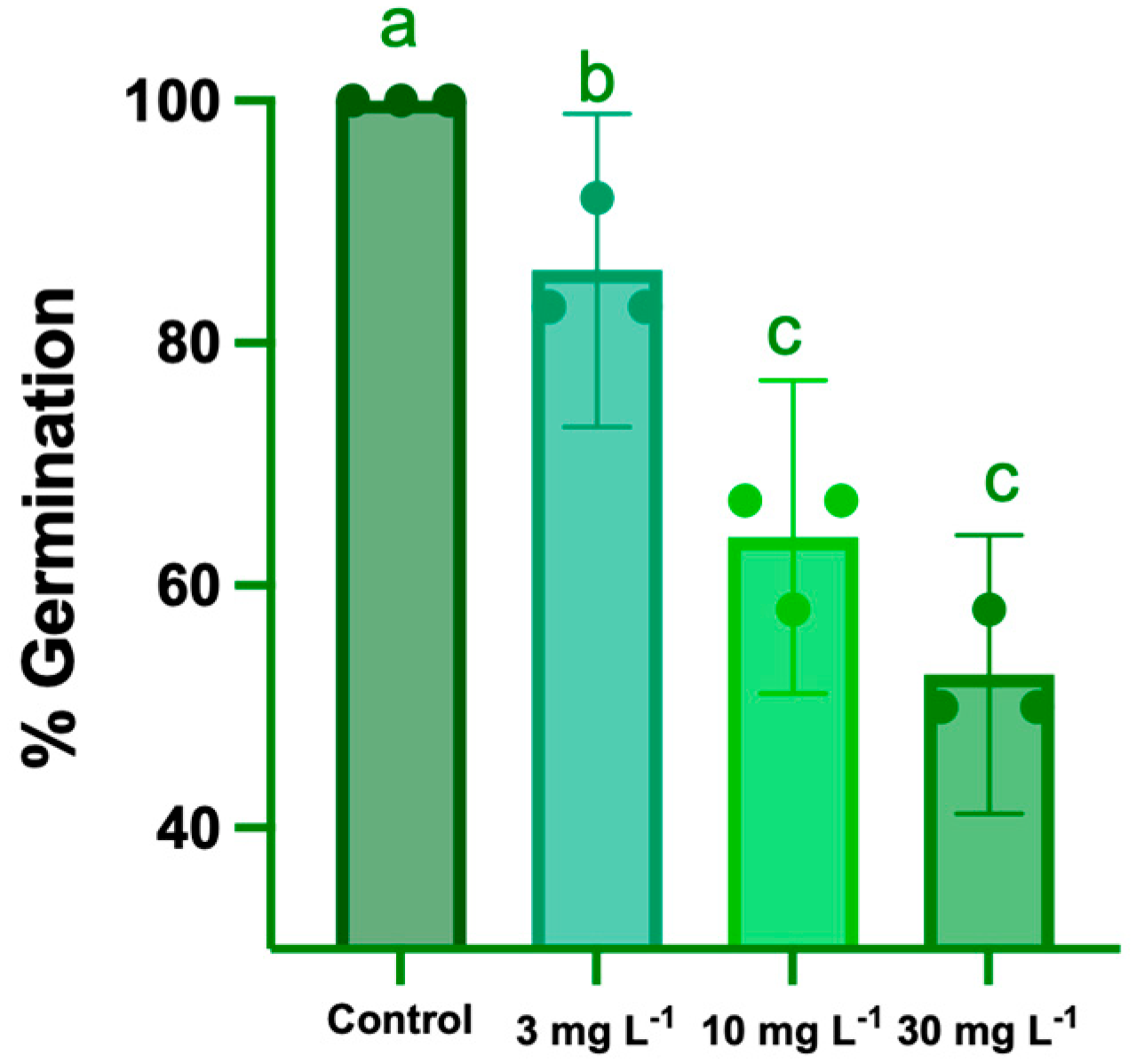
Ciprofloxacin exposure reduced seed germination in a dose-dependent manner (Figure 2). The control group showed 100% germination. At 3 mg·L−1, germination decreased to 83%, while at 10 mg·L−1 and 30 mg·L−1, germination rates were 58% and 50%, respectively. Significant differences were observed between the control and all ciprofloxacin treatments (p ≤ 0.05).

3.3. Seedling Fresh Weight

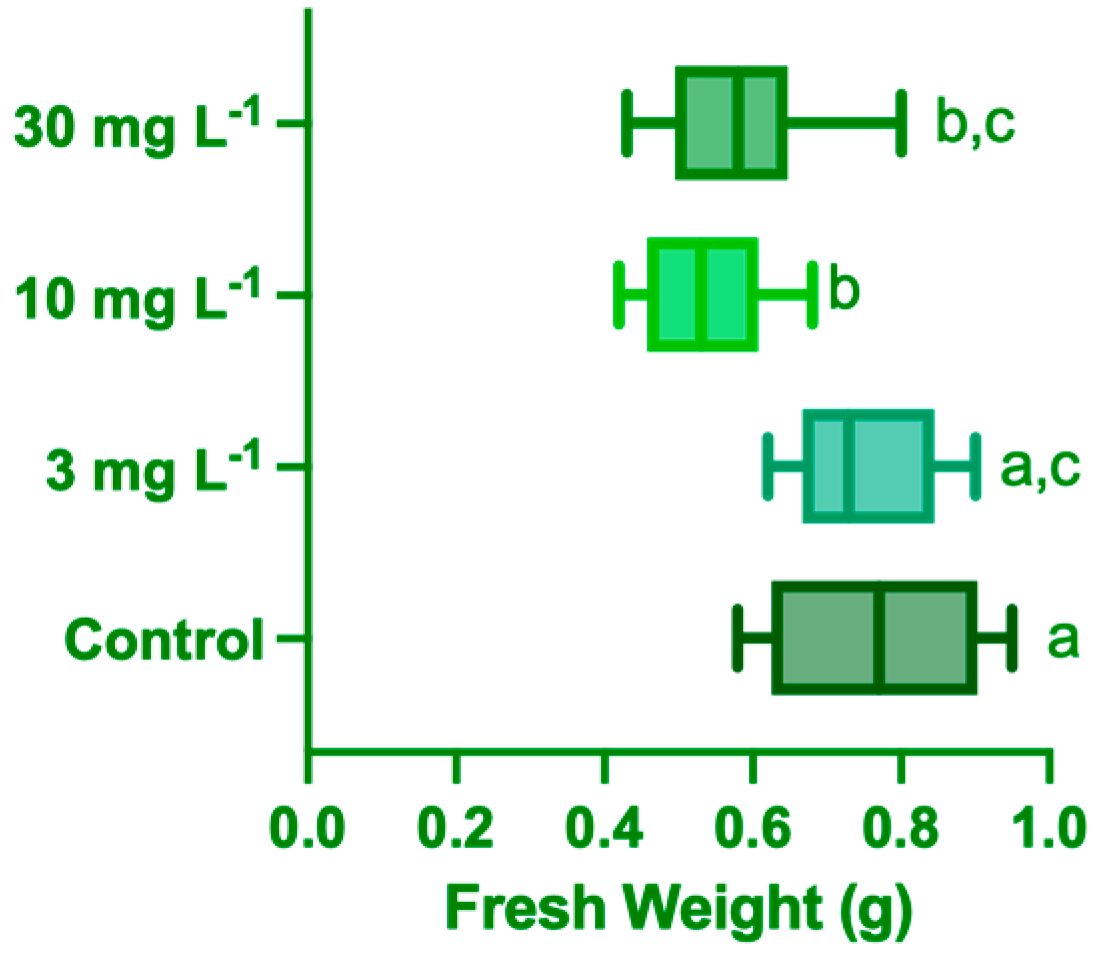
The total fresh weight of seedlings decreased with increasing ciprofloxacin concentration (Figure 3). Exposure to 3 mg·L−1 CPX did not significantly affect seedling weight compared to the control group (p > 0.05). However, seedlings treated with 10 mg·L−1 and 30 mg·L−1 CPX showed significantly lower fresh weight values (p ≤ 0.05), with the highest concentration resulting in approximately 40% reduction relative to the control.

3.4. Biomass Distribution

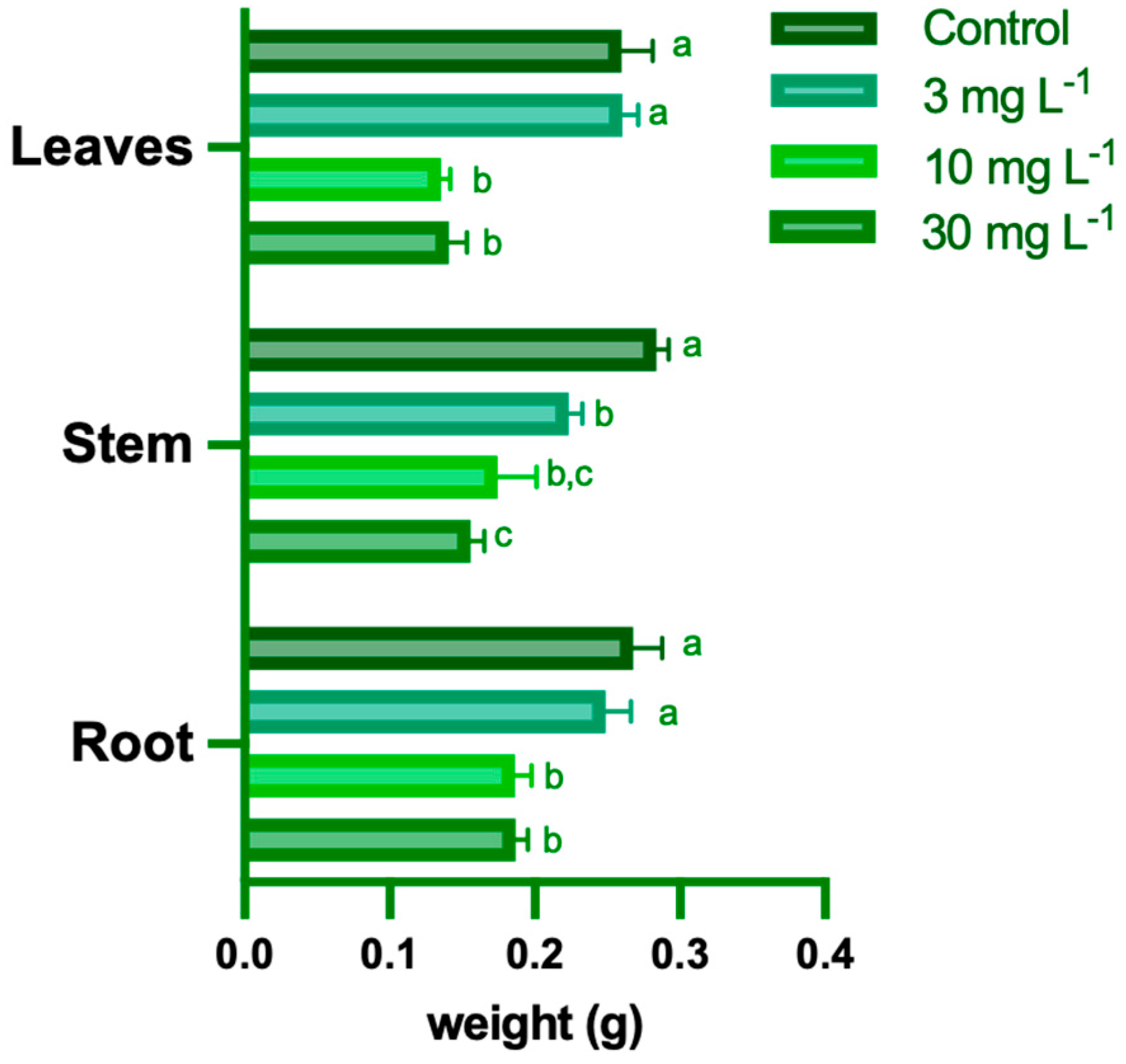
The distribution of fresh biomass among roots, stems, and leaves is presented in Figure 4. In control seedlings, biomass was relatively evenly distributed among the three organs, each contributing approximately one-third of the total fresh weight. This proportional distribution remained similar across treatments, although the absolute biomass of each organ decreased at higher CPX concentrations. Slight variations in the relative contribution of roots and leaves were observed at 10 and 30 mg·L−1 CPX; however, these differences were not statistically significant (p > 0.05).

3.5. Organ Length

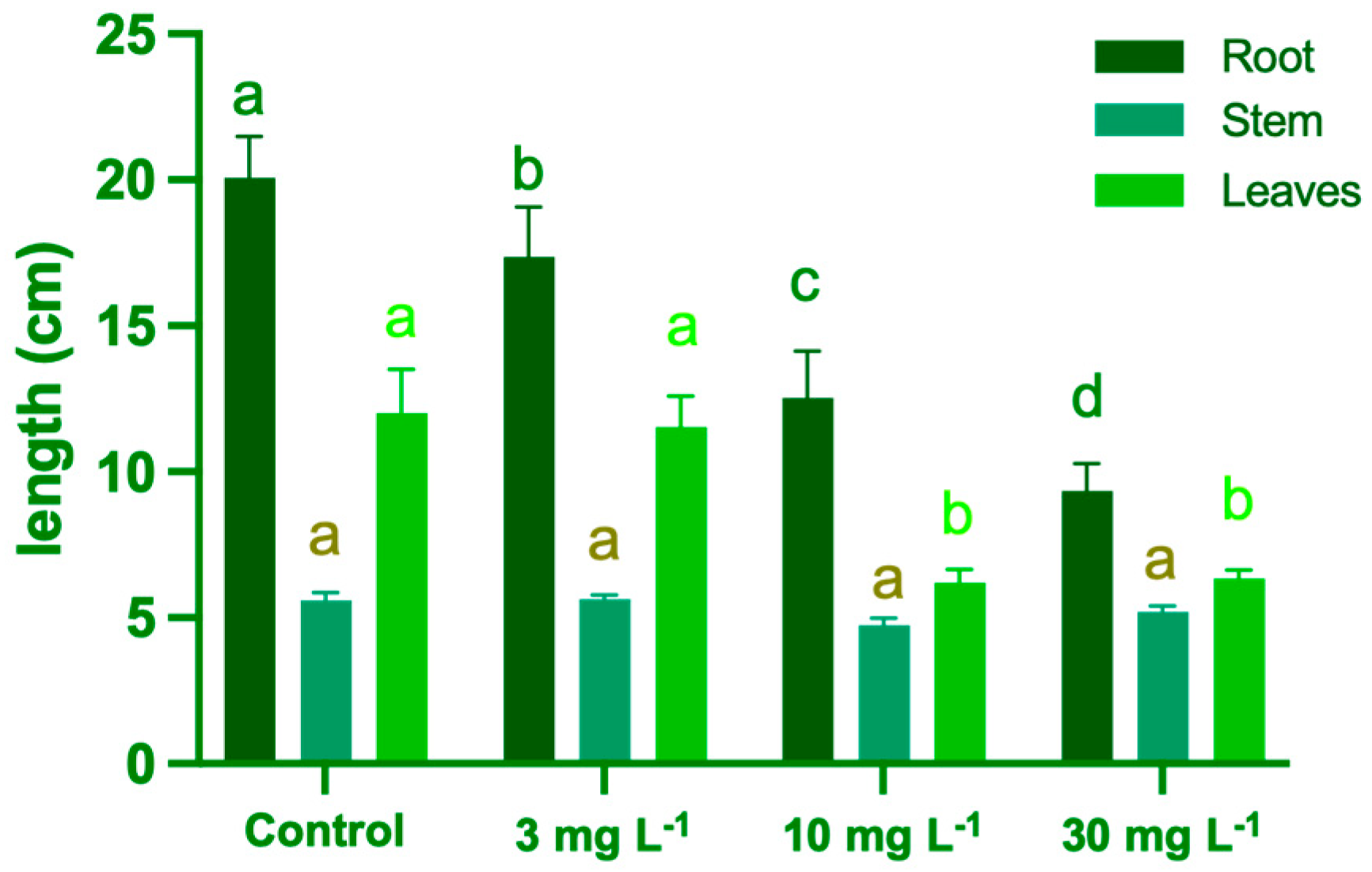
Ciprofloxacin exposure differentially affected organ length (Figure 5). Root length decreased significantly with increasing ciprofloxacin concentration, showing the greatest reduction at 30 mg·L−1 (approximately 45% compared to the control) (p ≤ 0.05). Stem length did not show significant differences among treatments (p > 0.05). Leaf length showed a decreasing trend with increasing ciprofloxacin concentration, although differences were less pronounced than those observed in roots.

3.6. Photosynthetic Pigment Concentration

3.6.1. Chlorophyll Content

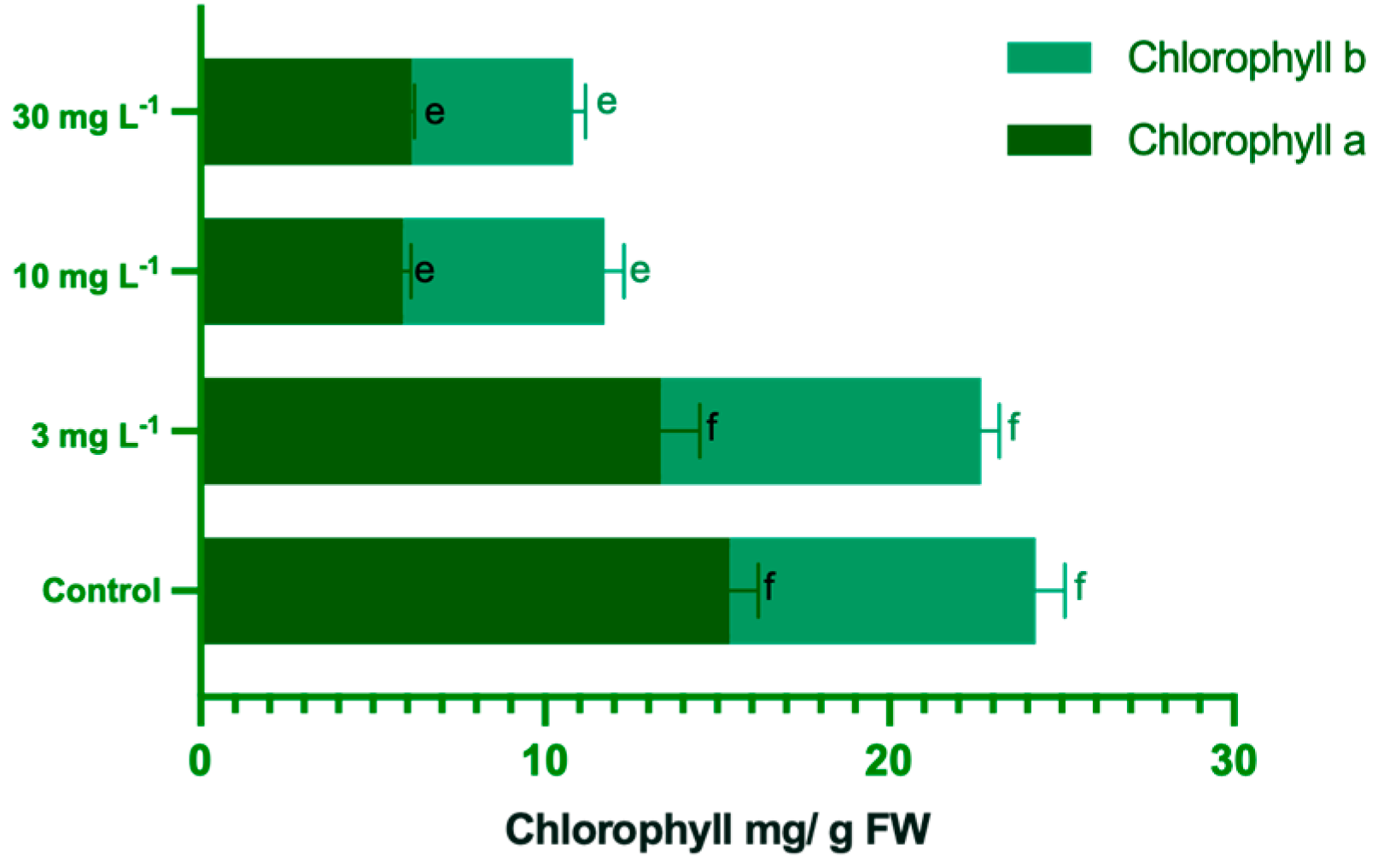
Chlorophyll concentrations in leaves are shown in Figure 6. Total chlorophyll content decreased with increasing ciprofloxacin concentration, with the lowest values observed at 30 mg·L−1. These differences were statistically significant (p ≤ 0.05). The chlorophyll a/b ratio decreased from 1.65 in control seedlings to 1.31 at 30 mg·L−1.

3.6.2. Carotenoid Content

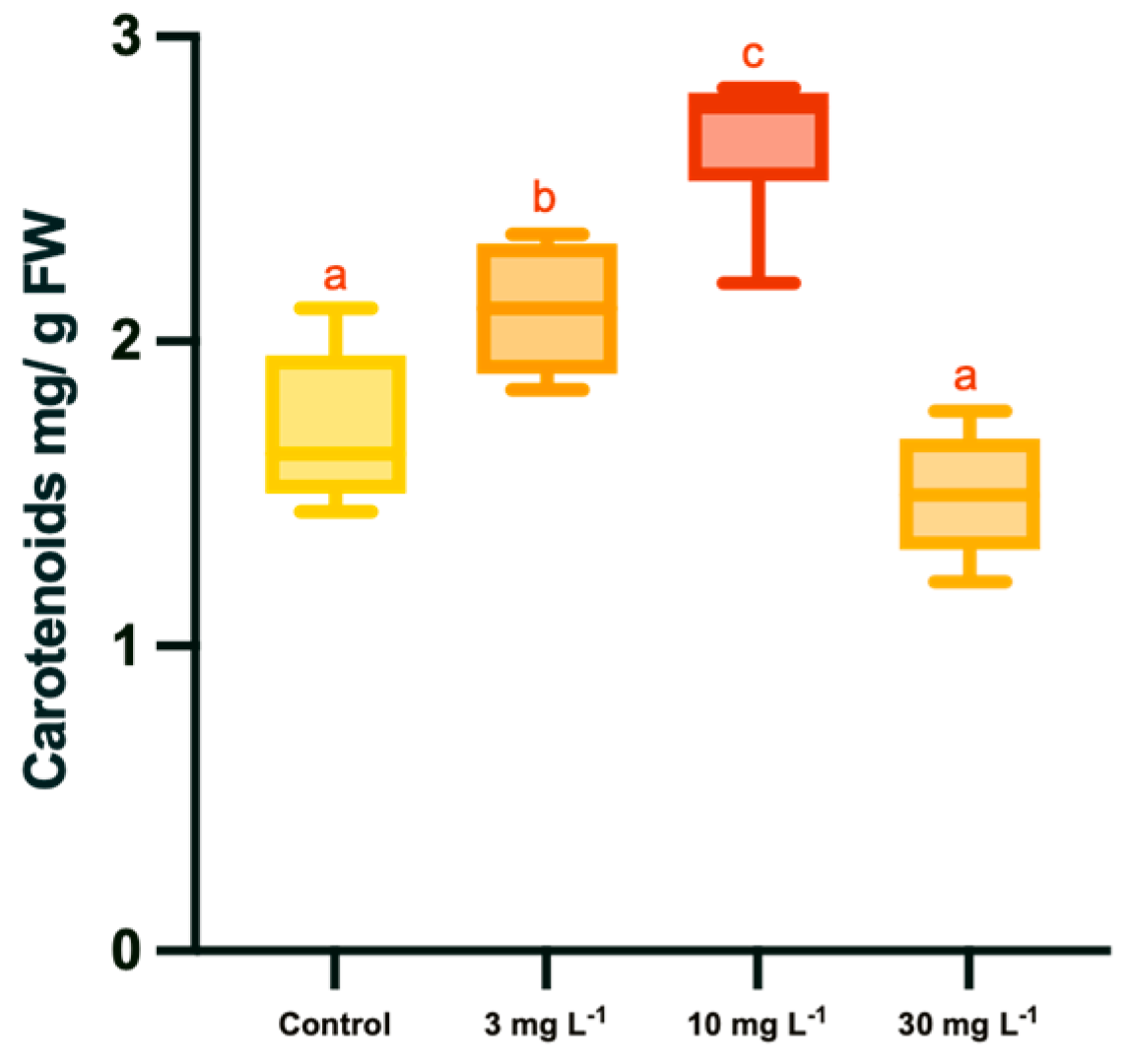
Carotenoid concentrations in leaves remained relatively stable across treatments (Figure 7). No statistically significant differences were observed between the control and ciprofloxacin-exposed groups (p > 0.05).

4. Discussion

The present study demonstrates that ciprofloxacin (CPX), a widely used fluoroquinolone antibiotic, exerts phytotoxic effects on early development and photosynthetic pigment content in purple maize (Zea mays L.) under controlled conditions. These findings contribute to the growing body of evidence on the potential risks associated with pharmaceutical contamination in agricultural systems and support the need for integrating phytotoxicity assessments into agricultural ecopharmacovigilance frameworks. Visual observations of seedling morphology showed reduced overall size at higher CPX concentrations (Figure 1), supporting the quantitative growth inhibition observed.

4.1. Ciprofloxacin Inhibits Germination in a Dose-Dependent Manner

Ciprofloxacin exposure reduced germination percentage in a dose-dependent manner (Figure 2), decreasing from 100% in the control group to 50% at 30 mg·L−1. These results indicate that early developmental stages are sensitive to ciprofloxacin under the tested conditions. Similar inhibitory effects of antibiotics on seed germination have been reported in previous studies, although their magnitude varies depending on species and exposure conditions. For instance, Gomes et al. [23] observed limited effects at lower concentrations, suggesting that the concentrations evaluated in this study may exceed tolerance thresholds in maize.
The inhibitory effect on germination may be associated with interference with mitochondrial function. Fluoroquinolones, including ciprofloxacin, are known to target bacterial DNA gyrase, and due to the evolutionary origin of mitochondria, they may also affect mitochondrial processes in plant cells. This could impair energy production during germination, thereby reducing emergence rates.

4.2. Differential Effects on Seedling Growth: Roots as the Primary Target

Ciprofloxacin exposure significantly affected early seedling growth, including reductions in total fresh weight (Figure 3), with root elongation being the most sensitive parameter. Root length decreased progressively with increasing CPX concentration (Figure 5), reaching approximately 45% reduction at 30 mg·L−1 compared to controls (p ≤ 0.05). In contrast, stem length remained unaffected across all treatments (p > 0.05), while leaf length showed moderate inhibition only at the highest concentration.
Although total biomass decreased with increasing CPX concentration, the relative distribution among roots, stems, and leaves remained largely unchanged (Figure 4), suggesting that ciprofloxacin primarily affected overall growth rather than altering biomass allocation patterns.
This differential sensitivity is consistent with the fact that roots are the first organ to encounter contaminants in the soil or substrate solution, making them primary targets for toxic effects [26,31]. Similar patterns have been reported in other plant species exposed to pharmaceuticals. For example, Wijaya et al. [12] found that ibuprofen inhibited root elongation in Vigna unguiculata more severely than shoot growth.
The pronounced effect on roots may result from direct contact with CPX, which can interfere with cell division and elongation in the root apical meristem [28]. Additionally, ciprofloxacin may alter the composition and activity of root-associated microbial communities, indirectly affecting nutrient uptake and root development [25,26]. Although the agar-based system used in this study excluded soil microbiota, the observed effects suggest that CPX itself, rather than microbial mediation, is primarily responsible for root growth inhibition.
The lack of significant effects on stem length is noteworthy. This organ develops later during germination and may be partially protected by seed nutrient reserves or by differential accumulation of the contaminant. Studies with other xenobiotics have shown that stems often accumulate lower concentrations of contaminants than roots, which may explain their relative resilience [27,32].

4.3. Photosynthetic Pigments: Chlorophylls Are More Sensitive than Carotenoids

Photosynthetic pigments are reliable indicators of plant physiological status and stress responses [29,30]. In this study, chlorophyll content in leaves decreased at higher CPX concentrations (Figure 6), with the lowest values observed at 30 mg·L−1. No clear stimulation at intermediate concentrations was consistently observed, suggesting that the overall response was dominated by inhibitory effects at elevated exposure levels.
The decrease in the chlorophyll a/b ratio at 30 mg·L−1 CPX (from 1.65 to 1.31 in leaves) indicates that chlorophyll a was more severely affected than chlorophyll b. Chlorophyll a is the primary reaction center pigment in photosystems, while chlorophyll b functions primarily in light harvesting. A reduced chlorophyll a/b ratio may indicate potential alterations in the photosynthetic apparatus, particularly in photosystem II, and has been associated with various environmental stresses, including heavy metal exposure and drought [30,32]. Similar reductions in chlorophyll a/b ratio have been reported in maize exposed to cadmium and other contaminants [24,31].
The observed chlorophyll decline may be associated with CPX-induced oxidative stress. Antibiotics can promote the generation of reactive oxygen species (ROS) in plant tissues, leading to lipid peroxidation, membrane damage, and pigment degradation [27,29]. Although oxidative stress markers were not directly measured in this study, the stability of carotenoid levels—compounds known for their antioxidant and photoprotective functions—is consistent with a potential protective response. Carotenoids remained relatively constant across treatments (Figure 7), with only a slight non-significant increase at 10 mg·L−1 CPX in leaves, which may reflect a compensatory response to oxidative stress through reactive oxygen species scavenging [32,33].
Our results are consistent with studies on other pharmaceuticals. Biczak et al. [33] reported that diclofenac, ibuprofen, and ampicillin affected chlorophyll content in maize, with variable effects depending on concentration and exposure duration. Siemieniuk et al. [32] similarly found that diclofenac and naproxen altered photosynthetic pigment concentrations in maize and tomato, with carotenoids being less affected than chlorophylls. The relative stability of carotenoids across studies suggests that these pigments may act as an important protective mechanism against xenobiotic-induced oxidative stress. These findings are also supported by recent studies on antibiotic phytotoxicity and their effects on the photosynthetic apparatus in plants [37,38,39].

4.4. Implications for Agricultural Ecopharmacovigilance

The findings of this study have important implications for the emerging field of agricultural ecopharmacovigilance—a discipline focused on monitoring, evaluating, and mitigating the environmental impacts of pharmaceuticals in agroecosystems [33,34]. Current regulations for water reuse and biosolid application do not consider pharmaceutical residues as priority pollutants, despite increasing evidence of their phytotoxicity [8,9].
Although ciprofloxacin is typically detected in environmental matrices at concentrations in the ng–µg L−1 range, higher levels have been reported in localized contamination hotspots, such as hospital effluents, pharmaceutical discharges, and untreated wastewater used for irrigation. In such scenarios, concentrations may reach the mg·L−1 range. Therefore, the concentrations evaluated in this study represent a high-exposure scenario rather than average environmental conditions [23].
Our results indicate that ciprofloxacin, under these elevated exposure conditions, can adversely affect early maize development and photosynthetic physiology. Maize is a staple crop of global importance, and purple maize varieties hold particular cultural and nutritional value in Mexico due to their anthocyanin content [22,23]. The observed reductions in germination, root growth, and chlorophyll content suggest that pharmaceutical contamination under high-exposure conditions could compromise crop establishment and productivity, with potential implications for food security and nutritional quality.
Furthermore, the differential sensitivity of photosynthetic pigments highlights the need to include multiple physiological endpoints in ecotoxicological assessments, as single parameters may not capture the full spectrum of sublethal effects.

4.5. Limitations and Future Perspectives

This study was conducted using an agar-based cultivation system, which offers several advantages for controlled toxicological assessments, including the homogeneity of exposure and absence of confounding soil factors. However, this system also has limitations. It excludes soil–microbe–plant interactions that occur in natural agricultural systems, where microbial communities can degrade, transform, or immobilize contaminants, potentially mitigating or enhancing their toxicity [25]. Additionally, the agar medium does not replicate the complex physicochemical properties of soils, such as organic matter content, cation exchange capacity, and pH buffering, which influence contaminant bioavailability [26]. Therefore, extrapolation of our findings to field conditions should be made with caution.
Future research should address these limitations by undertaking the following:
Validating findings in soil-based systems under greenhouse or field conditions.
Investigating longer exposure durations to assess effects on reproductive stages and yield.
Evaluating mixture toxicity, as pharmaceuticals often co-occur with other contaminants such as pesticides and heavy metals [28].
Assessing oxidative stress biomarkers (e.g., malondialdehyde, antioxidant enzyme activities) to elucidate mechanisms underlying pigment alterations.
Exploring varietal differences in sensitivity to antibiotics, as purple maize may differ from yellow or white varieties due to its anthocyanin content and associated antioxidant capacity [23].

5. Conclusions

This study highlights that ciprofloxacin exposure during early development affects germination, root elongation, and photosynthetic pigment content in purple maize. Root length was the most sensitive parameter, while chlorophyll content decreased in a dose-dependent manner, and carotenoids remained relatively stable. These findings underscore the potential risks posed by antibiotic contamination in agricultural systems and highlight the importance of integrating phytotoxicity assessments into agricultural ecopharmacovigilance strategies. As pharmaceutical pollution continues to increase globally, understanding its effects on crop plants is essential to ensure food safety and agricultural sustainability.

Author Contributions

Conceptualization, R.M.d.J.M.-Á. and M.M.G.-M.; methodology, R.M.d.J.M.-Á. and M.M.G.-M.; software, R.M.d.J.M.-Á. and R.E.C.M.; validation, M.M.G.-M. and F.G.O.-B.; formal analysis, R.M.d.J.M.-Á., M.M.G.-M., D.Y.-N. and R.E.C.M.; investigation, R.M.d.J.M.-Á., D.Y.-N. and R.E.C.M.; resources, R.M.d.J.M.-Á. and M.M.G.-M.; data curation, R.M.d.J.M.-Á., P.M.G.-Q. and R.E.C.M.; writing—original draft preparation, R.M.d.J.M.-Á., M.M.G.-M., D.Y.-N. and R.E.C.M.; writing—review and editing, R.M.d.J.M.-Á., M.M.G.-M., P.M.G.-Q. and R.E.C.M.; visualization, P.M.G.-Q., D.Y.-N., R.E.C.M. and F.G.O.-B.; supervision, R.M.d.J.M.-Á. and M.M.G.-M.; project administration, M.M.G.-M., D.Y.-N. and F.G.O.-B. All authors have read and agreed to the published version of the manuscript.

Funding

This research received no external funding.

Institutional Review Board Statement

Not applicable.

Informed Consent Statement

Not applicable.

Data Availability Statement

The original contributions presented in this study are included in the article. Further inquiries can be directed to the corresponding author.

Conflicts of Interest

The authors declare no conflicts of interest.

References

  1. aus der Beek, T.; Weber, F.A.; Bergmann, A.; Hickmann, S.; Ebert, I.; Hein, A.; Küster, A. Pharmaceuticals in the environment—Global occurrences and perspectives. Environ. Toxicol. Chem. 2016, 35, 823–835. [Google Scholar] [CrossRef] [PubMed]
  2. Martí, E.; Huerta, B.; Rodríguez-Mozaz, S.; Barceló, D.; Jofre, J.; Balcázar, J.L. Characterization of ciprofloxacin-resistant isolates from a wastewater treatment plant and its receiving river. Water Res. 2014, 52, 100–110. [Google Scholar] [CrossRef] [PubMed]
  3. Michael, I.; Rizzo, L.; McArdell, C.S.; Manaia, C.M.; Merlin, C.; Schwartz, T.; Dagot, C.; Fatta-Kassinos, D. Urban wastewater treatment plants as hotspots for the release of antibiotics in the environment. Water Res. 2013, 47, 957–995. [Google Scholar] [CrossRef]
  4. Serna-Galvis, E.A.; Martínez-Mena, Y.L.; Porras, J.; Torres-Palma, R.A. Antibióticos de alto consumo en Colombia: Excreción en orina y presencia en aguas residuales. Ing. Compet. 2022, 24. [Google Scholar] [CrossRef]
  5. Kümmerer, K. The presence of pharmaceuticals in the environment due to human use—Present knowledge and future challenges. J. Environ. Manag. 2009, 90, 2354–2366. [Google Scholar] [CrossRef]
  6. García-Morales, M.A.; Contreras-Rodríguez, A.; Arreola, A.; Ruiz, E.A.; Morales-García, M.R. Manejo de residuos de fármacos: Una breve revisión. Rev. Int. Contam. Ambient. 2021, 37, 329–344. [Google Scholar] [CrossRef]
  7. Verlicchi, P.; Al Aukidy, M.; Zambello, E. Occurrence of pharmaceutical compounds in urban wastewater: Removal, mass load and environmental risk after a secondary treatment—A review. Sci. Total Environ. 2012, 429, 123–155. [Google Scholar] [CrossRef]
  8. Pizarro-Aguilar, Y.; Ordoñez-Santander, J.; Mackliff-Jaramillo, C.; Medina-Preciado, A.; Segura-Osorio, M. Ecofarmacovigilancia y determinación de diclofenaco mediante electroanálisis. Rev. Cienc. Unemi 2019, 12, 54–63. [Google Scholar] [CrossRef]
  9. Leyva, S.; Leyva, E. Fluoroquinolonas: Mecanismos de acción y resistencia. Bol. Soc. Quím. Méx. 2008, 2, 1–13. [Google Scholar]
  10. Martínez-Alcalá, I.; Soto, J.; Lahora, A. Antibióticos como contaminantes emergentes: Riesgo ecotoxicológico y control en aguas residuales. Ecosistemas 2020, 29, 2070. [Google Scholar] [CrossRef]
  11. Wijaya, L.; Alyemeni, M.; Ahmad, P.; Alfarhan, A.; Barcelo, D.; El-Sheikh, M.A.; Pico, Y. Ecotoxicological effects of ibuprofen on plant growth of Vigna unguiculata L. Plants 2020, 9, 1473. [Google Scholar] [CrossRef]
  12. Wilkinson, J.L.; Boxall, A.B.A.; Kolpin, D.W.; Leung, K.M.Y.; Lai, R.W.S.; Galbán-Malagón, C.; Adell, A.D.; Mondon, J.; Metian, M.; Marchant, R.A.; et al. Pharmaceutical pollution of the world’s rivers. Proc. Natl. Acad. Sci. USA 2022, 119, e2113947119. [Google Scholar] [CrossRef]
  13. Udaondo, Z.; Huertas, M.J. Fighting the enemy: One health approach against microbial resistance. Microb. Biotechnol. 2020, 13, 888–891. [Google Scholar] [CrossRef]
  14. Xiao, S.; Mi, J.; Chen, Y.; Feng, K.; Mei, L.; Liao, X.; Wu, Y.; Wang, Y. Abundance and diversity of antibiotic resistance genes in layer chicken ceca. Front. Microbiol. 2023, 14, 1177404. [Google Scholar] [CrossRef]
  15. Jaramillo-Antillón, J. Ecología: Salud y enfermedad. Acta Méd. Costarric. 2010, 52, 43–48. [Google Scholar] [CrossRef]
  16. Guamán Guamán, R.N.; Desiderio Vera, T.X.; Villavicencio Abril, Á.F.; Ulloa Cortázar, S.M.; Romero Salguero, E.J. Evaluación del desarrollo y rendimiento del cultivo de maíz (Zea mays L.). Siembra 2020, 7, 47–56. [Google Scholar] [CrossRef]
  17. Antúnez-Ocampo, O.M.; Sabino-López, J.E.; Hernández-Galeno, C.d.Á.; Espinosa-Rodríguez, M. Rendimiento del maíz (Zea mays L.) en respuesta a fertilización con nitrógeno, fósforo y silicio al suelo. Terra Latinoam. 2023, 41, e1682. [Google Scholar] [CrossRef]
  18. González-Cortés, N.; Silos-Espino, H.; Estrada Cabral, J.C.; Chávez-Muñoz, J.A.; Tejero Jiménez, L. Características del maíz criollo en México. Rev. Mex. Cienc. Agric. 2016, 7, 669–680. [Google Scholar]
  19. Gomes, M.P.; Rocha, D.C.; Moreira de Brito, J.C.; Tavares, D.S.; Marques, R.Z.; Soffiatti, P.; Sant’Anna-Santos, B.F. Emerging contaminants in water used for maize irrigation. Ecotoxicol. Environ. Saf. 2020, 196, 110549. [Google Scholar] [CrossRef] [PubMed]
  20. Khalid, N.; Tarnawa, Á.; Balla, I.; Omar, S.; Abd Ghani, R.; Jolánkai, M.; Kende, Z. Combination effect of temperature and salinity stress on maize germination. Agriculture 2023, 13, 1932. [Google Scholar] [CrossRef]
  21. Rizwan, M.; Ali, S.; Qayyum, M.F.; Ok, Y.S.; Zia-Ur-Rehman, M.; Abbas, Z.; Hannan, F. Use of maize for phytomanagement of Cd-contaminated soils. Environ. Geochem. Health 2017, 39, 259–277. [Google Scholar] [CrossRef] [PubMed]
  22. Salvatori, E.; Rauseo, J.; Patrolecco, L.; Barra Caracciolo, A.; Spataro, F.; Fusaro, L.; Manes, F. Germination and photosynthetic performance under emerging contaminants. Environ. Sci. Pollut. Res. 2021, 28, 27900–27913. [Google Scholar] [CrossRef] [PubMed]
  23. Gomes, M.P.; Richardi, V.S.; Bicalho, E.M.; Rocha, D.C.; Navarro-Silva, M.A.; Soffiatti, P.; Garcia, Q.S.; Sant’Anna-Santos, B.F. Effects of ciprofloxacin and Roundup on maize. Sci. Total Environ. 2019, 651, 2671–2678. [Google Scholar] [CrossRef]
  24. Drązkiewicz, M.; Baszyński, T. Growth parameters and photosynthetic pigments in maize under cadmium stress. J. Plant Physiol. 2005, 162, 1013–1021. [Google Scholar] [CrossRef] [PubMed]
  25. Huang, Y.H.; Yang, Y.J.; Li, J.Y.; Lü, H.; Zhao, H.M.; Xiang, L.; Li, H.; Mo, C.H.; Li, Y.W.; Cai, Q.Y.; et al. Root-associated bacteria and antibiotic disturbance. J. Hazard. Mater. 2024, 465, 133317. [Google Scholar] [CrossRef]
  26. Ayuba, T.I.; Ibrahim, A.; Mbahi, M.A. Germination and seedling growth of maize on different media. Asian J. Crop Sci. 2023, 15, 56–65. [Google Scholar] [CrossRef]
  27. Esterhuizen, M.; Pflugmacher, S. Phytoremediation of diclofenac using macrophytes. New Biotechnol. 2023, 76, 82–89. [Google Scholar] [CrossRef]
  28. Klampfl, C. Metabolization of pharmaceuticals by plants: A review. Trends Anal. Chem. 2019, 111, 13–26. [Google Scholar] [CrossRef]
  29. Ali, B.; Hafeez, A.; Afridi, M.S.; Javed, M.A.; Suleman, S.F.; Nadeem, M.; Ali, S.; Alwahibi, M.S.; Elshikh, M.S.; Marc, R.A.; et al. Salinity stress tolerance in maize. ACS Omega 2023, 8, 20471–20487. [Google Scholar] [CrossRef]
  30. Abu-Muriefah, S.S.; Ibrahim, M.M.; Elgaaly, G.A. Photosynthetic response in maize under drought stress. Curr. World Environ. 2014, 9, 87–95. [Google Scholar] [CrossRef]
  31. Zhao, D.; Reddy, K.R.; Kakani, V.G.; Carter, G.A. Maize growth and pigment response to nitrogen supply. Plant Soil 2003, 257, 205–217. [Google Scholar] [CrossRef]
  32. Siemieniuk, A.; Ludynia, M.; Rudnicka, M. Response of maize and tomato to diclofenac and naproxen. Int. J. Mol. Sci. 2021, 22, 8856. [Google Scholar] [CrossRef]
  33. Biczak, R.; Kieraśińska, J.; Jamrozik, W.; Pawłowska, M. Response of maize to soil contamination with pharmaceuticals. Sustainability 2024, 16, 5698. [Google Scholar] [CrossRef]
  34. Naz, R.; Sarfraz, A.; Anwar, Z.; Yasmin, H.; Nosheen, A.; Keyani, R.; Roberts, T.H. Mitigation of drought and chromium stress in maize. Plant Physiol. Biochem. 2021, 159, 285–300. [Google Scholar] [CrossRef]
  35. Mascellani, A.; Mercl, F.; Kurhan, S.; Pierdona, L.; Kudrna, J.; Zemanova, V.; Hnilicka, F.; Kloucek, P.; Tlustos, P.; Havlik, J. Effects of carbamazepine in maize. Chemosphere 2023, 329, 138689. [Google Scholar] [CrossRef]
  36. Lichtenthaler, H.K.; Buschmann, C. Chlorophylls and carotenoids: Measurement by UV-VIS spectroscopy. Curr. Protoc. Food Anal. Chem. 2001, 1, F4.3.1–F4.3.8. [Google Scholar] [CrossRef]
  37. Carballo, M.; Rodríguez, A.; de la Torre, A. Phytotoxic Effects of Antibiotics on Terrestrial Crop Plants and Wild Plants: A Systematic Review. Arch. Environ. Contam. Toxicol. 2022, 82, 48–61. [Google Scholar] [CrossRef] [PubMed]
  38. Krupka, M.; Piotrowicz-Cieslak, A.; Michalczyk, D.J. Effects of antibiotics on the photosynthetic apparatus of plants. J. Plant Interact. 2022, 17, 96–104. [Google Scholar] [CrossRef]
  39. Wang, M.Q.; Wang, Y.; Li, G.L.; Hu, G.H.; Fu, L.X.; Hu, S.X.; Yang, J.F.; Wang, Z.G. Do Oxytetracycline and Ciprofloxacin Affect Growth Phenotype, Leaf Photosynthetic Enzyme Activity, Nitrogen Metabolism, and Endogenous Hormone Homeostasis in Maize Seedlings? Plants 2025, 14, 3021. [Google Scholar] [CrossRef] [PubMed]
Figure 1. Representative images of purple maize seedlings after seven days of cultivation in an agar-based medium: (A) Control (0 mg·L−1 ciprofloxacin); (B) 3 mg·L−1; (C) 10 mg·L−1; (D) 30 mg·L−1. A ruler (cm) is included for scale.
Agrochemicals 05 00019 g001
Figure 2. Germination percentage of purple maize seeds exposed to ciprofloxacin (0, 3, 10, and 30 mg·L−1) during seven days of cultivation. Data represent mean ± standard deviation (SD) (n = 3 independent trays). Different letters indicate significant differences between treatments (p ≤ 0.05, Tukey’s HSD test).
Agrochemicals 05 00019 g002
Figure 3. Individual fresh weight of purple maize seedlings exposed to ciprofloxacin (0, 3, 10, and 30 mg·L−1) for seven days in agar-based medium. Data represent mean ± standard deviation (SD) (n = 36 independent seedlings). Different letters indicate significant differences between treatments (p ≤ 0.05, Tukey’s HSD test). Treatments sharing at least one letter are not significantly different.
Agrochemicals 05 00019 g003
Figure 4. Fresh weight distribution among roots, stems, and leaves of purple maize seedlings exposed to ciprofloxacin (0, 3, 10, and 30 mg·L−1) for seven days in agar-based medium. Data represent mean ± standard deviation (SD) (n = 36 independent seedlings). Different letters indicate significant differences between treatments within each organ (p ≤ 0.05, Tukey’s HSD test).
Agrochemicals 05 00019 g004
Figure 5. Length of roots, stems, and leaves of purple maize seedlings exposed to ciprofloxacin (0, 3, 10, and 30 mg·L−1) for seven days. Data represent mean ± SD (n = 36 independent seedlings). Different letters indicate significant differences between treatments within each organ type (p ≤ 0.05, Tukey’s HSD test).
Agrochemicals 05 00019 g005
Figure 6. Chlorophyll a and chlorophyll b concentrations in leaves of purple maize seedlings exposed to ciprofloxacin (0, 3, 10, and 30 mg·L−1) for seven days. Pigments were extracted with methanol and quantified spectrophotometrically. Data represent mean ± SD (n = 3 biological replicates; each replicate corresponds to one tray of pooled seedlings). Different letters indicate significant differences between treatments within each pigment type (p ≤ 0.05, Tukey’s HSD test).
Agrochemicals 05 00019 g006
Figure 7. Total carotenoid concentration in leaves of purple maize seedlings exposed to ciprofloxacin (0, 3, 10, and 30 mg·L−1) for seven days. Pigments were extracted with methanol and quantified spectrophotometrically. Data represent mean ± standard deviation (SD) (n = 3 biological replicates; each replicate corresponds to one tray of pooled seedlings). Different letters indicate significant differences between treatments (p ≤ 0.05, Tukey’s HSD test).
Agrochemicals 05 00019 g007
Disclaimer/Publisher’s Note: The statements, opinions and data contained in all publications are solely those of the individual author(s) and contributor(s) and not of MDPI and/or the editor(s). MDPI and/or the editor(s) disclaim responsibility for any injury to people or property resulting from any ideas, methods, instructions or products referred to in the content.