
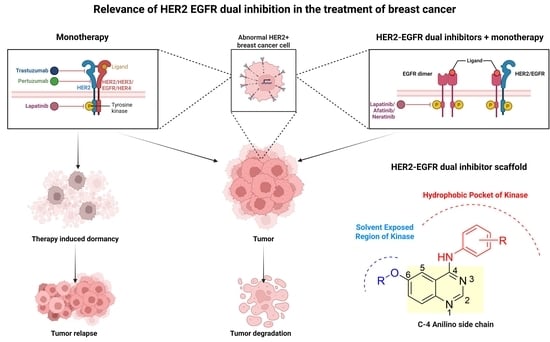
Relevance of EGFR-HER2 Dual Inhibition in Breast Cancer

 ,
,  ,
,
Abstract
1. Introduction
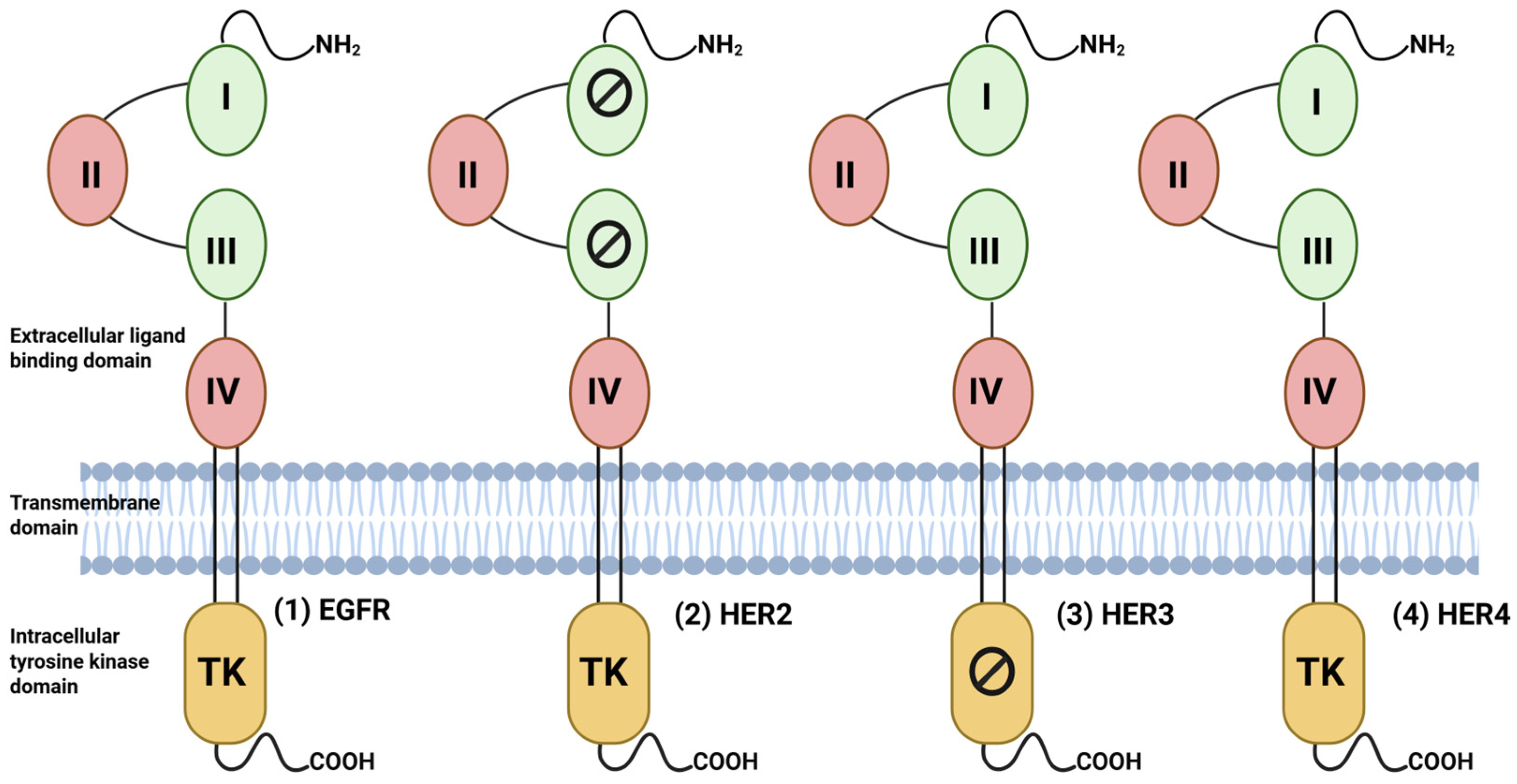
2. Structural Insights of the EGFR Family
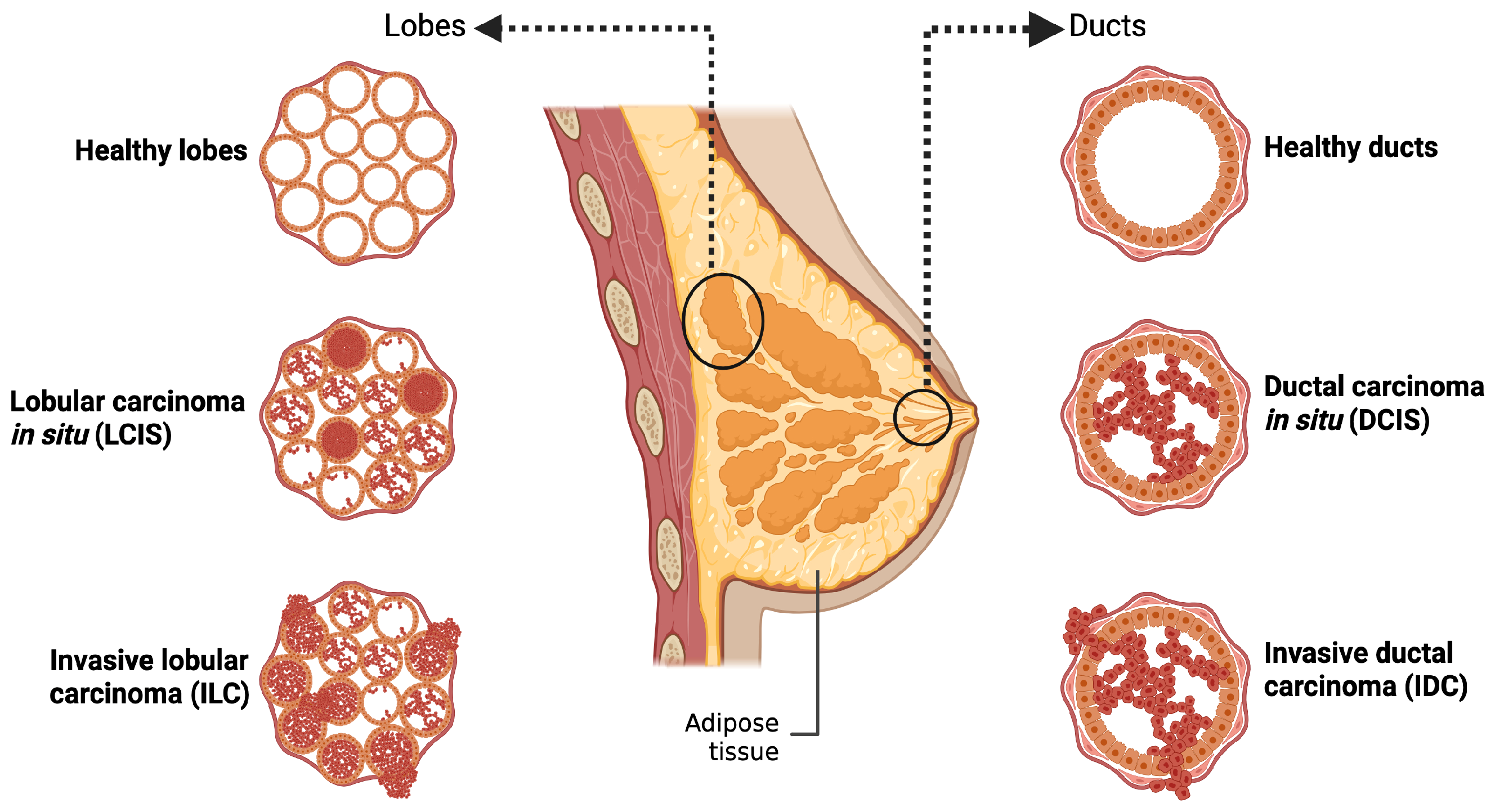
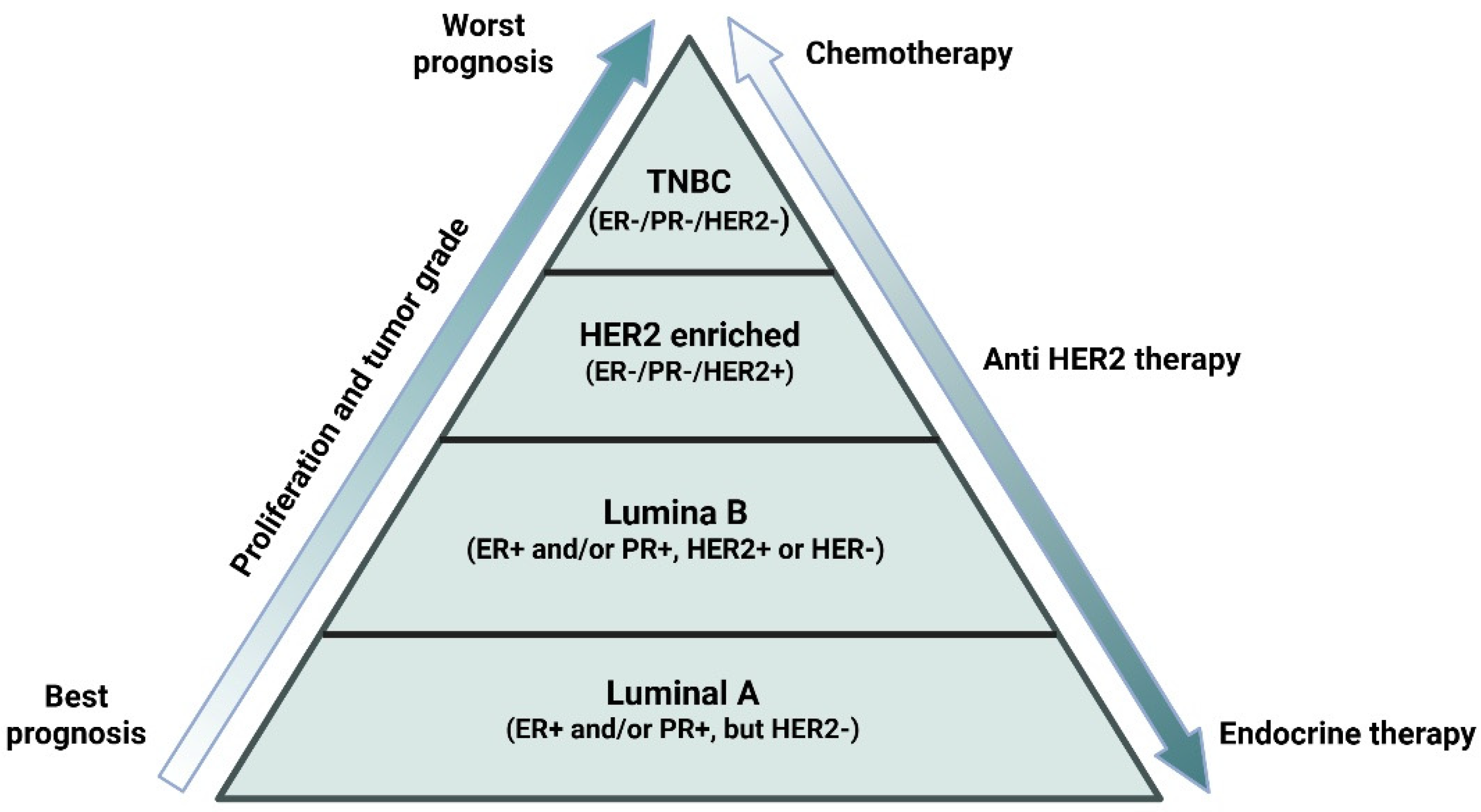
3. Aberrant Expression and Activation of EGFR and HER2 and Drug Resistance in Breast Cancer
4. Feedback Activation of RTKs in Response to Monotherapy
5. Review Methodology
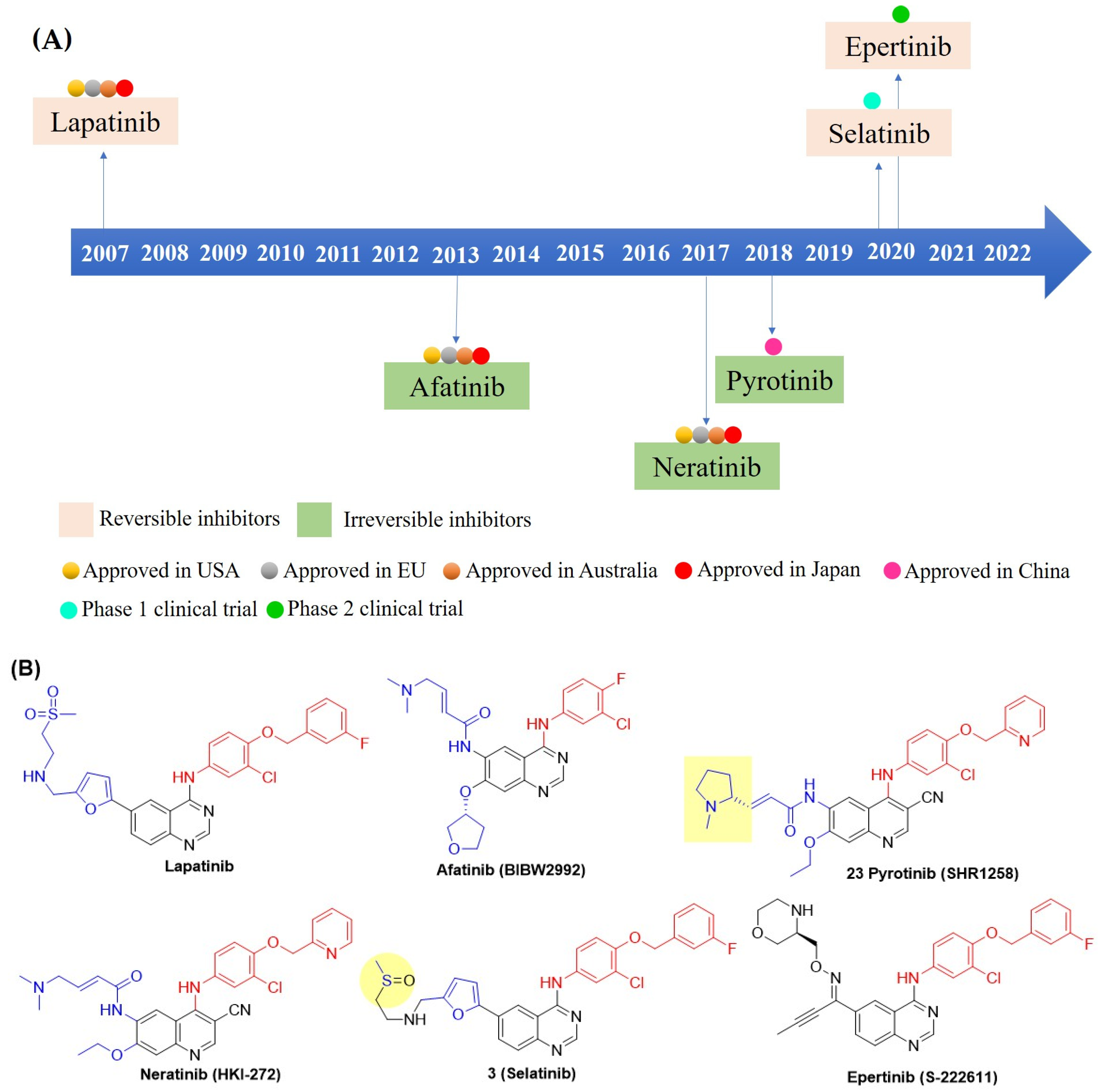
6. Existing Dual EGFR-HER2 Inhibition Therapies Under Clinical Trials in BC
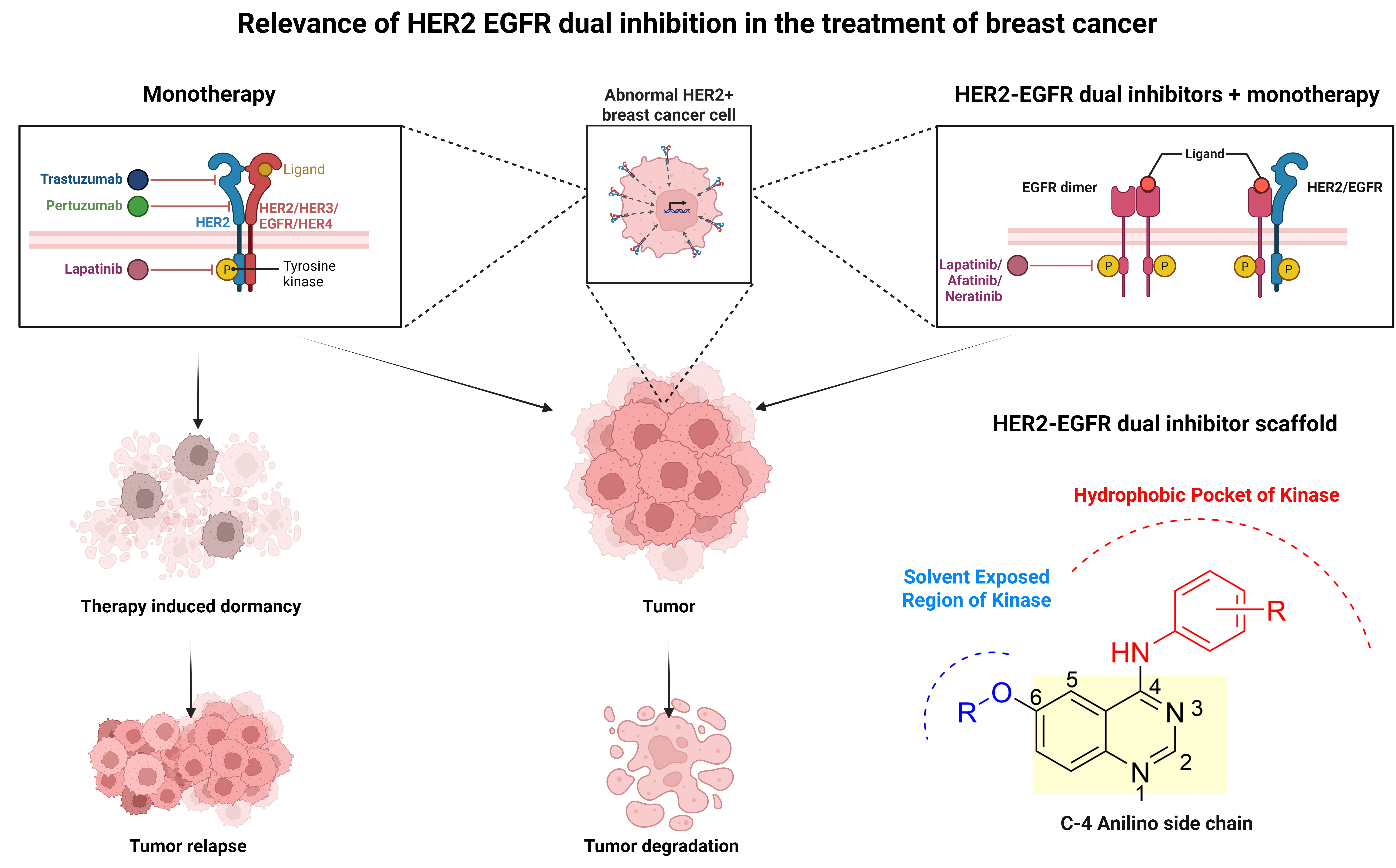
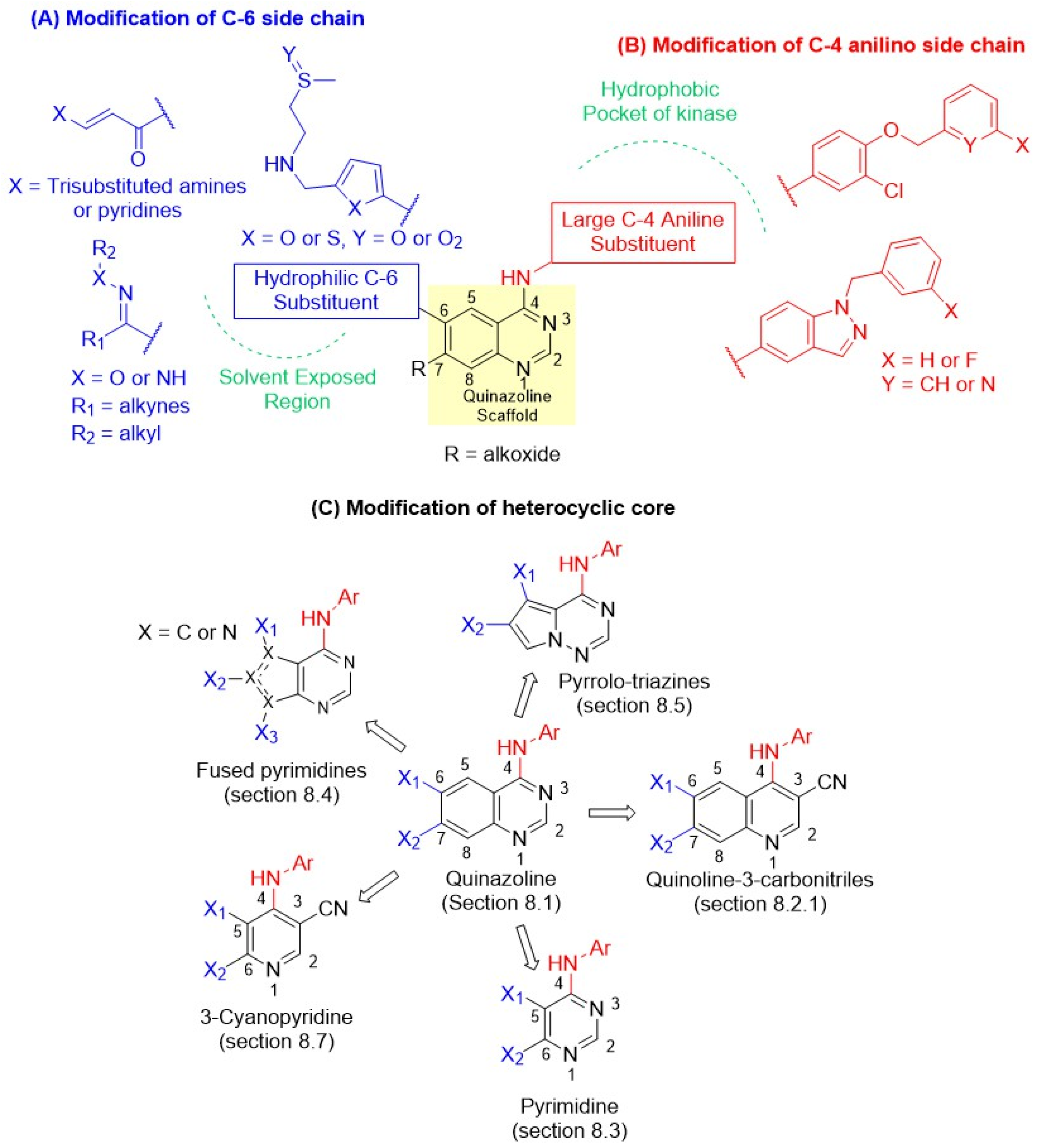
7. Design of Novel Dual EGFR-HER2 Inhibitors
7.1. SAR of C-4 Position
7.2. SAR of C-6 and C-7 Positions
7.3. Modification of Heterocyclic Core
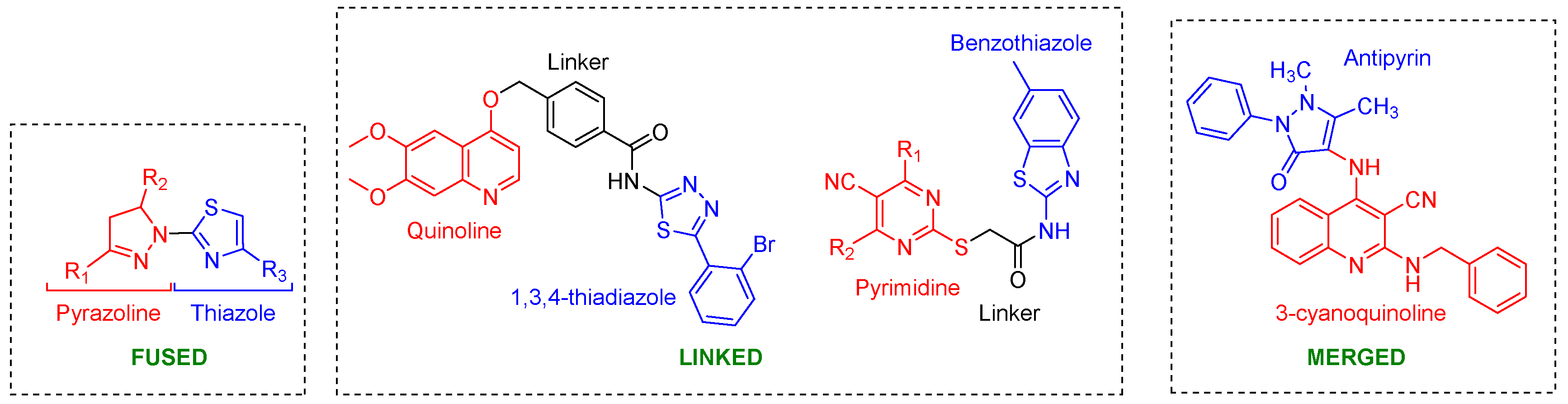
7.4. Molecular Hybrids
8. Dual EGFR-HER2 Inhibitors
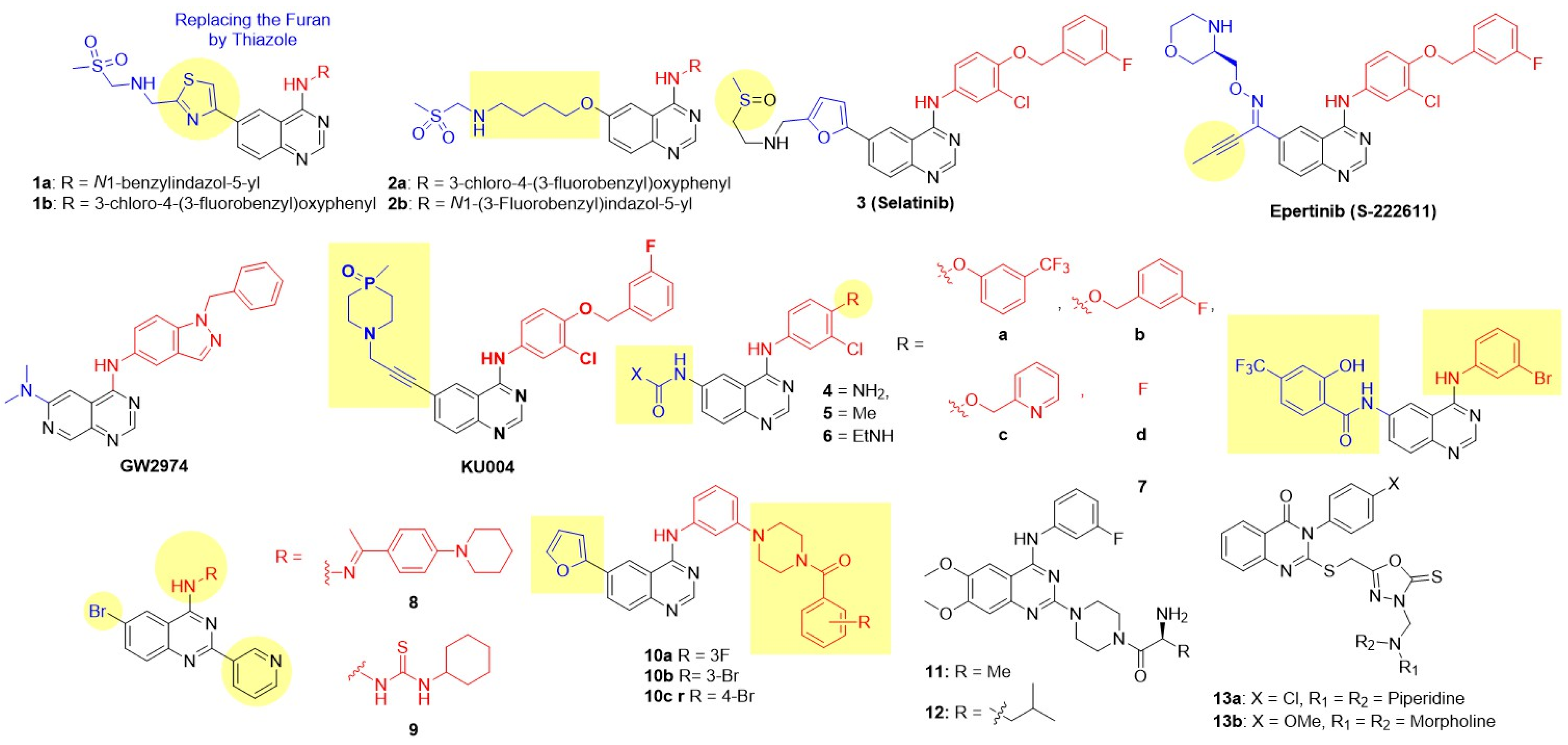
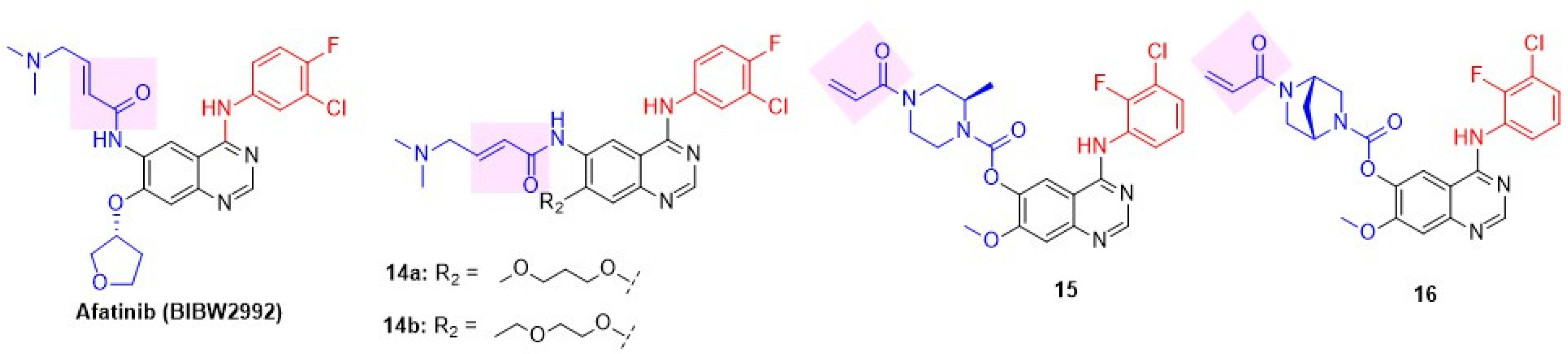
8.1. Quinazoline Class
8.1.1. Reversible Inhibitor
8.1.2. Irreversible Inhibitors
8.1.3. Fused Quinazolines
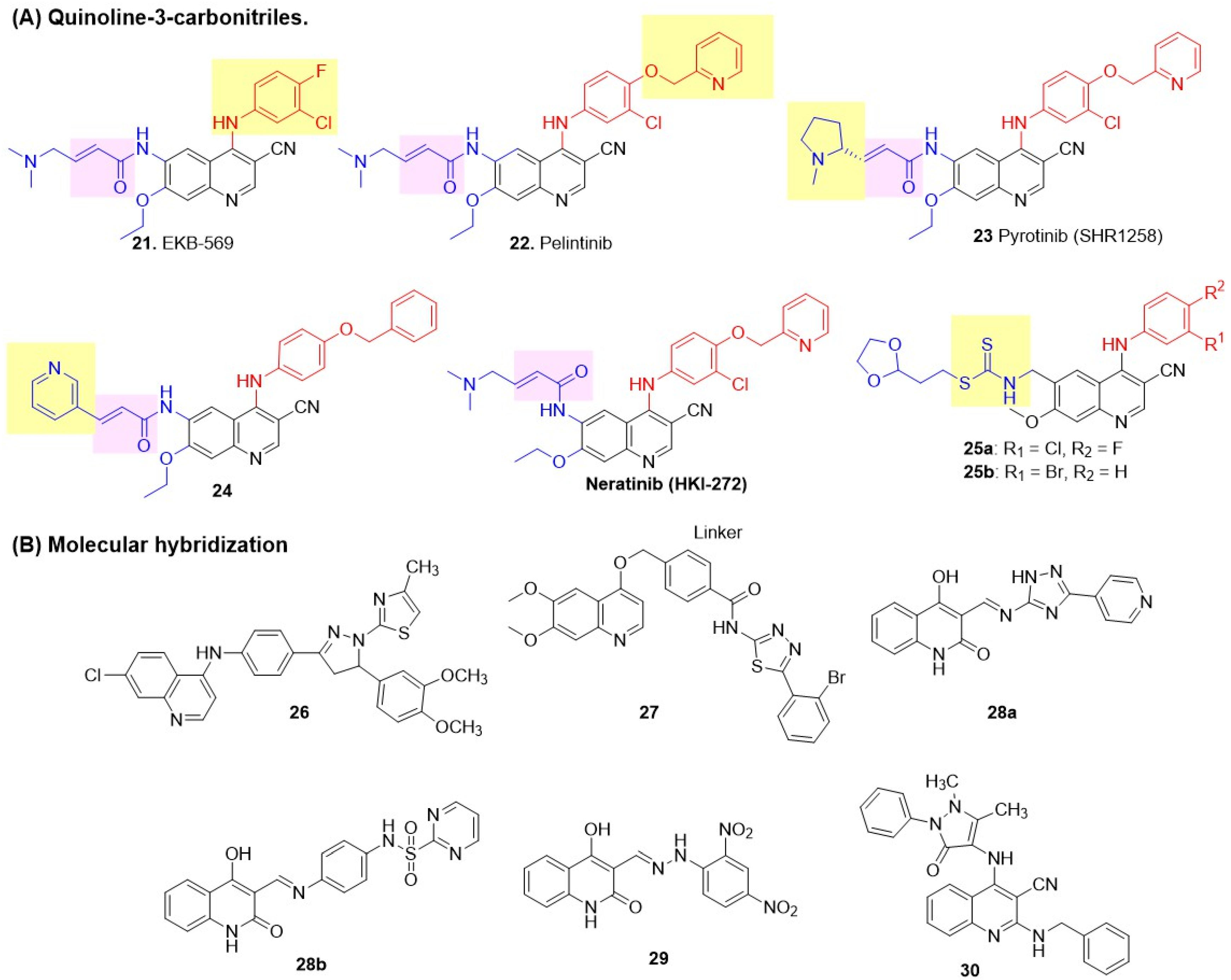
8.2. Quinoline Class
8.2.1. Quinoline-3-Carbonitriles
8.2.2. Molecular Hybrids of Quinoline
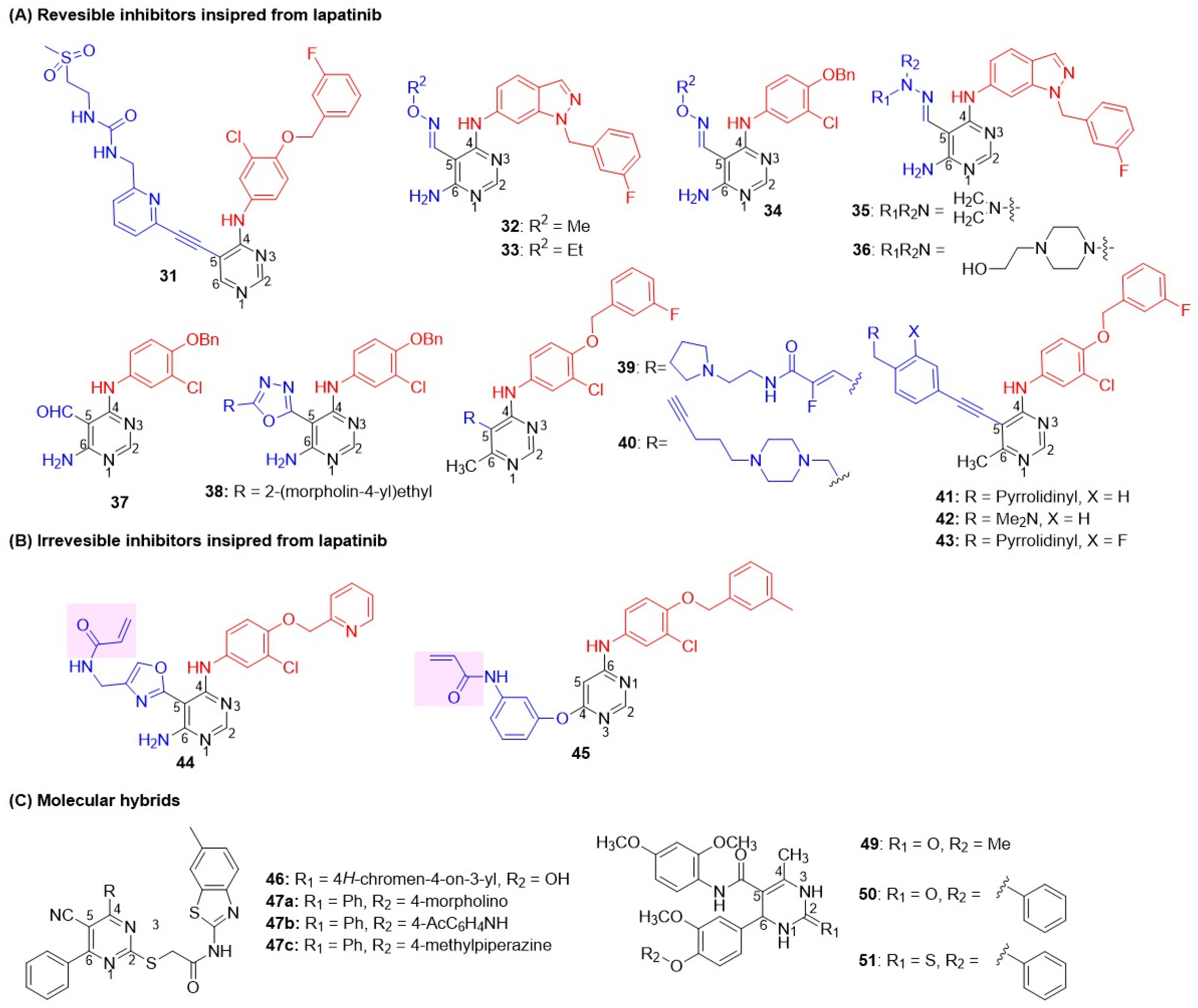
8.3. Pyrimidine Class
8.3.1. Lapatinib-Inspired Pyrimidines
8.3.2. Molecular Hybrids of Pyrimidines
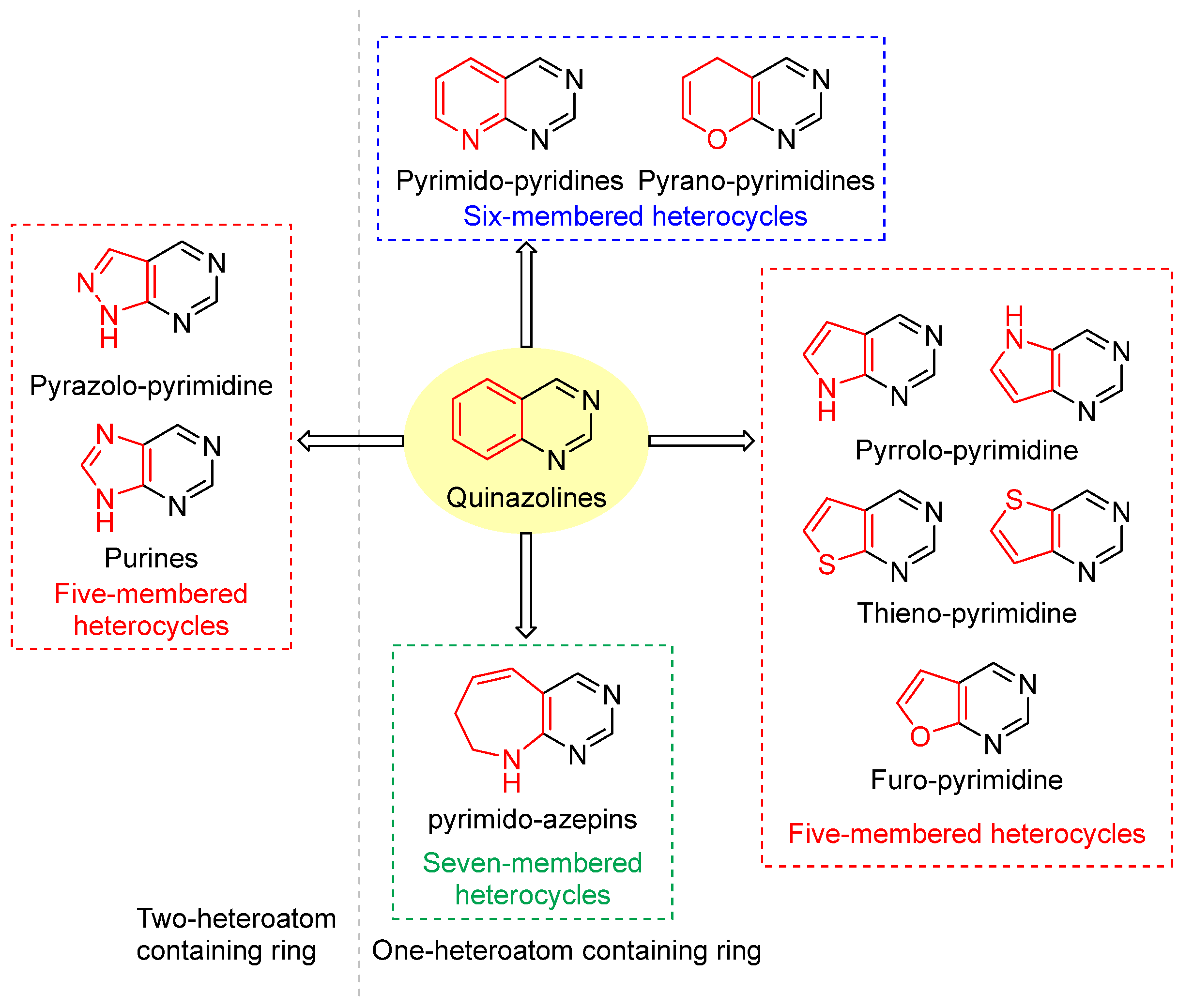
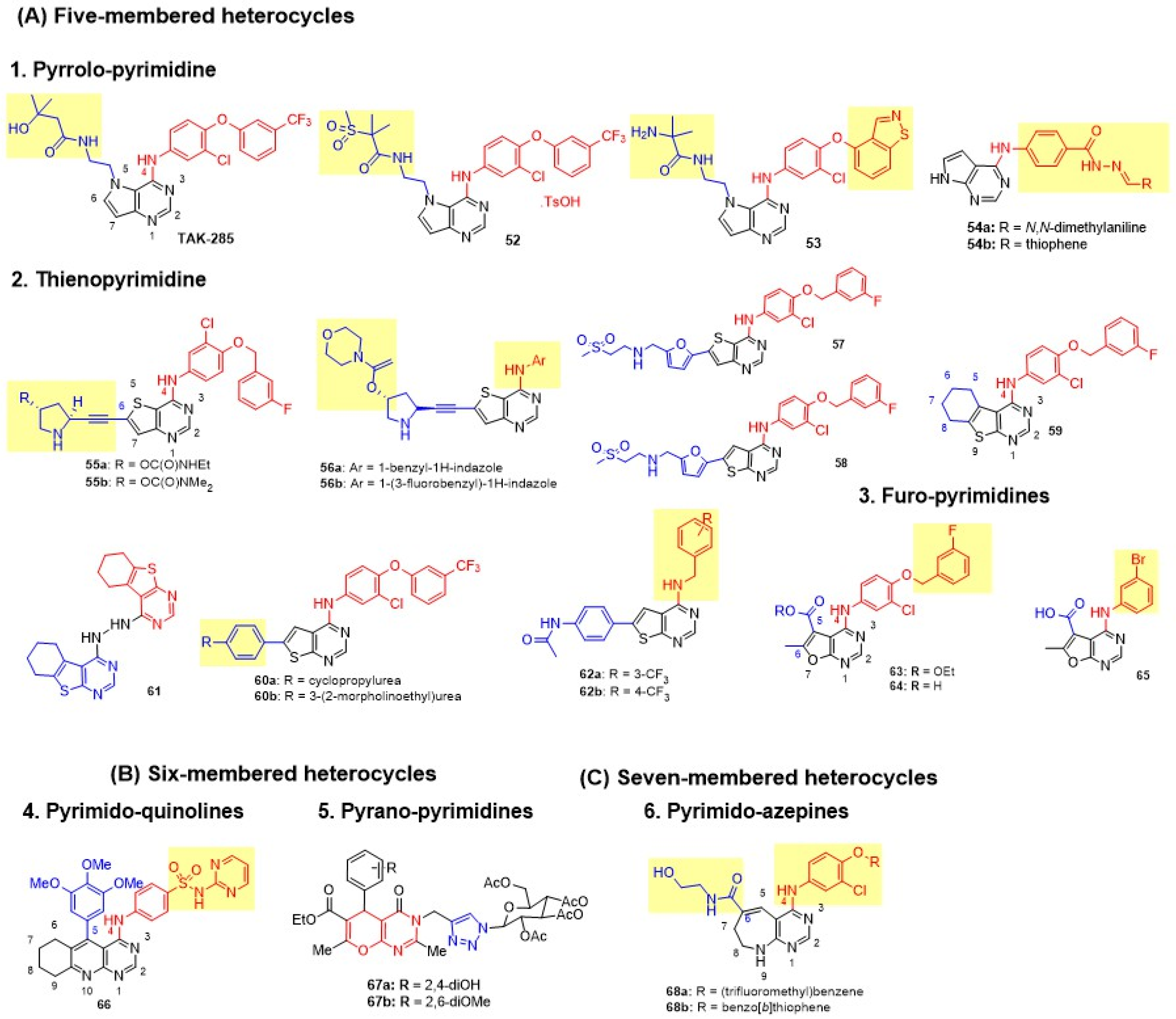
8.4. Fused Pyrimidines
8.4.1. Pyrimidines Fused with One Heteroatom-Containing Ring
Pyrrolo-Pyrimidine
Thieno-Pyrimidine
Furo-Pyrimidine
Pyrimido-Quinolines
Pyrano-Pyrimidines
Pyrimido-Azepine
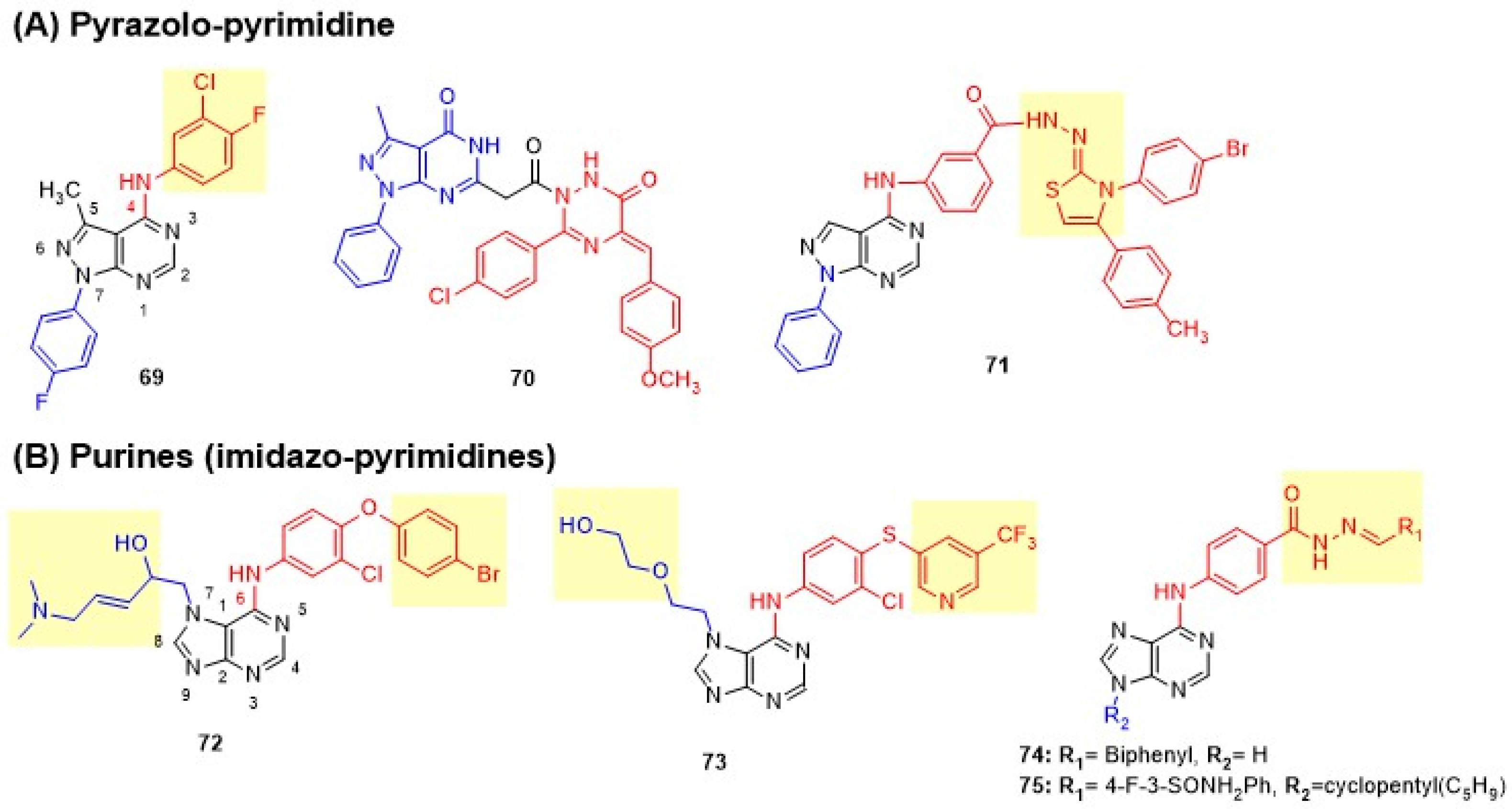
8.4.2. Pyrimidines Fused with Two Heteroatom-Containing Rings
Pyrimidines Fused with Two Heteroatom-Containing Rings
Purines (Imidazo-Pyrimidines)
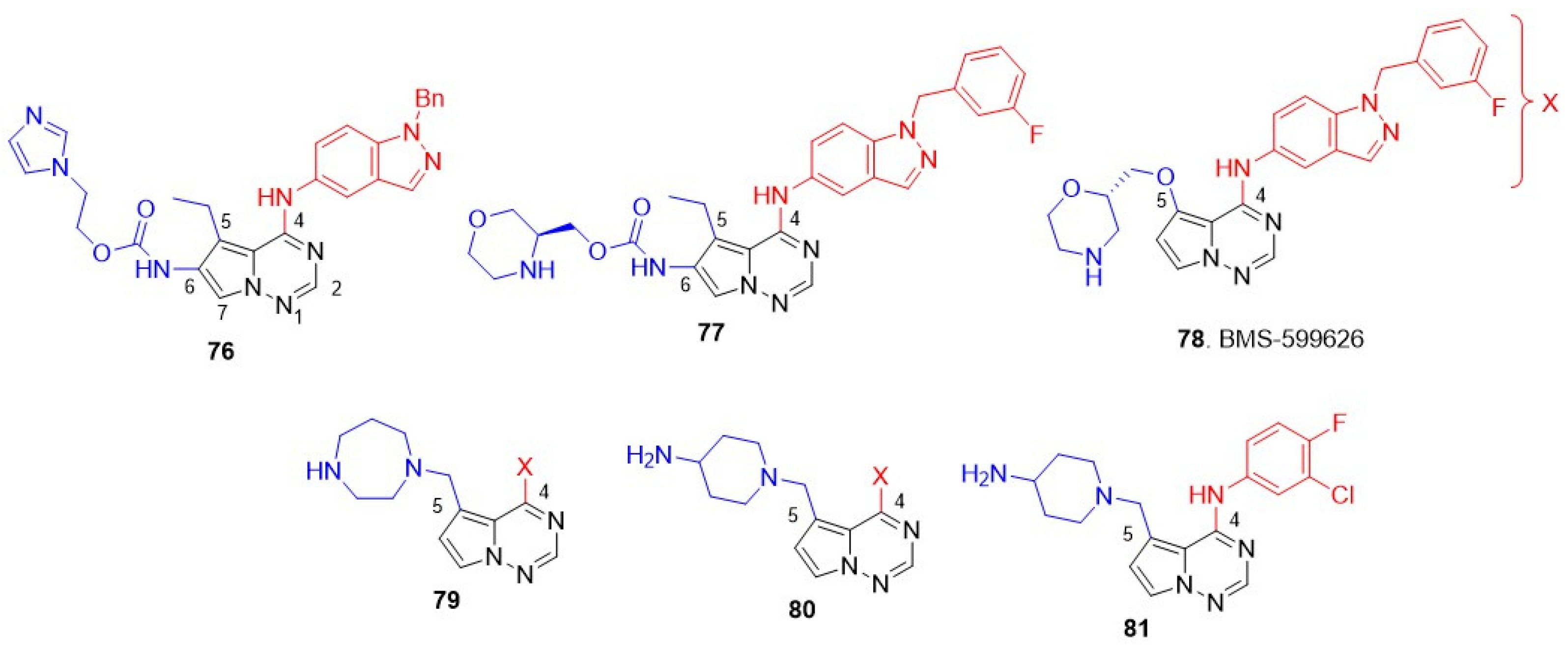
8.5. Pyrrolo[2,1-f][1,2,4]Triazin-4-Amines
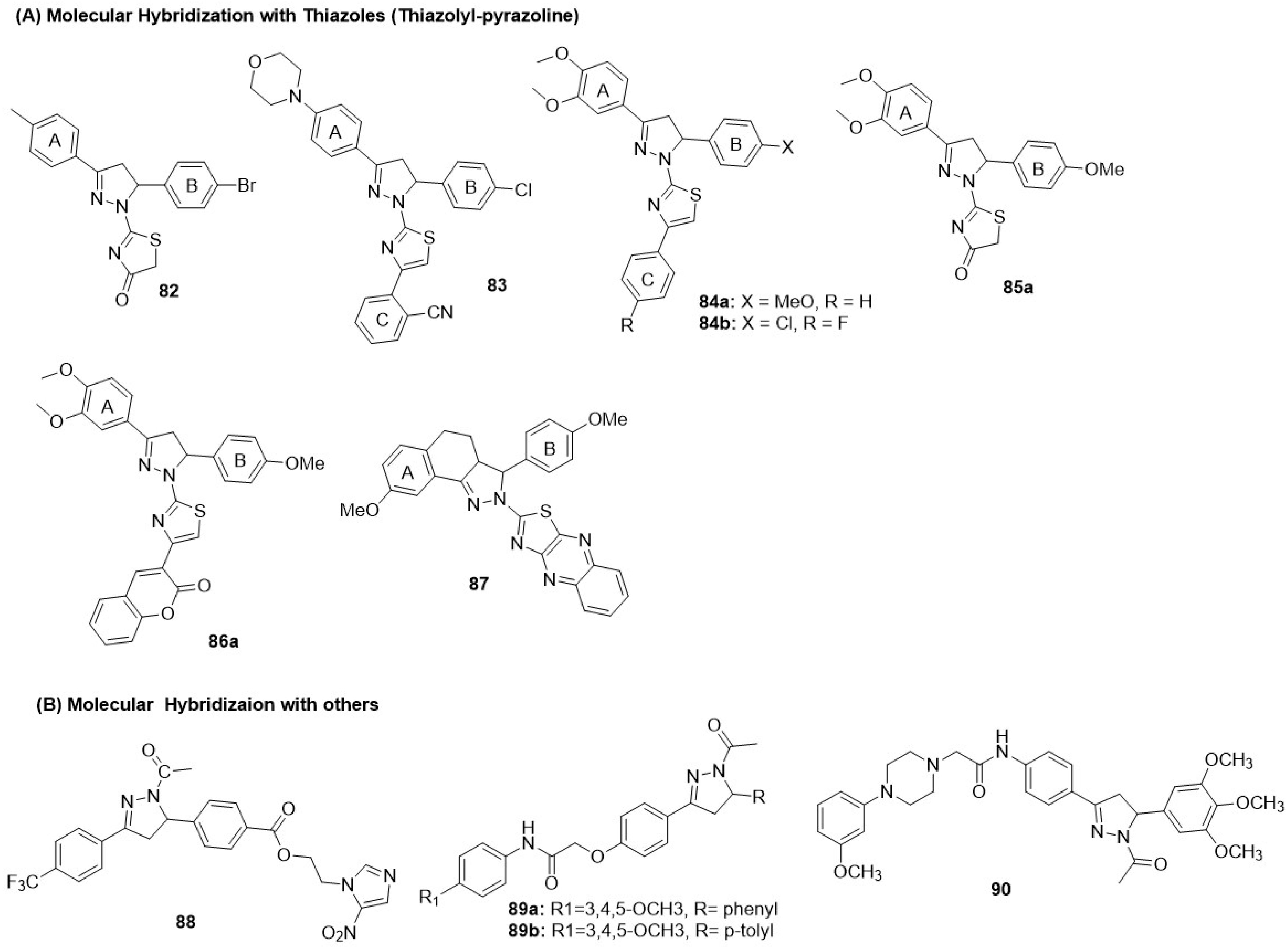
8.6. Pyrazoline Class
8.6.1. Thiazolyl-Pyrazoline Hybrids
8.6.2. Pyrazoline Hybrids with Other Heterocycles
8.7. Pyridine Class
8.8. Imidazo-Thiazoles/Thiazolidinone
8.9. Azole Class
8.10. Miscellaneous Class
9. Conclusions
Author Contributions
Funding
Institutional Review Board Statement
Informed Consent Statement
Data Availability Statement
Acknowledgments
Conflicts of Interest
Abbreviations
| AR | Androgen receptor |
| AREG | Amphiregulin |
| BC | Breast cancer |
| BTC | Betacellulin |
| DC | Ductal carcinoma |
| ECD | Extracellular domain |
| EGFR | Epidermal growth factor receptor |
| EMT | Epithelial–mesenchymal transition |
| EPR | Epiregulin |
| ER | Estrogen receptor |
| HB-EGF | Heparin-binding EGF |
| HER 2 | Human epidermal growth factor receptor 2 |
| IDC | Invasive ductal carcinoma |
| LC | Lobular carcinoma |
| MSL | Mesenchymal stem-like |
| NRG | Neuregulin |
| PR | Progesterone |
| RTK | Receptor tyrosine kinase |
| TGF α | Transforming growth factor α |
| TKI | Tyrosine kinase inhibitor |
| TNBC | Triple-negative breast cancer |
References
- Siegel, R.L.; Miller, K.D.; Jemal, A. Cancer statistics, 2020. CA Cancer J. Clin. 2020, 70, 7–30. [Google Scholar] [CrossRef]
- Bray, F.; Laversanne, M.; Sung, H.; Ferlay, J.; Siegel, R.L.; Soerjomataram, I.; Jemal, A. Global cancer statistics 2022: GLOBOCAN estimates of incidence and mortality worldwide for 36 cancers in 185 countries. CA Cancer J. Clin. 2024, 74, 229–263. [Google Scholar] [CrossRef] [PubMed]
- Nounou, M.I.; ElAmrawy, F.; Ahmed, N.; Abdelraouf, K.; Goda, S.; Syed-Sha-Qhattal, H. Breast Cancer: Conventional Diagnosis and Treatment Modalities and Recent Patents and Technologies. Breast Cancer Basic Clin. Res. 2015, 9, BCBCR.S29420. [Google Scholar] [CrossRef]
- Hassett, M.J.; Somerfield, M.R.; Baker, E.R.; Cardoso, F.; Kansal, K.J.; Kwait, D.C.; Plichta, J.K.; Ricker, C.; Roshal, A.; Ruddy, K.J.; et al. Management of Male Breast Cancer: ASCO Guideline. J. Clin. Oncol. 2020, 38, 1849–1863. [Google Scholar] [CrossRef] [PubMed]
- Xiong, X.; Zheng, L.-W.; Ding, Y.; Chen, Y.-F.; Cai, Y.-W.; Wang, L.-P.; Huang, L.; Liu, C.-C.; Shao, Z.-M.; Yu, K.-D. Breast cancer: Pathogenesis and treatments. Signal Transduct. Target. Ther. 2025, 10, 49. [Google Scholar] [CrossRef] [PubMed]
- Makki, J. Diversity of Breast Carcinoma: Histological Subtypes and Clinical Relevance. Clin. Med. Insights Pathol. 2015, 8, CPath.S31563. [Google Scholar] [CrossRef] [PubMed]
- Harbeck, N.; Penault-Llorca, F.; Cortes, J.; Gnant, M.; Houssami, N.; Poortmans, P.; Ruddy, K.; Tsang, J.; Cardoso, F. Breast cancer. Nat. Rev. Dis. Primers 2019, 5, 66. [Google Scholar] [CrossRef]
- Sørlie, T.; Perou, C.M.; Tibshirani, R.; Aas, T.; Geisler, S.; Johnsen, H.; Hastie, T.; Eisen, M.B.; van de Rijn, M.; Jeffrey, S.S.; et al. Gene expression patterns of breast carcinomas distinguish tumor subclasses with clinical implications. Proc. Natl. Acad. Sci. USA 2001, 98, 10869–10874. [Google Scholar] [CrossRef]
- Perou, C.M.; Sørlie, T.; Eisen, M.B.; van de Rijn, M.; Jeffrey, S.S.; Rees, C.A.; Pollack, J.R.; Ross, D.T.; Johnsen, H.; Akslen, L.A.; et al. Molecular portraits of human breast tumours. Nature 2000, 406, 747–752. [Google Scholar] [CrossRef]
- Jiao, Q.; Wu, A.; Shao, G.; Peng, H.; Wang, M.; Ji, S.; Liu, P.; Zhang, J. The latest progress in research on triple negative breast cancer (TNBC): Risk factors, possible therapeutic targets and prognostic markers. J. Thorac. Dis. 2014, 6, 1329–1335. [Google Scholar]
- Lehmann, B.D.; Bauer, J.A.; Chen, X.; Sanders, M.E.; Chakravarthy, A.B.; Shyr, Y.; Pietenpol, J.A. Identification of human triple-negative breast cancer subtypes and preclinical models for selection of targeted therapies. J. Clin. Investig. 2011, 121, 2750–2767. [Google Scholar] [CrossRef]
- Brasó-Maristany, F.; Griguolo, G.; Pascual, T.; Paré, L.; Nuciforo, P.; Llombart-Cussac, A.; Bermejo, B.; Oliveira, M.; Morales, S.; Martínez, N.; et al. Phenotypic changes of HER2-positive breast cancer during and after dual HER2 blockade. Nat. Commun. 2020, 11, 385. [Google Scholar] [CrossRef]
- Foulkes, W.D.; Smith, I.E.; Reis-Filho, J.S. Triple-Negative Breast Cancer. N. Engl. J. Med. 2010, 363, 1938–1948. [Google Scholar] [CrossRef]
- Saha, T.; Lukong, K.E. Breast Cancer Stem-Like Cells in Drug Resistance: A Review of Mechanisms and Novel Therapeutic Strategies to Overcome Drug Resistance. Front. Oncol. 2022, 22, 856974. [Google Scholar] [CrossRef] [PubMed]
- Wendt, M.K.; Williams, W.K.; Pascuzzi, P.E.; Balanis, N.G.; Schiemann, B.J.; Carlin, C.R.; Schiemann, W.P. The Antitumorigenic Function of EGFR in Metastatic Breast Cancer is Regulated by Expression of Mig6. Neoplasia 2015, 17, 124–133. [Google Scholar] [CrossRef]
- Park, H.S.; Jang, M.H.; Kim, E.J.; Kim, H.J.; Lee, H.J.; Kim, Y.J.; Kim, J.H.; Kang, E.; Kim, S.-W.; Kim, I.A.; et al. High EGFR gene copy number predicts poor outcome in triple-negative breast cancer. Mod. Pathol. 2014, 27, 1212–1222. [Google Scholar] [CrossRef]
- Tischkowitz, M.; Brunet, J.-S.; Bégin, L.R.; Huntsman, D.G.; Cheang, M.C.U.; Akslen, L.A.; Nielsen, T.O.; Foulkes, W.D. Use of immunohistochemical markers can refine prognosis in triple negative breast cancer. BMC Cancer 2007, 7, 134. [Google Scholar] [CrossRef]
- Schlam, I.; Swain, S.M. HER2-positive breast cancer and tyrosine kinase inhibitors: The time is now. npj Breast Cancer 2021, 7, 56. [Google Scholar] [CrossRef]
- Halder, S.; Basu, S.; Lall, S.P.; Ganti, A.K.; Batra, S.K.; Seshacharyulu, P. Targeting the EGFR signaling pathway in cancer therapy: What’s new in 2023? Expert Opin. Ther. Targets 2023, 27, 305–324. [Google Scholar] [CrossRef]
- Pan, L.; Li, J.; Xu, Q.; Gao, Z.; Yang, M.; Wu, X.; Li, X. HER2/PI3K/AKT pathway in HER2-positive breast cancer: A review. Medicine 2024, 103, e38508. [Google Scholar] [CrossRef]
- Roskoski, R. The ErbB/HER family of protein-tyrosine kinases and cancer. Pharmacol. Res. 2014, 79, 34–74. [Google Scholar] [CrossRef]
- Garrett, J.T.; Tendler, S.; Feroz, W.; Kilroy, M.K.; Yu, H. Emerging importance of HER3 in tumorigenesis and cancer therapy. Nat. Rev. Clin. Oncol. 2025, 22, 348–370. [Google Scholar] [CrossRef] [PubMed]
- Roskoski, R. ErbB/HER protein-tyrosine kinases: Structures and small molecule inhibitors. Pharmacol. Res. 2014, 87, 42–59. [Google Scholar] [CrossRef]
- Richard, J.; Sainsbury, C.; Needham, G.; Farndon, J.; Malcolm, A.; Harris, A. Epidermal-growth-factor receptor status as predictor of early recurrence of and death from breast cancer. Lancet 1987, 329, 1398–1402. [Google Scholar] [CrossRef]
- Rimawi, M.F.; Shetty, P.B.; Weiss, H.L.; Schiff, R.; Osborne, C.K.; Chamness, G.C.; Elledge, R.M. Epidermal growth factor receptor expression in breast cancer association with biologic phenotype and clinical outcomes. Cancer 2010, 116, 1234–1242. [Google Scholar] [CrossRef]
- Cheng, X. A Comprehensive Review of HER2 in Cancer Biology and Therapeutics. Genes 2024, 15, 903. [Google Scholar] [CrossRef]
- You, K.S.; Yi, Y.W.; Cho, J.; Park, J.-S.; Seong, Y.-S. Potentiating therapeutic effects of epidermal growth factor receptor inhibition in triple-negative breast cancer. Pharmaceuticals 2021, 14, 589. [Google Scholar] [CrossRef]
- Li, X.; Zhao, L.; Chen, C.; Nie, J.; Jiao, B. Can EGFR be a therapeutic target in breast cancer? Biochim. Biophys. Acta (BBA)-Rev. Cancer 2022, 1877, 188789. [Google Scholar] [CrossRef]
- Sagan, O.A.; Rothstein, A.; Jambunathan, B.; Hadziahmetovic, M.; Antoniolli, A.; Rashid, M.H. Case report: Neuroendocrine breast carcinoma with a germline EGFR T790M mutation. Front. Oncol. 2023, 13, 1176868. [Google Scholar] [CrossRef]
- Burness, M.L.; Grushko, T.A.; Olopade, O.I. Epidermal Growth Factor Receptor in Triple-Negative and Basal-Like Breast Cancer: Promising Clinical Target or Only a Marker? Cancer J. 2010, 16, 23–32. [Google Scholar] [CrossRef]
- Teng, Y.H.-F.; Tan, W.-J.; Thike, A.-A.; Cheok, P.-Y.; Tse, G.M.-K.; Wong, N.-S.; Yip, G.W.-C.; Bay, B.-H.; Tan, P.-H. Mutations in the epidermal growth factor receptor (EGFR) gene in triple negative breast cancer: Possible implications for targeted therapy. Breast Cancer Res. 2011, 13, R35. [Google Scholar] [CrossRef] [PubMed]
- Yu, H.; Gong, X.; Luo, X.; Han, W.; Hong, G.; Singh, B.; Tang, C.K. Co-expression of EGFRvIII with ErbB-2 enhances tumorigenesis: EGFRvIII mediated constitutively activated and sustained signaling pathways, whereas EGF-induced a transient effect on EGFR-mediated signaling pathways. Cancer Biol. Ther. 2008, 7, 1818–1828. [Google Scholar] [CrossRef] [PubMed]
- Yu, H.; O’Malley, S.; Tang, C.K. Co-expression of an EGFR mutant with ErbB-2 enhanced motility and invasion. Cancer Res. 2005, 65, 1065. [Google Scholar]
- Seshacharyulu, P.; Ponnusamy, M.P.; Haridas, D.; Jain, M.; Ganti, A.K.; Batra, S.K. Targeting the EGFR signaling pathway in cancer therapy. Expert Opin. Ther. Targets 2012, 16, 15–31. [Google Scholar] [CrossRef] [PubMed]
- Ishii, K.; Morii, N.; Yamashiro, H. Pertuzumab in the treatment of HER2-positive breast cancer: An evidence-based review of its safety, efficacy, and place in therapy. Core Evid. 2019, 14, 51–70. [Google Scholar] [CrossRef] [PubMed]
- Luque-Bolivar, A.; Pérez-Mora, E.; Villegas, V.E.; Rondón-Lagos, M. Resistance and Overcoming Resistance in Breast Cancer. Breast Cancer Targets Ther. 2020, 12, 211–229. [Google Scholar] [CrossRef]
- Sankarapandian, V.; Rajendran, R.L.; Miruka, C.O.; Sivamani, P.; Maran, B.A.V.; Krishnamoorthy, R.; Gangadaran, P.; Ahn, B.-C. A review on tyrosine kinase inhibitors for targeted breast cancer therapy. Pathol. Res. Pract. 2024, 263, 155607. [Google Scholar] [CrossRef]
- Goldie, J.H. Drug resistance and cancer chemotherapy strategy in breast cancer. Breast Cancer Res. Treat. 1983, 3, 129–136. [Google Scholar] [CrossRef] [PubMed]
- Tufail, M.; Cui, J.; Wu, C. Breast cancer: Molecular mechanisms of underlying resistance and therapeutic approaches. Am. J. Cancer Res. 2022, 12, 2920. [Google Scholar]
- Haan, S.; Keller, J.F.; Behrmann, I.; Heinrich, P.C.; Haan, C. Multiple reasons for an inefficient STAT1 response upon IL-6-type cytokine stimulation. Cell. Signal. 2005, 17, 1542–1550. [Google Scholar] [CrossRef] [PubMed]
- Watson, C.J.; Miller, W.R. Elevated levels of members of the STAT family of transcription factors in breast carcinoma nuclear extracts. Br. J. Cancer 1995, 71, 840–844. [Google Scholar] [CrossRef]
- Xu, H.; Zhou, Y.; Li, W.; Zhang, B.; Zhang, H.; Zhao, S.; Zheng, P.; Wu, H.; Yang, J. Tumor-derived mesenchymal-stem-cell-secreted IL-6 enhances resistance to cisplatin via the STAT3 pathway in breast cancer. Oncol. Lett. 2018, 15, 9142–9150. [Google Scholar] [CrossRef]
- Kurrey, N.K.; Jalgaonkar, S.P.; Joglekar, A.V.; Ghanate, A.D.; Chaskar, P.D.; Doiphode, R.Y.; Bapat, S.A. Snail and Slug Mediate Radioresistance and Chemoresistance by Antagonizing p53-Mediated Apoptosis and Acquiring a Stem-Like Phenotype in Ovarian Cancer Cells. Stem Cells 2009, 27, 2059–2068. [Google Scholar] [CrossRef]
- Yue, P.; Zhang, X.; Paladino, D.; Sengupta, B.; Ahmad, S.; Holloway, R.W.; Ingersoll, S.B.; Turkson, J. Hyperactive EGF receptor, Jaks and Stat3 signaling promote enhanced colony-forming ability, motility and migration of cisplatin-resistant ovarian cancer cells. Oncogene 2012, 31, 2309–2322. [Google Scholar] [CrossRef]
- Gupta, N.; Xu, Z.; El-Sehemy, A.; Steed, H.; Fu, Y. Notch3 induces epithelial–mesenchymal transition and attenuates carboplatin-induced apoptosis in ovarian cancer cells. Gynecol. Oncol. 2013, 130, 200–206. [Google Scholar] [CrossRef] [PubMed]
- Marchini, S.; Fruscio, R.; Clivio, L.; Beltrame, L.; Porcu, L.; Nerini, I.F.; Cavalieri, D.; Chiorino, G.; Cattoretti, G.; Mangioni, C.; et al. Resistance to platinum-based chemotherapy is associated with epithelial to mesenchymal transition in epithelial ovarian cancer. Eur. J. Cancer 2013, 49, 520–530. [Google Scholar] [CrossRef] [PubMed]
- Zhong, H.; Zhou, Z.; Wang, H.; Wang, R.; Shen, K.; Huang, R.; Wang, Z. The biological roles and clinical applications of the PI3K/AKT pathway in targeted therapy resistance in HER2-positive breast cancer: A comprehensive review. Int. J. Mol. Sci. 2024, 25, 13376. [Google Scholar] [PubMed]
- Bahar, M.E.; Kim, H.J.; Kim, D.R. Targeting the RAS/RAF/MAPK pathway for cancer therapy: From mechanism to clinical studies. Signal Transduct. Target. Ther. 2023, 8, 455. [Google Scholar] [CrossRef] [PubMed]
- Sigismund, S.; Avanzato, D.; Lanzetti, L. Emerging functions of the EGFR in cancer. Mol. Oncol. 2018, 12, 3–20. [Google Scholar] [CrossRef]
- Knox, C.; Wilson, M.; Klinger, C.M.; Franklin, M.; Oler, E.; Wilson, A.; Pon, A.; Cox, J.; Chin, N.E.L.; Strawbridge, S.A.; et al. DrugBank 6.0: The DrugBank Knowledgebase for 2024. Nucleic Acids Res. 2024, 52, D1265–D1275. [Google Scholar] [CrossRef]
- Cameron, D.; Casey, M.; Press, M.; Lindquist, D.; Pienkowski, T.; Romieu, C.G.; Chan, S.; Jagiello-Gruszfeld, A.; Kaufman, B.; Crown, J.; et al. A phase III randomized comparison of lapatinib plus capecitabine versus capecitabine alone in women with advanced breast cancer that has progressed on trastuzumab: Updated efficacy and biomarker analyses. Breast Cancer Res. Treat. 2008, 112, 533–543. [Google Scholar] [CrossRef]
- Agelaki, S.; Kalykaki, A.; Markomanolaki, H.; Papadaki, M.A.; Kallergi, G.; Hatzidaki, D.; Kalbakis, K.; Mavroudis, D.; Georgoulias, V. Efficacy of Lapatinib in Therapy-Resistant HER2-Positive Circulating Tumor Cells in Metastatic Breast Cancer. PLoS ONE 2015, 10, e0123683. [Google Scholar] [CrossRef]
- de Azambuja, E.; Piccart-Gebhart, M.; Fielding, S.; Townend, J.; Hillman, D.W.; Colleoni, M.; Roylance, R.; Kelly, C.M.; Lombard, J.; El-Abed, S.; et al. Final analysis of the ALTTO trial: Adjuvant trastuzumab in sequence or in combination with lapatinib in patients with HER2-positive early breast cancer [BIG 2-06/NCCTG N063D (Alliance)]. ESMO Open 2024, 9, 103938. [Google Scholar] [CrossRef] [PubMed]
- Fehm, T.; Mueller, V.; Banys-Paluchowski, M.; Fasching, P.A.; Friedl, T.W.P.; Hartkopf, A.; Huober, J.; Loehberg, C.; Rack, B.; Riethdorf, S.; et al. Efficacy of Lapatinib in Patients with HER2-Negative Metastatic Breast Cancer and HER2-Positive Circulating Tumor Cells—The DETECT III Clinical Trial. Clin. Chem. 2024, 70, 307–318. [Google Scholar] [CrossRef] [PubMed]
- Goss, P.E.; Smith, I.E.; O’Shaughnessy, J.; Ejlertsen, B.; Kaufmann, M.; Boyle, F.; Buzdar, A.U.; Fumoleau, P.; Gradishar, W.; Martin, M.; et al. Adjuvant lapatinib for women with early-stage HER2-positive breast cancer: A randomised, controlled, phase 3 trial. Lancet Oncol. 2013, 14, 88–96. [Google Scholar] [CrossRef]
- Kaklamani, V.G.; Siziopikou, K.; Scholtens, D.; Lacouture, M.; Gordon, J.; Uthe, R.; Meservey, C.; Hansen, N.; Khan, S.A.; Jeruss, J.S.; et al. Pilot neoadjuvant trial in HER2 positive breast cancer with combination of nab-paclitaxel and lapatinib. Breast Cancer Res. Treat. 2012, 132, 833–842. [Google Scholar] [CrossRef] [PubMed]
- Wang, M.-n.; Kuang, Y.; Gong, L.-y.; Hua, Y.; Pei, Q.; Guo, C.-x.; Cao, Y.; Huang, J.; Yang, G.-p. First-in-human, phase I single-ascending-dose study of the safety, pharmacokinetics, and relative bioavailability of selatinib, a dual EGFR-ErbB2 inhibitor in healthy subjects. Investig. New Drugs 2020, 38, 1826–1835. [Google Scholar] [CrossRef]
- Macpherson, I.R.; Spiliopoulou, P.; Rafii, S.; Saggese, M.; Baird, R.D.; Garcia-Corbacho, J.; Italiano, A.; Bonneterre, J.; Campone, M.; Cresti, N.; et al. A phase I/II study of epertinib plus trastuzumab with or without chemotherapy in patients with HER2-positive metastatic breast cancer. Breast Cancer Res. 2019, 22, 1. [Google Scholar] [CrossRef]
- Cortés, J.; Dieras, V.; Ro, J.; Barriere, J.; Bachelot, T.; Hurvitz, S.; Le Rhun, E.; Espié, M.; Kim, S.-B.; Schneeweiss, A.; et al. Afatinib alone or afatinib plus vinorelbine versus investigator’s choice of treatment for HER2-positive breast cancer with progressive brain metastases after trastuzumab, lapatinib, or both (LUX-Breast 3): A randomised, open-label, multicentre, phase 2 trial. Lancet Oncol. 2015, 16, 1700–1710. [Google Scholar] [CrossRef]
- Xu, B.; Yan, M.; Ma, F.; Hu, X.; Feng, J.; Ouyang, Q.; Tong, Z.; Li, H.; Zhang, Q.; Sun, T.; et al. Pyrotinib plus capecitabine versus lapatinib plus capecitabine for the treatment of HER2-positive metastatic breast cancer (PHOEBE): A multicentre, open-label, randomised, controlled, phase 3 trial. Lancet Oncol. 2021, 22, 351–360. [Google Scholar] [CrossRef]
- Wang, C.; Lin, Y.; Zhou, Y.; Mao, F.; Zhu, H.; Guan, J.; Zhang, X.; Shen, S.; Huang, X.; Chen, C.; et al. Pyrotinib with trastuzumab and aromatase inhibitors as first-line treatment for HER2 positive and hormone receptor positive metastatic or locally advanced breast cancer: Study protocol of a randomized controlled trial. BMC Cancer 2020, 20, 653. [Google Scholar] [CrossRef]
- Holmes, F.A.; Moy, B.; Delaloge, S.; Chia, S.K.L.; Ejlertsen, B.; Mansi, J.; Iwata, H.; Gnant, M.; Buyse, M.; Barrios, C.H.; et al. Overall survival with neratinib after trastuzumab-based adjuvant therapy in HER2-positive breast cancer (ExteNET): A randomised, double-blind, placebo-controlled, phase 3 trial. Eur. J. Cancer 2023, 184, 48–59. [Google Scholar] [CrossRef]
- Hasegawa, T.; Uno, H.; Wei, L.-J. Neratinib after trastuzumab in patients with HER2-positive breast cancer. Lancet Oncol. 2016, 17, e176. [Google Scholar] [CrossRef]
- Chan, A.; Delaloge, S.; Holmes, F.A.; Moy, B.; Iwata, H.; Harvey, V.J.; Robert, N.J.; Silovski, T.; Gokmen, E.; von Minckwitz, G.; et al. Neratinib after trastuzumab-based adjuvant therapy in patients with HER2-positive breast cancer (ExteNET): A multicentre, randomised, double-blind, placebo-controlled, phase 3 trial. Lancet Oncol. 2016, 17, 367–377. [Google Scholar] [CrossRef] [PubMed]
- Wood, E.R.; Truesdale, A.T.; McDonald, O.B.; Yuan, D.; Hassell, A.; Dickerson, S.H.; Ellis, B.; Pennisi, C.; Horne, E.; Lackey, K.; et al. A Unique Structure for Epidermal Growth Factor Receptor Bound to GW572016 (Lapatinib): Relationships among Protein Conformation, Inhibitor Off-Rate, and Receptor Activity in Tumor Cells. Cancer Res. 2004, 64, 6652–6659. [Google Scholar] [CrossRef] [PubMed]
- Cockerill, S.; Stubberfield, C.; Stables, J.; Carter, M.; Guntrip, S.; Smith, K.; McKeown, S.; Shaw, R.; Topley, P.; Thomsen, L.; et al. Indazolylamino quinazolines and pyridopyrimidines as inhibitors of the EGFr and c-erbB-2. Bioorganic Med. Chem. Lett. 2001, 11, 1401–1405. [Google Scholar] [CrossRef]
- Rusnak, D.W.; Affleck, K.; Cockerill, S.G.; Stubberfield, C.; Harris, R.; Page, M.; Smith, K.J.; Guntrip, S.B.; Carter, M.C.; Shaw, R.J.; et al. The Characterization of Novel, Dual ErbB-2/EGFR, Tyrosine Kinase Inhibitors: Potential Therapy for Cancer. Cancer Res. 2001, 61, 7196–7203. [Google Scholar] [PubMed]
- Wissner, A.; Berger, D.M.; Boschelli, D.H.; Floyd, M.B.; Greenberger, L.M.; Gruber, B.C.; Johnson, B.D.; Mamuya, N.; Nilakantan, R.; Reich, M.F.; et al. 4-Anilino-6,7-dialkoxyquinoline-3-carbonitrile Inhibitors of Epidermal Growth Factor Receptor Kinase and Their Bioisosteric Relationship to the 4-Anilino-6,7-dialkoxyquinazoline Inhibitors. J. Med. Chem. 2000, 43, 3244–3256. [Google Scholar] [CrossRef]
- Waterson, A.G.; Stevens, K.L.; Reno, M.J.; Zhang, Y.-M.; Boros, E.E.; Bouvier, F.; Rastagar, A.; Uehling, D.E.; Dickerson, S.H.; Reep, B.; et al. Alkynyl pyrimidines as dual EGFR/ErbB2 kinase inhibitors. Bioorganic Med. Chem. Lett. 2006, 16, 2419–2422. [Google Scholar] [CrossRef]
- Soltan, O.M.; Shoman, M.E.; Abdel-Aziz, S.A.; Narumi, A.; Konno, H.; Abdel-Aziz, M. Molecular hybrids: A five-year survey on structures of multiple targeted hybrids of protein kinase inhibitors for cancer therapy. Eur. J. Med. Chem. 2021, 225, 113768. [Google Scholar] [CrossRef]
- Mekheimer, R.A.; Al-Sheikh, M.A.; Medrasi, H.Y.; Jaragh-Alhadad, L.; Moustafa, M.S.; Albadry, M.A.; Mohammed, A.F.; Youssif, B.G.M.; Sadek, K.U. Design, synthesis, and antiproliferative activity of antipyrine linked 2-amino-quinoline-3-carbonitrile derivatives as potential dual EGFR/HER-2 inhibitors. J. Mol. Struct. 2026, 1349, 143789. [Google Scholar] [CrossRef]
- Gaul, M.D.; Guo, Y.; Affleck, K.; Cockerill, G.S.; Gilmer, T.M.; Griffin, R.J.; Guntrip, S.; Keith, B.R.; Knight, W.B.; Mullin, R.J.; et al. Discovery and Biological Evaluation of Potent Dual ErbB-2/EGFR Tyrosine Kinase Inhibitors: 6-Thiazolylquinazolines. Bioorganic Med. Chem. Lett. 2003, 13, 637–640. [Google Scholar] [CrossRef] [PubMed]
- Zhang, Y.-M.; Cockerill, S.; Guntrip, S.B.; Rusnak, D.; Smith, K.; Vanderwall, D.; Wood, E.; Lackey, K. Synthesis and SAR of potent EGFR/erbB2 dual inhibitors. Bioorganic Med. Chem. Lett. 2004, 14, 111–114. [Google Scholar] [CrossRef]
- Zhang, L.; Fan, C.; Guo, Z.; Li, Y.; Zhao, S.; Yang, S.; Yang, Y.; Zhu, J.; Lin, D. Discovery of a potent dual EGFR/HER-2 inhibitor L-2 (selatinib) for the treatment of cancer. Eur. J. Med. Chem. 2013, 69, 833–841. [Google Scholar] [CrossRef]
- Tanaka, H.; Hirata, M.; Shinonome, S.; Wada, T.; Iguchi, M.; Dohi, K.; Inoue, M.; Ishioka, Y.; Hojo, K.; Yamada, T.; et al. Preclinical antitumor activity of S-222611, an oral reversible tyrosine kinase inhibitor of epidermal growth factor receptor and human epidermal growth factor receptor 2. Cancer Sci. 2014, 105, 1040–1048. [Google Scholar] [CrossRef] [PubMed]
- Tian, C.; Ding, P.; Yuan, Z.; Li, H.; Zhao, Y.; Sun, L.; Guo, Q.; Wang, Z.; Sun, L.; Zhang, L.; et al. A novel dual EGFR/HER2 inhibitor KU004 induces cell cycle arrest and apoptosis in HER2-overexpressing cancer cells. Apoptosis 2015, 20, 1599–1612. [Google Scholar] [CrossRef]
- Elkamhawy, A.; Farag, A.K.; Viswanath, A.N.I.; Bedair, T.M.; Leem, D.G.; Lee, K.-T.; Pae, A.N.; Roh, E.J. Targeting EGFR/HER2 tyrosine kinases with a new potent series of 6-substituted 4-anilinoquinazoline hybrids: Design, synthesis, kinase assay, cell-based assay, and molecular docking. Bioorganic Med. Chem. Lett. 2015, 25, 5147–5154. [Google Scholar] [CrossRef] [PubMed]
- Li, D.-D.; Qin, Y.-J.; Sun, J.; Li, J.-R.; Fang, F.; Du, Q.-R.; Qian, Y.; Gong, H.-B.; Zhu, H.-L. Optimization of Substituted 6-Salicyl-4-Anilinoquinazoline Derivatives as Dual EGFR/HER2 Tyrosine Kinase Inhibitors. PLoS ONE 2013, 8, e69427. [Google Scholar] [CrossRef]
- Farouk, A.K.B.A.W.; Abdelrasheed Allam, H.; Rashwan, E.; George, R.F.; Abbas, S.E.S. Design and synthesis of some new 6-bromo-2-(pyridin-3-yl)-4-substituted quinazolines as multi tyrosine kinase inhibitors. Bioorganic Chem. 2022, 128, 106099. [Google Scholar] [CrossRef]
- Hao, S.; Wang, J.-H.; Hou, L.; Liang, J.-W.; Yan, J.-H.; Niu, Y.-F.; Li, X.-Y.; Sun, Q.; Meng, F.-H. Design, synthesis and biological evaluation of novel quinazoline-derived EGFR/HER-2 dual-target inhibitors bearing a heterocyclic-containing tail as potential anti-tumor agents. Bioorganic Chem. 2024, 151, 107686. [Google Scholar] [CrossRef]
- Bakshi, V.; Khalilullah, H.; Saeed, N.; Bhavani, R.; Haque, M.A.; Chakole, R.D.; Khan, S.L. New Substituted 6,7-dimethoxy-N-phenyl-2-(piperazin-1-yl)quinazolin-4-amine Derivatives: Synthesis, Characterization, Cytotoxicity against SKBR3 and Trastuzumab Resistance SKBR3 cell lines, and EGFR/HER2 Dual Kinase Inhibition Assay. Chem. Methodol. 2025, 9, 954–980. [Google Scholar] [CrossRef]
- Gomaa, H.A.M.; Shaker, M.E.; Alzarea, S.I.; Alsahli, T.G.; Alanazi, A.S.; Mohamed, F.A.M.; Alanazi, M.N.; Abou-Zied, H.A.; Abdelmoez, A.; Brase, S.; et al. Design, synthesis, and apoptotic antiproliferative efficacy of new quinazoline/1,3,4-oxadiazole-2-thione derived EGFR/HER-2 dual inhibitors with anti-breast cancer activity. RSC Med. Chem. 2025, 16, 4297–4315. [Google Scholar] [CrossRef]
- Li, D.; Ambrogio, L.; Shimamura, T.; Kubo, S.; Takahashi, M.; Chirieac, L.R.; Padera, R.F.; Shapiro, G.I.; Baum, A.; Himmelsbach, F.; et al. BIBW2992, an irreversible EGFR/HER2 inhibitor highly effective in preclinical lung cancer models. Oncogene 2008, 27, 4702–4711. [Google Scholar] [CrossRef] [PubMed]
- Das, D.; Xie, L.; Wang, J.; Xu, X.; Zhang, Z.; Shi, J.; Le, X.; Hong, J. Discovery of new quinazoline derivatives as irreversible dual EGFR/HER2 inhibitors and their anticancer activities—Part 1. Bioorganic Med. Chem. Lett. 2019, 29, 591–596. [Google Scholar] [CrossRef] [PubMed]
- Jiao, X.; Zhang, Q.; Zhang, Y.; Shao, J.; Ding, L.; Tang, C.; Feng, B. Synthesis and biological evaluation of new series of quinazoline derivatives as EGFR/HER2 dual-target inhibitors. Bioorganic Med. Chem. Lett. 2022, 67, 128703. [Google Scholar] [CrossRef] [PubMed]
- Alsaid, M.S.; Al-Mishari, A.A.; Soliman, A.M.; Ragab, F.A.; Ghorab, M.M. Discovery of Benzo[g]quinazolin benzenesulfonamide derivatives as dual EGFR/HER2 inhibitors. Eur. J. Med. Chem. 2017, 141, 84–91. [Google Scholar] [CrossRef]
- Ghorab, M.M.; Alsaid, M.S.; Soliman, A.M. Dual EGFR/HER2 inhibitors and apoptosis inducers: New benzo[g]quinazoline derivatives bearing benzenesulfonamide as anticancer and radiosensitizers. Bioorganic Chem. 2018, 80, 611–620. [Google Scholar] [CrossRef]
- Ghorab, M.M.; Alsaid, M.S.; Soliman, A.M.; Al-Mishari, A.A. Benzo[g]quinazolin-based scaffold derivatives as dual EGFR/HER2 inhibitors. J. Enzym. Inhib. Med. Chem. 2018, 33, 67–73. [Google Scholar] [CrossRef]
- Maher, M.; Kassab, A.E.; Zaher, A.F.; Mahmoud, Z. Novel pyrazolo[3,4-d]pyrimidines: Design, synthesis, anticancer activity, dual EGFR/ErbB2 receptor tyrosine kinases inhibitory activity, effects on cell cycle profile and caspase-3-mediated apoptosis. J. Enzym. Inhib. Med. Chem. 2019, 34, 532–546. [Google Scholar] [CrossRef]
- Yin, S.; Tang, C.; Wang, B.; Zhang, Y.; Zhou, L.; Xue, L.; Zhang, C. Design, synthesis and biological evaluation of novel EGFR/HER2 dual inhibitors bearing a oxazolo[4,5-g]quinazolin-2(1H)-one scaffold. Eur. J. Med. Chem. 2016, 120, 26–36. [Google Scholar] [CrossRef]
- Sun, M.; Jia, J.; Sun, H.; Wang, F. Design and synthesis of a novel class EGFR/HER2 dual inhibitors containing tricyclic oxazine fused quinazolines scaffold. Bioorganic Med. Chem. Lett. 2020, 30, 127045. [Google Scholar] [CrossRef]
- Wissner, A.; Overbeek, E.; Reich, M.F.; Floyd, M.B.; Johnson, B.D.; Mamuya, N.; Rosfjord, E.C.; Discafani, C.; Davis, R.; Shi, X.; et al. Synthesis and Structure−Activity Relationships of 6,7-Disubstituted 4-Anilinoquinoline-3-carbonitriles. The Design of an Orally Active, Irreversible Inhibitor of the Tyrosine Kinase Activity of the Epidermal Growth Factor Receptor (EGFR) and the Human Epidermal Growth Factor Receptor-2 (HER-2). J. Med. Chem. 2003, 46, 49–63. [Google Scholar] [CrossRef]
- Tsou, H.-R.; Overbeek-Klumpers, E.G.; Hallett, W.A.; Reich, M.F.; Floyd, M.B.; Johnson, B.D.; Michalak, R.S.; Nilakantan, R.; Discafani, C.; Golas, J.; et al. Optimization of 6,7-Disubstituted-4-(arylamino)quinoline-3-carbonitriles as Orally Active, Irreversible Inhibitors of Human Epidermal Growth Factor Receptor-2 Kinase Activity. J. Med. Chem. 2005, 48, 1107–1131. [Google Scholar] [CrossRef]
- Li, X.; Yang, C.; Wan, H.; Zhang, G.; Feng, J.; Zhang, L.; Chen, X.; Zhong, D.; Lou, L.; Tao, W.; et al. Discovery and development of pyrotinib: A novel irreversible EGFR/HER2 dual tyrosine kinase inhibitor with favorable safety profiles for the treatment of breast cancer. Eur. J. Pharm. Sci. 2017, 110, 51–61. [Google Scholar] [CrossRef]
- Zou, M.; Li, J.; Jin, B.; Wang, M.; Chen, H.; Zhang, Z.; Zhang, C.; Zhao, Z.; Zheng, L. Design, synthesis and anticancer evaluation of new 4-anilinoquinoline-3-carbonitrile derivatives as dual EGFR/HER2 inhibitors and apoptosis inducers. Bioorganic Chem. 2021, 114, 105200. [Google Scholar] [CrossRef] [PubMed]
- Rabindran, S.K.; Discafani, C.M.; Rosfjord, E.C.; Baxter, M.; Floyd, M.B.; Golas, J.; Hallett, W.A.; Johnson, B.D.; Nilakantan, R.; Overbeek, E.; et al. Antitumor Activity of HKI-272, an Orally Active, Irreversible Inhibitor of the HER-2 Tyrosine Kinase. Cancer Res. 2004, 64, 3958–3965. [Google Scholar] [CrossRef] [PubMed]
- Zhang, X.; Li, R.; Qiao, K.; Ge, Z.; Zhang, L.; Cheng, T.; Li, R. Novel Dithiocarbamic Acid Esters Derived from 6-Aminomethyl-4-anilinoquinazolines and 6-Aminomethyl-4-anilino-3-cyanoquinolines as Potent EGFR Inhibitors. Arch. Pharm. 2013, 346, 44–52. [Google Scholar] [CrossRef]
- Batran, R.Z.; El-Kashak, W.A.; El-Daly, S.M.; Ahmed, E.Y. Dual Kinase Inhibition of EGFR/HER2: Design, Synthesis and Molecular Docking of Thiazolylpyrazolyl-Based Aminoquinoline Derivatives as Anticancer Agents. ChemistrySelect 2021, 6, 11012. [Google Scholar] [CrossRef]
- Li, X.-Y.; Wang, D.-P.; Li, S.; Xue, W.-H.; Qian, X.-H.; Liu, K.-L.; Li, Y.-H.; Lin, Q.-Q.; Dong, G.; Meng, F.-H.; et al. Discovery of N-(1,3,4-thiadiazol-2-yl)benzamide derivatives containing a 6,7-methoxyquinoline structure as novel EGFR/HER-2 dual-target inhibitors against cancer growth and angiogenesis. Bioorganic Chem. 2022, 119, 105469. [Google Scholar] [CrossRef]
- Al-Wahaibi, L.H.; El-Sheref, E.M.; Tawfeek, H.N.; Abou-Zied, H.A.; Rabea, S.M.; Bräse, S.; Youssif, B.G.M. Design, synthesis, and biological evaluation of novel quinoline-based EGFR/HER-2 dual-target inhibitors as potential anti-tumor agents. RSC Adv. 2024, 14, 32978–32991. [Google Scholar] [CrossRef] [PubMed]
- Al-Wahaibi, L.H.; Abou-Zied, H.A.; Nieger, M.; Bräse, S.; Youssif, B.G.M.; Tawfik, H. Design, synthesis, antiproliferative assessments, and computational studies of new quinolin-2(1H)-ones as dual EGFR/HER-2 inhibitors. Front. Chem. 2025, 13, 1638489. [Google Scholar] [CrossRef]
- Xu, G.; Searle, L.L.; Hughes, T.V.; Beck, A.K.; Connolly, P.J.; Abad, M.C.; Neeper, M.P.; Struble, G.T.; Springer, B.A.; Emanuel, S.L.; et al. Discovery of novel 4-amino-6-arylaminopyrimidine-5-carbaldehyde oximes as dual inhibitors of EGFR and ErbB-2 protein tyrosine kinases. Bioorganic Med. Chem. Lett. 2008, 18, 3495–3499. [Google Scholar] [CrossRef]
- Xu, G.; Abad, M.C.; Connolly, P.J.; Neeper, M.P.; Struble, G.T.; Springer, B.A.; Emanuel, S.L.; Pandey, N.; Gruninger, R.H.; Adams, M.; et al. 4-Amino-6-arylamino-pyrimidine-5-carbaldehyde hydrazones as potent ErbB-2/EGFR dual kinase inhibitors. Bioorganic Med. Chem. Lett. 2008, 18, 4615–4619. [Google Scholar] [CrossRef] [PubMed]
- Hughes, T.V.; Xu, G.; Wetter, S.K.; Connolly, P.J.; Emanuel, S.L.; Karnachi, P.; Pollack, S.R.; Pandey, N.; Adams, M.; Moreno-Mazza, S.; et al. A novel 5-[1,3,4-oxadiazol-2-yl]-N-aryl-4,6-pyrimidine diamine having dual EGFR/HER2 kinase activity: Design, synthesis, and biological activity. Bioorganic Med. Chem. Lett. 2008, 18, 4896–4899. [Google Scholar] [CrossRef] [PubMed]
- Suzuki, N.; Shiota, T.; Watanabe, F.; Haga, N.; Murashi, T.; Ohara, T.; Matsuo, K.; Oomori, N.; Yari, H.; Dohi, K.; et al. Synthesis and evaluation of novel pyrimidine-based dual EGFR/Her-2 inhibitors. Bioorganic Med. Chem. Lett. 2011, 21, 1601–1606. [Google Scholar] [CrossRef] [PubMed]
- Suzuki, N.; Shiota, T.; Watanabe, F.; Haga, N.; Murashi, T.; Ohara, T.; Matsuo, K.; Omori, N.; Yari, H.; Dohi, K.; et al. Discovery of novel 5-alkynyl-4-anilinopyrimidines as potent, orally active dual inhibitors of EGFR and Her-2 tyrosine kinases. Bioorganic Med. Chem. Lett. 2012, 22, 456–460. [Google Scholar] [CrossRef] [PubMed]
- Cha, M.Y.; Lee, K.-O.; Kang, S.-J.; Jung, Y.H.; Song, J.Y.; Choi, K.J.; Byun, J.Y.; Lee, H.-J.; Lee, G.S.; Park, S.B.; et al. Synthesis and Biological Evaluation of Pyrimidine-Based Dual Inhibitors of Human Epidermal Growth Factor Receptor 1 (HER-1) and HER-2 Tyrosine Kinases. J. Med. Chem. 2012, 55, 2846–2857. [Google Scholar] [CrossRef]
- Li, S.; Guo, C.; Zhao, H.; Tang, Y.; Lan, M. Synthesis and biological evaluation of 4-[3-chloro-4-(3-fluorobenzyloxy)anilino]-6-(3-substituted-phenoxy)pyrimidines as dual EGFR/ErbB-2 kinase inhibitors. Bioorganic Med. Chem. 2012, 20, 877–885. [Google Scholar] [CrossRef] [PubMed]
- Abdellatif, K.R.A.; Belal, A.; El-Saadi, M.T.; Amin, N.H.; Said, E.G.; Hemeda, L.R. Design, synthesis, molecular docking and antiproliferative activity of some novel benzothiazole derivatives targeting EGFR/HER2 and TS. Bioorganic Chem. 2020, 101, 103976. [Google Scholar] [CrossRef]
- Faizan, S.; Wali, A.F.; Talath, S.; Rehman, M.U.; Sivamani, Y.; Nilugal, K.C.; Shivangere, N.B.; Attia, S.M.; Nadeem, A.; Elayaperumal, S.; et al. Novel dihydropyrimidines as promising EGFR & HER2 inhibitors: Insights from experimental and computational studies. Eur. J. Med. Chem. 2024, 275, 116607. [Google Scholar] [CrossRef]
- Ishikawa, T.; Seto, M.; Banno, H.; Kawakita, Y.; Oorui, M.; Taniguchi, T.; Ohta, Y.; Tamura, T.; Nakayama, A.; Miki, H.; et al. Design and Synthesis of Novel Human Epidermal Growth Factor Receptor 2 (HER2)/Epidermal Growth Factor Receptor (EGFR) Dual Inhibitors Bearing a Pyrrolo[3,2-d]pyrimidine Scaffold. J. Med. Chem. 2011, 54, 8030–8050. [Google Scholar] [CrossRef] [PubMed]
- Kawakita, Y.; Miwa, K.; Seto, M.; Banno, H.; Ohta, Y.; Tamura, T.; Yusa, T.; Miki, H.; Kamiguchi, H.; Ikeda, Y.; et al. Design and synthesis of pyrrolo[3,2-d]pyrimidine HER2/EGFR dual inhibitors: Improvement of the physicochemical and pharmacokinetic profiles for potent in vivo anti-tumor efficacy. Bioorganic Med. Chem. 2012, 20, 6171–6180. [Google Scholar] [CrossRef] [PubMed]
- Kawakita, Y.; Banno, H.; Ohashi, T.; Tamura, T.; Yusa, T.; Nakayama, A.; Miki, H.; Iwata, H.; Kamiguchi, H.; Tanaka, T.; et al. Design and Synthesis of Pyrrolo[3,2-d]pyrimidine Human Epidermal Growth Factor Receptor 2 (HER2)/Epidermal Growth Factor Receptor (EGFR) Dual Inhibitors: Exploration of Novel Back-Pocket Binders. J. Med. Chem. 2012, 55, 3975–3991. [Google Scholar] [CrossRef]
- Alotaibi, A.A.; Asiri, H.H.; Rahman, A.F.M.M.; Alanazi, M.M. Novel pyrrolo[2,3-d]pyrimidine derivatives as multi-kinase inhibitors with VEGFR-2 selectivity. J. Saudi Chem. Soc. 2023, 27, 101712. [Google Scholar] [CrossRef]
- Hubbard, R.D.; Dickerson, S.H.; Emerson, H.K.; Griffin, R.J.; Reno, M.J.; Hornberger, K.R.; Rusnak, D.W.; Wood, E.R.; Uehling, D.E.; Waterson, A.G. Dual EGFR/ErbB-2 inhibitors from novel pyrrolidinyl-acetylenic thieno[3,2-d]pyrimidines. Bioorganic Med. Chem. Lett. 2008, 18, 5738–5740. [Google Scholar] [CrossRef]
- Wood, E.R.; Shewchuk, L.M.; Ellis, B.; Brignola, P.; Brashear, R.L.; Caferro, T.R.; Dickerson, S.H.; Dickson, H.D.; Donaldson, K.H.; Gaul, M.; et al. 6-Ethynylthieno[3,2-d]- and 6-ethynylthieno[2,3-d]pyrimidin-4-anilines as tunable covalent modifiers of ErbB kinases. Proc. Natl. Acad. Sci. USA 2008, 105, 2773–2778. [Google Scholar] [CrossRef]
- Waterson, A.G.; Petrov, K.G.; Hornberger, K.R.; Hubbard, R.D.; Sammond, D.M.; Smith, S.C.; Dickson, H.D.; Caferro, T.R.; Hinkle, K.W.; Stevens, K.L.; et al. Synthesis and evaluation of aniline headgroups for alkynyl thienopyrimidine dual EGFR/ErbB-2 kinase inhibitors. Bioorganic Med. Chem. Lett. 2009, 19, 1332–1336. [Google Scholar] [CrossRef]
- Abd El Hadi, S.R.; Lasheen, D.S.; Hassan, M.A.; Abouzid, K.A.M. Design and Synthesis of 4-Anilinothieno[2,3-d]pyrimidine-Based Compounds as Dual EGFR/HER-2 Inhibitors. Arch. Pharm. 2016, 349, 827–847. [Google Scholar] [CrossRef]
- Milik, S.N.; Abdel-Aziz, A.K.; Lasheen, D.S.; Serya, R.A.T.; Minucci, S.; Abouzid, K.A.M. Surmounting the resistance against EGFR inhibitors through the development of thieno[2,3-d]pyrimidine-based dual EGFR/HER2 inhibitors. Eur. J. Med. Chem. 2018, 155, 316–336. [Google Scholar] [CrossRef]
- Milik, S.N.; Abdel-Aziz, A.K.; El-Hendawy, M.M.; El-Gogary, R.I.; Saadeldin, M.K.; Minucci, S.; Klein, C.D.; Abouzid, K.A.M. Insights into the design of inhibitors of the EGFR family with anticancer activity overcoming resistance: A case of optimizing thieno[2,3-d]pyrimidine-based EGFR inhibitors. J. Mol. Struct. 2022, 1259, 132724. [Google Scholar] [CrossRef]
- Elmetwally, S.A.; Saied, K.F.; Eissa, I.H.; Elkaeed, E.B. Design, synthesis and anticancer evaluation of thieno[2,3-d]pyrimidine derivatives as dual EGFR/HER2 inhibitors and apoptosis inducers. Bioorganic Chem. 2019, 88, 102944. [Google Scholar] [CrossRef] [PubMed]
- Hossam, M.; Lasheen, D.S.; Ismail, N.S.M.; Esmat, A.; Mansour, A.M.; Singab, A.N.B.; Abouzid, K.A.M. Discovery of anilino-furo[2,3-d]pyrimidine derivatives as dual inhibitors of EGFR/HER2 tyrosine kinase and their anticancer activity. Eur. J. Med. Chem. 2018, 144, 330–348. [Google Scholar] [CrossRef]
- Ibrahim, N.S.M.; Kadry, H.H.; Zaher, A.F.; Mohamed, K.O. Synthesis of novel pyrimido[4,5-b]quinoline derivatives as dual EGFR/HER2 inhibitors as anticancer agents. Arch. Pharm. 2024, 357, 2300513. [Google Scholar] [CrossRef] [PubMed]
- Thanh, N.D.; Hai, D.S.; Thi Huyen, L.; Giang, N.T.K.; Thu Ha, N.T.; Tung, D.T.; Thi Le, C.; Van, H.T.K.; Toan, V.N. Synthesis and in vitro anticancer activity of 4H-pyrano[2,3-d]pyrimidine−1H-1,2,3-triazole hybrid compounds bearing D-glucose moiety with dual EGFR/HER2 inhibitory activity and induced fit docking study. J. Mol. Struct. 2023, 1271, 133932. [Google Scholar] [CrossRef]
- Kawakita, Y.; Seto, M.; Ohashi, T.; Tamura, T.; Yusa, T.; Miki, H.; Iwata, H.; Kamiguchi, H.; Tanaka, T.; Sogabe, S.; et al. Design and synthesis of novel pyrimido[4,5-b]azepine derivatives as HER2/EGFR dual inhibitors. Bioorganic Med. Chem. 2013, 21, 2250–2261. [Google Scholar] [CrossRef]
- Lamie, P.F.; El-Kalaawy, A.M.; Abdel Latif, N.S.; Rashed, L.A.; Philoppes, J.N. Pyrazolo[3,4-d]pyrimidine-based dual EGFR T790M/HER2 inhibitors: Design, synthesis, structure–activity relationship and biological activity as potential antitumor and anticonvulsant agents. Eur. J. Med. Chem. 2021, 214, 113222. [Google Scholar] [CrossRef]
- Salem, I.M.; El-Sabbagh, O.I.; Mostafa, S.M.; Salama, I.; Al-Awadh, M.A.; Alkhilaiwi, F.A.; Yonbawi, A.R.; Binothman, N.; Hayallah, A.M.; Ibrahim, T.S. Exploitation of novel pyrazolo[3,4-d]pyrimidine scaffold tethered to thiazole as potential EGFR/HER2 dual kinase inhibitor to overcome lapatinib resistant breast cancer: Design, synthesis, in silico docking and molecular dynamic simulation. Bioorganic Chem. 2025, 163, 108671. [Google Scholar] [CrossRef]
- Bayya Chandraprakash, M.S. Design and synthesis of new series 6, 7-disubstituted-7H-purine analogues induce G2/M cell cycle arrest and apoptosis in human breast cancer SKBR3 cells via selective EGFR/HER2 dual kinase inhibition. Int. J. Pharm. Sci. Drug Res. 2022, 14, 402–413. [Google Scholar] [CrossRef]
- Bayya, C.; Dokala, A.; Manda, S. Novel 6, 7-disubstituted 7H-purine analogues as potential EGFR/HER2 dual kinase inhibitors overcome lapatinib resistance: Design, synthesis, in-vitroandin-vivoevaluation. Results Chem. 2022, 4, 100516. [Google Scholar] [CrossRef]
- Albalawi, F.S.; Bhat, M.A.; Bakheit, A.H.; Rahman, A.; Alsaif, N.A.; Jones, A.M.; Romero-Canelon, I. Purine-Hydrazone Scaffolds as Potential Dual EGFR/HER2 Inhibitors. Pharmaceuticals 2025, 18, 1051. [Google Scholar] [CrossRef] [PubMed]
- Hunt, J.T.; Mitt, T.; Borzilleri, R.; Gullo-Brown, J.; Fargnoli, J.; Fink, B.; Han, W.-C.; Mortillo, S.; Vite, G.; Wautlet, B.; et al. Discovery of the Pyrrolo[2,1-f][1,2,4]triazine Nucleus as a New Kinase Inhibitor Template. J. Med. Chem. 2004, 47, 4054–4059. [Google Scholar] [CrossRef]
- Fink, B.E.; Vite, G.D.; Mastalerz, H.; Kadow, J.F.; Kim, S.-H.; Leavitt, K.J.; Du, K.; Crews, D.; Mitt, T.; Wong, T.W.; et al. New dual inhibitors of EGFR and HER2 protein tyrosine kinases. Bioorganic Med. Chem. Lett. 2005, 15, 4774–4779. [Google Scholar] [CrossRef]
- Gavai, A.V.; Fink, B.E.; Fairfax, D.J.; Martin, G.S.; Rossiter, L.M.; Holst, C.L.; Kim, S.-H.; Leavitt, K.J.; Mastalerz, H.; Han, W.-C.; et al. Discovery and Preclinical Evaluation of [4-[[1-(3-fluorophenyl)methyl]-1H-indazol-5-ylamino]-5-methylpyrrolo[2,1-f][1,2,4]triazin-6-yl]carbamic Acid, (3S)-3-Morpholinylmethyl Ester (BMS-599626), a Selective and Orally Efficacious Inhibitor of Human Epidermal Growth Factor Receptor 1 and 2 Kinases. J. Med. Chem. 2009, 52, 6527–6530. [Google Scholar] [CrossRef]
- Mastalerz, H.; Chang, M.; Chen, P.; Dextraze, P.; Fink, B.E.; Gavai, A.; Goyal, B.; Han, W.-C.; Johnson, W.; Langley, D.; et al. New C-5 substituted pyrrolotriazine dual inhibitors of EGFR and HER2 protein tyrosine kinases. Bioorganic Med. Chem. Lett. 2007, 17, 2036–2042. [Google Scholar] [CrossRef]
- Wong, T.W.; Lee, F.Y.; Yu, C.; Luo, F.R.; Oppenheimer, S.; Zhang, H.; Smykla, R.A.; Mastalerz, H.; Fink, B.E.; Hunt, J.T.; et al. Preclinical Antitumor Activity of BMS-599626, a pan-HER Kinase Inhibitor That Inhibits HER1/HER2 Homodimer and Heterodimer Signaling. Clin. Cancer Res. 2006, 12, 6186–6193. [Google Scholar] [CrossRef]
- Mastalerz, H.; Chang, M.; Gavai, A.; Johnson, W.; Langley, D.; Lee, F.Y.; Marathe, P.; Mathur, A.; Oppenheimer, S.; Tarrant, J.; et al. Novel C-5 aminomethyl pyrrolotriazine dual inhibitors of EGFR and HER2 protein tyrosine kinases. Bioorganic Med. Chem. Lett. 2007, 17, 2828–2833. [Google Scholar] [CrossRef]
- Mastalerz, H.; Chang, M.; Chen, P.; Fink, B.E.; Gavai, A.; Han, W.-C.; Johnson, W.; Langley, D.; Lee, F.Y.; Leavitt, K.; et al. 5-((4-Aminopiperidin-1-yl)methyl)pyrrolotriazine dual inhibitors of EGFR and HER2 protein tyrosine kinases. Bioorganic Med. Chem. Lett. 2007, 17, 4947–4954. [Google Scholar] [CrossRef]
- Fink, B.E.; Norris, D.; Mastalerz, H.; Chen, P.; Goyal, B.; Zhao, Y.; Kim, S.-H.; Vite, G.D.; Lee, F.Y.; Zhang, H.; et al. Novel pyrrolo[2,1-f][1,2,4]triazin-4-amines: Dual inhibitors of EGFR and HER2 protein tyrosine kinases. Bioorganic Med. Chem. Lett. 2011, 21, 781–785. [Google Scholar] [CrossRef]
- Qiu, K.-M.; Wang, H.-H.; Wang, L.-M.; Luo, Y.; Yang, X.-H.; Wang, X.-M.; Zhu, H.-L. Design, synthesis and biological evaluation of pyrazolyl-thiazolinone derivatives as potential EGFR and HER-2 kinase inhibitors. Bioorganic Med. Chem. 2012, 20, 2010–2018. [Google Scholar] [CrossRef]
- Sever, B.; Altıntop, M.D.; Radwan, M.O.; Özdemir, A.; Otsuka, M.; Fujita, M.; Ciftci, H.I. Design, synthesis and biological evaluation of a new series of thiazolyl-pyrazolines as dual EGFR and HER2 inhibitors. Eur. J. Med. Chem. 2019, 182, 111648. [Google Scholar] [CrossRef]
- Fakhry, M.M.; Mahmoud, K.; Nafie, M.S.; Noor, A.O.; Hareeri, R.H.; Salama, I.; Kishk, S.M. Rational Design, Synthesis and Biological Evaluation of Novel Pyrazoline-Based Antiproliferative Agents in MCF-7 Cancer Cells. Pharmaceuticals 2022, 15, 1245. [Google Scholar] [CrossRef] [PubMed]
- Fakhry, M.M.; Mattar, A.A.; Alsulaimany, M.; Al-Olayan, E.M.; Al-Rashood, S.T.; Abdel-Aziz, H.A. New Thiazolyl-Pyrazoline Derivatives as Potential Dual EGFR/HER2 Inhibitors: Design, Synthesis, Anticancer Activity Evaluation and In Silico Study. Molecules 2023, 28, 7455. [Google Scholar] [CrossRef]
- Zong, X.; Cai, J.; Chen, J.; Sun, C.; Li, L.; Ji, M. Discovery of 3,3a,4,5-tetrahydro-2H-benzo[g]indazole containing quinoxaline derivatives as novel EGFR/HER-2 dual inhibitors. RSC Adv. 2015, 5, 24814–24823. [Google Scholar] [CrossRef]
- Tao, X.-X.; Duan, Y.-T.; Chen, L.-W.; Tang, D.-J.; Yang, M.-R.; Wang, P.-F.; Xu, C.; Zhu, H.-L. Design, synthesis and biological evaluation of pyrazolyl-nitroimidazole derivatives as potential EGFR/HER-2 kinase inhibitors. Bioorganic Med. Chem. Lett. 2016, 26, 677–683. [Google Scholar] [CrossRef] [PubMed]
- Al-Wahaibi, L.H.; Hafez, H.M.; Edrees, F.H.; Abou-Zied, H.A.; Youssif, B.G.M.; Bräse, S. Design, synthesis, and computational studies of novel pyrazoline-based dual EGFR/HER-2 inhibitors with apoptotic antiproliferative activity. J. Mol. Struct. 2025, 1339, 142364. [Google Scholar] [CrossRef]
- Hafez, H.M.; Said, B.A.M.; Sayed, A.M.; Alatwi, E.; Youssif, B.G.M.; Bräse, S.; El-Sherief, H.A.M. Design, synthesis, antiproliferative activity, and molecular dynamics simulation of pyrazoline-based derivatives as dual EGFR and HER-2 inhibitors. RSC Adv. 2025, 15, 9265–9279. [Google Scholar] [CrossRef]
- Hawas, S.S.; El-Sayed, S.M.; Elzahhar, P.A.; Moustafa, M.A. New 2-alkoxycyanopyridine derivatives as inhibitors of EGFR, HER2, and DHFR: Synthesis, anticancer evaluation, and molecular modeling studies. Bioorganic Chem. 2023, 141, 106874. [Google Scholar] [CrossRef]
- Sruthi, A.S.V.L.; Faizan, S.; Vikram, H.; Veena, N.G.; Susil, A.; Harindranath, H.; Vasanth Kumar, S.; Kumar Shivaraju, V.; Prashantha Kumar, B.R. A multifaceted approach for the development of novel Hantzsch 1,4-dihydropyridines as anticancer agents: Rational design, parallel synthesis, analysis, cytotoxicity and EGFR/HER2 inhibition studies. Results Chem. 2024, 7, 101413. [Google Scholar] [CrossRef]
- Sabry, M.A.; Ghaly, M.A.; Maarouf, A.R.; El-Subbagh, H.I. New thiazole-based derivatives as EGFR/HER2 and DHFR inhibitors: Synthesis, molecular modeling simulations and anticancer activity. Eur. J. Med. Chem. 2022, 241, 114661. [Google Scholar] [CrossRef]
- Moharram, E.A.; El-Sayed, S.M.; Ghabbour, H.A.; El-Subbagh, H.I. Synthesis, molecular modeling simulations and anticancer activity of some new Imidazo[2,1-b]thiazole analogues as EGFR/HER2 and DHFR inhibitors. Bioorganic Chem. 2024, 150, 107538. [Google Scholar] [CrossRef]
- Lv, P.-C.; Zhou, C.-F.; Chen, J.; Liu, P.-G.; Wang, K.-R.; Mao, W.-J.; Li, H.-Q.; Yang, Y.; Xiong, J.; Zhu, H.-L. Design, synthesis and biological evaluation of thiazolidinone derivatives as potential EGFR and HER-2 kinase inhibitors. Bioorganic Med. Chem. 2010, 18, 314–319. [Google Scholar] [CrossRef] [PubMed]
- Labib, M.B.; Philoppes, J.N.; Lamie, P.F.; Ahmed, E.R. Azole-hydrazone derivatives: Design, synthesis, in vitro biological evaluation, dual EGFR/HER2 inhibitory activity, cell cycle analysis and molecular docking study as anticancer agents. Bioorganic Chem. 2018, 76, 67–80. [Google Scholar] [CrossRef] [PubMed]
- Mirgany, T.O.; Rahman, A.F.M.M.; Alanazi, M.M. Design, synthesis, and mechanistic evaluation of novel benzimidazole-hydrazone compounds as dual inhibitors of EGFR and HER2: Promising candidates for anticancer therapy. J. Mol. Struct. 2024, 1309, 138177. [Google Scholar] [CrossRef]
- Qian, Y.; Zhang, H.-J.; Zhang, H.; Xu, C.; Zhao, J.; Zhu, H.-L. Synthesis, molecular modeling, and biological evaluation of cinnamic acid metronidazole ester derivatives as novel anticancer agents. Bioorganic Med. Chem. 2010, 18, 4991–4996. [Google Scholar] [CrossRef] [PubMed]
- Ding, N.; Zhang, W.; Xiao, H.L.; Wang, P.; Li, Y.X. Synthesis and biological evaluation of a series of novel salicylanilides as inhibitors of EGFR protein tyrosine kinases. Chin. Chem. Lett. 2012, 23, 529–532. [Google Scholar] [CrossRef]
- Wang, Y.; Yin, X.; Chen, L.; Yin, Z.; Zuo, Z. Discovery and evaluation of cytisine N-isoflavones as novel EGFR/HER2 dual inhibitors. Bioorganic Chem. 2022, 127, 105868. [Google Scholar] [CrossRef]
- Othman, D.I.A.; Hamdi, A.; Elhusseiny, W.M.; El-Azab, A.S.; Bakheit, A.H.; Hefnawy, M.; Abdel-Aziz, A.A.M. Synthesis of novel spirochromane incorporating Schiff’s bases, potential antiproliferative activity, and dual EGFR/HER2 inhibition: Cell cycle analysis and in silico study. Saudi Pharm. J. 2023, 31, 101803. [Google Scholar] [CrossRef] [PubMed]
- Ali, E.A.; Al-Ashmawy, A.A.K.; Anwar, M.M.; Ibrahim, M.A.; Soliman, A.M.; Awad, H.M.; Umar, M.N.; Khalifa, N.M. Synthesis and computational investigation of novel 2-mercaptoimidazolones as dual antimicrobial and anti-proliferative agents with potential multitargeting kinase inhibitory activity. Sci. Rep. 2025, 15, 31527. [Google Scholar] [CrossRef]






| S.No. | HER Family Ligands | Receptor Specificity |
|---|---|---|
| 1 | EGF | EGFR |
| 2 | ERP | EGFR, HER4 |
| 3 | AREG | EGFR |
| 4 | HB-EGF | EGFR, HER4 |
| 5 | TGF-α | EGFR |
| 6 | BTC | EGFR, HER4 |
| 7 | NRG | HER3, HER4 |
| 8 | EPGN | EGFR, HER3, HER4 |
| Treatment | Clinical Status | Key Indication | Key Outcomes | Toxicity | Ref. |
|---|---|---|---|---|---|
| Lapatinib ± capecitabine | Phase III | Trastuzumab-resistant HER2-positive metastatic BC | Significant prolongation of time to progression (TTP); trend toward improved overall survival (OS); reduced central nervous system (CNS) progression at first relapse | Diarrhoea, hand–foot syndrome | [51] |
| Nab-paclitaxel + lapatinib (neoadjuvant) | Phase II (Pilot) | HER2-positive early BC | High clinical response rate; pathologic complete response (PCR) achieved in a subset of patients | Neuropathy, rash; no major cardiac toxicity | [56] |
| Adjuvant lapatinib | Phase III (TEACH) | Trastuzumab-naïve HER2-positive early BC | No significant disease-free survival (DFS) benefit in the intention-to-treat population; marginal DFS benefit in the centrally confirmed HER2-positive subgroup. | Diarrhoea, rash, hepatotoxicity | [55] |
| Lapatinib monotherapy | Phase II | Metastatic BC with therapy-resistant HER2-positive circulating tumor cells | Reduction in HER2-positive circulating tumor cell (CTC) counts; no objective tumor responses observed | Generally, well-tolerated | [52] |
| Lapatinib ± standard therapy | Phase III (DETECT III) | HER2-negative metastatic BC with HER2-positive circulating tumor cells | Significant improvement in overall survival (OS); no statistically significant progression-free survival (PFS) benefit; early circulating tumor cell (CTC) clearance correlated with improved OS | Manageable; comparable to standard therapy | [54] |
| Lapatinib ± trastuzumab (adjuvant) | Phase III (ALTTO) | HER2-positive early BC | Dual HER2 blockade did not improve disease-free survival (DFS) or overall survival (OS) compared with trastuzumab alone, even with long-term follow-up. | Low and comparable cardiac toxicity | [53] |
| Afatinib ± Vinorelbine | Phase II (LUX-Breast 3) | HER2-positive BC with progressive CNS metastases | Failed to show superiority over the investigator’s choice; no meaningful clinical advantage, leading to discontinuation of development in this indication. | Frequent grade 3/4 diarrhea and neutropenia; overall poor tolerability | [59] |
| Pyrotinib + Capecitabine vs. Lapatinib + Capecitabine | Phase III | Trastuzumab-pretreated HER2-positive metastatic BC | Pyrotinib plus capecitabine produced significantly longer progression-free survival than lapatinib plus capecitabine, supporting its role as a more potent second-generation HER2 TKI | Diarrhea grade ≥ 3 and hand–foot syndrome | [60] |
| Pyrotinib + Trastuzumab + Aromatase Inhibitor | Phase II/III | HR-positive, HER2-positive metastatic BC | Combination with trastuzumab and aromatase inhibitors offers a chemotherapy-sparing first-line strategy aimed at improving PFS with reduced systemic toxicity. | Diarrhea, rash; generally manageable and consistent with the known HER2 TKI profile | [61] |
| Selatinib (monotherapy) | Phase I | Early clinical development for HER2-driven solid tumors | Demonstrated improved oral bioavailability, higher exposure, and linear pharmacokinetics compared with lapatinib, supporting advancement as a next-generation HER2 TKI | Mostly mild adverse events; diarrhea was the most common; no dose-limiting toxicity was observed | [57] |
| Epertinib + Trastuzumab (± Vinorelbine /Capecitabine) | Phase I/II | Heavily pretreated HER2-positive metastatic BC, including brain metastases | Showed encouraging objective response rates and CNS activity when combined with trastuzumab (±chemotherapy), addressing unmet needs in resistant disease | Diarrhea predominant grade 3/4 event; manageable with dose modification | [58] |
| Neratinib (extended adjuvant monotherapy) | Phase III (ExteNET trial) | Early-stage HER2-positive BC after trastuzumab | Significantly improved invasive disease-free survival, particularly in hormone receptor-positive patients, supporting use in relapse prevention rather than overall survival (OS) gain. | High incidence of diarrhea; prophylactic antidiarrheal therapy required | [62,64] |
| Compound No. | Enzyme Inhibition a | Antiproliferative Activity b | Selectivity Ratio | In Vivo Studies | |||||
|---|---|---|---|---|---|---|---|---|---|
| EGFR (µM) | HER2 (µM) | Cell Lines | IC50 (µM) | Tumor Reduction (%) | Dose (mg/kg/Days)/No. of Days | Animal Model | Pharmacokinetic Studies | ||
| Lapatinib | 0.0108 | 0.0092 | BT474 | 1.1 | 100 | 100 | 100 | HN5 and BT474 xenograft | <10% weight loss |
| Erlotinib | 0.017 | 1.05 | BT474 | 4.2 | >48 | 85 | 100 | A-431 xenograft models | |
| GW2974 | 0.007 | 0.016 | BT474 | 0.44 | >75 | 100 | 10 po bid/20 | BT474 xenograft | Cl: >27 mL/min/kg, Vdss: >0.15, iv T1/2: 20, F(%): >23 |
| HB4a | 0.097 | >5.6 | |||||||
| 1a | 0.071 | 0.028 | BT474 | 0.06 | 200 | 80 | -- | -- | -- |
| 1b | 0.01 | 0.014 | BT474 | 0.11 | 209 | --- | 100/21 | BT474 xenograft models | -- |
| 2a | 0.027 | 0.01 | --- | --- | --- | --- | --- | --- | -- |
| 2b | 0.024 | 0.019 | BT474 | 0.39 | --- | --- | --- | --- | -- |
| 3 Selatinib | 0.013 | 0.0085 | BT474 | 0.0225 | --- | 94.8 | 200 | NCI-N87 xenograft | -- |
| 85.7 | 200 | SK-OV-3 xenograft | -- | ||||||
| Epertinib (S-222611) | 0.0014 | 0.0071 | BT-474 | 0.0099 | --- | 100% | ≥50 | BT-474 and MDA-MB-361 xenografts c | -- |
| SK-BR-3 | 0.0140 | --- | -- | ||||||
| MDA-MB-453 | 0.0486 | --- | -- | ||||||
| MDA-MB-175VII | 0.0216 | --- | -- | ||||||
| fR2 | 5.3667 | --- | -- | ||||||
| 4 | 0.12 | 0.096 | MCF-7 | 0.49 | --- | --- | --- | --- | -- |
| KU004 | --- | --- | BT474 | 0.3 | >98 | --- | --- | --- | -- |
| SKBR3 | 0.85 | >35 | --- | --- | --- | --- | |||
| ZR-75-30 | 1.65 | >18 | --- | --- | --- | --- | |||
| 5c | 0.003 | 0.016 | BT474 | 2.70 | >37 | --- | --- | --- | -- |
| 7 | 0.12 | 0.096 | MCF-7 | 0.9 | --- | --- | --- | --- | --- |
| 8 | 0.047 | 0.038 | MDA-MB-231 | 2.67 | >13 | --- | --- | --- | -- |
| 9 | 0.051 | 0.031 | MDA-MB-231 | 1.75 | >23 | --- | --- | --- | -- |
| 10a | 0.0082 | 0.009 | MCF7 | 1.85 | >10 | --- | --- | --- | --- |
| SK-BR-3 | 0.95 | >21 | --- | --- | --- | --- | |||
| 10b | 0.0062 | 0.0098 | MCF7 | 1.33 | >15 | --- | --- | --- | --- |
| SK-BR-3 | 0.78 | >25 | --- | --- | --- | --- | |||
| 10c | 0.0079 | 0.011 | MCF7 | 1.39 | >14 | --- | --- | --- | --- |
| SK-BR-3 | 0.88 | >22 | --- | --- | --- | --- | |||
| 11 | 0.059 | 0.029 | SK-BR-3 | 6.75 | --- | --- | --- | --- | -- |
| TZB-resistant SK-BR-3 | 7.61 | --- | --- | --- | -- | -- | |||
| 12 | 0.096 | 0.067 | SK-BR-3 | 8.92 | --- | -- | --- | --- | -- |
| TZB-resistant SK-BR-3 | 9.53 | --- | --- | --- | --- | -- | |||
| 13a | 0.076 | 0.033 | MCF-7 | 0.027 | --- | --- | --- | --- | -- |
| 13b | 0.071 | 0.029 | MCF-7 | 0.024 | --- | --- | --- | --- | -- |
| Compound No. | Enzyme Inhibition | Antiproliferative Activity | Selectivity Ratio | In Vivo Studies | |||
|---|---|---|---|---|---|---|---|
| EGFR (µM) | HER2 (µM) | Cell Lines | IC50 (µM) | Tumor Reduction | Pharmacokinetic Studies | ||
| Afatinib | 0.0009 (0.0004 a, 0.001 b) | 0.0737 | A431 | 0.0102 | --- | 67.6% at a 20 mg/kg dose c | --- |
| HCC827 | 0.0004 | --- | |||||
| NCI-H1975 | 0.0960 | --- | |||||
| HCC877 | 0.00029 | --- | |||||
| 14a | 0.00076 | 0.039 | NCI-H1975 | 0.03609 | --- | --- | --- |
| HCC877 | 0.00029 | --- | --- | --- | |||
| 14b | 0.00069 | 0.042 | MDA-MB-453 | 0.00062 | --- | 82% at a 20 mg/kg dose c | Oral bioavailability: 46% (70% with maleate salt) T1/2: 6.8 h, Tmax: 4 h Cmax: 92.3 µg/L d |
| 16 | 0.0003 | 0.006 | NCI-H1781 | 0.041 | --- | --- | --- |
| Compound No. | Enzyme Inhibition a | Antiproliferative Activity b | Selectivity Ratio | In Vivo Studies | ||
|---|---|---|---|---|---|---|
| EGFR (µM) | HER2 (µM) | Cell Lines | IC50 Value (µM) | Tumor Reduction | ||
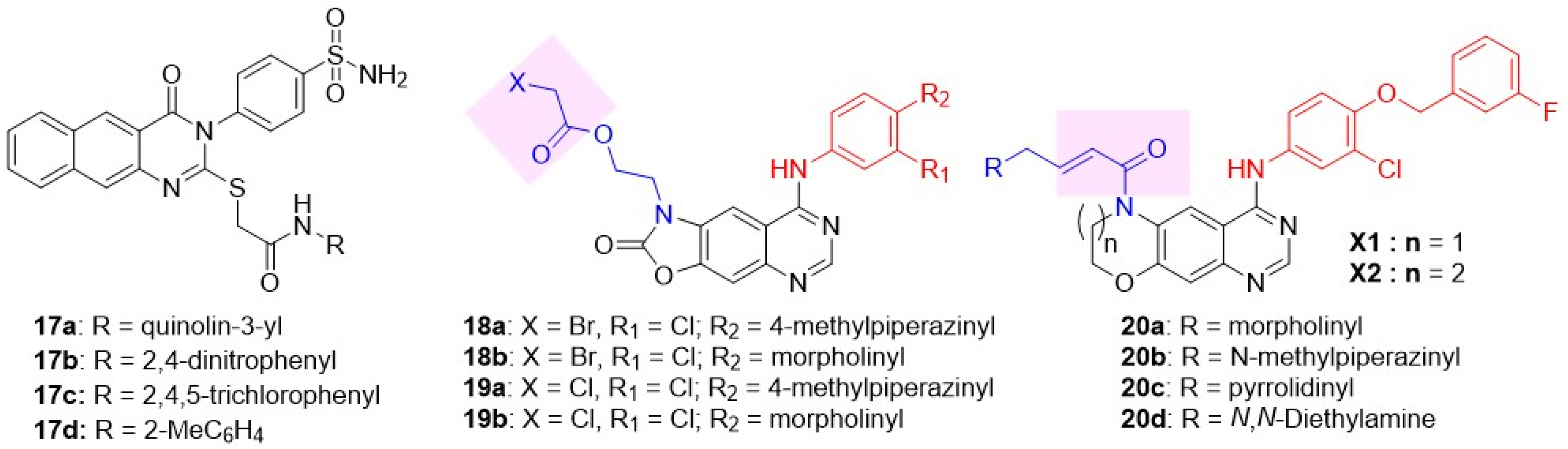
| 17a | 0.11 | 0.39 | A549 | 0.12 | --- | --- |
| 17b | 0.06 | 0.30 | A549 | 0.28 | --- | --- |
| 17c | 0.24 | 0.76 | A549 | 0.29 | --- | --- |
| 17d | 0.012 | 0.021 | A549 | 0.105 | --- | --- |
| 18a | 0.008 | 0.033 | SK-BR-3 | 12.50 | --- | --- |
| 18b | 0.010 | 0.021 | SK-BR-3 | 2.30 | >23 | --- |
| 19a | 0.020 | 0.009 | SK-BR-3 | 25.1 | --- | --- |
| 19b | 0.019 | 0.035 | SK-BR-3 | 0.47 | >210 | significant tumor inhibition with no change in body weight c |
| 20a | 0.007 | 0.012 | BT474 | 0.015 | --- | --- |
| 20b | 0.006 | 0.012 | BT474 | 0.025 | --- | --- |
| 20c | 0.007 | 0.004 | BT474 | 0.060 | --- | --- |
| 20d | 0.008 | 0.004 | BT474 | 0.057 | --- | --- |
| Comp No. | Enzyme Inhibition a | Antiproliferative Activity b | Selectivity Ratio | In Vivo Studies | ||||
|---|---|---|---|---|---|---|---|---|
| EGFR (µM) | HER2 (µM) | Cell Lines | IC50 (µM) | Tumor Reduction (%) | Dose (mg/kg/Days)/No. of Days | Animal Model | ||
| 21 EKB-569 | 0.08 | 1.23 | SK-BR-3 | 0.001 | --- | 90 | 80/20 | A431 xenograft models |
| 22 Pelitinib | 0.059 | 0.092 | SK-BR-3 | 0.0018 | --- | 84 | 40/2 | BT474 xenograft models |
| A-431 | 0.004 | |||||||
| 23 SHR1258 | 0.013 | 0.038 | BT474 | 0.0051 | --- | 109–156 | 20/21 | BT474 xenograft models |
| 24 | 0.59 | 0.91 | SK-BR-3 | 1.93 | --- | --- | --- | --- |
| A-431 | 1.89 | --- | --- | --- | --- | |||
| Neratinib (HKI-272) | 0.092 | 0.059 | BT-474 | 0.002 | --- | 98 | 80 | 3T3/neu xenograft |
| SK-BR-3 | 0.002 | --- | 93 | 40 | BT474 xenograft | |||
| 85 | 60 | SK-OV-3 xenograft | ||||||
| 76 | 40 | A431 xenograft | ||||||
| 28 | 80 | MCF-7 xenograft | ||||||
| 25a | -- | -- | MDA-MB-468 | 3.01 | -- | -- | -- | -- |
| SK-BR-3 | 2.50 | --- | --- | --- | --- | |||
| 25b | -- | -- | MDA-MB-468 | 4.69 | -- | -- | -- | -- |
| SK-BR-3 | 3.27 | --- | --- | --- | --- | |||
| 26 | 0.069 | 0.084 | HCT116 | 3.07 | --- | --- | --- | --- |
| 27 | 0.029 | 0.055 | SK-BR-3 | 0.77 | 22 | 67.6 | 30/21 | SK-BR-3 xenograft models |
| MCF-7 | 1.45 | 12 | ||||||
| 28a | 0.079 | 0.039 | MCF-7 | 0.031 | >85 | --- | --- | --- |
| 28b | 0.071 | 0.031 | MCF-7 | 0.023 | >85 | --- | --- | --- |
| 29 | 0.087 | 0.033 | MCF-7 | 0.034 | --- | --- | --- | --- |
| 30 | 0.15 | 0.06 | MCF-7 | 4.0 | --- | --- | --- | --- |
| MDA-MB-231 | 6.0 | --- | --- | --- | --- | |||
| Comd No. | Enzyme Inhibition | Antiproliferative Activity | Selectivity Ratio | In Vivo Studies | |||
|---|---|---|---|---|---|---|---|
| EGFR (µM) | HER2 (µM) | Cell Lines | IC50 (µM) | Tumor Reduction | Pharmacokinetic Studies | ||
| 31 | 0.015 | 0.009 | BT474 | 0.84 | >35 | --- | --- |
| 32 | 0.008 | 0.012 | BT474 | 0.25 | --- | --- | --- |
| SK-BR-3 | 0.26 | --- | --- | --- | |||
| 33 | 0.005 | 0.007 | BT474 | 0.062 | --- | --- | --- |
| SK-BR-3 | 0.27 | --- | --- | --- | |||
| 34 | 0.016 | 0.153 | --- | --- | --- | --- | Bioavailability: 15% (low), Vd: 0.17 L/Kg (poor) CL: 3.56 mL/min/Kg (poor) and plasma levels (high) b |
| 35 | 0.002 | 0.008 | BT474 SK-BR-3 | 0.063 0.148 | --- | --- | plasma levels: 4.6 ng/mL at 4h after po (negligible) b |
| 36 | 0.008 | 0.009 | BT474 SK-BR-3 | 0.014 0.058 | --- | --- | --- |
| 38 | 0.030 | 0.080 | BT474 | 0.312 | --- | --- | --- |
| 39 | 0.003 | 0.019 | BT474 | 1.13 | --- | --- | --- |
| 40 | 0.009 | 0.036 | BT474 | 1.44 | --- | --- | --- |
| 41 | 0.009 | 0.041 | BT474 | 0.08 | --- | --- | --- |
| 42 | 0.007 | 0.041 | BT474 | 0.08 | --- | --- | --- |
| 43 | 0.19 | 0.062 | BT474 | 0.05 | --- | NR c | Aqueous solubility (>50 μM), oral bioavailability (35%) in rat |
| 44 | 0.003/0.032 a | 0.022 | SK-BR-3 | 0.0007 | --- | --- | Oral bioavailability: >20% d |
| MDA-MB-175 | 0.0016 | --- | |||||
| MDA-MB-45 | 0.005 | --- | |||||
| JIMT-1 | 1.8 | --- | |||||
| MDA-MB-361 | 0.562 | --- | |||||
| 45 | 0.037 | 0.029 | A-431 | 3.25 | --- | --- | --- |
| SKOV-3 | 0.89 | --- | --- | --- | |||
| 46 | 0.203 | 0.088 | MCF-7 | 0.693 | --- | --- | --- |
| 47a | 1.08 | 0.933 | MCF-7 | 0.912 | --- | --- | --- |
| 47b | 0.313 | 0.433 | MDA-MB-231 | 1.96 | --- | --- | --- |
| 47c | 0.432 | 0.274 | MCF-7 | 0.802 | --- | --- | --- |
| MDA-MB-231 | 1.75 | --- | --- | --- | |||
| 48 | 0.173 | 0.125 | MDA-MB-231 | 1.69 | --- | --- | --- |
| 49 | 0.069 | --- | MCF-7 | 14.25 | 2 | --- | --- |
| 50 | 0.037 | --- | MCF-7 | 9.38 | >1 | --- | --- |
| 51 | 0.076 | --- | MCF-7 | 17.04 | 3 | --- | --- |
| Compound No. | Enzyme Inhibition a | Antiproliferative Activity b | Seletivi- -ty Ratio | In Vivo Studies | |||||
|---|---|---|---|---|---|---|---|---|---|
| EGFR (µM) | HER2 (µM) | Cell Lines | IC50 Value (µM) | Tumor Reduction | Dose (mg/kg/Days)/No. of Days | Animal Model | Pharmacokinetic Studies | ||
| TAK-286 | 0.023 | 0.017 | BT474 | 0.017 | --- | 71% | 100 po bid/14 | BT474 xenograft | AUC0–8h (μg·h/mL): 1.923 |
| 89% | 100 po bid/14 | 4−1ST xenograft | Cmax: 4.36 μg/mL, Tmax (h): 0.5, AUC0–24 (μg·h/mL): 19.64, BA (%): 72.2 | ||||||
| 86% | 12.5 po bid | 4–1ST xenograft in rat | Cmax (μg/mL): 4.157, Tmax (h): 4.00, AUC0–24 (μg·h/mL): 55.03, BA (%): 97.7 | ||||||
| 52 | 0.011 | 0.011 | BT474 | 0.056 | --- | 0 | po bid 100 | 4–1ST xenograft model | AUC 0–8 h (µg h/mL): 3.506 |
| −1% | po bid 25 | 4–1ST xenograft | |||||||
| 53 | 0.0026 | 0.0010 | BT474 | 0.002 | --- | −23% | po bid 50/14 | 4−1ST xenograft | AUC 0–8 h (µg h/mL): 0.903, |
| −30% | po bid 100/14 | CAL27 xenograft | |||||||
| 54a | 0.146 | 0.036 | MDA-MB-231 | 12.65 | 6.66 | --- | --- | --- | --- |
| MCF-7 | 17.44 | 4.83 | --- | --- | --- | --- | |||
| 54b | 0.033 | 0.027 | MDA-MB-231 | 9.89 | 3.45 | --- | --- | --- | --- |
| MCF-7 | 13.22 | 2.58 | --- | --- | --- | --- | |||
| 55a | 0.032 | 0.043 | BT474 | 0.03 | --- | --- | --- | --- | DNAUC: 61 ng·h/mL/mg/kg |
| 55b | 0.028 | 0.068 | BT474 | 0.03 | --- | --- | --- | --- | DNAUC: 93 ng·h/mL/mg/kg) |
| 56a | 0.080 | 0.050 | BT474 | 0.02 | --- | --- | --- | --- | DNAUC: 98 ng·h/mL/mg/kg) |
| 56b | 0.030 | 0.030 | BT474 | 0.03 | --- | --- | --- | --- | --- |
| 57 | 0.001 | 0.071 | BT474 | 0.42 | --- | --- | --- | --- | --- |
| 58 | 0.012 | 0.006 | BT474 | 0.42 | --- | --- | --- | --- | --- |
| 59 | 0.2 | 0.5 | T-47D | --- | --- | --- | --- | --- | --- |
| MDA-MB-468 | --- | --- | --- | --- | --- | --- | |||
| 60a | 0.112 | 37.1 | MDA-MB-361 | 3.83 | --- | --- | --- | --- | --- |
| 60b | 0.091 | 1.2 | MDA-MB-361 | 3.50 | --- | --- | --- | --- | --- |
| SKBr3 | 0.17 | --- | --- | --- | --- | --- | |||
| 61 | 0.278/0.352 c | 0.415 | MCF-7 | 7.59 | --- | --- | --- | --- | --- |
| 62a | --- | --- | MDA-MB-468 | 6.89 | --- | --- | --- | --- | --- |
| 62b | --- | --- | MDA-MB-468 | >50 | --- | --- | --- | --- | --- |
| 63 | --- | --- | MCF-7 | 257 | --- | 67.13% | (10 mg/kg) for 8 days | EAC solid tumor model | --- |
| A549 | 0.5 | ||||||||
| 64 | 0.951 | --- | MCF-7 | 46 | --- | 49.05% | (10 mg/kg) for 8 days | EAC solid tumor model | --- |
| 65 | 0.752 | --- | MCF-7 | 68 | --- | 70.77% | (10 mg/kg) for 8 days | EAC solid tumor model | --- |
| A549 | 43 | ||||||||
| 66 | 0.052 | 0.055 | MCF-7 | 1.62 | 23 | --- | --- | --- | --- |
| 67a | 0.21 | 0.18 | MCF-7 | 2.76 | --- | --- | --- | --- | --- |
| 67b | 0.16 | 0.17 | MCF-7 | 1.36 | --- | --- | --- | --- | --- |
| 68a | 0.029 | 0.038 | BT474 | 0.63 | --- | --- | --- | --- | --- |
| 68b | 0.024 | 0.036 | BT474 | 0.018 | --- | --- | --- | --- | --- |
| Compound No. | Enzyme Inhibition a | Antiproliferative Activity b | Selectivity Ratio | In Vivo Studies | ||
|---|---|---|---|---|---|---|
| EGFR (µM) | HER2 (µM) | Cell Lines | IC50 Value (µM) | Dose (mg/kg/Days)/No. of Days | ||
| 69 | 0.186 | 0.254 | MCF-7 | 15.69 | --- | --- |
| MDA-MB-231 | 14.16 | --- | --- | |||
| HS 578T | 21.46 | --- | --- | |||
| BT-549 | −4.84 | --- | --- | |||
| T-47D | 27.35 | --- | --- | |||
| MDA-MB-468 | −1.69 | --- | --- | |||
| 70 | 0.226 | 0.866 | MCF-7 | 0.006 | 8.45 | --- |
| 71 | 0.09 | 0.08 | MCF-7 | 2.84 | 12.06 | --- |
| SK-BR-3 | 6.97 | 4.91 | --- | |||
| BT474 | 2.77 | 12.37 | --- | |||
| MDA-MB-453 | 11.47 | 2.99 | --- | |||
| 72 | 0.021 | 0.019 | SK-BR-3 | 2.26 | --- | --- |
| BT474 | 2.17 | --- | --- | |||
| 73 | 0.017 | 0.014 | BT474 | 1.537 | --- | 5/60 ip thrice per week c |
| BT474/L | 1.682 | |||||
| SK-BR-3 | 1.859 | |||||
| SK-BR-3/L | 1.935 | |||||
| MDA-MB-453 | 3.014 | |||||
| MDA-MB-453/L | 3.196 | |||||
| MCF-7 | 12.354 | |||||
| 74 | 0.081 | 0.059 | SK-BR-3 | 1.414 | 37.1 | --- |
| 75 | 0.074 | 0.033 | SK-BR-3 | 3.801 | 15.94 | --- |
| Compound No. | Enzyme Inhibition a | Antiproliferative Activity b | Selectivity Ratio | In Vivo Studies | |||||
|---|---|---|---|---|---|---|---|---|---|
| EGFR (µM) | HER2 (µM) | Cell Lines | IC50 (µM) | Tumor Reduction (%) | Dose (mg/kg/Days)/No. of Days | Animal Model | Pharmacokinetic Studies | ||
| 76 | 0.04 | 0.04 | BT474 | 0.86 | --- | --- | --- | --- | --- |
| 77 | 0.032 | 0.022 | BT474 | 0.31 | --- | 129 | 180 | KPL4 tumor xenograft | AUC: 13,300 nM.h in 0–4 h, Cmax: 4100 nM in 4 h |
| 78 BMS-599626 | 0.061 | 0.055 | BT-474 | 0.31 | >32 | ND c | 60/14 | Sal2 tumor allograft model | --- |
| KPL-4 | 0.38 | >26 | |||||||
| HCC202 | 0.94 | >10 | |||||||
| MDA-MB-175 | 0.84 | >12 | |||||||
| Sal2 | 0.24 | >41 | |||||||
| 79 | 0.027 | 0.033 | N87 | 0.11 | --- | 90 | 90 | N87 human gastric carcinoma xenograft | AUC: 48,913 nM.h in 0–8 h po CL: 39 mL/min/kg iv Vss: 9.5 L/kg iv |
| 80 | 0.023 | 0.035 | N87 | 0.035 | --- | 133 | 180 OD | N87 xenografts | AUC0–4 h: 21 μM.h, Cmax: 6.3 μM in 4 h |
| 85 | 240 MTD | GEO colon tumor xenograft | |||||||
| 81 | 0.01 | 0.006 | N87 | 0.12 | --- | --- | 15 (120) a | GEO xenograft | --- |
| --- | <15 (60) | N87 xenografts | --- | ||||||
| Compound No. | Enzyme Inhibition a | Antiproliferative Activity b | Selectivity Ratio | In Vivo Studies | |||
|---|---|---|---|---|---|---|---|
| EGFR (µM) | HER2 (µM) | Cell Lines | IC50 (µM) | Tumor Reduction | Dose (mg/kg/Days) | ||
| 82 | 0.24 | 1.07 | MCF-7 | 0.30 | |||
| 83 | 4.34 | 2.28 | MCF-7 | 8.05 | --- | ||
| 84a | 0.009 | 0.013 | MCF-7 | 7.21 | --- | 52.46% | 10 c |
| 84b | 0.014 | 0.027 | MCF-7 | 8.02 | --- | --- | --- |
| 85a | 0.024 | 0.047 | MCF-7 | 4.08 | --- | --- | --- |
| 86a | 0.005 | 0.022 | MCF-7 | 3.37 | --- | --- | --- |
| 87 | 0.28 | 1.26 | MCF-7 | 1.91 | --- | --- | --- |
| 88 | 0.26 | 0.51 | MCF-7 | 0.96 | 100 | ||
| 89a | 0.07 | 0.03 | MCF-7 | 26 | --- | --- | --- |
| 89b | 0.06 | 0.03 | MCF-7 | 21 | --- | --- | --- |
| 90 | 0.126 | 0.061 | MCF-7 | 0.005 | --- | --- | --- |
| Compound No. | Enzyme Inhibition a | Antiproliferative Activity b | Selectivity Ratio | In Vivo Studies | ||||
|---|---|---|---|---|---|---|---|---|
| EGFR (µM) | HER2 (µM) | Cell Lines | IC50 (µM) | Tumor Reduction | Dose (mg/kg/Days)/No. of Days | Animal Model | ||
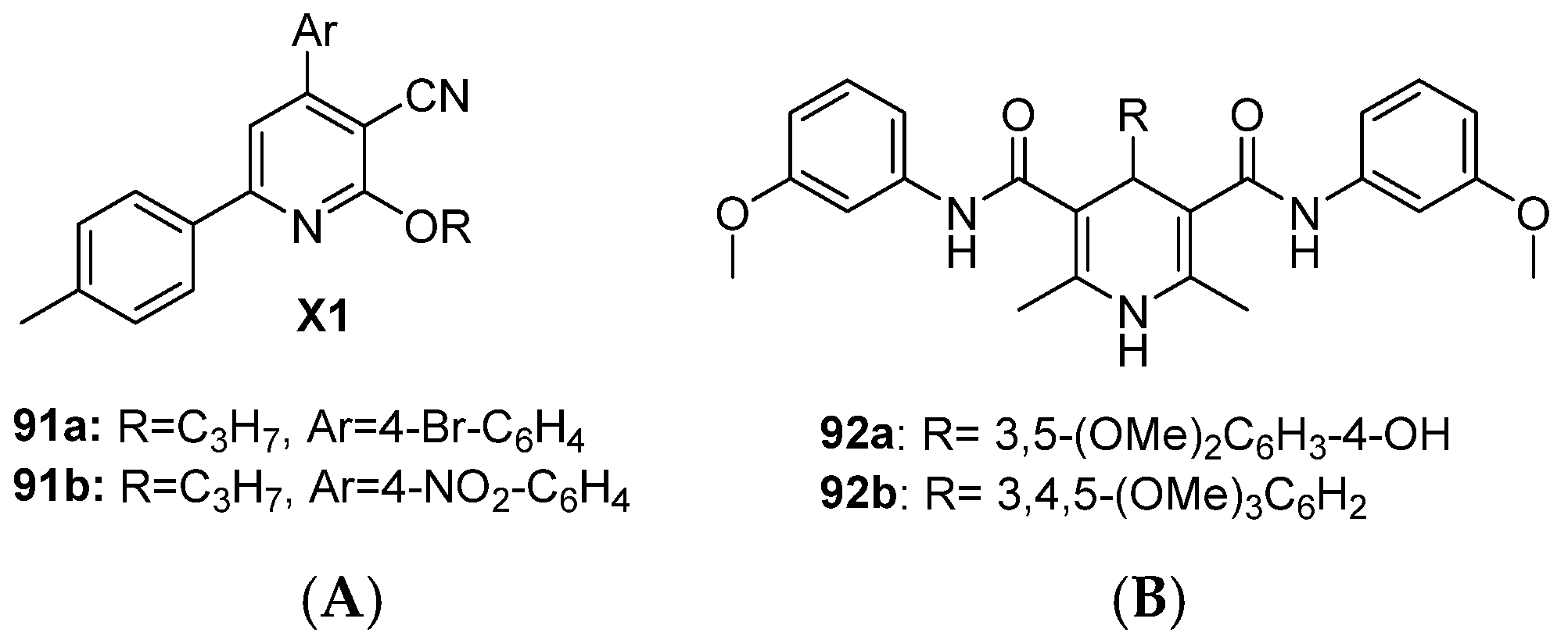
| 91a | 0.25 | 0.15 | MCF-7 | 6.16 | 25 | 65.91% | 20 days | MCF-7 cells of Swiss albino mice |
| 91b | 0.13 | 0.09 | MCF-7 | 3.84 | 12 | 71.79% | ||
| 92a | 0.17 | 0.08 | MCF-7 | 14.44 | --- | --- | --- | --- |
| 92b | 0.18 | 0.49 | MCF-7 | 14.38 | --- | --- | --- | --- |
| Compound No. | Enzyme Inhibition a | Antiproliferative Activity b | Selectivity Ratio | In Vivo Studies | ||
|---|---|---|---|---|---|---|
| EGFR (µM) | HER2 (µM) | Cell Lines | IC50 (µM) | Tumor Reduction | ||
| 93 | 0.153 | 0.108 | MCF-7 | 1.83 | 29.61 | --- |
| 94 | 0.087 | 0.072 | MCF-7 | 1.81 | 9.6 | At a dose of 10 mg/kg, 34.6% at 10 mg/kg c |
| 95 | 0.09 | 0.42 | MCF-7 | 0.06 | --- | --- |
| Compound No. | Enzyme Inhibition a | Antiproliferative Activity b | Selectivity Ratio | In Vivo Studies | |||
|---|---|---|---|---|---|---|---|
| EGFR (µM) | HER2 (µM) | Cell Lines | IC50 (µM) | Tumor Reduction | Animal Model | ||
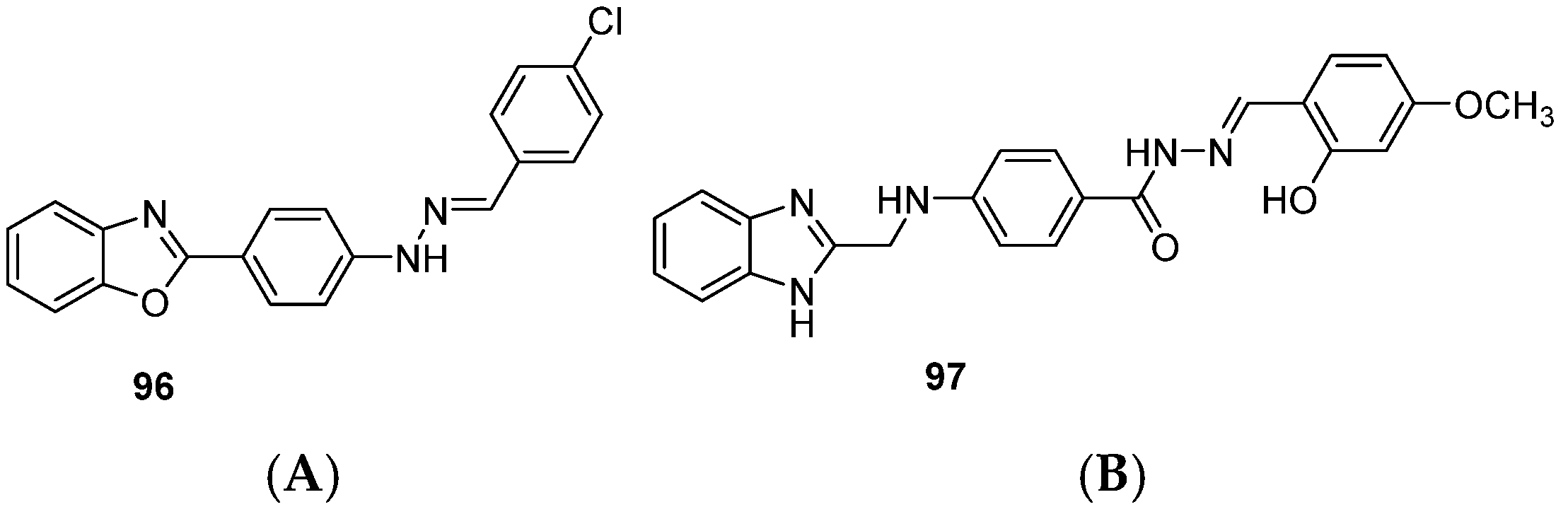
| 96 | 0.2 | 0.24 | MCF-7 | 0.067 | --- | --- | --- |
| 97 | 0.091 | 0.029 | MCF-7 | 13.27 | --- | --- | --- |
| Compound No. | Enzyme Inhibition a | Antiproliferative Activity b | Selectivity Ratio | In Vivo Studies | |||
|---|---|---|---|---|---|---|---|
| EGFR (µM) | HER2 (µM) | Cell Lines | IC50 (µM) | Tumor Reduction | Animal Model | ||
| 98 | 0.2 | 0.24 | MCF-7 | 0.067 | - | - | - |
| 99 | 0.091 | 0.029 | MCF-7 | 13.27 | - | - | - |
Disclaimer/Publisher’s Note: The statements, opinions and data contained in all publications are solely those of the individual author(s) and contributor(s) and not of MDPI and/or the editor(s). MDPI and/or the editor(s) disclaim responsibility for any injury to people or property resulting from any ideas, methods, instructions or products referred to in the content. |
© 2026 by the authors. Licensee MDPI, Basel, Switzerland. This article is an open access article distributed under the terms and conditions of the Creative Commons Attribution (CC BY) license.
Share and Cite
Jain, V.; Bage, S.; Dhiman, N.; Singh, S.; Yadav, A.; Brünnert, D.; Sawant, D.M.; Goyal, P. Relevance of EGFR-HER2 Dual Inhibition in Breast Cancer. Targets 2026, 4, 10. https://doi.org/10.3390/targets4010010
Jain V, Bage S, Dhiman N, Singh S, Yadav A, Brünnert D, Sawant DM, Goyal P. Relevance of EGFR-HER2 Dual Inhibition in Breast Cancer. Targets. 2026; 4(1):10. https://doi.org/10.3390/targets4010010
Chicago/Turabian StyleJain, Vidhi, Saloni Bage, Nitisha Dhiman, Shaifali Singh, Arpana Yadav, Daniela Brünnert, Devesh M. Sawant, and Pankaj Goyal. 2026. "Relevance of EGFR-HER2 Dual Inhibition in Breast Cancer" Targets 4, no. 1: 10. https://doi.org/10.3390/targets4010010
APA StyleJain, V., Bage, S., Dhiman, N., Singh, S., Yadav, A., Brünnert, D., Sawant, D. M., & Goyal, P. (2026). Relevance of EGFR-HER2 Dual Inhibition in Breast Cancer. Targets, 4(1), 10. https://doi.org/10.3390/targets4010010