
Review

When Multiple Sclerosis Overlaps with Neuromuscular Disorders: Clinical Associations, Shared Mechanisms, and Diagnostic Challenges


by
Christian Messina
Azienda Sanitaria Provinciale Catania, Via Santa Maria La Grande, 95100 Catania, Italy
Sclerosis 2026, 4(1), 6; https://doi.org/10.3390/sclerosis4010006
Submission received: 13 February 2026 / Revised: 1 March 2026 / Accepted: 6 March 2026 / Published: 9 March 2026
(This article belongs to the Special Issue Advances in Multiple Sclerosis: From Pathogenesis to Therapeutics)

Abstract

Multiple sclerosis (MS) is a chronic immune-mediated demyelinating disorder of the central nervous system, traditionally considered distinct from neuromuscular diseases, which primarily affect the peripheral nervous system, neuromuscular junction, or skeletal muscle. Growing clinical and experimental evidence, however, indicates that certain neuromuscular disorders may coexist with MS or shared overlapping pathophysiological, immunological, and metabolic mechanisms. This narrative review summarizes reported associations between MS and neuromuscular diseases, with particular focus on well-characterized overlaps such as Leber hereditary optic neuropathy (LHON)-associated MS (Harding’s disease), combined central and peripheral demyelination (CCPD), and myasthenia gravis (MG) co-occurring with MS. Additional associations with Charcot–Marie–Tooth disease, mitochondrial disorders with MS-like phenotypes, inherited and autoimmune myopathies, and rare syndromes such as Guillain–Barré syndrome are also discussed. This review highlights proposed mechanisms potentially linking these conditions, including immune dysregulation, T- and B-cell-mediated autoimmunity, antibody-driven demyelination, mitochondrial dysfunction, impaired neuromuscular transmission, and molecular mimicry. Limitations of the current literature are acknowledged, particularly the predominance of case reports for rare associations and the frequent lack of systematic screening for coexisting disorders. By integrating evidence from case series, cohort studies, and mechanistic research, this review provides a comprehensive overview of the biological and clinical intersections between MS and neuromuscular diseases. Enhanced understanding of these overlaps may improve diagnostic accuracy, guide individualized management strategies, and inform future research on shared neuroimmunological and neurodegenerative pathways.

1. Introduction

Multiple sclerosis (MS) is a chronic autoimmune disorder characterized by demyelination within the central nervous system (CNS) [1,2]. The primary neuropathological hallmarks of MS include inflammation, demyelination, gliosis, and neuronal loss [1,2,3,4]. Globally, MS affects approximately 2.3 million individuals [1,2]. The disease is typically diagnosed between 20 and 50 years of age, with a higher incidence observed in females compared to males [1,2]. Individuals of Northern European ancestry and those classified as White exhibit an increased risk of developing MS, with prevalence declining progressively with increasing distance from the equator [1,2]. The pathogenesis of MS involves the destruction of myelinated axons in the CNS mediated by autoreactive immunogenic T cells, which secrete proinflammatory cytokines reminiscent of a T helper 1 (Th1) cell-driven response [1,3,4]. Specifically, autoreactive CD4+ T cells, particularly the Th1 subset, are activated in the periphery following viral infections and serve as key initiators of myelin damage in MS [1,2,3,4]. Among the viruses implicated, Epstein–Barr virus (EBV) has been most consistently associated with MS pathogenesis, potentially through mechanisms including molecular mimicry, latent infection of B cells, and the expansion of autoreactive immune clones [1,2,3,4]. In addition, John Cunningham virus (JCV), although primarily relevant in the context of progressive multifocal leukoencephalopathy (PML) risk during immunomodulatory therapy, underscores the complex interplay between viral exposure, immune surveillance, and CNS demyelination [1,2,3,4]. Clinically, MS manifestations are highly variable and depend on the location of lesions throughout the CNS [2,5]. Sensory symptoms are among the most frequent; however, patients may also present with pyramidal, cerebellar, brainstem, sphincter, visual, and cognitive disturbances, which can occur simultaneously [1,2]. From a phenotypic perspective, MS can be categorized into distinct clinical courses. The most common form at onset is relapsing–remitting MS (RRMS), which is characterized by discrete episodes of neurological dysfunction lasting from days to weeks, occasionally hours, often followed by partial or complete recovery [1,2]. Between these relapses, neurological function generally stabilizes, although the degree of recovery may gradually decline [1,2]. Eventually, many patients with RRMS transition into a secondary progressive phase (SPMS), marked by a gradual and continuous decline in neurological function that is largely independent of acute relapses [1,2]. This progressive phase is associated with more severe and permanent disability compared to the earlier relapsing–remitting stage [1,2]. Primary progressive MS (PPMS) represents approximately 15% of cases and is characterized by a steady neurological decline from disease onset, with fewer or no distinct relapses [1,2]. A rare form, progressive-relapsing MS involves a progressive disease course with superimposed relapses and accounts for about 5% of cases [1,2]. Diagnosis is established based on clinical presentation, radiological findings, and supportive investigations such as evoked potentials, optical coherence tomography (OCT), and cerebrospinal fluid (CSF) analysis, in accordance with the updated 2024 McDonald criteria [5,6]. Therapeutic management of MS can be broadly divided into three approaches: acute relapse treatment, typically involving high-dose corticosteroids, intravenous immunoglobulins, or plasma exchange; disease-modifying therapies (DMTs), which include first- and second-line agents aimed at altering the disease course; and symptomatic treatments targeting specific clinical manifestations [1,2,5]. Although MS primarily affects the CNS, emerging evidence suggests involvement of the peripheral nervous system (PNS) in certain cases [7]. This concept is supported by a spectrum model in which prototypical MS is characterized by CNS demyelination; chronic inflammatory demyelinating polyneuropathy (CIDP) represents demyelination confined to the PNS; and combined central and peripheral demyelination (CCPD) occupies an intermediate position involving both systems [7]. Additionally, several associations between MS and neuromuscular disorders have been reported, including the coexistence of Leber’s hereditary optic neuropathy (LHON) with MS-like syndromes, known as Harding’s disease, and the concurrence of myasthenia gravis (MG) with MS [8,9]. Other, less common, or more controversial overlaps between MS and neuromuscular diseases are described in the literature. Although previous studies have explored overlaps between MS and individual neuromuscular disorders, few reviews provide a comprehensive synthesis integrating conditions such as LHON, MG, CIDP, CCPD, Charcot–Marie–Tooth disease (CMT), and mitochondrial disorders into a single framework. The objective of this review is to comprehensively summarize the various clinical, epidemiological, diagnostic, and pathophysiological links between MS and neuromuscular disorders, highlighting potential mechanisms underlying these associations and emphasizing areas of overlap that have received limited attention in the prior literature.

2. Materials and Methods

A narrative literature review was conducted using the PubMed and Scopus databases to identify relevant studies published between January 1992 and January 2026. The search strategy combined keywords related to multiple sclerosis and neuromuscular disorders, including but not limited to “multiple sclerosis”, “neuromuscular disorders”, “myasthenia gravis”, “chronic inflammatory demyelinating polyneuropathy”, “combined central and peripheral demyelination”, “Charcot–Marie–Tooth disease”, “mitochondrial disorders”, “Leber hereditary optic neuropathy”, and “LHON”. Articles considered eligible included systematic reviews, narrative reviews, meta-analyses, original research articles, case series, and case reports. Only studies published in English were included. Reference lists of selected articles were also manually screened to identify additional relevant publications. Studies were selected based on their relevance to the clinical, epidemiological, diagnostic, and pathophysiological overlap between multiple sclerosis and neuromuscular disorders.

3. MS and Leber Hereditary Optic Neuropathy (LHON)

Leber hereditary optic neuropathy (LHON) represents the first human disorder in which pathogenic point mutations of mitochondrial DNA were identified and remains the most prevalent inherited mitochondrial disease [10,11,12]. Clinically, LHON is characterized by subacute, progressive visual loss, typically starting in one eye and subsequently involving the contralateral eye over a period of weeks to months, although longer intervals have been reported [10,11,12]. The classical presentation consists of painless, sequential blurring of central vision, most frequently occurring during adolescence or early adulthood [10,11,13,14]. Owing to its mitochondrial genetic basis, LHON follows a maternal pattern of inheritance. A marked male predominance has been consistently observed, with reported male-to-female ratios reaching up to 5:1, although the biological mechanisms underlying this sex bias remain incompletely understood [10,11,12,13]. Approximately 90% of LHON cases are attributable to three primary point mutations, namely m.11778G>A in ND4, m.3460G>A in ND1, and m.14484T>C in ND6 [10]. These mutations affect subunits of complex I of the mitochondrial respiratory chain, leading to impaired oxidative phosphorylation and reduced adenosine triphosphate (ATP) production [10,12,13]. The degeneration of retinal ganglion cells (RGCs) in LHON is thought to result from the convergence of multiple pathogenic mechanisms [10,12,13]. Mitochondrial respiratory dysfunction compromises glutamate handling, thereby enhancing excitotoxicity and oxidative stress [10,12,13]. In parallel, diminished ATP availability may render RGCs unable to meet their high metabolic demands, predisposing them to energy failure [10,12,13]. Furthermore, alterations in mitochondrial membrane potential may promote increased membrane permeability and trigger mitochondria-mediated apoptotic pathways [10,12,13]. These processes act in concert to drive selective vulnerability and loss of RGCs [10,12,13]. Diagnosis is based on a comprehensive clinical evaluation, including detailed medical and family history, neurological and ophthalmological examination, slit-lamp assessment, fluorescein angiography (FA), and optical coherence tomography (OCT) [11,12]. Genetic testing for pathogenic mitochondrial DNA variants is central to diagnostic confirmation [11,13]. Additional laboratory investigations and magnetic resonance imaging (MRI) of the brain and orbits are commonly performed to exclude alternative causes of optic neuropathy and secondary visual impairment [11,12,13]. At present, no curative therapy is available for LHON [15]. Management remains largely supportive and relies on a multidisciplinary approach, including ophthalmological, neurological, and genetic counseling, as well as psychosocial support for patients and their families [12,13,15].
Although visual impairment represents the defining clinical feature of LHON, a subset of affected individuals may also develop a broad spectrum of extraocular manifestations [14]. These include non-neurological features, such as cardiac conduction abnormalities and myopathy, as well as neurological involvement encompassing tremors, cognitive impairment, movement disorders, peripheral neuropathy, and demyelinating syndromes resembling MS [14]. The association between LHON and an MS-like phenotype is commonly referred to as Harding’s disease, following the seminal description by Harding and colleagues [16]. In contrast to classical LHON, which shows a strong male predominance, Harding’s disease predominantly affects women, with approximately 70.4% of cases occurring in females, corresponding to a female-to-male ratio of 2.38:1 [14,17]. Moreover, the mean age at onset of visual symptoms in Harding’s disease is around 30.5 years, indicating a later presentation compared with typical LHON [14,17]. Notably, the pattern and severity of visual loss, as well as the limited potential for recovery, closely resemble those observed in isolated LHON [14,17]. However, Harding’s disease displays some distinctive features, including a higher frequency of unilateral optic involvement, a greater number of recurrent visual episodes, and a longer interval between involvement of the two eyes compared with classical LHON [14,18]. Patients with LHON-MS have a more aggressive course than patients with LHON or patients with MS [18]. Several pathophysiological hypotheses have been proposed to explain the coexistence of LHON and MS-like demyelinating disease. One possibility is that mitochondrial DNA (mtDNA) mutations, while primarily responsible for optic neuropathy, may also predispose to broader neurological involvement, probably by dysregulating the metabolic interplay between mitochondrial oxidative phosphorylation and glycolysis [14,19,20]. However, this explanation alone does not readily account for the presence of a relapsing–remitting clinical course or for paraclinical features typical of inflammatory demyelination [14]. An alternative hypothesis suggests that immune responses directed against mitochondrial components may secondarily trigger CNS demyelination [14,20]. In this context, Harding and colleagues proposed that the activation of specific T-cell subsets or the production of circulating autoantibodies could initiate an autoimmune cascade, thereby accounting for both the clinical and paraclinical features of demyelination observed in these patients [16]. Nevertheless, this hypothesis is partially challenged by the relatively low frequency of coexisting autoimmune diseases among individuals carrying mtDNA mutations [14]. A third explanation considers the possibility of a coincidental association between LHON and MS; however, this has been largely dismissed based on epidemiological considerations. To date, fewer than 90 cases of co-occurring LHON and MS have been described in the literature [14]. Considering the rarity of LHON in the general population, this number appears higher than would be anticipated by simple chance alone, supporting the hypothesis of a potential pathogenic link in a subset of patients [14]. The mechanisms underlying inflammatory demyelination in the context of LHON remain incompletely understood but reflect a complex interplay between mitochondrial dysfunction, immune-mediated processes, and molecular mimicry [21]. Several non-mutually exclusive models have been proposed to reconcile these observations with the distinctive phenotype of LHON–MS. One possibility is that mtDNA mutations modify the clinical expression of MS, giving rise to an atypical form of optic neuritis characterized by painless onset, marked severity, and poor visual recovery [14,20,22]. Alternatively, genetic and environmental factors predisposing to MS—particularly prevalent in women—may act as triggers for acute visual loss in asymptomatic carriers of LHON-associated mtDNA mutations [14,20,22]. A combined model is also plausible, whereby mitochondrial dysfunction enhances the vulnerability of the anterior visual pathway, and concomitant inflammatory demyelination preferentially targets this already susceptible neural substrate in individuals predisposed to MS [14,20,22]. From a genetic standpoint, the m.11778G>A mutation appears to be the most frequently observed variant in LHON–MS, accounting for approximately 69.3% of reported cases, followed by m.14484T>C (12.5%) and m.3460G>A (10.2%) [14,19,22]. While mitochondrial dysfunction represents a shared element between MS and LHON, the nature of this impairment differs substantially between the two conditions. LHON is caused by primary mitochondrial DNA mutations—most commonly affecting complex I subunits of the respiratory chain (e.g., ND1, ND4, ND6)—leading to intrinsic bioenergetic failure and selective vulnerability of retinal ganglion cells. In contrast, mitochondrial dysfunction in MS is generally considered secondary to inflammatory injury, oxidative stress, and chronic demyelination, which impair axonal energy metabolism and mitochondrial transport. Thus, whereas LHON reflects a genetically determined primary mitochondrial cytopathy, MS involves acquired mitochondrial impairment within an immune-mediated neuroinflammatory context. Recognizing this distinction refines the interpretation of their overlap and underscores that shared mitochondrial involvement does not necessarily imply identical pathogenic mechanisms. Harding’s disease likely represents the coexistence of primary mitochondrial genetic susceptibility and superimposed immune-mediated demyelination, rather than a uniform pathogenic mechanism. Neuroimaging findings in LHON–MS show partial overlap with those typically observed in MS, with T2-hyperintense white matter lesions being common to both conditions [14,17,18]. However, lesions in LHON–MS tend to exhibit lower signal intensity on T2-weighted images and reduced conspicuity on T1-weighted sequences [14,17,22]. Furthermore, their spatial distribution may differ from classical MS, with a tendency for periventricular lesions to extend along white matter tracts in a pattern that is not entirely typical of conventional MS [14,18]. Therapeutic approaches in LHON–MS are heterogeneous and largely empirical. High-dose corticosteroids and mitoxantrone have shown partial efficacy in selected cases but are limited by safety concerns and long-term tolerability [14]. Plasmapheresis and cyclophosphamide have yielded inconsistent clinical benefits [14]. Treatment with idebenone has produced variable outcomes, with visual stabilization observed in some patients but no consistent prevention of visual deterioration [14]. Immunomodulatory therapies commonly used in MS may contribute to overall neurological stability; however, they do not appear to reliably halt the progression of visual impairment in LHON–MS [14]. Key features of LHON, MS and Harding’s Disease are reported in Table 1.

4. MS and Myasthenia Gravis (MG)

Myasthenia gravis (MG) is an autoimmune disorder of the neuromuscular junction caused by pathogenic antibodies directed against the acetylcholine receptor (AChR), muscle-specific kinase (MuSK), or other proteins associated with the postsynaptic membrane [23,24]. It represents the most frequent autoimmune disease affecting neuromuscular transmission [23,24]. Independent of the specific autoantibody profile, the immune-mediated damage leads to a functional reduction in available postsynaptic AChRs, thereby decreasing the safety margin of neuromuscular transmission [23,24,25]. As a consequence, neuromuscular junctions become particularly susceptible to failure during sustained muscle activity or repetitive stimulation, when acetylcholine release may be insufficient to reliably trigger muscle fiber depolarization [23,24,25]. Although MG is generally a treatable condition, it can be associated with substantial morbidity and, in severe cases, may become life-threatening. The hallmark clinical features include fatigability and fluctuating weakness of voluntary (striated) muscles [23,26]. While any skeletal muscle group may be involved, ocular, facial, and bulbar muscles are most frequently affected [25,26]. The fluctuating nature of weakness reflects context-dependent variability, with muscle strength often appearing near normal at rest or after periods of recovery but deteriorating significantly following repeated or prolonged use [25,26]. From a clinical standpoint, patients are typically categorized as having ocular or generalized MG; the generalized form can further be stratified according to disease severity (mild, moderate, or severe) and by predominant involvement of bulbar or limb musculature [25,26]. Myasthenic weakness commonly exhibits a diurnal pattern, with milder symptoms in the morning and progressive worsening throughout the day, particularly after sustained activity of the affected muscle groups [24,25,26]. In approximately two-thirds of patients, disease onset is characterized by ocular involvement, including ptosis and/or extraocular muscle weakness [24,25,26]. When respiratory muscles become compromised, leading to ventilatory insufficiency, the condition is termed myasthenic crisis, which constitutes a neurological emergency requiring prompt recognition and intervention [26]. Diagnosis relies on an integrated assessment incorporating clinical evaluation, detailed medical history, serological testing for disease-specific autoantibodies, electrophysiological studies such as repetitive nerve stimulation and single-fiber electromyography, and, when appropriate, additional supportive investigations [26]. Therapeutic management is tailored to disease severity [27]. In milder cases, symptomatic treatment with acetylcholinesterase inhibitors, such as pyridostigmine, represents first-line therapy and may be combined with corticosteroids [27]. In patients with inadequate response or more severe disease, escalation to conventional immunosuppressive agents and targeted biological therapies is commonly required to achieve adequate disease control [27]. In the setting of rapid clinical deterioration or the onset of myasthenic crisis, prompt initiation of rescue therapies such as intravenous immunoglobulins or plasma exchange is recommended [26,27].
Over recent decades, growing evidence has indicated that MG frequently coexists with other autoimmune conditions rather than occurring as an isolated disorder [28,29,30,31]. A substantial proportion of patients, estimated to be as high as approximately 13%, are diagnosed with at least one additional autoimmune disease [28,29]. Autoimmune thyroid disorders represent the most common comorbidity; however, a broad spectrum of systemic autoimmune conditions has been reported in association with MG, including inflammatory bowel disease, systemic lupus erythematosus, rheumatoid arthritis, autoimmune hemolytic anemia, autoimmune hepatitis, psoriasis, idiopathic thrombocytopenic purpura, and systemic sclerosis [28,29]. Although less frequent, neurological autoimmune diseases have also been described in patients with MG [28,29]. These include neuromyelitis optica spectrum disorder (NMOSD), MS, autoimmune encephalitis, and inflammatory myopathies [28,29]. Despite their relatively low prevalence, numerous case reports and cohort studies have documented these overlaps, collectively supporting the concept that MG may reflect a manifestation of a broader immune dysregulation rather than a strictly organ-specific autoimmune disorder [28,29]. Although polyautoimmunity is a recognized phenomenon across autoimmune disorders, the coexistence of MS and MG remains uncommon [9]. Nonetheless, more than 30 cases of co-occurring MS and MG have been reported in the literature to date, suggesting that this association may not be merely coincidental, and the presence of shared susceptibility factors [9,32]. Available evidence supports the notion that overlapping immunogenetic backgrounds may predispose individuals to both conditions, whereas distinct environmental triggers and additional, yet unidentified, genetic modifiers may ultimately determine the emergence of two separate clinical phenotypes [9]. The temporal relationship between MS and MG is highly variable, with MG potentially preceding or following the diagnosis of MS by intervals ranging from one to 28 years [9,33]. Most reported cases involve female patients and are characterized by relatively mild clinical courses of both diseases, although severe presentations, including primary progressive MS and myasthenic crisis, have occasionally been described [9,33]. Notably, a small number of case reports have documented the onset of MG following disease-modifying therapy for MS, including interferon-β, glatiramer acetate, and alemtuzumab [9,33]. Whether these immunomodulatory agents act as disease triggers in genetically predisposed individuals or directly contribute to the development of MG remains unclear [9]. Distinct but partially converging immunopathogenic mechanisms have been implicated in MS and MG, particularly those related to the breakdown of self-tolerance [9]. One prominent hypothesis involves quantitative or functional impairments of regulatory T cells (Tregs), which normally restrain autoreactive effector CD4+ T cells and limit autoimmune responses [33]. Reduced suppressive capacity of Tregs has been reported in both MS and MG, supporting the concept of a shared defect in immune regulation [33,34]. On this basis, therapeutic strategies aimed at enhancing Treg number, function, migration, or tolerogenic signaling—together with approaches promoting Treg-dependent control of autoreactive B cells, particularly relevant in MG—have been proposed, although these remain largely investigational and require further validation in clinical trials [33,34]. Beyond T-cell-mediated mechanisms, genetic variability affecting antigen-specific T-cell receptor (TCR) signaling may also contribute to disease susceptibility [35]. In particular, polymorphisms within the TCR alpha-chain locus have been associated with an increased risk of both MS and MG, highlighting the potential role of adaptive immune recognition in shaping autoimmunity across different target tissues [35]. Increasing attention has also been directed toward the contribution of humoral immune mechanisms in the pathogenesis of both disorders [9,36]. The clinical efficacy of B-cell-depleting therapies, such as rituximab (an anti-CD20 monoclonal antibody), in MS supports a pathogenic role for B cells and antibody-mediated processes [36]. Consistently, regulatory molecules involved in B-cell receptor signaling appear to be dysregulated in both conditions [36]. CD72, a B-cell regulatory protein capable of exerting both activating and inhibitory effects on B-cell receptor-mediated signaling, has been implicated in autoimmune susceptibility [36]. Reduced expression of CD72 has been reported in patients with MS compared with healthy controls, and experimental data suggest that CD72 functions as an inhibitory co-receptor in MG [36]. These observations support the involvement of aberrant B-cell activation and humoral immune responses in the shared immunopathological landscape of MS and MG [9,36]. Furthermore, clinical observations suggest that thymectomy performed for the treatment of MG may be associated with an increased incidence of CNS demyelinating disorders, including MS [37]. Experimental evidence from animal models further supports the role of thymic function in maintaining immune tolerance [37]. In euthymic mice orally administered myelin basic protein, the development of autoimmune encephalomyelitis is suppressed through the induction of oral tolerance [37]. In contrast, thymectomized mice fail to establish oral tolerance, likely due to impaired central deletion of autoreactive T cells, thereby facilitating the emergence of CNS-directed autoimmunity [37].
Recent epidemiological data indicate that approximately 0.34% of patients with MS and up to 5% of individuals with NMOSD have a concomitant diagnosis of MG [37]. These proportions are markedly higher than the estimated prevalence of MG in the general population (approximately 0.024%), supporting a non-random association between these autoimmune neurological disorders [37]. From a clinical perspective, patients may develop optic neuritis in the context of pre-existing ocular MG [37]. This scenario requires careful diagnostic evaluation, as visual symptoms, if not appropriately investigated, may be erroneously attributed to MG rather than to an underlying demyelinating disorder of the CNS [37]. Moreover, ptosis and diplopia, although classically suggestive of MG, may also occur as manifestations of central demyelinating disease [37]. Therefore, the presence of ocular symptoms in patients with either MG or MS should prompt a thorough assessment to exclude concomitant involvement of the other condition, in order to avoid misdiagnosis and delays in appropriate management [37]. Fatigue represents a prominent and often disabling feature in both MS and MG, although its underlying mechanisms and clinical expression differ substantially between the two conditions [38,39]. In MS, fatigue is primarily considered a central phenomenon and has long been recognized as one of the most prevalent and burdensome symptoms [38,39]. Patients with MS-related fatigue frequently report an inability to sustain motor activity despite preserved or only mildly reduced muscle strength on examination when assessed at rest [38,39]. This symptom may occur independently of clinical relapses or objective progression of motor disability and often exhibits marked and unpredictable fluctuations [38,39]. Although many patients experience partial improvement with rest and worsening toward the end of the day, others describe greater fatigue upon awakening with relative improvement later in the day [38,39]. The benefit of daytime rest or naps is inconsistent, and exposure to heat commonly exacerbates fatigue and other neurological symptoms [38,39]. Importantly, MS-related fatigue is not associated with specific focal neurological signs on examination and is thought to reflect impaired nerve conduction and central network dysfunction secondary to demyelination and axonal injury, which may contribute to symptom fluctuation and persistence over time [38,39]. Cognitive impairment and reduced alertness may coexist with fatigue in MS, further highlighting its central origin [38,39]. In contrast, fatigue in MG is more accurately conceptualized as peripheral fatigability and reflects impaired neuromuscular transmission rather than central dysfunction [38,39]. It is characterized by reduced endurance during sustained or repetitive use of skeletal muscles, accompanied by fluctuating, activity-dependent weakness [38,39]. Unlike MS, fatigue in MG does not manifest as somnolence or reduced vigilance; cognitive functions and alertness are typically preserved, except in cases complicated by severe weakness or respiratory insufficiency [38,39]. Symptoms classically improve with rest, with patients often reporting optimal strength in the morning and progressive worsening as the day advances [38,39]. From a pathophysiological perspective, MG-related fatigability arises from a reduction in the number of functional postsynaptic acetylcholine receptors and a consequent decrease in the neuromuscular transmission safety margin, in the absence of demyelination [38,39]. Overall, central fatigue, as observed in MS, is multifactorial and reflects complex interactions between inflammatory activity, demyelination, axonal damage, network dysfunction, and possibly neuroendocrine and psychosocial factors [38,39]. By contrast, peripheral fatigue in MG is mechanistically more circumscribed and better defined, being primarily driven by synaptic failure at the neuromuscular junction [38,39]. This distinction has important clinical implications, as superficially similar complaints of “fatigue” in patients with MS or MG may reflect fundamentally different pathophysiological processes and therefore require distinct diagnostic and therapeutic approaches [38,39]. Comparative features of central and peripheral fatigue are reported in Table 2.

5. Combined Central and Peripheral Demyelination (CCPD)

Combined central and peripheral demyelination (CCPD) is an inflammatory demyelinating disorder involving both the CNS and the PNS, either simultaneously or in a temporally separated manner, and is conceptually related to the overlap between MS and CIDP [40,41]. Epidemiological data indicate a male predominance, with a later age at onset compared with MS [40,42]. Reported mean ages at disease onset range from approximately 47 to 57 years, depending on the study population [40,42]. In most patients, CNS and PNS involvement occur concurrently or in close temporal proximity (approximately 71% of cases) [40,43]. In a smaller proportion, CNS manifestations precede PNS involvement (around 19%), whereas in other cases, PNS symptoms appear before CNS involvement (approximately 10%) [40,43]. Patients with CCPD who present with concomitant involvement of the CNS and the PNS tend to develop greater overall disability, display a lower relapse rate, and show more extensive cerebral and spinal cord lesions on MRI compared with those in whom CNS and PNS manifestations occur at different time points; conversely, optic nerve involvement appears to be more prevalent in patients with temporally separated disease onset [44]. In some individuals, however, the initial clinical presentation does not allow a clear attribution to either compartment, and it is plausible that subclinical inflammatory or demyelinating changes in one system may predate overt clinical manifestations in the other [40]. The most frequently reported clinical features include motor weakness, reduced or absent deep tendon reflexes, sphincter dysfunction, and optic neuritis [40,42,43,45]. Neuroimaging typically reveals demyelinating lesions within the brain and spinal cord, with a predilection for dorsal and lumbosacral spinal segments [40]. These CNS abnormalities are often accompanied by gadolinium enhancement of the cauda equina and spinal nerve roots, reflecting concomitant PNS inflammatory involvement [40]. Bilateral optic nerve involvement is commonly subclinical but can be detected by visual evoked potentials in a substantial proportion of patients (up to 64% in reported series) [40,42,45]. A significant number of individuals with CCPD meet established diagnostic criteria for either MS or CIDP [40]. Approximately 46% of reported patients fulfill the 2010 McDonald criteria for MS, while up to 74% satisfy the European Federation of Neurological Societies/Peripheral Nerve Society (EFNS/PNS) electrodiagnostic criteria for CIDP, regardless of clinical phenotype, disease course, treatment response, or outcome [40]. These observations suggest that defining CCPD strictly on the basis of current MS and CIDP diagnostic frameworks may be overly restrictive and could exclude patients with genuine combined inflammatory involvement of the CNS and PNS in whom extensive evaluation fails to identify a more appropriate unifying diagnosis [40]. Thus, beyond the occasional coexistence of MS and CIDP, CCPD should be conceptualized as a distinct and heterogeneous inflammatory entity rather than a mere overlap of two independent disorders [40,41]. Therapeutic responses in CCPD are variable. Corticosteroids and intravenous immunoglobulins often provide only partial benefit, predominantly during the acute phase of disease [40,42,43,46]. B-cell-depleting therapy with rituximab, which has demonstrated efficacy in both MS and CIDP, has been associated with marked clinical improvement in individual patients with aggressive or treatment-refractory CCPD, suggesting a potential role in selected cases resistant to conventional therapies [40,42,43]. Conversely, natalizumab, while effective in suppressing CNS inflammatory activity in a patient with MS-like brain lesions, has been reported to exacerbate PNS manifestations [40]. This paradoxical effect may reflect drug-induced inhibition of lymphocyte trafficking across the blood–brain barrier, leading to peripheral accumulation of pathogenic immune cells and enhanced PNS inflammation [40]. The predominance of cases with simultaneous CNS and PNS involvement argues against a simple model of stepwise autoimmune spreading from one compartment to the other following exposure of cryptic epitopes [40]. Instead, it is plausible that autoreactive lymphocytes and/or antibodies directed against antigens shared by central and peripheral myelin cross both the blood–brain and blood–nerve barriers, thereby initiating parallel inflammatory cascades [40]. In this context, peripheral myelin protein 1 (P1) is structurally identical to central myelin basic protein (MBP), providing a potential molecular substrate for cross-reactive immune responses [40,41,42,43,46,47]. Furthermore, a subset of patients with CCPD harbor autoantibodies against neurofascin, galactocerebroside, and lactosylceramide [40]. Positivity for antibodies targeting myelin oligodendrocyte glycoprotein (MOG) and aquaporin-4 (AQP4) has also been reported, further underscoring the immunological heterogeneity of this condition [40,45,46,47]. Additionally, specific human leukocyte antigen (HLA) class II haplotypes, including NF155 peptide–DRB115:01/DRB115:02 and NF155 peptide–DQA101:02-DQB106:02/DQA101:03-DQB106:01 complexes, may influence T follicular helper 2 (Tfh2) and T helper 1 (Th1) cell differentiation in IgG4 neurofascin-155-positive CCPD, suggesting a genetically modulated immune response [41]. The precise relationship between CCPD and MS remains incompletely understood. Nonetheless, accumulating evidence indicates that CCPD encompasses a heterogeneous spectrum of immune-mediated demyelinating disorders and should not be interpreted simply as the coincidental coexistence of MS and CIDP, but rather as a distinct clinicopathological entity with partially overlapping but non-identical pathogenic mechanisms [48,49].

6. MS and Hereditary Neuropathies

Although less frequently reported, an association between MS and hereditary neuropathies of the Charcot–Marie–Tooth (CMT) spectrum has been described and remains a subject of debate, particularly with regard to the X-linked form (CMTX) [50,51,52,53]. In several individuals with CMTX, clinical features suggestive of central demyelinating disease have been observed, together with CNS lesions on neuroimaging that fulfilled established diagnostic criteria for MS [50,51,52,53]. The gene most commonly implicated in CMTX encodes gap junction beta-1 protein (GJB1), also known as connexin 32 (Cx32), a transmembrane channel protein belonging to the connexin family [51]. This protein mediates intercellular communication through gap junctions and is predominantly expressed in the PNS and in non-neural tissues such as the liver [51]. However, GJB1 is also expressed in multiple other organs, including oligodendrocytes within the CNS [51]. Dysfunction of Cx32 may therefore compromise glial homeostasis and intercellular signaling in both the CNS and PNS [51]. It has been hypothesized that disruption of this protein could enhance exposure of normally sequestered myelin epitopes in both compartments, thereby facilitating immune recognition and increasing susceptibility to autoimmune-mediated demyelination [51,54].
In recent years, additional cases have been reported in which patients fulfilling diagnostic criteria for MS were found to have concomitant CMT disease type 1A (CMT1A) [55,56,57]. The genetic hallmark of CMT1A is the duplication and consequent overexpression of peripheral myelin protein 22 (PMP22), a protein predominantly expressed in Schwann cells of the PNS, with minimal expression in the CNS [55]. Notably, PMP22 shares partial structural homology with central myelin proteins, including proteolipid protein (PLP) [55,56]. Based on this observation, it has been hypothesized that molecular mimicry between peripheral and central myelin components could theoretically contribute to loss of immunological tolerance [55,56]. Furthermore, dysregulated PMP22 expression may contribute to a pro-inflammatory milieu, potentially facilitating neuroinflammatory processes that lower the threshold for central demyelinating disease in genetically susceptible individuals [57]. However, direct experimental evidence linking PMP22 overexpression to CNS autoimmunity remains limited. At present, the coexistence of CMT1A and MS should therefore be interpreted with caution, and may reflect coincidental association, shared genetic susceptibility, or referral bias rather than a clearly established pathogenic interaction.
More recently, additional cases of multiple sclerosis have been reported in association with other CMT subtypes, including CMT4J, CMT2A, CMT1C, CMT1B, and more severe autosomal recessive forms [58,59,60,61,62]. The growing number of such reports across genetically and clinically heterogeneous CMT subtypes further strengthens the interest in this potential association and suggests that the coexistence of MS with hereditary peripheral neuropathies may reflect shared or converging pathogenic mechanisms rather than isolated coincidental findings.

7. MS and Other Peripheral Neuromuscular Disorders

Additionally, weaker associations have been reported in the literature, including MS-like phenotypes in patients carrying mutations in the polymerase gamma (POLG) gene [63,64,65,66]. As POLG represents the only polymerase responsible for mitochondrial DNA (mtDNA) replication and repair, pathogenic variants may disrupt mtDNA maintenance and lead to mitochondrial dysfunction [64]. In this context, inherited mitochondrial defects may amplify the mitochondrial damage induced by reactive oxygen and nitrogen species within inflammatory lesions, thereby increasing the susceptibility of energy-demanding demyelinated axons [64]. Furthermore, several monogenic disorders presenting with clinical and radiological features reminiscent of MS have been described, particularly in individuals harboring mutations in lysosomal trafficking regulator (LYST), chloride voltage-gated channel 2 (CLCN2), galactosylceramidase (GALC), or pyruvate dehydrogenase E1 subunit alpha 1 (PDHA1) [65]. These observations support a potential role for cholesterol metabolism and oxysterol biosynthesis as biologically relevant pathways in familial MS-like phenotypes [65]. Even more rarely, additional cases have been reported in which MS coexists with myopathies, encompassing both autoimmune and genetically determined forms [67,68,69,70,71,72]. Finally, there appears to be a possible, albeit weak, association between MS and Guillain–Barré syndrome [73].

8. Conceptual Models of Overlap: Shared Pathogenesis, Vulnerability, or Diagnostic Convergence?

Mitochondrial dynamics play a central role in cellular homeostasis, bioenergetic balance, and immune cell function [74]. Proper mitochondrial fusion, fission, and quality control are essential for maintaining immune tolerance and regulating inflammatory responses [74]. In autoimmune conditions, dysregulation of these processes may contribute to sustained immune activation and tissue damage [74]. Mitochondrial dysfunction within immune cells can lead to excessive production of reactive oxygen species (ROS), impaired mitophagy, and metabolic reprogramming, collectively promoting a pro-inflammatory phenotype [74]. In MS, altered mitochondrial dynamics have been increasingly recognized as contributors to both neurodegeneration and immune dysregulation [74,75]. Dynamin-related protein 1 (Drp1), a key regulator of mitochondrial fission, has been shown to be overactivated in oligodendrocytes under inflammatory conditions [74,75]. Excessive Drp1-mediated mitochondrial fragmentation may impair oligodendrocyte survival and exacerbate demyelination [74,75]. Moreover, inhibition of pathological Drp1 phosphorylation in microglia has been associated with a shift toward an anti-inflammatory M2 phenotype, suggesting that mitochondrial fission directly influences innate immune polarization [74,75]. Persistent Drp1 overactivation may also promote neuronal apoptosis through bioenergetic failure and oxidative stress, thereby linking mitochondrial fragmentation to neuroaxonal loss [74,75]. Conversely, optic atrophy 1 (OPA1) protein, a mitochondrial dynamin-like GTPase encoded by the OPA1 gene and essential for mitochondrial inner membrane fusion and cristae integrity, has been implicated in both neurodegenerative and autoimmune contexts [74]. Variants in OPA1 have been identified in selected patients with MS, and reduced OPA1 expression has been reported in experimental models [74,75]. Interestingly, decreased OPA1 levels and altered mitochondrial morphology have also been observed in some cases of MG, while increased Drp1 expression has been described in immune cells from MG patients [74,76]. These findings suggest that an imbalance between mitochondrial fission and fusion may represent a shared pathogenic substrate across autoimmune neuromuscular conditions. Beyond neurological autoimmunity, mitochondrial dysfunction has been documented in systemic autoimmune diseases such as type 1 diabetes mellitus, rheumatoid arthritis, and Sjögren’s syndrome, reinforcing the concept that altered mitochondrial signaling may act as a common amplifier of immune-mediated tissue injury [74]. In the context of MS–MG overlap, these observations raise the possibility that a shared vulnerability of mitochondrial homeostasis could predispose to dual immune targeting of central and peripheral structures.
Harding’s disease further supports a mitochondrial-centered perspective. LHON is caused by primary mitochondrial DNA mutations affecting complex I of the respiratory chain. In rare cases of LHON–MS co-occurrence, mitochondrial dysfunction may increase susceptibility to inflammatory demyelination by enhancing oxidative stress and lowering the threshold for immune activation in genetically predisposed individuals. Although a direct causal relationship remains unproven, mitochondrial impairment may represent a biological bridge between inherited metabolic vulnerability and acquired autoimmunity.
Similarly, in CMT, mechanistic heterogeneity must be carefully considered. Certain axonal forms, particularly those associated with mutations in mitofusin 2 (MFN2), directly affect mitochondrial fusion and axonal energy distribution [77]. MFN2 is a key regulator of mitochondrial network integrity and mitochondrial trafficking along axons; its dysfunction results in impaired bioenergetics and distal axonal degeneration [77]. In such subtypes, altered mitochondrial dynamics may theoretically increase susceptibility to secondary stressors, including inflammatory injury. By contrast, classical demyelinating forms such as CMT1A—caused by PMP22 duplication—or CMTX1, related to GJB1 mutations encoding Cx32, are not primarily characterized by intrinsic mitochondrial defects. In these conditions, pathogenic mechanisms predominantly involve myelin structural instability or impaired Schwann cell gap-junction communication rather than disrupted mitochondrial homeostasis. In such contexts, any association with MS is more plausibly interpreted as reflecting shared systemic or genetic vulnerability to neuroinflammatory or immune-mediated processes, rather than a direct mitochondrial convergence. Therefore, while mitochondrial dysfunction may represent a biologically plausible bridge in selected axonal CMT variants, other forms of CMT suggest that overlapping susceptibility may arise from broader mechanisms, including dysregulated glial–immune interactions, altered axon–glial signaling, or inherent susceptibility of myelinating cells within both the central and peripheral nervous systems. At present, robust evidence supporting a unified mechanistic link between CMT and MS remains limited, and careful phenotypic and genetic stratification is essential when interpreting reported overlaps.
An additional unresolved question concerns the directionality of these associations. It remains to be clarified whether peripheral demyelinating or autoimmune processes may biologically prime CNS autoimmunity through mechanisms such as systemic immune activation, epitope spreading, or shared antigenic determinants. Alternatively, the apparent overlap may partly reflect heightened diagnostic scrutiny in tertiary referral centers, where patients with established neuromuscular disorders are more likely to undergo advanced neuroimaging, cerebrospinal fluid analysis, and prolonged follow-up. Such increased surveillance may facilitate the detection of subclinical or incidental CNS demyelination. Distinguishing true pathogenic interaction from referral and ascertainment bias will require prospective, population-based studies with standardized diagnostic criteria.
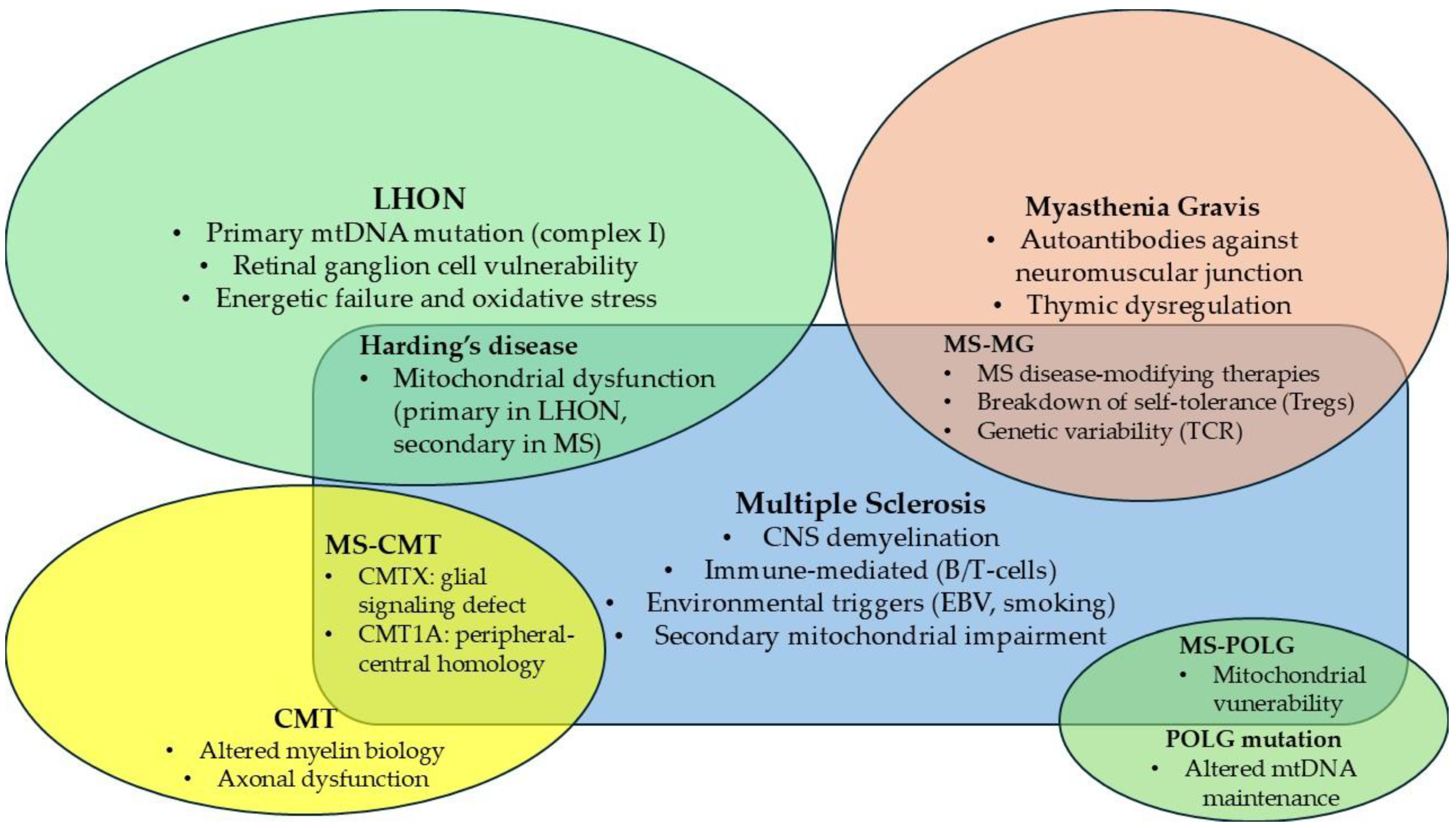
Taken together, these observations suggest that at least in a subset of patients, the overlap between MS and neuromuscular disorders may reflect shared biological vulnerability—particularly involving mitochondrial homeostasis and immune–metabolic coupling—rather than mere diagnostic convergence. Nonetheless, careful interpretation is warranted, as improved neuroimaging and immunological testing may also contribute to increased recognition of coincidental comorbidities. Figure 1 provides a schematic overview of shared and disease-specific pathogenic mechanisms across multiple sclerosis and selected neuromuscular disorders, highlighting overlapping pathways such as immune dysregulation, mitochondrial dysfunction, and shared myelin antigens, as well as disease-specific features including primary mtDNA mutations, peripheral myelin defects, and neuromuscular junction abnormalities.

9. Limitations

Several limitations should be acknowledged when interpreting the associations between MS and neuromuscular disorders. First, many of the reported links, particularly those considered rare or less robust, are based on isolated case reports or small case series, which limits the generalizability of the findings and prevents robust epidemiological conclusions. In contrast, associations such as MS with MG or LHON have been supported by larger cohort studies, partly reflecting the relative frequency of these conditions and the availability of data. Second, ascertainment bias may affect the reported associations. Patients with a pre-existing rare neuromuscular disorder are not always systematically evaluated for CNS involvement, and conversely, MS patients are not consistently screened for peripheral or neuromuscular comorbidities. This can lead to underestimation of true co-occurrence rates and missing data. Third, heterogeneity in diagnostic criteria and assessment methods across studies can limit comparability. Variations in imaging protocols, electrophysiological studies, and genetic testing may result in inconsistent classification of cases and outcomes. Moreover, differences in follow-up duration, treatment regimens, and reporting standards further complicate the interpretation of cumulative data. Finally, mechanistic insights remain largely speculative. While hypotheses regarding shared immunogenetic backgrounds, mitochondrial dysfunction, or molecular mimicry have been proposed, direct evidence linking these mechanisms to the observed clinical overlaps is limited. Prospective, multicenter studies with standardized diagnostic and follow-up protocols are therefore needed to clarify the frequency, clinical significance, and underlying pathophysiology of these associations.

10. Conclusions and Future Perspectives

The evidence presented in this review highlights that MS, although primarily a CNS disorder, can coexist with a variety of neuromuscular conditions, including MG, LHON, CMT disease, CCPD, and other rarer neuromuscular disorders. These associations underscore the complex interplay between CNS and PNS pathology, as well as the potential contribution of shared immunogenetic, mitochondrial, and molecular mechanisms. While stronger associations are supported by larger cohorts, many of the rarer overlaps rely on isolated case reports, limiting definitive conclusions and highlighting the need for careful clinical evaluation to avoid misattribution of symptoms. Recognition of these associations is clinically relevant, as it may influence diagnostic strategies, therapeutic choices, and prognostic counseling. Future research should focus on prospective, multicenter studies with standardized clinical, radiological, and genetic assessments to better characterize the frequency, clinical course, and pathophysiological basis of these overlaps. Mechanistic studies investigating immune dysregulation, mitochondrial dysfunction, and molecular mimicry may further clarify the biological underpinnings of these associations. Ultimately, improved understanding of the intersections between MS and neuromuscular disorders could inform personalized management strategies, guide therapeutic interventions, and shed light on broader principles of neuroimmune interactions.

Funding

This research received no external funding.

Institutional Review Board Statement

Not applicable.

Informed Consent Statement

Not applicable.

Data Availability Statement

No new data were generated or analyzed in this study. Data sharing is not applicable to this article.

Conflicts of Interest

The authors declare no conflicts of interest.

References

  1. Haki, M.; AL-Biati, H.A.; Al-Tameemi, Z.S.; Ali, I.S.; Al-hussaniy, H.A. Review of Multiple Sclerosis: Epidemiology, Etiology, Pathophysiology, and Treatment. Medicine 2024, 103, e37297. [Google Scholar] [CrossRef]
  2. Jakimovski, D.; Bittner, S.; Zivadinov, R.; Morrow, S.A.; Benedict, R.H.; Zipp, F.; Weinstock-Guttman, B. Multiple Sclerosis. Lancet 2024, 403, 183–202. [Google Scholar] [CrossRef] [PubMed]
  3. Boutitah-Benyaich, I.; Eixarch, H.; Villacieros-Álvarez, J.; Hervera, A.; Cobo-Calvo, Á.; Montalban, X.; Espejo, C. Multiple Sclerosis: Molecular Pathogenesis and Therapeutic Intervention. Signal Transduct. Target. Ther. 2025, 10, 324. [Google Scholar] [CrossRef] [PubMed]
  4. Ghafoor, D.D.; Ahmad, D.O.; Najmuldeen, H.H.; Mohammed, S.J.; Jalal, P.J.; Mustafa, F.S.; Alghofaili, F.; Zangana, B.A.; Al-Bajalan, S.J. Multiple Sclerosis Pathophysiology: A Comprehensive Review of Genetic, Environmental, and Immunological Drivers. Inflammopharmacology 2025, 33, 7269–7314. [Google Scholar] [CrossRef] [PubMed]
  5. McGinley, M.P.; Goldschmidt, C.H.; Rae-Grant, A.D. Diagnosis and Treatment of Multiple Sclerosis. JAMA 2021, 325, 765. [Google Scholar] [CrossRef]
  6. Montalban, X.; Lebrun-Frénay, C.; Oh, J.; Arrambide, G.; Moccia, M.; Pia Amato, M.; Amezcua, L.; Banwell, B.; Bar-Or, A.; Barkhof, F.; et al. Diagnosis of Multiple Sclerosis: 2024 Revisions of the McDonald Criteria. Lancet Neurol. 2025, 24, 850–865. [Google Scholar] [CrossRef]
  7. Oudejans, E.; Luchicchi, A.; Strijbis, E.M.M.; Geurts, J.J.G.; van Dam, A.-M. Is MS Affecting the CNS Only? Neurol. Neuroimmunol. Neuroinflamm. 2021, 8, e914. [Google Scholar] [CrossRef]
  8. Palace, J. Multiple Sclerosis Associated with Leber’s Hereditary Optic Neuropathy. J. Neurol. Sci. 2009, 286, 24–27. [Google Scholar] [CrossRef]
  9. Dehbashi, S.; Hamouda, D.; Shanina, E. Co-Occurrence of Multiple Sclerosis and Myasthenia Gravis: A Case Report and Review of Immunological Theories. Mult. Scler. Relat. Disord. 2019, 34, 135–136. [Google Scholar] [CrossRef]
  10. Carper, M.G.; Henderson, A.D. Updated Review of Leber Hereditary Optic Neuropathy. Curr. Treat. Options Neurol. 2022, 24, 441–452. [Google Scholar] [CrossRef]
  11. Kearns, L.S.; Staffieri, S.E.; Mackey, D.A. Leber Hereditary Optic Neuropathy: Support, Genetic Prediction and Accurate Genetic Counselling Enhance Family Planning Choices. Clin. Exp. Ophthalmol. 2025, 53, 292–301. [Google Scholar] [CrossRef] [PubMed]
  12. Esmaeil, A.; Ali, A.; Behbehani, R. Leber’s Hereditary Optic Neuropathy: Update on Current Diagnosis and Treatment. Front. Ophthalmol. 2023, 2, 1077395. [Google Scholar] [CrossRef] [PubMed]
  13. Zhou, Q.; Liu, Z.; Sun, J.; Lu, L.; Han, E.; Zhang, L. Advances in Research on Leber’s Hereditary Optic Neuropathy. Ocul. Genet. Omics 2024, 1, 100002. [Google Scholar] [CrossRef]
  14. Alorainy, J.; Alorfi, Y.; Karanjia, R.; Badeeb, N. A Comprehensive Review of Leber Hereditary Optic Neuropathy and Its Association with Multiple Sclerosis-Like Phenotypes Known as Harding’s Disease. Eye Brain 2024, 16, 17–24. [Google Scholar] [CrossRef]
  15. Wong, D.C.S.; Makam, R.; Yu-Wai-Man, P. Advanced Therapies for Inherited Optic Neuropathies. Eye 2026, 40, 177–184. [Google Scholar] [CrossRef]
  16. Harding, A.E.; Sweeney, M.G.; Miller, D.H.; Mumford, C.J.; Kellar-Wood, H.; Menard, D.; Mcdonald, W.I.; Compston, D.A.S. Occurrence of a multiple sclerosis-like illness in women who have a leber’s hereditary optic neuropathy mitochondrial dna mutation. Brain 1992, 115, 979–989. [Google Scholar] [CrossRef]
  17. Joshi, S.; Kermode, A.G. Harding’s Disease: An Important MS Mimic. BMJ Case Rep. 2019, 12, e228337. [Google Scholar] [CrossRef]
  18. Pfeffer, G.; Burke, A.; Yu-Wai-Man, P.; Compston, D.A.S.; Chinnery, P.F. Clinical Features of MS Associated with Leber Hereditary Optic Neuropathy MtDNA Mutations. Neurology 2013, 81, 2073–2081. [Google Scholar] [CrossRef]
  19. Uittenbogaard, M.; Brantner, C.A.; Fang, Z.; Wong, L.-J.; Gropman, A.; Chiaramello, A. The m.11778 A > G Variant Associated with the Coexistence of Leber’s Hereditary Optic Neuropathy and Multiple Sclerosis-like Illness Dysregulates the Metabolic Interplay between Mitochondrial Oxidative Phosphorylation and Glycolysis. Mitochondrion 2019, 46, 187–194. [Google Scholar] [CrossRef]
  20. Rahimi, G.; Silverman, M.; Lucas, M.; Kazerooni, L.; Yousuf, M.M.; Jafarpour, S.; Santoro, J.D. Leber’s Hereditary Optic Neuropathy and Multiple Sclerosis: Overlap between Mitochondrial Disease and Neuroinflammation. Front. Neurol. 2025, 16, 1538358. [Google Scholar] [CrossRef]
  21. Bargiela, D.; Chinnery, P.F. Mitochondria in Neuroinflammation—Multiple Sclerosis (MS), Leber Hereditary Optic Neuropathy (LHON) and LHON-MS. Neurosci. Lett. 2019, 710, 132932. [Google Scholar] [CrossRef] [PubMed]
  22. Rościszewska-Żukowska, I.; Bartosik-Psujek, H. LHON-MS—The Overlaps in Clinical and Molecular Features of Both LHON and MS. Mult. Scler. Relat. Disord. 2020, 45, 102322. [Google Scholar] [CrossRef]
  23. Gilhus, N.E.; Tzartos, S.; Evoli, A.; Palace, J.; Burns, T.M.; Verschuuren, J.J.G.M. Myasthenia Gravis. Nat. Rev. Dis. Primers 2019, 5, 30. [Google Scholar] [CrossRef] [PubMed]
  24. Mishra, A.K.; Varma, A. Myasthenia Gravis: A Systematic Review. Cureus 2023, 15, e50017. [Google Scholar] [CrossRef] [PubMed]
  25. Dresser, L.; Wlodarski, R.; Rezania, K.; Soliven, B. Myasthenia Gravis: Epidemiology, Pathophysiology and Clinical Manifestations. J. Clin. Med. 2021, 10, 2235. [Google Scholar] [CrossRef]
  26. Estephan, E.d.P.; Baima, J.P.S.; Zambon, A.A. Myasthenia Gravis in Clinical Practice. Arq. Neuropsiquiatr. 2022, 80, 257–265. [Google Scholar] [CrossRef]
  27. Gerischer, L.; Doksani, P.; Hoffmann, S.; Meisel, A. New and Emerging Biological Therapies for Myasthenia Gravis: A Focussed Review for Clinical Decision-Making. BioDrugs 2025, 39, 185–213. [Google Scholar] [CrossRef]
  28. Zhu, Y.; Wang, B.; Hao, Y.; Zhu, R. Clinical Features of Myasthenia Gravis with Neurological and Systemic Autoimmune Diseases. Front. Immunol. 2023, 14, 1223322. [Google Scholar] [CrossRef]
  29. Messina, C. When Myasthenia Gravis Meets Autoimmunity: Cause or Confounder? Am. J. Med. 2025, 139, 258–259. [Google Scholar] [CrossRef]
  30. Li, K.; Ouyang, Y.; Yang, H. Myasthenia Gravis and Five Autoimmune Diseases: A Bidirectional Mendelian Randomization Study. Neurol. Sci. 2024, 45, 1699–1706. [Google Scholar] [CrossRef]
  31. Luzanova, E.; Stepanova, S.; Nadtochiy, N.; Kryukova, E.; Karpova, M. Cross-Syndrome: Myasthenia Gravis and the Demyelinating Diseases of the Central Nervous System Combination. Systematic Literature Review and Case Reports. Acta Neurol. Belg. 2023, 123, 367–374. [Google Scholar] [CrossRef] [PubMed]
  32. Isbister, C.M.; Mackenzie, P.J.; Anderson, D.; Wade, N.K.; Oger, J. Co-Occurrence of Multiple Sclerosis and Myasthenia Gravis in British C Olumbia. Mult. Scler. J. 2003, 9, 550–553. [Google Scholar] [CrossRef] [PubMed]
  33. Gharagozli, K.; Shojaei, M.; Harandi, A.A.; Akbari, N.; Ilkhani, M. Myasthenia Gravis Development and Crisis Subsequent to Multiple Sclerosis. Case Rep. Med. 2011, 2011, 291731. [Google Scholar] [CrossRef] [PubMed]
  34. Danikowski, K.M.; Jayaraman, S.; Prabhakar, B.S. Regulatory T Cells in Multiple Sclerosis and Myasthenia Gravis. J. Neuroinflammation 2017, 14, 117. [Google Scholar] [CrossRef]
  35. Oksenberg, J.R.; Panzara, M.A.; Begovich, A.B.; Mitchell, D.; Erlich, H.A.; Murray, R.S.; Shimonkevitz, R.; Sherritt, M.; Rothbard, J.; Bernard, C.C.A.; et al. Selection for T-Cell Receptor Vβ–Dβ–Jβ Gene Rearrangements with Specificity for a Myelin Basic Protein Peptide in Brain Lesions of Multiple Sclerosis. Nature 1993, 362, 68–70. [Google Scholar] [CrossRef]
  36. Lu, J.; Li, J.; Zhu, T.; Zhang, L.; Wang, Y.; Tian, F.; Yang, H. Modulation of B Cell Regulatory Molecules CD22 and CD72 in Myasthenia Gravis and Multiple Sclerosis. Inflammation 2013, 36, 521–528. [Google Scholar] [CrossRef]
  37. Bin Bong, J.; Lee, M.A.; Kang, H.G. Newly Diagnosed Multiple Sclerosis in a Patient with Ocular Myasthenia Gravis. Medicine 2022, 101, e28887. [Google Scholar] [CrossRef]
  38. Cantor, F. Central and Peripheral Fatigue: Exemplified by Multiple Sclerosis and Myasthenia Gravis. PM&R 2010, 2, 399–405. [Google Scholar] [CrossRef]
  39. Kluger, B.M.; Krupp, L.B.; Enoka, R.M. Fatigue and Fatigability in Neurologic Illnesses. Neurology 2013, 80, 409–416. [Google Scholar] [CrossRef]
  40. Cortese, A.; Franciotta, D.; Alfonsi, E.; Visigalli, N.; Zardini, E.; Diamanti, L.; Prunetti, P.; Osera, C.; Gastaldi, M.; Berzero, G.; et al. Combined Central and Peripheral Demyelination: Clinical Features, Diagnostic Findings, and Treatment. J. Neurol. Sci. 2016, 363, 182–187. [Google Scholar] [CrossRef]
  41. Costru-Tasnic, E.; Manole, E.; Lisnic, V. Combined Central and Peripheral Demyelination: A Case Report. J. Med. Life 2022, 15, 1442–1448. [Google Scholar] [CrossRef] [PubMed]
  42. Wang, Y.-Q.; Chen, H.; Zhuang, W.-P.; Li, H.-L. The Clinical Features of Combined Central and Peripheral Demyelination in Chinese Patients. J. Neuroimmunol. 2018, 317, 32–36. [Google Scholar] [CrossRef] [PubMed]
  43. Hou, X.; Liang, Y.; Cui, P.; Hao, J. The Clinical Features of Combined Central and Peripheral Demyelination and Antibodies against the Node of Ranvier. Mult. Scler. J. 2022, 28, 453–462. [Google Scholar] [CrossRef] [PubMed]
  44. Ogata, H.; Matsuse, D.; Yamasaki, R.; Kawamura, N.; Matsushita, T.; Yonekawa, T.; Hirotani, M.; Murai, H.; Kira, J. A Nationwide Survey of Combined Central and Peripheral Demyelination in Japan. J. Neurol. Neurosurg. Psychiatry 2015, 87, 29–36. [Google Scholar] [CrossRef]
  45. Papadopoulou, M.; Tzanetakos, D.; Moschovos, C.; Korona, A.; Vartzelis, G.; Voudris, K.; Fanouraki, S.; Dimitriadou, E.-M.; Papadimas, G.; Tzartos, J.S.; et al. Combined Central and Peripheral Demyelination (CCPD) Associated with MOG Antibodies: Report of Four New Cases and Narrative Review of the Literature. J. Clin. Med. 2024, 13, 3604. [Google Scholar] [CrossRef]
  46. Lambrianides, S.; Kinnis, E.; Cleanthous, M.; Myrianthopoulou, P.; Leonidou, E.; Kyriakides, T. A Case of Combined Central and Peripheral Demyelination Associated With Antineurofascin 155 Antibodies and Paternal History of Multiple Sclerosis. Neurologist 2021, 26, 156–159. [Google Scholar] [CrossRef]
  47. Kira, J. Anti-Neurofascin 155 Antibody-Positive Chronic Inflammatory Demyelinating Polyneuropathy/Combined Central and Peripheral Demyelination: Strategies for Diagnosis and Treatment Based on the Disease Mechanism. Front. Neurol. 2021, 12, 665136. [Google Scholar] [CrossRef]
  48. Kamm, C. New Clinical Insights into Combined Central and Peripheral Demyelination (CCPD). J. Neurol. Sci. 2016, 364, 27–28. [Google Scholar] [CrossRef]
  49. Nouha, H.; Olfa, H.; Nouha, F.; Sawsan, F.; Salma, S.; Hanen, H.K.; Mariem, D.; Chokri, M. Combined Central and Peripheral Demyelination: A Case Report and Literature Review. Iran. J. Neurol. 2019, 18, 35–37. [Google Scholar] [CrossRef]
  50. Koutsis, G.; Breza, M.; Velonakis, G.; Tzartos, J.; Kasselimis, D.; Kartanou, C.; Karavasilis, E.; Tzanetakos, D.; Anagnostouli, M.; Andreadou, E.; et al. X Linked Charcot-Marie-Tooth Disease and Multiple Sclerosis: Emerging Evidence for an Association. J. Neurol. Neurosurg. Psychiatry 2019, 90, 187–194. [Google Scholar] [CrossRef]
  51. Abrams, C.K.; Goman, M.; Wong, S.; Scherer, S.S.; Kleopa, K.A.; Peinado, A.; Freidin, M.M. Loss of Coupling Distinguishes GJB1 Mutations Associated with CNS Manifestations of CMT1X from Those Without CNS Manifestations. Sci. Rep. 2017, 7, 40166. [Google Scholar] [CrossRef] [PubMed]
  52. Koutsis, G.; Karadima, G.; Floroskoufi, P.; Raftopoulou, M.; Panas, M. Relapsing Remitting Multiple Sclerosis in X-Linked Charcot-Marie-Tooth Disease with Central Nervous System Involvement. Case Rep. Neurol. Med. 2015, 2015, 841897. [Google Scholar] [CrossRef] [PubMed]
  53. Vivekanandam, V.; Hoskote, C.; Rossor, A.M.; Reilly, M.M. CNS Phenotype in X Linked Charcot- Marie-Tooth Disease. J. Neurol. Neurosurg. Psychiatry 2019, 90, 1068. [Google Scholar] [CrossRef] [PubMed]
  54. Narvaez-Caicedo, C.; Jacob, S.M.; Wu, L.; Patel, C. Co-Existent Central and Peripheral Demyelination: Related or Coincidental? Neurol. Int. 2024, 16, 1666–1673. [Google Scholar] [CrossRef]
  55. Doğan, Y.; Gül, Ş.; Ceylan, A.C.; Kutsal, Y.G. A Special Association between Charcot-Marie-Tooth Type 1A Disease and Relapsing Remitting Multiple Sclerosis. Mult. Scler. Relat. Disord. 2019, 35, 83–85. [Google Scholar] [CrossRef]
  56. Koros, C.; Evangelopoulos, M.-E.; Kilidireas, C.; Andreadou, E. Central Nervous System Demyelination in a Charcot-Marie-Tooth Type 1A Patient. Case Rep. Neurol. Med. 2013, 2013, 243652. [Google Scholar] [CrossRef]
  57. Wakerley, B.R.; Harman, F.E.; Altmann, D.M.; Malik, O. Charcot–Marie–Tooth Disease Associated with Recurrent Optic Neuritis. J. Clin. Neurosci. 2011, 18, 1422–1423. [Google Scholar] [CrossRef]
  58. Cortese, R.; Zoccolella, S.; Muglia, M.; Patitucci, A.; Scarafino, A.; Paolicelli, D.; Simone, I.L. A Rare Association between Multiple Sclerosis and Charcot-Marie-Tooth Type 1B. Brain Behav. 2016, 6, e00580. [Google Scholar] [CrossRef]
  59. Habib, S.; Anadani, N.A.; Samkutty, D. Co-Occurrence of Charcot-Marie-Tooth Disease Type 2A and Multiple Sclerosis: A Case Report. SAGE Open Med. Case Rep. 2025, 13, 2050313X251357782. [Google Scholar] [CrossRef]
  60. Sedghi, M.; Moslemi, A.-R.; Cabrera-Serrano, M.; Ansari, B.; Ghasemi, M.; Baktashian, M.; Fattahpour, A.; Tajsharghi, H. Recessive Charcot-Marie-Tooth and Multiple Sclerosis Associated with a Variant in MCM3AP. Brain Commun. 2019, 1, fcz011. [Google Scholar] [CrossRef]
  61. Lewis, H.S.; Willis, E.; Veerapandiyan, A. Charcot–Marie–Tooth Disease Type 4J and Multiple Sclerosis. J. Clin. Neuromuscul. Dis. 2019, 21, 117–118. [Google Scholar] [CrossRef]
  62. Potulska-Chromik, A.; Sinkiewicz-Darol, E.; Kostera-Pruszczyk, A.; Drac, H.; Kabzińska, D.; Zakrzewska-Pniewska, B.; Gołębiowski, M.; Kochański, A. Original Article Charcot-Marie-Tooth Type 1C Disease Coexisting with Progressive Multiple Sclerosis: A Study of an Overlapping Syndrome. Folia Neuropathol. 2012, 4, 369–374. [Google Scholar] [CrossRef]
  63. Khatami, M.; Heidari, M.M.; Mansouri, R.; Mousavi, F. The POLG Polyglutamine Tract Variants in Iranian Patients with Multiple Sclerosis. Iran. J. Child Neurol. 2015, 9, 37–41. [Google Scholar]
  64. Degos, B.; Laforêt, P.; Jardel, C.; Sedel, F.; Jossay-Winter, M.; Romero, N.B.; Lyon-Caen, O.; Tourbah, A. POLG Mutations Associated with Remitting/Relapsing Neurological Events. J. Clin. Neurosci. 2014, 21, 186–188. [Google Scholar] [CrossRef] [PubMed]
  65. Traboulsee, A.L.; Sadovnick, A.D.; Encarnacion, M.; Bernales, C.Q.; Yee, I.M.; Criscuoli, M.G.; Vilariño-Güell, C. Common Genetic Etiology between “Multiple Sclerosis-like” Single-Gene Disorders and Familial Multiple Sclerosis. Hum. Genet. 2017, 136, 705–714. [Google Scholar] [CrossRef] [PubMed]
  66. Echaniz-Laguna, A.; Chassagne, M.; de Sèze, J.; Mohr, M.; Clerc-Renaud, P.; Tranchant, C.; Mousson de Camaret, B. POLG1 Variations Presenting as Multiple Sclerosis. Arch. Neurol. 2010, 67, 1140–1143. [Google Scholar] [CrossRef] [PubMed]
  67. Arzani, M.; Rezaei, H.; Moghadasi, A.N. Association of Limb-Girdle Muscular Dystrophy with Multiple Sclerosis: A Case Report. Caspian J. Intern. Med. 2018, 9, 96–99. [Google Scholar] [CrossRef]
  68. Maillart, E.; Mochel, F.; Acquaviva, C.; Maisonobe, T.; Stankoff, B. Severe Transient Myopathy in a Patient with Progressive Multiple Sclerosis and High-Dose Biotin. Neurology 2019, 92, 1060–1062. [Google Scholar] [CrossRef]
  69. Marangi, A.; Gajofatto, A.; Marastoni, D.; Gobbin, F.; Guiotto, F.; Tonin, P.; Benedetti, M.D. A Case of Multiple Sclerosis and Necrotizing Autoimmune Myopathy with Anti-SRP Antibodies. Mult. Scler. Relat. Disord. 2018, 19, 118–120. [Google Scholar] [CrossRef]
  70. Arslan, D.; Bekircan-Kurt, C.E.; Tuncer, M.A.; Temucin, C.M.; Erdem-Ozdamar, S.; Tan, E. Felnőttkori Kezdetű Dezmin-Myopathia Sclerosis Multiplexes Betegnél. Clin. Neurosci./Ideggyógyászati Szemle 2025, 78, 357–360. [Google Scholar] [CrossRef]
  71. Iodice, R.; Ugga, L.; Aruta, F.; Iovino, A.; Ruggiero, L. Facioscapulohumeral Muscular Dystrophy (FSHD) and Multiple Sclerosis: A Case Report. Acta Myol. 2020, 39, 29–31. [Google Scholar] [CrossRef]
  72. Marchuk, M.; Dovbonos, T.; Makukh, H.; Semeryak, O.; Sharhorodska, Y. Sarcotubular Myopathy Due to Novel TRIM32 Mutation in Association with Multiple Sclerosis. Brain Sci. 2021, 11, 1020. [Google Scholar] [CrossRef]
  73. Etemadifar, M.; Roomizadeh, P.; Abtahi, S.-H.; Sajjadi, S.; Abedini, A.; Golabbakhsh, A.; Fereidan-Esfahani, M.; Akbari, M. Linkage of Multiple Sclerosis and Guillain-Barre Syndrome: A Population-Based Survey in Isfahan, Iran. Autoimmune Dis. 2012, 2012, 232139. [Google Scholar] [CrossRef][Green Version]
  74. Ma, R.; Zhang, C.; Liu, J.; Ren, J.; Li, X.; Zhao, Y. Mitochondrial Dynamics in Autoimmune Diseases. Rheumatol. Autoimmun. 2025, 5, 258–266. [Google Scholar] [CrossRef]
  75. Liu, X.; Zhang, X.; Niu, X.; Zhang, P.; Wang, Q.; Xue, X.; Song, G.; Yu, J.; Xi, G.; Song, L.; et al. Mdivi-1 Modulates Macrophage/Microglial Polarization in Mice with EAE via the Inhibition of the TLR2/4-GSK3β-NF-ΚB Inflammatory Signaling Axis. Mol. Neurobiol. 2022, 59, 1–16. [Google Scholar] [CrossRef]
  76. Li, L.; Cai, D.; Zhong, H.; Liu, F.; Jiang, Q.; Liang, J.; Li, P.; Song, Y.; Ji, A.; Jiao, W.; et al. Mitochondrial Dynamics and Biogenesis Indicators May Serve as Potential Biomarkers for Diagnosis of Myasthenia Gravis. Exp. Ther. Med. 2022, 23, 307. [Google Scholar] [CrossRef]
  77. Komilova, N.R.; Angelova, P.R.; Cali, E.; Scardamaglia, A.; Mirkhodjaev, U.Z.; Houlden, H.; Esteras, N.; Abramov, A.Y. Charcot Marie Tooth Disease Pathology Is Associated with Mitochondrial Dysfunction and Lower Glutathione Production. Cell. Mol. Life Sci. 2025, 82, 72. [Google Scholar] [CrossRef]
Figure 1. Schematic overview of shared and disease-specific pathogenic mechanisms across multiple sclerosis (MS) and selected neuromuscular disorders, including myasthenia gravis (MG), Leber hereditary optic neuropathy (LHON), Charcot–Marie–Tooth disease (CMT), and polymerase gamma (POLG)-related mitochondrial disorders. MS: multiple sclerosis; MG: myasthenia gravis; LHON: Leber hereditary optic neuropathy; CMT: Charcot–Marie–Tooth disease; POLG: polymerase gamma; mtDNA: mitochondrial DNA; EBV: Epstein–Barr virus; TCR: T cell receptor.
Sclerosis 04 00006 g001
Table 1. Comparative features of Leber Hereditary Optic Neuropathy (LHON), Harding’s disease (LHON–MS), and Multiple Sclerosis (MS). The table summarizes key differences in epidemiology, clinical presentation, genetic background, neuroimaging findings, proposed pathophysiological mechanisms, and treatment responses, highlighting the distinct and overlapping characteristics of these conditions.
FeaturesLHONHarding’s Disease (LHON–MS)Multiple Sclerosis (MS)
Clinical FeaturesSubacute, painless vision loss (typically sequential, bilateral)Optic neuropathy similar to LHON + CNS demyelination resembling MSCNS demyelinating lesions, sensory/motor deficits, optic neuritis, fatigue
Extraocular ManifestationsRare: cardiac conduction abnormalities, myopathyTremor, cognitive impairment, movement disorders, peripheral neuropathyUsually absent; primarily CNS involvement
Sex PredominanceMale > Female (up to 5:1)Female > Male (~70% female; F:M ratio 2.38:1)Female > Male (~2–3:1)
Age at OnsetAdolescence/early adulthood~30.5 years (later than LHON)20–50 years
Visual Loss PatternSequential, bilateral; limited recoveryHigher incidence of unilateral involvement; multiple recurrent episodes; prolonged interval between eyesOptic neuritis may occur; recovery varies
Genetic MutationsmtDNA: m.11778G>A, m.14484T>C, m.3460G>ASame mtDNA mutations as LHON; m.11778G>A is most common (69.3%)No single causative mutation; complex polygenic and environmental factors
NeuroimagingTypically normal; optic nerves may be affectedT2-hyperintense white matter lesions; less intense on T2 and T1; periventricular tracts involved; some overlap with MST2-hyperintense lesions in CNS; typical MS distribution (periventricular, juxtacortical, spinal cord, infratentorial, optic nerve)
Proposed MechanismsPrimary mitochondrial DNA mutation (complex I dysfunction) leading to selective retinal ganglion cell degenerationPrimary mtDNA mutation combined with superimposed immune-mediated demyelination; potential interaction between mitochondrial vulnerability and neuroinflammation (e.g., molecular mimicry or immune amplification)Immune-mediated CNS demyelination (T- and B-cell-driven) with secondary mitochondrial impairment due to inflammation and oxidative stress
Treatment/ResponseSupportive; idebenone may stabilize visionHeterogeneous: corticosteroids, mitoxantrone, plasmapheresis, idebenone; immunomodulatory drugs may stabilize neurological function but do not reliably prevent visual declineDisease-modifying therapies (IFN-beta, glatiramer acetate, etc.); symptom management; relapses treated with steroids
Table 2. Comparative features of central fatigue in multiple sclerosis (MS) and peripheral fatigue (fatigability) in myasthenia gravis (MG). The table highlights differences in underlying mechanisms, clinical presentation, relation to disease activity, response to rest, and associated symptoms, emphasizing the distinct pathophysiological bases and clinical implications of fatigue in these two conditions.
FeaturesCentral Fatigue (MS)Peripheral Fatigue/Fatigability (MG)
Underlying MechanismsCentral nervous system dysfunction due to demyelination, axonal injury, impaired nerve conduction, and network abnormalities; multifactorial, including neuroinflammation, neuroendocrine, and psychosocial factorsImpaired neuromuscular transmission due to reduced functional postsynaptic acetylcholine receptors; synaptic failure at the neuromuscular junction
Muscle Strength at RestPreserved or mildly reducedPreserved at rest; decreases with repetitive or sustained use
Pattern of WeaknessFluctuating, unpredictable; may worsen during the day or in heat; sometimes worse in the morningActivity-dependent, progressive worsening with sustained use; typically, better in the morning, improves with rest
Associated SymptomsCognitive impairment, reduced alertness, central somnolenceAlertness and cognitive functions are preserved (except in severe weakness or respiratory compromise)
Relation to Disease ActivityMay occur independently of relapses or objective disability progressionDirectly related to neuromuscular activity; not linked to central demyelinating events
Response to RestVariable; partial improvement possibleTypically improves with rest
Clinical ImplicationsReflects central pathophysiology; may require CNS-targeted interventionsReflects peripheral mechanism; management focuses on improving neuromuscular transmission
Disclaimer/Publisher’s Note: The statements, opinions and data contained in all publications are solely those of the individual author(s) and contributor(s) and not of MDPI and/or the editor(s). MDPI and/or the editor(s) disclaim responsibility for any injury to people or property resulting from any ideas, methods, instructions or products referred to in the content.