
Comparative Structure-Based Prioritisation of Daniellia oliveri Metabolites Against PBP2a of Staphylococcus aureus and PBP2x of Streptococcus pneumoniae


Abstract
1. Introduction
2. Results and Discussion
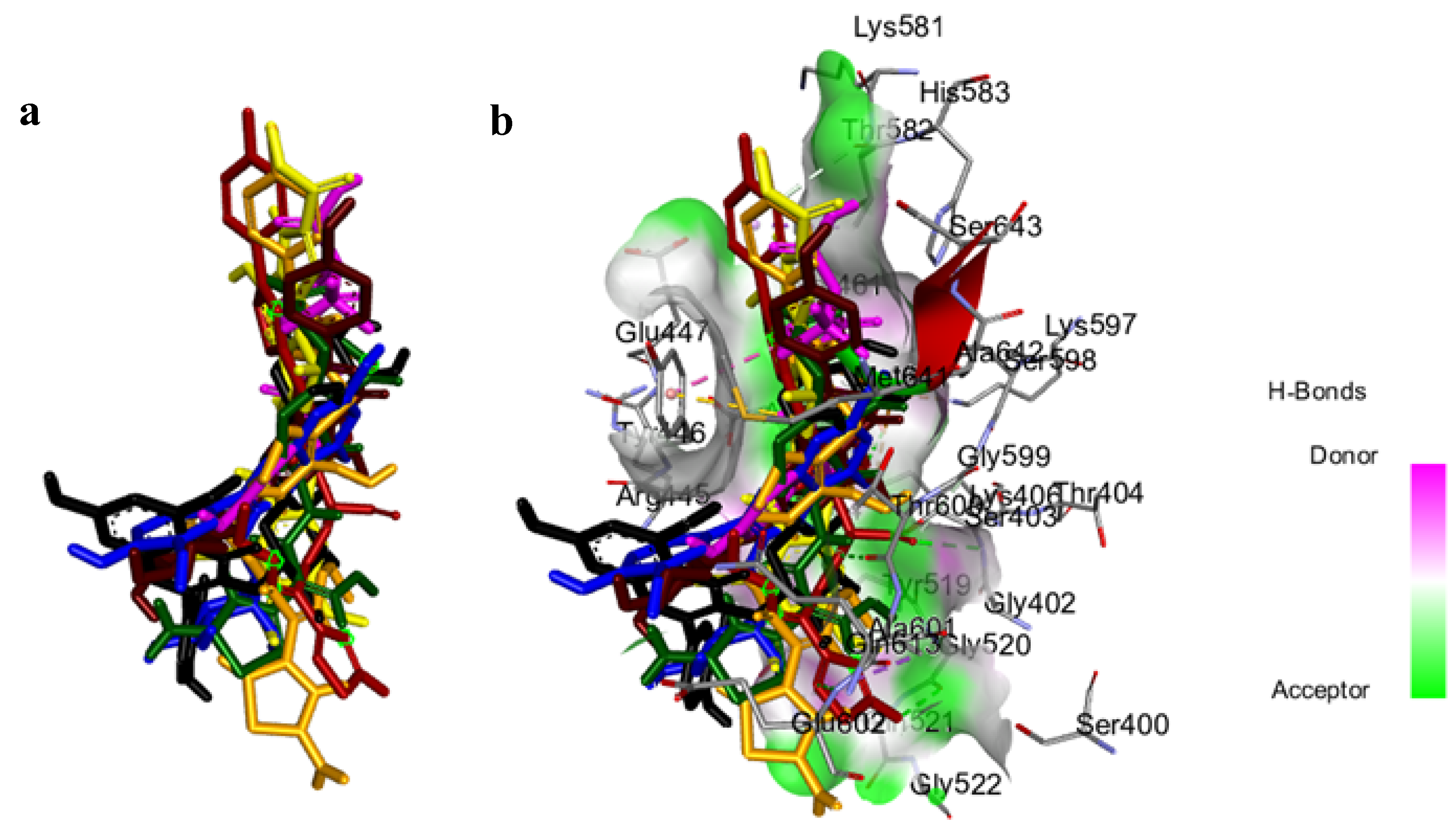
2.1. Molecular Docking of D. oliveri Compounds Against S. aureus PBP2a and S. pneumoniae PBP2x
2.2. The Pharmacokinetic and Drug-Likeness Profiles of the Top-Ranked D. oliveri Compounds and Controls
2.3. The Dynamic Behaviour of the Top-Ranked D. oliveri Compounds Complexed with PBP2a and PBP2x
2.3.1. MM/GBSA Binding-Energy Analysis of the Top-Ranked D. oliveri Compounds
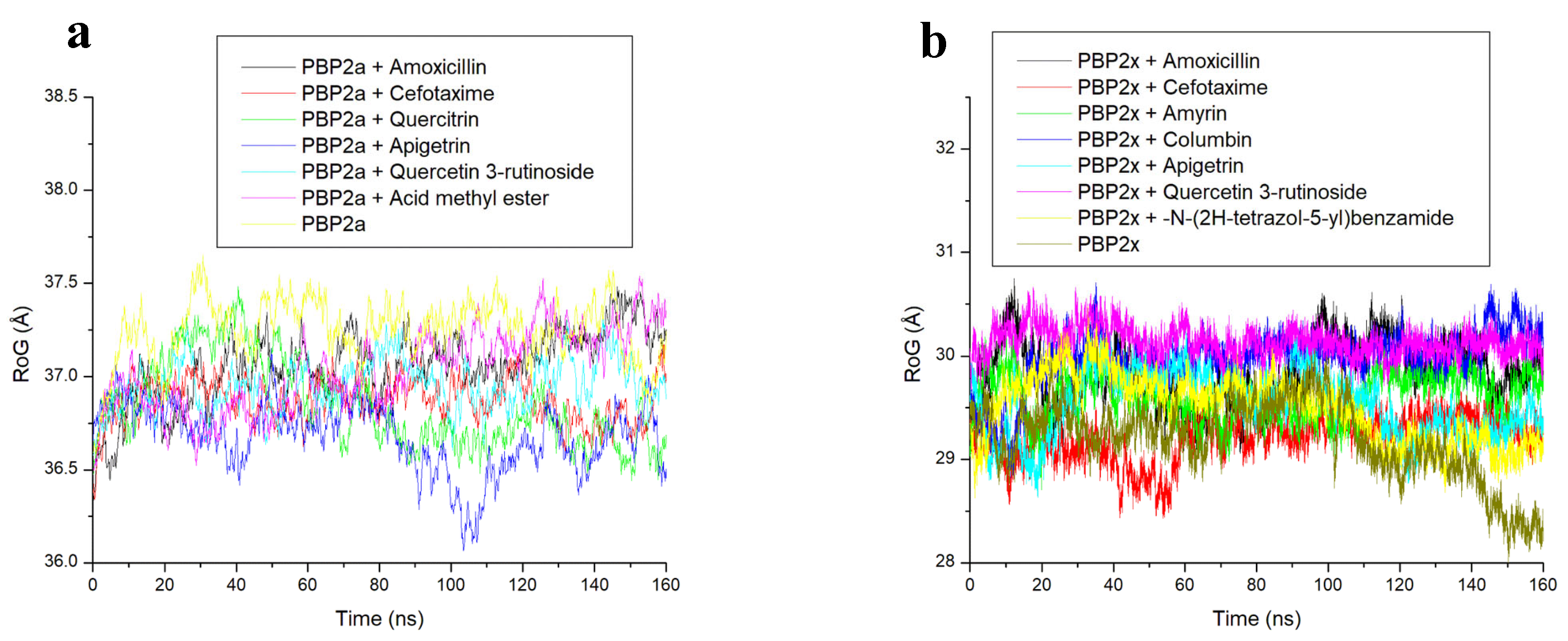
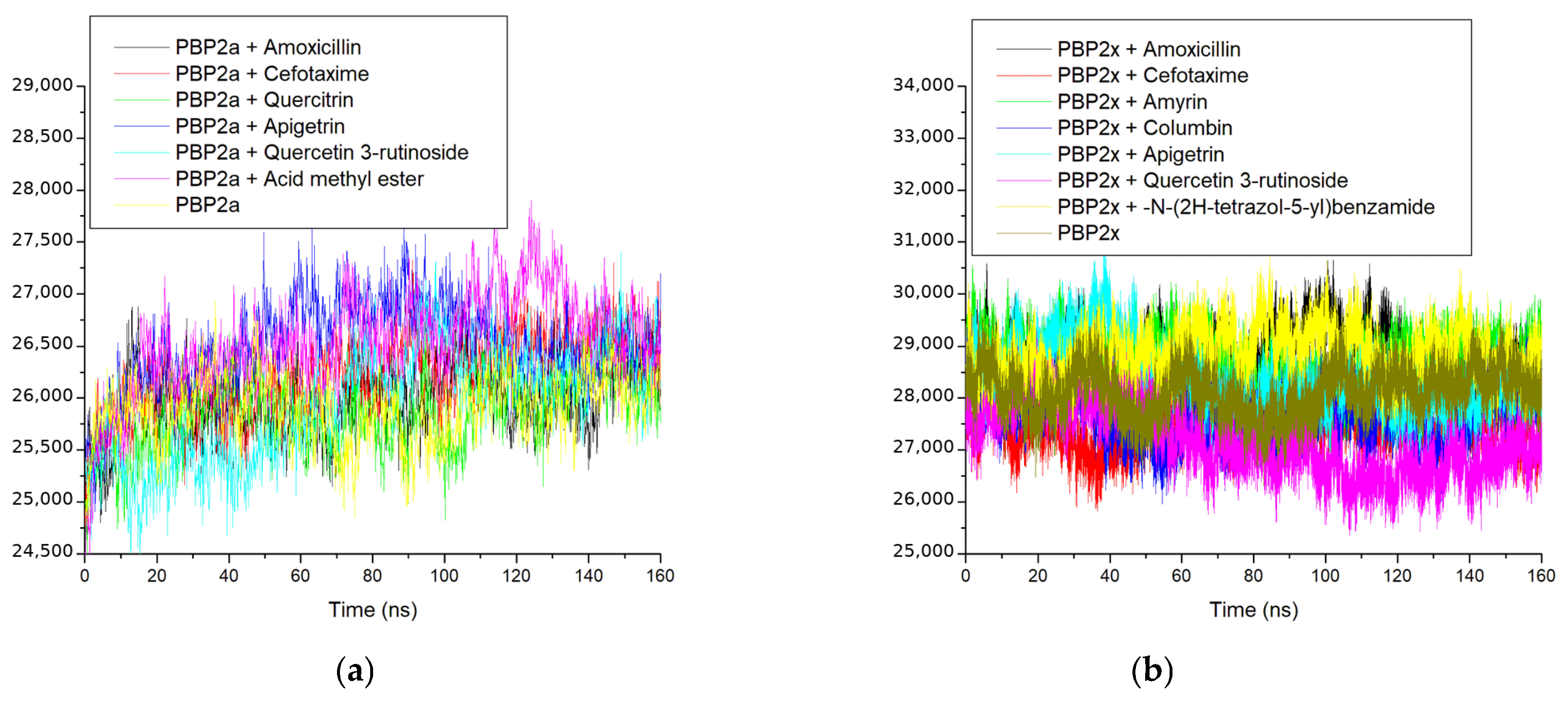
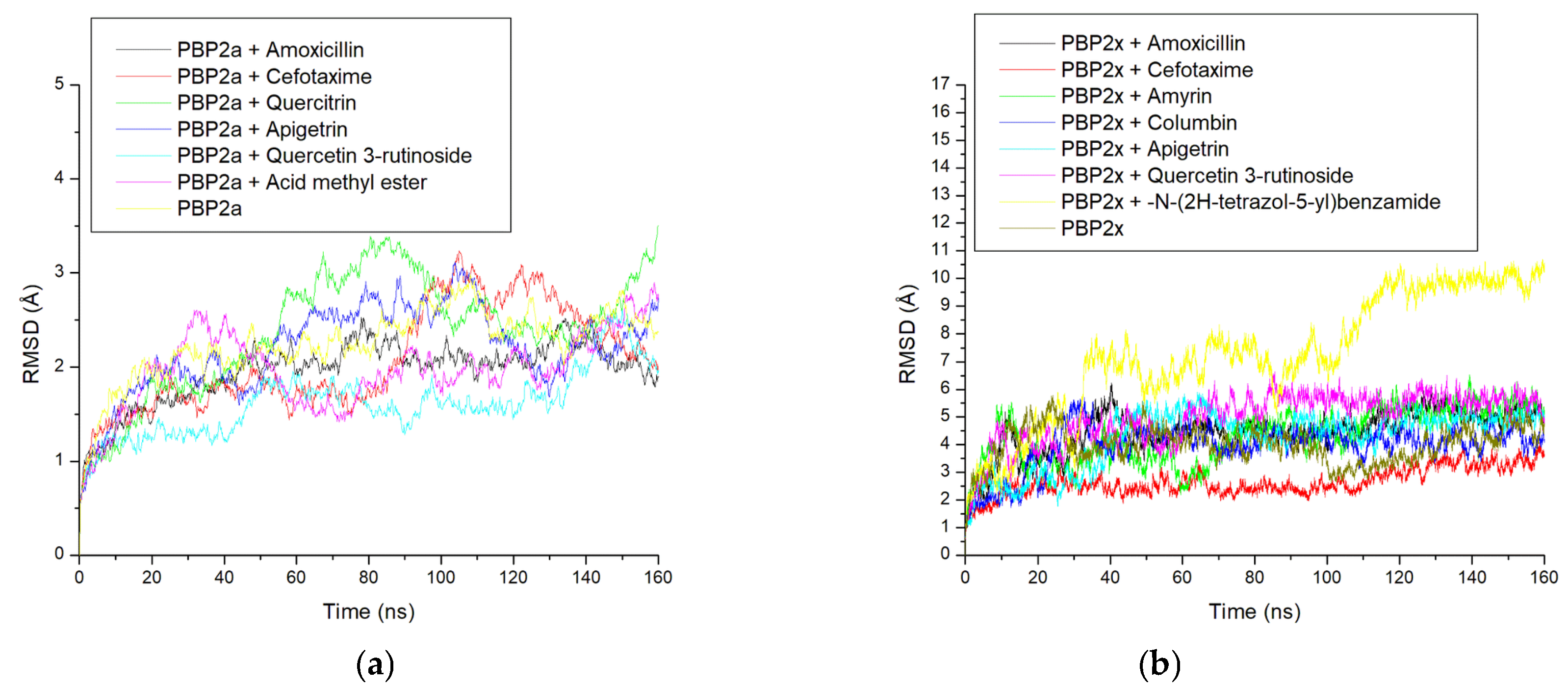
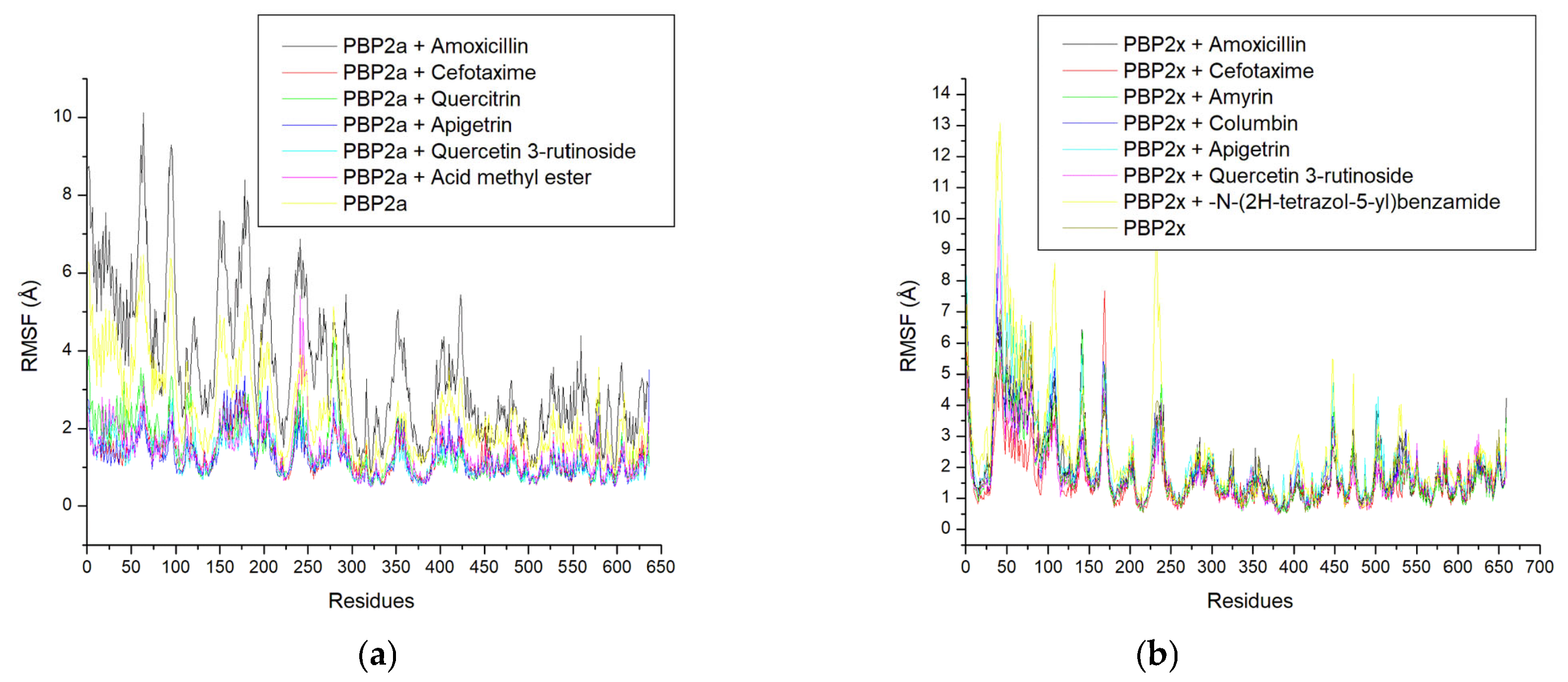
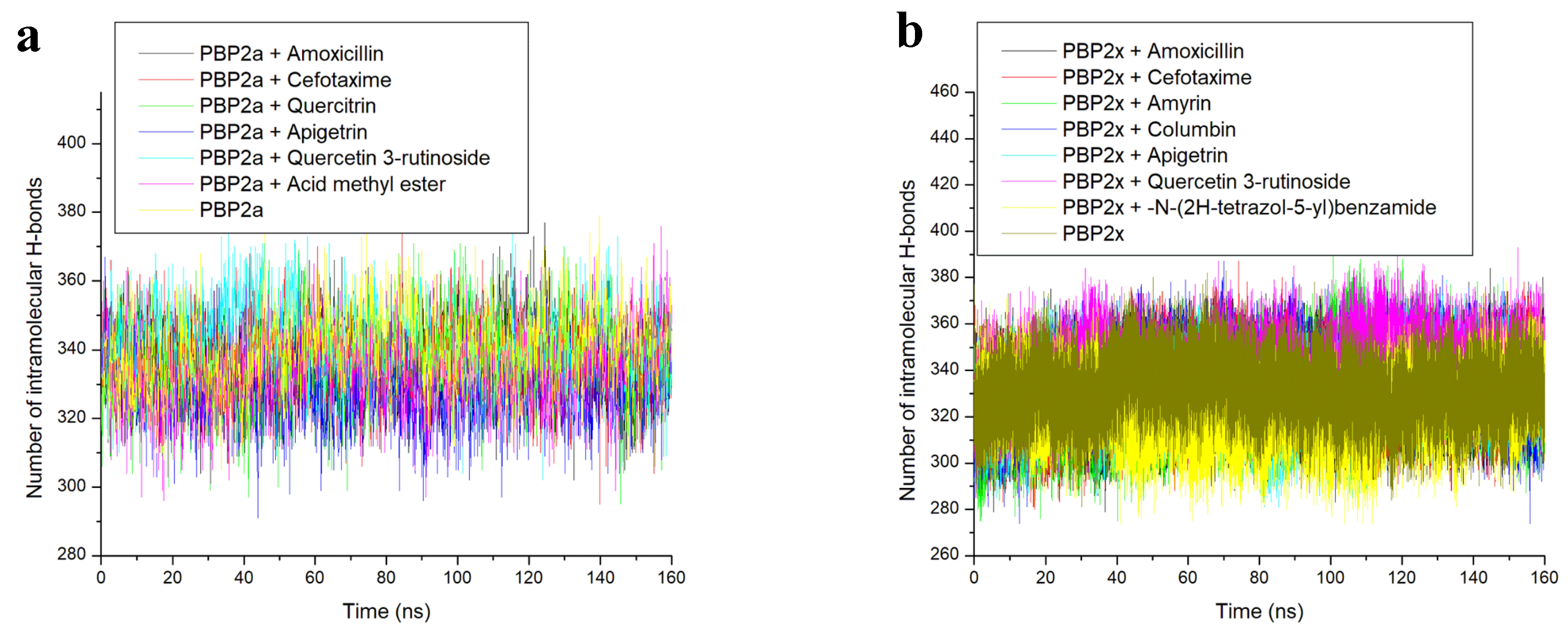
2.3.2. The Post-Dynamics Trajectory Metrics of the Top-Ranked D. oliveri Compound–PBP Complexes
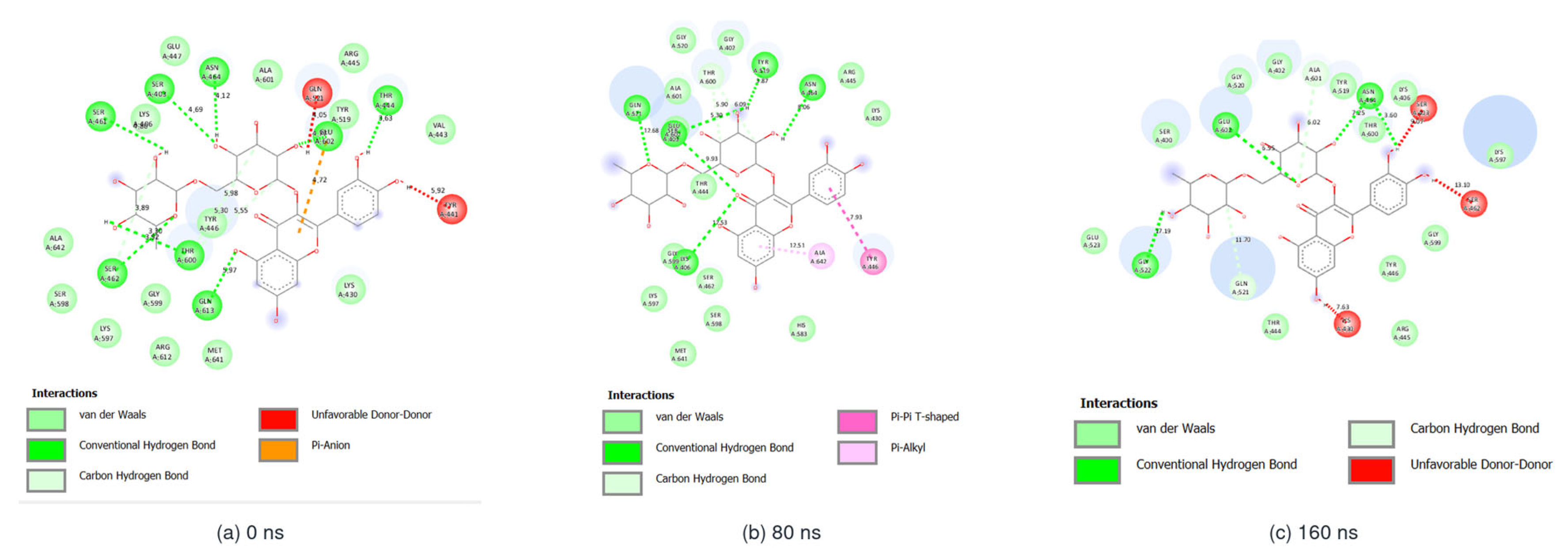
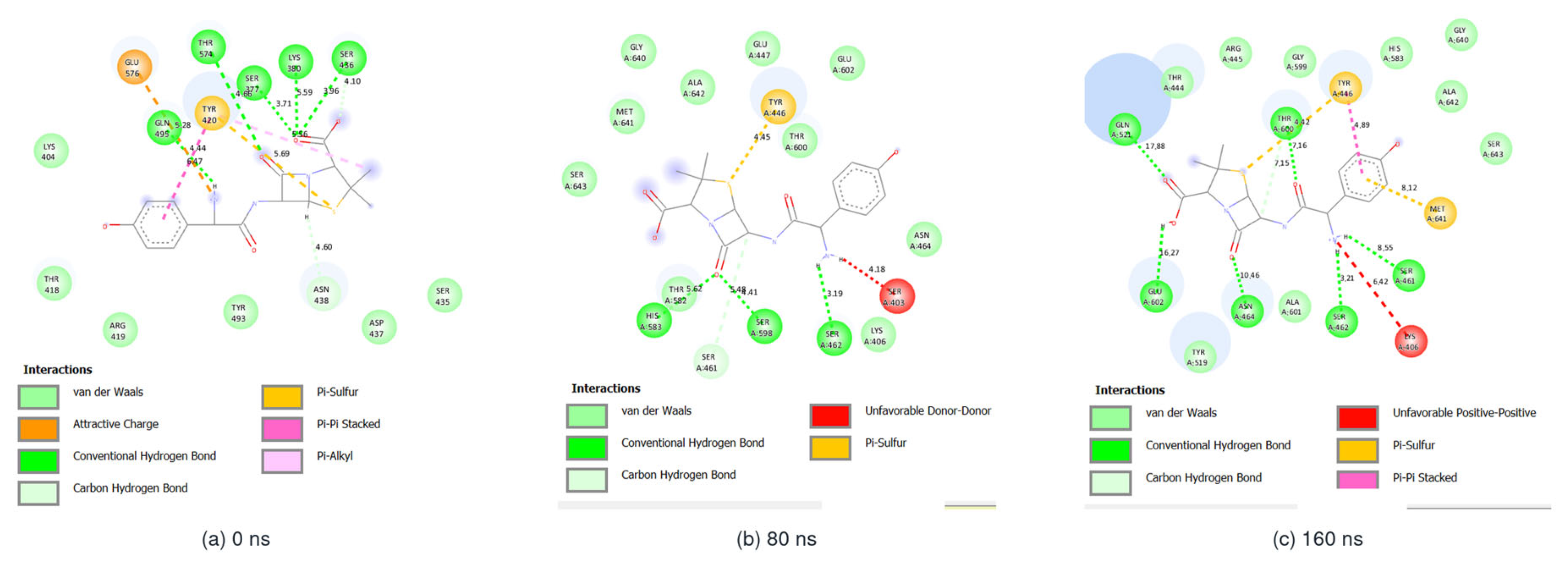
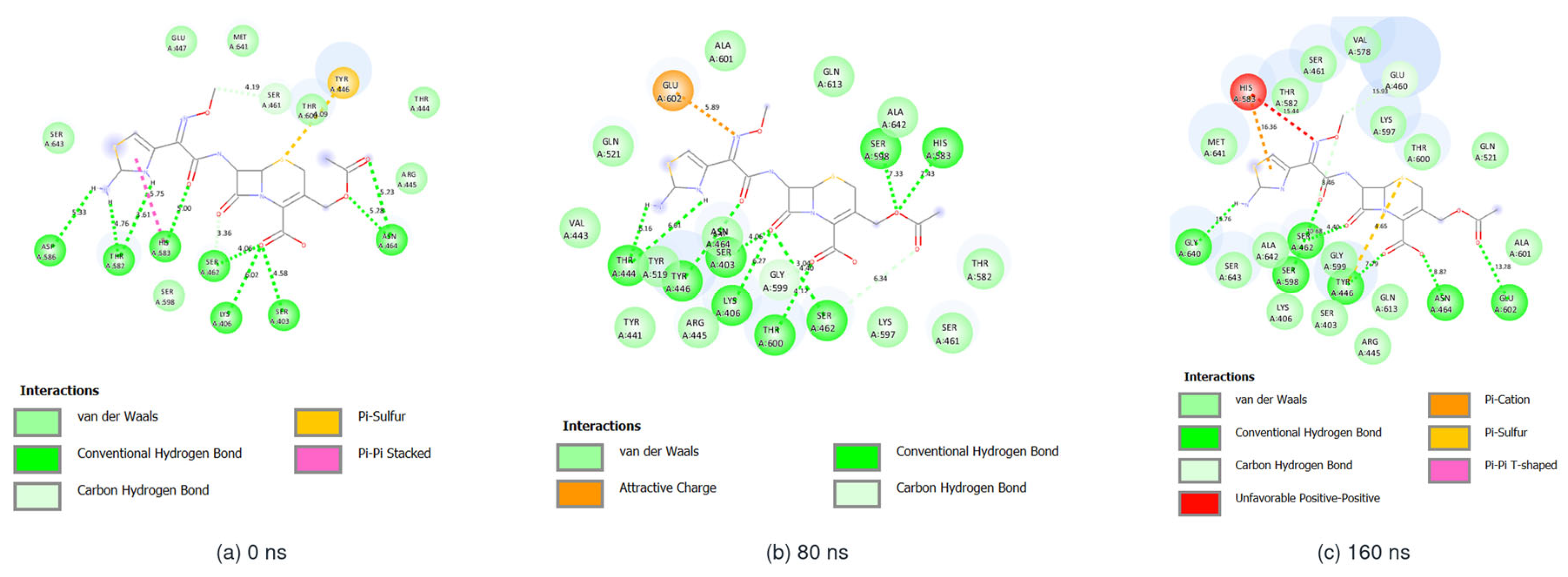
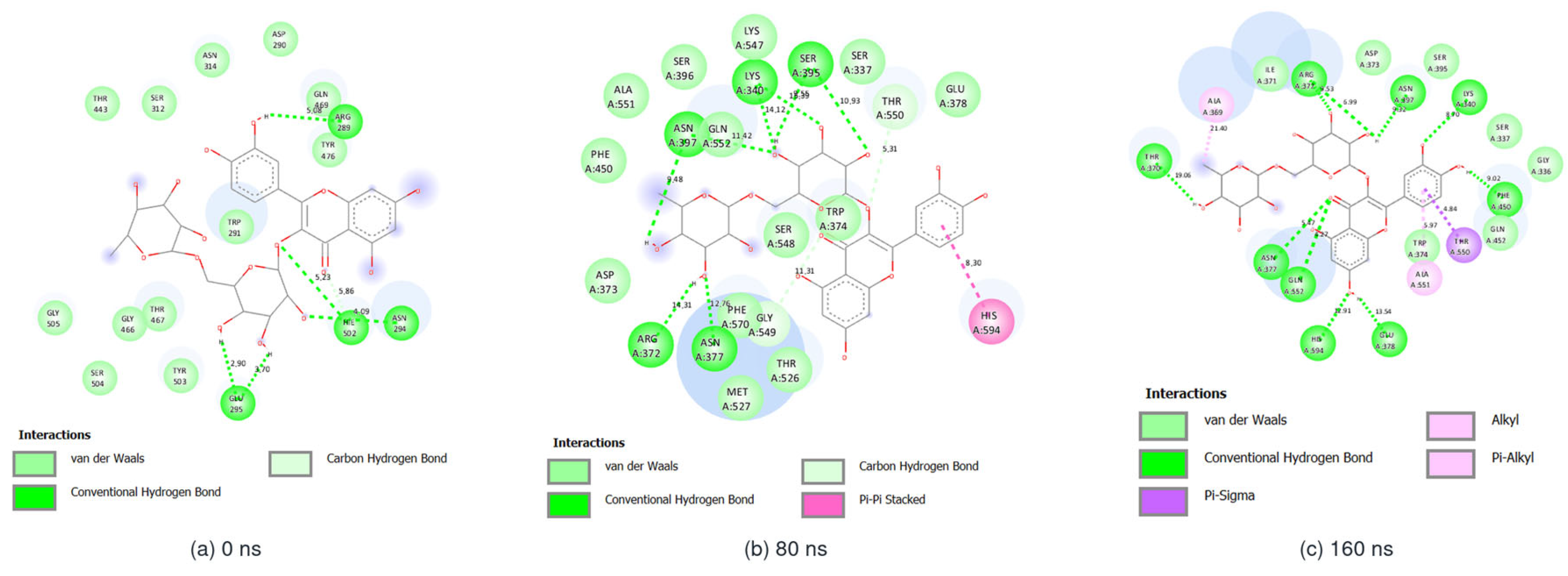
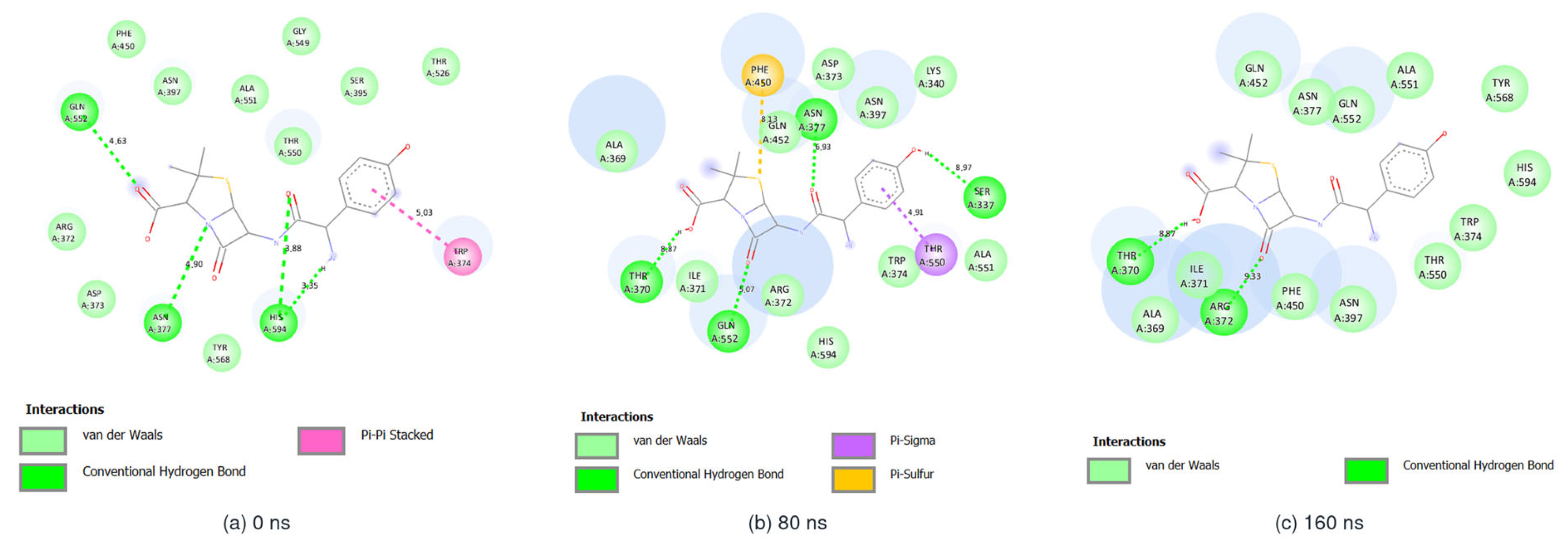
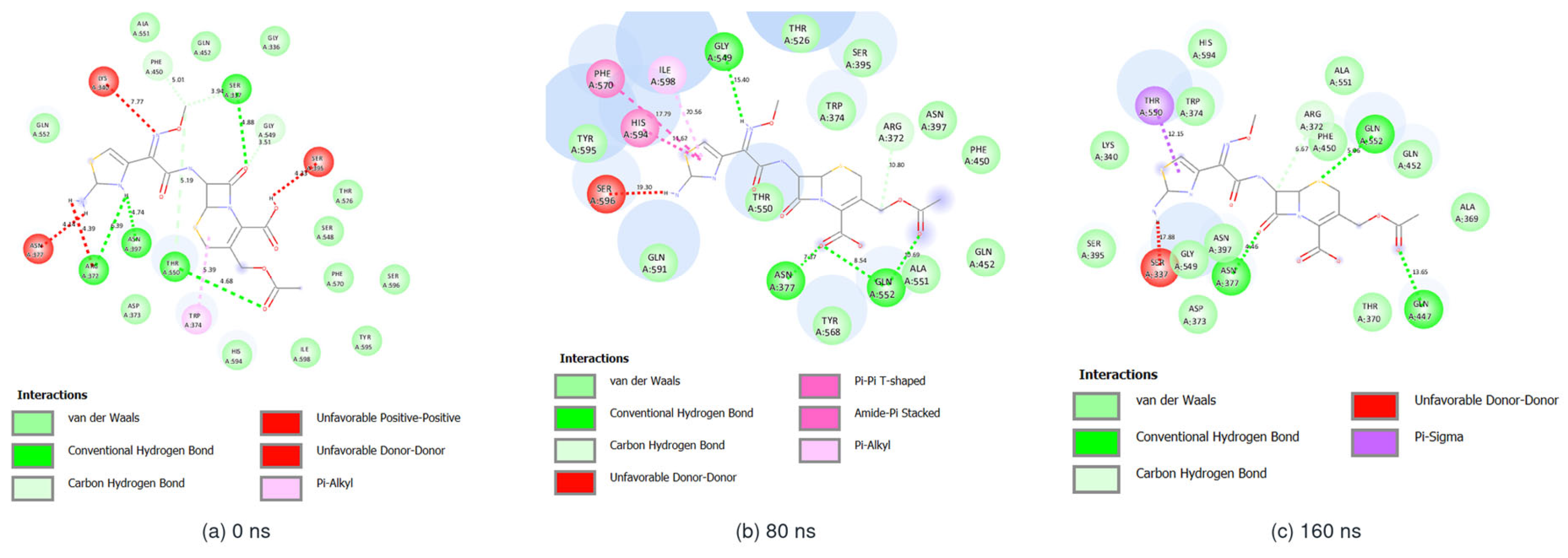
2.4. Time-Resolved Interactions of Top-Ranked D. oliveri Metabolites and Reference Antibiotics with PBP2a and PBP2x After 160 ns MD Simulations
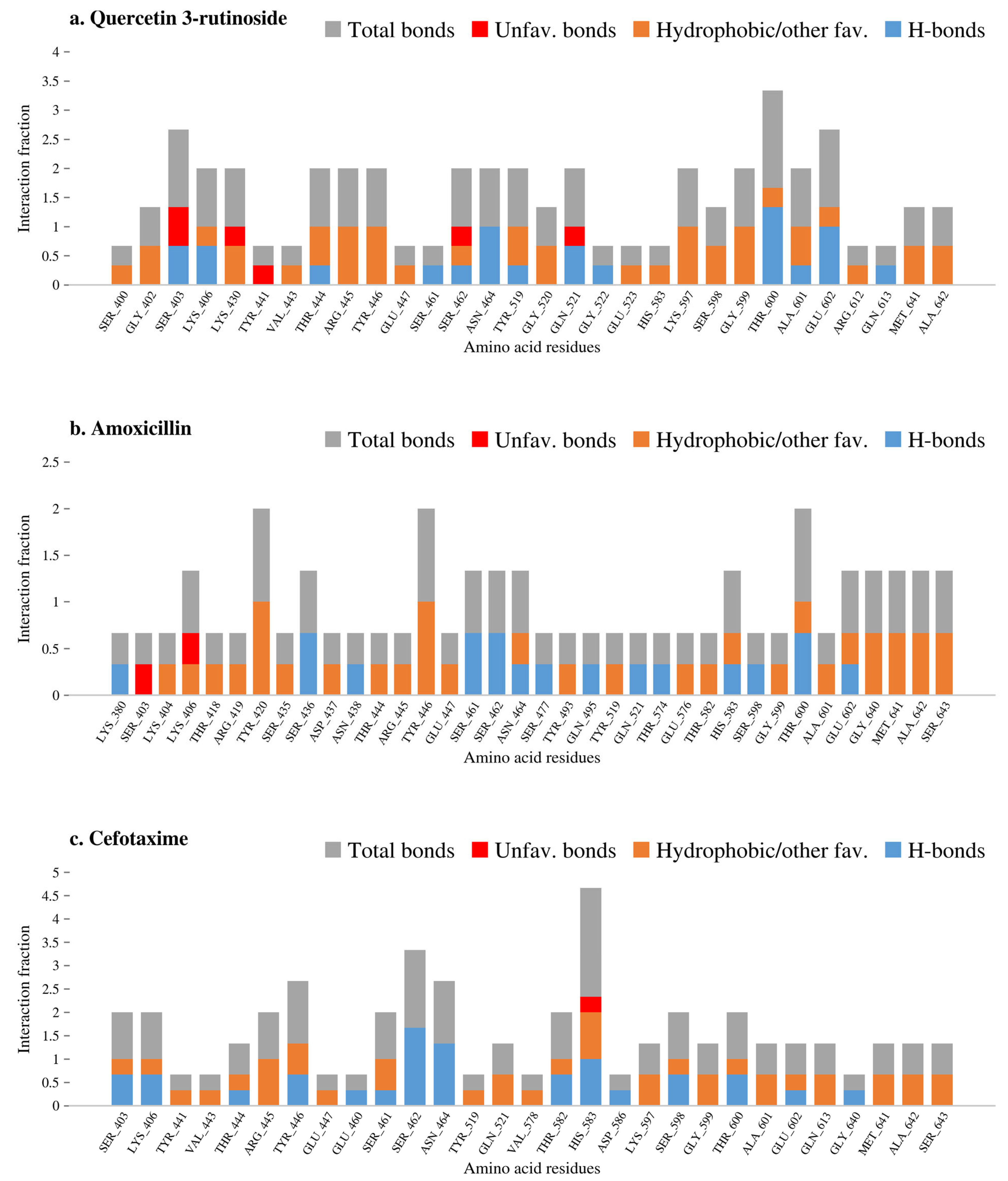
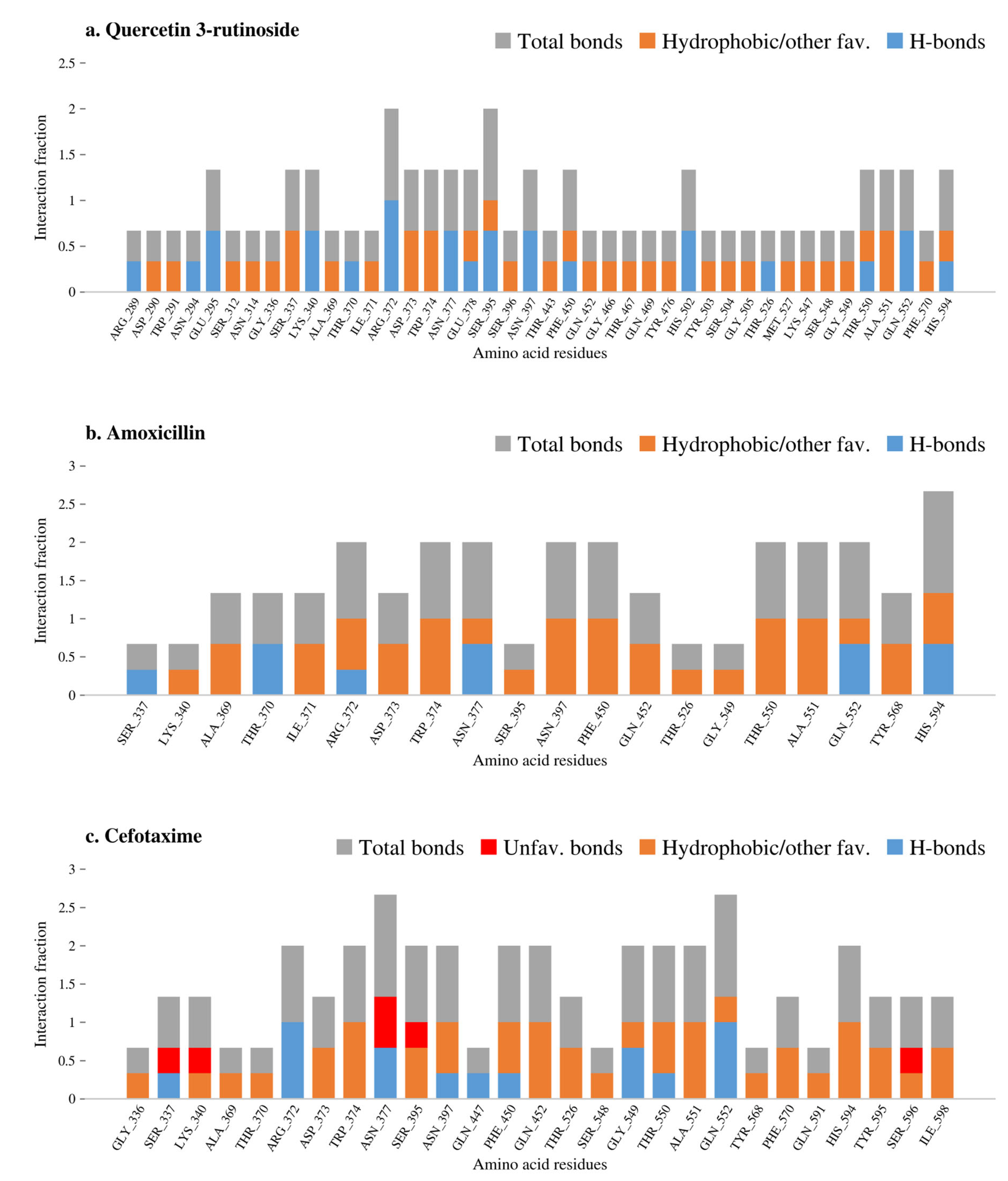
Residue-Level Interaction Fractions of Quercetin 3-Rutinoside and Reference Antibiotics
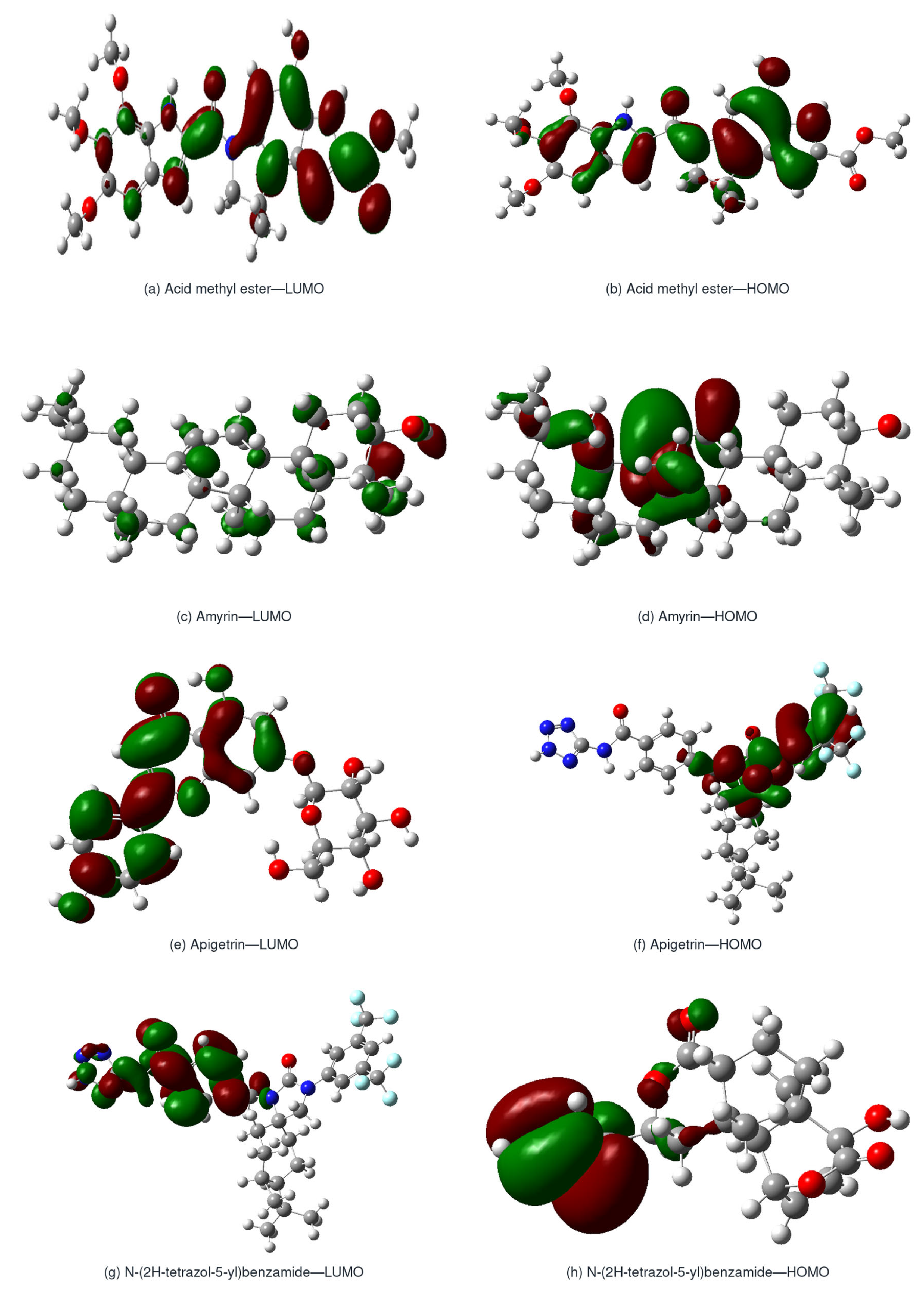
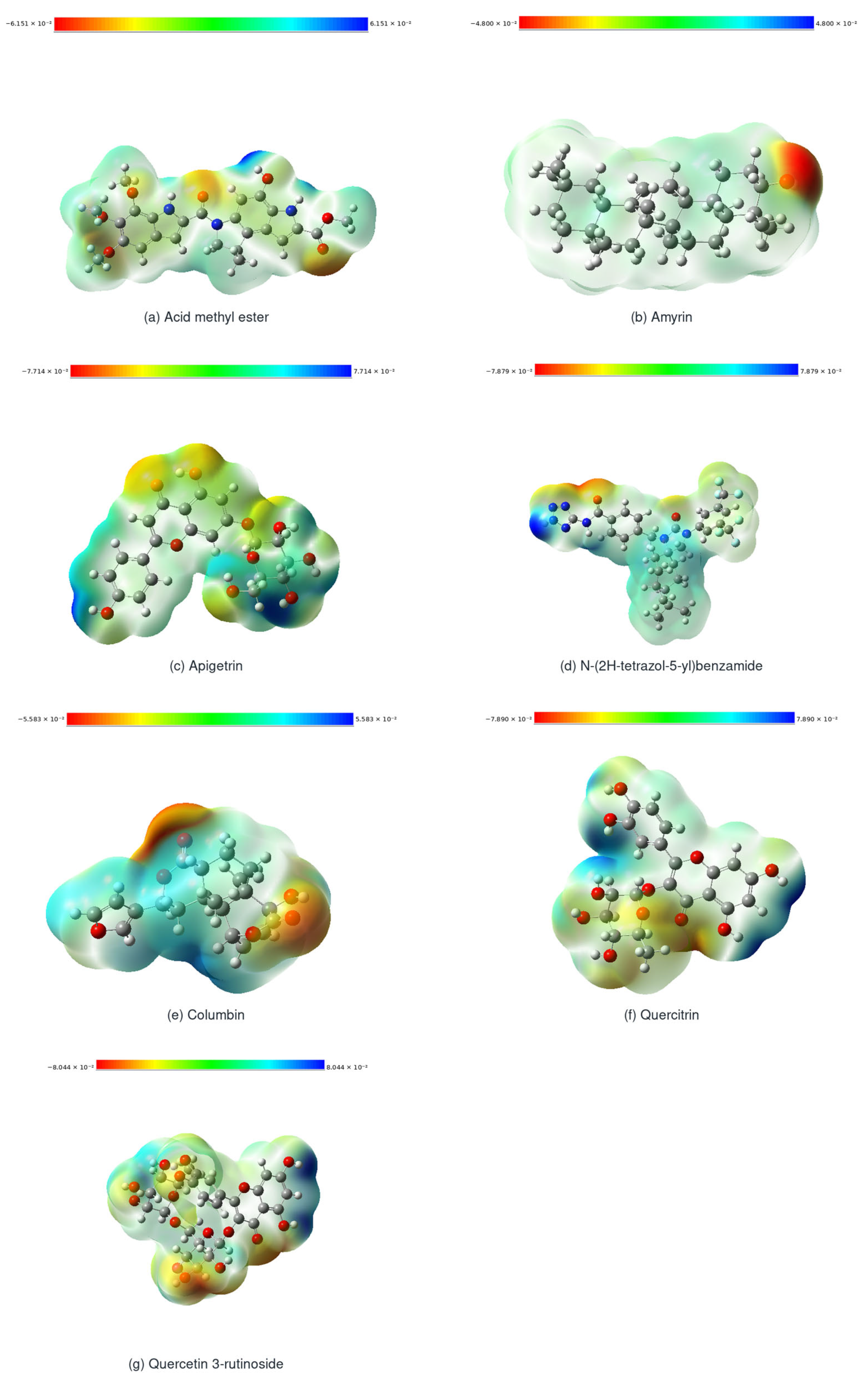
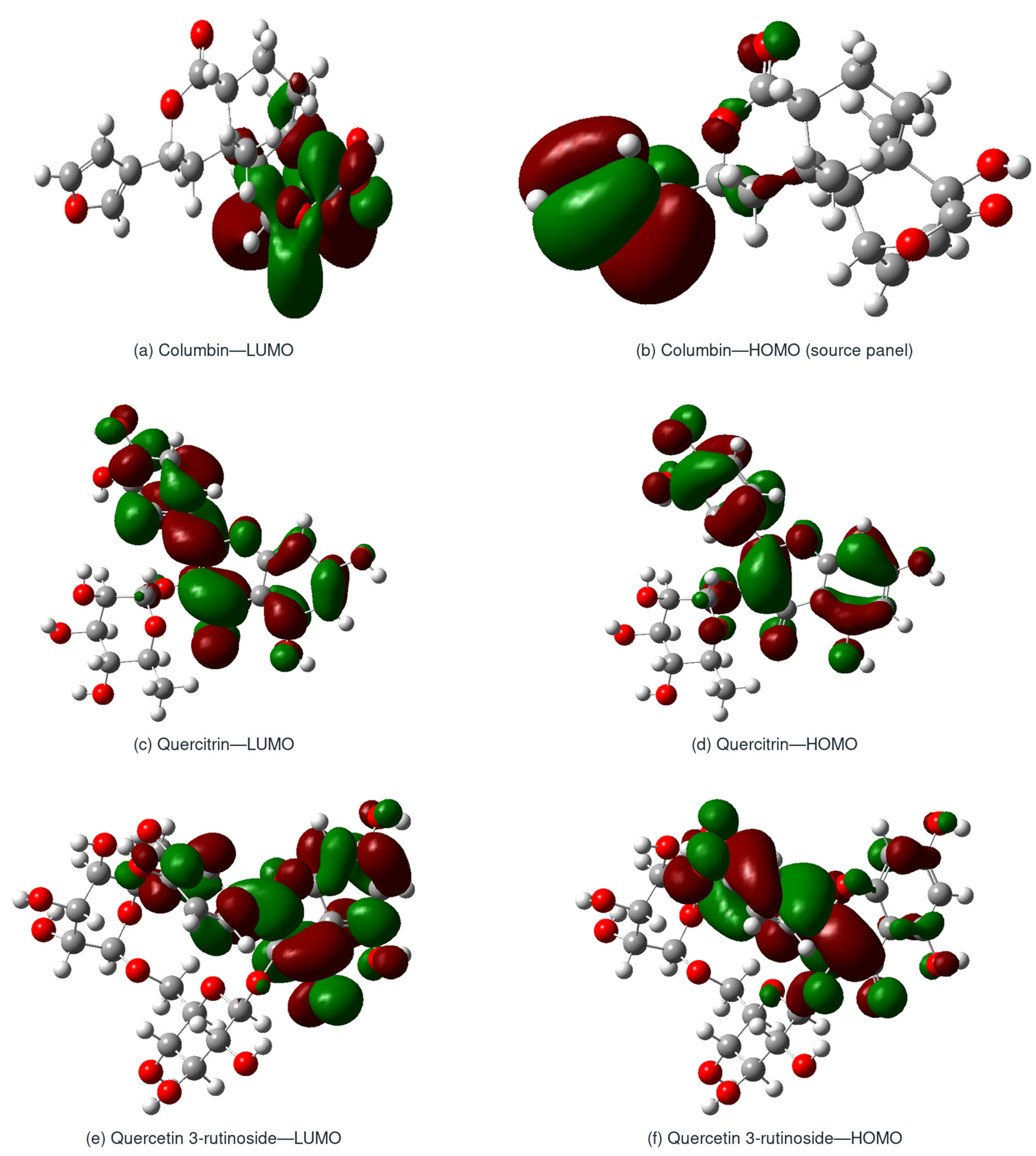
2.5. Density Functional Theory Analysis of the Top-Ranked D. oliveri Metabolites
2.6. Integrated Computational Prioritisation, Biological Implications and Experimental Validation
3. Materials and Methods
3.1. Protein and Ligand Preparation
3.2. Molecular Docking and Interaction Analysis
3.3. Pharmacokinetic and Drug-Likeness Analyses
3.4. Molecular Dynamics Simulation and Post-Dynamics Analysis
3.5. Density Functional Theory Analysis
3.6. Integrated Computational Prioritisation Criteria
4. Conclusions
Supplementary Materials
Author Contributions
Funding
Institutional Review Board Statement
Informed Consent Statement
Data Availability Statement
Acknowledgments
Conflicts of Interest
References
- GBD 2021 Antimicrobial Resistance Collaborators. Global burden of bacterial antimicrobial resistance 1990–2021: A systematic analysis with forecasts to 2050. Lancet 2024, 404, 1199–1226. [Google Scholar] [CrossRef] [Scilit]
- Sauvage, E.; Kerff, F.; Terrak, M.; Ayala, J.A.; Charlier, P. The penicillin-binding proteins: Structure and role in peptidoglycan biosynthesis. FEMS Microbiol. Rev. 2008, 32, 234–258. [Google Scholar] [CrossRef] [Scilit]
- Zapun, A.; Contreras-Martel, C.; Vernet, T. Penicillin-binding proteins and β-lactam resistance. FEMS Microbiol. Rev. 2008, 32, 361–385. [Google Scholar] [CrossRef] [Scilit]
- Otero, L.H.; Rojas-Altuve, A.; Llarrull, L.I.; Carrasco-López, C.; Kumarasiri, M.; Lastochkin, E.; Fishovitz, J.; Dawley, M.; Hesek, D.; Lee, M.; et al. How allosteric control of Staphylococcus aureus penicillin binding protein 2a enables methicillin resistance and physiological function. Proc. Natl. Acad. Sci. USA 2013, 110, 16808–16813. [Google Scholar] [CrossRef] [Scilit]
- Bernardo-García, N.; Mahasenan, K.V.; Batuecas, M.T.; Lee, M.; Hesek, D.; Petráčková, D.; Doubravová, L.; Branny, P.; Mobashery, S.; Hermoso, J.A. Allostery, recognition of nascent peptidoglycan, and cross-linking of the cell wall by the essential penicillin-binding protein 2x of Streptococcus pneumoniae. ACS Chem. Biol. 2018, 13, 694–702. [Google Scholar] [CrossRef] [Scilit]
- Newman, D.J.; Cragg, G.M. Natural products as sources of new drugs over the nearly four decades from 01/1981 to 09/2019. J. Nat. Prod. 2020, 83, 770–803. [Google Scholar] [CrossRef] [Scilit]
- Atanasov, A.G.; Zotchev, S.B.; Dirsch, V.M.; Supuran, C.T. Natural products in drug discovery: Advances and opportunities. Nat. Rev. Drug Discov. 2021, 20, 200–216. [Google Scholar] [CrossRef] [Scilit]
- Balogun, F.O.; Ajao, A.A.N.; Sabiu, S. A review of indigenous knowledge and ethnopharmacological significance of African Copaiba Balsam Tree, Daniellia oliveri (Fabaceae). Heliyon 2023, 9, e20228. [Google Scholar] [CrossRef] [Scilit]
- Tittikpina, N.K.; Kirsch, G.; Duval, R.E.; Chaimbault, P.; Jacob, C. Daniellia oliveri (Rolfe) Hutch and Dalziel: Antimicrobial activities, cytotoxicity evaluation; and phytochemical identification by GC-MS. Antibiotics 2022, 11, 1699. [Google Scholar] [CrossRef] [Scilit]
- Rani, N.; Vijayakumar, S.; Thanga Velan, L.P.; Arunachalam, A. Quercetin 3-O-rutinoside mediated inhibition of PBP2a: Computational and experimental evidence to its anti-MRSA activity. Mol. BioSyst. 2014, 10, 3229–3237. [Google Scholar] [CrossRef] [Scilit]
- Alhadrami, H.A.; Hamed, A.A.; Hassan, H.M.; Belbahri, L.; Rateb, M.E.; Sayed, A.M. Flavonoids as potential anti-MRSA agents through modulation of PBP2a: A computational and experimental study. Antibiotics 2020, 9, 562. [Google Scholar] [CrossRef] [Scilit]
- Aribisala, J.O.; Sabiu, S. Cheminformatics identification of phenolics as modulators of penicillin-binding protein 2a of Staphylococcus aureus: A structure–activity-relationship-based study. Pharmaceutics 2022, 14, 1818. [Google Scholar] [CrossRef] [Scilit]
- Aribisala, J.O.; S’thebe, N.W.; Sabiu, S. In silico exploration of phenolics as modulators of penicillin binding protein (PBP) 2x of Streptococcus pneumoniae. Sci. Rep. 2024, 14, 8788. [Google Scholar] [CrossRef] [Scilit]
- Aruwa, C.E.; Dweba, Y.; Ayodele, O.M.; Sabiu, S. Modulating Acinetobacter baumannii BfmR (RstA) drug target: Daniellia oliveri compounds as RstA quorum sensing inhibitors. Comput. Biol. Chem. 2025, 117, 108413. [Google Scholar] [CrossRef] [Scilit]
- Pantsar, T.; Poso, A. Binding affinity via docking: Fact and fiction. Molecules 2018, 23, 1899. [Google Scholar] [CrossRef] [Scilit]
- Kufareva, I.; Abagyan, R. Methods of protein structure comparison. In Homology Modeling: Methods and Protocols; Orry, A.J.W., Abagyan, R., Eds.; Humana Press: Totowa, NJ, USA, 2011; Volume 857. [Google Scholar] [CrossRef] [Scilit]
- Lipinski, C.A.; Lombardo, F.; Dominy, B.W.; Feeney, P.J. Experimental and computational approaches to estimate solubility and permeability in drug discovery and development settings. Adv. Drug Deliv. Rev. 1997, 23, 3–25. [Google Scholar] [CrossRef] [Scilit]
- Lipinski, C.A. Lead- and drug-like compounds: The rule-of-five revolution. Drug Discov. Today Technol. 2004, 1, 337–341. [Google Scholar] [CrossRef] [Scilit]
- Veber, D.F.; Johnson, S.R.; Cheng, H.-Y.; Smith, B.R.; Ward, K.W.; Kopple, K.D. Molecular properties that influence the oral bioavailability of drug candidates. J. Med. Chem. 2002, 45, 2615–2623. [Google Scholar] [CrossRef] [Scilit]
- Daina, A.; Michielin, O.; Zoete, V. SwissADME: A free web tool to evaluate pharmacokinetics, drug-likeness and medicinal chemistry friendliness of small molecules. Sci. Rep. 2017, 7, 42717. [Google Scholar] [CrossRef] [Scilit]
- Genheden, S.; Ryde, U. The MM/PBSA and MM/GBSA methods to estimate ligand-binding affinities. Expert Opin. Drug Discov. 2015, 10, 449–461. [Google Scholar] [CrossRef] [Scilit]
- Homeyer, N.; Gohlke, H. Free energy calculations by the molecular mechanics Poisson–Boltzmann surface area method. Mol. Inform. 2012, 31, 114–122. [Google Scholar] [CrossRef] [Scilit]
- Mahasenan, K.V.; Molina, R.; Bouley, R.; Batuecas, M.T.; Fisher, J.F.; Hermoso, J.A.; Chang, M.; Mobashery, S. Conformational dynamics in penicillin-binding protein 2a of methicillin-resistant Staphylococcus aureus, allosteric communication network and enablement of catalysis. J. Am. Chem. Soc. 2017, 139, 2102–2110. [Google Scholar] [CrossRef] [Scilit]
- Lobanov, M.Y.; Bogatyreva, N.S.; Galzitskaya, O.V. Radius of gyration as an indicator of protein structure compactness. Mol. Biol. 2008, 42, 623–628. [Google Scholar] [CrossRef] [Scilit]
- Parr, R.G.; von Szentpály, L.; Liu, S. Electrophilicity index. J. Am. Chem. Soc. 1999, 121, 1922–1924. [Google Scholar] [CrossRef] [Scilit]
- Amin, M.U.; Khurram, M.; Khattak, B.; Khan, J. Antibiotic additive and synergistic action of rutin, morin and quercetin against methicillin-resistant Staphylococcus aureus. BMC Complement. Altern. Med. 2015, 15, 59. [Google Scholar] [CrossRef] [Scilit]
- Zhao, G.; Meier, T.I.; Kahl, S.D.; Gee, K.R.; Blaszczak, L.C. BOCILLIN FL, a sensitive and commercially available reagent for detection of penicillin-binding proteins. Antimicrob. Agents Chemother. 1999, 43, 1124–1128. [Google Scholar] [CrossRef] [Scilit]
- O’Boyle, N.M.; Banck, M.; James, C.A.; Morley, C.; Vandermeersch, T.; Hutchison, G.R. Open Babel: An open chemical toolbox. J. Cheminform. 2011, 3, 33. [Google Scholar] [CrossRef] [Scilit]
- Dallakyan, S.; Olson, A.J. Small-molecule library screening by docking with PyRx. Methods Mol. Biol. 2015, 1263, 243–250. [Google Scholar] [CrossRef] [Scilit]
- Berman, H.M.; Westbrook, J.; Feng, Z.; Gilliland, G.; Bhat, T.N.; Weissig, H.; Shindyalov, I.N.; Bourne, P.E. The Protein Data Bank. Nucleic Acids Res. 2000, 28, 235–242. [Google Scholar] [CrossRef] [Scilit]
- Pettersen, E.F.; Goddard, T.D.; Huang, C.C.; Couch, G.S.; Greenblatt, D.M.; Meng, E.C.; Ferrin, T.E. UCSF Chimera—A visualization system for exploratory research and analysis. J. Comput. Chem. 2004, 25, 1605–1612. [Google Scholar] [CrossRef] [Scilit]
- Trott, O.; Olson, A.J. AutoDock Vina: Improving the speed and accuracy of docking with a new scoring function, efficient optimization, and multithreading. J. Comput. Chem. 2010, 31, 455–461. [Google Scholar] [CrossRef] [Scilit]
- Ertl, P.; Schuffenhauer, A. Estimation of synthetic accessibility score of drug-like molecules based on molecular complexity and fragment contributions. J. Cheminform. 2009, 1, 8. [Google Scholar] [CrossRef] [Scilit]
- Case, D.A.; Ben-Shalom, I.Y.; Brozell, S.R.; Cerutti, D.S.; Cheatham, T.E., III; Cruzeiro, V.W.D.; Darden, T.A.; Duke, R.E.; Ghoreishi, D.; Gilson, M.K.; et al. AMBER 2018; University of California: San Francisco, CA, USA, 2018. [Google Scholar]
- Wang, J.; Wolf, R.M.; Caldwell, J.W.; Kollman, P.A.; Case, D.A. Development and testing of a general AMBER force field. J. Comput. Chem. 2004, 25, 1157–1174. [Google Scholar] [CrossRef] [Scilit]
- Jorgensen, W.L.; Chandrasekhar, J.; Madura, J.D.; Impey, R.W.; Klein, M.L. Comparison of simple potential functions for simulating liquid water. J. Chem. Phys. 1983, 79, 926–935. [Google Scholar] [CrossRef] [Scilit]
- Ryckaert, J.-P.; Ciccotti, G.; Berendsen, H.J.C. Numerical integration of the Cartesian equations of motion of a system with constraints: Molecular dynamics of n-alkanes. J. Comput. Phys. 1977, 23, 327–341. [Google Scholar] [CrossRef] [Scilit]
- Roe, D.R.; Cheatham, T.E., III. PTRAJ and CPPTRAJ: Software for processing and analysis of molecular dynamics trajectory data. J. Chem. Theory Comput. 2013, 9, 3084–3095. [Google Scholar] [CrossRef] [Scilit]
- Becke, A.D. Density-functional thermochemistry. III. The role of exact exchange. J. Chem. Phys. 1993, 98, 5648–5652. [Google Scholar] [CrossRef] [Scilit]
- Lee, C.; Yang, W.; Parr, R.G. Development of the Colle–Salvetti correlation-energy formula into a functional of the electron density. Phys. Rev. B 1988, 37, 785–789. [Google Scholar] [CrossRef] [Scilit]
- Frisch, M.J.; Trucks, G.W.; Schlegel, H.B.; Scuseria, G.E.; Robb, M.A.; Cheeseman, J.R.; Scalmani, G.; Barone, V.; Petersson, G.A.; Nakatsuji, H.; et al. Gaussian 16, Revision C.01; Gaussian, Inc.: Wallingford, CT, USA, 2016.










| Target | Ligand | Score (kcal mol−1) | Total Bonds | Conventional H Bonds | Other Significant Reported Contacts |
|---|---|---|---|---|---|
| PBP2a (3ZFZ) | |||||
| Amoxicillin | −7.8 | 18 | 5: Ser462, Lys406, Asn464 (2), Ser643 | C–H: Ser461; π–sulfur: Tyr446 | |
| Cefotaxime | −7.9 | 22 | 3: Thr600, Gln521, Asn464 | C–H: Glu602, Gln521, Ser462; π–H: Gly520, Gly402, Tyr519; π–alkyl: Tyr446 | |
| Quercitrin | −9.3 | 22 | 4 reported: Gln521 (2), Asn464 | Unfavourable donor–donor: Glu602; π–π T-shaped: Tyr446 | |
| Apigetrin | −9.3 | 21 | 2: Ser403, Asn464 | π–sulfur: Met641; π–π T-shaped: Tyr446; π–alkyl: Ala642 (2) | |
| Quercetin 3-rutinoside | −9.0 | 27 | 8: Gln613, Thr600, Ser462, Ser461, Ser403, Asn464, Glu602, Thr444 | C–H: Tyr446 (2), Ser462; unfavourable donor–donor: Gln521, Tyr441; π–anion: Glu602 | |
| Acid methyl ester | −9.0 | 19 | 2: Ser598, Ser403 | C–H: Gly640; π-donor H bond: Thr582; unfavourable acceptor–acceptor: Ser462 | |
| PBP2x (5OJ0) | |||||
| Amoxicillin | −8.0 | 14 | 3: Gln552, His594 (2) | π–π stacked: Trp374 | |
| Cefotaxime | −7.8 | 19 | 4: Glu334, Gln452, Gln552 (2) | C–H: Arg372; unfavourable donor–donor: Asn397 | |
| Amyrin | −10.0 | 14 | None reported | Alkyl: Ala369 | |
| Columbin | −9.5 | 13 | 1: Lys340 | C–H: Asn397 | |
| Apigetrin | −9.7 | 19 | 5: Gln452, Gln552, Ser337 (2), Lys340 | C–H: Ala551, Arg372; unfavourable donor–donor: Arg372; π contact: Thr550; π–π stacked: Trp374 (2) | |
| Quercetin 3-rutinoside | −9.9 | 20 | 6: Ser395, Ser337, Gln552, Thr526, Asn377 (2) | π-donor H: His594; π–sigma: Trp374, Thr550; π–alkyl: Arg374 | |
| N-(2H-tetrazol-5-yl)benzamide | −12.0 | 24 | 4: His394, Thr550, Gln591, Ser596 | C–H: His530; halogen: Tyr524, Gly525 (2); unfavourable donor–donor: Ser596; π–π T: Tyr568; amide–π: His594; π–alkyl: His394, Trp374 (2), Ile598 | |
| Target | Compound | MW | HBA/HBD | log P | Lipinski | Solubility | GI Absorption | P-gp | CYP Alerts | Toxicity Alerts |
|---|---|---|---|---|---|---|---|---|---|---|
| PBP2a (3ZFZ) | ||||||||||
| Amoxicillin | 365.40 | 6/4 | 0.95 | Y | S | L | N | None | None; TC6 | |
| Cefotaxime | 455.47 | 9/3 | 1.75 | Y | S | L | N | None | None; TC6 | |
| Quercitrin | 448.38 | 11/7 | 1.60 | N | S | L | N | None | C, IM; TC5 | |
| Apigetrin | 432.38 | 10/6 | 1.98 | Y | S | L | Y | None | M; TC5 | |
| Quercetin 3-rutinoside | 610.52 | 16/10 | 0.46 | N | S | L | Y | None | IM; TC5 | |
| Acid methyl ester | 479.48 | 7/3 | 3.59 | Y | PS | H | N | 2C9, 2D6, 3A4 | IM; TC4 | |
| PBP2x (5OJ0) | ||||||||||
| Amoxicillin | 365.40 | 6/4 | 0.95 | Y | S | L | N | None | None; TC6 | |
| Cefotaxime | 455.47 | 9/3 | 1.75 | Y | S | L | N | None | None; TC6 | |
| Amyrin | 426.72 | 1/1 | 4.63 | Y | PS | L | N | None | IM; TC6 | |
| Columbin | 358.39 | 6/1 | 2.23 | Y | S | H | Y | None | IM; TC4 | |
| Apigetrin | 432.38 | 10/6 | 1.98 | Y | S | L | Y | None | M; TC5 | |
| Quercetin 3-rutinoside | 610.52 | 16/10 | 0.46 | N | S | L | Y | None | IM; TC5 | |
| N-(2H-tetrazol-5-yl)benzamide | 635.60 | 11/2 | 3.62 | N | PS | L | Y | 2D6, 3A4 | None; TC4 | |
| Complex | ΔEvdW | ΔEelec | ΔGgas | ΔGsolv | ΔGbind |
|---|---|---|---|---|---|
| PBP2a complexes | |||||
| PBP2a + Amoxicillin | −27.39 ± 4.12 | −73.60 ± 18.72 | −101.00 ± 19.46 | 80.84 ± 16.45 | −20.16 ± 5.24 |
| PBP2a + Cefotaxime | −38.20 ± 3.50 | −72.42 ± 6.52 | −110.63 ± 20.22 | 76.39 ± 12.23 | −34.23 ± 4.18 |
| PBP2a + Quercitrin | −42.70 ± 4.19 | −57.84 ± 20.18 | −100.54 ± 18.20 | 60.58 ± 11.93 | −39.96 ± 7.14 |
| PBP2a + Apigetrin | −23.51 ± 5.88 | −17.63 ± 9.94 | −41.15 ± 15.13 | 28.40 ± 9.45 | −12.74 ± 6.72 |
| PBP2a + Quercetin 3-rutinoside | −60.91 ± 4.81 | −60.76 ± 14.34 | −121.67 ± 10.87 | 63.15 ± 8.87 | −58.51 ± 4.62 |
| PBP2a + Acid methyl ester | −46.17 ± 5.36 | −31.19 ± 7.11 | −77.37 ± 7.00 | 39.67 ± 3.65 | −37.70 ± 5.79 |
| PBP2x complexes | |||||
| PBP2x + Amoxicillin | −23.03 ± 4.55 | −282.95 ± 24.27 | −305.98 ± 25.94 | 289.87 ± 21.98 | −16.11 ± 5.74 |
| PBP2x + Cefotaxime | −51.53 ± 5.53 | −60.82 ± 8.65 | −112.35 ± 9.99 | 65.40 ± 6.81 | −46.95 ± 5.59 |
| PBP2x + Amyrin | −28.69 ± 6.34 | −4.34 ± 2.90 | −29.86 ± 6.49 | 8.36 ± 2.10 | −21.49 ± 5.30 |
| PBP2x + Columbin | −31.51 ± 4.20 | −21.43 ± 8.45 | −62.81 ± 10.83 | 29.19 ± 7.27 | −33.62 ± 5.02 |
| PBP2x + Apigetrin | −37.85 ± 3.97 | −56.40 ± 13.40 | −94.26 ± 13.30 | 55.58 ± 8.58 | −38.67 ± 5.82 |
| PBP2x + Quercetin 3-rutinoside | −58.08 ± 7.97 | −68.05 ± 12.21 | −126.13 ± 11.14 | 70.21 ± 6.93 | −55.92 ± 7.45 |
| PBP2x + N-(2H-tetrazol-5-yl)benzamide | −50.49 ± 4.18 | −273.60 ± 14.38 | −324.09 ± 14.35 | 281.55 ± 13.10 | −42.53 ± 3.94 |
| System | RMSD (Å) | RMSF (Å) | Rg (Å) | SASA (Å2) | Intramolecular H Bonds |
|---|---|---|---|---|---|
| PBP2a systems | |||||
| PBP2a + Amoxicillin | 4.22 ± 1.68 | 3.55 ± 1.80 | 36.69 ± 0.66 | 26,616.43 ± 511 | 336.49 ± 11 |
| PBP2a + Cefotaxime | 2.08 ± 0.52 | 1.30 ± 0.51 | 36.89 ± 0.12 | 26,243.43 ± 396 | 335.23 ± 11 |
| PBP2a + Quercitrin | 2.43 ± 0.65 | 1.42 ± 0.71 | 36.84 ± 0.22 | 25,870.25 ± 351 | 335.23 ± 12 |
| PBP2a + Apigetrin | 2.21 ± 0.44 | 1.26 ± 0.54 | 36.68 ± 0.17 | 26,491.37 ± 415 | 329.57 ± 12 |
| PBP2a + Quercetin 3-rutinoside | 1.64 ± 0.36 | 1.26 ± 0.50 | 36.95 ± 0.13 | 25,964.01 ± 538 | 341.77 ± 11 |
| PBP2a + Acid methyl ester | 2.00 ± 0.43 | 1.40 ± 0.60 | 37.05 ± 0.22 | 26,536.93 ± 474 | 334.16 ± 11 |
| Apo PBP2a | 3.76 ± 0.80 | 2.43 ± 0.17 | 36.76 ± 0.50 | 26,380.97 ± 425 | 337.91 ± 11 |
| PBP2x systems | |||||
| PBP2x + Amoxicillin | 4.46 ± 0.80 | 1.93 ± 1.13 | 29.83 ± 0.29 | 28,720.48 ± 516 | 330.46 ± 12 |
| PBP2x + Cefotaxime | 2.65 ± 0.49 | 1.59 ± 0.90 | 29.21 ± 0.21 | 27,512.36 ± 418 | 331.67 ± 12 |
| PBP2x + Amyrin | 4.29 ± 0.94 | 1.76 ± 1.05 | 29.61 ± 0.21 | 28,725.79 ± 442 | 331.34 ± 14 |
| PBP2x + Columbin | 3.95 ± 0.80 | 1.89 ± 1.12 | 29.97 ± 0.27 | 27,692.17 ± 492 | 332.96 ± 12 |
| PBP2x + Apigetrin | 4.27 ± 1.02 | 2.21 ± 1.43 | 29.53 ± 0.30 | 28,397.65 ± 599 | 329.77 ± 12 |
| PBP2x + Quercetin 3-rutinoside | 4.98 ± 0.91 | 1.75 ± 1.07 | 30.13 ± 0.13 | 27,180.36 ± 668 | 339.36 ± 12 |
| PBP2x + N-(2H-tetrazol-5-yl)benzamide | 7.25 ± 2.22 | 2.53 ± 1.94 | 29.49 ± 0.31 | 28,876.50 ± 451 | 322.48 ± 12 |
| Apo PBP2x | 3.99 ± 0.66 | 1.93 ± 1.23 | 29.19 ± 0.36 | 28,112.46 ± 446 | 331.65 ± 12 |
| Descriptor (eV) | Quercitrin | Apigetrin | Quercetin 3-Rutinoside | Acid Methyl Ester | Amyrin | Columbin | N-(2H-tetrazol-5-yl)benzamide |
|---|---|---|---|---|---|---|---|
| E_LUMO | −1.922 | −2.141 | −1.794 | −1.659 | −0.192 | −1.263 | −1.917 |
| E_HOMO | −6.198 | −6.315 | −5.986 | −5.462 | −6.237 | −6.905 | −6.707 |
| Energy gap (ΔE) | 4.276 | 4.174 | 4.192 | 3.803 | 6.045 | 5.642 | 4.790 |
| Ionisation energy (I) | 6.198 | 6.315 | 5.986 | 5.462 | 6.237 | 6.905 | 6.707 |
| Electron affinity (A) | 1.922 | 2.141 | 1.794 | 1.659 | 0.192 | 1.263 | 1.917 |
| Hardness (η) | 2.138 | 2.087 | 2.096 | 1.902 | 3.023 | 2.821 | 2.395 |
| Softness (S, eV−1) | 0.468 | 0.479 | 0.477 | 0.526 | 0.331 | 0.355 | 0.418 |
| Electronegativity (χ) | 4.060 | 4.228 | 3.890 | 3.561 | 3.215 | 4.084 | 4.312 |
| Chemical potential (μ) | −4.060 | −4.228 | −3.890 | −3.561 | −3.215 | −4.084 | −4.312 |
| Electrophilicity (ω) | 3.855 | 4.282 | 3.610 | 3.334 | 1.710 | 2.956 | 3.882 |
Disclaimer/Publisher’s Note: The statements, opinions and data contained in all publications are solely those of the individual author(s) and contributor(s) and not of MDPI and/or the editor(s). MDPI and/or the editor(s) disclaim responsibility for any injury to people or property resulting from any ideas, methods, instructions or products referred to in the content. |
© 2026 by the authors. Licensee MDPI, Basel, Switzerland. This article is an open access article distributed under the terms and conditions of the Creative Commons Attribution (CC BY) license.
Share and Cite
Aribisala, J.O.; S’thebe, N.W.; Ayodele, O.M.; Sabiu, S. Comparative Structure-Based Prioritisation of Daniellia oliveri Metabolites Against PBP2a of Staphylococcus aureus and PBP2x of Streptococcus pneumoniae. Drugs Drug Candidates 2026, 5, 51. https://doi.org/10.3390/ddc5030051
Aribisala JO, S’thebe NW, Ayodele OM, Sabiu S. Comparative Structure-Based Prioritisation of Daniellia oliveri Metabolites Against PBP2a of Staphylococcus aureus and PBP2x of Streptococcus pneumoniae. Drugs and Drug Candidates. 2026; 5(3):51. https://doi.org/10.3390/ddc5030051
Chicago/Turabian StyleAribisala, Jamiu Olaseni, Nosipho Wendy S’thebe, Oladunni Mary Ayodele, and Saheed Sabiu. 2026. "Comparative Structure-Based Prioritisation of Daniellia oliveri Metabolites Against PBP2a of Staphylococcus aureus and PBP2x of Streptococcus pneumoniae" Drugs and Drug Candidates 5, no. 3: 51. https://doi.org/10.3390/ddc5030051
APA StyleAribisala, J. O., S’thebe, N. W., Ayodele, O. M., & Sabiu, S. (2026). Comparative Structure-Based Prioritisation of Daniellia oliveri Metabolites Against PBP2a of Staphylococcus aureus and PBP2x of Streptococcus pneumoniae. Drugs and Drug Candidates, 5(3), 51. https://doi.org/10.3390/ddc5030051