1. Introduction
Interleukin-17A (IL-17A) has been recognized as an inflammatory cytokine that plays a central role in immune responses and the maintenance of tissue homeostasis since its first identification by Rouvier et al. in 1993 [
1]. IL-17A is a representative member of the IL-17 family of cytokines (IL-17A–F) and has a wide range of physiological functions, from host defense to tissue repair. In particular, it plays an essential role in defense against bacterial and fungal infections. Conversely, its excessive activation contributes critically to the pathogenesis of immune-mediated diseases such as psoriasis and rheumatoid arthritis [
2,
3].
In recent years, interest in IL-17A has expanded beyond the immune system to the central nervous system [
4,
5,
6]. IL-17A has been linked to neurological and psychiatric disorders such as multiple sclerosis, autism spectrum disorder, and schizophrenia, and its potential as a novel therapeutic target is under active investigation. The development of IL-17A-targeted therapeutic agents has progressed steadily, and anti-IL-17A antibodies are already approved for clinical use, with demonstrated efficacy in several immune-mediated diseases [
7,
8].
This review provides a comprehensive overview of IL-17A, covering its molecular structure, intracellular signaling pathways, physiological functions, and disease associations, with an emphasis on recent findings. Particular attention is given to areas of rapid progress, including transcriptional control mechanisms, cell type-specific receptor expression, post-transcriptional regulation of signaling, and functions in the central nervous system. Together, these advances are expected to inform the development of novel therapeutic strategies targeting IL-17A.
2. Interleukin-17A
2.1. The IL-17 Family
The IL-17 family comprises six structurally related cytokines, designated IL-17A through IL-17F, which share a conserved cystine-knot fold that is nonetheless structurally distinct from that of other cystine-knot–superfamily cytokines such as NGF and TGF-β [
9]. IL-17A and IL-17F are the most closely related (~50% amino acid identity) and can form both homodimers (IL-17A/A, IL-17F/F) and the heterodimer IL-17A/F [
10]. IL-17B, IL-17C, and IL-17D exhibit more restricted expression patterns and distinct biological functions, while IL-17E (also known as IL-25) is primarily associated with type 2 immune responses and allergic inflammation. Despite this diversity, all family members signal through receptor complexes that share architectural features with IL-17RA serving as a common subunit or co-receptor for several family members. Recent brain-wide mapping studies have further revealed neuromodulatory functions for IL-17 family members beyond immunity [
11].
2.2. Molecular Structure of IL-17A
IL-17A is a glycoprotein that functions as a homodimer with a molecular weight of approximately 35 kDa. It forms intramolecular disulfide bonds via four cysteine residues and an intermolecular disulfide bond via a single cysteine residue. Its three-dimensional structure exhibits a unique folding pattern distinct from that of other cystine-knot-type cytokines such as NGF and TGF-β [
9]. Crystallographic analyses have revealed that IL-17A adopts a β-strand-rich topology in which two monomers associate in an antiparallel orientation to form a compact dimer presenting two receptor-binding surfaces. The receptor-binding interface engages IL-17RA primarily through a patch on the concave face of the dimer, while IL-17RC recognizes a distinct surface, enabling sequential assembly of the ternary ligand–receptor complex. This asymmetric engagement is thought to underlie the ability of IL-17A/F heterodimers to signal through the same IL-17RA/RC complex but with altered potency compared to homodimers.
The IL-17A gene comprises three exons and two introns and contains a highly conserved regulatory region [
3]. The first exon encodes the signal peptide, whereas the second and third exons encode the mature protein. The promoter region contains binding sites for transcription factors including RORγt and STAT3, and expression of the gene is precisely regulated at multiple levels—transcriptional, translational, and post-translational. IL-17A is glycosylated post-translationally, a modification that plays a pivotal role in controlling its secretion efficiency and biological activity. The conservation of the N-linked glycosylation site among species underscores the functional significance of this modification [
12]. Proteolytic processing of the N-terminal propeptide is also required for full biological activity, and alternative processing events have been described that yield molecular forms with differing receptor affinities and circulating half-lives.
2.3. Transcriptional Regulation of IL-17A
The nuclear receptor RORγt is the central regulator of IL-17A transcription, binding directly to the promoter region of the IL-17A gene to drive transcriptional activation [
13]. In support of this central role, we previously reported that transgenic mice overexpressing RORγt exhibited elevated Rorc and IL-17A mRNA expression and chronically increased circulating IL-17A, with associated alterations in hippocampal microglial density [
6]. RORγt expression is itself driven by STAT3 signaling in response to upstream cytokines, particularly IL-6 and IL-23 [
14]. IRF4 and BATF act cooperatively, engaging enhancer elements to remodel chromatin architecture, thereby promoting transcriptional activation [
15]. Additional transcription factors, including c-Maf and AHR, also contribute significantly to the regulation of IL-17A gene expression [
15,
16]. Epigenetic mechanisms are increasingly appreciated as essential regulators of IL-17A expression. The histone acetyltransferase p300 and the methyltransferase EZH2 govern the chromatin configuration of the IL-17A locus, modulating its accessibility. Notably, the dynamic balance between H3K27ac, an activating epigenetic mark, and H3K27me3, a repressive counterpart, serves as a pivotal determinant of IL-17A transcriptional output [
17].
2.4. Cellular Sources of IL-17A
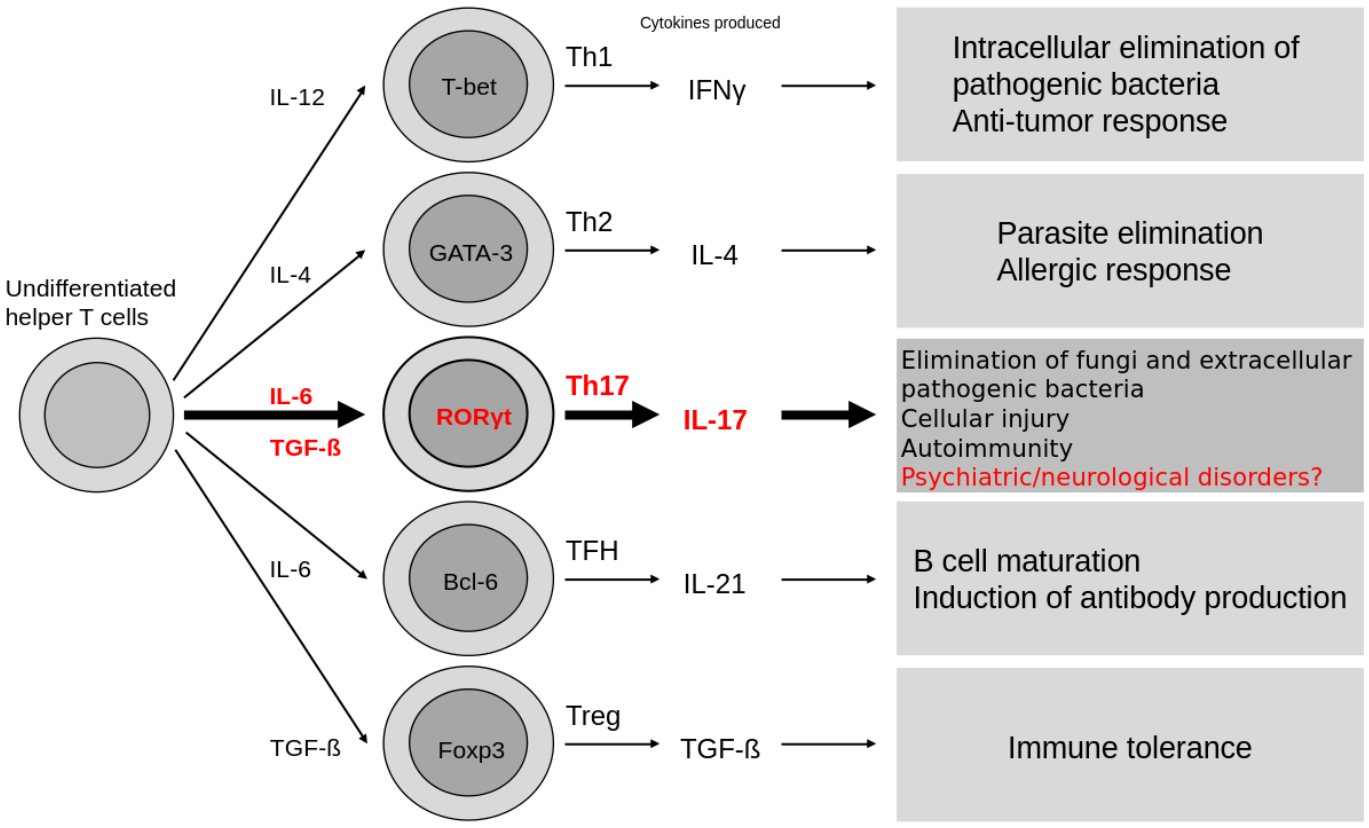
IL-17A production arises from multiple cellular sources, each governed by characteristic regulatory mechanisms. The principal producers are Th17 cells, which differentiate from naïve CD4
+ T cells under the influence of cytokines including TGF-β, IL-6, and IL-23. This differentiation program is driven by STAT3 signaling, which induces RORγt expression and confers IL-17A-producing capacity [
18]. γδ T cells represent another important source of IL-17A. Of particular interest is a distinct subset that intrinsically acquires IL-17A-producing capacity during thymic development. These cells display tissue-resident properties and play an indispensable role in initiating immune responses during the early phases of infection [
19]. Among innate lymphoid cells, group 3 ILCs (ILC3s) represent a principal source of IL-17A in mucosal tissues. These cells promptly secrete IL-17A upon stimulation with IL-23 and IL-1β, playing an essential role in maintaining mucosal barrier function [
20]. Additional cellular sources include invariant natural killer T (iNKT) cells, CD8
+ Tc17 cells, and neutrophils, highlighting the broad cellular basis of IL-17A production in health and disease. The differentiation of Th17 cells and their relationship with other CD4
+ T helper subsets is summarized in
Figure 1.
3. The IL-17A Receptor
3.1. The IL-17 Receptor Family and Its Structural Features
The IL-17 receptor family comprises five members, IL-17RA to IL-17RE. A heterodimeric complex of IL-17RA and IL-17RC mediates effective IL-17A signaling. IL-17RA itself is a ~90 kDa type I transmembrane protein, harboring a cytoplasmic SEFIR (Similar Expression to Fibroblast growth factor/IL-17R) domain that is indispensable for propagating downstream signaling events [
21]. The SEFIR domain shares structural homology with the TIR (Toll/IL-1R) domain of Toll-like receptors and IL-1R family members, and mediates homotypic protein–protein interactions with the adaptor Act1. IL-17RA is broadly expressed across nearly all tissues; however, its expression levels vary markedly depending on cell type and physiological context. Transcriptional regulation of IL-17RA is mediated by an array of transcription factors, notably NF-κB, AP-1, C/EBPβ, and C/EBPδ [
22]. By contrast, the expression of IL-17RC is more tissue-specific, and several isoforms arising from alternative splicing have been described [
3]. IL-17RA also pairs with other IL-17 receptor subunits, namely IL-17RB (the IL-17E/IL-25 receptor) and IL-17RE (the IL-17C receptor), while IL-17RD has modulatory functions. This modular “hub” architecture allows IL-17RA to organize distinct signaling complexes tailored to different IL-17 family members.
3.2. Cellular Heterogeneity of IL-17 Receptor Expression
IL-17 receptor–expressing cells are widely distributed across tissues, with functional outcomes that vary according to cellular context. Epithelial cells of the airway, intestinal tract, and skin (keratinocytes) exhibit high expression of IL-17RA and IL-17RC. In these epithelial compartments, IL-17 signaling is essential for barrier maintenance, primarily through the induction of antimicrobial peptides (including S100A7/A8/A9, β-defensins, and LL-37/cathelicidin), regulation of tight junction-associated molecules, and the production of chemokines that recruit neutrophils [
23]. Recent single-cell studies have revealed marked heterogeneity of IL-17 receptor expression within the keratinocyte lineage itself: Palazzo et al. demonstrated that IL-17 ligands and receptors are differentially expressed across keratinocyte stem cells, early transit amplifying cells, and late transit amplifying cells, with IL-17RA, IL-17RC, and IL-17RE showing the most heterogeneous regulation. Functionally, IL-17A and IL-17A/F stimulation suppressed stem cell proliferation and induced a psoriasiform inflammatory and differentiation program [
24]. These findings indicate that the cellular response to IL-17 is not uniform even within a single lineage and is governed by the differentiation state of the responding cell.
Synovial and dermal fibroblasts constitutively express IL-17 receptors, and IL-17 signaling in these cells contributes to tissue remodeling by inducing the production of inflammatory mediators and matrix metalloproteinases. In rheumatoid arthritis, upregulation of IL-17 receptor expression on synovial fibroblasts plays a critical role in disease pathogenesis [
25]. Expression of IL-17 receptors on vascular endothelial cells has also attracted attention, as IL-17 signaling is implicated in regulating angiogenesis and vascular permeability. During inflammation, endothelial IL-17 receptor expression is upregulated, thereby inducing adhesion molecules and promoting the transendothelial migration of inflammatory cells [
26].
3.3. The IL-17 Signaling Pathway
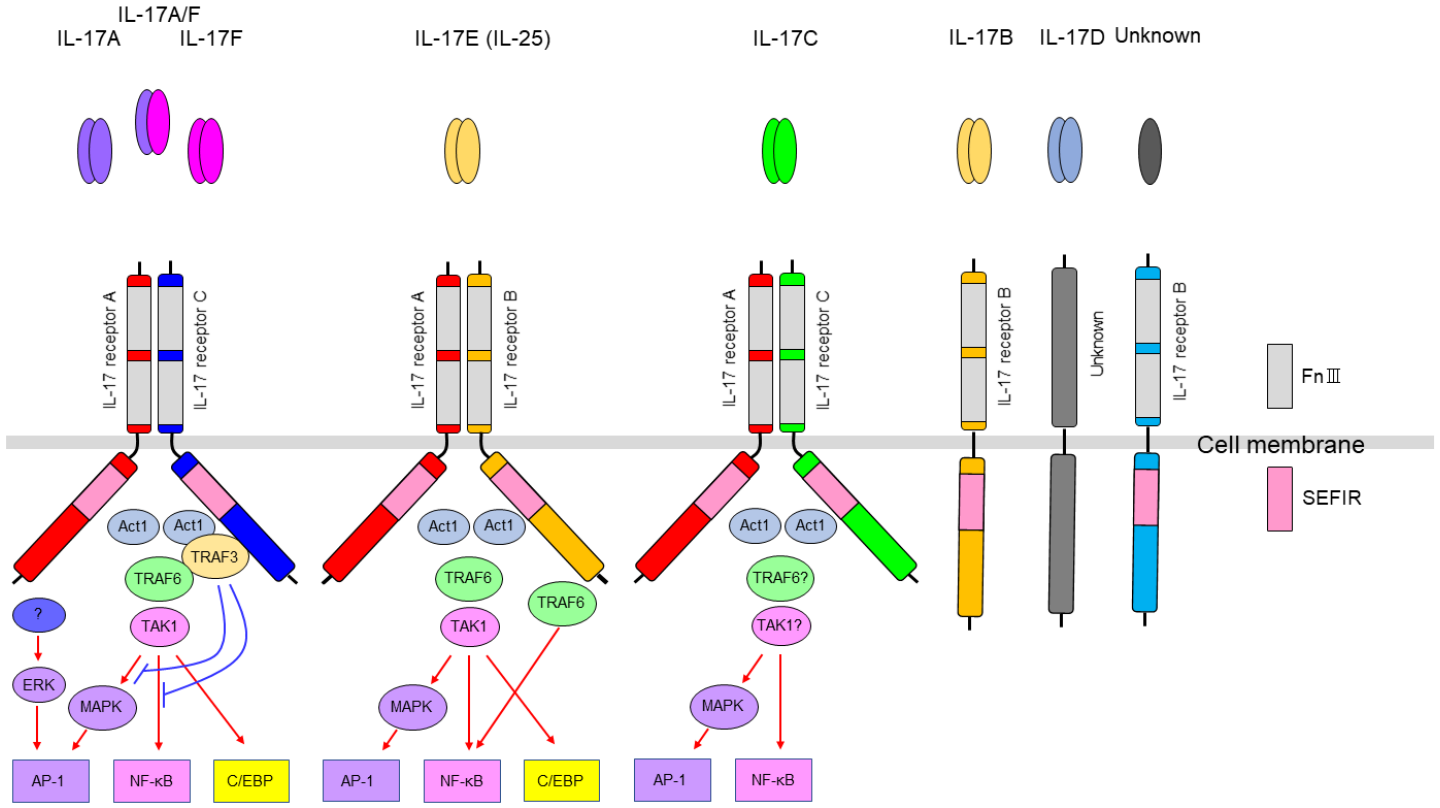
Signal transduction by IL-17A begins with the assembly of its receptor complex. Engagement of IL-17A with the IL-17RA/RC heterodimer induces conformational rearrangements that facilitate the association of the adaptor Act1 (TRAF3IP2) with the receptor’s cytoplasmic domains via SEFIR–SEFIR interaction. Act1 is a modular adaptor containing an N-terminal helix-loop-helix domain, a ubiquitin-binding domain, a U-box E3 ubiquitin ligase domain, and a C-terminal SEFIR domain. Beyond its role as a scaffold, Act1 exerts E3 ubiquitin ligase activity that drives the K63-linked polyubiquitination and activation of downstream mediators including TRAF6 [
26,
27]. K63-linked ubiquitin chains serve as non-degradative signaling platforms that recruit kinases such as TAK1 and thereby propagate signaling. In contrast, K48-linked ubiquitination marks substrates for proteasomal degradation. The distinction between these ubiquitin chain topologies is central to understanding how IL-17 signaling is both initiated and ultimately terminated.
Downstream signaling of IL-17A predominantly engages the NF-κB, MAPK, and C/EBP pathways. The NF-κB axis encompasses both canonical and non-canonical branches. Canonical NF-κB activation involves stimulation of the IKK complex (IKKα/β/γ), leading to IκBα phosphorylation and degradation, and consequent nuclear translocation of p65/p50 heterodimers that drive the transcription of inflammatory cytokines, chemokines, and adhesion molecules. The non-canonical branch, in contrast, depends on NIK activation, which drives p100 processing and the nuclear accumulation of p52/RelB complexes involved in lymphoid organogenesis and sustained inflammatory gene expression [
26,
27,
28]. The MAPK pathway is characterized by the activation of p38 MAPK, ERK1/2, and JNK. p38 MAPK is critical for transcriptional regulation of inflammatory genes as well as mRNA stabilization; ERK1/2 governs proliferative responses and cytokine production; and JNK activation regulates gene expression primarily through AP-1 [
28]. The C/EBP pathway involves the induction of C/EBPβ and C/EBPδ, which together regulate the transcription of numerous target genes. Notably, they play a pivotal role in governing the expression of antimicrobial peptides and inflammatory cytokines [
22,
28]. In parallel, IL-17 signaling potently stabilizes mRNAs of inflammatory target genes through post-transcriptional mechanisms that extend the half-life of transcripts containing AU-rich elements or stem-loop structures in their 3′ untranslated regions. This mRNA stabilization amplifies the transcriptional output of NF-κB and C/EBP, producing a sustained inflammatory response that is characteristic of IL-17–driven tissue pathology. The overall signaling cascade is illustrated in
Figure 2.
3.4. Negative Regulation of IL-17 Signaling
Given the potent proinflammatory capacity of IL-17A, multiple negative feedback mechanisms operate to restrain its signaling. The deubiquitinase A20 (encoded by TNFAIP3) is induced in response to IL-17 stimulation in an NF-κB–dependent manner and subsequently binds to and deubiquitinates TRAF6, thereby dampening both NF-κB and MAPK (particularly JNK) pathways [
29]. TNFAIP3 polymorphisms are associated with susceptibility to psoriasis, rheumatoid arthritis, and inflammatory bowel disease, underscoring the clinical importance of this regulatory axis.
Post-transcriptional control of inflammatory gene expression represents a second critical layer of regulation. Regnase-1 (also known as MCPIP1 or Zc3h12a) is an endoribonuclease that degrades mRNAs encoding IL-6, IκBζ, and other IL-17 target genes by recognizing stem-loop structures in their 3′ untranslated regions [
30]. Upon IL-17 stimulation, Regnase-1 is phosphorylated by an Act1–TBK1/IKKi axis, leading to its release from the endoplasmic reticulum and subsequent proteasomal degradation, which in turn permits stabilization and translation of IL-17–induced transcripts [
31]. Genetic deficiency of Regnase-1 in mice results in exacerbated IL-17–driven pathology in experimental autoimmune encephalomyelitis and skin inflammation [
30]. Conversely, the RNA-binding protein ARID5A counteracts Regnase-1 function by stabilizing stem-loop–containing mRNAs, and the AU-rich element–binding proteins HuR and TTP further modulate the half-life of IL-17 target transcripts. This dynamic interplay between degradation and stabilization machineries finely tunes the magnitude and duration of IL-17 responses.
4. Evolutionary Conservation of IL-17 and Its Signaling Pathways
IL-17A exhibits remarkable evolutionary conservation across vertebrates. The maintenance of its core structural and functional features from fish to mammals underscores the critical physiological significance of this molecule [
32,
33,
34]. The domains responsible for receptor engagement and signal transduction exhibit strong conservation across species, thereby preserving the core immunological functions of IL-17A. Genomic features, including exon–intron architecture and the spatial organization of regulatory regions, are likewise highly conserved. Promoter elements containing critical transcription factor–binding motifs, such as RORγt and STAT3 response elements, are maintained across vertebrate lineages, highlighting the evolutionary importance of conserved regulatory networks in governing IL-17A expression. Nonetheless, species-specific variation in expression patterns and functional roles has been documented, reflecting adaptive pressures and co-evolution with pathogens. For instance, fish exhibit a distinctive pattern of gill expression, potentially representing a specialized defense mechanism adapted to the aquatic environment.
In mammalian systems, IL-17A has undergone functional diversification beyond its ancestral role in antimicrobial defense. While its protective functions against extracellular pathogens are preserved, IL-17A also participates in diverse processes, including epithelial barrier maintenance, tissue repair, and modulation of the microbiota. Importantly, dysregulated IL-17A responses have been implicated in the etiology of multiple immune-mediated diseases, such as psoriasis, rheumatoid arthritis, and inflammatory bowel disease [
18,
35]. These findings illustrate the evolutionary trajectory of IL-17A toward expanded immunological functions in mammals, reflecting a fine balance between beneficial host defense and detrimental immunopathology.
5. Pathologies Associated with IL-17A Pathway Dysregulation
5.1. Psoriasis
IL-17A plays a central role in the pathogenesis of psoriasis [
2,
3]. Psoriasis is a chronic relapsing skin disease characterized by sharply demarcated erythematous plaques covered with silvery scales, histologically defined by epidermal hyperplasia (acanthosis), parakeratosis, elongation of rete ridges, dilated dermal capillaries, and dense inflammatory infiltrates comprising T cells, dendritic cells, and neutrophils. In psoriatic skin, IL-17A and IL-17F synergistically activate keratinocytes, driving the production of cytokines, chemokines, and antimicrobial peptides that fuel a self-amplifying inflammatory loop [
36]. The IL-23/IL-17 axis is now recognized as a defining immunological hallmark of psoriasis, and numerous experimental and clinical studies have established IL-17A as a key mediator of chronic skin inflammation and disease persistence [
37].
Mechanistically, plasmacytoid dendritic cells producing type I interferon and conventional dendritic cells producing IL-23 orchestrate the differentiation and maintenance of tissue-resident Th17 cells and IL-17–producing γδ T cells in the dermis. These cells secrete IL-17A and IL-17F, which act on keratinocytes bearing IL-17RA/RC complexes. At the cellular level, IL-17A signaling in keratinocyte stem cells and transit amplifying cells induces upregulation of CXCL1, CXCL8, and DEFB4, while suppressing stem cell proliferation and promoting psoriasiform differentiation [
24]. IL-17A also synergizes with TNF-α to amplify chemokine production, recruiting neutrophils that form Munro microabscesses characteristic of psoriatic lesions. Antimicrobial peptides such as S100A7 (psoriasin), S100A8/A9 (calprotectin), β-defensin 2, and LL-37 are robustly induced, contributing both to antimicrobial defense and to the sustained inflammatory milieu. Given the heterogeneity of keratinocyte responses across differentiation states, the clinical efficacy of anti-IL-17 therapy likely reflects concurrent effects on multiple keratinocyte subpopulations as well as on innate and adaptive immune cells that sustain the lesion.
Genome-wide association studies have identified multiple susceptibility loci that converge on the IL-23/IL-17 pathway, including IL23R, IL12B, TNFAIP3 (encoding A20), and TRAF3IP2 (encoding Act1), providing human genetic evidence for the causal role of this axis in psoriasis [
29]. The clinical success of IL-23 and IL-17 pathway inhibitors—which achieve complete or near-complete skin clearance in a majority of patients—represents one of the most compelling examples of targeted therapy informed by immunological mechanisms in contemporary medicine.
5.2. Rheumatoid Arthritis
In rheumatoid arthritis (RA), IL-17A contributes to chronic synovitis and joint destruction through multiple mechanisms. IL-17A acts on synovial fibroblasts to induce the production of IL-6, matrix metalloproteinases (MMP-1, MMP-3, MMP-13), and RANKL, thereby promoting cartilage degradation and osteoclast-mediated bone erosion [
25]. Synergy with TNF-α amplifies these effects, and the combination of IL-17 and TNF induces a pro-inflammatory, pro-coagulant, and pro-thrombotic phenotype in endothelial cells [
25]. Although anti-IL-17 biologics have shown efficacy in RA clinical trials, their therapeutic impact has been more modest than in psoriasis, reflecting the greater complexity of RA pathogenesis, which also involves IL-6, TNF-α, and autoantibody responses.
5.3. Inflammatory Bowel Disease
The role of IL-17A in inflammatory bowel disease (IBD) is more nuanced. While elevated IL-17A levels are observed in Crohn’s disease and ulcerative colitis lesions, clinical trials of IL-17A blockade paradoxically worsened Crohn’s disease in some patients [
38]. This has been attributed to the protective role of IL-17A in maintaining intestinal epithelial barrier integrity: IL-17A induces tight junction proteins and antimicrobial peptides that prevent bacterial translocation. Loss of this protective function following IL-17 blockade can precipitate barrier dysfunction and dysbiosis, illustrating the context-dependent duality of IL-17A as both pathogenic and protective.
5.4. Ankylosing Spondylitis and Other Spondyloarthropathies
Ankylosing spondylitis and related spondyloarthropathies are characterized by enthesitis and sacroiliitis, driven by IL-23/IL-17 axis activation in tissue-resident γδ T cells and ILC3s at enthesial sites. IL-17A inhibitors such as secukinumab and ixekizumab have demonstrated substantial clinical efficacy in these conditions, confirming the pathogenic role of IL-17A in driving axial inflammation and structural damage.
6. Implications of IL-17 Signaling in the Central Nervous System
6.1. Physiological Roles in the Healthy Brain
IL-17A has recently garnered significant attention for its roles within the central nervous system [
4,
11]. In the healthy brain, IL-17A production has been demonstrated not only in infiltrating Th17 cells but also in resident microglia, astrocytes, and subsets of neurons. Physiologically, IL-17A modulates neuronal plasticity and synaptogenesis, and regulates the proliferation and differentiation of neural stem cells [
39,
40,
41]. Meningeal γδ T cell–derived IL-17 has been shown to control hippocampal synaptic plasticity and short-term memory under homeostatic conditions [
39], indicating that tonic, low-level IL-17 signaling may contribute to normal cognitive function. This finding has reshaped the conceptual framework of neuroimmunology, establishing IL-17 as a bona fide neuromodulatory molecule rather than merely a pathological mediator.
A hallmark of IL-17 signaling within the central nervous system is the broad diversity of its receptor expression. Astrocytes, microglia, oligodendrocytes, and neurons have all been shown to express IL-17 receptors, each with distinct functional consequences. In astrocytes, IL-17RA signaling activates NF-κB and induces chemokines such as CXCL1 and CXCL2 that recruit peripheral leukocytes into the central nervous system. In microglia, IL-17 signaling modulates the polarization between pro-inflammatory and homeostatic states and influences phagocytic activity, including the synaptic pruning that shapes neural circuits during development. Consistent with this, we previously demonstrated that intraventricular administration of recombinant IL-17A into mid-gestational mouse embryos activates cortical microglia and alters their spatial distribution, particularly in periventricular regions and medial cortical areas [
5]. In oligodendrocytes, IL-17 signaling may affect myelination and remyelination, with implications for demyelinating diseases. Recent brain-wide mapping of immune receptors has uncovered a previously unrecognized neuromodulatory role for IL-17E (IL-25) and its receptor IL-17RB in specific neuronal populations, expanding the conceptual framework of IL-17 family action in the nervous system [
11]. Among the classical IL-17A receptor–expressing cells, astrocytic expression of IL-17RA has emerged as a key determinant in the pathophysiology of autoimmune neuroinflammatory diseases, most prominently multiple sclerosis [
42]. These diverse receptor-bearing cell types and their responses likely explain why IL-17A can exert context-dependent effects in the brain, ranging from physiological modulation of cognition to pathological amplification of neuroinflammation.
6.2. Multiple Sclerosis and Experimental Autoimmune Encephalomyelitis
In multiple sclerosis (MS) and in experimental autoimmune encephalomyelitis (EAE), IL-17A has been identified as a pivotal mediator of disease pathogenesis. Mechanistically, IL-17A promotes blood–brain barrier disruption, augments the infiltration of inflammatory leukocytes into the central nervous system, induces injury to oligodendrocytes, and accelerates demyelination, thereby driving disease progression [
35]. Astrocyte-restricted ablation of Act1, the critical IL-17 signaling adaptor, substantially ameliorates EAE severity, demonstrating that astrocytic IL-17 signaling is a key effector mechanism in autoimmune neuroinflammation [
42]. These observations highlight the importance of IL-17A as a potential therapeutic target in multiple sclerosis.
6.3. Alzheimer’s Disease and Neurodegeneration
Emerging evidence implicates IL-17A in cognitive dysfunction associated with neurodegenerative diseases. In murine models of Alzheimer’s disease, IL-17 triggers the onset of cognitive and synaptic deficits at early disease stages, preceding overt amyloid pathology [
41]. IL-17 also modulates synaptic plasticity in experimental models of multiple sclerosis, linking neuroinflammation to cognitive impairment [
40]. These findings suggest that IL-17 signaling is a potential therapeutic target for the cognitive symptoms of neurodegenerative diseases, although translation to human disease remains to be established.
6.4. Ischemic Brain Injury
Emerging evidence further implicates IL-17A in ischemic brain injury [
35,
43], where it contributes to disease progression by amplifying acute inflammatory responses, aggravating neuronal death, increasing blood–brain barrier permeability, and promoting glial cell activation. Cerebral IL-17–producing γδ T cells play a pivotal role in the delayed phase of ischemic injury, identifying this cell population as a potential therapeutic target for stroke [
43].
6.5. Psychiatric Disorders and Autism Spectrum Disorder
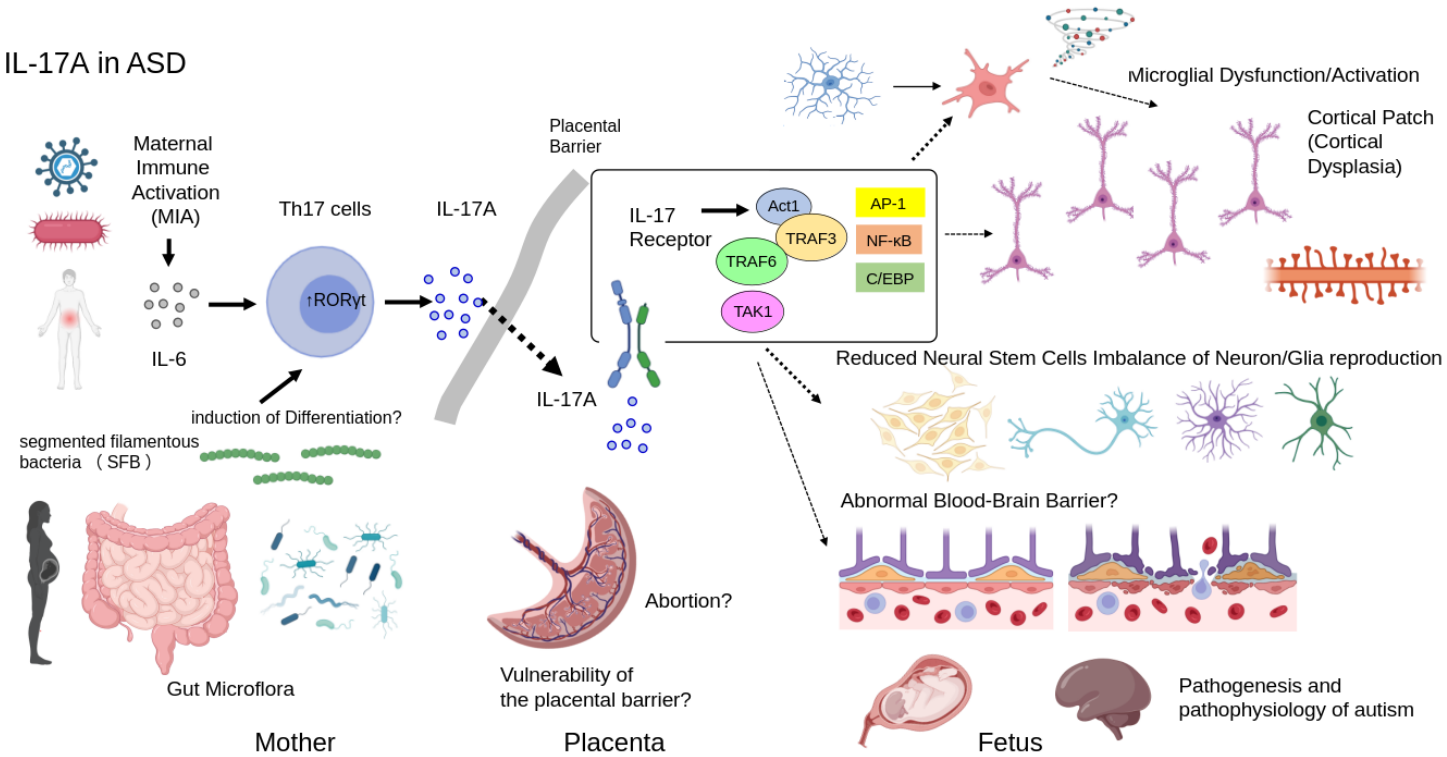
An emerging body of evidence has highlighted a potential connection between IL-17A and psychiatric disorders, with particular focus on autism spectrum disorder (ASD). Studies employing maternal immune activation (MIA) models have revealed that inflammation-induced elevations of IL-17A during gestation perturb fetal brain development, thereby promoting ASD-like behavioral phenotypes [
44]. The seminal work by Choi and colleagues demonstrated that Th17 cell–derived IL-17A in pregnant mice is necessary and sufficient to induce cortical patches of dysgenesis and ASD-like behavioral abnormalities in offspring, establishing IL-17A as a molecular link between maternal immune activation and neurodevelopmental disorders [
44]. Several pathological mechanisms have been implicated, including disrupted cortical development, defective neural circuit assembly, altered excitatory/inhibitory balance, and alterations in synaptic function. Impaired neural stem cell differentiation and incomplete neuronal network formation are proposed to underlie the emergence of core ASD phenotypes such as social interaction deficits, repetitive behaviors, and sensory abnormalities.
The cellular mechanisms by which maternal IL-17A influences fetal brain development involve direct actions on IL-17RA expressed by fetal neural progenitor cells and indirect effects mediated by placental cytokine cascades. Microglia, as the resident immune cells of the brain, mediate IL-17A signaling in the developing central nervous system, modulating synaptic pruning and neuroinflammatory responses throughout development and adulthood [
4]. Direct intraventricular administration of IL-17A to fetal mouse brains induces periventricular accumulation of activated CD68
+ microglia and alters their distribution in the medial cortex [
5], providing mechanistic insight into how maternal IL-17A signals can reshape fetal microglial phenotypes. Furthermore, recent findings link cytoskeletal and molecular motor dysfunction—particularly within kinesin and myosin families—to the neurobiology of ASD, with Myosin Id identified as an ASD risk gene and CYFIP1/SHANK3 variants causing defective dendritic spine formation [
45]. Notably, expression of psychiatric disorder-related kinesin superfamily proteins including KIF3A, KIF17, and KIF13A is potentiated in alternatively activated microglia [
46], suggesting a mechanistic bridge between microglial polarization states, cytoskeletal transport, and the synaptic pathology relevant to ASD. Dysregulation of microglial IL-17 signaling during critical developmental windows may permanently alter neural circuit architecture, contributing to the lasting behavioral phenotypes observed in affected offspring. These findings have motivated interest in preventive interventions targeting maternal IL-17 signaling during pregnancy, although the translation of such strategies to human disease remains in early stages.
In clinical settings, dysregulated levels of inflammatory cytokines—including IL-17A—have been documented in patients with ASD, and peripheral blood IL-17A concentrations correlate with clinical severity [
47]. In some studies, elevated maternal IL-17A during pregnancy has also been associated with an increased risk of ASD in the offspring, consistent with findings from animal models. Inflammatory cytokines have been implicated in the pathophysiology of schizophrenia and major depressive disorder as well, although evidence specifically concerning the role of IL-17A remains limited [
48,
49,
50]. Increased serum concentrations of IL-17 have been documented in patients with acute-phase schizophrenia and in individuals with major depressive disorder [
49,
51], though the pathophysiological relevance of these observations requires further elucidation. Collectively, current findings indicate that IL-17A could serve as a critical target both for deepening our understanding of psychiatric disorders—especially ASD—and for guiding the development of innovative therapeutic interventions. The complex interplay between maternal immune activation, IL-17A signaling, and fetal brain development in ASD pathogenesis is illustrated in
Figure 3.
7. Therapies
7.1. Approved Anti-IL-17 Biologics
Therapeutic monoclonal antibodies targeting IL-17A or the IL-17 receptor have transformed the management of immune-mediated inflammatory diseases. Secukinumab, the first approved IL-17A inhibitor, is a fully human IgG1κ monoclonal antibody that binds and neutralizes IL-17A. Phase 3 trials in plaque psoriasis demonstrated that secukinumab achieves PASI 75 (75% improvement in Psoriasis Area and Severity Index) in approximately 80% of patients and PASI 90 in approximately 60% at week 16 [
7]. Ixekizumab, a humanized IgG4 anti-IL-17A antibody, has shown comparable or superior efficacy, with PASI 75 responses approaching 90% in clinical trials [
8]. Brodalumab targets IL-17RA rather than the cytokine itself and thereby blocks signaling by all IL-17A–, IL-17F–, IL-17A/F–, and IL-17C–driven responses [
52]. These agents rapidly reduce disease severity, improve skin clearance, and substantially enhance quality of life in patients with moderate-to-severe disease [
53]. Beyond plaque psoriasis, these biologics have been approved and are widely used in psoriatic arthritis, ankylosing spondylitis, and hidradenitis suppurativa.
More recently, bimekizumab—a humanized IgG1 monoclonal antibody that selectively inhibits both IL-17A and IL-17F—has emerged as a next-generation anti-IL-17 therapy. The rationale for dual IL-17A/F blockade derives from evidence that IL-17F, though less potent than IL-17A on a molar basis, is expressed at higher levels in psoriatic lesions and contributes independently to inflammation. In the phase 3 BE VIVID trial, bimekizumab demonstrated superior efficacy over ustekinumab (an anti-IL-12/23 antibody) in moderate-to-severe plaque psoriasis, with PASI 90 response rates of 85% versus 50% at week 16 [
54]. The BE SURE trial further established superiority over adalimumab (anti-TNF), with substantially higher rates of complete skin clearance [
55]. The BE RADIANT trial provided the first head-to-head comparison of dual versus single IL-17 targeting, demonstrating that bimekizumab achieved PASI 100 (complete skin clearance) in 62% of patients at week 16, compared with 49% for secukinumab, with sustained superiority through week 48 [
56]. These findings indicate that dual neutralization of IL-17A and IL-17F achieves more complete suppression of IL-17–mediated inflammation than IL-17A blockade alone. Bimekizumab received regulatory approval for plaque psoriasis in the EU and UK in 2021 and subsequently in other jurisdictions, and has since been approved for psoriatic arthritis, axial spondyloarthritis, and hidradenitis suppurativa.
7.2. Safety Considerations
A balanced evaluation of anti-IL-17 therapies requires careful consideration of safety concerns. IL-17 blockade is associated with an increased risk of mucocutaneous Candida infections [
57], reflecting the physiological role of IL-17 in antifungal immunity at mucosal surfaces. The incidence of oral and oropharyngeal candidiasis is modestly higher with bimekizumab than with single-target IL-17A inhibitors, consistent with the additional contribution of IL-17F to antifungal defense. Several clinical reports have noted potential exacerbation of inflammatory bowel disease following IL-17A inhibition, indicating disease-specific vulnerabilities [
38]. Rare hypersensitivity reactions, including type I allergy to ixekizumab, have also been documented [
58]. Therefore, while IL-17-targeted agents represent a major therapeutic advance, their use should be guided by individual patient profiles and underlying comorbidities.
7.3. Emerging Therapeutic Strategies
Beyond established biologics, several emerging strategies target the IL-17 axis. RORγt inverse agonists and inhibitors are under clinical development, aiming to suppress Th17 differentiation at the transcriptional level and thereby reduce IL-17 production upstream. Small-molecule inhibitors of the IL-17RA–Act1 interaction, as well as antisense oligonucleotides targeting Regnase-1–mediated mRNA regulation, represent additional avenues under active investigation. These approaches may offer advantages in terms of oral bioavailability, cost, and the potential to modulate signaling magnitude rather than achieve complete blockade.
7.4. Therapeutic Applications in CNS Disorders
Beyond peripheral immune-mediated diseases, therapeutic applications in central nervous system disorders are now under active investigation [
4]. Clinical trials evaluating anti-IL-17A antibody therapy are underway for multiple sclerosis, yet significant technical challenges persist, notably regarding blood–brain barrier permeability and optimization of administration routes. Moreover, in the context of neurodegenerative and psychiatric disorders, the therapeutic application of IL-17A blockade remains an area requiring further investigation, with particular interest in preventive interventions targeting maternal immune activation in ASD.
8. Conclusions and Future Prospects
IL-17A is a key molecule involved in a wide range of physiological and pathological processes, from host defense against extracellular pathogens to central nervous system function. Its evolutionary conservation, complex signaling mechanisms, and association with diverse diseases highlight its importance in host defense and disease pathogenesis. Notably, IL-17A exhibits cell type-specific and context-dependent effects: despite being a single molecule, it elicits distinct and sometimes opposing outcomes depending on cellular context, exemplified by its protective barrier functions at mucosal surfaces versus its pathogenic roles in autoimmunity. This duality highlights both the potential of IL-17A as a therapeutic target and the challenges in its precise regulation.
Future research should focus on elucidating the cell type–specific regulatory mechanisms of IL-17A signaling, particularly the interplay between positive signaling (Act1–TRAF6) and negative regulators (A20, Regnase-1, ARID5A). Detailed analysis of IL-17A functions in the central nervous system holds promise for the development of novel therapies for neurodegenerative and psychiatric disorders. The recent success of bimekizumab demonstrates that refining the specificity of IL-17 blockade can yield substantial clinical gains, while research on maternal immune activation suggests the possibility of preventive strategies targeting neurodevelopmental disorders. Continued research addressing blood–brain barrier permeability, optimal administration routes, and patient stratification will be essential for translating these mechanistic insights into precision medicine approaches tailored to individual patients.
Author Contributions
S.S. and T.S. made significant contributions to the writing of the manuscript. A.K., S.K. and K.N. contributed to figure preparation and literature collection. All authors have read and agreed to the published version of the manuscript.
Funding
This work was supported by Grants-in-Aid for Scientific Research C (KAKENHI Nos. 19K08065, 22K07611), and Grant-in-Aid for Scientific Research on Innovative Areas “Multiscale Brain” (No. 19H05201) from The Ministry of Education, Culture, Sports, Science and Technology MEXT Japan. T.S. was also supported by the Foundation for Advanced Medical Research, the Naito Foundation, the Takeda Science Foundation, the Kawano Masanori Memorial Public Interest Incorporated Foundation for Promotion of Pediatrics, the Taiju Life Social Welfare Foundation, the Life Science Foundation of Japan, the Nakatomi Foundation, the Mishima Kaiun Memorial Foundation, the Kanehara Ichiro Memorial Foundation for Medical Science and Medical Care, the Foundation for Pharmaceutical Research. Part of this work was supported by the NIBB Collaborative Research Program and Advanced Animal Model Support (16H06276) of Grant-in-Aid for Scientific Research on Innovative Areas to T.S.
Institutional Review Board Statement
Not applicable. This review article did not involve any new studies with human participants or animals performed by the authors.
Informed Consent Statement
Not applicable. This review article did not involve any studies with human participants.
Data Availability Statement
No new data were created or analyzed in this study. Data sharing is not applicable to this article, as it is a review based solely on previously published literature.
Acknowledgments
We are grateful to Kentaro Itagaki, Koki Higuchi and Chikako Sakamoto for their valuable discussions and critical reading of this manuscript. During the preparation of this manuscript, the authors used an AI-based language tool to improve English readability and style. The authors reviewed and edited the content as necessary and take full responsibility for the accuracy and integrity of the manuscript.
Conflicts of Interest
The authors declare no conflicts of interest. The funders listed in the Funding Section were not involved in the design of the study; in the collection, analyses, or interpretation of data; in the writing of the manuscript; or in the decision to publish the results.
References
- Rouvier, E.; Luciani, M.F.; Mattei, M.G.; Denizot, F.; Golstein, P. CTLA-8, cloned from an activated T cell, bearing AU-rich messenger RNA instability sequences, and homologous to a herpesvirus saimiri gene. J. Immunol. 1993, 150, 5445–5456. [Google Scholar] [CrossRef]
- Lowes, M.A.; Suárez-Fariñas, M.; Krueger, J.G. Immunology of psoriasis. Annu. Rev. Immunol. 2014, 32, 227–255. [Google Scholar] [CrossRef] [PubMed]
- Gaffen, S.L.; Jain, R.; Garg, A.V.; Cua, D.J. The IL-23-IL-17 immune axis: From mechanisms to therapeutic testing. Nat. Rev. Immunol. 2014, 14, 585–600. [Google Scholar] [CrossRef]
- Kubo, A.; Kamiya, S.; Sanaka, S.; Nakamura, K.; Kishi, K.; Sasaki, T. How Does Maternal Immune Activity Affect Fetal Survival and Brain Development? The Critical Roles of IL-17A and Microglia. Neuroglia 2025, 6, 45–65. [Google Scholar] [CrossRef]
- Sasaki, T.; Tome, S.; Takei, Y. Intraventricular IL-17A administration activates microglia and alters their localization in the mouse embryo cerebral cortex. Mol. Brain. 2020, 13, 93. [Google Scholar] [CrossRef]
- Sasaki, T.; Nagata, R.; Takahashi, S.; Takei, Y. Effects of RORγt overexpression on the murine central nervous system. Neuropsychopharmacol. Rep. 2021, 41, 102–110. [Google Scholar] [CrossRef]
- Langley, R.G.; Elewski, B.E.; Lebwohl, M.; Reich, K.; Griffiths, C.E.M.; Papp, K.; Puig, L.; Nakagawa, H.; Spelman, L.; Sigurgeirsson, B.; et al. Secukinumab in plaque psoriasis—Results of two phase 3 trials. N. Engl. J. Med. 2014, 371, 326–338. [Google Scholar] [CrossRef]
- Griffiths, C.E.M.; Reich, K.; Lebwohl, M.; van de Kerkhof, P.; Paul, C.; Menter, A.; Cameron, G.S.; Erickson, J.; Zhang, L.; Secrest, R.J.; et al. Comparison of ixekizumab with etanercept or placebo in moderate-to-severe psoriasis (UNCOVER-2 and UNCOVER-3): Results from two phase 3 randomised trials. Lancet 2015, 386, 541–551. [Google Scholar] [CrossRef]
- Hymowitz, S.G.; Filvaroff, E.H.; Yin, J.P.; Lee, J.; Cai, L.; Risser, P.; Maruoka, M.; Mao, W.; Foster, J.; Kelley, R.F.; et al. IL-17s adopt a cystine knot fold: Structure and activity of a novel cytokine, IL-17F, and implications for receptor binding. EMBO J. 2001, 20, 5332–5341. [Google Scholar] [CrossRef] [PubMed]
- Wright, J.F.; Bennett, F.; Li, B.; Brooks, J.; Luxenberg, D.P.; Whitters, M.J.; Tomkinson, K.N.; Fitz, L.J.; Wolfman, N.M.; Collins, M.; et al. The human IL-17F/IL-17A heterodimeric cytokine signals through the IL-17RA/IL-17RC receptor complex. J. Immunol. 2008, 181, 2799–2805. [Google Scholar] [CrossRef] [PubMed]
- Lee, Y.; Ishikawa, T.; Lee, H.; Lee, B.; Ryu, C.; Davila Mejia, I.; Kim, M.; Lu, G.; Hong, Y.; Feng, M.; et al. Brain-wide mapping of immune receptors uncovers a neuromodulatory role of IL-17E and the receptor IL-17RB. Cell 2025, 188, 2203–2217.e17. [Google Scholar] [CrossRef] [PubMed]
- Ely, L.K.; Fischer, S.; Garcia, K.C. Structural basis of receptor sharing by interleukin 17 cytokines. Nat. Immunol. 2009, 10, 1245–1251. [Google Scholar] [CrossRef]
- Ivanov, I.I.; McKenzie, B.S.; Zhou, L.; Tadokoro, C.E.; Lepelley, A.; Lafaille, J.J.; Cua, D.J.; Littman, D.R. The Orphan Nuclear Receptor RORγt Directs the Differentiation Program of Proinflammatory IL-17+ T Helper Cells. Cell 2006, 126, 1121–1133. [Google Scholar] [CrossRef]
- Durant, L.; Watford, W.T.; Ramos, H.L.; Laurence, A.; Vahedi, G.; Wei, L.; Takahashi, H.; Sun, H.-W.; Kanno, Y.; Powrie, F.; et al. Diverse targets of the transcription factor STAT3 contribute to T cell pathogenicity and homeostasis. Immunity 2010, 32, 605–615. [Google Scholar] [CrossRef]
- Ciofani, M.; Madar, A.; Galan, C.; Sellars, M.; Mace, K.; Pauli, F.; Agarwal, A.; Huang, W.; Parkurst, C.N.; Muratet, M.; et al. A validated regulatory network for Th17 cell specification. Cell 2012, 151, 289–303. [Google Scholar] [CrossRef]
- Quintana, F.J.; Basso, A.S.; Iglesias, A.H.; Korn, T.; Farez, M.F.; Bettelli, E.; Caccamo, M.; Oukka, M.; Weiner, H.L. Control of T(reg) and T(H)17 cell differentiation by the aryl hydrocarbon receptor. Nature 2008, 453, 65–71. [Google Scholar] [CrossRef] [PubMed]
- Wei, G.; Wei, L.; Zhu, J.; Zang, C.; Hu-Li, J.; Yao, Z.; Cui, K.; Kanno, Y.; Roh, T.-Y.; Watford, W.T.; et al. Global mapping of H3K4me3 and H3K27me3 reveals specificity and plasticity in lineage fate determination of differentiating CD4+ T cells. Immunity 2009, 30, 155–167. [Google Scholar] [CrossRef]
- McGeachy, M.J.; Cua, D.J.; Gaffen, S.L. The IL-17 family of cytokines in health and disease. Immunity 2019, 50, 892–906. [Google Scholar] [CrossRef] [PubMed]
- Papotto, P.H.; Ribot, J.C.; Silva-Santos, B. IL-17+ γδ T cells as kick-starters of inflammation. Nat. Immunol. 2017, 18, 604–611. [Google Scholar] [CrossRef]
- Artis, D.; Spits, H. The biology of innate lymphoid cells. Nature 2015, 517, 293–301. [Google Scholar] [CrossRef]
- Gu, C.; Wu, L.; Li, X. IL-17 family: Cytokines, receptors and signaling. Cytokine 2013, 64, 477–485. [Google Scholar] [CrossRef]
- Shen, F.; Li, N.; Gade, P.; Kalvakolanu, D.V.; Weibley, T.; Doble, B.; Woodgett, J.R.; Wood, T.D.; Gaffen, S.L. IL-17 receptor signaling inhibits C/EBPβ by sequential phosphorylation of the regulatory 2 domain. Sci. Signal 2009, 2, ra8. [Google Scholar] [CrossRef]
- Ramirez-Carrozzi, V.; Sambandam, A.; Luis, E.; Lin, Z.; Jeet, S.; Lesch, J.; Hackney, J.; Kim, J.; Zhou, M.; Lai, J.; et al. IL-17C regulates the innate immune function of epithelial cells in an autocrine manner. Nat. Immunol. 2011, 12, 1159–1166. [Google Scholar] [CrossRef]
- Palazzo, E.; Lotti, R.; Quadri, M.; Pincelli, C.; Marconi, A. IL-17 Ligand and Receptor Family Members Are Differentially Expressed by Keratinocyte Subpopulations and Modulate Their Differentiation and Inflammatory Phenotype. Int. J. Mol. Sci. 2025, 26, 2989. [Google Scholar] [CrossRef]
- Hot, A.; Lenief, V.; Miossec, P. Combination of IL-17 and TNFα induces a pro-inflammatory, pro-coagulant and pro-thrombotic phenotype in human endothelial cells. Ann. Rheum. Dis. 2012, 71, 768–776. [Google Scholar] [CrossRef] [PubMed]
- Liu, C.; Qian, W.; Qian, Y.; Giltiay, N.V.; Lu, Y.; Swaidani, S.; Misra, S.; Deng, L.; Chen, Z.J.; Li, X. Act1, a U-box E3 ubiquitin ligase for IL-17 signaling. Sci. Signal 2009, 2, ra63. [Google Scholar] [CrossRef] [PubMed]
- Qian, Y.; Liu, C.; Hartupee, J.; Altuntas, C.Z.; Gulen, M.F.; Jane-Wit, D.; Xiao, J.; Lu, Y.; Giltiay, N.; Zhang, Q.-W.; et al. The adaptor Act1 is required for interleukin 17-dependent signaling associated with autoimmune and inflammatory disease. Nat. Immunol. 2007, 8, 247–256. [Google Scholar] [CrossRef] [PubMed]
- Song, X.; Qian, Y. IL-17 family cytokines mediated signaling in the pathogenesis of inflammatory diseases. Cell Signal. 2013, 25, 2335–2347. [Google Scholar] [CrossRef]
- Garg, A.V.; Ahmed, M.; Vallejo, A.N.; Ma, A.; Gaffen, S.L. The deubiquitinase A20 mediates feedback inhibition of interleukin-17 receptor signaling. Sci. Signal. 2013, 6, ra44. [Google Scholar] [CrossRef]
- Garg, A.V.; Amatya, N.; Chen, K.; Cruz, J.A.; Grover, P.; Whibley, N.; Conti, H.R.; Hernandez Mir, G.; Sirakova, T.; Childs, E.C.; et al. MCPIP1 Endoribonuclease Activity Negatively Regulates Interleukin-17-Mediated Signaling and Inflammation. Immunity 2015, 43, 475–487. [Google Scholar] [CrossRef]
- Tanaka, H.; Arima, Y.; Kamimura, D.; Tanaka, Y.; Takahashi, N.; Uehata, T.; Maeda, K.; Satoh, T.; Murakami, M.; Akira, S. Phosphorylation-dependent Regnase-1 release from endoplasmic reticulum is critical in IL-17 response. J. Exp. Med. 2019, 216, 1431–1449. [Google Scholar] [CrossRef] [PubMed]
- Neissi, A.; Rafiee, G.; Nematollahi, M.; Razavi, S.H.; Maniei, F. Influence of supplemented diet with Pediococcus acidilactici on non-specific immunity and stress indicators in green terror (Aequidens rivulatus) during hypoxia. Fish Shellfish Immunol. 2020, 105, 56–62. [Google Scholar] [CrossRef]
- Saco, A.; Rey-Campos, M.; Rosani, U.; Novoa, B.; Figueras, A. The evolution and diversity of interleukin-17 highlight an expansion in marine invertebrates and its conserved role in mucosal immunity. Front. Immunol. 2021, 12, 692997. [Google Scholar] [CrossRef] [PubMed]
- Okamura, Y.; Kono, T.; Sakai, M.; Hikima, J.-I. Evolutional perspective and functional characteristics of interleukin-17 in teleosts. Fish. Shellfish Immunol. 2023, 132, 108496. [Google Scholar] [CrossRef]
- Kuwabara, T.; Ishikawa, F.; Kondo, M.; Kakiuchi, T. The role of IL-17 and related cytokines in inflammatory autoimmune diseases. Mediat. Inflamm. 2017, 2017, 3908061. [Google Scholar] [CrossRef]
- Blauvelt, A.; Chiricozzi, A. The immunologic role of IL-17 in psoriasis and psoriatic arthritis pathogenesis. Clin. Rev. Allergy Immunol. 2018, 55, 379–390. [Google Scholar] [CrossRef]
- Johansen, C.; Usher, P.A.; Kjellerup, R.B.; Lundsgaard, D.; Iversen, L.; Kragballe, K. Characterization of the interleukin-17 isoforms and receptors in lesional psoriatic skin. Br. J. Dermatol. 2009, 160, 319–324. [Google Scholar] [CrossRef] [PubMed]
- Hueber, W.; Sands, B.E.; Lewitzky, S.; Vandemeulebroecke, M.; Reinisch, W.; Higgins, P.D.R.; Wehkamp, J.; Feagan, B.G.; Yao, M.D.; Karczewski, M.; et al. Secukinumab, a human anti-IL-17A monoclonal antibody, for moderate to severe Crohn’s disease: Unexpected results of a randomised, double-blind placebo-controlled trial. Gut 2012, 61, 1693–1700. [Google Scholar] [CrossRef]
- Ribeiro, M.; Brigas, H.C.; Temido-Ferreira, M.; Pousinha, P.A.; Regen, T.; Santa, C.; Coelho, J.E.; Marques-Morgado, I.; Valente, C.A.; Omenetti, S.; et al. Meningeal γδ T cell-derived IL-17 controls synaptic plasticity and short-term memory. Sci. Immunol. 2019, 4, eaay5199. [Google Scholar] [CrossRef]
- Di Filippo, M.; Mancini, A.; Bellingacci, L.; Gaetani, L.; Mazzocchetti, P.; Zelante, T.; La Barbera, L.; De Luca, A.; Tantucci, M.; Tozzi, A.; et al. Interleukin-17 affects synaptic plasticity and cognition in an experimental model of multiple sclerosis. Cell Rep. 2021, 37, 110094. [Google Scholar] [CrossRef]
- Brigas, H.C.; Ribeiro, M.; Coelho, J.E.; Gomes, R.; Gomez-Murcia, V.; Carvalho, K.; Faivre, E.; Costa-Pereira, S.; Darrigues, J.; de Almeida, A.A.; et al. IL-17 triggers the onset of cognitive and synaptic deficits in early stages of Alzheimer’s disease. Cell Rep. 2021, 36, 109574. [Google Scholar] [CrossRef] [PubMed]
- Kang, Z.; Altuntas, C.Z.; Gulen, M.F.; Liu, C.; Giltiay, N.; Qin, H.; Liu, L.; Qian, W.; Ransohoff, R.M.; Bergmann, C.; et al. Astrocyte-restricted ablation of interleukin-17-induced Act1-mediated signaling ameliorates autoimmune encephalomyelitis. Immunity 2010, 32, 414–425. [Google Scholar] [CrossRef] [PubMed]
- Shichita, T.; Sugiyama, Y.; Ooboshi, H.; Sugimori, H.; Nakagawa, R.; Takada, I.; Iwaki, T.; Okada, Y.; Iida, M.; Yoshimura, A.; et al. Pivotal role of cerebral interleukin-17-producing γδT cells in the delayed phase of ischemic brain injury. Nat. Med. 2009, 15, 946–950. [Google Scholar] [CrossRef] [PubMed]
- Choi, G.B.; Yim, Y.S.; Wong, H.; Kim, S.; Kim, H.; Kim, S.V.; Hoeffer, C.A.; Littman, D.R.; Huh, J.R. The maternal interleukin-17a pathway in mice promotes autism-like phenotypes in offspring. Science 2016, 351, 933–939. [Google Scholar] [CrossRef]
- Nakamura, K.; Kubo, A.; Sanaka, S.; Kamiya, S.; Itagaki, K.; Sasaki, T. Cytoskeletal Dynamics and Molecular Motor Dysfunction in Psychiatric Disorders: Insights from Schizophrenia and Autism Spectrum Disorder. Biology 2026, 15, 550. [Google Scholar] [CrossRef]
- Iwata, S.; Hyugaji, M.; Soga, Y.; Morikawa, M.; Sasaki, T.; Takei, Y. Gene expression of psychiatric disorder-related kinesin superfamily proteins (Kifs) is potentiated in alternatively activated primary cultured microglia. BMC Res. Notes. 2025, 18, 44. [Google Scholar] [CrossRef]
- Li, H.; Dang, Y.; Yan, Y. Serum interleukin-17 A and homocysteine levels in children with autism. BMC Neurosci. 2024, 25, 17. [Google Scholar] [CrossRef]
- Boerrigter, D.; Weickert, T.W.; Lenroot, R.; O’Donnell, M.; Galletly, C.; Liu, D.; Burgess, M.; Cadiz, R.; Jacomb, I.; Catts, V.S.; et al. Using blood cytokine measures to define high inflammatory biotype of schizophrenia and schizoaffective disorder. J. Neuroinflamm. 2017, 14, 188. [Google Scholar] [CrossRef]
- El Kissi, Y.; Samoud, S.; Mtiraoui, A.; Letaief, L.; Hannachi, N.; Ayachi, M.; Ben Hadj Ali, B.; Boukadida, J. Increased Interleukin-17 and decreased BAFF serum levels in drug-free acute schizophrenia. Psychiatry Res. 2015, 225, 58–63. [Google Scholar] [CrossRef]
- Debnath, M.; Berk, M. Th17 pathway-mediated immunopathogenesis of schizophrenia: Mechanisms and implications. Schizophr. Bull. 2014, 40, 1412–1421. [Google Scholar] [CrossRef] [PubMed]
- Davami, M.H.; Baharlou, R.; Ahmadi Vasmehjani, A.; Ghanizadeh, A.; Keshtkar, M.; Dezhkam, I.; Atashzar, M.R. Elevated IL-17 and TGF-β serum levels: A positive correlation between T-helper 17 cell-related pro-inflammatory responses with major depressive disorder. Basic Clin. Neurosci. 2016, 7, 137–142. [Google Scholar] [CrossRef]
- Lebwohl, M.; Strober, B.; Menter, A.; Gordon, K.; Weglowska, J.; Puig, L.; Papp, K.; Spelman, L.; Toth, D.; Kerdel, F.; et al. Phase 3 Studies Comparing Brodalumab with Ustekinumab in Psoriasis. N. Engl. J. Med. 2015, 373, 1318–1328. [Google Scholar] [CrossRef]
- Reich, K.; Papp, K.A.; Matheson, R.T.; Tu, J.H.; Bissonnette, R.; Bourcier, M.; Gratton, D.; Kunynetz, R.A.; Poulin, Y.; Rosoph, L.A.; et al. Evidence that a neutrophil-keratinocyte crosstalk is an early target of IL-17A inhibition in psoriasis. Exp. Dermatol. 2015, 24, 529–535. [Google Scholar] [CrossRef]
- Reich, K.; Papp, K.A.; Blauvelt, A.; Langley, R.G.; Armstrong, A.; Warren, R.B.; Gordon, K.B.; Merola, J.F.; Okubo, Y.; Madden, C.; et al. Bimekizumab versus ustekinumab for the treatment of moderate to severe plaque psoriasis (BE VIVID): Efficacy and safety from a 52-week, multicentre, double-blind, active comparator and placebo controlled phase 3 trial. Lancet 2021, 397, 487–498. [Google Scholar] [CrossRef]
- Warren, R.B.; Blauvelt, A.; Bagel, J.; Papp, K.A.; Yamauchi, P.; Armstrong, A.; Langley, R.G.; Vanvoorden, V.; De Cuyper, D.; Cioffi, C.; et al. Bimekizumab versus Adalimumab in Plaque Psoriasis. N. Engl. J. Med. 2021, 385, 130–141. [Google Scholar] [CrossRef]
- Reich, K.; Warren, R.B.; Lebwohl, M.; Gooderham, M.; Strober, B.; Langley, R.G.; Paul, C.; De Cuyper, D.; Vanvoorden, V.; Madden, C.; et al. Bimekizumab versus Secukinumab in Plaque Psoriasis. N. Engl. J. Med. 2021, 385, 142–152. [Google Scholar] [CrossRef]
- Bilal, H.; Khan, M.N.; Khan, S.; Fang, W.; Chang, W.; Yin, B.; Song, N.-J.; Liu, Z.; Zhang, D.; Yao, F.; et al. Risk of candidiasis associated with interleukin-17 inhibitors: Implications and management. Mycology 2024, 15, 30–44. [Google Scholar] [CrossRef]
- Borst, C.; Jonak, C.; Bangert, C. Ixekizumab type I allergy in a patient with psoriasis. JEADV Clin. Pract. 2025, 4, 845–847. [Google Scholar] [CrossRef]
| Disclaimer/Publisher’s Note: The statements, opinions and data contained in all publications are solely those of the individual author(s) and contributor(s) and not of MDPI and/or the editor(s). MDPI and/or the editor(s) disclaim responsibility for any injury to people or property resulting from any ideas, methods, instructions or products referred to in the content. |