Review

A Bibliometric Review of Genetic Research on Methamphetamine

by
Caroline Anastasia Fernando
1,2,*,
Akila Randika Jayamaha
2,
Nafeesa Noordeen
3,
Tibutius Thanesh Pramanayagam Jayadas
4,
Chinthika Gunasekara
5,
Chandima Jeewandara
4 and
Neluka Fernando
5
1
Faculty of Graduate Studies, University of Sri Jayewardenepura, Nugegoda 10250, Sri Lanka
2
Research and Innovation Division, Kaatsu International University (KIU), Battaramulla 10120, Sri Lanka
3
Department of Anatomy, Genetics and Biomedical Informatics, Faculty of Medicine, University of Colombo, Colombo 00800, Sri Lanka
4
Allergy, Immunology and Cell Biology Unit, University of Sri Jayewardenepura, Nugegoda 10250, Sri Lanka
5
Department of Microbiology, Faculty of Medical Sciences, University of Sri Jayewardenepura, Nugegoda 10250, Sri Lanka
*
Author to whom correspondence should be addressed.
Psychoactives 2025, 4(4), 40; https://doi.org/10.3390/psychoactives4040040
Submission received: 12 September 2025 / Revised: 3 November 2025 / Accepted: 12 November 2025 / Published: 13 November 2025

Abstract

Methamphetamine is a highly addictive stimulant with severe health and psychosocial consequences. Over recent decades, genetic and molecular research on methamphetamine use disorders has expanded considerably, yet a comprehensive synthesis of this growing body of literature is lacking. This study conducted a bibliometric analysis to map the scientific landscape of genetic and molecular biology research on methamphetamine use, identifying key contributors, influential publications, publication trends, and co-occurring keywords and citations. A systematic search of the Scopus database retrieved 1550 documents. After applying the inclusion criteria and manual screening, 449 peer-reviewed articles published between 1993 and 2025 were included. Performance analysis and scientific mapping were conducted using VOSviewer software through bibliographic coupling and keyword co-occurrence. The study followed the BIBLIO checklist for reporting bibliometric reviews in biomedical literature. Publication output increased markedly after 2005, peaking in 2022, followed by a decline that may reflect a shift in research priorities. The United States, China, and Japan emerged as leading contributors, underscoring their significant investment in addiction and molecular research. Keyword co-occurrence revealed strong emphasis on addiction, dopamine, neurotoxicity, gene expression, and genetic polymorphisms, highlighting their central role in the pathophysiology of methamphetamine use disorders. This bibliometric analysis demonstrates substantial growth and influence of genetic research on methamphetamine use. Despite a recent decline in publications, the field provides a solid foundation for future interdisciplinary research and funding priorities in addiction genetics.

1. Introduction

Amphetamine-type stimulants (ATSs), such as methamphetamine, are the second most abused illicit drug in the world, after cannabis [1]. In 2023, methamphetamine and amphetamine (including Captagon) were the most used and trafficked synthetic drugs globally. About 31 million people (0.6% of those aged 15–64 years) used ATSs, with methamphetamine leading in usage and trafficking [2]. While methamphetamine and amphetamine share similar pharmacological mechanisms [3], this review focuses specifically on methamphetamine for several reasons such as: methamphetamine’s greater lipophilicity that results in enhanced Central Nervous System (CNS) penetration and potentially distinct neurotoxic effects [4]; methamphetamine represents a more severe public health crisis globally, particularly in Asia-Pacific regions [1,5]; research funding and regulatory frameworks have historically treated these compounds separately; genetic and epigenetic responses may differ despite similar acute pharmacology [6]. This focused approach allows for more precise analysis of research trends specific to the compound of greatest current public health concern.
Methamphetamine is a synthetic psychostimulant with a high potential for abuse and dependence due to its temporary effects, including increased energy, euphoria, reduced appetite, enhanced mental alertness, and social disinhibition [7,8,9]. The abuse of methamphetamine makes it a critical public health concern due to its severe health and social consequences [10]. As a potent CNS stimulant [11], methamphetamine is associated with increased risks of dependence [12], cognitive impairment [13,14], cardiovascular complications [15,16], and mental health disorders [17,18].
Over the past few decades, research on methamphetamine use has expanded significantly, spanning various disciplines such as neuroscience, pharmacology, psychology, and public health [19]. Among these, the fields of biochemistry, genetics, and molecular biology have contributed critically to advancing our understanding of the biological and genetic underpinnings of methamphetamine use, addiction vulnerability, and related pathophysiological mechanisms [20]. Despite the growing body of literature in this area, there has been no comprehensive synthesis or mapping of research trends specific to these biologically oriented disciplines [21]. Therefore, understanding the evolution of scientific inquiry in genetics and molecular biology related to methamphetamine use disorders is crucial for identifying key research areas, emerging trends, and potential gaps that require further investigation.
Bibliometric analysis is a powerful methodology for mapping research trends, assessing the impact of scholarly contributions, and identifying influential works in any field of interest [22]. Bibliometric techniques allow quantitative assessment of research output, collaboration networks, and citation patterns [23]. Applying this approach to research on methamphetamine use can offer a comprehensive overview of the field, highlight the evolution of scientific inquiry, and guide future research directions. Moreover, using graphical representations and descriptive statistical analysis, it offers a view of the activity in the literature by linking the performance of scholars in this field and related publications, facilitating the identification of new directions for future research.
Therefore, this study aims to conduct a bibliometric review of research output on genetic research on methamphetamine, focusing specifically on publication trends, key contributors, and research hotspots in genetics and molecular biology. By synthesizing existing literature, this review seeks to provide a structured understanding of how research in this domain has progressed over time and to identify critical areas for future exploration.
This article proposes answering the following research questions:
RQ1: How has the body of research on genetic research on methamphetamine evolved with time from a descriptive perspective (yearly research output, frequently used keywords, frequently cited authors)?
RQ2: What are the most influential counterparts ((a) authors, (b) countries, (c) academic journals, (d) most influential publications) in this field?

2. Materials and Methods

This study employs a bibliometric review to examine the research output of genetic research on methamphetamine. A bibliometric review is a quantitative method that analyzes large volumes of literature to identify patterns, relationships, and research trends through citation data [24,25,26]. Unlike traditional narrative reviews, which may be biased and subjective, bibliometric analysis offers a systematic and objective approach, enhancing the rigor and transparency of literature reviews [27,28].

Search Strategy and Data Retrieval Process

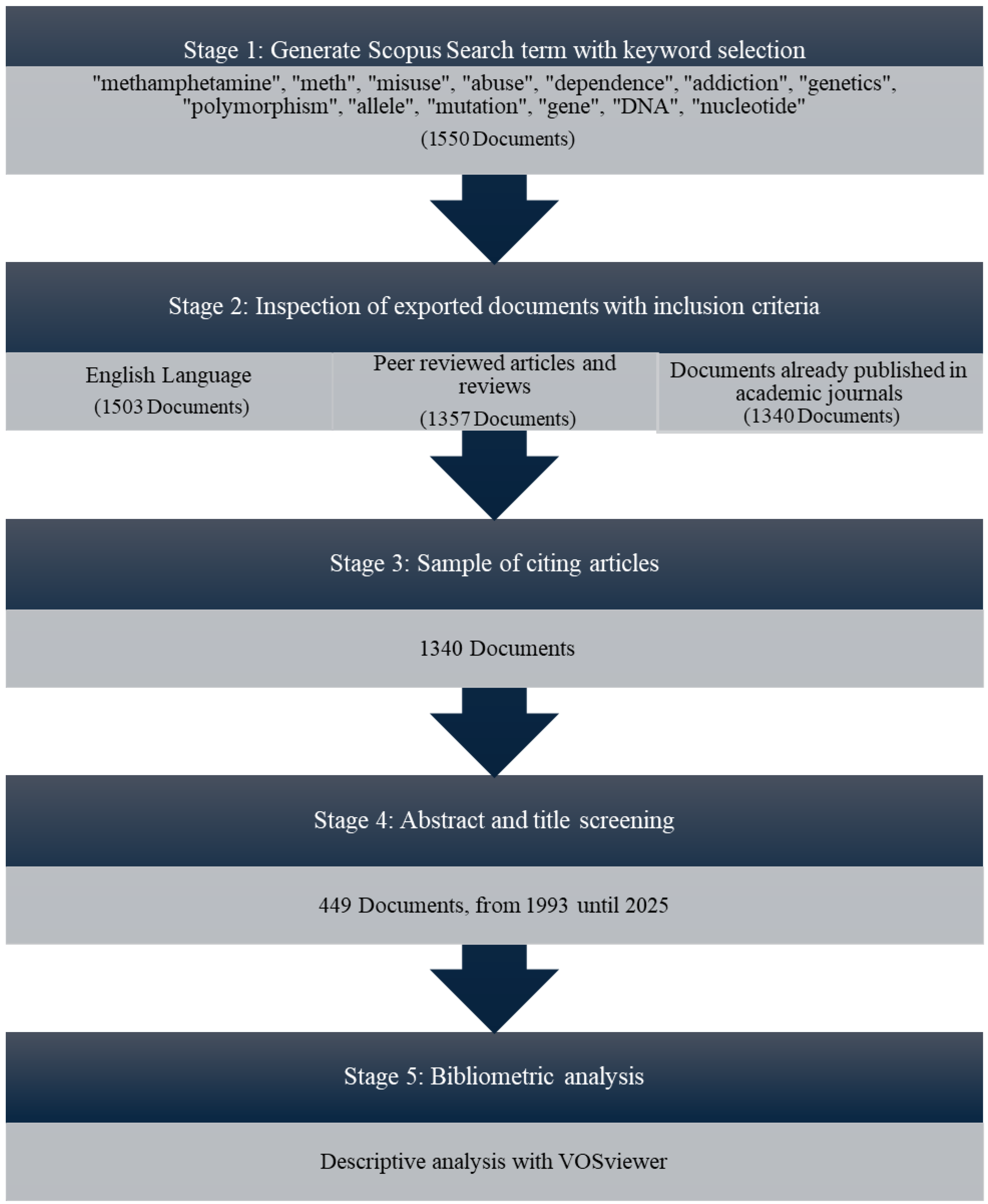
During the initial phase, research questions were formulated to guide the study, influencing the selection of the database and the search keywords. The second phase focused on ensuring quality by setting inclusion criteria, such as restricting sources to peer-reviewed English-language content published in academic journals, and conducting a qualitative screening of keywords, titles, and abstracts. The third stage involved extracting data from the selected database. Finally, the fourth phase included a descriptive analysis of research output using VOSviewer software.
The bibliographic data for this study were retrieved from the Scopus database (https://www.scopus.com/standard/marketing.uri, accessed on 4 June 2025); therefore, citation and publication data are accurate as of that date. The Scopus database, recognized for its reliability and widespread use in quantitative research, was selected due to its comprehensive coverage, frequent updates, and advanced data processing capabilities, making it well-suited for an in-depth literature search [25].
To identify publications centered on genetics in methamphetamine use, data extraction followed the criteria outlined below:
(1)
search terms with the following keywords using the title, abstract, and keywords (tittle-aBS-keY) fields: ([methamphetamine] OR [meth]) AND ([abuse] OR [misuse] OR [addiction] OR [dependence]) AND [genetics] OR [polymorphism] OR [allele] OR [mutation] OR [gene] OR [DNA] AND [nucleotide];
(2)
in the English language;
(3)
limited to only peer-reviewed articles and reviews;
(4)
limited to content published in academic journals;
(5)
in their final publication stage.
When searching, no limitation was set on publication dates. Search terms were designed to reduce researcher bias by ensuring comprehensive coverage of all relevant variations related to the topic. The initial keyword search yielded a list of 1550 documents. After the application of filters (English language; peer-reviewed articles and reviews; documents already published in academic journals), the list consisted of 1340 documents. Figure 1 depicts the systematic search methodology utilized in this study as a flow diagram.
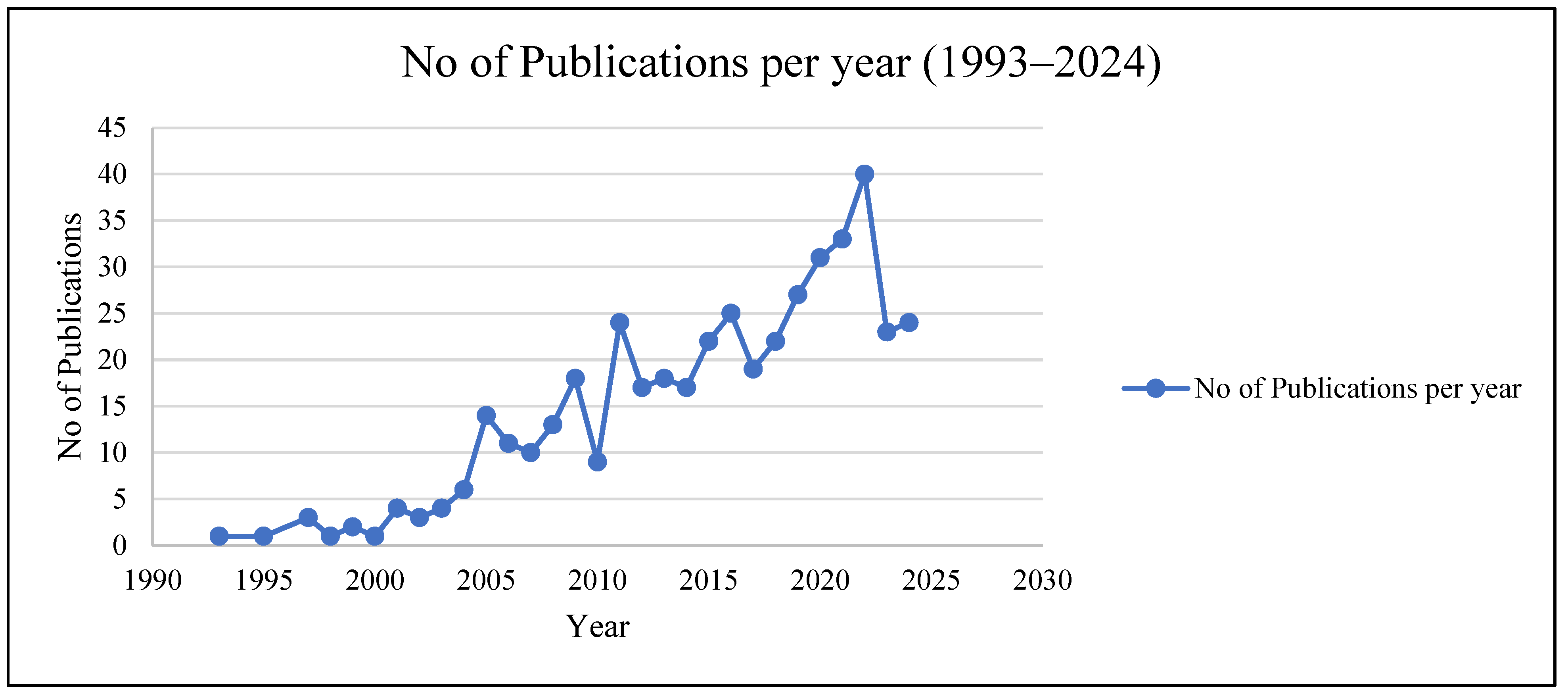
Next, a manual screening was performed by downloading the .csv data file. Manual screening was necessary because the Boolean search strategy, while comprehensive, retrieved papers where keywords appeared in contexts not relevant to our research objectives. Using Microsoft Excel, articles that did not include relevant keywords; “methamphetamine”, “meth”, “misuse”, “abuse”, “dependence”, “addiction”, “genetics”, “polymorphism”, “allele”, “mutation”, “gene”, “DNA”, “nucleotide” in either their titles or abstracts were excluded. Furthermore, papers that mentioned methamphetamine only tangentially while focusing on other substances, contained genetic terminology but focused on non-genetic aspects of methamphetamine use, or were purely clinical or epidemiological without molecular/genetic investigation, were excluded. The screening was performed by one reviewer and cross-validated by a second reviewer to ensure accuracy and minimize bias. Consequently, 449 articles were selected for further analysis. Data files were extracted for each publication, encompassing bibliographic information including journal title, authorship, country of origin, keywords, and institutional affiliation. The dataset comprised 449 articles spanning approximately three decades from 1993 to 2025, with a notable increase in publication frequency observed from 2005 onward, exceeding 10 articles annually, as demonstrated in Figure 2.
The study concluded with a bibliometric analysis of scholarly publications using the VOSviewer software (version 1.6.20), and the findings were presented to support scientific mapping and performance evaluation. This manuscript followed the reporting guidelines of the BIBLIO checklist for reporting bibliometric reviews of the biomedical literature.

3. Results

3.1. Yearly Publication

The number of publications on methamphetamine use is presented in Figure 2, which depicts the development of documents from the year 1993 to 2025. In the early years (1990–2000), research activity was minimal, with an average of about two publications per year. A gradual increase was observed from 2000 to 2010, marked by a notable rise around the years 2009 to 2018, reaching approximately 15 publications annually. Between 2010 and 2019, the number of publications fluctuated but remained relatively high, ranging from 10 to 25 per year. From 2015 onwards, a steady upward trend emerged, climaxing in a peak around 2022 with 40 publications.
This growth reflects rising interest in the topic up to 2022, particularly after 2005, when the average annual number of publications exceeded ten. From 2020 to 2022, research output surged, with each year averaging over 34 publications. However, this upward trajectory did not continue; a sharp decline in publications was evident after 2022, with the number dropping to 24 publications by 2024.
The first article related to methamphetamine use in the fields of Genetics and Molecular Biology identified in the Scopus database was published in the journal Chest in 1993, with the title “Pulmonary hypertension associated with long-term inhalation of ‘crank’ methamphetamine”, by Schaiberger P.H. and colleagues [26].

3.2. The Most Influential Publications

Table 1 depicts the results of the top 10 most-cited publications in the field of Genetics and Molecular Biology related to Methamphetamine published between 1993 and 2025, which account for more than 1500 citations overall (n = 1632).
The highest-ranked publication is titled “Speed kills: Cellular and molecular bases of methamphetamine-induced nerve terminal degeneration and neuronal apoptosis” by [27], published by the Federation of American Societies for Experimental Biology (FASEB) journal, and it is the most-cited publication, with a total of 261 citations to date. These authors reviewed and synthesized current knowledge on the genetic and molecular mechanisms underlying methamphetamine (METH)-induced brain damage, specifically focusing on the mechanisms behind nerve terminal degeneration and neuronal apoptosis (programmed cell death) [27].
The second-ranked paper in the list, with 193 citations, is titled “Review: Mitochondrial medicine—Molecular pathology of defective oxidative phosphorylation”, published in the journal Annals of Clinical and Laboratory Science in 2001 by [28]. The remaining publication in the ranking has 161 citations and is titled “Role of Tumor Necrosis Factor-alpha in Methamphetamine-Induced Drug Dependence and Neurotoxicity”, which was published in 2004 by the Journal of Neuroscience [29].

3.3. Author Distribution

Genetic and Molecular biology research on methamphetamine has become an attractive field for a growing number of researchers worldwide. In total, 2334 authors contributed bibliometric data for 449 articles published from 1993 to 2025. Table 2 represents the top 10 authors by publication.

3.4. Country Distribution

Country and institution serve as key analytical indicators, highlighting the contribution and research performance of various regions or organizations in this field. The patterns of citation and co-citation among articles affiliated with different countries or institutions can provide valuable insights into academic collaboration networks and the overall scholarly impact [30].
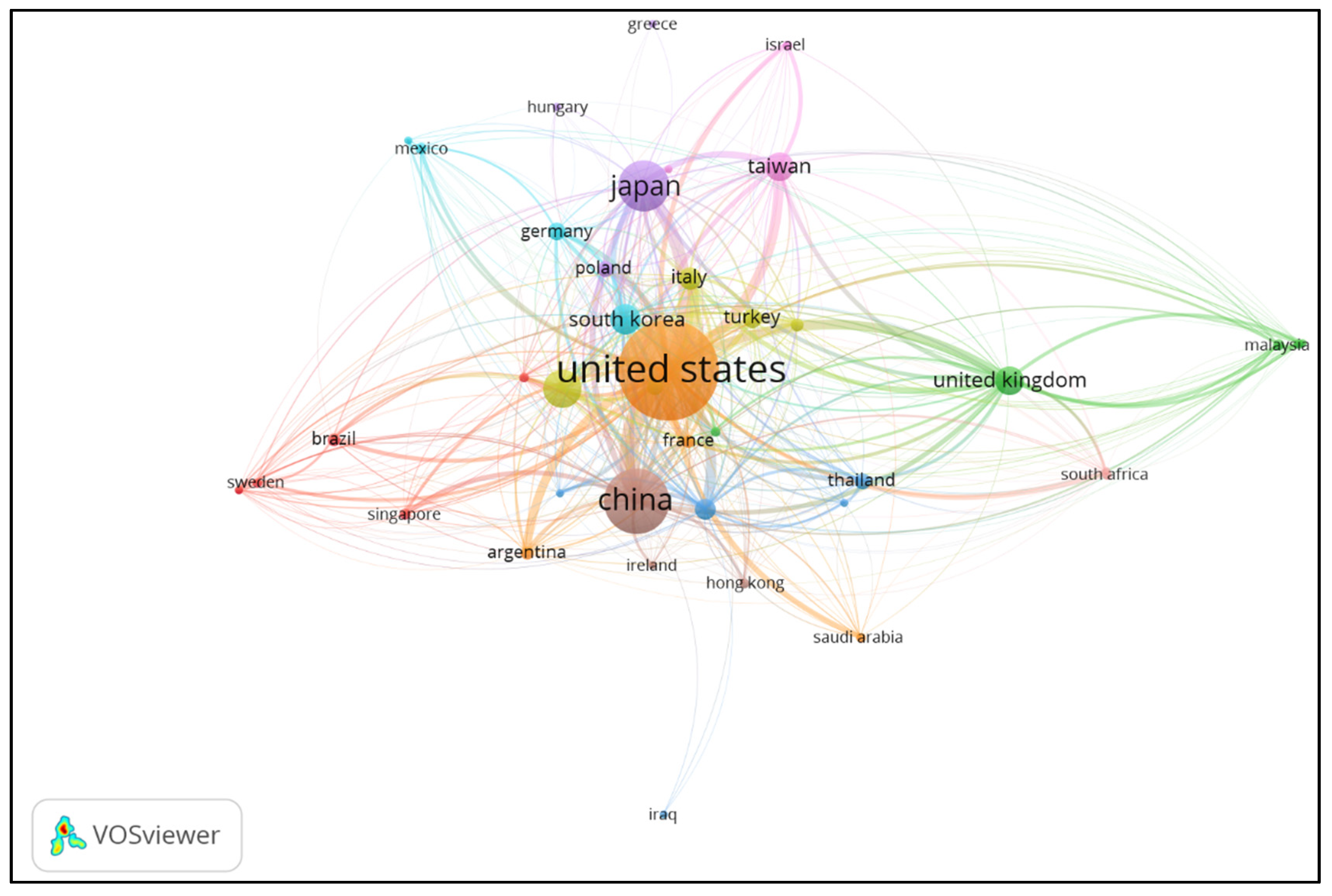
The retrieved data demonstrates the global application of this research topic, as the publications are distributed across 41 countries. Figure 3 presents the country coupling map, which is constructed from the results of the ‘bibliographic coupling’ analysis in VOSviewer. The analysis was performed by selecting ‘countries’ as the unit of analysis, with the minimum number of publications for countries being equal to 1, to ensure obtaining the maximum number of links generated under the ‘countries’ variable. This analysis enables the measurement of the degree of collaboration of the country to which the article belongs by linking the number of similar shared references cited by the publications.
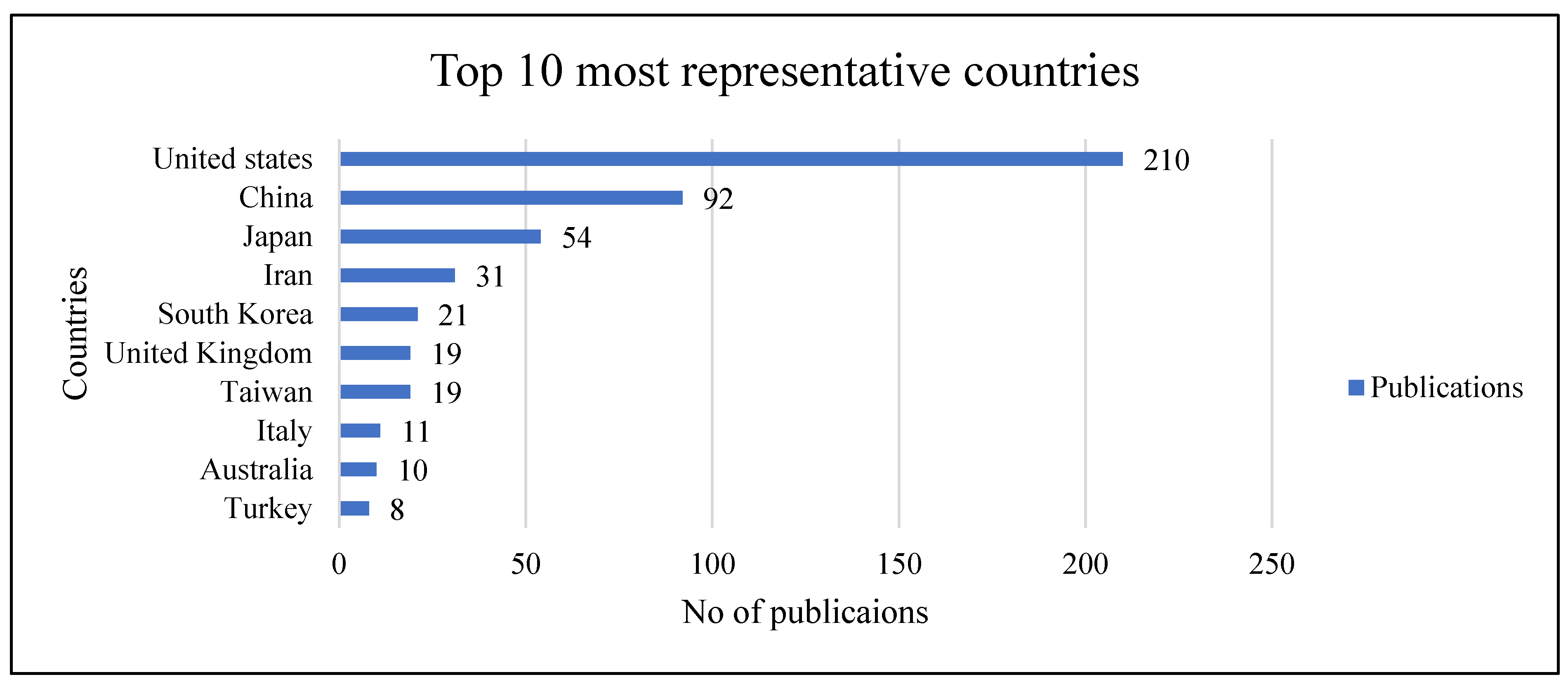
Figure 4 indicates the top 10 countries with the most publications, collectively accounting for 86% of all the published articles in the selected sample. The United States leads with 210 publications, representing nearly 38% of the total output. China ranks second with 92 publications, followed by Japan with 54 publications.
The network visualization reveals 10 distinct clusters, with the most prominent being the United States, represented in Orange. This cluster includes three other countries, such as Argentina, France, and Saudi Arabia, meaning that these countries share the same cited references. Another notable cluster, shown in brown, comprises three countries, with China standing out. This grouping highlights the strength of international research collaborations on methamphetamine use within this cluster.

3.5. Journal Distribution

The 449 articles were published in 212 different scientific journals. To analyze the journals’ productivity, the total publications for the top 20 journals were accessed, as highlighted in Table 3. It was possible to infer that articles on methamphetamine research are published in a wide range of journals under different research categories with different approaches, which indicates a significant development in the field. The journal Genes, Brain and Behavior dominates the list, with 16 total publications and 388 citations, followed by the journals of Current Neuropharmacology and Addiction Biology, both with 14 publications each, and having 128 and 247 citations, respectively.

3.6. Author Keyword Co-Occurrence Analysis

Among the 1176 author keywords extracted from 449 publications, 937 keywords (80%) occurred only once, while 65 keywords (6%) appeared five or more times, and merely 29 keywords (2%) were present in a minimum of 10 publications. Table 4 presents the 12 most frequently occurring author keywords, with ‘Methamphetamine’ emerging as the predominant keyword utilized to characterize the primary research focus, with 220 occurrences.
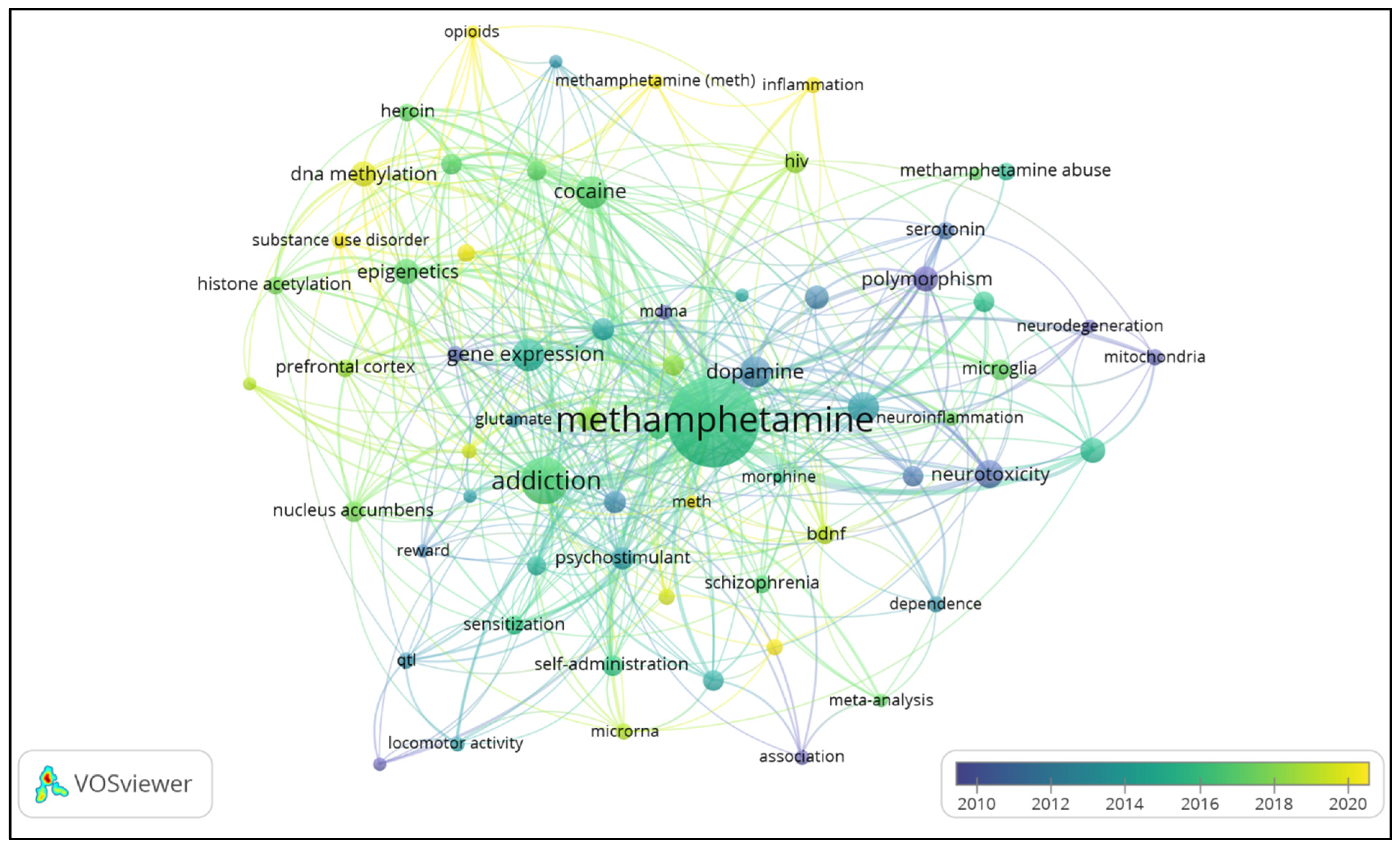
To examine the current state of research and identify potential future associations related to methamphetamine use, a co-occurrence analysis was conducted, focusing on publication content. This method involves extracting and analyzing keywords from the literature, allowing for a deeper understanding of the thematic focus of the articles. This methodological approach facilitates a more comprehensive examination of methamphetamine research through the interpretation of co-citation analysis—which captures historical research trajectories—or bibliographic coupling, the technique employed in the present study [18]. These findings contribute to the generation of novel insights within the methamphetamine research domain and support future literature consolidation efforts. Specifically, Figure 5 illustrates the temporal co-occurrence network of author keywords that appeared a minimum of five times, yielding 65 keywords. Each keyword is represented by a node, with node size proportional to occurrence frequency. The keywords are organized into eight distinct thematic clusters, denoted by different colors, wherein inter-cluster proximity indicates the strength of conceptual relationships among clusters.

3.7. Co-Citation Analysis of Cited Authors

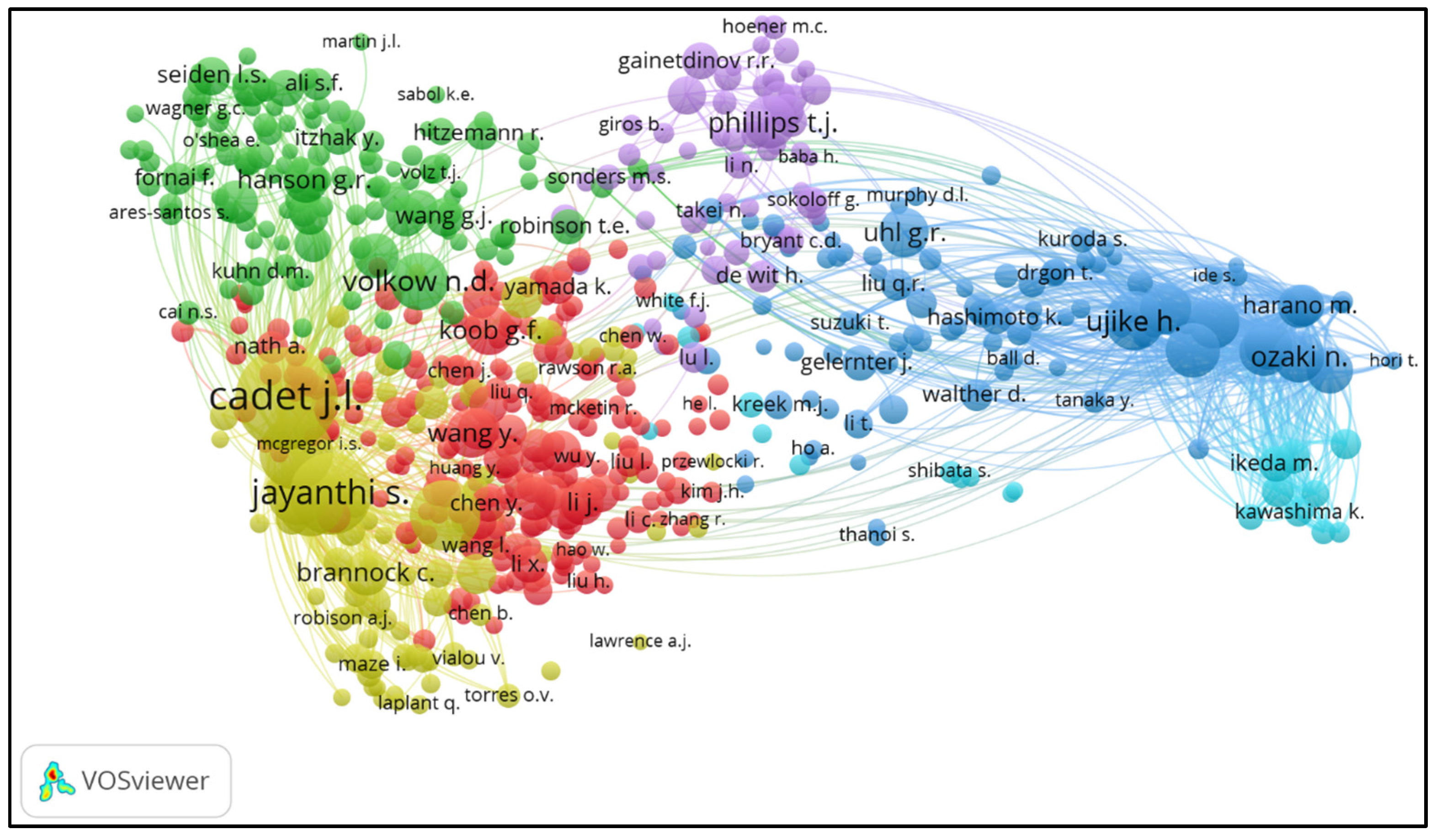
A co-citation analysis of cited authors was performed among 55,829 authors. Figure 6 represents 637 authors who have been cited 20 or more times.

3.8. Trends in Study Design: Gene Expression vs. Transgenic Studies

Research articles were classified based on their titles and abstracts into two primary groups. A total of 248 articles investigated gene expression changes following methamphetamine exposure, while 85 articles focused on transgenic or knockout studies in animals lacking specific genes. The remaining articles could not be categorized into either group due to their emphasis on drug-related behavior, clinical or psychological outcomes, absence of genetic manipulation or expression analysis, or because they were reviews or commentaries that did not report primary data.

4. Discussion

This bibliometric review reveals several notable trends in the evolution of genetic research related to methamphetamine. The geographic concentration of methamphetamine research in Asian countries reflects legitimate public health priorities rather than research bias. Our bibliometric analysis aimed to map the existing research landscape as it has developed in response to real-world needs. The steady increase in publication output after 2005 indicates growing global interest in the genetic and molecular mechanisms underlying methamphetamine dependence. The peak in publications between 2020 and 2022 may reflect heightened concern over rising methamphetamine use globally. Multiple sources document a significant increase in methamphetamine use and related harms during this period. For example, the UNODC World Drug Report 2022 highlights record increases in methamphetamine seizures in North America, South-East Asia, and South-West Asia in 2020, indicating both rising use and expanded markets [31]. Similarly, a comprehensive review notes that methamphetamine use in the United States increased by 93% from 2016 to 2022, with overdose deaths involving methamphetamine and opioids peaking in 2021 [32]. This increase in methamphetamine use in the United States might be linked to the vast research output from the country as well. Further reports prove that global quantities of methamphetamine seized doubled over the last five years, with increasing use in Asia, North America, and Australia [33]. However, the abrupt decline in research output post-2022 may have several possible explanations. Redirection or reduction in funding for substance use research, either due to shifting national priorities or economic constraints, could have led to fewer research projects and, consequently, fewer publications. Additionally, global events such as the COVID-19 pandemic and other emerging health crises may have diverted attention and resources toward more immediate and pressing areas of public health. As a result, researchers and institutions may have shifted their focus away from methamphetamine use, leading to a temporary or sustained reduction in related research output.
The prominent role of the United States among the leading contributors to this field, and its central position within the research collaboration network (Figure 3), can be attributed to several interrelated factors. These include the country’s high volume of research output, the global advantage of English as the primary language of scientific communication, significant investment in academic and scientific research, and its position among the top 20% of countries with the highest Disability-Adjusted Life Years (DALYs) related to drug use disorders [34]. Furthermore, the United States’ dominance in both the volume and influence of publications is further supported by its robust research funding infrastructure and long-standing public health concerns surrounding methamphetamine use. Although recent budget reductions have affected institutions such as the National Institutes of Health (NIH) and the Centers for Disease Control and Prevention (CDC) [35]. The United States has historically upheld a strong funding ecosystem. This may have facilitated sustained investigation into the public health impacts of methamphetamine, supported by resources such as longitudinal datasets, including the CDC WONDER database [36]. Similarly, the emergence of China and Japan among the top contributors indicates growing regional research capacity and concern over the societal impact of methamphetamine use.
Keyword co-occurrence analysis underscores the interdisciplinary nature of this field, merging concepts from addiction neuroscience, pharmacogenetics, epigenetics, and behavioral science. However, the relatively infrequent recurrence of terms such as “treatment response,” “genetic risk profiling,” and “translational genetics” suggests underexplored opportunities for bridging basic research with clinical application.
The diverse range of journals publishing methamphetamine-related genetic research reflects the interdisciplinary spread of the field but also raises concerns about fragmentation. There may be a need for more centralized platforms or special issues to consolidate and communicate emerging findings effectively.
The predominance of gene expression studies indicates that the field continues to prioritize understanding how methamphetamine exposure alters cellular and molecular pathways. The sustained focus on expression studies suggests that researchers are still discovering novel molecular targets and pathways affected by methamphetamine, rather than having exhausted this line of inquiry. Transgenic and knockout studies, on the other hand, represent a more mechanistic phase of investigation, where specific genes identified through expression studies or candidate gene approaches are functionally validated. The smaller but significant proportion of these studies indicates a field transitioning from descriptive to mechanistic research. The recent increase in transgenic studies likely reflects improved accessibility to gene-editing technologies, particularly CRISPR-Cas9 systems, and the maturation of genetic targets worthy of functional investigation. A substantial proportion of articles could not be classified into either category, highlighting the interdisciplinary nature of methamphetamine research. These studies encompass behavioral genetics, pharmacogenetics, clinical association studies, and synthetic reviews, all of which contribute to understanding methamphetamine use disorders but do not fit the binary classification of expression versus transgenic studies. This diversity underscores that genetic research on methamphetamine exists within a broader ecosystem of addiction science, where molecular findings must be integrated with behavioral, clinical, and epidemiological evidence.

5. Conclusions

This bibliometric study provides a comprehensive overview of the trajectory and current state of genetic research on methamphetamine. The results indicate a maturing field with established contributors, prominent themes centered on neurotoxicity and addiction mechanisms, and strong international engagement. However, the recent decline in publication output and underrepresentation of clinically translational topics highlights the need for renewed focus on applied genetics and interdisciplinary collaborations. Future research should prioritize bridging molecular findings with prevention, intervention, and personalized treatment strategies for methamphetamine addiction. This review not only maps the scholarly landscape but also offers strategic insights for researchers, policymakers, and funding agencies aiming to address the methamphetamine crisis through a genomic lens.

Author Contributions

C.A.F. was involved in the conceptualization, writing the first draft of the manuscript, revising the manuscript, and analyzing the data. A.R.J. was also involved in screening and in critically analyzing the data and revising the manuscript. N.N., T.T.P.J., C.G., C.J. and N.F. were involved in conceptualization, reviewing, and revising the manuscript. All authors have read and agreed to the published version of the manuscript.

Funding

This research received no external funding.

Institutional Review Board Statement

Not applicable.

Informed Consent Statement

Not applicable.

Data Availability Statement

Not applicable.

Acknowledgments

I extend my deepest gratitude to my colleague, Jayamaha A.R., for his unwavering support and insightful critiques throughout the drafting of my research manuscript. I would also like to thank all my dear research supervisors, Fernando S.S.N., Jeewandara C., Gunasekara T.D.C.P., Noordeen N.A., and Jayadas T.T.P., for their continuous support and guidance through my research journey.

Conflicts of Interest

The authors declared no potential conflicts of interest with respect to the research, authorship, and/or publication of this article.

Abbreviations

The following abbreviations are used in this manuscript:
ATSAmphetamine-type stimulants
CDCCenters for Disease Control and Prevention
CNSCentral Nervous System
DALYsDisability-Adjusted Life Years
FASEBFederation of American Societies for Experimental Biology
METHMethamphetamine
NIHNational Institutes of Health
UNODCUnited Nations Office on Drugs and Crime

References

  1. United Nations Office on Drugs and Crime. UNODC, World Drug Report 2023; United Nations Publication: New York, NY, USA, 2023. [Google Scholar]
  2. United Nations Office on Drugs and Crime. World Drug Report 2025; Stylus Publishing: Sterling, VA, USA, 2025. [Google Scholar]
  3. Green, A.I.; Halkitis, P.N. Crystal methamphetamine and sexual sociality in an urban gay subculture: An elective affinity. Cult. Health Sex. 2006, 8, 317–333. [Google Scholar] [CrossRef]
  4. Cruickshank, C.C.; Dyer, K.R. A review of the clinical pharmacology of methamphetamine. Addiction 2009, 104, 1085–1099. [Google Scholar] [CrossRef]
  5. Cretzmeyer, M.; Sarrazin, M.V.; Huber, D.L.; Block, R.I.; Hall, J.A. Treatment of methamphetamine abuse: Research findings and clinical directions. J. Subst. Abus. Treat. 2003, 24, 267–277. [Google Scholar] [CrossRef]
  6. Lineberry, T.W.; Bostwick, J.M. Methamphetamine Abuse: A Perfect Storm of Complications. Mayo Clin. Proc. 2006, 81, 77–84. [Google Scholar] [CrossRef]
  7. Jacob, L.; Haining, W. Methamphetamine. The Spectrum of Psychotic Disorders: Neurobiology, Etiology and Pathogenesis. Available online: https://www.cambridge.org/core/books/abs/spectrum-of-psychotic-disorders/methamphetamine/C3F739D6E1BDD4CFF382F383846DEE8F#chapter (accessed on 16 April 2025).
  8. Alammehrjerdi, Z.; Ezard, N.; Dolan, K. Methamphetamine dependence in methadone treatment services in Iran: The first literature review of a new health concern. Asian J. Psychiatry 2018, 31, 49–55. [Google Scholar] [CrossRef]
  9. Mizoguchi, H.; Yamada, K. Methamphetamine use causes cognitive impairment and altered decision-making. Neurochem. Int. 2019, 124, 106–113. [Google Scholar] [CrossRef] [PubMed]
  10. Guerin, A.A.; Bonomo, Y.; Lawrence, A.J.; Baune, B.T.; Nestler, E.J.; Rossell, S.L.; Kim, J.H. Cognition and Related Neural Findings on Methamphetamine Use Disorder: Insights and Treatment Implications from Schizophrenia Research. Front. Psychiatry 2019, 10, 880. [Google Scholar] [CrossRef] [PubMed]
  11. Kevil, C.G.; Goeders, N.E.; Woolard, M.D.; Bhuiyan, M.S.; Dominic, P.; Kolluru, G.K.; Orr, A.W. Methamphetamine Use and Cardiovascular Disease. Arterioscler. Thromb. Vasc. Biol. 2019, 39, 1739–1746. [Google Scholar] [CrossRef] [PubMed]
  12. Schwarzbach, V.; Lenk, K.; Laufs, U. Methamphetamine-related cardiovascular diseases. ESC Heart Fail. 2020, 7, 407–414. [Google Scholar] [CrossRef]
  13. Rusyniak, D.E. Neurologic Manifestations of Chronic Methamphetamine Abuse. Psychiatr. Clin. N. Am. 2013, 36, 261–275. [Google Scholar] [CrossRef]
  14. Abbass, M.; Al-Hemiary, N.; Sahib, H.B. The impact of methamphetamine on psychosocial variables in patients from Iraq. Front. Psychiatry 2024, 15, 1376636. [Google Scholar] [CrossRef]
  15. Courtney, K.E.; Ray, L.A. Methamphetamine: An update on epidemiology, pharmacology, clinical phenomenology, and treatment literature. Drug Alcohol Depend. 2014, 143, 11–21. [Google Scholar] [CrossRef]
  16. Khan, R.; Turner, A.; Berk, M.; Walder, K.; Rossell, S.; Guerin, A.A.; Kim, J.H. Genes, Cognition, and Their Interplay in Methamphetamine Use Disorder. Biomolecules 2025, 15, 306. [Google Scholar] [CrossRef]
  17. Liu, M.; Si, Z. An update: Epigenetic mechanisms underlying methamphetamine addiction. Front. Cell Dev. Biol. 2024, 12, 1494557. [Google Scholar] [CrossRef]
  18. Donthu, N.; Kumar, S.; Mukherjee, D.; Pandey, N.; Lim, W.M. How to conduct a bibliometric analysis: An overview and guidelines. J. Bus. Res. 2021, 133, 285–296. [Google Scholar] [CrossRef]
  19. Ma, H.; Ismail, L. Bibliometric analysis and systematic review of digital competence in education. Humanit. Soc. Sci. Commun. 2025, 12, 185. [Google Scholar] [CrossRef]
  20. Khan, M.A.; Ali, I.; Ashraf, R. A Bibliometric Review of the Special Issues of Psychology & Marketing: 1984–2020. Psychol. Mark. 2020, 37, 1144–1170. [Google Scholar] [CrossRef]
  21. Öztürk, O.; Kocaman, R.; Kanbach, D.K. How to design bibliometric research: An overview and a framework proposal. Rev. Manag. Sci. 2024, 18, 3333–3361. [Google Scholar] [CrossRef]
  22. Hawkins, D.T. Unconventional uses of on-line information retrieval systems: On-line bibliometric studies. J. Am. Soc. Inf. Sci. 1977, 28, 13–18. [Google Scholar] [CrossRef]
  23. Antunes, I.F.S.; Veríssimo, J.M.C. A bibliometric review and content analysis of research trends in sensory marketing. Cogent Bus. Manag. 2024, 11, 2338879. [Google Scholar] [CrossRef]
  24. Zupic, I.; Čater, T. Bibliometric methods in management and organization. Organ. Res. Methods 2015, 18, 429–472. [Google Scholar] [CrossRef]
  25. Baas, J.; Schotten, M.; Plume, A.; Côté, G.; Karimi, R. Scopus as a curated, high-quality bibliometric data source for academic research in quantitative science studies. Quant. Sci. Stud. 2020, 1, 377–386. [Google Scholar] [CrossRef]
  26. Schaiberger, P.H.; Kennedy, T.C.; Miller, F.C.; Gal, J.; Petty, T.L. Pulmonary Hypertension Associated with Long-Term Inhalation of “Crank” Methamphetamine. Chest 1993, 104, 614–616. [Google Scholar] [CrossRef]
  27. Cadet, J.L.; Jayanthi, S.; Deng, X. Speed kills: Cellular and molecular bases of methamphetamine-induced nerve terminal degeneration and neuronal apoptosis. FASEB J. 2003, 17, 1775–1788. [Google Scholar] [CrossRef] [PubMed]
  28. Fosslien, E. Mitochondrial medicine—Molecular pathology of defective oxidative phosphorylation. Ann. Clin. Lab. Sci. 2001, 31, 25–67. [Google Scholar] [PubMed]
  29. Nakajima, A.; Yamada, K.; Nagai, T.; Uchiyama, T.; Miyamoto, Y.; Mamiya, T.; He, J.; Nitta, A.; Mizuno, M.; Tran, M.H.; et al. Role of Tumor Necrosis Factor-α in Methamphetamine-Induced Drug Dependence and Neurotoxicity. J. Neurosci. 2004, 24, 2212–2225. [Google Scholar] [CrossRef] [PubMed]
  30. Guo, Y.-M.; Huang, Z.-L.; Guo, J.; Li, H.; Guo, X.-R.; Nkeli, M.J. Bibliometric Analysis on Smart Cities Research. Sustainability 2019, 11, 3606. [Google Scholar] [CrossRef]
  31. United Nations Publication. World Drug Report 2022; United Nations Publication: New York, NY, USA, 2022. [Google Scholar]
  32. Hemphill, K.; Tierney, S.; Tirschwell, D.; Davis, A.P. A review of methamphetamine use and stroke in the young. Front. Neurol. 2024, 15, 1397677. [Google Scholar] [CrossRef]
  33. The European Union Drugs Agency EUDA. The Methamphetamine Market: Global Context 2022. Available online: https://www.euda.europa.eu/publications/eu-drug-markets/methamphetamine/global-context_en (accessed on 12 June 2025).
  34. Pan American Health Organization. The Burden of Drug Use Disorders in the Region of the Americas, 2000–2019. Non-Communicable Diseases and Mental Health Data Portal. 2021. Available online: https://www.paho.org/en/enlace/burden-drug-use-disorders (accessed on 16 April 2025).
  35. Kozlov, M.; Mallapaty, S. Exclusive: NIH to terminate hundreds of active research grants. Nature 2025, 639, 281–282. [Google Scholar] [CrossRef]
  36. Zhu, D.T.; Bajaj, S.S.; Sen, A. Methamphetamine and Cocaine Overdose Deaths in the United States, 1999–2023. Subst. Use Misuse 2025, 60, 1946–1949. [Google Scholar] [CrossRef]
Figure 1. Systematic search of documents in the Scopus database [The diagram depicts the number of documents included after the application of filters and screening].
Psychoactives 04 00040 g001
Figure 2. Number of publications per year on genetic research on methamphetamine from 1993 to 2024.
Psychoactives 04 00040 g002
Figure 3. Bibliographic coupling network of countries.
Psychoactives 04 00040 g003
Figure 4. Top 10 most representative countries.
Psychoactives 04 00040 g004
Figure 5. The occurrence of author keywords over time.
Psychoactives 04 00040 g005
Figure 6. Co-citation analysis of cited authors.
Psychoactives 04 00040 g006
Table 1. Top 10 documents by global citations.
TitleAuthorsYearSourceCitationsLinks
Speed kills: Cellular and molecular bases of methamphetamine-induced nerve terminal degeneration and neuronal apoptosisCadet J.L.; Jayanthi S.; Deng X.2003Federation of American Societies for Experimental Biology (FASEB) Journal26117
Review: Mitochondrial medicine—Molecular pathology of defective oxidative phosphorylationFosslien E.2001Annals of Clinical and Laboratory Science1930
Role of Tumor Necrosis Factor-alpha in Methamphetamine-Induced Drug Dependence and NeurotoxicityNakajima A.; Yamada K.; Nagai T.; Uchiyama T.; Miyamoto Y.; Mamiya T.; He J.; Nitta A.; Mizuno M.; Tran M.H.; Seto A.; Yoshimura M.; Kitaichi K.; Hasegawa T.; Saito K.; Yamada Y.; Seishima M.; Sekikawa K.; Kim H.-C.; Nabeshima T.2004Journal of Neuroscience1616
Amphetamines induce apoptosis and regulation of bcl-x splice variants in neocortical neuronsStumm G.; Schlegel J.; Schäfer T.; Würz C.; Mennel H.D.; Krieg J.-C.; Vedder H.1999FASEB Journal1578
Oxidation of methamphetamine and methylenedioxymethamphetamine by CYP2D6Lin L.Y.; Di Stefano E.W.; Schmitz D.A.; Hsu L.; Ellis S.W.; Lennard M.S.; Tucker G.T.; Cho A.K.1997Drug Metabolism and Disposition1532
Psychostimulant abuse and neuroinflammation: Emerging evidence of their interconnectionClark K.H.; Wiley C.A.; Bradberry C.W.2013Neurotoxicity Research1512
Review: The neuropathology of drug abuseBϋttner A.2011Neuropathology and Applied Neurobiology1470
Methamphetamine-induced neuronal apoptosis involves the activation of multiple death pathways. ReviewCadet J.L.; Jayanthi S.; Deng X.2005Neurotoxicity Research13811
The dissection of transcriptional modules regulated by various drugs of abuse in the mouse striatumPiechota M.; Korostynski M.; Solecki W.; Gieryk A.; Slezak M.; Bilecki W.; Ziolkowska B.; Kostrzewa E.; Cymerman I.; Swiech L.; Jaworski J.; Przewlocki R.2010Genome Biology1360
Asiatic acid attenuates methamphetamine-induced neuroinflammation and neurotoxicity through blocking of NF-kB/STAT3/ERK and mitochondria-mediated apoptosis pathwayPark J.-H.; Seo Y.H.; Jang J.-H.; Jeong C.-H.; Lee S.; Park B.2017Journal of Neuroinflammation1351
Table 2. Top 10 authors by publication.
AuthorPublicationsCitationsTotal Link Strength
Cadet, Jean Lud33185542,914
Sora, Ichiro2560724,487
Jayanthi, Subramaniam23133433,116
Inada, Toshiya2358523,928
Iyo, Masaomi2358523,928
Ozaki, Norio2358523,928
Ujike, Hiroshi2358523,928
Yamada, Mitsuhiko2358523,928
Iwata, Nakao2255323,222
Ladenheim, Bruce1467917,667
Table 3. Top 20 most productive journals.
Name of the JournalPublisherNumber of PublicationsCitationsTotal Link Strength
Genes, Brain and BehaviorJohn Wiley and Sons Inc.163881225
Current NeuropharmacologyBentham Science Publishers141281135
Addiction BiologyJohn Wiley and Sons Inc.14247989
Plos OnePlos10391650
NeuropharmacologyElsevier Ltd.10352614
Neuroscience lettersElsevier Ireland Ltd.10174495
PsychopharmacologySpringer Science and Business Media Deutschland GmbH81601148
Molecular NeurobiologySpringer73081020
NeuroscienceElsevier Ltd.7219749
Progress in Neuro-Psychopharmacology and Biological PsychiatryElsevier Inc.7133664
International Journal of Molecular ScienceMultidisciplinary Digital Publishing Institute (MDPI)758473
Frontiers in PsychiatryFrontiers Media SA735469
Brain ResearchElsevier B.V.6143763
Molecular PsychiatrySpringer Nature6187723
Journal of NeuroscienceJohn Wiley and Sons Inc.6494630
American Journal of Medical Genetics—Neuropsychiatric GeneticsBlackwell Publishing Inc.6228376
NeuropsychopharmacologyNature Publishing Group6268329
Neurotoxicity ResearchSpringer New York LLC5343951
Scientific ReportsNature Research5109557
Frontiers in pharmacologyFrontiers Media SA556490
Table 4. Top 12 keywords.
KeywordsOccurrencesTotal Link Strength
Methamphetamine220999
Addiction59335
Cocaine28170
Gene expression28141
Dopamine27154
Drug abuse25109
Neurotoxicity2191
DNA methylation1875
Epigenetics1785
Apoptosis1773
Polymorphism1755
Conditioned place preference1565
Disclaimer/Publisher’s Note: The statements, opinions and data contained in all publications are solely those of the individual author(s) and contributor(s) and not of MDPI and/or the editor(s). MDPI and/or the editor(s) disclaim responsibility for any injury to people or property resulting from any ideas, methods, instructions or products referred to in the content.