1. Introduction
Comparative analyses of medical education serve as a powerful tool for identifying shared challenges and transferable solutions, particularly among systems with distinct historical, financial, and structural foundations. As demonstrated in prior cross-national comparisons of the German and United States (U.S.) medical education systems, examining differences in educational pathways, funding models, and curricular structures can reveal both surprising similarities and meaningful divergences that inform ongoing reform efforts [
1]. Such comparisons move the discourse beyond isolated institutional experiences, offering insights that can guide innovation and policy development across diverse medical education environments. Rather than attempting a comprehensive global review, this perspective adopts a targeted comparison between a Spanish and a U.S. medical school to highlight issues that are commonly observed, even within structurally distinct programs. Through this focused approach, we sought to identify insights and lessons that may be applicable more broadly across diverse medical education systems.
Within this framework, medical education in the U.S. and Spain follows markedly different pathways with respect to program structure, duration, and assessment. In the U.S., students complete a four-year undergraduate degree—typically with pre-medical coursework—followed by a four-year medical school program. In contrast, Spain employs a direct-entry model in which students begin medical training immediately after high school and complete a six-year integrated curriculum that combines preclinical and clinical education. Assessment structures also differ substantially. U.S. medical students must pass two parts of the United States Medical Licensing Examination (USMLE), with Step 1 now reported as pass/fail and Step 2 serving as a key metric for residency selection [
2,
3,
4,
5]. In Spain, medical graduates prepare for the
Medico Interno Residente (MIR) examination, a highly competitive national test that largely determines specialty choice and residency placement [
6,
7]. Unlike the multifactorial U.S. residency matching process, which incorporates examination performance, clinical experience, research, and interviews, MIR scores are the dominant determinant of postgraduate training opportunities in Spain. These structural differences shape educational priorities: U.S. programs place greater emphasis on active learning, early clinical exposure, USMLE preparation, and research engagement, whereas Spanish programs have traditionally relied more heavily on lecture-based instruction and intensive MIR preparation.
The analysis is intentionally centered on the medical schools at the University of New Mexico Health Sciences Center (UNM-HSC, U.S.) and the Universidad Miguel Hernández (UMH, Spain) (
Table 1). The School of Medicine at the UNM-HSC is accredited by the Liaison Committee on Medical Education (LCME), which ensures that programs meet national standards for medical education quality. The process involves a self-study by the school, an evaluation of the curriculum, faculty, facilities, and student outcomes, followed by an on-site survey conducted by LCME representatives. Accreditation decisions are based on compliance with standards in areas such as educational program, student services, faculty qualifications, and institutional resources. In Spain, medical schools, including UMH, are accredited by the Agencia Nacional de Evaluación de la Calidad y Acreditación (ANECA; National Agency for Quality Assessment and Accreditation). The accreditation process involves a self-assessment by the university, the submission of detailed documentation on curriculum, faculty, facilities, and student outcomes, and a subsequent external evaluation by ANECA-appointed reviewers. Schools are assessed for compliance with national and European Higher Education Area standards, including program structure, teaching quality, integration of research, and institutional resources. Despite operating within distinct national frameworks, both institutions share key contextual features that support meaningful comparison, including similar regional population sizes (approximately 1.8–1.9 million inhabitants), relatively broad geographic service areas, and comparable medical school cohort sizes (approximately 100 students per year at UNM-HSC and 135 at UMH).
While we do not claim that these two schools are fully representative of all medical schools in their respective countries, both are public institutions that have undergone national accreditation processes that ensure adherence to widely applied standards in curriculum design, faculty qualifications, institutional resources, and student outcomes. In addition, each operates within regulatory, cultural, and educational contexts that broadly mirror those of other public medical schools in their respective nations, including comparable cohort sizes, regional service obligations, and core curricular requirements. These shared structural features provide a meaningful, if limited, basis for comparison. Consequently, the insights generated here offer a useful lens for examining challenges and strengths that may extend beyond the two institutions studied. Future research could broaden this comparative framework by incorporating additional schools to test the robustness and generalizability of these preliminary observations.
Against this backdrop, the present analysis is guided by a central comparative question: how do structurally distinct medical education systems respond to common pressures and priorities in contemporary medical training? Specifically, this paper examines how UNM-HSC and UMH address challenges related to curriculum design, student engagement, assessment practices, faculty workload, and preparation for postgraduate training. By situating these issues within their respective institutional and national contexts, the discussion highlights both convergences and divergences in approach, revealing how structural differences—such as funding models, governance frameworks, and cultural expectations—shape educational strategies and constraints. Rather than offering a comprehensive institutional review, this perspective focuses on selected challenges that illuminate broader themes in medical education reform. Through this targeted comparison, the paper seeks to identify transferable lessons, potential innovations, and context-sensitive strategies that may inform ongoing efforts to strengthen medical education at UNM-HSC, UMH, and similarly situated institutions facing comparable demands.
2. Methodology
This manuscript is intended as a scholarly perspective rather than a formal empirical study or systematic review. The project was initially conceptualized during Dr. Ramos-Rincón’s academic visits to the University of New Mexico Health Sciences Center (UNM-HSC), supported by a grant from Universidad Miguel Hernández (UMH). During these visits, he gained direct exposure to the UNM-HSC School of Medicine curriculum, teaching methodologies, and institutional structure. Drs. Ramos-Rincón and Valenzuela engaged in structured discussions comparing their respective institutional experiences, which served as the foundation for the comparative perspective developed in this manuscript.
To broaden and balance viewpoints, medical students from both institutions were subsequently invited to participate. Participating students were selected based on their active engagement and leadership roles within their respective programs, enabling them to provide informed perspectives on curriculum, assessment, and learning environments. Insights were derived from a combination of faculty and student experiential perspectives, direct curricular observations, and structured personal reflection. Faculty authors, who hold substantial roles in curriculum design, teaching, assessment, and academic leadership, contributed longitudinal institutional knowledge. Student perspectives were incorporated alongside faculty viewpoints and were weighted equally in discussions to ensure representation of learner experiences.
The synthesis of insights followed an iterative, consensus-based process. Authors engaged in repeated cross-institutional discussions to identify recurring themes, similarities, and differences between the two educational contexts. Comparative analysis was qualitative and interpretive, focusing on themes that consistently emerged across participants and institutional settings. Core challenges were defined as those repeatedly identified across both institutions and by multiple contributors, whereas more context-specific observations were considered peripheral and framed accordingly. The conceptual framework presented in the manuscript is intentionally broad and serves as an organizing structure for these shared themes rather than an exhaustive taxonomy.
To enhance methodological transparency and mitigate potential bias, insights were generated through structured reflection, iterative group review, and consensus-building among all authors rather than individual interpretation. Differences in perspective were discussed until agreement was reached on how themes should be represented. Targeted, non-systematic literature searches were conducted to contextualize and triangulate observations and to ensure alignment with existing scholarship where appropriate. Observations reflect longitudinal engagement with each educational system rather than a predefined study period. Collectively, these approaches position the manuscript as a comparative scholarly perspective informed by experiential insight, collaborative analysis, and contextualized interpretation. This perspective has several important limitations. The analysis is based on a targeted comparison of two institutions and relies on faculty and student observations, lived experience, and reflective discussion rather than on systematic data collection or on formal qualitative or quantitative methodologies. As such, the findings are not intended to be exhaustive or widely generalizable. While there is some institutional comparability, local contexts and individual experiences may influence the observations presented. Nonetheless, the intent of this perspective is to offer informed, experience-based insights that may stimulate discussion and further study rather than to provide definitive conclusions about medical education systems more broadly.
3. Curricular Organization and Educational Challenges in Context
This section examines how two medical education systems respond to shared educational challenges across distinct regulatory, cultural, and resource contexts.
3.1. Curriculum Design and Student Engagement
At UNM-HSC, the curriculum has progressively evolved toward a competency- and learner-centered model, integrating recorded lectures and faculty-developed learning materials (such as objective-organized notes) with active learning strategies, including team-based learning (TBL), case-based learning (CBL), peer instruction, laboratory sessions, and simulation-based experiences. In parallel, students receive instruction in clinical reasoning and doctoring. This evolution aligns with national and international trends in undergraduate medical education, which emphasize active learning, early clinical exposure and competency-based education [
8,
9,
10].
However, evidence from local institutional observations and student feedback indicates that student engagement in some of these active learning formats is limited. A substantial proportion of students prioritize independent study supported by third-party USMLE-oriented resources. Similar patterns have been widely described in the literature, particularly following the COVID-19 pandemic, which accelerated the adoption of flexible, self-directed learning environments by the majority of the students [
11,
12]. These behaviors reflect not only individual learning strategies but also systemic pressures associated with high-stakes licensing examinations.
In contrast, the UMH curriculum remains predominantly content- and exam-oriented, with lecture-based instruction as the core educational approach. While interactive strategies such as seminars, laboratory sessions, CBL, and flipped classroom elements are present, they are generally supplementary rather than central, consistent with national trends [
13]. Student attendance is also limited, particularly for lectures. The relatively small number of students who do attend frequently share notes and recorded materials with their classmates, reducing the perceived necessity of in-person participation for the broader cohort. Student engagement is therefore more strongly aligned with examination preparation than with competency development, a pattern closely linked to the dominant role of the national MIR examination [
14,
15].
3.2. Assessment Structures, Faculty Resources, and Curricular Flexibility
Assessment systems play a central role in shaping curricular priorities and learning behaviors in both contexts. At UNM-HSC, preparation for USMLE Steps 1 and 2 significantly influences how students allocate time and engage in curricular activities. Efforts to mandate attendance at active learning sessions have faced limitations, particularly when participation is perceived as misaligned with assessment strategies or adult learning principles. At UMH, the MIR examination functions as a centralized, high-stakes assessment that largely determines postgraduate opportunities. This structure strongly conditions curricular focus and student behavior, often encouraging reliance on external academies and exam-oriented resources. Importantly, this phenomenon reflects systemic alignment challenges rather than isolated institutional deficiencies [
14].
Faculty workforce constraints further influence curricular implementation in both systems. At UNM-HSC, turnover among course leadership and block chairs contributes to variability in instructional approaches and limits longitudinal integration, despite the availability of faculty development initiatives [
16,
17]. At UMH, a sustained decline in permanent faculty positions—particularly in clinical settings—has increased reliance on adjunct faculty, reducing the feasibility of small-group learning, PBL, and longitudinal mentoring models [
15].
One common challenge shared by the UNM-HSC and UMH is the inflexibility of their MD curricula, which are organized as rigid, cohort-based sequences rather than a more modular structure. Because courses and clinical experiences are tightly bundled and scheduled in lockstep, students often cannot accelerate their progress when ready or slow down during periods of personal, academic, or professional exploration without incurring significant financial penalties, delayed graduation, or loss of standing. This design also makes it difficult to step out of the standard pathway to pursue research, explore specialized clinical interests in depth, engage in international work, or address life events, as re-entry into the cohort can be administratively complex and economically burdensome. The lack of modularity limits personalization, discourages interdisciplinary or experiential learning, and can constrain students’ ability to develop diverse competencies that modern medicine increasingly demands [
18].
3.3. Student Well-Being and Shared Systemic Challenges
Despite differences in curricular structure, both institutions face convergent challenges related to student well-being, workload, and the psychological impact of high-stakes assessment environments. These challenges are shaped by broader institutional and systemic factors, including curricular rigidity, assessment culture, leadership priorities, and faculty development practices. At UNM-HSC, the COVID-19 pandemic forced the medical school to rapidly shift from in-person to virtual learning, disrupting both preclinical and clinical education. While asynchronous learning had been gradually incorporated prior to the pandemic, 2020 marked the first widespread absence of in-person instruction, which profoundly affected students, particularly those transitioning to clinical rotations. Medical students, already at higher risk for burnout, stress, and mental health issues, faced increased isolation, disrupted learning, and uncertainty about their professional development. A study used interviews and surveys to assess medical students’ subjective happiness, learning satisfaction, and wellness during this period. Findings revealed mixed experiences: some students benefited from flexibility, more time at home, and new research opportunities, while others struggled with online learning, lack of hands-on clinical experience, diminished professional identity, and stress from personal and academic disruptions. Coping strategies included exercise, social connection, and wellness resources; however, access to and perceived effectiveness of these resources varied. The pandemic also heightened risk factors for imposter syndrome and challenged students’ expectations of medical training [
19].
Moreover, a study exploring medical students’ attitudes toward disclosing mental illness found that students are often reluctant to reveal mental health diagnoses, even when prompted on medical licensing applications. At the UNM-HSC, approximately 40% of medical students perceived that they had a mental health condition prior to matriculation. Almost half of students reported a decline in mental health during medical school, a trend attributed to factors such as excessive workload, pressure to succeed, fatigue, ethical conflicts, accumulating debt, and exposure to death and human suffering [
20]. Despite these challenges, the majority of students who perceived themselves as having a mental health diagnosis were unwilling to disclose this information on New Mexico Medical Board applications. Fear of stigma, concern about professional repercussions, and the perception that disclosure was irrelevant were the main barriers. These findings highlight persistent obstacles to mental health transparency in medical training and underscore the need for interventions that reduce stigma and support disclosure, ultimately fostering a healthier, more resilient physician workforce [
20].
A cross-sectional study at UMH examined the mental health of medical students during the 2019–2020 academic year, focusing on anxiety, depression, and self-perceived health and their associations with sociodemographic and lifestyle factors [
21]. Validated questionnaires were used to assess mental health, quality of life, diet, physical activity, and substance use among students from all six years of the medical program. The findings indicated a high prevalence of probable anxiety and depression among participants, while a smaller proportion reported poor self-perceived health. Mental health outcomes were significantly associated with variables including sex, age, academic year, place of residence, dietary patterns, physical activity, and substance use. Overall, the study highlights substantial mental health concerns among UMH medical students and underscores the influence of lifestyle and demographic factors on student well-being.
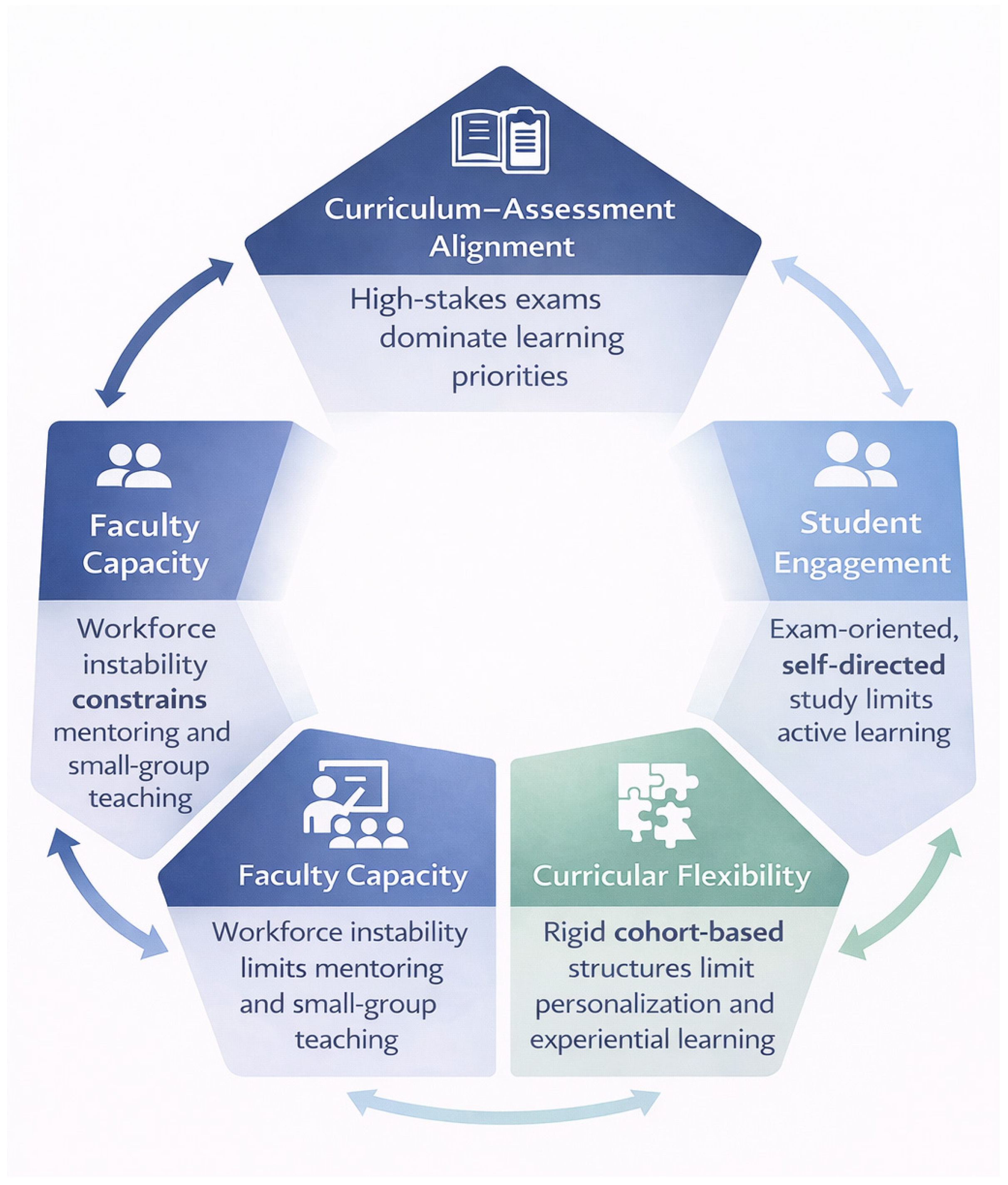
The summary of shared systemic challenges in undergraduate medical education at UNM-HSC (U.S.) and UMH (Spain) is shown in
Figure 1.
4. Recommendations Aligned with Comparative Findings
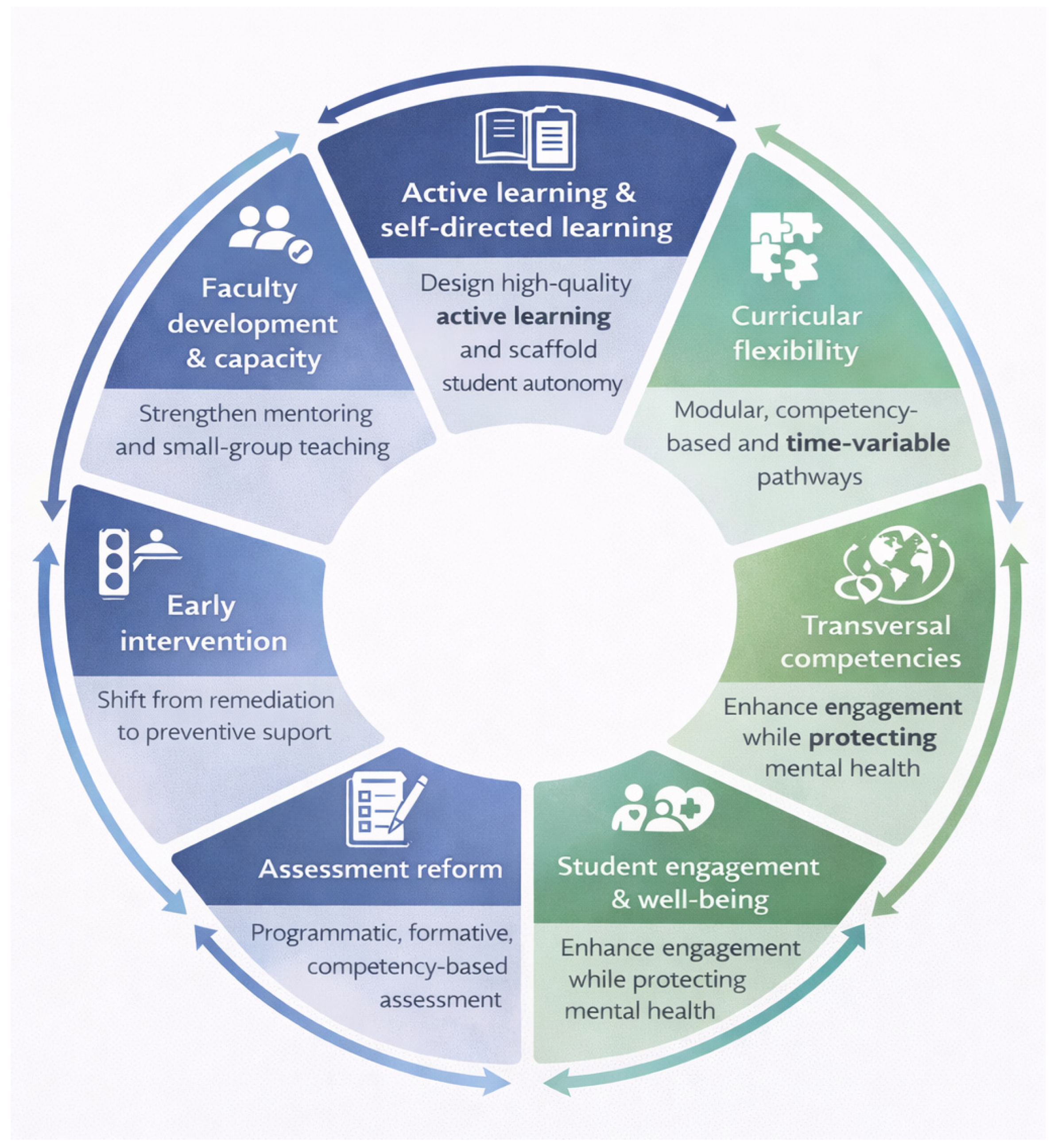
The comparative analysis presented above demonstrates that, despite operating within different national regulatory and assessment frameworks, UNM-HSC and UMH face convergent challenges related to student engagement, assessment-driven learning behaviors, faculty constraints, curricular rigidity, and student well-being. The following recommendations are directly derived from these observed contrasts and shared systemic pressures (
Figure 2).
4.1. Refine Active Learning Strategies and Promote Self-Directed Learning
Observations at UNM-HSC and UMH reveal considerable variability in student engagement during active-learning sessions, with a predominance of exam-driven behaviors that suggest a misalignment between curricular expectations and students’ needs. Research at U.S. medical schools indicates that disengagement often arises from inconsistently implemented or poorly designed activities, social dynamics such as sitting with friends to avoid challenge, and limited preparedness for self-directed learning. While students acknowledge that well-structured, collaborative exercises foster deeper learning, many admit to “checking out,” being physically present but intellectually disengaged. These findings underscore the importance of faculty development to ensure consistent, high-quality active learning experiences that align with higher-order assessments [
22]. Reducing reliance on passive lectures and integrating structured accountability mechanisms—such as low-stakes formative assessments and participation-linked evaluations, including readiness assurance tests in team-based learning—can enhance preparation and engagement without compromising student autonomy.
Medical education has increasingly shifted toward student-directed learning, with students controlling how, when, and with what resources they learn [
23]. Attendance at live lectures and active learning sessions has declined, while time spent on independent study has increased, a trend accelerated by curricular reforms and pandemic-related adaptations. Concurrently, a robust “parallel curriculum” has emerged, dominated by external, often commercial, resources tailored to board exam preparation. While this reflects students’ motivation, adaptability, and strategic efficiency, it also raises concerns about curricular coherence, quality assurance, and equitable access. Accreditation standards permit the use of external materials while maintaining institutional responsibility for educational quality, creating tension between student autonomy and institutional accountability.
To address these challenges, medical schools must align formal curricula with student learning practices [
24]. This includes evaluating commonly used external resources, integrating high-quality tools into the official curriculum, reducing redundancy, and ensuring equitable access to essential materials. Evidence suggests that while self-directed learning is central to physician training—particularly in clinical years—students achieve the greatest benefit when autonomy is supported by clear structure, expectations, and guidance. The contemporary challenge is therefore not whether students will direct their own learning—they already do—but how institutions can scaffold, legitimize, and guide this autonomy to maintain educational quality, equity, and alignment with professional goals [
24].
4.2. Increase Curricular Flexibility Through Modular Design
The limited curricular flexibility identified at both institutions supports the need for a more modular curriculum. Greater curricular flexibility would allow students to balance core requirements with research, clinical electives, community engagement, and professional development activities, while maintaining alignment with licensing exam requirements.
Flexible medical curricula incorporate variable timing, individualization, and choice to better align education with student competencies, goals, and circumstances. Time-variable, competency-based progression allows learners to advance at different speeds based on demonstrated ability rather than fixed schedules, but implementation remains limited due to logistical challenges related to assessment, scheduling, and downstream processes such as examinations and residency matching [
25,
26,
27,
28]. Within this broader flexibility framework, acceleration and deceleration address differences in learning pace and life circumstances [
18]. Accelerated pathways—most commonly three-year medical degrees—compress curricula for cohorts of students, often those with defined career intentions in primary care or underserved settings, and could have outcomes comparable to or better than traditional programs [
29]. However, concerns persist regarding sustainability, burnout, and the resource intensity required to support parallel curricula and mentoring. Conversely, decelerated pathways allow students to extend their studies without remediation, supporting equity, retention, and wellbeing, particularly for underrepresented or non-traditional students, though these options may carry stigma, social isolation, and financial costs [
30,
31].
Flexibility is also expressed through articulated entry and exit options that create tailored “on-ramps” and “off-ramps” into and out of medical education. On-ramps recognize prior learning or professional experience, enabling students to enter programs at an appropriate stage, while off-ramps allow learners to exit prior to graduation with a recognized outcome. Although off-ramps do not lead to full medical qualification, they may protect student wellbeing, reduce unjustified debt, and reflect an ethical approach to medical training by acknowledging partial achievement [
18].
Additional mechanisms for curricular flexibility include elective service-learning pathways, selectives, electives, concentrations, and curriculum tracks [
18]. Elective service-learning pathways often take the form of longitudinal clinical experiences in underserved, rural, or primary care settings, where students are embedded in healthcare teams and entrusted with meaningful responsibilities. Selectives and electives provide structured choice within and beyond the core curriculum, while scholarly concentrations allow sustained focus on areas of interest such as research or population health. Curriculum tracks extend this model by offering multi-year, faculty-designed pathways that prepare students for specific roles or specialties, frequently functioning as pipelines into areas of workforce need and supporting earlier career differentiation [
18].
4.3. Implement Effective Early Intervention Programs
Students who fail assessments face significant academic, emotional, and professional risks, underscoring the critical need for early support. Although remediation after failure can be effective, it is inherently reactive and often comes too late, after students have already experienced distress, delays in progression, or withdrawal from the program. Importantly, research shows that student performance can be predicted early in training using simple, routinely collected data such as formative assessments and engagement indicators [
32]. This provides a strong rationale for early intervention programs that identify at-risk students in the first weeks of medical school, before failure occurs, and provide timely, targeted support.
Strong early intervention programs shift the focus from remediation after failure to prevention of failure [
32]. By delivering support proactively, institutions can reduce lost time, minimize student distress, and use resources more efficiently while preserving student progression and well-being. Although predictive models show modest effect sizes and vary across contexts, they consistently demonstrate meaningful early signals of risk that can complement faculty judgment. When interventions are thoughtfully designed, context-sensitive, and monitored over time, early support programs offer a powerful opportunity to improve outcomes, foster resilience, and create a more supportive educational environment that helps students succeed before difficulties escalate.
Early intervention for MD students should begin at the point of admissions, where holistic review identifies not only academic readiness but also the lived experiences and contextual factors that shape student success. History has shown that one-size-fits-all, cognition-heavy admissions processes are insufficient, and while holistic review is now widely adopted, it must be paired with equally intentional, equity-centered support structures to be effective [
33]. Admitting students using balanced cognitive and noncognitive criteria—such as background, communication skills, and suitability for medicine—creates opportunities to diversify the physician workforce, but without strong downstream support, these gains risk being undermined. True early intervention therefore requires coupling holistic admissions with robust, proactive support for at-risk students, including intensive, targeted mentoring by faculty and peers beginning on day one [
34]. Embedding equity across both admissions and learner support systems shifts responsibility from the individual student to the institution and represents a critical step toward improving educational outcomes, reducing disparities, and ensuring that all admitted students are positioned to thrive.
4.4. Strengthen Student Engagement While Safeguarding Well-Being
Given the documented mental health strain associated with high-stakes assessment environments at both institutions, strategies to improve student engagement must be implemented alongside robust well-being support systems. Encouraging student participation in small-group activities with structured accountability can partially address engagement challenges in active learning settings. At the same time, mentorship programs, peer support initiatives, and accessible mental health resources should be strategically embedded within the curriculum to mitigate burnout associated with USMLE Step 1/2 and MIR preparation.
MD student disengagement is best understood as a systems-level response to curricular incentives, institutional culture, and competing demands rather than a lack of interest in learning [
35]. Heavy emphasis on USMLE Step 1 and MIR preparation, easy access to third-party resources, and efficiency-driven study strategies reduce the perceived value of attending formal sessions, while stress and burnout further push students toward solitary learning. Attempts to counter this disengagement through mandatory attendance, when made without systems-based analysis or broad stakeholder input, can worsen morale and erode trust, producing compliance without meaningful engagement [
36]. More sustainable engagement emerges when schools adopt student-centered, values-driven approaches that emphasize relationships, autonomy, and shared responsibility over enforcement [
36,
37].
Disengagement is also shaped by changing study behaviors enabled by digital access. Students often continue to use faculty-created materials, but they do so asynchronously and outside the classroom, thereby reducing in-person participation. This shift weakens the social and collaborative dimensions of learning, which some students value but others do not perceive as essential to academic success. As a result, attendance declines without an accompanying decline in exam performance, reinforcing the belief that physical presence is optional [
36].
Well-being pressures further contribute to disengagement. The high stress of the preclinical years may lead students to adopt solitary, efficiency-driven study strategies that minimize time spent in group settings. This loss of community interaction may, in turn, exacerbate burnout and reduce motivation to engage with the formal learning environment [
36].
Finally, curricular structure itself may unintentionally enable disengagement. When internal assessments strongly mirror Step 1 or MIR content, they validate alternative study pathways and diminish the perceived necessity of active participation in faculty-led sessions. Together, these factors suggest that disengagement reflects rational responses to systemic incentives, rather than apathy, and highlight the need to better integrate assessment, pedagogy, and social learning to sustain meaningful student engagement [
36]. As noted above (
Section 4.1), adoption of a flexible, competence-based curriculum can further promote student engagement by reinforcing the relevance of active participation to professional development.
4.5. Optimize the Use of Educational Technology
The COVID-19 pandemic accelerated the adoption of digital learning modalities, highlighting the potential of hybrid education models that combine flexibility with meaningful in-person engagement [
38,
39,
40,
41,
42]. Both UNM-HSC and UMH should refine the use of digital platforms to deliver theoretical content while preserving in-person activities for clinical skills training, simulation, and collaborative learning. A balanced hybrid approach can accommodate diverse learning preferences without compromising educational quality or student engagement.
The effective use of technology in MD education must be intentional, equitable, and embedded within a broader student-centered learning strategy. Advances in virtual reality, artificial intelligence, simulation, and digital learning platforms have transformed medical training by enabling experiential, flexible, and personalized learning. These tools expand access to knowledge, support adaptive learning pathways, and allow students to practice clinical reasoning and procedural skills in safe, simulated environments. When thoughtfully integrated, educational technologies can enhance engagement, strengthen clinical competence, and better prepare future physicians for an increasingly complex and technology-driven healthcare landscape [
43]. For example, the Basic and Advanced Training–Computer Assisted Visual Experience (BATCAVE) Healthcare Simulation Program at the UNM-School of Medicine includes multiple specialized training environments, such as adult, pediatric, infant, and birthing simulation labs, as well as dedicated classrooms, providing comprehensive, hands-on simulation-based training for healthcare learners. Similarly, the UMH offers robust simulation facilities, including clinical consultation suites, critical care and emergency simulation rooms, high-fidelity surgical simulation spaces, clinical skills laboratories, multipurpose teaching and debriefing rooms, and dedicated control and audiovisual recording areas that support a wide range of training scenarios. Both institutions provide robust infrastructure for simulation-based education, and continued investment in state-of-the-art technology, expanded space, and technical support could further enhance and scale these capabilities to meet growing educational needs.
AI and data science training opportunities at the UNM School of Medicine are supported by multiple complementary programs and partnerships. The Southwest Center for Advancing Clinical and Translational Innovation and the UNM Health Sciences Library and Informatics Center provide workshops and courses on data management, clinical databases, programming, and AI applications in the health sciences. Additional educational pathways include data science certification and graduate programs through the Center for Advanced Research Computing and Computer Engineering, as well as interdisciplinary collaboration through the New Mexico AI Consortium and the Trustworthy AI Grand Challenge, which promote education, mentorship, and responsible AI development. The UMH offers a course on AI models in the health sciences as part of the master’s degree in research in clinical medicine. Continued coordination across these initiatives and expanded integration into medical curricula could further strengthen AI training and prepare learners for emerging roles in data-driven healthcare.
However, the successful integration of technology requires early planning, faculty development, and strong institutional support to ensure that innovations enhance rather than fragment the learning experience [
44]. Technology should complement—not replace—humanistic elements of medical training such as mentorship, bedside teaching, and collaborative learning. Attention must also be given to digital access disparities, costs, data privacy, and the risk of overreliance on technology that may weaken interpersonal skills. By adopting a balanced, hybrid model that combines emerging technologies with foundational clinical experiences and robust learner support, medical schools can create more personalized, inclusive, and effective educational environments that prepare students to thrive in modern practice while maintaining the core values of patient-centered care.
4.6. Reform Assessment Practices to Support Competency Development
The strong influence of high-stakes licensing examinations on learning priorities underscores the importance of reinforcing formative and programmatic assessment approaches. Maintaining a focus on continuous feedback rather than exclusive reliance on summative examinations can improve learning outcomes and promote deeper clinical reasoning [
45]. Integrating reflective practice and competency-based assessment across curricular activities can further support the formation of professional identity and long-term skill development.
Competency-based assessment represents a fundamental shift in medical education from time-based training and high-stakes testing toward continuous evaluation of learners’ demonstrated abilities across knowledge, skills, and professional behaviors [
46]. By defining clear competencies and developmental milestones, competency-based medical education emphasizes outcomes, ensuring that learners progress on the basis of demonstrated mastery rather than time spent in training. Formative assessments—such as direct observation, simulation, multisource feedback, and reflective portfolios—provide richer and more valid evidence of clinical competence than written examinations alone, while routine, timely, and specific feedback supports ongoing professional growth [
45]. When implemented effectively, competency-based assessment functions as an early warning system that identifies performance gaps, guides individualized learning plans, and supports learners in achieving progressively higher levels of mastery.
Successful implementation, however, requires more than new assessment tools; it demands a cultural commitment to continuous feedback, faculty development, and transparent expectations [
46]. Valid, reliable assessments must be paired with structured feedback methods that encourage self-reflection, goal setting, and iterative improvement. Clear competency definitions, consistent evaluation standards, and integration of formative and summative data allow programs to monitor learner development and intervene early when challenges arise. By aligning assessment with meaningful learning outcomes and professional development, competency-based approaches foster accountability, personalization, and lifelong learning, ensuring that graduates are not only knowledgeable but also fully prepared to deliver high-quality, patient-centered care.
4.7. Integrate Interprofessional, Global, and Community Health Perspectives as Transversal Competencies
The limited integration of transversal competencies identified in the comparative analysis supports embedding interprofessional education, One Health, Global Health, and Community Health perspectives across both preclinical and clinical stages [
47,
48,
49]. Interprofessional learning experiences involving students from medicine, nursing, pharmacy, and other health disciplines strengthen communication and teamwork skills [
50]. In parallel, incorporating global and community health frameworks into existing clinical, ethics, and public health modules helps contextualize medical training within real-world determinants of health. International electives and structured community engagement programs have been shown to enhance cultural competence, social responsibility, and the formation of professional identity among future physicians [
51]
5. Conclusions
Medical education is undergoing a profound transition driven by evolving student learning behaviors, technological change, competency-based expectations, and increasing attention to student well-being. The findings presented here underscore that meaningful curricular reform requires coordinated, system-level action rather than isolated adjustments. Strengthening active and self-directed learning, increasing curricular flexibility, implementing early intervention systems, safeguarding student well-being, optimizing educational technology, reforming assessment practices, and embedding interprofessional and community-oriented perspectives are interdependent priorities that together can enhance both learner development and institutional effectiveness.
To translate these principles into practice, institutions should prioritize several actionable steps. First, align active learning with assessment by ensuring that collaborative and higher-order classroom activities are consistently designed, faculty-supported, and linked to evaluation methods that reward preparation and participation. Second, formally recognize and integrate high-quality external learning resources into the curriculum to maintain coherence and equity while supporting structured self-directed learning. Third, adopt modular, flexible curricular designs that enable individualized pacing, elective pathways, and opportunities for scholarly or community engagement without compromising core competencies. Fourth, establish proactive early-identification and support systems using formative data, mentorship, and equity-centered advising, beginning at admission and continuing throughout training. Fifth, embed well-being initiatives—mentorship, peer support, and accessible mental health resources—within curricular structures to ensure that engagement strategies do not exacerbate stress. Sixth, implement programmatic, competency-based assessment systems that emphasize continuous feedback, developmental milestones, and early remediation rather than reliance on high-stakes examinations alone. Finally, intentionally integrate interprofessional, global, and community health perspectives as longitudinal competencies that reflect contemporary healthcare needs.
Integrating professional development, assessment demands, and student well-being across diverse medical education systems requires coordinated, evidence-informed strategies. Taken together, these efforts support a more flexible, student-centered, and competency-driven model of medical education that balances institutional responsibility with learner autonomy. By adopting reforms that are empirically grounded and responsive to local contexts, medical schools can better prepare graduates who are resilient, reflective, and equipped to deliver high-quality, patient-centered care in an increasingly complex healthcare environment.
Author Contributions
Conceptualization, J.-M.R.-R. and C.F.V.; methodology, J.-M.R.-R. and C.F.V.; formal analysis, J.-M.R.-R.; investigation, J.-M.R.-R., C.F.V., J.L.N., S.M.-B. and M.L.-B.; writing—original draft preparation, J.-M.R.-R., C.F.V., J.L.N., S.M.-B. and M.L.-B.; writing—review and editing, J.-M.R.-R., C.F.V. and S.M.-B.; supervision, J.-M.R.-R.; project administration, J.-M.R.-R. All authors have read and agreed to the published version of the manuscript.
Funding
J.M.R.R has received a Mobility Grant for Internationalization of Teaching Activities from the Universidad Miguel Hernández (UMH)—Programa Destino PDI—Teaching 2025 (grant code 11-131-4-2025-0107-S).
Institutional Review Board Statement
Not applicable.
Informed Consent Statement
Not applicable.
Data Availability Statement
Data sharing not applicable to this article as no datasets were generated or analyzed to write this paper.
Acknowledgments
Grammarly and ChatGPT 5.2 were used to improve language and readability while preparing this work. After using these tools, the authors reviewed and edited the content as needed and take full responsibility for the publication’s content. AI-assisted graphic design tools were used to support the visual layout and formatting of selected figures. All conceptual content, structure, and scientific interpretation were developed entirely by the authors. No copyrighted third-party images were used, and all figures comply with applicable licensing requirements.
Conflicts of Interest
The authors declare no conflicts of interest.
Abbreviations
The following abbreviations are used in this manuscript:
| CBL | Case-based learning |
| HSC | Health Sciences Center |
| MIR | Medico Interno Residente |
| OSCE | Objective Structured Clinical Examination |
| PBL | Problem-based learning |
| TBL | Team-based learning |
| UME | Undergraduate medical education |
| UMH | Universidad Miguel Hernández |
| UNM | University of New Mexico |
| USA | United States |
| USMLE | United States Medical Licensing Examination |
References
- Zavlin, D.; Jubbal, K.T.; Noe, J.G.; Gansbacher, B. A comparison of medical education in Germany and the United States: From applying to medical school to the beginnings of residency. Ger. Med. Sci. 2017, 15, Doc15. [Google Scholar] [CrossRef]
- Jones, A.; Benns, M.; Farmer, R. Using resident performance on Step 2 to predict surgical residency success. Surgery 2025, 179, 108801. [Google Scholar] [CrossRef] [PubMed]
- Lombardi, C.V.; Chidiac, N.T.; Record, B.C.; Laukka, J.J. USMLE step 1 and step 2 CK as indicators of resident performance. BMC Med. Educ. 2023, 23, 543. [Google Scholar] [CrossRef] [PubMed]
- English, K. Assessing the Impact of USMLE Step 1 Going Pass-Fail: A Brief Review of the Performance Data. Avicenna J. Med. 2024, 14, 228–230. [Google Scholar] [CrossRef] [PubMed]
- Bird, C.; Godbe, K.N.; Nazir, N.; Braun, S.; Farmer, R.; Korentager, R. Tipping the Scales: Quantifying the Impact of USMLE Step 1 Pass/Fail Scoring on Application Interpretation in the Integrated Plastic Surgery Match. J. Surg. Educ. 2025, 82, 103625. [Google Scholar] [CrossRef]
- Rodriguez-Diez, M.C.; Alegre, M.; Diez, N.; Arbea, L.; Ferrer, M. Technical flaws in multiple-choice questions in the access exam to medical specialties (“examen MIR”) in Spain (2009–2013). BMC Med. Educ. 2016, 16, 47. [Google Scholar] [CrossRef]
- Garcia-Estan, J. Studying Medicine and being a doctor in Spain. MedEdPublish (2016) 2018, 7, 276. [Google Scholar] [CrossRef]
- Phillips, J.; Wiesbauer, F. The flipped classroom in medical education: A new standard in teaching. Trends Anaesth. Crit. Care 2022, 42, 4–8. [Google Scholar] [CrossRef]
- Shaban, E.E.; Elmelliti, H.; Shaban, A.; Shaban, A.; Zaki, H.A. Impact of early clinical exposure on medical students’ competency development: A systematic review of evidence from Asian and African countries. BMC Med. Educ. 2025, 25, 1723. [Google Scholar] [CrossRef]
- Tayade, M.C.; Latti, R.G. Effectiveness of early clinical exposure in medical education: Settings and scientific theories—Review. J. Educ. Health Promot. 2021, 10, 117. [Google Scholar] [CrossRef]
- Walters, M.; Alonge, T.; Zeller, M. Impact of COVID-19 on Medical Education: Perspectives From Students. Acad. Med. 2022, 97, S40–S48. [Google Scholar] [CrossRef] [PubMed]
- Richardson, M.A.; Islam, W.; Magruder, M. The Evolving Impact of COVID-19 on Medical Student Orthopedic Education: Perspectives From Medical Students in Different Phases of the Curriculum. Geriatr. Orthop. Surg. Rehabil. 2020, 11, 2151459320951721. [Google Scholar] [CrossRef] [PubMed]
- Lara, J.P.; Compañ, A.; Casanovas, A. The role of the schools of medicine. Med. Clínica Práctica 2024, 7, 100428. [Google Scholar] [CrossRef]
- Pales, J.; Gual, A. Medical education in Spain: Current status and new challenges. Med. Teach. 2008, 30, 365–369. [Google Scholar] [CrossRef]
- de Málaga, D. Estándares para la educación médica en el grado: Pensando en el futuro. Educacion Medica 2023, 14, 100783. [Google Scholar]
- Nina, G.; Myers, O.; Rishel Brakey, H.; Sood, A. Why Faculty Leaders Leave a School of Medicine? Chron. Mentor. Coach. 2023, 7, 394–400. [Google Scholar]
- Myers, O.; Greenberg, N.; Wilson, B.; Sood, A. Factors Related to Faculty Retention in a School of Medicine: A Time to Event Analysis. Chron. Mentor. Coach. 2020, 1, 334–340. [Google Scholar]
- Barrett, A.; Wodward-Kron, R.; Cheshire, L. Flexibility in primary medical programs: A scoping review. Focus Health Prof. Educ. A Multi-Prof. J. 2022, 23, 16–34. [Google Scholar] [CrossRef]
- Esguerra, S.; Chiu, F.T.; Espinoza, A.; Williams, D.; Clithero-Eridon, A. Are medical students happy despite unhappy conditions: A qualitative exploration of medical student cohorts during disruptive conditions. BMC Med. Educ. 2023, 23, 214. [Google Scholar] [CrossRef]
- Fletcher, I.; Castle, M.; Scarpa, A.; Myers, O.; Lawrence, E. An exploration of medical student attitudes towards disclosure of mental illness. Med. Educ. Online 2020, 25, 1727713. [Google Scholar] [CrossRef]
- Gutiérrez Pastor, I.; Quesada Rico, J.A.; Gutiérrez Pastor, A.; Nouni García, R.; Carratalá Munuera, M.C. Depresión, ansiedad y salud autopercibida en estudiantes de Medicina: Un estudio transversal. Rev. Española De Educ. Médica 2021, 2, 21–31. [Google Scholar] [CrossRef]
- White, C.; Bradley, E.; Martindale, J.; Roy, P.; Patel, K.; Yoon, M.; Worden, M.K. Why are medical students ‘checking out’ of active learning in a new curriculum? Med. Educ. 2014, 48, 315–324. [Google Scholar] [CrossRef] [PubMed]
- Siraja, A.A.H.; Mohamed, S.A.; Krishnamoorthy, Y.; Lonimath, A.; Rushender, C.R. Self-directed learning for medical graduates: A boon or bane in disguise? A cross-sectional study in Chennai. J. Educ. Health Promot. 2024, 13, 27. [Google Scholar] [CrossRef] [PubMed]
- Wu, J.H.; Gruppuso, P.A.; Adashi, E.Y. The Self-directed Medical Student Curriculum. JAMA 2021, 326, 2005–2006. [Google Scholar] [CrossRef] [PubMed]
- Kiefer, M.M.; Wang, E.; Engle, K.; Sardesai, M.; McPhillips, H.; Cunningham, M.J. Improving USMLE Step 1 outcomes in academically vulnerable students through a targeted, competency-based curriculum. BMC Med. Educ. 2025, 26, 93. [Google Scholar] [CrossRef]
- Schumacher, D.J.; Caretta-Weyer, H.; Busari, J.; Carraccio, C.; Damodaran, A.; Gruppen, L.D.; Hall, A.K.; Kinnear, B.; Warm, E.; Ten Cate, O.; et al. Competency-based time-variable training internationally: Ensuring practical next steps in the wake of the COVID-19 pandemic. Med. Teach. 2021, 43, 810–816. [Google Scholar] [CrossRef]
- Murray, K.E.; Lane, J.L.; Carraccio, C.; Glasgow, T.; Long, M.; West, D.C.; O’Connor, M.; Hobday, P.; Schwartz, A.; Englander, R.; et al. Crossing the Gap: Using Competency-Based Assessment to Determine Whether Learners Are Ready for the Undergraduate-to-Graduate Transition. Acad. Med. 2019, 94, 338–345. [Google Scholar] [CrossRef]
- Mejicano, G.C.; Bumsted, T.N. Describing the Journey and Lessons Learned Implementing a Competency-Based, Time-Variable Undergraduate Medical Education Curriculum. Acad. Med. 2018, 93, S42–S48. [Google Scholar] [CrossRef]
- Chrisman-Khawam, L.; Snyder, S.; Tyler, C.; Harley, D.; Davidson, E.; Anthes, L.; Casapulla, S. The Transformative Care Continuum: Implementing an accelerated pathway that addresses the new roles of the family medicine physician. Med. Educ. Online 2024, 29, 2379629. [Google Scholar] [CrossRef]
- Arvidson, C.G.; Green, W.D.; Allen, R.; Reznich, C.; Mavis, B.; Osuch, J.R.; Lipscomb, W.; O’Donnell, J.; Brewer, P. Investing in success: Student experiences in a structured, decelerated preclinical medical school curriculum. Med. Educ. Online 2015, 20, 29297. [Google Scholar] [CrossRef]
- McGrath, B.; McQuail, D. Decelerated medical education. Med. Teach. 2004, 26, 510–513. [Google Scholar] [CrossRef] [PubMed]
- Dewar, A.; Hope, D.; Jaap, A.; Cameron, H. Predicting failure before it happens: A 5-year, 1042 participant prospective study. Med. Teach. 2021, 43, 1039–1043. [Google Scholar] [CrossRef]
- Ballejos, M.P.; Rhyne, R.L.; Parkes, J. Increasing the relative weight of noncognitive admission criteria improves underrepresented minority admission rates to medical school. Teach. Learn. Med. 2015, 27, 155–162. [Google Scholar] [CrossRef] [PubMed]
- Anachebe, N.F.; Amiri, L.; Goodell, K.; Haynes, D.; Panaccione, R.; Saguil, A.; Terregino, C.A.; Woodson, M.; Royal, K. Approaches to ensure an equitable and fair admissions process for medical training. Commun. Med. 2024, 4, 275. [Google Scholar] [CrossRef] [PubMed]
- Smeets, A.; van Ede, A.E.; Vorstenbosch, M.; van Gurp, P.J. From Quiet Quitting to Open Dialogue in Medical Education: Longitudinal Student Perspectives on the Factors Shaping Student Engagement. Acad. Med. 2025, 100, 931–939. [Google Scholar] [CrossRef]
- Kauffman, C.A.; Derazin, M.; Asmar, A.; Kibble, J.D. Patterns of medical student engagement in a second-year pathophysiology course: Relationship to USMLE Step 1 performance. Adv. Physiol. Educ. 2019, 43, 512–518. [Google Scholar] [CrossRef] [PubMed]
- Lamb, S.; Chow, C.; Lindsley, J.; Stevenson, A.; Roussel, D.; Shaffer, K.; Samuelson, W. Learning from failure: How eliminating required attendance sparked the beginning of a medical school transformation. Perspect. Med. Educ. 2020, 9, 314–317. [Google Scholar] [CrossRef]
- Samuel, A.; Durning, S.J. From Crisis to Opportunity: Reinventing Medical Education After COVID-19. Perspect. Med. Educ. 2025, 14, 371–382. [Google Scholar] [CrossRef]
- Nejadghaderi, S.A.; Khoshgoftar, Z.; Fazlollahi, A.; Nasiri, M.J. Medical education during the coronavirus disease 2019 pandemic: An umbrella review. Front. Med. 2024, 11, 1358084. [Google Scholar] [CrossRef]
- Restini, C.; Faner, M.; Miglio, M.; Bazzi, L.; Singhal, N. Impact of COVID-19 on Medical Education: A Narrative Review of Reports from Selected Countries. J. Med. Educ. Curric. Dev. 2023, 10, 23821205231218122. [Google Scholar] [CrossRef]
- Puradiredja, D.I.; Kintu-Sempa, L.; Eyber, C.; Weigel, R.; Broucker, B.; Lindkvist, M.; Casamitjana, N.; Reynolds, R.; Klinkel, H.F.; Matteelli, A.; et al. Adapting teaching and learning in times of COVID-19: A comparative assessment among higher education institutions in a global health network in 2020. BMC Med. Educ. 2022, 22, 507. [Google Scholar] [CrossRef] [PubMed]
- Papapanou, M.; Routsi, E.; Tsamakis, K.; Fotis, L.; Marinos, G.; Lidoriki, I.; Karamanou, M.; Papaioannou, T.G.; Tsiptsios, D.; Smyrnis, N.; et al. Medical education challenges and innovations during COVID-19 pandemic. Postgrad. Med. J. 2022, 98, 321–327. [Google Scholar] [CrossRef] [PubMed]
- Ogundiya, O.; Rahman, T.J.; Valnarov-Boulter, I.; Young, T.M. Looking Back on Digital Medical Education Over the Last 25 Years and Looking to the Future: Narrative Review. J. Med. Internet Res. 2024, 26, e60312. [Google Scholar] [CrossRef] [PubMed]
- Alrashed, F.A.; Ahmad, T.; Almurdi, M.M.; Alderaa, A.A.; Alhammad, S.A.; Serajuddin, M.; Alsubiheen, A.M. Incorporating Technology Adoption in Medical Education: A Qualitative Study of Medical Students’ Perspectives. Adv. Med. Educ. Pract. 2024, 15, 615–625. [Google Scholar] [CrossRef]
- Song, X.; Cleaves, E.; Gluzman, E.; Kotlyar, B.; Russo, R.A.; Schilling, D.C.; Tsao, C.P.; West, J.C. A Scoping Review of Assessments in Undergraduate Medical Education: Implications for Residency Programs and Medical Schools. Acad. Psychiatry 2025, 49, 263–273. [Google Scholar] [CrossRef]
- Lee, G.B.; Chiu, A.M. Assessment and feedback methods in competency-based medical education. Ann. Allergy Asthma Immunol. 2022, 128, 256–262. [Google Scholar] [CrossRef]
- One Health High-Level Expert Panel; Adisasmito, W.B.; Almuhairi, S.; Behravesh, C.B.; Bilivogui, P.; Bukachi, S.A.; Casas, N.; Cediel Becerra, N.; Charron, D.F.; Chaudhary, A.; et al. One Health: A new definition for a sustainable and healthy future. PLoS Pathog. 2022, 18, e1010537. [Google Scholar] [CrossRef]
- Salm, M.; Ali, M.; Minihane, M.; Conrad, P. Defining global health: Findings from a systematic review and thematic analysis of the literature. BMJ Glob. Health 2021, 6, e005292. [Google Scholar] [CrossRef]
- Goodman, R.A.; Bunnell, R.; Posner, S.F. What is “community health”? Examining the meaning of an evolving field in public health. Prev. Med. 2014, 67, S58–S61. [Google Scholar] [CrossRef]
- Krystallidou, D.; Kersbergen, M.J.; de Groot, E.; Fluit, C.; Kuijer-Siebelink, W.; Mertens, F.; Oosterbaan-Lodder, S.C.M.; Scherpbier, N.; Versluis, M.A.C.; Pype, P. Interprofessional education for healthcare professionals. A BEME realist review of what works, why, for whom and in what circumstances in undergraduate health sciences education: BEME Guide No. 83. Med. Teach. 2024, 46, 1607–1624. [Google Scholar] [CrossRef]
- Imafuku, R.; Saiki, T.; Hayakawa, K.; Sakashita, K.; Suzuki, Y. Rewarding journeys: Exploring medical students’ learning experiences in international electives. Med. Educ. Online 2021, 26, 1913784. [Google Scholar] [CrossRef]
| Disclaimer/Publisher’s Note: The statements, opinions and data contained in all publications are solely those of the individual author(s) and contributor(s) and not of MDPI and/or the editor(s). MDPI and/or the editor(s) disclaim responsibility for any injury to people or property resulting from any ideas, methods, instructions or products referred to in the content. |
© 2026 by the authors. Published by MDPI on behalf of the Academic Society for International Medical Education. Licensee MDPI, Basel, Switzerland. This article is an open access article distributed under the terms and conditions of the Creative Commons Attribution (CC BY) license.




 ,
,