


Article

Patterns of Furosemide Use and Associated Adverse Drug Events in Primary Healthcare Settings: A Retrospective Pharmacoepidemiological Study

by
Fitim B. Alidema
1,
Lirim Shefki Mustafa
1,*,
Arieta Hasani Alidema
2,
Mirlinda Havolli
3 and
Fellenza Abazi
3
1
Department of Pharmacology, Faculty of Pharmacy, UBT College, 1000 Prishtina, Kosovo
2
Department of Nursing, Faculty of Medical, UBT College, 1000 Prishtina, Kosovo
3
Faculty of Health Sciences, University of Maribor, 2000 Maribor, Slovenia
*
Author to whom correspondence should be addressed.
Pharmacoepidemiology 2026, 5(1), 9; https://doi.org/10.3390/pharma5010009
Submission received: 31 January 2026 / Revised: 2 March 2026 / Accepted: 10 March 2026 / Published: 17 March 2026

Abstract

Background: Furosemide is one of the most frequently prescribed loop diuretics for cardiovascular conditions, particularly in the management of volume overload and acute elevations in blood pressure. However, detailed real-world data describing its utilization characteristics and documented safety outcomes in primary healthcare settings remain limited, especially in underrepresented health systems. Objective: This study aimed to describe real-world patterns of furosemide utilization, including indications and concomitant treatment patterns, and to document associated adverse drug events and short-term clinical outcomes in routine primary healthcare practice. Methods: A retrospective pharmacoepidemiological observational study was conducted between January and December 2025 in a primary healthcare center. Medical records of 1300 adult patients who received furosemide for cardiovascular indications were reviewed. Indications included arterial hypertension, hypertensive crises, and conditions related to volume overload. Utilization characteristics were operationalized as indication distribution, monotherapy versus combination therapy, and recurrence patterns within the study period. Data collected included demographic characteristics, primary and comorbid diagnoses, blood pressure values recorded before and after administration, furosemide dose and route of administration, concomitant antihypertensive therapy, documented adverse drug events as recorded in routine clinical documentation, recurrent presentations related to hypertensive crises, and the need for hospital referral. Descriptive statistics and paired comparative analyses were performed, with statistical significance set at p < 0.05. Results: The mean patient age was 62.4 ± 11.8 years, with a male predominance (54.1%). Arterial hypertension was the most frequent recorded indication (78.6%), while 32.4% of patients had multiple cardiovascular diagnoses. A statistically significant reduction in systolic blood pressure (from 176.3 ± 18.5 mmHg to 148.7 ± 16.2 mmHg, p < 0.001) and diastolic blood pressure (from 101.2 ± 11.4 mmHg to 89.6 ± 9.8 mmHg, p < 0.001) was observed between measurements recorded before and after administration during the same clinical episode. Recurrent presentations related to hypertensive crises were documented in 27.9% of patients during the study period. Adverse drug events were documented in 9.6% of cases, most commonly dehydration and suspected electrolyte disturbances as noted in routine clinical records. Hospital referral was required in 6.8% of patients. Conclusions: In this real-world primary healthcare cohort, furosemide was commonly used across a heterogeneous mix of cardiovascular indications, predominantly in combination with other antihypertensive agents. Observed temporal reductions in blood pressure and documented adverse events reflect routine clinical practice rather than controlled treatment effects. These findings provide descriptive pharmacoepidemiological evidence from a primary care setting and underscore the importance of careful monitoring, documentation, and rational prescribing in patients receiving loop diuretics.

1. Introduction

Cardiovascular diseases (CVDs) remain the leading cause of morbidity and mortality worldwide and represent a substantial burden on healthcare systems, particularly within primary healthcare settings where most patients are initially diagnosed and managed [1]. Arterial hypertension, heart failure, and conditions associated with volume overload are among the most prevalent cardiovascular disorders requiring long-term pharmacological treatment and continuous clinical monitoring to prevent acute events and disease progression [2,3].
Diuretics constitute a cornerstone of cardiovascular pharmacotherapy, especially in the management of heart failure and selected hypertensive states. Among these agents, loop diuretics are widely prescribed because of their potent natriuretic effect and rapid onset of action. Furosemide, the most commonly used loop diuretic, inhibits the Na+/K+/2Cl cotransporter in the thick ascending limb of the loop of Henle, resulting in enhanced sodium and water excretion and subsequent reduction in intravascular volume [4,5]. In routine clinical practice, furosemide is frequently administered in situations involving volume overload and acute elevations in blood pressure, including presentations described as hypertensive crises [6].
Despite its extensive clinical use, most available evidence regarding furosemide is derived from randomized controlled trials or hospital-based studies [3,7]. While these studies provide valuable information on efficacy and safety under controlled conditions, they may not adequately reflect prescribing behaviors, indication overlap, comorbidity burden, and documentation practices encountered in everyday primary care. This gap is particularly relevant in health systems with limited resources, where treatment decisions are often influenced by workload, accessibility, and patient complexity. Accordingly, there is increasing interest in pharmacoepidemiological and real-world evidence studies that describe medication utilization patterns and documented safety outcomes in routine practice [8].
Primary healthcare settings play a pivotal role in the longitudinal management of cardiovascular disease, including both routine follow-up and acute presentations [9]. Within this context, furosemide may be prescribed across a heterogeneous mix of indications, sometimes in combination with other antihypertensive or cardiovascular agents. Such prescribing patterns raise important safety considerations, including the risk of dehydration, electrolyte disturbances, renal impairment, and repeated healthcare utilization [10,11]. Systematic documentation and evaluation of these events are essential components of pharmacovigilance in primary care.
Recurrent presentations related to hypertensive crises represent an additional clinical and organizational challenge. These episodes may reflect disease severity, suboptimal long-term management, therapeutic inertia, or adherence issues [12]. Understanding how furosemide is utilized during such presentations, and how often patients re-present within a defined observation period, can provide descriptive insights into real-world prescribing and healthcare utilization patterns [13].
Retrospective observational studies based on routinely collected medical records offer an opportunity to examine drug utilization characteristics, documented adverse drug events, and short-term clinical outcomes in large patient populations under usual care conditions [14,15]. Although such designs do not allow causal inference, they contribute valuable contextual evidence regarding medication use in everyday clinical environments [16,17,18].
In this context, the present study aimed to describe real-world patterns of furosemide utilization, including indications, concomitant treatment patterns, and recurrence of presentations, and to document associated adverse drug events and short-term clinical outcomes in a primary healthcare setting. By analyzing routinely collected data from a large cohort, this study seeks to provide descriptive pharmacoepidemiological evidence relevant to pharmacovigilance and rational prescribing in primary care.

2. Results

A total of 1300 patients treated with furosemide for cardiovascular indications were included in the final analysis. The study population was characterized by a predominance of patients with arterial hypertension and frequent presentations related to hypertensive crises. Demographic characteristics, clinical profiles, treatment patterns, and outcomes were analyzed in detail. Changes in blood pressure values before and after furosemide administration were assessed, along with treatment safety, recurrence of hypertensive episodes, and need for hospital referral. Subgroup analyses were performed to explore differences according to sex, age groups, and recurrence patterns. Statistical significance was evaluated to identify clinically meaningful associations between furosemide use and cardiovascular outcomes in the primary care setting.
Table 1 presents the demographic characteristics of the study population. The mean age of patients was 62.4 ± 11.8 years, with a slight predominance of male patients (54.1%). Most patients resided in urban areas (57.1%).
Table 2 summarizes the primary cardiovascular diagnoses at presentation. Arterial hypertension was the most frequent diagnosis (78.6%), followed by hypertensive crises (36.0%) and conditions related to volume overload (24.0%). Multiple cardiovascular diagnoses were present in 32.4% of patients.
Table 3 presents furosemide dosing patterns and concomitant antihypertensive therapy. Most patients received furosemide at low to moderate doses, predominantly via the oral route. Combination therapy with other antihypertensive agents was common, reflecting routine prescribing practices in primary care.
Table 4 shows systolic blood pressure values recorded before and after furosemide administration. A statistically significant reduction in systolic blood pressure was observed following treatment (p < 0.001).
Table 5 p-values represent within-group paired comparisons of pre- and post-administration blood pressure values.
Table 6 summarizes recurrent presentations related to hypertensive crises during the study period. Recurrent visits were documented in 27.9% of patients.
Table 7 presents adverse drug events documented during furosemide use. Adverse events were reported in 9.6% of patients, most commonly dehydration and suspected electrolyte disturbances.
Table 8 summarizes clinical outcomes and the need for hospital referral during the study period. Referral to secondary or tertiary care was required in 6.8% of patients.

3. Discussion

This retrospective observational study provides descriptive real-world pharmacoepidemiological data on patterns of furosemide utilization and documented clinical outcomes in a primary healthcare setting. By analyzing a large cohort of patients managed under routine clinical conditions, the study offers insight into indication overlap, prescribing patterns, blood pressure changes recorded during clinical encounters, recurrence of hypertensive crisis presentations, and clinician-documented adverse drug events.

3.1. Demographic and Clinical Characteristics of the Study Population

The demographic profile of the study population reflects a typical primary care cardiovascular cohort, characterized by older age and a slight predominance of male patients. This distribution is consistent with global epidemiological data demonstrating a higher burden of cardiovascular disease among older adults and males [1,2]. Arterial hypertension was the most frequently recorded diagnosis, affecting nearly four-fifths of the cohort. However, diagnoses were not mutually exclusive, and a substantial proportion of patients presented with overlapping cardiovascular conditions. Similar patterns of multimorbidity and diagnostic overlap have been reported in primary healthcare settings managing complex cardiovascular populations [3,4]. These characteristics underscore the clinical heterogeneity of the cohort and should be considered when interpreting treatment patterns and outcomes.

3.2. Pharmacological Treatment Patterns and Concomitant Therapy

Furosemide was rarely prescribed as monotherapy, with most patients receiving concomitant antihypertensive agents. This pattern reflects routine clinical practice, particularly in patients with mixed indications such as hypertension combined with volume overload or heart failure [2,5]. The frequent use of combination therapy is consistent with guideline-based management strategies in selected cardiovascular conditions [2,5]; however, it also complicates attribution of observed clinical changes to a single pharmacological agent.
The high prevalence of concomitant medication use likely reflects underlying multimorbidity rather than isolated hypertension. In pharmacoepidemiological research, evaluation of drug effects must therefore account for the broader therapeutic context in which medications are prescribed [8]. The present findings should be interpreted within this framework of combined therapy and complex clinical presentations.

3.3. Blood Pressure Changes in Routine Clinical Practice

A statistically significant reduction in both systolic and diastolic blood pressure was observed between measurements recorded before and after furosemide administration during the same clinical episode. Similar magnitudes of blood pressure reduction have been reported in acute cardiovascular settings where loop diuretics are used for volume-related blood pressure elevations [8].
However, given the retrospective and uncontrolled design of the study, these findings represent temporal associations rather than confirmed treatment effects. Post-administration blood pressure measurements were not standardized for research purposes, and additional acute interventions or non-pharmacological factors may have contributed to the observed changes. Furthermore, regression to the mean cannot be excluded, particularly in presentations documented as hypertensive crises. Accordingly, the observed reductions should be interpreted as reflective of routine clinical practice rather than as isolated evidence of drug effectiveness.
It is also important to acknowledge that a substantial proportion of patients received furosemide in combination with other antihypertensive agents as part of routine clinical management. Consequently, the observed blood pressure reductions likely reflect the combined pharmacological effects of multiple agents rather than furosemide monotherapy alone. In addition, detailed stratification according to furosemide dose intensity was not consistently available in the medical records, precluding formal dose–response analysis. These factors limit the ability to attribute observed hemodynamic changes to a single agent or to a standardized dosing strategy.
Sex-stratified differences in blood pressure reduction were modest and exploratory in nature. While previous literature has described potential sex-related differences in cardiovascular pharmacodynamics [9], the absence of multivariable adjustment in the present study limits causal interpretation.

3.4. Recurrent Hypertensive Crises and Healthcare Utilization

Recurrent presentations due to hypertensive crises were documented in more than one-quarter of patients during the 12-month observation period. Recurrent acute elevations in blood pressure are frequently associated with adherence challenges, therapeutic inertia, and high comorbidity burden [10,11]. In the present cohort, recurrence was evaluated separately at the patient level following identification of the index episode. These findings highlight the persistent clinical and organizational challenges associated with long-term blood pressure control in primary care and emphasize the importance of structured follow-up and optimization of chronic management strategies.

3.5. Safety Profile and Pharmacovigilance Considerations

Adverse drug events were documented in 9.6% of patients, most commonly dehydration and suspected electrolyte disturbances. These findings are consistent with the known pharmacological effects of loop diuretics, which promote natriuresis and diuresis and may predispose susceptible patients to volume depletion and electrolyte imbalance [12,13].
Nevertheless, it is important to interpret these findings cautiously. Adverse events were identified solely through routine clinician documentation without systematic laboratory confirmation or formal causality assessment tools. As such, the reported frequency likely reflects documented events rather than the true incidence of adverse drug reactions. Moreover, given the high prevalence of concomitant antihypertensive therapy, attribution of specific adverse events exclusively to furosemide cannot be established. Real-world safety evaluations based on routine data are inherently subject to under-ascertainment and confounding by indication [8].

3.6. Clinical Outcomes and Need for Hospital Referral

A relatively small proportion of patients required referral to secondary or tertiary care. While this observation suggests that many acute cardiovascular presentations were managed within the primary healthcare setting, referral decisions are multifactorial and depend on clinical severity, available resources, and physician judgment. Therefore, hospital referral rates should not be interpreted as a direct measure of pharmacological effectiveness but rather as an indicator of healthcare utilization patterns within this context [14,15].

3.7. Strengths and Limitations

The principal strength of this study lies in its large sample size and real-world primary care context, providing descriptive pharmacoepidemiological data from an underrepresented health system. Such real-world evidence complements findings from randomized controlled trials by illustrating medication use under routine conditions [8].
Several limitations must be acknowledged. First, the retrospective design limits control over exposure classification, timing of measurements, and outcome ascertainment. Second, blood pressure measurements were not standardized for research purposes. Third, adverse drug events were based on routine documentation without systematic laboratory verification or validated causality assessment methods. Fourth, the absence of multivariable adjustment precludes identification of independent predictors of blood pressure change, recurrence, or referral. Finally, causal inferences regarding drug effectiveness or safety cannot be drawn.
Despite these limitations, the study provides contextual insight into how furosemide is utilized and documented in everyday primary healthcare practice.

4. Materials and Methods

4.1. Study Design and Setting

This study was designed as a retrospective pharmacoepidemiological observational analysis based on routinely collected clinical data. The investigation focused on describing real-world utilization characteristics of furosemide and documenting associated clinical and safety outcomes in routine cardiovascular practice.
The study was conducted at the Main Family Medicine Center in Viti, Kosovo, a primary healthcare institution providing both routine and urgent outpatient cardiovascular care. The observation period covered 12 consecutive months, from January to December 2025.
Data were obtained exclusively from existing physical and electronic medical records of patients managed as part of standard clinical care. No additional interventions, diagnostic procedures, laboratory tests, or follow-up visits were performed for research purposes.

4.2. Study Population

A total of 1300 adult patients were included in the final analysis. Eligible participants were patients aged ≥18 years who received furosemide for documented cardiovascular indications during the study period.
Recorded indications included:
  • arterial hypertension,
  • presentations documented as hypertensive crisis,
  • and clinical conditions associated with volume overload (e.g., peripheral edema).
Diagnoses were not mutually exclusive, and patients could have overlapping cardiovascular conditions documented during the same clinical episode.
Patients were excluded if medical records were incomplete or insufficient for analysis, or if furosemide was prescribed for non-cardiovascular indications.
To avoid duplication of baseline clinical data, only the first eligible presentation during the study period was used as the index episode for primary descriptive and blood pressure analyses. However, recurrence of hypertensive crisis presentations within the same 12-month period was recorded separately at the patient level.

4.3. Definitions and Operationalization of Variables

For the purposes of this study, the following applies.
Hypertensive crisis was defined as a presentation documented in the medical record as acute severe elevation in blood pressure requiring urgent management within the primary care setting. Classification was based on clinician documentation rather than predefined research criteria.
Blood pressure measurements were those routinely recorded in the medical chart immediately before and after furosemide administration during the same clinical episode. The exact timing of post-administration measurement was determined by routine clinical workflow and was not standardized for research purposes.
Utilization patterns were operationalized as:
  • distribution of recorded indications,
  • monotherapy versus combination therapy,
  • route of administration,
  • and recurrence of hypertensive crisis presentations within the 12-month period.
Adverse drug events (ADEs) were identified based on clinician documentation in medical records. These included documented clinical signs suggestive of dehydration and notes indicating suspected electrolyte disturbances. No standardized causality assessment tools (e.g., Naranjo algorithm) were applied, and laboratory confirmation was not systematically available.

4.4. Data Collection and Variables

Data were extracted using a structured data abstraction form. Collected variables included:
  • Demographic characteristics (age, sex, place of residence)
  • Primary and comorbid cardiovascular diagnoses
  • Blood pressure values recorded before and after administration
  • Furosemide dose and route of administration
  • Concomitant antihypertensive therapy
  • Documented adverse drug events
  • Recurrence of hypertensive crisis presentations within the study period
  • Need for referral to secondary or tertiary care

4.5. Outcomes

The primary outcome was the change in systolic and diastolic blood pressure between measurements recorded before and after administration during the same clinical episode.
Secondary outcomes included:
  • documented recurrence of hypertensive crisis presentations during the 12-month observation period,
  • occurrence of documented adverse drug events,
  • and requirement for hospital referral.
Given the retrospective observational design, outcomes reflect documented clinical practice rather than controlled treatment effects.

4.6. Statistical Analysis

Statistical analysis was performed using standard statistical software.
Continuous variables were summarized as mean ± standard deviation, and categorical variables as frequencies and percentages.
Pre- and post-administration blood pressure values were compared using paired statistical tests (paired t-test for normally distributed data). Statistical significance was set at a two-sided p-value < 0.05.
Given the descriptive and retrospective nature of the study and the lack of standardized exposure stratification, no multivariable adjustment models were applied. Findings should therefore be interpreted as descriptive associations rather than causal effects.

4.7. Ethics Approval

The study was conducted in accordance with the Declaration of Helsinki. Written approval was obtained from the Main Family Medicine Center in Viti, Kosovo. The study was based exclusively on anonymized routinely collected clinical data, and informed consent was waived due to the retrospective design.
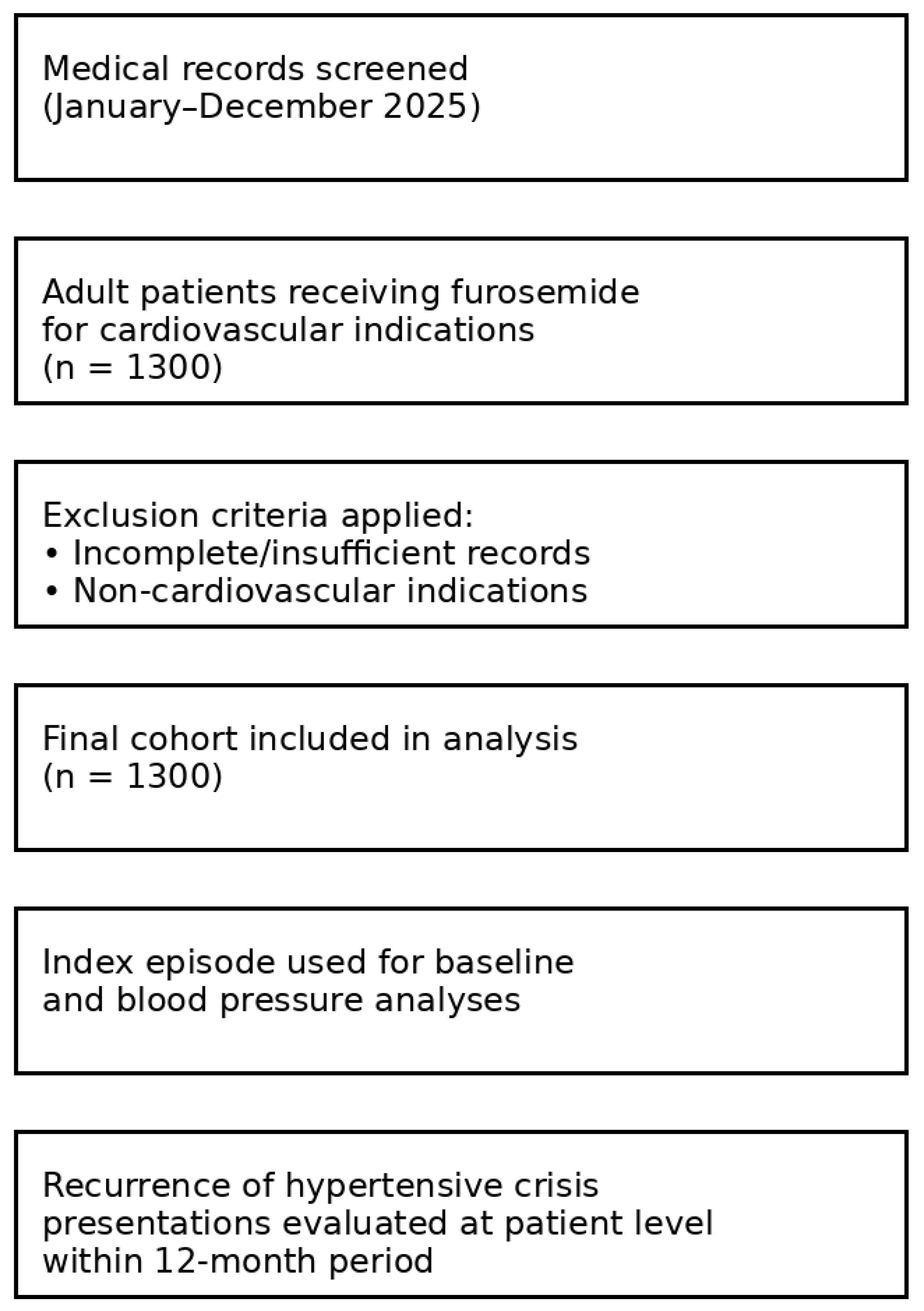
The patient selection process is illustrated in Figure 1.

5. Conclusions

This retrospective real-world study describes patterns of furosemide utilization and documented clinical outcomes in a primary healthcare setting. Furosemide was frequently prescribed across a heterogeneous mix of cardiovascular indications, predominantly in combination with other antihypertensive agents. Blood pressure reductions were observed between measurements recorded before and after administration during the same clinical episode; however, these findings represent temporal associations within routine practice rather than controlled treatment effects.
Documented adverse drug events were consistent with the known pharmacological profile of loop diuretics, although event identification was dependent on routine clinical documentation without systematic laboratory confirmation or formal causality assessment. Recurrence of hypertensive crisis presentations during the observation period underscores the complexity of long-term blood pressure management in primary care.
From a descriptive pharmacoepidemiological perspective, these findings provide contextual real-world data from an underrepresented healthcare setting and highlight the importance of careful documentation, monitoring, and rational prescribing in patients receiving loop diuretics.

6. Limitations and Future Directions

Several limitations must be considered when interpreting the findings. First, the retrospective design relies on the completeness and accuracy of routinely collected medical records, which may introduce information bias. Second, blood pressure measurements were not standardized for research purposes, and timing of post-administration assessment was determined by routine clinical workflow. Third, adverse drug events were identified through clinician documentation without systematic laboratory verification or validated causality assessment tools, which may have resulted in under-ascertainment or misclassification. Fourth, the absence of multivariable adjustment limits the ability to explore independent predictors of clinical outcomes. Finally, causal inferences regarding the effectiveness or safety of furosemide cannot be drawn from this observational design.
An additional limitation relates to the lack of standardized documentation of furosemide dosing across patients. Although furosemide was administered in accordance with routine clinical indications, including hypertensive crisis management, detailed stratification according to low, medium, or high dosing regimens was not consistently available in the medical records. Variability in dose intensity may have influenced blood pressure response and adverse event occurrence, and the absence of dose standardization limits the ability to assess dose–response relationships.
Furthermore, a substantial proportion of patients received concomitant antihypertensive therapies, making it difficult to isolate the independent contribution of furosemide to observed blood pressure changes. The use of combination therapy may have confounded the magnitude of blood pressure reduction, and the study design does not allow definitive identification of the primary drivers of clinical response.
Future research using prospective study designs with standardized measurement protocols, systematic laboratory monitoring, predefined exposure stratification, and clear differentiation between monotherapy and combination therapy regimens would provide a more robust evaluation of drug utilization patterns and safety outcomes. Comparative pharmacoepidemiological studies examining different diuretic strategies and patient subgroups may further inform evidence-based cardiovascular management in primary care.

Author Contributions

Conceptualization and study design: F.B.A.; Data collection and clinical interpretation: A.H.A.; Data analysis, interpretation of results, manuscript drafting, and correspondence: L.S.M.; Methodological support and statistical consultation: M.H.; Literature review, data interpretation, and critical revision of the manuscript: F.A. All authors have read and agreed to the published version of the manuscript.

Funding

This research received no external funding.

Institutional Review Board Statement

The Institutional Review Board (Ethics Committee) approval was obtained from the Main Family Medicine Center in Pristina, Kosovo on 15 January 2025. The Ethics Committee of the Main Family Medicine Center in Pristina, Kosovo does not assign a specific approval code to ethical approvals. The signed and stamped ethical approval document was submitted to the journal during the initial submission process before the manuscript entered the peer-review stage.

Informed Consent Statement

Patient consent was waived due to the retrospective design of the study and the use of anonymized clinical data.

Data Availability Statement

Data is available from the corresponding author upon reasonable request due to privacy and ethical restrictions.

Conflicts of Interest

The authors declare no conflicts of interest.

References

  1. Brater, D.C. Diuretic therapy. N. Engl. J. Med. 1998, 339, 387–395. [Google Scholar] [CrossRef]
  2. Burnier, M.; Egan, B.M. Adherence in hypertension: A Review of Prevalence, Risk Factors, Impact, and Management. Circ. Res. 2019, 124, 1124–1140. [Google Scholar] [CrossRef]
  3. Carey, R.M.; Whelton, P.K. 2017 ACC/AHA Hypertension Guideline Writing Committee. Prevention, detection, evaluation, and management of high blood pressure in adults. Hypertension 2018, 71, e13–e115, Erratum in Hypertension 2018, 71, e140–e144. https://doi.org/10.1161/HYP.0000000000000076. [Google Scholar] [CrossRef]
  4. Ellison, D.H.; Felker, G.M. Diuretic treatment in heart failure. N. Engl. J. Med. 2017, 377, 1964–1975, Erratum in N. Engl. J. Med. 2018, 378, 492. https://doi.org/10.1056/NEJMx180001. [Google Scholar] [CrossRef] [PubMed]
  5. Felker, G.M.; Ellison, D.H.; Mullens, W.; Cox, Z.L.; Testani, J.M. Diuretic therapy for patients with heart failure. J. Am. Coll. Cardiol. 2020, 75, 1178–1195. [Google Scholar] [CrossRef] [PubMed]
  6. Greene, S.J.; Fonarow, G.C.; Butler, J. Risk Profiles in Heart Failure: Baseline, Residual, Worsening, and Advanced Heart Failure Risk. Circ. Heart Fail. 2021, 14, e007132. [Google Scholar] [CrossRef] [PubMed]
  7. Hernán, M.A.; Robins, J.M. Using big data to emulate a target trial when a randomized trial is not available. Am. J. Epidemiol. 2016, 183, 758–764. [Google Scholar] [CrossRef] [PubMed]
  8. Makady, A.; de Boer, A.; Hillege, H.; Klungel, O.; Goettsch, W. What is real-world data? A review of definitions based on literature and stakeholder interviews. Value Health 2017, 20, 858–865. [Google Scholar] [CrossRef]
  9. McDonagh, T.A.; Metra, M.; Adamo, M.; Gardner, R.S.; Baumbach, A.; Böhm, M.; Burri, H.; Butler, J.; Čelutkienė, J.; Chioncel, O.; et al. 2021 ESC guidelines for the diagnosis and treatment of acute and chronic heart failure. Eur. Heart J. 2021, 42, 3599–3726. [Google Scholar] [CrossRef] [PubMed]
  10. McMurray, J.J.V.; Packer, M.; Desai, A.S.; Gong, J.; Lefkowitz, M.P.; Rizkala, A.R.; Rouleau, J.L.; Shi, V.C.; Solomon, S.D.; Swedberg, K.; et al. Angiotensin–Neprilysin Inhibition versus Enalapril in Heart Failure. N. Engl. J. Med. 2014, 371, 993–1004. [Google Scholar] [CrossRef] [PubMed]
  11. Mullens, W.; Dauw, J.; Martens, P.; Verbrugge, F.H.; Nijst, P.; Meekers, E.; Tartaglia, K.; Chenot, F.; Moubayed, S.; Dierckx, R.; et al. Acetazolamide in Acute Decompensated Heart Failure with Volume Overload. N. Engl. J. Med. 2022, 387, 1185–1195. [Google Scholar] [CrossRef]
  12. Regitz-Zagrosek, V.; Oertelt-Prigione, S.; Prescott, E.; Franconi, F.; Gerdts, E.; Foryst-Ludwig, A.; Kautzky-Miller, A.; Knappe-Wagner, D.; Kintscher, U.; Ladwig, K.H.; et al. Gender in cardiovascular diseases: Impact on clinical manifestations, management, and outcomes. Eur. Heart J. 2016, 37, 24–34. [Google Scholar] [CrossRef] [PubMed]
  13. Schneeweiss, S.; Glynn, R.J. Real-world data analytics fit for regulatory decision-making. Am. J. Law Med. 2018, 44, 197–217. [Google Scholar] [CrossRef] [PubMed]
  14. Sherman, R.E.; Anderson, S.A.; Dal Pan, G.J.; Gray, G.W.; Gross, T.; Hunter, N.L.; LaVange, L.; Marinac-Dabic, D.; Marks, P.W.; Robb, M.A.; et al. Real-world evidence—What is it and what can it tell us? N. Engl. J. Med. 2016, 375, 2293–2297. [Google Scholar] [CrossRef] [PubMed]
  15. Testani, J.M.; Brisco, M.A.; Chen, J.; McCauley, B.D.; Parikh, C.R.; Tang, W.H.W. Timing of hemoconcentration during treatment of acute decompensated heart failure and subsequent survival: Importance of Sustained Decongestion. J. Am. Coll. Cardiol. 2013, 62, 516–524. [Google Scholar] [CrossRef] [PubMed]
  16. Whelton, P.K.; Carey, R.M.; Aronow, W.S.; Casey, D.E.; Collins, K.J.; Dennison Himmelfarb, C.; De Palma, S.M.; Gidding, S.; Jamerson, K.A.; Jones, D.W.; et al. 2017 ACC/AHA guideline for the prevention, detection, evaluation, and management of high blood pressure in adults. J. Am. Coll. Cardiol. 2018, 71, e127–e248. [Google Scholar] [CrossRef] [PubMed]
  17. Williams, B.; Mancia, G.; Spiering, W.; Agabiti Rosei, E.; Azizi, M.; Burnier, M.; Clement, D.L.; Coca, A.; de Simone, G.; Dominiczak, A.; et al. 2018 ESC/ESH guidelines for the management of arterial hypertension. Eur. Heart J. 2018, 39, 3021–3104. [Google Scholar] [CrossRef] [PubMed]
  18. World Health Organization. Cardiovascular Diseases (CVDs): Fact Sheet. World Health Organization, 2023. Available online: https://www.who.int/news-room/fact-sheets/detail/cardiovascular-diseases-(cvds) (accessed on 10 January 2026).
Figure 1. Flow diagram of patient selection for the study cohort. Medical records screened between January and December 2025 identified adult patients receiving furosemide for cardiovascular indications. After applying exclusion criteria (incomplete or insufficient records and non-cardiovascular indications), the final cohort included in the analysis consisted of n = 1300 patients.
Pharmacoepidemiology 05 00009 g001
Table 1. Demographic characteristics of the study population.
VariableValue
Number of patients1300
Mean age (years)62.4 ± 11.8
Male sex, n (%)703 (54.1)
Female sex, n (%)597 (45.9)
Urban residence, n (%)742 (57.1)
Rural residence, n (%)558 (42.9)
Table 2. Primary cardiovascular diagnoses at presentation.
Diagnosisn (%)
Arterial hypertension1022 (78.6)
Hypertensive crisis468 (36.0)
Volume overload/edema312 (24.0)
Multiple cardiovascular diagnoses421 (32.4)
Table 3. Pharmacological treatment patterns and concomitant therapies.
Therapy Categoryn (%)
Furosemide monotherapy216 (16.6)
Furosemide + antihypertensive therapy1084 (83.4)
ACE inhibitors/ARBs742 (57.1)
Beta-blockers488 (37.5)
Calcium channel blockers394 (30.3)
Concomitant analgesic use312 (24.0)
Patients with reported adverse effects125 (9.6)
Table 4. Blood pressure values before and after furosemide therapy.
ParameterBefore TreatmentAfter Treatmentp-Value
Systolic BP (mmHg)176.3 ± 18.5148.7 ± 16.2<0.001
Diastolic BP (mmHg)101.2 ± 11.489.6 ± 9.8<0.001
Table 5. Sex-stratified within-group pre–post blood pressure reductions.
SexSBP Reduction (mmHg)DBP Reduction (mmHg)p-Value
Male27.9 ± 12.111.4 ± 6.20.032
Female25.6 ± 11.810.1 ± 5.9
Table 6. Recurrent presentations for hypertensive crises.
Presentation Patternn (%)
Single presentation937 (72.1)
Recurrent presentations363 (27.9)
Three or more visits148 (11.4)
Table 7. Adverse effects associated with furosemide therapy.
Adverse Effectn (%)
Dehydration71 (5.5)
Suspected electrolyte imbalance54 (4.1)
Any adverse effect125 (9.6)
Table 8. Clinical outcomes and hospital referral.
Outcomen (%)
Clinical improvement1146 (88.2)
Hospital referral required88 (6.8)
No significant clinical response66 (5.0)
Disclaimer/Publisher’s Note: The statements, opinions and data contained in all publications are solely those of the individual author(s) and contributor(s) and not of MDPI and/or the editor(s). MDPI and/or the editor(s) disclaim responsibility for any injury to people or property resulting from any ideas, methods, instructions or products referred to in the content.

