Article

Real-World Safety of Acalabrutinib in Mexico: A Postmarketing Surveillance Study

by
Akemi Ishikawa-Ichikawa
1,
Jorge Alberto Islas-Martínez
1,
Eduardo Rios-Garcia
1,
Luis Fernando Tejado-Gallegos
2 and
Pamela Monserrat Ramírez-Marín
3,*
1
Medical Affairs, AstraZeneca Mexico, Mexico City 14210, Mexico
2
Evidence Generation Division, AstraZeneca Latam, Mexico City 14210, Mexico
3
Pharmacovigilance Unit, AstraZeneca Mexico, Mexico City 14210, Mexico
*
Author to whom correspondence should be addressed.
Pharmacoepidemiology 2026, 5(1), 7; https://doi.org/10.3390/pharma5010007
Submission received: 27 December 2025 / Revised: 7 February 2026 / Accepted: 12 February 2026 / Published: 28 February 2026

Abstract

Background: Acalabrutinib is a selective Bruton tyrosine kinase inhibitor widely used for chronic lymphocytic leukemia and mantle cell lymphoma. Real-world safety evidence from Latin America remains limited, which restricts local benchmarking and pharmacovigilance planning. In this study we aimed to assess exposure-adjusted adverse events in routine care in Mexico. Methods: We analyzed postmarketing surveillance datasets and spontaneous reports from March 2020 to August 2024, classifying events with MedDRA and summarizing seriousness, severity, and incidence per 100 patient-years. Results: A total of 266 patients were registered; 193 had evaluable exposure and safety data, contributing 242.73 patient-years. The overall adverse event incidence was 24.71 per 100 patient-years. Twenty-eight individual case safety reports documented 60 events. Forty-four events were serious. Among 33 events with reported severity, 14 were severe, 14 moderate, and five mild. Frequently affected system organ classes were blood and lymphatic, vascular, and infections. Seven deaths were reported; most were associated with COVID-19 complications or disease progression. Conclusions: The adverse event profile observed aligns with published trial experience and supports the tolerability of acalabrutinib in Mexican practice. These country-level, exposure-adjusted estimates provide actionable context for clinicians, institutional pharmacists and pharmacovigilance teams and point to the value of strengthening report completeness to improve signal detection in routine oncology care.

1. Introduction

B-cell malignancies represent a heterogeneous group of lymphoproliferative disorders with distinct biological behaviors, molecular features, and clinical outcomes. Among them, chronic lymphocytic leukemia (CLL) and mantle cell lymphoma (MCL) are two entities that, despite arising from mature B cells, differ markedly in epidemiology, pathogenesis, and therapeutic challenges [1,2].
CLL is the most common adult leukemia in Western countries, accounting for approximately one-third of all leukemia cases [3]. Whereas, in some regions it may account for 4.6% of all mature B-cell lymphomas [4]. It is characterized by clonal proliferation and accumulation of mature CD5(+)-B cells in the blood, bone marrow, and lymphoid tissues, often leading to lymphocytosis, cytopenia, or lymphadenopathy [5,6].
MCL is a rare and aggressive subtype of non-Hodgkin lymphoma, accounting for approximately 6–7% of cases globally [3], and representing nearly 10% of non-Hodgkin lymphomas in some countries, such as Mexico [4]. It is defined by overexpression of cyclin D1 due to the t(11;14)(q13;q32) translocation and often presents with widespread nodal involvement, bone marrow infiltration, and frequent extranodal disease [7,8]. Despite initial responsiveness to therapy, MCL tends to relapse, and the long-term prognosis remains poor in many cases, particularly among high-risk subgroups [9].
Bruton tyrosine kinase (BTK) plays a key role in B-cell receptor signaling and is upregulated in B-cell malignancies [10,11]. Acalabrutinib is a second-generation, selective inhibitor developed to improve the safety profile of earlier BTK inhibitors (BTKi). Along with its active metabolite, it covalently inhibits BTK with minimal off-target activity [12,13].
Approved for the treatment of CLL and relapsed/refractory MCL, acalabrutinib has demonstrated high overall response rates, prolonged progression-free survival and favorable tolerability in pivotal trials [12,13,14]. Additionally, in a head-to-head trial that compared ibrutinib vs acalabrutinib, most adverse events were low-grade and manageable, with fewer cardiovascular or bleeding complications [15]. However, serious events, including atrial fibrillation, neutropenia, and infections, have been reported, especially in combination regimens or high-risk patients [9,16,17]. As with other oncology drugs, post-approval real-world studies are critical to validate clinical trial findings and inform local clinical practices.
Although acalabrutinib has been approved in Mexico for CLL since November 2020, and relapsed/refractory MCL since June 2019, there is a lack of published real-world safety data in these populations. This study aimed to describe the real-world safety profile of acalabrutinib in Mexican patients by identifying the most common adverse events reported across approved indications using postmarketing surveillance (PMS) data.

2. Results

2.1. Patients and Drug Exposure

Between March 2020 and August 2024, 266 patients receiving acalabrutinib were identified in the national PMS (Registered Set). The primary indications were CLL (n = 157, 59.0%), MCL (n = 94, 35.3%), and Waldenström macroglobulinemia (WM; n = 7, 2.6%). Among them, 193 (72.5%) patients had complete information on treatment initiation and discontinuation, constituting both the Exposure Analysis Set and the Safety Set for adverse event analysis. At the time of the data cutoff, 147 patients (55.3%) remained on active treatment, with a similar indication distribution (Figure 1).
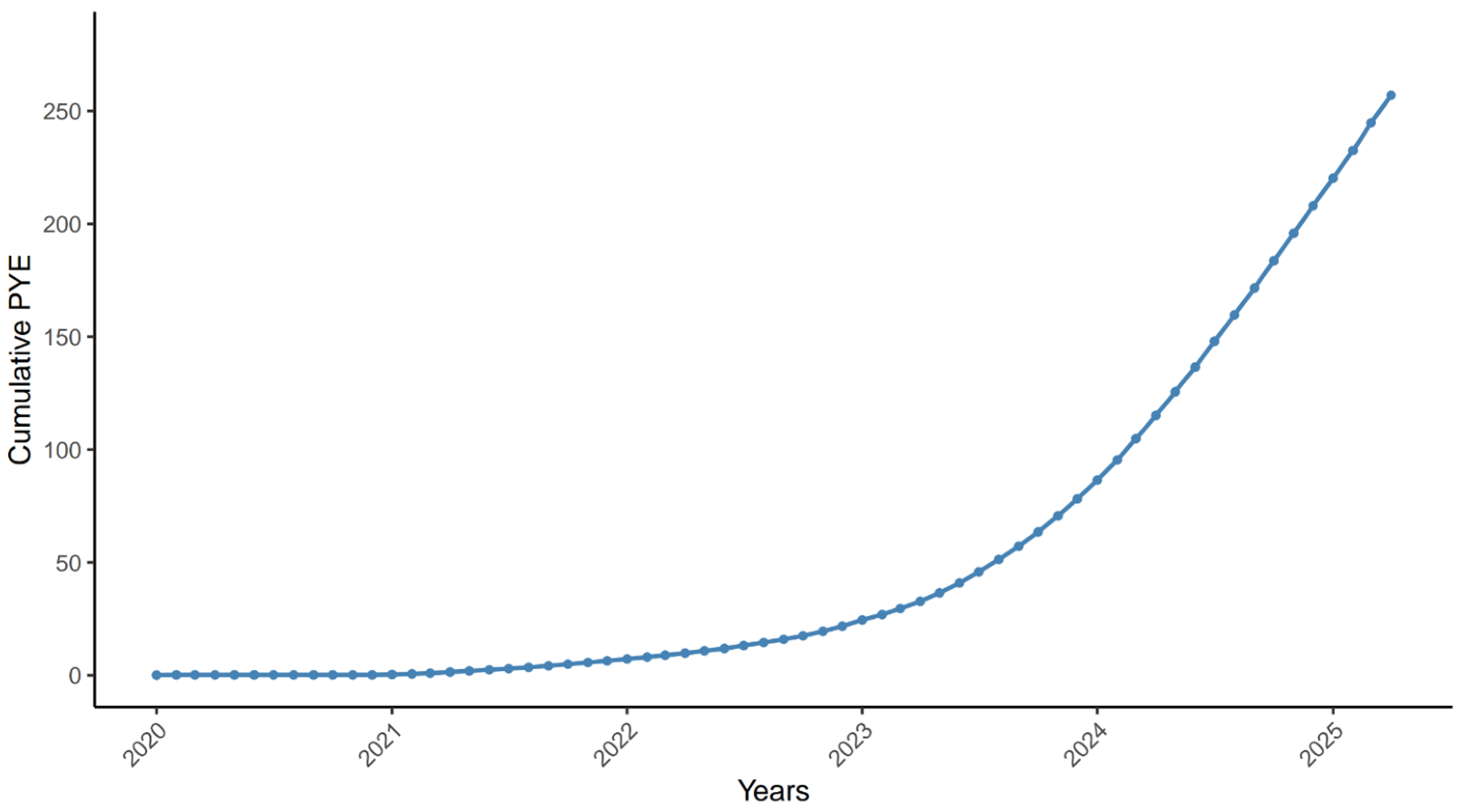
The cumulative exposure to acalabrutinib across the 193 evaluable patients was 242.73 patient-years (Figure 2). Based on this estimate, the overall adverse event incidence was 24.71 events per 100 patient-years.

2.2. Spontaneous Safety Reports

During the study period, 28 spontaneous individual case safety reports (ICSRs) related to acalabrutinib were submitted to the AstraZeneca pharmacovigilance unit in Mexico. Demographic and clinical information varied across reports. Among these, 14 patients (50%) were male and eight (29%) were female, and sex was not reported in six cases. Age data were available in nine reports, with a median age of 69 years (IQR: 61–78) (Table 1). The reported treatment indications included CLL (n = 6, 21%), MCL (n = 10, 36%), and off-label use in the context of COVID-19 (n = 7, 25%).
Across the 28 reports, 60 unique PTs were recorded, with 18 PTs (30%) reported in only one patient. Seven ICSRs (25%) involved an off-label COVID-19 treatment context, and three of seven fatalities were COVID-related, reflecting the pandemic’s temporal overlap with the observation period. Excluding COVID-19-related PTs, the most frequently affected SOCs were Blood and Lymphatic System Disorders (n = 5, 8.3%); Vascular Disorders (n = 5, 8.3%); Infections and Infestations (n = 4, 6.7%); and Injury, Poisoning, and Procedural Complications (n = 4; 6.7%) (Table 2).

2.3. Adverse Events, Severity, and Seriousness

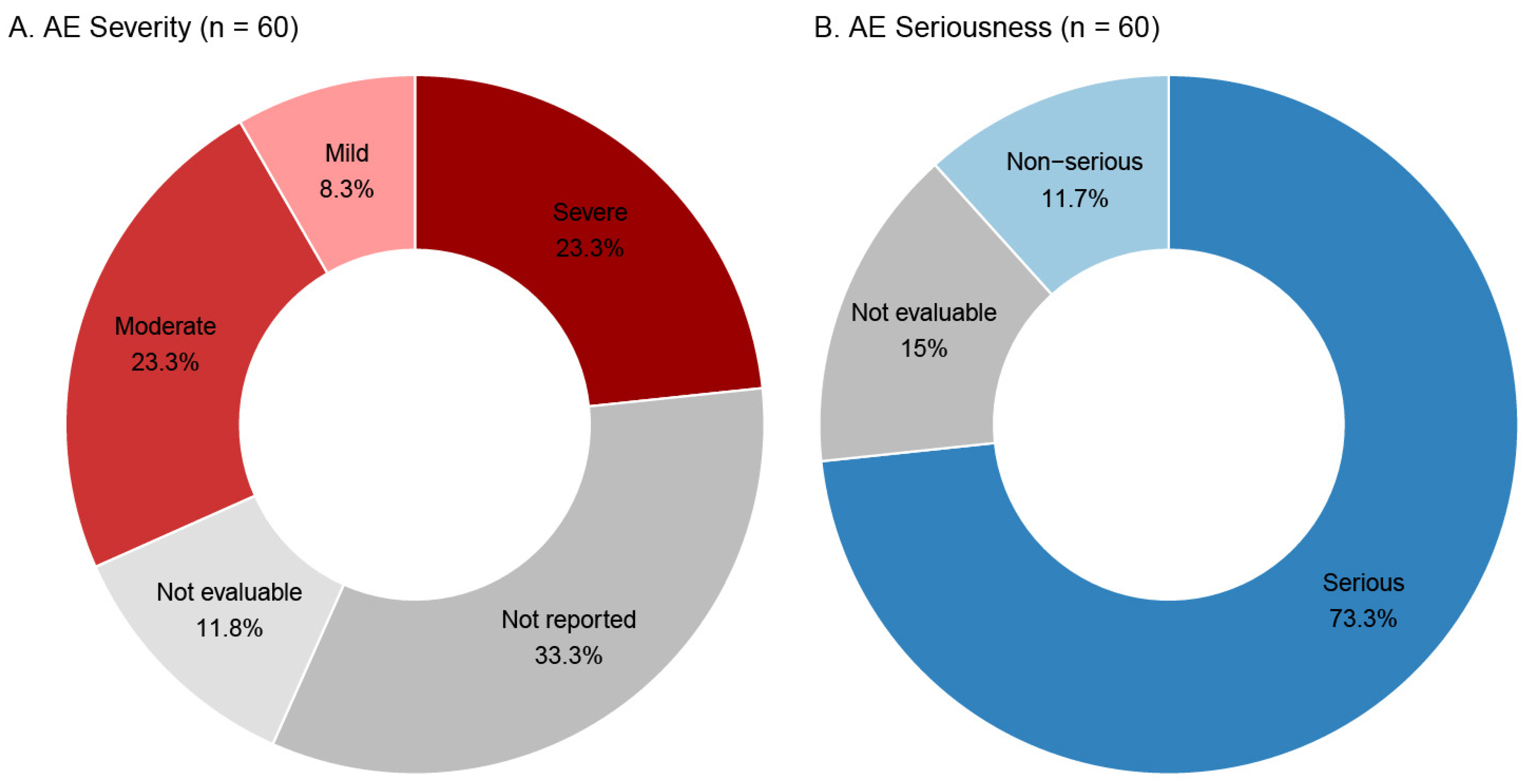
Among the 60 reported events, 33 (55%) events had documented severities. Severe AEs accounted for 14 events (42.4%), affecting 11 patients; moderate AEs accounted for 14 events (42.4%) in eight patients; and mild AEs accounted for five events (15.2%) in three patients. In 20 events (33.3%), severity was not reported, and seven events were deemed not evaluable (Figure 3A).
Among the reported events, 44 (73.3%) were classified as SAEs and occurred in 16 patients. Non-serious events totaled seven, affecting six patients. No treatment interruptions or discontinuations due to nonserious events were documented (Figure 3B).

2.4. Fatal Outcomes

Seven fatal adverse events were observed during the observation period. In one case, “death” was reported as the preferred term without additional clinical details. In three cases, death occurred due to COVID-19-related complications. Other reported causes include tumor lysis syndrome and disease progression. One report lacked sufficient information to determine the cause of death or its potential relationship with treatment.

3. Discussion

This study presents a real-world safety analysis of acalabrutinib in a Mexican population treated across approved indications, including CLL, MCL, and off-label use in WM and COVID-19. To our knowledge, this is the first postmarketing effort to characterize AEs related to acalabrutinib in Mexico. Across 193 evaluable patients and a cumulative exposure of 242.73 patient-years, 60 AEs were reported, corresponding to an incidence of 24.71 events per 100 patient-years. This provides a meaningful basis for real-world safety assessment, particularly when contextualized against published trial data and postmarketing pharmacovigilance cohorts [18,19].
The frequency and pattern of AEs observed in our study align with findings from pivotal trials, where acalabrutinib demonstrated a low incidence of high-grade toxicities and a favorable cardiovascular safety profile [12,14]. Recent large-scale pharmacovigilance analyses using FAERS and VigiBase databases have confirmed these patterns across real-world populations, demonstrating that ibrutinib exhibits stronger signals for cardiovascular disorders while acalabrutinib and zanubrutinib show more favorable cardiac safety profiles [20]. A comparative real-world study from the United States further demonstrated that acalabrutinib was associated with significantly fewer hypertension events and reduced healthcare resource utilization compared to ibrutinib [21]. BTKi have emerged as a preferred alternative to chemoimmunotherapy in the treatment of CLL, offering comparable or superior efficacy with improved tolerability [10]. Within this class, acalabrutinib is considered a highly selective BTKi, and a better-tolerated option compared with first-generation agents [16]. In a head-to-head comparison, acalabrutinib was associated with lower rates of atrial fibrillation, bleeding, and hypertension compared to ibrutinib [15]. These safety advantages have been corroborated by pharmacovigilance data and large real-world cohorts [18,22,23,24].
AEs of special interest in our cohort included a single case of atrial fibrillation (0.5%), three hemorrhagic events (1.6%), and two cases of TLS. These rates are comparable to those reported in the clinical trial and the post-approval literature [14,15,24]. International real-world evidence continues to support acalabrutinib’s favorable tolerability profile; a French multicenter study (NAOS) involving 485 CLL patients reported safety outcomes consistent with clinical trials despite an older patient population with more cardiovascular comorbidities [25]. Additionally, a propensity-matched analysis confirmed lower atrial fibrillation risk with acalabrutinib compared to ibrutinib in B-cell malignancy patients [26]. The low frequency of severe cardiovascular and bleeding events supports pharmacodynamic data showing that acalabrutinib minimizes off-target toxicities commonly associated with earlier BTKi [13].
In a phase II study, acalabrutinib demonstrated clinical activity and favorable tolerability in patients with relapsed/refractory CLL who had discontinued ibrutinib due to intolerance [27]. Among 60 patients, 73% achieved an overall response and only 17% discontinued due to AEs, despite prior ibrutinib-related toxicity. Notably, 57% of intolerance events did not recur during acalabrutinib therapy, and most recurrences were of reduced severity. These outcomes are consistent with prior findings supporting the use of acalabrutinib as a potentially safer follow-up BTKi and may contribute to improved adherence and quality of life. Although prior BTKi exposure was not formally assessed in our cohort, the observed low rates of atrial fibrillation and bleeding align with its favorable safety profile reported in head-to-head trials [15].
While vascular AEs were reported, these predominantly included minor events rather than major cardiovascular toxicities such as atrial fibrillation or hypertension. This pattern remains consistent with the favorable cardiovascular safety profile described in pivotal trials. Notably, 73.3% of all AEs were classified as serious, a proportion likely influenced by passive reporting bias favoring more clinically significant events. The prominence of infection-related AEs aligns with prior reports identifying infection as a leading cause of morbidity among patients receiving BTKi [24].
Although WM represented a minority of our cohort (2.6%), its inclusion is noteworthy due to the increasing off-label use of acalabrutinib in indolent lymphomas, including WM [28]. As highlighted recently, its favorable cardiac safety profile may make it a suitable option for patients with WM at risk of atrial fibrillation [29]. In our cohort, no major cardiovascular or hemorrhagic events were observed among these patients; however, due to the small sample size and off-label nature of this indication in our population, these findings should be interpreted with caution.
Among the 28 ICSRs, patients with MCL accounted for a larger number of reported AEs. This likely reflects the more advanced disease stage and higher comorbidity burden typical of relapsed/refractory MCL, rather than an intrinsic difference in tolerability. Prior studies have demonstrated favorable efficacy and a low incidence of atrial fibrillation and major bleeding with acalabrutinib in MCL [9,13]. Furthermore, real-world data have confirmed an acceptable safety profile in older, more comorbid MCL populations [18].
Several COVID-19-related AEs were recorded, reflecting the overlap between the study period and the pandemic. Although acalabrutinib is not approved for COVID-19 treatment, exploratory data suggested that it may mitigate the hyperinflammatory state associated with severe SARS-CoV-2 infection through IL-6 and C-reactive protein suppression [30]. However, a significant clinical benefit of acalabrutinib in hospitalized patients with COVID-19 was not demonstrated in a conducted trial (NCT04346199). Similarly, other trials reported that COVID-19 was the leading cause of SAEs and death in acalabrutinib-treated patients with CLL during the pandemic, particularly among those with pre-existing pulmonary disease or relapsed/refractory status [31,32]. These findings highlight the importance of interpreting infection-related AEs in the context of evolving external risk factors. As the COVID-19 pandemic has passed, outcomes for patients with hematological malignancies treated with acalabrutinib have improved.
It is important to distinguish the scope and intent of this pharmacovigilance analysis from formal risk quantification studies. This study describes the frequency and characteristics of spontaneously reported AEs in a real-world Mexican cohort, providing signal identification and safety surveillance data. However, it does not establish incidence rates, relative risks, or causal attributions, which require active surveillance, prospective enrollment, standardized follow-up, and appropriate comparator groups. These findings should be interpreted as hypothesis-generating safety signals rather than confirmatory risk estimates, due to the passive reporting framework and incomplete denominators inherent to postmarketing surveillance precluding definitive conclusions about event rates or population-level risk magnitudes.
This study also reflects persistent structural challenges in pharmacovigilance across low- and middle- income countries (LMICs), including Mexico. Underreporting may result from under-resourced regulatory infrastructure, limited pharmacovigilance training, continued reliance on paper-based or non-standardized digital systems [33], and poor integration of AEs reporting into clinical workflows [34]. While our findings appear broadly consistent with previously reported safety profiles from clinical trials and real-world data, this alignment should be interpreted cautiously. The relatively low volume of reports likely reflects limitations in AEs detection and documentation, not the absence of adverse events. These structural issues impede timely signal detection and limit the development of locally responsive risk mitigation strategies. Strengthening electronic reporting systems, institutional support, and pharmacovigilance education remain urgent priorities in LMIC settings.
The limitations of this study include its retrospective design, passive reporting framework, incomplete AEs documentation, and dichotomous causality classification (related vs not related) rather than preserving the full WHO-UMC grading spectrum; denominator–numerator mismatch between exposure tracking and event ascertainment, which may bias incidence estimates; and incomplete adverse event documentation and potential underreporting of AEs due to the design of the PMS and the study. Timing, severity, and resolution were inconsistently recorded, precluding time-to-event analyses and assessment of treatment modifications. Severity grading was retained as reported by healthcare professionals without retrospective harmonization to CTCAE v5.0, limiting comparability across events and preventing standardized severity distribution analysis. Additionally, as a pharmacovigilance postmarketing surveillance study rather than a clinical retrospective study, systematic retrieval of clinical data was not within the study design scope. Critical clinical modifiers were incompletely captured: sex was missing in 6/28 ICSRs (21%), age was available for only nine cases (32%), and data on comorbidities, ECOG performance status, prior BTKi exposure, concomitant anticoagulants/antiplatelets, dose intensity, and other information that could impact on the AEs presentation were not systematically recorded. These gaps preclude risk-stratified analyses for bleeding, arrhythmia, and infection events where such modifiers are established risk factors. Infection-related AEs could not be subclassified due to inconsistent reporting, and we lacked data on key modifiers such as age, prior treatments, or prophylaxis use, limiting interpretation. These limitations should be considered when interpreting the observed real-world safety outcomes of acalabrutinib.

4. Materials and Methods

4.1. Data Sources and Collection Period

As context, Mexico’s National Pharmacovigilance System operates under the Federal Commission for Protection against Sanitary Risks (COFEPRIS), which coordinates adverse event reporting through a network of healthcare institutions, pharmaceutical companies, and healthcare professionals. The system follows international pharmacovigilance standards established by the World Health Organization’s Uppsala Monitoring Centre (UMC). Spontaneous reporting is mandatory for pharmaceutical companies and encouraged for healthcare professionals, with ICSRs submitted electronically to COFEPRIS and subsequently coded using MedDRA terminology. This infrastructure enables systematic signal detection and safety monitoring for marketed medications across Mexico’s healthcare system.
We assembled two complementary postmarketing datasets spanning 2020 to 2024. The first was a national PMS registry that tracked patients receiving acalabrutinib in routine care and recorded treatment initiation, discontinuation, and indication. This registry was used to enumerate the exposed population and to derive person-time for incidence rate denominators. The second source was the company safety database that captures spontaneous adverse events (AEs) reports from clinicians, pharmacists, patients, and other healthcare professionals in Mexico. Together, these sources provided exposure denominators and case-level safety information for descriptive analyses. Delayed reporting was handled according to regulatory timelines; spontaneous reports received after the AEs occurrence date were included if submitted within the observation window, with reporting lag documented as the interval between AEs onset and ICSR receipt. Importantly, the exposure denominator (patient-years from PMS registry) and event numerator (AEs from spontaneous ICSRs) derive from sources with differing capture mechanisms and completeness; this structural limitation may introduce bias in exposure-adjusted incidence estimates, as spontaneous reporting captures only a subset of events occurring within the exposed cohort.

4.2. Data Collection and Endpoints

From the PMS registry we abstracted dates of treatment start and stop to estimate cumulative patient-years of exposure. From spontaneous reports we extracted age, sex, indication, seriousness, and severity when available. Because severity is not universally required under international pharmacovigilance guidance but is mandated by Mexican authorities, reported severities were retained as provided by reporters. Adverse events were coded to Medical Dictionary for Regulatory Activities (MedDRA version 28.0) at the system organ class and preferred term levels. The primary endpoint was the overall incidence of adverse events per 100 patient-years. Secondary endpoints were the distribution of events by system organ class and preferred term, the number and proportion of events classified as serious, and the proportion of patients contributing at least one event.

4.3. Definitions of Adverse Events

AEs were defined as any unfavorable and unintended sign, symptom, or disease temporally associated with acalabrutinib use. Serious adverse events were events that resulted in death, were life-threatening, required prolonged hospitalization, resulted in persistent or significant disability or congenital anomaly, or were considered medically important by the reporter [35,36].
Exposure time was computed for each evaluable patient as the interval between the documented start date and the last known treatment date or the end of the observation (31 August 2024), whichever occurred first. All reported AEs were verified to have occurred during documented exposure periods; events reported after treatment discontinuation were excluded unless they occurred within 30 days of the last documented dose, consistent with pharmacovigilance standards for delayed manifestation. For patients with gaps or unclear discontinuation dates, exposure time was censored at the last verifiable treatment date in the PMS registry. Patient-years were summed across all evaluable patients to obtain the denominator for incidence rate calculations. This approach leverages the registry’s capture of initiation and discontinuation to minimize misclassification of time at risk
All spontaneous reports were medically curated and mapped to the MedDRA classification system. Within MedDRA’s hierarchical structure, preferred terms (PTs) represent specific medical concepts or clinical observations at the most granular level (e.g., ‘atrial fibrillation,’ ‘hemorrhagic stroke,’ or ‘pneumonia’), which are then grouped into higher-level system organ classes (SOCs) representing physiological or anatomical systems (e.g., ‘cardiac disorders,’ ‘vascular disorders,’ or ‘infections and infestations’). This standardized coding enables systematic aggregation, international comparison, and signal detection across diverse pharmacovigilance databases. Each unique PT reported within an ICSR was counted as a distinct event for descriptive tabulation; patients with multiple PTs contributed multiple events to the numerator, consistent with standard pharmacovigilance practices for signal characterization. Causality assessment was performed for all ICSRs using the WHO-UMC causality assessment system. For the purposes of this PMS study, a dichotomous classification was applied: events assessed as ‘possible,’ ‘probable,’ or ‘certain’ were classified as ‘related,’ while events assessed as ‘unlikely’ were classified as ‘not related.’ All reported events included in this analysis were classified as ‘related’ according to this framework. Rechallenge and other dosing modifications were not systematically captured in spontaneous reports. Severity was included when explicitly present in the source report. Seriousness classifications were taken as recorded by the reporter or by the pharmacovigilance unit during case processing. This ensured consistent application of coding conventions across the study period. To prevent duplicate counting, we cross-referenced treatment initiation dates, and reported AEs profiles between the PMS registry and spontaneous reporting database; no duplicates were identified, as the PMS registry captured exposure data without individual AE-level detail, while spontaneous reports provided event-specific information from independent reporting pathways.

4.4. Statistical Analysis

Analyses were descriptive. Categorical variables were summarized as counts and percentages. Exposure-adjusted event rates were calculated as the number of adverse events divided by total patient-years, expressed per 100 patient-years. No hypothesis testing, regression modeling, or adjustment for covariates was performed. Graphics and tabulations were produced in Statistic Program for Social Sciences (SPSS) version 26 and RStudio 2023.03.0+386 on Windows. This analytic strategy aligns with the objective of characterizing the pattern and frequency of events in routine practice without imposing model-based assumptions that cannot be supported by spontaneous reporting structures. To ensure analytical rigor and mitigate potential bias inherent to sponsor-conducted research, all analyses were independently verified by external independent reviewers.

5. Conclusions

This analysis provides new data on the real-world safety of acalabrutinib from a Latin American perspective, and provides preliminary evidence of its tolerability across multiple B-cell malignancies, including CLL, MCL, and WM. Although the overall AEs profile observed was consistent with international clinical trials and pharmacovigilance data, interpretation must consider several region-specific limitations. Notably, a substantial proportion of patients were no longer receiving treatment at the time of data cutoff, likely due to factors unrelated to tolerability. This may have limited the detection of long-term AEs and highlights the impact of structural barriers on drug surveillance in LMICs. These findings underscore the urgent need to reinforce pharmacovigilance systems, strengthen the data infrastructure, and promote continuity of care in real-world oncology settings. Despite these challenges, our findings support the safety of acalabrutinib in routine practice and encourage further surveillance efforts to guide evidence-based treatment strategies in Latin America.

Author Contributions

A.I.-I.: Conceptualization, Investigation, Writing—Original Draft Preparation; J.A.I.-M.: Investigation, Data Curation, Formal Analysis, Writing—Original Draft Preparation; E.R.-G.: Investigation, Data Curation, Formal Analysis, Methodology, Visualization, Writing—Review and Editing; L.F.T.-G.: Conceptualization, Project Administration, Resources, Supervision; P.M.R.-M.: Conceptualization, Methodology, Resources, Supervision, Writing—Original Draft Preparation. All authors are accountable for the accuracy and integrity of this study. All authors have read and agreed to the published version of the manuscript.

Funding

This study was funded by AstraZeneca Mexico.

Institutional Review Board Statement

This noninterventional, retrospective analysis used de-identified data collected under routine pharmacovigilance frameworks. The study followed Good Pharmacovigilance Practices and complied with local regulatory and ethical standards. Because the analysis did not involve direct patient contact or the collection of identifiable health information for research purposes, institutional review board approval was not required.

Informed Consent Statement

Because the analysis did not involve direct patient contact or the collection of identifiable health information for research purposes, informed consent was not required.

Data Availability Statement

All data generated in this study are available upon reasonable request from the corresponding author.

Acknowledgments

We thank all the participating physicians, registered patients, and data collection teams involved in this PMS study. This PMS was sponsored by AstraZeneca Mexico, which contributed to the study design, data collection, analysis, and manuscript preparation. AstraZeneca Mexico also reviewed and approved the content and was responsible for submitting the manuscript for publication. The authors additionally acknowledge Janet Vázquez-Beltrán and Alberto Guijosa for their valuable comments, contributions and for their independent review.

Conflicts of Interest

All the authors are employees of AstraZeneca, Mexico.

Abbreviations

The following abbreviations are used in this manuscript:
AEsAdverse event
BTKiBruton tyrosine kinase inhibitor
CLLChronic lymphocytic leukemia
COVID-19Coronavirus disease 2019
FAERSFDA Adverse Event Reporting System
FDAUnited States Food and Drug Administration
ICSRIndividual case safety report
LMICsLow- and middle-income countries
MCLMantle cell lymphoma
PMSPostmarketing surveillance
PYEPatient-years of exposure
SAESerious adverse event
SARS-CoV-2Severe acute respiratory syndrome coronavirus 2
SOCSystem organ class
SPSSStatistical Package for the Social Sciences
TLSTumor lysis syndrome
WMWaldenström macroglobulinemia

References

  1. Puente, X.S.; Jares, P.; Campo, E. Chronic lymphocytic leukemia and mantle cell lymphoma: Crossroads of genetic and microenvironment interactions. Blood 2018, 131, 2283–2296. [Google Scholar] [CrossRef] [PubMed]
  2. Sampietro, M.; Cellani, M.; Scielzo, C. B cell mechanobiology in health and disease: Emerging techniques and insights into therapeutic responses. FEBS Lett. 2025, 599, 2854–2877. [Google Scholar] [CrossRef] [PubMed]
  3. Siegel, R.L.; Giaquinto, A.N.; Jemal, A. Cancer statistics, 2024. CA Cancer J. Clin. 2024, 74, 12–49. [Google Scholar] [CrossRef]
  4. Carballo-Zarate, A.; Garcia-Horton, A.; Palma-Berre, L.; Ramos-Salazar, P.; Sanchez-Verin-Lucio, R.; Valenzuela-Tamariz, J.; Molinar-Horcasitas, L.; Lazo-Langner, A.; Zarate-Osorno, A. Distribution of lymphomas in Mexico: A multicenter descriptive study. J. Hematop. 2018, 11, 99–105. [Google Scholar] [CrossRef]
  5. Ishizawa, K.; Yamamoto, K. JSH practical guidelines for hematological malignancies, 2023: II. Lymphoma 4. Mantle cell lymphoma (MCL). Int. J. Hematol. 2025, 121, 746–755. [Google Scholar] [CrossRef]
  6. Shadman, M. Diagnosis and Treatment of Chronic Lymphocytic Leukemia. J. Am. Med. Assoc. 2023, 329, 918–932. [Google Scholar] [CrossRef]
  7. Ryan, C.E.; Armand, P.; LaCasce, A.S. Frontline management of mantle cell lymphoma. Blood 2025, 145, 663–672. [Google Scholar] [CrossRef]
  8. Silkenstedt, E.; Dreyling, M. Mantle cell lymphoma-Update on molecular biology, prognostication and treatment approaches. Hematol. Oncol. 2023, 41, 36–42. [Google Scholar] [CrossRef]
  9. Phillips, T.; Wang, M.; Robak, T.; Gallinson, D.; Stevens, D.; Patel, K.; Ramadan, S.; Wun, C.C.; Jurczak, W.; Smith, S.D. Safety and efficacy of acalabrutinib plus bendamustine and rituximab in patients with treatment-naive or relapsed/refractory mantle cell lymphoma: Phase Ib trial. Haematologica 2025, 110, 715–724. [Google Scholar] [CrossRef]
  10. Pal Singh, S.; Dammeijer, F.; Hendriks, R.W. Role of Bruton’s tyrosine kinase in B cells and malignancies. Mol. Cancer 2018, 17, 57. [Google Scholar] [CrossRef] [PubMed]
  11. Yamauchi, N.; Maruyama, D. Current treatment approach and future perspectives in B cell lymphoma. Int. J. Hematol. 2025, 121, 342–355. [Google Scholar] [CrossRef]
  12. Sharman, J.P.; Egyed, M.; Jurczak, W.; Skarbnik, A.; Pagel, J.M.; Flinn, I.W.; Kamdar, M.; Munir, T.; Walewska, R.; Corbett, G.; et al. Efficacy and safety in a 4-year follow-up of the ELEVATE-TN study comparing acalabrutinib with or without obinutuzumab versus obinutuzumab plus chlorambucil in treatment-naive chronic lymphocytic leukemia. Leukemia 2022, 36, 1171–1175. [Google Scholar] [CrossRef] [PubMed]
  13. Wang, M.; Rule, S.; Zinzani, P.L.; Goy, A.; Casasnovas, O.; Smith, S.D.; Damaj, G.; Doorduijn, J.; Lamy, T.; Morschhauser, F.; et al. Acalabrutinib in relapsed or refractory mantle cell lymphoma (ACE-LY-004): A single-arm, multicentre, phase 2 trial. Lancet 2018, 391, 659–667. [Google Scholar] [CrossRef]
  14. Ghia, P.; Pluta, A.; Wach, M.; Lysak, D.; Kozak, T.; Simkovic, M.; Kaplan, P.; Kraychok, I.; Illes, A.; de la Serna, J.; et al. ASCEND: Phase III, Randomized Trial of Acalabrutinib Versus Idelalisib Plus Rituximab or Bendamustine Plus Rituximab in Relapsed or Refractory Chronic Lymphocytic Leukemia. J. Clin. Oncol. 2020, 38, 2849–2861. [Google Scholar] [CrossRef] [PubMed]
  15. Seymour, J.F.; Byrd, J.C.; Ghia, P.; Kater, A.P.; Chanan-Khan, A.; Furman, R.R.; O’Brien, S.; Brown, J.R.; Munir, T.; Mato, A.; et al. Detailed safety profile of acalabrutinib vs ibrutinib in previously treated chronic lymphocytic leukemia in the ELEVATE-RR trial. Blood 2023, 142, 687–699. [Google Scholar] [CrossRef]
  16. Furman, R.R.; Byrd, J.C.; Owen, R.G.; O’Brien, S.M.; Brown, J.R.; Hillmen, P.; Stephens, D.M.; Chernyukhin, N.; Lezhava, T.; Hamdy, A.M.; et al. Pooled analysis of safety data from clinical trials evaluating acalabrutinib monotherapy in mature B-cell malignancies. Leukemia 2021, 35, 3201–3211. [Google Scholar] [CrossRef] [PubMed]
  17. Othman, R.Q. Assessment of the Efficacy and Safety of Acalabrutinib in Chronic Lymphocytic Leukemia (CLL): A Systematic Review and Meta-Analysis. Cureus 2024, 16, e70259. [Google Scholar] [CrossRef]
  18. Patel, K.; Teschemaker, A.; Tian, H.; Pyrih, N.; Kolvenbag, G.; Patel, S.; Wahlstrom, S.K.; Cui, L. Real-World Effectiveness and Safety Outcomes of Acalabrutinib Treatment in Patients with Relapsed/Refractory Mantle Cell Lymphoma. Blood 2024, 144, 7744. [Google Scholar] [CrossRef]
  19. Xiang, S.; Shen, R.; Xiang, J.; Zhu, N.; Gu, J.; Shen, J.; Zhang, Y.; Ge, H. A real-world pharmacovigilance study of FDA Adverse Event Reporting System (FAERS) events for Bruton’s tyrosine kinase inhibitors (BTKis) single and its combination therapy. Expert Opin. Drug Saf. 2024, 23, 627–636. [Google Scholar] [CrossRef]
  20. Qu, H.; Jia, Y.; Liu, Z.; Li, Z.; Zhao, X.; Wu, Z.; Fan, G.; Lou, Y. A pharmacovigilance study of Bruton’s tyrosine kinase inhibitors: A multidimensional analysis based on FAERS and VigiBase. Front. Immunol. 2025, 16, 1636657. [Google Scholar] [CrossRef]
  21. Dranitsaris, G.; Peevyhouse, A.; Neuhalfen, H.; Dietz, L.A.; Huynh, C.; Wahlstrom, S.K.; Thompson, S.L.; Teschemaker, A.; Shetty, V.; Narkhede, M.; et al. A real-world study evaluating drug tolerability and health care resource use with acalabrutinib vs ibrutinib in patients with relapsed/refractory chronic lymphocytic leukemia/small lymphocytic lymphoma. J. Med. Econ. 2025, 29, 30–40. [Google Scholar] [CrossRef]
  22. Jacobs, R.W.; Teschemaker, A.; Hakre, S.; Tian, H.; Pyrih, N.; Wahlstrom, S.K.; Cui, L. Real-World Effectiveness and Safety Outcomes of Acalabrutinib Treatment By Line of Therapy in Patients with Chronic Lymphocytic Leukemia and/or Small Lymphocytic Lymphoma. Blood 2023, 142, 5151. [Google Scholar] [CrossRef]
  23. Maruyama, D.; Omi, A.; Nomura, F.; Touma, T.; Noguchi, Y.; Takebe, K.; Izutsu, K. Real-world effectiveness and safety of ibrutinib in relapsed/refractory mantle cell lymphoma in Japan: Post-marketing surveillance. Int. J. Hematol. 2024, 119, 146–155. [Google Scholar] [CrossRef]
  24. Wan, Q.; Li, Q.; Lai, X.; Xu, T.; Hu, J.; Peng, H. Data mining and safety analysis of BTK inhibitors: A pharmacovigilance investigation based on the FAERS database. Front. Pharmacol. 2022, 13, 995522. [Google Scholar] [CrossRef] [PubMed]
  25. Quinquenel, A.; Leprêtre, S.; Dilhuydy, M.S.; Bussot, L.; Marjanovic, Z.; Benbrahim, O.; Guièze, R.; Santagostino, A.; Dartigeas, C.; Feugier, P.; et al. Real-world efficacy and safety outcomes of acalabrutinib in chronic lymphocytic leukemia: Primary results of a French multicentre observational study (NAOS). Ann. Hematol. 2025, 104, 4175–4187. [Google Scholar] [CrossRef]
  26. Alexandre, J.; Font, J.; Lenormand, T.; Chantepie, S.; Bardet, H.; Damaj, G.; Dolladille, C.; Legallois, D.; Da-Silva, A.; Milliez, P.; et al. Ibrutinib and acalabrutinib use and risk of incident atrial fibrillation: A propensity-matched analysis. Exp. Hematol. Oncol. 2025, 14, 29. [Google Scholar] [CrossRef]
  27. Rogers, K.A.; Thompson, P.A.; Allan, J.N.; Coleman, M.; Sharman, J.P.; Cheson, B.D.; Jones, D.; Izumi, R.; Frigault, M.M.; Quah, C.; et al. Phase II study of acalabrutinib in ibrutinib-intolerant patients with relapsed/refractory chronic lymphocytic leukemia. Haematologica 2021, 106, 2364–2373. [Google Scholar] [CrossRef]
  28. Owen, R.G.; McCarthy, H.; Rule, S.; D’Sa, S.; Thomas, S.K.; Tournilhac, O.; Forconi, F.; Kersten, M.J.; Zinzani, P.L.; Iyengar, S.; et al. Acalabrutinib monotherapy in patients with Waldenstrom macroglobulinemia: A single-arm, multicentre, phase 2 study. Lancet Haematol. 2020, 7, e112–e121. [Google Scholar] [CrossRef] [PubMed]
  29. Guijosa, A.; Sarosiek, S.; Castillo, J.J. Current and emerging treatment perspectives for adults with waldenstrom macroglobulinemia. Expert Rev. Anticancer Ther. 2025, 25, 485–497. [Google Scholar] [CrossRef]
  30. Roschewski, M.; Lionakis, M.S.; Sharman, J.P.; Roswarski, J.; Goy, A.; Monticelli, M.A.; Roshon, M.; Wrzesinski, S.H.; Desai, J.V.; Zarakas, M.A.; et al. Inhibition of Bruton tyrosine kinase in patients with severe COVID-19. Sci. Immunol. 2020, 5, eabd0110. [Google Scholar] [CrossRef]
  31. Niemann, C.U.; Awan, F.T.; Fogliatto, L.; Nikitin, E.; Samoilova, O.; Habib, A.; Foroutanpour, K.; Kuptsova-Clarkson, N.; Opat, S. COVID-19 Infection in Patients with Chronic Lymphocytic Leukemia Receiving Acalabrutinib in the Phase 3B ASSURE Study. Hemasphere 2022, 6, e780. [Google Scholar] [CrossRef]
  32. Opat, S.; Awan, F.T.; Fogliatto, L.; Nikitin, E.; Czerwinski, J.; Santucci Alves da Silva, R.; Jujjavarapu, S.; Samoilova, O.; Dartigeas, C.; Tran, H.; et al. CLL-186 Interim Results From ASSURE: A Phase 3b Safety Study of Acalabrutinib in Patients with Chronic Lymphocytic Leukemia. Clin. Lymphoma Myeloma Leuk. 2024, 24, S347. [Google Scholar] [CrossRef]
  33. Elhawary, M.A.; Ogar, C.K.; Tarapues, M.; Caro, A.; Ndagije, H.B.; Benabdallah, G.; Sefiani, H.; Rostom, H. The Role of ISoP in the Advancement of Pharmacovigilance in Low-and Middle-Income Countries (LMICs). Drug Saf. 2023, 46, 1307–1312. [Google Scholar] [CrossRef] [PubMed]
  34. Salas-Hernandez, A.; Galleguillos, M.; Carrasco, M.; Lopez-Cortes, A.; Redal, M.A.; Fonseca-Mendoza, D.; Esperon, P.; Gonzalez-Martinez, F.; Lares-Asseff, I.; Lazarowski, A.; et al. An updated examination of the perception of barriers for pharmacogenomics implementation and the usefulness of drug/gene pairs in Latin America and the Caribbean. Front. Pharmacol. 2023, 14, 1175737. [Google Scholar] [CrossRef] [PubMed]
  35. Tan, X.; Chen, B.E.; Sun, J.; Patel, T.; Ibrahim, J.G. A hierarchical testing approach for detecting safety signals in clinical trials. Stat. Med. 2020, 39, 1541–1557. [Google Scholar] [CrossRef]
  36. Wittes, J.; Crowe, B.; Chuang-Stein, C.; Guettner, A.; Hall, D.; Jiang, Q.; Odenheimer, D.; Xia, H.A.; Kramer, J. The FDA’s Final Rule on Expedited Safety Reporting: Statistical Considerations. Stat. Biopharm. Res. 2015, 7, 174–190. [Google Scholar] [CrossRef]
Figure 1. Patient Inclusion and Data Sources. Flowchart showing the selection of patients for exposure and safety analyses. N denotes the total number of patients in the Registered Set (Registered Set N = 266), and n denotes the number of patients in each subsequent subset. The dashed line indicates that these spontaneous reports served as an external data source contributing AE information to the Safety Set analyses.
Pharmacoepidemiology 05 00007 g001
Figure 2. Cumulative patient-years of exposure to alcalabrutinib in Mexico (2020–2024). Cumulative patient-years of exposure (PYE) to acalabrutinib among patients included in the safety and exposure analysis set.
Pharmacoepidemiology 05 00007 g002
Figure 3. Severity and seriousness of the adverse events reported with alcalabrutinib. (A). Distribution of adverse events (AEs) by severity classification. (B). Classification of AEs according to severity.
Pharmacoepidemiology 05 00007 g003
Table 1. Patients’ characteristics across ICSRs.
VariableN = 28 1
Sex   
   Male14/28 (50%)
   Female8/28 (29%)
Age (years)69 (61—78)
Indication   
   MCL10/28 (36%)
   COVID-197/28 (25%)
   CLL6/28 (21%)
1 n/N (%); Median (Q1, Q3); Abbreviatures: ICRS: individual case safety reports; MCL: mantle cell lymphoma; CLL: chronic lymphocytic leukemia.
Table 2. System Organ Class Category of AEs.
System Organ Class CategoryAEs,
N = 60 1
ICSR,
N = 28 1
Off-label use *7 (11.7%)7 (25.0%)
Respiratory, Thoracic and Mediastinal Disorders6 (10.0%)5 (17.9%)
Vascular Disorders5 (8.3%)5 (17.9%)
Blood and Lymphatic System Disorders5 (8.3%)5 (17.9%)
Nervous System Disorders5 (8.3%)3 (10.7%)
Infections and Infestations4 (6.7%)3 (10.7%)
General Disorders and Administration Site Conditions4 (6.7%)4 (14.3%)
Injury, Poisoning and Procedural Complications4 (6.7%)2 (7.1%)
Renal and Urinary Disorders4 (6.7%)2 (7.1%)
Neoplasms (Benign, Malignant, Unspecified)3 (5.0%)3 (10.7%)
Cardiac Disorders2 (3.3%)2 (7.1%)
Gastrointestinal Disorders2 (3.3%)2 (7.1%)
Skin and Subcutaneous Tissue Disorders1 (1.7%)1 (3.6%)
Musculoskeletal and Connective Tissue Disorders1 (1.7%)1 (3.6%)
Eye Disorders1 (1.7%)1 (3.6%)
Ear and Labyrinth Disorders1 (1.7%)1 (3.6%)
Others †5 (8.3%)4 (14.3%)
1 n/N (%); * Includes off-label use during COVID-19. † Others: includes low-frequency SOCs (≤1 AEs each) not categorized above. Abbreviatures: AEs, adverse events; ICSR: individual case safety reports.
Disclaimer/Publisher’s Note: The statements, opinions and data contained in all publications are solely those of the individual author(s) and contributor(s) and not of MDPI and/or the editor(s). MDPI and/or the editor(s) disclaim responsibility for any injury to people or property resulting from any ideas, methods, instructions or products referred to in the content.