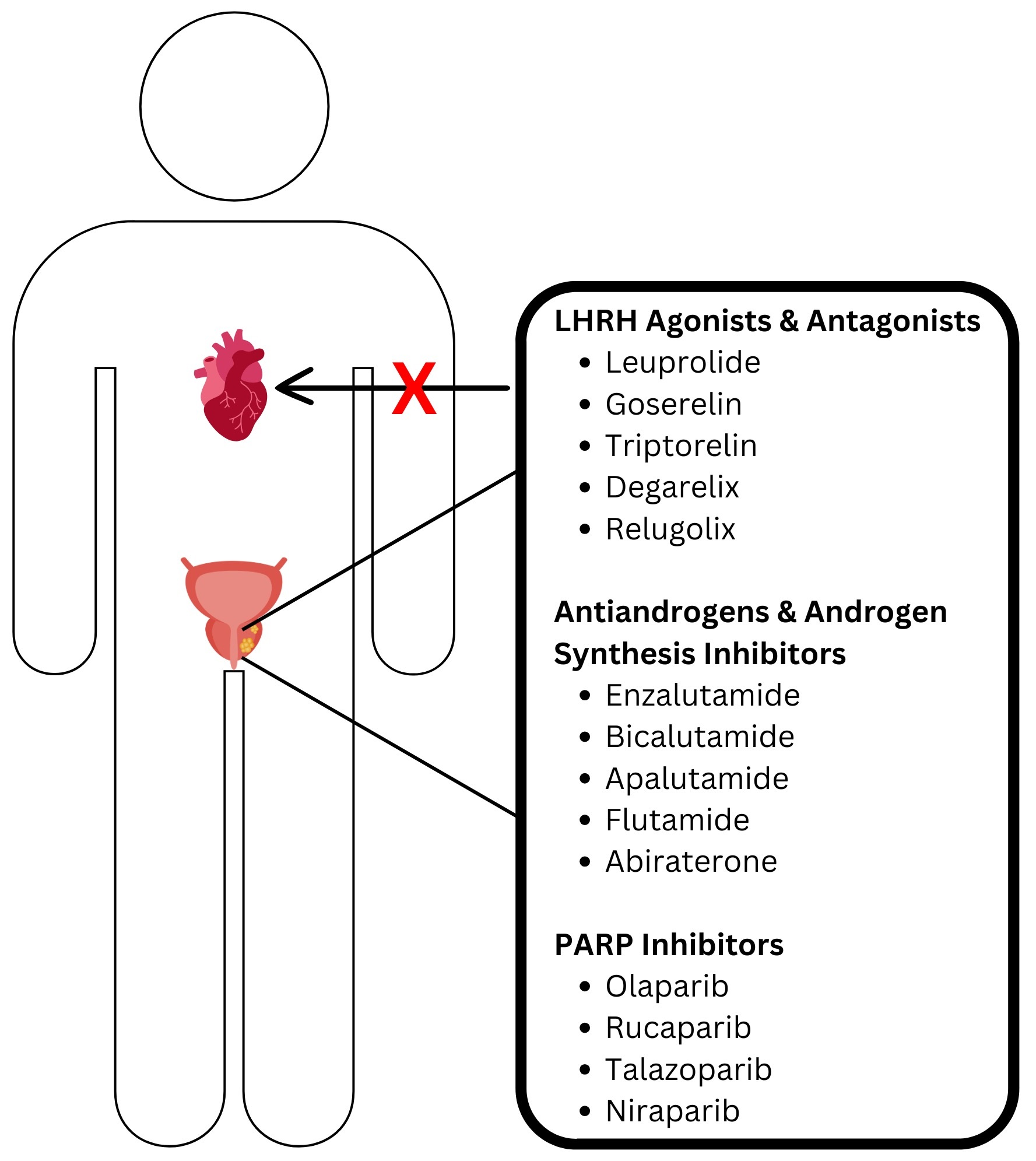


Cardiovascular Adverse Events Associated with Prostate Cancer Treatment: A Disproportionality Analysis from the Food and Drug Administration Adverse Event Reporting System Database

Abstract
Share and Cite
Frey, C. Cardiovascular Adverse Events Associated with Prostate Cancer Treatment: A Disproportionality Analysis from the Food and Drug Administration Adverse Event Reporting System Database. Pharmacoepidemiology 2024, 3, 373-382. https://doi.org/10.3390/pharma3040026
Frey C. Cardiovascular Adverse Events Associated with Prostate Cancer Treatment: A Disproportionality Analysis from the Food and Drug Administration Adverse Event Reporting System Database. Pharmacoepidemiology. 2024; 3(4):373-382. https://doi.org/10.3390/pharma3040026
Chicago/Turabian StyleFrey, Connor. 2024. "Cardiovascular Adverse Events Associated with Prostate Cancer Treatment: A Disproportionality Analysis from the Food and Drug Administration Adverse Event Reporting System Database" Pharmacoepidemiology 3, no. 4: 373-382. https://doi.org/10.3390/pharma3040026
APA StyleFrey, C. (2024). Cardiovascular Adverse Events Associated with Prostate Cancer Treatment: A Disproportionality Analysis from the Food and Drug Administration Adverse Event Reporting System Database. Pharmacoepidemiology, 3(4), 373-382. https://doi.org/10.3390/pharma3040026