Review

Biocatalytic Upcycling of Plastic Waste: Harnessing Microbial and Enzymatic Systems for High-Value Product Generation


by
Kuok Ho Daniel Tang
Department of Environmental Science, The University of Arizona, Tucson, AZ 85721, USA
Waste 2026, 4(2), 18; https://doi.org/10.3390/waste4020018
Submission received: 24 March 2026 / Revised: 9 April 2026 / Accepted: 25 May 2026 / Published: 28 May 2026
(This article belongs to the Special Issue Towards a Circular Economy: Value-Added Products from Waste)

Abstract

This review synthesizes current advances in the biocatalytic upcycling of plastic waste through microbial and enzymatic systems, emphasizing the transformation of recalcitrant polymers into high-value products. A narrative review methodology was adopted to integrate interdisciplinary findings across microbiology, enzymology, biotechnology, and waste management. Significant progress has been achieved in the depolymerization of plastics such as polyethylene terephthalate (PET), polyurethane, and polyolefins into intermediates, including terephthalic acid and ethylene glycol. These intermediates are subsequently valorized into products such as polyhydroxyalkanoates (PHAs), lipids, terpenoids, organic acids, aromatic compounds, and bacterial cellulose. Quantitative performance metrics demonstrate the potential of these systems. Notably, PHA production from PET-derived substrates has reached up to 1.10 g L−1 (22.7% cell dry weight) and as high as 46% intracellular accumulation, while bacterial cellulose production from PET hydrolysates has achieved ~3.0 g L−1. High conversion efficiencies have been reported in several pathways, including ~90–99% conversion of PET-derived intermediates to catechol, ~91.6% yield of glycolic acid from ethylene glycol (up to 31.4 g L−1), and ~71–79% molar conversion of terephthalic acid to vanillin. Despite these advances, critical limitations persist, including low volumetric productivity in some systems, metabolic imbalances, substrate toxicity, feedstock heterogeneity, and challenges in process integration and scale-up. Future research should prioritize enhancing metabolic flux, improving enzyme efficiency, optimizing microbial consortia, and developing integrated, low-energy depolymerization–bioconversion systems.

1. Introduction

Plastic production has increased exponentially since the mid-twentieth century and now represents one of the most pervasive anthropogenic material flows on Earth. Global plastic production reached approximately 415 million tonnes annually in 2023, with packaging (~40%), building and construction (~12%), textiles (~11%), and consumer and household goods (~10 to 12%) constituting the major applications [1]. A substantial proportion of these plastics is designed for durability and resistance to degradation. These characteristics contribute to their widespread environmental persistence once discarded [2]. As a result, plastic waste accumulation has become a global environmental challenge affecting terrestrial, freshwater, and marine ecosystems [3,4,5,6]. Global mismanaged plastic waste is estimated to reach 68.5 million tonnes annually, and its fragmentation into microplastics and nanoplastics further complicates environmental management due to their mobility, persistence, and potential biological impacts [7,8]. These challenges have intensified the search for more sustainable strategies for plastic waste management and resource recovery.
Conventional plastic waste management approaches remain dominated by landfilling, incineration, and mechanical recycling [9]. Landfilling is still widely practiced due to its relatively low cost and operational simplicity; however, it represents a loss of material value and can generate secondary environmental problems, such as long-term pollutant leakage and microplastic release [10]. Incineration provides the advantage of significant volume reduction and energy recovery, but is often associated with high capital costs, greenhouse gas emissions, and the generation of potentially hazardous by-products [11]. Mechanical recycling, although more environmentally favorable, faces several technical limitations, including polymer degradation during repeated processing cycles, contamination of mixed plastic streams, and the inability to process many complex or multi-layered materials [12]. Consequently, a large proportion of plastic waste remains unrecycled, highlighting the need for alternative strategies capable of recovering value from heterogeneous and low-quality plastic streams [13].
Within this context, increasing attention has been directed toward the concept of plastic upcycling. Unlike conventional recycling, which often converts plastics into materials of similar or lower quality, upcycling aims to transform waste polymers into products of higher value or functionality [13,14]. This focus is particularly important because it aligns with circular economy principles, which prioritize retaining material value over mere waste removal. Upcycling approaches can therefore enhance resource efficiency while improving the economic viability of plastic waste management systems [15].
In contrast, traditional plastic biodegradation typically focuses on the complete mineralization of polymers into carbon dioxide, water, and biomass. While such processes contribute to environmental remediation, they inherently result in the irreversible loss of carbon and embedded energy within the plastic materials [16]. Moreover, complete mineralization may be slow, inefficient for recalcitrant polymers such as polyethylene terephthalate (PET), and in some cases, environmentally suboptimal due to greenhouse gas emissions associated with carbon dioxide or methane release [17]. These limitations highlight that conventional degradation pathways, although environmentally beneficial for pollutant removal, do not support resource recovery or value retention. Plastic upcycling thus represents a complementary strategy that combines waste mitigation with the generation of valuable chemical intermediates and bioproducts, thereby bridging the gap between waste management and sustainable materials innovation [15].
Recent advances in biotechnology have spurred the development of biocatalytic upcycling approaches that employ microorganisms and isolated enzymes to depolymerize plastics and convert them into useful compounds [18,19]. A growing number of plastic-degrading microorganisms have been identified from diverse environments, including soil, marine ecosystems, and waste disposal sites [20,21,22]. These microorganisms produce specialized enzymes capable of cleaving polymer chains, thereby generating smaller molecular intermediates that can subsequently enter microbial metabolic pathways [23]. In parallel, advances in enzyme discovery, protein engineering, and synthetic biology have accelerated the identification and optimization of plastic-degrading enzymes, including PETases, cutinases, esterases, and oxidative enzymes [17]. These developments have opened new opportunities for integrating biological catalysis into plastic waste valorization strategies.
Biocatalytic conversion offers several advantages compared with conventional thermochemical or physicochemical processing technologies. Biological processes typically operate under mild conditions, including moderate temperatures, ambient pressures, and aqueous environments, which can reduce energy requirements and minimize the formation of harmful by-products [24]. Enzymes also exhibit high substrate specificity, enabling selective depolymerization of complex polymers into well-defined monomers or intermediates [25]. This selectivity is particularly advantageous for downstream conversion processes, as the resulting compounds can be directed toward the synthesis of high-value products such as bio-based chemicals, specialty polymers, biosurfactants, and other industrial metabolites [14]. Consequently, biocatalytic upcycling has emerged as a promising strategy for transforming plastic waste from an environmental burden into a valuable feedstock within a circular bioeconomy.
Despite these promising developments, significant challenges remain in translating laboratory-scale discoveries into practical and economically viable technologies. Factors such as slow degradation kinetics, polymer heterogeneity, enzyme stability, and the complexity of mixed plastic waste streams continue to limit large-scale implementation [26]. Addressing these challenges requires a comprehensive understanding of microbial degradation mechanisms, enzyme functionality, and integrated bioconversion pathways capable of converting plastic-derived intermediates into useful products [19].
Nonetheless, recent reviews on the upcycling of plastics tend to be substantially diluted with microbial and enzymatic biodegradation of plastics, which has been extensively covered [27,28]. Other reviews focus on the recycling and upcycling of specific plastic polymers [29,30] or on plastic biodegradation alone [31,32]. Short reviews on this genre have been published, but often with limited coverage on the latest advances [33].
This review, therefore, aims to synthesize current knowledge on the biocatalytic upcycling of plastic waste using microbial and enzymatic systems. Specifically, the review summarizes and discusses emerging pathways for converting plastic-derived intermediates into high-value products. It synthesizes key technological challenges and future research directions for advancing biocatalytic plastic upcycling. By integrating recent developments across microbiology, enzymology, and bioprocess engineering, this review highlights the potential of biological catalysis to support sustainable plastic waste management and resource recovery in a circular economy framework.

2. Review Methodology

This review adopts a narrative approach to synthesize current knowledge on the biocatalytic upcycling of plastic waste using microbial and enzymatic systems. A narrative approach is appropriate for this emerging and interdisciplinary field, as research on plastic upcycling spans microbiology, enzymology, biotechnology, and waste management. Unlike systematic reviews that focus on narrowly defined questions, the narrative method allows for the integration of diverse findings and technological developments related to the biological valorization of plastic waste.
Relevant literature was identified through searches of major scientific databases, including Web of Science, Scopus, and ScienceDirect. Search terms included combinations of keywords such as plastic upcycling, biocatalytic plastic degradation, enzymatic depolymerization, plastic valorization, microbial plastic conversion, and plastic biorefinery. The review primarily considered peer-reviewed studies published from approximately 2016 to 2026, while earlier seminal publications were included where necessary to contextualize key developments. Reference lists of relevant articles were also examined to identify additional studies.
The review focuses specifically on studies demonstrating microbial or enzymatic depolymerization of plastics and the subsequent conversion of plastic-derived intermediates into value-added products, such as bio-based chemicals, biopolymers, and organic acids. Research on engineered microorganisms, enzyme engineering, and integrated plastic biorefinery concepts was also included. In contrast, studies that addressed only plastic biodegradation or mineralization without product recovery, as well as those that focused solely on mechanical or thermochemical recycling, were excluded to maintain a clear emphasis on plastic upcycling rather than waste disposal or conventional recycling.
Selected studies were qualitatively analyzed to identify major technological advances, commonly studied microorganisms and enzymes, and emerging pathways for converting plastic waste into high-value products. The findings were synthesized thematically based on the valorization products to highlight key developments, current limitations, and future research directions for advancing biocatalytic plastic upcycling as a strategy for sustainable plastic waste management. Given that multiple microbial species, enzymes, and pathways can converge to produce similar end products, organizing the discussion around valorization outputs allows for clearer comparison of technological routes and their relative efficiencies.
To address potential bias and enhance transparency and reproducibility, several measures were considered during the review process. Although narrative reviews inherently involve a degree of subjective interpretation, efforts were made to minimize selection bias by using multiple databases, broad and clearly defined search terms, and inclusion of both high-impact and emerging studies across different subfields. However, the absence of a formal systematic protocol and quantitative synthesis may limit reproducibility and introduce potential bias in study selection and interpretation. Additionally, variability in experimental conditions, reporting standards, and performance metrics across studies may affect comparability.

3. Valorization of Plastic Degradation Products

Microbial valorization of plastic waste has emerged as a promising and sustainable approach for transforming recalcitrant polymers into high-value materials within a circular bioeconomy framework. Microbial systems leverage the specificity of enzymes and metabolic pathways to depolymerize plastics such as PET, polyurethane (PU), and, to a lesser extent, polyolefins into assimilable intermediates [34]. These intermediates can then be biologically upcycled into a diverse range of value-added products, including bioplastics (e.g., polyhydroxyalkanoates), biosurfactants, organic acids, and specialty chemicals. Advances in synthetic biology and metabolic engineering have further enhanced the efficiency of microbial consortia and engineered strains, enabling the coupling of plastic degradation with tailored biosynthesis pathways.

3.1. Polyhydroxyalkanoates (PHAs)

PHAs, including the widely studied polyhydroxybutyrate (PHB), are a family of biodegradable, microbially synthesized polyesters that accumulate as intracellular carbon and energy reserves under nutrient-limited conditions. PHAs encompass both short-chain-length (scl-PHAs, e.g., PHB) and medium-chain-length (mcl-PHAs) polymers, exhibiting a wide range of physicochemical properties from brittle thermoplastics to flexible elastomers [34]. Their biodegradability, biocompatibility, and versatility make them attractive alternatives to petroleum-based plastics; however, high production costs have driven increasing interest in utilizing low-cost and waste-derived substrates, particularly plastic waste, as feedstocks for PHA and PHB biosynthesis [35].
Emerging biological pathways for transforming plastic waste into PHAs/PHB are increasingly characterized by integrated, multi-step systems that couple depolymerization, substrate assimilation, and metabolic conversion within engineered microbial platforms. A central mechanistic feature across these pathways is the depolymerization of polymers such as PET into intermediates, including terephthalic acid (TPA) and ethylene glycol (EG), which are subsequently assimilated and redirected toward PHA biosynthesis [36,37]. Advances in enzyme engineering, including PETase and thermostable polyester hydrolases, have enabled efficient hydrolysis, while downstream metabolic pathways have been optimized through genetic modifications to enhance carbon flux toward both mcl-PHAs and PHB [37,38].
A prominent strategy involves engineered microbial consortia that distribute metabolic tasks to improve overall efficiency [39]. For instance, division-of-labor systems employing specialized Pseudomonas putida strains for TPA and EG metabolism achieved complete substrate assimilation and significantly enhanced mcl-PHA production, reaching 637.3 ± 10.1 mg L−1 under fed-batch conditions, approximately 92% higher than single-strain systems [40]. These improvements are mechanistically linked to targeted metabolic engineering, including overexpression of the phaG, alkK, and phaC1/C2 genes and deletion of competing pathways, such as those regulated by the fadBA and phaZ genes, which collectively redirect metabolic flux toward PHA accumulation [40].
Complementary co-cultivation approaches further integrate depolymerization and biosynthesis. For example, engineered Escherichia coli secreting PET hydrolases can depolymerize PET oligomers, while Pseudomonas putida strains assimilate the resulting monomers to produce PHAs, achieving up to 1.10 g L−1 PHA (22.66% CDW), one of the highest reported yields from PET-derived substrates [37]. Similarly, yeast–bacteria systems, such as Yarrowia lipolytica expressing PETase coupled with PHB-producing Pseudomonas stutzeri, enable one-pot conversion of PET intermediates into PHB, although performance remains constrained by depolymerization efficiency and substrate availability [38]. Sequential bioconversion strategies using Pseudomonas umsongensis further demonstrate the feasibility of converting PET hydrolysates into mcl-PHAs, albeit at relatively modest yields (0.15 g L−1, ~7% CDW) [36].
At the single-strain level, metabolic engineering has expanded the utilization of PET-derived substrates. Engineering of EG metabolism via gcl-based operons and overexpression of glcDEF alleviates toxic intermediate accumulation, enabling efficient conversion of EG into mcl-PHAs with up to 32.2% CDW [41]. Growth-coupled production strategies further enhance efficiency, with engineered Pseudomonas putida strains achieving up to 46% PHA/CDW from PET hydrolysates [42]. Additionally, non-model organisms such as Rhodococcus sp. demonstrate the ability to utilize TPA for simultaneous production of PHAs (15 wt.%) and triacylglycerols (TAGs), although overall productivity remains limited (~0.05 g product/g TPA) due to substrate solubility and metabolic inefficiencies [43].
Hybrid and one-pot chemical–biological systems provide another emerging pathway by integrating chemical depolymerization (e.g., ionic liquid-mediated processes) with microbial conversion [44]. These systems enable the direct valorization of mixed plastic streams (e.g., PET/PLA) into PHAs, with potential reductions in production cost (up to 62%) and carbon footprint (29%), although current performance is limited by low bioconversion efficiency and process complexity [45]. Expanding beyond these systems, recent advances in autoxidative depolymerization coupled with engineered microbial funneling demonstrate improved performance for mixed plastics (e.g., polystyrene (PS)/high-density polyethylene (HDPE) and PS/HDPE/PET), producing oxygenated intermediates such as benzoate and C4–C17 dicarboxylic acids that are directly converted into PHAs by engineered Pseudomonas putida [46]. In particular, strain AW162 exhibited robust growth and near-complete substrate utilization across both aromatic and aliphatic compounds derived from commercial and postconsumer plastic effluents, without inhibition from residual catalysts. Under nitrogen-limited conditions, efficient PHA accumulation was achieved, with polymers primarily composed of medium-chain-length monomers (e.g., 3-hydroxydodecanoic acid and 3-hydroxydecanoic acid), highlighting effective carbon conversion from heterogeneous substrates. Although explicit PHA yields were not reported, the high degree of substrate consumption and compatibility with complex feedstocks indicate a significant improvement in biological funneling efficiency compared to earlier hybrid systems, while eliminating the need for extensive intermediate separation.
Beyond PET, alternative plastic-derived or polymer-blend substrates have also been explored for PHB production. For instance, biodegradable polyvinyl alcohol/thermoplastic starch films can be converted into PHB and biopigments through microbial consortia, achieving PHB accumulation of 7.8% cell dry weight (CDW) (Ralstonia eutropha H16), demonstrating the feasibility of circular bioconversion of biodegradable plastics [47]. Similarly, enzymatic hydrolysis of blended textile wastes (e.g., viscose/polyamide) can generate glucose-rich streams that support high PHB accumulation (up to 60% CDW and 5.2 g L−1) in Cupriavidus necator, with polymer properties comparable to those produced from conventional substrates [48].
The production pathways for PHAs from plastic-derived substrates can also enable the simultaneous synthesis of other valuable intracellular storage compounds, such as TAGs, highlighting the metabolic versatility of microbial systems. For instance, the Rhodococcus sp. isolate Ave7 has been shown to utilize TPA derived from PET depolymerization as a sole carbon source for the co-production of PHAs and TAGs, achieving 15.0 wt.% PHA and 15.4 wt.% TAG under fed-batch conditions [43]. This dual accumulation reflects the convergence of carbon flux into both polyester and lipid biosynthetic pathways, where intermediates from central metabolism are partitioned into storage polymers depending on cellular and environmental conditions.
Overall, these emerging pathways highlight a transition toward integrated and modular systems that combine enzymatic depolymerization, synthetic biology, and microbial consortia engineering for the valorization of plastic waste into PHAs and PHB. While significant progress has been achieved, with production ranging from milligram to gram per liter scales and intracellular accumulation exceeding 30–60% CDW [37,40,42,48], key challenges remain, including incomplete substrate utilization, intermediate toxicity, feedstock heterogeneity, and scalability constraints. Table 1 summarizes the valorization of plastic waste to PHAs.

3.2. Lipids and Terpenoids

Lipids and terpenoids are high-value bioproducts with broad industrial applications spanning biofuels, nutraceuticals, cosmetics, and specialty chemicals. Microbial lipids can serve as renewable feedstocks for biodiesel and oleochemicals, while terpenoids such as lycopene are widely used as antioxidants, pigments, and pharmaceutical precursors [50]. The growing demand for sustainable production routes has driven interest in converting low-cost and recalcitrant feedstocks, including plastic waste, into these compounds through biological processes.
Emerging biological pathways for transforming plastic waste into lipids and terpenoids increasingly rely on integrated, modular systems that combine chemical or enzymatic depolymerization with microbial conversion [50]. A key mechanistic step involves the breakdown of plastics into smaller molecules, such as TPA, EG, aliphatic acids, and aromatic compounds, which are subsequently assimilated into central carbon metabolism and redirected toward lipid or isoprenoid biosynthesis [51]. Synthetic microbial consortia have proven particularly effective in handling complex and heterogeneous plastic-derived substrates. For example, a division-of-labor consortium comprising Rhodococcus jostii and Acinetobacter baylyi demonstrated robust and stable conversion of mixed plastic deconstruction products into both lipids and the terpenoid lycopene [52]. In this system, metabolic specialization enabled efficient substrate partitioning, with early consumption of aliphatic compounds by Acinetobacter and later utilization of aromatic substrates by Rhodococcus, resulting in near-complete substrate assimilation and stable community dynamics. This coordinated metabolism translated into product formation of up to ~1.7 mg L−1 lycopene and ~0.48–0.64 g L−1 lipids, even under fluctuating feedstock compositions, highlighting the robustness of consortium-based approaches [52].
At the single-strain level, extensive metabolic engineering has enabled the direct conversion of PET-derived monomers into both lipids and terpenoids. In Rhodococcus jostii, the introduction and optimization of the heterologous mevalonate pathway, along with key genes such as ispA and idi, enhanced the supply of terpenoid precursors and enabled lycopene production up to 22.6 mg L−1, representing a dramatic improvement over wild-type strains [53]. Mechanistically, this pathway redirects acetyl-CoA toward isopentenyl diphosphate and dimethylallyl diphosphate, key precursors for terpenoid biosynthesis. Concurrently, the oleaginous nature of Rhodococcus allows efficient channeling of carbon into lipid biosynthesis via fatty acid synthesis pathways. Under nitrogen-limited conditions, lipid accumulation reached up to 1.55 g L−1; however, this condition restricted growth and substrate utilization. To address this trade-off, engineering strategies such as overexpression of NADP+-dependent malic enzyme enhanced reducing power (by increasing nicotinamide adenine dinucleotide phosphate (NADPH) supply), enabling lipid production under nitrogen-replete conditions, and partially decoupling lipid accumulation from nutrient limitation [53].
Beyond PET, other plastic types have also been explored as feedstocks for lipid production. A hybrid thermochemical–biological pathway demonstrated the conversion of PE waste into microbial lipids via catalytic pyrolysis followed by fermentation using the oleaginous yeast Yarrowia lipolytica [54]. In this system, pyrolysis-generated hydrocarbon mixtures were subsequently metabolized into lipids, yielding titers of ~113–122 mg L−1. However, performance was constrained by the limited bioavailability of suitable hydrocarbons (C9–C16) and the presence of toxic compounds, resulting in relatively low conversion efficiencies (~15% of PE to biomass/lipids). Moreover, the process exhibited high energy demand and associated carbon emissions, although optimization of fermentation efficiency and energy sources could significantly improve sustainability outcomes [54].
Microbial mixed cultures have also been applied to other plastic streams, such as PU, demonstrating the versatility of biological upcycling pathways. Engineered Pseudomonas putida consortia capable of metabolizing PU-derived monomers, including adipic acid, 1,4-butanediol, and EG, have been developed for the production of value-added monorhamnolipid [55]. These systems highlight key mechanistic principles, including substrate specialization, toxicity management (e.g., removal of toluene diamine), and the importance of process conditions (e.g., pH optimization) for efficient microbial conversion of heterogeneous plastic-derived substrates.
Biocatalytic upcycling of plastic waste into lipids and terpenoids generally takes tens of hours to several days, reflecting relatively slow conversion rates. In microbial consortia systems, stable substrate utilization and product formation are typically achieved within ~72 h, driven by sequential metabolism and division of labor. Similarly, oleaginous microbes (e.g., Yarrowia lipolytica) require more than 24 h to accumulate lipids from complex plastic-derived substrates [52,54].
Overall, these emerging pathways underscore the importance of integrating metabolic engineering, synthetic consortia design, and process optimization to enable efficient conversion of plastic waste into lipids and terpenoids. While promising results have been achieved, ranging from sub-gram-per-liter lipid production to milligram-per-liter terpenoid synthesis, current systems remain limited by substrate heterogeneity, toxicity, metabolic imbalance, and energy-intensive preprocessing steps.

3.3. Protocatechuate Acid, Glycolic Acid, Dicarboxylic Acid, and Catechol

The biological upcycling of plastic waste, particularly PET, into high-value intermediates such as protocatechuic acid (PCA), glycolic acid (GLA), dicarboxylic acids (including adipic acid), and catechol represents a rapidly advancing frontier in microbial biotechnology [56]. These compounds are versatile platform chemicals with applications spanning polymer synthesis (e.g., nylon precursors such as adipic acid), pharmaceuticals, coatings, and specialty chemicals [30]. Central to these pathways is the transformation of PET-derived monomers, i.e., TPA and EG, into structurally diverse products via engineered metabolic routes, often integrated with chemical or enzymatic depolymerization processes.
A key mechanistic entry point in these pathways is the oxidative conversion of TPA into PCA via dioxygenase-mediated reactions. For instance, Valenzuela-Ortega et al. [57] established a heterologous pathway in E. coli where terephthalate dioxygenase and dihydrodiol dehydrogenase catalyze the formation of PCA, which serves as a central intermediate for downstream products, including catechol and adipic acid. Similarly, Kim et al. [58] demonstrated efficient in vivo conversion of TPA to PCA using engineered E. coli, achieving 2.8 mM PCA with an 81.4% molar yield within 3 h, thereby confirming PCA as a pivotal metabolic hub. Further optimization in integrated systems has enabled even higher efficiencies. Kim et al. [59] reported a one-pot process achieving 3.8 g/L PCA with a 90.4% yield directly from PET hydrolysate, highlighting the compatibility of chemical depolymerization and microbial conversion.
Building on this intermediate, adipic acid production has emerged as a particularly important pathway due to its role as a key precursor for nylon-6,6. Valenzuela-Ortega et al. [57] constructed an eight-enzyme synthetic pathway in E. coli, enabling the stepwise conversion of TPA-derived PCA into adipic acid via catechol and cis,cis-muconic acid. Individual modules achieved high efficiencies, with 76% conversion of PCA to catechol and 79% conversion of catechol to adipic acid intermediates, while pathway optimization enabled an overall yield of up to 49% of adipic acid from PCA. The integration of enzymatic catalysis with redox balancing strategies, including coupling to hydrogen-driven reduction via a Pd catalyst, further improved conversion efficiency (79%, 115 mg/L) under mild aqueous conditions [57]. This pathway exemplifies how central aromatic intermediates can be funneled into industrially critical dicarboxylic acids through coordinated multi-enzyme systems.
Additionally, valorization of biodegradable plastics has been conducted, expanding the substrate scope beyond PET. Oh et al. [60] reported the microbial conversion of hydroxyhexanoic acid (6-HHA), the monomer of polycaprolactone (PCL), into adipic acid, a key precursor for nylon production. Recombinant E. coli strains expressing 6-HHA dehydrogenase and 6-oxohexanoic acid dehydrogenase enabled the stepwise oxidation of 6-HHA into adipic acid. Process optimization, including temperature control and fed-batch fermentation, yielded a high adipic acid titer of 15.6 g/L, demonstrating strong industrial potential [60]. This pathway highlights the feasibility of converting biodegradable polymer waste into high-value dicarboxylic acids via relatively short and efficient metabolic routes.
From PCA, diverse downstream pathways also enable the synthesis of other aromatic derivatives such as catechol and muconic acid. Decarboxylation of PCA via PCA decarboxylase (by AroY gene) yields catechol with high efficiency, as demonstrated by Kim et al. [58], who achieved 90.1% molar yield (2.7 mM) within 4 h. Near-complete conversion has also been reported in integrated systems; Kim et al. [61] achieved 99.5% conversion of TPA-derived intermediates to catechol (5.97 mM) within 12 h, with the additional advantage that the crude product could be directly used for surface coating applications via spontaneous oxidative polymerization. More complex multi-strain systems further enhance pathway integration. Amornloetwattana et al. [62] developed a two-strain E. coli platform (PETCAT) combining PET depolymerization with TPA-to-catechol conversion, achieving ~90% conversion efficiency and enabling 3.7–7.8% catechol yield directly from PET over several days. These systems highlight the importance of coupling extracellular depolymerization with intracellular metabolic conversion.
In parallel with aromatic pathways, the EG fraction of PET hydrolysate can be efficiently oxidized to GLA, a valuable chemical used in biodegradable polymers and cosmetics. Kim et al. [58] reported near-complete conversion of EG to GLA using Gluconobacter oxydans, achieving 98.6% yield from PET-derived EG within 12 h. This high efficiency is consistent across integrated systems, with Kim et al. [59] reporting 31.4 g/L GLA at 91.6% yield in a one-pot process. Additional studies demonstrate the robustness of microbial EG oxidation; Carniel et al. [63] showed that Yarrowia lipolytica can tolerate high EG concentrations (up to 2 M) and produce up to 429.5 mM GLA under optimized bioreactor conditions, with production largely uncoupled from growth metabolism. These findings underscore the scalability and industrial relevance of EG-to-GLA conversion pathways.
Emerging pathways also target the production of a broader spectrum of dicarboxylic acids, which are critical monomers for polymer industries. Kang et al. [64] developed a chemo-microbial hybrid system converting TPA to 2-pyrone-4,6-dicarboxylic acid (PDC) via PCA and 4-carboxy-2-hydroxymuconate semialdehyde intermediates, achieving an overall conversion efficiency of 96.08% following >97% PET depolymerization. Similarly, Yeo et al. [65] demonstrated the conversion of polyolefin-derived hydrocarbons into α,ω-dicarboxylic acids using engineered Candida tropicalis, producing a range of C7–C22 diacids with C10–C14 fractions dominating (~51–63%). In another pathway, You et al. [66] achieved near-complete (98–100%) conversion of TPA to β-ketoadipic acid (βKA) via PCA intermediates using engineered E. coli, with process optimization (e.g., pH-shift strategy and poxB gene deletion) significantly enhancing substrate uptake and metabolic efficiency. Werner et al. [67] further demonstrated the accumulation of βKA from PET-derived intermediates in Pseudomonas putida, achieving 15.1 g/L with a 76% molar yield, although pathway bottlenecks, such as EG repression and TPA accumulation, were observed. Collectively, these studies position adipic acid and related dicarboxylic acids as central targets in plastic upcycling due to their high industrial demand and compatibility with existing polymer manufacturing infrastructure.
In addition to these pathways, advanced cascade systems have been developed to produce specialty chemicals. Wang et al. [68] reported a chemo-microbial process converting PET-derived TPA into 2,4-pyridine dicarboxylic acid (2,4-PDCA) with an overall efficiency of 94.01%, demonstrating the feasibility of integrating catalytic hydrolysis with whole-cell biotransformation. Zheng et al. [69] further advanced one-pot systems by integrating cell-surface-displayed PETase with intracellular PCA biosynthesis in E. coli, achieving ~116.7 mg/L PCA directly from PET, though scale-up was limited by mass transfer constraints.
Collectively, these emerging biological pathways illustrate a highly modular and versatile framework for plastic waste valorization. Central intermediates such as PCA and catechol enable branching into multiple product classes, including adipic acid and other dicarboxylic acids, while EG-derived pathways provide complementary routes to aliphatic chemicals like GLA. High conversion efficiencies, often exceeding 90% in optimized systems, demonstrate the technical feasibility of these approaches. Table 2 summarizes the valorization of plastic waste to protocatechuate acid, glycolic acid, dicarboxylic acid, and catechol.

3.4. Vanillin and Vanillic Acid

The biological upcycling of plastic waste, particularly PET, into high-value aromatic compounds such as vanillin and vanillic acid has emerged as a promising strategy for valorizing recalcitrant polymers into commercially important fine chemicals. Vanillin is a widely used flavoring agent and fragrance compound with significant applications in the food, cosmetic, and pharmaceutical industries, while vanillic acid serves as a key intermediate in the synthesis of bioactive compounds, polymers, and specialty chemicals [71]. Both molecules are derived from aromatic metabolic pathways and can be synthesized from PET-derived TPA through engineered microbial systems, highlighting the potential of plastic waste as a renewable carbon source for high-value chemical production.
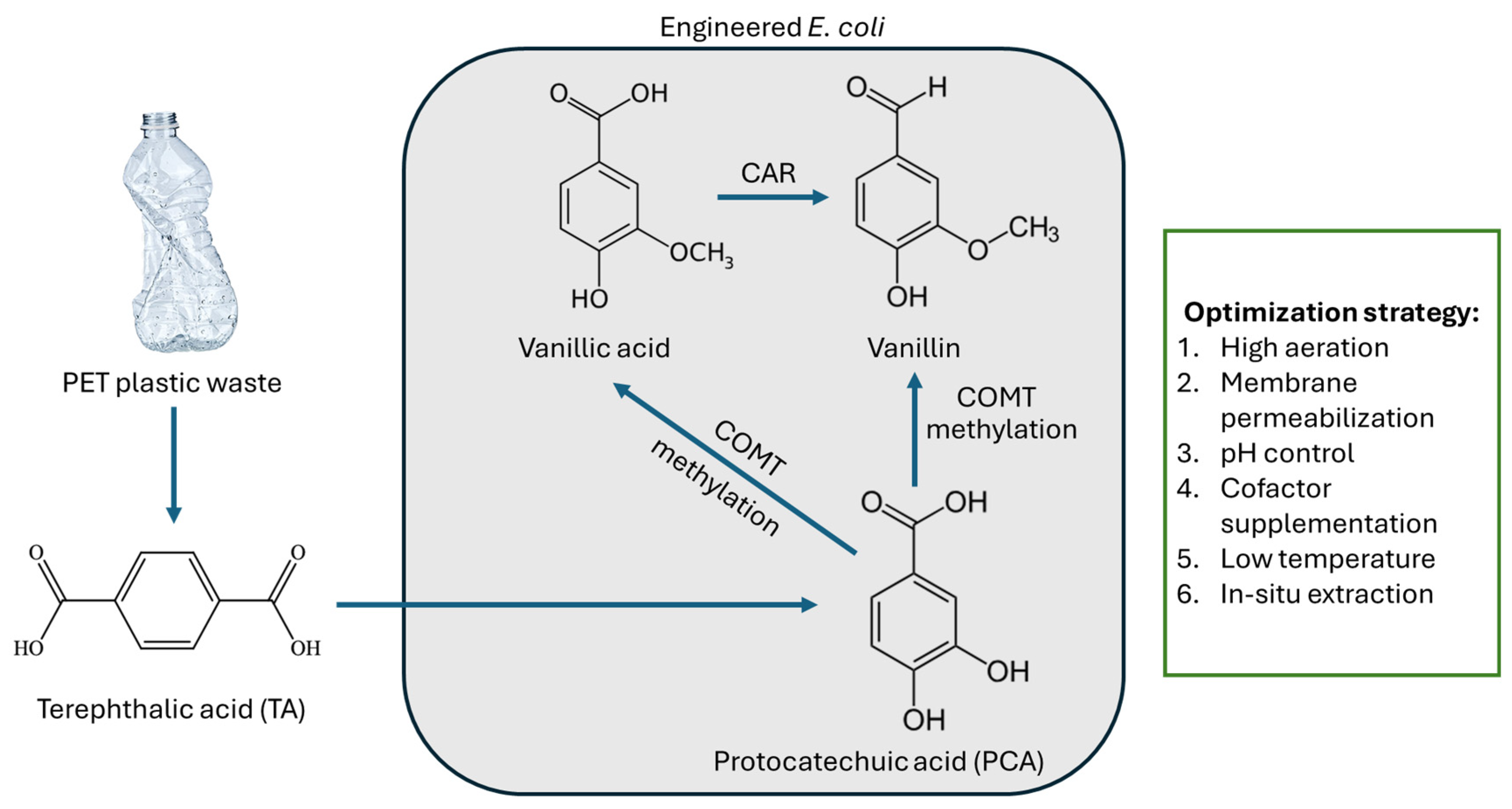
Mechanistically, these pathways are typically centered on the conversion of TPA into PCA, which serves as a critical metabolic intermediate. From PCA, downstream transformations involving decarboxylation, reduction, and methylation enable the formation of vanillin and vanillic acid. Sadler and Wallace [72] demonstrated one of the first direct pathways for converting TPA into vanillin using engineered E. coli. In this system, oxygen-dependent terephthalate dioxygenase initiates TPA oxidation, followed by multi-step enzymatic conversion to vanillin (Figure 1). Process optimization played a crucial role in enhancing performance, with oxygen availability being a key limiting factor; increasing the headspace ratio led to a 65-fold improvement in vanillin production. Additional strategies, such as membrane permeabilization using n-butanol, improved substrate uptake, while supplementation with L-methionine enhanced S-adenosylmethionine (SAM)-dependent methylation reactions. Under optimized conditions, including pH 5.5, reduced temperature (22 °C), and in situ product removal using oleyl alcohol, the system achieved 744 μM vanillin from 1 mM TPA (~79% conversion). Importantly, the study demonstrated the feasibility of integrating enzymatic PET depolymerization with microbial conversion, producing 68 μM vanillin directly from post-consumer PET hydrolysate [72].
Building on these advances, Li et al. [73] developed a multi-enzyme cascade system in E. coli that significantly improved vanillin production. Through targeted metabolic engineering, including the knockout of endogenous aldehyde reductases and alcohol dehydrogenases to prevent vanillin degradation, as well as enhancement of membrane permeability for improved TPA uptake, the engineered strain achieved 658.55 mg/L vanillin from 1992 mg/L TPA, corresponding to a 71.1% molar conversion, the highest reported yield to date from PET-derived substrates (Figure 1). However, performance was strongly influenced by substrate purity; when using PET hydrolysates, vanillin production decreased due to inhibitory effects from EG, residual enzymes, and osmotic stress. Optimal production (259.2 mg/L) was achieved at intermediate hydrolysate dilution (20×), highlighting the need for balancing substrate availability with toxicity mitigation in real waste streams [73].
In parallel, vanillic acid production has been achieved through pathways involving PCA O-methylation. Kim et al. [58] developed a two-strain E. coli co-catalyst system, where one strain converts TPA to PCA and the second catalyzes the methylation of PCA to vanillic acid. Initial yields were low (0.3 mM, 6.4%), reflecting limitations in cofactor availability and pathway balance (Figure 1). However, process optimization, particularly increased aeration to enhance ATP supply and SAM regeneration, improved vanillic acid production to 1.4 mM with a 41.6% molar yield after 48 h. Despite these improvements, the system remained sensitive to the ratio of the two strains, with imbalances leading to intermediate accumulation or reduced product formation [58] (Figure 1). This underscores the importance of coordinated metabolic flux distribution and cofactor management in multi-strain systems.
Overall, these emerging biological pathways demonstrate that PET-derived aromatics can be efficiently funneled into high-value compounds such as vanillin and vanillic acid through engineered microbial metabolism. High conversion efficiencies approaching ~70–80% under optimized conditions highlight the technical feasibility of these processes. However, key challenges remain, including substrate toxicity, cofactor limitations (particularly SAM-dependent methylation), and pathway bottlenecks such as inefficient methyltransferase activity.

3.5. Cellulose

The biological transformation of plastic waste into cellulose, particularly bacterial nanocellulose (BNC) and bacterial cellulose (BC), represents an emerging and highly promising valorization pathway within circular bioeconomy frameworks. Cellulose produced by microbial systems is a high-value biopolymer with exceptional purity, crystallinity, and mechanical strength, enabling applications in biomedical materials, catalysis, packaging, and advanced composites [74]. Unlike conventional petrochemical-derived materials, microbially synthesized cellulose offers a renewable and biodegradable alternative, positioning plastic waste as an unconventional carbon source for sustainable biomaterial production [75].
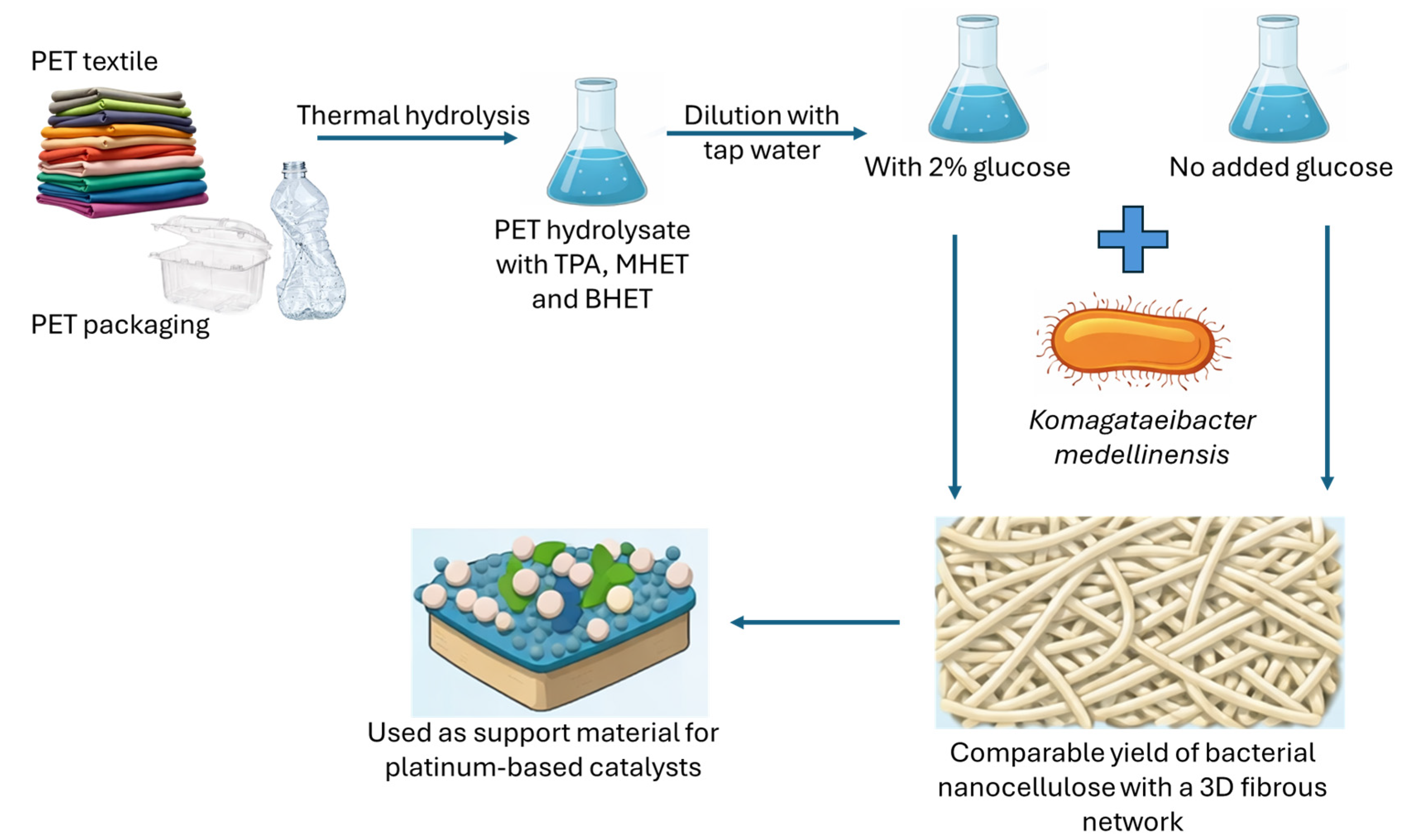
Mechanistically, the conversion of plastic waste into cellulose typically involves a two-stage process: (i) chemical or thermal depolymerization of plastics such as PET into soluble intermediates (e.g., TPA, mono(2-hydroxyethyl) terephthalate (MHET), bis(2-hydroxyethyl) terephthalate (BHET)), followed by (ii) microbial assimilation and biosynthesis of cellulose via central carbon metabolism. In the study by Stevanovic et al. [76], PET textile and food packaging wastes were thermally hydrolyzed with high efficiencies (>90%), generating hydrolysates rich in aromatic intermediates and high chemical oxygen demand (COD up to 51.54 g/L). These hydrolysates were directly utilized by Komagataeibacter medellinensis for BNC production (Figure 2). Notably, PET textile-derived hydrolysate supported cellulose biosynthesis without external glucose supplementation, indicating that microbial metabolism can effectively channel PET-derived carbon into cellulose-producing pathways. Under optimized static cultivation conditions, BNC yields reached 3.0 mg/mL, demonstrating competitive performance relative to conventional sugar-based media. However, hydrolysates from food packaging waste exhibited poor performance, likely due to inhibitory contaminants, highlighting the importance of feedstock purity and pre-treatment [76].
At the metabolic level, cellulose biosynthesis in Komagataeibacter sp. proceeds via uridine diphosphate glucose, derived from central intermediates such as glucose-6-phosphate [77]. When PET hydrolysates are used, carbon must first be assimilated through aromatic degradation pathways (e.g., via TPA conversion into central metabolites) before being redirected toward gluconeogenesis and ultimately cellulose synthesis [78]. This indirect routing introduces metabolic complexity and may limit the efficiency of carbon flux. Nevertheless, the comparable yields observed without glucose supplementation suggest that these organisms possess sufficient metabolic flexibility to utilize non-carbohydrate substrates derived from plastics.
Beyond direct PET-derived pathways, complementary strategies involve enzymatic deconstruction of polymer blends into fermentable sugars, which are then converted into cellulose. Mihalyi et al. [48] demonstrated this approach using viscose-containing textile waste, where enzymatic hydrolysis released glucose-rich hydrolysates. These were subsequently utilized by Komagataeibacter sucrofermentans for BC production. A critical mechanistic constraint identified was the inhibitory effect of residual cellulases on cellulose biosynthesis, necessitating complete enzyme removal via ultrafiltration. Under optimized conditions, BC yields reached ~0.55 g/L, with structural properties (e.g., crystallinity and morphology) comparable to those produced from pure substrates. Interestingly, the absence of a requirement for additional nitrogen supplementation indicates that waste-derived hydrolysates can provide sufficient nutrients for microbial growth and biosynthesis. However, limited glucose availability remained a key bottleneck, underscoring substrate concentration as a major determinant of process performance [48].
From a performance perspective, these systems demonstrate moderate-to-high yields depending on substrate quality and process design, with BNC production from PET hydrolysates (3.0 mg/mL ≈ 3 g/L) representing a particularly promising benchmark. However, challenges persist, including (i) variability and toxicity of plastic-derived hydrolysates, (ii) inefficient carbon flux from aromatic intermediates to cellulose precursors, and (iii) sensitivity of cellulose biosynthesis to enzymatic and chemical inhibitors.
Importantly, the functional versatility of the produced cellulose further enhances the value proposition of this pathway. For example, Stevanovic et al. [76] demonstrated the use of BNC as a support for platinum-based catalysts, achieving high catalytic efficiency (~97%) with significantly reduced platinum loading (3 wt.%) (Figure 2). This illustrates how plastic-derived cellulose can serve as a platform material for advanced applications.

3.6. Other Organic Acids and Products

The biological upcycling of plastic waste into diverse organic acids and value-added biochemicals is rapidly expanding beyond conventional targets, reflecting the versatility of engineered metabolic networks in converting polymer-derived intermediates into industrially relevant products. Compounds such as 2,4-dihydroxybutyric acid (DHB) and aromatic amino acids (e.g., L-tyrosine, L-phenylalanine) represent important platform chemicals with applications in pharmaceuticals, food additives, polymer synthesis, and specialty chemicals. Central to these emerging pathways is the utilization of plastic-derived monomers, particularly EG, which is metabolically routed into central carbon metabolism and subsequently redirected into target biosynthetic pathways.
A key advancement is the development of synthetic carbon-conserving pathways for converting EG into multifunctional organic acids. Frazao et al. [79] established a five-step linear pathway in E. coli for the production of DHB, linking sequential enzymatic reactions including EG oxidation, aldol condensation, and redox transformations. The pathway integrates ethylene glycol dehydrogenase, D-threose aldolase, D-threose dehydrogenase, D-threono-1,4-lactonase, D-threonate dehydratase, and 2-oxo-4-hydroxybutyrate reductase, enabling the stepwise conversion of EG into DHB while conserving carbon skeletons. In bioreactor systems, controlled feeding strategies achieved ~1 g/L DHB (8.2 mM) within 24 h, although yields (~0.13 mol/mol) declined over time due to intermediate accumulation, particularly D-threonate, indicating enzymatic bottlenecks and pathway imbalance. Further optimization, including high-cell-density cultivation and Fe–S cofactor supplementation, improved DHB titers to 6.75 mM from EG [79]. Despite these advances, carbon recovery remained limited (~66%), highlighting the need for improved enzyme stability and flux control to minimize by-product formation.
Beyond DHB, EG serves as a versatile precursor for the biosynthesis of aromatic compounds by being assimilated into central metabolism and subsequently channeled into the shikimate pathway. Panda et al. [80] demonstrated the microbial conversion of EG into L-tyrosine, achieving titers of 2 g/L from 10 g/L EG using engineered E. coli. Notably, EG outperformed glucose under comparable conditions, suggesting favorable metabolic routing and reduced carbon loss. The same platform enabled the synthesis of other aromatics, including L-phenylalanine and p-coumaric acid, illustrating the extensibility of EG-based bioconversion systems. Importantly, PET-derived EG obtained via acid hydrolysis supported comparable production levels after desalting, validating the feasibility of integrating chemical depolymerization with microbial fermentation [80]. However, reliance on concentrated acid hydrolysis introduces process complexity and necessitates energy-intensive downstream treatment, which may limit scalability.
Complementing these aerobic strategies, recent findings show that Ideonella sakaiensis can also ferment PET-derived EG under anaerobic conditions, achieving high conversion efficiency (~87 mol% EG-to-acetate) with complete substrate utilization, while PET itself is degraded more slowly (~75% degradation over 30 days) with a lower overall conversion yield (~15 mol%) due to limited monomer accessibility [81]. Metabolically, EG is converted via acetaldehyde to acetate and ethanol, with ethanol acting as an intermediate that can be further oxidized to acetate, highlighting the flexibility of EG metabolism across aerobic and anaerobic pathways. Importantly, PET-derived EG obtained via depolymerization can support comparable production levels after appropriate treatment, validating the feasibility of integrating chemical depolymerization with microbial fermentation [81].
Efficient upstream depolymerization remains critical for enabling these downstream bioconversion pathways. Li et al. [82] developed a two-enzyme PET degradation system combining engineered ΔBHETases with PET hydrolases, significantly enhancing the conversion of PET into TPA. The system achieved 6–7-fold higher TPA production compared to existing hydrolases, driven by improved catalytic efficiency (kcat/KM) and substrate affinity. When integrated with chemical glycolysis (yielding >81.5% BHET with >95.5% purity), the tandem process enabled up to 84.1% conversion of BHET to TPA. This high-purity TPA can serve as a versatile intermediate for downstream microbial pathways, including those producing organic acids and specialty chemicals such as p-phthaloyl chloride [82]. The study also demonstrated both closed-loop recycling (repolymerization into PET) and open-loop upcycling, underscoring the flexibility of combining chemical and biological processes.
In addition to PET-derived intermediates, recent studies demonstrate that PU can also be biologically upcycled into value-added products beyond simple degradation. Streptomyces sp. PU10, isolated from PU-contaminated environments, exhibits remarkable degradation capabilities [83]. This strain achieved >96% degradation of 10 g/L of soluble polyester–PU (Impranil) within 48 h across a range of temperatures, highlighting its robustness. Following depolymerization, PU-derived intermediates are assimilated into central metabolism via fatty acid degradation pathways, generating acetyl-CoA. This metabolic intermediate is subsequently redirected toward secondary metabolite biosynthesis, particularly polyketides. Importantly, the study confirmed the production of the bioactive compound undecylprodigiosin, along with indications of terpenoid and non-ribosomal peptide synthesis [83].
Collectively, these emerging pathways illustrate a highly modular and extensible framework for the valorization of plastic waste into organic acids and related products. While PET-derived EG pathways currently dominate due to their relative maturity, the integration of PU and other polymer streams into biocatalytic upcycling platforms demonstrates the broader potential of microbial systems to generate both commodity chemicals and high-value specialty products. Nonetheless, performance metrics remain modest, with most pathways still limited by low titers, metabolic imbalances, and process inefficiencies.

3.7. Product Purification and Pilot-Scale Considerations

Despite rapid advances in microbial plastic upcycling, downstream processing and scale-up remain critical bottlenecks limiting industrial implementation. While upstream bioconversion efficiencies have improved substantially, product purification strategies are often underdeveloped and highly system-dependent, directly impacting process economics and sustainability [40,45].
For intracellular products such as PHAs, purification largely relies on conventional approaches, including biomass harvesting, cell disruption, and solvent extraction. These methods, although effective, are energy-intensive and contribute significantly to overall production costs. In several engineered Pseudomonas putida systems and synthetic consortia, PHA titers ranging from hundreds of mg L−1 to ~49 g L−1 (59% × 83 g L−1) have been achieved; however, downstream recovery has not progressed beyond standard extraction protocols, highlighting a persistent gap between laboratory success and industrial feasibility [37,40,42,49]. Similarly, lipid and terpenoid production systems introduce additional separation challenges due to the co-extraction of cellular components and metabolic by-products [52].
In contrast, certain pathways demonstrate process-intensified purification strategies that significantly reduce downstream burden. For example, catechol produced from PET-derived TPA has been directly applied after simple biomass removal, eliminating the need for extensive purification and enabling in situ polymerization for coating applications [61]. Likewise, systems producing extracellular or readily crystallizable compounds, such as muconic acid, enable efficient recovery via crystallization, achieving high purity (>99%) and moderate recovery yields (~71.85%) [70]. These examples highlight the importance of targeting products with favorable physicochemical properties to simplify downstream processing.
Integrated bioprocesses also offer promising opportunities to enhance purification efficiency. For instance, co-recovery strategies involving ultrafiltration allow simultaneous recovery and reuse of PET hydrolases alongside product separation, improving resource efficiency and enabling semi-continuous operation [70]. However, hybrid chemical–biological systems, particularly those involving ionic liquids, introduce additional complexity to the separation process. Residual solvents, inhibitory compounds, and dilute product streams complicate downstream processing, and techno-economic analyses consistently identify purification and solvent recovery as major cost drivers [45].
From a pilot- and application-scale perspective, most studies remain confined to laboratory-scale demonstrations, typically in shake flasks or small bioreactors (≤5 L), with few scaling up to 20 L bioreactors [49]. Controlled batch and fed-batch fermentations have demonstrated improved substrate utilization and product yields compared to flask cultures. For instance, complete terephthalic acid consumption and PHA accumulation have been achieved in 5 L reactors, while fed-batch strategies with pulse feeding significantly enhanced productivity in synthetic consortia [36,40]. These findings confirm the scalability of engineered strains under controlled conditions but also expose emerging engineering constraints.
Key scale-up challenges include substrate heterogeneity, mass transfer limitations, and metabolic imbalances. Real PET hydrolysates often contain variable compositions and inhibitory impurities that negatively affect microbial growth and product formation [42]. Oxygen transfer limitations become significant at higher cell densities, while incomplete utilization of EG relative to TPA leads to inefficient carbon conversion [40]. Additionally, accumulation of intermediates such as MHET and toxic by-products further complicates both bioconversion and downstream purification [37].
Notably, several studies have begun addressing application-level feasibility by employing real post-consumer plastic waste streams and developing robust microbial consortia capable of handling mixed substrates and fluctuating feedstock compositions [52]. One-pot depolymerization–bioconversion systems represent another important advancement, reducing unit operations and improving process integration [45]. However, product titers and yields remain below industrial benchmarks, typically in the mg L−1 to low g L−1 range.
Overall, advancing plastic waste upcycling toward commercialization will require integrated optimization of downstream processing and scale-up engineering, including cost-effective purification strategies, improved bioreactor design, and standardized feedstock preprocessing.

4. Major Limitations

The microbial valorization of plastic waste into high-value products, including PHAs, lipids and terpenoids, PCA, GLA, dicarboxylic acids, catechol, vanillin, vanillic acid, cellulose, and other organic acids, has demonstrated substantial promise. However, despite rapid advances in synthetic biology and process integration, several critical limitations continue to constrain the scalability, efficiency, and industrial translation of these systems.
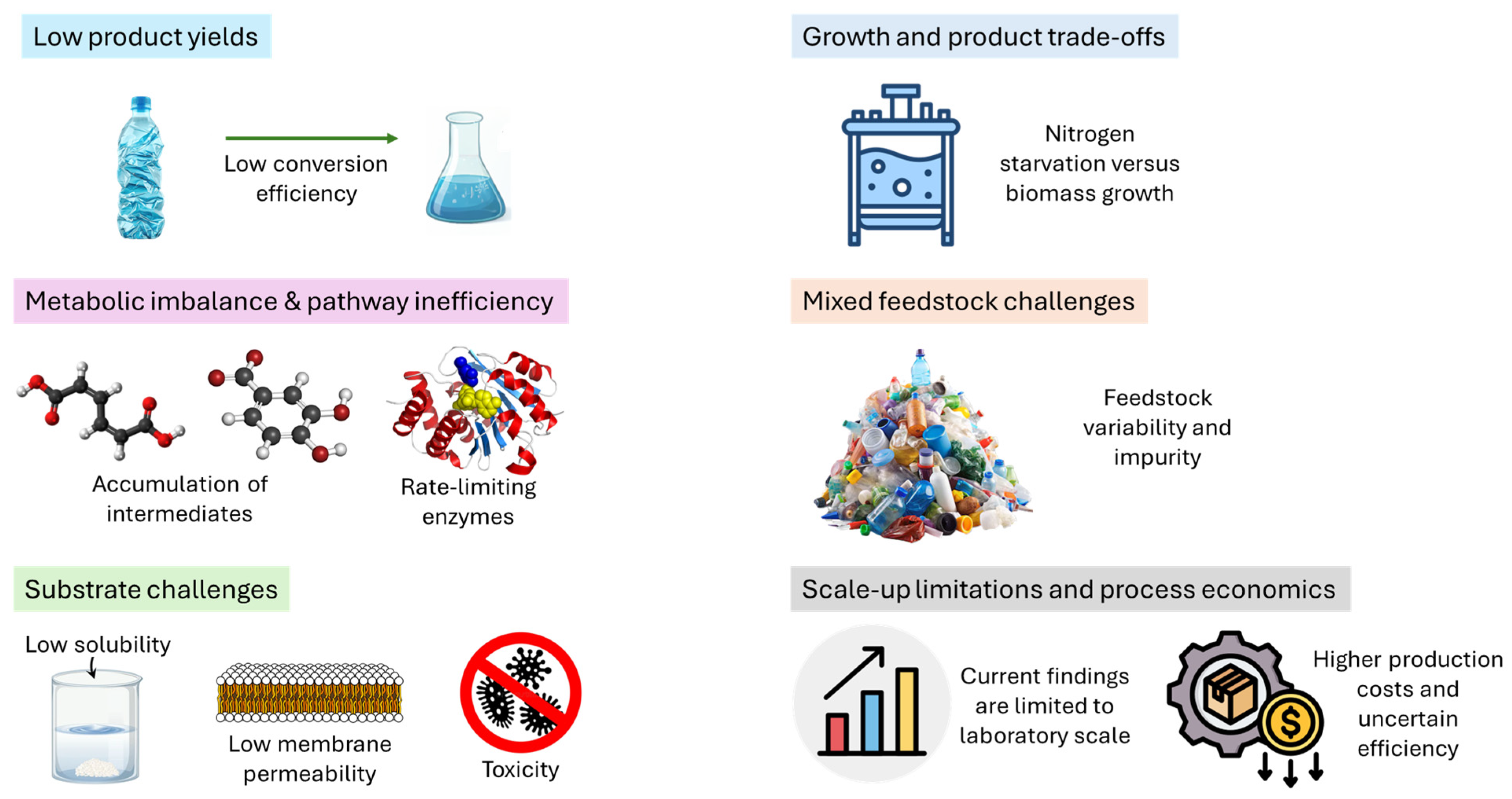
One of the most pervasive limitations is low product yield and productivity, particularly in pathways derived from PET monomers such as TPA and EG [84]. For example, microbial production of PHAs and TAGs from TPA using Rhodococcus sp. exhibited low volumetric productivity and conversion efficiency (~0.05 g product/g TPA), largely due to limited biomass accumulation and substrate utilization inefficiencies [43]. Similarly, terpenoid production, such as lycopene, in engineered Rhodococcus jostii remained relatively low (μg/L to mg/L scale), even after extensive metabolic engineering [53]. In EG-based pathways, the production of DHB was constrained by modest yields (~0.13 mol/mol) and incomplete carbon recovery (~66%), reflecting significant metabolic losses [79]. These examples underscore the challenge of achieving industrially competitive titers, rates, and yields.
A second major constraint is metabolic imbalance and pathway inefficiency, often resulting in intermediate accumulation and carbon loss [85]. In PCA-derived pathways, incomplete flux distribution led to the accumulation of intermediates such as cis,cis-muconic acid or protocatechuate itself, indicating bottlenecks in downstream enzymatic steps [57,58]. Similarly, in vanillin biosynthesis, the final methylation step catalyzed by catechol O-methyltransferase was identified as a rate-limiting bottleneck, restricting overall conversion despite upstream optimization [72]. In DHB production, enzyme instability (e.g., D-threonate dehydratase) led to the accumulation of by-products such as D-threonate, further reducing pathway efficiency [79]. These issues highlight the difficulty of balancing multi-step heterologous pathways, particularly when redox cofactors and precursor availability are tightly coupled.
Substrate-related challenges, including low solubility, toxicity, and transport limitations, also significantly hinder process performance [86]. TPA, a key PET-derived intermediate, exhibits poor aqueous solubility and limited membrane permeability, leading to long lag phases and reduced substrate uptake [43,66]. Similarly, plastic hydrolysates often contain inhibitory compounds that suppress microbial activity. For instance, vanillin production from PET hydrolysates was significantly lower than from pure TPA due to osmotic stress and toxicity from EG and residual impurities [73]. In polyolefin upcycling, pyrolysis oils contain toxic alkenes and aromatic compounds that inhibit microbial growth and reduce lipid yields [54,65]. These findings emphasize the need for improved substrate conditioning, detoxification, and transport engineering.
Another critical limitation is the trade-off between growth and product formation, particularly under nutrient-limited conditions [87]. Lipid accumulation in oleaginous microbes is often induced by nitrogen starvation, but this simultaneously restricts biomass growth and overall productivity [53]. Although strategies such as overexpression of NADP+-dependent malic enzyme partially decouple lipid synthesis from nutrient limitation, achieving both high biomass and high product yield remains challenging. Similar trade-offs are observed in other systems where metabolic burden from heterologous pathways reduces cellular fitness and substrate consumption rates.
The complexity and instability of multi-strain or consortium-based systems present additional barriers. While division-of-labor strategies can enhance substrate utilization and pathway modularity, maintaining stable population dynamics is difficult. In synthetic consortia designed for lipid and terpenoid production, shifts in population balance over time affected pathway efficiency and substrate consumption [52]. Likewise, co-culture systems for vanillic acid production were highly sensitive to strain ratios, with imbalances leading to incomplete conversion or reduced yields [58]. These challenges complicate process control and scale-up.
Feedstock variability and impurity effects further limit the robustness of microbial valorization systems. Plastic waste streams are inherently heterogeneous, containing additives, dyes, and contaminants that can inhibit enzymatic activity or microbial growth [88]. For example, PET food packaging hydrolysates showed poor performance in bacterial cellulose production compared to textile-derived hydrolysates, likely due to contaminants [76]. Similarly, variability in the composition of mixed plastic waste can lead to inconsistent substrate availability and metabolic responses, even in engineered consortia designed for robustness [52].
From a process perspective, integration of depolymerization and bioconversion remains inefficient and energy-intensive. Many systems rely on chemical pretreatments such as acid hydrolysis or pyrolysis, which require harsh conditions and generate inhibitory by-products [81,89]. For instance, EG production from PET via sulfuric acid hydrolysis necessitates extensive downstream desalting before microbial utilization [80]. Pyrolysis–fermentation routes for polyolefin conversion exhibit high global warming potential due to energy-intensive steps, limiting their environmental sustainability [54]. Even in integrated one-pot systems, challenges such as enzyme inhibition, mass transfer limitations, and incompatibility between chemical and biological conditions persist [59,62].
Finally, scale-up limitations and process economics remain significant hurdles. Many studies report promising laboratory-scale results, but performance often declines at higher cell densities or larger reactor volumes due to oxygen transfer limitations, substrate gradients, and metabolic stress [69]. Additionally, low product titers, costly cofactors (e.g., SAM for methylation), and the need for process additives (e.g., solvents for in situ product removal) increase production costs, limiting commercial viability [86].
In summary, while microbial plastic valorization has evolved into a highly versatile platform capable of producing a wide spectrum of valuable chemicals and materials, its broader implementation is constrained by low yields, metabolic inefficiencies, substrate-related challenges, process integration issues, and scale-up limitations. Figure 3 summarizes the major limitations currently faced in microbial and enzymatic upcycling of plastic waste.

5. Comparative Analysis and Future Directions

5.1. Comparative Analysis

The scalability and economic feasibility of plastic waste upcycling pathways are strongly influenced by product type, process configuration, and the degree of integration between depolymerization and bioconversion. Across the reported studies, three dominant approaches emerge: fully microbial systems, enzymatic–microbial cascades, and hybrid chemo-biological processes, each with distinct advantages and limitations.
Microbial systems, particularly those based on engineered Pseudomonas putida and synthetic consortia, demonstrate strong versatility and robustness. Division-of-labor strategies, as shown by [40], enable complete substrate utilization of both TPA and EG, significantly improving carbon conversion efficiency and yielding up to ~0.64 g L−1 PHA under fed-batch conditions. Similarly, co-culture systems integrating depolymerization and assimilation [37] achieved up to 1.10 g L−1 PHA directly from PET oligomers, representing one of the highest reported yields. A scaled-up bioreactor using Pseudomonas putida to convert thermochemically treated PE produced 83 g/L CDW of 59% PHA, the highest level reported in the reviewed studies [49]. These systems are inherently scalable due to their compatibility with established fermentation technologies and their ability to handle heterogeneous feedstocks. However, they are often limited by relatively low product titers (typically mg L−1 to low g L−1), metabolic imbalances (e.g., incomplete EG utilization), and sensitivity to hydrolysate impurities, which collectively constrain economic viability.
Enzymatic–microbial cascades offer improved control over depolymerization and often generate high-purity monomers, facilitating downstream bioconversion. For example, enzymatic hydrolysis using thermostable polyester hydrolases [36] enables efficient TPA production, which can then be biologically converted into PHAs or other polymers. These systems benefit from high specificity, mild operating conditions, and reduced formation of inhibitory by-products. In some cases, such as muconic acid production [70], near-complete conversion (~100% molar yield) and high product purity (>99%) were achieved, highlighting strong industrial potential. Nonetheless, enzymatic systems face challenges related to enzyme cost, stability, and recycling, as well as relatively slow depolymerization rates, which may limit throughput at scale.
Hybrid chemo-biological processes currently represent the most promising pathway in terms of scalability and economic performance. By combining efficient chemical depolymerization (e.g., ionic liquids, glycolysis, pyrolysis, or catalytic hydrolysis) with microbial upgrading, these systems achieve high substrate conversion efficiencies and improved process integration. For instance, Dou et al. [45] demonstrated >95% depolymerization of mixed PET/PLA waste, followed by microbial conversion to PHAs, with techno-economic analysis indicating potential cost reductions of ~62% and carbon footprint reductions of ~29%. Guzik et al. [49] achieved 83.0 g/L CDW of 59% medium-chain-length PHA via a pyrolysis–oxidation–bioconversion process, generating lower emissions than conventional PE incineration. Similarly, one-pot systems integrating chemical depolymerization with bioconversion [59] achieved high product titers (e.g., 31.4 g L−1 GLA), far exceeding typical microbial-only systems. These approaches benefit from high reaction rates, improved feedstock flexibility, and reduced unit operations. However, their economic viability depends heavily on solvent recovery, energy input, and process optimization, particularly in managing inhibitory compounds and ensuring biocompatibility.
From a product perspective, pathways producing extracellular or easily recoverable compounds (e.g., GLA, muconic acid, catechol) are more scalable and economically favorable than intracellular products such as PHAs, which require energy-intensive extraction. Additionally, high-yield aromatic conversion pathways (e.g., TPA to βKA or adipic acid) demonstrate superior carbon efficiency (often >90% molar yield), making them attractive for industrial adoption.
In summary, while microbial systems offer flexibility and environmental compatibility, their scalability is currently limited by low productivity. Enzymatic systems improve selectivity but face cost and stability challenges. Hybrid chemo-biological processes provide the best balance of efficiency, scalability, and economic potential, particularly when coupled with high-value product pathways and integrated process design.

5.2. Future Research Directions

Despite notable progress, the translation of these systems toward industrial application requires overcoming several fundamental bottlenecks through coordinated metabolic, enzymatic, and process-level innovations.
A primary strategy for improving system performance lies in enhancing metabolic flux and pathway efficiency. Many plastic-derived pathways suffer from carbon loss and intermediate accumulation due to imbalanced enzyme expression and cofactor limitations. Targeted metabolic engineering has demonstrated substantial improvements in this regard. For instance, co-expression of idi and ispA effectively balanced the isoprenoid precursor pool in terpenoid biosynthesis, significantly increasing lycopene production in engineered Rhodococcus strains [52]. Similarly, elimination of competing pathways, such as poxB deletion in E. coli, reduced acetate formation and enabled near-complete conversion of TPA into βKA [66]. In EG-derived pathways, enzyme instability, particularly of D-threonate dehydratase, has been identified as a key factor limiting yields of DHB, indicating that protein engineering and enzyme stabilization are critical for sustaining pathway flux [79]. Collectively, these approaches emphasize the importance of fine-tuning enzyme expression, cofactor regeneration, and pathway balance.
Another critical consideration is the decoupling of microbial growth from product synthesis, particularly for lipid and polymer accumulation. In many systems, product formation is triggered under nutrient-limited conditions, which simultaneously restrict biomass accumulation [46,53]. This trade-off can be mitigated through metabolic interventions that enhance reducing power and biosynthetic capacity. Complementary strategies, such as two-stage cultivation, in which biomass is first maximized and subsequently shifted to production conditions, have also proven effective for dicarboxylic acid synthesis from hydrocarbon intermediates [65]. These approaches provide a framework for improving overall productivity across multiple product classes, including PHAs, lipids, and cellulose.
Efficient utilization of plastic-derived substrates further depends on overcoming transport and solubility limitations, particularly for aromatic compounds such as TPA. Process-level adjustments, including pH optimization, have been shown to significantly enhance substrate uptake by increasing protonation and membrane permeability [66,72]. Additionally, membrane permeabilization strategies (e.g., n-butanol supplementation) have improved intracellular access to substrates without compromising cell viability [72]. Advances in transporter engineering and cell surface display systems, such as anchoring PET hydrolases to the outer membrane, further facilitate substrate assimilation and integration of depolymerization with intracellular metabolism [69]. These innovations are particularly important for pathways leading to catechol, vanillin, and other aromatic derivatives.
Given the inherent heterogeneity of plastic waste streams, feedstock conditioning and detoxification are essential to ensure process robustness. Plastic hydrolysates often contain inhibitory compounds that reduce microbial activity and product yields. Dilution strategies have been shown to alleviate toxicity in vanillin production from PET hydrolysates, although at the cost of reduced substrate concentration [73]. Similarly, the selective removal of toxic components, such as toluene diamine in PU hydrolysates, significantly improved microbial growth and monorhamnolipid production [55]. In polyolefin valorization, distillation and fractionation of pyrolysis oils reduced inhibitory compounds and improved conversion to α,ω-dicarboxylic acids [65]. For cellulose biosynthesis, the removal of residual enzymatic activity via ultrafiltration was necessary to restore bacterial cellulose production [48]. These findings highlight the importance of integrating upstream purification with downstream bioconversion.
Advances in enzyme engineering and depolymerization technologies have also played a pivotal role in improving overall process efficiency. Engineered hydrolases and BHETases with enhanced catalytic performance have enabled significantly higher yields of TPA from PET, achieving up to 6–7-fold improvements over conventional systems [82]. Moreover, cell-based enzyme secretion systems have demonstrated superior performance compared to purified enzymes, reducing product inhibition and enabling continuous depolymerization [62]. The development of one-pot chemo-biological systems further streamlines the process by directly coupling depolymerization with microbial conversion, as demonstrated in the production of protocatechuic acid and glycolic acid from PET hydrolysates [46,59]. These integrated approaches reduce process complexity and improve carbon efficiency.
The use of synthetic microbial consortia represents another promising strategy to enhance substrate utilization and reduce metabolic burden. Division-of-labor systems enable different strains to specialize in distinct metabolic tasks, thereby improving overall conversion efficiency. For example, engineered Rhodococcus–Acinetobacter consortia demonstrated enhanced utilization of mixed plastic-derived substrates and improved production of lipids and terpenoids [52]. However, maintaining stable population dynamics remains a challenge, necessitating careful optimization of strain ratios and environmental conditions.
Additionally, process intensification and sustainability considerations are essential for industrial scalability. Strategies such as high-cell-density cultivation, optimized aeration, and fed-batch operation have been shown to significantly improve product titers and yields [58,79]. In situ product removal techniques, such as solvent overlays, can alleviate product toxicity and enhance yields in systems such as vanillin production [72]. From an environmental perspective, improving biomass yield and integrating renewable energy inputs can reduce the carbon footprint of energy-intensive processes such as pyrolysis–fermentation [54].
A limited number of techno-economic analysis (TEA) and life cycle assessment (LCA) studies have begun to evaluate the feasibility of biocatalytic plastic upcycling, although comprehensive assessments remain scarce. For instance, Dou et al. [45] demonstrated that a hybrid ionic liquid–microbial process for PET/PLA upcycling could reduce production costs and carbon footprint by approximately 62% and 29%, respectively, compared to conventional PHA production, with further reductions achievable under optimized yields. Similarly, Singh et al. [90] highlighted that enzymatic PET depolymerization processes could be cost-competitive with petrochemical recycling when enzyme efficiency, stability, and recycling are improved, although enzyme production costs and substrate preprocessing remain major contributors to overall costs. However, other studies (e.g., Zhou et al., [54] and Guzik et al. [49]) indicate that hybrid thermochemical–biological systems may exhibit higher global warming potential and environmental impacts due to energy-intensive preprocessing steps such as pyrolysis, unless process integration and energy sourcing are optimized. Enzymatic PET recycling was reported to be environmentally intensive, with impacts highly dependent on system boundaries and process design. At the monomer level, recycled TPA exhibits 3–17 times higher environmental impacts than virgin TPA across most categories, with the notable exception of fossil fuel depletion, which is ~1.4 times lower [91]. Compared to conventional plastic waste incineration, these systems are likely to have lower emissions [49]. Overall, existing TEA/LCA studies consistently identify key cost and environmental hotspots, including enzyme production, solvent or ionic liquid recovery, downstream purification, and energy demand for depolymerization. Despite these insights, systematic, standardized TEA and LCA evaluations across different upcycling pathways remain limited, highly case-specific, and often based on laboratory-scale assumptions. As such, a comprehensive comparative assessment is currently lacking and is beyond the scope of this review. Future research should prioritize integrated TEA and LCA studies at pilot and industrial scales to better quantify economic viability, environmental performance, and scalability of emerging biocatalytic plastic upcycling technologies.
In conclusion, overcoming the limitations of microbial plastic waste valorization requires a holistic and integrated approach that combines metabolic engineering, enzyme innovation, and process optimization. By addressing bottlenecks in substrate utilization, pathway efficiency, and system integration, these strategies can significantly enhance the feasibility of converting plastic waste into a broad spectrum of valuable chemicals and materials, paving the way for sustainable and circular biotechnological solutions.

6. Conclusions

The microbial upcycling of plastic waste has emerged as a promising and versatile platform for generating high-value chemicals, including PHAs, lipids, terpenoids, aromatic intermediates (e.g., protocatechuic acid, catechol, vanillin, and vanillic acid), dicarboxylic acids, glycolic acid, cellulose, and other specialty products. Among the most feasible pathways, those based on PET hydrolysates, particularly TPA and EG, are especially attractive due to their relatively high conversion efficiencies and well-established metabolic routes. Central intermediates such as protocatechuic acid and catechol function as key metabolic hubs, enabling the synthesis of diverse downstream products with high yields. Similarly, oxidative conversion of EG into glycolic acid demonstrates exceptional efficiency and robustness, while integrated chemo-biological systems and synthetic microbial consortia offer enhanced substrate flexibility and process integration.
Despite these advances, several critical limitations hinder large-scale implementation. These include poor substrate solubility and transport, toxicity of intermediates and hydrolysate impurities, and variability in feedstock composition. Metabolic constraints such as cofactor imbalance, incomplete pathway flux, and by-product accumulation further reduce efficiency. Additionally, trade-offs between microbial growth and product formation, along with low volumetric productivity and long processing times, present significant challenges. Process-level limitations, including scale-up difficulties and high energy demands in some hybrid systems, may also offset environmental benefits if not carefully optimized.
Future research should focus on integrated strategies combining metabolic engineering, synthetic biology, and process optimization. Enhancing enzyme performance, improving redox balance, and increasing microbial tolerance to inhibitory compounds will be essential. The development of robust microbial consortia and high-efficiency bioreactor systems can further improve substrate utilization and productivity. Coupling biological conversion with efficient depolymerization technologies and incorporating life cycle and techno-economic considerations will be critical to advancing these systems toward industrial scalability and sustainability.

Funding

This research received no external funding.

Institutional Review Board Statement

Not applicable.

Informed Consent Statement

Not applicable.

Data Availability Statement

No new data were created or analyzed in this study. This review is based on previously published literature, which has been appropriately cited throughout the manuscript.

Acknowledgments

The author wishes to thank the University of Arizona for the administrative support provided.

Conflicts of Interest

The author declares no conflicts of interest.

References

  1. Statista. Plastic Waste Worldwide—Statistics & Facts. Available online: https://www.statista.com/topics/5401/global-plastic-waste/#topicOverview (accessed on 15 August 2025).
  2. Tang, K.H.D.; Li, R. Aged Microplastics and Antibiotic Resistance Genes: A Review of Aging Effects on Their Interactions. Antibiotics 2024, 13, 941. [Google Scholar] [CrossRef]
  3. Liu, D.; Guo, Z.-F.; Xu, Y.-Y.; Ka Shun Chan, F.; Xu, Y.-Y.; Johnson, M.; Zhu, Y.-G. Widespread occurrence of microplastics in marine bays with diverse drivers and environmental risk. Environ. Int. 2022, 168, 107483. [Google Scholar] [CrossRef]
  4. Tang, K.H.D. Terrestrial and Aquatic Plastisphere: Formation, Characteristics, and Influencing Factors. Sustainability 2024, 16, 2163. [Google Scholar] [CrossRef]
  5. Lin, L.; Zuo, L.-Z.; Peng, J.-P.; Cai, L.-Q.; Fok, L.; Yan, Y.; Li, H.-X.; Xu, X.-R. Occurrence and distribution of microplastics in an urban river: A case study in the Pearl River along Guangzhou City, China. Sci. Total Environ. 2018, 644, 375–381. [Google Scholar] [CrossRef] [PubMed]
  6. Tang, K.H.D. Tracing Microplastic Pollution Through Animals: A Narrative Review of Bioindicator Approaches. Appl. Sci. 2026, 16, 1413. [Google Scholar] [CrossRef]
  7. Biyani, N.; Adhikari, S.; Driver, E.M.; Sheehan, C.; Halden, R.U. Mass and fate estimates of plastic waste dispersed globally to marine and terrestrial environments by three major corporations. Sci. Rep. 2025, 15, 22074. [Google Scholar] [CrossRef]
  8. Tang, K.H.D. Toxic Effects of Nanoplastics on Animals: Comparative Insights into Microplastic Toxicity. Environments 2025, 12, 429. [Google Scholar] [CrossRef]
  9. Idumah, C.I.; Nwuzor, I.C. Novel trends in plastic waste management. SN Appl. Sci. 2019, 1, 1402. [Google Scholar] [CrossRef]
  10. Horodytska, O.; Cabanes, A.; Fullana, A. Plastic Waste Management: Current Status and Weaknesses. In Plastics in the Aquatic Environment—Part I: Current Status and Challenges; Stock, F., Reifferscheid, G., Brennholt, N., Kostianaia, E., Eds.; Springer International Publishing: Cham, Switzerland, 2022; pp. 289–306. [Google Scholar]
  11. Cudjoe, D.; Wang, H. Plasma gasification versus incineration of plastic waste: Energy, economic and environmental analysis. Fuel Process. Technol. 2022, 237, 107470. [Google Scholar] [CrossRef]
  12. Schyns, Z.O.G.; Shaver, M.P. Mechanical Recycling of Packaging Plastics: A Review. Macromol. Rapid Commun. 2021, 42, 2000415. [Google Scholar] [CrossRef]
  13. Salahuddin, U.; Sun, J.; Zhu, C.; Wu, M.; Zhao, B.; Gao, P.-X. Plastic Recycling: A Review on Life Cycle, Methods, Misconceptions, and Techno-Economic Analysis. Adv. Sustain. Syst. 2023, 7, 2200471. [Google Scholar] [CrossRef]
  14. Sohn, Y.J.; Kim, H.T.; Baritugo, K.-A.; Jo, S.Y.; Song, H.M.; Park, S.Y.; Park, S.K.; Pyo, J.; Cha, H.G.; Kim, H.; et al. Recent Advances in Sustainable Plastic Upcycling and Biopolymers. Biotechnol. J. 2020, 15, 1900489. [Google Scholar] [CrossRef]
  15. Jehanno, C.; Alty, J.W.; Roosen, M.; De Meester, S.; Dove, A.P.; Chen, E.Y.X.; Leibfarth, F.A.; Sardon, H. Critical advances and future opportunities in upcycling commodity polymers. Nature 2022, 603, 803–814. [Google Scholar] [CrossRef] [PubMed]
  16. Tang, K.H.D. Bioaugmentation of anaerobic wastewater treatment sludge digestion: A perspective on microplastics removal. J. Clean. Prod. 2023, 387, 135864. [Google Scholar] [CrossRef]
  17. Tang, K.H.D. Applications of Synthetic Biology in Microbial and Enzymatic Systems for Microplastic Degradation: A Review. Sustain. Environ. Insight 2026, 3, 17–43. [Google Scholar] [CrossRef]
  18. Ellis, L.D.; Rorrer, N.A.; Sullivan, K.P.; Otto, M.; McGeehan, J.E.; Román-Leshkov, Y.; Wierckx, N.; Beckham, G.T. Chemical and biological catalysis for plastics recycling and upcycling. Nat. Catal. 2021, 4, 539–556. [Google Scholar] [CrossRef]
  19. Satti, S.M.; Hashmi, M.; Subhan, M.; Shereen, M.A.; Fayad, A.; Abbasi, A.; Shah, A.A.; Ali, H.M. Bio-upcycling of plastic waste: A sustainable innovative approach for circular economy. Water Air Soil Pollut. 2024, 235, 382. [Google Scholar] [CrossRef]
  20. Urbanek, A.K.; Rymowicz, W.; Mirończuk, A.M. Degradation of plastics and plastic-degrading bacteria in cold marine habitats. Appl. Microbiol. Biotechnol. 2018, 102, 7669–7678. [Google Scholar] [CrossRef] [PubMed]
  21. Lin, Z.; Jin, T.; Xu, X.; Yin, X.; Zhang, D.; Geng, M.; Pang, C.; Luo, G.; Xiong, L.; Peng, J.; et al. Screening and degradation characteristics of plastic-degrading microorganisms in film-mulched vegetable soil. Int. Biodeterior. Biodegrad. 2024, 186, 105686. [Google Scholar] [CrossRef]
  22. Li, N.; Han, Z.; Guo, N.; Zhou, Z.; Liu, Y.; Tang, Q. Microplastics spatiotemporal distribution and plastic-degrading bacteria identification in the sanitary and non-sanitary municipal solid waste landfills. J. Hazard. Mater. 2022, 438, 129452. [Google Scholar] [CrossRef]
  23. Roman, E.K.B.; Ramos, M.A.; Tomazetto, G.; Foltran, B.B.; Galvão, M.H.; Ciancaglini, I.; Tramontina, R.; de Almeida Rodrigues, F.; da Silva, L.S.; Sandano, A.L.H.; et al. Plastic-degrading microbial communities reveal novel microorganisms, pathways, and biocatalysts for polymer degradation and bioplastic production. Sci. Total Environ. 2024, 949, 174876. [Google Scholar] [CrossRef]
  24. Ahmed, T.; Shahid, M.; Azeem, F.; Rasul, I.; Shah, A.A.; Noman, M.; Hameed, A.; Manzoor, N.; Manzoor, I.; Muhammad, S. Biodegradation of plastics: Current scenario and future prospects for environmental safety. Environ. Sci. Pollut. Res. 2018, 25, 7287–7298. [Google Scholar] [CrossRef]
  25. Mohanan, N.; Montazer, Z.; Sharma, P.K.; Levin, D.B. Microbial and Enzymatic Degradation of Synthetic Plastics. Front. Microbiol. 2020, 11, 580709. [Google Scholar] [CrossRef] [PubMed]
  26. Lee, S.; Lee, Y.R.; Kim, S.J.; Lee, J.-S.; Min, K. Recent advances and challenges in the biotechnological upcycling of plastic wastes for constructing a circular bioeconomy. Chem. Eng. J. 2023, 454, 140470. [Google Scholar] [CrossRef]
  27. Verschoor, J.-A.; Kusumawardhani, H.; Ram, A.F.J.; de Winde, J.H. Toward Microbial Recycling and Upcycling of Plastics: Prospects and Challenges. Front. Microbiol. 2022, 13, 821629. [Google Scholar] [CrossRef] [PubMed]
  28. Pardo, I.; Manoli, M.T.; Capel, S.; Calonge-García, A.; Prieto, M.A. Enzymatic recycling and microbial upcycling for a circular plastics bioeconomy. Curr. Opin. Biotechnol. 2025, 93, 103307. [Google Scholar] [CrossRef]
  29. Acosta, D.J.; Alper, H.S. Advances in enzymatic and organismal technologies for the recycling and upcycling of petroleum-derived plastic waste. Curr. Opin. Biotechnol. 2023, 84, 103021. [Google Scholar] [CrossRef]
  30. Dissanayake, L.; Jayakody, L.N. Engineering Microbes to Bio-Upcycle Polyethylene Terephthalate. Front. Bioeng. Biotechnol. 2021, 9, 656465. [Google Scholar] [CrossRef]
  31. Akram, M.A.; Savitha, R.; Kinsella, G.K.; Nolan, K.; Ryan, B.J.; Henehan, G.T. Microbial and Enzymatic Biodegradation of Plastic Waste for a Circular Economy. Appl. Sci. 2024, 14, 11942. [Google Scholar] [CrossRef]
  32. Pérez-García, P.; Sass, K.; Wongwattanarat, S.; Amann, J.; Feuerriegel, G.; Neumann, T.; Bäse, N.; Schmitz Laura, S.; Dierkes Robert, F.; Gurschke Marno, F.; et al. Microbial plastic degradation: Enzymes, pathways, challenges, and perspectives. Microbiol. Mol. Biol. Rev. 2025, 89, e00087-24. [Google Scholar] [CrossRef]
  33. Blank, L.M.; Narancic, T.; Mampel, J.; Tiso, T.; O’Connor, K. Biotechnological upcycling of plastic waste and other non-conventional feedstocks in a circular economy. Curr. Opin. Biotechnol. 2020, 62, 212–219. [Google Scholar] [CrossRef]
  34. Pereyra-Camacho, M.A.; Pardo, I. Plastics and the Sustainable Development Goals: From waste to wealth with microbial recycling and upcycling. Microb. Biotechnol. 2024, 17, e14459. [Google Scholar] [CrossRef]
  35. Tang, K.H.D. Biobased Biodegradable Plastics for Food Packaging: Recent Progress, Feasibility and Limitations. J. Polym. Mater. 2026, 43, 1. [Google Scholar] [CrossRef]
  36. Tiso, T.; Narancic, T.; Wei, R.; Pollet, E.; Beagan, N.; Schröder, K.; Honak, A.; Jiang, M.; Kenny, S.T.; Wierckx, N.; et al. Towards bio-upcycling of polyethylene terephthalate. Metab. Eng. 2021, 66, 167–178. [Google Scholar] [CrossRef]
  37. Liu, P.; Zheng, Y.; Yuan, Y.; Han, Y.; Su, T.; Qi, Q. Upcycling of PET oligomers from chemical recycling processes to PHA by microbial co-cultivation. Waste Manag. 2023, 172, 51–59. [Google Scholar] [CrossRef]
  38. Liu, P.; Zhang, T.; Zheng, Y.; Li, Q.; Su, T.; Qi, Q. Potential one-step strategy for PET degradation and PHB biosynthesis through co-cultivation of two engineered microorganisms. Eng. Microbiol. 2021, 1, 100003. [Google Scholar] [CrossRef]
  39. Tang, K.H.D. Engineering biofilm: A review of latest advances for environmental applications. Environ. Rev. 2026, 34, 1–25. [Google Scholar] [CrossRef]
  40. Bao, T.; Qian, Y.; Xin, Y.; Collins, J.J.; Lu, T. Engineering microbial division of labor for plastic upcycling. Nat. Commun. 2023, 14, 5712. [Google Scholar] [CrossRef]
  41. Franden, M.A.; Jayakody, L.N.; Li, W.-J.; Wagner, N.J.; Cleveland, N.S.; Michener, W.E.; Hauer, B.; Blank, L.M.; Wierckx, N.; Klebensberger, J.; et al. Engineering Pseudomonas putida KT2440 for efficient ethylene glycol utilization. Metab. Eng. 2018, 48, 197–207. [Google Scholar] [CrossRef]
  42. Manoli, M.-T.; Gargantilla-Becerra, Á.; del Cerro Sánchez, C.; Rivero-Buceta, V.; Prieto, M.A.; Nogales, J. A model-driven approach to upcycling recalcitrant feedstocks in Pseudomonas putida by decoupling PHA production from nutrient limitation. Cell Rep. 2024, 43, 113979. [Google Scholar] [CrossRef] [PubMed]
  43. Rebocho, A.T.; Torres, C.A.V.; Koninckx, H.; Stragier, L.; Attallah, O.A.; Mojicevic, M.; Tas, C.E.; Fournet, M.B.; Reis, M.A.; Freitas, F. Upcycling depolymerized PET waste into polyhydroxyalkanoates and triacylglycerols by a newly isolated Rhodococcus sp. strain. Biotechnol. Environ. 2025, 2, 5. [Google Scholar] [CrossRef]
  44. Heuson, E.; Dumeignil, F. The various levels of integration of chemo- and bio-catalysis towards hybrid catalysis. Catal. Sci. Technol. 2020, 10, 7082–7100. [Google Scholar] [CrossRef]
  45. Dou, C.; Choudhary, H.; Wang, Z.; Baral, N.R.; Mohan, M.; Aguilar, R.A.; Huang, S.; Holiday, A.; Banatao, D.R.; Singh, S.; et al. A hybrid chemical-biological approach can upcycle mixed plastic waste with reduced cost and carbon footprint. One Earth 2023, 6, 1576–1590. [Google Scholar] [CrossRef]
  46. Sullivan, K.P.; Werner, A.Z.; Ramirez, K.J.; Ellis, L.D.; Bussard, J.R.; Black, B.A.; Brandner, D.G.; Bratti, F.; Buss, B.L.; Dong, X.; et al. Mixed plastics waste valorization through tandem chemical oxidation and biological funneling. Science 2022, 378, 207–211. [Google Scholar] [CrossRef]
  47. Pantelic, B.; Ponjavic, M.; Jankovic, V.; Aleksic, I.; Stevanovic, S.; Murray, J.; Fournet, M.B.; Nikodinovic-Runic, J. Upcycling Biodegradable PVA/Starch Film to a Bacterial Biopigment and Biopolymer. Polymers 2021, 13, 3692. [Google Scholar] [CrossRef] [PubMed]
  48. Mihalyi, S.; Sykacek, E.; Campano, C.; Hernández-Herreros, N.; Rodríguez, A.; Mautner, A.; Prieto, M.A.; Quartinello, F.; Guebitz, G.M. Bio-upcycling of viscose/polyamide textile blends waste to biopolymers and fibers. Resour. Conserv. Recycl. 2024, 208, 107712. [Google Scholar] [CrossRef]
  49. Guzik, M.W.; Nitkiewicz, T.; Wojnarowska, M.; Sołtysik, M.; Kenny, S.T.; Babu, R.P.; Best, M.; O’Connor, K.E. Robust process for high yield conversion of non-degradable polyethylene to a biodegradable plastic using a chemo-biotechnological approach. Waste Manag. 2021, 135, 60–69. [Google Scholar] [CrossRef] [PubMed]
  50. Choi, K.R.; Lee, S.Y. Systems metabolic engineering of microorganisms for food and cosmetics production. Nat. Rev. Bioeng. 2023, 1, 832–857. [Google Scholar] [CrossRef]
  51. Qi, X.; Yan, W.; Cao, Z.; Ding, M.; Yuan, Y. Current Advances in the Biodegradation and Bioconversion of Polyethylene Terephthalate. Microorganisms 2022, 10, 39. [Google Scholar] [CrossRef]
  52. Diao, J.; Tian, Y.; Park, S.; Cho, S.-M.; Moon, T.S. Engineering microbial consortia for mixed plastic upcycling. Nat. Commun. 2025, 17, 637. [Google Scholar] [CrossRef]
  53. Diao, J.; Tian, Y.; Hu, Y.; Moon, T.S. Producing multiple chemicals through biological upcycling of waste poly(ethylene terephthalate). Trends Biotechnol. 2025, 43, 620–646. [Google Scholar] [CrossRef]
  54. Zhou, X.; Wu, B.; Qian, X.; Xu, L.; Xu, A.; Zhou, J.; Jiang, M.; Dong, W. Valorization of PE plastic waste into lipid cells through tandem catalytic pyrolysis and biological conversion. J. Environ. Chem. Eng. 2023, 11, 111016. [Google Scholar] [CrossRef]
  55. Utomo, R.N.C.; Li, W.-J.; Tiso, T.; Eberlein, C.; Doeker, M.; Heipieper, H.J.; Jupke, A.; Wierckx, N.; Blank, L.M. Defined microbial mixed culture for utilization of polyurethane monomers. ACS Sustain. Chem. Eng. 2020, 8, 17466–17474. [Google Scholar] [CrossRef]
  56. Mudondo, J.; Lee, H.-S.; Jeong, Y.; Kim, T.H.; Kim, S.; Sung, B.H.; Park, S.-H.; Park, K.; Cha, H.G.; Yeon, Y.J.; et al. Recent Advances in the Chemobiological Upcycling of Polyethylene Terephthalate (PET) into Value-Added Chemicals. J. Microbiol. Biotechnol. 2023, 33, 1–14. [Google Scholar] [CrossRef] [PubMed]
  57. Valenzuela-Ortega, M.; Suitor, J.T.; White, M.F.M.; Hinchcliffe, T.; Wallace, S. Microbial Upcycling of Waste PET to Adipic Acid. ACS Cent. Sci. 2023, 9, 2057–2063. [Google Scholar] [CrossRef]
  58. Kim, H.T.; Kim, J.K.; Cha, H.G.; Kang, M.J.; Lee, H.S.; Khang, T.U.; Yun, E.J.; Lee, D.-H.; Song, B.K.; Park, S.J.; et al. Biological Valorization of Poly(ethylene terephthalate) Monomers for Upcycling Waste PET. ACS Sustain. Chem. Eng. 2019, 7, 19396–19406. [Google Scholar] [CrossRef]
  59. Kim, D.H.; Han, D.O.; In Shim, K.; Kim, J.K.; Pelton, J.G.; Ryu, M.H.; Joo, J.C.; Han, J.W.; Kim, H.T.; Kim, K.H. One-Pot Chemo-bioprocess of PET Depolymerization and Recycling Enabled by a Biocompatible Catalyst, Betaine. ACS Catal. 2021, 11, 3996–4008. [Google Scholar] [CrossRef]
  60. Oh, Y.-R.; Jang, Y.-A.; Eom, G.T. Microbial production of adipic acid from 6-hydroxyhexanoic acid for biocatalytic upcycling of polycaprolactone. Enzym. Microb. Technol. 2024, 181, 110521. [Google Scholar] [CrossRef]
  61. Kim, H.T.; Hee Ryu, M.; Jung, Y.J.; Lim, S.; Song, H.M.; Park, J.; Hwang, S.Y.; Lee, H.-S.; Yeon, Y.J.; Sung, B.H.; et al. Chemo-Biological Upcycling of Poly(ethylene terephthalate) to Multifunctional Coating Materials. ChemSusChem 2021, 14, 4251–4259. [Google Scholar] [CrossRef]
  62. Amornloetwattana, R.; Eiamthong, B.; Meesawat, P.; Bunkum, P.; Royer, B.; Zeballos, N.; Valenzuela-Ortega, M.; Robinson, R.C.; Wallace, S.; Uttamapinant, C. Cellular Upcycling of Polyethylene Terephthalate (PET) with an Engineered Human Saliva Metagenomic PET Hydrolase. ChemSusChem 2026, 19, e202502560. [Google Scholar] [CrossRef]
  63. Carniel, A.; Santos, A.G.; Chinelatto Júnior, L.S.; Castro, A.M.; Coelho, M.A.Z. Biotransformation of ethylene glycol to glycolic acid by Yarrowia lipolytica: A route for poly(ethylene terephthalate) (PET) upcycling. Biotechnol. J. 2023, 18, 2200521. [Google Scholar] [CrossRef] [PubMed]
  64. Kang, M.J.; Kim, H.T.; Lee, M.-W.; Kim, K.-A.; Khang, T.U.; Song, H.M.; Park, S.J.; Joo, J.C.; Cha, H.G. A chemo-microbial hybrid process for the production of 2-pyrone-4,6-dicarboxylic acid as a promising bioplastic monomer from PET waste. Green Chem. 2020, 22, 3461–3469. [Google Scholar] [CrossRef]
  65. Yeo, I.-S.; Go, K.-S.; Jeon, W.-Y.; Jang, M.-J.; Lee, H.-J.; Seo, S.-H.; Kim, Y.S.; Park, H.; Min, B.-w.; Park, K.; et al. Integrating chemical and biological technologies in upcycling plastic waste to medium-chain α,ω-Diacid. J. Clean. Prod. 2024, 451, 141890. [Google Scholar] [CrossRef]
  66. You, S.-M.; Lee, S.S.; Ryu, M.H.; Song, H.M.; Kang, M.S.; Jung, Y.J.; Song, E.C.; Sung, B.H.; Park, S.J.; Joo, J.C.; et al. β-Ketoadipic acid production from poly(ethylene terephthalate) waste via chemobiological upcycling. RSC Adv. 2023, 13, 14102–14109. [Google Scholar] [CrossRef]
  67. Werner, A.Z.; Clare, R.; Mand, T.D.; Pardo, I.; Ramirez, K.J.; Haugen, S.J.; Bratti, F.; Dexter, G.N.; Elmore, J.R.; Huenemann, J.D.; et al. Tandem chemical deconstruction and biological upcycling of poly(ethylene terephthalate) to β-ketoadipic acid by Pseudomonas putida KT2440. Metab. Eng. 2021, 67, 250–261. [Google Scholar] [CrossRef]
  68. Wang, Z.; Xiao, G.; Lu, Y.; Su, H. Upcycling of Waste Poly (ethylene terephthalate) into 2, 4-Pyridine Dicarboxylic Acid by a Tandem Chemo-Microbial Process. Green Chem. Technol. 2024, 2, 10008. [Google Scholar] [CrossRef]
  69. Zheng, S.; Xu, X.; Gao, T.; Song, H. One-Pot Microbial Cell Factory Strategy for the Production of Protocatechuic Acid from Polyethylene Terephthalate Waste. ACS Sustain. Chem. Eng. 2024, 12, 5632–5639. [Google Scholar] [CrossRef]
  70. Liu, P.; Zheng, Y.; Yuan, Y.; Zhang, T.; Li, Q.; Liang, Q.; Su, T.; Qi, Q. Valorization of Polyethylene Terephthalate to Muconic Acid by Engineering Pseudomonas putida. Int. J. Mol. Sci. 2022, 23, 10997. [Google Scholar] [CrossRef]
  71. Tazon, A.W.; Awwad, F.; Meddeb-Mouelhi, F.; Desgagné-Penix, I. Biotechnological Advances in Vanillin Production: From Natural Vanilla to Metabolic Engineering Platforms. BioChem 2024, 4, 323–349. [Google Scholar] [CrossRef]
  72. Sadler, J.C.; Wallace, S. Microbial synthesis of vanillin from waste poly(ethylene terephthalate). Green Chem. 2021, 23, 4665–4672. [Google Scholar] [CrossRef] [PubMed]
  73. Li, Y.; Zhao, X.-M.; Chen, S.-Q.; Zhang, Z.-Y.; Fu, Q.-S.; Chen, S.-M.; Chen, S.; Wu, J.; Xu, K.-W.; Su, L.-Q.; et al. Metabolic engineering of Escherichia coli for upcycling of polyethylene terephthalate waste to vanillin. Sci. Total Environ. 2024, 957, 177544. [Google Scholar] [CrossRef]
  74. Pandey, A.; Singh, M.K.; Singh, A. Bacterial cellulose: A smart biomaterial for biomedical applications. J. Mater. Res. 2024, 39, 2–18. [Google Scholar] [CrossRef]
  75. Shahaban, O.P.S.; Khasherao, B.Y.; Shams, R.; Dar, A.H.; Dash, K.K. Recent advancements in development and application of microbial cellulose in food and non-food systems. Food Sci. Biotechnol. 2024, 33, 1529–1540. [Google Scholar] [CrossRef]
  76. Stevanovic, S.; Milovanovic, J.; Padamati, R.B.; Cosovic, V.R.; Milosevic, D.; Argirusis, C.; Sourkouni, G.; Nikodinovic-Runic, J.; Ponjavic, M. Upcycling PET plastic waste into bacterial nanocellulose based electro catalyst efficient in direct methanol fuel cells. Carbon Resour. Convers. 2026, 9, 100340. [Google Scholar] [CrossRef]
  77. Montenegro-Silva, P.; Ellis, T.; Dourado, F.; Gama, M.; Domingues, L. Enhanced bacterial cellulose production in Komagataeibacter sucrofermentans: Impact of different PQQ-dependent dehydrogenase knockouts and ethanol supplementation. Biotechnol. Biofuels Bioprod. 2024, 17, 35. [Google Scholar] [CrossRef] [PubMed]
  78. Zhou, J.; Sun, J.; Ullah, M.; Wang, Q.; Zhang, Y.; Cao, G.; Chen, L.; Ullah, M.W.; Sun, S. Polyethylene terephthalate hydrolysate increased bacterial cellulose production. Carbohydr. Polym. 2023, 300, 120301. [Google Scholar] [CrossRef] [PubMed]
  79. Frazão, C.J.R.; Wagner, N.; Rabe, K.; Walther, T. Construction of a synthetic metabolic pathway for biosynthesis of 2,4-dihydroxybutyric acid from ethylene glycol. Nat. Commun. 2023, 14, 1931. [Google Scholar] [CrossRef]
  80. Panda, S.; Zhou, J.F.J.; Feigis, M.; Harrison, E.; Ma, X.; Fung Kin Yuen, V.; Mahadevan, R.; Zhou, K. Engineering Escherichia coli to produce aromatic chemicals from ethylene glycol. Metab. Eng. 2023, 79, 38–48. [Google Scholar] [CrossRef] [PubMed]
  81. Kalathil, S.; Miller, M.; Reisner, E. Microbial Fermentation of Polyethylene Terephthalate (PET) Plastic Waste for the Production of Chemicals or Electricity. Angew. Chem. Int. Ed. 2022, 61, e202211057. [Google Scholar] [CrossRef] [PubMed]
  82. Li, A.; Sheng, Y.; Cui, H.; Wang, M.; Wu, L.; Song, Y.; Yang, R.; Li, X.; Huang, H. Discovery and mechanism-guided engineering of BHET hydrolases for improved PET recycling and upcycling. Nat. Commun. 2023, 14, 4169. [Google Scholar] [CrossRef]
  83. Pantelic, B.; Siaperas, R.; Budin, C.; de Boer, T.; Topakas, E.; Nikodinovic-Runic, J. Proteomic examination of polyester-polyurethane degradation by Streptomyces sp. PU10: Diverting polyurethane intermediates to secondary metabolite production. Microb. Biotechnol. 2024, 17, e14445. [Google Scholar] [CrossRef]
  84. Weiland, F.; Kohlstedt, M.; Wittmann, C. Biobased de novo synthesis, upcycling, and recycling—The heartbeat toward a green and sustainable polyethylene terephthalate industry. Curr. Opin. Biotechnol. 2024, 86, 103079. [Google Scholar] [CrossRef]
  85. Rezaei, Z.; Dinani, A.S.; Moghimi, H. Cutting-edge developments in plastic biodegradation and upcycling via engineering approaches. Metab. Eng. Commun. 2024, 19, e00256. [Google Scholar] [CrossRef]
  86. Hu, Y.; Tian, Y.; Zou, C.; Moon, T.S. The current progress of tandem chemical and biological plastic upcycling. Biotechnol. Adv. 2024, 77, 108462. [Google Scholar] [CrossRef] [PubMed]
  87. Haq, F.; Kiran, M.; Khan, I.A.; Mehmood, S.; Aziz, T.; Haroon, M. Exploring the pathways to sustainability: A comprehensive review of biodegradable plastics in the circular economy. Mater. Today Sustain. 2025, 29, 101067. [Google Scholar] [CrossRef]
  88. Gupta, G.K.; Dixit, M.; Chot, E.; Shukla, P. Insights into Microbial Enzymatic Biodegradation of Plastics and Microplastics: Technological Updates. ACS Environ. Au 2025, 5, 520–542. [Google Scholar] [CrossRef] [PubMed]
  89. Lange, J.-P. Managing Plastic Waste─Sorting, Recycling, Disposal, and Product Redesign. ACS Sustain. Chem. Eng. 2021, 9, 15722–15738. [Google Scholar] [CrossRef]
  90. Singh, A.; Rorrer, N.A.; Nicholson, S.R.; Erickson, E.; DesVeaux, J.S.; Avelino, A.F.T.; Lamers, P.; Bhatt, A.; Zhang, Y.; Avery, G.; et al. Techno-economic, life-cycle, and socioeconomic impact analysis of enzymatic recycling of poly(ethylene terephthalate). Joule 2021, 5, 2479–2503. [Google Scholar] [CrossRef]
  91. Uekert, T.; DesVeaux, J.S.; Singh, A.; Nicholson, S.R.; Lamers, P.; Ghosh, T.; McGeehan, J.E.; Carpenter, A.C.; Beckham, G.T. Life cycle assessment of enzymatic poly(ethylene terephthalate) recycling. Green Chem. 2022, 24, 6531–6543. [Google Scholar] [CrossRef]
Figure 1. Upcycling plastic waste to vanillin and vanillic acid. COMT refers to catechol O-methyltransferase; CAR refers to carboxylic acid reductase.
Waste 04 00018 g001
Figure 2. Upcycling plastic waste to bacterial cellulose.
Waste 04 00018 g002
Figure 3. Limitations of microbial valorization of plastic waste.
Waste 04 00018 g003
Table 1. Summary of biocatalytic upcycling of plastic waste to PHAs.
StudyPlastic Feedstock/LoadMicroorganism/SystemStrategyTime/RateProcess TypePHA Yield & ContentKey Findings
[40]PET hydrolysate (TPA + EG)Pseudomonas putida consortium (Pp-TP + Pp-EP)Overexpression (phaG, alkK, phaC1/C2); deletion (fadBA, phaZ); division-of-laborComplete substrate depletion ~65 hConsortium, fed-batch637.3 mg/L (highest); 392.6 mg/L (single strain)Consortium improved substrate utilization (complete in ~65 h) and increased yield (~92% higher than single strain)
[36]Enzymatically hydrolyzed PETPseudomonas umsongensis GO16 KS3 Adaptive evolution for EG metabolismTA consumed in 23 h; PHA synthesis starts at 16 hBatch (5 L reactor)0.15 g/L (~7% CDW); yield 0.014 g/g substrateComplete TPA consumption; slower EG utilization limits productivity
[37]10 g/L PET oligomersE. coli + Pseudomonas putida co-culturePET hydrolase secretion; phaZ deletion; phaC1 overexpressionNACo-culture1.10 g/L (22.66% CDW); up to 1.90 g/L (35.64% CDW)One of the highest reported yields; efficient MHET conversion improves flux
[42]20 mM PET hydrolysate (TPA + EG)Engineered Pseudomonas putidaGrowth-coupled design; gclR deletion; tph operon expression50 hBatch11–12.38% CDW (up to 46% in optimized systems)Growth-coupled strategy improves stability but substrate utilization remains incomplete
[38]5.16 g BHET and 0.31 g/L TPA from PET hydrolyzationYarrowia lipolytica + Pseudomonas stutzeriPETase expression; phbCAB operon introductionBHET hydrolyzed in 12 h; PHB accumulated in 54 hCo-culture3.66 wt.% PHBOne-pot PET degradation + PHB production; limited by low PET hydrolysis efficiency
[41]EG (31 g/L consumed)Engineered Pseudomonas putidaOverexpression (gcl, glcDEF)PHA peak at 72 hBatch32.2% CDW; yield 0.06 g/g EGEnables EG utilization; resolves toxicity bottlenecks
[43]PET-derived TPA (16.5 g/L)Rhodococcus sp. Ave7Native metabolism (no major engineering)73 hFed-batch15 wt.% PHA; ~0.05 g/g TPALow productivity due to TPA solubility and metabolic inefficiency
[45]>95% depolymerized PET/PLA mixture (ionic liquid-treated)Pseudomonas putidaHybrid chemical–biological (ionic liquid depolymerization)27 hOne-potNot specified (projected 30–90%)>95% depolymerization; economic potential if yields improved
[46]1–10 wt.% PS, HDPE, PET (commercial & postconsumer mixtures)Pseudomonas putida AW162 (engineered)Autoxidative depolymerization + engineered microbial funnelingChemical step: 2.5–5.5 h; biological: growth-coupledHybrid chemical–biological (one-pot-compatible)Not explicitly quantified; near-complete utilization of C4–C17 dicarboxylates and aromatics; PHA composed mainly of C10–C12 monomersEfficient conversion of mixed plastic-derived intermediates without inhibition; eliminates the need for separation; robust performance across heterogeneous feedstocks
[47]Biodegradable polyvinyl alcohol/thermoplastic starch filmRalstonia eutropha H16Mixed cultureNABatch7.8% CDW (PHB)Demonstrates circular conversion of biodegradable plastics
[48]Textile blends (20 g/L cellulose-derived glucose)Cupriavidus necatorEnzymatic hydrolysis + fermentationNABatch5.2 g/L; 51–60% CDWHigh PHB accumulation comparable to conventional substrates
[49]Polyethylene (PE) → oxidized to fatty acid mixture (C3–C17; ~35% conversion)Pseudomonas putida KT2440Chemical oxidation + extraction, followed by microbial conversionFlask: 48 h; bioreactor: 25 h; 2.1 g L−1 h−1 PHAHybrid (thermochemical + biological); batch → fed-batchFlask: 25.2% PHA; bioreactor: 59% PHA (83.0 g/L CDW biomass)PE-derived fatty acids enabled growth; phosphorus limitation induced PHA accumulation
Note: MHET = mono(2-hydroxyethyl) terephthalate (MHET); NA = not available.
Table 2. Summary of biocatalytic upcycling of plastic waste to protocatechuate acid, glycolic acid, dicarboxylic acid and catechol.
StudyPlastic Feedstock/FractionMicroorganism/SystemPathway/StrategyProcess TypeTime/RateProduct(s)Yield/PerformanceKey Notes
[57]Terephthalate (TA) (PET-derived)E. coli (multi-strain co-culture)Eight-enzyme heterologous pathway: TA → PCA → catechol → cis,cis-muconic acid → adipic acidWhole-cell co-culture24 hAdipic acid, PCA, catecholPCA → catechol 76%, catechol → adipic acid 79%, adipic acid from PCA 49%Immobilized cells in alginate improved stability; hydrogen gas-assisted conversion enhanced flux
[64]PET → TPA (>97%)E. coli PCA strain & PDCPCA strainChemo-microbial hybrid: TPA → PCA → PDCWhole-cell biocatalysisNAPDCOverall PET-to-PDC efficiency 96.08%Microwave-assisted hydrolysis for PET depolymerization; high TPA depolymerization >97%
[58]PET → TPA (3.2 mM)E. coli PCA-1 strainTPA → PCA via tphAabc & tphB genesWhole-cell conversion3 hPCA2.8 mM; 81.4% molar yieldDemonstrated first in vivo PCA production from TPA
[58]PCA intermediateE. coli + enzyme engineeringPCA → gallic acid (GA) via p-hydroxybenzoate hydroxylase (by PobA gene)Whole-cell conversion12 hGA2.7 mM; 92.5% molar yieldOptimized two-strain co-catalyst system; redox balance critical
[58]PCA intermediateAroY-coded enzyme in E. coliPCA → catechol → muconic acidWhole-cell conversion4–6 hCatechol, muconic acidCatechol 90.1% molar yield; muconic acid 85.4% molar yieldCatechol hydroxylation to pyrogallol was limiting
[59]PET hydrolysate (31 g/L TPA + 11.7 g/L EG)E. coli PCA-1, Gluconobacter oxydansOne-pot depolymerization + bioconversionBatch, 1 LNAPCA, GLAPCA 3.8 g/L (90.4% yield), GLA 31.4 g/L (91.6% yield)Direct PET hydrolysate conversion; improved titers over previous studies
[61]PET glycolysis products (BHET, MHET)E. coli catechol-producing strain6 mM TPA → catecholWhole-cell biotransformation12 hCatechol5.97 mM from 6 mM TPA (99.5%)Crude catechol solution used directly for surface coatings; no purification required
[67]PET → BHET (31.5 g/L)Pseudomonas putida AW165BHET → TPA → βKABioreactor (3 L)96 h; 0.16 g/L/hβKA15.1 ± 0.6 g/L; 76 ± 3% molar yield; productivity 0.16 g/L/hEG accumulated due to catabolite repression; high feedstock conversion via engineered strain
[65]1% (v/v) mixed plastic pyrolysis oil (C7–C32)Candida tropicalis Ct6β-oxidation-blocked strainTwo-step cultivationNAα,ω-dicarboxylic acids (C7–C22)Medium-chain diacids (C10–C14) comprised 51.5–63% of productsToxicity of medium-chain hydrocarbons addressed via distillation; two-step cultivation
[70]PET hydrolysate (~43.7 mM)Pseudomonas putida KT2440-tacRDLPET depolymerization + mucuronic synthesisBatch culture36–60 h; 0.54 mmol/L/hMuconic acid32–39 mM mucuronic; ~100% molar yield from TPAExtracellular LCC enzyme recovered for repeated PET hydrolysis; high product purity >99%
[62]10 mM TPA from PETE. coli PETCAT systemSurface-displayed PETase (FAST-PETase) + TPA → catecholTwo-strain whole-cell co-culture24 hCatechol~90% TPA → catechol conversion in 24 hGlucose supplementation enhanced NAD(P)H supply; sequential PET depolymerization and catechol formation
[66]PET → TPAE. coli βKATPA → PCA → βKATwo-stage bioreactorRate increased by 2.1 times with pH shiftβKA96% TPA conversion; nearly complete PCA → βKAFed-batch operation with pH shift (7 → 5.5) to improve TPA uptake; glycerol used as carbon/redox source
[68]PET → TPA (92.4%)E. coli PCA + 2,4-PDCA strainsTPA → 2,4-PDCAWhole-cell conversionNA2,4-PDCAOverall PET-to-2,4-PDCA efficiency 94.01%Two-step one-pot system; high-yield PET hydrolysis using p-toluenesulfonic acid as catalyst
[69]PETE. coli-engineeredFAST-PETase depolymerization + TPA → PCAOne-pot synthetic biologyNAPCA~116.7 mg/LSurface display of PETase improved activity; mass transfer limits at high cell density
[63]EG fraction from PET (up to 2 M tolerance)Yarrowia lipolyticaEG → glycolic acidResting cell biotransformation72 hGLA429.5 mM after 72 hGA production uncoupled from growth; yeast tolerates EG up to 2 M
Note: MHET = mono(2-hydroxyethyl) terephthalate (MHET); BHET = bis(2-hydroxyethyl) terephthalate; NA = not available. The full names of other abbreviations are provided in the text upon their first mention.
Disclaimer/Publisher’s Note: The statements, opinions and data contained in all publications are solely those of the individual author(s) and contributor(s) and not of MDPI and/or the editor(s). MDPI and/or the editor(s) disclaim responsibility for any injury to people or property resulting from any ideas, methods, instructions or products referred to in the content.