Article

Exploration of the Challenges of Construction Waste Management Practices: A Case-Study of the Greater Tzaneen Local Municipality


by
Lehlogonolo P. Chuene
1,*,
Josephine M. Letsoalo
1,† and
Margaret H. N. Mollel
2
1
Department of Geography and Environmental Studies, University of Limpopo, Sovenga 0727, South Africa
2
Department of Water and Sanitation, University of Limpopo, Sovenga 0727, South Africa
*
Author to whom correspondence should be addressed.
Deceased author.
Submission received: 8 September 2025 / Revised: 13 November 2025 / Accepted: 19 November 2025 / Published: 26 February 2026

Abstract

South Africa has a history of poor coordination in construction waste management, which has resulted in problems such as illegal dumping, a lack of legislation enforcement, and a lack of waste management practices. Problems linked with the management of construction waste have risen over the past decade because of increased waste production. This study explored the challenges to the enforcement of waste management practices by the Greater Tzaneen Local Municipality construction sector. A qualitative study was conducted in the construction sectors in Limpopo province. Purposive sampling technique was used to interview 24 participants. The interviews were recorded, transcribed verbatim, and analysed thematically. The findings highlight challenges such as employees’ behaviour and attitude, financial barriers, lack of knowledge and awareness, poor enforcement of the law, and inadequate resources that affects the construction waste management practices. This study draws attention to the challenges encountered when implementing effective waste management practices in the construction sector. The challenges are consistent with the broader challenges that the Sustainable Development Goals aim to solve. This study contributes to the endeavour to minimise environmental impact, promote sustainable practices, and preserve public health, while providing lessons that may inform similar contexts beyond the local municipality.

1. Introduction

The construction sector is one of the industries with the greatest economic, environmental, and technological influence globally [1]. However, alongside its economic contributions, the sector is a significant source of waste generation, largely driven by the increasing number of construction activities globally [2,3,4]. The growth of construction waste (CW) is a major global challenge as landfills fill up and less space is available for disposal [5,6]. The construction sector contributes to 35% of global waste disposed in landfills, which has an impact on the environment [7,8]. For instance, in 2020, China produced an estimated 2360 million tonnes, the United States (US) 600 million tonnes, and the European Union (EU) 38.4 million tonnes [9,10]. Recovery rates in these regions also differ significantly, with China recovering less than 10%, the US 76%, and the EU 90% [11]. Meanwhile, countries such as Brazil reported landfill disposal waste rates exceeding 40% [12], while other countries like Hong Kong and Canada have attempted to keep their percentages below 30% [13,14]. These disparities reflect differences in waste management frameworks, technological capabilities, and policy enforcement across nations.
In contrast, South Africa faces unique and pressing challenges related to construction waste management (CWM). Despite existing waste regulations, such as South Africa’s National Environmental Management: Waste Act 59 of 2008 [15] and its amendment in 2014, along with the National Environmental Management Act 107 of 1998 [16], construction companies still encounter challenges in managing CW effectively [17]. Illegal dumping, weak enforcement of regulations, and a general lack of structured waste practices hinder the progress [18]. Compounding these challenges is a lack of comprehensive and up-to-date national data on CW generation [19]. Additionally, municipalities often use a narrow definition of CW, which often classify CW solely as “builders’ rubble” consisting of materials such as masonry, bricks, blocks, concrete, and ceramics [20]. As a result, estimates of South Africa’s CW are based on indirect methods. For instance, Berge and von Blottnitz [19] projected annual CW generation to be between 10.8 and 20.2 million tonnes, while De Villiers et al. [21] estimated it at 12.2 and 24.3 million tonnes.
According to previous studies on the source and causes of waste in construction projects, waste can occur at any point during the process, from planning to design and operation of the completed structure [22]. Therefore, understanding the composition of CW is essential for improving management and recovery efforts, yet this differs across countries and regions due to variations in building practices, laws, waste management strategies, and material classifications. Nonetheless, studies consistently show that concrete and masonry consistently make up the largest share of CW at around 70%, followed by asphalt, which accounts for about 13% [21]. Other common materials include timber, metals, glass, plastics, soil, gypsum, ceramics, and paper, arising from diverse projects such as buildings, roads, bridges, and dams [18]. In Gauteng Province, South Africa, cement-based materials like brick, mortar, and concrete are the most prevalent [23].
Most of the components found in construction materials are hard to decompose and therefore they accumulate [24]. The accumulation of these non-biodegradable materials inhibits plant growth and may even cause plant death. Therefore, it is crucial to lessen the environmental impact of CW [25]. Given the detrimental impacts on the environment, it is essential that CW be properly and efficiently managed. To protect the environment and the public’s health and safety, national authorities have introduced regulations requiring waste generators to meet specific targets within set deadlines. However, enforcement remains uneven, particularly in rural and developing regions [26].
As a signatory to the 2030 Agenda for Sustainable Development, South Africa has committed to achieving the 17 Sustainable Development Goals (SDGs), eight of which directly relate to waste management and its associated challenges [27]. Effective CWM is particularly relevant to SDG 11 (Sustainable Cities and Communities) and SDG 12 (Responsible Consumption and Production). Effective reduction and management of CW is not only essential for environmental sustainability but also for safeguarding the livelihoods of communities dependent on agriculture and ecological systems [28]. Yet, in developing contexts, progress toward these goals is hindered by complex, multidimensional challenges that require integrated and context-specific solutions.
Over the past decade, these problems have intensified due to the steady rise in construction activities and infrastructure development [4]. One such context is the Greater Tzaneen Local Municipality (GTLM), where construction activities occur in natural environments and involve the use of diverse materials, including natural resources, which contribute to significant waste generation. This waste poses notable environmental and public health risks. This study, therefore, aims to explore the challenges related to the enforcement of CWM practices in the GTLM construction sector. Addressing waste-related challenges in GTLM will contribute to improving environmental sustainability at the local level and promoting resource efficiency, which are key targets of SDG 11 and SDG 12.

2. Methodology

This study adopted the Consolidated Criteria for Reporting Qualitative Research (COREQ) framework to guide Section 2 of the report [29]. The COREQ checklist consists of 32 items that are intended to guarantee clear and thorough reporting of qualitative research, especially interviews.

2.1. Study Setting and Approach

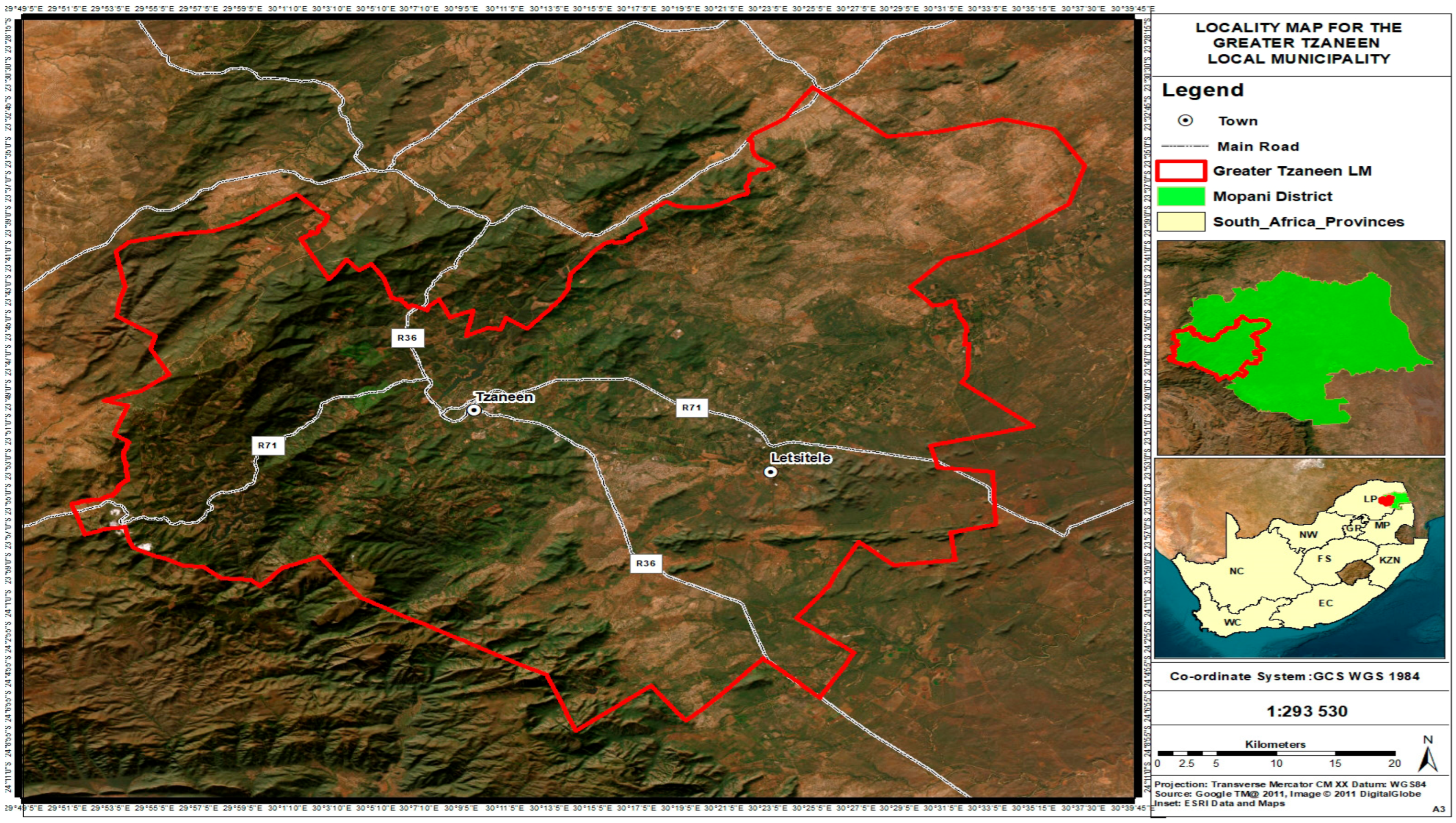
The study was conducted in the construction sectors in the GTLM, which is in the eastern part of the Limpopo Province within the Mopani District (Figure 1). There are five (5) local municipalities found within the Mopani District, namely: Greater Tzaneen, Greater Giyani, Greater Letaba, Maruleng, and Ba-Phalaborwa Municipalities. The selection of the GTLM as the case study area for this research was grounded in its relevance to the study of CWM practices. The municipality has a population of approximately 390,098, with 108,926 households [30]. This population growth and the associated demand for infrastructure development make the municipality an important site for investigating the challenges related to CWM. The region’s economic activity, particularly in the construction sector, further strengthens the case for this municipality as the research area. Several construction companies operate within the GTLM, and as a developing region, it is crucial to address issues of waste management to ensure sustainable development.
This study adopted a qualitative exploratory case study approach to investigate the challenges encountered by construction companies in implementing construction waste management practices within the GTLM. The approach was selected because it allowed for an in-depth exploration of participants’ experiences and contextual factors influencing CWM practices [31]. Additionally, this study adopted this approach which is consistent with established guidance in construction management research [32], and the concept of qualitative case study research as empirical inquiry [33]. Guided by the COREQ framework [29], the study followed a systematic process that included purposive sampling, semi-structured in-depth interviews, and thematic analysis, as described in the subsequent sections. The use of the COREQ checklist further supported transparency and rigour in the reporting of interviews and thematic analysis.

2.2. Population and Sampling

In this study, sampling process began with the identification of the sampling frame, which consisted of 52 active construction companies operating within the GTLM. These companies were identified through online searches, including Google, and from the Construction Industry Development Board database. To determine the sample size, Yamane’s [34] formula was applied, using a 5% margin of error.
n = N 1 + N ( e ) 2
where n is the sample size; N is the population size of the construction companies (i.e., 52). e is the acceptable sampling error (5%).
Based on the total population of 52 construction companies, the formula produced a required sample size of 46 companies. As the calculated figure was close to the target population, the study employed a Total Population Sampling approach, a technique in which all members of the population who fit the criteria are included [35].
Within each selected company, purposive sampling was applied to identify key informants. This non-probability sampling technique involves selecting participants based on their knowledge or expertise in relation to the research topic [36]. Purposive sampling is widely used in qualitative research to ensure that participants are information-rich and able to contribute meaningfully to the study objectives [37]. Therefore, construction site managers, construction site engineers, environmental officers, and safety officers were specifically targeted, as they were considered to have the most relevant experience and insight into CWM practices compared to other staff categories [38]. Due to limitations encountered during the recruitment process, only 24 participants were ultimately available and agreed to participate in the study.

2.3. Participant’s Demographics

The study included 24 participants purposively selected for their involvement in CWM. The majority (84%) were construction site managers, followed by site engineers (8%), with environmental officers and safety officers each constituting 4% of the sample. Of the 24 participants, male participants constituted 67% of the sample, while female participants made up 33%. In terms of age distribution, most (83%) were between 25–35 years, 13% between 36–45 years, and 4% between 46–65 years, while no participants fell in the 18–24 category. Regarding educational background, 25% held a national diploma, 29% a bachelor’s degree, 25% an honours degree, 17% a master’s degree, and 4% a higher certificate. Professional experience in waste management also varied, with 46% having 9–15 years, 37% having 6–8 years, and 17% having 3–5 years. Table 1 summarises these demographic details.

2.4. Questionnaire Design

The questionnaire used for this study was developed based on thorough review of existing literature on construction waste management practices [1,5,18,19,39,40]. A semi-structured design was employed to allow both consistency across participants and flexibility to explore individual experiences and insights in depth. The questionnaire (see Supplementary Materials) was divided into two sections: The first section collected participants’ background information, including age, gender, level of education, occupation, and years of professional experience. Capturing these details allowed the researchers to contextualise responses and explore whether demographic factors influenced perceptions and challenges related to construction waste management.
The second section focused on the challenges faced by construction workers in implementing or adhering to the waste management strategies. This section had the following central question which was posed to the participants and followed by a series of probing questions that were informed by their responses: “What challenges do you encounter when implementing waste management strategies in your site? Open-ended questions were used to capture detailed qualitative responses, enabling participants to express experiences in their own words. This approach facilitated the identification of themes, patterns, and contextual factors influencing waste management practices.

2.5. Data Collection and Procedure

Data were collected using face-to-face interviews and virtual interviews. Data collection took place over six weeks, with the interviews lasting between 30 to 70 min. A total of 24 participants were interviewed. Nineteen interviews were conducted through face-to-face at the constructions sites at a time that was prearranged over the phone and adjusted to the participants’ preferences while five interviews took place virtually. With the permission of the participants [41], the face-to-face interviews were recorded using an audiotape while virtual interviews were conducted and recorded using Microsoft Teams. English language was used to conduct the interviews with participants. Participants were asked the following primary question, which was followed by several follow-up inquiries based on their answers: ‘What are the challenges that you experience in implementing the waste management strategies or complying with them?’
The primary goal of the interviews was to gather information about the participants’ challenges with CWM, therefore one of the guiding principles was to encourage them to openly discuss their own encounters and narratives. The researcher followed up on the information provided by the participants. As a result, rather than using a question-and-answer style, the interviews were able to be interactive. The researcher was able to determine whether the interpretation mirrored what the participants wanted to say by summarising their responses and following up with related clarifying questions.

2.6. Data Analysis

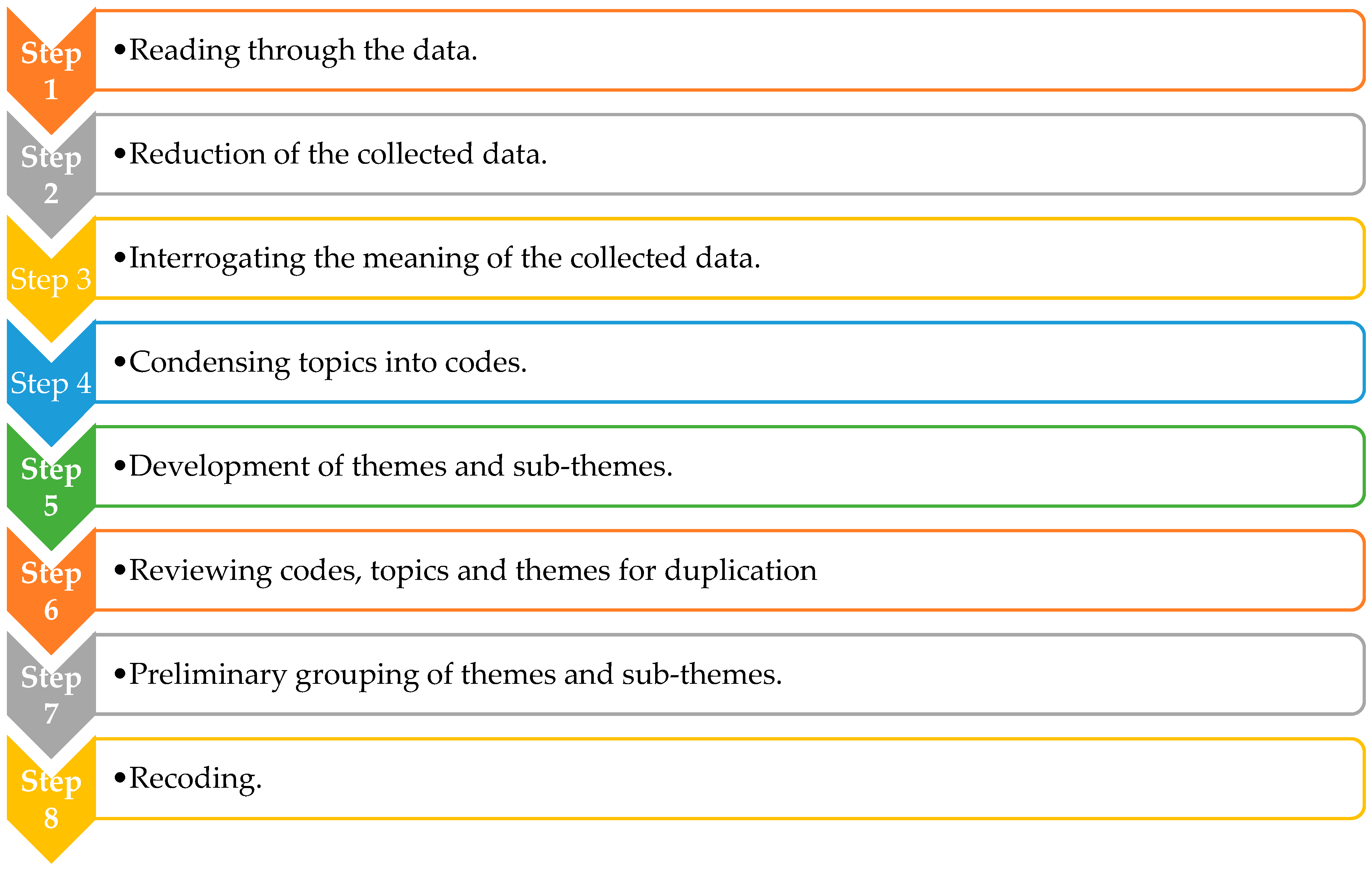
The interview data were analysed manually using Tesch’s eight-step qualitative data analysis method [42]. This method provides a systematic and iterative framework for organising, interpreting, and identifying emerging themes from qualitative data. It involves reading all transcripts to gain a holistic sense of the material, identifying significant statements, coding meaningful segments, grouping similar codes into categories, and refining these into overarching themes that capture the essence of participants’ perspectives. The process allowed the researchers to move continuously between the raw data and emerging interpretations, ensuring that findings remain grounded in participants lived experiences. The detailed steps (Figure 2) followed in this process are outlined below:
Step 1: Reading through the data.
The principal investigator (PI) commenced the data analysis by carefully reading all verbatim transcripts to obtain a comprehensive understanding of the dataset. This initial immersion facilitated familiarity with the concept and provided preliminary insights into the meaning of various data segments. Notes and reflections memos were written down during the reading process to capture emerging thoughts and interpretations. The PI engaged in multiple iterative readings of the transcripts to ensure a nuanced understanding of participants’ perspectives and contextual meanings embedded in their narratives.
Step 2: Reduction of the data collected.
The PI condensed the data into initial codes derived from recurring concepts and patterns identified in the verbatim transcripts. All emerging topics were then compiled and reviewed. Related topics were grouped together to form preliminary categories, while unrelated or unique ideas were clustered separately. Analytical notes and reflections were documented in the margins of the transcripts to capture the PI’s evolving thoughts and interpretations throughout the coding process.
Step 3: Interrogating the meaning of the collected data.
The PI reread the transcripts to conduct a deeper level of analysis. During this stage, the PI engaged in reflective questioning guided by the initial codes and recurring concepts identified earlier. Questions such as “which words best describe this segment?”, “what is being expressed here?”, and “what underlying meaning does this convey?” were used to interpret and refine the emerging patterns and conceptual understanding of the data.
Step 4: Condensing topics into codes.
The PI refined and abbreviated the identified topics into concise codes. These codes were systematically assigned to corresponding segments of the transcripts to represent specific meanings within the data. To ensure consistency, all relevant instances of each code were included across the dataset. The codes were noted in the margins of the transcripts using a different colour from that used in the previous step to visually distinguish them and maintain an organised coding process.
Step 5: Development of themes and sub-themes
The PI generated themes and sub-themes by examining the coded data alongside the associated text segments. Related codes and topics were grouped together to reduce redundancy and to capture the underlying meaning, thereby creating coherent and meaningful themes and sub-themes that reflected the patterns in the data.
Step 6: Reviewing codes, topics and themes for duplication
In this step, the PI revisited the entire dataset to ensure consistency and to identify any duplication among codes, topics, and themes. Using the complete list of codes, similar codes were grouped together, and others were refined or re-coded as needed to accurately reflect the meaning of the data and maintain clarity in the thematic structure.
Step 7: Preliminary grouping of themes and sub-themes.
Data corresponding to each theme was organised into separate columns, and an initial analysis was conducted. This was followed by a collaborative meeting between the PI and co-authors to discuss and reach consensus on the themes and sub-themes, ensuring alignment between independently developed categorizations.
Step 8: Re-coding
Re-coding was performed when some independently derived themes were merged to better reflect the data. Analytical notes were recorded throughout the process to capture emerging ideas and insights. The audio-recorded interviews were transcribed verbatim, after which both the PI and the co-authors conducted separate analysis. A subsequent consensus meeting was held to resolve discrepancies and to identify convergent findings across the datasets.

2.7. Strategies to Enhance Rigour

The following strategies were used to guarantee trustworthiness: confirmability, dependability, credibility, and transferability [43]. To ensure the credibility, this study was conducted following ethical approval from the university’s ethics committee. To guarantee that the information given accurately reflects the opinions of the participants, the data was confirmed with the participants during the interview process [44]. All authors participated in the study’s design, analysis, and team discussions to foster consensus with the study’s findings and conclusions. A thorough explanation of the study’s design, environment, participant details, data collection and analysis processes, and findings were provided to establish the data’s transferability [43]. All stages of the data collection and analysis, including the creation of themes, coding, and reflective journals, were recorded in an audit trail. The study process may therefore be replicated and verified because of this transparency [45].

2.8. Ethical Considerations

Prior to the study, the study protocol was reviewed and approved by the Turfloop Research Ethics Committee (TREC/70/2023: PG). Participants gave their written informed consent after being made aware of the study’s objectives. Confidentiality was maintained for all the data collected for the study. The audio recordings were kept in a safe place and were only accessible to the researchers. Transcripts did not contain names or other personally identifiable information.

3. Results

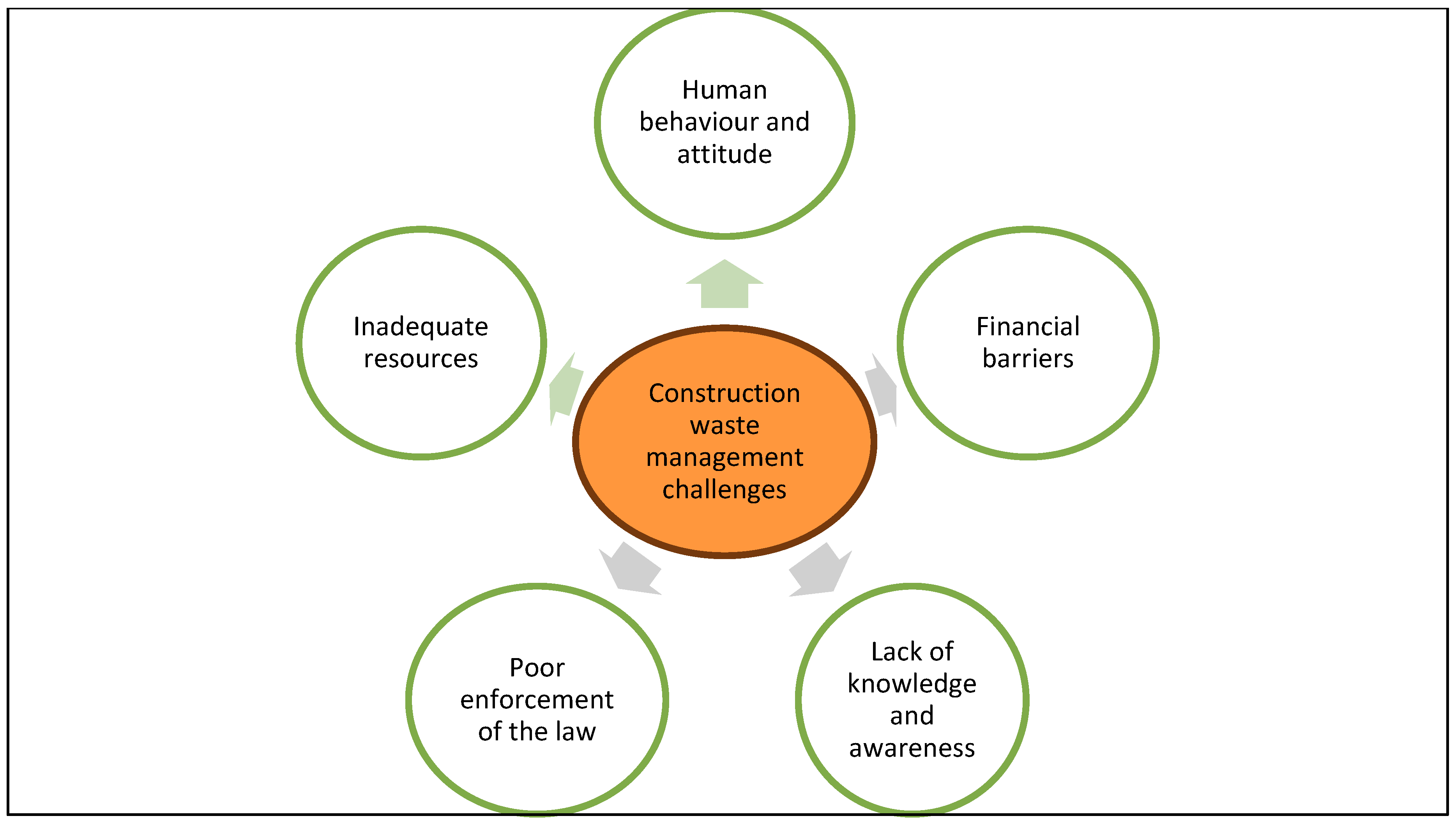
Five themes (Figure 3) emerged from the research findings, and they were: (i) Human behaviour and attitude towards waste management (ii) Financial barriers in managing CW, (iii) Lack of knowledge and awareness on CWM, (iv) Poor enforcement of the law by the Environmental Authorities, and (v) Inadequate resources to manage CW.

3.1. Theme 1: Human Behaviour and Attitude Towards Waste Management

This theme highlights how employees’ behaviour, despite training and supervision, impacts the effective implementation of CWM practices. It draws attention to how difficult it can be to alter unprofessional or uncooperative behaviour. One of the participants made the following observations:
“One of the challenges is that we are dealing with behavioural issues. You must ensure that someone behaves in a certain way, and you might not win.”
A participant from the road construction projects highlighted that they do advice their employees through different strategies such as toolbox talk weekly. However, employees continue to do the opposite besides such trainings and one of the participants said:
“Sometimes we advise them through our weekly toolbox talks but they still do the same things we advised against. You can see that it is a behavioural issue, so we just have to continue undertaking the same activity until they are aware.”
In adding to the challenge of behaviour, one of the participants from dam construction projects emphasised that one of the key challenges they encounter in encouraging workers to implement waste management methods within their construction site is the behaviour of the workers. The participant said:
“We make every effort to teach them about waste, but the issue we have is the unprofessional behaviour of our employees regarding waste management. This indicates that even under rigorous supervision, there is little chance of beneficial waste management behaviour among workers if their perceived behavioural control is low.”
In clarifying behavioural aspects of employees, one of the participants from the bridge construction site was of the view that education and experience play a significant role in shaping employees’ attitudes and behaviours toward waste management on construction sites. The participant emphasised that employees who have received specific training in waste management tend to exhibit more positive attitudes and behaviours, highlighting the effectiveness of targeted training programmes. The participant said:
“In my experience, employees who have taken part in waste management training programs have more positive attitudes toward waste management as opposed to the employees who have not participated.”

3.2. Theme 2: Financial Barriers in Managing Construction Waste

This theme reflects the key issue highlighted by participants, which is the high cost associated with waste management at construction sites. It highlights how expenses related to waste disposal, labour, and logistical issues are significant financial burdens, particularly for smaller construction companies. The theme also emphasises how challenging it is to strike a balance between financial sustainability and legal compliance, since some companies put profit ahead of environmental improvements because waste management is so expensive. Most of the participants complained about the high expenses of maintaining costs associated with management of waste within the construction sites. The cost associated with disposal of waste at the landfill was frequently mentioned by most of the participants from different project sites. For instance, one of the participants from a project dealing with road construction stated that:
“Maintenance of waste is expensive. To dump waste at a landfill we must pay and sometimes we require more labourers for the management and logistics of getting waste dumped.”
Another participant from building and commercial projects also highlighted that they usually encounter late payments of the work done which becomes a challenge when they must continue managing waste within their construction sites:
“We struggle with payments to implement the waste management strategies as we do not get paid on time and it is costly to transport waste to the landfill.”
The financial difficulty was also cited by another participant from the dam construction site who stated that: “We find it difficult to pay the regular fees for landfill sites as new entrepreneurs just starting up our businesses. Therefore, we rather work with the truck owners who pick up the waste rather than worrying too much about where these truck owners dispose of the waste.” The participant emphasised that in the construction business financial sustainability is crucial since money is required for efficient waste management. In agreeing with other participants from other construction sites, a participant from the road construction site also explained the financial difficulties to manage CW. She claimed that because appropriate waste disposal is expensive, some smaller construction companies struggle with it:
“We have challenges with finances, so the high costs associated with waste collection and disposal are some of the reasons that make us not to comply with the law.”
Due to their primary focus being financial profit, the participants highlighted that the companies have no interest in making environmental improvements to their processes. As indicated by one of the participants from the road construction projects, the costs associated with managing waste from construction projects are the source of the financial obstacles:
“As much as we have to comply with the law, but we also have to make profit, so the cost associated with management of construction waste is a problem because somehow along the way we lose profit as we have to pay a lot of money for waste to be taken care of.”
Additionally, participants raised concerns that construction companies are not provided with sufficient financial rewards or incentives, such as tax credits or rebates for adopting waste management practices. It highlights how the absence of these incentives discourages companies from exploring alternative waste management options, like recycling and recovery and this may hinder their efforts to reduce waste at construction sites. This emphasises the necessity of more encouraging laws that supports companies to use environmentally friendly waste management strategies.
Most participants stated that companies are not provided with any financial incentives, such as rebates or tax credits, or any other kind of reward, for creating or implementing waste management strategies that the government has suggested. Some participants expressed the opinion that construction businesses lack the incentive to go through alternative possibilities like recovery and recycling before resorting to landfills. As a result, they indicated that there are insufficient incentives for construction companies (e.g., cash for waste materials exchanged, or prizes for building sites reaching predetermined waste reduction targets). Most of the participants who deal with dam constructions stated that they were unaware of any incentives provided to companies for creating or implementing waste management strategies that are mandated by the government.

3.3. Theme 3: Lack of Knowledge and Awareness on Construction Waste Management

This theme encapsulates the challenge of lack of knowledge and awareness surrounding both CWM and the relevant environmental legislation among construction workers, contractors, and even professionals. It draws attention to how this knowledge gap impedes both legal compliance and efficient waste management practices. The theme also emphasises the need for better education and training for workers, as well as a more serious approach to environmental regulations, to improve waste management outcomes at construction sites. In highlighting how lack of knowledge and awareness affects waste management at construction sites, one of the participants emphasised that there is lack of knowledge and awareness regarding CWM by saying:
“Even though sometimes we do environmental induction, some people do not understand the importance or impacts of waste on the environment, and we must always remind the workers. Most workers do not understand the waste management and how waste can impact the environment.”
Lack of knowledge is, however, a broad problem as it is not only on the site of the employees but cut across to professionals. Participants indicated that they sometimes source experienced people to manage waste on their behalf due to lack of knowledge of their own staff. One participant said:
“But sometimes we’re not trained to manage certain types of hazardous waste. So, we must now bring in an experienced third party to come and manage that waste on our behalf, like, for example, sewage waste, because we bring toilets on site. So, such waste whereby our toilets need to be cleaned, we bring a third party to come in and clean those toilets and dispose of waste on our behalf.”
Most participants in the road construction projects attested to challenges that are bound to hinder the effectiveness of the legislation such as a lack of knowledge of the law among most contractors and construction workers, a lack of funding, and a shortage of human capital. One of the participants from housing and commercial projects agreed with participants from road construction projects that there is lack of understanding of the legislation: The participant said:
“The environmental legislation is new, and it requires understanding for it to be executed successfully.”

3.4. Theme 4: Poor Enforcement of the Law by the Environmental Authorities

This theme captures the challenges of non-enforcement and the uneven application of environmental laws across different types of construction projects. Among the challenges identified by the participants was the inadequate enforcement of environmental law. Participants indicated that as much as there are environmental laws governing the construction site, such laws are not enforced. One of the participants said:
“There are laws, but they are not enforced as much as they should be. When driving around the Greater Tzaneen Local Municipality, you will casually see construction waste all over the place.”
Most of the participants were aware of the National Environmental Waste Management Act, 2008 (Act No. 59 of 2008), however, they indicated that some of the laws are not enforced. In emphasising the issue of poor law enforcement, one of the participants said:
“There are municipality environmental officers and the environmental compliance officers from LEDET but somehow, they do not care much about the enforcement of the environmental laws, because they never visit our sites to check if we comply with waste management strategies but some areas of the Municipality, especially the rural side, there are a lot of construction waste along the roads or in bushes.”
One of the participants from the road construction projects acknowledged that some provisions of the law ought to be obeyed without question. According to the participant, a significant number of people who work on the site do not know much about some of the environmental laws, let alone know how to comply with it. In explaining his acknowledgement of the law, the participant said:
“Law is law, and it must be followed. For instance, the aspect of classification of waste cannot be compromised. However, it becomes difficult to enforce the law because most of the workers do not know much about the laws and regulations governing waste management. So, we still must educate them more before we can talk of penalties.”
A participant from housing and commercial properties sites opined that the legislation has not been followed effectively at their site. The participant further highlighted that the legislation generally favours large construction companies because they have money and resources to dispose of their waste in accordance with the law:
“We are a small company with lack of capital and insufficient human capital. So, it can occasionally be challenging to adopt some of the practices, such as sorting on site unlike large construction companies who have their waste sorted on site, making the process of waste disposal much simpler.”

3.5. Theme 5: Inadequate Resources to Manage Construction Waste

This theme emphasises how important resources like waste bins are to maintaining efficient waste management practices at construction sites. It also highlights how inappropriate waste disposal practices, such littering, are exacerbated by a shortage of these vital resources. One of the participants indicated that, lack of proper equipment such as bins resulted in problems such as littering. “On the site that we are currently working at right now, we do not have bins.”
One of the challenges mentioned by a participant from a road building site was the scarcity of supplies, such as skip bins. This backed up the participant’s judgement from the dam construction site, which mentioned resource availability challenges. Another participant in the dam construction projects expressed the opinion that there is a lack of funding, which results in inadequate resources and ineffective monitoring. Another participant from the road construction site also mentioned some of the difficulties encountered in trying to implement the law efficiently, like a lack of resources:
“It is challenging to implement the waste management laws because of lack of resources within the site.”
The scarcity of bins for management of waste was also mentioned by one of the participants from housing and commercial project. The participants highlighted that when waste bins are not available it causes littering within the site:
“You’d find that they are minimal, or few which in turn encourages people to end up throwing the waste on open spaces.”

4. Discussion

The findings of this study reveal several interconnected challenges that hinder effective CWM within the GTLM. While existing literature emphasises technical, regulatory, and economic aspects of waste management, the results of this research highlight the critical role of behavioural, financial, institutional, and resource-related factors in shaping CWM practices. To provide a deeper understanding, the discussion is structured around the key themes that surfaced from the data analysis. These themes are examined in relation to previous studies to illuminate both consistencies and contradictions, and to highlight implications for policy, practice, and future research.

4.1. Human Behaviour and Attitude Towards Waste Management

Employees’ behaviour and attitudes towards waste management were found to be challenges to waste reduction efforts. The results align with previous research that recognised behavioural constraints as impediments to the adoption of circular economy principles [46,47] and corroborate Tam et al. [48], who emphasised that employees’ behaviour and attitudes toward waste, coupled with insufficient oversight, constitute primary drivers of CW generation. Similarly, research has demonstrated that understanding attitudes and behaviours associated with waste management is necessary for efficient CWM [49,50].
The results of this study show that despite continuous efforts like toolbox talks and training, employees frequently still act in ways that are inconsistent with CWM practices. This finding contradicts with findings by Eggerth et al. [51], who reported that toolbox talks, with or without a narrative element, can facilitate learning. The discrepancy supports Olson et al. [52], who noted that empirical evidence for the effectiveness of toolbox talks remains limited and that guidance on how to adapt them for greater impact is lacking. This point to the difficulty in changing ingrained behaviour or attitudes, despite clear guidance. Even after being taught the significance of compliance, employees’ reluctance or lack of interest in appropriate waste management reveals that behavioural problems are frequently at the heart of substandard waste management practices. Thus, when managing CW, human factors must be considered. Because environmental outcomes are closely linked to human behaviour, people’s environmentally conscious beliefs and activities will have beneficial effects for communities [53]. The results further suggest that behaviour control is a prerequisite for putting effective CWM policies into practice and that employees’ willingness to embrace CW measures is largely dependent on their perception of behaviour control. However, McKenzie-Mohr [54] contends that attitude modification and awareness-raising have little to no effect on behaviour change.
Training emerged as an important factor in shaping employees’ perspectives on CWM. Employees who had received specialised waste management training demonstrated more positive mindsets and behaviours, echoing findings that changing perceptions can address the root causes of waste generation in construction [55] and supporting Wuni and Shen [56], who recommend targeted training to equip employees with the design, management, and planning skills needed to handle the complexities of CW. Employees’ attitudes and behaviours play a crucial role in the successful implementation of CWM practices. This theme is closely linked to SDG 12 (Responsible Consumption and Production), which focuses on the sustainable use and management of resources. By emphasising training and behavioural interventions, the study demonstrates how human actions can promote sustainable production and consumption patterns. Moreover, fostering environmentally responsible behaviours contributes to SDG 11 (Sustainable Cities and Communities) by helping create cleaner, safer, and more sustainable urban environments [27]. Therefore, to improve CWM practices and foster an accountable culture, it is imperative to strengthen behavioural change techniques employing reinforcement strategies including rewards, recognition, and peer accountability. There is a need for more interactive training and awareness campaigns that are tailored to different levels of proficiency and supported by multimedia tools for continuous learning. Regular environmental orientations, practical training sessions, and ongoing education on waste management practices and legal requirements are essential to enhance knowledge, strengthen compliance, and drive meaningful environmental action [57].

4.2. Financial Barriers in Managing Construction Waste

The financial burden associated with landfill waste disposal emerged as a recurrent theme among participants from multiple project sites. This finding is consistent with Petterson’s [58] findings that, in most South African provinces, waste disposal becomes increasingly costly and impractical when transporters cannot complete multiple trips in a single day. Beyond the direct costs of landfill use, the development of effective CWM systems in many developing countries is hindered by broader financial constraints arising from unfavourable economic policies, inadequate infrastructure, and pervasive poverty [59,60,61]. Similar financial challenges were noted by Ayalp and Anaç [62] in their comprehensive review of barriers to efficient CWM, and by Al-Otaibi et al. [63], who emphasised the necessity of sufficient financial resources for sustainable waste management practices. Furthermore, this finding is consistent with previous studies which identified insufficient resources and limited budgets as among the most significant barriers to waste management in low-income communities [64,65].
The results of this research draw attention to the complex financial difficulties that construction companies encounter while handling waste, especially the burden that these expenses place on smaller companies. Even though companies recognise how important it is to follow environmental regulations, compliance is frequently hampered by the high costs of disposing of waste and logistical challenges. The result of this study is in line with a study that found that contractors usually lose money due to higher overhead costs and delays, decreased productivity due to more time commitment, and high waste disposal charges [55]. Several construction companies lack the financial as well as technological capabilities necessary to properly manage CW [66]. Given the constraints of the construction sector as well as the local market, different countries have varied strategies for managing CW [67]. Although participants expressed dissatisfaction with the financial challenges of waste management, they have highlighted the fact that there are financial benefits to reducing CW. Participants believe that financial gains can be achieved through sales of recycled materials to other parties and cost savings realised by the client through waste minimisation. This finding is consistent with a literature review on the lessons, challenges, and benefits associated with CW, which emphasises that there are economic, environmental and societal benefits of using recycled materials in construction [68]. More financial savings can be achieved by the customer and, to some extent, by the lead contractor as more waste is diverted from landfills. These financial savings can be derived from reduced waste disposal costs, purchase costs, and transportation expenses. This finding corroborates the conclusions of Al-Raqeb et al. [69], who emphasised that all waste generated should be prioritised for recycling, reuse, or alternative recovery methods such as energy recovery prior to disposal, with landfill used only after appropriate pre-treatment.
Another major gap that significantly affects the construction sector’s capacity to implement sustainable waste management techniques is the lack of financial incentives for efficient waste management. According to our study findings, construction companies frequently give financial considerations top priority when making operational decisions, which can have a direct impact on their readiness to implement new procedures or technological advancements. The findings of this study are supported by previous research conducted in Ethiopia, indicating that cost savings are the primary motivator for construction companies to adopt recycling and reuse practices [70]. In contrast, a study from Brazil reported that recycling and reuse rates remain low despite incentives, mainly due to the high costs and logistical difficulties associated with sorting and processing waste [69,71]. In the absence of monetary incentives or rewards, construction companies could be reluctant to spend money on waste reduction techniques like material reuse, recycling, or recovery. Insufficient incentives to encourage sustainable construction, a lack of knowledge about the potential and financial benefits of sustainable constructions, a narrow selection of sustainable materials, and a lengthy process for environmentally friendly construction certifications and authorisations are some of the factors identified to affect the management of waste [72]. The findings are also comparable to a study which discovered that the four primary challenges for implementing source separation into practice are expectations of receiving incentives, individuals’ inadequate awareness, and lack of responsibility, and issues with the waste collection system [73].
The provision of monetary and market-based incentives for sustainability adopters serves as a catalyst for the adoption of waste management approaches [74]. Therefore, one of the elements influencing CWM efforts is offering financial incentives to stakeholders. This is viewed as a strategy that can increase their desire to manage CW more effectively and their interest in recycling it. To encourage sustainable practices and effective waste management in the construction sector, financial incentives such as tax credits, rebates, and subsidies should be put in place. These incentives may make waste reduction, recycling, and recovery programmes more reasonable for companies. Reward-based initiatives, like cash incentives for exchanging waste products and recognition programmes for accomplishing waste reduction targets, can further boost compliance. Nahman [75] also supports that tax breaks, subsidies, and incentives should be put in place to promote sustainable activity.
To lower the financial burden of waste management on construction sites, companies should employ cost-effective strategies to maintain revenue and adherence to regulations. Waste reduction and recycling initiatives, for example, can save disposal costs by reusing materials and lowering dependency on landfills. This idea is endorsed in a study which suggested that methods such as reduced production, waste classification, reuse, and recycling should be prioritised because they are more economical [76]. Financial limitations impede construction firms from adopting effective waste management strategies. This challenge relates to SDG 8 (Decent Work and Economic Growth), as constrained financial resources can restrict productive and sustainable economic activities [27]. Implementing incentives and cost-efficient solutions also supports SDG 12, promoting sustainable material use and reducing the environmental impact of construction operations. Therefore, establishing relationships with recycling facilities and waste management companies may open up more affordable and ecologically suitable disposal alternatives. Streamlining logistics, which involves spending money on on-site waste segregation, utilising shared disposal services, and efficiently planning waste pickup, can further reduce costs.

4.3. Lack of Knowledge and Awareness on Construction Waste Management

Lack of knowledge and awareness regarding CWM and its environmental impacts remains a significant challenge in the construction sector. Participants in this study highlighted that lack knowledge of CWM and related environmental legislations among construction workers, contractors, and even professionals hinders both effective waste management and regulatory compliance. This finding is consistent with research conducted in China, which found that individuals with higher environmental awareness were more likely to adopt eco-friendly behaviours [77], suggesting that increased awareness among employees could lead to proactive measures to reduce the negative impacts of waste on the environment and society. Similarly, in the South African context, a lack of public awareness regarding the environmental repercussions of waste has been identified as a major barrier to adopting recommended environmental and health practices [74]. Furthermore, previous studies have shown that possessing the right knowledge is one of the most effective predictors of recycling behaviour [78], and that environmental awareness significantly influences other pro-environmental behaviours, including green consumption and proper waste disposal practices [79]. Such awareness can also foster peer influence, encouraging colleagues to take voluntary actions such as motivating others to recycle [80]. Therefore, enhancing knowledge of CWM and its effects on human health and the environment is essential to improving waste management outcomes in the construction sector.
As previously mentioned, certain employees and contractors could disregard legal obligations like maintaining waste records and using appropriate disposal techniques. This is made worse by the fact that these regulations receive less serious attention than those pertaining to the Health and Safety Act. Ideally, all CW should be recycled and reused, however, there are numerous challenges along the way which are confirmed by literature. For instance, a case study in Australia discovered that some of the main challenges to recycling CW are lack of knowledge within the industry about the significance of recycling and its possible benefits; lack of business-related policy incentives, uncertainty about recycled materials and technological obstacles to recycling waste resources for beneficial purposes [81]. Lack of information position by citing insufficient knowledge of construction workers coupled with insufficient training on waste management issues are some of the challenges to achieving the reduction of CW [82]. Insufficient knowledge and awareness hinder proper waste handling and compliance with environmental laws. Therefore, tackling this challenge will support SDG 4 (Quality Education) by providing targeted training programmes that enhance understanding and skills in sustainable waste management. It further promotes SDG 12 by encouraging responsible and informed practices among construction workers and companies.

4.4. Poor Enforcement of the Law

Inadequate legal enforcement by environmental authorities exposes serious challenges in the construction sector, particularly regarding adherence to environmental laws controlling waste disposal. Although environmental regulations exist, there is a significant gap between their presence and practical application, especially in construction projects. Non-compliance results from several factors, including improper enforcement, inconsistent law application, and lack of knowledge about legal requirements, which collectively undermine effective waste management. The findings of this study align with other research highlighting structural policy gaps [83]. While South Africa’s current waste legislation is generally considered sufficient, its enforcement and application remain a challenge. In some cases, provincial laws differ, leading to uneven compliance. For instance, Gauteng does not require construction projects to submit a waste management strategy with building plan applications, unlike the Western Cape [23]. Such disparities reinforce the need for a unified national approach to ensure consistent application of CWM requirements across provinces. This issue is widespread in developing countries, where insufficient waste management practices pose substantial risks to environmental and public health across waste collection, storage, processing, disposal, and treatment stages [76].
Despite legislation and regulatory organisations established at all government levels, waste management remains deficient, as this study confirms. Participants emphasised that stronger enforcement through regular inspections, stricter penalties for non-compliance, and increased deployment of environmental officers on construction sites would significantly improve adherence to waste management regulations. These findings align with previous research demonstrating that effective waste minimisation depends heavily on the enforcement of existing laws and regulations [66]. Compliance and enforcement challenges are prominent in many South African municipalities, as noted by Mukwevho et al. [84] and Radzilani [85], who attribute these issues to resource constraints and misconceptions regarding roles and authority within local municipalities. The findings of this study support the notion that legal barriers that impede waste reduction methods, as observed in China and Thailand, are caused by a lack of relevant regulations, policies that are difficult to implement, and frequently the lack of enforcement mechanisms [86,87]. Similar challenges have been documented in Nigeria, where poor enforcement, inadequate waste management plans, and insufficient infrastructure contribute to widespread non-compliance [88]. Additionally, developing countries such Kenya, Tanzania, and Rwanda face difficulties interpreting and implementing evolving environmental laws due to scarce enforcement resources [89]. These international examples mirror the situation in the GTLM, where environmental restrictions and waste regulations are similarly under-enforced, highlighting the need for strengthened compliance and monitoring mechanisms. Weak enforcement of environmental regulations undermines the effectiveness of CWM initiatives. Strengthening compliance and oversight aligns with SDG 16 (Peace, Justice, and Strong Institutions) by fostering accountable institutions and the rule of law [27]. Additionally, robust enforcement indirectly supports SDG 11, as well-regulated construction practices contribute to cleaner, safer, and more sustainable urban areas.

4.5. Inadequate Resources to Manage Construction Waste

A significant issue facing the construction sector is the influence that insufficient resources have on efficient waste management on construction sites. The lack of essential resources, such as waste bins, that are necessary for implementing proper waste management practices significantly contributes to improper waste disposal practices, poor site cleanliness, and even environmental pollution. Lack of resources to manage waste was also found to be a challenge in a study conducted in low-income communities in South Africa [90]. This problem has wider ramifications for adherence to environmental laws and sustainability objectives in addition to having an impact on the actual physical environment on construction sites. To accomplish a successful plan regarding waste separation at source, a collection system must be supplied [91]. This is related to respondents’ assertions that they are unable to separate various types of waste because they do not have sufficient containers for that purpose. One of the most important elements in encouraging waste minimisation is the availability of waste skips for certain materials and maximising on-site material reuse [47]. A lack of adequate equipment and infrastructure restricts efficient waste management on construction sites. Addressing this issue aligns with SDG 9 (Industry, Innovation, and Infrastructure) by emphasising the importance of proper infrastructure and technological support for sustainable construction. It also contributes to SDG 12 by ensuring the availability of resources necessary for responsible production and reduced environmental impact from construction activities. Therefore, to improve waste management at construction sites, it is essential to ensure that the resources required, such as waste bins and the right tools, are available. Construction companies should establish clear waste segregation protocols and invest in appropriate waste disposal facilities to reduce littering. Governments and industry stakeholders should collaborate to provide financial aid or incentives, particularly for smaller businesses, to provide access to vital resources.

5. Limitations and Future Research

Most companies were reluctant to take part in the study because they feared that their participation might place them in problems with the environmental authorities if any non-compliance were identified. The researcher however reassured the participants that their companies or identities would remain private to lessen this risk. The sample size was therefore limited to 24 participants. Additionally, the study was conducted in one local municipality within the Mopani District and therefore the findings cannot be generalised to other settings. A similar approach may be used in other research projects with a larger sample size. Although this study was conducted in one local municipality, the methodology used could be applied to other local municipalities in the future.

6. Conclusions

This study draws attention to the challenges encountered when implementing effective waste management practices in the construction sector of the Greater Tzaneen Local Municipality. Employees’ attitudes and behaviours, influenced by both training and experience, were found to strongly influence adherence to CWM practices. Lack of knowledge and awareness regarding proper waste handling and environmental legislation further hindered compliance and the implementation of best practices. These challenges were compounded by weak law enforcement mechanisms, financial constraints, and a lack of equipment, all of which undermined the effectiveness of existing regulations and constrained sustainable waste management efforts. Although the population of the case study area is less than half a million and the volume and diversity of its CW may be lower compared to larger urban areas, the findings remain significant. They offer valuable insights into how smaller municipalities, often with limited resources, experience and manage CW challenges. The issues identified, such as weak law enforcement, inadequate awareness, and resource constraints, are consistent with the broader obstacles targeted by the United Nations SDGs. To demonstrate the connection with the SDGs, the study’s five themes align with the eight SDGs related to waste management as follows: human behaviour and attitudes relate to SDG 11 (Sustainable Cities and Communities) and SDG 12 (Responsible Consumption and Production); financial barriers relate to SDG 8 (Decent Work and Economic Growth) and SDG 12; lack of knowledge and awareness supports SDG 4 (Quality Education) and SDG 12; poor enforcement of the law aligns with SDG 16 (Peace, Justice, and Strong Institutions) and SDG 11; and inadequate resources correspond to SDG 9 (Industry, Innovation, and Infrastructure) and SDG 12. By addressing these challenges, the study illustrates how integrated waste management practices in the GTLM can contribute to multiple SDGs and promote sustainable development at the local level. This study contributes to the endeavour to minimise environmental impact, promote sustainable practices, and preserve public health, while providing lessons that may inform similar contexts beyond the GTLM.
Although several challenges identified in this study are consistent with prior research, the distinct contribution of this study lies in its context-specific examination of construction waste management within the GTLM. Unlike larger urban areas, smaller municipalities like GTLM encounter unique limitations, including constrained financial and human resources, weak enforcement of environmental regulations, and limited waste management infrastructure. This study offers empirical insights into how these local factors interact with employee behaviours, training, and perceived behavioural control, shaping compliance with construction waste management practices. Furthermore, the findings provide practical, locally tailored recommendations for smaller and medium-sized construction companies, including behavioural interventions, resource management strategies, and incentive schemes. Overall, this research advances knowledge by highlighting contextual challenges and actionable solutions that can guide policy development, regulatory enforcement, and sustainable construction practices in other resource-limited municipalities, thereby bridging theoretical understanding with practical application in localised settings.

Supplementary Materials

The following supporting information can be downloaded at: https://www.mdpi.com/article/10.3390/waste4010007/s1, Semi-structured interview guide.

Author Contributions

Conceptualization, L.P.C., J.M.L., and M.H.N.M.; methodology, L.P.C., J.M.L., and M.H.N.M.; validation, J.M.L. and M.H.N.M.; formal analysis, L.P.C.; investigation, L.P.C.; data curation, L.P.C., J.M.L., and M.H.N.M.; writing—original draft preparation, L.P.C.; writing—review and editing, L.P.C. and M.H.N.M.; supervision, J.M.L. and M.H.N.M.; project administration, L.P.C., J.M.L., and M.H.N.M. Author Josephine M. Letsoalo passed away prior to the publication of this manuscript. All other authors have read and agreed to the published version of this manuscript.

Funding

This research received no external funding.

Institutional Review Board Statement

The study was conducted in accordance with the Declaration of Helsinki and approved by the Turfloop Research Ethics Committee of the University of Limpopo (TREC/70/2023: PG).

Informed Consent Statement

Informed consent was obtained from all participants involved in the study.

Data Availability Statement

The Interview data on which the study is based is not publicly available due to privacy regulations. The original contributions presented in this study are included in the article/Supplementary Material. Further inquiries can be directed to the corresponding author.

Acknowledgments

We would like to thank the participants for their time and contributions.

Conflicts of Interest

The authors declare no conflicts of interest.

Abbreviations

The following abbreviations are used in this manuscript:
COREQConsolidated Criteria for Reporting Qualitative Research
CWConstruction Waste
CWMMultidisciplinary Digital Publishing Institute Construction Waste Management
GTLMGreater Tzaneen Local Municipality
SDGsSustainable Development Goals

References

  1. Chikezirim, O.; Mwanaumo, E. Evaluation of waste management strategies adopted in Tshwane building industry. J. Constr. Proj. Manag. Innov. 2013, 3, 498–510. [Google Scholar]
  2. Liu, J.; Gong, E.; Wang, D.; Lai, X.; Zhu, J. Attitudes and behaviour towards construction waste minimisation: A comparative analysis between China and the USA. Environ. Sci. Pollut. Res. 2019, 26, 13681–13690. [Google Scholar] [CrossRef] [PubMed]
  3. Bakshan, A.; Srour, I.; Chehab, G.; El-Fadel, M.; Karaziwan, J. Behavioral determinants towards enhancing construction waste management: A Bayesian Network analysis. Resour. Conserv. Recycl. 2017, 117, 274–284. [Google Scholar] [CrossRef]
  4. Calvo, N.; Varela-Candamio, L.; Novo-Corti, I. A dynamic model for construction and demolition (C&D) waste management in Spain: Driving policies based on economic incentives and tax penalties. Sustainability 2014, 6, 416–435. [Google Scholar] [CrossRef]
  5. Olusanya, O.O. Assessing the Compliance to Legislation Pertaining to Management and Disposal of Construction and Demolition Waste. Master’s Thesis, University of Witwatersrand, Johannesburg, South Africa, 2016. [Google Scholar]
  6. Jin, R.; Yuan, H.; Chen, Q. Science mapping approach to assisting the review of construction and demolition waste management research published between 2009 and 2018. Resour. Conserv. Recycl. 2019, 140, 175–188. [Google Scholar] [CrossRef]
  7. OECD. Global Material Resources Outlook to 2060: Economic Drivers and Environmental Consequences; OECD Publishing: Paris, France, 2019. [Google Scholar] [CrossRef]
  8. Ajayi, S.O.; Oyedele, L.O.; Akinade, O.O.; Bilal, M.; Owolabi, H.A.; Alaka, H.A.; Kadiri, K.O. Reducing waste to landfill: A need for cultural change in the UK construction industry. J. Build. Eng. 2016, 5, 185–193. [Google Scholar] [CrossRef]
  9. Gao, Y.; Wang, J.; Xu, X. Machine learning in construction and demolition waste management: Progress, challenges, and future directions. Autom. Constr. 2024, 162, 105380. [Google Scholar] [CrossRef]
  10. Yuan, H.; He, L.; Wu, H.; Zuo, J. Differentiated subsidy mechanism for promoting construction and demolition waste recycling. J. Clean. Prod. 2023, 405, 137051. [Google Scholar] [CrossRef]
  11. Zhang, C.; Hu, M.; Di Maio, F.; Sprecher, B.; Yang, X.; Tukker, A. An overview of the waste hierarchy framework for analyzing the circularity in construction and demolition waste management in Europe. Sci. Total Environ. 2022, 803, 149892. [Google Scholar] [CrossRef]
  12. Saraiva, T.S.; Borges, M.M.; Filho, A.C. The importance of recycling of construction and demolition waste. In Proceedings of the 28th Conference, Opportunities, Limits & Needs Towards an Environmentally Responsible Architecture, Lima, Perú, 7–9 November 2012. [Google Scholar]
  13. Yeheyis, M.; Hewage, K.; Alam, M.S.; Eskicioglu, C.; Sadiq, R. An overview of construction and demolition waste management in Canada: A lifecycle analysis approach to sustainability. Clean Technol. Environ. Policy 2013, 15, 81–91. [Google Scholar] [CrossRef]
  14. Lu, W.; Tam, V.W. Construction waste management policies and their effectiveness in Hong Kong: A longitudinal review. Renew. Sustain. Energy Rev. 2013, 23, 214–223. [Google Scholar] [CrossRef]
  15. National Environmental Management: Waste Act 59 of 2008, as Amended in 2014; Gazette No. 32189; Government Printers: Pretoria, South Africa, 2014.
  16. National Environmental Management Act 107 of 1998; Government Gazette. 401(19519); Government Printer: Pretoria, South Africa, 1998.
  17. Chummun, B.Z.; Gaffar, K. A review of factors influencing environmental performance: A quantitative analysis of the waste industry in KwaZulu-Natal. J. Contemp. Manag. 2018, 15, 715–739. [Google Scholar]
  18. Amadi, I.G.; Mahachi, J. State-of-the-art review on construction and demolition waste: The South African context. Clean. Waste Syst. 2025, 11, 100251. [Google Scholar] [CrossRef]
  19. Berge, S.; Von Blottnitz, H. An estimate of construction and demolition waste quantities and composition expected in South Africa. S. Afr. J. Sci. 2022, 118. (Special issue: Waste as a Resource), Art. #12485. [Google Scholar] [CrossRef]
  20. Macozoma, D.S. Developing a Self-Sustaining Secondary Construction Materials Market in South Africa; University of the Witwatersrand: Johannesburg, South Africa, 2006. [Google Scholar]
  21. De Villiers, W.; Mwongo, M.; Babafemi, A.J.; Van Zijl, G. Quantifying Recycled Construction and Demolition Waste for Use in 3D-Printed Concrete. Recycling 2024, 9, 55. [Google Scholar] [CrossRef]
  22. Abu, S.; Abudi, A.; Bukari, M. Behavioural influences on construction materials waste management in the construction industry: A study of construction firms in Ghana. J. Emerg. Trends Econ. Manag. Sci. 2019, 10, 78–89. [Google Scholar]
  23. Fitchett, A.; Rambuwani, P. Waste control in South African construction projects. Trans. R. Soc. S. Afr. 2022, 77, 105–112. [Google Scholar] [CrossRef]
  24. Kong, L.; Ma, B. Evaluation of environmental impact of construction waste disposal based on fuzzy set analysis. Environ. Technol. Innov. 2020, 19, 100877. [Google Scholar] [CrossRef]
  25. Chen, K.; Wang, J.; Yu, B.; Wu, H.; Zhang, J. Critical evaluation of construction and demolition waste and associated environmental impacts: A scientometric analysis. J. Clean. Prod. 2021, 287, 125071. [Google Scholar] [CrossRef]
  26. Young, W.; Davis, M.; McNeill, I.M.; Malhotra, B.; Russell, S.; Unsworth, K.; Clegg, C.W. Changing behaviour: Successful environmental programmes in the workplace. Bus. Strategy Environ. 2015, 24, 689–703. [Google Scholar] [CrossRef]
  27. South Africa. South Africa’s Implementation of the 2030 Agenda for Sustainable Development: Voluntary National Review (VNR) Report 2019. Available online: https://sustainabledevelopment.un.org/content/documents/23402SOUTH_AFRICA_RSA_Voluntary_National_Review_Report_Final__14_June_2019.pdf (accessed on 21 January 2025).
  28. Jerie, S.; Shabani, T.; Shabani, T. Management of safety and health hazards associated with construction and demolition waste in Zimbabwe. Discov. Environ. 2024, 2, 56. [Google Scholar] [CrossRef]
  29. Tong, A.; Sainsbury, P.; Craig, J. Consolidated criteria for reporting qualitative research (COREQ): A 32-item checklist for interviews and focus groups. Int. J. Qual. Health Care 2007, 19, 349–357. [Google Scholar] [CrossRef]
  30. Greater Tzaneen Local Municipality Integrated Development Plan, 2022. Integrated Development Plan 2022/2023. Available online: https://www.greatertzaneen.gov.za/documents/idp/FINAL%20IDP%20APPROVED%202022-23_080622.pdf (accessed on 22 January 2025).
  31. Mantula, F.; Mpofu, A.C.; Mpofu, F.Y.; Shava, G.G.N. Qualitative Research Approach in Higher Education: Application, Challenges and Opportunities. East Afr. J. Educ. Soc. Sci. 2024, 5, 1–10. [Google Scholar] [CrossRef]
  32. Sanda, Y.N.; Anigbogu, N.A.; Izam, Y.D.; Nuhu, L.Y. Designing case study research in construction management. J. Surv. Constr. Prop. 2021, 12, 27–35. [Google Scholar] [CrossRef]
  33. Ellinger, A.D.; McWhorter, R. Qualitative case study research as empirical inquiry. Int. J. Adult Vocat. Educ. Technol. (IJAVET) 2016, 7, 1–13. [Google Scholar] [CrossRef]
  34. Yamane, T. Statistics, An Introductory Analysis, 2nd ed.; Harper and Row: New York, NY, USA, 1967. [Google Scholar]
  35. Etikan, I.; Musa, S.A.; Alkassim, R.S. Comparison of convenience sampling and purposive sampling. Am. J. Theor. Appl. Stat. 2016, 5, 1–4. [Google Scholar] [CrossRef]
  36. Taherdoost, H. Sampling methods in research methodology; how to choose a sampling technique for research. Int. J. Acad. Res. Manag. (IJARM) 2016, 5, 18–27. [Google Scholar] [CrossRef]
  37. Creswell, J.W. Qualitative Inquiry and Research Design, 3rd ed.; Sage: Los Angeles, CA, USA, 2013. [Google Scholar]
  38. Hunter, D.; McCallum, J.; Howes, D. Defining exploratory-descriptive qualitative (EDQ) research and considering its application to healthcare. J. Nurs. Health Care 2019, 4, 1–8. [Google Scholar]
  39. Ranganathan, P.; Caduff, C. Designing and validating a research questionnaire-Part 1. Perspect. Clin. Res. 2023, 14, 152–155. [Google Scholar] [CrossRef]
  40. Ma, M.; Tam, V.W.; Le, K.N.; Li, W. Challenges in current construction and demolition waste recycling: A China study. Waste Manag. 2020, 118, 610–625. [Google Scholar] [CrossRef]
  41. Xu, A.; Baysari, M.T.; Stocker, S.L.; Leow, L.J.; Day, R.O.; Carland, J.E. Researchers’ views on, and experiences with, the requirement to obtain informed consent in research involving human participants: A qualitative study. BMC Med. Ethics 2020, 21, 93. [Google Scholar] [CrossRef]
  42. Creswell, J.W.; Creswell, J.D. Research Design: Qualitative, Quantitative, and Mixed Methods Approaches; Sage publications: Los Angeles, CA, USA, 2017. [Google Scholar]
  43. Ahmed, S.K. The pillars of trustworthiness in qualitative research. J. Med. Surg. Public Health 2024, 2, 100051. [Google Scholar] [CrossRef]
  44. McKim, C. Meaningful member-checking: A structured approach to member-checking. Am. J. Qual. Res. 2023, 7, 41–52. [Google Scholar]
  45. Polit, D.F.; Beck, C.T. Nursing Research: Generating and Assessing Evidence for Nursing Practice; Lippincott Williams & Wilkins: Philadelphia, PA, USA, 2008. [Google Scholar]
  46. Lam, P.T.; Ann, T.W.; Wu, Z.; Poon, C.S. Methodology for upstream estimation of construction waste for new building projects. J. Clean. Prod. 2019, 230, 1003–1012. [Google Scholar] [CrossRef]
  47. Ajayi, S.O.; Oyedele, L.O.; Akinade, O.O.; Bilal, M.; Alaka, H.A.; Owolabi, H.A.; Kadiri, K.O. Attributes of design for construction waste minimization: A case study of waste-to-energy project. Renew. Sustain. Energy Rev. 2017, 73, 1333–1341. [Google Scholar] [CrossRef]
  48. Tam, V.W.; Le, K.N.; Wang, J.Y.; Illankoon, I.C.S. Practitioners recycling attitude and behaviour in the Australian construction industry. Sustainability 2018, 10, 1212. [Google Scholar] [CrossRef]
  49. Razali, F.; Daud, D.; Weng-Wai, C.; Jiram, W.R.A. Waste separation at source behaviour among Malaysian households: The Theory of Planned Behaviour with moral norm. J. Clean. Prod. 2020, 271, 122025. [Google Scholar] [CrossRef]
  50. Kumar, S.; Smith, S.R.; Fowler, G.; Velis, C.; Kumar, S.J.; Arya, S.; Rena; Kumar, R.; Cheeseman, C. Challenges and opportunities associated with waste management in India. R. Soc. Open Sci. 2017, 4, 160764. [Google Scholar] [CrossRef] [PubMed]
  51. Eggerth, D.E.; Keller, B.M.; Cunningham, T.R.; Flynn, M.A. Evaluation of toolbox safety training in construction: The impact of narratives. Am. J. Ind. Med. 2018, 61, 997–1004. [Google Scholar] [CrossRef]
  52. Olson, R.; Varga, A.; Cannon, A.; Jones, J.; Gilbert-Jones, I.; Zoller, E. Toolbox talks to prevent construction fatalities: Empirical development and evaluation. Saf. Sci. 2016, 86, 122–131. [Google Scholar] [CrossRef]
  53. Wang, Q.; Niu, G.; Gan, X.; Cai, Q. Green returns to education: Does education affect pro-environmental attitudes and behaviors in China? PLoS ONE 2022, 17, e0263383. [Google Scholar] [CrossRef]
  54. McKenzie-Mohr, D. Fostering Sustainable Behaviour: An Introduction to Community-Based Social Marketing, 3rd ed.; New Society Publishers: Gabriola Island, BC, Canada; Limited Consortium Book Sales & Distribution: Minneapolis, MN, USA, 2011. [Google Scholar]
  55. Udawatta, N.; Zuo, J.; Chiveralls, K.; Zillante, G. Improving waste management in construction projects: An Australian study. Resour. Conserv. Recycl. 2015, 101, 73–83. [Google Scholar] [CrossRef]
  56. Wuni, I.Y.; Shen, G.Q. Barriers to the adoption of modular integrated construction: Systematic review and meta-analysis, integrated conceptual framework, and strategies. J. Clean. Prod. 2020, 249, 119347. [Google Scholar] [CrossRef]
  57. Etim, E. Leveraging public awareness and behavioural change for entrepreneurial waste management. Heliyon 2024, 10, e40063. [Google Scholar] [CrossRef]
  58. Petterson, D. Gauteng’s landfill future. ReSource 2020, 22, 14–15. [Google Scholar]
  59. Luttenberger, L.R. Waste management challenges in transition to circular economy–case of Croatia. J. Clean. Prod. 2020, 256, 120495. [Google Scholar] [CrossRef]
  60. Menegaki, M.; Damigos, D. A review on current situation and challenges of construction and demolition waste management. Curr. Opin. Green Sustain. Chem. 2018, 13, 8–15. [Google Scholar] [CrossRef]
  61. Correia, J.M.F.; de Oliveira Neto, G.C.; Leite, R.R.; da Silva, D. Plan to overcome barriers to reverse logistics in construction and demolition waste: Survey of the construction industry. J. Constr. Eng. Manag. 2021, 147, 04020172. [Google Scholar] [CrossRef]
  62. Ayalp, G.G.; Anaç, M. A comprehensive analysis of the barriers to effective construction and demolition waste management: A bibliometric approach. Clean. Waste Syst. 2024, 8, 100141. [Google Scholar] [CrossRef]
  63. Al-Otaibi, A.; Bowan, P.A.; Abdel Daiem, M.M.; Said, N.; Ebohon, J.O.; Alabdullatief, A.; AI-Enazi, E.; Watts, G. Identifying the barriers to sustainable management of construction and demolition waste in developed and developing countries. Sustainability 2022, 14, 7532. [Google Scholar] [CrossRef]
  64. Rodríguez-Rodríguez, D. Littering in protected areas: A conservation and management challenge—A case study from the Autonomous Region of Madrid, Spain. J. Sustain. Tour. 2012, 20, 1011–1024. [Google Scholar] [CrossRef]
  65. Przydatek, G. Waste management in selected national parks—A review. J. Ecol. Eng. 2019, 20, 14–22. [Google Scholar] [CrossRef] [PubMed]
  66. Umar, U.A.; Shafiq, N.; Malakahmad, A.; Nuruddin, M.F.; Khamidi, M.F. A review on adoption of novel techniques in construction waste management and policy. J. Mater. Cycles Waste Manag. 2017, 19, 1361–1373. [Google Scholar] [CrossRef]
  67. Ismaeel, W.S.; Kassim, N. An environmental management plan for construction waste management. Ain Shams Eng. J. 2023, 14, 102244. [Google Scholar] [CrossRef]
  68. Purchase, C.K.; Al Zulayq, D.M.; O’Brien, B.T.; Kowalewski, M.J.; Berenjian, A.; Tarighaleslami, A.H.; Seifan, M. Circular economy of construction and demolition waste: A literature review on lessons, challenges, and benefits. Materials 2021, 15, 76. [Google Scholar] [CrossRef]
  69. Al-Raqeb, H.; Ghaffar, S.H.; Al-Kheetan, M.J.; Chougan, M. Understanding the challenges of construction demolition waste management towards circular construction: Kuwait Stakeholder’s perspective. Clean. Waste Syst. 2023, 4, 100075. [Google Scholar] [CrossRef]
  70. Mhretu, A.; Abadi, H.T.; Gebrehiwot, W.; Asresie, T. Challenges and opportunities in construction waste management in Shire Town, Northern Ethiopia. Discov. Sustain. 2025, 6, 599. [Google Scholar] [CrossRef]
  71. Silva, W.D.O.; Morais, D.C. Transitioning to a circular economy in developing countries: A collaborative approach for sharing responsibilities in solid waste management of a Brazilian craft brewery. J. Clean. Prod. 2021, 319, 128703. [Google Scholar] [CrossRef]
  72. Simpeh, E.K.; Smallwood, J.J. Factors influencing the growth of green building in the South African construction industry. In Proceedings of the Smart and Sustainable Built Environment (SASBE) Conference, Pretoria, South Africa, 9–11 December 2015; Volume 2. [Google Scholar]
  73. Babazadeh, T.; Nadrian, H.; Mosaferi, M.; Allahverdipour, H. Identifying challenges and barriers to participating in the source separation of waste program in Tabriz, Northwest of Iran: A qualitative study from the citizens’ perspective. Resources 2018, 7, 53. [Google Scholar] [CrossRef]
  74. Dosumu, O.; Aigbavboa, C. Drivers and effects of sustainable construction in the South African construction industry. Acta Structilia 2021, 28, 78–107. [Google Scholar] [CrossRef]
  75. Nahman, A.; Oelofse, S.; Haywood, L. Implementing Economic Instruments and Incentives to Divert Waste from Landfill. In A Guideline for National Government; Department of Science and Innovation: Pretoria, South Africa, 2021; Report compiled by the CSIR. [Google Scholar]
  76. Abubakar, I.R.; Maniruzzaman, K.M.; Dano, U.L.; AlShihri, F.S.; AlShammari, M.S.; Ahmed, S.M.S.; AI-Gehlani, W.A.G.; Alrawaf, T.I. Environmental sustainability impacts of solid waste management practices in the global South. Int. J. Environ. Res. Public Health 2022, 19, 12717. [Google Scholar] [CrossRef] [PubMed]
  77. Sekhokoane, L.; Qie, N.; Rau, P.L.P. Do consumption values and environmental awareness impact on green consumption in China? In International Conference on Cross-Cultural Design; Springer International Publishing: Cham, Switzerland, 2017; pp. 713–723. [Google Scholar] [CrossRef]
  78. Erhabor, N.I.; Don, J.U. Impact of environmental education on the knowledge and attitude of students towards the environment. Int. J. Environ. Sci. Educ. 2016, 11, 5367–5375. [Google Scholar] [CrossRef]
  79. Rustam, A.; Wang, Y.; Zameer, H. Environmental awareness, firm sustainability exposure and green consumption behaviors. J. Clean. Prod. 2020, 268, 122016. [Google Scholar] [CrossRef]
  80. Syed-Abdullah, S.I.S. Extending the concept of pro-environmental action and behaviour: A binary perspective. Environ. Educ. Res. 2020, 26, 1764–1786. [Google Scholar] [CrossRef]
  81. Zou, P.; Hardy, R.; Yang, R. Barriers to building and construction waste reduction, reuse and recycling: A case study of the Australian Capital Region. In Proceedings of the Building Today—Saving Tomorrow: Sustainability in Construction and Deconstruction Conference, Auckland, New Zealand, 15–17 July 2015. [Google Scholar]
  82. Abarca-Guerrero, L.; Maas, G.; Van Twillert, H. Barriers and motivations for construction waste reduction practices in Costa Rica. Resources 2017, 6, 69. [Google Scholar] [CrossRef]
  83. Silva, R.V.; De Brito, J.; Dhir, R.K. Availability and processing of recycled aggregates within the construction and demolition supply chain: A review. J. Clean. Prod. 2017, 143, 598–614. [Google Scholar] [CrossRef]
  84. Mukwevho, P.; Radzuma, P.; Roos, C. Exploring barriers to the effective implementation of integrated waste management plans in developing economies: Lessons learned from South African municipalities. Sustainability 2024, 16, 9643. [Google Scholar] [CrossRef]
  85. Radzililani, T.W. The Quality of Integrated Waste Management Plans for Metropolitan Municipalities in South Africa. Ph.D. Thesis, North-West University, Potchefstroom, South Africa, 2019. [Google Scholar]
  86. Yuan, H.; Shen, L.; Wang, J. Major obstacles to improving the performance of waste management in China’s construction industry. Facilities 2011, 29, 224–242. [Google Scholar] [CrossRef]
  87. Manowong, E. Investigating factors influencing construction waste management efforts in developing countries: An experience from Thailand. Waste Manag. Res. 2012, 30, 56–71. [Google Scholar] [CrossRef]
  88. Ike, C.C.; Ezeibe, C.C.; Anijiofor, S.C.; Daud, N.N. Solid waste management in Nigeria: Problems, prospects, and policies. J. Solid Waste Technol. Manag. 2018, 44, 163–172. [Google Scholar] [CrossRef]
  89. Ostrovskaya, E.; Leentvaar, J. Enhancing Compliance with Environmental Laws in Developing Countries: Can Better Enforcement Strategies Help? In Proceedings of the Ninth International Conference on Environmental Compliance and Enforcement, Whistler, BC, Canada, 20–24 June 2011; Available online: https://www.researchgate.net/profile/Elena-Ostrovskaya-2/publication/259702201_Enhancing_Compliance_with_Environmental_Laws_in_Developing_Countries_Can_Better_Enforcement_Strategies_Help/links/0046353a12e3cdcd5c000000/Enhancing-Compliance-with-Environmen (accessed on 12 August 2025).
  90. Kubanza, N.S. Analysing the challenges of solid waste management in low-income communities in South Africa: A case study of Alexandra, Johannesburg. S. Afr. Geogr. J. 2025, 107, 169–189. [Google Scholar] [CrossRef]
  91. Rousta, K.; Ordoñez, I.; Bolton, K.; Dahlén, L. Support for designing waste sorting systems: A mini review. Waste Manag. Res. 2017, 35, 1099–1111. [Google Scholar] [CrossRef] [PubMed]
Figure 1. The geographical location of the Greater Tzaneen Local Municipality.
Waste 04 00007 g001
Figure 2. Qualitative data analysis according to Creswell and Creswell [42].
Waste 04 00007 g002
Figure 3. Themes emerged from data analysis.
Waste 04 00007 g003
Table 1. Participant’s demographic information.
ParticipantGenderAgeHighest QualificationYears of Work ExperienceOccupationType of Construction
1Male25–35Bachelor’s degree9–15 yearsConstruction site managerRoad
2Male36–45National Diploma9–15 yearsEnvironmental officerRoad
3Male25–35Bachelor’s degree9–15 yearsConstruction site managerBridges
4Female25–35Master’s degree8-9 yearsConstruction site managerHousing
5Female25–35Honours degree6–8 yearsConstruction site managerHousing
6Female25–35Master’s degree6–8 yearsConstruction site managerRoad
7Female25–35Honours degree6–8 yearsConstruction site managerHousing
8Male25–35Honours degree3–5 yearsSafety OfficerBridges
9Male25–35Bachelor’s degree9–15 yearsConstruction site managerDam
10Female25–35Diploma6–8 yearsConstruction site managerRoad
11Male25–35Bachelor’s degree6–8 yearsConstruction site managerHousing
12Female25–35Honours degree6–8 yearsConstruction site managerHousing
13Male25–35Master’s degree3–5 yearsConstruction site managerHousing
14Male25–35Master’s degree6–8 yearsConstruction site managerBridges
15Male36–45National Diploma9–15 yearsConstruction site managerRoad
16Male25–35National Diploma6–8 yearsConstruction site managerHousing
17Male46–65National Diploma9–15 yearsConstruction site managerDam
18Male25–35Higher certificate9–15 yearsConstruction site managerBridges
19Male25–35Honours degree9–15 yearsConstruction site managerBridges
20Male36–45National Diploma9–15 yearsConstruction site managerRoad
21Male25–35Bachelor’s degree9–15 yearsSite EngineerRoad
22Male25–35Honours degree9–15 yearsSite EngineerDam
23Female25–35Bachelor’s degree3–5 yearsConstruction site managerDam
24Female25–35Bachelor’s degree3–5 yearsConstruction site managerRoad
Disclaimer/Publisher’s Note: The statements, opinions and data contained in all publications are solely those of the individual author(s) and contributor(s) and not of MDPI and/or the editor(s). MDPI and/or the editor(s) disclaim responsibility for any injury to people or property resulting from any ideas, methods, instructions or products referred to in the content.