
Sustainable Valorization of Juice Industry Wastes: A Life Cycle Assessment Case Study


Abstract
1. Introduction
2. Materials and Methods
2.1. Goal & Scope
2.2. Functional Unit
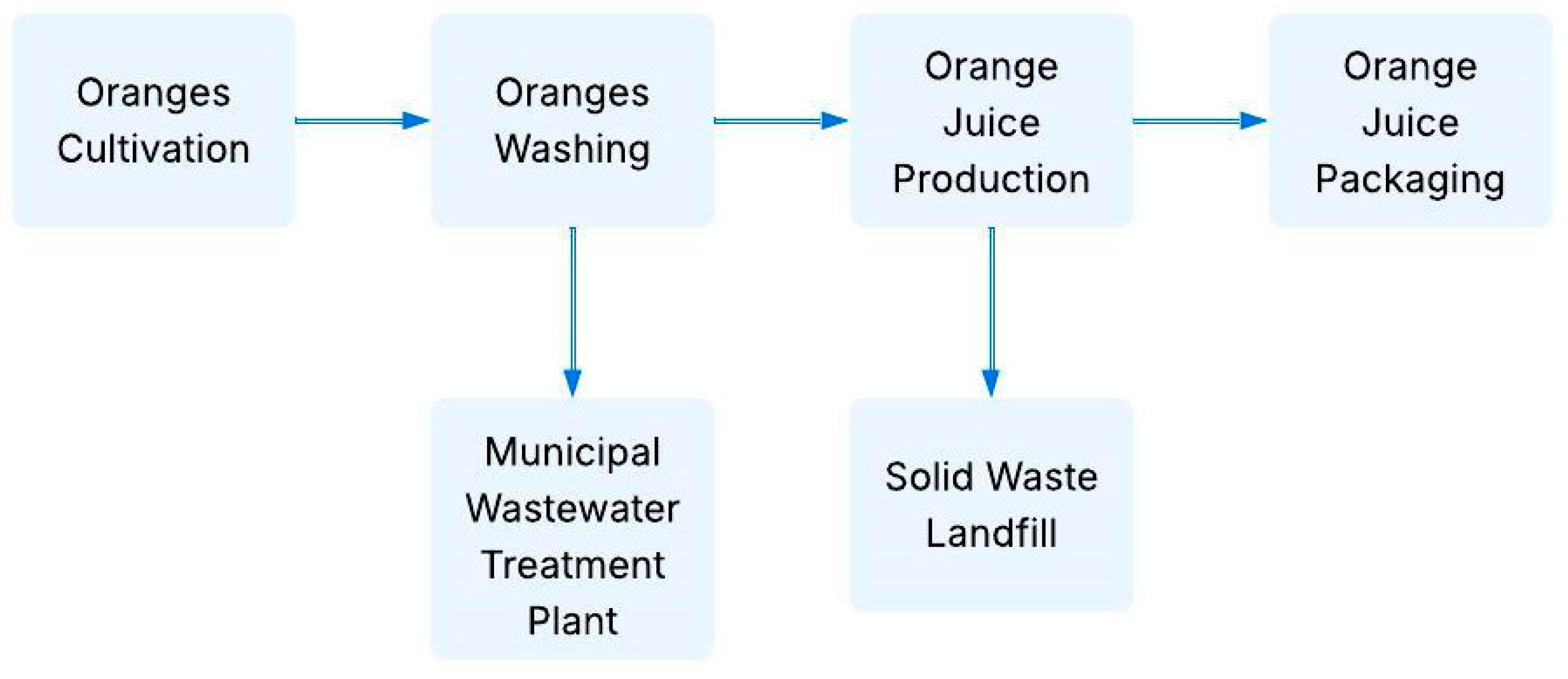
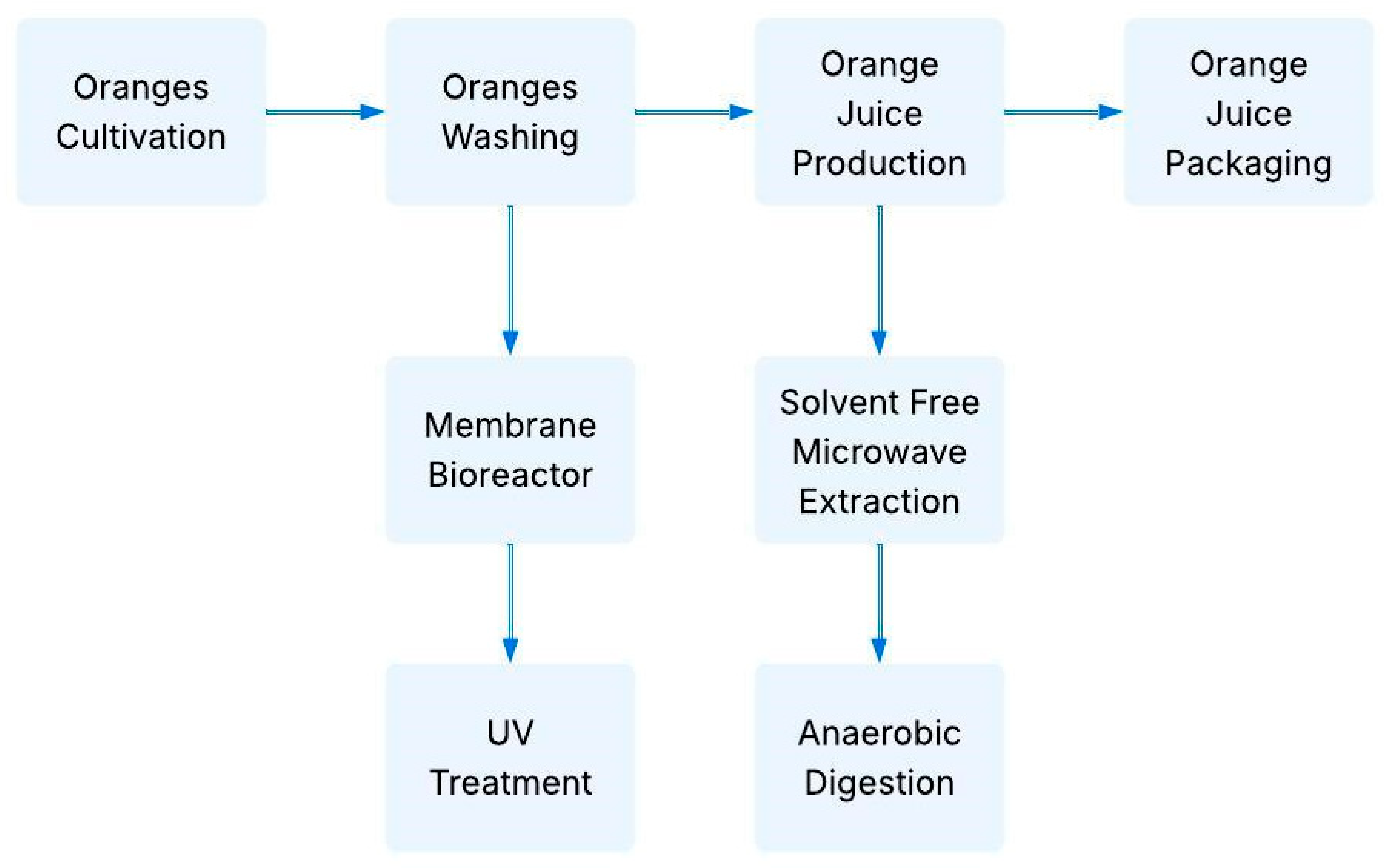
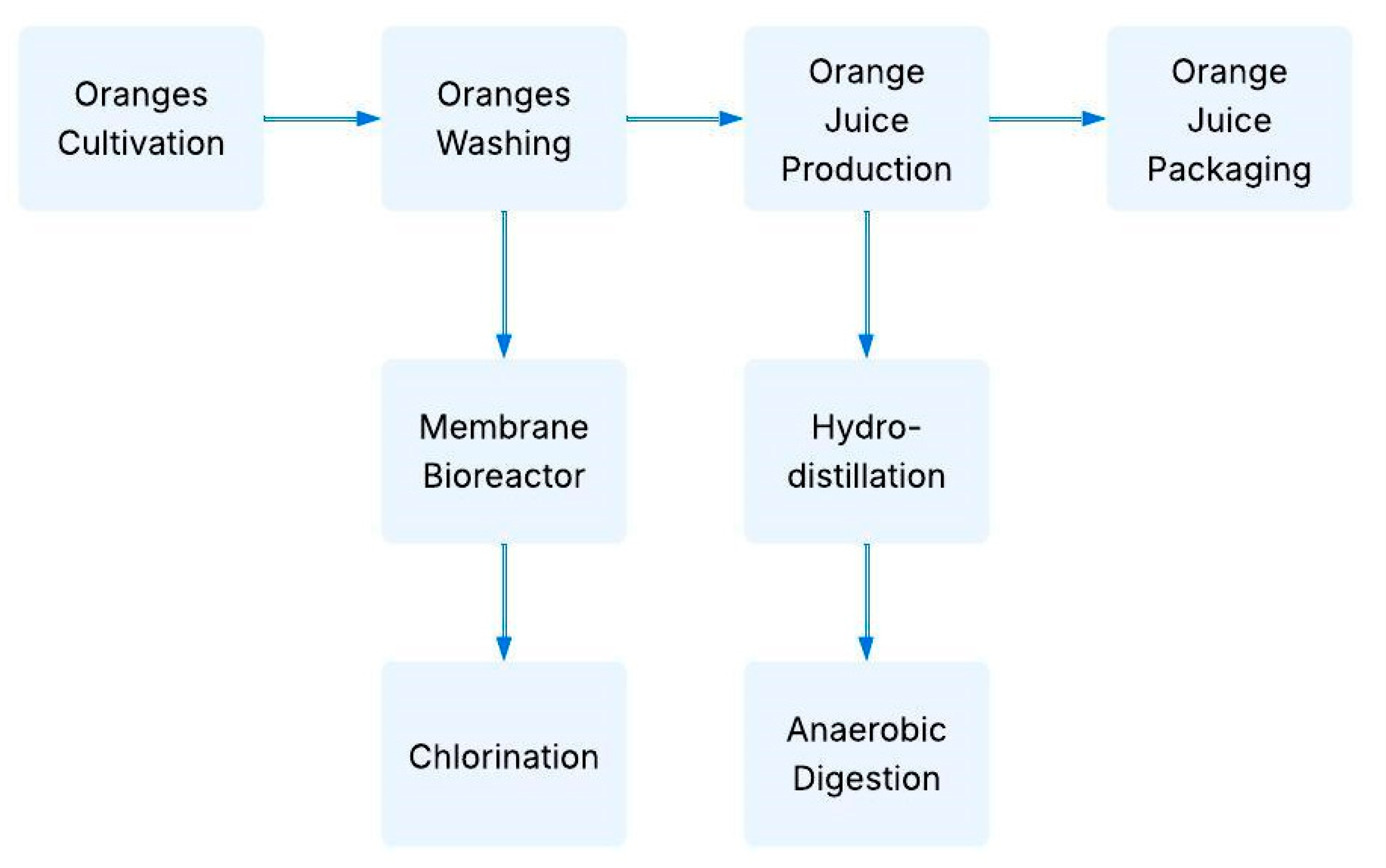
2.3. System Boundaries
2.4. Data Requirements
2.5. Life Cycle Inventory (LCI)
3. Results
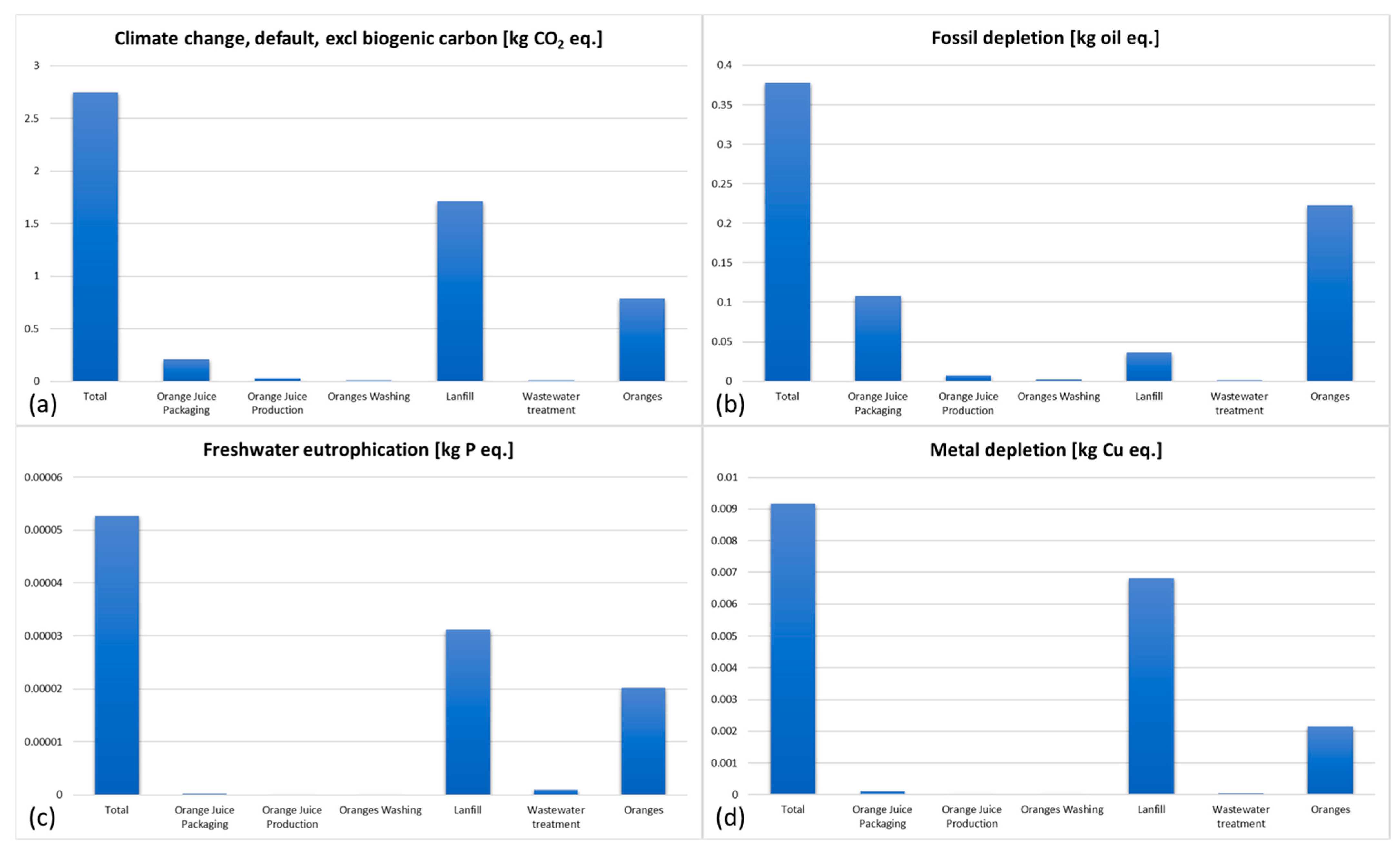
3.1. Baseline Scenario
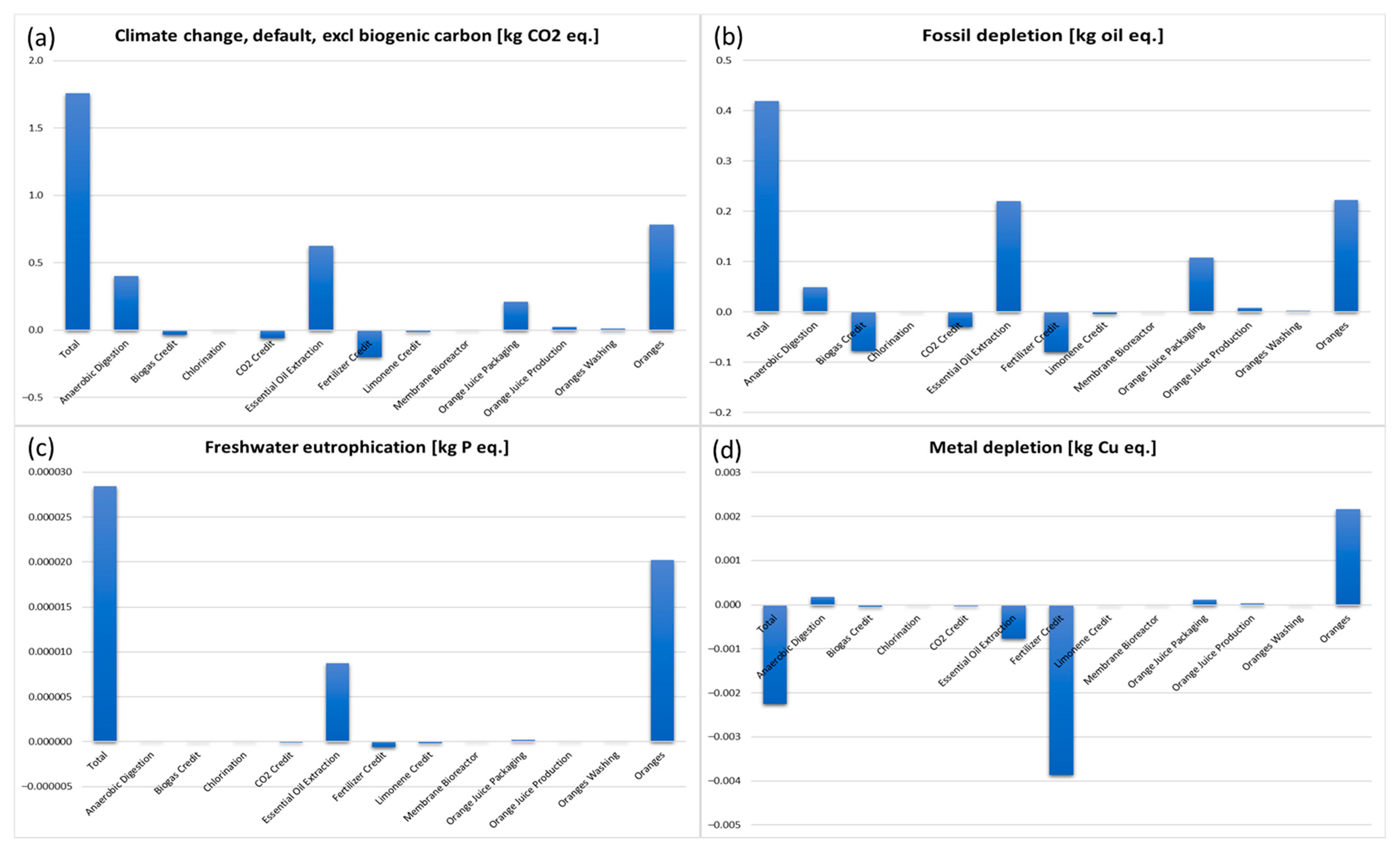
3.2. Scenario 1
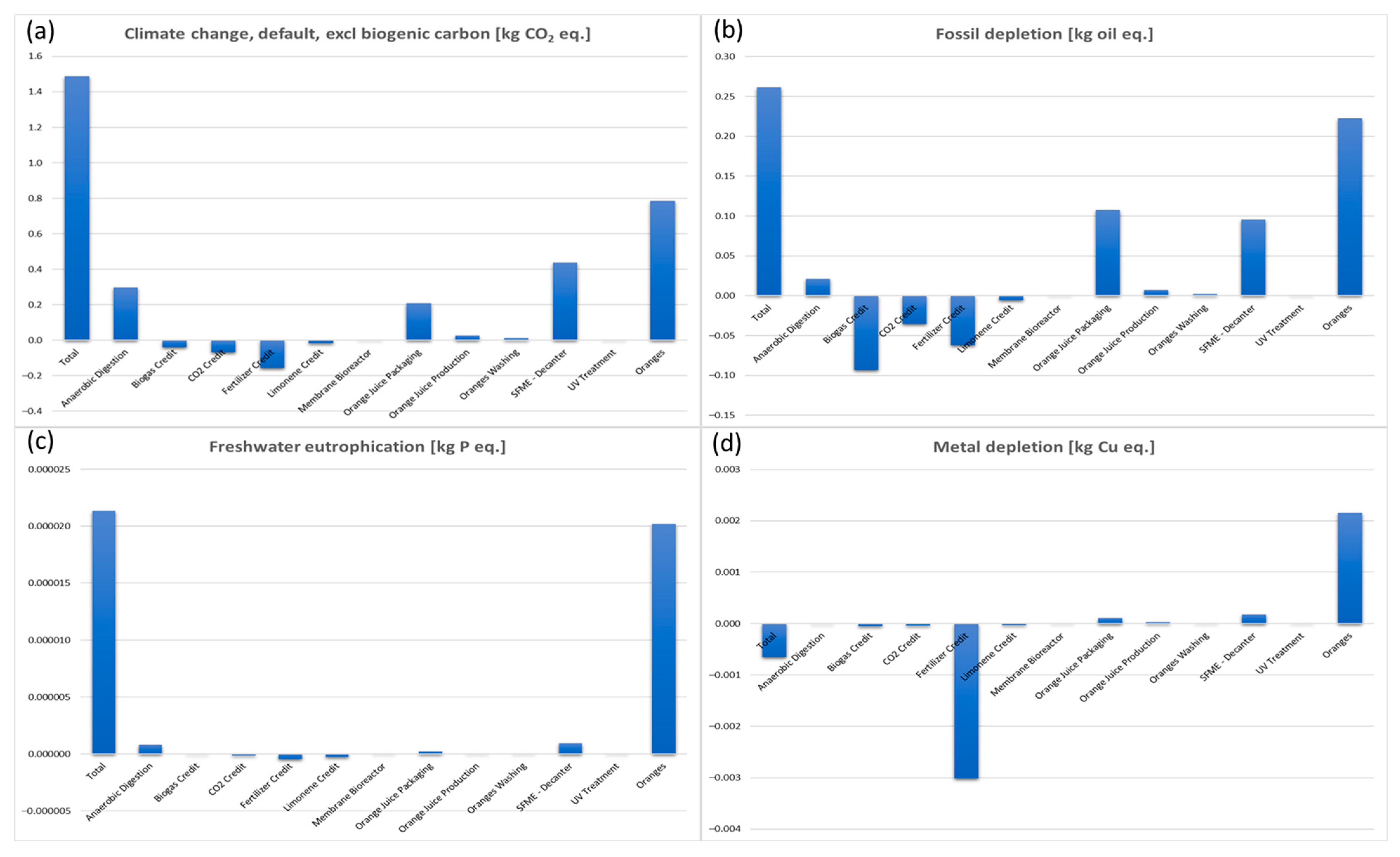
3.3. Scenario 2
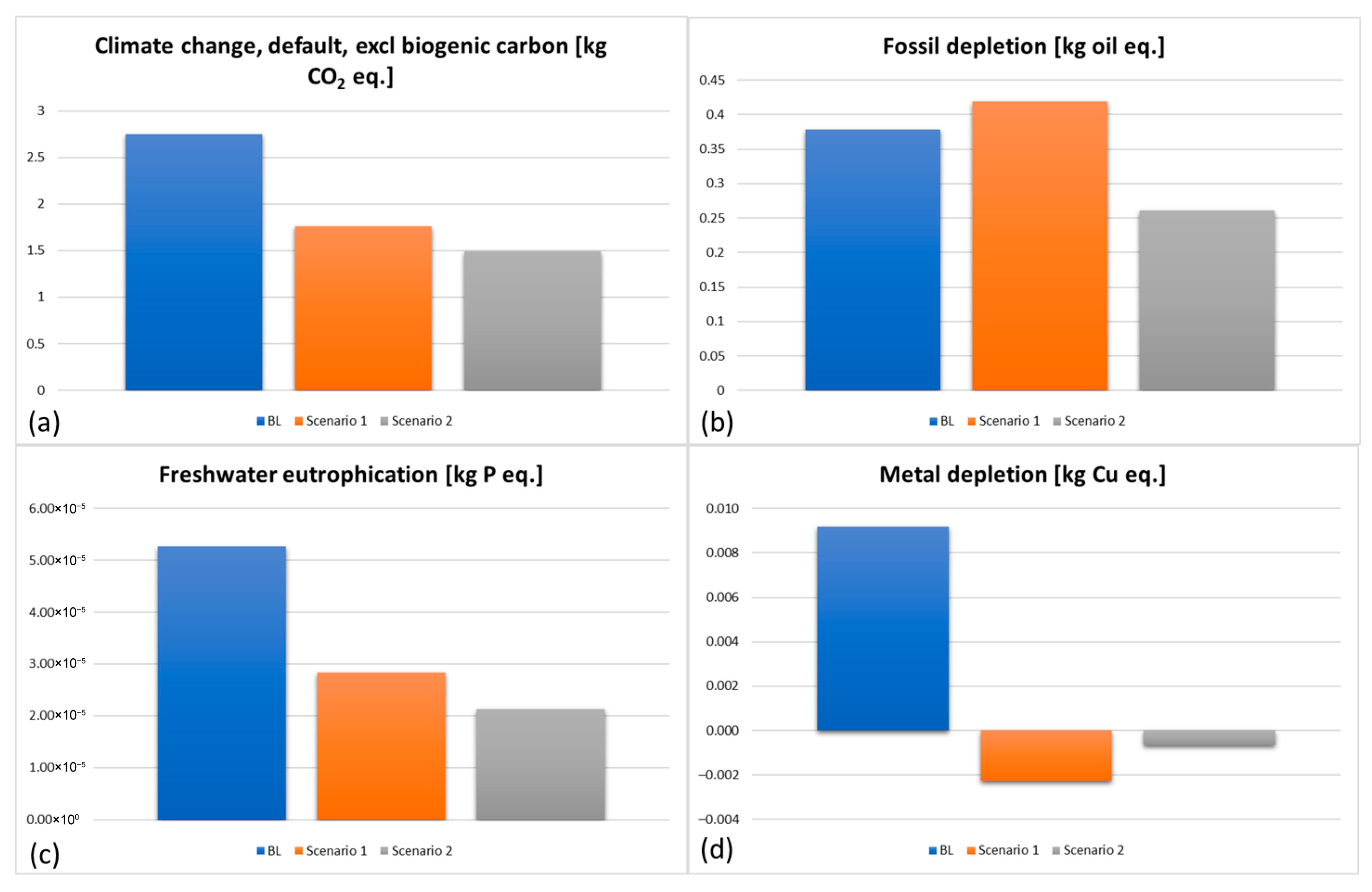
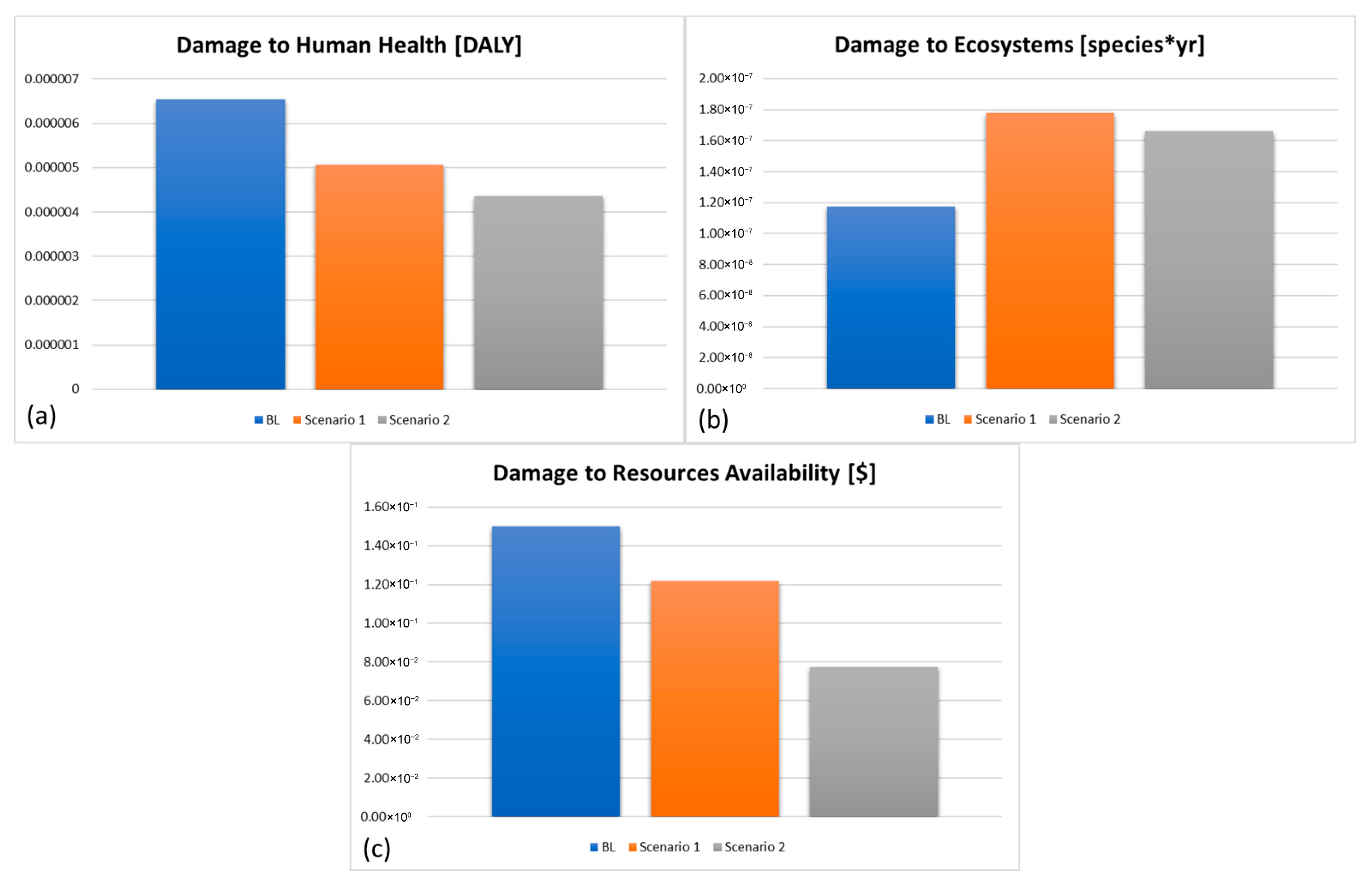
3.4. Comparison
4. Discussion
5. Conclusions
Supplementary Materials
Author Contributions
Funding
Institutional Review Board Statement
Informed Consent Statement
Data Availability Statement
Conflicts of Interest
Abbreviations
| LCA | Life Cycle Assessment |
| SFME | Solvent Free Microwave Extraction |
References
- Zhong, G.; Nicolosi, E. Citrus Origin, Diffusion, and Economic Importance. In The Citrus Genome; Alessandra, G., La Malfa, S., Deng, Z., Eds.; Springer International Publishing: Cham, Switzerland, 2020; pp. 5–21. ISBN 978-3-030-15308-3. [Google Scholar]
- Ortiz, D.L.; Batuecas, E.; Orrego, C.E.; Rodríguez, L.J.; Camelin, E.; Fino, D. Sustainable Management of Peel Waste in the Small-Scale Orange Juice Industries: A Colombian Case Study. J. Clean. Prod. 2020, 265, 121587. [Google Scholar] [CrossRef]
- Manakas, P.; Balafoutis, A.T.; Kottaridi, C.; Vlysidis, A. Sustainability Assessment of Orange Peel Waste Valorization Pathways from Juice Industries. Biomass Convers. Biorefinery 2025, 15, 6525–6544. [Google Scholar] [CrossRef]
- de la Torre, I.; Martin-Dominguez, V.; Acedos, M.G.; Esteban, J.; Santos, V.E.; Ladero, M. Utilisation/Upgrading of Orange Peel Waste from a Biological Biorefinery Perspective. Appl. Microbiol. Biotechnol. 2019, 103, 5975–5991. [Google Scholar] [CrossRef]
- Bocker, R.; Silva, E.K. Sustainable Pectin-Based Film for Carrying Phenolic Compounds and Essential Oil from Citrus sinensis Peel Waste. Food Biosci. 2024, 61, 104526. [Google Scholar] [CrossRef]
- Senit, J.J.; Velasco, D.; Gomez Manrique, A.; Sanchez-Barba, M.; Toledo, J.M.; Santos, V.E.; Garcia-Ochoa, F.; Yustos, P.; Ladero, M. Orange Peel Waste Upstream Integrated Processing to Terpenes, Phenolics, Pectin and Monosaccharides: Optimization Approaches. Ind. Crops Prod. 2019, 134, 370–381. [Google Scholar] [CrossRef]
- Zerva, I.; Remmas, N.; Melidis, P.; Tsiamis, G.; Ntougias, S. Microbial Succession and Identification of Effective Indigenous Pectinolytic Yeasts From Orange Juice Processing Wastewater. Waste Biomass Valorization 2021, 12, 4885–4899. [Google Scholar] [CrossRef]
- Viuda-Martos, M.; Fernandez-Lopez, J.; Sayas-Barbera, E.; Sendra, E.; Perez-Alvarez, J.A. Physicochemical Characterization of the Orange Juice Waste Water of a Citrus By-Product. J. Food Process Preserv. 2011, 35, 264–271. [Google Scholar] [CrossRef]
- Christofi, A.; Tsipiras, D.; Malamis, D.; Moustakas, K.; Mai, S.; Barampouti, E.M. Biofuels Production from Orange Juice Industrial Waste within a Circular Economy Vision. J. Water Process Eng. 2022, 49, 103028. [Google Scholar] [CrossRef]
- Li, Z.; Dong, H.; Wang, Y.; Men, J.; Wang, J.; Zhao, X.; Zou, S. Valorization of Alkali–Thermal Activated Red Mud for High-Performance Geopolymer: Performance Evaluation and Environmental Effects. Buildings 2025, 15, 2471. [Google Scholar] [CrossRef]
- Li, Z.; Dong, H.; Zhao, X.; Wang, K.; Gao, X. Utilisation of Bayer Red Mud for High-Performance Geopolymer: Competitive Roles of Different Activators. Case Stud. Constr. Mater. 2025, 23, e05047. [Google Scholar] [CrossRef]
- Gavahian, M.; Chu, Y.-H.; Mousavi Khaneghah, A. Recent Advances in Orange Oil Extraction: An Opportunity for the Valorisation of Orange Peel Waste a Review. Int. J. Food Sci. Technol. 2019, 54, 925–932. [Google Scholar] [CrossRef]
- Bustamante, J.; van Stempvoort, S.; García-Gallarreta, M.; Houghton, J.A.; Briers, H.K.; Budarin, V.L.; Matharu, A.S.; Clark, J.H. Microwave Assisted Hydro-Distillation of Essential Oils from Wet Citrus Peel Waste. J. Clean. Prod. 2016, 137, 598–605. [Google Scholar] [CrossRef]
- Paini, J.; Midolo, G.; Valenti, F.; Ottolina, G. One-Pot Combined Hydrodistillation of Industrial Orange Peel Waste for Essential Oils and Pectin Recovery: A Multi-Objective Optimization Study. Sustainability 2025, 17, 293. [Google Scholar] [CrossRef]
- Heydari, M.; Rostami, O.; Mohammadi, R.; Banavi, P.; Farhoodi, M.; Sarlak, Z.; Rouhi, M. Hydrodistillation Ultrasound-Assisted Green Extraction of Essential Oil from Bitter Orange Peel Wastes: Optimization for Quantitative, Phenolic, and Antioxidant Properties. J. Food Process Preserv. 2021, 45, e15585. [Google Scholar] [CrossRef]
- Araujo, A.R.T.S.; Périno, S.; Fernandez, X.; Cunha, C.; Rodrigues, M.; Ribeiro, M.P.; Jordao, L.; Silva, L.A.; Rodilla, J.; Coutinho, P.; et al. Solvent-Free Microwave Extraction of Thymus mastichina Essential Oil: Influence on Their Chemical Composition and on the Antioxidant and Antimicrobial Activities. Pharmaceuticals 2021, 14, 709. [Google Scholar] [CrossRef] [PubMed]
- Benassi, L.; Alessandri, I.; Vassalini, I. Assessing Green Methods for Pectin Extraction from Waste Orange Peels. Molecules 2021, 26, 1766. [Google Scholar] [CrossRef] [PubMed]
- Jebreen, A.M.Y.; Sahni, O. Areesha Citrus Peel Waste Management of Oranges. In Valorization of Citrus Food Waste; Chauhan, A., Islam, F., Imran, A., Singh Aswal, J., Eds.; Springer Nature: Cham, Switzerland, 2025; pp. 31–42. ISBN 978-3-031-77999-2. [Google Scholar]
- Anticona, M.; Blesa, J.; Frigola, A.; Esteve, M.J. High Biological Value Compounds Extraction from Citrus Waste with Non-Conventional Methods. Foods 2020, 9, 811. [Google Scholar] [CrossRef] [PubMed]
- Tiwari, B.K. Ultrasound: A Clean, Green Extraction Technology. TrAC Trends Anal. Chem. 2015, 71, 100–109. [Google Scholar] [CrossRef]
- Bayramoglu, B.; Sahin, S.; Sumnu, G. Solvent-Free Microwave Extraction of Essential Oil from Oregano. J. Food Eng. 2008, 88, 535–540. [Google Scholar] [CrossRef]
- Boukroufa, M.; Boutekedjiret, C.; Petigny, L.; Rakotomanomana, N.; Chemat, F. Bio-Refinery of Orange Peels Waste: A New Concept Based on Integrated Green and Solvent Free Extraction Processes Using Ultrasound and Microwave Techniques to Obtain Essential Oil, Polyphenols and Pectin. Ultrason. Sonochem. 2015, 24, 72–79. [Google Scholar] [CrossRef] [PubMed]
- Li, Y.; Fabiano-Tixier, A.S.; Vian, M.A.; Chemat, F. Solvent-Free Microwave Extraction of Bioactive Compounds Provides a Tool for Green Analytical Chemistry. TrAC Trends Anal. Chem. 2013, 47, 1–11. [Google Scholar] [CrossRef]
- Rana, G.M.M.; Uddin, M.J.; Islam, M.T.; Barmon, J.; Dey, S.S.; Chandra Ghos, B.; Al Bashera, M.; Karmaker, P.; Karmakar, A.; Rahman, T.; et al. Solvent-Free Microwave Extraction and Hydrodistillation Extraction of Essential Oils from Syzygium Cumini Leaves: Comparative Analysis of Chemical Constituents, in Vitro and in Silico Approaches. LWT 2025, 228, 118074. [Google Scholar] [CrossRef]
- Calabrò, P.S.; Paone, E.; Komilis, D. Strategies for the Sustainable Management of Orange Peel Waste through Anaerobic Digestion. J. Environ. Manag. 2018, 212, 462–468. [Google Scholar] [CrossRef]
- Rokaya, B.; Kerroum, D.; Hayat, Z.; Panico, A.; Ouafa, A.; Pirozzi, F. Biogas Production by an Anaerobic Digestion Process from Orange Peel Waste and Its Improvement by Limonene Leaching: Investigation of H2O2 Pre-Treatment Effect. Energy Sources Part A Recovery Util. Environ. Eff. 2024, 46, 2704–2712. [Google Scholar] [CrossRef]
- Al-Asheh, S.; Bagheri, M.; Aidan, A. Membrane Bioreactor for Wastewater Treatment: A Review. Case Stud. Chem. Environ. Eng. 2021, 4, 100109. [Google Scholar] [CrossRef]
- Kekes, T.; Tzia, C.; Kolliopoulos, G. Drinking and Natural Mineral Water: Treatment and Quality–Safety Assurance. Water 2023, 15, 2325. [Google Scholar] [CrossRef]
- Sun, Z.; Li, M.; Li, W.; Qiang, Z. A Review of the Fluence Determination Methods for UV Reactors: Ensuring the Reliability of UV Disinfection. Chemosphere 2022, 286, 131488. [Google Scholar] [CrossRef]
- Drosou, F.; Kekes, T.; Boukouvalas, C. Life Cycle Assessment of the Canned Fruits Industry: Sustainability through Waste Valorization and Implementation of Innovative Techniques. AgriEngineering 2023, 5, 395–412. [Google Scholar] [CrossRef]
- Askham, C. REACH and LCA—Methodological Approaches and Challenges. Int. J. Life Cycle Assess. 2012, 17, 43–57. [Google Scholar] [CrossRef]
- International Organization for Standardization [ISO]. ISO 14040:2006 Environmental Management—Life Cycle Assessment—Principles and Framework. 2006. Available online: https://www.iso.org/standard/37456.html (accessed on 15 September 2025).
- Cabot, M.I.; Lado, J.; Sanjuán, N. Peeling the Orange: Delving into Life Cycle Indicators for Water Footprint, Ecosystem Services, and Biodiversity for Orange Cultivation in Uruguay. Sustain. Prod. Consum. 2025, 54, 261–273. [Google Scholar] [CrossRef]
- Wang, Y.; Fang, M.; Lou, Z.; He, H.; Guo, Y.; Pi, X.; Wang, Y.; Yin, K.; Fei, X. Methane Emissions from Landfills Differentially Underestimated Worldwide. Nat. Sustain. 2024, 7, 496–507. [Google Scholar] [CrossRef]
- Martins, F.; Felgueiras, C.; Smitkova, M.; Caetano, N. Analysis of Fossil Fuel Energy Consumption and Environmental Impacts in European Countries. Energies 2019, 12, 964. [Google Scholar] [CrossRef]
- Essien, J.P.; Ikpe, D.I.; Inam, E.D.; Okon, A.O.; Ebong, G.A.; Benson, N.U. Occurrence and Spatial Distribution of Heavy Metals in Landfill Leachates and Impacted Freshwater Ecosystem: An Environmental and Human Health Threat. PLoS ONE 2022, 17, e0263279. [Google Scholar] [CrossRef]
- Zamparas, M. 1—The Role of Resource Recovery Technologies in Reducing the Demand of Fossil Fuels and Conventional Fossil-Based Mineral Fertilizers. In Low Carbon Energy Technologies in Sustainable Energy Systems; Kyriakopoulos, G.L., Ed.; Academic Press: Cambridge, MA, USA, 2021; pp. 3–24. ISBN 978-0-12-822897-5. [Google Scholar]
- Gavahian, M.; Farahnaky, A.; Javidnia, K.; Majzoobi, M. Comparison of Ohmic-Assisted Hydrodistillation with Traditional Hydrodistillation for the Extraction of Essential Oils from Thymus vulgaris L. Innov. Food Sci. Emerg. Technol. 2012, 14, 85–91. [Google Scholar] [CrossRef]
- Boukouvalas, C.; Kekes, T.; Oikonomopoulou, V.; Krokida, M. Life Cycle Assessment of Energy Production from Solid Waste Valorization and Wastewater Purification: A Case Study of Meat Processing Industry. Energies 2024, 17, 487. [Google Scholar] [CrossRef]
- Collivignarelli, M.C.; Abbà, A.; Miino, M.C.; Caccamo, F.M.; Torretta, V.; Rada, E.C.; Sorlini, S. Disinfection of Wastewater by UV-Based Treatment for Reuse in a Circular Economy Perspective. Where Are We At? Int. J. Environ. Res. Public Health 2021, 18, 77. [Google Scholar] [CrossRef]
- Valdivia, S.; Backes, J.G.; Traverso, M.; Sonnemann, G.; Cucurachi, S.; Guinée, J.B.; Schaubroeck, T.; Finkbeiner, M.; Leroy-Parmentier, N.; Ugaya, C.; et al. Principles for the Application of Life Cycle Sustainability Assessment. Int. J. Life Cycle Assess. 2021, 26, 1900–1905. [Google Scholar] [CrossRef]





| Component | Flow | In/Out | Value | Unit |
|---|---|---|---|---|
| Orange Juice Production (similar for all studied scenarios) | Electricity | In | 3105 | MJ |
| Oranges | In | 25,000 | kg | |
| Water | In | 57,570 | kg | |
| Nitric acid | In | 0.328 | kg | |
| Sodium hydroxide (50%) | In | 9.72 | kg | |
| Natural gas | In | 1935 | MJ | |
| Cardboard | In | 21 | kg | |
| Polyethylene | In | 436 | kg | |
| Packaged orange juice | Out | 8.75 | m3 | |
| Wastewater | Out | 5190 | kg | |
| Solid wastes | Out | 16,250 | kg | |
| Baseline Scenario | Wastewater to municipal WWTP | In | 5190 | kg |
| Solid wastes on landfill | In | 16,250 | kg | |
| Scenario 1 | Solid wastes | In | 5190 | kg |
| Wastewater | In | 16,250 | kg | |
| Electricity | In | 10,262 | MJ | |
| Cooling water | In | 1.37 × 10⁶ | kg | |
| Steam | In | 1.51 × 10⁴ | kg | |
| Water | In | 3.18 × 10⁴ | kg | |
| Nitrogen | In | 642 | kg | |
| Lime | In | 13 | kg | |
| Sodium hypochlorite | In | 0.39 | kg | |
| Essential oils | Out | 86.5 | kg | |
| Biogas | Out | 558 | kg | |
| Carbon dioxide | Out | 1.42 × 10³ | kg | |
| Fertilizer | Out | 4.60 × 10⁴ | kg | |
| Methane emission to air | Out | 45.7 | kg | |
| Water | Out | 5190 | kg | |
| Scenario 2 | Solid wastes | In | 5190 | kg |
| Wastewater | In | 16,250 | kg | |
| Electricity | In | 14,892 | MJ | |
| Cooling water | In | 1.41 × 10⁵ | kg | |
| Steam | In | 24.4 | kg | |
| Water | In | 2.18 × 10⁴ | kg | |
| Nitrogen | In | 758 | kg | |
| Lime | In | 13 | kg | |
| Sodium hypochlorite | In | 0.39 | kg | |
| Essential oils | Out | 122 | kg | |
| Biogas | Out | 670 | kg | |
| Carbon dioxide | Out | 1.67 × 10³ | kg | |
| Fertilizer | Out | 3.58 × 100.4 | kg | |
| Methane emission to air | Out | 54.8 | kg | |
| Water | Out | 5190 | kg |
Disclaimer/Publisher’s Note: The statements, opinions and data contained in all publications are solely those of the individual author(s) and contributor(s) and not of MDPI and/or the editor(s). MDPI and/or the editor(s) disclaim responsibility for any injury to people or property resulting from any ideas, methods, instructions or products referred to in the content. |
© 2025 by the authors. Licensee MDPI, Basel, Switzerland. This article is an open access article distributed under the terms and conditions of the Creative Commons Attribution (CC BY) license (https://creativecommons.org/licenses/by/4.0/).
Share and Cite
Drosou, F.; Kekes, T.; Kardamanidis, A.; Krokida, M. Sustainable Valorization of Juice Industry Wastes: A Life Cycle Assessment Case Study. Waste 2025, 3, 42. https://doi.org/10.3390/waste3040042
Drosou F, Kekes T, Kardamanidis A, Krokida M. Sustainable Valorization of Juice Industry Wastes: A Life Cycle Assessment Case Study. Waste. 2025; 3(4):42. https://doi.org/10.3390/waste3040042
Chicago/Turabian StyleDrosou, Fotini, Tryfon Kekes, Athanasios Kardamanidis, and Magdalini Krokida. 2025. "Sustainable Valorization of Juice Industry Wastes: A Life Cycle Assessment Case Study" Waste 3, no. 4: 42. https://doi.org/10.3390/waste3040042
APA StyleDrosou, F., Kekes, T., Kardamanidis, A., & Krokida, M. (2025). Sustainable Valorization of Juice Industry Wastes: A Life Cycle Assessment Case Study. Waste, 3(4), 42. https://doi.org/10.3390/waste3040042