
Data-Driven Approach for Asthma Classification: Ensemble Learning with Random Forest and XGBoost †
Abstract
1. Introduction
2. Background
3. Methodology
3.1. Dataset Description
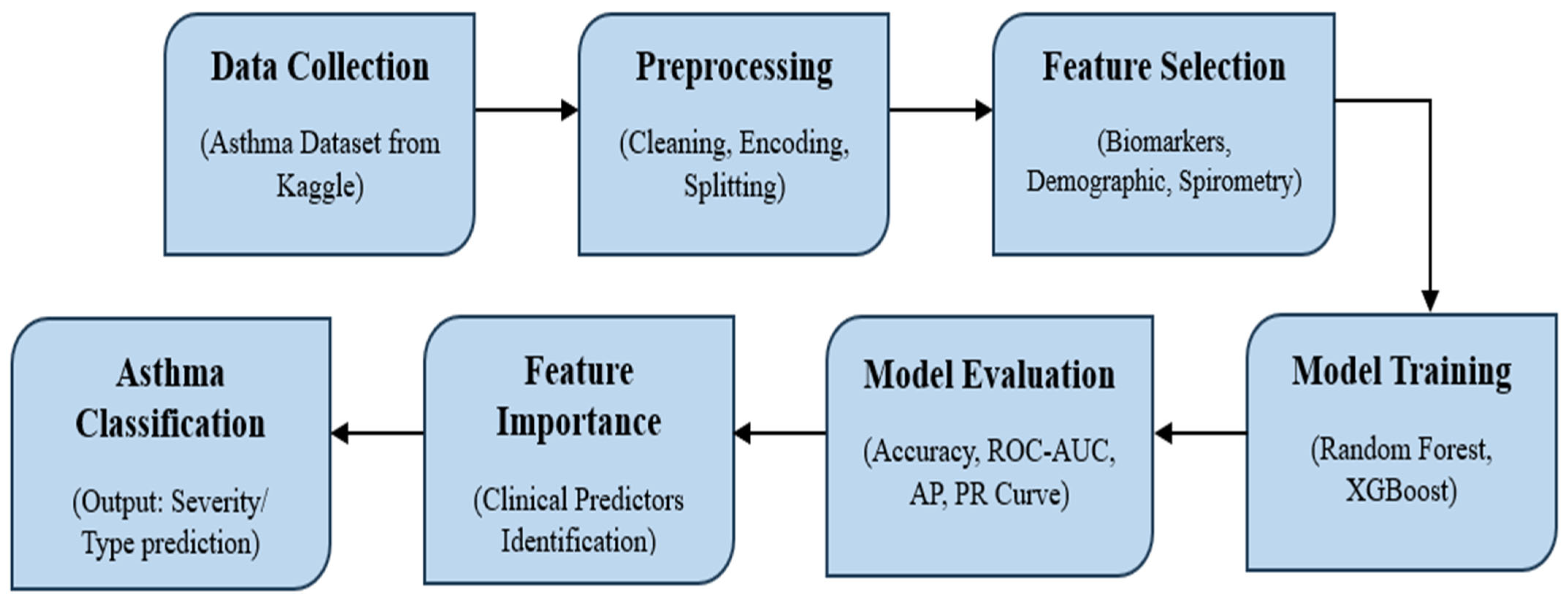
3.2. DDA-Based Framework
3.2.1. Data Collection
3.2.2. Preprocessing
3.2.3. Feature Selection
3.2.4. Model Training
3.2.5. Model Evaluation
3.2.6. Feature Importance
3.2.7. Asthma Classification
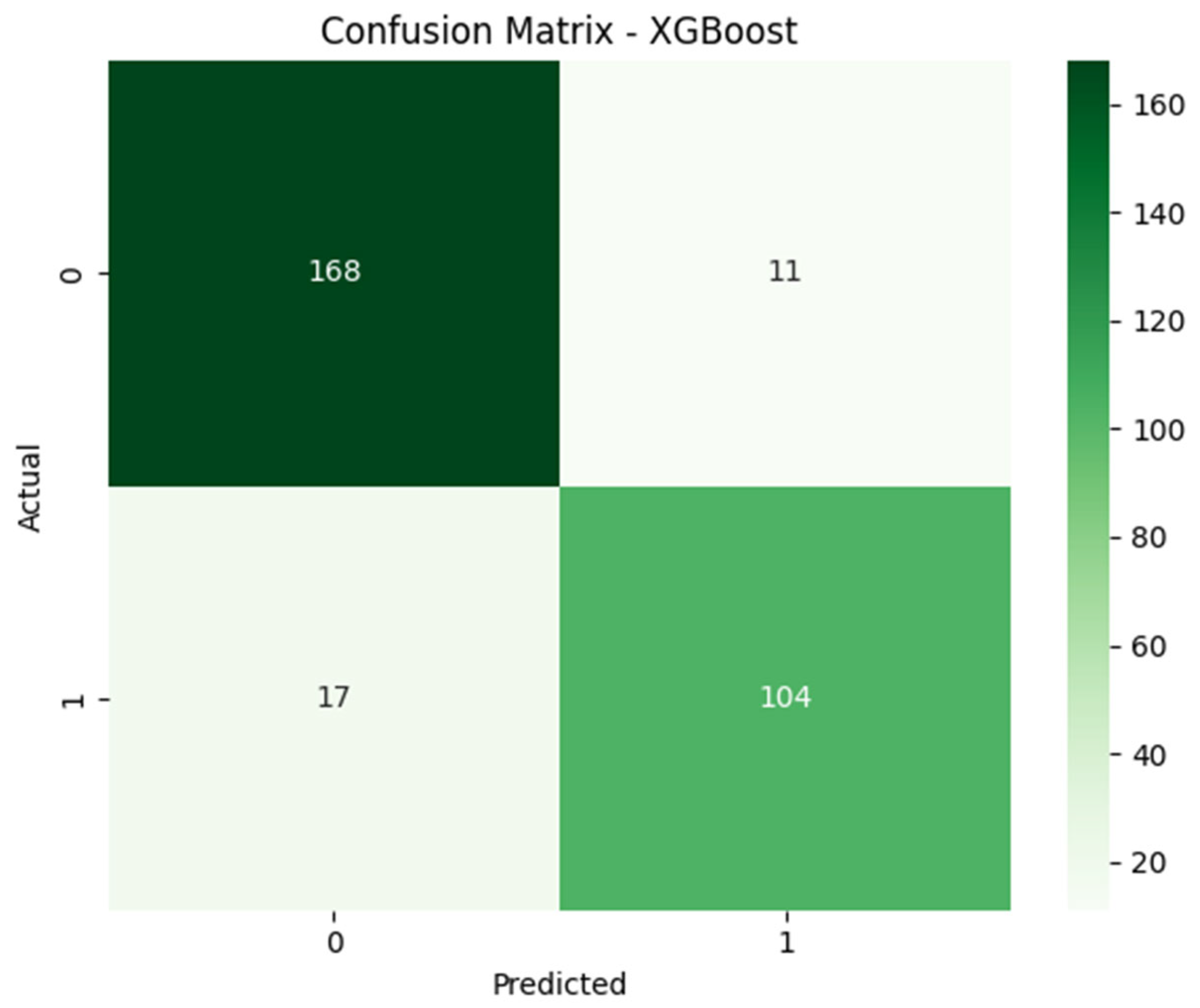
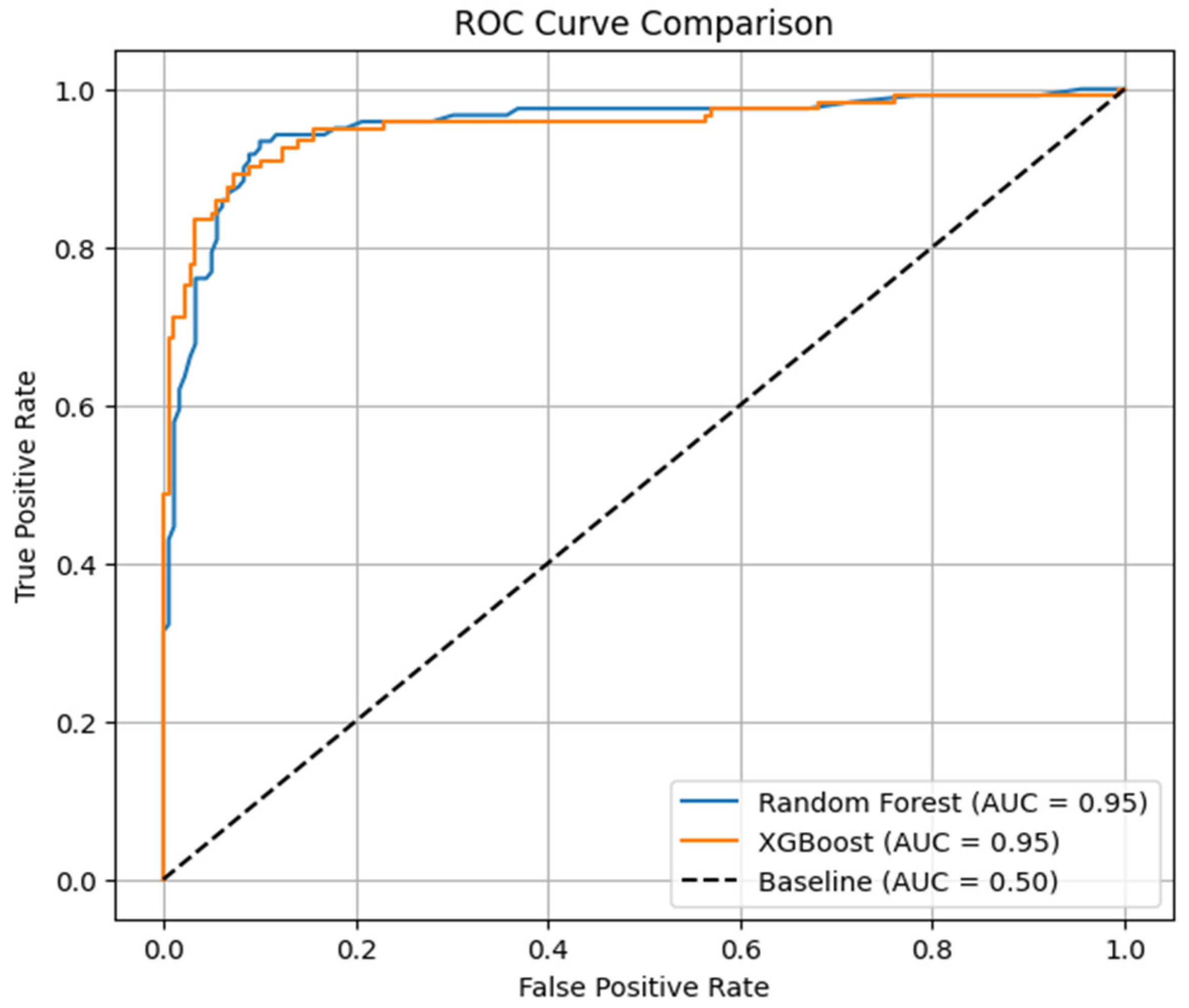
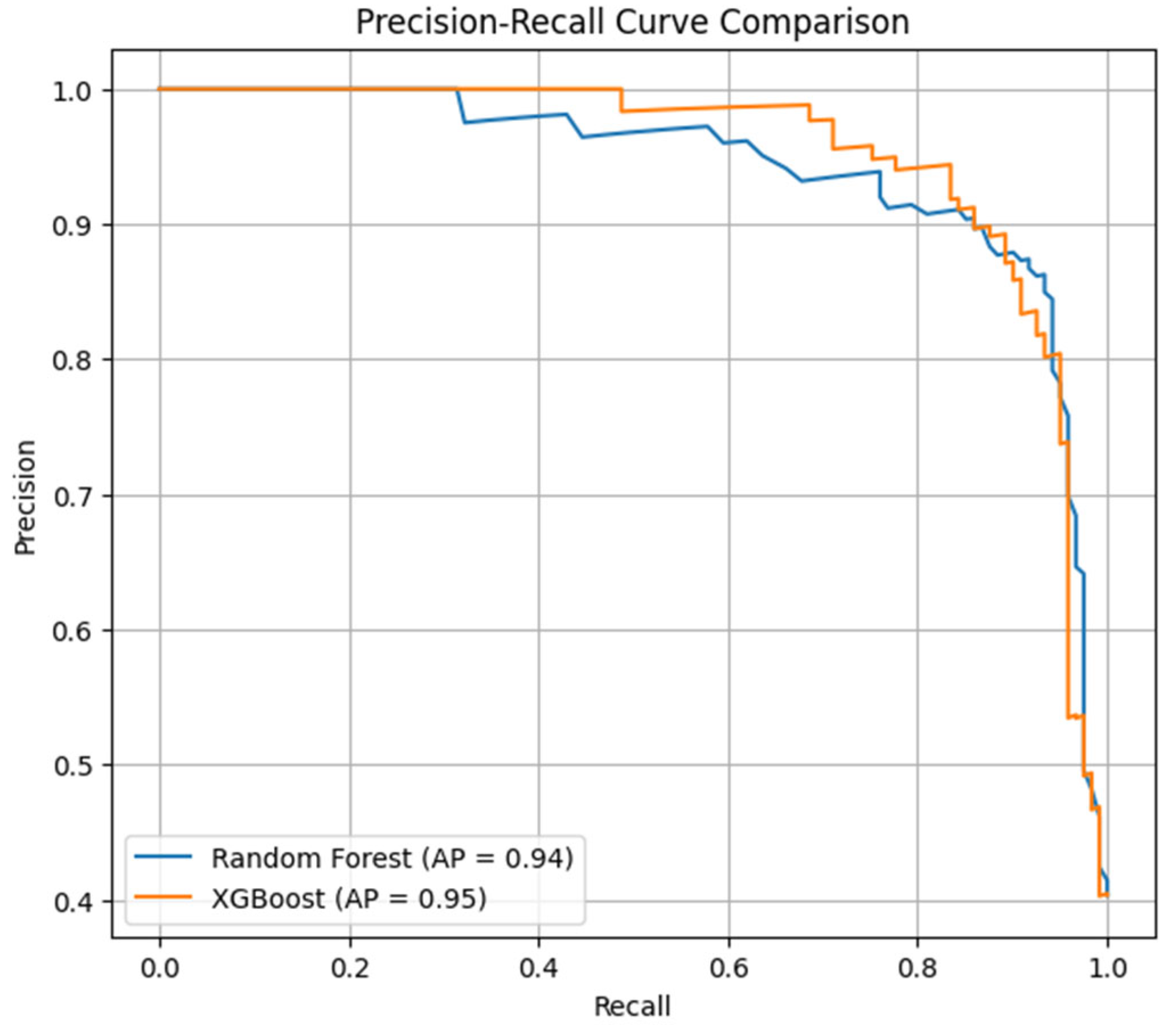
4. Experimental Results
5. Conclusions
6. Future Scope
Author Contributions
Funding
Institutional Review Board Statement
Informed Consent Statement
Data Availability Statement
Acknowledgments
Conflicts of Interest
References
- Budiarto, A.; Tsang, K.C.H.; Wilson, A.M.; Sheikh, A.; Shah, S.A. Machine learning–based asthma attack prediction models from routinely collected electronic health records: Systematic scoping review. JMIR AI 2023, 2, e46717. [Google Scholar] [CrossRef] [Scilit] [PubMed]
- Romero Tapia, S.J.; Becerril Negrete, J.R.; Castro Rodriguez, J.A.; Del Río Navarro, B.E. Early prediction of asthma. J. Clin. Med. 2023, 12, 5404. [Google Scholar] [CrossRef] [Scilit] [PubMed]
- Al Meslamani, A.Z. How AI is advancing asthma management? Insights into economic and clinical aspects. J. Med. Econ. 2023, 26, 1489–1494. [Google Scholar] [CrossRef] [Scilit] [PubMed]
- Tsang, K.C.H.; Pinnock, H.; Wilson, A.M.; Shah, S.A. Application of machine learning algorithms for asthma management with mHealth: A clinical review. J. Asthma Allergy 2022, 15, 855–873. [Google Scholar] [CrossRef] [Scilit] [PubMed]
- Tong, Y.; Lin, B.; Chen, G.; Zhang, Z. Predicting continuity of asthma care using a machine learning model: Retrospective cohort study. Int. J. Environ. Res. Public Health 2022, 19, 1237. [Google Scholar] [CrossRef] [Scilit] [PubMed]
- Alkobaisi, S.; Safdar, M.F.; Pałka, P.; Abu Ali, N.A. Artificial intelligence algorithms in asthma management: A review of data engineering, predictive models, and future implications. Appl. Sci. 2025, 15, 3609. [Google Scholar] [CrossRef] [Scilit]
- Molfino, N.A.; Turcatel, G.; Riskin, D. Machine learning approaches to predict asthma exacerbations: A narrative review. Adv. Ther. 2024, 41, 534–552. [Google Scholar] [CrossRef] [Scilit] [PubMed]
- Lee, Z.-J.; Yang, M.-R.; Hwang, B.-J. A sustainable approach to asthma diagnosis: Classification with data augmentation, feature selection, and boosting algorithm. Diagnostics 2024, 14, 723. [Google Scholar] [CrossRef] [Scilit] [PubMed]
- Adamu Aliyu, D.; Akhir, E.A.P.; Saidu, Y.; Adamu, S.; Umar, K.I.; Bunu, A.S.; Mamman, H. Optimization techniques for asthma exacerbation prediction models: A systematic literature review. IEEE Access 2024, 12, 110862–110890. [Google Scholar] [CrossRef] [Scilit]
- Almuhanna, H.; Alenezi, M.; Abualhasan, M.; Alajmi, S.; Alfadhli, R.; Karar, A.S. AI asthma guard: Predictive wearable technology for asthma management in vulnerable populations. Appl. Syst. Innov. 2024, 7, 78. [Google Scholar] [CrossRef] [Scilit]
- Pawan, P.; Singh, R.; Kumar, M.; Goyal, D.; Neeraj, N.; Yadav, D. An effective and comparative analysis of asthma prediction using machine learning algorithms. Int. J. Intell. Syst. Appl. Eng. 2024, 12, 851–856. [Google Scholar]
- Gunawardana, J.; Viswakula, S.D.; Rannan-Eliya, R.P.; Wijemunige, N. Machine learning approaches for asthma disease prediction among adults in Sri Lanka. Health Inform. J. 2024, 30, 14604582241283968. [Google Scholar] [CrossRef] [Scilit] [PubMed]
- Tomita, K.; Yamasaki, A.; Katou, R.; Ikeuchi, T.; Touge, H.; Sano, H.; Tohda, Y. Construction of a diagnostic algorithm for diagnosis of adult asthma using machine learning with random forest and XGBoost. Diagnostics 2023, 13, 3069. [Google Scholar] [CrossRef] [Scilit] [PubMed]
- Aulia, D.; Sarno, R.; Hidayati, S.C.; Rivai, M. Optimization of the electronic nose sensor array for asthma detection based on genetic algorithm. IEEE Access 2023, 11, 74924–74935. [Google Scholar] [CrossRef] [Scilit]
- Xiong, S.; Chen, W.; Jia, X.; Jia, Y.; Liu, C. Machine learning for prediction of asthma exacerbations among asthmatic patients: A systematic review and meta-analysis. BMC Pulm. Med. 2023, 23, 278. [Google Scholar] [CrossRef] [Scilit] [PubMed]
- Awal, M.A.; Hossain, M.S.; Debjit, K.; Ahmed, N.; Nath, R.D.; Habib, G.M.; Khan, M.S.; Islam, M.A.; Mahmud, M.P. An early detection of asthma using BOMLA detector. IEEE Access 2021, 9, 58403–58420. [Google Scholar] [CrossRef] [Scilit]
- Kuo, H.-C.; Lin, B.-S.; Wang, Y.-D.; Lin, B.-S. Development of automatic wheeze detection algorithm for children with asthma. IEEE Access 2021, 9, 126882–126890. [Google Scholar] [CrossRef] [Scilit]
- Singh, O.P.; Palaniappan, R.; Malarvili, M. Automatic quantitative analysis of human respired carbon dioxide waveform for asthma and non-asthma classification using support vector machine. IEEE Access 2018, 6, 55245–55256. [Google Scholar] [CrossRef] [Scilit]
- Kaggle. Asthma Disease Dataset. Available online: https://www.kaggle.com/datasets/rabieelkharoua/asthma-disease-dataset (accessed on 1 October 2025).
- Kim, D.; Cho, S.; Tamil, L.; Song, D.J.; Seo, S. Predicting asthma attacks: Effects of indoor PM concentrations on peak expiratory flow rates of asthmatic children. IEEE Access 2020, 8, 8791–8797. [Google Scholar] [CrossRef] [Scilit]




| Study | Method Used | Task Performed | Parameter/Feature Used | Dataset | Accuracy/Findings | Limitations |
|---|---|---|---|---|---|---|
| [10] | CNN + Decision Fusion from multi-sensor input | Real-time asthma attack prediction | Heart rate, respiration rate, temperature, activity level, air quality | Wearable IoT sensor dataset | 92% precision, 89% recall | Continuous data streaming required, edge integration challenges |
| [11] | RF, SVM, Naïve Bayes, Logistic Regression | Comparative asthma prediction | Age, gender, medical history, lung test results, environmental data | Clinical dataset (~2000 patients) | RF: 93.5%; SVM: 91.2% accuracy | Data imbalance, limited biomarker usage |
| [12] | Random Forest, Decision Tree | Adult asthma prediction | Patient symptoms, medication adherence, spirometry (PEFR) | Hospital dataset (Sri Lanka, n = 800) | 90.2% accuracy, RF best | Demographic bias, no external dataset validation |
| [13] | Random Forest, XGBoost | Asthma diagnosis and severity classification | FEV1, FVC, PEFR, IgE, eosinophil count, symptom frequency | Multicenter clinical dataset (Japan) | XGBoost AUC = 0.94, RF AUC = 0.91 | Focused only on adults; lacks real-time adaptability |
| [14] | Genetic Algorithm + SVM | Asthma detection through breath biomarkers | Gas sensor signals (VOC patterns from exhaled breath) | Electronic nose (E-nose) breath dataset | 96% classification accuracy | Requires sensor calibration, small data sample |
| [15] | Logistic Regression, RF, XGBoost | Prediction of asthma exacerbation risk | Clinical variables, spirometry, comorbidities, demographics | 18 studies (12,000+ patients) | Average AUC = 0.91 | Model bias, inconsistent feature reporting |
| [16] | Hybrid ML classifier (BOMLA) | Early asthma detection | Lung airflow signals, respiratory pressure, and volume data | Biomedical signal dataset | 92.7% accuracy | Complex model design, no clinical integration |
| [17] | Convolutional Neural Network (CNN) | Wheeze detection and classification | Acoustic features (frequency, amplitude, MFCC) | Pediatric audio recordings | 94% accuracy | Dataset limited to children; low data diversity |
| [18] | Support Vector Machine (SVM) | Binary asthma classification | CO2 waveform pattern, peak amplitude, waveform area | Respiratory CO2 waveform dataset | 90.5% accuracy | Small dataset; lacked demographic variation |
| Feature | Type | Description |
|---|---|---|
| Age | Numeric | Age of the patient in years, capturing age-related risk distribution. |
| Gender | Categorical | Patient sex (male/female). Encoded as 1/0 during preprocessing. |
| FEV1 | Numeric | Forced Expiratory Volume in 1 s (liters). Measures the volume of air exhaled in the first second of a forced breath; central to lung function assessment. |
| FVC | Numeric | Forced Vital Capacity (liters). Denotes the maximum amount of air forcibly exhaled after full inhalation. |
| FEV1/FVC | Numeric | Ratio between FEV1 and FVC, a critical indicator of airflow obstruction. The lower the ratios, the stronger the association with asthma. |
| PEFR | Numeric | Peak Expiratory Flow Rate (liters/min) is basically used to denote maximum speed of expiration. It is mainly addressed to monitor asthma control. |
| IgE | Numeric | Immunoglobulin E levels (IU/mL), with high values indicating allergic reactions, which are interrelated with atopic asthma. |
| Diagnosis | Binary | Target variable: 1 = Asthmatic, 0 = Non-asthmatic. |
Disclaimer/Publisher’s Note: The statements, opinions and data contained in all publications are solely those of the individual author(s) and contributor(s) and not of MDPI and/or the editor(s). MDPI and/or the editor(s) disclaim responsibility for any injury to people or property resulting from any ideas, methods, instructions or products referred to in the content. |
© 2025 by the authors. Licensee MDPI, Basel, Switzerland. This article is an open access article distributed under the terms and conditions of the Creative Commons Attribution (CC BY) license (https://creativecommons.org/licenses/by/4.0/).
Share and Cite
Pansare, B.S.; Kulkarni, A.D.; Pawar, P.P. Data-Driven Approach for Asthma Classification: Ensemble Learning with Random Forest and XGBoost. Comput. Sci. Math. Forum 2025, 12, 3. https://doi.org/10.3390/cmsf2025012003
Pansare BS, Kulkarni AD, Pawar PP. Data-Driven Approach for Asthma Classification: Ensemble Learning with Random Forest and XGBoost. Computer Sciences & Mathematics Forum. 2025; 12(1):3. https://doi.org/10.3390/cmsf2025012003
Chicago/Turabian StylePansare, Bhavana Santosh, Anagha Deepak Kulkarni, and Priyanka Prabhakar Pawar. 2025. "Data-Driven Approach for Asthma Classification: Ensemble Learning with Random Forest and XGBoost" Computer Sciences & Mathematics Forum 12, no. 1: 3. https://doi.org/10.3390/cmsf2025012003
APA StylePansare, B. S., Kulkarni, A. D., & Pawar, P. P. (2025). Data-Driven Approach for Asthma Classification: Ensemble Learning with Random Forest and XGBoost. Computer Sciences & Mathematics Forum, 12(1), 3. https://doi.org/10.3390/cmsf2025012003