1. Introduction
An important passive phenomenon for the inherent safety of nuclear power plant (NPP) is NC that eliminates the need for external power sources and human intervention [
1]. The systems utilizing this phenomenon are characterized by a small driving force as compared to the systems which are externally driven. NC-based systems are highly sensitive to pipe losses, bend losses, and geometry of the system [
2]. The physical phenomenon resulting in NC is quite complex. Several quantitative methods were developed based on different studies for simulating the thermal-hydraulic behavior in NC mode during SBOLCA and showed the importance of steam generator (SG) in removing the core decay heat [
3].
The most effective modes of heat transfer from the primary side to the secondary side of SG are single and two phase-NC, and reflux condensation in case of events like the loss of external power, decrease of pressure in the primary loop, stoppage of main pumps, and reduced coolant inventory [
4]. LOBI [
5], LSTF [
6], PACTEL [
4], PKL [
7], IIST [
8] and BETHSY [
9] observed and investigated experimentally the thermal-hydraulic behavior of U-tubes in SG and showed the occurrence of these three heat transfer modes and reverse flow in some U-tubes of SG. Reverse flow in U-tubes greatly decreased the heat transfer characteristics from the primary to the secondary side of SG and endangered the NPP's operation.
| Nomenclature |
| CMFR | Critical Mass Flow Rate | SG | Steam Generator |
| CFD | Computational Fluid Dynamics | M_SG1 | Marine Type Steam Generator 1 |
| NC | Natural Circulation | M_SG2 | Marine Type Steam Generator 2 |
| NPP | Nuclear Power Plant | C_SG | Commercial Steam Generator |
| UTSG | U-Tube Steam Generator | SBLOCA | Small Break Loss of Coolant Accident |
Sanders [
10] obtained the unstable solutions for all U-tubes in SG using single-phase NC theoretical model. Hao,
et al. [
11] experimentally determined the relationship between the U-tube length and the CMFR. For the small length U-tube SG the reverse flow occurred in shorter tubes whereas, for the large length U-tube SG, it occurred in the longer tubes. The factors that affect the reverse flow are the U-tube length and the inlet subcooling which were discussed using the CFD method [
12]. They also found a linear relation between critical inlet points and the mass flow rate [
13]. Yang,
et al. [
14] extended the research to study the inlet temperature effect on flow instability in small marine-type and commercial SGs. Jeong,
et al. [
15] obtained a judgment criterion for the two-phase reverse flow with a detailed physical explanation of the process and developed a theoretical model for studying two-phase NC. They found that different lengths of U-tube SG have different flow rates and distribution was highly non-uniform. Furthermore, Hu,
et al. [
16] used RELAP5/MOD3.3 for studying transient behavior in single-phase NC. The mass flow rate in U-tube with the reverse flow is found to be greater than the one with the normal flow with reduced heat transfer efficiency in reverse flow. Shen,
et al. [
17] studied the effects of abnormal water levels in the secondary side of UTSG on reverse flow characteristics using 1D single phase model based on perturbation theory and found that the space distribution in smaller SG is insensitive to the water level in the secondary side.
Chu,
et al. [
18] developed a theoretical model to find a two-phase pressure drop in natural circulation. The effects of different U-tube lengths, inlet steam quality, bending radius, and primary side pressure were also analyzed. Chu,
et al. [
19] performed CFD of two-phase NC for saturated secondary side conditions and studied the reverse flow characteristics and its influence factors. The results showed a negative slope region in the characteristics curve. But their study did not predict the operating range of mass flow rates and neglected the flow developing length at the U-tube inlet.
Most of the previous research was focused on just determining the CMFR and void fraction distribution of two-phase NC in U-tube SG. The two most important parameters that were neither determined nor discussed in previous studies are the safe operating mass flow rate range for SG to work effectively in two-phase NC mode in case of transients in inlet void fraction and the pipe roughness effect on two-phase NC in SG. In this paper, one commercial SG and two marine-type SGs have been simulated in ANSYS Fluent to determine the safe operating mass flow rate range under transient inlet void fraction. The transients have been considered as multiple point steady-state processes by analyzing the U-tube at different inlet void fractions for the whole range of mass flow rates. The safe and sustainable operating range for mass flow rate has been selected based on limits set by the characteristics curves at different inlet void fractions. The SG can be operated safely within the flow rate range. The effect of pipe roughness on the characteristics curve and hence the CMFR has also been studied. Also, Chu,
et al. [
19] neglected the entrance effect for the primary side of SG, which needs to be included as the fluid enters from the plenum into the U-tube. These entrance effects have been included in the current study, as they affect the void fraction distribution. The results and conclusions of this study are of great significance for the design of NC-based steam generators as well as safe operations of PWRs.
2. Mathematical Model
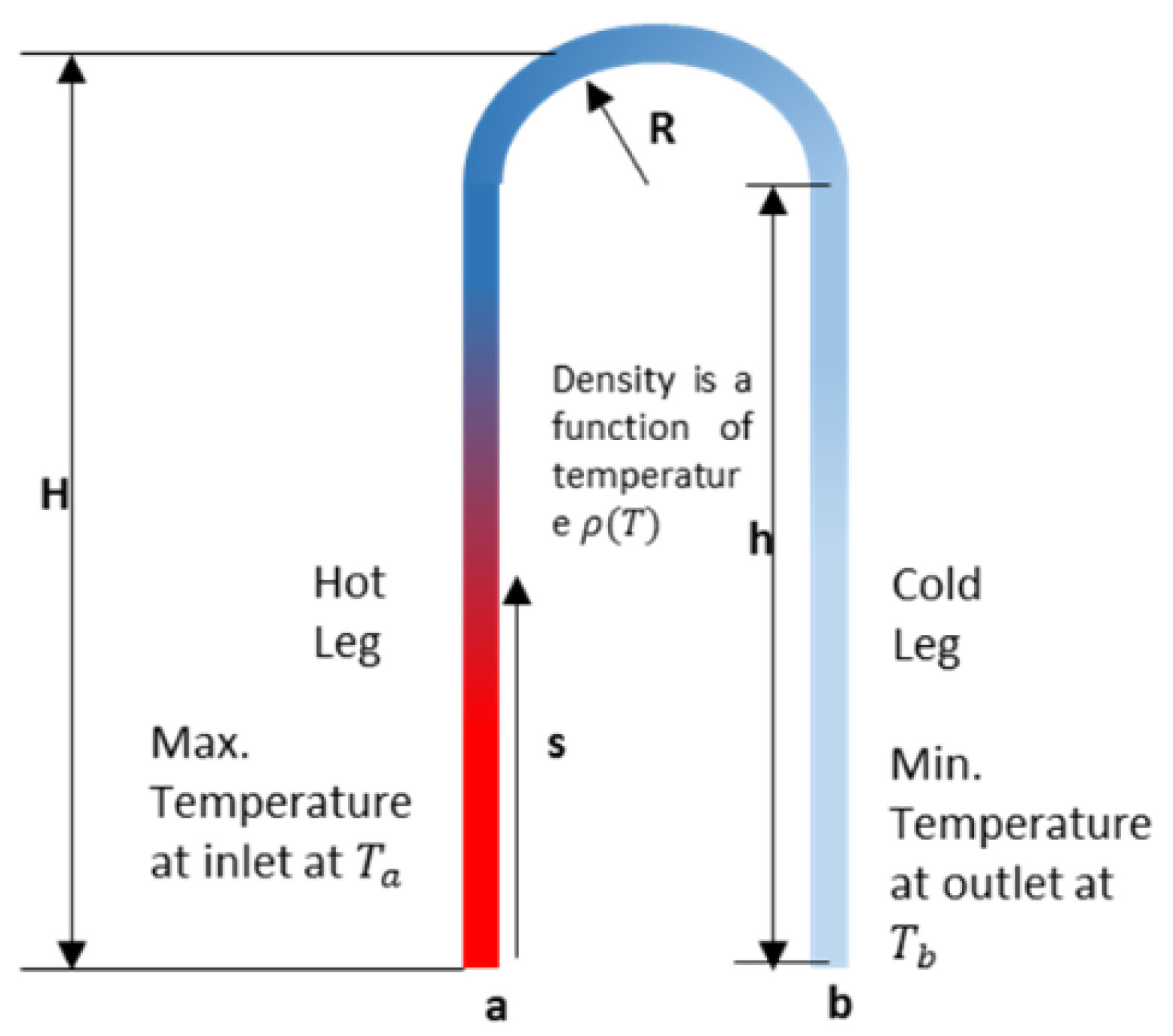
Consider an inverted U-tube of height H, bending radius R, and tube diameter d of the steam generator as shown in
Figure 1. A 1-dimensional coordinate system is attached along the length of the U-tube in which the distance ‘s’ represents the position from the U-tube inlet. The two-phase mixture from the reactor pressure vessel enters from point ‘a’ of U-tube at inlet temperature T
a. It then moves through the inverted U-tube and exits from point ‘b’ at outlet temperature T
b thereby transferring the heat to the secondary side of the U-tube. The net pressure gradient [
18] between the inlet and outlet of the U-tube can be written as
Whereas

is the two-phase frictional pressure gradient

is the single-phase frictional pressure gradient

is the bending pressure gradient
And

is the gravitational pressure gradient
The net pressure drop can be calculated by solving the Eq. Error! Reference source not found.. If the net pressure drop at a particular flow rate is negative between the inlet and outlet of the U-tube, then the flow will be density-driven (natural flow). A characteristics curve can be obtained by solving the pressure gradient equation at different mass flow rates. Because of the two-phase flow, the solution to the pressure gradient equation at saturated secondary side conditions for U-tube SG requires empirical correlations. A CFD methodology is selected to obtain the characteristics curves.
The net pressure gradient equation at saturated secondary side conditions for U-tube SG requires empirical correlations. A CFD methodology is selected to obtain the characteristics curves.
3. CFD Methodology
3.1. Geometry
Typical inverted U-tube steam generators were selected, which are widely used in PWRs. To investigate the natural circulation behavior in two-phase flow during SBLOCA, working conditions and U-tube dimensions were taken from two marine-type NPP SGs [
19] and one commercial SG. The details of the dimensions for all SGs are shown in
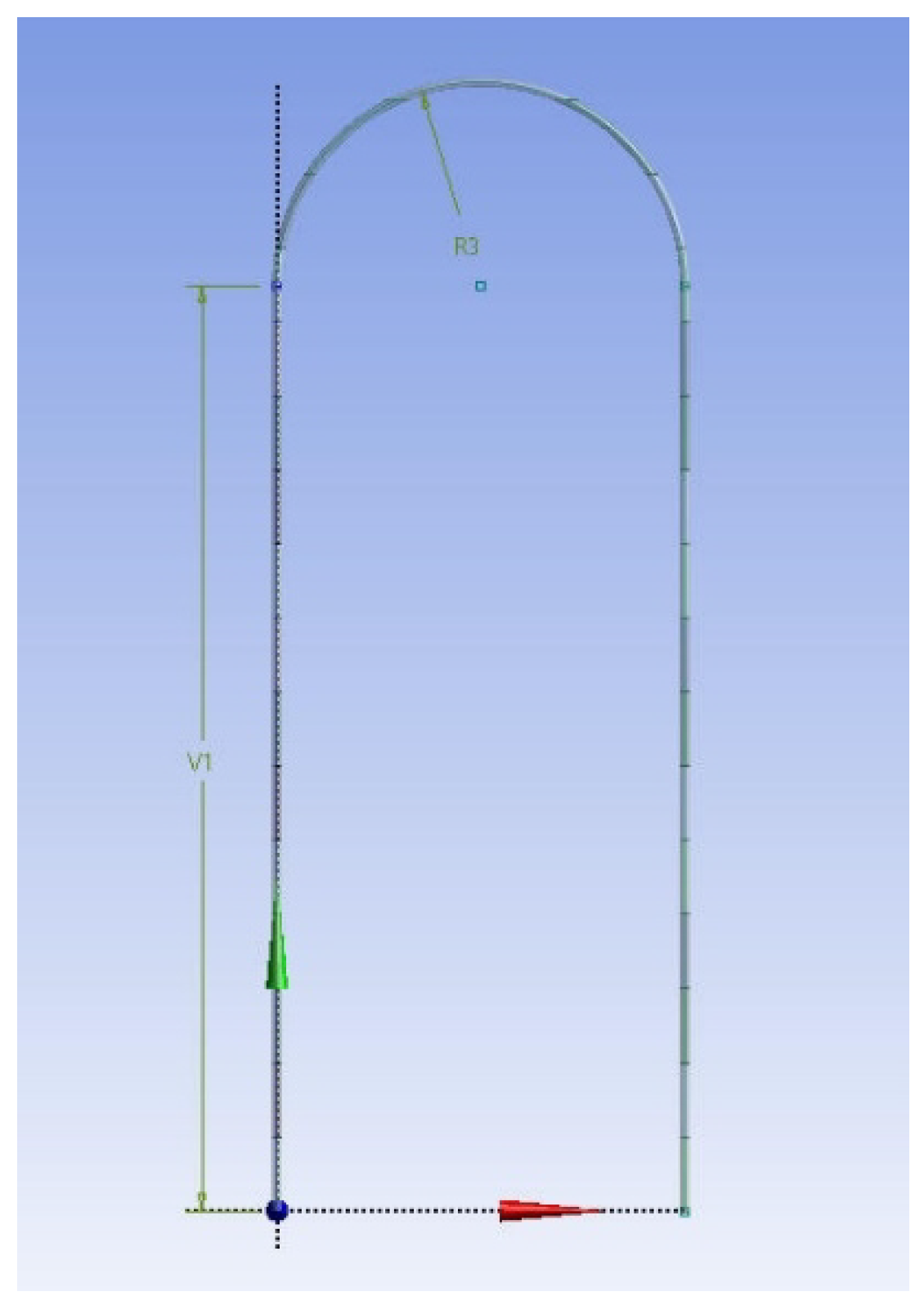
Figure 2.The FLUENT model for the SG U-tube is shown in
Figure 3. “V1” represents the vertical straight length and “R3” represents the bending radius calculated based on bending length.
3.2. Mesh Independence
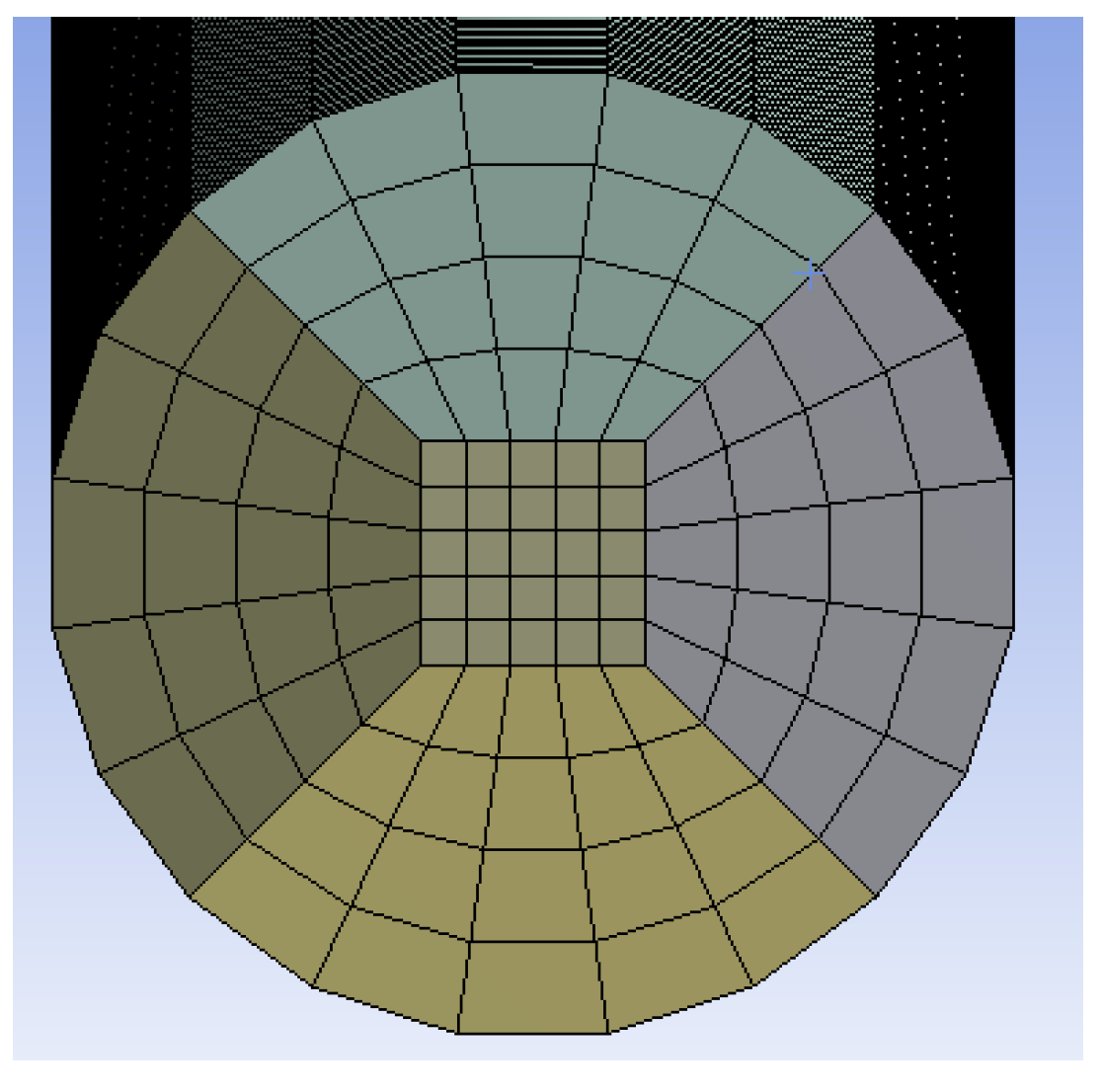
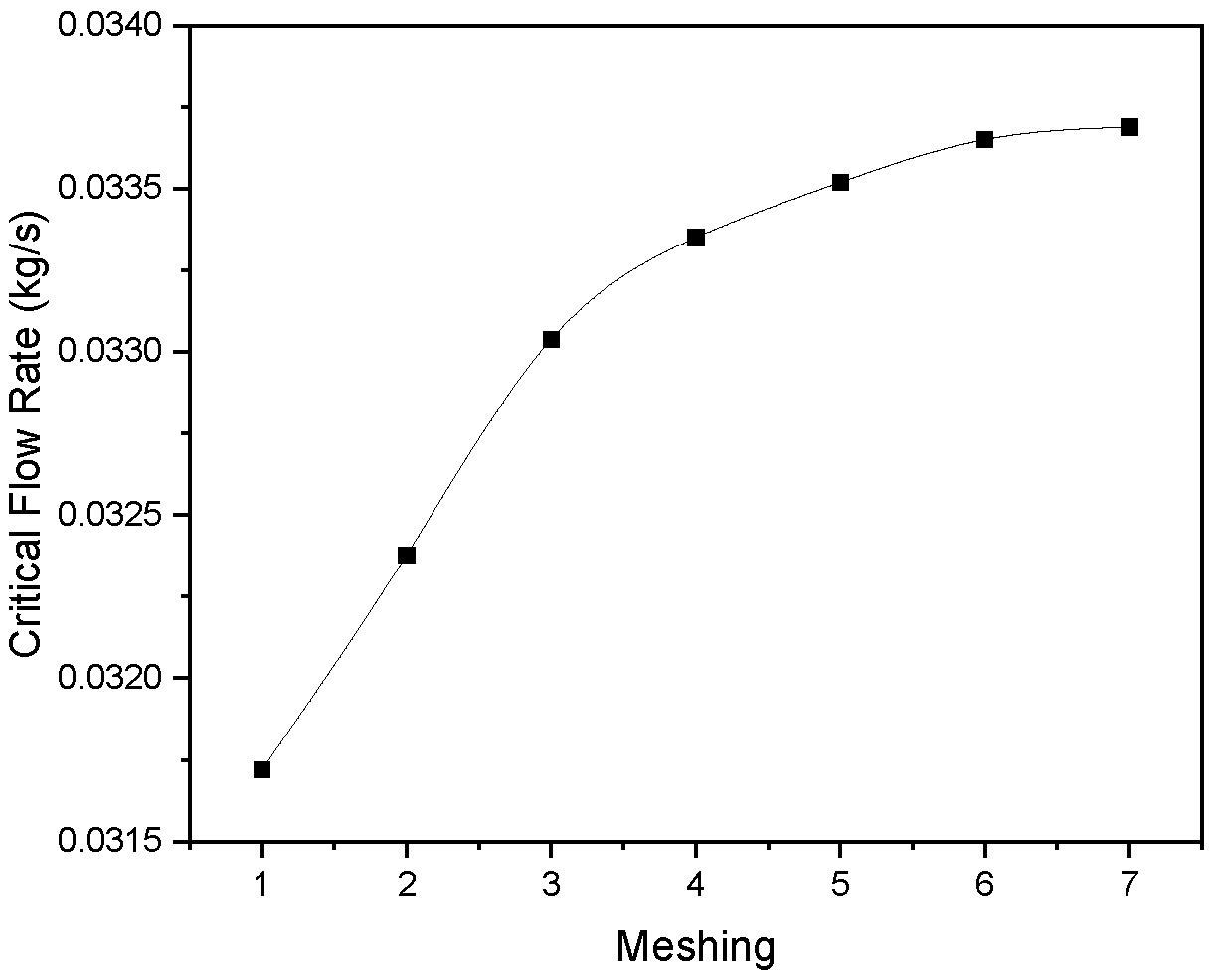
Meshing independence was performed for the structured mesh generated in U-tube.
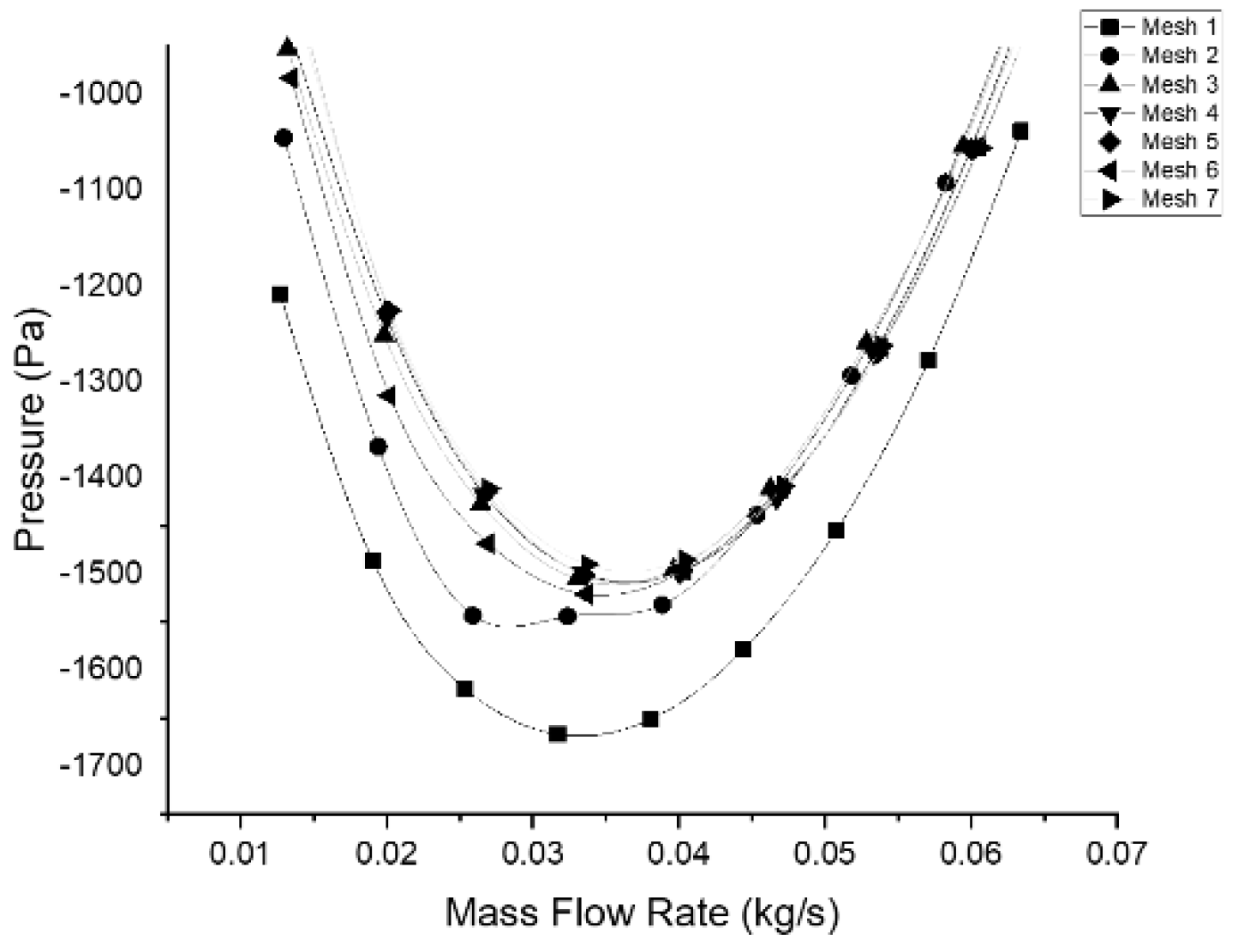
Figure 3 shows a discrepancy in the critical flow rates at different meshing.
The flow rate approaches a single value with a relative error of less than 0.1%. So, the critical flow rate is almost independent of the meshing details.
Figure 4 shows the characteristics curve obtained at different meshing which also shows independence on mesh elements. The selected mesh as shown in
Figure 5 had quality greater than 85% with minimum pressure and CMFR variation.
Table 1.
Dimensions of SGs.
Table 1.
Dimensions of SGs.
3.3. Boundary Conditions
Velocity inlet is specified at the inlet whereas pressure is specified at the outlet as boundary conditions. Water-liquid and water-vapors with variable fluid properties were used as a two-phase mixture. Variation of fluid properties was incorporated using eighteen interpolation points as a function of local temperature and pressure for density, specific heat, viscosity, and thermal conductivity for both water-liquid and water-vapors.
Saturated temperatures were selected at the U-tube inlet for liquid and vapors. The U-tube wall temperature T
w was considered as constant value at saturated secondary side conditions (Jeong,
et al. [
15]). The mass flow rate was increased slowly by a stepwise increase in the velocities of both phases. The detailed flow conditions for all SGs are given in
Figure 6.
Table 2.
Flow Conditions for SGs.
Table 2.
Flow Conditions for SGs.
3.4. Solver Settings
A pressure-based solver coupled with absolute velocity formulation was selected in FLUENT simulation general settings. Gravity in a vertical direction (i.e along the y-axis) was also specified to study the effect of change in density. The “Phase Coupled SIMPLE” scheme and standard initialization method was chosen. A convergence criterion of 0.0001 was used for the solution.
4. Multiphase Models
Eulerian Model was chosen provided in ANSYS Fluent because the void fraction was greater than 10%, which continuously changed along the U-tube hot leg. It was the most suitable one from the available models to simulate the condensing vapors in the case of natural circulation.
The standard k-ε model with dispersed turbulence was chosen with standard wall functions because of reasonable accuracy and wide industrial applications. The general conservation equations solved by the Eulerian model are given below:
The continuity equation for the qth phase is:
Whereas t is time,
αq is the void fraction,
ρq is density and

is velocity. The mass transfer from one to the other is represented by

(from p to q) and

(from q to p).
Sq is the mass source term and n is the total number of other phases.
The momentum equation for the qth phase is:
where p is the static pressure,

is the stressstrain tensor,

is gravitational force and

is the interaction force between two different phases.

are lift
force, wall-lubrication force, turbulent
dispersion force, the external body force, and
virtual-mass force respectively.
The energy equation for the qth phase is:
Whereas ℎ
q is qth phase enthalpy,

is the heat flux,
Sq is the source term for energy,
Qpq is the amount of heat exchange between two phases and ℎ
pq is the interphase enthalpy.
4.1. Interphase Forces

in Eq (2) represents the interphase interaction force between the phases which can be simplified as [
20].
Where
Kpq, the interphase momentum exchange coefficient between the water and vapor phases can be estimated using Schiller and Naumann Model [
20], which is expressed as follows:
Where dp is the bubble diameter, ρp is the density of phase p, τp is particulate relaxation time and is given in Eq. (7)
Ai is the interfacial area which was calculated using the symmetric model and is given by:
f is the drag function which is calculated as:
Where Re and CD represents Reynolds number and drag coefficient respectively.
Kpq was calculated using Brucato modification correlation because Schiller and Naumann Model is used for interaction between solid particles and liquid, whereas Brucato modification enables its use for liquid-vapor interaction.
Antal and Lopez de Bertodano models were used for the calculation of wall lubrication and turbulent dispersion respectively in Eq. (2). The dispersed phase i.e water-vapor influences turbulence which was included using the Simonin Model [
20].
The effects of the lift force and virtual mass force were very small. Drag force was much larger as compared to the lift force, and the accelerations between the phases were approximately zero. So both of these effects were neglected from Eq. (2), [
19].
4.2. Heat and Mass Transfer Models
The volumetric heat transfer rate for vapor and liquid phase can be given as [
20]
Whereas
Ai is the interfacial area,
Tp ―
Tq represents the temperature difference of the two phases and ℎ
pq represent the heat transfer coefficient. Ranz Marshall model [
20] given in Eq. 11 was used for the calculation of the heat transfer coefficient.
Where Pr is the liquid phase Prandtl number and λl is liquid thermal conductivity.
Because of condensation in the hot leg, Lee Model [
20] was used for modeling condensation. The model is given as
If Tl > Tsat then
If Tsat < Tl then
This model requires the fine-tuning of “coeff” with the experimental data. Its value can vary from 0.1 to several thousand depending on experimental conditions [
21].
5. Model Validation
For validation of the multiphase model, nine data points were taken from the natural circulation experiment performed by Jain [
22] in the vertical test section of length 2.44 m and diameter 20.6 mm as shown in
Table 3. Subcooled water entered the test section and was uniformly heated to boil. The constant wall temperature boundary condition was replaced with constant heat flux to meet the experimental need. Chu,
et al. [
19] showed that replacing the boundary condition will not affect the modeling method, and if validated, the selected models can be used for both boiling and condensation in small circular diameter tubes.
Table 3.
Jain experiment flow conditions.
Table 3.
Jain experiment flow conditions.
A CFD study was performed using the above-mentioned models for calculation of two-phase pressure drop in a vertical tube.
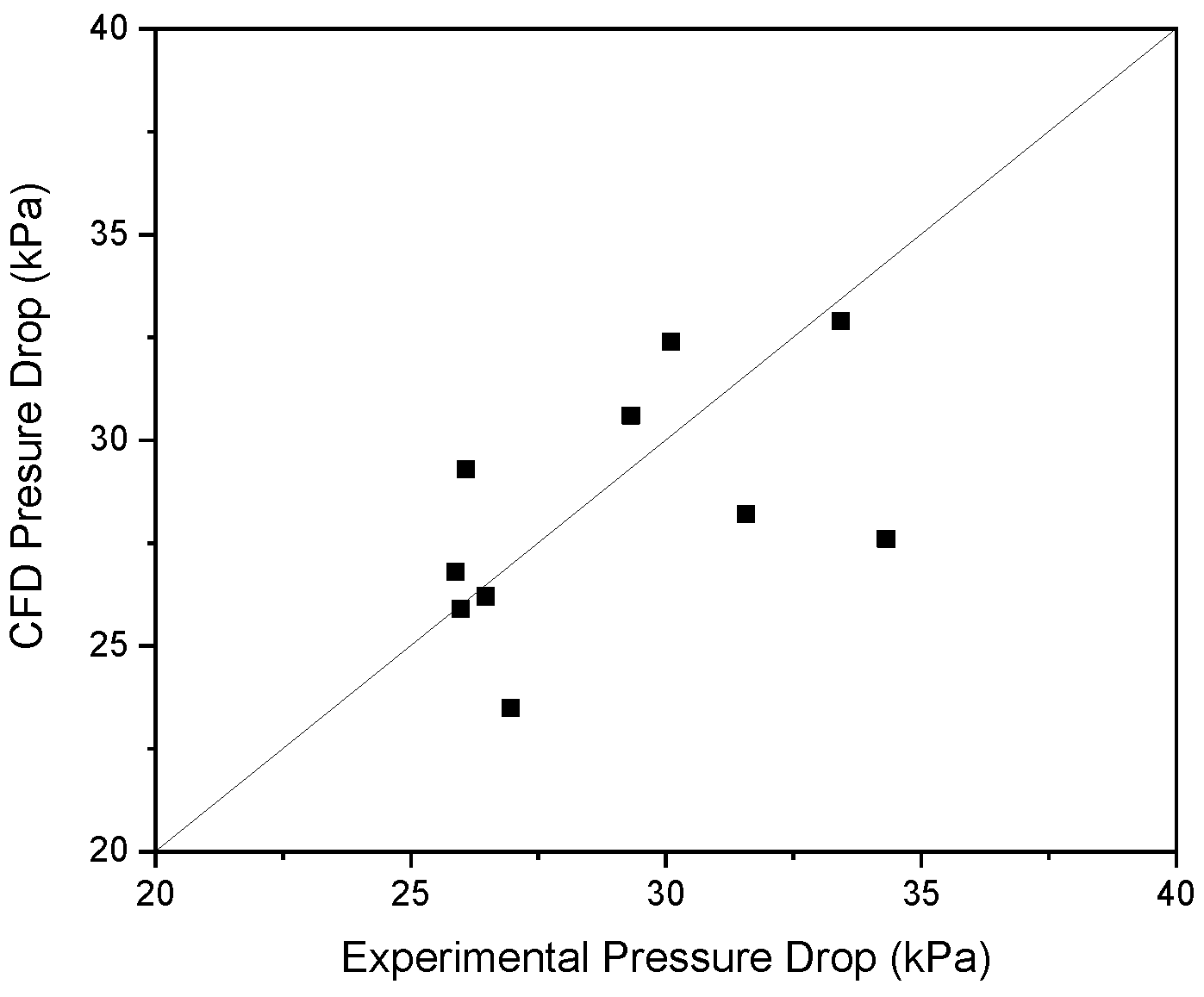
Figure 6 shows a comparison of the pressure drop obtained from CFD and Jain [
22] experiments. The results were closely related and lie within an error of 15%. The models used in this study were suitable for the calculation of pressure drops in small circular diameter pipes in two-phase NC flow.
6. Result and Discussion
The inlet mass flow rate is increased by a step-wise increase in inlet velocities of the liquid and vapor phase. The effect of inlet void fraction on CMFR and safe operating flow rate range is determined using the characteristics curves at different inlet void fractions for all SGs. The effect of pipe roughness on the stability of two-phase NC and the entrance effects on void fraction distribution was also found.
6.1. Effect of Pipe Roughness on Two-Phase NC
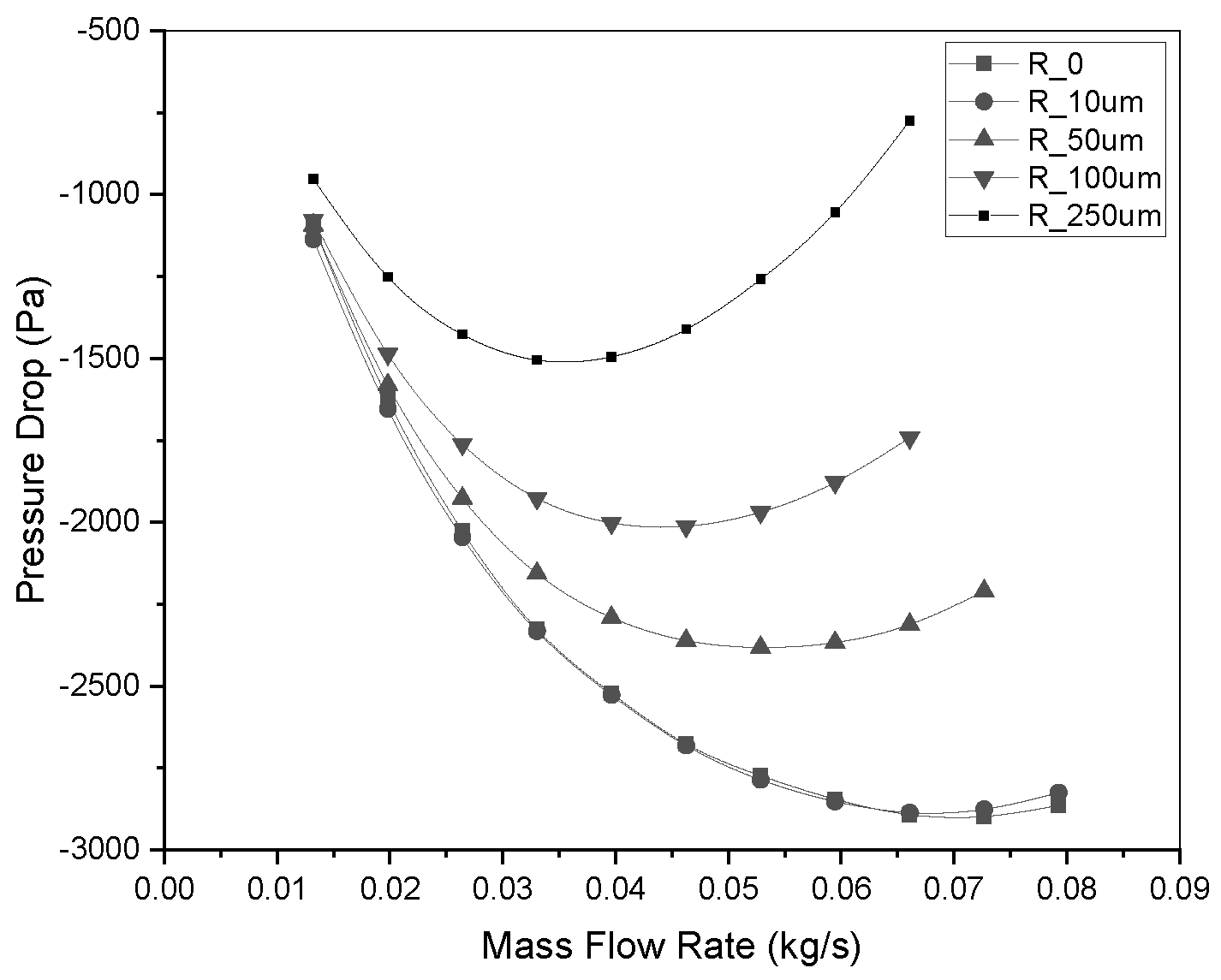
The characteristics curves for M_SG1 obtained at different pipe roughness are shown in
Figure 7. All the curves had a positive sloped region which is stable and a negative slope region, which is unstable [
23]. The flow at the point of inflection is called CMFR which is a criterion to check the reverse flow. The pressure drop is the sum of frictional pressure drop and gravitational pressure drop. The gravitational pressure drop remains the same for constant flow conditions and is independent of pipe roughness. But the frictional pressure drop is a strong function of pipe roughness and increases with an increase in pipe roughness. At higher values of pipe roughness, the frictional pressure drop increases more rapidly as the mass flow rate is increased, which results in the start of a stable region at smaller values of mass flow rate.
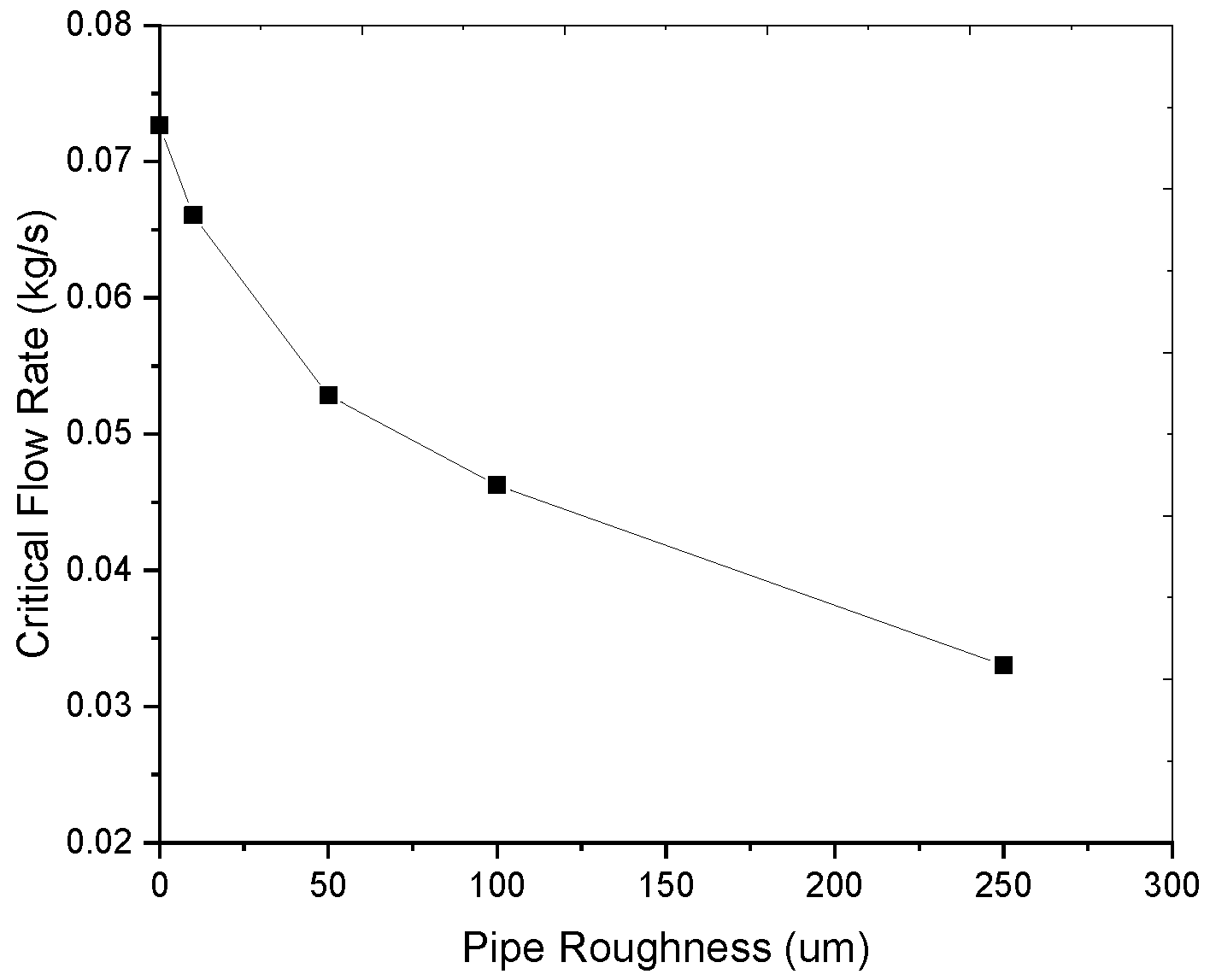
Figure 8 shows the CMFR variation with pipe roughness. It decreases with an increase in pipe roughness because of increased frictional pressure drop. So the reverse flow is least likely to occur at high pipe roughness but this also limits the maximum NC-based mass flow rate to relatively small values. The net effect is the contraction in the stable as well as the unstable region as pipe roughness increases. Therefore, a balance is required between a pipe roughness and maximum NC mass flow rate for a perfect SG design.
6.2. Safe Operating Flow Rate Range and Inlet Void Fraction
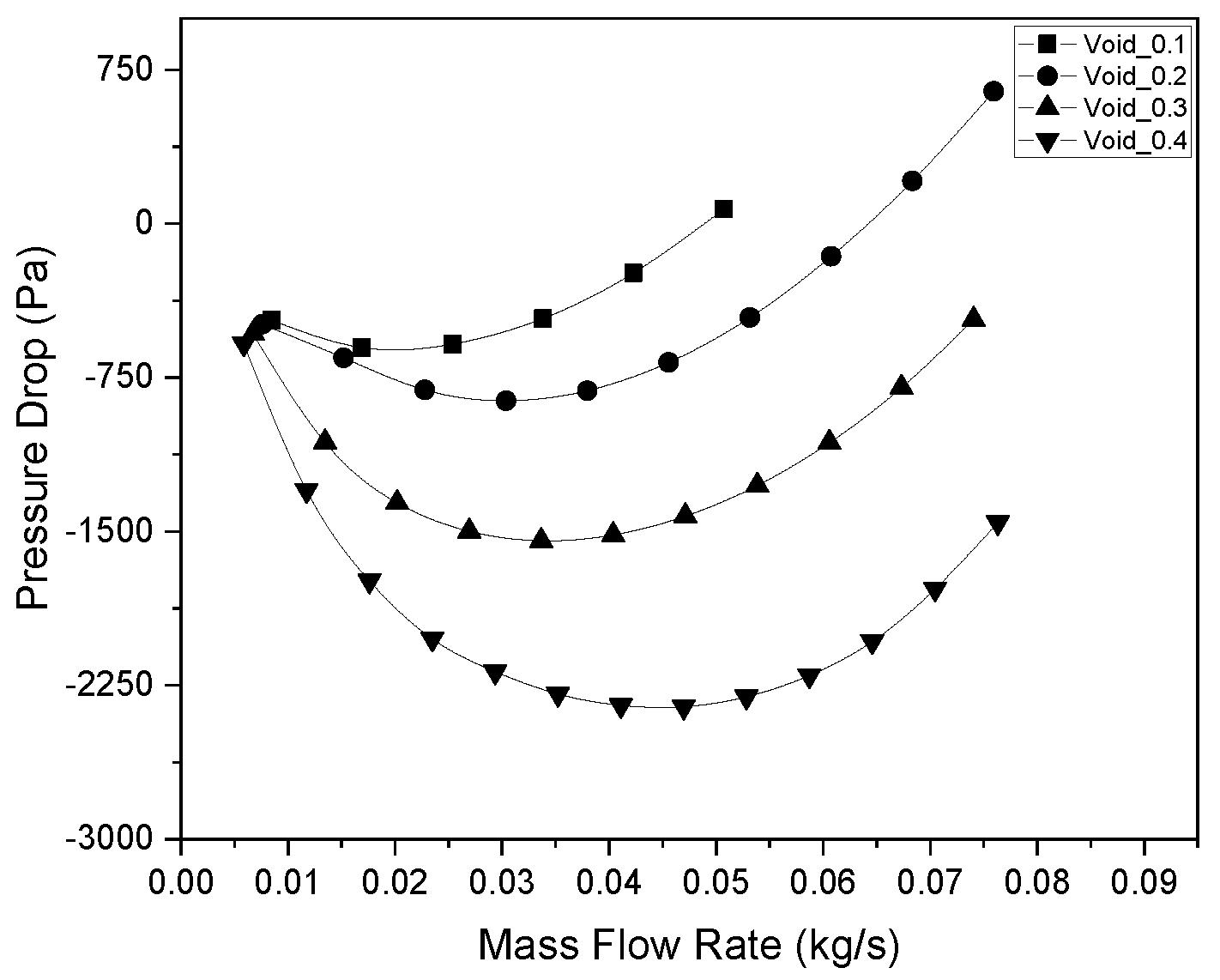
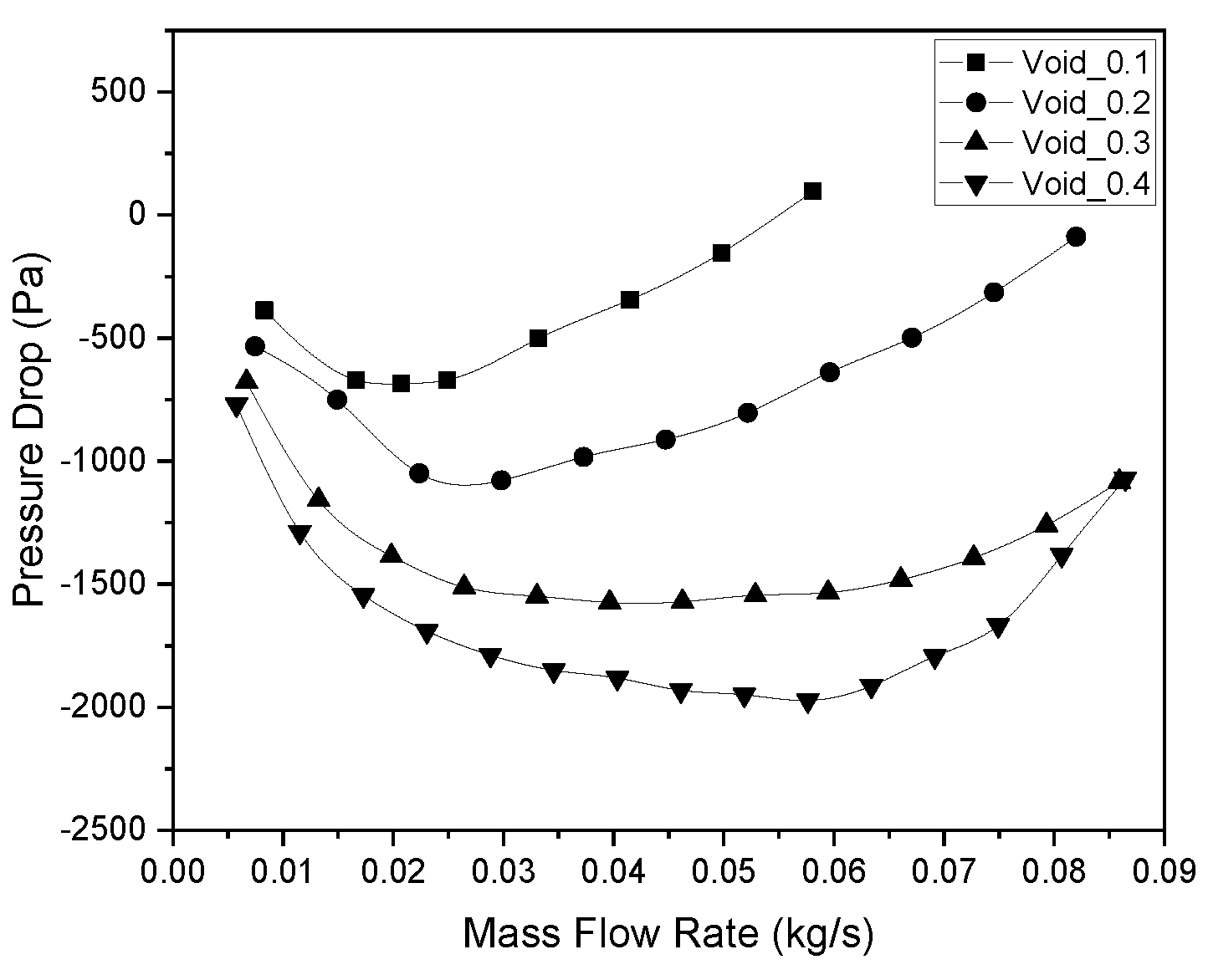
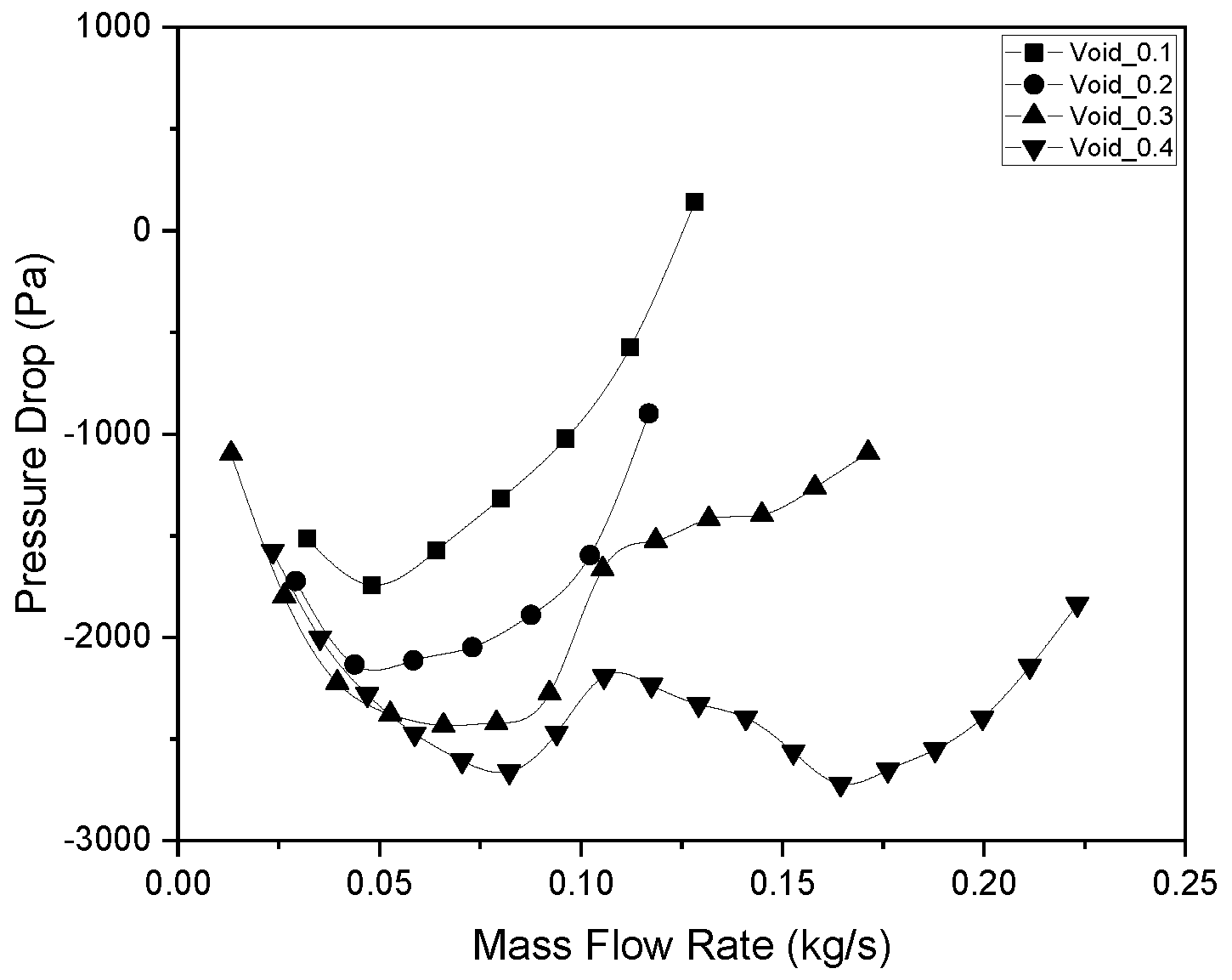
The characteristics curves for M_SG1, M_SG2, and C_SG at different inlet void fractions are shown in in
Figure 9,
Figure 10, and
Figure 11 respectively. All the curves had a negative slope region showing instability and reverse flow. For M_SG1, the curves were produced for rough pipes whereas for M_SG2 and C_SG smooth pipes were used. The inlet void fraction greatly influences the characteristics curve. The pressure drop in the unstable region increases with an increase in inlet void fraction for all SGs, whereas in the stable region it increases for small void fractions. The characteristics curves at high inlet void fraction in the case of C_SG have more than one critical point because of competition between gravitational and frictional pressure drops. These curves were used to determine the safe operating mass flow rate range if the transients in the inlet void fraction lie in the range. The safe operating flow rate range was obtained using the following strategy:
The maximum safe operating flow rate was dictated by the point of transition from natural to forced circulation at a minimum void fraction. The point was obtained by the intersection of the curve at 0.1 void fraction with the horizontal axis. For M_SG1 and M_SG2, these points lie at 0.050 kg/s and 0.0548 kg/s respectively.
The minimum operating mass flow rate was dictated by the absolute maximum CMFR at any inlet void fraction from the given operational range and was equal to 0.046 kg/s and 0.518 kg/s for M_SG1 and M_SG2 respectively. The flow will be stable within these ranges with a transient in inlet void fraction.
Figure 11 shows that no such range exists for C_SG with the current range of inlet void fraction. But if the void fraction was controlled and kept below 0.3 then the safe operating mass flow rate range exist which lies between 0.105 kg/s and 0.114 kg/s.
6.3. Effect of Inlet Void Fraction on CMFR
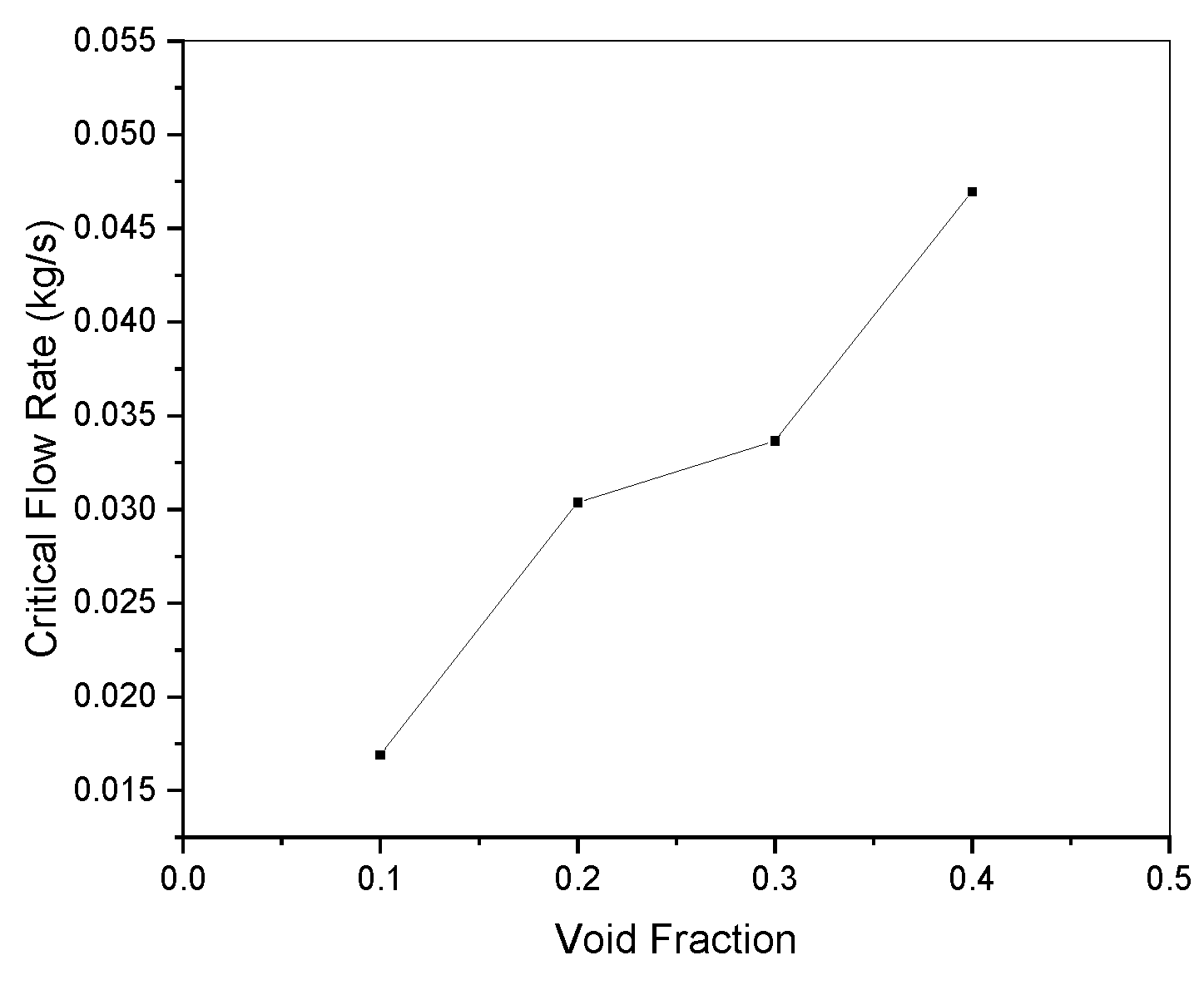
Figure 12 and
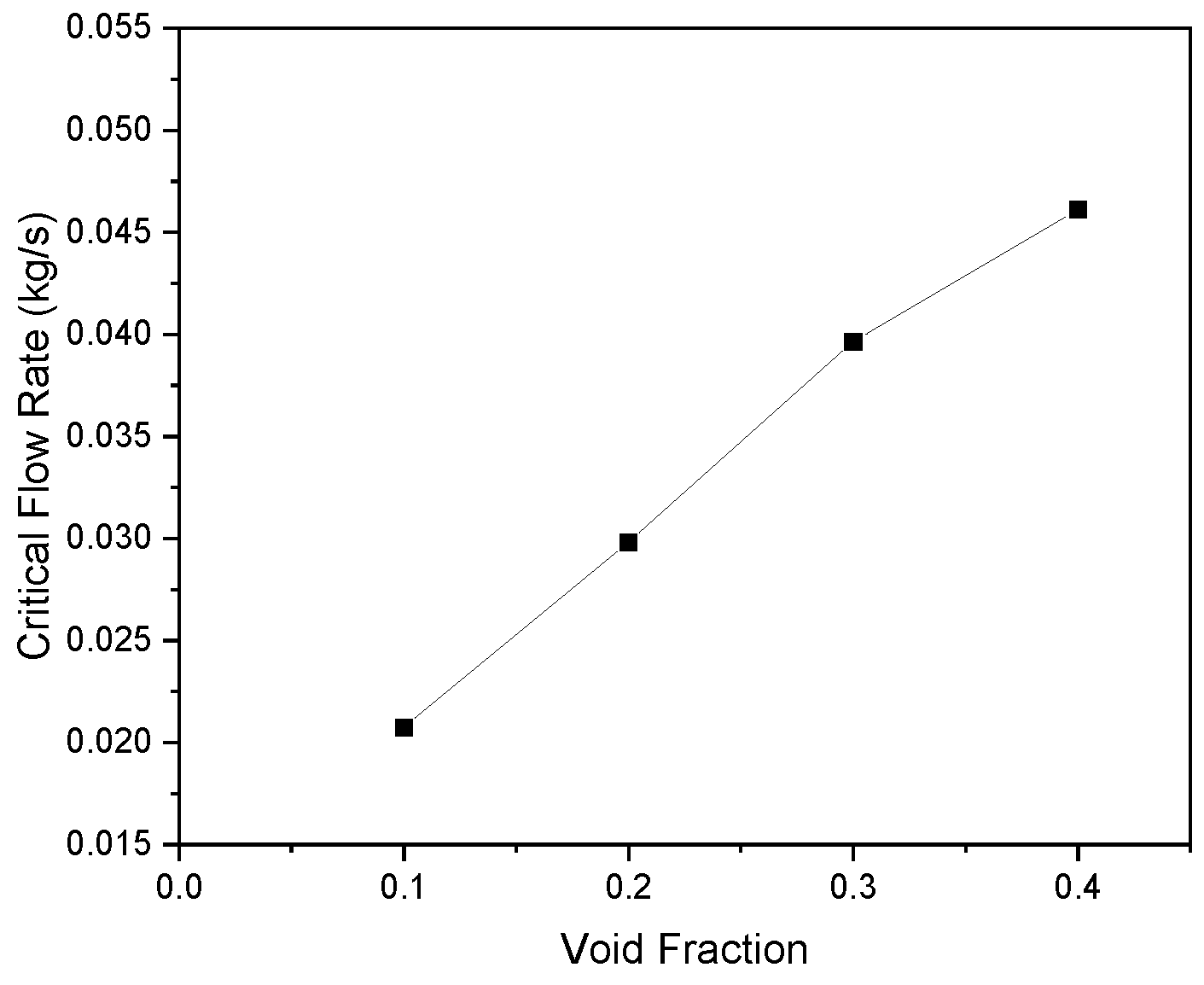
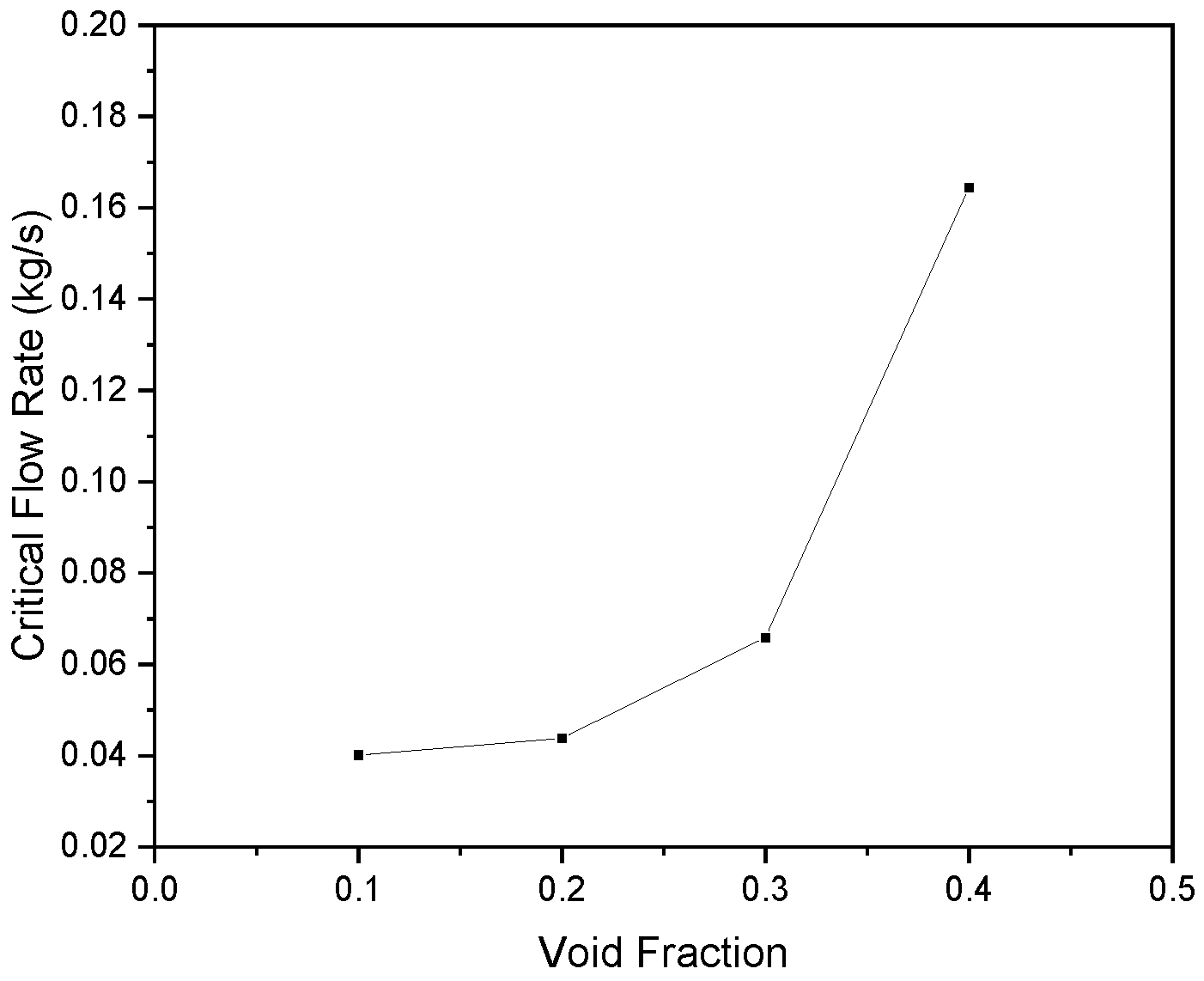
Figure 13 show that the CMFR increases linearly with an increase in void fraction for M_SG1 and M_SG2, respectively. Natural circulation in two-phase should have a mass flow rate greater than the critical value for stable operation.
Figure 14 shows the variation of CMFR with inlet void fraction for C_SG showing that the trend is not linear in this case. This is because of large length of the tube which increases the frictional forces nonmonotonically. For void fraction greater than 0.3, the CMFR was always greater than the maximum safe operating flow rate limit set at void fraction 0.1. This leads to an unstable flow if the transients in void fraction go beyond 0.3 in C_SG.
6.4. Entrance Effect on Void Fraction Distribution along U-tube Length
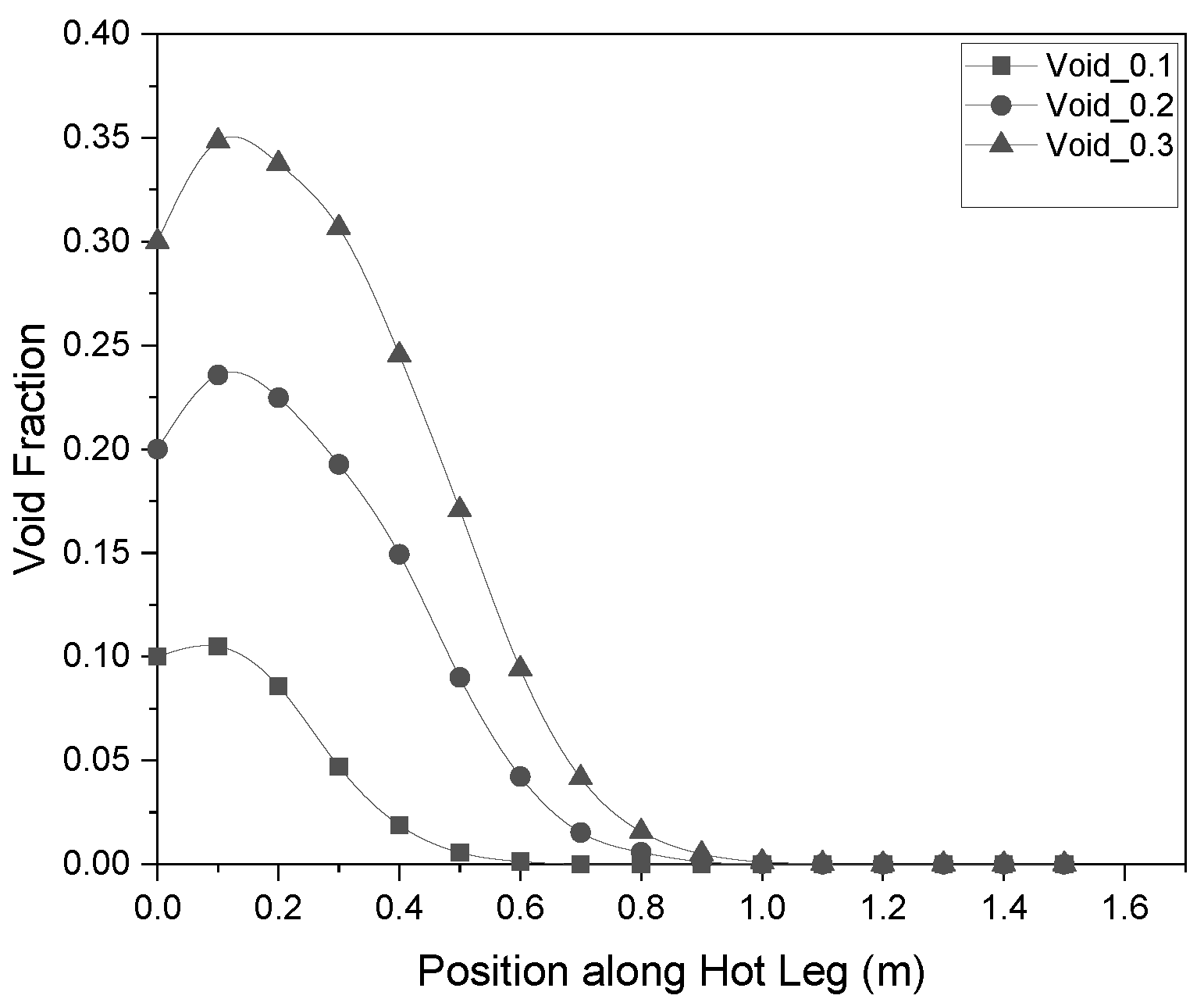
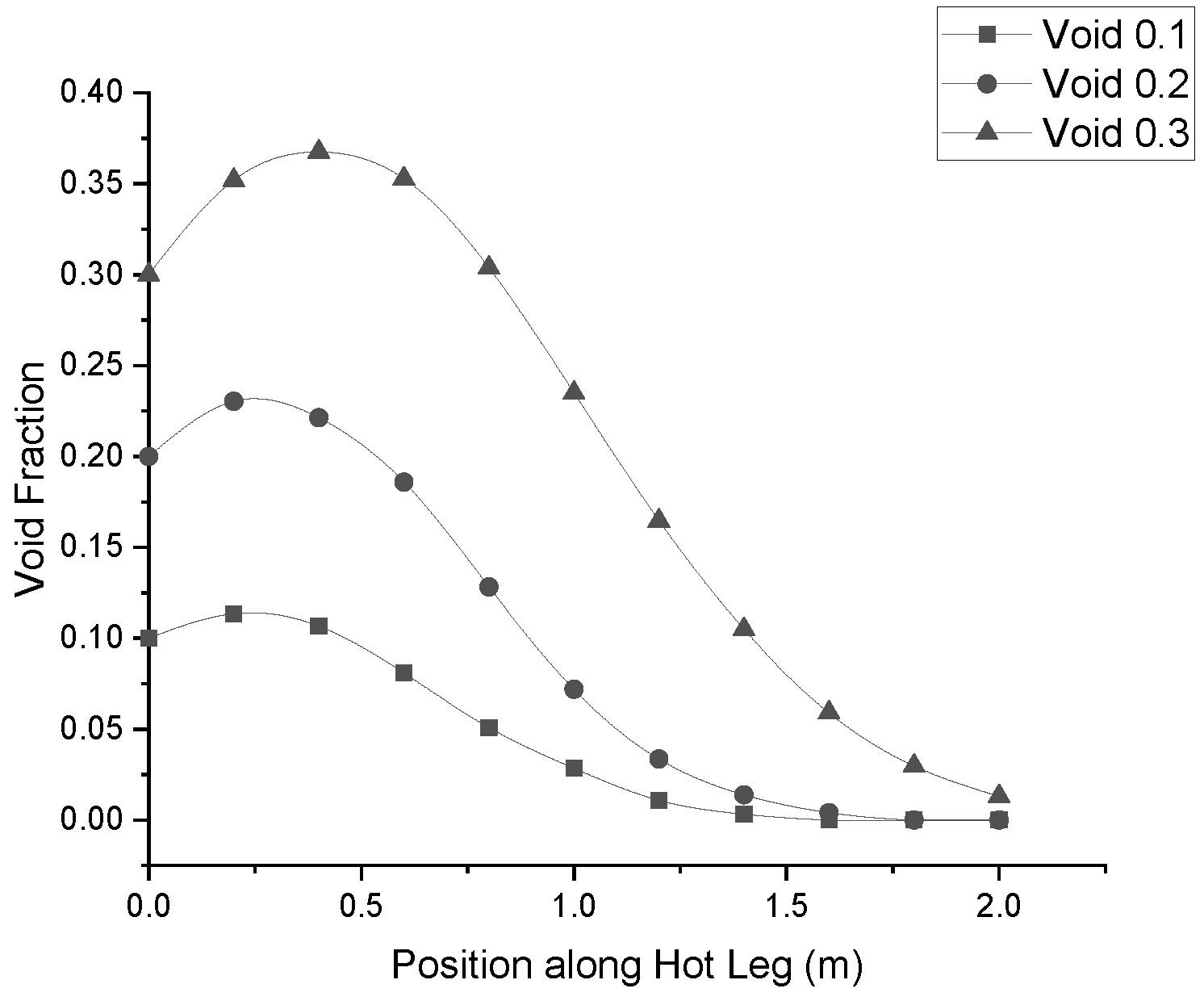
The inclusion of the entrance effect (flow developing) for the U-tube greatly influences the distribution of void fraction with U-tube position as shown in
Figure 15 and
Figure 16 for M_SG1 and C_SG at CMFRs respectively. Because of the entrance effect, the void fraction initially increases in the hot leg and then started to decrease. This behavior is observed at all inlet void fractions and mass flow rates. It affects the C_SG at higher flow rates in a way to keep the characteristics curve in the unstable region.
7. Conclusion
The two-phase NC in U-tube SG is the key passive phenomenon to take out the reactor core nature, NC is susceptible to reverse flow, which greatly reduces the heat removal capability of SG and endangers the NPP operation. CFD method was used to study the inlet void fractions effects on CMFR in two marine NPP SG and one commercial SG. The effect of pipe roughness was also studied for one marine NPP SG. The main conclusions drawn were as follows:
The CMFR decreases with an increase in pipe roughness for the same flow conditions resulting in a wider stable region.
With an increase of inlet void fraction, the two-phase region increases at the same inlet slip ratio, inlet liquid velocity, and inlet gas velocity for all SGs.
An increase in inlet void fraction extends the unstable region at small inlet void fractions for small steam generators at which complete condensation occurs in the hot leg.
The CMFR increases with an increase in inlet void fraction for all SGs.
The minimum safe operating mass flow rate is dictated by the absolute maximum CMFR within the range of inlet void fraction transients.
The maximum safe operating mass flow rate is dictated by the point of transition from natural to forced circulation at a minimum void fraction in the range of transients.
The entrance effect changes the void fraction spatial distribution of the SGs in such a way that it increases to a certain maximum value greater than the inlet value and then started to increase.
The increase in void fraction due to entrance effects changes the characteristics curve and increases the unstable region in large SG.




 is the two-phase frictional pressure gradient
 is the single-phase frictional pressure gradient
 is the bending pressure gradient
 is the gravitational pressure gradient


 is velocity. The mass transfer from one to the other is represented by
  (from p to q) and
  (from q to p). Sq is the mass source term and n is the total number of other phases.
 is the stressstrain tensor,
  is gravitational force and
  is the interaction force between two different phases.
  are lift
force, wall-lubrication force, turbulent
dispersion force, the external body force, and
virtual-mass force respectively.
are lift
force, wall-lubrication force, turbulent
dispersion force, the external body force, and
virtual-mass force respectively.
 is the heat flux, Sq is the source term for energy, Qpq is the amount of heat exchange between two phases and ℎpq is the interphase enthalpy.
 in Eq (2) represents the interphase interaction force between the phases which can be simplified as [20].