Combined Effects of Nonuniform Temperature Gradients and Heat Source on Double Diffusive Benard-Marangoni Convection in a Porous-Fluid System in the Presence of Vertical Magnetic Field

Abstract
1. Introduction
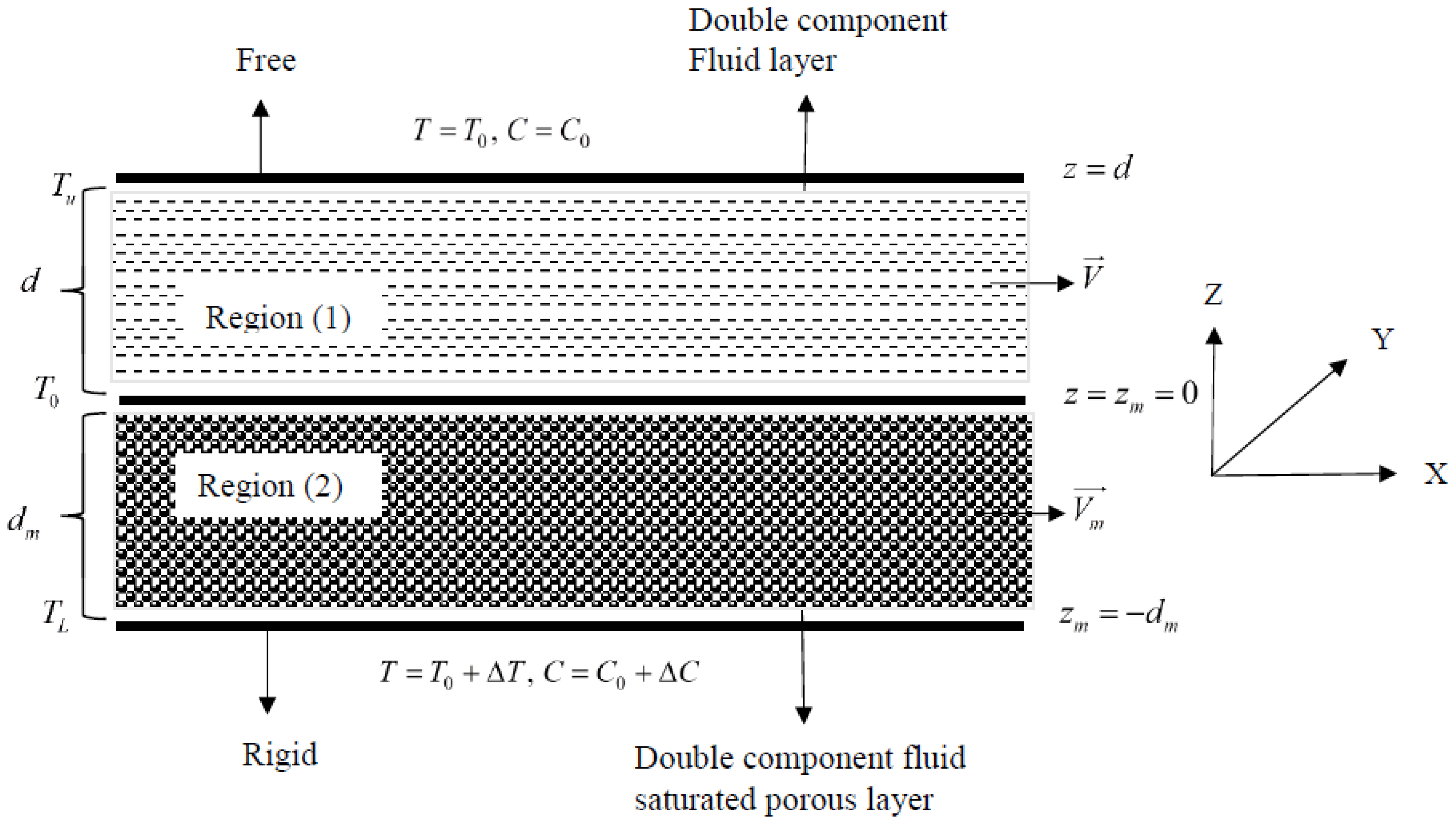
2. Formulation of the problem

 where for fluid layer,
  is the velocity vector, ρ0 is the fluid density, t is time, µ is fluid viscosity, P is the total pressure,
  is the magnetic field, T is temperature, κ is the thermal diffusivity of the fluid, ν is the magnetic viscosity and µp is the magnetic permeability. For porous layer, ε is the porosity, µm is the effective viscosity of the fluid in the porous layer, K is the permeability of the porous medium, A is the ratio of heat capacities, κm is the thermal diffusivity, νem is the effective magnetic viscosity and the subscript ‘m’ denotes the quantities in porous layer.

 where
where  are the interface temperature and concentration, f(z) & fm(zm) are the temperature gradients in fluid & porous layer respectively.

 are namely, the Chandrasekhar number, the modified internal Rayleigh number, the internal Rayleigh number, the diffusivity ratio respectively for fluid layer and
  ,
,  are namely, the viscosity ratio, the porous parameter, the Chandrasekhar number, the modified internal Rayleigh number, the internal Rayleigh number and the diffusivity ratio respectively for porous layer. W(z) & Wm(zm) are the vertical velocities, θ(z) & θm(zm) are the temperature distributions and S(z) & Sm(zm) are the concentration distributions in fluid and porous layers respectively and a & am are the horizontal wave numbers. Since the horizontal wave numbers must be the same for the composite layers, so that we have
  and hence
  is the depth ratio.
3. Boundary Conditions




 is the solute diffusivity ratio,
  is the thermal ratio,
  is the thermal Marangoni number,
 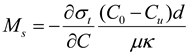 is the solute Marangoni number and σt is the surface tension.
4. Solution Methodology


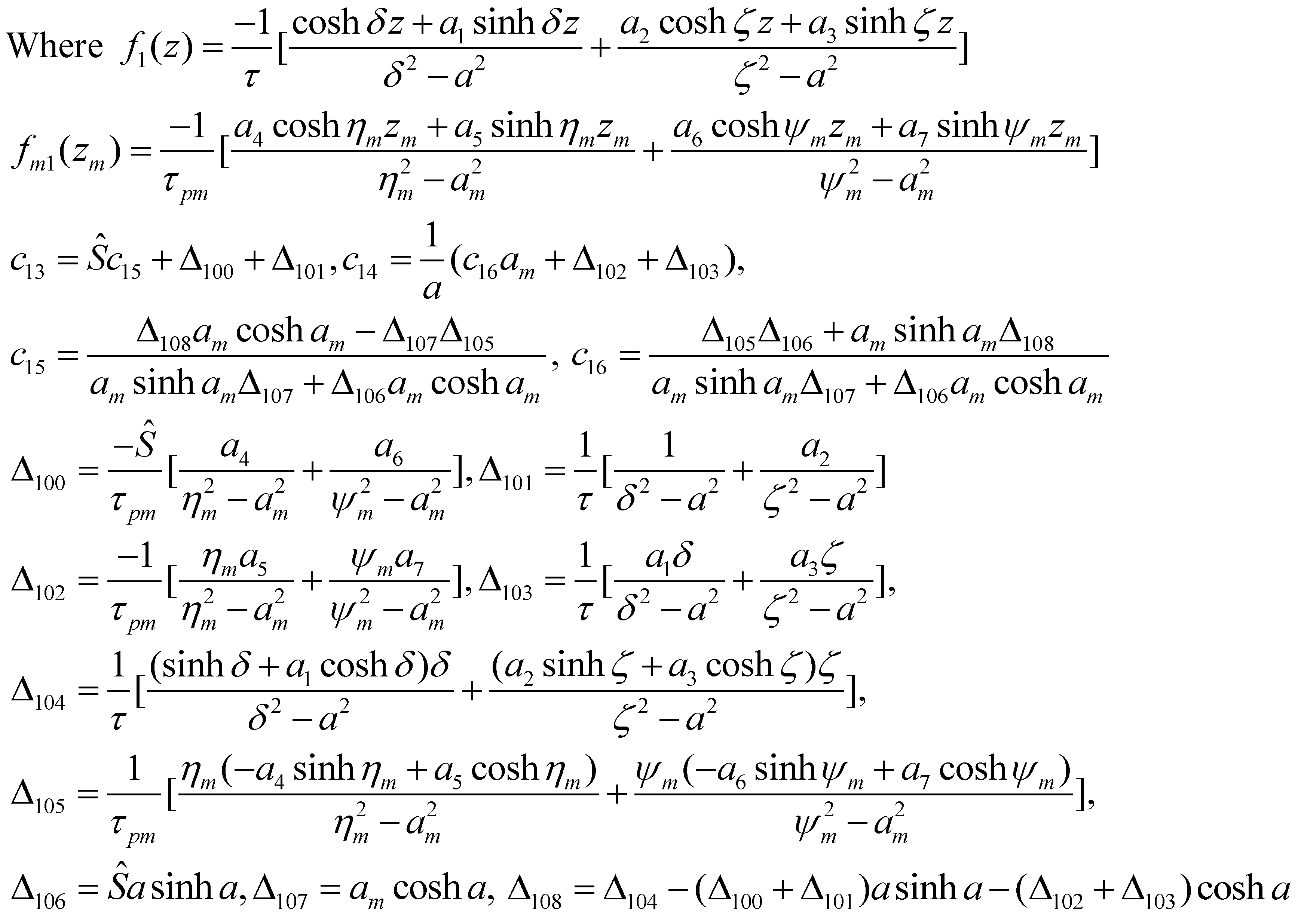
4.1. Case (i): Linear temperature profile


4.2. Case (ii): Parabolic temperature profile

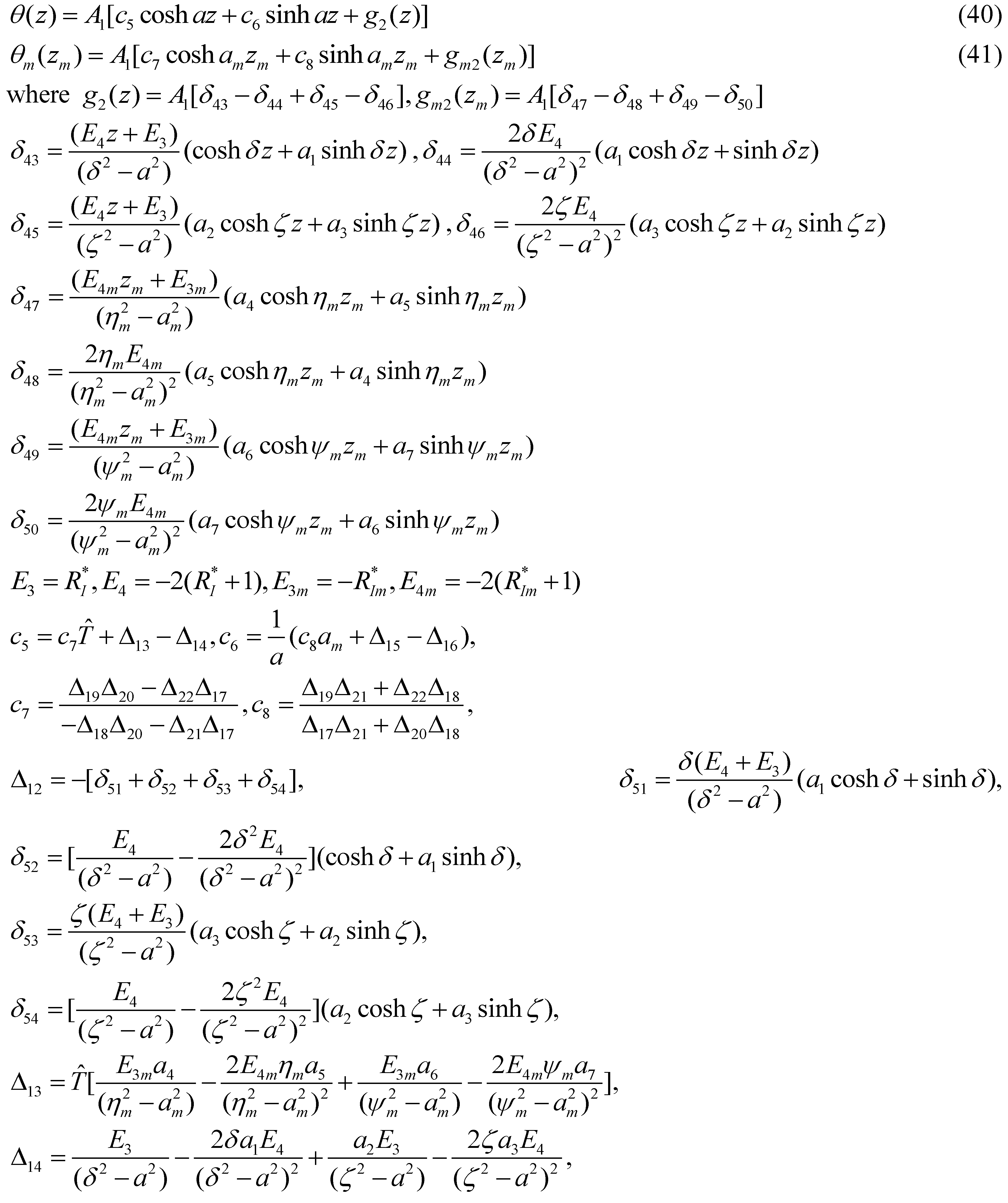


4.3. Case (iii): Inverted parabolic temperature profile



5. Results and Discussion
 , single fluid layer and
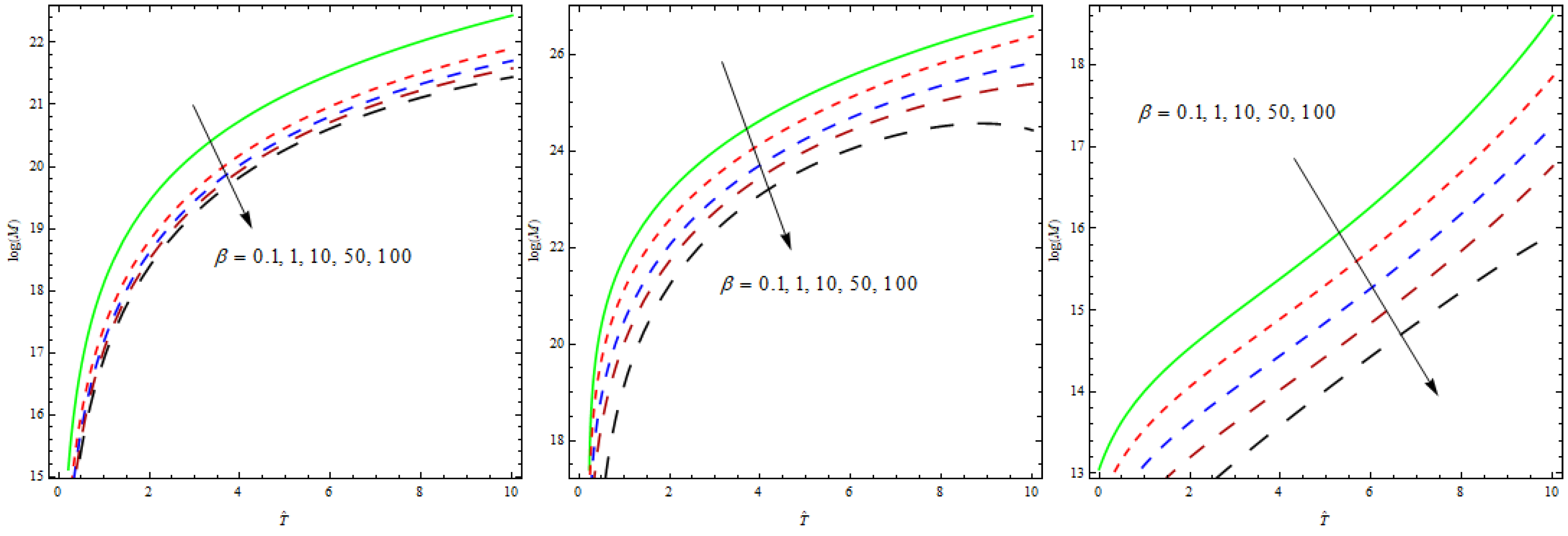
  , single porous layer, the present results match qualitatively with the corresponding earlier works [21,22,23,24]. The effects of porous parameter β, Chandrasekhar number Q, viscosity ratio
  , modified internal Rayleigh numbers
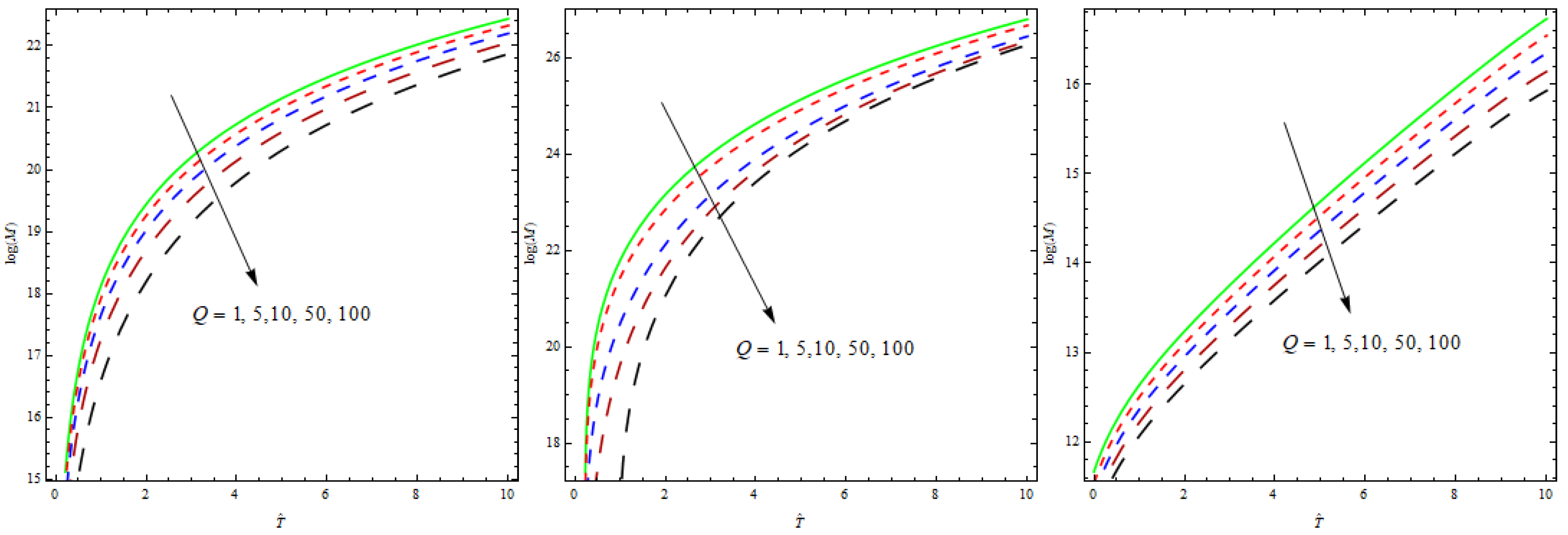
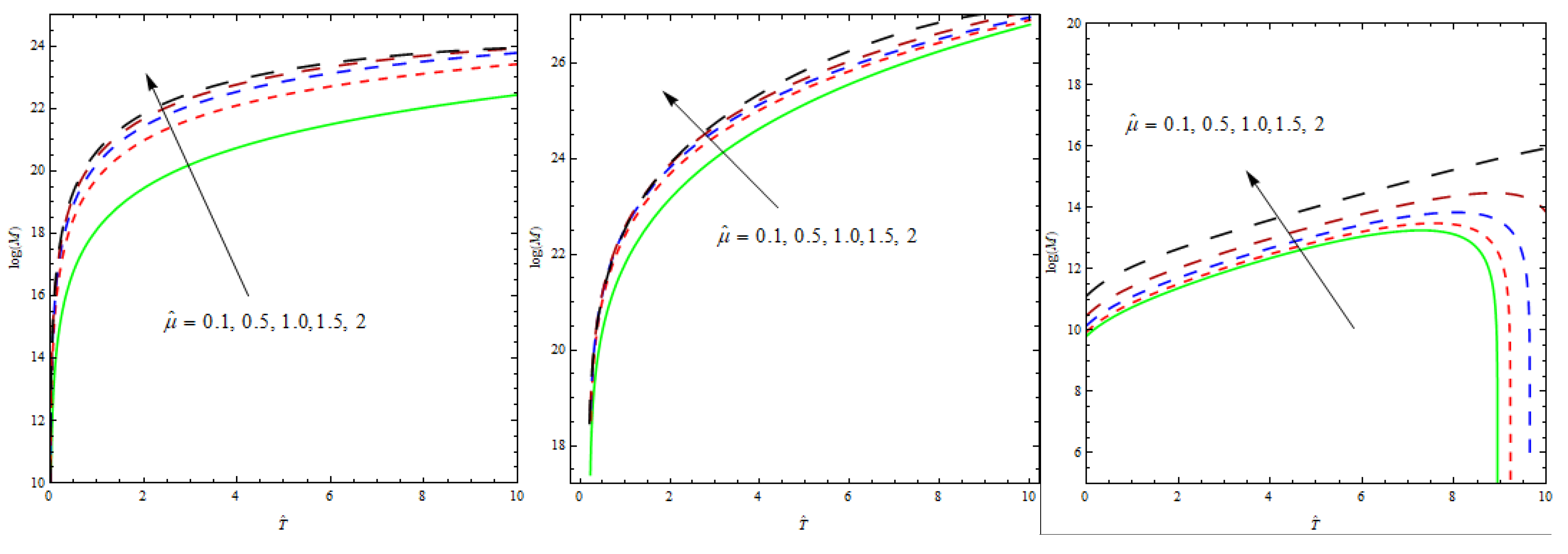
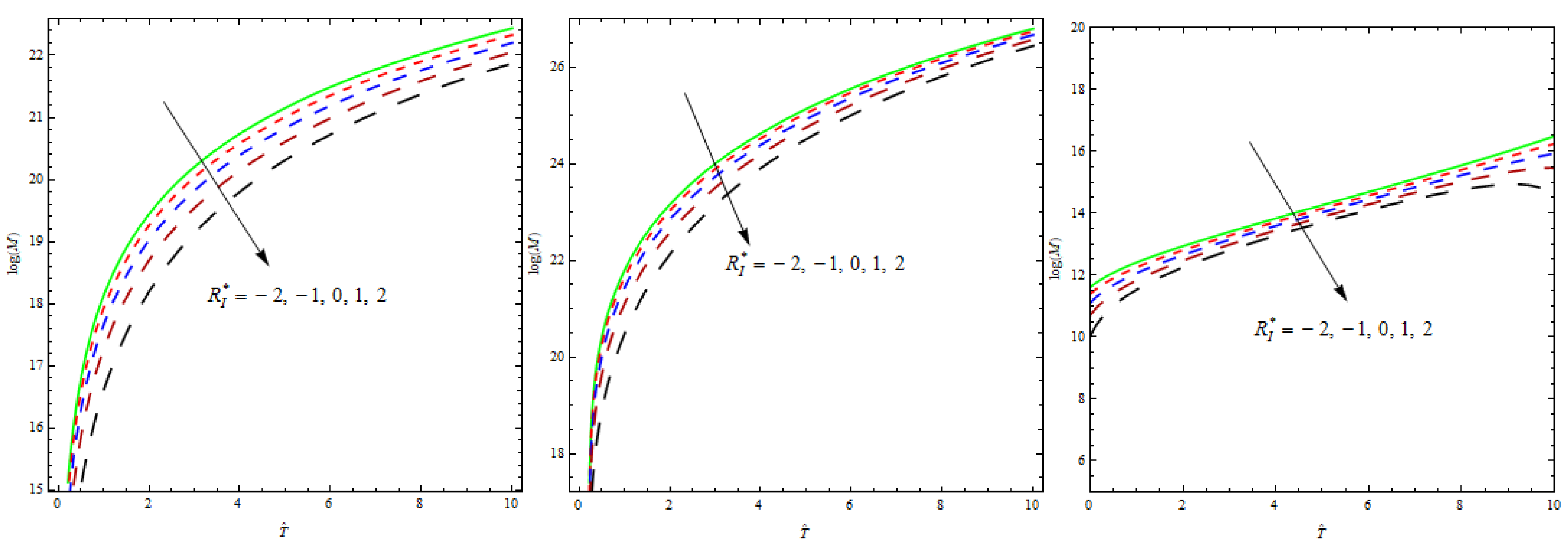
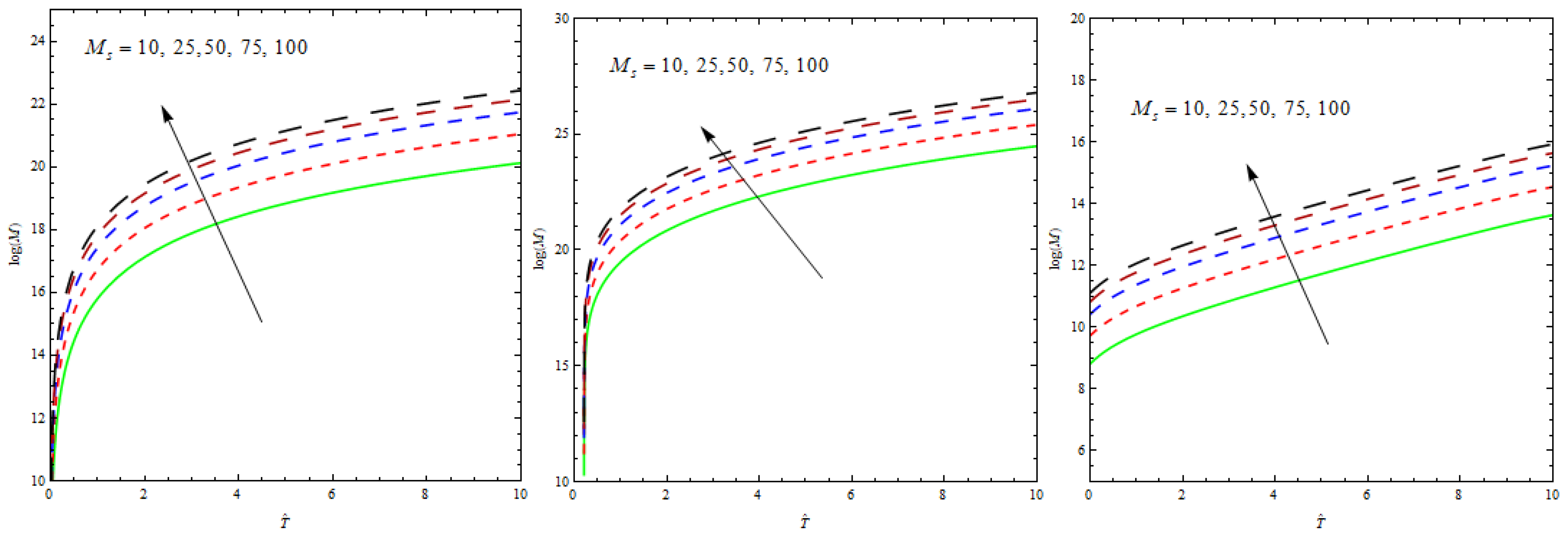
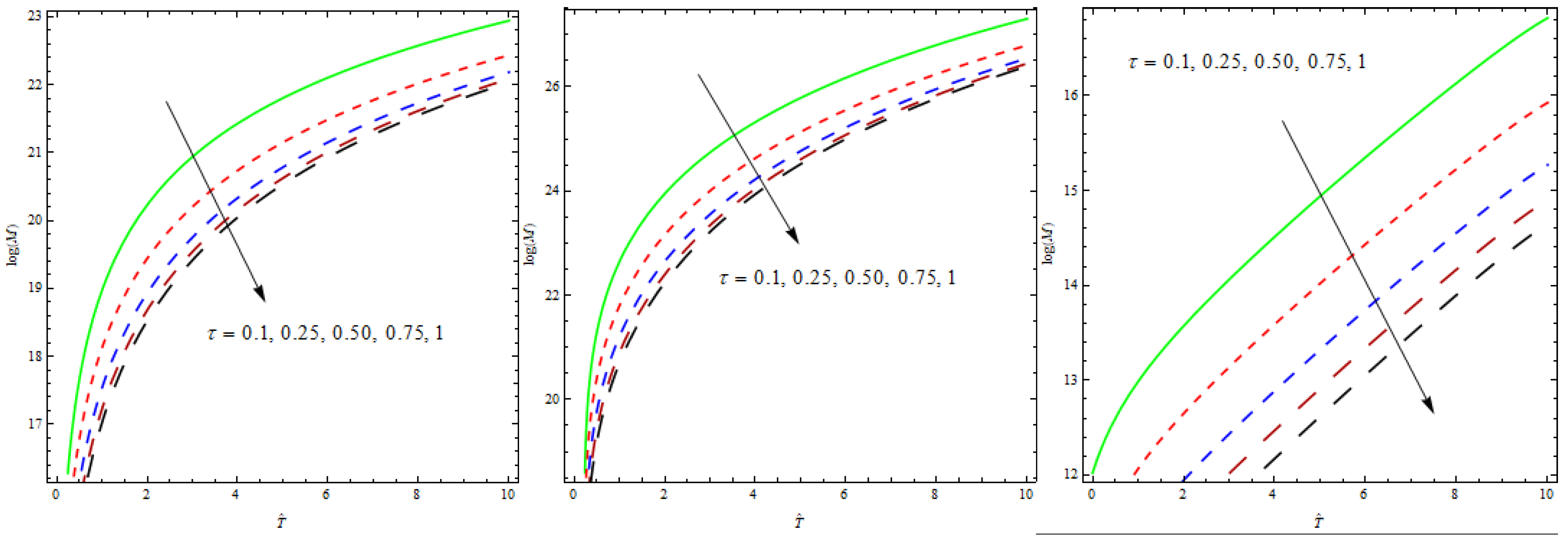
 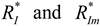 for fluid and porous region, solute Marangoni number Ms, diffusivity ratios τ and τ pm in fluid and porous region and different temperature gradients on the linear stability of double diffusive Bènard-Marangoni convection in a porous-fluid system in the presence of vertical magnetic field effect is investigated with the aim of controlling the convection. The resulting Eigen value is solved exactly and the expression for Marangoni number is obtained. Thermal Marangoni numbers Mt1, Mt3, Mt3 for linear, parabolic and inverted parabolic temperature profiles, respectively, against the thermal ratio
  for the various parameters discussed above are depicted in figures 2-9 for the values of
 . increases, M also increases. This may be due to the fact that the temperature gradient is less in fluid region, where Marangoni convection is happening there by indicating that surface tension is comparatively more in the fluid region. is similar to that found in Fig. 2. Different temperature profiles have different effects on M . The curves seem to be converging for parabolic temperature profile as compared to the curves for linear and inverted parabolic temperature profiles indicating the importance of Q for wide ranging values of . From Fig. 3a, 3b, 3c one can note that Mt2(Q) > Mt1(Q) > Mt3(Q). This implies that the strength of the magnetic field can be suitably chosen with the relevant temperature profiles to control convection. for different values of = 0.1,0.5,1,1.5,2. It may be observed that the effect of is to stabilize the system. Physically, as viscosity increases, the resistance to the flow increases which increases the surface tension. Once again, we see that for a given , Mt2(μ) > Mt1(μ) > Mt3(μ). Increase in increases M for all the three profiles except that M3 increases up to ≈ 8 and then a sudden decrease. This might be due to the large temperature ratio and the nature of the temperature profile.
 = −2,−1,0,1,2 is to decrease M for all the three profiles. As the strength of heat source increases, in the fluid region, where Marangoni convection is happening, increases the temperature which clearly decreases the surface tension there by decreasing M. This result is depicted in Fig.5. Figure 5a shows that the effect of is prominent for linear temperature profile in comparison with the other two profiles. For a given it is observed that
  . The effect of is similar to the observations recorded earlier.
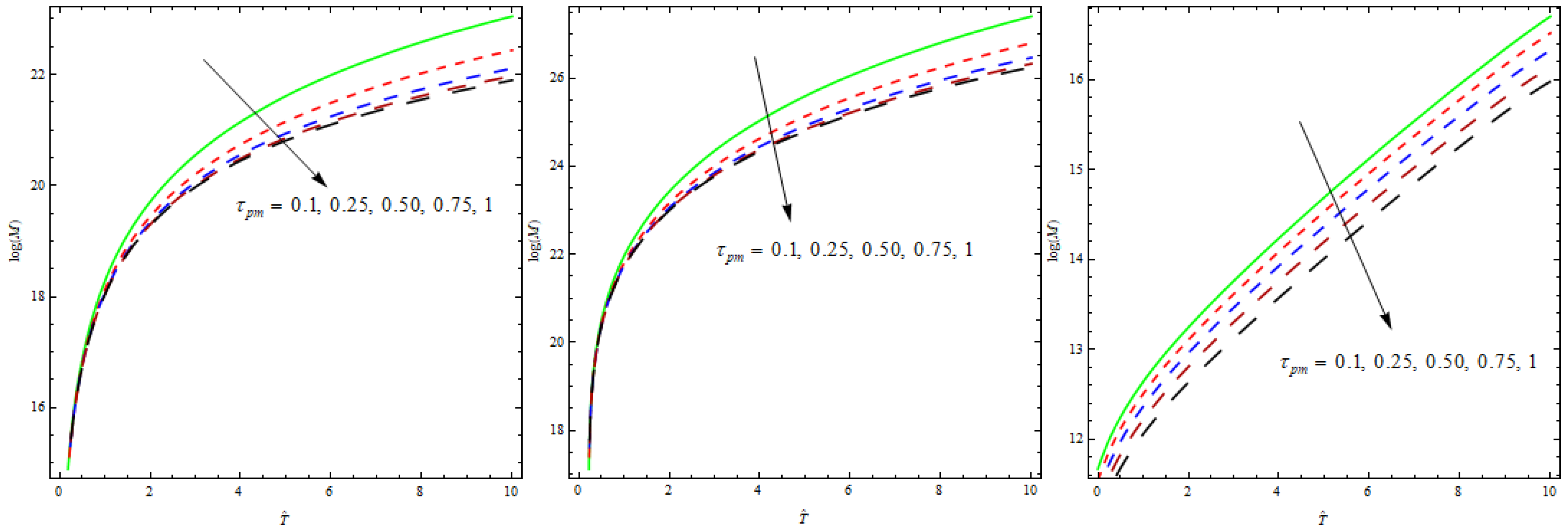
 = −2,−1,0,1,2 is opposite to that of . These graphs clearly indicate that in the porous region, increase in the strength of source stabilizes the system as expected. It can also be noted that is more dominant for linear and inverted parabolic temperature profiles. The effect of is to stabilize the system as seen in other figures.. Physically, solutal Marangoni number stabilizes the system. We observe that from Fig. 7, the curves are more diverging for all the three profiles with increasing . Here again, for a given , Mt2(MS) > Mt1(MS) > Mt3(MS). As expected, increase in thermal ratio stabilizes the system. is to stabilize the system., i.e., 0.2 < < 1, there is no effect of τpm for linear and parabolic temperature profiles, for > 1 the curves diverges.
6. Conclusion
- (i)
- The effect of Chandrasekhar number Q destabilizing the system is an unexpected result from the study. This may be due to the fact that the two diffusing components act opposite to each other with heat source in the presence of vertical magnetic field.
- (ii)
- Lesser the thermal ratio higher the surface tension as seen in the figures (especially in the fluid region).
- (iii)
- Larger viscosity ratio
 stabilizes the system even when the thermal ratio increases.
 - (iv)
- The strength of heat source (sink) is so chosen that it does not induce convection by itself.
- (v)
- Parabolic temperature profile is highly stable among the three temperature gradients.
- (vi)
- The choice of temperature profile helps in delaying or augmenting convection.
Acknowledgments
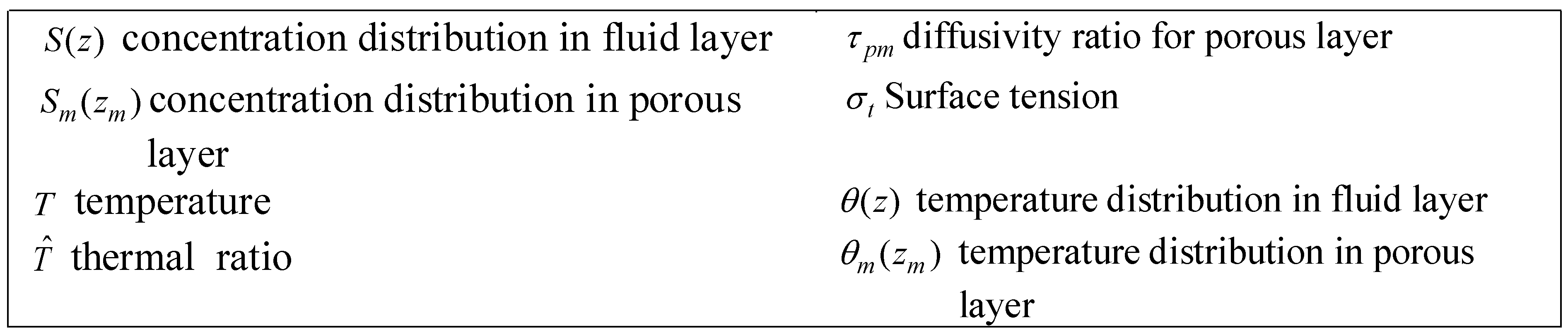
Nomenclature

References
- Sumithra R., Manjunatha N., An exact study of the effects of parabolic and inverted parabolic temperature gradients on surface tension driven magneto convection in a composite layer, International Journal of Recent Technology and Engineering, 3 (5) (2014) 36-46.
- Noureddine Hadidi, Rachid Bennacer., Yacine Ould-amer., Numerical study of double-diffusive convection developed within horizontal partially porous enclosure, Desalination and Water Treatment, 57(48-49) (2016) 23217-23224.
- Manjunatha N., Sumithra R., Effects of non-uniform temperature gradients on double diffusive Marangoni convection in a two layer system, International Journal of Pure and Applied Mathematics, 118(2) (2018) 203-220.
- Altawallbeh A A., I. Hashim, B. S. Bhadauria., Magneto-double diffusive convection in a viscoelastic fluid saturated porous layer with internal heat source, AIP Conference Proceedings 2116, 030015 (2019). [CrossRef]
- Sumithra R, Komala B., Manjunatha N ., Darcy-Benard double diffusive Marangoni convection with Soret effect in a composite layer system, Malaya Journal of Matematik, 8(4) (2020) 1473-1479.
- Nor Fadzillah Mohd Mokhtar, Roslinda Nazar, Fudziah Ismail, Norihan Md Arifin, MohamedSuleiman., Marangoni convection in a fluid saturated porous layer with a deformable free surface, International Journal of Mathematical and Computational Sciences, 3(2) (2009) 137-142.
- Gangadharaiah Y.H., Onset of Benard–Marangoni convection in a composite layer with anisotropic porous material, Journal of Applied Fluid Mechanics, 9(3) (2016) 1551-1558.
- K. Mehmood, S. Hussain, and M. Sagheer., Mixed convection flow with non-uniform heat source/sink in a doubly stratified magneto nanofluid, AIP Advances, 6 (6) 065126 (2016). [CrossRef]
- Dileep Kumar and A.K.Singh., Effects of heat source/sink and induced magnetic field on natural convective flow in vertical concentric annuli, Alexandria Engineering Journal, 55(4) (2016) 3125-3133.
- Sravanthi, C. S., Gorla, R. S. R., Effects of heat source/sink and chemical reaction on MHD Maxwell nanofluid flow over a convectively heated exponentially stretching sheet using Homotopy analysis method, International Journal of Applied Mechanics and Engineering, 23(1) (2018) 137-159.
- Upreti, H., Rawat, S.K. and Kumar, M., Radiation and non-uniform heat sink/source effects on 2D MHD flow of CNTs-H2O nanofluid over a flat porous plate, Multidiscipline Modeling in Materials and Structures,16(4) (2019) 791-809.
- Nurul Hafizah Zainal Abidin, Nor Fadzillah Mohd Mokhtar, Zanariah Abdul Majid. Onset of Benard-Marangoni instabilities in a double diffusive binary fluid layer with temperature-dependent viscosity, Numerical Algebra, Control & Optimization, 9 (4) (2019) 413-421.
- M K Nayak, A K Abdul Hakeem and B Ganga., Influence of non-uniform heat source/sink and variable viscosity on mixed convection flow of third grade nanofluid over an inclined stretched Riga plate, International Journal of Thermofluid Science and Technology, 6 (4) (2019) 19060401.
- Nadeem, S., Ijaz, M., Ayub, M. Darcy-Forchheimer flow under rotating disk and entropy generation with thermal radiation and heat source/sink, J Therm. Anal. Calorim., (2020). [CrossRef]
- Thirupathi Thumma and S.R. Mishra., Effect of nonuniform heat source/sink, and viscous and Joule dissipation on 3D Eyring–Powell nanofluid flow over a stretching sheet, Journal of Computational Design and Engineering, 7 (2020) 1-15.
- Chamkha, Ali J., Yassen, Rizk., Ismael, Muneer A., Rashad, A.M., Salah, T., Nabwey, Hossam A., MHD free convection of localized heat source/sink in hybrid nanofluid-filled square cavity, Journal of Nanofluids, 9(1) (2020) 1-12.
- Talha Anwar, Poom Kumam, Zahir Shah, Wiboonsak Watthayu and Phatiphat Thounthong., Molecules unsteady radiative natural convective MHD nanofluid flow past a porous moving vertical plate with heat source/sink, Molecules, 25(4) (2020) 854.
- Mandal, I.C., Mukhopadhyay, S., Nonlinear convection in micropolar fluid flow past a non-isothermal exponentially permeable stretching sheet in presence of heat source/sink, Therm. Eng., 67 (2020) 202–215.
- G. Dharmaiah, O.D. Makinde, K.S. Balamurugan., Perturbation analysis of thermophoresis, hall current and heat source on flow dissipative aligned convective flow about an inclined plate, International Journal of Thermofluid Science and Technology, 7(1) (2020) 20070103.
- Tarikul Islam, Nazma Parveen, Md. Fayz-Al-Asad., Hydromagnetic natural convection heat transfer of Copper-Water nanofluid within a right-angled triangular cavity, International Journal of Thermofluid Science and Technology, 7(3) (2020) 070304.
- Manjunatha. N and Sumithra R., Effects of heat source/sink and nonuniform temperature gradients on Benard-surface tension driven convection in a composite layer in the presence of vertical magnetic field, Gedrag en Organisatie, 33(2) (2020a) 865-879.
- Manjunatha. N and Sumithra R., Effects of uniform and non-uniform temperature gradients on non-Darcian-Benard-magneto-Marangoni convection in composite layer in the presence of constant heat source/sink, Gedrag en Organisatie, 33(2) (2020b) 880-896.
- R.K. Vanishree, Sumithra R and Manjunatha N., Effect on uniform and nonuniform temperature gradients on Benard-Marangoni convection in a superposed fluid and porous layer in the presence of heat source, Gedrag en Organisatie, 33(2) (2020) 746-758.
- Manjunatha N., Sumithra R., Effects of non-uniform temperature gradients on surface tension driven two component magneto convection in a porous-fluid system, ARPN Journal of Engineering and Applied Sciences, 13 (2) (2018) 429-441.


 .
. .
. for porous region.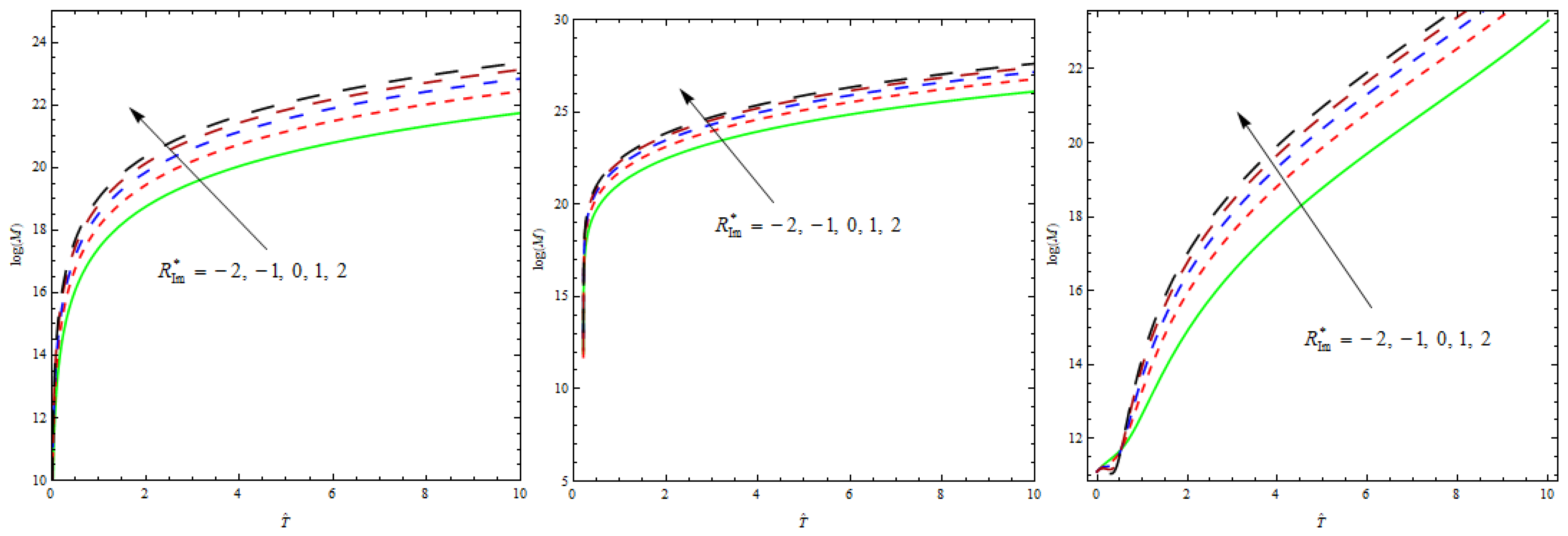


Copyright © 2022. This article is licensed under a CC BY-NC-ND 4.0.
Share and Cite
Manjunatha, N.; Sumithra, R.; Vanishree, R.K. Combined Effects of Nonuniform Temperature Gradients and Heat Source on Double Diffusive Benard-Marangoni Convection in a Porous-Fluid System in the Presence of Vertical Magnetic Field. Int. J. Thermofluid Sci. Technol. 2021, 8, 080104. https://doi.org/10.36963/IJTST.2021080104
Manjunatha N, Sumithra R, Vanishree RK. Combined Effects of Nonuniform Temperature Gradients and Heat Source on Double Diffusive Benard-Marangoni Convection in a Porous-Fluid System in the Presence of Vertical Magnetic Field. International Journal of Thermofluid Science and Technology. 2021; 8(1):080104. https://doi.org/10.36963/IJTST.2021080104
Chicago/Turabian StyleManjunatha, N., R. Sumithra, and R.K. Vanishree. 2021. "Combined Effects of Nonuniform Temperature Gradients and Heat Source on Double Diffusive Benard-Marangoni Convection in a Porous-Fluid System in the Presence of Vertical Magnetic Field" International Journal of Thermofluid Science and Technology 8, no. 1: 080104. https://doi.org/10.36963/IJTST.2021080104
APA StyleManjunatha, N., Sumithra, R., & Vanishree, R. K. (2021). Combined Effects of Nonuniform Temperature Gradients and Heat Source on Double Diffusive Benard-Marangoni Convection in a Porous-Fluid System in the Presence of Vertical Magnetic Field. International Journal of Thermofluid Science and Technology, 8(1), 080104. https://doi.org/10.36963/IJTST.2021080104