Article

Synergistic Overexpression of Sox9, TGFβ1, and Col II Induces Functional Chondrogenesis in hUC-MSCs Using a 3D Culture Approach


1
Panjwani Center for Molecular Medicine and Drug Research, International Center for Chemical and Biological Sciences, University of Karachi, Karachi 75270, Pakistan
2
The Centre for Regenerative Medicine and Stem Cell Research, The Aga Khan University, Karachi 74800, Pakistan
3
Department of Ophthalmology and Visual Sciences, The Aga Khan University, Stadium Road, P.O. Box 3500, Karachi 74800, Pakistan
4
Department of Biological and Biomedical Sciences, The Aga Khan University, Stadium Road, P.O. Box 3500, Karachi 74800, Pakistan
*
Author to whom correspondence should be addressed.
Organoids 2026, 5(1), 3; https://doi.org/10.3390/organoids5010003
Submission received: 19 August 2025 / Revised: 15 December 2025 / Accepted: 3 January 2026 / Published: 14 January 2026

Abstract

Human umbilical cord-derived mesenchymal stem cells (hUC-MSCs) possess the potential for chondrogenic differentiation, offering a promising alternative source for cartilage regeneration. To address the limited availability and expansion capacity of autologous chondrocytes, we investigated the effect of co-overexpression of Sox9, TGFβ1, and type II collagen (Col II) on the chondrogenic differentiation of hUC-MSCs using both 2D and 3D pellet culture systems. Following transfection, the cells exhibited a chondrocyte-like morphology and a marked downregulation of the stemness marker Stro-1. After 21 days in a 3D pellet culture system, the cells formed cartilage-like tissue characterized by the strong expression of chondrocyte-specific genes (Sox9, TGFβ1, Col II, Aggrecan) along with the significant secretion of sulfated glycosaminoglycans (sGaGs). These effects were attributed to enhanced cell–cell contact and extracellular matrix interactions promoted by the 3D environment. Our findings suggest that genetically modified hUC-MSCs cultured in a 3D pellet system represent a robust in vitro model for cartilage regeneration, with potential applications in transplantation and drug toxicity screening.

1. Introduction

Osteoarthritis is a chronic condition manifested by the sequelae of focal articular cartilage damage [1]. Cell-based gene therapy for treating injured cartilage has been explored due to the limitations of surgical therapies, the reduced efficacy of drugs related to osteoarthritis, and the poor underlying healing mechanisms in injured cartilage [2,3,4]. Restoration by chondrocyte graft significantly enhances long-term survival; however, using an allogenic graft, which is often associated with immune rejection, and an autologous graft is linked with donor-site morbidity [5,6,7]. The autologous transplantation of chondrocytes is often associated with limitations, including a lack of donor sites to offer the harvest of large numbers of chondrocytes and less potential for chondrocytes to expand in vitro without altering the phenotypic features [5]. Mesenchymal stem cells (MSCs), derived from an adult tissue source, i.e., human umbilical cord tissue, are the best source of allogenic transplantation to the musculoskeletal system with reduced donor-site morbidity, better proliferation, and chondrocyte phenotype [8,9,10]. MSCs have been utilized for various joint-related degeneration through indirect articular injections after microfractures, directly to the focal cartilage injury, and transplantation of in vitro expanded MSC grafts [11,12,13]. However, MSCs have been considered inferior to differentiated states, such as chondrocytes, for the repair of cartilage-related injuries because they fail to achieve the chondrocyte characteristics upon transplantation [14]. MSCs should be incubated in a suitable medium supplemented with additives to stimulate chondrogenesis. Growth factors, including fibroblast growth factor (FGF), bone morphogenic protein (BMP), and transforming growth factor β1 (TGF-β1), have been studied for their ability to trigger chondrogenesis [11,15,16]. However, the chemical modification is associated with a few limitations, including cell instability and toxicity upon in vivo transplantation [17]. Investigators have evaluated the overexpression of chondrocyte-specific genes in MSCs that have been successfully pursued further in various cartilage defects. Studies have shown the potential of the overexpression of Sox trio genes such as sox9 and sox5,6 for enhancing chondrogenesis [13,18]. Moreover, TGF-β1 and BMP-2 overexpression stimulate the chondrocyte pathways of MSCs, as evidenced by the detection of type II collagen and toluidine blue metachromasia [19,20,21]. Furthermore, the effect of optimized culture conditions and supplements aids in escalating MSC chondrogenesis in vivo; however, data show the persistence of fibrous tissue in the repaired defect [22]. Additional data on in vitro culture models that mimic in vivo conditions completely via utilizing MSC for cartilage repair may greatly discern methods to mimic hyaline-like tissue by transplanting MSC grafts. For the chondrogenic induction of mesenchymal stem cells, growth factors and bio-activator supplements in the 3D pellet culture system are commonly used in vitro and have been typified for different species [23,24]. However, investigators have shown that MSCs derived from equine sources lack proper long-term survival in pellet culture, with the risk of apoptosis, necrosis, and reduced chondrogenesis [25].
Pellet culture has been considered a stable, scaffold-free system and is the gold standard for both MSC differentiation, consistent lineage features, and chondrocyte re-differentiation studies [26]. Therefore, to completely optimize MSC chondrogenesis, the gene modification of MSCs followed by seeding as pellet culture will aid in better cell differentiation, cell-to-cell communication, proliferation, and proteoglycan production when incubated for at least 3–4 weeks [27].
The purpose of this study was to investigate the synergistic effect of Sox9, TGFβ1, and Col II co-overexpression on the chondrogenic differentiation of hUC-MSCs cultured in a 3D pellet culture system. The differentiation of hUC-MSCs and the maintenance of the chondrocyte phenotype were investigated to evaluate the production of ECM. Pellet culture provides an enclosed environment and is one of the more efficient culture systems to support cells in creating cartilage-like tissue for use in vitro models for various cartilage defects.

2. Methodology

2.1. Ethical Approval

Full-term healthy human umbilical cord (UC) tissue samples were obtained following written informed consent from donors from Zainab Panjwani Memorial Hospital, Karachi, Pakistan. The tissue samples were processed under standard SOPs (approval number: IEC-009-UCB-2015). All cord samples were identified and screened for the absence of infectious diseases such as hepatitis, malaria, acquired immunodeficiency syndrome, and human immunodeficiency virus. The use of human umbilical cord tissue samples was approved by the ethical committee of Dr. Panjwani Center for Molecular Medicine and Drug Research, International Center for Chemical and Biological Sciences, University of Karachi, Karachi, Pakistan.

2.2. Human Umbilical Cord Processing

The umbilical cord (UC) samples were collected in sterile phosphate-buffered saline (PBS) and processed in a biosafety cabinet level II following standard protocol. The UC samples were processed within 4 h of the cesarean section. The samples were washed with PBS and dissected into small pieces of approximately 2–4 mm explants, using scissors to expose Wharton jelly for the attachment of cells. After processing, the explants were kept in a 75 cm2 culture flask containing 10 mL of Dulbecco’s Modified Eagle’s Medium (DMEM) supplemented with 1 mM sodium pyruvate, 1 mM L-glutamine, 10% fetal bovine serum, and 1% penicillin–streptomycin, and incubated in 5% CO2 at 37 °C in a humidified atmosphere. Fresh medium was added every 3 days.

Sub-Culturing of hUC-MSCs

The subculturing of attached cells was performed using 0.25% trypsin–EDTA, and cells were cultured to proliferate until 70–80 confluence. Floating cells were discarded from the flask, and monolayers were rinsed with sterile PBS. Two milliliters of pre-warmed trypsin was added to the T-flask and incubated for one minute at 5% CO2 at 37 °C to detach cells completely. After incubation, the action of trypsin was inhibited using DMEM, and the suspension was centrifuged at 1000 rpm for 8 min to settle the cells. The supernatant was discarded, and cells were resuspended in DMEM and added to a T-75 containing 10 mL DMEM. Lastly, the flask was kept at 5% CO2 at 37 °C for further cell expansion. All experimental procedures were performed using 3–5 passaged cells.

2.3. Characterization of Isolated Umbilical Cord Cells

2.3.1. Morphological Assessment

T-flasks containing 50–60% cells were used for the morphological assessment. The medium was aspirated, and the cells were rinsed with PBS. Following washing, the cells were incubated with phalloidin 488 for 20 min to stain the cell cytoskeleton. Hereafter, approximately 4–6 fields per flask were observed at 10× magnification under a fluorescent contrast microscope. Images were taken using a CCD camera linked to the microscope and processed with Adobe Photoshop.

2.3.2. Immunocytochemical Staining

For the qualitative analysis of hUC-MSCs-specific proteins, immunocytochemical staining was performed. First, the cells were trypsinized and re-cultured in a 24-well plate and kept in an incubator for 24 h for monolayer formation. The next day, the cells were rinsed with PBS and fixed with 4% paraformaldehyde (PFA) (200 μL/well) for 15 min. Then, the cells were permeabilized with 1% Triton X (200 μL/well) for 10 min. Following washing, the cells were blocked with a non-specific blocking buffer containing 2% BSA and 0.1% Tween 20 for 30 min at RT. Subsequently, the cells were incubated with primary antibodies including CD29, vimentin, CD73, CD105, CD117, Stro1, HLA-DR, CD45, and Lin28 at a 1:100 dilution and incubated overnight at 4 °C. Then, the cells were rinsed thrice for 5 min on an orbital shaker. Later, the cells were incubated with secondary antibodies including Alexa Fluor-546 and phalloidin-tagged F-actin 488 at a 1:200 dilution for 2 h at RT. Lastly, the cells were washed with PBS and stained with DAPI (1:1000) for 10 min at RT. Once staining was completed, the coverslips were mounted using mounting media, and the slides were examined under a fluorescent microscope.

2.3.3. Immunophenotypic Properties

Briefly, the cells were trypsinized and fixed with 4% PFA for 10 min. Following washing, the cells were resuspended in a blocking solution and kept for 20 min at RT. MSC surface marker dynamics were studied by primary antibodies, including CD45, CD90, vimentin, and CD105, and incubated for 1 h at RT. Subsequently, the supernatant was removed, and secondary antibody Alexa Fluor 546 (1:200 dilution) was added for 1 h at RT. Afterwards, cells were resuspended in FACS solution and run on a flow cytometer (BD FACS Celesta, Becton Dickinson, Franklin Lakes, NJ, USA).

2.3.4. Chondrogenic, Osteogenic, and Adipogenic Differentiation of hUC-MSCs

Before differentiation induction, hUC-MSCs were cultured in a 6-well plate containing DMEM to attain 50–60% confluence at 37 °C. For chondrogenic differentiation, 50 mL of DMEM was supplemented with 1 μM dexamethasone, 10 ng of insulin, 20 ng of TGF-β1, and 100 μM ascorbic acid. These components were added to cells seeded on a 6-well plate to induce hUC-MSCs to commit to the chondrogenic pathway and generate chondrocytes. The media was replaced every 3rd day for 2 weeks. Alcian blue staining was performed to detect the proteoglycan secreted by chondrocytes. For osteogenic differentiation, 50 mL DMEM supplemented with 0.1 μM dexamethasone, 10 μM β-glycerophosphate, and 50 μM ascorbate phosphate was added to cells to induce osteogenic differentiation. The differentiation was confirmed after 2 weeks by Alizarin Red S for calcium deposits. Furthermore, adipogenic differentiation was induced by using conditioned media supplemented with 1 μM dexamethasone, 10 μM insulin, and 200 μM indomethacin for 21 days, with a change of conditioned medium every 3rd day. Finally, Oil Red O staining was performed to detect oil droplets produced by adipocytes.

2.4. Overexpression of Chondrogenic Sox9, TGFβ1, and Col II in hUC-MSCs

2.4.1. Vectors Constructs

E. coli stab cultures were obtained from Addgene (www.addgene.org) accessed on 22 January 2019. Constructs for pcDNA3.1 HA-rnSox9 (Addgene #62972), and TGFB1_pLX307 (Addgene #98377) and pLe6Δ -hLP-mcs/(EGFP-IresPuro-hInt (Addgene #64314) were incorporated into bacteria. Following the exponential increase in LB, plasmid isolation was performed according to the standard Thermofisher kit instructions. The plasmids were quantified using a Nano-Drop spectrophotometer (NanoDrop ND-1000 Spectrophotometer; Thermo Fisher Scientific, Inc., Wilmington, DE, USA).

2.4.2. Transient Transfection

Three million hUC-MSCs of P4 generation were utilized for transfection. Briefly, the cells were trypsinized and washed with PBS. Washing was done 3 times to completely remove trypsin and DMEM from the cells. Then, the cells were resuspended in the R buffer provided in the kit, and 30 µg total plasmid DNA of Sox9, TGFB1, and ColII was added to the cell suspension. Then, the cells were electroporated using a Neon Transfection System (ThermoScientific, USA) set at a voltage of 1200 volts, input pulse width of 10 ms, and input pulse number of 1 pulse. After 48 h post-transfection, the cells were seeded in culture flasks containing transfection media and incubated for 48 h at 37 °C.

2.4.3. Transfected Human Umbilical Cord-Derived MSCs in Pellet Formation

After 48 h of incubation, the transfected hUC-MSCs were collected in a 15 mL conical tube for pellet culture formation. Briefly, the transfected hUC-MSCs were trypsinized and centrifuged at 300 rpm for 6 min and kept in a humidified incubator maintained at 37 °C, and 5% CO2 with a loose cap. Every 3rd day, the medium was aspirated, and 3 mL of fresh medium and chondro-induction medium (CM) were added slowly into the falcon tube without disturbing the pellet culture, respectively. Transfected hUC-MSCs in CM were included as a positive control. After 21 days of culture, the transfected hUC-MSCs were transformed into a small ball-like 3D structure or spheroids. The spheroids or pellet cultures were taken out using a scalpel and transferred to a 24-well plate for subsequent experiments.

2.5. Characterization of Transfected Human Umbilical Cord-Derived MSCs

2.5.1. Morphological Assessment of 2D and 3D Pellet Cultures

The transfected hUC-MSCs were observed under a phase contrast microscope for their morphological appearance. The ball-like pellet cultures, after 21 days of culture in CM and DMEM, were observed in a 15 mL Falcon tube and a 24-well plate. In a 24-well plate, the cultures were rinsed with PBS and fixed with 4% PFA. Following washing with PBS, the cultures were stained with phalloidin 488 for 20 min at RT. After washing, the cultures were observed under a fluorescent microscope.

2.5.2. Immunohistochemical Staining for 3D Pellet Cultures

Briefly, the transfected hUC-MSCs after 48 h and 3D pellet cultures after 21 days were washed with PBS, fixed with 4% PFA, and incubated with anti-Sox9, anti-TGFβ1, anti-ACAN, anti-Col II, anti-Six1, and anti-Stro1 primary antibodies at 1:200 dilution overnight at 4 °C. The next day, the cultures were washed 3 times with PBS and incubated with phalloidin stain (labeled F-actin 488), and secondary antibody Alexa Fluor-546 at 1:200 dilution for 2 h at RT. After incubation, the cultures were washed and stained with DAPI (1:1000) for 15 min. Followed by washing, the cultures were mounted using mounting media and observed under a fluorescent microscope (Nikon TiE, Nikon, Tokyo, Japan). A list of reagents and antibodies used in the study is provided in Table 1.

2.5.3. RNA Isolation of 3D Pellet Culture

The transfected hUC-MSCs after 48 h and pellet cultures after 21 days of incubation were disintegrated using a homogenizer. Following this, 1 mL TRIzol reagent was added for 10 min and kept at RT. Then, 200 μL of chloroform was added and the sample centrifuged at 12,000 rpm for 10 min at 4 °C. Subsequently, the top aqueous layer was collected in a microfuge tube, and 1 mL of absolute ethanol was added for 8 h at −80 °C. Afterwards, the suspension was centrifuged at 12,000 rpm for 30 min at 4 °C. Finally, the pellet was resuspended in 25 μL of nuclease-free water and stored at −20 °C.

2.5.4. mRNA Quantification

mRNA was quantified at an absorbance of 260 nm and 280 nm via a spectrophotometer (NanoDrop ND-1000 Spectrophotometer; ThermoFisher Scientific, Inc., Wilmington, DE, USA).

2.5.5. cDNA Synthesis

The cDNA was synthesized using RevertAid, with 1 μg of mRNA used for cDNA synthesis according to the manufacturer’s instructions. Briefly, total RNA, Random Hexamer primer, and nuclease-free water were combined and spun at 40 °C. Then, the mixture was incubated at 70 °C. Following this, 4 µL of 5× Reaction Buffer, 2 µL of dNTP Mix (10 mM), and 1 µL of RiboLock RNAse Inhibitor (40 U/L) were added to the mixture, centrifuged for one minute at 1200× g, and then incubated for five minutes at 25 °C. Lastly, After adding RevertAid reverse transcriptase (K1622, ThermoScientific, USA), the cycle was repeated for 10 min at 25 °C, 60 min at 42 °C, and 10 min at 70 °C. The cDNA was stored at −20 °C.

2.5.6. qPCR Analysis

For qPCR analysis, the reaction was set for initial denaturation at 95 °C for 10 min, followed by 40 cycles of denaturation at 95 °C for 15 s, and then annealing and extension at 58 °C for 30 s. The ΔCt (change in cyclic threshold) was determined by subtracting the Ct value for GAPDH from the Ct value for each targeted gene. The ΔCt was normalized to the endogenous control to determine ΔΔCt. Relative fold change was obtained using the 2ΔΔCt method. The expression levels of Aggrecan, type II collagen, SOX9, and TGF-β1 were calculated. GAPDH was used as an intact endogenous control. A list of primer sequences is presented in Table 2.

2.6. Biochemical Assessment of 3D Pellet Cultures

2.6.1. Alcian Blue Staining

A qualitative assessment of glycosaminoglycans (GaGs) was conducted using Alcian blue staining. The 3D pellet cultures in 24-well plates were washed with PBS and incubated with 2 mL Alcian blue stain for 15 min at RT. Following washing, the 3D cultures were counter-stained with hematoxylin and observed for the presence of GaGs and cellular nuclei under a bright-field microscope.

2.6.2. Dimethyl Methylene Blue Assay

A quantitative assessment of glycosaminoglycans (GaGs) was conducted using the DMMB calorimetric assay. The 3D pellet cultures were digested using 0.5 mg/mL papain supplemented with 0.05 mM sodium phosphate, 1 mM EDTA, and 2 mM DTT at pH 8.0 for 70 °C for 2 h. After digestion, the suspension was serially diluted up to 20–100 times. Furthermore, chondroitin sulfate dilutions were prepared in PBS up to 50 to 1000 µg/mL to obtain the linear curve of calibration. Fifty microliters of chondroitin-4-sulfate was added to a 96-well plate containing 250 µL of DMMB solution. The absorbance was calculated at 525 nm by a plate reader (Multiskan, Go, Thermo Scientific). GaGs were calculated as milligrams for each sample.

2.7. Statistical Analysis

The gene expression data of transfected and non-transfected hUC-MSCs were determined as the mean ± standard deviation. All of the results were analyzed in triplicate (n = 3). A one-way ANOVA test was applied to analyze the differences between the in vitro experimental groups (SPSS version 19, Inc., Chicago, IL, USA). The significance was set at p < 0.05.

3. Results

3.1. Characterization of Human Umbilical Cord Tissue-Derived Mesenchymal Stem Cells

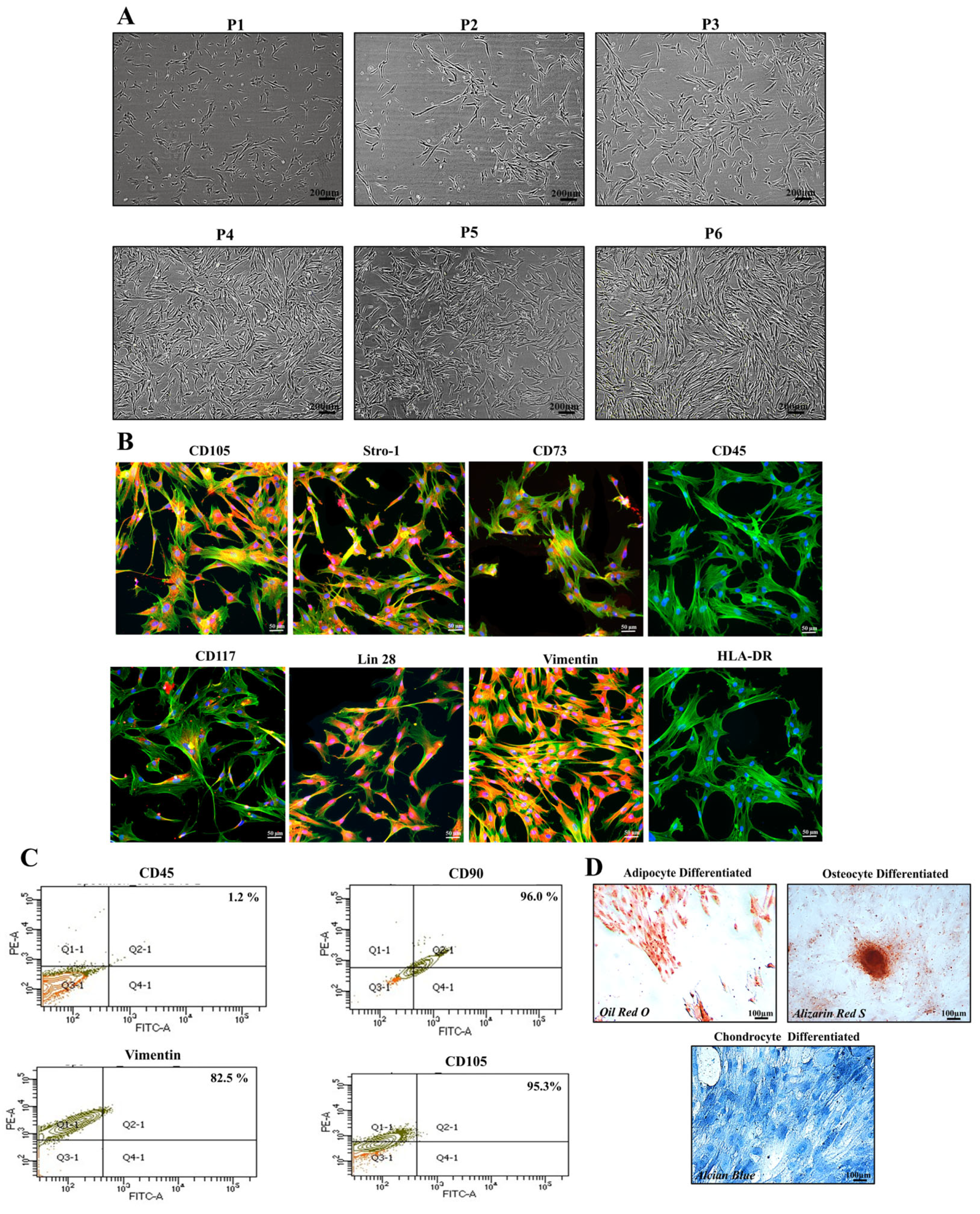
The isolated cells displayed a homogeneous spindle-shaped morphology from the third to sixth passages, as shown in Figure 1A. Immunocytochemical staining showed the positive expression of CD105, vimentin, CD117, CD29, Lin28, and Stro1. CD45 and HLA-DR were not expressed (Figure 1B). Immunophenotyping revealed that a significant population, i.e., up to 98% of cells, showed positive expression of CD105, vimentin, and CD90, whereas only 1% of cells expressed CD45 (Figure 1C). Moreover, the cells successfully differentiated into osteocytes, chondrocytes, and adipocytes, as evidenced by the presence of mineral deposits and proteoglycan, and oil droplet production (Figure 1D).

3.2. Characterization of Transfected hUC-MSCs in 2D and 3D Pellet Culture

3.2.1. Morphological Assessment

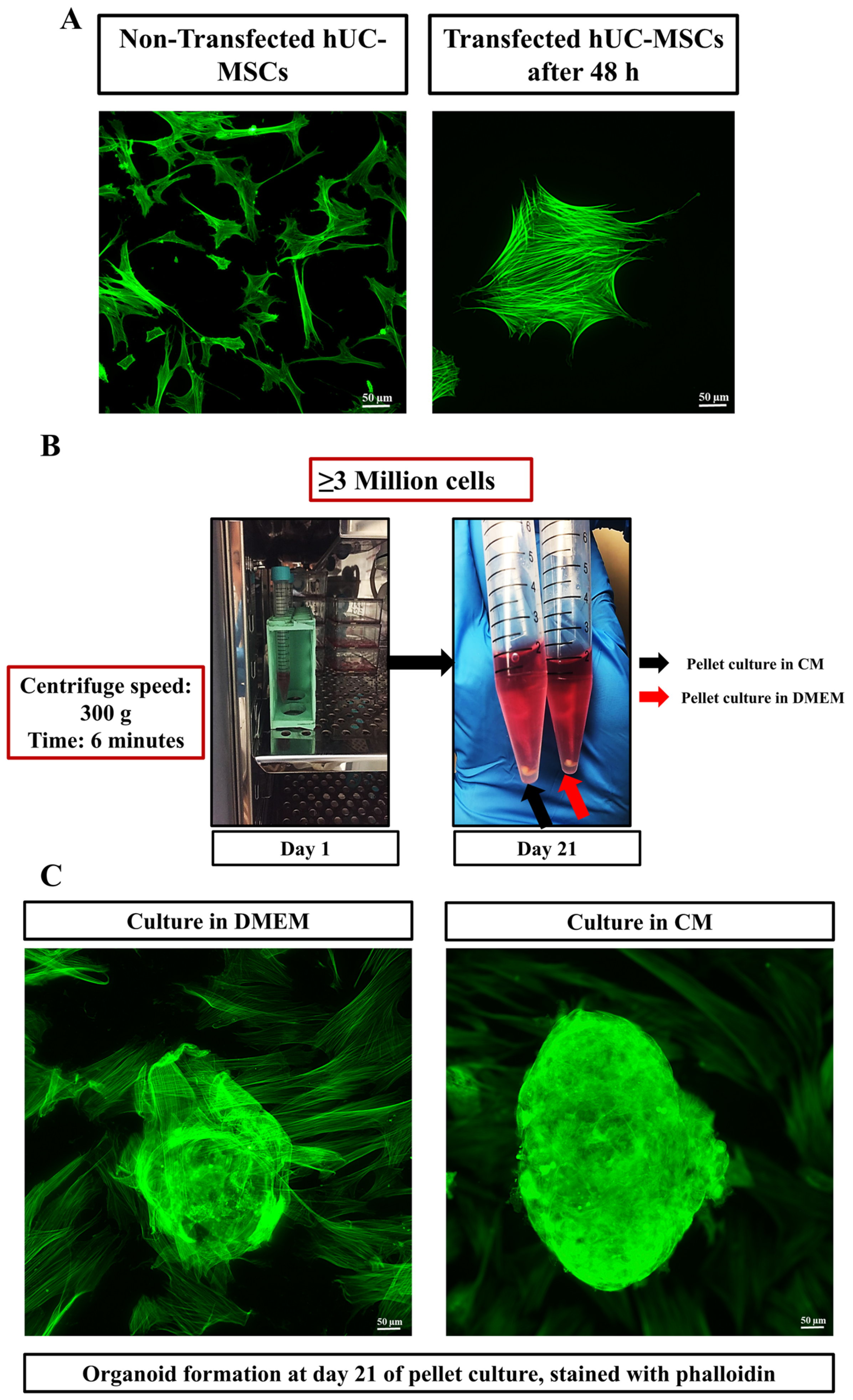
Transfected hUC-MSCs showed striking differences in morphology compared to the non-transfected hUC-MSCs. Cells with a more broad polygonal shape were observed on day 2 post-transfection compared to the control (Figure 2A). The pellet culture on day 21 in CM and DMEM was organized into a ball-like structure at the bottom of the Falcon tube, as shown in Figure 2B. The pellet cultures were transferred into a 24-well plate and stained with phalloidin 488. The cultures exhibited organoid-like structures (Figure 2C).

3.2.2. Immunocytochemical Assessment

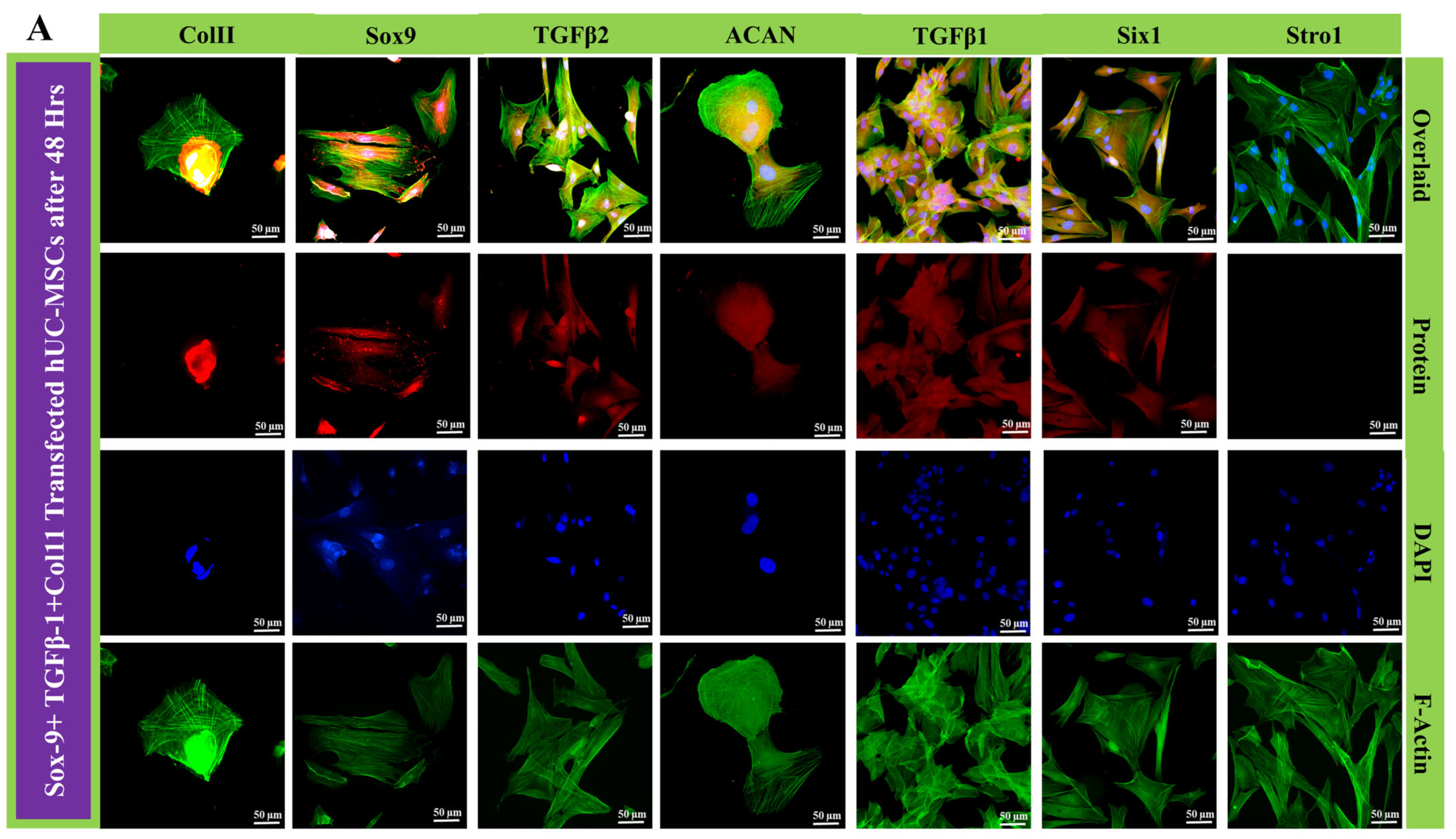
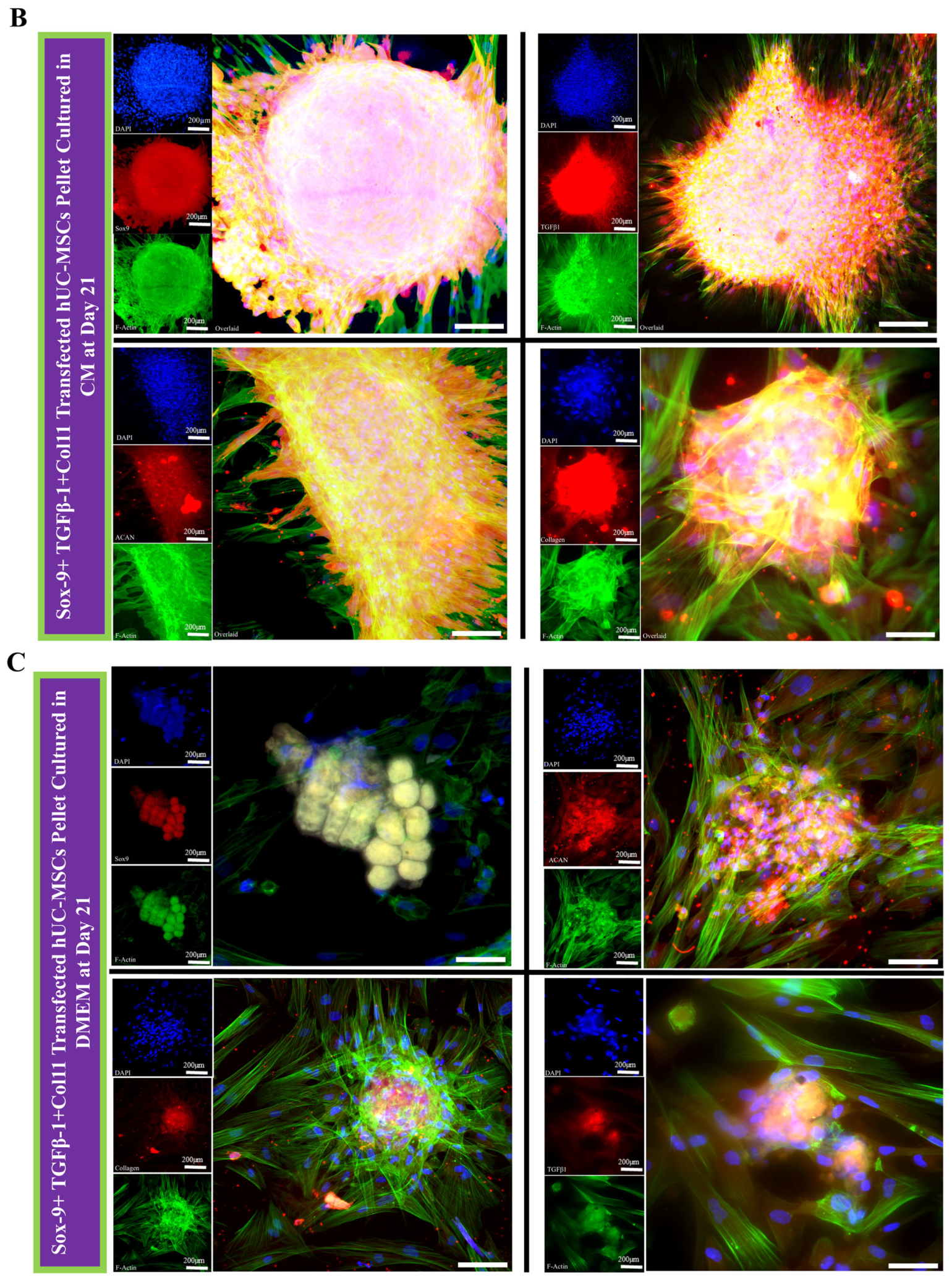
The transfected hUC-MSCs after 48 h and pellet cultures after 21 days of incubation in CM and DMEM were immunostained for the expression of collagen II, Sox9, TGFβ1, ACAN, TGFβ2, Six1, and Stro1, as shown in Figure 3.
The expression of the early chondrogenic marker Six1 was detected in transfected hUC-MSCs, indicating the activation of transcriptional regulators involved in mesenchymal lineage commitment. Six1 expression preceded Sox9 upregulation, suggesting its potential upstream regulatory role during early chondrogenic differentiation.
The immunofluorescence images confirm distinct F-actin organization in transfected hUC-MSCs, demonstrating cytoskeletal remodeling during differentiation. In 3D pellet cultures, strong expression of COL II, SOX9, and ACAN was observed at 21 days, confirming matrix deposition and chondrogenic maturation.

3.2.3. Molecular Analysis of Chondrogenesis in 3D Pellet Cultures

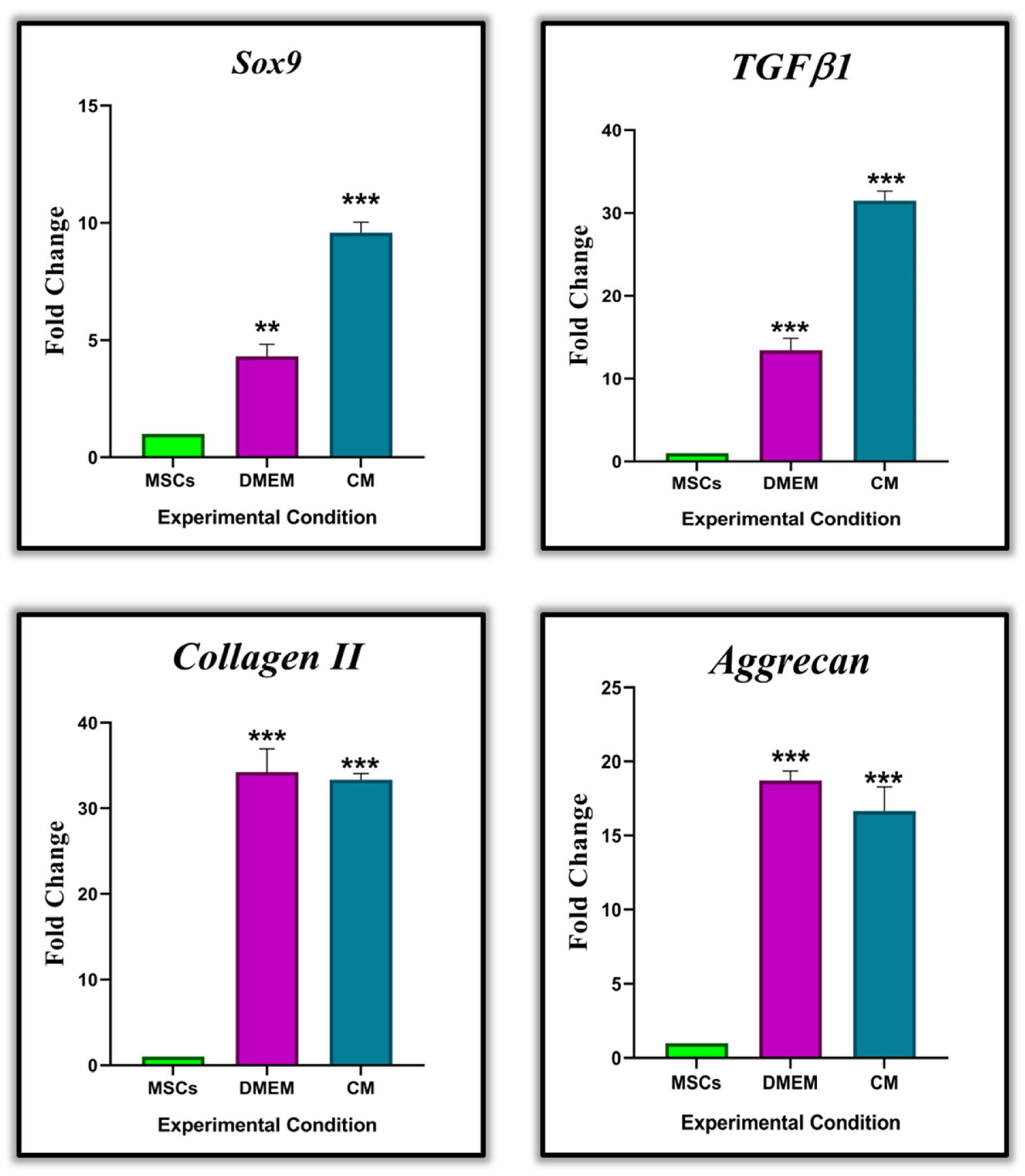
The chondrogenic gene expression dynamics were calculated in the transfected hUC-MSCs in the pellet culture system during the differentiation of chondrocytes. mRNA expression of the chondrogenic markers Sox9, TGFβ1, ColII, and Aggrecan was significantly upregulated in contrast to the non-transfected hUC-MSCs. The fold change was calculated by the 2(−ΔΔCt) method. GAPDH was used as an internal control to normalize the CT values of the genes, as shown in Figure 4. The experiment was repeated three times, and data are presented as the mean.

3.3. Functional Assay of Transfected hUC-MSCs in 3D Pellet Culture

3.3.1. Alcian Blue Staining

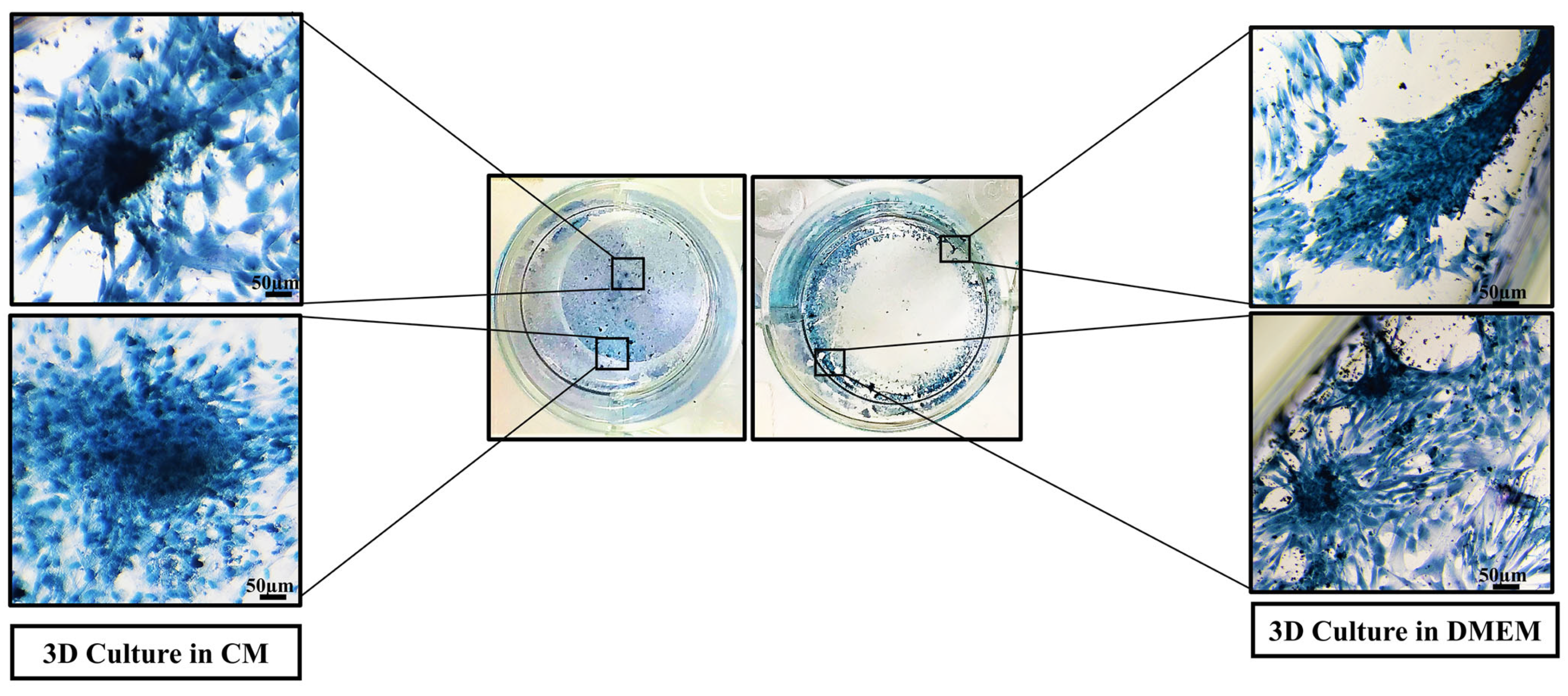
The pellet cultures, upon staining with the Alcian blue stain, revealed the presence of GaG content, as shown in Figure 5.

3.3.2. Dimethyl Methylene Blue Assay

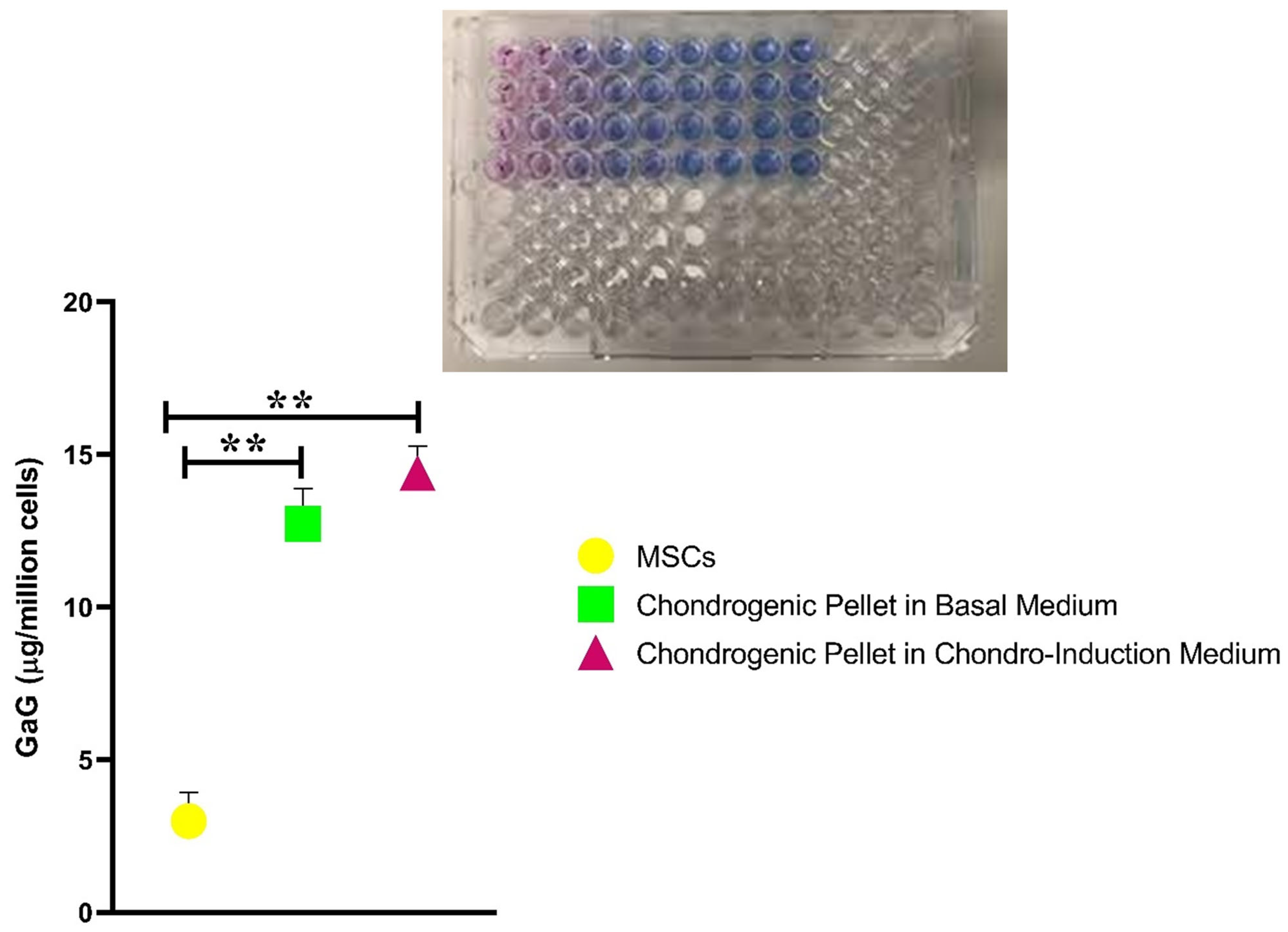
The quantitative analysis of GaGs by DMMB assay showed the highest concentration of chondroitin sulfate (CS). CS is a major GaG present in chondrocytes, which was significantly detected at the 525 nm wavelength. The assay detected chondroitin sulfate concentrations ranging from 2 to 14 μg/mL, keeping R2 = 0.9844 unaffected (Figure 6).

4. Discussion

In the present study, we focused on the overexpression of Sox9, TGFβ1, and ColII in hUC-MSCs that underwent chondrogenesis. Followed by transfection, the cells were incubated under the influence of conditioned medium, including DMEM and CM. Spontaneous and independent chondrogenesis of human umbilical cord-derived MSCs in pellet culture incubated in DMEM supervene without the addition of external growth factor, i.e., TGFβ1, which has been discussed in prior studies [28,29,30,31,32,33]. This may be a suitable model for toxicity analysis and allogeneic transplantation in case of cartilage defects [34]. Human umbilical cord-derived MSCs had a fibroblastic appearance and displayed a similar form to MSCs isolated from various other sources. Additionally, the cells displayed positive expression-specific markers including CD29, vimentin, CD73, CD105, CD117, and Stro1, whereas HLA-DR and CD45, being hematopoietic markers and immunity-related markers, were not expressed. On observation by phase contrast microscope, the cells appeared to be homogeneous after the second passage by eliminating supernatant containing non-adherent cells from the hematopoietic family. FACS analysis of the isolated population from the third passage illustrated a homogeneous cell population positive for vimentin, CD90, and CD105 but negative for CD45. The fact that the cells produced mineral deposits, proteoglycans, and oil droplets upon incubation in three different conditions means that the cells underwent osteogenic, chondrogenic, and adipogenic differentiation in monolayer formation [35,36,37,38,39].
Mesenchymal stem cells undergo chondrogenesis due to specific reasons such as high cell density, which promotes cell-to-cell interaction corresponding to the interactions occurring in pre-cartilage MSC condensation during limb development, and the effect of growth factors that accelerate chondrogenesis (TGFβ1, dexamethasone, and ascorbic acid) [40]. However, the condensation state can be achieved by forming a pellet culture, which is sufficient to stimulate MSCs to undergo chondrogenesis. In our study, the formation of pellets was achieved using twice as many cells than in other studies [41,42]. The aim was to prepare a pellet as large as possible so that the cells reside in the central region and endure high pressure. Additionally, the high density of cells better communicates via cell signaling and promotes better cell-to-cell interaction. In a prior study, Melissa C Goude et al. utilized ≥250,000 cells for pellet culture, but they had to supplement it with TGFβ1 to induce chondrogenesis [43]. However, during transfection, a high level of the transcriptional outcome of type II collagen was obtained, implying that the transfection of high-density cells is significant in inducing chondrogenesis [44]. Conversely, the surface of the pellet resembling the monolayer culture expressed type I collagen and ACAN; however, no type II collagen was expressed. In vitro, monolayer-seeded chondrocytes are dedifferentiated by the expression of type I collagen, which is dedifferentiated when the same cells are collected as three-dimensional structures, promoting type II collagen. There have been various possible reasons associated with the self-assembling induction of chondrogenesis of human umbilical cord-derived MSCs [45,46,47]. The condensed state of cells first stimulates the progression of various cell signaling pathways, including the secretion of autocrine/paracrine cytokines, which further induce the differentiation of chondrocytes and production of extracellular matrix. Nevertheless, the exact cytokines responsible for playing a role in in vitro cultivation are not yet described [40].
In our study, chondrogenesis was supported by the striking morphological appearance that occurred 48 h post transfection. The transfected hUC-MSCs appeared as typical polygonal shapes in 2D culture, followed by pellet culture formation; the cells organized themselves as organoids at day 21The transfected hUC-MSCs were positive for the proteins specifically involved in chondrogenesis, including Sox9, TGFβ1, TGFβ2, type II collagen, and Aggrecan [48]. It was not surprising that Six1 and Stro-1 were not expressed. Six1 has a typical role in embryonic development, especially in organogenesis, whereas Stro-1 is a stemness marker. Their significant downregulation after transfection suggests that cells are no longer proliferative progenitors, but these are differentiated or specialized cells [39]. Immunohistochemical staining positively supported the gene expression outcomes in the pellet culture system. Aggrecan expression further suggested that pellet culture could aid in creating better 3D structures. TGFβ1 supplementation to MSCs in pellet culture reduced the regulation of transcriptional type II collagen mRNA [11,33]. The effects of TGFβ1 on the synthesis of ECM and proliferation are contextual and can be stimulatory or inhibitory, depending on the co-growth factors and the effect of genes that are co-expressed. MSCs overexpressed with TGFβ1 along with other chondro-specific genes—including Sox9, which is a key gene of chondrocytes—when cultivated as 2D culture alter their fibroblastic shape to polygonal, along with the secretion of sulfated glycosaminoglycans when cultured over the long term [39]. The current study further confirmed that the potential of transfected hUC-MSCs in a pellet culture could also be a key factor in promoting ECM during chondrogenic differentiation [49]. Alcian blue staining and chondroitin sulfate detection found that the transfected hUC-MSCs exhibited the accumulation of a large percentage of sulfated GaG content. Therefore, it was confirmed that the principle of pellet culture mainly focuses on proliferation, leading to cell-to-cell attachment, differentiation, and ECM production [27,50]. The existence of chondrocytic morphology, detection of the transcriptional and translational level of type II collagen and Aggrecan, and ECM staining in the pellet cultures revealed that the tissue formed by these transfected hUC-MSCs is a cartilage lookalike.

5. Conclusions

In the present study, we demonstrated that transfected hUC-MSCs were highly efficient in creating cartilage-like tissue in in vitro pellet culture when provided with a 3D environment. It not only gives appropriate support to chondrogenesis, but is also a valuable tool for constructing a high-quality cartilage-like model in vitro for subsequent transplantation and toxicity analysis in cartilage-related diseases.

6. Limitations

While the study investigated differentiation and the formation of organoids as a pellet culture of transfected hUC-MSCs, the study did not investigate the outcomes at different time intervals or pellet viability. Further study should examine upgraded chondrogenic markers and involve the immunostaining of sections of organoids. This may help obtain improved fibrocartilage and hypertrophic markers, and confocal microscopy may be used to investigate the zonal structures and dimensions of organoids.

Author Contributions

S.K. performed the experiments and wrote the original manuscript. S.E. helped with experimentation and writing. F.R. assisted with experimentation and writing. A.S. evaluated and analyzed the data. I.K. conceived and designed the studies, evaluated and analyzed the data, managed resources, supervised the study, and finalized the manuscript. All authors have read and agreed to the published version of the manuscript.

Funding

Shumaila Khalid received a Ph.D. indigenous scholarship from the Higher Education Commission, Islamabad, Pakistan.

Institutional Review Board Statement

The tissue samples were processed under standard SOPs (approval number: IEC-009-UCB-2015; 6 June 2015). All the cord samples were identified and screened for the absence of infectious diseases such as hepatitis, malaria, acquired immunodeficiency syndrome, and human immunodeficiency virus. The use of human umbilical cord tissue samples was approved by the ethical committee for Molecular Medicine and Drug Research, International Center for Chemical and Biological Sciences, University of Karachi, Karachi, Pakistan.

Informed consent statement

Written informed consent was obtained from the cord donors.

Data Availability Statement

All data are included in the manuscript.

Acknowledgments

We acknowledge the imaging facility of the Panjwani Center for Molecular Medicine and Drug Research, University of Karachi.

Conflicts of Interest

The authors declare no conflicts of interest.

References

  1. Roemer, F.W.; Demehri, S.; Omoumi, P.; Link, T.M.; Kijowski, R.; Saarakkala, S.; Guermazi, A. State of the art: Imaging of osteoarthritis—Revisited 2020. Radiology 2020, 296, 5–21. [Google Scholar] [CrossRef] [PubMed]
  2. Chen, T.; Weng, W.; Liu, Y.; Aspera-Werz, R.H.; Nüssler, A.K.; Xu, J. Update on novel non-operative treatment for osteoarthritis: Current status and future trends. Front. Pharmacol. 2021, 12, 755230. [Google Scholar] [CrossRef] [PubMed]
  3. Guo, X.; Xi, L.; Yu, M.; Fan, Z.; Wang, W.; Ju, A.; Ren, W. Regeneration of articular cartilage defects: Therapeutic strategies and perspectives. J. Tissue Eng. 2023, 14, 20417314231164765. [Google Scholar] [CrossRef] [PubMed]
  4. Englund, M. Osteoarthritis, part of life or a curable disease? A bird’s-eye view. J. Intern. Med. 2023, 293, 681–693. [Google Scholar] [CrossRef]
  5. Jiang, S.; Guo, W.; Tian, G.; Luo, X.; Peng, L.; Liu, S.; Li, X. Clinical application status of articular cartilage regeneration techniques: Tissue-engineered cartilage brings new hope. Stem Cells Int. 2020, 2020, 5690252. [Google Scholar] [CrossRef]
  6. Shang, F.; Yu, Y.; Liu, S.; Ming, L.; Zhang, Y.; Zhou, Z.; Jin, Y. Advancing application of mesenchymal stem cell-based bone tissue regeneration. Bioact. Mater. 2021, 6, 666–683. [Google Scholar] [CrossRef]
  7. Robinson, P.G.; Abrams, G.D.; Sherman, S.L.; Safran, M.R.; Murray, I.R. Autologous bone grafting. Oper. Tech. Sports Med. 2020, 28, 150780. [Google Scholar] [CrossRef]
  8. Rady, D.; Abbass, M.; El-Rashidy, A.A.; El Moshy, S.; Radwan, I.A.; Dörfer, C.E.; Fawzy El-Sayed, K.M. Mesenchymal stem/progenitor cells: The prospect of human clinical translation. Stem Cells Int. 2020, 2020, 8837654. [Google Scholar] [CrossRef]
  9. Ryu, D.J.; Jeon, Y.S.; Park, J.S.; Bae, G.C.; Kim, J.S.; Kim, M.K. Comparison of bone marrow aspirate concentrate and allogenic human umbilical cord blood derived mesenchymal stem cell implantation on chondral defect of knee: Assessment of clinical and magnetic resonance imaging outcomes at 2-year follow-up. Cell Transplant. 2020, 29, 0963689720943581. [Google Scholar] [CrossRef]
  10. Najar, M.; Martel-Pelletier, J.; Pelletier, J.P.; Fahmi, H. Mesenchymal stromal cell immunology for efficient and safe treatment of osteoarthritis. Front. Cell Dev. Biol. 2020, 8, 567813. [Google Scholar] [CrossRef]
  11. Le, H.; Xu, W.; Zhuang, X.; Chang, F.; Wang, Y.; Ding, J. Mesenchymal stem cells for cartilage regeneration. J. Tissue Eng. 2020, 11, 2041731420943839. [Google Scholar] [CrossRef] [PubMed]
  12. Xu, X.; Xu, L.; Xia, J.; Wen, C.; Liang, Y.; Zhang, Y. Harnessing knee joint resident mesenchymal stem cells in cartilage tissue engineering. Acta Biomater. 2023, 168, 372–387. [Google Scholar] [CrossRef] [PubMed]
  13. Sun, Y.; Xue, C.; Wu, H.; Li, C.; Li, S.; Luo, J.; Ding, Y. Genetically Modified Mesenchymal Stromal Cells in Cartilage Regeneration. Stem Cells Dev. 2023, 32, 365–378. [Google Scholar] [CrossRef] [PubMed]
  14. Dhinsa, B.S.; BAdesida, A. Current clinical therapies for cartilage repair, their limitation and the role of stem cells. Curr. Stem Cell Res. Ther. 2012, 7, 143–148. [Google Scholar] [CrossRef]
  15. Zha, K.; Sun, Z.; Yang, Y.; Chen, M.; Gao, C.; Fu, L.; Liu, S. Recent developed strategies for enhancing chondrogenic differentiation of MSC: Impact on MSC-based therapy for cartilage regeneration. Stem Cells Int. 2021, 2021, 8830834. [Google Scholar] [CrossRef]
  16. Franco, R.A.G.; McKenna, E.; Shajib, M.S.; Guillesser, B.; Robey, P.G.; Crawford, R.W.; Futrega, K. Microtissue Culture Provides Clarity on the Relative Chondrogenic and Hypertrophic Response of Bone-Marrow-Derived Stromal Cells to TGF-β1, BMP-2, and GDF-5. Cells 2023, 13, 37. [Google Scholar] [CrossRef]
  17. Takayama, Y.; Kusamori, K.; Hayashi, M.; Tanabe, N.; Matsuura, S.; Tsujimura, M.; Yamamoto, A. Long-term drug modification to the surface of mesenchymal stem cells by the avidin-biotin complex method. Sci. Rep. 2017, 7, 16953. [Google Scholar] [CrossRef]
  18. Raftery, R.M.; Gonzalez Vazquez, A.G.; Chen, G.; O’Brien, F.J. Activation of the SOX-5, SOX-6, and SOX-9 trio of transcription factors using a gene-activated scaffold stimulates mesenchymal stromal cell chondrogenesis and inhibits endochondral ossification. Adv. Healthc. Mater. 2020, 9, 1901827. [Google Scholar] [CrossRef]
  19. Watson-Levings, R.S.; Palmer, G.D.; Levings, P.P.; Dacanay, E.A.; Evans, C.H.; Ghivizzani, S.C. Gene therapy in orthopaedics: Progress and challenges in pre-clinical development and translation. Front. Bioeng. Biotechnol. 2022, 10, 901317. [Google Scholar] [CrossRef]
  20. Morgan, B.J.; Bauza-Mayol, G.; Gardner, O.F.; Zhang, Y.; Levato, R.; Archer, C.W.; Khan, I.M. Bone morphogenetic protein-9 is a potent chondrogenic and morphogenic factor for articular cartilage chondroprogenitors. Stem Cells Dev. 2020, 29, 882–894. [Google Scholar] [CrossRef]
  21. Palmer, G.D.; Steinert, A.; Pascher, A.; Gouze, E.; Gouze, J.N.; Betz, O.; Ghivizzani, S.C. Gene-induced chondrogenesis of primary mesenchymal stem cells in vitro. Mol. Ther. 2005, 12, 219–228. [Google Scholar] [CrossRef] [PubMed]
  22. Wilke, M.M.; Nydam, D.V.; Nixon, A.J. Enhanced early chondrogenesis in articular defects following arthroscopic mesenchymal stem cell implantation in an equine model. J. Orthop. Res. 2007, 25, 913–925. [Google Scholar] [CrossRef] [PubMed]
  23. Puetzer, J.L.; Petitte, J.N.; Loboa, E.G. Comparative review of growth factors for induction of three-dimensional in vitro chondrogenesis in human mesenchymal stem cells isolated from bone marrow and adipose tissue. Tissue Eng. Part B Rev. 2010, 16, 435–444. [Google Scholar] [CrossRef] [PubMed]
  24. Jafri, M.A.; Kalamegam, G.; Abbas, M.; Al-Kaff, M.; Ahmed, F.; Bakhashab, S.; Pushparaj, P.N. Deciphering the association of cytokines, chemokines, and growth factors in chondrogenic differentiation of human bone marrow mesenchymal stem cells using an ex vivo osteochondral culture system. Front. Cell Dev. Biol. 2020, 7, 380. [Google Scholar] [CrossRef]
  25. Watts, A.E.; Ackerman-Yost, J.C.; Nixon, A.J. A comparison of three-dimensional culture systems to evaluate in vitro chondrogenesis of equine bone marrow-derived mesenchymal stem cells. Tissue Eng. Part A 2013, 19, 2275–2283. [Google Scholar] [CrossRef]
  26. Frerker, N.; Karlsen, T.A.; Lilledahl, M.B.; Brorson, S.H.; Tibballs, J.E.; Brinchmann, J.E. Scaffold-free engineering of human cartilage implants. Cartilage 2021, 13, 1237S–1249S. [Google Scholar] [CrossRef]
  27. Vater, C.; Kasten, P.; Stiehler, M. Culture media for the differentiation of mesenchymal stromal cells. Acta Biomater. 2011, 7, 463–477. [Google Scholar] [CrossRef]
  28. Music, E.; Klein, T.J.; Lott, W.B.; Doran, M.R. Transforming growth factor-beta stimulates human bone marrow-derived mesenchymal stem/stromal cell chondrogenesis more so than kartogenin. Sci. Rep. 2020, 10, 8340. [Google Scholar] [CrossRef]
  29. Ma, X.F.; Ma, X.B.; Qian, W.J.; Zhao, H.Y.; Ding, J.P.; Zhao, T.L. Co-culture of adipose-derived stem cells and chondrocytes with transforming growth factor-beta 3 promotes chondrogenic differentiation. J. Craniofacial Surg. 2020, 31, 2355–2359. [Google Scholar] [CrossRef]
  30. Pitou, M.; Papachristou, E.; Bratsios, D.; Kefala, G.M.; Tsagkarakou, A.S.; Leonidas, D.D.; Choli-Papadopoulou, T. In Vitro Chondrogenesis Induction by Short Peptides of the Carboxy-Terminal Domain of Transforming Growth Factor Β1. Biomedicines 2023, 11, 3182. [Google Scholar] [CrossRef]
  31. Mahmoudi, Z.; Mohammadnejad, J.; Bazaz, S.R.; Mehrizi, A.A.; Saidijam, M.; Dinarvand, R.; Soleimani, M. Promoted chondrogenesis of hMCSs with controlled release of TGF-β3 via microfluidics synthesized alginate nanogels. Carbohydr. Polym. 2020, 229, 115551. [Google Scholar] [CrossRef] [PubMed]
  32. Pötter, N.; Westbrock, F.; Grad, S.; Alini, M.; Stoddart, M.J.; Schmal, H.; Kubosch, E.J. Evaluation of the influence of platelet-rich plasma (PRP), platelet lysate (PL) and mechanical loading on chondrogenesis in vitro. Sci. Rep. 2021, 11, 20188. [Google Scholar] [CrossRef] [PubMed]
  33. Wee, A.S.; Lim, C.K.; Tan, S.L.; Ahmad, T.S.; Kamarul, T. TGF-β1 and-β3 for Mesenchymal Stem Cells Chondrogenic Differentiation on Poly (Vinyl Alcohol)-Chitosan-Poly (Ethylene Glycol) Scaffold. Tissue Eng. Part C Methods 2022, 28, 501–510. [Google Scholar] [CrossRef] [PubMed]
  34. Lee, J.; Sato, M.; Kim, H.; Mochida, J. Transplantation of scaffold-free spheroids composed of synovium-derived cells and chondrocytes for the treatment of cartilage defects of the knee. Eur. Cell Mater. 2011, 22, 90. [Google Scholar] [CrossRef]
  35. Kestendjieva, S.; Kyurkchiev, D.; Tsvetkova, G.; Mehandjiev, T.; Dimitrov, A.; Nikolov, A.; Kyurkchiev, S. Characterization of mesenchymal stem cells isolated from the human umbilical cord. Cell Biol. Int. 2008, 32, 724–732. [Google Scholar] [CrossRef]
  36. Struys, T.; Moreels, M.; Martens, W.; Donders, R.; Wolfs, E.; Lambrichts, I. Ultrastructural and immunocytochemical analysis of multilineage differentiated human dental pulp-and umbilical cord-derived mesenchymal stem cells. Cells Tissues Organs 2011, 193, 366–378. [Google Scholar] [CrossRef]
  37. Kang, X.Q.; Zang, W.J.; Bao, L.J.; Li, D.L.; Xu, X.L.; Yu, X.J. Differentiating characterization of human umbilical cord blood-derived mesenchymal stem cells in vitro. Cell Biol. Int. 2006, 30, 569–575. [Google Scholar] [CrossRef]
  38. Calloni, R.; Cordero, E.A.A.; Henriques, J.A.P.; Bonatto, D. Reviewing and updating the major molecular markers for stem cells. Stem Cells Dev. 2013, 22, 1455–1476. [Google Scholar] [CrossRef]
  39. Khalid, S.; Ekram, S.; Ramzan, F.; Salim, A.; Khan, I. Co-regulation of Sox9 and TGFβ1 transcription factors in mesenchymal stem cells regenerated the intervertebral disc degeneration. Front. Med. 2023, 10, 1127303. [Google Scholar] [CrossRef]
  40. Gadjanski, I.; Spiller, K.; Vunjak-Novakovic, G. Time-dependent processes in stem cell-based tissue engineering of articular cartilage. Stem Cell Rev. Rep. 2012, 8, 863–881. [Google Scholar] [CrossRef]
  41. Zhang, L.; Su, P.; Xu, C.; Yang, J.; Yu, W.; Huang, D. Chondrogenic differentiation of human mesenchymal stem cells: A comparison between micromass and pellet culture systems. Biotechnol. Lett. 2010, 32, 1339–1346. [Google Scholar] [CrossRef] [PubMed]
  42. Ong, S.Y.; Dai, H.; Leong, K.W. Inducing hepatic differentiation of human mesenchymal stem cells in pellet culture. Biomaterials 2006, 27, 4087–4097. [Google Scholar] [CrossRef] [PubMed]
  43. Goude, M.C.; McDevitt, T.C.; Temenoff, J.S. Chondroitin sulfate microparticles modulate TGF-β1-induced chondrogenesis of human mesenchymal stem cell spheroids. Cells Tissues Organs 2014, 199, 117. [Google Scholar] [CrossRef] [PubMed]
  44. Haleem-Smith, H.; Derfoul, A.; Okafor, C.; Tuli, R.; Olsen, D.; Hall, D.J.; Tuan, R.S. Optimization of high-efficiency transfection of adult human mesenchymal stem cells in vitro. Mol. Biotechnol. 2005, 30, 9–19. [Google Scholar] [CrossRef]
  45. Witt, A.; Salamon, A.; Boy, D.; Hansmann, D.; Büttner, A.; Wree, A.; Jonitz-Heincke, A. Gene expression analysis of growth factor receptors in human chondrocytes in monolayer and 3D pellet cultures. Int. J. Mol. Med. 2017, 40, 10–20. [Google Scholar] [CrossRef]
  46. Takeda, Y.; Niki, Y.; Fukuhara, Y.; Fukuda, Y.; Udagawa, K.; Shimoda, M.; Nakamura, M. Compressive mechanical stress enhances susceptibility to interleukin-1 by increasing interleukin-1 receptor expression in 3D-cultured ATDC5 cells. BMC Musculoskelet. Disord. 2021, 22, 238. [Google Scholar] [CrossRef]
  47. He, A.; Ye, A.; Song, N.; Liu, N.; Zhou, G.; Liu, Y.; Ye, X. Phenotypic redifferentiation of dedifferentiated microtia chondrocytes through a three-dimensional chondrogenic culture system. Am. J. Transl. Res. 2020, 12, 2903. [Google Scholar]
  48. Liu, Y.; Yuan, Z.; Liu, S.; Zhong, X.; Wang, Y.; Xie, R.; Ren, L. Bioactive Phenylboronic Acid-Functionalized Hyaluronic Acid Hydrogels Induce Chondro-Aggregates and Promote Chondrocyte Phenotype. Macromol. Biosci. 2023, 23, 2300153. [Google Scholar] [CrossRef]
  49. Weissenberger, M.; Weissenberger, M.H.; Gilbert, F.; Groll, J.; Evans, C.H.; Steinert, A.F. Reduced hypertrophy in vitro after chondrogenic differentiation of adult human mesenchymal stem cells following adenoviral SOX9 gene delivery. BMC Musculoskelet. Disord. 2020, 21, 109. [Google Scholar] [CrossRef]
  50. Kim, W.; Gwon, Y.; Park, S.; Kim, H.; Kim, J. Therapeutic strategies of three-dimensional stem cell spheroids and organoids for tissue repair and regeneration. Bioact. Mater. 2023, 19, 50–74. [Google Scholar] [CrossRef]
Figure 1. Characterization of human umbilical cord-derived mesenchymal stem cells. (A) Representative images of the homogeneous population of cells showing spindle-like morphology from P1 to P6. (B) Isolated cells positively expressed MSC-specific markers, including CD105, vimentin, CD117, CD29, Lin28, and Stro1. CD45 and HLA-DR, as hematopoietic and immunity markers, were not expressed. Alexa Fluor 488 and DAPI were used to stain the cytoskeleton and nuclei of cells, respectively. (C) Illustration of the phenotypic assessment of hUC-MSCs positive for vimentin, CD90, and CD105 and negative for CD45. (D) Tri-lineage differentiation assay shows successful production of calcium deposits, proteoglycans, and oil droplets by osteocytes, chondrocytes, and adipocytes, respectively. Images were captured using a microscope at 10× magnification.
Organoids 05 00003 g001
Figure 2. Morphological appearance of 2D and 3D pellet culture. (A) Sox9-, TGFβ1-, and ColII-transfected hUC-MSCs showed typical chondrocyte polygonal morphology compared to the non-transfected hUC-MSCs. (B) Transfected hUC-MSCs after centrifugation were incubated in an upright position with a loose cap in a 15 mL Falcon tube for 21 days in DMEM and CM. Following incubation, the cells aggregated into a ball-like structure at the bottom of the Falcon tube. (C) The pellet cultures were stained with phalloidin-488 to visualize actin filaments. The images were captured by a fluorescent microscope under the FITC channel (CM: chondroinduction medium).
Organoids 05 00003 g002
Figure 3. Immunocytochemical analysis of 2D and 3D pellet culture. (A) Sox9-, TGFβ1-, and ColII-transfected hUC-MSCs showed positive expression of ColII, Sox9, TGFβ2, ACAN, TGFβ1, and Six1, whereas Stro-1 was not expressed. (B,C) Transfected hUC-MSCs at day 21 incubated in DMEM and CM as pellet culture strongly expressed Sox9, TGFβ1, ACAN, and ColII. Nuclei were stained with DAPI, and F-actin was stained with phalloidin 488.
Organoids 05 00003 g003aOrganoids 05 00003 g003b
Figure 4. Gene expression analysis of 3D pellet culture. Significant upregulation of Sox9, TGFβ1, ColII, and Aggrecan was observed at 21 days of 3D pellet culture in DMEM and CM compared to normal MSCs. The groups were analyzed by one-way ANOVA, with p < 0.05 being statistically significant (*** p ≤ 0.001, ** p ≤ 0.01).
Organoids 05 00003 g004
Figure 5. Functional analysis of 3D pellet culture. Transfected hUC-MSCs in 3D pellet cultures at day 21 in DMEM and CM, positively stained with Alcian blue stain, revealing the presence of GaGs.
Organoids 05 00003 g005
Figure 6. Glycosaminoglycan (GaG) quantification of 3D pellet cultures indicating escalated production of GaG content at day 21 in DMEM (14.89 µg/mL) and CM (16.9 µg/mL), respectively. Values were calculated using one-way ANOVA and Bonferroni post hoc comparison test (** p ≤ 0.01) in comparison to the normal hUC-MSCs.
Organoids 05 00003 g006
Table 1. List of reagents and antibodies.
Reagents
Reagents/ChemicalsCompany NameCatalog. No
DMEMGibco (Boston, MA, USA)41965-047
TrypsinGibco (Boston, MA, USA)25200-056
FBSGibco (Boston, MA, USA)F9665
Penicillin–streptomycin Gibco (Boston, MA, USA)15140
Sodium pyruvate Gibco (Boston, MA, USA)11360-070
ParaformaldehydeRiedel-Dehaén, (Seelze, Germany)16005
Triton XSigma-Aldrich, Inc., (St. Louis, MO, USA)T8787
BSAMP Biomedical, Inc., (Burlingame, CA, USA)151429
Tween 20 MP Biomedical, Inc., (Burlingame, CA, USA)194724
DAPIMP Biomedical, Inc., (Burlingame, CA, USA)157574
Dexamethasone Sigma-Aldrich, Inc., (St. Louis, MO, USA)D4902
InsulinSigma-Aldrich, Inc., (St. Louis, MO, USA)11061-68-0
TGFβ1Cloud Clone. Corp., (Wuhan, China)RPA124Hu01
Ascorbic acid Dae-Jung Chem & Metals Co., (Siheung, Republic of Korea)1099-4405
Indomethacin MP Biomedical, Inc., (Burlingame, CA, USA)190217
RevertAid First Strand
cDNA Synthesis Kit
ThermoFisher Scientific, (Wilmington, DE, USA)K1622
GoTaq qPCR Master Mix 2XPromega, (Fitchburg, WI, USA)A600A
Antibodies
GAPDHThermoFisher Scientific, (Wilmington, DE, USA)MA5-15738-D680
Collagen II Invitrogen, (Carlsbad, CA, USA)PA5-85108
StrolInvitrogen, (Carlsbad, CA, USA)14-6688-82
ACANInvitrogen, (Carlsbad, CA, USA)MA3-16885
Sox9Applied Biological Materials Inc., (Richmond, BC, Canada)Y413288
Alexa Fluor 488 phalloidinInvitrogen, (Carlsbad, CA, USA)A-12379
TGFβ1Applied Biological Materials Inc., (Richmond, BC, Canada)Y058205
TGFβ2Applied Biological Materials Inc., (Richmond, BC, Canada)Y058302
CD29Chemicon International, (Temecula, CA, USA)MAB-1981
VimentinSigma-Aldrich, Inc., (St. Louis, MO, USA)V6389
CD73Sigma-Aldrich, Inc., (St. Louis, MO, USA)MABD122C3
CD105ThermoFisher Scientific, (Wilmington, DE, USA)MA5-17041),
CD117 ThermoFisher Scientific, (Wilmington, DE, USA)MA5-12944
HLA-DR ThermoFisher Scientific, (Wilmington, DE, USA)14-9956-82
Lin28ThermoFisher Scientific, (Wilmington, DE, USA)MA5-31461
Alexa Fluor 546 goat anti-rabbit secondary antibodyMolecular Probes, Initrogen, (Carlsbad, CA, USA)A-11010
CD45 antibodyBD Pharmingen, (San Diego, CA, USA)CBL415
Alexa Fluor 488 anti-rat IgG isotype secondary antibodyJackson ImmunoResearch Inc., (West Grove, PA, USA)012-090-003
Table 2. Description of primers, sequences, and annealing temperature.
GenePrimer SequenceAnnealing Temperature (°C)
SRY-Box Transcriptional Factor 9 (Sox9)(F) 5′-CATCTCCCCCAACGCCA-3′
(R) 5′-TGGGATTGCCCCGAGTG-3′
58
Transforming Growth Factor βeta 1 (TGFβ1)(F) 5′-CAAGGCACAGGGGACCAG-3′
(R) 5′-CAGGTTCCTGGTGGGCAG-3′
58
Collagen Type 2 (Col II)(F) 5′-TCTCGTAAAAACCCCGCTAGAAA-3′
(R) 5′-TGGAACATTCAAAGGATTGGCAC-3′
58
Aggrecan (ACAN)(F) 5′-CGGCCTGGACAAGTGCTAT-3′
(R) 5′-CAGGATCCGGTGAACCCAG-3′
58
Glyceraldehyde-3-phosphate dehydrogenase (GAPDH)(F) 5′-CACCATGGGGAAGGTGAAGG-3′
(R) 5′-AGCATCGCCCCACTTGATTT-3′
58
Disclaimer/Publisher’s Note: The statements, opinions and data contained in all publications are solely those of the individual author(s) and contributor(s) and not of MDPI and/or the editor(s). MDPI and/or the editor(s) disclaim responsibility for any injury to people or property resulting from any ideas, methods, instructions or products referred to in the content.