
Synbiotic Potential of Pediococcus acidilactici V202-Fermented Rice Bran: In Vitro and In Vivo Effects on Nutrient Digestibility and Cecal Microbial Populations in Aged Laying Hens

 , , , ,
  and
and 
Abstract
1. Introduction
2. Materials and Methods
2.1. Experiment 1: Method Development for PFR Production
2.1.1. Biosafety Approval
2.1.2. Experimental Design
- (1)
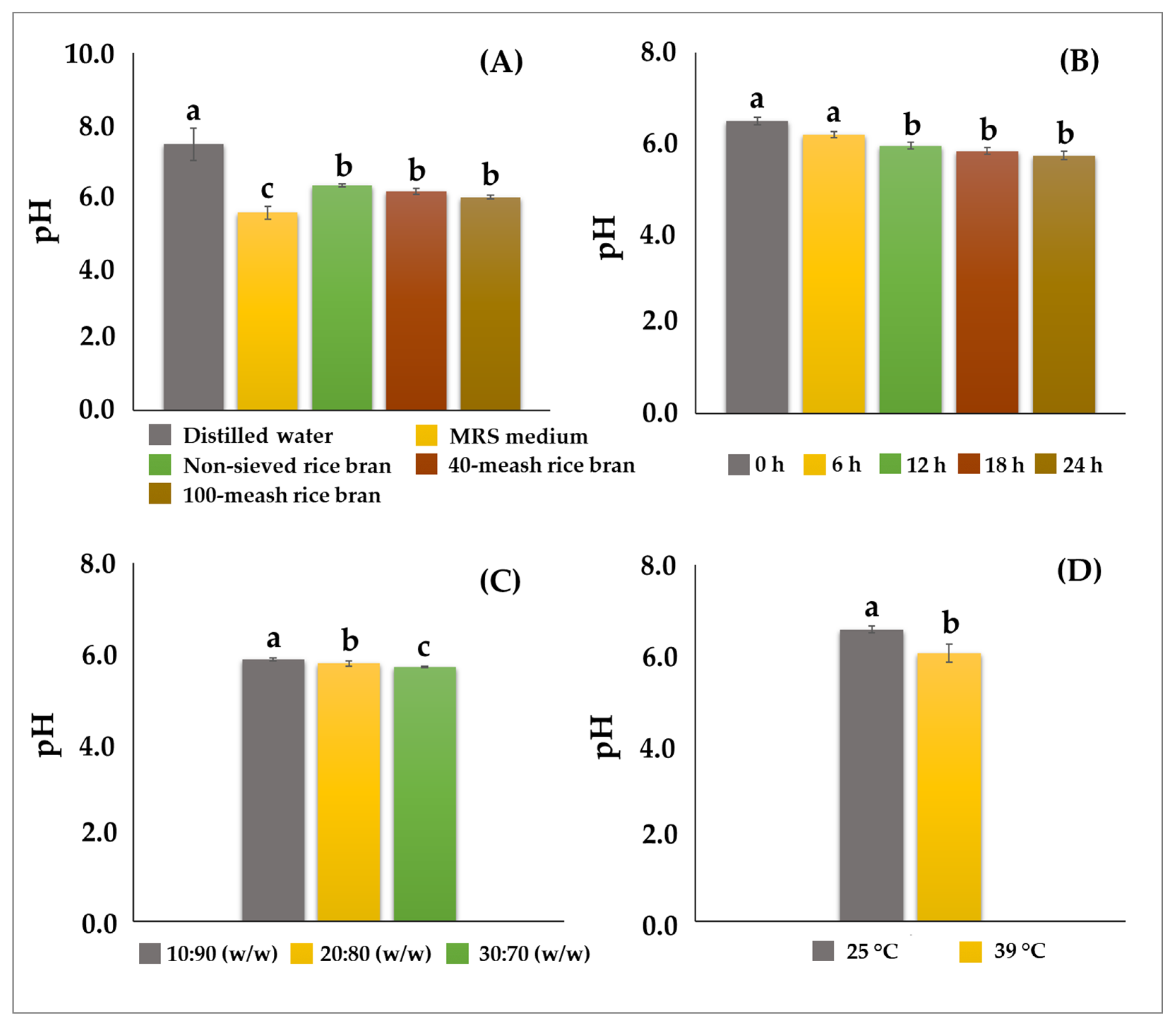
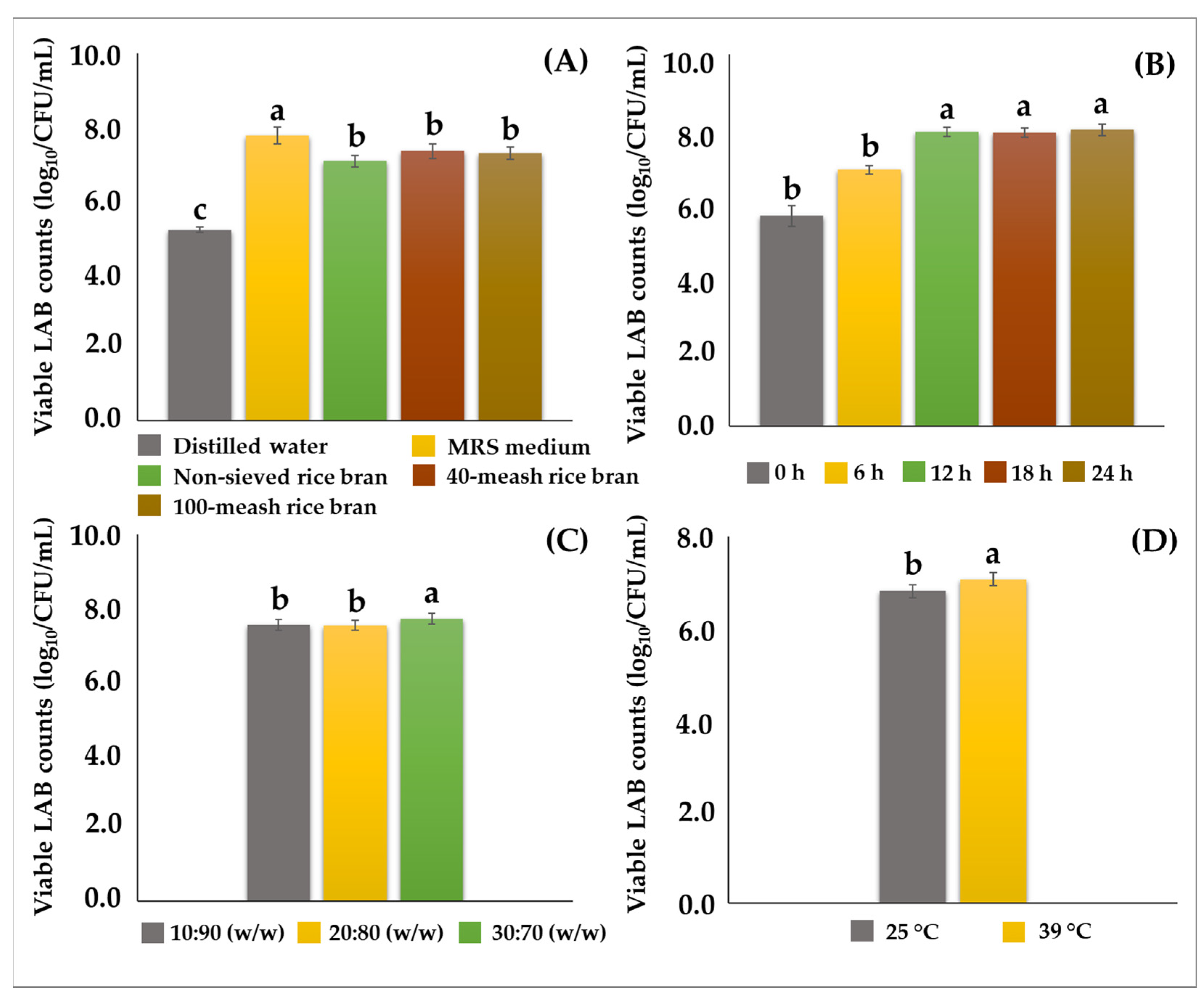
- Fermented substrate: de Man, Rogosa, and Sharpe (MRS) medium (positive control), distilled water (negative control), and rice bran (unsieved, 40-mesh, 100-mesh).
- (2)
- Rice bran-to-water ratio (w/w): 10:90, 20:80, and 30:70.
- (3)
- Incubation period: 0, 6, 12, 18, and 24 h.
- (4)
- Incubation temperature: 25 °C and 39 °C.
2.1.3. PFR Fermentation Process
2.1.4. Determination of pH, Microbial Viability, and EE
2.2. Experiment 2: In Vitro and In Vivo Nutrient Digestibility and Cecal Microbial Populations
2.2.1. Animal Ethics
2.2.2. Preparation of PFR and Experimental Diets
2.2.3. In Vitro Nutrient Digestibility, Cecal Fermentation, and Cecal Microbial Populations
2.2.4. In Vivo Nutrient Digestibility, Digestible Nutrient Intake, and Cecal Microbial Populations
2.3. Statistical Analysis
3. Results
3.1. Experiment 1: PFR Preparation Method
3.2. Experiment 2: In Vitro and In Vivo Assessments of Nutrient Digestibility and Cecal Microbial Populations in Response to Feeding PFR
3.2.1. In Vitro Nutrient Digestibility, Cecal Fermentation, Degradation Kinetics, and Cecal Microbial Populations
3.2.2. In Vivo Digestible Nutrient Intake, Apparent Nutrient Digestibility, and Cecal Microbial Populations
4. Discussion
5. Conclusions
Author Contributions
Funding
Institutional Review Board Statement
Informed Consent Statement
Data Availability Statement
Acknowledgments
Conflicts of Interest
Abbreviations
| CFU | Colony-forming units |
| CF | Crude fiber |
| CP | Crude protein |
| CRD | Completely randomized design |
| DM | Dry matter |
| EE | Entrapment efficiency |
| GE | Gross energy |
| LAB | Lactic acid bacteria |
| L:E | Lactic acid bacteria to E. coli ratio |
| L:S | Lactic acid bacteria to Salmonella spp. ratio |
| MRS | de Man, Rogosa, and Sharpe |
| OM | Organic matter |
| PFR | Pediococcus acidilactici V202-fermented rice bran |
| R2 | Coefficient of determination |
| RB | Rice bran |
| SCFAs | Short-chain fatty acids |
| SEM | Standard error of the mean |
| SSA | Salmonella-Shigella agar |
| TVC | Total viable counts |
References
- Bain, M.M.; Nys, Y.; Dunn, I.C. Increasing Persistency in Lay and Stabilising Egg Quality in Longer Laying Cycles. What Are the Challenges? Br. Poult. Sci. 2016, 57, 330–338. [Google Scholar] [CrossRef]
- Arulnathan, V.; Turner, I.; Bamber, N.; Ferdous, J.; Grassauer, F.; Doyon, M.; Pelletier, N. Systematic Review of Potential Productivity, Egg Quality, and Animal Welfare Implications of Extended Lay Cycles in Commercial Laying Hens in Canada. Poult. Sci. 2024, 103, 103475. [Google Scholar] [CrossRef]
- Korver, D.R. Review: Current Challenges in Poultry Nutrition, Health, and Welfare. Animal 2023, 17, 100755. [Google Scholar] [CrossRef] [PubMed]
- Li, Q.; Zhang, Y.; Wang, C.; Zhang, X.; Wei, R.; Li, Y.; Li, Q.; Xu, N. Comparative Study on the Fermentation Characteristics of Selective Lactic Acid Bacteria in Shanxi Aged Vinegar: Pure Culture Versus Co-Culture. Foods 2024, 13, 3374. [Google Scholar] [CrossRef]
- Sharma, M.K.; Liu, G.; Choppa, V.S.R.; Rafieian-Naeini, H.R.; Mahdavi, F.S.; Marshall, B.; Gogal, R.M.; Kim, W.K. Effects of Artemisia Annua Supplementation on the Performance and Gut Health of Laying Hens Challenged with Mixed Eimeria Species. Front. Physiol. 2024, 15, 1381548. [Google Scholar] [CrossRef]
- Sugiharto, S.; Ranjitkar, S. Recent Advances in Fermented Feeds Towards Improved Broiler Chicken Performance, Gastrointestinal Tract Microecology and Immune Responses: A review. Anim. Nutr. 2019, 5, 1–10. [Google Scholar] [CrossRef] [PubMed]
- Li, Z.; Qin, B.; Chen, T.; Kong, X.; Zhu, Q.; Azad, M.A.K.; Cui, Y.; Lan, W.; He, Q. Fermented Aronia Melanocarpa Pomace Improves the Nutritive Value of Eggs, Enhances Ovarian Function, and Reshapes Microbiota Abundance in Aged Laying Hens. Front. Microbiol. 2024, 15, 1422172. [Google Scholar] [CrossRef] [PubMed]
- Abdelqader, A.; Irshaid, R.; Al-Fataftah, A.-R. Effects of Dietary Probiotic Inclusion on Performance, Eggshell Quality, Cecal Microflora Composition, and Tibia Traits of Laying Hens in the Late Phase of Production. Trop. Anim. Health Prod. 2013, 45, 1017–1024. [Google Scholar] [CrossRef]
- Xu, H.; Lu, Y.; Li, D.; Yan, C.; Jiang, Y.; Hu, Z.; Zhang, Z.; Du, R.; Zhao, X.; Zhang, Y.; et al. Probiotic Mediated Intestinal Microbiota and Improved Performance, Egg Quality and Ovarian Immune Function of Laying Hens at Different Laying Stage. Front. Microbiol. 2023, 14, 1041072. [Google Scholar] [CrossRef]
- Huang, J.; Cui, L.; Lin, H.; Song, M.; Sun, S. Effects of Clostridium butyricum on Production Performance and Bone Development of Laying Hens. Vet. Sci. 2024, 11, 160. [Google Scholar] [CrossRef]
- Hu, H.; Li, A.; Shi, C.; Chen, L.; Zhao, Z.; Yin, X.; Zhang, Q.; Huang, Y.; Pan, H. Mulberry Branch Fiber Improved Lipid Metabolism and Egg Yolk Fatty Acid Composition of Laying Hens via the Enterohepatic Axis. Microbiome 2024, 12, 73. [Google Scholar] [CrossRef]
- Incharoen, T.; Yamauchi, K.; Thongwittaya, N. Intestinal Villus Histological Alterations in Broilers Fed Dietary Dried Fermented Ginger: Intestinal Histology and Dried Fermented Ginger in Diets. J. Anim. Physiol. Anim. Nutr. 2010, 94, e130–e137. [Google Scholar] [CrossRef] [PubMed]
- Bartkiene, E.; Bartkevics, V.; Krungleviciute, V.; Juodeikiene, G.; Zadeike, D.; Baliukoniene, V.; Bakutis, B.; Zelvyte, R.; Santini, A.; Cizeikiene, D. Application of Hydrolases and Probiotic Pediococcus acidilactici BaltBio01 Strain for Cereal by-Products Conversion to Bioproduct for Food/Feed. Int. J. Food Sci. Nutr. 2018, 69, 165–175. [Google Scholar] [CrossRef]
- Noohi, N.; Ebrahimipour, G.; Rohani, M.; Talebi, M.; Pourshafie, M.R. Evaluation of Potential Probiotic Characteristics and Antibacterial Effects of Strains of Pediococcus Species Isolated from Broiler Chickens. Br. Poult. Sci. 2016, 57, 317–323. [Google Scholar] [CrossRef] [PubMed]
- Tian, C.; Wang, L.; Liu, M.; Liu, J.; Qiu, M.; Chen, Y. Isolation and Identification of Chicken-Derived Lactic Acid Bacteria: In Vitro Probiotic Properties and Antagonistic Effects Against Salmonella pullorum, Staphylococcus aureus, and Escherichia coli. Microorganisms 2024, 12, 795. [Google Scholar] [CrossRef]
- Adeyemi, O.D.; Nahashon, S.N. Mitigating Salmonella in Poultry Using Probiotics: Mechanisms, Challenges, and Opportunities. Microorganisms 2026, 14, 365. [Google Scholar] [CrossRef]
- Krysiak, K.; Konkol, D.; Korczyński, M. Overview of the Use of Probiotics in Poultry Production. Animals 2021, 11, 1620. [Google Scholar] [CrossRef] [PubMed]
- Abd El-Hack, M.E.; El-Saadony, M.T.; Shafi, M.E.; Qattan, S.Y.A.; Batiha, G.E.; Khafaga, A.F.; Abdel-Moneim, A.E.; Alagawany, M. Probiotics in Poultry Feed: A Comprehensive Review. Anim. Physiol. Nutr. 2020, 104, 1835–1850. [Google Scholar] [CrossRef]
- Alagawany, M.; Abd El-Hack, M.E.; Farag, M.R.; Sachan, S.; Karthik, K.; Dhama, K. The Use of Probiotics as Eco-Friendly Alternatives for Antibiotics in Poultry Nutrition. Environ. Sci. Pollut. Res. 2018, 25, 10611–10618. [Google Scholar] [CrossRef]
- Qui, N.H.; Linh, N.T. Nutritive and Therapeutic Value of Fermented Rice Bran as a Feed Additive for Enhancing Performance and Health in Chickens: A Review. Open Vet. J. 2025, 15, 3439–3447. [Google Scholar] [CrossRef]
- Deng, W.; Xiang, X.; Li, Z.; Daniel, S.; Liao, J.; Cao, X.; Sui, Z.; Zeng, H.; Hang, S. Effects of Fermented Rice Bran Meal on Growth Performance and Amino Acid Metabolism in Finishing Pigs. Animals 2026, 16, 527. [Google Scholar] [CrossRef]
- Sapwarobol, S.; Saphyakhajorn, W.; Astina, J. Biological Functions and Activities of Rice Bran as a Functional Ingredient: A Review. Nutr. Metab. Insights 2021, 14, 11786388211058559. [Google Scholar] [CrossRef]
- Punia, S.; Kumar, M.; Siroha, A.K.; Purewal, S.S. Rice Bran Oil: Emerging Trends in Extraction, Health Benefit, and Its Industrial Application. Rice Sci. 2021, 28, 217–232. [Google Scholar] [CrossRef]
- Manzoor, A.; Pandey, V.K.; Dar, A.H.; Fayaz, U.; Dash, K.K.; Shams, R.; Ahmad, S.; Bashir, I.; Fayaz, J.; Singh, P.; et al. Rice Bran: Nutritional, Phytochemical, and Pharmacological Profile and Its Contribution to Human Health Promotion. Food Chem. Adv. 2023, 2, 100296. [Google Scholar] [CrossRef]
- Ryan, E.P.; Heuberger, A.L.; Weir, T.L.; Barnett, B.; Broeckling, C.D.; Prenni, J.E. Rice Bran Fermented with Saccharomyces Boulardii Generates Novel Metabolite Profiles with Bioactivity. J. Agric. Food Chem. 2011, 59, 1862–1870. [Google Scholar] [CrossRef] [PubMed]
- Cheng, J.; Choi, B.-K.; Yang, S.H.; Suh, J.-W. Effect of Fermentation on the Antioxidant Activity of Rice Bran by Monascus pilosus KCCM60084. J. Appl. Biol. Chem. 2016, 59, 57–62. [Google Scholar] [CrossRef]
- Nisa, K.; Rosyida, V.T.; Nurhayati, S.; Indrianingsih, A.W.; Darsih, C.; Apriyana, W. Total Phenolic Contents and Antioxidant Activity of Rice Bran Fermented with Lactic Acid Bacteria. IOP Conf. Ser. Earth Environ. Sci. 2019, 251, 012020. [Google Scholar] [CrossRef]
- Moon, S.-H.; Chang, H.-C. Rice Bran Fermentation Using Lactiplantibacillus plantarum EM as a Starter and the Potential of the Fermented Rice Bran as a Functional Food. Foods 2021, 10, 978. [Google Scholar] [CrossRef]
- Hwanhlem, N.; Salaipeth, L.; Charoensook, R.; Kanjan, P.; Maneerat, S. Lactic Acid Bacteria from Gamecock and Goat Originating from Phitsanulok, Thailand: Isolation, Identification, Technological Properties and Probiotic Potential. J. Microbiol. Biotechnol. 2022, 32, 355–364. [Google Scholar] [CrossRef] [PubMed]
- Doukaki, A.; Papadopoulou, O.S.; Baraki, A.; Siapka, M.; Ntalakas, I.; Tzoumkas, I.; Papadimitriou, K.; Tassou, C.; Skandamis, P.; Nychas, G.-J.; et al. Effect of the Bioprotective Properties of Lactic Acid Bacteria Strains on Quality and Safety of Feta Cheese Stored under Different Conditions. Microorganisms 2024, 12, 1870. [Google Scholar] [CrossRef]
- Yao, A.O.P.; Mounir, M.; Razafindralambo, H.; Jacques, P. Probiotic Potential of Lactic Acid Bacteria Isolated from Moroccan Traditional Food Products. Microorganisms 2025, 13, 2201. [Google Scholar] [CrossRef]
- Musikasang, H.; Sohsomboon, N.; Tani, A.; Maneerat, S. Bacteriocin-Producing Lactic Acid Bacteria as a Probiotic Potential from Thai Indigenous Chickens. Czech. J. Anim. Sci. 2012, 57, 137–149. [Google Scholar] [CrossRef]
- Mitsuwan, W.; Romyasamit, C.; Kimseng, R.; Mahawan, T.; Vimon, S. Eco-Friendly Microencapsulation of Lacticaseibacillus paracasei Using Ficus pumila Seed Extract: A Novel Plant-Based Delivery System Enhancing Probiotic Stability and Gastrointestinal Tolerance. Vet. World 2025, 18, 2039–2050. [Google Scholar] [CrossRef]
- Lutz, K.C.; Jiang, S.; Neugent, M.L.; De Nisco, N.J.; Zhan, X.; Li, Q. A Survey of Statistical Methods for Microbiome Data Analysis. Front. Appl. Math. Stat. 2022, 8, 884810. [Google Scholar] [CrossRef]
- AOAC Official Methods of Analysis; Association of Official Analytical Chemists: Gaithersburg, MD, USA, 1990; p. 1298.
- Nopparatmaitree, M.; Hwanhlem, N.; Thongnum, A.; Loor, J.J.; Incharoen, T. In vitro Three-Step Technique Assessment of a Microencapsulated Phytosynbiotic from Yanang (Tiliacora triandra) Leaf Extract Fermented with P. Acidilactici V202 on Nutrient Digestibility, Cecal Fermentation, and Microbial Communities of Broilers. Vet. Sci. 2025, 12, 956. [Google Scholar] [CrossRef]
- Incharoen, T.; Nopparatmaitree, M.; Kongkeaw, A.; Soisuwan, K.; Likittrakulwong, W.; Thongnum, A.; Norbu, N.; Tenzin, J.; Supatsaraphokin, N.; Loor, J.J. Dietary Micronized Hemp Fiber Enhances in vitro Nutrient Digestibility and Cecal Fermentation, Antioxidant Enzyme, Lysosomal Activity, and Productivity in Finisher Broilers Reared under Thermal Stress. Front. Anim. Sci. 2025, 6, 1553829. [Google Scholar] [CrossRef]
- Jezierny, D.; Mosenthin, R.; Sauer, N.; Eklund, M. In vitro Prediction of Standardised Ileal Crude Protein and Amino Acid Digestibilities in Grain Legumes for Growing Pigs. Animal 2010, 4, 1987–1996. [Google Scholar] [CrossRef]
- Prayoonthien, P.; Nitisinprasert, S.; Keawsompong, S. In vitro Fermentation of Copra Meal Hydrolysate by Chicken Microbiota. 3 Biotech 2018, 8, 41. [Google Scholar] [CrossRef]
- Spanghero, M.; Nikulina, A.; Mason, F. Use of an in vitro Gas Production Procedure to Evaluate Rumen Slow-Release Urea Products. Anim. Feed Sci. Technol. 2018, 237, 19–26. [Google Scholar] [CrossRef]
- Ørskov, E.R.; McDonald, I. The Estimation of Protein Degradability in the Rumen from Incubation Measurements Weighted According to Rate of Passage. J. Agric. Sci. 1979, 92, 499–503. [Google Scholar] [CrossRef]
- Araiza Ponce, K.A.; Gurrola Reyes, J.N.; Martínez Estrada, S.C.; Salas Pacheco, J.M.; Palacios Torres, J.; Murillo Ortiz, M. Fermentation Patterns, Methane Production and Microbial Population under In vitro Conditions from Two Unconventional Feed Resources Incorporated in Ruminant Diets. Animals 2023, 13, 2940. [Google Scholar] [CrossRef]
- Rohde, J.K.; Fuh, M.M.; Evangelakos, I.; Pauly, M.J.; Schaltenberg, N.; Siracusa, F.; Gagliani, N.; Tödter, K.; Heeren, J.; Worthmann, A. A Gas Chromatography Mass Spectrometry-Based Method for the Quantification of Short Chain Fatty Acids. Metabolites 2022, 12, 170. [Google Scholar] [CrossRef] [PubMed]
- Xiao, T.; Li, Y.; Hu, L.; Nie, P.; Ramaswamy, H.S.; Yu, Y. Demonstration of Escherichia coli Inactivation in Sterile Physiological Saline under High Pressure (HP) Phase Transition Conditions and Analysis of Probable Contribution of HP Metastable Positions Using Model Solutions and Apple Juice. Foods 2022, 11, 1080. [Google Scholar] [CrossRef]
- Sanders, E.R. Aseptic Laboratory Techniques: Plating Methods. JoVE 2012, 63, e3064. [Google Scholar] [CrossRef]
- Crippen, T.L.; Sheffield, C.L.; Andrews, K.; Bongaerts, R.; Nisbet, D.J. Bacterial Concentration and Diversity within Repetitive Aliquots Collected from Replicate Continuous-Flow Bioreactor Cultures. Open Microbiol. J. 2008, 2, 60–65. [Google Scholar] [CrossRef][Green Version]
- Odjadjare, E.; Olaniran, A. Prevalence of Antimicrobial Resistant and Virulent Salmonella spp. in Treated Effluent and Receiving Aquatic Milieu of Wastewater Treatment Plants in Durban, South Africa. Int. J. Environ. Res. Public Health 2015, 12, 9692–9713. [Google Scholar] [CrossRef]
- Nasiri, M.; Ghasemi, H.A.; Hajkhodadadi, I.; Nazaran, M.H. Performance, Digestibility, Antioxidant Activity, Immunity, and Zinc Bioavailability Benefits of Advanced Zinc Chelate Supplementation in Broiler Diets: A Comparative Study. Poult. Sci. 2025, 104, 105972. [Google Scholar] [CrossRef]
- Eggink, K.M.; Pedersen, P.B.; Lund, I.; Dalsgaard, J. Chitin Digestibility and Intestinal Exochitinase Activity in Nile Tilapia and Rainbow Trout Fed Different Black Soldier Fly Larvae Meal Size Fractions. Aquac. Res. 2022, 53, 5536–5546. [Google Scholar] [CrossRef]
- Garcia, G.A.; Warren, J.G.; Abit, S.; Garcia, C.; Flusche Ogden, G. Sample Processing Impacts on Single Wet Sieve Aggregate Stability Analysis. Agric. Environ. Lett. 2022, 7, e20094. [Google Scholar] [CrossRef]
- National Research Council (Ed.) Nutrient Requirements of Poultry. In Nutrient Requirements of Domestic Animals, 9th ed.; 3. pr.; National Academy Press: Washington, DC, USA, 2000. [Google Scholar]
- Barekatain, R.; Romero, L.F.; Sorbara, J.O.B.; Cowieson, A.J. Balanced Nutrient Density for Broiler Chickens Using a Range of Digestible Lysine-to-Metabolizable Energy Ratios and Nutrient Density: Growth Performance, Nutrient Utilisation and Apparent Metabolizable Energy. Anim. Nutr. 2021, 7, 430–439. [Google Scholar] [CrossRef] [PubMed]
- R Core Team. R: A Language and Environment for Statistical Computing; R Foundation for Statistical Computing: Vienna, Austria, 2025. [Google Scholar]
- Li, T.; Wang, L.; Chen, Z.; Li, C.; Li, X.; Sun, D. Structural Changes and Enzymatic Hydrolysis Yield of Rice Bran Fiber under Electron Beam Irradiation. Food Bioprod. Process. 2020, 122, 62–71. [Google Scholar] [CrossRef]
- Vijayaram, S.; Sinha, R.; Faggio, C.; Ringø, E.; Chou, C.-C. Biopolymer Encapsulation for Improved Probiotic Delivery: Advancements and Challenges. AIMS Microbiol. 2024, 10, 986–1023. [Google Scholar] [CrossRef]
- Seyoum, Y.; Humblot, C.; Baxter, B.A.; Nealon, N.J.; Weber, A.M.; Ryan, E.P. Metabolomics of Rice Bran Differentially Impacted by Fermentation with Six Probiotics Demonstrates Key Nutrient Changes for Enhancing Gut Health. Front. Nutr. 2022, 8, 795334. [Google Scholar] [CrossRef] [PubMed]
- Yin, T.; Chen, Y.; Li, W.; Tang, T.; Li, T.; Xie, B.; Xiao, D.; He, H. Antioxidative Potential and Ameliorative Effects of Rice Bran Fermented with Lactobacillus against High-Fat Diet-Induced Oxidative Stress in Mice. Antioxidants 2024, 13, 639. [Google Scholar] [CrossRef]
- Yu, C.; Luo, T.; Xie, T.; Li, J.; Deng, Z. Classified Processing of Different Rice Bran Fractions According to Their Component Distributions. Int. J. Food Sci. Technol. 2022, 57, 4052–4064. [Google Scholar] [CrossRef]
- Yılmaz Tuncel, N. Stabilization of Rice Bran: A Review. Foods 2023, 12, 1924. [Google Scholar] [CrossRef]
- Ardiansyah, A. A Short Review: Bioactivity of Fermented Rice Bran. J. Oleo Sci. 2021, 70, 1565–1574. [Google Scholar] [CrossRef]
- Chen, J.; Mou, L.; Wang, L.; Wu, G.; Dai, X.; Chen, Q.; Zhang, J.; Luo, X.; Xu, F.; Zhang, M.; et al. Mixed Bacillus Subtilis and Lactiplantibacillus Plantarum-Fermented Feed Improves Gut Microbiota and Immunity of Bamei Piglet. Front. Microbiol. 2024, 15, 1442373. [Google Scholar] [CrossRef]
- Kılıç, E.E.; Halil Kılıç, İ.; Koç, B. Yoghurt Production Potential of Lactic Acid Bacteria Isolated from Leguminous Seeds and Effects of Encapsulated Lactic Acid Bacteria on Bacterial Viability and Physicochemical and Sensory Properties of Yoghurt. J. Chem. 2022, 2022, 2683126. [Google Scholar] [CrossRef]
- Stephen, J.M.; Saleh, A.M. Homofermentative Lactobacilli Isolated from Organic Sources Exhibit Potential Ability of Lactic Acid Production. Front. Microbiol. 2023, 14, 1297036. [Google Scholar] [CrossRef] [PubMed]
- Wang, M.; Buist, G.; van Dijl, J.M. Staphylococcus aureus Cell Wall Maintenance—The Multifaceted Roles of Peptidoglycan Hydrolases in Bacterial Growth, Fitness, and Virulence. FEMS Microbiol. Rev. 2022, 46, fuac025. [Google Scholar] [CrossRef] [PubMed]
- Wang, J.; Xie, B.; Sun, Z. Quality Parameters and Bioactive Compound Bioaccessibility Changes in Probiotics Fermented Mango Juice Using Ultraviolet-Assisted Ultrasonic Pre-Treatment during Cold Storage. LWT 2021, 137, 110438. [Google Scholar] [CrossRef]
- Zhang, Q.; Zhao, C.; Wang, X.; Li, X.; Zheng, Y.; Song, J.; Xia, M.; Zhang, R.; Wang, M. Bioaugmentation by Pediococcus acidilactici AAF1-5 Improves the Bacterial Activity and Diversity of Cereal Vinegar Under Solid-State Fermentation. Front. Microbiol. 2021, 11, 603721. [Google Scholar] [CrossRef]
- Zhang, J.; Zhang, Y.; Liu, S.; Han, Y.; Zhou, Z. Modelling Growth and Bacteriocin Production by Pediococcus acidilactici PA003 as a Function of Temperature and pH Value. Appl. Biochem. Biotechnol. 2012, 166, 1388–1400. [Google Scholar] [CrossRef]
- Bhagat, D.; Raina, N.; Kumar, A.; Katoch, M.; Khajuria, Y.; Slathia, P.S.; Sharma, P. Probiotic Properties of a Phytase Producing Pediococcus Acidilactici Strain SMVDUDB2 Isolated from Traditional Fermented Cheese Product, Kalarei. Sci. Rep. 2020, 10, 1926. [Google Scholar] [CrossRef]
- Millán, M.; Miranda, J.; Fragoso, L.R.; Esparza, J.R. Optimization of Culture Conditions for The Probiotic Bacterium Pediococcus Pentosaceus Using a Factorial Design. Microbiol. Infect. Dis. 2019, 3, 1–5. [Google Scholar] [CrossRef]
- D’Amico, V.; Cavaliere, M.; Ivone, M.; Lacassia, C.; Celano, G.; Vacca, M.; La Forgia, F.M.; Fontana, S.; De Angelis, M.; Denora, N.; et al. Microencapsulation of Probiotics for Enhanced Stability and Health Benefits in Dairy Functional Foods: A Focus on Pasta Filata Cheese. Pharmaceutics 2025, 17, 185. [Google Scholar] [CrossRef]
- Kumar, H.; Collado, M.C.; Wopereis, H.; Salminen, S.; Knol, J.; Roeselers, G. The Bifidogenic Effect Revisited—Ecology and Health Perspectives of Bifidobacterial Colonization in Early Life. Microorganisms 2020, 8, 1855. [Google Scholar] [CrossRef] [PubMed]
- Jazi, V.; Foroozandeh, A.D.; Toghyani, M.; Dastar, B.; Rezaie Koochaksaraie, R.; Toghyani, M. Effects of Pediococcus acidilactici, Mannan-Oligosaccharide, Butyric Acid and Their Combination on Growth Performance and Intestinal Health in Young Broiler Chickens Challenged with Salmonella Typhimurium. Poult. Sci. 2018, 97, 2034–2043. [Google Scholar] [CrossRef]
- Guo, L.; Lv, J.; Liu, Y.; Ma, H.; Chen, B.; Hao, K.; Feng, J.; Min, Y. Effects of Different Fermented Feeds on Production Performance, Cecal Microorganisms, and Intestinal Immunity of Laying Hens. Animals 2021, 11, 2799. [Google Scholar] [CrossRef]
- Rivière, A.; Selak, M.; Lantin, D.; Leroy, F.; De Vuyst, L. Bifidobacteria and Butyrate-Producing Colon Bacteria: Importance and Strategies for Their Stimulation in the Human Gut. Front. Microbiol. 2016, 7, 979. [Google Scholar] [CrossRef]
- Louis, P.; Duncan, S.H.; Sheridan, P.O.; Walker, A.W.; Flint, H.J. Microbial Lactate Utilisation and the Stability of the Gut Microbiome. Gut. Microb. 2022, 3, e3. [Google Scholar] [CrossRef] [PubMed]
- Reffai, Y.M.; Fechtali, T. A Critical Review on the Role of Lactic Acid Bacteria in Sourdough Nutritional Quality: Mechanisms, Potential, and Challenges. Appl. Microbiol. 2025, 5, 74. [Google Scholar] [CrossRef]
- Plaza-Diaz, J.; Ruiz-Ojeda, F.J.; Gil-Campos, M.; Gil, A. Mechanisms of Action of Probiotics. Adv. Nutr. 2019, 10, S49–S66. [Google Scholar] [CrossRef] [PubMed]
- Petrova, P.; Arsov, A.; Tsvetanova, F.; Parvanova-Mancheva, T.; Vasileva, E.; Tsigoriyna, L.; Petrov, K. The Complex Role of Lactic Acid Bacteria in Food Detoxification. Nutrients 2022, 14, 2038. [Google Scholar] [CrossRef] [PubMed]
- Obeidat, M.D.; Alzoubi, S.Q.; Nusairat, B.M.; Obeidat, B.S.; Riley, D.G. Effects of Fermented Soybean Meal Supplementation on Growth, Carcass Quality, and Intestinal Morphology in Ross 308 and Indian River Broilers. Animals 2025, 15, 2659. [Google Scholar] [CrossRef]
- Mahalak, K.K.; Liu, L.; Bobokalonov, J.; Narrowe, A.B.; Firrman, J.; Bittinger, K.; Hu, W.; Jones, S.M.; Moustafa, A.M. Supplementation with Soluble or Insoluble Rice-Bran Fibers Increases Short-Chain Fatty Acid Producing Bacteria in the Gut Microbiota in vitro. Front. Nutr. 2024, 11, 1304045. [Google Scholar] [CrossRef]
- Pearce, S.C.; Kerr, B.J.; Monson, M.S.; Ramirez, S.M. Dietary Butyrate Effects on Broiler Growth, Intestinal Morphology and Integrity, Cecal Volatile Fatty Acid Concentrations, and Colonic Bacteria in Broilers. Poult. Sci. 2025, 104, 105898. [Google Scholar] [CrossRef]
- Dong, J.; Xu, C.; Jin, S.; Xie, T.; Xu, Z.; Hao, D.; Dong, L. Gut Microbiota and Tryptophan Metabolism as Therapeutic Targets for Spinal Cord Injury: Insights From Probiotic Treatment. J. Inflamm. Res. 2025, 18, 7337–7355. [Google Scholar] [CrossRef]



| Item | Viable LAB Counts (log10 CFU/mL) | % EE | |
|---|---|---|---|
| Initial | Final | ||
| Interaction A × B | |||
| Non-sieved rice bran × 40 °C | 7.66 C | 6.28 E | 81.97 D |
| Non-sieved rice bran × 50 °C | 7.66 C | 5.02 H | 65.51 H |
| Non-sieved rice bran × 60 °C | 7.66 C | 5.40 FG | 70.56 F |
| Non-sieved rice bran × 70 °C | 7.48 D | 5.47 F | 73.07 E |
| Non-sieved rice bran × 80 °C | 7.48 D | 4.30 J | 57.44 J |
| 40 mesh rice bran × 40 °C | 7.71 BC | 7.53 A | 97.58 A |
| 40 mesh rice bran × 50 °C | 7.71 BC | 6.92 C | 89.70 BC |
| 40 mesh rice bran × 60 °C | 7.54 D | 6.67 D | 88.47 C |
| 40 mesh rice bran × 70 °C | 7.54 D | 5.32 G | 70.63 F |
| 40 mesh rice bran × 80 °C | 7.54 D | 4.04 K | 53.55 K |
| 100 mesh rice bran × 40 °C | 7.85 A | 7.11 B | 90.59 B |
| 100 mesh rice bran × 50 °C | 7.85 A | 5.37 FG | 68.42 G |
| 100 mesh rice bran × 60 °C | 7.85 A | 5.48 F | 69.74 FG |
| 100 mesh rice bran × 70 °C | 7.85 AB | 4.77 I | 61.09 I |
| 100 mesh rice bran × 80 °C | 7.85 AB | 3.17 L | 40.56 L |
| Factor A (Particle size) | |||
| Not-sieved rice bran | 7.59 B | 5.29 B | 69.71 B |
| 40 mesh rice bran | 7.61 B | 6.10 A | 79.99 A |
| 100 mesh rice bran | 7.83 A | 5.18 C | 66.08 C |
| Factor B (Drying temperature) | |||
| 40 °C | 7.74 A | 6.97 A | 90.05 A |
| 50 °C | 7.74 A | 5.77 B | 74.55 C |
| 60 °C | 7.69 B | 5.42 C | 77.12 B |
| 70 °C | 7.61 C | 5.19 D | 68.27 D |
| 80 °C | 7.61 C | 3.83 E | 50.52 E |
| SEM | 0.019 | 0.153 | 1.966 |
| p-value | |||
| Factor A | <0.001 | <0.001 | <0.001 |
| Factor B | <0.001 | <0.001 | <0.001 |
| Factor A × B | 0.004 | <0.001 | <0.001 |
| Item | % |
|---|---|
| Dry matter | 84.37 |
| Organic matter | 92.40 |
| Crude protein | 12.73 |
| Crude fiber | 8.40 |
| Ether extract | 18.25 |
| Gross energy (kcal/kg) | 4924.00 |
| Item (%) | Control | PFR |
|---|---|---|
| Dry matter | 89.55 | 89.66 |
| Organic matter | 89.79 | 89.28 |
| Crude protein | 17.21 | 17.67 |
| Crude fiber | 3.91 | 4.21 |
| Ether extract | 3.43 | 7.58 |
| Gross energy (kcal/kg) | 3705.20 | 3727.69 |
| P. acidilactici V202 (log10 CFU/g) | ND | 7.18 |
| Item | Dietary Treatments | SEM | p-Value | |
|---|---|---|---|---|
| Control | PFR | |||
| In vitro true nutrient digestibility (%) | ||||
| Dry matter | 73.03 | 73.29 | 0.427 | 0.782 |
| Crude protein | 72.38 | 73.55 | 0.428 | 0.184 |
| Crude fiber | 28.10 | 30.47 | 1.230 | 0.552 |
| Ether extract | 73.12 b | 76.10 a | 0.703 | 0.025 |
| Gross energy | 73.40 | 76.04 | 0.414 | 0.188 |
| Cumulative cecal gas production (mL/g DM) | ||||
| 4 h | 29.20 A | 34.93 A | 0.453 | 0.008 |
| 8 h | 63.53 A | 72.43 A | 0.650 | 0.001 |
| 12 h | 94.03 A | 104.80 A | 0.773 | 0.006 |
| 16 h | 121.17 A | 132.97 A | 0.833 | 0.004 |
| 20 h | 155.30 A | 157.30 A | 0.850 | 0.005 |
| 24 h | 166.73 A | 178.33 A | 0.840 | 0.001 |
| Kinetics of degradations * | ||||
| P (mL/g DM) | 138.10 B | 144.77 A | 0.540 | 0.019 |
| a (mL/g DM) | −9.43 | −8.37 | 0.250 | 0.499 |
| b (mL/g DM) | 363.60 A | 323.10 B | 3.320 | 0.024 |
| d (mL/g DM) | 359.70 | 331.47 | 3.443 | 0.159 |
| c (h) | 0.10 B | 0.13 A | 0.003 | 0.009 |
| Lactic acid content (mmol/L) | 12,770.00 B | 15,120.00 A | 525.00 | <0.001 |
| Short-chain fatty acid content (mmol/L) | ||||
| Acetic acid | 16,830.00 B | 23,760.00 A | 1551.00 | <0.001 |
| Propionic acid | 4110.00 B | 4610.00 A | 112.00 | <0.001 |
| Butyric acid | 1470.00 B | 1520.00 A | 13.00 | <0.001 |
| Valeric acid | 830.00 B | 940.00 A | 24.00 | <0.001 |
| Total Volatile fatty acids | 22,140.00 B | 29,540.00 A | 1657.00 | <0.001 |
| In vitro cecal microbial content (Log CFU/mL) | ||||
| TVC | 9.55 | 9.81 | 0.107 | 0.224 |
| LAB | 8.64 B | 9.97 A | 0.245 | 0.003 |
| Salmonella spp. | 4.38 A | 3.99 B | 0.114 | 0.047 |
| Escherichia coli | 7.67 A | 6.62 B | 0.187 | <0.001 |
| LAB: Salmonella spp. | 1.97 B | 2.53 A | 0.116 | 0.006 |
| LAB: Escherichia coli | 1.22 B | 1.51 A | 0.065 | <0.001 |
| Item | Dietary Treatments | SEM | p-Value | |
|---|---|---|---|---|
| Control | PFR | |||
| In vivo apparent nutrient digestibility (%) | ||||
| Dry matter | 77.03 b | 82.69 a | 1.248 | 0.014 |
| Crude protein | 75.38 b | 82.75 a | 2.177 | 0.016 |
| Crude fiber | 23.10 b | 36.30 a | 3.333 | 0.015 |
| Ether extract | 82.91 b | 86.70 a | 0.846 | 0.016 |
| Gross energy | 74.99 b | 78.31 a | 0.891 | 0.026 |
| In vivo nutrient intake (g/d per bird) | ||||
| Dry matter | 101.77 | 103.28 | 0.499 | 0.133 |
| Crude protein | 19.43 B | 20.20 A | 0.143 | 0.003 |
| Crude fiber | 4.41 B | 4.81 A | 0.064 | 0.001 |
| Ether extract | 3.90 | 3.98 | 0.020 | 0.165 |
| Gross energy (kcal/kg) | 4185.36 | 4262.52 | 21.671 | 0.071 |
| In vivo nutrient intake digestible (g/d per bird) | ||||
| Dry matter | 78.44 b | 85.45 a | 1.630 | 0.022 |
| Crude protein | 14.27 b | 16.65 a | 0.527 | 0.015 |
| Crude fiber | 1.02 B | 1.95 A | 0.1773 | 0.001 |
| Ether extract | 3.23 b | 3.45 a | 0.046 | 0.013 |
| Gross energy (kcal/kg/day per bird) | 3139.94 b | 3339.56 a | 50.503 | 0.045 |
| In vivo cecal microbial content (Log CFU/mL) | ||||
| TVC | 11.35 | 11.41 | 0.140 | 0.835 |
| LAB | 8.26 B | 9.78 A | 0.248 | 0.008 |
| Salmonella spp. | 9.06 A | 6.26 B | 0.682 | 0.016 |
| E. coli | 8.50 | 7.62 | 0.238 | 0.155 |
| LAB: Salmonella spp. | 0.94 B | 1.58 A | 0.185 | 0.001 |
| LAB: Escherichia coli | 0.99 B | 1.22 A | 0.045 | 0.001 |
Disclaimer/Publisher’s Note: The statements, opinions and data contained in all publications are solely those of the individual author(s) and contributor(s) and not of MDPI and/or the editor(s). MDPI and/or the editor(s) disclaim responsibility for any injury to people or property resulting from any ideas, methods, instructions or products referred to in the content. |
© 2026 by the authors. Licensee MDPI, Basel, Switzerland. This article is an open access article distributed under the terms and conditions of the Creative Commons Attribution (CC BY) license.
Share and Cite
Nopparatmaitree, M.; Sangkod, U.; Hwanhlem, N.; Thongnum, A.; Intawicha, P.; Loor, J.J.; Incharoen, T. Synbiotic Potential of Pediococcus acidilactici V202-Fermented Rice Bran: In Vitro and In Vivo Effects on Nutrient Digestibility and Cecal Microbial Populations in Aged Laying Hens. Poultry 2026, 5, 38. https://doi.org/10.3390/poultry5030038
Nopparatmaitree M, Sangkod U, Hwanhlem N, Thongnum A, Intawicha P, Loor JJ, Incharoen T. Synbiotic Potential of Pediococcus acidilactici V202-Fermented Rice Bran: In Vitro and In Vivo Effects on Nutrient Digestibility and Cecal Microbial Populations in Aged Laying Hens. Poultry. 2026; 5(3):38. https://doi.org/10.3390/poultry5030038
Chicago/Turabian StyleNopparatmaitree, Manatsanun, Uangporn Sangkod, Noraphat Hwanhlem, Atichat Thongnum, Payungsuk Intawicha, Juan J. Loor, and Tossaporn Incharoen. 2026. "Synbiotic Potential of Pediococcus acidilactici V202-Fermented Rice Bran: In Vitro and In Vivo Effects on Nutrient Digestibility and Cecal Microbial Populations in Aged Laying Hens" Poultry 5, no. 3: 38. https://doi.org/10.3390/poultry5030038
APA StyleNopparatmaitree, M., Sangkod, U., Hwanhlem, N., Thongnum, A., Intawicha, P., Loor, J. J., & Incharoen, T. (2026). Synbiotic Potential of Pediococcus acidilactici V202-Fermented Rice Bran: In Vitro and In Vivo Effects on Nutrient Digestibility and Cecal Microbial Populations in Aged Laying Hens. Poultry, 5(3), 38. https://doi.org/10.3390/poultry5030038