Article

Does Embryonic Temperature Stimulation Have a Long-Term Influence on the Bursa fabricii of Broiler Chickens?—A Preliminary Study

Institut für Agrar- und Stadtökologische Projekte an der Humboldt Universität zu Berlin (IASP), 13353 Berlin, Germany
*
Authors to whom correspondence should be addressed.
Poultry 2026, 5(2), 16; https://doi.org/10.3390/poultry5020016
Submission received: 30 December 2025 / Revised: 1 February 2026 / Accepted: 8 February 2026 / Published: 24 February 2026

Abstract

The compatibility of economic efficiency and animal welfare is a major challenge given the increasing demand for animal-based foods. Various studies have shown that it is possible to promote the resistance and robustness of commercial poultry (primarily broilers) by modifying incubation temperatures. Focused on the histology of the Bursa fabricii, an important lymphatic organ in birds, the investigations in this paper aim to show whether short-term temperature changes during final incubation (+1 °C, 2 h/incubation day 17–20) could have an influence on the robustness of broilers compared to conventionally incubated ones. Overall, however, the temperature stimulation during final embryonic development did not result in any statistically significant morphological changes in the bursa or in the heterophil-to-lymphocyte ratio (HLR) that would clearly indicate improved immune function. However, there are obvious sex-specific differences. For instance, a sexual dimorphism could be seen in the parameters of follicle number, follicle density and in the HLR when looking at the absolute numbers. Calculation of the effect size using Cohen’s d showed that there was an effect on the relative weight of the Bursa fabricii (d = −0.28, d ♂ = −0.25, d ♀ = −0.35) cell density (d ♀ = −0.32), follicle density (d ♀ = 0.37) and the HLR (d = 0.24, d ♂ = 0.43), so that further investigations should be encouraged.

1. Introduction

Chicken meat production continues to account for a large percentage of the meat industry and is showing an upward trend [1]. In addition to the importance of economic efficiency, animal welfare should also be a high priority. Animal welfare is defined differently in the literature, but it can be broadly defined as the ability of animals to cope with certain circumstances [2], which can be improved by early environmental experiences. Various studies have shown that, for instance, long-lasting heat stress resistance can be supported by means of temperature stimulation during incubation [3,4,5,6]. The above finding is based on the fact that changing environmental factors during so-called critical developmental phases [3] of the animals lead to long-term physiological changes, such as in the function of physiological regulatory systems [7]. In the final days of incubation, regulatory systems such as the thermoregulatory system develop from an open system without feedback into a closed regulatory system with feedback control, which corresponds to a critical phase in the development of physiological regulatory systems [8]. During this phase, the control systems’ regulatory range can be programmed for life by environmental influences such as temperature changes, thereby achieving better adaptability to the environmental conditions expected after hatching. In broiler chickens, for example, previous studies have shown that temperature training during embryonic development improves immune competence and is even promising as a non-antibiotic strategy for improving robustness [9]. By connecting the control of various bodily functions via the hypothalamus, influencing the temperature regulation system can also affect other regulatory systems, such as food intake [9], metabolism, and the immune and stress systems [10]. According to some studies, an increased heterophil-to-lymphocyte ratio (HLR) correlates with increased stress levels via the release of glucocorticoids [11]. The aim of our study is to find out whether targeted temperature training with a short-term (2 h/day) temperature increase (+1 °C) during the “critical phase” in the final incubation can lead to an optimized thermoregulation system and thus to improved adaptability. Various parameters such as body weight, heterophile lymphocyte ratio, and the histology of the Bursa fabricii can provide information about long-term effects. The Bursa fabricii of chickens is a lymphatic organ and can be compared to the thymus of mammals. It is located dorsally as a diverticulum of the proctodeum. The walls of the Bursa contain many lymph follicles, in which lymphocytes originating from the bone marrow are imprinted to become immunocompetent B lymphocytes. These initiate humoral immunity [12,13]. Since the Bursa fabricii gradually regresses after the third month of life, it can also serve as a predictor of the individual’s developmental status. It is also known that morphological or structural changes occur in the Bursa following infection with various diseases (e.g., IBDV) [14]. Since periodic changes in incubation temperature in the period close to hatching can lead to improved robustness, stress resilience, and immune competence in the long term [9,10], the aim of these investigations was to determine whether this can be demonstrated histologically in morphological changes in the Bursa fabricii. For comparison purposes, the HLR was also determined.

2. Materials and Methods

The experiments were conducted in accordance with the guidelines of the Humboldt University in Berlin and the applicable legislation (EU Directive 2010/63, Animal Welfare Act, Animal Welfare Enforcement Ordinance, Animal Welfare Reporting Ordinance) and approved by the competent German authorities (LaGeSo, 20 October 2020, Reg. No. IV C 15–StN019/20).
The experiments took place between 28 June 2022 (laying of eggs) and 23 August 2022 (slaughter of the animals on the 35th day of life). Eggs from the commercial broiler breed ROSS 308 [15], sourced from Wimex Agrarprodukte Import & Export GmbH, 06388 Baasdorf (Köthen), Germany were used for these experiments. The parent flock age was 43 weeks.

2.1. Incubation

Before being placed in the incubators, the hatching eggs were stored for 5 days at 10–13 °C and then for one hour at 19–21 °C.
Incubators (BSS 420 incubating/hatching device MP GTFS) from ProCOn & Grumbach Automatic Systems GmbH & Co. KG) were available for incubating the eggs. First, all 190 eggs were weighed. After setting until day 17, the eggs were incubated in one incubator conventionally at an incubation temperature of 37.8 °C ± 0.1 °C and a relative humidity setpoint of 55% ± 1%. The specified temperature refers to the set-point of the incubator not to eggshell temperature. The carbon dioxide level in the incubator was not measured. The eggs were turned every 2 h by automatic turning with rollers. Candling was performed on days 7 and 17 to remove dead embryos. The eggs were also weighed on these days (Mettler Toledo PM6000, Mettler-Toledo GmbH, Germany). On day 17, all viable hatching eggs were randomly divided into two groups of 33 (control group) and 31 eggs (temperature stimulated group), respectively.
The basic incubation program was identical for both groups.
Until the 19th day of incubation, the eggs were incubated at 37.3 °C ± 0.1 °C and 58% ± 1% humidity. From day 20 onwards, the relative humidity was 78% ± 1%. In the temperature stimulated group, the incubator temperature was increased by 1 °C once a day (from 12:00 p.m. to 2:00 p.m.) for two hours on days 17, 18, 19 and 20 (temperature stimulating profile was developed in our working group [16] (European Patent EP2105048)). In both incubators the hatching baskets containing the hatching eggs were placed in the middle of the incubators in order to minimize any possible temperature differences between the trays.

2.2. Pulling and Rearing

Pulling took place on 20 July 2022 (incubation day 21). The animals were weighed using a scale (Mettler Toledo PM6000, Mettler-Toledo GmbH, 35396 Gießen, Germany). The chickens were marked with wing tags. The chickens were transported in special animal transport boxes to the nearby rearing barn. Care was taken to ensure that all animals were raised under the same conditions. In the barn the chickens were kept in groups of 7–9 animals in 4 compartments (4.3 m2 each) per experimental group (floor rearing on litter) for a rearing period of 34 days. The ambient temperature corresponded to the following regime:
  • Days 1–2: 35–34 °C
  • Days 3–4: 33–32 °C
  • Days 5–7: 30 °C
  • Week 2: 29 °C
  • Week 3: 26 °C
  • Week 4: 22 °C
  • Week 5: 20 °C
For breeding indoors, an ambient temperature (depending on the age of the animals) of approximately 20–30 °C and a humidity of 60–70% is recommended [16]. From day 1 to 2, 24 h of light were provided; from day 3 to 7, the light duration was gradually reduced to 17 h and maintained constant until the day of slaughter. This complies with the guidelines of Aviagen [17]. Until day 14 of life, the animals were fed starter feed for broilers, which was then replaced by standard broiler feed until day 35 [Table S1]. Feed and water were available ad libitum and provided in manually filled water and feed containers. At the end of the fattening period the final body weight was determined. The chickens were randomly selected for slaughter and sampling on day 35. After that they were numbed by a blunt blow to the head in accordance with Regulation (EC) No. 1099/2009 and killed by a bleeding cut through the s jugular veins on the right and left sides of the neck [18]. Care was taken to ensure a sufficient sex distribution in both experimental groups. Finally, postmortem examinations of the Bursa fabricii and blood smears were performed on 22 animals (14 roosters and 8 hens) from the control group and 23 animals (15 rooster and 8 hens) from the stimulations group.

2.3. Histology of the Bursa fabricii

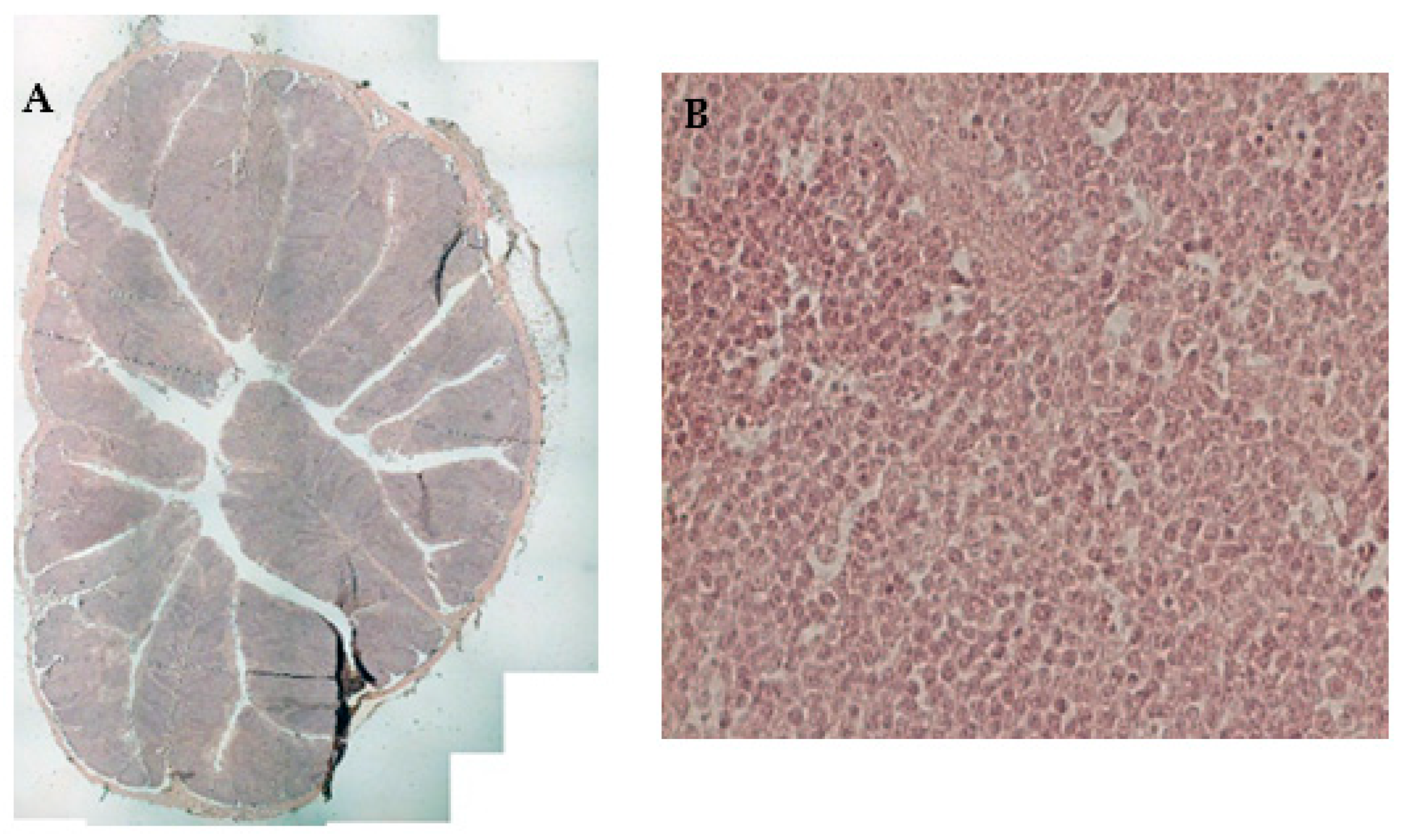
The Bursae fabricii were removed, dissected, weighed, and macroscopically evaluated. Preserved in 4% formaldehyde for better durability, they could be transferred to alcohol after two weeks. The samples were first cleared in 100% xylene and then embedded in paraffin. Using a microtome (Leica,35578 Wetzlar, Germany, model SM2000R, blades from FEATHER Safety Razor Co., Ltd., 531-0075 Osaka, Japan, A35), 5 µm thick sections were cut from the paraffin blocks and applied to microscope slides [19]. After thorough drying, hematoxylin and eosin staining was performed [20,21], so that the slides could then be sealed with ROTI Histokitt and a cover slip. These had to be left to dry in the air for 3 days. The slides were evaluated digitally, which enables more accurate results. The sections were photographed using a transmitted light microscope (Zeiss AxioCam ICc1) and the ZenCore 3.4 software (Carl Zeiss Microscopy GmbH, Carl-Zeiss-Promenade 10, 07745 Jena, Germany). The individual images were combined into an overview using Photoshop CS3 (Adobe Systems Software Ireland Limited, Dublin 24, Ireland). An overview photograph [Figure 1] (exposure time 1.04, Int 95%, Gamma 0.45, automatic white balance, magnification 5×) and a section for cell counting (exposure time 4.04, Int 95%, Gamma 0.45, automatic white balance, magnification 40×) was created from each sample [Figure 1]. The overview of the sections could be used for further investigations. For example, it allowed us to calculate the follicle density. Since the Bursa fabricii is a lymphatic organ in birds and is comparable to the thymus in mammals, it also has a similar morphology and function [22]. This can probably be explained by the fact that both the thymus in mammals and the Bursa fabricii in birds are primary lymphatic organs that have completely regressed by the onset of sexual maturity. Despite their different locations in the body, they perform comparable immunological functions in the body [13,23].
Studies of the thymus can therefore also be used to explain morphological features of the Bursa fabricii. Pathological studies in humans have shown that measuring follicular density is the most helpful histological diagnostic tool when investigating lymphadenopathy [24]. According to Li et al. [25], follicle density is calculated as follows:
D = N u m b e r   o f   f o l l i c l e s   ( n ) E n t i r e   c u t   s e c t i o n   o f   t h e   s u r f a c e   ( w i t h   e p i t h e l i u m )
A higher density of follicles correlates with diseases such as lymphoma or IBD (inflammatory bowel disease) [25,26]. This knowledge and these methods were also applied to birds in the current study.
Instead, the follicular density of the two experimental groups was compared.
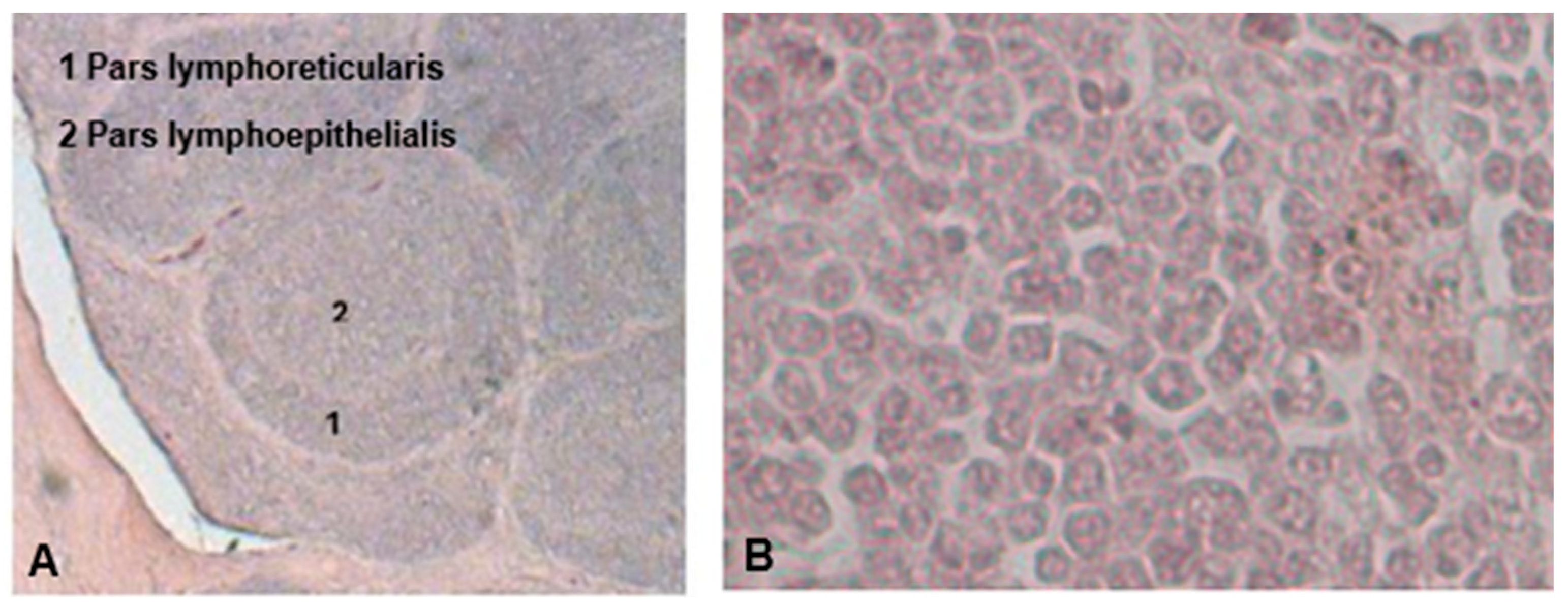
True-to-scale image sections (50 mm2) were created from the sections for cell counting in order to enable counting in a defined area. The cell section [Figure 2] was selected from the medulla (Pars lymphoreticularis) of the follicles. The ImageJ, Version1 (Fiji, https://fiji.sc/, accessed on 5 November 2025) program [27] provided significant support for the evaluation. After setting the scale (distance in pixels: 224, known distance: 0.4, unit of length: mm), it was possible to measure the circumference, area, and diameter (horizontal, vertical), as well as to count folds and follicles using the Cell Counter tool (Fiji, https://fiji.sc/). In addition, the automatic cell counting function made it possible to automatically determine the cell density of the section photographs.

2.4. Assessment of Heterophil-to-Lymphocyte Ratio (HLR)

The HLR was investigated to assess stress levels of the experimental birds. During the killing of the animals, blood was collected from the right and left jugular veins [28] for two microscope slides per animal, which were smeared to create a comb-like structure [29]. Studies show that the ratio of heterophilic granulocytes and lymphocytes in the blood can be used to draw conclusions about the stress levels of animals [11]. For this purpose, the smears were stained with hematoxylin–eosin (Diff-Quik, Labor+Technik Eberhard Lehmann GmbH, Berlin, Germany) after complete air drying [20]. The blood samples were counted using a binocular microscope (KRÜSS Optronic, 22297 Hamburg, Germany, MBL2000/5) with a 100× objective lens and immersion oil in a meandering pattern. The proportion of heterophilic granulocytes and lymphocytes had to be determined from 100 blood cells [30]. In general, a higher HLR correlates with higher stress levels [11].

2.5. Statistical Analysis

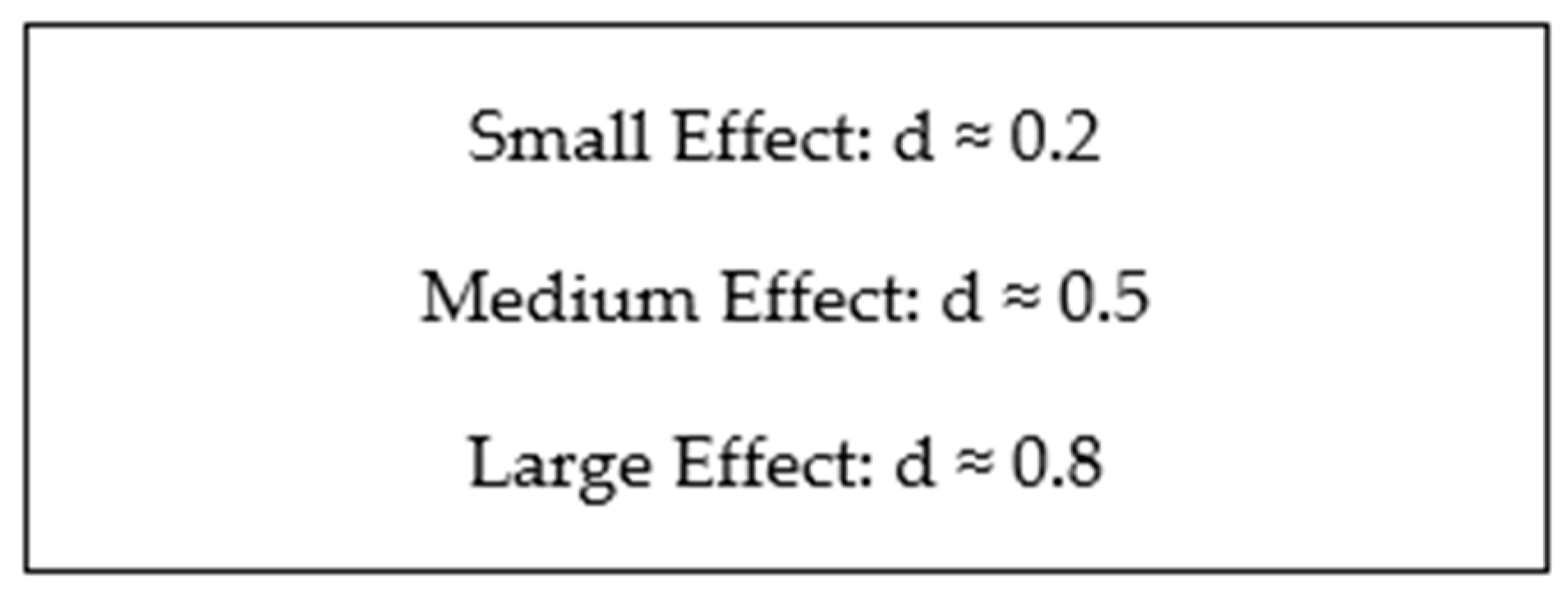
The statistical analysis of the collected data was performed using the statistical software “STATA Now 18 SE” (StataCorp LLC, TX, USA). The focus was on four groups: control group, stimulation group, male animals, and female animals. In order to find suitable statistical methods, all groups were first tested for normal distribution using the Shapiro–Wilk test. The Welch test was chosen as the statistical method. This compares the mean values of two groups and is robust against unequal group sizes and variance heterogeneity. A significance level of p < 0.05 was used. In addition, an effect size was calculated. When looking at the absolute figures, trends become apparent depending on the parameter, which unfortunately could not be verified in the statistical analysis. One reason for this could be the small sample size. A statistical means of estimating this problem would be a measure of effect size. In this case, Cohen’s d was used [Figure 3]. It enables the effect size of two groups to be assessed in comparison, regardless of the sample size, by indicating how many standard deviations the means of the two groups are apart from each other. Furthermore, Cohen’s d can have a negative or positive sign. While the absolute number describes the strength of the effect, the sign indicates the corresponding direction of the effect [31].
The control and stimulation groups of female and male animals were compared to determine whether there were sex-specific differences. In addition, the control and stimulation groups were compared independently of sex. The parameters used were:
  • Relative weight of Bursa fabricii
  • Cell density in a 50 mm2 section
  • Number of follicles in cross-section
  • Follicle density
The tables and graphs were created using Microsoft Excel (Microsoft 365, One Microsoft Way Redmond, WA, USA) and STATA.

3. Results

3.1. Relative Weight of the Bursa fabricii

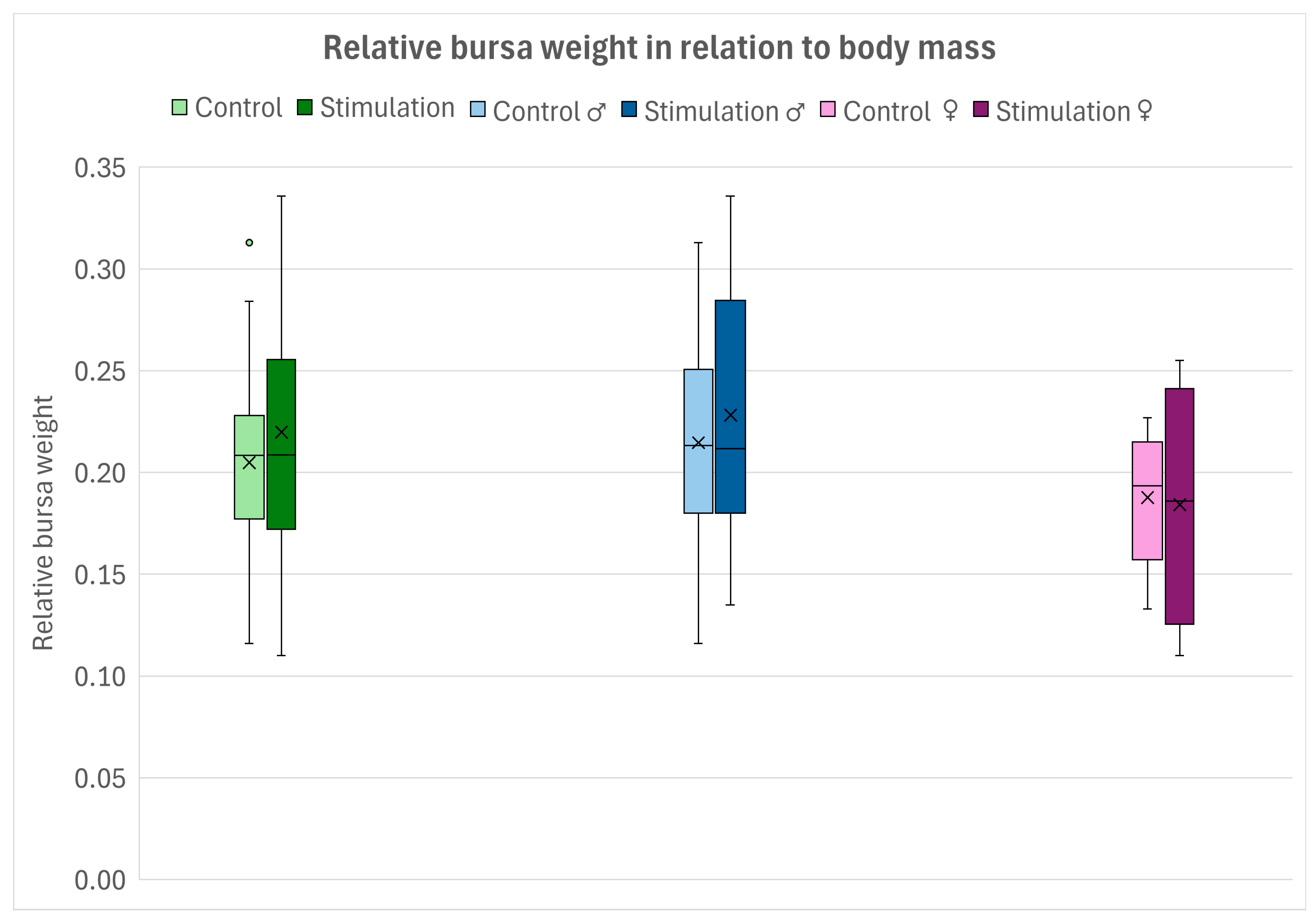
Both when comparing the groups themselves and when taking sex into account, the weights of the Bursa fabricii relative to the body weight of the birds were similar. There is no statistically significant relevance, neither by the temperature stimulation (p = 0.36) nor between the sexes (p ♂ = 0.52, p ♀ = 0.52) [Figure 4].

3.2. Cell Density in a 50 mm2 Section

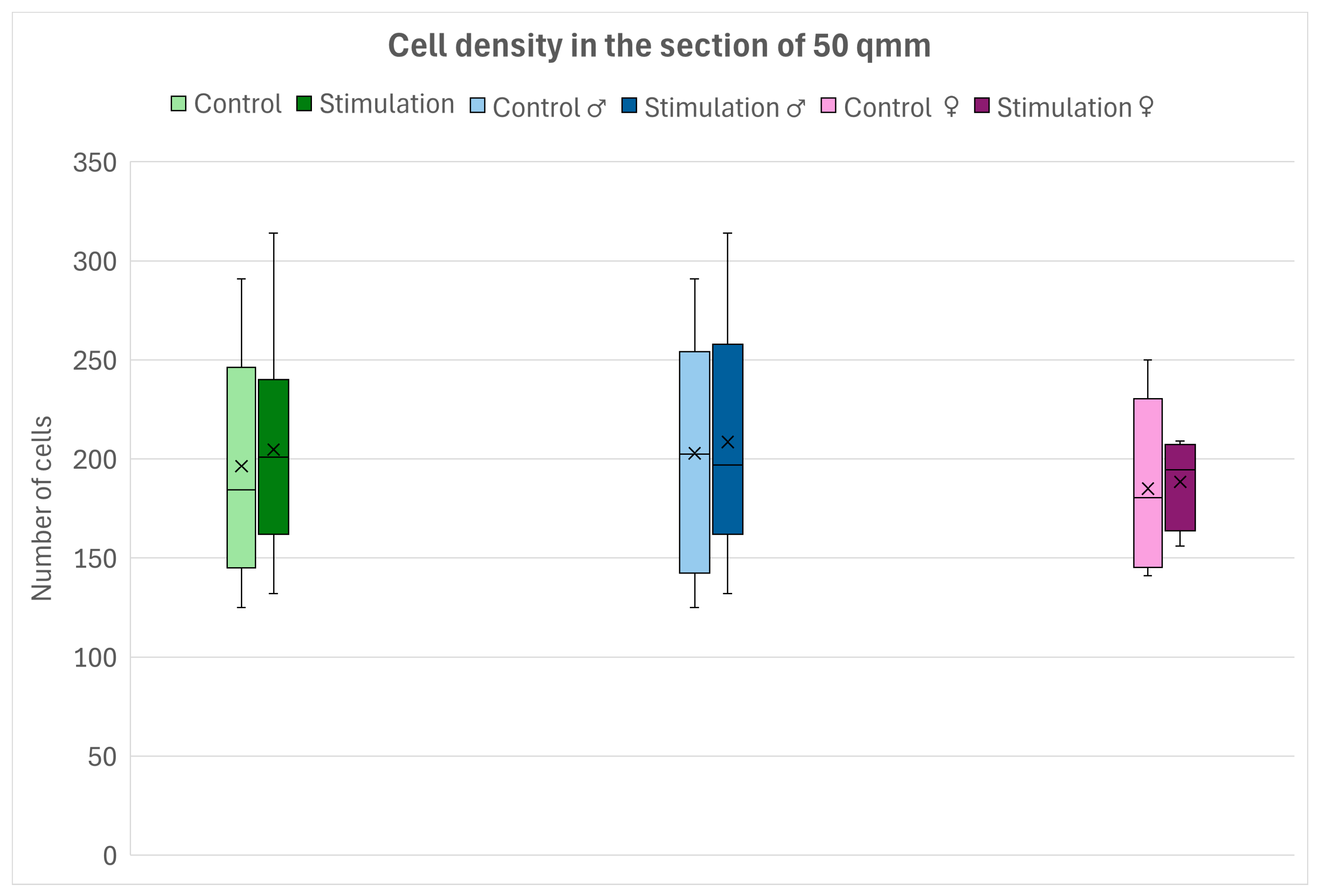
A slight numerically increase in cell density can be seen in the stimulated group of male animals compared to female animals. On average, cell density in the stimulation groups is approximately 4.29% higher than in the control groups. But, no statistical significance was found in all three groups (p = 0.59, p ♂ = 0.79, p ♀ = 0.56) [Figure 5].

3.3. Number of Follicles

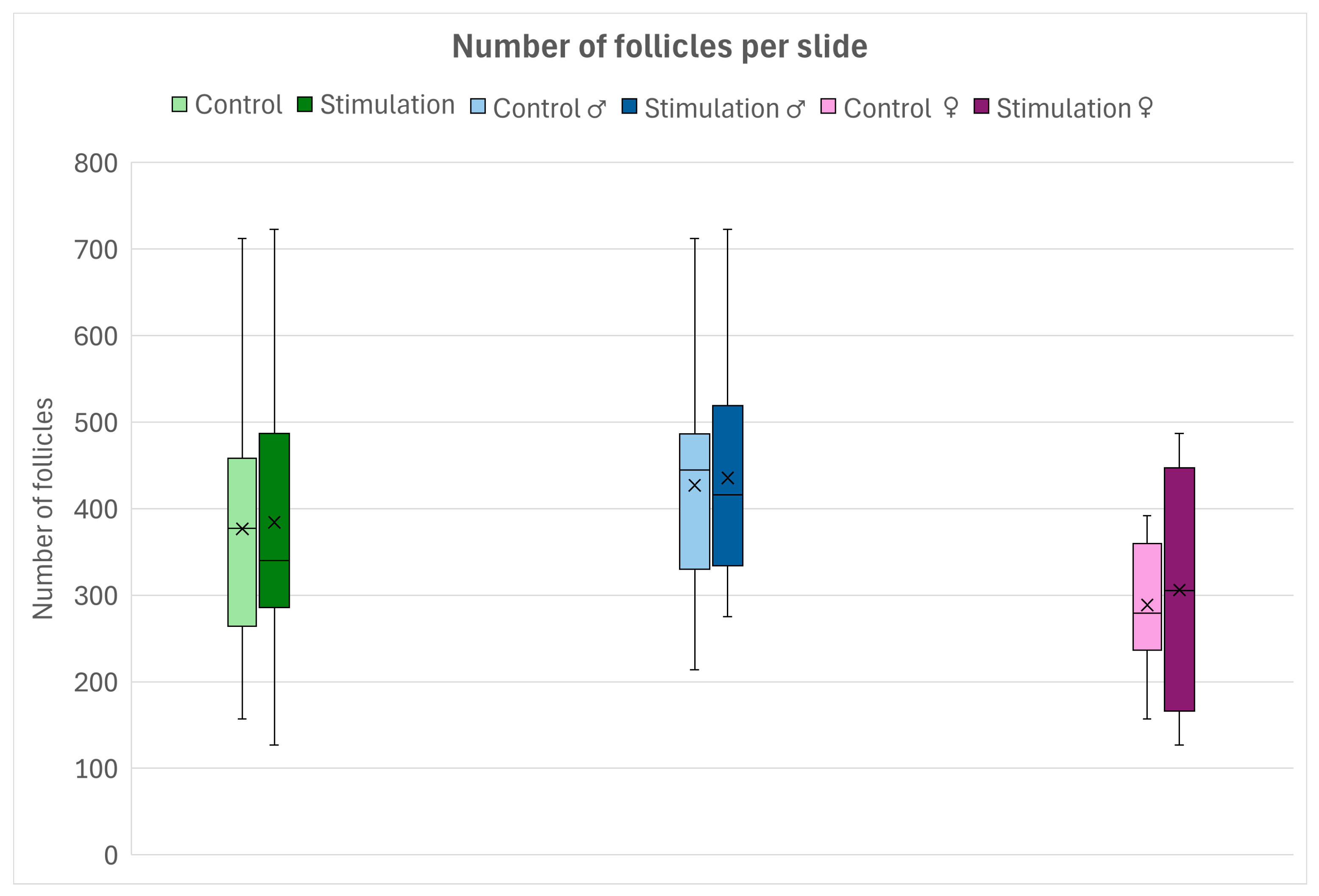
The follicle count differs only insignificantly between the respective control and stimulation groups. No statistical significance could be determined for any group (p = 0.86, p ♂ = 0.86, p ♀ = 0.98) [Figure 6].

3.4. Follicular Density

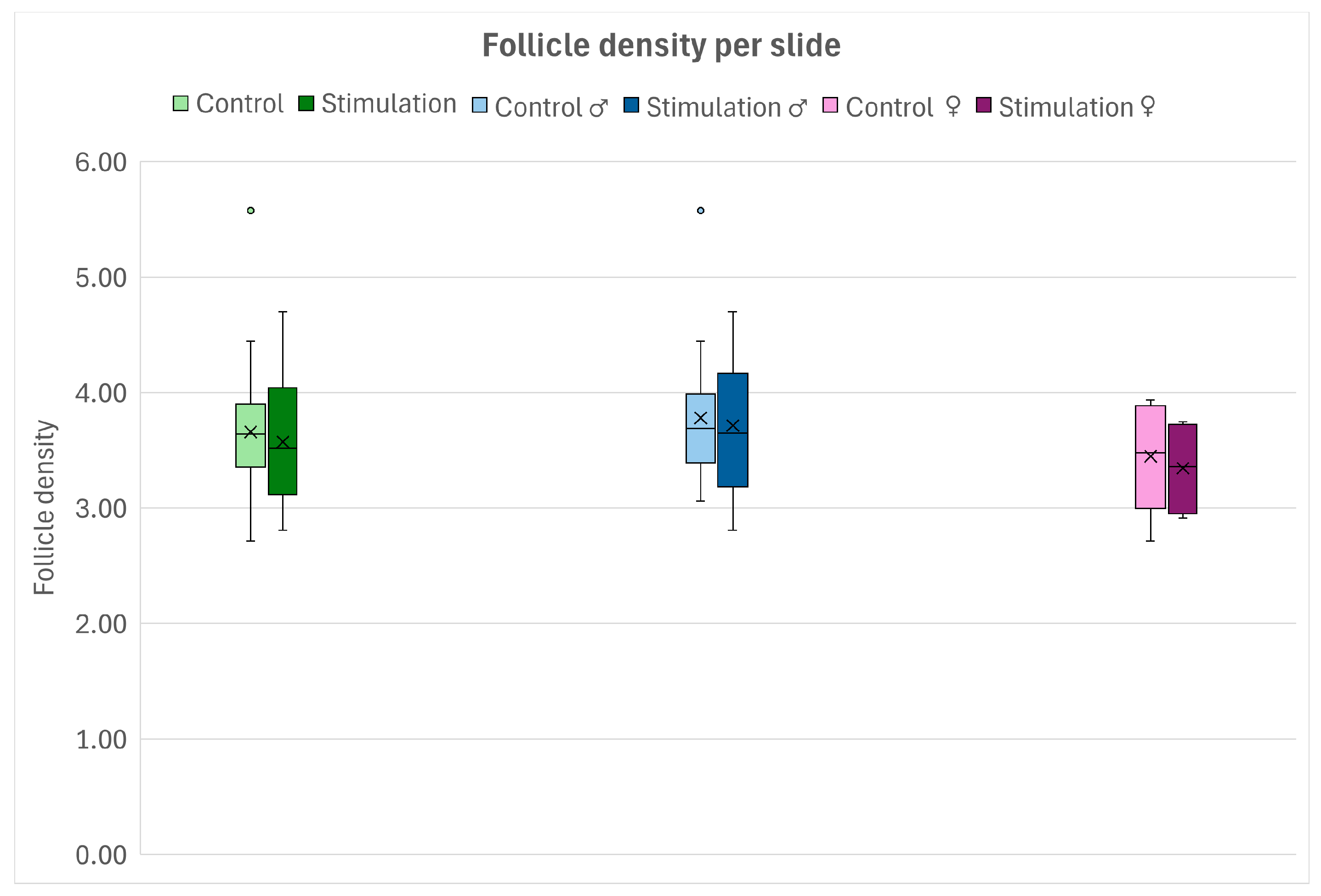
No statistically significant results could be demonstrated for the entire group (p = 0.63), nor for males (p ♂ = 0.79) and females (p ♀ = 0.50). When considering the numerical values, sex-specific differences in follicle density might be possible, which was further investigated using Cohen’s d (see Section 2.5) [Figure 7].

3.5. Heterophile-to-Lymphocyte Ratio (HLR)

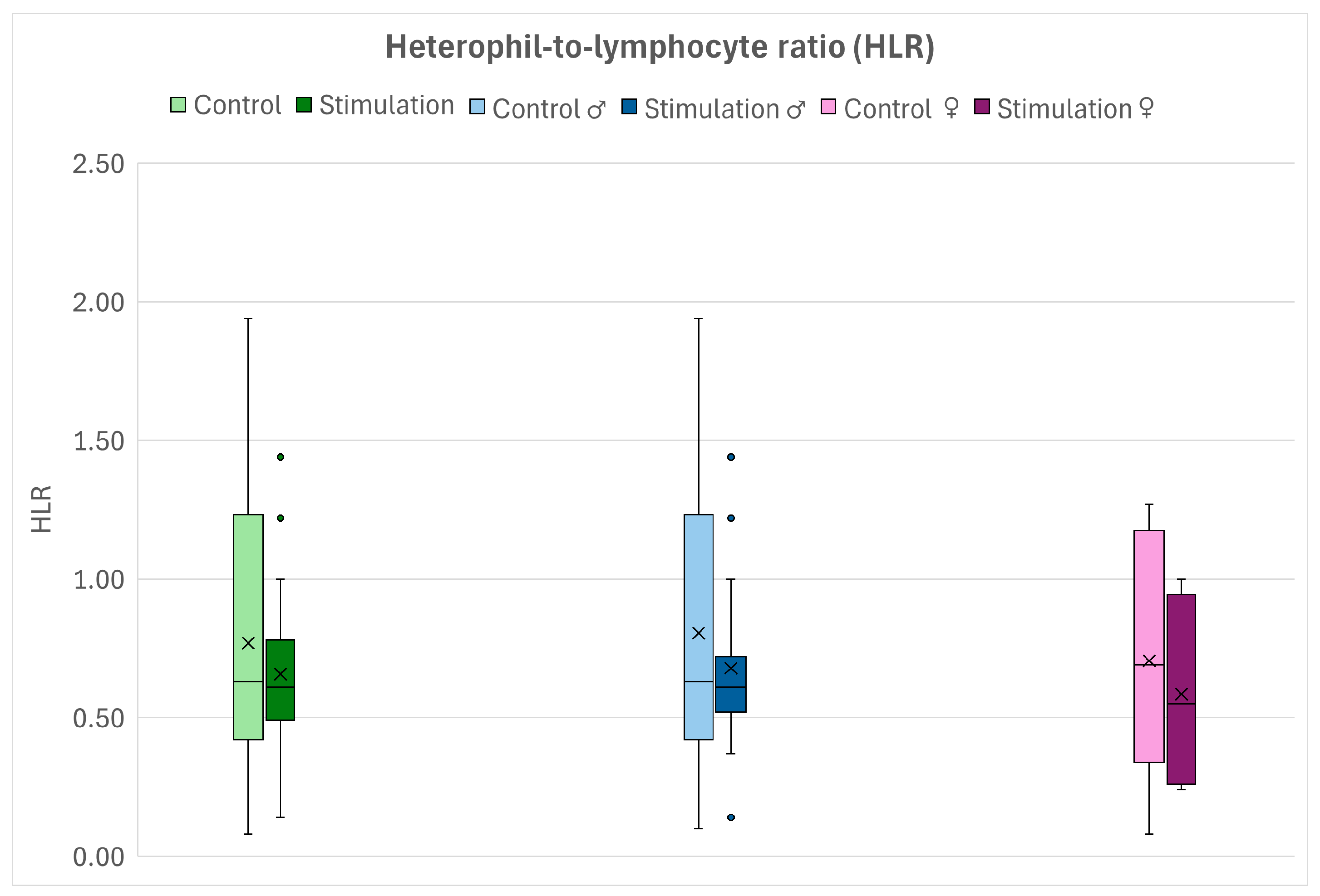
The overview comparison of the control and stimulation groups (p = 0.44) showed a similar picture to that for the male animals (p ♂ = 0.30), with the control groups showing higher numbers, but the results are not statistically significant. The groups of hens did not differ (p ♀ = 0.81), and here too a difference compared to the roosters becomes apparent [Figure 8].

3.6. Cohen’s d

The effects of temperature stimulation on female animals were apparent in the context of cell (d = −0.32) and follicle density (d = 0.37). Temperature stimulation had only a minor effect on the relative weight of the Bursa fabricii in all groups (d = −0.28, d ♂ = −0.25, d ♀ = −0.35). Noteworthy effects of temperature stimulation were also seen in the examination of the HLR in male animals (d = 0.43) and in the comparison of the control and stimulation groups (d = 0.24).

4. Discussion

Improved immune competence can play a key role in achieving breeding goals (faster live weight gain, reduction in feed costs per kg of slaughter weight, good carcass quality, high proportion of high-quality meat cuts, low animal losses [32]) for broiler chickens. Broilers bred for high and rapid muscle growth often face negative health and welfare issues. They frequently suffer from myopathy of the supracoracoid muscle. The strain on the deep chest muscle leads to ischemia and thus necrosis. It is also known that fast-growing broiler breeds are predisposed to pulmonary hypertension and subsequent ascites syndrome. Sudden cardiac death (due to genetically determined cardiovascular diseases) in apparently well-developed, healthy broilers is a phenomenon of great economic significance, which repeatedly leads to losses in the flock [33]. The pathologies mentioned above are just two examples of the negative effects of performance optimization on animal welfare. It is therefore clear that a compromise solution is both highly challenging and necessary in order to achieve breeding goals and animal welfare. Basic research has shown that, in addition to genetic aspects and the physiological composition of the egg in terms of nutrients, environmental factors during incubation are also decisive for hatching success and the subsequent performance and robustness of the chickens [34].

4.1. Examination of the Bursa fabricii

4.1.1. Relative Weight of the Bursa fabricii

Since the physical constitution of animals varies greatly, the weight of the Bursa fabricii should be considered in relation to body weight. In his study of male Cobb 500 broilers, Cazaban et al. [35] described the significant influence of external stressors on the mass of the Bursa and also that a relative Bursa weight of ≥0.11 is considered healthy. These values are also reflected in our research. The values are very similar, with the temperature-stimulated groups always showing a numerically higher or at least equal but not statistically significant mean value. One could speculate that temperature stimulation during incubation might have a long-term positive effect on the relative weight of the Bursa fabricii.

4.1.2. Cell Density

In the Bursa fabricii, the folded walls contain lymph follicles, each of which is divided into a marginal zone (Pars lymphoreticularis) and a medullary zone (Pars lymphoepithelialis). Up to 98% of B lymphocytes are located here [36]. The lymphoepithelial part mainly contains lymphoblasts, smaller B lymphocytes, macrophages, secretory dendritic cells, and reticular epithelial cells. The lymphoreticular part consists of mesenchymal reticular cells, macrophages, and dense B lymphocytes. The nature of the areas causes them to appear lighter or darker in color [37]. No conclusions regarding the differentiation or nature of the cells could be drawn from the histological examination in the current experiment.
Given that bursectomy in chicken embryos causes a significant antibody deficiency [38] and would result in severe immunodeficiency, it can be speculated that lower cell density correlates with a weaker immune system. Viral diseases such as Marek’s disease can also lead to necrosis (and thus destruction) of B lymphocytes. The result is severe immunosuppression [39]. In general, the temperature-stimulated animals in this study have a numerically higher mean cell count than those in the control group. Although no statistical significance was demonstrated, the trend is the same for both sexes and indicates a possible improvement in immune reactivity. Apart from the involution process of the Bursa fabricii (not relevant in this experiment, as the animals were too young), high cell density indicates active B-cell development and a healthy immune system in juvenile poultry [14]. Various studies have shown that heat stress reduces cell count and thus has a negative impact on the immune system [40,41]. This suggests that low-level temperature stimulation, as in our experiment, can have positive effects, while excessive heat waves can have negative effects on cell density.

4.1.3. Number of Follicles

Approximately 12,000 follicles are described per Bursa [42]. As in other lymphatic tissues, two types of follicles are found in the Bursa fabricii. Primary follicles are small and uniform and contain naive B lymphocytes. Secondary follicles, on the other hand, are characterized by an active germinal center in which B lymphocytes are activated and differentiated [43]. It can therefore be assumed that the number of follicles consists of congenital primary follicles on the one hand and secondary follicles formed through antigen contact on the other. Also the circadian rhythm plays a major role in B lymphocyte proliferation [44]. As with some other parameters, the female animals showed a different trend than the roosters and the overview comparison of the control and stimulation groups. It was noticeable that the control group of females had more follicles than the stimulated group. The sex-specific differences can be explained primarily by genetic [45] and hormonal processes [46]. However, there are also epigenetic immunomodulators that can explain this sexual dimorphism [47]. In general, it can be said that a higher number of follicles correlates with good immune reactivity [48]. However, as described above, there are several influencing factors, so bursa histology should combine several parameters, such as the proportion of primary and secondary follicles or the morphology of the follicles. This could be the subject of future studies.

4.1.4. Follicle Density

From the above-mentioned human studies, it can be cautiously concluded that a higher follicle density reflects poorer health or a poor state of the immune system. Even though the results are not statistically significant, a sex-based difference was again recognizable. In principle, the biology of male and female organisms differs significantly in terms of follicle density in lymphatic organs and is related, among other things, to sex hormones. The female organism regulates the immune system much more precisely through estrogen. While testosterone is considered immunosuppressive in the broadest sense [46].

4.2. Heterophile–Lymphocyte Ratio (HLR)

The HLR is a standard indicator used to evaluate stress responses in chickens. Values between 0.5 and 0.8 are considered optimal [49]. Thus, an HLR of over 0.8 indicates greater stress for the animal in question. Low values also suggest better immune pathways, less antibiotic resistance, and fewer virulence factors [50]. In two of three groups, lower HLR values (~0.6) were observed in this experiment. Even when taking into account the higher value when comparing male animals, all values were within the optimal range. Basically, two conclusions can be drawn from the above figures: the HLR is generally within the optimal range and it can be speculated that temperature stimulation might have positive effects on the HLR [51]. Furthermore, it can be seen that both when comparing the control and stimulation groups and in the male animals, the HLR is lower in the temperature-stimulated groups. This suggests an improvement in the immune system and stress resilience. Basically, this sexual dimorphism can be explained by sex hormones, which influence the functioning of the immune system [52]. Furthermore, it has been proven that the production, maturation, and activity of neutrophil granulocytes differ greatly between male and female organisms and can therefore also directly influence the HLR [53].

5. Conclusions

Although both the morphology of the Bursa fabricii and the HLR do not differ statistically significantly in both groups, it can be speculated that temperature stimulation during incubation might have a long-term positive effect on both. Using Cohen’s d, an effect size was found for cell and follicle density, the relative weight of the Bursa fabricii, and the HLR. It can therefore be concluded that further studies with larger sample sizes and/or heat challenge studies focused on sex-specific differences would be valuable.

Supplementary Materials

The following supporting information can be downloaded at: https://www.mdpi.com/article/10.3390/poultry5020016/s1. Table S1: Ingredients and nutrient composition of the basal diets, %.

Author Contributions

Both authors contributed to the development of this histology project and carried out sample collection and the writing of the manuscript. N.A. performed the statistical analyses, Bursa histology and HLR analysis. B.T. developed the project on temperature stimulation and supervised the analysis and evaluations. All authors have read and agreed to the published version of the manuscript.

Funding

This study was part of the RobuChick project, supported by the Federal Ministry of Economic Affairs and Climate Action (INNO-KOM Modul “Marktorientierte Forschung und Entwicklung”, 49MF190135).

Institutional Review Board Statement

The experiments were conducted in accordance with the guidelines of the Humboldt University in Berlin and the applicable legislation (EU Directive 2010/63, Animal Welfare Act, Animal Welfare Enforcement Ordinance, Animal Welfare Reporting Ordinance) and approved by the competent German authorities (LaGeSo, 20 October 2020, Reg. No. IV C 15—StN019/20).

Informed Consent Statement

Not applicable.

Data Availability Statement

The original contributions presented in this study are included in the article/Supplementary Material. Further inquiries can be directed to the corresponding authors.

Acknowledgments

The authors gratefully acknowledge the team of Teaching and Research Station Animals at the Albrecht Daniel Thaer Institute for Agricultural and Horticultural Sciences (ADTI), Faculty of Life Sciences, Humboldt-Universität zu Berlin, especially Annett Kannegiesser and Michael Modrow, for the care of the experimental animals, sample and data collection, and practical realization of the experiments. Special thanks go to Dietmar Basta from the Department of Ear, Nose and Throat Medicine of the BG Klinikum Accident Hospital Berlin and his team, especially Susanne Schwitzer and Max Meuser for supporting the histological work.

Conflicts of Interest

The authors declare no conflicts of interest.

References

  1. Statistisches Bundesamt (Destatis). Entwicklung der globalen Fleischproduktion. 2024. Available online: https://www.destatis.de/DE/Themen/Laender-Regionen/Internationales/Thema/landwirtschaft-fischerei/tierhaltung-fleischkonsum/_inhalt.html (accessed on 13 April 2025).
  2. Broom, D.M. Animal welfare: Concepts and measurement. J. Anim. Sci. 1991, 69, 4167–4175. [Google Scholar] [CrossRef] [PubMed]
  3. Tzschentke, B. Improvement of robustness and performance in meat-type chickens and ducks by short-term temperature training in the hatcher. Lohmann Inf. 2016, 50, 30–35. [Google Scholar]
  4. Janke, O.; Tzschentke, B. Long-Lasting Effect of Changes in Incubation Temperature on Heat Stress Induced Neuronal Hypothalamic c-Fos Expression in Chickens. Open Ornithol. J. 2010, 3, 150–155. [Google Scholar] [CrossRef]
  5. Rosenberg, T.; Kisliouk, T.; Cramer, T.; Shinder, D.; Druyan, S.; Meiri, N. Embryonic Heat Conditioning Induces TET-Dependent Cross-Tolerance to Hypothalamic Inflammation Later in Life. Front. Genet. 2020, 11, 767. [Google Scholar] [CrossRef]
  6. Kisliouk, T.; Ravi, P.M.; Rosenberg, T.; Meiri, N. Embryonic manipulations shape life-long, heritable stress responses through complex epigenetic mechanisms: A review. Front. Neurosci. 2024, 18, 1435065. [Google Scholar] [CrossRef]
  7. Gauly, M.; Reiner, G.; Gröschl, M.; Dzapo, V. The effects of incubation conditions on the embryonic respiratory and mitochondrial energy metabolism, the thyroid hormone status, and the daily gain in turkeys. Eur. Poult. Sci. 2001, 65, 97–105. [Google Scholar] [CrossRef]
  8. Tzschentke, B.; Plagemann, A. Imprinting and critical periods in early development. World’s Poult. Sci. J. 2006, 62, 626–637. [Google Scholar] [CrossRef]
  9. Al-Zghoul, M.B.; Hundam, S.; Mayyas, M.; Gerrard, D.E.; Dalloul, R.A. Impact of Thermal Manipulation of Broiler Eggs on Growth Performance, Splenic Inflammatory Cytokine Levels, and Heat Shock Protein Responses to Post-Hatch Lipopolysaccharide (LPS) Challenge. Animals 2025, 15, 1736. [Google Scholar] [CrossRef]
  10. Al Rukibat, R.K.; Al-Zghoul, M.B.; Hananeh, W.M.; Al-Natour, M.Q.; Abu-Basha, E.A. Thermal manipulation during late embryogenesis: Effect on body weight and temperature, thyroid hormones, and differential white blood cell counts in broiler chickens. Poult. Sci. 2017, 96, 234–240. [Google Scholar] [CrossRef]
  11. Scanes, C.G. Biology of stress in poultry with emphasis on glucocorticoids and the heterophil to lymphocyte ratio. Poult. Sci. 2016, 95, 2208–2215. [Google Scholar] [CrossRef] [PubMed]
  12. Salomon, F.-V.; Geyer, H.; Gille, U. Anatomie für Die Tiermedizin; aktualisierte Auflage; Thieme: Stuttgart, Germany, 2020; Volume 4, p. 816. [Google Scholar]
  13. Kaspers, B.; Schat, K.A.; Göbel, T.; Vervelde, L. Avian Immunology, 3rd ed.; Elsevier: Amsterdam, The Netherlands, 2022. [Google Scholar]
  14. Madej, J.P.; Chrząstek, K.; Piasecki, T.; Wieliczko, A. New Insight into the Structure, Development, Functions and Popular Disorders of Bursa Fabricii. Anat. Histol. Embryol. 2013, 42, 321–331. [Google Scholar] [CrossRef]
  15. Broiler Management Handbook 2025; ROSS—An Aviagen Brand: Huntsville, AL, USA, 2025.
  16. Aviagen. Section 2: Chick Management. In Broiler Management Handbook; 2018; pp. 21–22. Available online: https://efg.co.sz/chicks/wp-content/uploads/2022/06/Ross-BroilerHandbook2018-EN.pdf (accessed on 5 November 2025).
  17. Aviagen. Lighting for Broilers: Influence of Daylength on Broiler Welfare. In ROSS TECH: Lighting for Broilers; Schwean-Lardner, K., Classen, H., Eds.; 2010; p. 32. Available online: https://en.aviagen.com/assets/Tech_Center/Broiler_Breeder_Tech_Articles/English/LightingforBroilers1.pdf (accessed on 5 November 2025).
  18. European Union. Council Regulation (EC) No 1099/2009 of 24 September 2009 on the protection of animals at the time of killing. Off. J. Eur. Union 2009, 1–30. Available online: https://eur-lex.europa.eu/eli/reg/2009/1099/oj/eng (accessed on 5 November 2025).
  19. Falkenau, A. Histologische und Immunhistochemische Untersuchungen Tertiärer Lymphatischer Gewebe in der Lunge des Schweines München. Ph.D. Thesis, Ludwig Maximilian University of Munich, Munich, Germany, 2015. [Google Scholar]
  20. Mayer, P. Über das Färben mit Hämatoxylin. In Mittheilungen aus der Zoologischen Station zu Neapel: Zugleich ein Repertorium für Mittelmeerkunde; 1893; pp. 170–186. Available online: https://www.zobodat.at/pdf/Mitt-Zool-Station-Neapel_10_0170-0186.pdf (accessed on 5 November 2025).
  21. Sultana, N.; Khan, Z.; Wares, M.A.; Masum, M.A. Histomorphological study of the major lymphoid tissues in indigenous ducklings of Bangladesh. Bangladesh J. Vet. Med. 2012, 9, 53–58. [Google Scholar] [CrossRef]
  22. Kressin, M.; Brehm, R. Entwicklung der Organe—Entwicklung des Lymphgefäßsystems und der lymphatischen Organe. In Embryologie der Haussäugetiere; Thieme: Stuttgart, Germany, 2019; Volume 7. [Google Scholar]
  23. Westheide, W.; Rieger, G. VII Lymph- und Immunsystem. In Spezielle Zoologie. Teil 2: Wirbel-Oder Schädeltiere; Springer: Berlin, Germany, 2014; pp. 110–116. [Google Scholar]
  24. Weiss, L.M.; O’Malley, D. Benign lymphadenopathies. Mod. Pathol. 2013, 26, S88–S96. [Google Scholar] [CrossRef]
  25. Li, H.N.; Wang, R.C.; Chen, J.P.; Chang, S.T.; Chuang, S.S. Density and size of lymphoid follicles are useful clues in differentiating primary intestinal follicular lymphoma from intestinal reactive lymphoid hyperplasia. Diagn. Pathol. 2020, 15, 82. [Google Scholar] [CrossRef]
  26. Kenney, P.J.; Koehler, R.E.; Shackelford, G.D. The clinical significance of large lymphoid follicles of the colon. Radiology 1982, 142, 41–46. [Google Scholar] [CrossRef]
  27. Schindelin, J.; Arganda-Carreras, I.; Frise, E.; Kaynig, V.; Longair, M.; Pietzsch, T.; Preibisch, S.; Rueden, C.; Saalfeld, S.; Schmid, B.; et al. Fiji: An open-source platform for biological-image analysis. Nat. Methods 2012, 9, 676–682. [Google Scholar] [CrossRef]
  28. Salomon, F.-V.; Geyer, H.; Gille, U. Anatomie der Vögel. In Anatomie für die Tiermedizin; Enke Verlag Stuttgart: Stuttgart, Germany, 2015; Volume 3, pp. 798–799. [Google Scholar]
  29. Geyer, S.; Grabner, A. Laboruntersuchungen. In Die Tierarzthelferin; Schlütersche: Hannover, Germany, 1988; Volume 3, pp. 314–316. [Google Scholar]
  30. Pendl, H. Einführung in die Zytodiagnostik bei Vögeln und Reptilien. Veterinärspiegel 2009, 19, 192–196. [Google Scholar] [CrossRef]
  31. Cohen, J. Statistical Power Analysis for the Behavioral Sciences, 2nd ed.; Routledge: Oxon, UK, 1988. [Google Scholar]
  32. Siegmann, O.; Neumann, U. Propädeutik, Reproduktion und Brut. In Kompendium der Geflügelkrankheiten; überarbeitete Auflage; Schlütersche: Hannover, Germany, 2011; Volume 7, pp. 4–36. [Google Scholar]
  33. Demmler, D. Leistungsabhängige Gesundheitsstörungen bei Nutztieren für die Fleischerzeugung (Schweine, Rinder, Hühner, Puten) und ihre Relevanz für § 11b Tierschutzgesetz („Qualzucht”). Ph.D. Thesis, Freie Universität Berlin, Berlin, Germany, 2011. [Google Scholar]
  34. Meyer, H. Untersuchungen zu dem Einfluss verschiedener Brutbedingungen auf die embryonale und mitochondriale Stoffwechselaktivität unter besonderer Berücksichtigung der Gewichtsentwicklung, der Ausprägung histometrischer Parameter und der Fleischbeschaffenheit bei Flugenten. Ph.D. Thesis, Justus-Liebig Universität Gießen, Giessen, Germany, 2001. [Google Scholar]
  35. Cazaban, C.; Masferrer, N.M.; Pascual, R.D.; Espadamala, M.N.; Costa, T.; Gardin, Y. Proposed bursa of fabricius weight to body weight ratio standard in commercial broilers. Poult. Sci. 2015, 94, 2088–2093. [Google Scholar] [CrossRef] [PubMed]
  36. Ribatti, D.; Porzionato, A.; Emmi, A.; Caro, R.D. The bursa of Hieronymus Fabricius ab Aquapendente: From original iconography to most recent research. Rom. J. Morphol. Embryol. 2020, 61, 583–585. [Google Scholar] [CrossRef] [PubMed]
  37. Dittmayer, C. Online-Tutorial zum Pathologisch-Anatomischen Untersuchungsgang Beim Vogel. Ph.D. Thesis, Ludwig-Maximilians-Universität München, Munich, Germany, 2023. [Google Scholar]
  38. Cottier, H.; Hess, M.W.; Roos, B.; Grétillat, P.A. Regeneration, Hyperplasie und Onkogenese der lymphoretikulären Organe. In Entwicklung Wachstum II; Handbuch der Allgemeinen Pathologie; Springer: Berlin, Germany, 1969; Volume 6/2, pp. 496–766. [Google Scholar]
  39. Kaaden, O.-R. Viruskrankheiten der Tiere. In Medizinische Mikrobiologie, Infektions—Und Seuchenlehre; Enke: Stuttgart, Germany, 2002; pp. 145–375. [Google Scholar]
  40. Tarek, K.; Mohamed, M.; Hassina, B.; Messaouda, I. Histological Study of the Bursa of Fabricius of Broiler Chickens During Heat Stress. Int. J. Poult. Sci. 2013, 12, 377–378. [Google Scholar] [CrossRef]
  41. Hirakawa, R.; Nurjanah, S.; Furukawa1, K.; Murai, A.; Kikusato, M.; Nochi, T.; Toyomizu, M. Heat Stress Causes Immune Abnormalities via Massive Damage to Effect Proliferation and Differentiation of Lymphocytes in Broiler Chickens. Front. Vet. Sci. 2020, 7, 46. [Google Scholar] [CrossRef]
  42. Szőcs, E.; Balic, A.; Soós, Á.; Halasy, V.; Nagy, N. Characterization and ontogeny of a novel lymphoid follicle inducer cell during development of the bursa of Fabricius. Front. Immunol. 2024, 15, 1449117. [Google Scholar] [CrossRef] [PubMed]
  43. Althwaiqeb, S.A.; Fakoya, A.O.; Bordoni, B. Histology, B-Cell Lymphocyte; StatPearls: Treasure Island, FL, USA, 2024. [Google Scholar]
  44. Li, J.; Cao, J.; Wang, Z.; Dong, Y.; Chen, Y. Melatonin plays a critical role in inducing B lymphocyte proliferation of the bursa of Fabricius in broilers via monochromatic lights. J. Photochem. Photobiol. B Biol. 2015, 142, 29–34. [Google Scholar] [CrossRef]
  45. Forsyth, K.S.; Jiwrajka, N.; Lovell, C.D.; Toothacre, N.E.; Anguera, M.C. The conneXion between sex and immune responses. Nat. Rev. Immunol. 2024, 24, 487–502. [Google Scholar] [CrossRef]
  46. Dodd, K.C.; Menon, M. Sex bias in lymphocytes: Implications for autoimmune diseases. Front. Immunol. 2022, 13, 945762. [Google Scholar] [CrossRef]
  47. Bhattacharya, S.; Sadhukhan, D.; Saraswathy, R. Role of sex in immune response and epigenetic mechanisms. Epigenetics Chromatin 2024, 17, 1. [Google Scholar] [CrossRef]
  48. Aihara, N.; Horiuchi, N.; Hikichi, N.; Ochiai, M.; Hosoda, Y.; Ishikawa, Y.; Shimazaki, Y.; Oishi, K. Immunoreactivity and morphological changes of bursal follicles in chickens infected with vaccine or wild-type strains of the infectious bursal disease virus. J. Vet. Med. Sci. 2015, 77, 913–918. [Google Scholar] [CrossRef] [PubMed]
  49. Gross, W.B.; Siegel, H.S. Evaluation of the Heterophil/Lymphocyte Ratio as a Measure of Stress in Chickens. Avian Dis. 1983, 27, 972–979. [Google Scholar] [CrossRef]
  50. Thiam, M.; Wang, Q.; Barreto Sánchez, A.L.; Zhang, J.; Ding, J.; Wang, H.; Zhang, Q.; Zhang, N.; Wang, J.; Li, Q.; et al. Heterophil/Lymphocyte Ratio Level Modulates Salmonella Resistance, Cecal Microbiota Composition and Functional Capacity in Infected Chicken. Front. Immunol. 2022, 13, 816689. [Google Scholar] [CrossRef] [PubMed]
  51. Tatge, S.; Boerjan, M.; Halle, I.; Kloas, W.; Tzschentke, B. Long lasting effects of short-term temperature training during the hatching phase under commercial incubation conditions on performance and physiological parameters in male and female broiler chickens. Eur. Poult. Sci. 2024, 88, 1–17. [Google Scholar] [CrossRef]
  52. Hoffmann, J.P.; Liu, J.A.; Seddu, K.; Klein, S.L. Sex hormone signaling and regulation of immune function. Immunity 2023, 56, 2472–2491. [Google Scholar] [CrossRef] [PubMed]
  53. Richter, M.; Maier-Begandt, D.; Jablonska, J.; Silvestre-Roig, C. Sex differences in neutrophil biology. J. Leukoc. Biol. 2025, 117, qiaf161. [Google Scholar] [CrossRef] [PubMed]
Figure 1. Composite view of a cross-section of a Bursa fabricii, magnified five times, hematoxylin–eosin staining (A). Section of the cellular medullary area of a follicle from the Bursa fabricii, magnified 40×, hematoxylin–eosin staining (B).
Poultry 05 00016 g001
Figure 2. Detail of a composite overview of a cross section of a Bursa fabricii with follicle and visible cortex and medulla, 5× magnification, hematoxylin–eosin stain (A), 50 mm2 section of the pars lymphoepithelialis in 40× magnification, hematoxylin–eosin stain (B).
Poultry 05 00016 g002
Figure 3. Cutoff values for Cohens’d to assess effect size, modified [31].
Poultry 05 00016 g003
Figure 4. Relative weight of the Bursa fabricii in relation to the body mass of 35-day-old broilers. (Black dots are outliners).
Poultry 05 00016 g004
Figure 5. Cell density in the section of 50 mm2 taken from the cross-section of the Bursa fabricii of 35-day-old broilers.
Poultry 05 00016 g005
Figure 6. Number of follicles per slide taken from the cross-section of the Bursa fabricii of 35-day-old broilers.
Poultry 05 00016 g006
Figure 7. Follicle density taken from the cross-section of the Bursa fabricii of 35-day-old broilers. (Black dots are outliners).
Poultry 05 00016 g007
Figure 8. Heterophil-to-lymphocyte-ratio counted from blood samples of 35-day-old broilers. (Black dots are outliners).
Poultry 05 00016 g008
Disclaimer/Publisher’s Note: The statements, opinions and data contained in all publications are solely those of the individual author(s) and contributor(s) and not of MDPI and/or the editor(s). MDPI and/or the editor(s) disclaim responsibility for any injury to people or property resulting from any ideas, methods, instructions or products referred to in the content.