
Article

A Model to Describe the Genetic Potential for Nitrogen Deposition and Estimate Amino Acid Intake in Poultry

by
Edney Pereira da Silva
1,*,†,
Michele Bernardino de Lima
2,
Rita Brito Vieira
1 and
Nilva Kazue Sakomura
1
1
Department of Animal Sciences, School of Agricultural and Veterinary Sciences, São Paulo State University, Jaboticabal 14884-900, SP, Brazil
2
Department of Animal Production and Health, School of Veterinary Medicine, São Paulo State University, Araçatuba 16050-680, SP, Brazil
*
Author to whom correspondence should be addressed.
The research in this article is a part of the doctoral thesis of Edney Pereira da Silva.
Submission received: 25 June 2025 / Revised: 3 December 2025 / Accepted: 19 December 2025 / Published: 9 January 2026

Abstract

The maximum protein or nitrogen deposition is commonly used as the basis for modeling the amino acid intake in growing birds. In previous studies, the exponential functions of the nitrogen balance data were used to estimate the theoretical maximum for nitrogen deposition (NDmaxT) as a reference model for the amino acid intake. However, this amino acid intake value is only valid for the period in which the NDmaxT was estimated. Additionally, physiological changes, such as the rapid development of reproductive organs and associated increases in protein deposition that occur in the period before the first egg is laid, should be considered in the models. Thus, this study was conducted to model the daily NDmaxT of pullets and integrate this value into the factorial model to estimate the daily methionine + cysteine (Met+Cys) intake. Our results showed that, up to 63 days of age, the values of NDmaxT obtained via the modeling procedure were 11% higher than the values predicted using the Gompertz function. At 105 days, there was a protein deposition peak from the growth of the reproductive organs, which contributed 14% of the variation in the model in this age. Alongside these factors, the integration of the models enabled daily Met+Cys estimates consistent with the literature; however, the recommendations varied according to the targeted daily protein deposition (50% or 60% of NDmaxT), daily feed intake, and amino acid utilization efficiency. The modeling approach demonstrated here for Met+Cys can be used to model other amino acid requirements and can be extended to other species.

1. Introduction

The maximum body protein deposition (PDmax) or nitrogen deposition (NDmax) has been the basis for mathematical models used to calculate amino acid intake for growing birds. Commonly, such models are employed in non-limiting conditions (in terms of environment and diet) to describe the PDmax or NDmax while raising the birds, using the comparative slaughter technique to adjust the protein weight of the bird as a function of age, according to the Gompertz function [1,2,3,4]. The Gompertz function is used to describe changes in body protein deposition, visualize growth patterns, and predict the weight of birds at specific ages; it is used in feeding and genetic programs, allowing for the interpretation and understanding of bird growth patterns [5,6,7]. An alternative method developed at Göttingen University [8,9,10,11,12,13] uses nitrogen balance assays to adjust the Mitscherlich function to estimate the theoretical maximum protein deposition (PDmaxT) or nitrogen (NDmaxT). Unlike NDmax, the NDmaxT is obtained from birds fed high levels of protein in their diet, thus representing the physiological limit of protein or nitrogen deposition, which shows the genetic potential [8,9,10,11,12]. In this method, the genetic potential is determined without the need for the sacrifice of birds or other animals for body composition analysis [14,15,16,17,18,19]. Similarly to NDmax [1,4,7,20,21], the NDmaxT values [8,9,10,11,12,22,23] decrease with the age of the bird, and have been determined specifically for each phase [8,9,10,11,12,22,23]. One limitation of this method is that its estimate is valid for the period in which the nitrogen requirement for maintenance (NMR) and theoretical maximum for nitrogen retention (NRmaxT) were determined, and the use of these values outside this period may generate discrepancies in terms of the amino acid intake [24].
Growing animals require a daily amino acid intake to maintain their body weight and to support the daily protein deposition rate, which is specific to each genotype [7,21]. One way to calculate the intake of amino acids (AAI) is the use of factorial approaches, one of which has been parameterized by researchers at Göttingen University [8,9,10,11,12]. In the Göttingen modeling approach, there are three parameters—NRmaxT, NMR, and amino acid utilization (bc−1)—while the input variable is nitrogen retention (NR). Previous studies have published these parameters for growing pullets [22,23], using diets ranging from 1 to 6% nitrogen.
The models from [22,23] are used to obtain the Lys, Met+Cys, and Thr intakes for each phase: starter (14 to 28 days), grower (56 to 70 days), and developer (98 to 112 days). Although the validity of these models has been proven, they do not allow for estimation of the daily amino acid intake, due to their dependence on the NRmaxT [25,26,27]. For growing pullets, this is more difficult because of the longer breeding period, in which the growth phase is extended to 126 days. The physiological changes that occur in the period before the first egg is laid should be considered in models developed for these birds. An alternative for estimating the daily amino acid intake could involve estimation of the daily NDmaxT. Therefore, the objective of this study was to model the NDmaxT of pullets according to their age and integrate this into the factorial model of [22,23] to estimate the daily AAI. In particular, Met+Cys is used as an experimental model, due to its recognition as the first limiting amino acid in corn and soybean meal diets. Its adequacy is critical for the formation of cysteine, protein synthesis, feather development, and overall growth [28,29].

2. Materials and Methods

2.1. Animal Ethics and Welfare Committee

All procedures were approved by the Ethics Committee for the Use of Animals (CEUA) under Protocol number 007125-08, with the approval date of 26 April 2013, in Jaboticabal, SP, Brazil. The trials were conducted at the Poultry Science Laboratory of the São Paulo State University, UNESP, Jaboticabal, São Paulo, Brazil.

2.2. Database

The data used in this study were obtained from [22,23]. These data resulted from three nitrogen balance assays from 168 Dekalb White pullets. The assays were performed in the phases from 14 to 28 (I), 56 to 70 (II), and 98 to 112 (III) days, in which the average ages of each phase were considered to be 21, 63, and 105 days, respectively. In all three assays, the same treatments were applied and the experimental design was completely randomized with seven treatments, different crude protein levels for each protein level, eight replicates, and one hen in each. The protein levels were obtained via the dilution technique. The resulting protein levels, expressed on a dry matter (DM) basis, were 435 (N6); 364 (N5); 292 (N4); 220 (N3); 150 (N2); and 75 (N1) g/kg. To confirm that the response of the hens to each dilution series was a function of the limiting amino acid, a control diet (N7), containing 75 g/kg DM, was added. A small quantity of 2.485 g/kg DL-methionine was added to the diet with the lowest level of the methionine sufficient to meet the level of methionine in the second-lowest level in the dilution series, in order to evaluate whether Met+Cys was the first primary limiting factor in the experimental diets.
The supply of feed was corrected for the metabolic weight of each bird (BW0.67). Responses to ingested nitrogen were used (NI) and deposited (ND) at 14-day intervals, obtained via slaughter (Table 1). The publications [22,23] have presented the NI and ND values obtained via the technique of nitrogen balance and comparative slaughter. These were used to validate the model with the information available in the literature.

2.3. Birds and General Management

The birds were donated from a commercial farm located in Uberlândia, Minas Gerais, Brazil. The tests were carried out in a metabolism shed equipped with a negative pressure system to control the temperature in the thermoneutral zone of each phase. The birds in phase I were raised in metabolic rearing cages measuring 100 × 80 × 35 cm in length × width × height. The birds used in phases II and III were raised simultaneously, housed individually in metabolic cages measuring (50 × 50 × 50) cm in length × width × height. All the cages in phases I, II, and III were equipped with individual feeders and nipple-type drinkers, and the management and lighting program recommended by the strain manual was used. The body weights in the trials were 125 ± 2 g, 449 ± 14.8 g, and 889 ± 18 g in the initial and rearing phases, respectively. The adaptation period consisted of supplying feed ad libitum to determine the maximum intake per kilogram of metabolic body weight under the experimental conditions, and then the supply was control-corrected for the metabolic weight. The temperature in the house was adjusted as the birds advanced in age. The temperature in the room, the lights, and the access to feed and water were monitored throughout the experimental period.

2.4. Determination of the Theoretical Maximum Potential of Nitrogen Deposition (NDmaxT)

The responses of the ND in relation to the NI obtained from the assays were used to estimate the mean values (μ) of NDmaxT and their respective deviations (σ) during phases I, II, and III, according to the model:
ND = NDmaxT × (1 − eb × NI),
where ND is the nitrogen deposition (mg × BW0.67 × kg−1); NI is the nitrogen intake (mg × BW0.67 × kg−1); NDmaxT is the maximum value expected for deposition when NI tends to infinity; “b” is the growth rate of the function that is associated with the dietary protein quality; and “e” is the Euler number.

2.5. Adjustment of NDmaxT as a Function of Age

A normally distributed random population of 500 individuals was generated based on the μ and σ values of NDmaxT from the assays performed during phases I, II, and III. The sample size of 500 simulated individuals was selected to represent the biological variability typically observed among birds within a population. Preliminary tests using smaller and larger simulated populations indicated that 500 individuals were sufficient to produce stable mean and variance estimates of the NDmaxT, with minimal additional accuracy gained from larger sample sizes. This number therefore ensured both biological representativeness and computational efficiency for the subsequent modeling steps.
To model the NDmaxT as a function of age, we considered the average age of each experimental period; i.e., 21 days old for the initial phase, 63 days for the grower period, and 105 days for the rearing phase. To this database, we added the value of NDmaxT related to day of birth; i.e., day zero. Five hundred individuals were also generated by applying the same procedure described above. The NDmaxT at age zero was obtained using the Gompertz function. At this age, we considered NDmax = NDmaxT. The body weight (0.036 kg) and body protein weight (0.738 g) were estimated. The protein weight was transformed into nitrogen (0.1181 g), which resulted in an NDmaxT of 1096 ± 55 mg × BW0.67 × kg−1, with a deviation of 55 mg × BW0.67 × kg−1, equivalent to a coefficient of variation of 5% for the body protein weight (BP) at birth. The parameters of the Gompertz function used to describe the BP growth of Dekalb White birds were obtained from [4]. The 2000 observations resulting from the four ages (0, 21, 63, and 105 days) were used to adjust the parameters of the exponential curve, as described in Equation (2):
NDmaxT = A + (B + C × t) × (Rt) ± ɛ,
where A, B, C > 0, and R is between 0 and 1.
NDmaxT is the observed value for each simulated individual at time t in mg × BW0.67 × kg−1; t is the age in days; A is a constant value for deposition when t is large enough or at maturity, in mg × BW0.67 × kg−1; B + C × t is the linear function for deposition, where B is the intercept and C is the slope, in mg × BW0.67 × kg−1; R is the growth rate of the function, which gives the curvature of the response (dimensionless); Ɛ is the random error; A + B is the NRmaxT when t = 0 or at birth; C indicates the magnitude of the decline in the maximum response. The age of maximum deposition (tmax) is given by tmax = (A + B)/C.

2.6. Simulation and Model Evaluation

2.6.1. Evaluation of NDmaxT Prediction as a Function of Age

The NDmaxT values predicted by Equation (2) were compared with the reference deposition or NDmax obtained via the Gompertz function, using the parameters described by Ref. [4]. To assist in the interpretation of the differences between NDmaxT and NDmax, a graphical analysis of the distribution of the studentized residuals was applied, as described by Ref. [30].

2.6.2. Model Evaluation to Predict the Amino Acid Intake

For the evaluation of the modeling procedure, Equation (2) was integrated into the Goettingen factorial model [13] to estimate the Met+Cys intake. The estimates were obtained in mg/bird per day and were transformed into the percentage of the diet, considering the feed intake of the birds. To calculate the Met+Cys intake, we used NMR = 238 mg × BW0.67 × kg−1 [23]. The NRmaxT was obtained considering the daily NDmaxT predicted by Equation (2) plus the constant value of the NMR (NRmaxT = NDmaxT + NMR). Similarly, NR was obtained by adding NMR to the ND value.
The Met+Cys intake was obtained, considering an NR equal to 80, 70, and 60% of the NRmaxT, estimated for the day. The daily values of NR were applied in the Goettingen model:
LAAI = [ln(NRmaxT) − ln(NRmaxT − NR)]/16 × b/c,
where AAI is the calculated amino acid intake to meet the target NR performance, in mg × BW0.67 × kg−1; NRmaxT is the maximum theoretical nitrogen retention, in mg × BW0.67 × kg−1; 16 is the nitrogen conversion factor for protein; b/c is the amino acid utilization efficiency; b is slope of the curve between NI and ND in Equation (1). This parameter indicates the quality of dietary protein, regardless of the amount of NI (dimensionless) and assuming small values in the range of 10−6. c is the concentration of amino acids in dietary protein in g of amino acid per 100 g of protein [13]. The b/c values for Met+Cys were obtained from Ref. [22]. In the simulation, we considered the values of b/c = 43 × 10−6 and c = 3.53 g Met+Cys per 100 g of CP for all ages.

2.7. Evaluation of the Amino Acid Efficiency of Utilization (k) for Protein Deposition

The efficiency of utilization indicates what proportion of the amino acid was used for the bird, which varies in percentage. The k rate was calculated considering the relationship between the intake (LAAI) and deposition (D) of amino acid in the body of the bird (k = D/LAAI). The amino acid intake was calculated according to Equation (3). The amino acid deposition in the body was obtained by multiplying the amino acid concentration of the protein in the body. The protein deposition (PD) in the body was obtained from the ND × 6.25, where the body protein has 16% nitrogen (100/16 = 6.25). The Met+Cys concentration in the body protein was 68 mg per gram of protein, respectively.

2.8. Statistical Analysis

The statistical analyses were performed with the SAS software (Statistical Analysis System, version 9.1, Cary, NC, USA: SAS Institute Inc.), using the NLIN procedure for model adjustment and using the Levenberg–Marquardt algorithm.

3. Results

3.1. Mean and Standard Deviation of NDmaxT Obtained from Experimental Sampling

The mean values, deviations, and confidence intervals for the parameters of Equation (1) are shown in Table 2. The NDmaxT deviation values showed the variability between individuals, necessary to simulate and characterize a population. The estimated value of the NDmaxT characterized the genetic potential of the specie or strain being studied. The μ values determined for NDmaxT at 21, 63, and 105 days of age were 1361 ± 87, 867 ± 74, and 476 ± 59 mg × BW0.67 × kg−1, respectively. The observed σ value represented a variation of approximately 8% of the mean.

3.2. Modeling the Trajectory of NDmaxT of the Simulated Population as a Function of Age

Based on the μ and σ values of NDmaxT, we simulated the nitrogen deposition in 500 individuals at ages 0, 21, 63, and 105 days (Figure 1), considering the population to be normally distributed.
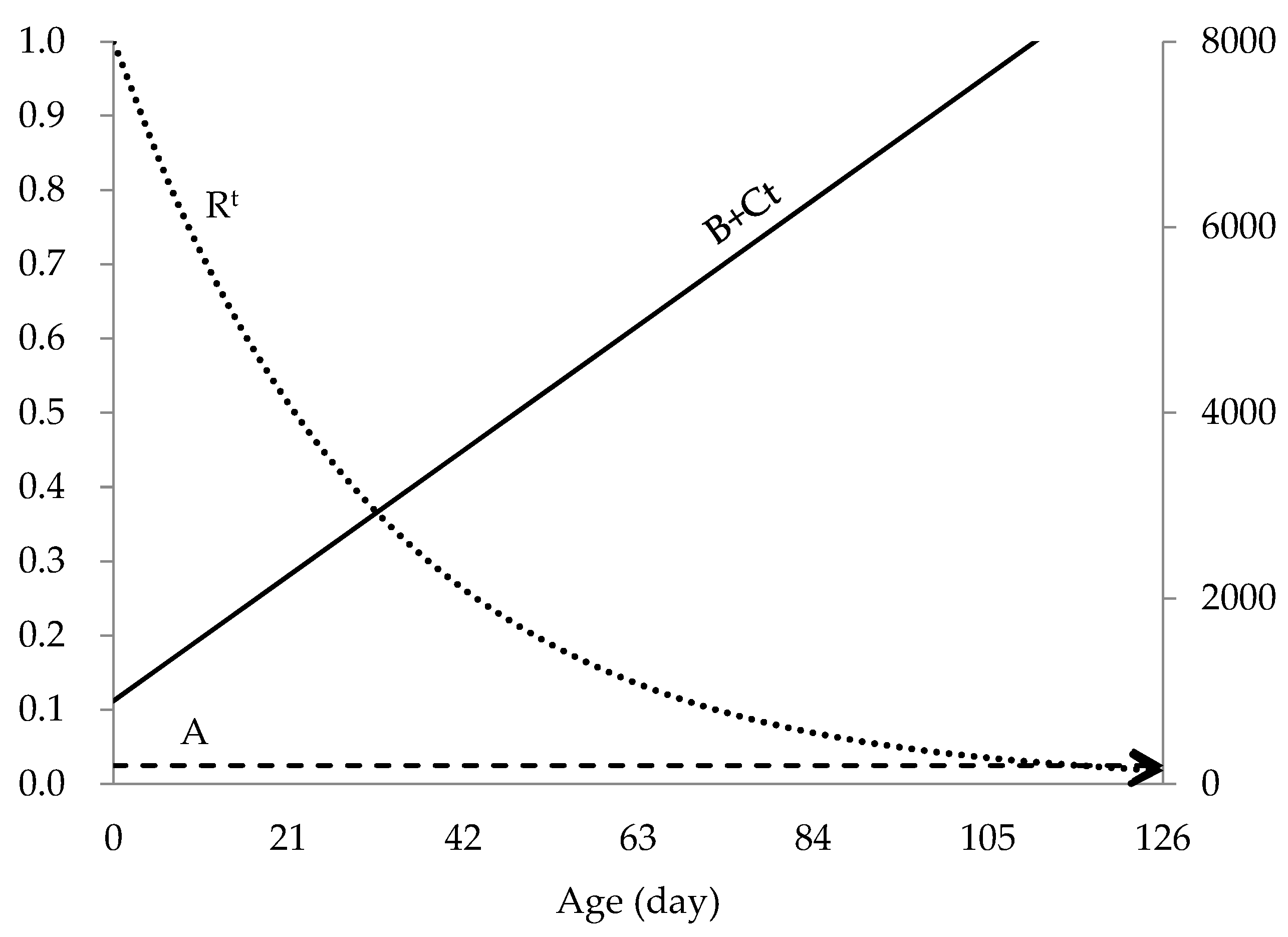
The estimated coefficients to describe the trajectory of NDmaxT were A = 200; B = 897; C = 64; R = 0.9687; and Ɛ = 68, according to the exponential model:
NDmaxT = 200 + (897 + 64 × t) × (0.9687t) ± 68.
The error of this prediction model was minimized at 68 mg, which is 6, 5, 8, and 14% of the average values at ages 0, 21, 63, and 105 days. The interpretations of the model parameters are as follows: (1) A is the minimum retention of nitrogen or nitrogen retained for the maintenance of the bird (NMR). Typically, the NMR occurs when the growth of the birds ceases; (2) parameter B is interpreted as the NDmaxT at birth (i.e., when t = 0) and, at this point, the sum of parameters A + B results from the NRmaxT of the bird at birth. The NRmaxT at birth was estimated to be 1097 mg × BW0.67 × kg−1. The parameter C = 64 indicates the degree of the curvature of the trajectory; the higher the C value, the more conic the curve, which can be interpreted as the decay rate of NDmaxT; (3) the age at the maximum deposition rate (tmax = [A + B]/C) was calculated to be 17 days; at this age, the NDmaxT was estimated to be 1358 mg × BW0.67 × kg−1.
A separate analysis of the model shows that the first component [NMR = 200] is a constant value; the second component strictly increase as t tends to infinity (+∞) [NDmaxT = 897 + 64 × t]; and the third component (0.9687t) fixes the percentage of the previous sum, considered a function of age, giving the exponentiation of the model as shown in Figure 2.

3.3. Evaluation of NDmaxT and NDmax Using the Gompertz Function

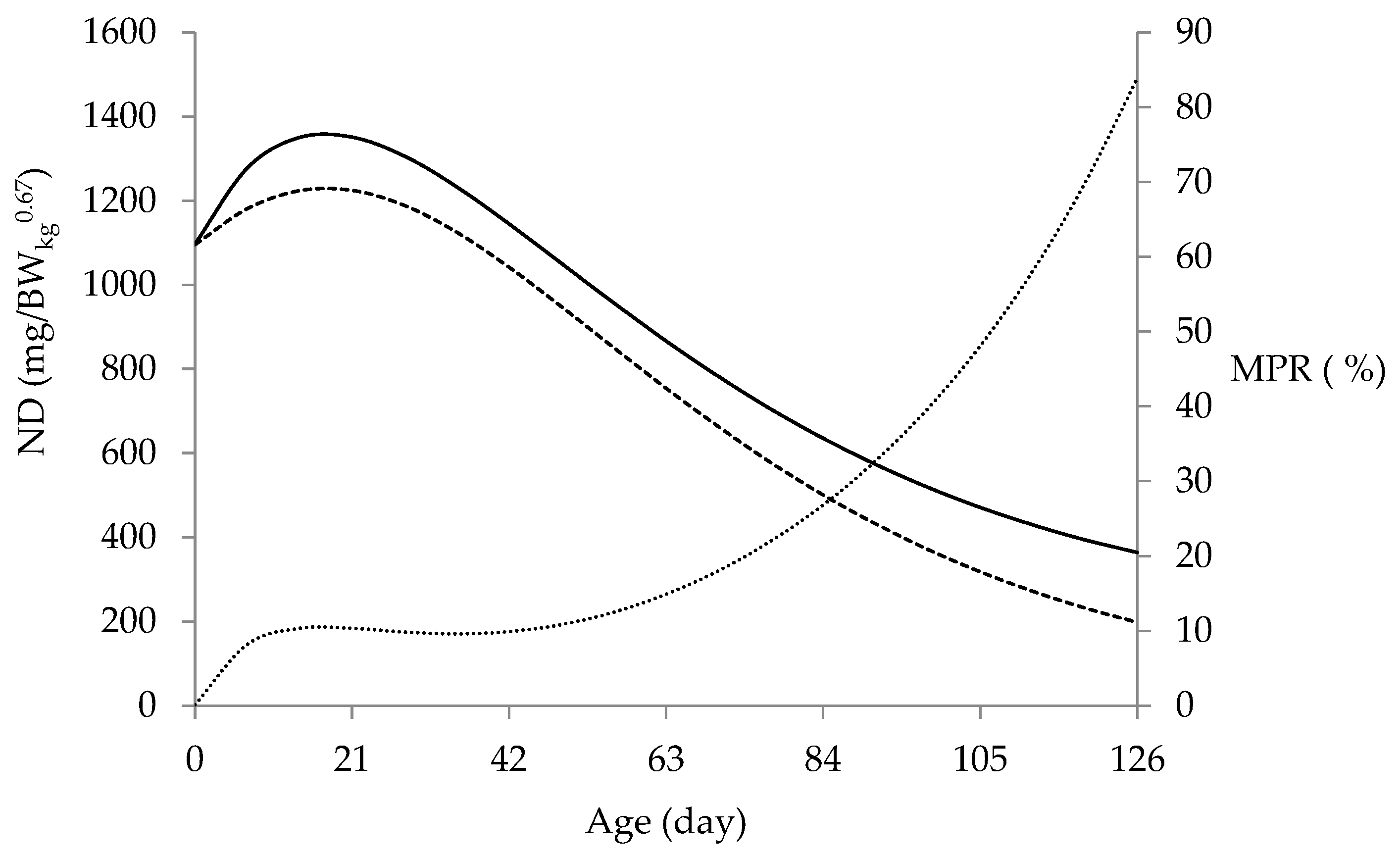
The Gompertz function, described in [20], was used to evaluate the prediction model’s ability to calculate the NDmaxT as a function of age. Figure 3 shows that the difference between the deposition or “standard NDmax” obtained using the Gompertz function and the NDmaxT estimated here was 11% until 63 days of age. After this period, from 63 to 126 days, the difference between NDmaxT and NDmax increased exponentially with an average difference of 44%.
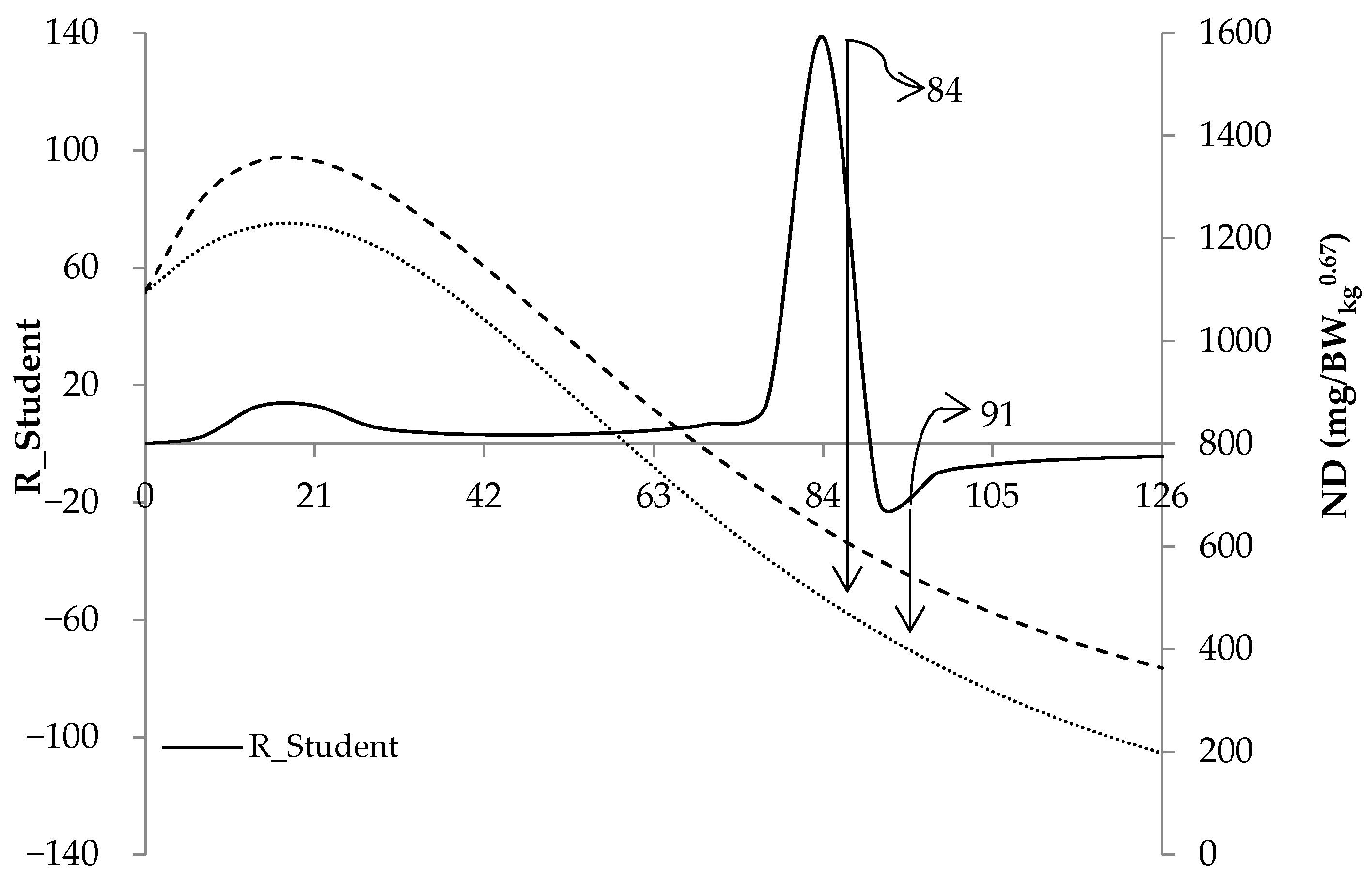
An analysis of the residuals was conducted to investigate the normality of the difference between the values of NDmaxT and NDmax. As shown in Figure 4, the change occurred between 84 and 91 days of age; thereafter, the difference remained constant between NDmaxT and NDmax.

3.4. Integration of the Model to Calculate the Amino Acid Intake

The integration of the model was demonstrated by calculating the Met+Cys intake for the Dekalb White bird genotype from 1 to 126 days of age, as shown in Table 3. The intake is related to a daily deposition rate equivalent to 60% and 50% of NDmaxT. To evaluate the consistency of the predictions, we considered the efficiency of utilization k obtained using the ratio between D and LAAI. The integration of the models allowed us to obtain the daily Met+Cys intake and, consequently, to calculate k, which decreased with the age of the bird. The minimum value reached 35% at 126 days of age, with a bird having 60% of its maximum potential for nitrogen deposition.

4. Discussion

The objective of this study was to model the maximum potential for nitrogen deposition in Dekalb White birds according to their age, and to integrate a mathematical model to calculate the Met+Cys intake considering the requirements for growth and the maintenance of body weight.
The proposal presented in this research consists of an alternative methodology to calculate the daily intake of amino acids based on the daily potential for protein deposition. In the existing literature on dynamic models used for calculating the intake of amino acids, the comparative slaughter technique is used to estimate the parameters that characterize the genotype and efficiency of dietary nutrient utilization [1,20,31,32]. Previous studies [22,23] have concluded that the comparative slaughter (destructive method, using sacrifice of animals) and nitrogen balance techniques (non-destructive method, with excreta collection) do not infer the estimation of both the nutrient efficiency of utilization and the potential for nitrogen deposition in birds. It should be noted that the NI and ND information from both methods (comparative slaughter and nitrogen balance) were used in this study, because it was necessary to use the data obtained by the comparative slaughter technique to validate the proposed procedure here and compare it with the traditional method in the literature.
The model parameter NDmaxT consists of the nitrogen deposition relative to the metabolic weight of the bird, which decreases with advancing age (Figure 3). The NDmaxT characterizes the physiological limit of the animal’s response and is not in the range of the observed data. Therefore, it is an intangible value; i.e., it is “theoretical”, because there are limiting factors in the environment [8,9,10,11,12,13].
The traditional NDmax is obtained by dividing the first derivative of the Gompertz function by BW0.67. This calculation requires sacrificing birds in each new trial, due to the dependence of the Gompertz function parameters (B and Pm) on the environmental conditions [33,34,35,36]; so, if any limiting physical or biological factor exists, the coefficients are valid only for the conditions in which they were generated [37]. This proposal is based on the theory in [13], in which the NDmaxT and NMR parameters are constants inherent of the genotype and do not change with limiting factors from the diet, as observed in the similarity of NDmaxT values found by [8,24] for the Cobb500 genotype.
However, the gap that exists in the limits of inference for NDmaxT, which are determined in each phase of the dose–response trials at ages 21, 63, and 105 days, can be avoided through using a model designed to predict the NDmaxT between 0 and 126 days, which in this period had an average error of 8%. The maximum error of 14% found was close to 105 days of age and cannot be easily explained.
One possible explanation is based on the non-normality of the differences verified between the NDmax and NDmaxT values (Figure 4). The residual analysis predicted that between 84 and 91 days of age, the birds had a protein deposition with a non-normal response pattern relative to the total period, resulting in more errors in this period. This increase may be due to the deposition of protein in the muscle because of the proximity to the mature weight of the birds. Among the causes investigated, the early development of organs linked to the sexual maturity of birds, such as the ovary and oviduct, can be seen as a possible source of variation in the analysis of the trajectory. Thus, it is assumed that at 105 days there was a protein deposition peak coming from the growth of the reproductive organs. However, according to the available literature, these birds mature between 112 and 119 days of age [4]. A hypothesis to justify this earliness can the lighting program that birds received during the rearing period, which coincided with the summer period (approximately 14 h of daylight), and the higher protein supply provided by diets with a high nitrogen content. This combination may have stimulated the development of the ovary and oviduct. Previous research suggests that the growth of these organs is significant and should be considered [4,38]. Therefore, from a biological point of view, it is assumed that the protein deposition increased from the maturation of these organs, which is considered in the NDmaxT predicted by the proposed model.
These observations were reported by [22], due to specific and isolated analysis in the phases I, II, and III. Therefore, it is proposed that this procedure be included in the interpretation of the bird response. An equally important complement to this evaluation is the prediction of the AAI with the integration of the models. The results presented in Table 3 support the procedure proposed here. The AAI was estimated and agreed with the values presented in a previous study [22], which confirms the interpretation of the amino acids.
The system of equations used in this study allowed determining the efficiency of utilization as a relative value standardized to a centesimal scale. In this way, the interpretation of use is in relation to the direct deposition, and it is possible to easily identify the “bottleneck” points.
The values presented in Table 3 indicate a decreased efficiency of utilization with advancing age. The efficiency occurs through the digestion, absorption, and post absorption of the ingested amino acids [13]. Although some studies support this hypothesis [22,24], the values presented in the last weeks of age (13–18 weeks) may be considered low [20,39], although they are similar to those found by Silva et al. [1]. This result is related to how the efficiency of utilization was considered in this model. In this study, a single value of ‘b’ and ‘c’ for phase I and for the other phases was used, causing the low efficiency values in the last weeks. The option to use the values of phase I aimed to meet “the most limiting phase of the bird”, because there is no model to dynamically correct the efficiency of utilization.
Silva et al. [1] proposed a method to diagnose the efficiency of lysine, methionine + cystine, and threonine utilization for growing pullets using the ratio of the Gompertz function adjusted for the deposition and amino acid intake. They proposed considering a static deposition and estimating the amino acid intake considering an efficiency of utilization of 80% [40]. Some researchers believe that 80% is the average efficiency of the population, and some studies have supported this value [41]. Although the users of this model can adopt this procedure, research should be designed to improve the estimation of the dynamic efficiency to optimize the estimation of the LAAI.
When comparing the efficiency of utilization, 60% of NDmaxT showed lower values than 50% of NDmaxT. This difference is related to the non-linearity in the model used to calculate the intake of amino acids. Using non-linear models, the authors of [42,43] estimated a 38% efficiency of utilization for methionine for a 95% maximal response in broilers. The authors emphasized that the closer to the maximum response (NDmaxT), the lower the efficiency of utilization and higher intake. Using the maximum response to determine the AAI would enable finding other individuals in the population; however, there is no guarantee that this optimal dose coincides with the optimal economic dose. The model proposed here provides flexibility to decide on the optimal AAI to optimize the response of the population. Various criteria may be used: (1) a percentage of the maximum response (60, 50, and 40% NDmaxT); (2) the average intake for the phase; and/or (3) the day at the most demanding phase, according to the percentage of NDmaxT.
The results obtained were compared with previous studies for validation using information available in the literature. In this context, the genetic potential described by [20] corresponds to approximately 55% of the maximum (NDmaxT) reported in this study, and the estimated Met+Cys intake in the initial phase (1 to 42 days of age) was 110 mg/bird per day [20], which is close to the value found in the present study—107 mg/bird per day—when the model was applied considering 50% of NDmaxT for the same phase.
When 60% of NDmaxT was applied (Table 3), the model estimated a Met+Cys intake of 142 mg/bird per day in the initial phase, which is similar to the 151 mg/bird per day presented by [44].
In the rearing phase (49 to 84 days of age), the authors of [45] recommended a Met+Cys intake between 287 and 327 mg/bird per day. For this phase, the estimate obtained using the present model was 331 mg/bird per day at 60% of NDmaxT (Table 3), which is close to the 308 mg/bird per day.
In the growing phase (91 to 126 days of age), the study by [46] reported that an intake of 292 mg/bird per day was insufficient to cause a maximum response from the birds. The levels tested produced a linear effect on performance, preventing the determination of an optimal Met+Cys intake. In this phase, the Met+Cys intake estimated by the model of [20] was 323 mg/bird per day, corresponding to 55% of NDmaxT, which is still higher than the values reported by [20,46]; both reported lower values than those estimated by the present model, which ranged from 362 to 478 mg/bird per day for 50% and 60% of NDmaxT, respectively. Overall, this validation suggests that advances in genetic improvement have increased protein deposition and, consequently, amino acid requirements.
Despite the limited number of studies, the available evidence shows that the older the study [47,48], the further its reported Met+Cys intake values deviate from those found for modern replacement pullets. Thus, the model was able to account for the genetic potential and appropriately estimate the Met+Cys intake. Only in the final phase was validation with recent findings not possible, because no studies have successfully established the optimal Met+Cys intake for this stage [49]. In this phase, the recommended values were higher than those reported in the literature, and it was not possible to determine whether this difference is attributable to genetic potential or to other factors, such as the early onset of sexual maturity. Early maturation may blur the distinction between the growth and production phases, due to the development and activation of reproductive structures and the presence of eggs in the bird.
The recommendation obtained in this study was close to the 363–372 mg/bird per day for pullets between 112 and 126 days of age, a period during which full development of the reproductive organs is expected [4].

5. Conclusions

The proposed model provides flexibility in determining the optimal Met+Cys intake to maximize the population performance. By integrating different modeling approaches, it enables daily estimates of Met+Cys that are consistent with the literature and can be adjusted according to the target protein deposition and feed intake. This modeling framework represents a valuable tool for accurately defining amino acid requirements in pullets, supporting more precise and efficient nutritional strategies in poultry production.

Author Contributions

Conceptualization, E.P.d.S., and N.K.S.; methodology, E.P.d.S., M.B.d.L., and R.B.V.; software, E.P.d.S., M.B.d.L., and R.B.V.; validation, E.P.d.S., M.B.d.L., and R.B.V.; formal analysis, E.P.d.S.; investigation, E.P.d.S., M.B.d.L., and R.B.V.; resources, E.P.d.S., and N.K.S.; data curation, E.P.d.S., and N.K.S.; writing—original draft preparation, E.P.d.S., and N.K.S.; writing—review and editing, M.B.d.L., and R.B.V.; visualization, M.B.d.L., and R.B.V.; supervision, N.K.S.; project administration, N.K.S.; funding acquisition, N.K.S. All authors have read and agreed to the published version of the manuscript.

Funding

This research was funded by the São Paulo Research Foundation, grant number 2008/50557-3 and 13/25761-4.

Institutional Review Board Statement

The data used in this study were obtained from [22,23]. The study of these authors [22,23] was conducted using pullets at the experimental facility of São Paulo State University (UNESP, Jaboticabal City—State of São Paulo). All procedures were approved by the Ethics Committee for the Use of Animals (CEUA) under Protocol number 007125-08, with the approval date of 26 April 2013, in Jaboticabal, SP, Brazil.

Informed Consent Statement

Not applicable.

Data Availability Statement

The original contributions presented in this study are included in the article. Further inquiries can be directed to the corresponding author.

Acknowledgments

The authors would like to thank the University of Göttingen for the support.

Conflicts of Interest

The authors declare no conflicts of interest.

Abbreviations

The following abbreviations are used in this manuscript:
NINitrogen intake
NEXNitrogen excretion
NDNitrogen deposition
NDmaxTTheoretical maximum for nitrogen deposition
NRNitrogen retention
NRmaxTTheoretical maximum for nitrogen retention
PDProtein deposition
PDmaxTTheoretical maximum for protein deposition
PDmaxMaximum for body protein deposition
NDmaxMaximum for body nitrogen deposition
NMRNitrogen maintenance requirement
tmaxAge of maximum deposition
LysLysine
ThrThreonine
Met+CysMethionine + cysteine
AAIIntake of amino acids
LAALimiting amino acid
LAAIDaily intake of the LAA
bSlope of the function is dietary protein quality
cConcentration of the LAA in the feed protein
bc−1Efficiency of utilization of the dietary LAA
CPCrude protein
BPBody protein weight
BWBody weight
N1-6Dietary nitrogen levels
DMDry matter
IIntake
DDeposition
kEfficiency of utilization

References

  1. Silva, E.P.; Sakomura, N.K.; Dorigam, J.C.P.; Malheiros, E.B.; Fernandes, J.B.K.; Araujo, J.A. A procedure to evaluate the efficiency of utilization of dietary amino acid for poultry. Acta Sci. Anim. Sci. 2014, 36, 163. [Google Scholar] [CrossRef]
  2. Hruby, M.; Hamre, M.L.; Coon, C.N. Growth Modelling as a Tool for Predicting Amino Acid Requirements of Broilers. J. Appl. Poult. Res. 1994, 3, 403–415. [Google Scholar] [CrossRef]
  3. Silva, E.P.; Sakomura, N.K.; Dorigam, J.C.P.; Malheiros, E.B.; Peruzzi, N.J. Adjustment of growth parameters for the major body components of pullets. Rev. Ciência Agronômica 2016, 47, 572–581. [Google Scholar] [CrossRef][Green Version]
  4. Silva, E.P.; Sakomura, N.K.; Dorigam, J.C.P.; Lima, M.B.; Malheiros, E.B.; Fernandes, J.B.K. Sulfur amino acid requirements for pullets in growth and pre-laying trials. Anim. Prod. Sci. 2021, 61, 1526–1533. [Google Scholar] [CrossRef]
  5. Do, D.N.; Miar, Y. Evaluation of Growth Curve Models for Body Weight in American Mink. Animals 2020, 10, 22. [Google Scholar] [CrossRef] [PubMed]
  6. Gous, R.M.; Walters, H.; Rochell, S.J.; Emmans, G.C. Evaluation of the potential growth and body composition of the Cobb 700 genotype. Br. Poult. Sci. 2024, 65, 265–272. [Google Scholar] [CrossRef]
  7. Emmans, G.C. The potential post-hatching growth of domestic birds is sufficiently described by the Gompertz function. Br. Poult. Sci. 2022, 63, 701–719. [Google Scholar] [CrossRef] [PubMed]
  8. Samadi; Liebert, F. Estimation of Nitrogen Maintenance Requirements and Potential for Nitrogen Deposition in Fast-Growing Chickens Depending on Age and Sex. Poult. Sci. 2006, 85, 1421–1429. [Google Scholar] [CrossRef]
  9. Samadi; Liebert, F. Modeling of Threonine Requirement in Fast-Growing Chickens, Depending on Age, Sex, Protein Deposition, and Dietary Threonine Efficiency. Poult. Sci. 2006, 85, 1961–1968. [Google Scholar] [CrossRef]
  10. Samadi; Liebert, F. Threonine Requirement of Slow-Growing Male Chickens Depends on Age and Dietary Efficiency of Threonine Utilization. Poult. Sci. 2007, 86, 1140–1148. [Google Scholar] [CrossRef]
  11. Samadi; Liebert, F. Lysine Requirement of Fast Growing Chickens & mdash; Effects of Age, Sex, Level of Protein Deposition and Dietary Lysine Efficiency. J. Poult. Sci. 2007, 44, 63–72. [Google Scholar] [CrossRef]
  12. Samadi; Liebert, F. Modelling the optimal lysine to threonine ratio in growing chickens depending on age and efficiency of dietary amino acid utilisation. Br. Poult. Sci. 2008, 49, 45–54. [Google Scholar] [CrossRef] [PubMed]
  13. Liebert, F. Basics and Applications of an Exponential Nitrogen Utilization Model (’Goettingen Approach’) for Assessing Amino Acid Requirements in Growing Pigs and Meat Type Chickens Based on Dietary Amino Acid Efficiency; Sakomura, N.K., Gous, R., Kyriazakis, I., Hauschild, L., Eds.; CABI: Wallingford, UK, 2015; pp. 73–87. [Google Scholar] [CrossRef]
  14. Fleddermann, M.; Fechner, A.; Rößler, A.; Bähr, M.; Pastor, A.; Liebert, F.; Jahreis, G. Nutritional evaluation of rapeseed protein compared to soy protein for quality, plasma amino acids, and nitrogen balance—A randomized cross-over intervention study in humans. Clin. Nutr. 2013, 32, 519–526. [Google Scholar] [CrossRef]
  15. Liebert, F. Modelling of Protein Metabolism Yields Amino Acid Requirements Dependent on Dietary Amino Acid efficiency, Growth Response, Genotype and Age of Growing Chicken. Avian Biol. Res. 2008, 1, 101–110. [Google Scholar] [CrossRef]
  16. Liebert, F. Amino acid requirement studies in Oreochromis niloticus by application of principles of the diet dilution technique. J. Anim. Physiol. Anim. Nutr. 2009, 93, 787–793. [Google Scholar] [CrossRef]
  17. Liebert, F.; Sünder, A.; Mohamed, K. Assessment of nitrogen maintenance requirement and potential for protein deposition in juvenile Tilapia genotypes by application of an exponential nitrogen utilization model. Aquaculture 2006, 261, 1346–1355. [Google Scholar] [CrossRef]
  18. Thong, H.T.; Liebert, F. Amino acid requirement of growing pigs depending on amino acid efficiency and level of protein deposition 1st communication: Lysine. Arch. Anim. Nutr. 2004, 58, 69–87. [Google Scholar] [CrossRef] [PubMed]
  19. Thong, H.T.; Liebert, F. Potential for protein deposition and threonine requirement of modern genotype barrows fed graded levels of protein with threonine as the limiting amino acid. J. Anim. Physiol. Anim. Nutr. 2004, 88, 196–203. [Google Scholar] [CrossRef]
  20. Martin, P.A.; Bradford, G.D.; Gous, R.M. A formal method of determining the dietary amino acid requirements of laying-type pullets during their growing period. Br. Poult. Sci. 1994, 35, 709–724. [Google Scholar] [CrossRef]
  21. Emmans, G.C.; Gous, R.M. Relationships between models and data in growing poultry. Br. Poult. Sci. 2025, 66, 703–714. [Google Scholar] [CrossRef] [PubMed]
  22. Silva, E.P.; Sakomura, N.K.; Araújo, J.A.; Hauschild, L.; Malheiros, E.B.; Dorigam, J.C.P. Descrição do potencial de retenção de nitrogênio em frangas de postura por diferentes metodologias: Máxima deposição e estimativas da ingestão de metionina+cistina. Ciência Rural 2013, 43, 2070–2077. [Google Scholar] [CrossRef][Green Version]
  23. Silva, E.P.; Sakomura, N.K.; Bonato, M.A.; Donato, D.C.Z.; Peruzzi, N.J.; Fernandes, J.B.K. Descrição do potencial de retenção de nitrogênio em frangas de postura por diferentes metodologias: Mínima retenção. Ciência Rural 2014, 44, 333–339. [Google Scholar] [CrossRef]
  24. Dorigam, J.C.P.; Sakomura, N.K.; Hauschild, L.; Silva, E.P.; Bendezu, H.C.P.; Fernandes, J.B.K. Reevaluation of the digestible lysine requirement for broilers based on genetic potential. Sci. Agric. 2014, 71, 195–203. [Google Scholar] [CrossRef]
  25. Wecke, C.; Khan, D.R.; Sünder, A.; Liebert, F. Age and Gender Dependent Amino Acid Concentrations in the Feather, Feather-Free and Whole Empty Body Protein of Fast Growing Meat-Type Chickens. Open J. Anim. Sci. 2018, 8, 223–238. [Google Scholar] [CrossRef]
  26. Khan, D.R.; Wecke, C.; Sharifi, A.R.; Liebert, F. Evaluating the Age-Dependent Potential for Protein Deposition in Naked Neck Meat Type Chicken. Animals 2015, 5, 56–70. [Google Scholar] [CrossRef]
  27. Khan, D.R.; Wecke, C.; Liebert, F. Does the Naked Neck Meat Type Chicken Yield Lower Methionine Requirement Data? Animals 2015, 5, 151–160. [Google Scholar] [CrossRef] [PubMed]
  28. Lu, J.; Weil, J.T.; Maharjan, P.; Manangi, M.K.; Cerrate, S.; Coon, C.N. The effect of feeding adequate or deficient vitamin B6 or folic acid to breeders on methionine metabolism in 18-day-old chick embryos. Poult. Sci. 2021, 100, 101008. [Google Scholar] [CrossRef]
  29. Macelline, S.P.; Toghyani, M.; Chrystal, P.V.; Selle, P.H.; Liu, S.Y. Amino acid requirements for laying hens: A comprehensive review. Poult. Sci. 2021, 100, 101036. [Google Scholar] [CrossRef]
  30. St-Pierre, N.R. Reassessment of Biases in Predicted Nitrogen Flows to the Duodenum by NRC 2001. J. Dairy Sci. 2003, 86, 344–350. [Google Scholar] [CrossRef]
  31. Liu, M.; Xia, Z.-Y.; Li, H.-L.; Huang, Y.-X.; Refaie, A.; Deng, Z.-C.; Sun, L.-H. Estimation of Protein and Amino Acid Requirements in Layer Chicks Depending on Dynamic Model. Animals 2024, 14, 764. [Google Scholar] [CrossRef]
  32. Kwakkel, R.P.; Verstegen, M.W.; Ducro, B.J. Diphasic allometric growth of body components in white Leghorn pullets fed ad libitum and restricted diets. Poult. Sci. 1997, 76, 1020–1028. [Google Scholar] [CrossRef]
  33. Henn, J.; Bockor, L.; Ribeiro, A.; Coldebella, A.; Kessler, A.D.M. Growth and deposition of body components of intermediate and high performance broilers. Rev. Bras. Ciência Avícola 2014, 16, 319–328. [Google Scholar] [CrossRef]
  34. Wang, G.; Zhao, X.; Xu, M.; Huang, Z.; Feng, J.; Zhang, M. Dynamic Modeling for Prediction of Amino Acid Requirements in Broiler Diets. Agriculture 2024, 14, 2354. [Google Scholar] [CrossRef]
  35. Hancock, C.E.; Bradford, G.D.; Emmans, G.C.; Gous, R.M. The evaluation of the growth parameters of six strains of commercial broiler chickens. Br. Poult. Sci. 1995, 36, 247–264. [Google Scholar] [CrossRef]
  36. Kwakkel, R.P.; Hof, G.; Zandstra, T.; Ducro, B.J. Diphasic allometric growth of some skeletal bones and the digestive tract in White Leghorn pullets consuming ad libitum and restricted diets. Poult. Sci. 1998, 77, 826–833. [Google Scholar] [CrossRef]
  37. Ghaderi-Zefrehei, M.; Rafeie, F.; Zakizadeh, S.; Torshizi, M.E.; Peters, S.O.; Smith, J. Genetic variance components of the growth curve for Isfahan indigenous chicken. Vet. Med. Sci. 2024, 10, e1388. [Google Scholar] [CrossRef]
  38. Bowmaker, J.E.; Gous, R.M. Quantification of reproductive changes and nutrient requirements of broiler breeder pullets at sexual maturity. Br. Poult. Sci. 1989, 30, 663–676. [Google Scholar] [CrossRef]
  39. Silva, J.H.V.D.; Albino, L.F.T.; Rostagno, H.S.; Gomes, P.C.; Euclydes, R.F. Requirement of Lysine for Rearing Egg-Type Pullets from 13 to 20 Weeks of Age. Braz. J. Anim. Sci. 2000, 29, 1795–1802. [Google Scholar] [CrossRef]
  40. Gous, R.M. Methodologies for modelling energy and amino acid responses in poultry. Rev. Bras. Zootec. 2007, 36, 263–275. [Google Scholar] [CrossRef][Green Version]
  41. Pesti, G.M.; Vedenov, D.; Cason, J.A.; Billard, L. A comparison of methods to estimate nutritional requirements from experimental data. Br. Poult. Sci. 2009, 50, 16–32. [Google Scholar] [CrossRef] [PubMed]
  42. Fatufe, A.A.; Frank, H.; Rodehutscord, M. Estimates of individual factors of the tryptophan requirement based on protein and tryptophan accretion responses to increasing tryptophan supply in broiler chickens 8–21 days of age. Arch. Anim. Nutr. 2005, 59, 181–190. [Google Scholar] [CrossRef]
  43. Fatufe, A.A.; Rodehutscord, M. Growth, body composition, and marginal efficiency of methionine utilization are affected by nonessential amino acid nitrogen supplementation in male broiler chicken. Poult. Sci. 2005, 84, 1584–1592. [Google Scholar] [CrossRef]
  44. Figueiredo Junior, J.P.; Costa, F.G.P.; Guerra, R.R.; Santana, M.H.M.; Lima, M.R.D.; Pinheiro, S.G. Digestible methionine+cystine levels for white-egg layers aged one to six weeks. Res. Soc. Dev. 2020, 9, e74985242. [Google Scholar] [CrossRef]
  45. Figueiredo Júnior, J.P.; Costa, F.G.P.; Guerra, R.R.; Santana, M.H.M.; Lima, M.R.D.; Pinheiro, S.G. Digestible methionine levels for white-egg layer pullets from 7 to 12 weeks of age. Acta Scientiarum. Anim. Sci. 2020, 42, e47222. [Google Scholar] [CrossRef]
  46. Medeiros Santana, M.H.; Perazzo Costa, F.G.; Guerra, R.R.; Figueiredo Júnior, J.P.; De Lima, M.R.; Pinheiro, S.G. Methionine plus Cystine Levels for Light Laying Hens on Growth Phase. Rev. Principia Divulg. Científica Tecnológica Do IFPB 2021, 1, 180. [Google Scholar] [CrossRef]
  47. Waldroup, P.W.; Bussell, W.D.; Burke, A.B. Lysine and Methionine Needs of Growing Egg-Type Pullets. World’s Poult. Sci. J. 1980, 36, 85–102. [Google Scholar] [CrossRef]
  48. Kim, S.M.; McGinnis, J. Methionine Requirement of White Leghorn Pullets1. Poult. Sci. 1972, 51, 1735–1740. [Google Scholar] [CrossRef]
  49. Liu, Y.; Wang, D.; Zhao, L.; Zhang, J.; Huang, S.; Ma, Q. Effect of Methionine Deficiency on the Growth Performance, Serum Amino Acids Concentrations, Gut Microbiota and Subsequent Laying Performance of Layer Chicks. Front. Vet. Sci. 2022, 9, 878107. [Google Scholar] [CrossRef]
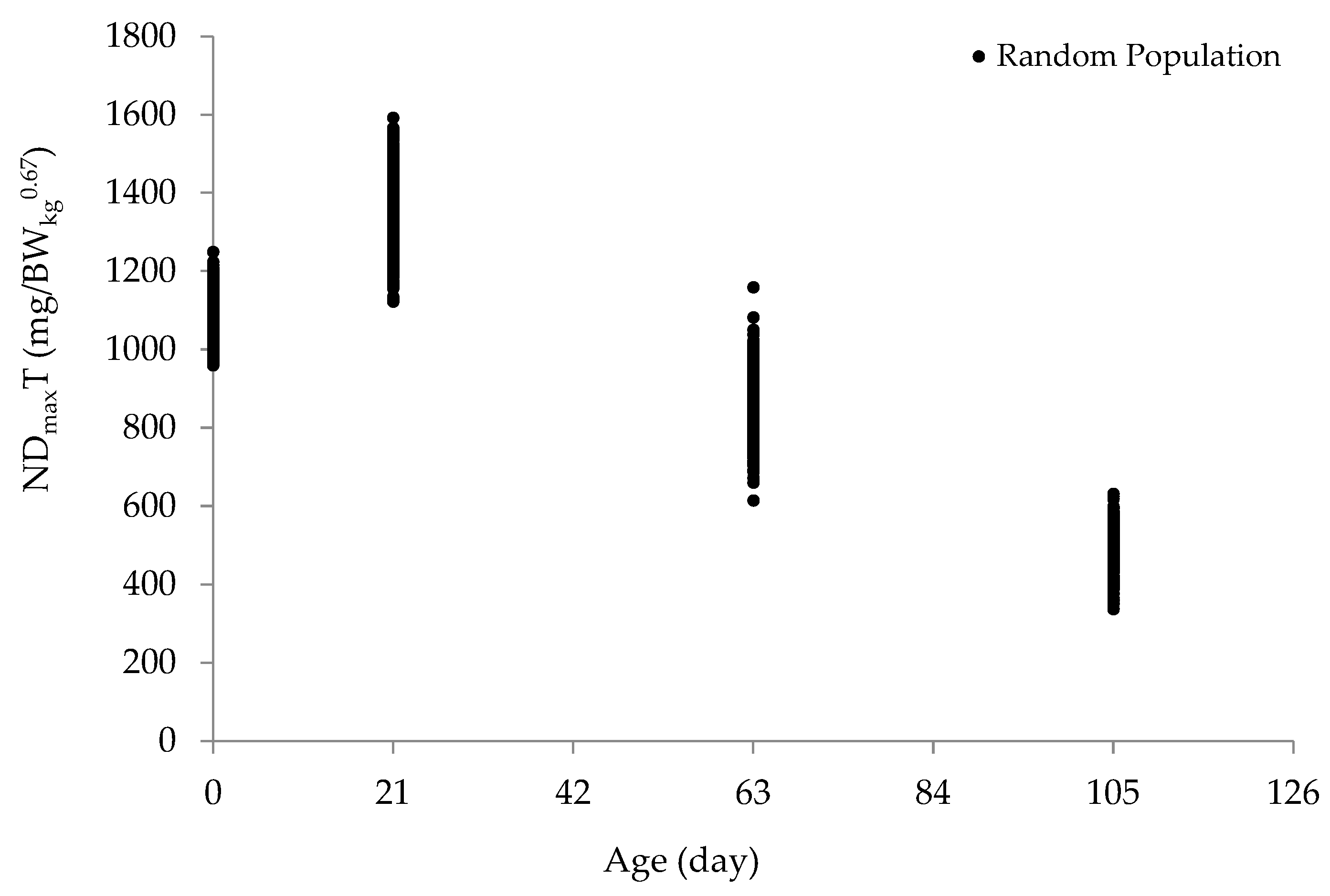
Figure 1. Maximum nitrogen deposition depending on the age of the bird (500 birds by age).
Poultry 05 00008 g001
Figure 2. Illustration of model parameters to predict the maximum nitrogen deposition depending on the age of the bird.
Poultry 05 00008 g002
Figure 3. Standard deposition (SD, Poultry 05 00008 i001 ), maximum deposition (NDmaxT, Poultry 05 00008 i002), and relative maximum potential (RMP, Poultry 05 00008 i003) based on the age of the bird.
Poultry 05 00008 g003
Figure 4. R_student (Poultry 05 00008 i004) between standard deposition (SD, Poultry 05 00008 i005) and maximum deposition (NDmaxT, Poultry 05 00008 i006), according to the age of the bird.
Poultry 05 00008 g004
Table 1. Means of body weight (BW), nitrogen intake (NI, mg × BW0.67 × kg−1), and nitrogen deposition (ND, mg × BW0.67 × kg−1) of pullets in phases I (14 to 28 days), II (56 to 70 days), and III (98 to 112 days) 1.
ItemsN1N2N3N4N5N6N7
Phase I
BW149 ± 15248 ± 14290 ± 14322 ± 9304 ± 18297 ± 21197 ± 14
NI565 ± 171588 ± 262309 ± 563044 ± 753884 ± 934317 ± 94798 ± 29
ND223 ± 52920 ± 251146 ± 241295 ± 151223 ± 291174 ± 32604 ± 37
Phase II
BW487 ± 19587 ± 40661 ± 33658 ± 27659 ± 28656 ± 23556 ± 28
NI597 ± 111267 ± 81721 ± 142432 ± 732850 ± 363431 ± 26614 ± 5
ND167 ± 15537 ± 30754 ± 28751 ± 12759 ± 25733 ± 32408 ± 27
Phase III
BW927 ± 341022 ± 351048 ± 251068 ± 261060 ± 281067 ± 24964 ± 40
NI514 ± 81252 ± 71745 ± 242388 ± 242992 ± 373703 ± 37613 ± 7
ND93 ± 20333 ± 31388 ± 24431 ± 23418 ± 22433 ± 18188 ± 25
1 [22], N1: 75 g/kg, N2: 150 g/kg, N3: 220 g/kg, N4: 292 g/kg, N5: 364 g/kg, N6: 435 g/kg, N7: 75 g/kg + 2.485 g/kg of DL-methionine.
Table 2. Mean (μ) and standard deviation (σ) of NDmaxT (mg × BW0.67 × kg−1) and b, according to the experimental mean age.
AgeNDmaxTb
(Days)μσμσ
Phase 21 d1361870.0006620.000121
Phase 63 d867740.0007450.000160
Phase 105 d476590.0008130.000276
Confidence interval, considering μ ± 2 × σ
Limit aLimit a
LowerUpperLowerUpper
Phase 21 d118715350.0004220.000903
Phase 63 d71910150.0004280.00106
Phase 105 d3585840.0002640.00136
a Mean (μ) ± 2 standard deviation (σ) = μ ± 2 × σ.
Table 3. Deposition (D, mg), intake (LAAI, mg), and efficiency of utilization (k) of methionine+cystine in birds at different growth rates, considering the maximum daily nitrogen deposition (NDmaxT) at 60% and 50% of NDmaxT, mg × BW0.67 × kg−1.
AgeBWNDmaxTPDmaxT60% NDmaxT50% NDmaxT
NRD aLAAI bk cNRD aLAAI bk
76012781.2936607185780505493
149313511.7980859689817717298
2113613512.298111012489817919498
2818913062.79531331548679511111795
3525112333.19101531868275812814191
4232111453.38571702207771414216685
4939710513.58001832537266715319180
564779573.67441922866762016021674
635588673.76901983186257516524169
706407823.66392013495853316826464
777207053.55932023775449416828559
847986353.45512014045045916830655
918715733.35141994294642816632451
989405193.14811964514340116334148
10510044713.04521934714137716135745
11210624302.84281894903935615837043
11911163942.74061865063733915538340
12611643642.53881835213532315239439
a Deposition, b Daily intake of the limiting amino acid, c Efficiency of utilization, BW = 1524 × e(e((ln(−ln(0.036/1524))) − 0.0021 × t)), kg, NDmaxT = 220 + (897 + 64 × t) × (0.9687t), mg × BW0.67 × kg−1, PDmaxT = ([NDmaxT × 6.25] × BW0.67)/1000, g per day, NR60% = (NDmaxT × 0.6) + 283, NR50% = (NDmaxT × 0.5) + 283 mg × BW0.67 × kg−1, LAAI = ((ln[NDmaxT + 283] − ln([NDmaxT + 283] − NR))/16 × 0.00043 × 3.53−1) × BW0.67, mg/day, D = ([BW0.67 × NR] × 6.25) × 68, mg/day, k = D/LAAI × 100%.
Disclaimer/Publisher’s Note: The statements, opinions and data contained in all publications are solely those of the individual author(s) and contributor(s) and not of MDPI and/or the editor(s). MDPI and/or the editor(s) disclaim responsibility for any injury to people or property resulting from any ideas, methods, instructions or products referred to in the content.