Article

Investigation of the Effect of Three Commercial Water Disinfectants on the Performance and the Physicochemical Characteristics of the Gastrointestinal Content in Broiler Chicks


by
Tilemachos Mantzios
1,*,
Konstantinos Kiskinis
1,
Theoni Renieri
1,
Georgios A. Papadopoulos
2,
Ilias Giannenas
3,
Dimitrios Galamatis
4,
Panagiotis Sakkas
3,
Paschalis Fortomaris
2 and
Vasilios Tsiouris
1
1
Unit of Avian Medicine, Clinic of Farm Animals, School of Veterinary Medicine, Faculty of Health Sciences, Aristotle University of Thessaloniki, 54627 Thessaloniki, Greece
2
Laboratory of Animal Production and Environmental Protection, School of Veterinary Medicine, Faculty of Health Sciences, Aristotle University of Thessaloniki, 54124 Thessaloniki, Greece
3
Laboratory of Nutrition, School of Veterinary Medicine, Faculty of Health Sciences, Aristotle University of Thessaloniki, 54124 Thessaloniki, Greece
4
School of Animal Science, University of Thessaly, 41500 Larissa, Greece
*
Author to whom correspondence should be addressed.
Submission received: 6 November 2025 / Revised: 1 December 2025 / Accepted: 8 December 2025 / Published: 23 December 2025

Abstract

Numerous commercial products are used in poultry farms to maintain water quality and prevent pathogen dispersion, but their actual impact on broiler chicks’ performance and gut health remains underreported. This study aimed to investigate the effects of three commercial poultry water disinfectants on broiler chicks’ performance and the physicochemical characteristics of gastrointestinal content when continuously added to drinking water. A total of 144 one-day-old Ross® 308 broiler chicks were randomly allocated into four treatment groups: Group A (negative control), Group B (0.01–0.025% v/v Product A [H2O2 + silver complex]), Group C (0.01–0.04% v/v Product B [H2O2 + peracetic acid]), and Group D (0.05–0.1% w/v Product C [peroxides]). Body weight (BW) was measured weekly, while average daily weight gain (ADWG), average daily feed intake (ADFI), and feed conversion ratio (FCR) were calculated for different time periods. Additionally, on days 15 and 40, the pH of the crop, gizzard, duodenum, jejunum, and cecum contents was assessed, while the viscosity of jejunal and ileal contents were also measured. Statistical analysis revealed that all water disinfectants significantly (p0.05) reduced BW, ADWG, and ADFI during the early growth phase, followed by either recovery or stabilization in the later stages. Drinking water disinfectants induced significant changes in intestinal physicochemical parameters, including reductions in pH of the content in the jejunum (p0.05) during early growth and increased gizzard pH (p0.05) and digesta viscosity (p0.05) at later ages. These findings suggest that continuous water disinfection can suppress broiler chicks’ performance during the early stages of growth while significantly altering the physicochemical characteristics of gastrointestinal content. Further research is needed to investigate the mechanism that underlaying these results and optimize dosage schemes that balance pathogen control with the health, welfare, and performance of broilers.

1. Introduction

Water is a fundamental nutrient for poultry, typically consumed at twice the rate of feed on a weight basis [1,2]. Despite its critical role in broiler production, water quality is often overlooked, even though it directly influences bird health, performance, and overall farm productivity [3]. Contaminated water serves as a reservoir for various pathogens, including Escherichia coli, Salmonella spp., Campylobacter spp., and other microorganisms, which can lead to gastrointestinal diseases such as enteritis, impair nutrient absorption, and compromise flock welfare [3,4,5]. These pathogens not only reduce feed efficiency and growth rates but also increase public health risks, making water and sanitation a key concern in modern poultry operations [6,7,8]. Water quality management becomes even more crucial under high temperatures when water consumption increases by up to threefold [9], further amplifying the risks associated with microbial contamination.
In many regions, including Europe, poultry water quality standards are adapted from human drinking water regulations [Regulation (EC) No 178/2002] [10]. However, there is no legal mandate for routine microbial testing of poultry drinking water systems, leaving the responsibility for water hygiene largely to individual farmers [11]. Standard water management practices, such as mechanical cleaning and oxidative disinfection using chlorine-based compounds, organic acids, or hydrogen peroxide, aim to control microbial loads [6]. However, these methods are not always effective in completely eradicating contaminants, particularly biofilms that form within water lines [11]. Biofilm-forming bacteria, including Pseudomonas spp., provide a protective environment for harmful pathogens, while opportunistic bacteria such as Acinetobacter spp. and Enterobacter spp. can further compromise poultry health and pose occupational risks to farm workers [12,13]. The detachment of biofilms into the water supply, combined with the common practice of administering medications via drinking water, may also contribute to the emergence of multidrug-resistant bacteria, further complicating disease management in poultry farms [14]. Given these concerns, organizations such as the Food and Agriculture Organization (FAO) emphasize the need for rigorous water hygiene measures to protect poultry health, prevent zoonotic disease transmission, and ensure sustainable poultry production [15].
To mitigate microbial risks, water disinfection strategies have gained significant attention. According to the European Food Safety Authority (EFSA), supplementing broiler drinking water with organic acids, chlorine-based biocides, or hydrogen peroxide can reduce the prevalence of Campylobacter-positive flocks by up to 55% [16]. Epidemiological studies from the UK, France, and Spain have further supported these findings, demonstrating that the use of organic and inorganic acidifiers in drinking water correlates with a lower incidence of Campylobacter-positive flocks [17,18]. Mantzios et al. (2023a) provided additional in vitro evidence showing that several commercial water acidifiers and disinfectants, including hydrogen peroxide-based products, exhibit strong antimicrobial activity against C. jejuni and C. coli, even at low concentrations [19]. While these findings suggest that water disinfection can contribute to pathogen control, its effects on broiler gut health, intestinal physiology, and overall performance remain poorly understood.
Despite the widespread use of water disinfectants in poultry farming, limited data exists regarding their impact on broiler growth performance and the physicochemical characteristics of intestinal content. Some disinfectants may enhance gut health by reducing pathogen loads, while others could potentially disrupt the gut microbiota, alter intestinal pH, or affect nutrient absorption [20]. This study aims to evaluate the effects of three commercial water disinfectants on broiler performance and intestinal content parameters, including the pH and viscosity of the intestinal content. By assessing these key factors, the study seeks to provide insights into the potential benefits and risks associated with continuous water disinfection, ultimately informing best practices for water management in commercial poultry production.

2. Materials and Methods

2.1. Experimental Facilities, Biosecurity and Ethics

The experimental study was conducted at the Aristotle University of Thessaloniki (AUTh), Greece, within the experimental facilities of the Unit of Avian Medicine, School of Veterinary Medicine. All procedures adhered to the Council Directive 2010/63/EU and Greek legislation regulating animal husbandry, euthanasia, experimental methods, and biosecurity measures. Ethical approval was granted by the Ethical Committee of the School of Veterinary Medicine and the Greek Veterinary Authority [approval number 17565(37)].
Prior to the initiation of the animal study, all facilities and equipment were thoroughly cleaned using a commercial alkaline foaming cleaner (Biosolve™ HD, Lanxess, Antwerp, Belgium) and disinfected with a commercial disinfectant (VIRAKIL® NG, Ceva Santé Animale, Libourne, France).
Environmental parameters, including temperature, relative humidity, and lighting conditions, were monitored daily using a data logger (HOBO UX100-003, Onset Computer Corporation, Bourne, MA, USA) and adjusted according to the recommendations of the breeding company (Aviagen®, Huntsville, AL, USA) [21]. Birds were provided with ad libitum access to feed throughout the trial. To simulate commercial conditions, broilers were placed on a fresh wood shavings litter, maintained at a depth of 5 cm.

2.2. Experimental Design

A total of 144 one-day-old Ross® 308 broiler chicks (mixed sex) were obtained from a local commercial hatchery, which is the commercial hatchery of the Ioannina Agricultural Poultry Cooperative “PINDOS” with official registered code: E-533. Upon arrival, the chicks were randomly allocated to four (4) treatment groups, each consisting of four (4) replicates (9 chicks per replicate), resulting in 36 chicks per group. The experimental design was as follows: Group A; to which birds received untreated tap water (negative control), Group B; to which birds received tap water treated with 0.01–0.05% v/v Aqua-clean® (Kanters, Lieshout, The Netherlands; Product A), Group C; to which birds received tap water treated with 0.01–0.05% v/v Cid 2000™ (CID LINES N.V., Leper, Belgium; Product B), and Group D; to which birds received tap water treated with 0.05–0.10% v/v Virkon® S (Lanxess, Belgium; Product C).
All treatments were administered via drinking water, provided ad libitum through a tank system connected to the drinking line. The tanks were refilled as needed, and fresh solutions were prepared daily. All disinfectants used in this study are EU-registered for poultry drinking water and approved for use when birds are present. The composition of the selected products and the dosage scheme applied in this study are summarized in Table 1. Drinking water pH was monitored for each disinfectant at both inclusion rates (low and high dosages) during the trial using a digital pH meter (pH 315i, WTW Wissenschaftlich-Technische Werkstatten, Weilheim, Germany).
The experiment lasted for 40 days. Two complete basal diets were formulated: one for the starter phase (days 1–16) and another for the finisher phase (days 16–40), which were offered as mash. No antibiotic growth promoters, organic acids, essential oils, or other additives which target intestinal health and function were included in the feed. The composition and chemical analysis of the diets are detailed in Table S1, whereas the chemical analysis of the drinking water is presented in Table S2.

2.3. Performance Evaluation

Throughout the trial, clinical signs and mortality were monitored and recorded daily. Body weight (BW) was measured on days 1, 9, 16, 20, 23, 30, 35, 37, and 40. Additionally, average daily feed intake (ADFI), average daily weight gain (ADWG), and feed conversion ratio (FCR) were calculated for the periods of days 1–16, 17–40, and the entire trial duration (1–40 days).

2.4. Physicochemical Measurements of Intestinal Content

On days 15 and 40, three (3) and six (6) birds per replicate, respectively, were randomly selected and euthanized by exposure to a rising concentration of carbon dioxide and were subjected to necropsy. The contents of the crop, gizzard, duodenum, jejunum, ileum, and ceca were immediately collected in separate 12 mL tubes and individually vortexed to ensure homogeneity within each gastrointestinal segment. The pH was measured using a digital pH meter (pH 315i, WTW Wissenschaftlich-Technische Werkstatten, Weilheim, Germany). During necropsy, the crop and stomach were opened, allowing for direct pH measurement with the digital pH meter. Additionally, homogenized contents from the jejunum and ileum of the sampled birds were collected in separate 12 mL tubes and analyzed for viscoelastic properties, as previously described by Mantzios et al. (2023b) [4]. Briefly, the homogenized intestinal contents were centrifuged at 3000× g for 15 min to separate feed particles from the liquid phase. Supernatants (1 mL) from each tube were then collected, and viscosity was measured using a rotational Physica MCR 300 rheometer (Physica Messtechnik GmbH, Stuttgart, Germany). Rheological data were analyzed using the US200 V2 software and expressed in centipoise (cP).

2.5. Statistical Analysis

The impact of drinking water disinfection on broiler performance parameters and intestinal physicochemical measurements was analyzed using one-way ANOVA at each time point in SPSS 28.0 (IBM SPSS Statistics for Windows, Version 28.0, Armonk, NY, USA). Post hoc comparisons between treatments were conducted using Duncan’s test.
Mean values and standard deviations (SD) were calculated for all examined parameters and presented in the tables. The statistical unit for evaluating BW, FCR, ADWG, and ADFI was the pen (replicate), while for intestinal pH and viscosity, the statistical unit was the individual bird. The significance level was set at p0.05, and statistically significant trends (0.05 < p0.1) were indicated with a hash symbol (#).

3. Results

During the study period (1–40 days), no mortality was observed. Routine daily examinations did not reveal any specific clinical signs. The pH of drinking water was recorded for each disinfectant at both low and high inclusion rates. The pH of untreated tap water was 7.33, while the applied products produced varying degrees of acidification: Product C reduced water pH to 6.13 at the low dosage and 5.44 at the high dosage; Product B resulted in pH values of 6.95 and 6.54, respectively; and Product A had minimal effect, with pH values of 7.44 and 7.52.
The effect of continuous drinking water disinfection on the body weight (BW) of broilers at different time points during the experimental period is presented in Figure 1 and Table S3.
Significant variations were recorded in the BW of birds among the experimental groups as early as day 9. Specifically, on days 9 and 16, the BW of birds in experimental groups B, C, and D was significantly lower (p0.05) compared to that of group A, with the BW of birds in group D being significantly (p0.05) lower than that in groups B and C. During the period from day 20 to day 35, the BW of birds in group D remained significantly lower (p0.05) compared to all other experimental groups, a trend that persisted until day 37. At the end of the experimentation (day 40), the BW of birds in groups C and D did not differ significantly (p > 0.05) from that of birds in group A; however, birds in group B recorded significantly (p0.05) higher BW at slaughter age compared to that of birds in groups A and D.
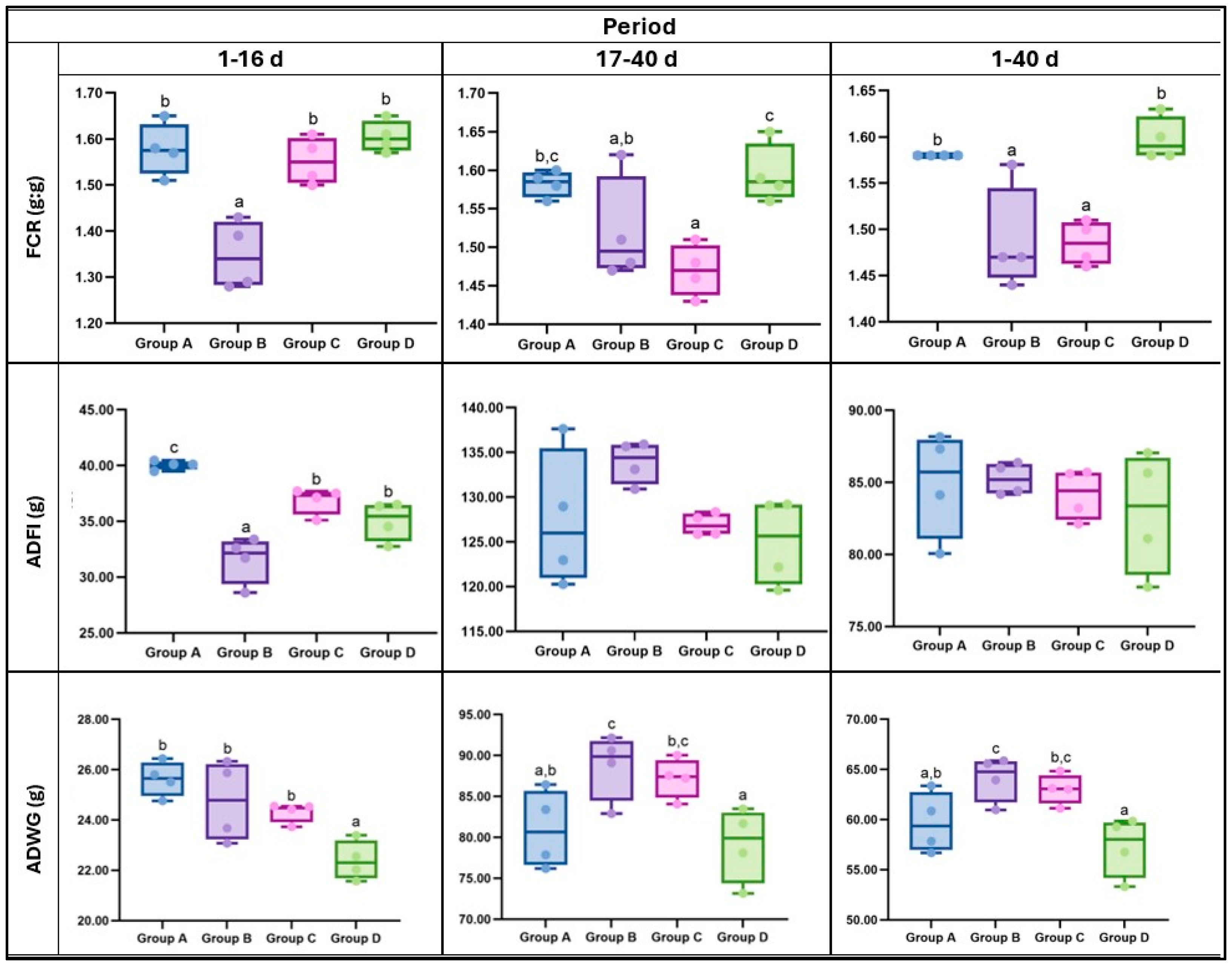
The effect of the continuous application of the three commercial drinking water disinfectants on the performance parameters of broilers is presented in Figure 2 and Table S4.
During the period from 1 to 16 days, the FCR in group B was significantly (p < 0.001) lower compared to all other experimental groups. From 17 to 40 days, the FCR in group C was significantly (p < 0.001) lower compared to that of groups A and D, while the FCR in group B was significantly (p = 0.004) lower compared to that of group D. Finally, for the total experimental period (1–40 days), the FCR of experimental groups B and C was significantly (p < 0.001) lower compared to that of groups A and D.
Regarding ADFI, during the period 1–16 days, the ADFI in groups B, C, and D was significantly lower (p < 0.001) compared to that of group A. Additionally, during the same period, the ADFI in group B was significantly lower (p < 0.001) compared to all other experimental groups. However, for the other experimental periods (day 17–40) and for the total experimental period (day 1–40), no significant differences in ADFI were observed among the experimental groups.
For the period 1–9 days, the ADWG in groups B, C, and D was significantly (p = 0.002) lower compared to that of group A. However, during this period, the ADWG of birds in group D was significantly (p = 0.002) lower compared to all other experimental groups. For the period 1–16 days, the ADWG of birds in group D was significantly (p = 0.004) lower compared to all the other experimental groups. For the period 17–40 days, the ADWG of birds in group B was significantly higher (p = 0.015) compared to groups A and D, while the ADWG of birds in group C was significantly (p = 0.015) higher compared to that of group D. Finally, for the total experimental period (day 1–40), the ADWG of birds in group B was significantly (p = 0.009) higher compared to groups A and D, whereas the ADWG of birds in group C was significantly(p = 0.009) higher compared to that of group D.
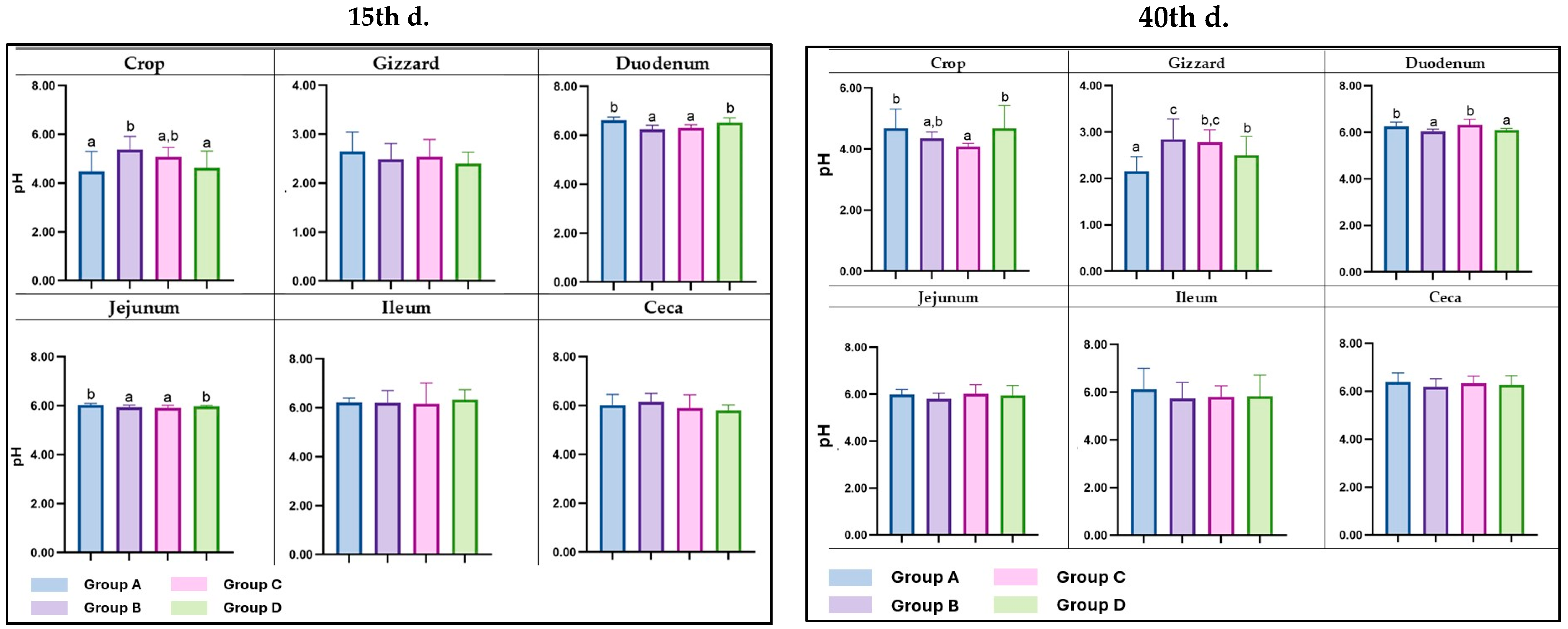
The results of the statistical analysis of the pH of the gastrointestinal tract contents in various anatomical regions of broilers subjected to continuous water disinfection at 15 and 40 days of age are presented in Figure 3 and Table S5.
On day 15, the pH of the content in the crop of birds from group B was significantly (p = 0.031) higher compared to that of group A. Additionally, the pH of the content in the duodenum and jejunum of birds in groups B and C was significantly (p < 0.01) lower compared to that of group A.
On day 40, the pH of the content in the crop of birds from group C was significantly (p = 0.013) lower compared to that of birds in groups A and D. Furthermore, the pH of the gizzard content in birds from groups B, C, and D was significantly (p < 0.001) higher compared to that of birds in group A, with the gizzard pH in group B being significantly (p < 0.001) higher than that in group D. Finally, the pH of the duodenal content in birds from groups B and D was significantly (p < 0.001) lower compared to the other experimental groups.
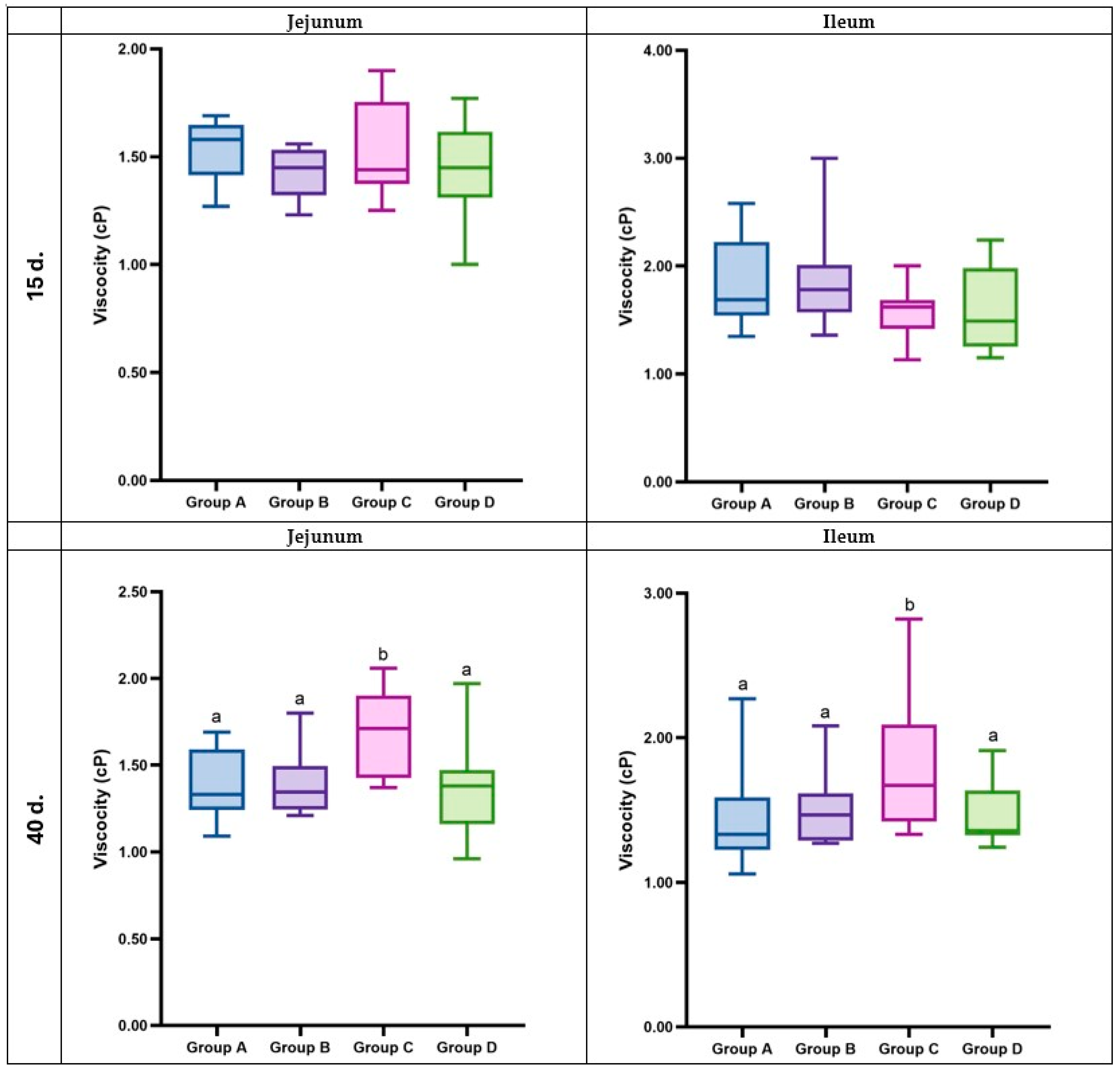
The results of the statistical analysis of the viscosity of the jejunal and ileal contents in broilers subjected to continuous water disinfection at 15 and 40 days of age are presented in Figure 4 and Table S6.
At 15 days of age, no significant (p > 0.05) variations were observed in the viscosity measurements of the jejunal and ileal contents among the experimental groups. However, at 40 days of age, the viscosity of the contents in the jejunum (p = 0.002) and ileum (p = 0.042) of birds in experimental group C was significantly higher compared to all other experimental groups.

4. Discussion

Drinking water disinfection is widely used in poultry production to improve water quality, reduce pathogen load in the drinking line system, and support bird health and productivity [4,16,19,22]. Currently, continuous application of organic and inorganic acids in poultry drinking water is widely recommended by health organizations for the control of zoonotic pathogens such as Salmonella spp. and Campylobacter spp. [8,16]. However, the effects of continuous drinking water disinfection using commercially available formulations on broiler performance and overall health of birds remain largely unexplored [4]. This knowledge gap makes the long-term implementation of such practices challenging and potentially costly [4]. Therefore, the present study evaluated the effects of three commercial disinfectants, which are widely used in commercial poultry farms (Aqua-clean®, Cid 2000™, and Virkon® S), on growth performance and physicochemical characteristics of the gastrointestinal content in broiler chicks.
A consistent trend observed across all disinfectant treatments in this study was a significant reduction in BW during the early growth phase (days 9–16), followed by either recovery or stabilization in the later stages (Figure 1). The long-term performance effects varied depending on the disinfectant used. This effect can likely be attributed to the initial decrease in ADFI observed in disinfectant-treated groups during the early phase (days 1–16) (Figure 2). Over time, feed intake appeared to adapt, as no significant differences in ADFI were detected in the later phases (Figure 2), which was also reflected in the subsequent BW recovery (Figure 1). Although the present study did not evaluate the impact of water treatments on the organoleptic properties of drinking water, previous research suggests that the continuous application of organic and/or inorganic acid-based water treatments can reduce water palatability, due to changes in the odor and taste of the drinking water [4,23,24]. This reduction in palatability may lead to lower water and feed intake, ultimately affecting ADWG. Moreover, prolonged application of certain water sanitizers has been associated with oral and esophageal irritation in broilers, which is linked to low drinking water pH and reduced feed intake [4].
Broilers generally prefer slightly acidic drinking water, with the Aviagen® guidelines recommending a pH of 5.0–6.0 for optimal performance [21,25]. Water with a pH above 8.0 may support undesirable bacterial proliferation and biofilm formation, whereas pH values below 4.0 may impair performance, damage equipment, and promote fungal growth [21]. In the present study, all disinfectants induced modest adjustments in drinking water pH. Product C produced the greatest acidification (6.13 at low dosage; 5.44 at high dosage), Product B yielded intermediate values (6.95 and 6.54), and Product A showed minimal effects (7.44 and 7.52). The organic and inorganic acids, that composed in commercial water disinfectants tested in this study, when applied in the drinking water can alter the microenvironment of the gastrointestinal tract, either directly, through localized antimicrobial or acidifying effects [4,19,20], or indirectly by modifying the physicochemical characteristics of intestinal digesta, such as pH and viscosity, the gut microbiome and gut histomorphology [4,20,26].
In our study, Product A, composed of hydrogen peroxide and complexed silver, did not acidify the water, but increased crop pH on day 15 relative to the untreated control. Conversely, Product C, which caused the strongest acidification of drinking water, did not reduce crop pH, indicating a strong buffering capacity of the feed [27]. Lower pH levels have been associated with the proliferation of acid-tolerant beneficial bacteria, such as Butyricicoccus and Lactobacillus, which contribute to improved nutrient absorption, digestion, and overall performance [28,29]. On the other hand, an increase in pH has been linked to dysbiosis, creating an environment more susceptible to colonization by pathogenic microbes [28,30]. Once pathogenic microbes proliferate, they compete with the host for nutrients and promote excessive fermentation in the gut, a process that not only increases fecal moisture but also leads to measurable nutrient losses [30]. This is more intense when digesta viscosity is high, because the viscous digesta moves more slowly through the intestinal tract, resulting in prolonged retention time that allows additional opportunity for bacterial fermentation [30,31].
In the present study, the application of hydrogen peroxide-based products (Products A and B) significantly reduced duodenal and jejunal pH at day 15. It has been reported that substantial shifts in the gut microbiome occur around two weeks of age [32]. Therefore, a lower pH during this critical period may support the establishment of beneficial bacterial populations, leading to improved digestion and nutrient absorption [28,29,33]. This, in turn, could explain the significant improvement in ADWG and, ultimately, in the FCR of birds in these groups during the later phases of the study. Beyond microbial alterations, prolonged application of organic and inorganic acids may also stimulate adaptive responses of the gut epithelium, including improved histomorphometry, epithelial integrity, and more efficient enzymatic activity [33]. These combined microbial and epithelial adaptations could explain the improved ADWG and, ultimately, the better FCR observed in these groups during the later stages of the trial (Figure 2).
At the second sampling, all drinking water disinfectants led to a significant increase in gizzard pH compared to the negative control group. This increase could be attributed to factors that can be addressed only theoretically, as they were not measured in the current study. Changes in digesta composition, moisture content, or buffering capacity may reduce the efficiency of gastric acids [34,35]. Increased passage rate or reduced mechanical retention may also limit exposure of feed to gastric secretions, elevating measured gizzard pH [36]. Nevertheless, these hypotheses require further investigation to elucidate the mechanisms driving the observed changes in gizzard acidity.
At day 40, Product B significantly increased the viscosity of jejunal and ileal contents, suggesting potential alterations in the gut microenvironment. Previous studies have shown that the continuous application of Product B led to a significant increase in the relative expression of MUC2 in the jejunum of broilers at day 23 [20]. MUC2 encodes mucin-2, the major structural component of the intestinal mucus layer, and higher MUC2 expression is typically associated with increased mucus production [20]. This increase in mucus may contribute to the elevated viscosity observed in the present study. Increased intestinal viscosity is often linked to impaired nutrient absorption, as it slows digesta passage and reduces the diffusion of digestive enzymes and nutrients [36]. This may explain why birds in the Product B group did not exhibit a significant increase in ADWG in the later phase, despite improvements in FCR. In contrast, Products A and C did not significantly affect viscosity.
Water quality, including the presence of organic matter, residual chlorine, and microbial contamination, can influence disinfectant efficacy and stability [37,38,39]. Additionally, the type of acidic agents used, dosage schemes, and feed buffering capacity may modify the degree of acidification and its effects on gut homeostasis [33]. As shown in Table S2, the drinking water used in the experiment had a neutral pH (7.33), moderate conductivity (815 µS/cm), and low total hardness (14.37 mg/L CaCO3), conditions that generally support the stability and reactivity of oxidizing and acid-based disinfectants [37,38,39,40]. Importantly, free and total chlorine were both below detection (0 mg/L), indicating that no residual chlorine was present to interfere with or potentiate the activity of the tested disinfectants [39,40]. In addition, the drinking-line system was carefully cleaned and disinfected prior to the start of the trial, ensuring that no organic residues or biofilms were present that could neutralize disinfectant activity.
Despite the controlled conditions of this experiment, it is important to acknowledge that the effectiveness of commercial formulations in the field is highly dependent on multiple factors [33,39,41]. In commercial poultry houses, fluctuating water quality parameters, such as increased organic matter, variable mineral content, residual disinfectants, and especially the presence of persistent biofilms within drinking lines, can markedly reduce the bioavailability, stability, and overall antimicrobial activity of commercial formulations [39,41]. Additionally, variability in feed ingredients, host microbiota composition, bird health status, and overall farm management practices can further contribute to inconsistencies in field outcomes [23,24,39,41]. These findings emphasize the need for a tailored approach to water disinfection, considering farm-specific conditions and continuous monitoring to optimize both microbial control and bird performance while minimizing potential adverse effects.

5. Conclusions

This study provides valuable insights into the effects of continuous drinking water disinfection on broiler performance and gastrointestinal physiology. The application of commercial water disinfectants modified the physicochemical properties of intestinal digesta, with varying impacts on the growth performance of broiler chicks. A transient reduction in BW during the early phase was observed, likely due to reduced ADFI, followed by either recovery or stabilization in later stages. From a practical standpoint, the results suggest that continuous disinfection during the first two weeks should be applied cautiously. In addition, future research should further investigate the long-term effects of continuous water disinfection on gut microbiota composition, immune responses, and overall flock health. In addition, a cost–benefit analysis under commercial conditions would help determine whether the advantages of continuous water disinfection outweigh the effects on the performance. Finally, a better understanding of these interactions will contribute to the development of optimized water disinfection strategies that combine microbial control and beneficial effects on broiler health and productivity.

Supplementary Materials

The following supporting information can be downloaded at: https://www.mdpi.com/article/10.3390/poultry5010003/s1. Table S1; Ingredients and calculated analysis of the starter (1 to 16 days) and for finisher (17 to 40 d) diets, Table S2; Effect of three commercial water disinfectants on the mean body weight ( ± SD) of broiler chicks, submitted to a continuous drinking water disinfection program, Table S3; Effect of three commercial water disinfectants on the performance parameters (FCR, ADWG and ADFI) ( ± SD) of broiler chicks, submitted to a continuous drinking water disinfection program, Table S4; Effect of three commercial water disinfectants on the mean pH ( ± SD) of the content in the various anatomical parts of the gastrointestinal tract of broiler chicks, submitted to a continuous drinking water disinfection program, Table S5; Effect of three commercial water disinfectants on the mean viscosity ( ± SD) of the content in jejunum and ileum of broiler chicks, submitted to a continuous drinking water disinfection program, Table S6; Effect of three commercial water disinfectants on the mean viscosity ( ± SD) of the content in jejunum and ileum of broiler chicks, submitted to a continuous drinking water disinfection pro-gram.

Author Contributions

Each author has made substantial contributions to the conception of the work, has approved the submitted version, and agrees to be personally accountable for the author’s own contributions and for ensuring that questions related to the accuracy or integrity of any part of the work, even sections in which the author was not personally involved, are appropriately investigated, resolved, and documented in the literature. In particular: conceptualization, T.M. and V.T.; methodology, T.M., V.T., P.F., and K.K.; investigation, T.M., K.K., V.T., I.G., and P.F.; writing—original draft preparation, T.M. and V.T.; writing—review and editing, T.M., V.T., P.S., D.G., T.R., and G.A.P.; supervision, T.M. and V.T. All authors have read and agreed to the published version of the manuscript.

Funding

This study is a part of doctoral research. The implementation of the doctoral thesis was cofinanced by Greece and the European Union (European Social Fund-ESF) through the Operational program “Human Resources Development, Education and Lifelong Learning in the context of the Act ‘Enhancing Human Resources Research Potential by undertaking a Doctoral Research’ Sub-action 2: IKY Scholarship Program for PhD candidates in the Greek Universities”, granted to T.M (Funding number: 2022-050-0502-52603).

Institutional Review Board Statement

The experimental study was performed in the experimental facilities of the Unit of Avian Medicine, School of Veterinary Medicine, Aristotle University of Thessaloniki (AUTh), Greece. Husbandry, euthanasia, experimental procedures, and biosecurity precautions were conducted in accordance with Council Directive (2010/63/EU) and the Greek legislation governing experimental animals and were approved by the Ethical Committee of the School of Veterinary Medicine and the Greek Veterinary Authority [approval number 17565(37)], with approval date 24 January 2025.

Informed Consent Statement

Not applicable.

Data Availability Statement

The original contributions presented in this study are included in the article/Supplementary Materials. Further inquiries can be directed to the corresponding author.

Acknowledgments

The authors express their gratitude to Natalia Mavromati and Emmanouela Apostolopoulou for their excellent collaboration and assistance.

Conflicts of Interest

The authors declare no conflicts of interest.

References

  1. Hess, J.B. Evaluating Water Quality for Poultry. Alabama Cooperative Extension System, ANR-1208. 2001. Available online: https://www.aces.edu/wp-content/uploads/2019/06/ANR-1201-Evaluating-Water-Quality-for-Poultry_061219L.pdf (accessed on 12 November 2025).
  2. Pesti, G.M.; Amato, S.V.; Minear, L.R. Water Consumption of Broiler Chickens Under Commercial Conditions. Poult. Sci. 1985, 64, 803–808. [Google Scholar] [CrossRef]
  3. Mustedanagic, A.; Matt, M.; Weyermair, K.; Schrattenecker, A.; Kubitza, I.; Firth, C.L.; Loncaric, I.; Wagner, M.; Stessl, B. Assessment of Microbial Quality in Poultry Drinking Water on Farms in Austria. Front. Vet. Sci. 2023, 10, 1254442. [Google Scholar] [CrossRef] [PubMed]
  4. Mantzios, T.; Tsiouris, V.; Papadopoulos, G.A.; Economou, V.; Petridou, E.; Brellou, G.D.; Giannenas, I.; Biliaderis, C.G.; Kiskinis, K.; Fortomaris, P. Investigation of the Effect of Three Commercial Water Acidifiers on the Performance, Gut Health, and Campylobacter jejuni Colonization in Experimentally Challenged Broiler Chicks. Animals 2023, 13, 2037. [Google Scholar] [CrossRef]
  5. Maharjan, P.; Huff, G.; Zhang, W.; Watkins, S. Effects of Chlorine and Hydrogen Peroxide Sanitation in Low Bacterial Content Water on Biofilm Formation Model of Poultry Brooding House Waterlines. Poult. Sci. 2017, 96, 2145–2150. [Google Scholar] [CrossRef] [PubMed]
  6. Maharjan, P.; Clark, T.; Kuenzel, C.; Foy, M.K.; Watkins, S. On farm monitoring of the impact of water system sanitation on microbial levels in broiler house water supplies. J. Appl. Poult. Res. 2016, 25, 316–324. [Google Scholar] [CrossRef]
  7. Awad, W.A.; Hess, C.; Hess, M. Re-thinking the chicken—Campylobacter jejuni interaction: A review. Avian Pathol. 2018, 47, 352–363. [Google Scholar] [CrossRef] [PubMed]
  8. Van Immerseel, F.; Russell, J.B.; Flythe, M.D.; Gantois, I.; Timbermont, L.; Pasmans, F.; Haesebrouck, F.; Ducatelle, R. The use of organic acids to combat salmonella in poultry: A mechanistic explanation of the efficacy. Avian Pathol. 2006, 35, 182–188. [Google Scholar] [CrossRef]
  9. Bruno, L.D.G.; Maiorka, A.; Macari, M.; Furlan, R.L.; Givisiez, P.E.N. Water intake behavior of broiler chickens exposed to heat stress and drinking from bell or nipple drinkers. Braz. J. Poult. Sci. 2011, 13, 147–152. [Google Scholar] [CrossRef]
  10. European Parliament and Council of the European Union. Regulation (EC) No 178/2002 of the European Parliament and of the Council of 28 January 2002 laying down the general principles and requirements of food law, establishing the European Food Safety Authority and laying down procedures in matters of food safety. Off. J. Eur. Communities 2002, L31, 1–24. Available online: https://eur-lex.europa.eu/legal-content/EN/TXT/PDF/?uri=CELEX:32002R0178 (accessed on 26 November 2025).
  11. Maes, S.; Vackier, T.; Nguyen Huu, S.; Heyndrickx, M.; Steenackers, H.; Sampers, I. Occurrence and Characterisation of Biofilms in Drinking Water Systems of Broiler Houses. BMC Microbiol. 2019, 19, 77. [Google Scholar] [CrossRef] [PubMed]
  12. Huang, K.; Mao, Y.; Zhao, F.; Zhang, X.X.; Ju, F.; Ye, L.; Li, B.; Ren, H.; Zhang, T. Free-Living Bacteria and Potential Bacterial Pathogens in Sewage Treatment Plants. Appl. Microbiol. Biotechnol. 2018, 102, 2455–2464. [Google Scholar] [CrossRef]
  13. Hruskova, T.; Sasakova, N.; Bujdosova, Z.; Kvokacka, V.; Gregova, G.; Verebova, V.; Valko-Rokytovska, M.; Takac, L. Disinfection of Potable Water Sources on Animal Farms and Their Microbiological Safety. Vet. Med. 2016, 61, 173–186. [Google Scholar] [CrossRef]
  14. Racewicz, P.; Majewski, M.; Biesiada, H.; Nowaczewski, S.; Wilczyński, J.; Wystalska, D.; Kubiak, M.; Pszczoła, M.; Madeja, Z.E. Prevalence and Characterisation of Antimicrobial Resistance Genes and Class 1 and 2 Integrons in Multiresistant Escherichia coli Isolated from Poultry Production. Sci. Rep. 2022, 12, 6062. [Google Scholar] [CrossRef]
  15. Drechsel, P.; Marjani Zadeh, S.; Pedrero Salcedo, F. (Eds.) Water Quality in Agriculture: Risks and Risk Mitigation; Food and Agriculture Organization of the United Nations: Rome, Italy; International Water Management Institute: Colombo, Sri Lanka, 2023; Available online: https://openknowledge.fao.org/server/api/core/bitstreams/eb0ed8bb-545a-4d6b-84b2-d8c8bbd96b91/content (accessed on 20 April 2025).
  16. EFSA Panel on Biological Hazards (BIOHAZ); Koutsoumanis, K.; Allende, A.; Alvarez-Ordóñez, A.; Bolton, D.; Bover-Cid, S.; Davies, R.; De Cesare, A.; Herman, L.; Hilbert, F.; et al. Update and review of control options for Campylobacter in broilers at primary production. EFSA J. 2020, 18, e06090. [Google Scholar] [CrossRef]
  17. Torralbo, A.; Borge, C.; Allepuz, A.; García-Bocanegra, I.; Sheppard, S.K.; Perea, A.; Carbonero, A. Prevalence and Risk Factors of Campylobacter Infection in Broiler Flocks from Southern Spain. Prev. Vet. Med. 2014, 117, 106–113. [Google Scholar] [CrossRef]
  18. Allain, V.; Chemaly, M.; Laisney, M.J.; Rouxel, S.; Quesne, S.; Le Bouquin, S. Prevalence of and Risk Factors for Campylobacter Colonisation in Broiler Flocks at the End of the Rearing Period in France. Br. Poult. Sci. 2014, 55, 452–459. [Google Scholar] [CrossRef] [PubMed]
  19. Mantzios, T.; Tsiouris, V.; Kiskinis, K.; Economou, V.; Petridou, E.; Tsitsos, A.; Patsias, A.; Apostolou, I.; Papadopoulos, G.A.; Giannenas, I.; et al. In Vitro Investigation of the Antibacterial Activity of Nine Commercial Water Disinfectants, Acidifiers, and Glyceride Blends against the Most Important Poultry Zoonotic Bacteria. Pathogens 2023, 12, 381. [Google Scholar] [CrossRef] [PubMed]
  20. Mantzios, T.; Kiousi, D.E.; Brellou, G.D.; Papadopoulos, G.A.; Economou, V.; Vasilogianni, M.; Kanari, E.; Petridou, E.; Giannenas, I.; Tellez-Isaias, G.; et al. Investigation of Potential Gut Health Biomarkers in Broiler Chicks Challenged by Campylobacter jejuni and Submitted to a Continuous Water Disinfection Program. Pathogens 2024, 13, 356. [Google Scholar] [CrossRef]
  21. Aviagen. Ross-Broiler Management Handbook; Aviagen: Huntsville, AL, USA, 2025; Available online: https://aviagen.com/assets/Tech_Center/Ross_Broiler/Aviagen-ROSS-Broiler-Handbook-EN.pdf (accessed on 8 September 2025).
  22. Tsiouris, V.; Mantzios, T.; Kiskinis, K.; Fortomaris, P. Feed additives to combat intestinal diseases in antibiotic-free poultry farming. In Sustainable Use of Feed Additives in Livestock; Arsenos, G., Giannenas, I., Eds.; Springer: Cham, Switzerland, 2023. [Google Scholar] [CrossRef]
  23. Greene, G.; Koolman, L.; Whyte, P.; Burgess, C.M.; Lynch, H.; Coffey, A.; Lucey, B.; O’Connor, L.; Bolton, D. An Investigation of the Effect of Water Additives on Broiler Growth and the Caecal Microbiota at Harvest. Pathogens 2022, 11, 932. [Google Scholar] [CrossRef]
  24. Açıkgöz, Z.; Bayraktar, H.; Altan, Ö. Effects of formic acid administration in the drinking water on performance, intestinal microflora and carcass contamination in male broilers under high ambient temperature. Asian-Australas. J. Anim. Sci. 2010, 24, 96–102. [Google Scholar] [CrossRef]
  25. Clark, T.; Dean, B.; Watkins, S. How Does Taste Influence Water Consumption in Broilers? Avian Advice 2009, 11, 12. Available online: https://poultry-science.uark.edu/_resources/pdf/avianadvice_spr09.pdf (accessed on 1 December 2022).
  26. Chukwudi, P.; Umeugokwe, P.I.; Ikeh, N.E.; Amaefule, B.C. The Effects of Organic Acids on Broiler Chicken Nutrition: A Review. Anim. Res. One Health 2024, 3, 43–53. [Google Scholar] [CrossRef]
  27. Dittoe, D.K.; Ricke, S.C.; Kiess, A.S. Organic Acids and Potential for Modifying the Avian Gastrointestinal Tract and Reducing Pathogens and Disease. Front. Vet. Sci. 2018, 5, 216. [Google Scholar] [CrossRef]
  28. Liu, L.; Li, Q.; Yang, Y.; Guo, A. Biological Function of Short-Chain Fatty Acids and Its Regulation on Intestinal Health of Poultry. Front. Vet. Sci. 2021, 8, 736739. [Google Scholar] [CrossRef]
  29. Samanta, S.; Haldar, S.; Ghosh, T.K. Comparative Efficacy of an Organic Acid Blend and Bacitracin Methylene Disalicylate as Growth Promoters in Broiler Chickens: Effects on Performance, Gut Histology, and Small Intestinal Milieu. Vet. Med. Int. 2010, 2010, 645150. [Google Scholar] [CrossRef]
  30. Ndelekewute, E.K.; Unah, U.L.; Udoh, U.H. Effect of Dietary Organic Acids on Nutrient Digestibility, Faecal Moisture, Digesta pH and Viscosity of Broiler Chickens. MOJ Anat. Physiol. 2019, 6, 39–44. [Google Scholar] [CrossRef]
  31. Lee, K.-W.; Everts, H.; Kappert, H.J.; Van der Kuilen, J. Growth Performance, Intestinal Viscosity, Fat Digestibility and Plasma Cholesterol in Broiler Chickens Fed a Rye-Containing Diet Without or with Essential Oil Components. Int. J. Poult. Sci. 2003, 2, 478–485. [Google Scholar]
  32. Huang, T.; Han, J.; Liu, Y.; Fei, M.; Du, X.; He, K.; Zhao, A. Dynamic distribution of gut microbiota in posthatching chicks and its relationship with average daily gain. Poult. Sci. 2023, 102, 103008. [Google Scholar] [CrossRef] [PubMed]
  33. Pearlin, B.V.; Muthuvel, S.; Govidasamy, P.; Villavan, M.; Alagawany, M.; Farag, M.R.; Dhama, K.; Gopi, M. Role of acidifiers in livestock nutrition and health: A review. J. Anim. Physiol. Anim. Nutr. 2020, 104, 1467–1476. [Google Scholar] [CrossRef]
  34. Jiménez-Moreno, E.; González-Alvarado, J.M.; González-Sánchez, D.; Lázaro, R.; Mateos, G.G. Effects of type and particle size of dietary fiber on growth performance and digestive traits of broilers from 1 to 21 days of age. Poult. Sci. 2010, 89, 2197–2212. [Google Scholar] [CrossRef] [PubMed]
  35. Sozcu, A. Growth performance, pH value of gizzard, hepatic enzyme activity, immunologic indicators, intestinal histomorphology, and cecal microflora of broilers fed diets supplemented with processed lignocellulose. Poult. Sci. 2019, 98, 6880–6887. [Google Scholar] [CrossRef]
  36. Martínez, Y.; Almendares, C.I.; Hernández, C.J.; Avellaneda, M.C.; Urquía, A.M.; Valdivié, M. Effect of Acetic Acid and Sodium Bicarbonate Supplemented to Drinking Water on Water Quality, Growth Performance, Organ Weights, Cecal Traits and Hematological Parameters of Young Broilers. Animals 2021, 11, 1865. [Google Scholar] [CrossRef]
  37. Zhang, Y.; Zhao, X.; Zhang, X.; Peng, S. A review of different drinking water treatments for natural organic matter removal. Water Sci. Technol. Water Supply 2015, 15, 442–455. [Google Scholar] [CrossRef]
  38. Aboelseoud, H.; Ismael, E.; Badawy, E.M.; Moustafa, G.Z. Hygienic Efficacy of Organic Acids, Copper Sulphate, Peroxides, Chlorines, and Quaternary Ammonium Compounds in Combating Water-Pipes Biofilm-Bacteria Isolated from Layer-Poultry Farms. Water Air Soil Pollut. 2025, 236, 930. [Google Scholar] [CrossRef]
  39. Münster, P.; Kemper, N. Long-Term Analysis of Drinking Water Quality in Poultry and Pig Farms in Northwest Germany. Front. Anim. Sci. 2024, 5, 1467287. [Google Scholar] [CrossRef]
  40. Raut, R.; Biswas, B.K.; Pokharel, B.; Tabler, T.; Nahashon, S.; Maharjan, P. Effects of varying free chlorine residuals in poultry drinking wateron early performance and amino acids digestibility of broiler chickens. Int. J. Poult. Sci. 2024, 23, 66–71. [Google Scholar] [CrossRef]
  41. Mohammed, A.N.; Mohamed, D.A.; ElDin Mohamed, M.B.; El Bably, M.A. Assessment of Drinking Water Quality and New Disinfectants for Water Treatment in a Small Commercial Poultry Farm. J. Adv. Vet. Res. 2020, 10, 206–212. Available online: https://advetresearch.com/index.php/AVR/article/view/533 (accessed on 8 September 2025).
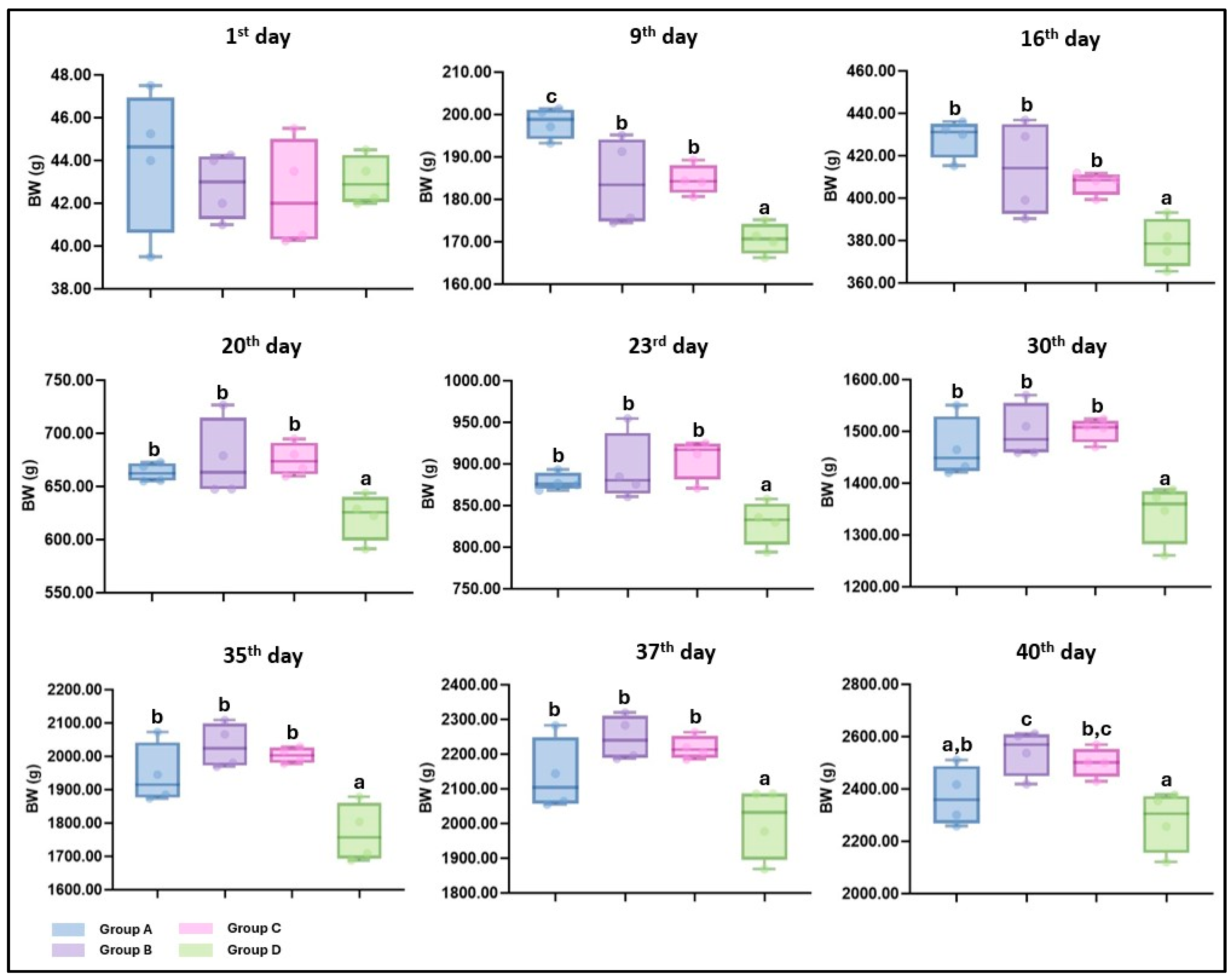
Figure 1. Effect of three commercial water disinfectants on the mean body weight ( ± SD) of broiler chicks, submitted to a continuous drinking water disinfection program. a, b, c Boxplots in each individual graph with a different superscript differ significantly (p0.05).
Poultry 05 00003 g001
Figure 2. Effect of three commercial water disinfectants on the performance parameters (FCR, ADWG, and ADFI) ( ± SD) of broiler chicks, submitted to a continuous drinking water disinfection program. a, b, c Boxplots in each individual graph with a different superscript differ significantly (p0.05).
Poultry 05 00003 g002
Figure 3. Effect of three commercial water disinfectants on the mean pH ( ± SD) of the content in the various anatomical parts of the gastrointestinal tract of broiler chicks, submitted to a continuous drinking water disinfection program. a, b, c Plots in each individual graph with a different superscript differ significantly (p0.05).
Poultry 05 00003 g003
Figure 4. Effect of three commercial water disinfectants on the mean viscosity ( ± SD) of the content in jejunum and ileum of broiler chicks, submitted to a continuous drinking water disinfection program. a, b Boxplots in each individual graph with a different superscript differ significantly (p0.05).
Poultry 05 00003 g004
Table 1. Information (synthesis, manufacturer’s recommendations) about the commercial products that were used in this study.
Poultry 05 00003 i001
Experimental groupTested ProductFormActive Ingredients (% Concentration)r. Dose 1
Group BAqua-clean®LiquidHydrogen peroxide (25–50%), complexed silver0.040%
Group CCid 2000™LiquidHydrogen peroxide (15–30%), peracetic acid (5–15%), acetic acid (5–15%)0.040%
Group DVirkon® SSolidPentapotassium bis (peroxymonosulphate) bis (sulfate) (25–50%), sodium dodecylbenzene sulfonate (10–25%), butanedioic acid (≤10%), sulphamic acid (≤5%), potassium hydrogen sulphate (≤5%), sodium chloride (≤5%), dipotassium peroxodisulphate (≤5%), dipotassium disulphate (≤5%), dipentene (<1%)0.100%
Experimental design and tested products dosage scheme [group A = birds received tap water without any treatment; group B = birds received tap water treated with 0.01–0.05% v/v Aqua-clean®; group C = birds received tap water treated with 0.01–0.05% v/v Cid 2000™; group D = birds received tap water treated with 0.05–0.10% v/v Virkon® S. 1 Recommended dosage by the manufacturer (when animals are present). According to the instructions, in some products, the dose may be increased, whereas the evaluation of the optimal farm-specific dose is highly encouraged. For products for which data were available, we included the percentage of the concentrations of individual compounds. It is important to note that all the products may contain additional proprietary ingredients used for stabilization and enhancing effectiveness.
Disclaimer/Publisher’s Note: The statements, opinions and data contained in all publications are solely those of the individual author(s) and contributor(s) and not of MDPI and/or the editor(s). MDPI and/or the editor(s) disclaim responsibility for any injury to people or property resulting from any ideas, methods, instructions or products referred to in the content.