Article

Germination and Growth Responses of Trifoliate Orange (Poncirus trifoliata L.) Seeds to Glycerol-Chitosan-Based Biostimulant Treatments

by
Christina-Ioanna Ntouvika
,
Lejdina Hoxha
,
Magdalini Malliari
,
Charidimos Vermes
,
Paschalis Giannoulis
* and
Helen Kalorizou
*
Department of Agriculture, Faculty of Agricultural Sciences, University of Patras, New Buildings, 30200 Missolonghi, Greece
*
Authors to whom correspondence should be addressed.
Seeds 2026, 5(4), 50; https://doi.org/10.3390/seeds5040050
Submission received: 14 June 2026 / Revised: 5 August 2026 / Accepted: 15 August 2026 / Published: 19 August 2026

Abstract

Trifoliate orange (Poncirus trifoliata L.), a citrus rootstock valued for its cold hardiness and resistance to broad biotic stress, produces desiccation-sensitive seeds whose successful germination requires optimized pre-sowing treatments for reliable sexual propagation. This study investigated whether chitosan-based coating systems, incorporating glycerol as a plasticizer combined with either an amino acid biostimulant (betaine-proline) or gibberellic acid (GA3), could improve germination kinetics and seedling establishment. Seeds from mature fruits were subjected to 18 treatments across Petri dish and soil bioassays. In Petri dishes, the germination percentage remained uniformly high (86.67–100%), with GA3-containing formulations promoting shoot elongation and proline-betaine combinations favoring root development. In soil, treatments primarily modulated germination kinetics: GA3 combined with chitosan (1.5–2%) increased the germination speed by approximately 3.0–3.4 times relative to the control, while 1.5% chitosan with proline-betaine and glycerol yielded the fastest germination overall. Biomass responses were strongly formulation-dependent: 2% chitosan with GA3 maximized shoot and total dry weight, whereas 2% chitosan with proline-betaine and glycerol substantially improved root dry biomass and overall seedling quality. Glycerol exerted context-dependent effects, enhancing amino acid formulations while reducing performance in GA3 mixtures. These findings support the use of optimized chitosan-based treatments as effective tools for accelerating emergence and improving seedling robustness in rootstock production.

1. Introduction

The trifoliate orange (Poncirus trifoliata L.) is a deciduous species in the family Rutaceae with exceptional cold hardiness and resistance to virus infections (Citrus tristeza virus), bacteria (Candidatus Liberibacter asiaticus), nematodes (Tylenchulus semipenetrans), and insects such as Diaphorina citri (Kuwayama), achieved through the synthesis of selective secondary metabolites and phenylpropanoids [1,2,3,4]. In addition to cold resistance, which enables citrus cultivation in marginal climates, P. trifoliata rootstocks can induce dwarfing in commercial varieties of Citrus species, which is a suitable characteristic for high-density orchards [5,6,7].
In P. trifoliata, seeds with low moisture content (a reduction of over 50% relative to fresh seeds, from 52.1% to 24.8% following air-drying) show irreversible loss of viability and germination capacity, ranging from 11.7% to 100%, depending on the drying technique [8]. Seed coat removal decreases the minimum time required for emergence by 47% and, at the same time, elevates the percentage of emergence by 18.75% [9].
Chitosan, obtained through the alkaline N-deacetylation of chitin, is a β-1,4-linked polymer of D-glucosamine and N-acetyl-D-glucosamine. Valued in agriculture for more than 50 years for its antifungal and elicitor activities [10], it is now commercially applied in seed coatings and nano-formulations that promote germination, regulate growth, and confer resistance to biotic and abiotic stress [11,12,13,14]. Chitosan applied as a thin coating or priming solution increases the rate and uniformity of water uptake during seed imbibition due to the presence of its hydrophilic amino and hydroxyl groups, while its film-forming behavior stabilizes the seed coat [12,15]. Chitosan priming reduced plasma membrane permeability and malondialdehyde (MDA) accumulation in wheat seeds, preserving membrane integrity through dehydration–rehydration cycles and improving resilience to heavy metal stress [16,17,18]. At later developmental stages, comparable membrane-stabilizing effects have been documented in the leaves of pretreated “Fuji” apple seedlings on Malus sieversii rootstock under drought conditions, where 100 mg/L chitosan minimized electrolyte leakage and MDA [19]. The in vitro combination of 120 mg/L chitosan and 0.5 mg/L benzyladenine was found to be optimal for the proliferation of M26 apple rootstock explants after 12 weeks [20].
Studies on exogenous proline and glycine betaine seed treatments in fruit-tree species under strictly non-stress germination conditions remain very limited. Exogenous proline applications (25 and 50 mM) improved photosynthesis, antioxidant enzyme activity, and Na+ exclusion in salt-stressed two-year-old olive trees (Olea europaea L.), but did not significantly affect growth under non-stress conditions, as they were applied during the vegetative rather than germination stage [21,22]. Among wheat varieties, 15 mM proline priming maximized shoot and root biomass and plant height, alongside changes in photosystem II (PSII) performance and reserve mobilization [23].
Under non-stress conditions, 1 mM proline applied to MR269 rice seeds for 24 h yielded the highest germination percentage, germination rate index (GRI), seedling vigour index (SVI), α-amylase activity, and total soluble sugar content. By contrast, 20 mM proline was inhibitory, prolonging mean germination time and reducing GRI and SVI [24]. Similarly, 5 mM proline was the most effective dose for canola seed germination and seedling growth; however, the salinity alleviation effect was greater than in non-stressed seed lines [25].
Coating maize seeds with 2% chitosan and 0.30 g glycerol per gram of chitosan as a plasticizer improved germination rates and provided protection against Penicillium spp. [26]. The synthesized chitosan blends, incorporating polyethylene glycol and glycerol, were loaded with Trichoderma fungal cultures and applied as a coating on castor seeds. This hybrid microbial–polymer blend demonstrated improved germination rates and seedling vigour, while maintaining a highly viable population of beneficial fungi [27,28].
Few studies have specifically examined exogenous glycerol as a pre-sowing germination treatment in commercially important fruit, nut, oil, or timber trees. Glycerol is repeatedly listed among osmopriming agents (alongside polyethylene glycol, mannitol, sorbitol, and KNO3) in seed priming [29]. In Arabidopsis, exogenous glycerol alters root architecture. Treatment with 1 mM glycerol markedly inhibits primary root elongation, an effect detectable by four days post-germination that intensifies with prolonged exposure [30].
Crude glycerin, as a biodiesel by-product, containing 80% glycerol, is strongly inhibitory to germination in both small-seeded weeds and crop seeds, acting as a bioherbicide [31]. Glycerol is also a standard cryoprotectant used in plant vitrification solutions to cryopreserve embryos of agriculturally important trees such as Castanea sativa [32].
The preparation of chitosan films incorporating various additives, along with the characterization of their resulting properties, has long been a challenging area of research. Chitosan films prepared with 0.52 M acetic acid, 3.5 × 10⁻⁵ M chitosan, 0.25 M NaOH, and 0.40 M ethanol reached a tensile strength of 749.235 N/m, while those with 0.17 M acetic acid, 2.5 × 10⁻⁵ M chitosan, 0.75 M NaOH, and 0.60 M ethanol gave an air permeability of 295.235 mL/min. These results demonstrate that adjusting the processing conditions and chemical composition can minimize chitosan film constringency and improve its elasticity and flexibility [33]. Glycerol incorporation enhanced the chitosan film’s water vapor and carbon dioxide permeability but reduced its tensile strength, whereas stearic acid increased carbon dioxide permeability while lowering both water vapor permeability and tensile strength [34].
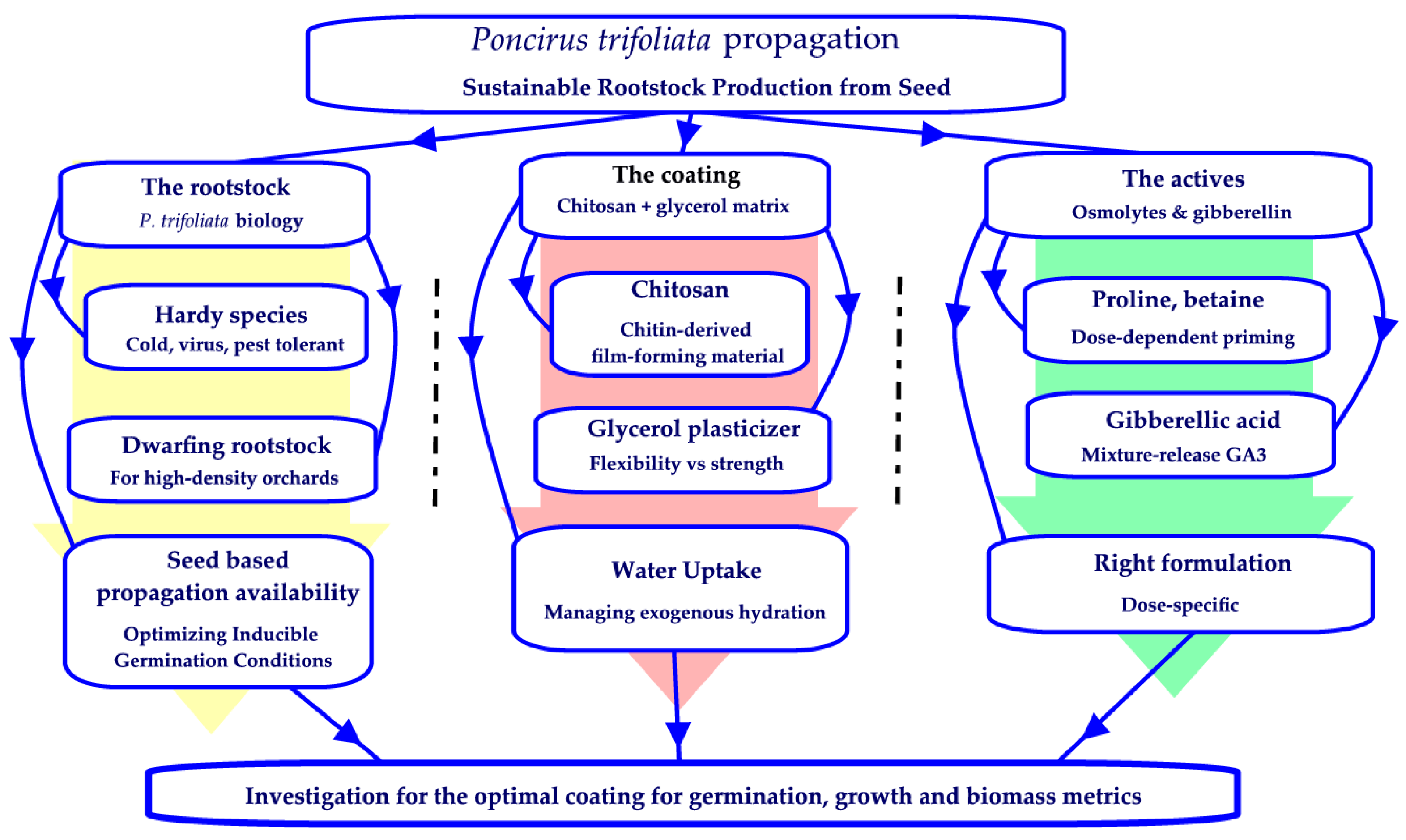
Using an alternative process, films were prepared from 3% chitosan in lactic acid (1% and 2.5%) plasticized with sorbitol or glycerol (0.25–0.50 mL/g). The plasticizer type did not significantly affect the thickness (27–81 μm for sorbitol; 25–60 μm for glycerol), which increased with acid concentration. Sorbitol films showed higher normalized breaking force but lower deformation than glycerol films, with elasticity declining at higher acid and plasticizer concentrations [35]. In general, chitosan concentrations in coating and film-forming solutions typically range from 0.5% to 3% (w/w or w/v) [36,37,38,39,40]. When glycerol is used as a plasticizer, its concentration ranges from roughly 0–3% (w/w) in simple systems [36], 0.5–1% (w/v) in more physiochemically complex formulations [37,40], and 10–30% (w/w of chitosan) in bio-composite films [41,42]. Higher chitosan content generally increases tensile strength, thickness, and density, and lowers moisture [37,40]. Higher glycerol concentration increases flexibility and elongation but lowers tensile strength and can raise permeability and moisture [37,40,41,42]. The chitosan–glycerol mixture may be supplemented with plant hormones or other biostimulatory molecules, offering considerable potential for application (Figure 1).
Encapsulation of GA3 within chitosan nanoparticles or hydrogel matrices yields controlled-release formulations that protect the hormone from degradation and leaching while maintaining sustained bioavailability to seeds [43,44,45,46,47,48]. This approach leads to the following: (a) enhanced germination rates due to gibberellic acid, (b) increased root and shoot growth parameters, and (c) greater resilience under abiotic stress conditions. However, the effectiveness of chitosan–gibberellic acid combinations for seed germination is based on the precise optimization of component concentrations and their mixing ratio. Some plant species responded best to nanoencapsulated gibberellic acid (GA3)−chitosan formulations at low doses [47], while others demonstrated enhanced germination when exposed to high concentrations of GA3 during the pre-soaking stage [49]. At high GA3 concentrations, combining GA3 with chitosan reduced treatment efficacy and growth parameters relative to single-agent applications, suggesting that the response may depend on species-specific genetic factors underlying the response [50].
Therefore, this study evaluates whether chitosan-based seed coatings, alone or combined with glycerol, proline-betaine, and GA3, can improve germination performance, early growth, and biomass accumulation of P. trifoliata seedlings, aiming to identify suitable formulations for citrus rootstock propagation.

2. Materials and Methods

2.1. Collection and Processing of Trifoliate Orange Seeds

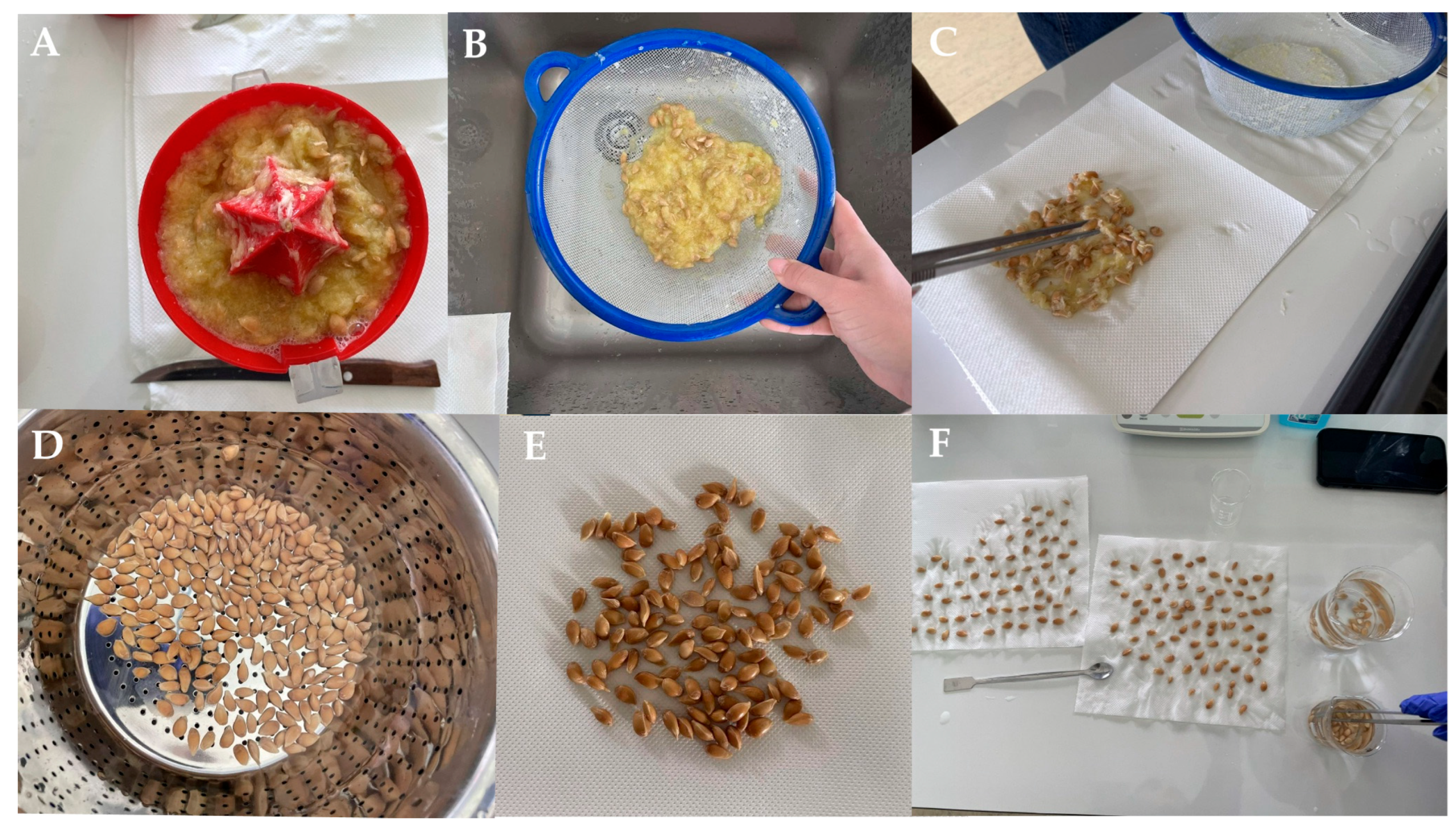
Mature fruits of trifoliate orange (Poncirus trifoliata) were collected from 16-year-old trees in the orchard of the Department of Agriculture, University of Patras, Greece. Seeds were manually extracted from the fruits and processed immediately after collection to minimize any storage-related effects on seed physiological status. Extracted seeds were soaked in distilled water at room temperature for 24 h, with periodic water replacement, to remove residual pulp (Figure 2). Subsequently, seeds were thoroughly rinsed with distilled water and air-dried before surface-sterilization with 1% (v/v) hydrogen peroxide (H2O2) for 5 min.

2.2. Preparation of Working Solutions

Chitosan (DAC > 95%, BLD Pharmatech GmbH, Reinbek, Germany) was dissolved in 1% (v/v) acetic acid (≥99.8%, Sigma-Aldrich, Merck KGaA, Darmstadt, Germany) to prepare solutions at concentrations of 1%, 1.5%, and 2% (w/v) under continuous magnetic stirring at room temperature until complete dissolution. The pH was adjusted to 5.6 using 1 N NaOH. Glycerol (≥99%, CHEMSOLUTE®, Th. Geyer GmbH & Co. KG, Renningen, Germany) was added to the chitosan solutions as a plasticizing agent at final concentrations of 0.5%, 0.75%, and 1.0% (v/v), to the 1%, 1.5%, and 2% (w/v) chitosan formulations, respectively. Each chitosan–glycerol treatment solution was prepared at a final volume of 30 mL. The mixtures were gently stirred until homogeneous chitosan–glycerol coating formulations were obtained.
A commercial proline-betaine-based biostimulant containing nitrogen (25%; 6.2% ammoniacal, 12.7% ureic, and 6.1% nitric), readily assimilable betaine (7%), and L-proline (3%) [Commercial name FYTOAMINO®-N produced by Karvelas S.A., Agrinio, Greece] was used. A stock solution was prepared by diluting 0.5 mL of the product in 100 mL of distilled water under gentle stirring. Subsequently, 10 mL of the stock solution was incorporated into the chitosan−glycerol formulations to a final FYTOAMINO®-N concentration of 0.125% (v/v). The mixtures were homogenized to ensure a uniform distribution of the biostimulant within the treatment solutions.
Gibberellic acid (GA3) solutions were prepared using a commercial formulation containing 10% (w/w) active ingredient [Commercial name GIBAL produced by L. GOBBI Srl., Genova, Italy]. A GA3 stock solution (10,000 ppm) was prepared, and 1 mL was added to 30 mL of the chitosan–glycerol treatment solution, resulting in a final GA3 concentration of 300 ppm. The mixtures were gently stirred to ensure homogeneity before seed coating.

2.3. Seed Coating

Seed coating was performed by immersing seeds for 10 min in the following solutions: distilled water (water-treated control), chitosan solutions, chitosan–glycerol formulations, chitosan + biostimulant, and chitosan + GA3 treatments, ensuring uniform exposure of seeds to the coating formulations. Seeds were then air-dried on sterile filter paper at room temperature before germination assays.

2.4. Experimental Design and Treatments

Following seed coating, seeds were subjected to two germination systems: a Petri dish assay and a soil-based assay.

2.4.1. Petri Dish Experiment

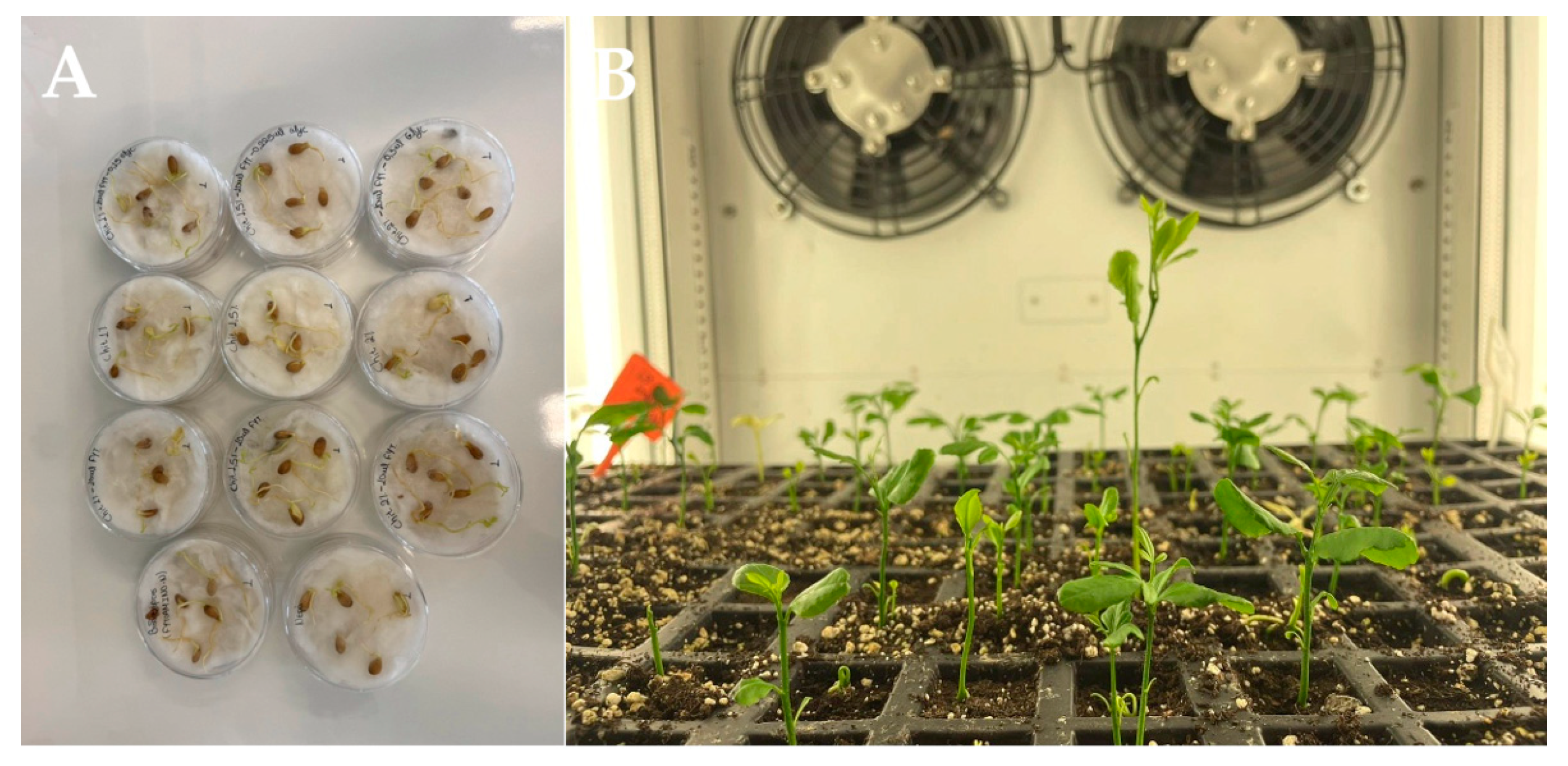
Seeds were placed in 9 cm diameter Petri dishes lined with cotton substrate moistened with distilled water at a density of 5 seeds per plate. The experiment was conducted with five replicates per treatment. Dishes were incubated in a germination chamber at 20 ± 1 °C with a 12 h photoperiod (Figure 3). Moisture was maintained throughout the experiment by periodic addition of sterile distilled water.

2.4.2. Soil-Based Experiment

Seeds were sown in trays containing a peat–perlite substrate (5:1, v/v) and incubated under the same conditions as the Petri dish experiment (20 ± 1 °C, 12 h photoperiod). Moisture was maintained by periodic irrigation with distilled water (Figure 3). Each treatment consisted of five replicates with five seeds per replicate.
Both germination systems included eighteen treatments (T1–T18), consisting of a water-treated control, chitosan-based treatments at three concentrations, proline-betaine biostimulant treatments, and GA3 treatments, either alone or in combination with glycerol (Table 1).

2.5. Germination and Seedling Growth Parameters

In the Petri dish experiment, the number of germinated seeds, as well as shoot and radicle lengths, was recorded every two days. A seed was considered germinated when visible radicle protrusion occurred. Upon completion of the germination period, which occurred 30 days after seed placement in Petri dishes, the seedlings were separated into roots and shoots, and their fresh weights were determined. Root and shoot dry weights were measured after oven-drying at 70 °C for 48 h until constant weight was achieved.
Under soil-based conditions, germinated seeds were counted every two days based on visible seedling emergence. At the end of the experimental period, 48 days after sowing, the seedlings were carefully removed from the soil and washed free of adhering substrate particles. Excess moisture was removed using absorbent tissue paper. Shoot and root lengths, as well as fresh weight, were measured. Dry weight was determined after oven-drying at 70 °C until constant weight was achieved.
Based on observations of tissue development and expansion, the following parameters were calculated: (a) germination percentage, (b) mean germination time (MGT), (c) germination index (GI), (d) coefficient of velocity of germination (CVG), (e) mean daily germination (MDG), (f) germination speed (GS), (g) seedling vigour indices I and II (SVI I, SVI II), (h) root-to-shoot length and dry weight ratios, (i) daily root and shoot growth rates, and (j) mean root and shoot growth rate. The formulas used for these parameters are provided in Table 2 [51,52,53].

2.6. Statistical Analysis

A completely randomized design with 18 treatments (five replicates each) was used. Data were subjected to one-way analysis of variance (ANOVA), and significant differences were separated using Tukey’s test at p ≤ 0.05. Results are presented as mean ± standard error (SE). Prism 8.0 (GraphPad, Boston, MA, USA) was used for statistical analysis, while heatmap clustering was performed using ClustVis (https://biit.cs.ut.ee/clustvis/ (accessed on 1 June 2026) [54]. The heatmap was generated using row-wise unit variance scaling, which is the default normalization method applied in ClustVis (Web version last updated 20 December 2018, Institute of Computer Science, University of Tartu, Tartu, Estonia); therefore, the color scale reflects standardized values rather than fold-expression levels.

3. Results

3.1. Petri Dish Experiment

3.1.1. Germination Indices

Across all six germination parameters, no statistically significant differences were observed among the treatments (Table 3). Germination percentage remained uniformly high across all treatments (86.67–100%), and the applied formulations did not significantly modify final germination percentage under the tested conditions.
The mean germination time ranged from 14.65 days (2% chitosan combined with gibberellic acid and glycerol) to 19.80 days (1% chitosan alone), although these differences were not statistically significant. Proline-betaine and the combined treatment of 1.5% chitosan with proline-betaine showed numerically shorter germination times than water-treated seed lines by 3.9–4.15 days. The coefficient of velocity of germination mirrored this pattern: 2% chitosan combined with gibberellic acid and glycerol, followed by proline-betaine, showed the numerically highest velocity (7.01) relative to water-treated lines (5.30), again without a statistically significant difference.
The germination index displayed the widest numerical spread, ranging from 51.33 (1% chitosan) to 79.00 (1.5% chitosan with proline-betaine and gibberellic acid); however, this variation did not reach the threshold of statistical significance. Treatments involving proline-betaine, 1.5% chitosan with proline-betaine, and gibberellic acid showed numerically favorable trends across several indices, although these effects were not supported by statistical evidence.

3.1.2. Shoot and Root Metrics

Gibberellic acid alone elicited the longest shoots, followed by the mixed application of 1.5–2% chitosan and gibberellic acid and 2% chitosan with gibberellic acid and glycerol. The shortest shoots were recorded in non-gibberellic acid application (1.5% chitosan, proline-betaine, and glycerol). Water-treated plant material (2.67 ± 0.62 cm) and most chitosan- or proline-betaine- based treatments occupied the intermediate range. These results suggest that gibberellic acid, whether applied alone or in combination with chitosan, was associated with greater shoot elongation under the tested conditions.
Proline-betaine supplementation recorded the highest rate of mean root growth rate (0.16 ± 0.01), while the combination of 1.5% chitosan with gibberellic acid and glycerol displayed the lowest. The majority of treatments, including the water-treated seeds (0.13 ± 0.02), fell within the overlapping group, indicating modest differentiation.
Gibberellic acid alone attained the highest mean shoot growth rate (0.19 ± 0.02), whereas 1.5% chitosan jointly applied with proline-betaine and glycerol exhibited the lowest (0.04 ± 0.02). All remaining treatments showed no clear separation.
No statistically significant differences were observed among treatments for root length, root-to-shoot ratio, daily root growth rate, and daily shoot growth rate (Table 4).

3.1.3. Root and Shoot Weight Metrics

No statistically significant differences were detected in root fresh weight among treatments. Values ranged from 0.15 to 0.33 g, with the application of the following: (a) 1.5% chitosan combined with gibberellic acid and glycerol, (b) a proline-betaine-based biostimulant, and (c) 1% chitosan resulting in no significant changes in root fresh biomass compared with the water-treated control. Shoot fresh weight did not reveal significant differences; however, numerically higher shoot fresh weights were observed in gibberellic acid-containing treatments (e.g., gibberellic acid alone, 1% and 1.5% chitosan with gibberellic acid), whereas the water-treated seeds recorded a low average value. The narrow range of values between treatments did not result in significant differences in root dry weight, indicating that this parameter was minimally or not affected by the exogenous treatments.
Water-treated seeds and seeds treated with 1% and 2% chitosan formed a group with the lowest shoot dry weights. In contrast, treatment with 1% chitosan, gibberellic acid and glycerol resulted in significantly higher shoot dry weights than all other treatments. Intermediate shoot dry weight-inducing responses were observed in treatments containing proline-betaine with or without 1.5% chitosan and gibberellic acid with or without 1% chitosan. However, their effect was lower than that observed for the 1% chitosan–gibberellic acid–glycerol treatment.
The treatment of 1% chitosan with proline-betaine exhibited the highest root/shoot dry weight ratio, indicating disproportionately greater root than shoot dry matter. Most other treatments, particularly those containing gibberellic acid in combination with other components displayed lower ratios (1.5% chitosan with gibberellic acid and 1% chitosan with gibberellic acid and glycerol). All other treatment regimens produced intermediate root-to-shoot dry weight ratios, falling between the upper and lower extremes of the parameter range (Table 5).

3.2. Soil-Based Experiment

3.2.1. Germination Indices

The highest coefficient of velocity of germination was recorded in the presence of 1.5% chitosan–proline-betaine−glycerol, indicating the fastest overall germination velocity, followed by proline and betaine supplementation alone and the gibberellic acid−1.5% chitosan combinations with and without glycerol. The lowest value was observed in 2% chitosan–proline-betaine, significantly lower than most other treatments, achieving performance close to water-treated seeds.
Mixtures of the following ((a) 1.5% chitosan with proline-betaine and glycerol, (b) proline-betaine alone, and (c) 1.5% chitosan with gibberellic acid) achieved the shortest mean germination time in approximately 25 days. In contrast, the application of 2% chitosan with proline and betaine exhibited the longest time value of this parameter (33 days), indicating its inhibitory effect on germination speed. The water-treated seed lines performed better than the chitosan with amino acids treatment, providing an intermediate performance.
The most pronounced treatment effects were observed for germination speed. Gibberellic acid-containing 1.5% and 2% chitosan combinations achieved the highest germination speed values (0.433–0.439), followed by the combined application of 1% chitosan with gibberellic acid and glycerol, and the 1% chitosan–gibberellic acid mixture. These values represent a 3- to 3.4-fold increase compared with the water-treated seeds (0.128). Treatments containing gibberellic acid showed the highest germination speed values, suggesting a strong contribution of GA3 to germination acceleration under soil conditions.
Combinations of 2% chitosan with gibberellic acid, 1% chitosan and 2% chitosan with proline-betaine and glycerol achieved the highest mean daily germination rates (2.48–2.57). The lowest values were recorded for 2% chitosan-combined applications with either gibberellic acid and glycerol, or amino acid supplementation. Similar performance was recorded for the combined application of 1% chitosan, proline-betaine, and glycerol. However, water-treated seeds did not exhibit major differences compared with the vast majority of applied treatments.
No significant differences were detected among treatments for either germination percentage or germination index. Germination percentage ranged from 60% (1.5% chitosan–gibberellic acid−glycerol, 2% chitosan–gibberellic acid−glycerol) to 93.33% (gibberellic acid), while germination index ranged from 16.00 (2% chitosan–gibberellic acid−glycerol) to 52.67 (gibberellic acid). Despite the numerical variation, no statistical separation was evident (Table 6).

3.2.2. Seedling Growth Metrics

The longest seedlings were produced by the following: (a) water-treated seeds, (b) proline-betaine-treated seeds, and c) 1.5% chitosan–proline-betaine-treated seeds, followed by mixtures of 1–1.5% chitosan with proline-betaine and glycerol. All gibberellic acid treatments yielded significantly lower plant length values relative to water-treated controls (Table 7). The most pronounced inhibitory effects were observed in the 1% and 2% chitosan treatments supplemented with gibberellic acid and glycerol (4.18–4.80 cm), corresponding to reductions of 57% and 51%, respectively. This indicates that, under the tested conditions, gibberellic acid-containing formulations resulted in lower seedling length when combined with certain chitosan concentrations.
Dry biomass accumulation showed a different pattern. The highest values of seedling dry weight were achieved by 2% chitosan with gibberellic acid or proline-betaine−glycerol mixtures, which both significantly exceeded the water-treated seed lines. Even lower chitosan levels (1.5%) in the proline-betaine and glycerol mixture outperformed the water-treated seed lines. In contrast, the absence of glycerol in the 2% chitosan–proline-betaine mixture and the gibberellic acid−glycerol enhancement of 2% chitosan yielded the lowest dry weight, less than 50% of the water-treated lines. The response of 2% chitosan formulations varied depending on the accompanying compound, with the highest dry biomass values observed when combined with gibberellic acid (without glycerol) or proline-betaine−glycerol.
Seedling vigour index I was highest in 2% chitosan–proline-betaine−glycerol and 1.5% chitosan–proline-betaine−glycerol seed supplementations, surpassing the water-treated plant material in mean values without statistical separation. The lowest SVI values were recorded for the 1% chitosan and 2% gibberellic acid and glycerol mixtures, reflecting an antagonistic effect on plant length effect in these formulations.
Seedling vigour index II provides a clearer picture. The combined supplementation of 2% chitosan with proline-betaine and glycerol yielded the highest index value, followed by chitosan at the same concentration combined with gibberellic acid and finally gibberellic acid applied alone. The water-treated seed lines performed as an intermediate group with the lowest values to be observed in 2% chitosan mixtures with gibberellic acid, glycerol, or amino acids.
Chitosan (1.5–2%) combined with proline-betaine and glycerol produced the highest fresh root weight, 43–46% above that of water-treated seeds. Chitosan (2%) with gibberellic acid also showed strong root development followed by proline-betaine supplementation and, in all cases, performed better than water-treated seed lines. The weakest root systems were produced by the presence of gibberellic acid (2% chitosan with gibberellic acid and glycerol) or the absence of glycerol (2% chitosan with proline-betaine) in applicable formulas.
Chitosan (2%) with gibberellic acid achieved the highest shoot weight, followed by the standalone gibberellic acid application and the water-treated seed lines. Most chitosan−amino acid and chitosan−gibberellic acid combinations produced intermediate shoot weights that did not significantly differ from one another. Supplementation of 2% chitosan with gibberellic acid and glycerol ranked last followed by 2% chitosan with proline and betaine.

3.2.3. Seedling Biomass Metrics

Root dry biomass was highest in the 1.5–2% chitosan formulations supplemented with proline-betaine and glycerol, both significantly exceeding the water-treated lines (28–41%) (Table 8). Chitosan (2%)–gibberellic acid also performed well. Amino acid application alone or with 1.5% chitosan significantly favored root biomass accumulation, above the levels of water-treated seed lines. However, 2% chitosan with proline-betaine or with gibberellic acid and glycerol recorded the poorest root development, 40% below the water-treated seed lines.
Chitosan (2%) with gibberellic acid produced the highest shoot dry weight, followed by 2% chitosan–proline-betaine−glycerol and gibberellic acid alone, significantly surpassing the water-treated seeds. Most other treatments were either comparable to or below the performance of the water-treated seeds. The lowest shoot biomass was recorded for 2% chitosan–gibberellic acid−glycerol and 2% chitosan–proline-betaine, both less than half of the water-treated seeds’ value, confirming their inhibitory effect on above-ground growth.
The root-to-shoot dry weight ratio reflects the carbon partitioning strategy between below- and above-ground tissues. The highest ratios were observed in 1.5% chitosan–proline-betaine, 2% chitosan–gibberellic acid-glycerol, and 1% chitosan–gibberellic acid−glycerol, indicating a pronounced shift toward root investment. Notably, gibberellic acid alone and 1% chitosan–gibberellic acid yielded the lowest ratios, significantly below those of the water-treated seeds. This reveals an important dual perspective: gibberellic acid alone favors shoot allocation, whereas gibberellic acid combined with glycerol shifts allocation heavily toward roots, suggesting that glycerol may modulate the hormonal signal governing biomass partitioning.
Plant fresh weight was greatest in 2% chitosan with gibberellic acid, the only treatment to exceed 3 g and significantly above all others. The 2% chitosan combined with amino acids and glycerol, as well as gibberellic acid applied alone, performed comparably to the water-treated seeds. Below this level, the 2% chitosan with gibberellic acid and glycerol and the 2% chitosan with proline-betaine treatments consistently showed the poorest performance.
Total dry weight closely mirrored fresh weight trends. Chitosan (2%) with gibberellic acid, followed by 2% chitosan with proline-betaine and glycerol, achieved the highest values, approximately 23% above the water-treated lines. Chitosan (1.5%)–proline-betaine− glycerol slightly tended to exceed the water-treated seeds. The lowest dry weights were observed in 2% chitosan with gibberellic acid and glycerol and 2% chitosan with proline and betaine, representing 51% lower plant dry weight than water-treated seeds.

3.3. Comparison of Treatments

3.3.1. Petri Dish Experiment

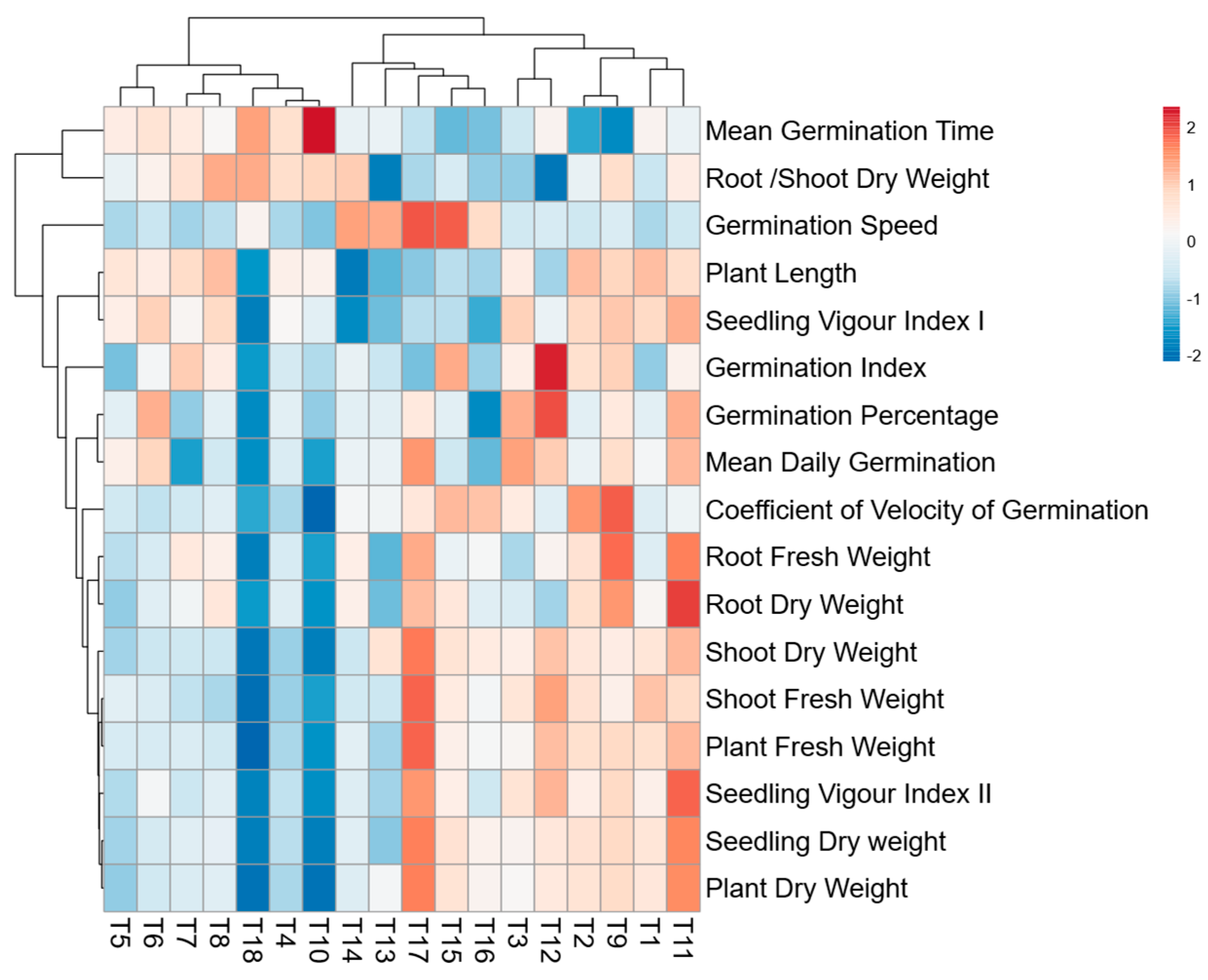
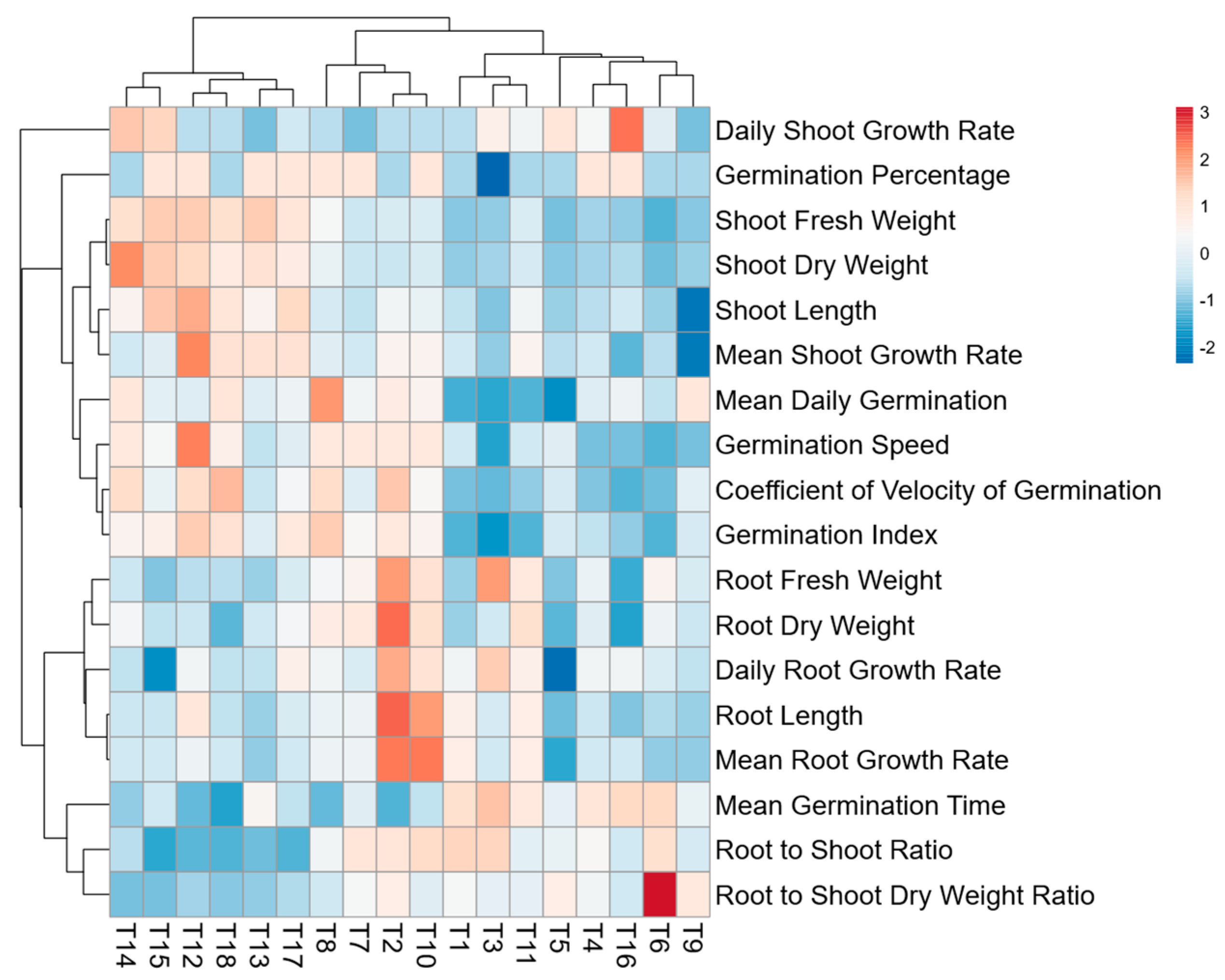
Analysis revealed two major patterns in the germination and growth data. The first pattern is linked to overall germination vigour and shoot performance, where gibberellic acid-based treatments showed a tendency towards improved shoot performance. Gibberellic acid alone and chitosan−gibberellic acid combinations followed a similar response pattern. At the opposite extreme, the 1% chitosan treatments, both alone and combined with proline-betaine supplementation, germinated more slowly and produced the shortest shoots, even relative to the water-treated seeds. The second pattern is focused on root growth. Root-related traits showed coordinated variation in the heatmap analysis, with mean root growth rate representing the parameter with statistically significant treatment differentiation. Biostimulant combinations were associated with a more favorable root-related response profile, particularly due to higher mean root growth rate values. Proline-betaine applied alone clustered with the highest root-related response values, followed by 2% chitosan with proline-betaine, 1% chitosan with proline-betaine and glycerol, and 1.5% chitosan with proline-betaine. A similar pattern was observed across treatments containing the amino acid biostimulant mixture. In contrast, the GA3 treatments, despite their favorable shoot growth profile, tended to cluster with lower root-related trait values; 1.5% chitosan with gibberellic acid and 2% chitosan showed lower root response profiles in the heatmap analysis (Figure 4). This trade-off was also reflected in the root-to-shoot weight ratio. Chitosan applied alone, particularly at 1%, clustered with lower-performance profiles relative to several other treatments. Water-treated seeds serve as a useful baseline, allowing for a clear distinction between the active treatments. Glycerol appears to modulate but not dominate, these effects; its presence slightly shifts the treatments without changing the profile of the mixtures, which justifies its role as a “plasticizer” in combination with chitosan.

3.3.2. Soil-Based Experiment

The addition of glycerol to the chitosan, proline-betaine mixtures (particularly in 1.5% chitosan–proline-betaine−glycerol and 2% chitosan–proline-betaine−glycerol) substantially improved overall seedling quality compared to the same formulations without glycerol. Chitosan (2%) with gibberellic acid produced the best combination of rapid germination and high biomass, making it the most promising treatment for both early establishment and seedling robustness. Higher chitosan concentrations (2%) were associated with greater variation among formulations, with responses depending on the accompanying components; formulations containing 2% chitosan showed either enhanced biomass-related performance or reduced seedling growth responses, depending on the co-formulated compounds. Water-treated and amino acids-only-treated seeds were outperformed by the best-performing combination treatments but remained above the least favorable formulations.
The heatmap clustering reveals an asymmetry of effectiveness between the tested mixtures. Proline-betaine-based pairings were split across three clusters depending on the chitosan concentration and glycerol adjuvant, suggesting that they respond sensitively to the formulation context. Gibberellic acid-based pairings clustered tightly together regardless of concentration, suggesting that it dominates whatever it is paired with. Pure chitosan applications exhibit different attributes: 1% chitosan behaves like a germination promoter and was positioned in the small intermediate cluster, while 1.5% chitosan and 2% chitosan behave as suppressants and were positioned in the top cluster. However, the impact of soil conditions can lead to an interaction between chitosan concentration and the choice of partner compound, resulting in either the best or the worst outcome depending on what is added to the overall synthesis (Figure 5).

4. Discussion

Trifoliate orange (Poncirus trifoliata) produces large, polyembryonic, desiccation-sensitive seeds that germinate best at moderate-to-warm soil temperatures (20–40 °C with an optimum value of 25 °C) [55]. Seeds contain a mean of 1.4 embryos per seed, with 31.5% being polyembryonic, following Swingle citrumelo (C. paradisi × P. trifoliata) with higher rates of 48.1% polyembryonic seeds and 1.6 embryos per seed [56]. Larger fruits yield more viable seeds, and fruit weight is positively correlated with fruit length, fruit diameter, viable seed number, seed weight, and seed germination. Seeds of P. trifoliata, extracted from the fruit, water-rinsed, surface-sterilized in hot water (51.7 °C, 10 min), coated with fungicide, surface-dried, and with their seed coats removed, germinated across a broad range of 9–38 °C over 9–84 days, achieving 100.00% emergence. Retaining the seed coats narrowed this range to 11–36.5 °C, delayed and prolonged germination to 17–101 days, and reduced emergence to 81.25%, while also shifting the optimum germination temperature by 1 °C [9].
Herein, the examined trifoliate orange seeds were extracted from mature fruits, reflecting an important experimental standardization parameter. Seed maturity, determined by the developmental stage of the harvested fruit, shapes both dry weight and water content. Across four fruit ripening stages [solid-green, yellow-green, ripe, and overripe (4 weeks post-ripening)], seeds extracted from the fruits steadily accumulated dry matter, with the mean dry weight rising from 93.4 to 144.5 mg. The water content moved inversely, falling from 129.3% of the dry weight in seeds from solid-green fruits to 79.5% (yellow-green) and 64.7% (ripe), before rising slightly to 70.6% in seeds from overripe fruits. Germination at 25 °C (radicle: ≥2 mm) reached 96–100% across all maturity levels, although germination times differed [57].
Under Petri dish growth conditions, seeds are subjected to highly controlled conditions, including uniform temperature, light, humidity, and moisture. Moisture is consistently maintained through capillary action, eliminating drought stress and minimizing mechanobiological responses due to the absence of soil particle resistance, allowing the radicle to emerge freely. However, these artificial conditions do not accurately reflect seed emergence responses in soil environments. In contrast, seed trials conducted in soil are exposed to spatial geometries with physicochemical fluctuations, complicating observation without disturbing the seedlings. Root development remains hidden, and the simulation of natural soil depth and conditions more closely approximates field conditions. Consequently, the parameters for assessing seed germination in soil differ from those in Petri dish experiments. The minimal variability that yielded non-significant differences under Petri dish conditions, particularly for the coefficient of velocity of germination (CVG), mean germination time (MGT), and germination index (GI), may reflect the inherent biological heterogeneity of the seeds, as citrus polyembryony allows a zygotic embryo to coexist with multiple nucellar (asexual) embryos within a single seed.
There are many cases where chitosan has been reported to enhance seed germination in large crop plant species via the following: (a) increased water absorption, permeability, and enzyme activity, (b) stimulation of gibberellic acid and regulation of abscisic acid, and (c) increasing superoxide dismutase, catalase, and peroxidase activities, reducing oxidative stress [58]. However, apart from this generalized inducible scheme, the seed chemical composition, which is a species-related characteristic, and the type of applicable chitosan can differentiate the intensity and spectrum of the responses [59]. Soil incorporation offers an alternative delivery route for chitosan, conveying the polymer directly into the seed microenvironment without requiring seed-coating technologies. A granular composite amendment containing chitosan was mixed uniformly through the 0–20 cm tillage layer at 0.2–0.5% of soil dry weight to alleviate salinity stress and improve crop establishment on moderate-to-severe saline-alkali land (pH: 8.5–10.5; electrical conductivity: 5–12 mS/cm) [60]. This practice is not transferable to P. trifoliata, which favors slightly acidic to neutral soils: above pH 7.5, reduced availability of micronutrients such as iron induces lime-induced chlorosis and depressed yields [61].
The pairing of chitosan with glycerol has become one of the most frequently recurring formulation motifs in biodegradable seed-treatment technology. In degradable plastic films, glycerol was incorporated into chitosan–acetic acid systems in small proportions (1–2 mL of a 1% solution per 1–5 g of chitosan), conferring the mechanical flexibility that chitosan alone cannot provide. By positioning itself between the chitosan polymer chains, glycerol reduces intermolecular hydrogen bonding and lowers the glass transition temperature, rendering the dried film flexible [62]. Furthermore, plasticized chitosan-based liquid mulch exhibited a tensile strength of approximately 17 MPa and an elongation at break exceeding 130%, while retaining water solubility and biodegradability; upon soil application, it enhanced cabbage seed germination to 74.6% [63]. Chili seeds coated at a lignin–chitosan–glycerol ratio of 0.25:1.0:0.2 reached 100% germination after one week of storage and retained 40–80% after five weeks [64].
The literature on the effects of glycerol on plant growth is mixed, with the direction of the response contingent upon concentration, mode of application, and the tissue or species examined. At the stimulatory end, diluted glycerol can act as a short-term growth promoter. Foliar sprays at approximately 5–50 mM enhanced fresh and dry weight and shoot length by 46–158% in corn, carrot, and spearmint. Glycerol also shows promise as a plasticizer in hydrogel soil formulations, since glycerol-plasticized cellulose hydrogel enhanced germination under moisture stress, raising wheat germination by 21.88% and increasing leaf number after 21 days [65]. In contrast, inhibitory findings demonstrated that crude glycerin can be applied as a weed-seed suppressant, with the effect scaling in proportion to the glycerol concentration [31]. Neutral responses have also been documented between these extremes. Glycerol concentrations below approximately 100 µM do not significantly alter Arabidopsis root length [30], and dark-grown hypocotyl elongation is not inhibited by glycerol, indicating a tissue-specific dimension to the response [66].
Glycerol’s role exhibits a dual set of properties. As a plasticizer, it governs whether the coating physically permits germination; but as a small, hygroscopic, water-miscible polyol, it also influences the moisture environment immediately around the seed [28]. In this work, under soil conditions, glycerol plays a dual and context-dependent role. In proline-betaine formulations, glycerol is essential for efficacy (2% chitosan–proline-betaine−glycerol vs. 2% chitosan–proline-betaine). In gibberellic acid formulations, however, glycerol addition to 2% chitosan is strongly detrimental (2% chitosan–gibberellic acid vs. 2% chitosan–gibberellic acid−glycerol). This asymmetry suggests that glycerol interacts differently with the two bioactive agents, possibly affecting release kinetics or phytohormone balance. The divergent responses observed in soil and Petri dish environments likely reflect a physical–mechanobiological trade-off. Exogenous GA3 promotes rapid cell elongation, often resulting in longer hypocotyls accompanied by tissue spindling and reduced structural integrity. Although such elongation is advantageous under the unconstrained conditions of a Petri dish, slender tissues may lack the mechanical rigidity required for soil penetration and emergence from compacted substrates. Therefore, elongation that is not matched by proportional reinforcement of the cell wall may heighten susceptibility to mechanical impedance, increasing both biomechanical stress and the energetic cost of emergence. This imbalance between growth stimulation and structural support may ultimately constrain seedling elongation, establishment, and early developmental performance in the soil.
The oligomeric chitosan−polyvinyl alcohol−glycerol formulation was reported to enhance the soybean germination rate by over 25% [67]. Several seed-coating patents employ chitosan in combination with glycerol and other components, demonstrating enhanced germination and growth rates in coated broccoli and rice seeds [68,69]. Pre-treating long-term stored seeds of Avicennia marina with 15 g/L chitosan in 1% acetic acid with 1% glycerol, followed by storage in moist sand at low temperature, delayed viability loss and preserved a 40% germination capacity after four months [70].
For corn seeds, a 2% chitosan coating plasticized with 0.30 g glycerol per g of chitosan yielded favorable physical properties, supporting a germination capacity above 90%. In contrast, the germination speed index (GSI) was sensitive to coating composition, declining at higher chitosan concentrations, likely because the resulting thicker, more continuous film prolonged water uptake and delayed radicle protrusion [26].
Among the parameters studied, the vigour index showed the greatest improvement in seeds under exogenous supplementation with chitosan and glycerol. Similarly, Ricinus communis seeds treated with a formulation combining chitosan (1.5%), polyethylene glycol 6000 (0.5%), glycerol (1%), and genus Trichoderma fungi (1%, 108–1010 cfu) yielded a vigour index of 3745, corresponding to 100.0% germination, a shoot length of 9.6 cm, and a root length of 27.1 cm [28]. It should be noted that, when comparing vigour index data across studies or conditions, the timing of measurement emerges as a critical variable.
Gibberellic acid-encapsulated chitosan nanoparticles enhance Fabaceae seed germination through both direct effects and indirect interactions mediated by nitrogen-fixing microorganisms, although the cross-kingdom cellular signaling underlying this process remains to be clarified [71,72]. Exogenous gibberellic acid elicits a more immediate response, whereas chitosan appears to indirectly raise endogenous gibberellic acid via a separate or complementary biochemical route. To fully assess the role of gibberellic acid in Poncirus trifoliata seed germination, three parameters should be quantified in the next step: a) endogenous gibberellic acid content, b) the delivery kinetics of gibberellic acid applied alone versus in chitosan-based formulations, and c) gibberellic acid half-life under both Petri dish and soil conditions.
Gibberellic acid was a major contributor to shoot growth in P. trifoliata seed lines grown in Petri dishes. Across the evaluated parameters, gibberellic acid-containing treatments showed the strongest responses for shoot elongation and mean shoot growth rate while being associated with lower root-to-shoot ratios. The exogenous presence of proline-betaine was associated with a more favorable root-related response profile, particularly reflected in mean root growth rate, which showed significant treatment differentiation. Chitosan treatments at all concentrations, whether alone or combined with proline and betaine or gibberellic acid, generally produced intermediate responses that did not differ significantly from the control in most parameters. The addition of glycerol did not confer a consistent additional benefit across the tested combinations, possibly due to physicochemical interactions in the seed coating mixture [73].
Under soil experimental conditions, the application of a 1.5% chitosan mixture combined with proline-betaine and glycerol consistently enhanced CVG while reducing MGT, whereas the 2% chitosan–proline-betaine–glycerol combination proved most effective in improving SVI, SVII, root fresh weight, and seedling dry weight. Under these conditions, the glycerol–chitosan matrix supplemented the proline-betaine-mediated microenvironmental growth-promoting activities at the seed surface. A possible explanation is that root penetration among soil particles requires osmoregulation, membrane integrity, and redox balance, which can be supported by exogenous proline-betaine administration. In contrast, 2% chitosan with proline and betaine exhibited the slowest germination CVG and MGT and the poorest seedling growth, indicating a potential inhibitory effect without glycerol supplementation.
In all other cases, where gibberellic acid predominates over amino acid-mediated biostimulation, germinating seeds and seedlings preferentially activate specialized pathways in cell elongation and reserve mobilization [74,75]. The hormonal advantages of gibberellic acid, namely antagonizing abscisic acid signaling, activating gibberellin-responsive genes, and inducing α-amylase and other hydrolytic enzymes, frame a response that could not be readily achieved through amino acid-based stimulation. The overall germination capacity (%) remained unaffected by the treatments, indicating that the coatings modulate germination kinetics rather than seed viability.

5. Conclusions

Pre-sowing chitosan-based seed coating offers an effective strategy for improving the propagation of Poncirus trifoliata. Critically, applied coating treatments influenced germination timing and seedling vigour-related responses rather than altering intrinsic viability, which remained uniformly high in both exposed conditions (86.67–100% in Petri dishes and 60–93.33% in soil).
The hormonal and amino acid additives influenced seedling development along two complementary axes. Gibberellic acid-containing treatments were associated with increased shoot elongation and lower root-to-shoot ratios in some formulations. In contrast, proline-betaine-containing treatments were associated with more favorable root-related responses, particularly mean root growth rate, indicating a functional trade-off in resource allocation. In soil, coatings modulated germination kinetics, with the fastest emergence from gibberellic acid in 1.5–2% chitosan (~3 times the control) and the most uniform, rapid germination from 1.5% chitosan−proline-betaine−glycerol (MGT: ~25 days).
Seedling establishment proved highly dependent on formulation. Although gibberellic acid accelerated emergence, several GA3 treatments reduced seedling length in soil (up to ~57%), suggesting a possible absence of GA3–coating interaction in the Petri dish. Two formulations stand out as recommended compositions: 2% chitosan with gibberellic acid (without glycerol), which united rapid emergence with maximum biomass (fresh weight: >3 g), and 2% or 1.5% chitosan−proline-betaine−glycerol, which consistently increased root biomass (~28–41% above water-treated lines) and overall seedling quality. Glycerol played a notably dual role, being essential to the amino acid schemes but detrimental within gibberellic acid mixtures, particularly at 2% chitosan, likely through its influence on coating properties and hormone-release kinetics. Plain chitosan without an appropriate co-factor conferred no comparable benefit, indicating that the co-formulated components strongly influenced the resulting treatment performance.

Author Contributions

Conceptualization, H.K. and C.-I.N.; methodology, H.K. and C.-I.N.; software, P.G.; validation, C.-I.N.; formal analysis, C.-I.N. and C.V.; investigation, C.-I.N., L.H., and M.M.; resources, H.K. and C.-I.N.; data curation, H.K., C.-I.N., C.V., L.H., M.M., and P.G.; writing—original draft preparation, P.G. and C.-I.N.; writing—review and editing, H.K. and P.G.; visualization, H.K.; supervision, H.K.; project administration, H.K.; funding acquisition, C.-I.N. All authors have read and agreed to the published version of the manuscript.

Funding

This study was partially supported by a grant from the Research Committee of the University of Patras (GR) via Scholarships of the “ANDREAS MENTZELOPOULOS” Foundation for Doctoral Studies at the University of Patras to C.-I.N.

Data Availability Statement

The original contributions presented in this study are included in the article. Further inquiries can be directed to the corresponding author.

Conflicts of Interest

The authors declare no conflicts of interest.

References

  1. He, S.-L.; Tian, Y.; Yang, Y.; Shi, C.-Y. Chloroplast Genome and Phylogenetic Analyses of Poncirus trifoliata (Rutaceae). Mitochondrial DNA Part B 2020, 5, 2205–2206. [Google Scholar] [CrossRef] [Scilit] [PubMed]
  2. Peng, Z.; Bredeson, J.V.; Wu, G.A.; Shu, S.; Rawat, N.; Du, D.; Parajuli, S.; Yu, Q.; You, Q.; Rokhsar, D.S.; et al. A Chromosome-scale Reference Genome of Trifoliate Orange (Poncirus trifoliata) Provides Insights into Disease Resistance, Cold Tolerance and Genome Evolution in Citrus. Plant J. 2020, 104, 1215–1232. [Google Scholar] [CrossRef] [Scilit] [PubMed]
  3. Ling, P.; Duncan, L.W.; Deng, Z.; Dunn, D.; Hu, X.; Huang, S.; Gmitter, F.G., Jr. Inheritance of Citrus Nematode Resistance and Its Linkage with Molecular Markers. Theor. Appl. Genet. 2000, 100, 1010–1017. [Google Scholar] [CrossRef] [Scilit]
  4. Wang, X.; Ji, H.; Zhong, L.; Zeng, W.; Ouyang, Z.; Li, R. A Transcriptome Analysis of Poncirus trifoliata, an Aurantioideae Species Tolerant to Asian Citrus Psyllid, Has Identified Potential Genes and Events Associated with Psyllid Resistance. Insects 2024, 15, 589. [Google Scholar] [CrossRef] [Scilit]
  5. Pereira Costa, D.; Sanches Stuchi, E.; Girardi, E.A.; Moreira, A.S.; Da Silva Gesteira, A.; Coelho Filho, M.A.; Da Silva Ledo, C.A.; Da Silva, A.L.V.; De Leão, H.C.; Sampaio Passos, O.; et al. Less Is More: A Hard Way to Get Potential Dwarfing Hybrid Rootstocks for Valencia Sweet Orange. Agriculture 2021, 11, 354. [Google Scholar] [CrossRef] [Scilit]
  6. Cheng, F.S.; Roose, M.L. Origin and Inheritance of Dwarfing by the Citrus Rootstock Poncirus trifoliata ‘Flying Dragon. JASHS J. Am. Soc. Hortic. Sci. 1995, 120, 286–291. [Google Scholar] [CrossRef] [Scilit]
  7. Gu, Q.; Wei, Q.; Hu, Y.; Chen, M.; Chen, Z.; Zheng, S.; Ma, Q.; Luo, Z. Physiological and Full-Length Transcriptome Analyses Reveal the Dwarfing Regulation in Trifoliate Orange (Poncirus trifoliata L.). Plants 2023, 12, 271. [Google Scholar] [CrossRef] [Scilit]
  8. Saipari, E.; Goswami, A.M.; Dadlani, M. Effect of Seed Drying on Germination Behaviour in Citrus. Sci. Hortic. 1998, 73, 185–190. [Google Scholar] [CrossRef] [Scilit]
  9. Wiltbank, W.J.; Rouse, R.E.; Khoi, L.N. Influence of Temperature on Citrus Rootstock Seed Emergence. Proc. Fla. State Hort. Soc. 1995, 108, 137–139. [Google Scholar]
  10. Allan, C.R.; Hadwiger, L.A. The Fungicidal Effect of Chitosan on Fungi of Varying Cell Wall Composition. Exp. Mycol. 1979, 3, 285–287. [Google Scholar] [CrossRef] [Scilit]
  11. El Hadrami, A.; Adam, L.R.; El Hadrami, I.; Daayf, F. Chitosan in Plant Protection. Mar. Drugs 2010, 8, 968–987. [Google Scholar] [CrossRef] [Scilit]
  12. Riseh, R.S.; Vazvani, M.G.; Vatankhah, M.; Kennedy, J.F. Chitosan Coating of Seeds Improves the Germination and Growth Performance of Plants: A Rreview. Int. J. Biol. Macromol. 2024, 278, 134750. [Google Scholar] [CrossRef] [Scilit] [PubMed]
  13. Sharif, R.; Mujtaba, M.; Ur Rahman, M.; Shalmani, A.; Ahmad, H.; Anwar, T.; Tianchan, D.; Wang, X. The Multifunctional Role of Chitosan in Horticultural Crops; A Review. Molecules 2018, 23, 872. [Google Scholar] [CrossRef] [Scilit]
  14. Kumar, S.; Madihally, S.V. (Eds.) Role of Chitosan and Chitosan-Based Nanomaterials in Plant Sciences; Nanomaterial-Plant Interactions; Academic Press: London, UK; San Diego, CA, USA, 2022; ISBN 978-0-323-85391-0. [Google Scholar]
  15. Kumari, R.; Sudhanshu, K.; Priyanka, K.; Vikash, K.; Tushar, R.; Anand, K.; Vandita, K.; Subrat, K.B.; Bineeta, M.B.; Ravi, R.K. Seed Priming with Chitosan and Its Nanoparticles Improve Physiological, Biochemical and Crop Performances in Lentil (Lens culinaris L.). Plant Sci. Today 2025, 12. [Google Scholar] [CrossRef] [Scilit]
  16. Hameed, A.; Sheikh, M.; Hameed, A.; Farooq, T.; Basra, S.; Jamil, A. Chitosan Priming Enhances the Seed Germination, Antioxidants, Hydrolytic Enzymes, Soluble Proteins and Sugars in Wheat Seeds. Agrochimica 2013, 57, 97–110. [Google Scholar]
  17. Hameed, A.; Sheikh, M.A.; Hameed, A.; Farooq, T.; Basra, S.M.A.; Jamil, A. Chitosan Seed Priming Improves Seed Germination and Seedling Growth in Wheat (Triticum aestivum L.) under Osmotic Stress Induced by Polyethylene Glycol. Philipp. Agric. Sci. 2014, 97, 294–299. [Google Scholar] [CrossRef] [Scilit]
  18. Hameed, A.; Qayyum, M.A.; Hameed, A.; Noreen, R.; Umbreen, H.; Farooq, T.; Mehmood, H.; Ilyas, S. Priming with Chitosan-Based Nanocomposite Modulates Biochemical Attributes and Reduces Cadmium Toxicity in Wheat (Triticum aestivum L.) Seedlings. Kuwait J. Sci. 2026, 53, 100484. [Google Scholar] [CrossRef] [Scilit]
  19. Yang, F.; Hu, J.; Li, J.; Wu, X.; Qian, Y. Chitosan Enhances Leaf Membrane Stability and Antioxidant Enzyme Activities in Apple Seedlings under Drought Stress. Plant Growth Regul. 2009, 58, 131–136. [Google Scholar] [CrossRef] [Scilit]
  20. Dastjerd, Z.H.; Jabbarzadeh, Z.; Marandi, R.J. Interaction Effects of Chitosan, Benzyladenine, and Gibberellic Acid on in Vitro Proliferation of M26 Apple Rootstock. Hortic. Environ. Biotechnol. 2013, 54, 538–547. [Google Scholar] [CrossRef] [Scilit]
  21. Ben Ahmed, C.; Ben Rouina, B.; Sensoy, S.; Boukhriss, M.; Ben Abdullah, F. Exogenous Proline Effects on Photosynthetic Performance and Antioxidant Defense System of Young Olive Tree. J. Agric. Food Chem. 2010, 58, 4216–4222. [Google Scholar] [CrossRef] [Scilit] [PubMed]
  22. Ben Ahmed, C.; Magdich, S.; Ben Rouina, B.; Sensoy, S.; Boukhris, M.; Ben Abdullah, F. Exogenous Proline Effects on Water Relations and Ions Contents in Leaves and Roots of Young Olive. Amino Acids 2011, 40, 565–573. [Google Scholar] [CrossRef] [Scilit] [PubMed]
  23. Ambreen, S.; Athar, H.-R.; Khan, A.; Zafar, Z.U.; Ayyaz, A.; Kalaji, H.M. Seed Priming with Proline Improved Photosystem II Efficiency and Growth of Wheat (Triticum aestivum L.). BMC Plant Biol. 2021, 21, 502. [Google Scholar] [CrossRef] [Scilit] [PubMed]
  24. Kong, C.K.Y.; Lee, R.S.; Hasan, K.; Wong, C.K.F.; Teh, C.Y. Proline Priming Enhances Seed Vigour and Biochemical Attributes of Rice (Oryza sativa L.) during Germination. Trop. Life Sci. Res. 2024, 35, 149–163. [Google Scholar] [CrossRef] [Scilit] [PubMed]
  25. Athar, H.-U.R.; Ashraf, M.; Wahid, A.; Jamil, A. Inducing Salt Tolerance in Canola (Brassica napus L.) by Exogenous Application of Glycinebetaine and Proline: Response at the Initial Growth Stages. Pak. J. Bot. 2009, 41, 1311–1319. [Google Scholar]
  26. Zacharias, M.B.; Forti, V.A.; da Silva, M.A. Physiological Potential and Health Quality of Corn Seeds Coated with Chitosan. Sci. Agric. 2024, 81, e20230121. [Google Scholar]
  27. Sohail, M.; Pirzada, T.; Opperman, C.H.; Khan, S.A. Recent Advances in Seed Coating Technologies: Transitioning toward Sustainable Agriculture. Green Chem. 2022, 24, 6052–6085. [Google Scholar] [CrossRef] [Scilit]
  28. Chandrika, K.S.V.P.; Prasad, R.D.; Godbole, V. Development of Chitosan-PEG Blended Films Using Trichoderma: Enhancement of Antimicrobial Activity and Seed Quality. Int. J. Biol. Macromol. 2019, 126, 282–290. [Google Scholar] [CrossRef] [Scilit] [PubMed]
  29. Paparella, S.; Araújo, S.S.; Rossi, G.; Wijayasinghe, M.; Carbonera, D.; Balestrazzi, A. Seed Priming: State of the Art and New Perspectives. Plant Cell Rep. 2015, 34, 1281–1293. [Google Scholar] [CrossRef] [Scilit] [PubMed]
  30. Hu, J.; Zhang, Y.; Wang, J.; Zhou, Y. Glycerol Affects Root Development through Regulation of Multiple Pathways in Arabidopsis. PLoS ONE 2014, 9, e86269. [Google Scholar] [CrossRef] [Scilit] [PubMed]
  31. D’Avino, L.; Matteo, R.; Malaguti, L.; Pagnotta, E.; Righetti, L.; Ugolini, L.; Lazzeri, L. Synergistic Inhibition of the Seed Germination by Crude Glycerin and Defatted Oilseed Meals. Ind. Crops Prod. 2015, 75, 8–14. [Google Scholar] [CrossRef] [Scilit]
  32. Corredoira, E.; San-José, M.C.; Ballester, A.; Vieitez, A.M. Cryopreservation of Zygotic Embryo Axes and Somatic Embryos of European Chestnut. CryoLetters 2004, 25, 33–42. [Google Scholar] [PubMed]
  33. Wu, G.; Li, B.; Cui, Y.; Chen, X. Research and Development of Chitosan Film. Xiandai Huagong 2000, 20, 34. [Google Scholar] [CrossRef]
  34. Ji, W.; Zhang, J.; Xiong, H.; Qi, X.; Guo, F. Study on Film Forming Property of Edible Chitosan Film with Glycerol and Stearic Acid as Additive. Shipin Kexue 2001, 22, 33–35. [Google Scholar]
  35. Casariego, A.; Cossio, G.; Diaz, R.; Gonzalez, J.; Fernandez, S.A.; Ramirez, A. Propiedades Mecánicas de Películas de Quitosana Elaboradas Con Ácido Láctico Influencia de La Concentración de Ácido y El Tipo y Concentración de Plastificante. Alimentaria 2002, 336, 21–24. [Google Scholar]
  36. Paul, S.K.; Sarkar, S.; Sethi, L.N.; Ghosh, S.K. Development of Chitosan Based Optimized Edible Coating for Tomato (Solanum lycopersicum) and Its Characterization. J. Food Sci. Technol. 2018, 55, 2446–2456. [Google Scholar] [CrossRef] [Scilit] [PubMed]
  37. Singh, T.P.; Chatli, M.K.; Sahoo, J. Development of Chitosan Based Edible Films: Process Optimization Using Response Surface Methodology. J. Food Sci. Technol. 2015, 52, 2530–2543. [Google Scholar] [CrossRef] [Scilit] [PubMed]
  38. Thakur, R.; Saberi, B.; Pristijono, P.; Stathopoulos, C.E.; Golding, J.B.; Scarlett, C.J.; Bowyer, M.; Vuong, Q.V. Use of Response Surface Methodology (RSM) to Optimize Pea Starch–Chitosan Novel Edible Film Formulation. J. Food Sci. Technol. 2017, 54, 2270–2278. [Google Scholar] [CrossRef] [Scilit] [PubMed]
  39. Godínez-Garrido, N.A.; Torres-Castillo, J.A.; Ramírez-Pimentel, J.G.; Covarrubias-Prieto, J.; Cervantes-Ortiz, F.; Aguirre-Mancilla, C.L. Effects on Germination and Plantlet Development of Sesame (Sesamum indicum L.) and Bean (Phaseolus vulgaris L.) Seeds with Chitosan Coatings. Agronomy 2022, 12, 666. [Google Scholar] [CrossRef] [Scilit]
  40. Asif Ali, T.S.; Sweety; Venkatesh, M.; Aarathy, B.; Santhosh, A.V. Characterization of Chitosan-Based Edible Films for Food Packaging Applications. J. Adv. Biol. Biotechnol. 2025, 28, 166–175. [Google Scholar] [CrossRef] [Scilit]
  41. Kusmono, K.; Wildan, M.W.; Lubis, F.I. Fabrication and Characterization of Chitosan/Cellulose Nanocrystal/Glycerol Bio-Composite Films. Polymers 2021, 13, 1096. [Google Scholar] [CrossRef] [Scilit]
  42. Oliveira, A.C.S.; Ugucioni, J.C.; Borges, S.V. Effect of Glutaraldehyde/Glycerol Ratios on the Properties of Chitosan Films. J. Food Process Preserv. 2021, 45, e15060. [Google Scholar] [CrossRef] [Scilit]
  43. Pereira, A.E.S.; Silva, P.M.; Oliveira, J.L.; Oliveira, H.C.; Fraceto, L.F. Chitosan Nanoparticles as Carrier Systems for the Plant Growth Hormone Gibberellic Acid. Coll. Surf. B Biointerfaces 2017, 150, 141–152. [Google Scholar] [CrossRef] [Scilit] [PubMed]
  44. Pereira, A.D.E.S.; Oliveira, H.C.; Fraceto, L.F. Polymeric Nanoparticles as an Alternative for Application of Gibberellic Acid in Sustainable Agriculture: A Field Study. Sci. Rep. 2019, 9, 7135. [Google Scholar] [CrossRef] [Scilit] [PubMed]
  45. Pereira, A.E.S.; Sandoval-Herrera, I.E.; Zavala-Betancourt, S.A.; Oliveira, H.C.; Ledezma-Pérez, A.S.; Romero, J.; Fraceto, L.F. γ-Polyglutamic Acid/Chitosan Nanoparticles for the Plant Growth Regulator Gibberellic Acid: Characterization and Evaluation of Biological Activity. Carbohydr. Polym. 2017, 157, 1862–1873. [Google Scholar] [CrossRef] [Scilit] [PubMed]
  46. Fregonezi, B.F.; Pereira, A.E.S.; Ferreira, J.M.; Fraceto, L.F.; Gomes, D.G.; Oliveira, H.C. Seed Priming with Nanoencapsulated Gibberellic Acid Triggers Beneficial Morphophysiological and Biochemical Responses of Tomato Plants under Different Water Conditions. Agronomy 2024, 14, 588. [Google Scholar] [CrossRef] [Scilit]
  47. De Paula, J.C.B.; Guariz, H.R.; De Moraes, K.A.M.; Shimizu, G.D.; De Faria, R.T.; De Oliveira, H.C.; Fraceto, L.F.; Pereira, A.E.S. Enhanced Germination of Seeds Native to Brazil: A Comparative Analysis between Free and Nanoencapsulated Gibberellic Acid in Dyckia sp. (Bromeliaceae). Folia Hortic. 2023, 35, 403–418. [Google Scholar] [CrossRef] [Scilit]
  48. Bhat, M.P.; Lee, J.-H.; Kurkuri, M.; Chen, T.; Kim, C.S.; Lee, K.-H. Diatom Contained Alginate-Chitosan Hydrogel Beads with Enhanced Hydrogen Bonds and Ionic Interactions for Extended Release of Gibberellic Acid. Int. J. Biol. Macromol. 2025, 291, 138906. [Google Scholar] [CrossRef] [Scilit] [PubMed]
  49. Iralu, V.; Upadhaya, K.; Choudhury, H. Effect of GA3 Treatments on Germination of Adinandra griffithii Dyer., A Critically Endangered Tree Species of Northeast India. Ecol. Environ. Conserv. 2025, 31, 112–117. [Google Scholar] [CrossRef] [Scilit]
  50. Aboryia, M.S.; AL-Saoud, A.M.A.; El-Boraie, E.-S.A.; El-Gawad, H.G.A.; Ismail, S.; Alkafafy, M.; Aljuaid, B.S.; Abu-Ziada, L.M. Seed Germination, Seedling Growth Performance, Genetic Stability and Biochemical Responses of Papaya (Carica papaya L.) upon Pre-Sowing Seed Treatments. Folia Hortic. 2024, 36, 533–558. [Google Scholar] [CrossRef] [Scilit]
  51. Kader, M.A. A Comparison of Seed Germination Calculation Formulae and the Associated Interpretation of Resulting Data. J. Proc. R. Soc. N. S. W. 2005, 138, 65–75. [Google Scholar] [CrossRef] [Scilit]
  52. Moghadam, P.A.; Alaei, Y. Evaluation of Important Germination Traits of Soybean Genotypes through Factor Analysis in Osmotic Drought Stress Conditions. Bull. Env. Pharmacol. Life Sci. 2014, 3, 5–8. [Google Scholar]
  53. Bahadure, B.A.; Nagre, P.Κ.; Paithankar, D.H.; Ingle, Y.V.; Bharad, S.G. Assessment of Various Plant Growth Substances on Germination Rates and Seedling Vigor in Acid Lime Seedlings (Citrus aurantifolia Swingle) Cv. PDKV Lime. Int. J. Adv. Biochem. Res. 2024, 8, 753–756. [Google Scholar] [CrossRef] [Scilit]
  54. Metsalu, T.; Vilo, J. ClustVis: A Web Tool for Visualizing Clustering of Multivariate Data Using Principal Component Analysis and Heatmap. Nucleic Acids Res. 2015, 43, W566–W570. [Google Scholar] [CrossRef] [Scilit] [PubMed]
  55. Rouse, R.E.; Sherrod, J.B. Optimum Temperature for Citrus Seed Germination. Proc. Fla. State Hortic. Soc. 1996, 109, 132–135. [Google Scholar]
  56. Ramos, J.D.; Araújo Neto, S.E.; Castro, N.E.A.; Martins, P.C.C.; Correia, M.G. Poliembrionomia e Caracterização de Frutos de Critrumelo “Swingle” e de Poncirus trifoliata. Ciênc. Agrotecnol. 2006, 30, 88–91. [Google Scholar] [CrossRef] [Scilit]
  57. Mobayen, R.G. Germination of Trifoliate Orange Seed in Relation to Fruit Development, Storage and Drying. J. Hortic. Sci. 1980, 55, 285–289. [Google Scholar] [CrossRef] [Scilit]
  58. Zhang, H.; Li, C.; Liu, P.; Wu, P.; Lv, M. Advances in Chitosan-Mediated Seed Enhancement: Germination, Stress Tolerance, and Storage Stability. J. Stored Prod. Res. 2026, 116, 102992. [Google Scholar] [CrossRef] [Scilit]
  59. Jia, Y.; Ma, Y.; Zou, P.; Cheng, G.; Zhou, J.; Cai, S. Effects of Different Oligochitosans on Isoflavone Metabolites, Antioxidant Activity, and Isoflavone Biosynthetic Genes in Soybean (Glycine max) Seeds during Germination. J. Agric. Food Chem. 2019, 67, 4652–4661. [Google Scholar] [CrossRef] [Scilit] [PubMed]
  60. Wang, L.; Fang, Y.; Chi, B.; Wei, F.; Gui, W.; Liu, M. A Composite Soil Amendment for Saline-Alkali Soil and Its Preparation Method. CN Patent Application No. 121249376A, 2 January 2026. [Google Scholar]
  61. Gama, F.; Saavedra, T.; Díaz, I.; Campillo, M.D.C.; De Varennes, A.; Duarte, A.; Pestana, M.; Correia, P.J. Fe Deficiency Induction in Poncirus trifoliata Rootstock Growing in Nutrient Solution Changes Its Performance after Transplant to Soil. Sci. Hortic. 2015, 182, 102–109. [Google Scholar] [CrossRef] [Scilit]
  62. Huang, W.; Cai, X.; Liu, C.; Sun, X.; Xu, Y.; Kou, P. Preparation of Degradable Plastic Film for Increasing Seed Germination Rate of Crops. Patent No. CN117362886A, 9 January 2024. [Google Scholar]
  63. Yu, J.; Xie, Z.; Han, Y.; Wang, X.; Ma, Z. Preparation and Application of Chitosan/PVA Films Plasticized with Deep Eutectic Solvent. J. Mol. Liq. 2025, 423, 126985. [Google Scholar] [CrossRef] [Scilit]
  64. Agustiany, E.A.; Nawawi, D.S.; Di Martino, A.; Sari, F.P.; Fatriasari, W. Lignin-Chitosan-Based Bioplastics from Oil Palm Empty Fruit Bunches for Seed Coating. Biocatal. Agric. Biotechnol. 2024, 62, 103435. [Google Scholar] [CrossRef] [Scilit]
  65. Qin, C.-C.; Abdalkarim, S.Y.H.; Zhou, Y.; Yu, H.-Y.; He, X. Ultrahigh Water-Retention Cellulose Hydrogels as Soil Amendments for Early Seed Germination under Harsh Conditions. J. Clean. Prod. 2022, 370, 133602. [Google Scholar] [CrossRef] [Scilit]
  66. Eastmond, P.J. Glycerol-insensitive Arabidopsis Mutants: Gli1 Seedlings Lack Glycerol Kinase, Accumulate Glycerol and Are More Resistant to Abiotic Stress. Plant J. 2004, 37, 617–625. [Google Scholar] [CrossRef] [Scilit] [PubMed]
  67. Fang, Y. Preparation Method of Soybean Seed Coating Agent. Patent No. CN108395318 A, 14 August 2018. [Google Scholar]
  68. Wang, D. Seed Coating Method for Improving Germination Rate of Broccoli Seeds. Patent No. CN108925173 A, 4 December 2018. [Google Scholar]
  69. Wang, Y.; Xia, C.; Wang, Y.; Fang, D. Growth Promoter for Rice and Preparation Method. Patent No. CN107711867 A, 23 February 2018. [Google Scholar]
  70. Chen, J.; Wu, L.; Liu, L.; Guo, Y. Method for Preserving Avicennia Marina Seeds Using Chitosan and Controlled Storage. Patent No. CN121970746 A, 5 May 2026. [Google Scholar]
  71. Costales, D.; Nápoles, M.C.; Falcón, C.R.; González, A.A.; Petit, G.; Susana, C.A.P.; Solá, D.; Diego, P. Effect of Chitosan Polymer and Inoculated with B. japonicum on Soybean Germination Survival of Seedling, Nodulation and Bacteria Viability on Seeds. Legume Res. 2019, 42, 265–269. [Google Scholar] [CrossRef] [Scilit]
  72. Thangasamy, K.; George, A.R.; Sajeev, S.; Jeganathan, A.; Byju, A.; Geetha, N. Enhancing Seed Germination and Morphological Characteristics of Saraca asoca (Roxb.) Willd Using GA3-Encapsulated Chitosan Nanoparticles: A Sustainable Agriculture Through Seed Nano-Priming. BioNanoSci 2025, 15, 570. [Google Scholar] [CrossRef] [Scilit]
  73. Quijadagarrido, I.; Iglesiasgonzalez, V.; Mazonarechederra, J.; Barralesrienda, J. The Role Played by the Interactions of Small Molecules with Chitosan and Their Transition Temperatures. Glass-Forming Liquids: 1,2,3-Propantriol (Glycerol). Carbohydr. Polym. 2007, 68, 173–186. [Google Scholar] [CrossRef] [Scilit]
  74. Cao, K.; Mu, Y.; Lu, S.; Zhao, Y. Regulatory Mechanisms of Exogenous Gibberellin on Seed Germination and Transcriptomic Responses in Lomatogonium rotatum. Genes 2025, 16, 878. [Google Scholar] [CrossRef] [Scilit]
  75. Tuan, P.A.; Kumar, R.; Rehal, P.K.; Toora, P.K.; Ayele, B.T. Molecular Mechanisms Underlying Abscisic Acid/Gibberellin Balance in the Control of Seed Dormancy and Germination in Cereals. Front. Plant Sci. 2018, 9, 668. [Google Scholar] [CrossRef] [Scilit] [PubMed]
Figure 1. Applicability of chitosan, glycerol, osmolytes, and gibberellic acid on P. trifoliata seeds.
Seeds 05 00050 g001
Figure 2. Extraction of P. trifoliata seeds from fruits: (A) manual extraction with a handheld juicing device; (B) excessive pulp removal; (C,D) residual pulp removal in cycles with water; (E) seed free of pulp, surface sterilized and dried; (F) inoculation of seeds with coating mixtures.
Seeds 05 00050 g002
Figure 3. Germination of treated P. trifoliata lines on moist cotton substrate (A) and under soil conditions (B).
Seeds 05 00050 g003
Figure 4. Heatmap analysis of P. trifoliata seed growth parameters per treatment in Petri dish conditions. Treatments: T1, water-treated control; T2, biostimulant amino acids alone; T3–T5, chitosan at 1%, 1.5%, and 2%, respectively; T6, T8, and T10, chitosan (1%, 1.5%, and 2%) combined with biostimulant amino acids, respectively; T7, T9, and T11, the same combinations supplemented with glycerol; T12, GA3 alone; T13, T15, and T17, chitosan (1%, 1.5%, and 2%) combined with GA3, respectively; T14, T16, and T18, the same combinations supplemented with glycerol. Certain parameters shape the visual pattern while remaining statistically non-significant.
Seeds 05 00050 g004
Figure 5. Heatmap analysis of P. trifoliata seed growth parameters per treatment in soil conditions. Treatments: T1, water-treated control; T2, biostimulant amino acids alone; T3–T5, chitosan at 1%, 1.5%, and 2%, respectively; T6, T8, and T10, chitosan (1%, 1.5%, and 2%) combined with biostimulant amino acids, respectively; T7, T9, and T11, the same combinations supplemented with glycerol; T12, GA3 alone; T13, T15, and T17, chitosan (1%, 1.5%, and 2%) combined with GA3, respectively; T14, T16, and T18, the same combinations supplemented with glycerol. Certain parameters shape the visual pattern while remaining statistically non-significant.
Seeds 05 00050 g005
Table 1. Composition of the seed coating treatments and final concentrations of the applied compounds.
TreatmentPriming Solution CompositionFinal Concentration (s)
T1Distilled waterControl
T2Proline-betaine biostimulantBiostimulant (0.125%, v/v)
T3ChitosanChitosan (1.0%, w/v)
T4ChitosanChitosan (1.5%, w/v)
T5ChitosanChitosan (2.0%, w/v)
T6Chitosan + proline-betaine biostimulantChitosan (1.0%, w/v) + biostimulant (0.125%, v/v)
T7Chitosan + glycerol + proline-betaine biostimulantChitosan (1.0%, w/v) + glycerol (0.5%, v/v) + biostimulant (0.125%, v/v)
T8Chitosan + proline-betaine biostimulantChitosan (1.5%, w/v) + biostimulant (0.125%, v/v)
T9Chitosan + glycerol + proline-betaine biostimulantChitosan (1.5%, w/v) + glycerol (0.75%, v/v) + biostimulant (0.125%, v/v)
T10Chitosan + proline-betaine biostimulantChitosan (2.0%, w/v) + biostimulant (0.125%, v/v)
T11Chitosan + glycerol + proline-betaine biostimulantChitosan (2.0%, w/v) + glycerol (1.0%, v/v) + biostimulant (0.125%, v/v)
T12GA3GA3 (300 ppm)
T13Chitosan + GA3Chitosan (1.0%, w/v) + GA3 (300 ppm)
T14Chitosan + glycerol + GA3Chitosan (1.0%, w/v) + glycerol (0.5%, v/v) + GA3 (300 ppm)
T15Chitosan + GA3Chitosan (1.5%, w/v) + GA3 (300 ppm)
T16Chitosan + glycerol + GA3Chitosan (1.5%, w/v) + glycerol (0.75%, v/v) + GA3 (300 ppm)
T17Chitosan + GA3Chitosan (2.0%, w/v) + GA3 (300 ppm)
T18Chitosan + glycerol + GA3Chitosan (2.0%, w/v) + glycerol (1.0%, v/v) + GA3 (300 ppm)
Table 2. Germination indices examined in this work.
Germination percentage (GP)
G P =   N g N t   ×   100
where
Ng is the number of germinated seeds;
Nt is the total number of seeds evaluated.
Mean germination time (MGT)
M . G . T . = N i T i N i
where
Ni is the number of seeds germinated on day i;
Ti is the time in days from sowing to the i-th counting day.
Germination index (GI)
G I = i = 1 t N i   ×   w i
where:
Ni is the number of seeds germinated on day i;
Wi is the weighting factor assigned to day i, decreasing from t (first day) to 1 (last day);
T is the total number of observation days.
Coefficient of velocity of germination (CVG)
% C . V . G . = 100 × N i N i T i
where
Ni is the number of seeds that germinate per day;
Ti is the time (days) of the experimental period.
Mean daily germination (MDG)
M D G = G P T i
where
GP is the germination percentage;
Ti is the number of days required to reach maximum germination.
Germination speed (GS)
G s = N i T i
where
Ni is the number of seeds germinated on day i;
Ti is the number of days from the start of the experiment to the counting day.
Seedling vigour index I [SVI(I)]
S V I ( I ) = G P   ×   S L
where
GP is the germination percentage (%);
SL is the mean seedling length (cm).
Seedling vigour index II [SVI(II)]
S V I I I = G P   ×   D W
where
GP is the germination percentage (%);
DW is the mean seedling dry weight (g).
Table 3. Effects of seed coating treatments on germination parameters in Petri dish environmental exposure 1.
TreatmentCoefficient of Velocity of Germination (CVG)Mean Germination Time (MGT)
(Days)
Germination Speed (GS)Germination Percentage (%)Mean Daily Germination %Germination Index (GI)
T15.30 ± 0.4219.10 ± 1.470.32 ± 0.0493.33 ± 6.673.33 ± 0.2154.67 ± 3.84
T27.01 ± 1.0614.95 ± 2.310.37 ± 0.0493.33 ± 6.674.47 ± 0.5973.67 ± 7.42
T35.21 ± 0.6519.80 ± 2.430.27 ± 0.0886.67 ± 13.333.29 ± 0.6651.33 ± 16.33
T45.32 ± 0.1218.80 ± 0.400.29 ± 0.01100.00 ± 0.004.01 ± 0.1661.00 ± 2.00
T55.82 ± 0.2617.25 ± 0.750.33 ± 0.0393.33 ± 6.673.11 ± 0.2263.67 ± 1.33
T65.25 ± 0.4719.35 ± 1.620.28 ± 0.0593.33 ± 6.673.77 ± 0.4054.67 ± 9.74
T75.93 ± 0.3717.00 ± 1.110.37 ± 0.02100.00 ± 0.004.21 ± 0.3170.00 ± 5.57
T86.79 ± 0.8615.20 ± 1.910.37 ± 0.05100.00 ± 0.005.19 ± 0.9879.00 ± 9.54
T95.98 ± 0.7617.30 ± 2.290.29 ± 0.0493.33 ± 6.674.57 ± 1.0663.67 ± 11.61
T10 6.29 ± 0.6416.20 ± 1.510.37 ± 0.04100.00 ± 0.004.35 ± 0.6571.00 ± 9.17
T115.42 ± 0.3518.60 ± 1.250.32 ± 0.0693.33 ± 6.673.36 ± 0.3455.00 ± 8.96
T126.80 ± 0.8215.20 ± 2.030.43 ± 0.08100.00 ± 0.004.01 ± 0.1679.00 ± 10.15
T135.65 ± 0.5318.00 ± 1.590.31 ± 0.03100.00 ± 0.004.01 ± 0.1665.00 ± 7.94
T146.78 ± 1.0615.60 ± 2.750.37 ± 0.0593.33 ± 6.674.57 ± 0.5470.67 ± 10.73
T156.08 ± 0.4316.60 ± 1.110.35 ± 0.04100.00 ± 0.004.05 ± 0.3472.00 ± 5.57
T165.16 ± 0.0519.40 ± 0.200.29 ± 0.03100.00 ± 0.004.17 ± 0.0058.00 ± 1.00
T176.20 ± 0.2716.20 ± 0.690.33 ± 0.02100.00 ± 0.004.17 ± 0.0074.00 ± 3.46
T187.13 ± 0.9714.65 ± 2.890.36 ± 0.0693.33 ± 6.674.60 ± 0.4875.67 ± 10.48
1 Treatments: T1, water-treated control; T2, biostimulant amino acids alone; T3–T5, chitosan at 1%, 1.5%, and 2%, respectively; T6, T8, and T10, chitosan (1%, 1.5%, and 2%) combined with biostimulant amino acids, respectively; T7, T9, and T11, the same combinations supplemented with glycerol; T12, GA3 alone; T13, T15, and T17, chitosan (1%, 1.5%, and 2%) combined with GA3, respectively; T14, T16, and T18, the same combinations supplemented with glycerol.
Table 4. Effects of seed coating treatments on shoot and root growth metrics while exposed in the Petri dish ambient environment 1.
TreatmentRoot Length (cm)Shoot Length (cm)Root to Shoot RatioDaily Root Growth RateDaily Shoot Growth RateMean Root Growth RateMean Shoot Growth Rate
T13.47 ± 0.482.67 ± 0.62 abc1.36 ± 0.170.15 ± 0.010.25 ± 0.060.13 ± 0.02 ab0.10 ± 0.02 ab
T24.43 ± 0.393.57 ±0.22 abc1.26 ± 0.160.19 ± 0.030.25 ± 0.060.16 ± 0.01 b0.13 ± 0.01 ab
T33.00 ± 0.462.23 ± 0.32 ab1.36 ± 0.140.18 ± 0.010.34 ± 0.100.11 ± 0.02 ab0.08 ± 0.01 ab
T42.93 ± 0.472.63 ± 0.07 abc1.12 ± 0.190.15 ± 0.030.32 ± 0.070.11 ± 0.02 ab0.10 ± 0.00 ab
T52.57 ± 0.692.43 ± 0.50 abc1.03 ± 0.060.09 ± 0.030.36 ± 0.110.09 ± 0.03 ab0.09 ± 0.02 ab
T62.80 ± 0.532.43 ± 0.57 abc1.31 ± 0.390.14 ± 0.030.29 ± 0.110.10 ± 0.02 ab0.09 ± 0.02 ab
T73.27 ± 0.332.70 ± 0.45 abc1.26 ± 0.170.14 ± 0.030.22 ± 0.040.12 ± 0.01 ab0.10 ± 0.02 ab
T83.23 ± 0.473.00 ± 0.32 abc1.07 ± 0.080.15 ± 0.010.25 ± 0.030.12 ± 0.02 ab0.11 ± 0.01 ab
T92.73 ± 0.531.07 ± 0.55 a0.93 ± 0.480.13 ± 0.020.22 ± 0.140.10 ± 0.02 ab0.04 ± 0.02 a
T104.20 ± 0.153.40 ± 0.69 abc1.33 ± 0.240.17 ± 0.010.25 ± 0.000.16 ± 0.01 ab0.13 ± 0.03 ab
T113.50 ± 0.153.57 ± 0.38 abc1.01 ± 0.130.16 ± 0.010.31 ± 0.050.13 ± 0.01 ab0.13 ± 0.01 ab
T123.61 ± 0.385.25 ± 0.25 c0.69 ± 0.070.15 ± 0.020.25 ± 0.030.12 ± 0.02 ab0.19 ± 0.02 b
T132.73 ± 0.333.85 ± 0.08 abc0.71 ± 0.090.13 ± 0.020.22 ± 0.020.10 ± 0.01 ab0.15 ± 0.00 ab
T142.93 ± 0.293.83 ± 0.94 abc0.85 ± 0.180.13 ± 0.020.40 ± 0.130.11 ± 0.01 ab0.10 ± 0.06 ab
T152.90 ± 0.154.90 ± 0.95 bc0.63 ± 0.090.10 ± 0.050.39 ± 0.090.11 ± 0.01 ab0.11 ± 0.00 ab
T162.63 ± 0.222.92 ± 0.27 abc0.92 ± 0.130.15 ± 0.030.46 ± 0.190.11 ± 0.01 a0.07 ± 0.04 ab
T173.03 ± 0.284.67 ± 0.38 bc0.67 ± 0.110.16 ± 0.020.27 ± 0.050.11 ± 0.01 ab0.15 ± 0.03 ab
T182.87 ± 0.704.30 ± 0.95 bc0.67 ± 0.100.13 ± 0.030.25 ± 0.040.11 ± 0.01 ab0.15 ± 0.05 ab
1 The different letters indicate a significant (p < 0.05) difference. Data in columns with no letters do not differ statistically. Treatments: T1, water-treated control; T2, biostimulant amino acids alone; T3–T5, chitosan at 1%, 1.5%, and 2%, respectively; T6, T8, and T10, chitosan (1%, 1.5%, and 2%) combined with biostimulant amino acids, respectively; T7, T9, and T11, the same combinations supplemented with glycerol; T12, GA3 alone; T13, T15, and T17, chitosan (1%, 1.5%, and 2%) combined with GA3, respectively; T14, T16, and T18, the same combinations supplemented with glycerol.
Table 5. Effects of seed coating treatments on shoot and root weight metrics while exposed in the Petri dish ambient environment 1.
TreatmentRoot Fresh Weight (g)Shoot Fresh Weight (g)Root Dry Weight (g)Shoot Dry Weight (g)Root Dry/Shoot Dry Weight
T10.18 ± 0.030.13 ± 0.050.030 ± 0.0060.018 ± 0.008 a1.99 ± 0.52 ab
T20.33 ± 0.030.20 ± 0.030.055 ± 0.0060.025 ± 0.006 ab2.34 ± 0.28 ab
T30.33 ± 0.180.14 ± 0.030.034 ± 0.0100.020 ± 0.005 a1.67 ± 0.20 a
T40.23 ± 0.040.15 ± 0.040.036 ± 0.0100.020 ± 0.006 a1.87 ± 0.32 ab
T50.17 ± 0.020.12 ± 0.060.027 ± 0.0040.017 ± 0.007 a2.31 ± 1.02 ab
T60.25 ± 0.060.10 ± 0.060.038 ± 0.0110.014 ± 0.008 a4.86 ± 1.83 b
T70.25 ± 0.020.18 ± 0.060.043 ± 0.0090.025 ± 0.009 ab1.98 ± 0.30 ab
T80.24 ± 0.030.26 ± 0.050.042 ± 0.0060.036 ± 0.007 ab1.20 ± 0.15 a
T90.21 ± 0.020.13 ± 0.060.033 ± 0.0040.019 ± 0.009 a2.53 ± 0.71 ab
T100.28 ± 0.040.21 ± 0.010.045 ± 0.0060.030 ± 0.002 ab1.53 ± 0.22 a
T110.27 ± 0.030.21 ± 0.040.045 ± 0.0060.029 ± 0.006 ab1.64 ± 0.18 a
T120.19 ± 0.020.37 ± 0.100.033 ± 0.0090.058 ± 0.020 ab0.81 ± 0.39 a
T130.18 ± 0.020.37 ± 0.050.034 ± 0.0040.054 ± 0.012 ab0.69 ± 0.13 a
T140.20 ± 0.020.34 ± 0.090.039 ± 0.0010.074 ± 0.006 b0.52 ± 0.03 a
T150.17 ± 0.020.37 ± 0.070.032 ± 0.0090.061 ± 0.013 ab0.51 ± 0.03 a
T160.15 ± 0.020.14 ± 0.020.025 ± 0.0060.022 ± 0.012 a1.28 ± 0.47 a
T170.21 ± 0.010.32 ± 0.070.039 ± 0.0030.048 ± 0.012 ab0.90 ± 0.21 a
T180.19 ± 0.040.34 ± 0.110.027 ± 0.0070.049 ± 0.015 ab0.66 ± 0.19 a
1 The different letters indicate a significant (p < 0.05) difference. Data in columns with no letters do not differ statistically. Treatments: T1, water-treated control; T2, biostimulant amino acids alone; T3–T5, chitosan at 1%, 1.5%, and 2%, respectively; T6, T8, and T10, chitosan (1%, 1.5%, and 2%) combined with biostimulant amino acids, respectively; T7, T9, and T11, the same combinations supplemented with glycerol; T12, GA3 alone; T13, T15, and T17, chitosan (1%, 1.5%, and 2%) combined with GA3, respectively; T14, T16, and T18, the same combinations supplemented with glycerol.
Table 6. Effects of seed coating treatments on germination parameters under soil conditions 1.
Treatment 2Coefficient of Velocity of Germination (CVG)Mean Germination Time (MGT)
(Days)
Germination Speed (GS)Germination Percentage (%)Mean Daily Germination %Germination Index (GI)
T13.46 ± 0.13 abcd29.00 ± 1.09 abc0.128 ± 0.007 a73.33 ± 6.672.15 ± 0.18 abc21.67 ± 1.76
T23.91 ± 0.14 cd25.67 ± 0.88 a0.159 ± 0.018 a73.33 ± 6.672.10 ± 0.23 abc37.67 ± 7.31
T33.65 ± 0.08 bcd27.40 ± 0.59 ab0.162 ± 0.012 a86.67 ± 6.672.55 ± 0.07 c34.33 ± 12.45
T43.34 ± 0.05 abc30.00 ± 0.43 abc0.127 ± 0.013 a73.33 ± 6.672.03 ± 0.12 abc26.67 ± 7.54
T53.42 ± 0.11 abcd29.33 ± 0.94 abc0.128 ± 0.015 a73.33 ± 6.672.22 ± 0.20 abc20.67 ± 2.19
T63.37 ± 0.15 abc29.80 ± 1.37 abc0.148 ± 0.005 a86.67 ± 6.672.40 ± 0.10 bc31.33 ± 3.76
T73.42 ± 0.17 abcd29.42 ± 1.45 abc0.121 ± 0.015 a66.67 ± 6.671.70 ± 0.20 a40.33 ± 15.90
T83.47 ± 0.07 abcd28.83 ± 0.60 abc0.136 ± 0.015 a73.33 ± 6.671.98 ± 0.12 abc34.67 ± 12.02
T94.01 ± 0.15 d25.00 ± 1.00 a0.176 ± 0.009 ab80.00 ± 0.002.36 ± 0.07 bc40.00 ± 6.93
T103.01 ± 0.13 a33.33 ± 1.45 c0.101 ± 0.007 a66.67 ± 6.671.70 ± 0.04 a23.33 ± 8.51
T113.53 ± 0.09 abcd28.35 ± 0.69 abc0.158 ± 0.011 a86.67 ± 6.672.48 ± 0.16 c33.33 ± 3.93
T123.47 ± 0.19 abcd29.00 ± 1.71 abc0.174 ± 0.013 ab93.33 ± 6.672.43 ± 0.20 ab52.67 ± 16.13
T133.54 ± 0.11 abcd28.33 ± 0.85 abc0.368 ± 0.028 de73.33 ± 6.672.10 ± 0.23 abc24.67 ± 1.76
T143.55 ± 0.08 abcd28.22 ± 0.62 abc0.379 ± 0.007 de73.33 ± 6.672.11 ± 0.29 abc29.67 ± 14.06
T153.83 ± 0.10 cd26.18 ± 0.68 a0.433 ± 0.007 e73.33 ± 6.671.97 ± 0.23 abc43.67 ± 11.72
T163.81 ± 0.09 cd26.29 ± 0.59 ab0.314 ± 0.017 cd60.00 ± 11.551.79 ± 0.26 ab22.00 ± 5.86
T173.68 ± 0.02 bcd27.17 ± 0.17 ab0.439 ± 0.010 e80.00 ± 11.552.57 ± 0.30 c20.33 ± 6.01
T183.19 ± 0.08 ab31.39 ± 0.77 bc0.246 ± 0.024 bc60.00 ± 0.001.64 ± 0.11 a16.00 ± 4.00
1 The different letters indicate a significant (p < 0.05) difference. Data in columns with no letters do not differ statistically. 2 Treatments: T1, water-treated control; T2, biostimulant amino acids alone; T3–T5, chitosan at 1%, 1.5%, and 2%, respectively; T6, T8, and T10, chitosan (1%, 1.5%, and 2%) combined with biostimulant amino acids, respectively; T7, T9, and T11, the same combinations supplemented with glycerol; T12, GA3 alone; T13, T15, and T17, chitosan (1%, 1.5%, and 2%) combined with GA3, respectively; T14, T16, and T18, the same combinations supplemented with glycerol.
Table 7. Seedling growth metrics while exposed in the soil environment 1.
Treatment 2Plant Length (cm)Seedling Dry Weight (g)Seedling Vigour Index (SVI)Seedling Vigour Index (SVΙI)Root Fresh Weight (g)Shoot Fresh Weight (g)
T19.80 ± 0.01 i0.772 ± 0.004 g718.60 ± 65.14 cde56.55 ± 4.89 bcde0.749 ± 0.009 ef1.791 ± 0.049 L
T29.80 ± 0.09 i0.787 ± 0.007 gh719.50 ± 69.52 cde57.78 ± 5.53 bcde0.906 ± 0.005 j1.653 ± 0.008 ij
T38.50 ± 0.06 ef0.711 ± 0.004 e736.40 ± 55.06 cde61.63 ± 4.94 bcde0.664 ± 0.005 d1.611 ± 0.005 hij
T48.30 ± 0.02 ef0.562 ± 0.005 c608.40 ± 53.84 bcde41.15 ± 3.41 ab0.730 ± 0.003 e1.066 ± 0.036 c
T58.80 ± 0.05 fg0.535 ± 0.008 bc644.70 ± 55.58 bcde39.22 ± 3.72 ab0.684 ± 0.003 d1.320 ± 0.000 g
T68.50 ± 0.08 ef0.605 ± 0.009 d737.80 ± 64.34 cde52.45 ± 4.21 bcd0.733 ± 0.005 e1.275 ± 0.004 fg
T79.20 ± 0.06 gh0.637 ± 0.004 d612.70 ± 58.11 bcde42.46 ± 4.30 ab0.877 ± 0.004 ij1.148 ± 0.005 cde
T89.80 ± 0.09 i0.646 ± 0.007 d718.80 ± 66.55 cde47.48 ± 4.76 abc0.851 ± 0.001 hi1.102 ± 0.019 cd
T99.40 ± 0.05 hi0.816 ± 0.006 h752.00 ± 40.43 de65.26 ± 0.45 bcde1.091 ± 0.001 L1.519 ± 0.005 h
T108.20 ± 0.04 e0.377 ± 0.004 a546.20 ± 52.33 abcde25.06 ± 2.19 a0.555 ± 0.003 b0.846 ± 0.005 b
T119.1 ± 0.08 gh0.938 ± 0.007 i788.10 ± 57.03 e81.34 ± 6.79 e1.068 ± 0.001 L1.693 ± 0.008 jk
T126.10 ± 0.17 d0.762 ± 0.012 fg571.30 ± 54.36 abcde71.28 ± 6.00 cde0.837 ± 0.009 hi1.907 ± 0.009 m
T135.50 ± 0.14 c0.518 ± 0.005 b405 ± 45.37 ab38.03 ± 3.72 ab0.603 ± 0.008 c1.176 ± 0.003 de
T144.18 ± 0.05 a0.637 ± 0.011 d306.00 ± 25.27 a46.60 ± 3.65 abc0.858 ± 0.004 i1.223 ± 0.005 ef
T156.35 ± 0.12 d0.788 ± 0.009 gh465.70 ± 43.33 abc57.81 ± 5.31 bcde0.786 ± 0.005 fg1.569 ± 0.005 hi
T166.10 ± 0.12 d0.722 ± 0.009 ef363.30 ± 63.52 ab43.10 ± 7.80 ab0.810 ± 0.001 gh1.754 ± 0.329 kL
T175.90 ± 0.12 cd0.948 ± 0.014 i470.70 ± 65.08 abcd75.72 ± 10.57 de1.011 ± 0.024 k2.087 ± 0.038 n
T184.80 ± 0.17 b0.375 ± 0.009 a288.00 ± 10.39 a22.49 ± 0.51 a0.498 ± 0.016 a0.661 ± 0.001 a
1 The different letters indicate a significant (p < 0.05) difference. Data in columns with no letters do not differ statistically. 2 Treatments: T1, water-treated control; T2, biostimulant amino acids alone; T3–T5, chitosan at 1%, 1.5%, and 2%, respectively; T6, T8, and T10, chitosan (1%, 1.5%, and 2%) combined with biostimulant amino acids, respectively; T7, T9, and T11, the same combinations supplemented with glycerol; T12, GA3 alone; T13, T15, and T17, chitosan (1%, 1.5%, and 2%) combined with GA3, respectively; T14, T16, and T18, the same combinations supplemented with glycerol.
Table 8. Seedling biomass metrics while exposed in the soil environment 1.
Treatment 2Root Dry Weight (g)Shoot Dry Weight (g)Root Dry/Shoot Dry Weight (g)Plant Fresh Weight (g)Plant Dry Weight (g)
T10.256 ± 0.005 ef0.512 ± 0.005 e0.507 ± 0.003 bcd2.541 ± 0.058 g0.772 ± 0.011 f
T20.285 ± 0.004 g0.503 ± 0.004 e0.567 ± 0.015 de2.559 ± 0.012 g0.788 ± 0.002 fg
T30.226 ± 0.003 c0.485 ± 0.005 e0.467 ± 0.009 b2.275 ± 0.009 f0.711 ± 0.005 e
T40.227 ± 0.005 c0.335 ± 0.004 b0.677 ± 0.009 fghij1.797 ± 0.038 c0.562 ± 0.009 b
T50.193 ± 0.002 b0.342 ± 0.007 bc0.563 ± 0.019 de2.004 ± 0.003 de0.535 ± 0.004 b
T60.230 ± 0.004 cd0.375 ± 0.007 d0.617 ± 0.013 ef2.008 ± 0.006 de0.605 ± 0.009 c
T70.245 ± 0.005 de0.377 ± 0.008 d0.663 ± 0.018 fgh2.025 ± 0.009 de0.627 ± 0.010 cd
T80.276 ± 0.003 fg0.370 ± 0.002 cd0.743 ± 0.007 j1.952 ± 0.020 d0.646 ± 0.005 d
T90.329 ± 0.002 h0.487 ± 0.003 e0.677 ± 0.009 fghi2.610 ± 0.005 g0.816 ± 0.003 g
T100.154 ± 0.002 a0.223 ± 0.003 a0.690 ± 0.006 ghij1.400 ± 0.002 b0.377 ± 0.005 a
T110.362 ± 0.004 i0.576 ± 0.004 f0.630 ± 0.010 efg2.760 ± 0.007 h0.938 ± 0.001 h
T120.197 ± 0.003 b0.566 ± 0.007 f0.347 ± 0.007 a2.744 ± 0.009 h0.762 ± 0.009 f
T130.182 ± 0.002 b0.513 ± 0.004 e0.357 ± 0.007 a1.779 ± 0.007 c0.696 ± 0.005 e
T140.263 ± 0.003 ef0.374 ± 0.007 d0.700 ± 0.010 hij2.082 ± 0.009 e0.637 ± 0.009 cd
T150.275 ± 0.006 fg0.513 ± 0.003 e0.533 ± 0.015 cd2.354 ± 0.003 f0.788 ± 0.006 fg
T160.230 ± 0.005 cd0.492 ± 0.002 e0.467 ± 0.012 b2.565 ± 0.007 g0.722 ± 0.006 e
T170.310 ± 0.005 h0.639 ± 0.005 g0.483 ± 0.012 bc3.098 ± 0.015 i0.949 ± 0.004 h
T180.159 ± 0.001 a0.216 ± 0.011 a0.740 ± 0.035 ij1.159 ± 0.016 a0.375 ± 0.011 a
1 The different letters indicate a significant (p < 0.05) difference. Data in columns with no letters do not differ statistically. 2 Treatments: T1, water-treated control; T2, biostimulant amino acids alone; T3–T5, chitosan at 1%, 1.5%, and 2%, respectively; T6, T8, and T10, chitosan (1%, 1.5%, and 2%) combined with biostimulant amino acids, respectively; T7, T9, and T11, the same combinations supplemented with glycerol; T12, GA3 alone; T13, T15, and T17, chitosan (1%, 1.5%, and 2%) combined with GA3, respectively; T14, T16, and T18, the same combinations supplemented with glycerol.
Disclaimer/Publisher’s Note: The statements, opinions and data contained in all publications are solely those of the individual author(s) and contributor(s) and not of MDPI and/or the editor(s). MDPI and/or the editor(s) disclaim responsibility for any injury to people or property resulting from any ideas, methods, instructions or products referred to in the content.