Article

Seed Germination of Native Mediterranean Species for Establishing Self-Sustaining Urban Meadows Supporting Urban Biodiversity


by
Georgios Varsamis
1,*,
Eleftherios Karapatzak
2,
Anna Vasiou
1 and
Theodora Merou
1
1
Department of Natural Environment and Climate Resilience, School of Agricultural and Forestry Sciences, Democritus University of Thrace, 66100 Drama, Greece
2
Department of Viticulture and Oenology, School of Agricultural and Forestry Sciences, Democritus University of Thrace, 66100 Drama, Greece
*
Author to whom correspondence should be addressed.
Seeds 2026, 5(3), 27; https://doi.org/10.3390/seeds5030027
Submission received: 27 March 2026 / Revised: 24 April 2026 / Accepted: 30 April 2026 / Published: 4 May 2026

Abstract

Urbanization reduces biodiversity and affects plant–insect interactions, creating a need for more functional green spaces. Urban meadows with native species are a promising option, but their use is still limited due to a variety of reasons concerning the utilization framework of suitable plant species. The present study aimed to develop seed germination protocols for 26 native Mediterranean herbaceous species originating from northeastern Greece selected to support the establishment of species-rich and self-sustaining urban meadows. To the above end, seed germination experiments were conducted ex situ under controlled environment conditions using seeds collected from the wild for each species. Seed viability was assessed using the tetrazolium (TTZ) test to determine the maximum germination potential in each case. Freshly collected seeds were stored under ambient conditions for approximately 3 months (after-ripening) prior to germination testing, which was followed by cold stratification as a pretreatment for dormancy release. The results showed high embryo viability in all species and indicated that most taxa exhibited either no dormancy or relatively shallow physiological dormancy. Germination tests revealed that 14 of the 26 species presented high germination percentages in the control treatment, which suggests that after-ripening contributed to dormancy release in a significant portion of the seed lot. However, it remains unclear whether freshly collected seeds require an initial after-ripening period before responding to cold stratification. Furthermore, cold stratification significantly enhanced germination in 12 species confirming its effectiveness as a simple and practical method for dormancy release. In addition to the seed germination results, the selected species present a wide range of functional and esthetic characteristics, including variation in plant height, flowering phenology and flower and leaf color. These traits are important for both ecological performance and visual quality in urban environments. The combination of extended flowering periods and color diversity suggests the potential for continuous floral resource availability, which can support diverse pollinator communities and, indirectly, urban fauna such as insectivorous birds. The results indicate that the studied species are suitable for biodiversity-oriented urban plantings. Their relatively shallow dormancy and ease of propagation, coupled with their functional and aesthetic traits, support their use in the development of resilient and self-sustaining urban meadows.

1. Introduction

Cities today are experiencing a dramatic shift toward urban living. Whereas only about 10% of the global population lived in cities in 1900, this proportion now exceeds 50% [1] and is expected to reach nearly 68% by 2050 [2,3]. The European Union is one of the most urbanized areas in the world as out of 447 million EU inhabitants more than 75% live in urban areas [4]. Therefore, as urban areas expand, they significantly affect land uses [5,6]. These changes alter cities’ environment, their microclimatic conditions, and soil characteristics or resource availability which have a significant impact on urban ecosystem processes, plant communities and other organisms that depend on plants [7].
Urban green spaces are usually fragmented and dominated by simplified habitats resulting from the replacement of the heterogeneous natural vegetation with intensively managed green spaces [8]. Moreover, the availability and temporal continuity of floral resources and bird nesting habitats are generally low. Urbanization typically reduces species richness, especially for predators, specialists and rare species, which can translate into reduced biodiversity, and simplify trophic relationships while favoring generalists [6,9]. It is well documented that, as urban density increases, functional type, species diversity and insect abundance are decreasing [10]. As a result, urban landscapes frequently support pollinator assemblages dominated by a limited number of generalist species, while specialist and habitat-sensitive taxa tend to decline [11]. Such changes can affect plant–pollinator interactions with potential consequences for pollination and plant community structure.
In addition to their role in pollination, insects are an essential component of urban food webs as they are an important component of insectivorous consumers’ diets which are part of the urban fauna [12], particularly birds, bats and small mammals [13]. Consequently, changes in insect communities due to urbanization may affect urban fauna both quantitatively and qualitatively. The population dynamics of urban fauna may be influenced by declines in insect biomass that reduce food availability and affect reproduction and distribution [12]. At the same time, shifts in insect diversity and the increasing dominance of a few generalist species may also alter predator diversity [14].
In this context, urban meadows can increase habitat heterogeneity and provide continuous floral and food resources throughout the growing season [15]. The use of native plant species in the establishment of urban meadows can be considered essential as they often support a greater diversity and abundance of insects because many insect species have evolved specific associations with local flora [12]. For example, flowering genera such as Achillea, Thymus, Campanula and Hypericum are widely visited by bees, hoverflies and butterflies in Mediterranean habitats [16,17]. Consequently, urban meadows as they potentially support richer insect communities indirectly also support the urban fauna that depends on them. In addition, species-rich herbaceous habitats can also benefit from urban bird assemblages. Many insectivorous species that commonly occur in Mediterranean landscapes, including swifts (Apus apus), swallows (Hirundo rustica), wagtails (Motacilla alba), larks (Alauda arvensis, Galerida cristata) and flycatchers (Muscicapa striata), forage on insects associated with open herbaceous vegetation. Moreover, many passerines, such as partridges, sparrows, finches, and buntings, mainly eat plant material-like seeds, shoots, and buds. However, they feed insects to their chicks during spring and summer. Therefore, meadow plants are essential throughout the year for many bird species as food sources and insect attractants [18].
Moreover, native plants are generally better adapted to local environmental conditions and are more closely integrated into regional ecological networks [14]. Within Europe, Mediterranean regions represent a distinct climatic and ecological area, where hot, dry summers and strong seasonality shape the plant communities. These conditions are particularly relevant when considering the design and management of urban green spaces. Consequently, native Mediterranean species can contribute to the development of resilient urban plant communities that require lower maintenance while providing important ecological resources for pollinators and other components of urban fauna.
Despite the growing recognition of the ecological value of urban meadows, an important limitation remains the limited availability of suitable native plant material for large-scale applications. Many wild species that could potentially be used in urban meadow seed mixtures remain underutilized, partly because their propagation and wider utilization requirements are usually poorly understood and documented. In restoration ecology, the development of reliable seed propagation protocols is widely recognized as a critical step for enabling the use of native plant species in ecological restoration and biodiversity-oriented landscaping [19]. This is particularly relevant for Mediterranean plants, many of which present seed dormancy that has evolved following ecological adaptation to the unpredictable Mediterranean climate [20,21]. The selection of plant species suitable for urban meadow establishment therefore requires consideration of both ecological performance and practical propagation potential. In addition, the selection of species for urban meadows involves esthetic considerations, such as variation in flower color, plant height and flowering period. These traits contribute to the visual diversity of urban plantings and may influence both public acceptance and ecological functionality, including pollinator attraction. Considering all the above, the current study aims at the development of ex situ seed propagation protocols for a variety of native (Mediterranean) and underutilized plant species via investigation of their seed germination requirements. These protocols can constitute a versatile tool that can be utilized for either restoration and conservation purposes, or for the sustainable utilization of the selected species in applications like the establishment of urban meadows. Consequently, 26 native Mediterranean species abundant in natural habitats were selected. Such species are more likely to be ecologically adapted, widely available and suitable for use in species-rich urban meadow plantings.

2. Materials and Methods

2.1. Species Selection and Seed Collection

The study focused on native and potentially underutilized plant species originating from northeastern Greece (Table 1). Species selection was based on criteria relevant to their potential use in urban meadow plantings. Emphasis was placed on perennial herbaceous species, as perennial plants are generally more suitable for establishing persistent meadow communities. Species were also selected based on their ecological suitability for Mediterranean urban environments, including tolerance to high summer temperatures, seasonal drought and relatively poor soil conditions that often characterize urban substrates. Habitat type classification was based on general ecological preferences reported in the literature and field observations, grouping species into broad habitat functional categories (dry/open, mesic, and moist/shaded habitats) [22,23,24].
In addition, ornamental characteristics were taken into consideration. Ornamental value in herbaceous species is commonly associated with traits such as flower color, flowering period, plant height and growth form. Therefore, key morphological and phonological traits relevant to the visual structure of urban meadow vegetation that contribute to the visual diversity of urban plantings, influencing pollinator attraction and ecological functionality, were recorded for each species (Table 1).
Mature inflorescences were collected in the broader area of East Macedonia (NE Greece), from wild populations from early July to early autumn 2024. Following collection, the material was dried and cleaned and seeds were extracted and counted at room temperature. Seed lots were stored under ambient conditions till late autumn before testing approximately 3 months later. Therefore, all germination experiments were conducted on seeds that had undergone approximately 3 months of after-ripening (dry storage) under ambient conditions prior to the application of treatments.

2.2. Seed Viability Testing

Seed viability was assessed via the tetrazolium chloride (TTZ) test, which is a rapid and reliable method to identify metabolically active tissue assessing the viability of the embryo and the potential of the seed to germinate [25]. It is a fast test that is used before the germination test which is usually a lengthy process.
Two random replicate samples of 25 seeds each were used for the estimation of seed viability for each species. Excision of the embryos was conducted with the use of a dissecting needle following abrasion of the testa in seeds that were soaked in water for 12 h. During seed dissection, seeds were grouped into two categories: seeds with embryo (filled seeds), and empty seeds (without any gametophytic tissue). Empty seeds or seeds with atrophic embryos were considered non-viable. The viability of the extracted intact embryos was determined by staining them with a 1% w/v tetrazolium chloride solution (abbr. TTZ) [26]. Metabolically active tissue that was stained red in the tetrazolium chloride solution was considered viable. Consequently, the percentage of non-viable seeds is the sum of the percentages of empty seeds and those with a non-viable embryo.

2.3. Seed Dormancy and Pretreatments Applied

Seed dormancy is a widespread adaptive trait in wild plants, evolved to delay germination until environmental conditions are suitable for seedling establishment [20]. While ecologically significant, dormancy poses major constraints for cultivation, as it can prevent uniform germination and reliable seedling production. Therefore, understanding and overcoming dormancy is a necessary step for successful propagation. The studied species generally exhibit physiological seed dormancy, as indicated by published literature, mainly at the genus level (Table 2).
Based on the available literature summarized in Table 2, most of the studied taxa are reported to present physiological dormancy or no dormancy at the genus level. Therefore, cold stratification was selected as a suitable treatment to promote seed dormancy release and germination in the selected species. It should be noted that the cited literature in Table 2 has been used as a guide to design the current treatments and ensure physiological and ecological relevance for the focal species. Seeds underwent cold stratification at 0 ± 1 °C for 3 months. Germination was monitored weekly. The treatment was selected based both on the literature review for the selected taxa but also for its simplicity and feasibility in common nursery settings.
Following viability testing and pretreatments, seeds were sown in Petri dishes filled with sterilized sand. Treatment application entailed four replicate samples of 50 seeds each per species. Germination tests were conducted in a controlled environment chamber under alternating temperature: 25 °C/15 °C D/N, 12 h light/12 h dark. The applied temperature regime (25 °C /15 °C) represents a range of environmental conditions occurring across Mediterranean habitats. These conditions may correspond to autumn temperatures in lowland areas, but also to late spring conditions in higher elevation sites. As the species studied were collected across an altitudinal gradient, from lowland to upland environments, the selected temperature regime represents the range of conditions found in their natural habitats. Untreated seeds served as controls to assess baseline germination potential and to evaluate the effectiveness of the pretreatment. Germination was recorded every 7 days for 12 weeks to assess germination dynamics and evaluate dormancy status [20]. When the germination test ended, the non-germinated seeds were dissected and empty seeds were removed. Germination percentages were corrected based on the total number of filled seeds per repetition.

2.4. Data Analysis

Germination data were checked for normality and homogeneity using Shapiro–Wilk and Levene tests, respectively, and were found to meet both assumptions. Consequently, the effects of pretreatment were tested via one-way ANOVA and differences in mean values were checked using Tukey’s HSD post hoc test at 5% significance level. The time in days for 50% of germination to be reached (T50) was also calculated using the “dplyr” library built under the R-Studio application (version 4.5) (Posit Software Inc., Boston, MA, USA).

3. Results

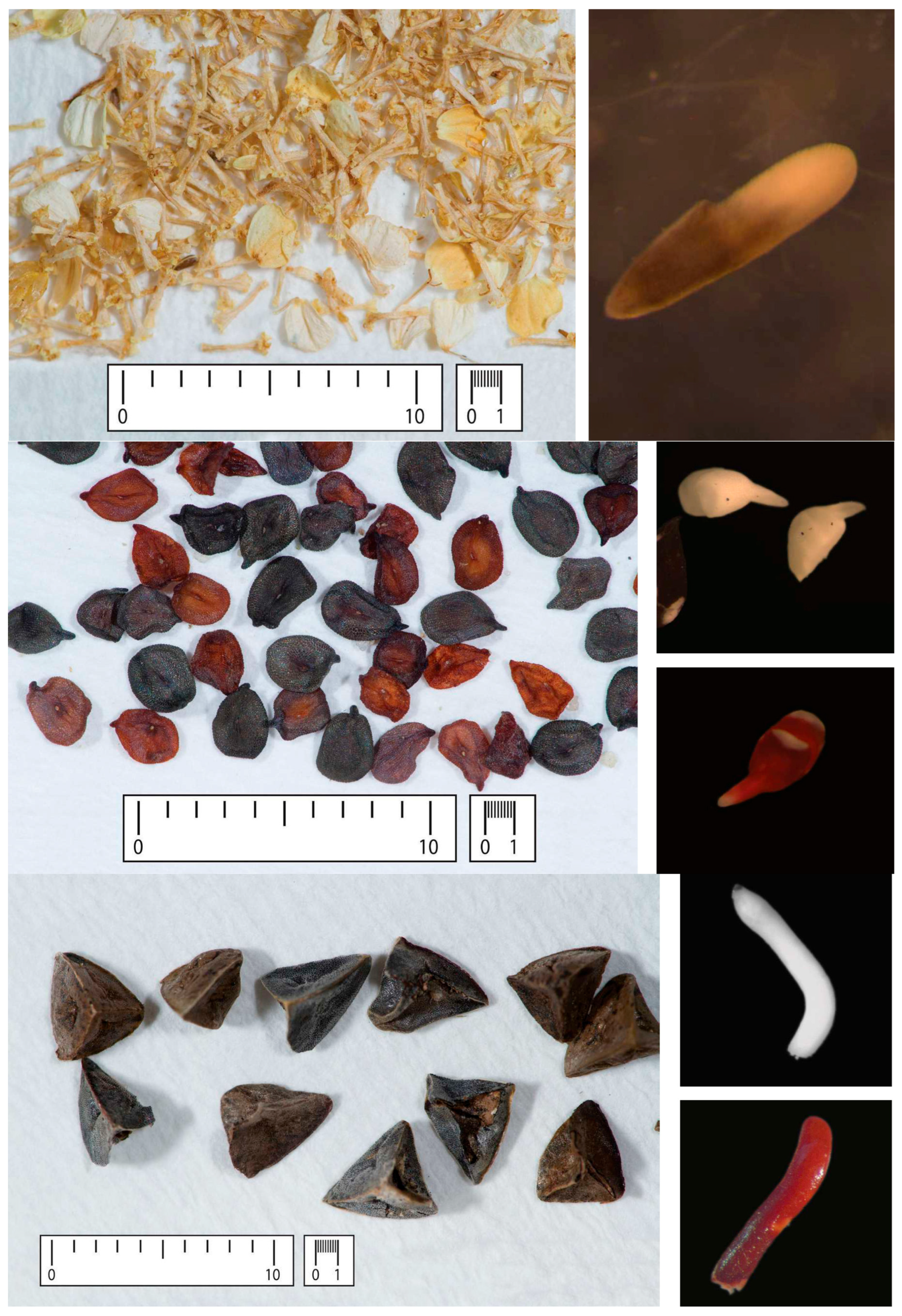
In the current work, 26 native plant species from northeastern Greece were subjected to germination tests after cold stratification. Table 3 presents the mean germination percentages per species, along with the results of the post hoc analysis (Tukey’s HSD, p < 0.05). The embryo viability for each species is also included. The viability test (TTZ) verified high embryo viability in all examined species. The lowest embryo viability was recorded for Pulsatillahalleri (80%), followed by Silene coronaria (86%) and Achillea crithmifolia (85%). On the contrary, most of the species, including Armeria canescens, Campanula lingulata, Campanula persicifolia, Campanula trachelium, Dianthus gracilis, Digitalis viridiflora, Epilobium angustifolium, Hypericum maculatum, Hypericum olympicum, Potentilla recta, Thymus thracicus and Thymus praecox, presented 100% embryo viability (Figure 1).
Early germination data (week 1 and week 4, Table 3) showed that germination in the control during the first week was generally low in most of the species. Several species presented increased germination percentages by week 4, indicating a gradual progression of germination over time. However, this increase varied between species, with some showing a significant increase between week 1 and week 4, while others presented limited changes. However, some species presented notable early germination in the first week in the control, including Prunella vulgaris (41.97%), Thymus praecox (39.80%), Thymus thracicus (29.82%), and Hypericum maculatum (22.36%), indicating rapid germination responses under favorable temperature conditions.
In contrast, most species in the control treatment showed little or no germination during the first week, with germination increasing progressively by week 4. This pattern was particularly evident in species such as Campanula persicifolia, Epilobium angustifolium, and Silene coronaria, where germination was negligible at week 1 but substantially higher at week 4 (Table 3). Overall, these results indicate considerable interspecific variation in early germination responses under control conditions, with some species exhibiting rapid germination and others showing delayed germination over time, suggesting the presence of physiological dormancy in part of the seed lot.
The highest final germination percentage in 14 of the 26 species was for seeds in the control, namely Asphodeline lutea (74.00%), Armeria canescens (88.00%), Campanula lingulata (61.00%), Campanula persicifolia (95.00%), Dianthus cruentus (74.00%), Dianthus gracilis (98.00%), Epilobium angustifolium (84.00%), Hypericum maculatum (88.25%), Hypericum olympicum (77.00%), Hypericum perforatum (95.00%), Potentilla recta (93.00%), Prunella vulgaris (69.50%), Pulsatilla halleri (52.00%), Thymus thracicus (63.75%) and T. praecox (86.00%) (Table 3, p < 0.05).
Cold stratification on the other hand improved germination in Achillea crithmifolia, A. millefolium and Achillea clypeolata (74.00%, 72.00% and 73.25%, respectively), Briza media (68.50%), Campanula trachelium (71.00%), Dianthus pinifolius (89%), Digitalis lanata and D. viridiflora (89.00% and 94.00%, respectively), Heracleum sphondylium (63%), Pedicularis friderici-augusti (53.00%) and Silene coronaria (79.00%). Particularly strong responses to stratification were observed in Heracleum sphondylium and Pedicularis friderici-augusti, where germination increased from 4.5% to 63% and from 1.75% to 53% respectively (Table 3, p < 0.05). No germination was observed during the cold stratification period, and germination occurred only after transfer to 25/15 °C temperature conditions.
For some species, seed germination percentages in the control were similar to those of cold stratified seeds, indicating that cold stratification was not necessary to overcome dormancy. This pattern was observed in Armeria canescens, Briza media, Digitalis lanata, Epilobium angustifolium and Silene coronaria, where no significant differences between treatments were detected (Table 3, p < 0.05).
However, in most species, the frequency of germinated seeds was lower than the frequency of viable seeds recorded in the TTZ test (Table 3).

4. Discussion

Seed dormancy is a key ecological mechanism regulating the timing of germination and ensuring seedling establishment under favorable environmental conditions. In Mediterranean ecosystems, dormancy release is typically associated with seasonal temperature variation, particularly after-ripening during summer and exposure to low winter temperatures [20,43,44]. Thus, in the current study design, seeds were placed in dry storage followed by cold stratification to replicate Mediterranean conditions. Additionally, in these environments, variation in temperature and moisture availability along altitudinal gradients may influence germination timing, which can occur either in autumn following the first rainfall events or later in spring under cooler conditions, depending on local climatic constraints [45].
Physiological dormancy is common among herbaceous species of Mediterranean ecosystems [20], which can be released following after-ripening during summer or exposure to low winter temperatures [46]. As all seeds in the current study were subjected to a period of dry storage prior to experimentation, the response of freshly collected seeds to cold stratification was not assessed. Therefore, it remains unclear whether an initial after-ripening phase is required before stratification. Future studies should address this aspect. The germination results in the present study indicated that most of the investigated species presented either weak physiological dormancy or no dormancy at all. For several species, germination percentages were high in the control suggesting either the absence of dormancy, or that dormancy release had already occurred during seed storage through 3 months of after-ripening. This behavior was observed in species such as Armeria canescens, Briza media, Digitalis lanata, Epilobium angustifolium and Silene coronaria. This seed behavior has been reported for many Mediterranean herbaceous species that germinate readily when favorable environmental conditions are encountered [20,21]. On the contrary, the delayed germination observed under control conditions, particularly during the first weeks, suggests that seeds were partially non-dormant [20]. The gradual increase in germination over time indicates a partial dormancy release under warm conditions (25/15 °C), supporting the presence of non-deep physiological dormancy in several species.
On the other hand, species such as Achillea crithmifolia, Achillea millefolium, Achillea clypeolata, Campanula trachelium, Dianthus pinifolius, Digitalis viridiflora, Heracleum sphondylium and Pedicularis friderici-augusti germinated after cold stratification, indicating the presence of physiological dormancy. Heracleum sphondylium have been previously shown to germinate under temperatures < 10 °C [36], whereas in the current study, successful seed germination was achieved under higher temperatures following cold stratification, providing evidence for broadening the temperature range for successful ex situ seed germination for this species. Cold stratification simulates winter environmental conditions and is known to promote germination by reducing levels of abscisic acid while increasing gibberellin levels [21]. However, dormancy seems to be relatively non-deep as high germination percentages were obtained after only 3 months of cold stratification. It should be noted that it remains unclear whether freshly collected seeds exhibit dormancy and whether the after-ripening period reduced the duration of cold stratification required for dormancy release since, as it is mentioned above, all seeds subjected to cold stratification had previously remained in dry storage for approximately 3 months (after-ripening). Therefore, it remains unclear whether freshly collected seeds exhibit dormancy and whether the after-ripening period reduced the duration of cold stratification required for dormancy release. In addition to the above, comparing germination under control and cold stratification gave key implications for the design of effective propagation protocols. In several species, germination was higher under control conditions, while cold stratification resulted in reduced or negligible germination. This pattern suggests that exposure of non-dormant seeds to low temperatures may inhibit germination or induce secondary dormancy in certain taxa, despite their high embryo viability [21].
The establishment of self-sustaining urban meadows has been recognized as a key objective in meadow creation projects [8]. In urban environments, plant communities with the ability to reproduce and regenerate naturally are particularly important as they may develop more stable vegetation over time and simultaneously, they require lower management inputs [6]. Based on the seed germination responses observed in the current study, the focal species can be broadly divided into two ecological groups. The first group includes species that benefit from cold stratification, presenting low germination under control and increased germination after exposure to low temperatures. These species are likely to be adapted to autumn sowing in potential urban meadow applications, with germination occurring after winter conditions (indicative examples: Achillea crithmifolia, A. millefolium, A. clypeolata, Campanula trachelium, Dianthus pinifolius, Digitalis viridiflora, Heracleum sphondylium and Pedicularis friderici-augusti). The second group includes species that show higher germination under control and reduced germination following cold stratification. These species are more suitable for spring sowing, as exposure to winter cold may negatively affect their germination performance (indicative examples: Asphodeline lutea, Campanula lingulata, Dianthus cruentus, Hypericum olympicum, H. perforatum, Potentilla recta, Prunella vulgaris, Pulsatilla halleri, Thymus thracicus and T. praecox). Such species in their ecosystems usually are under conditional dormancy resulting from non-optimal temperature conditions during the winter period [20,46]. Therefore, the selection of appropriate sowing periods should be based on species-specific seed germination behavior.
Differences in ecological requirements should also be considered when selecting species combinations for urban meadow establishment. Urban environments are often heterogeneous, including both open, sun-exposed areas and more shaded or sheltered sites. Using species with different ecological tolerances can help improve establishment success under these variable conditions.
Finally, the variation in functional and esthetic traits among the selected species may further support their use in urban meadow plantings by enhancing both ecological interactions and visual diversity; such considerations coupled with the germination protocols developed in this study may facilitate the wider use of native Mediterranean species in seed mixtures for urban meadows.

5. Conclusions

The present study reports the germination capacity of 26 native plant species from northeastern Greece within the context of sustainable utilization in urban meadow plantings. The results showed that most species presented either no seed dormancy or relatively shallow physiological dormancy, as high germination percentages were achieved in the control or in seeds receiving 3 months of after-ripening plus cold stratification. The results also indicate that dormancy release may occur under both cold stratification and prolonged exposure to warm conditions, as shown by the gradual increase in germination under control conditions. However, responses to cold stratification were species-specific. In several species, cold stratification enhanced germination, whereas in others it resulted in reduced germination compared to control conditions, suggesting that exposure to low temperatures may inhibit germination in certain taxa. These contrasting responses have important practical implications for propagation strategies. Species that respond positively to cold stratification are more suitable for autumn sowing, allowing germination after winter conditions. On the contrary, species that exhibit higher germination under control conditions and reduced performance after cold exposure should be sown in spring, avoiding potential inhibitory effects of low temperatures.
These characteristics indicate that the studied species can be propagated relatively easily under simple nursery conditions. In addition, the selected species present traits such as perennial life form, variation in plant height, diverse flower and foliage colors and different flowering periods, which may enhance both the visual quality and ecological value of urban meadow plantings. The relatively shallow dormancy observed in most species may facilitate natural regeneration from seed and contribute to the development of self-sustaining urban meadow communities. Such plant communities may support diverse pollinator assemblages and, indirectly, urban fauna that depend on insects as a food resource.

Author Contributions

Conceptualization, G.V. and T.M.; methodology, G.V., E.K., A.V. and T.M.; software, G.V. and E.K.; validation, G.V., E.K. and T.M.; formal analysis, G.V. and A.V.; investigation, G.V., E.K., A.V. and T.M.; resources, G.V. and T.M.; data curation, G.V. and A.V.; writing—original draft preparation, T.M. and G.V.; writing—review and editing, T.M., G.V. and E.K.; visualization, G.V. and E.K.; supervision, T.M.; project administration, T.M.; funding acquisition, G.V. and T.M. All authors have read and agreed to the published version of the manuscript.

Funding

This research received no external funding.

Data Availability Statement

Data is contained within the article and any further information is available from the authors upon request.

Acknowledgments

The authors would like to thank the members of staff of the Department of Natural Environment and Climate Resilience, School of Agricultural and Forestry Sciences, Democritus University of Thrace that helped with the management of the ex situ-maintained seed materials.

Conflicts of Interest

The authors declare no conflicts of interest.

Abbreviations

The following abbreviations are used in this manuscript:
TTZTetrazolium chloride

References

  1. Grimm, N.B.; Faeth, S.H.; Golubiewski, N.E.; Redman, C.L.; Wu, J.; Bai, X.; Briggs, J.M. Global change and the ecology of cities. Science 2008, 319, 756–760. [Google Scholar] [CrossRef]
  2. Seto, K.C.; Güneralp, B.; Hutyra, L.R. Global forecasts of urban expansion to 2030 and direct impacts on biodiversity and carbon pools. Proc. Natl. Acad. Sci. USA 2012, 109, 16083–16088. [Google Scholar] [CrossRef]
  3. United Nations System Chief Executives Board for Coordination. CEB/2019/1/Add.5. United Nations. 2019. Available online: https://unsceb.org/sites/default/files/2021-01/CEB_2019_1_Add-5-EN.pdf (accessed on 24 January 2026).
  4. European Urban Initiative. 2024. Introduction and Background: Context. Available online: https://www.urban-initiative.eu/online-guidance-innovative-actions/introduction-background/context (accessed on 24 January 2026).
  5. McKinney, M.L. Effects of urbanization on species richness: A review of plants and animals. Urban Ecosyst. 2008, 11, 161–176. [Google Scholar] [CrossRef]
  6. Aronson, M.F.; Lepczyk, C.A.; Evans, K.L.; Goddard, M.A.; Lerman, S.B.; MacIvor, J.S.; Nilon, C.H.; Vargo, T. Biodiversity in the city: Key challenges for urban green space management. Front. Ecol. Environ. 2017, 15, 189–196. [Google Scholar] [CrossRef]
  7. McDonnell, M.J.; MacGregor-Fors, I. The ecological future of cities. Science 2016, 352, 936–938. [Google Scholar] [CrossRef]
  8. Paudel, S.; States, S.L. Urban green spaces and sustainability: Exploring the ecosystem services and disservices of grassy lawns versus floral meadows. Urban For. Urban Green. 2023, 84, 127932. [Google Scholar] [CrossRef]
  9. Burkman, C.E.; Gardiner, M.M. Urban greenspace composition and landscape context influence natural enemy community composition and function. Biol. Control 2014, 75, 58–67. [Google Scholar] [CrossRef]
  10. Casanelles-Abella, J.; Pellissier, L.; Aleixo, C.; Orti, M.A.; Chiron, F.; Deguines, N.; Laanisto, L.; Myczko, Ł.; Müller, S.; Niinemets, Ü.; et al. Urban intensity gradients shape community structure, life-history traits and performance in a multitrophic system. Insect Conserv. Divers. 2024, 17, 243–258. [Google Scholar] [CrossRef]
  11. Wenzel, A.; Grass, I.; Belavadi, V.V.; Tscharntke, T. How urbanization is driving pollinator diversity and pollination—A systematic review. Biol. Conserv. 2020, 241, 108321. [Google Scholar] [CrossRef]
  12. Narango, D.L.; Tallamy, D.W.; Marra, P.P. Native plants improve breeding and foraging habitat for an insectivorous bird. Biol. Conserv. 2017, 213, 42–50. [Google Scholar] [CrossRef]
  13. Hallmann, C.A.; Sorg, M.; Jongejans, E.; Siepel, H.; Hofland, N.; Schwan, H.; Stenmans, W.; Müller, A.; Sumser, H.; Hörren, T.; et al. More than 75 percent decline over 27 years in total flying insect biomass in protected areas. PLoS ONE 2017, 12, e0185809. [Google Scholar] [CrossRef]
  14. Baldock, K.C.; Goddard, M.A.; Hicks, D.M.; Kunin, W.E.; Mitschunas, N.; Osgathorpe, L.M.; Potts, S.G.; Robertson, K.M.; Scott, A.V.; Stone, G.N.; et al. Where is the UK’s pollinator biodiversity? The importance of urban areas for flower-visiting insects. Proc. Biol. Sci. 2015, 282, 20142849. [Google Scholar] [CrossRef]
  15. Baldock, K.C.R.; Goddard, M.A.; Hicks, D.M.; Kunin, W.E.; Mitschunas, N.; Morse, H.; Osgathorpe, L.M.; Potts, S.G.; Robertson, K.M.; Scott, A.V.; et al. A systems approach reveals urban pollinator hotspots and conservation opportunities. Nat. Ecol. Evol. 2019, 3, 363–373. [Google Scholar] [CrossRef] [PubMed]
  16. Petanidou, T.; Kallimanis, A.S.; Tzanopoulos, J.; Sgardelis, S.P.; Pantis, J.D. Long-term observation of a pollination network: Fluctuation in species and interactions, relative invariance of network structure and implications for estimates of specialization. Ecol. Let. 2008, 11, 564–575. [Google Scholar] [CrossRef]
  17. Potts, S.G.; Vulliamy, B.; Dafni, A.; Neeman, G.; Willmer, P. Linking bees and flowers: How do floral communities structure pollinator communities? Ecology 2003, 84, 2628–2642. [Google Scholar] [CrossRef]
  18. Snow, D.W.; Perrins, C.M. The Birds of the Western Palearctic; Oxford University Press: Oxford, UK, 1998. [Google Scholar]
  19. Kildisheva, O.A.; Dixon, K.W.; Silveira, F.A.O.; Chapman, T.; Di Sacco, A.; Mondoni, A.; Turner, S.R.; Cross, A.T. Dormancy and germination: Making every seed count in restoration. Restor. Ecol. 2020, 28, 256–265. [Google Scholar] [CrossRef]
  20. Baskin, C.C.; Baskin, J.M. Seeds: Ecology, Biogeography, and Evolution of Dormancy and Germination; Academic Press: Cambridge, MA, USA, 2014. [Google Scholar]
  21. Finch-Savage, W.E.; Leubner-Metzger, G. Seed dormancy and the control of germination. New Phytol. 2006, 171, 501–523. [Google Scholar] [CrossRef]
  22. Strid, A. Mountain Flora of Greece; Cambridge University Press: Cambridge, UK, 1986; Volume 1. [Google Scholar]
  23. Strid, A. Mountain Flora of Greece; Edinburgh University Press: Edinburgh, UK, 1991; Volume 2. [Google Scholar]
  24. Tutin, T.G.; Heywood, V.H.; Burges, N.A.; Moore, D.M.; Valentine, D.H.; Walters, S.M.; Webb, D.A. Flora Europaea; Cambridge University Press: Cambridge, UK, 1980; Volume 5. [Google Scholar]
  25. Copeland, L.O.; McDonald, M.B. Principles of Seed Science and Technology, 4th ed.; Springer: Boston, MA, USA, 2001. [Google Scholar]
  26. AOSA/SCST. Tetrazolium Testing Handbook; Contribution No. 29; AOSA: Ithaca, NY, USA, 2010. [Google Scholar]
  27. Nikolić, B.; Braunović, S.; Jovanović, F.; Eremija, S.; Marković, M.; Rakonjac, L. Seed germination tests in Achillea genus from the Pirot County (Southeastern Serbia). Ethnobotany 2022, 2, 145–170. [Google Scholar] [CrossRef]
  28. Blandino, C.; Carruggio, F.; Impelluso, C.; Castrogiovanni, M.; Cristaudo, A. Germination protocols for seven Mediterranean taxa of the genus Anthemis (Asteraceae) from Sicily. Flora Medit. 2022, 32, 207–219. [Google Scholar]
  29. Erbaş, F. Effects of some treatments on seed dormancy in branched asphodel (Asphodelus ramosus L.). Plant Prot. Bull. 2024, 64, 41–49. [Google Scholar] [CrossRef]
  30. Vuerich, M.; Pasquini, S.; Casolo, V.; Boscutti, F.; Petrussa, E. Seed germination of the endemic Armeria helodes (Plumbaginaceae) in Italy. Flora Medit. 2022, 32, 227–232. [Google Scholar]
  31. Dixon, J.M. Briza media L. J. Ecol. 2002, 90, 737–752. [Google Scholar] [CrossRef]
  32. Paradisiotis, M.; Pipinis, E.; Kostas, S.; Tsoktouridis, G.; Hatzilazarou, S.; Mastrogianni, A.; Tsiripidis, I.; Krigas, N. Seed Germination Requirements of the Threatened Local Greek Endemic Campanula pangea Hartvig Facilitating Species-Specific Conservation Efforts. Conservation 2025, 5, 39. [Google Scholar] [CrossRef]
  33. Bazanis, A.E.; Papafotiou, M. In vitro germination, micropropagation and addressing the hyperhydricity of the Balkan native Dianthus cruentus. Horticulturae 2024, 10, 813. [Google Scholar] [CrossRef]
  34. van Baalen, J. Germination ecology and seed population dynamics of Digitalis purpurea. Oecologia 1982, 53, 61–67. [Google Scholar] [CrossRef]
  35. Myerscough, P.J. Epilobium angustifolium L. J. Ecol. 1980, 68, 169–178. [Google Scholar] [CrossRef]
  36. Matarrese, E.; Renna, M. Prospects of hogweed (Heracleum sphondylium L.) as a new horticultural crop for food and non-food uses: A review. Horticulturae 2023, 9, 246. [Google Scholar] [CrossRef]
  37. García, F.; Huertas, M.; Mora, E.; Peña, B.; Varela, F.; González-Benito, M.E. Hypericum perforatum L. seed germination: Interpopulation variation and effect of light, temperature, presowing treatments and seed desiccation. Genet. Resour. Crop Evol. 2006, 53, 1187–1198. [Google Scholar] [CrossRef]
  38. Hu, J.; Li, K.; Deng, C.; Gong, Y.; Liu, Y.; Wang, L. Seed germination ecology of semiparasitic weed Pediculariskansuensis in alpine grasslands. Plants 2022, 11, 1777. [Google Scholar] [CrossRef] [PubMed]
  39. Baskin, J.M.; Baskin, C.C. Role of temperature and light in the germination ecology of buried seeds of Potentilla recta. Ann. Appl. Biol. 1990, 117, 611–616. [Google Scholar] [CrossRef]
  40. Campbell-Martínez, G.; Olsson, R.; Hersey, A.; Meikle, S.; Freitag, K. Native seed germination trials at the Rae Selling Berry Seed Bank. In Proceedings of the International Plant Propagators Society, Western Region, Wilsonville, OR, USA, 24–27 January 2023; Available online: https://archives.pdx.edu/ds/psu/43841 (accessed on 20 July 2025).
  41. Park, K.; Lee, S.Y.; Ji, B.; Jang, B.K.; Lee, H.; Lee, H.; Song, S.-K.; Cho, J.S. Seed longevity and germinability of Pulsatilla dahurica after storage and accelerated aging test. Hortic. Sci. Technol. 2022, 40, 147–156. [Google Scholar] [CrossRef]
  42. Vojík, M.; Kadlecová, M.; Kutlvašr, J.; Berchova, K. Two shades of grey: Effect of temperature on seed germination of the escaping ornamental species Lychnis coronaria and Stachys byzantina. Plant Ecol. 2022, 223, 1121–1135. [Google Scholar] [CrossRef]
  43. Baskin, J.M.; Baskin, C.C. The great diversity in kinds of seed dormancy: A revision of the Nikolaeva–Baskin classification system for primary seed dormancy. Seed Sci. Res. 2021, 31, 249–277. [Google Scholar] [CrossRef]
  44. Rosbakh, S.; Carta, A.; Fernández-Pascual, E.; Phartyal, S.S.; Dayrell, R.L.C.; Mattana, E.; Saatkamp, A.; Vandelook, F.; Baskin, J.; Baskin, C.C. Global seed dormancy patterns are driven by macroclimate but not fire regime. New Phytol. 2023, 240, 555–564. [Google Scholar] [CrossRef]
  45. Xoplaki, E.; Gonzalez-Rouco, J.; Luterbacher, J.; Wanner, H. Wet season Mediterranean precipitation variability: Influence of large-scale dynamics and trends. Clim. Dyn. 2004, 23, 63–78. [Google Scholar] [CrossRef]
  46. Carruggio, F.; Onofri, A.; Catara, S.; Impelluso, C.; Castrogiovanni, M.; Lo Cascio, P.; Cristaudo, A. Conditional Seed Dormancy Helps Silene hicesiae Brullo & Signor. Overcome Stressful Mediterranean Summer Conditions. Plants 2021, 10, 2130. [Google Scholar] [CrossRef] [PubMed]
Figure 1. Indicative stereoscope photos of the selected seed material with embryo extraction for Achillea crithmifolia (top); cleaned seeds with their respective cases of embryos after extraction (white colored) and embryos stained red with 1% w/v tetrazolium chloride and considered viable for Dianthus gracilis (middle) and Asphodeline lutea (bottom).
Seeds 05 00027 g001
Table 1. Plant species examined in this study and their morphological and phenological traits, including habitat type relevant for species-rich urban meadow plantings.
A/NSpeciesHabitat TypeAverage Height of Mature Individuals (cm)Flower ColorLeaf ColorFlowering Period
1Achillea crithmifolia Waldst. & Kit.Dry/open habitats10–30 (40)Pale greenish, yellow/whiteGray-greenJune–August
2Achillea millefolium L.Dry/open habitats10–50White or pinkishGreenJuly–September
3Anthemis tinctoria L. (=syn. Cota tinctoria (L.) J.Gay)Dry/open habitats20–60Bright yellowGreen (glaucous above)June–August
4Asphodeline lutea (L.) Rchb.Dry/open habitats60–90YellowGlaucous-greenApril–June
5Armeria canescens (Host) Boiss.Mesic habitats15–35Pinkish or witheGreenMay–June (July)
6Briza media L.Mesic habitats15–60Purple-tingedGreenJune–August
7Campanula lingulate Waldst. & Kit.Dry/open habitats15–35Violet-blueGreenJuly–September
8Campanula persicifolia L.Mesic habitats30–80BlueBright greenJune–August
9Campanula trachelium L.Moist/shaded habitats40–100Violet-blueGreen, hispidJuly–September
10Dianthus cruentus Griseb.Dry/open habitats30–60Reddish-purpleGlaucousEnd of May and mid-July
11Dianthus gracilis Sm.Dry/open habitats15–40Pink-reddishGreen to glaucousJune–August
12Dianthus pinifolius Sm.Dry/open habitats15–45Red-purpleGreenJune–August
13Digitalis lanata Ehrh.Mesic habitats30–60 (90)White or creamGreen glaucousJune–August
14Digitalis viridiflora Lindl.Mesic habitats40–80Greenish yellowGreen, glaucous or sparsely pubescentJune–August
15Epilobium angustifolium L.Moist/shaded habitats(30) 60–150Pink to purpleGreen (lighter below)June–August
16Heracleum sphondylium L.Moist/shaded habitats50–150White or pinkishDark greenJune–August
17Hypericum maculatum CrantzMesic habitats20–60YellowGreenJune–July (August)
18Hypericum olympicum L.Mesic habitats10–35YellowGlaucusJune–July
19Hypericum perforatum L.Mesic habitats30–90YellowGreenJune–August
20Pedicularis friderici-augusti Tomm.Moist/shaded habitats10–20Pale yellowGreenMay–July
21Potentilla recta L.Dry/open habitats30–70Yellow-creamGreen to gray-greenMid-May–early August
22Prunella vulgaris L.Mesic habitats5–30Violet-blueGreenJune–September
23Pulsatilla helleri (All.) Willd.Dry/open habitats10–30Violet-purpleGreenApril–May
24Silene coronaria (L.) Clairv.Dry/open habitats40–80Deep pink-magentaWhite tomentoseJune–July
25Thymus thracicus Velen.Dry/open habitats5–15Pink or purplishDark green, sometimes reddish-purpleJune–August
26Thymus praecox OpizDry/open habitats2–10 (15)Purple or pinkGreenJune–August
Table 2. Summary of the available genus-specific literature information on the documented dormancy type concerning population samples of the focal species from different geographical areas.
Species/GenusReference on the Dormancy Type
1Achillea sp.[27]
2Anthemis sp.[28]
3Asphodeline sp.[29]
4Armeria sp.[30]
5Briza media[31]
6Campanula sp.[32]
7Dianthus sp.[33]
8Digitalis sp.[34]
9Epilobium angustifolium[35]
10Heracleum sphondylium[36]
11Hypericum sp.[37]
12Pedicularis friderici-augusti[38]
13Potentilla recta[39]
14Prunella vulgaris[40]
15Pulsatilla halleri[41]
16Silene coronaria[42]
17Thymus sp.[20]
Table 3. Seed germination dynamics (germination percentage at week 1 ± SE and cumulative germination at week 4 ± SE), germination rate (T50), total seed germination (±SE) and viability percentages of the tested species after cold stratification (CS) and control. Germination conditions in the growth chamber entailed alternating temperature of 25 °C/15 °C D/N, and photoperiod of 12 h light/12 h dark.
SpeciesTreatmentFirst Week Germination (% ± SE)Fourth Week Germination (% ± SE)Final Germination (% ± SE)T50 (Days)Embryo Viability (%)
Achillea crithmifoliaCS20.04 ± 7.2674.00 ± 2.79 a74.00 ± 2.79 a11.05 ± 1.55 a85
Control024.00 ± 2.83 b45.00 ± 1.91 b27.91 ± 1.84 b
Achillea millefoliumCS23.60 ± 4.35 a70.36 ± 2.29 a72.00 ± 1.68 a9.70 ± 1.11 a100
Control1.00 ± 1.04 b7.00 ± 3.00 b39.00 ± 3.41 b36.84 ± 2.21 b
Achillea clypeolataCS55.78± 6.88 a73.25 ± 1.37 a73.25 ± 1.37 a7.00 ± 0.03 a95
Control3.77 ± 2.18 b18.47 ± 5.36 b41.75 ± 1.18 b27.34 ± 5.17 b
Asphodeline luteaCS02.92 ± 1.90 b58.00 ± 1.47 b34.15 ± 1.67 a90
Control065.00 ± 4.12 a74.00 ± 4.16 a25.01 ± 0.26 b
Armeria canescensCS069.00 ± 5.00 a83.00 ± 4.72 a15.80 ± 1.57 a100
Control082.00 ± 3.82 a88.00 ± 5.16 a11.07 ± 0.23 a
Briza mediaCS7.55 ± 5.4449.16 ± 4.86 a68.50 ± 1.55 a21.18 ± 1.91 b91
Control023.02 ± 4.07 b64.25 ± 0.85 a30.39 ± 1.11 a
Campanula lingulataCS047.00 ± 4.7222.00 ± 2.58 b11.26 ± 0.34100
Control061.00 ± 5.7461.00 ± 5.74 a15.26 ± 0.68
Campanula persicifoliaCS0078.00 ± 2.58 b43.20 ± 1.97 a100
Control095.00 ± 1.9195.00 ± 1.91 a13.04 ± 0.97 b
Campanula tracheliumCS0071.00 ± 4.43 a36.71 ± 0.78 a100
Control05.00 ± 2.5110.00 ± 2.58 b22.75 ± 3.03 b
Dianthus cruentusCS023.00 ± 2.51 b56.00 ± 5.65 b32.50 ± 3.85 a95
Control2.00 ± 2.0449.00 ± 8.38 a74.00 ± 1.15 a19.10 ± 3.43 b
Dianthus gracilisCS34.00 ± 6.2166.00 ± 8.71 b87.00 ± 3.00 b21.37 ± 2.77 a100
Control095.00 ± 1.00 a98.00 ± 1.14 a10.94 ± 0.27 b
Dianthus pinifoliusCS68.00 ± 4.89 a89.00 ± 0.91 a89.00 ± 0.91 a7.00 ± 0.02 b92
Control20.10 ± 4.19 b33.79 ± 7.79 b50.50 ± 0.64 b18.46 ± 6.62 a
Digitalis lanataCS0089.00 ± 4.43 a39.98 ± 0.74 a96
Control079.00 ± 9.1481.00 ± 6.19 a14.46 ± 1.24 b
Digitalis viridifloraCS0094.00 ± 2.58 a40.73 ± 0.33 a100
Control064.00 ± 4.0074.00 ± 3.82 b13.64 ± 1.02 b
Epilobium angustifoliumCS03.00 ± 1.91 b82.00 ± 2.58 a51.70 ± 0.21 a100
Control084.00 ± 2.82 a84.00 ± 2.82 a10.58 ± 0.05 b
Heracleum sphondyliumCS0063.00 ± 5.74 a40.02 ± 0.47 a91
Control0.83 ± 0.8 30.83 ± 0.834.50 ± 0.28 b32.38 ± 9.08 a
Hypericum maculatumCS1.92 ± 1.92 b28.87 ± 3.38 b65.00 ± 1.87 b29.51 ± 1.17 a100
Control22.36 ± 2.07 a59.93 ± 3.00 a88.25 ± 1.93 a15.81 ± 2.11 b
Hypericum olympicumCS0066.00 ± 2.58 b47.20 ± 0.75 a100
Control041.00 ± 11.1277.00 ± 2.51 a27.58 ± 5.81 b
Hypericum perforatumCS0060.00 ± 1.63 b43.64 ± 1.06 a99
Control082.00 ± 8.8695.00 ± 3.00 a19.69 ± 1.12 b
Pedicularis friderici-augustiCS0053.00 ± 7.18 a45.84 ± 0.34 a90
Control00.5 ± 0.621.75 ± 0.47 b31.50 ± 2.86 b
Potentilla rectaCS01.00 ± 1.02 b35.00 ± 6.19 b38.33 ± 0.18 a100
Control077.00 ± 9.29 a93.00 ± 4.72 a10.67 ± 0.13 b
Prunella vulgarisCS1.00 ± 1.00 b4.25 ± 1.65 b5.75 ± 0.85 b17.50 ± 6.23 a90
Control41.97 ± 6.56 a66.78 ± 2.73 a69.50 ± 1.04 a7.00 ± 0.00 b
Pulsatilla halleriCS04.51 ± 0.515.50 ± 0.95 b21.00 ± 3.20 a80
Control12.61 ± 4.8938.74 ± 0.7452.00 ± 1.08 a16.15 ± 2.19 a
Silene coronariaCS0079.00 ± 3.41 a39.34 ± 0.42 a86
Control067.00 ± 8.38 73.00 ± 8.06 a11.19 ± 0.16 b
Thymus thracicusCS011.76 ± 1.75 b12.75 ± 1.25 b17.94 ± 3.38 a100
Control29.82 ± 3.4062.99 ± 2.85 a63.75 ± 2.13 a10.79 ± 1.87 a
Thymus praecoxCS1.00 ± 1.00 b8.00 ± 3.26 b15.00 ± 1.91 b28.22 ± 3.43 a100
Control39.80 ± 1.97 a74.68 ± 3.54 a86.00 ± 2.48 a9.80 ± 1.83 b
Different letters indicate significant differences between treatments (Tukey HSD, p ≤ 0.05). The abbreviation CS stands for cold stratification treatment
Disclaimer/Publisher’s Note: The statements, opinions and data contained in all publications are solely those of the individual author(s) and contributor(s) and not of MDPI and/or the editor(s). MDPI and/or the editor(s) disclaim responsibility for any injury to people or property resulting from any ideas, methods, instructions or products referred to in the content.