Article

First Report of Viviparity in Seeds of the Physically Dormant Species Hymenaea martiana (Fabaceae)


by
Joyce Naiara da Silva
1,*,
Guilherme Vinícius Gonçalves de Pádua
2,
Caroline Marques Rodrigues
1,
Eduardo Luã Fernandes da Silva
3,
Aline das Graças Souza
1,* and
Edna Ursulino Alves
1
1
Department of Plant Science and Environmental Sciences, Center for Agrarian Sciences, Federal University of Paraíba, Campus II, Areia 58397-000, PB, Brazil
2
Independent Researcher, Coari 69460-000, AM, Brazil
3
Seed Sector, Department of Agriculture, Federal University of Lavras, Lavras 37200-000, MG, Brazil
*
Authors to whom correspondence should be addressed.
Seeds 2026, 5(2), 19; https://doi.org/10.3390/seeds5020019
Submission received: 25 February 2026 / Revised: 19 March 2026 / Accepted: 20 March 2026 / Published: 22 March 2026
(This article belongs to the Special Issue Technological Advances in Seed Quality)

Abstract

Viviparity is rarely reported in species with seed physical dormancy. This is because physical dormancy, common in tropical trees, results from the impermeability of the seed tegument to water and regulates the timing of germination. Records of germination within the fruit in such species suggest greater functional plasticity than traditionally assumed. This study reports and quantifies viviparity in Hymenaea martiana seeds over four consecutive years (2019–2022) and assessed seed dormancy status through vigor tests. Sixty fruits were collected annually, and viviparity was estimated as the proportion of fruits containing at least one seed with radicle protrusion. Non-viviparous seeds were subjected to emergence tests with and without mechanical scarification, and cumulative emergence, percentages of dead and water-impermeable seeds, and seed water content were evaluated. Viviparity occurred consistently, affecting approximately 10–15% of the fruits, with no significant differences between years, indicating that the phenomenon was not associated with extreme environmental events. However, early germination did not result in seedling establishment because the emerging roots dehydrated while still inside the fruit. Mechanical scarification significantly increased emergence, confirming the presence of seed physical dormancy. These results show that, although viviparity was observed recurrently in the studied population of H. martiana, seed physical dormancy remains the main mechanism controlling germination in this species.

1. Introduction

Viviparity refers to the initiation of germination while the seed remains attached to the maternal plant, occurring before natural dispersal takes place, resulting in the interruption or absence of the quiescent phase normally observed during seed development. In this process, the embryo prematurely resumes growth, giving rise to seedlings, while the fruit remains attached to the branch [1]. In angiosperms, this phenomenon can manifest in different ways, including true viviparity, in which viable sexual offspring are produced, and pseudovivipary, characterized by the formation of vegetative propagules or asexual structures in place of sexual reproductive structures [2]. Cryptoviviparity, in turn, has been considered a subset of true viviparity, distinguished by the development of the seedling in a hidden manner inside the fruit, without protrusion through the pericarp [3,4].
Although ecologically relevant in specific contexts, viviparity is considered a rare phenomenon among angiosperms, with records of less than 0.1% of known species, including wild and cultivated plants [5,6]. Its occurrence is more common in species adapted to flooded or saline environments, such as mangroves, where early germination represents an advantageous strategy for establishing seedlings in unstable substrates [1,2]. In contrast, in nonhalophytic terrestrial angiosperms, viviparity has been reported only sporadically and is generally associated with specific environmental conditions and alterations in the physiological mechanisms that regulate germination [7].
Among the factors associated with viviparity are favorable environmental conditions, such as high humidity and suitable temperatures, as well as alterations in the hormonal balance of seeds [1]. In terms of hormonal balance, abscisic acid (ABA) plays a central role in the induction and maintenance of dormancy, and gibberellins (GA) are associated with overcoming dormancy and activating the germination process [8].
The occurrence of viviparity in species with seed physical dormancy is not commonly reported, since physical dormancy, commonly reported in tropical tree species, is associated with structural characteristics of the seed tegument that prevent water uptake and delay germination and acts as an efficient mechanism for the temporal regulation of germination, favoring the dispersal and establishment of seedlings under suitable environmental conditions [9]. Thus, records of germination inside the fruit in species with seed physical dormancy are rare and suggest greater functional plasticity of these reproductive systems than traditionally assumed.
Among the species with seed physical dormancy, Hymenaea martiana (Hayne) Hayne (Fabaceae) is a tree native to Brazil that is distributed in seasonal environments, such as the Caatinga, Atlantic Forest, and Cerrado [10], whose fruits are woody and indehiscent [11], and the seeds need scarification to promote germination under experimental conditions [12]. Despite this, the species occurs in environments subject to marked variations in rainfall, which can influence both fruit ripening and seed germination behavior.
Considering that seed physical dormancy constitutes a highly efficient mechanism for the temporal regulation of germination, the occurrence of viviparity in species with this type of dormancy represents a biologically unexpected event and is potentially indicative of physiological plasticity under certain environmental conditions. To date, there are no documented records of viviparity in H. martiana. Thus, the present study aimed to report and quantify the occurrence of viviparity in H. martiana seeds over four consecutive years of collection, evaluating its interannual frequency and the physiological state of the seeds through vigor tests and seed physical dormancy analysis.

2. Materials and Methods

2.1. Study Area and Fruit Collection

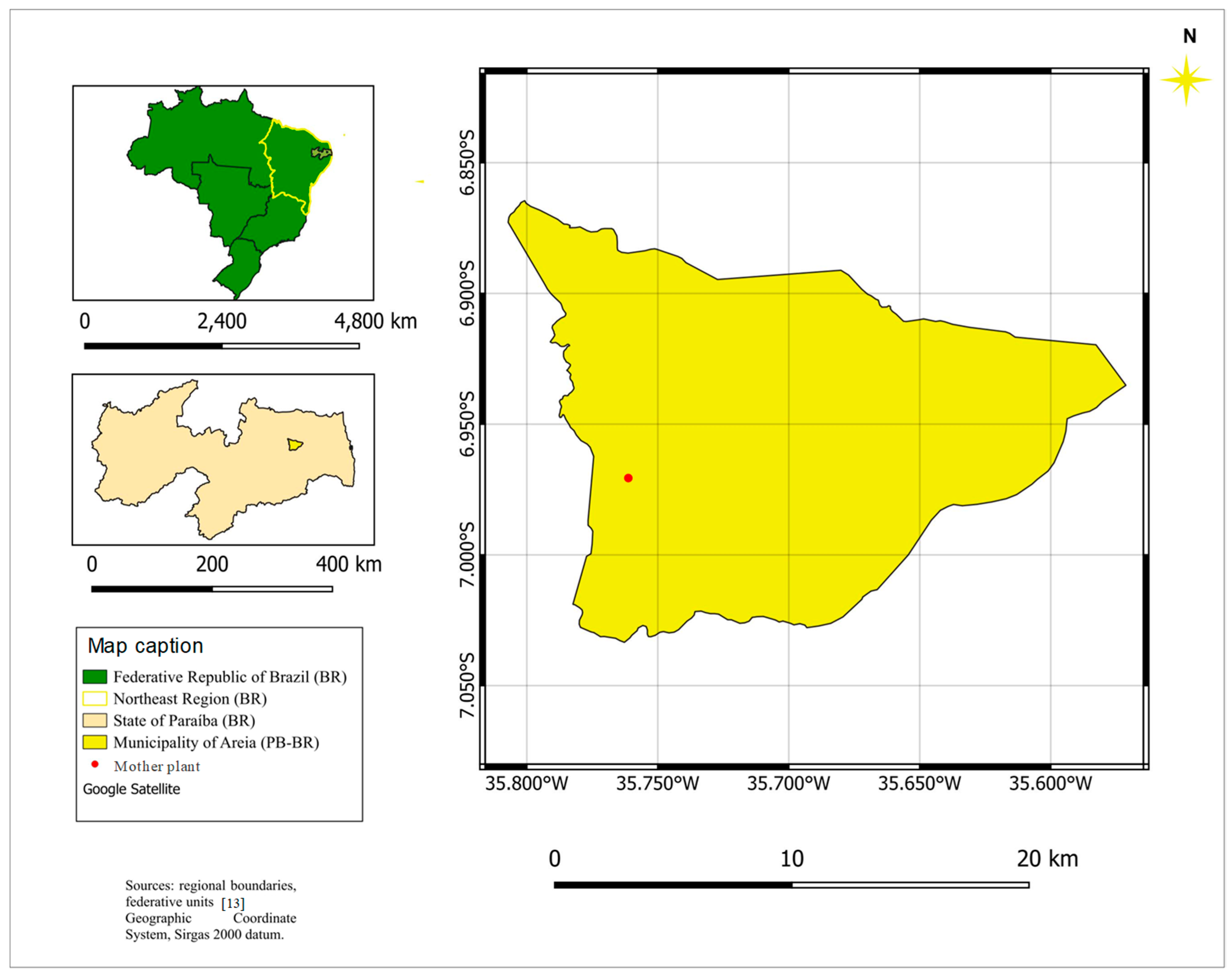
Fruits of H. martiana were collected from a single mother plant in the municipality of Areia, which is located in the Brejo Paraibano region (Figure 1). Although fruits were collected from more than 200 individuals throughout the study period, viviparity was recorded for only two mother plants. However, only one individual consistently produced a sufficient number of viviparous fruits to allow quantitative analyses, which is why the study was conducted on this individual.
The region has a tropical climate with a dry summer (As), according to the Köppen–Geiger classification, characterized by high annual rainfall, which can exceed 1400 mm and average temperatures between 21 and 25 °C. The local vegetation consists of savanna and grassland forest formations, with a predominance of Argisols, Neosols, Luvisols and Nitosols [14,15,16].
The collections were carried out in November 2019, 2020, 2021, and 2022, totaling four consecutive years of sampling. The collections consisted exclusively of fully ripe fruits identified by their dark brown color and natural fall to the ground, which were gathered from within the canopy of the trees.
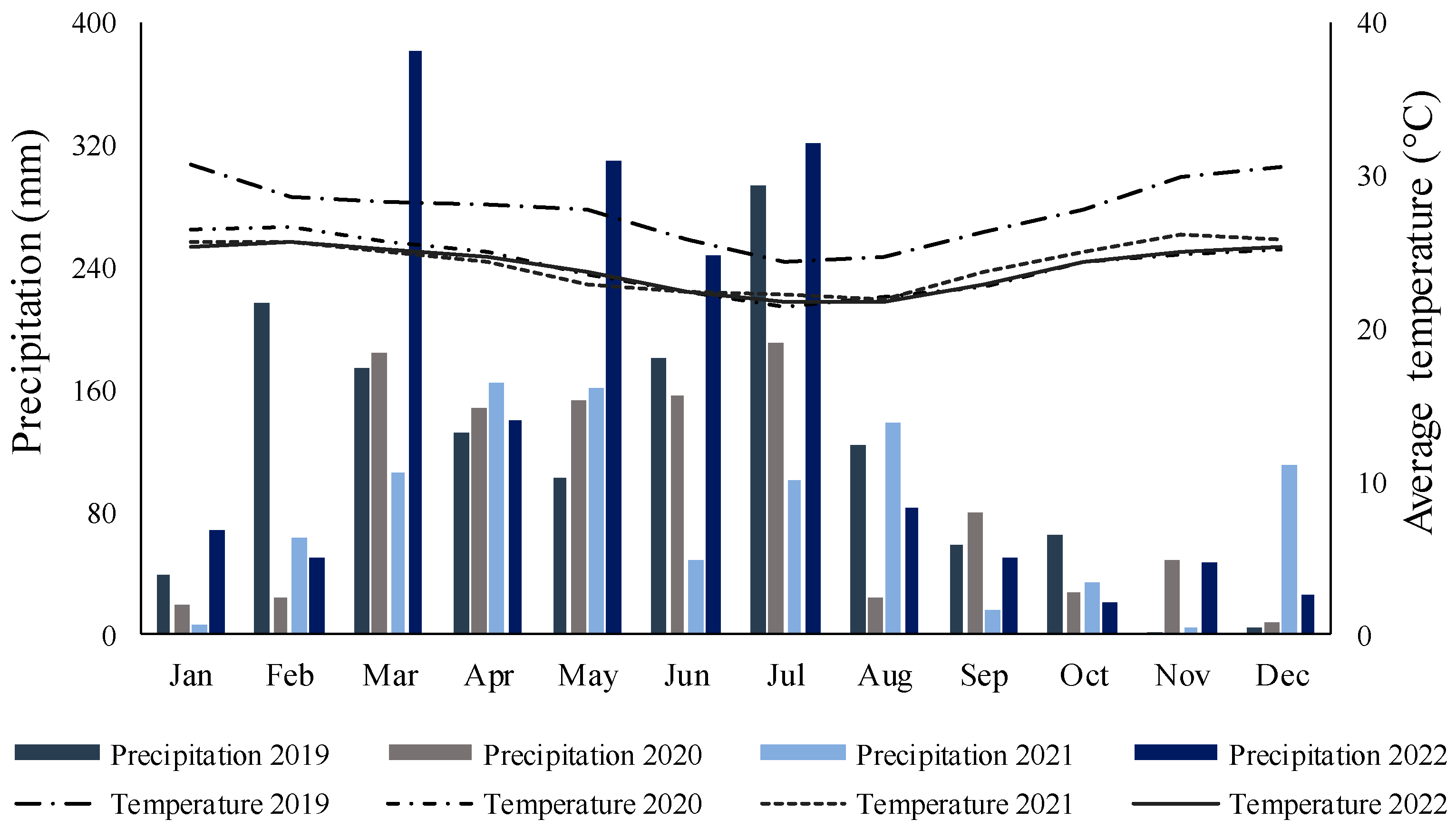
After collection, the fruits were placed in paper bags and transported to the Seed Analysis Laboratory (LAS) of the Department of Phytotechnics and Environmental Sciences, Center for Agricultural Sciences of the Federal University of Paraíba (DFCA–CCA/UFPB), where the analyses were performed. The average air temperature and rainfall data for the experimental period are presented in Figure 2.

2.2. Sampling and Evaluation of Viviparity

In each collection year, 60 ripe fruits were randomly selected, and each one was individually opened and visually inspected to verify the presence of viviparous seeds, characterized by the visible protrusion of the primary root still inside the fruit.
Viviparity was quantified by the proportion of fruits with at least one viviparous seed in relation to the total number of fruits evaluated per year, with the results expressed as a percentage (%).

2.3. Evaluation of the Dormancy of Hymenaea martiana Seeds

To evaluate the presence of dormancy in the seeds produced by the mother plant, the water content and physiological quality of the seeds (with and without scarification) were assessed.

2.3.1. Seed Moisture Content

The moisture content of the seeds was determined via the standard oven method at 105 ± 3 °C for 24 h, according to the Rules for Seed Analysis [18]. Four replicates of 10.0 ± 1.0 g of seeds were used, and the results are expressed as percentages.

2.3.2. Physiological Quality of Seeds

For the emergence test, seeds obtained from collected fruits were subjected to two treatments: The control (nonscarified seeds) and scarified seeds. The emergence test was conducted in plastic pots that were 30 cm in diameter and 22 cm high, filled with medium-grain sand (0.42 to 2.0 mm), and previously sterilized in an autoclave at 120 °C for 120 min. In each treatment, four replicates of 25 seeds were used, totaling 100 seeds per treatment each year. The seeds were sown at a depth of 3.0 cm.
The pots were kept in a greenhouse, with substrate moisture maintained through daily manual watering, according to the moisture loss of the substrate. Finally, seedling emergence was evaluated 33 days after sowing, and those with cotyledons fully above the substrate were considered to have emerged. The results are expressed as percentages. At the end of the test, the percentages of impermeable to water seeds and dead seeds were determined in relation to the total number of seeds sown, with the results expressed as percentages.

2.4. Data Analysis

The frequency of viviparity was estimated as the proportion of viviparous fruits relative to the total number of fruits evaluated each year. For each annual proportion, 95% confidence intervals were calculated via the exact binomial method (Clopper–Pearson). Differences in the frequency of viviparity between years were assessed via Pearson’s chi-square test. Additionally, a generalized linear model (GLM) with binomial distribution and logit link function was fitted to evaluate differences in the frequency of viviparity among years, using the proportion of fruits with viviparous seeds as the response variable and year as the explanatory variable.
Data regarding the physiological quality of the seeds were subjected to analysis of variance (ANOVA) after verifying the assumptions of normality and homoscedasticity. When the F test was significant, the treatment means were compared via Tukey’s test at the 5% significance level (α = 0.05).
All analyses were performed via the statistical software R version 4.4.2 [19] via the tidyr [20] and ggplot2 packages [21].

3. Results and Discussion

3.1. Occurrence and Frequency of Viviparity

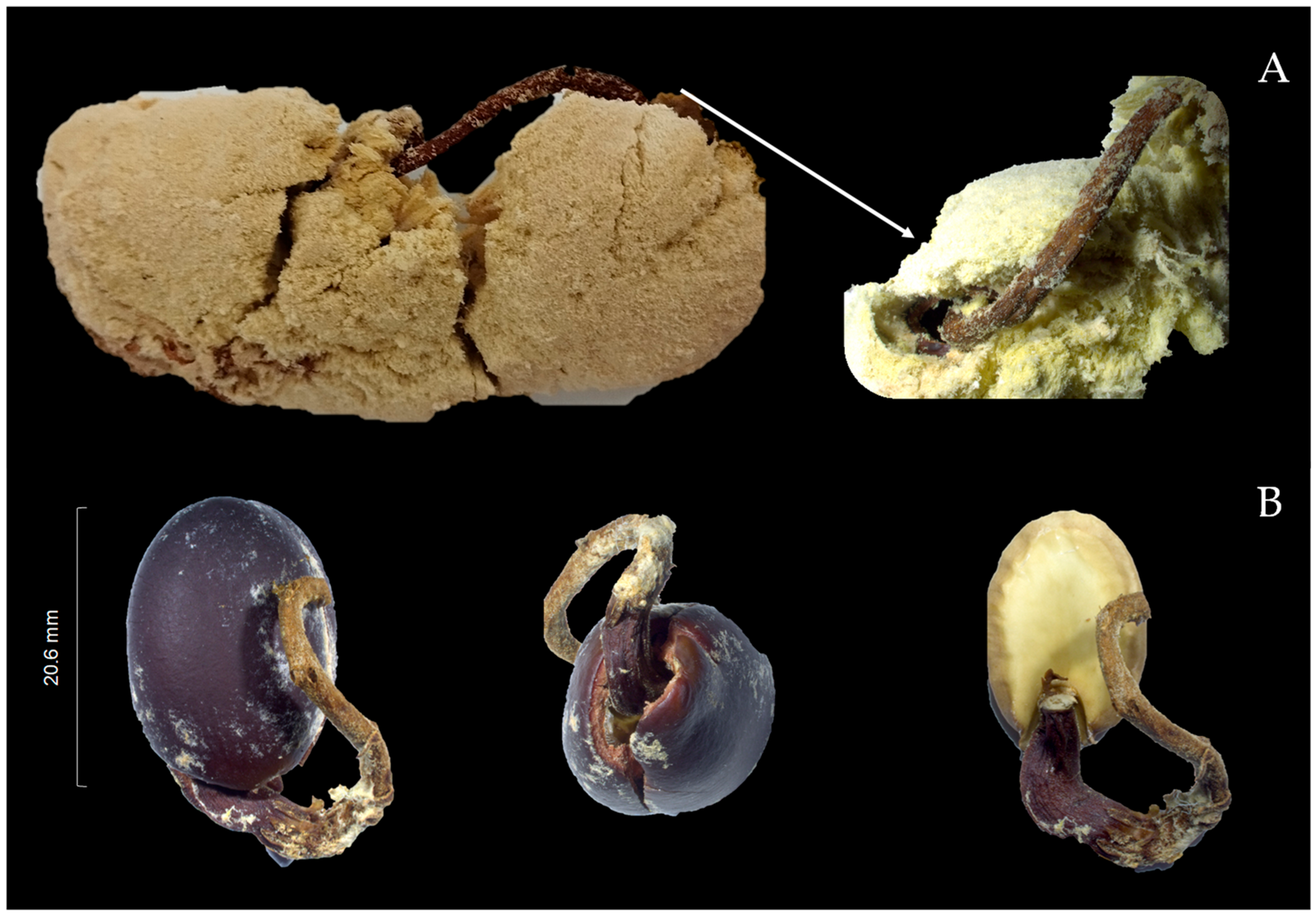
During maturation, seeds approaching maximum dry mass accumulation still contain high water content. From this stage, the germination process can begin; this phenomenon was observed in H. martiana, in which viviparity was characterized by the emission of the primary root while still inside the fruit, with the seeds remaining enveloped by the pulp (Figure 3).
After removing the pulp (which surrounds the seed and does not constitute reserve material of the seed itself), we saw that a large part of the reserves stored in the cotyledons had already been consumed. Furthermore, the emerging root showed signs of dehydration, probably because the rigid structure of the fruit prevented its protrusion through the pericarp, while the low water content of the pulp at the end of ripening compromised root development and, subsequently, seedling establishment (Figure 3).
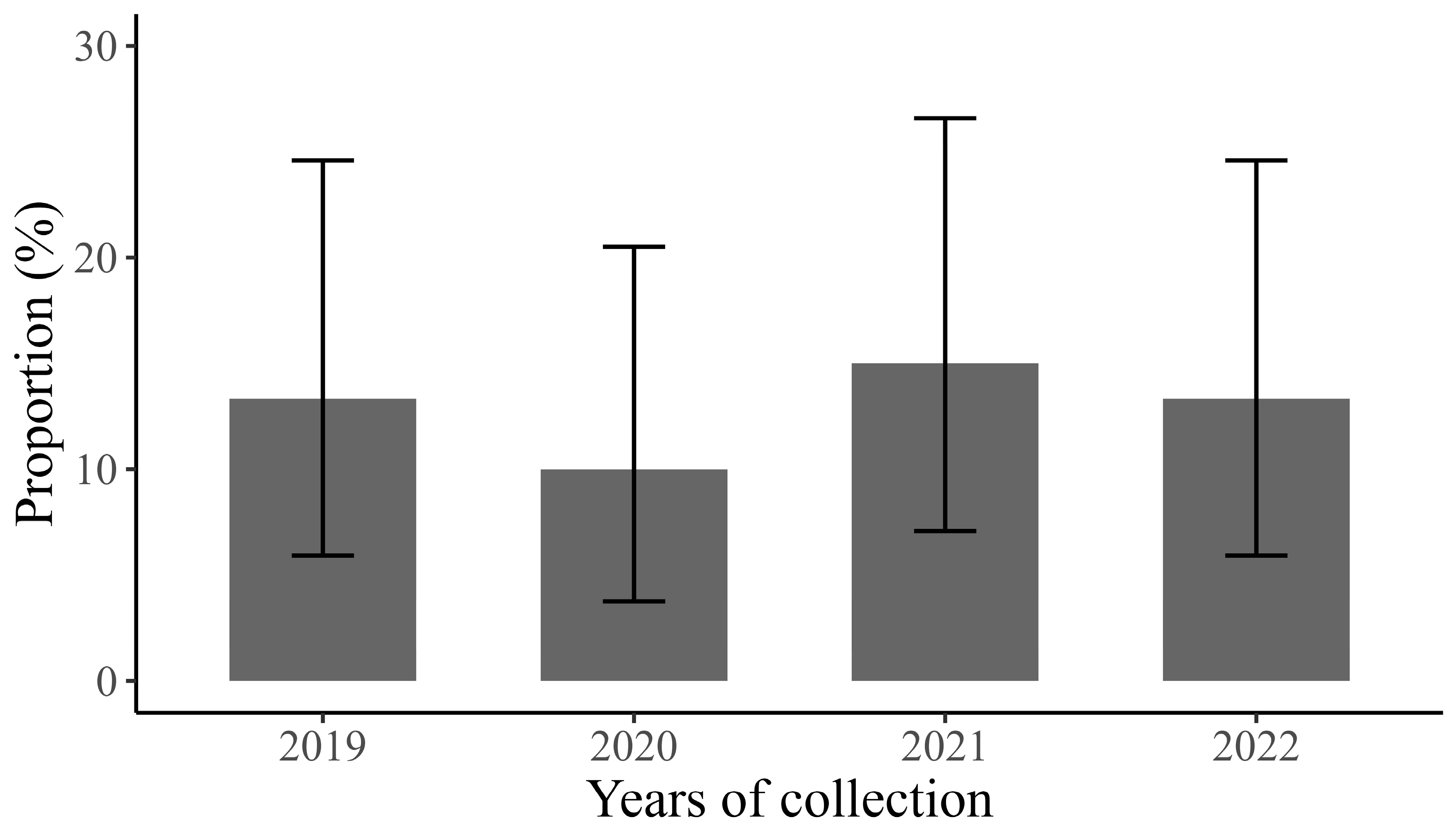
The frequency of fruits containing viviparous seeds was low but consistent throughout the four years of evaluation, with proportions ranging from 10 to 15% of the fruits analyzed (Figure 4). Importantly, this occurrence of viviparous seeds in H. martiana (Figure 3) affected the quality of these seeds in proportions of 10–15% (Figure 4), preventing seedling establishment in the field and nurseries.
Statistical tests did not reveal differences between the years (χ2 = 0.70; df = 3; p = 0.87), a result confirmed by the binomial model, showing that viviparity occurred recurrently. This pattern suggests that the phenomenon is not associated with extreme or isolated environmental events but is part of the set of possible physiological responses in the studied population during fruit ripening. Although the number of fruits analyzed per year was limited (n = 60), the recurrence of viviparity over four consecutive years suggests that the phenomenon is not restricted to an isolated event.
The recurrence of viviparity over the years indicates that its occurrence in H. martiana was not a random event. Among the potentially involved physiological mechanisms, the role of abscisic acid (ABA), a central hormone involved in preventing early germination and inducing dormancy during embryonic development, stands out. Reductions in ABA levels or in the embryo’s sensitivity to this hormone have been suggested as potential factors involved in the early activation of germination metabolism in some plant species [1,22]. However, no hormonal measurements were performed in the present study, and this mechanism should therefore be considered a possible hypothesis rather than a confirmed explanation for the viviparity observed in H. martiana. Alternatively, incomplete drying during the final stages of seed maturation may also contribute to the persistence of water-permeable seeds, as the establishment of physical dormancy in legumes is closely associated with seed dehydration [23,24].
Viviparity is often described as a facultative phenomenon associated with atypical environmental conditions during the final stage of seed maturation, such as periods of high humidity or prolonged rainfall [25]. In certain contexts, this strategy can confer adaptive advantages by allowing seedlings to begin development, while still protected by the fruit, anticipating root growth and establishment in the soil, especially in environments with marked water seasonality [26]. However, in H. martiana, under the conditions observed in this study, this strategy did not appear to be advantageous since the combination of the physical barrier imposed by the rigid structure of the fruit and the reduction in water content in the final stage of maturation resulted in dehydration of the emitted root, preventing seedling establishment.
It is important to note that the quantitative analyses were based on fruits from a single mother plant that produced a sufficient number of viviparous seeds. Although viviparity was also observed in another individual during the study period, the limited number of viviparous fruits prevented further quantitative analyses. Therefore, the results should be interpreted as evidence of the occurrence and recurrence of viviparity in H. martiana, rather than as an estimate of its frequency at the population level.

3.2. Characteristics of Seed Dormancy

The pregermination treatments (with and without scarification) significantly influenced the emergence and percentage of dead and impermeable to water seeds of H. martiana, according to the F test (Table 1). The water content of mature seeds was 9.8%, a value consistent with the expected physiological behavior of orthodox seeds [27]. In many legumes, this level of dehydration at the end of maturation is sufficient to promote the establishment of physical dormancy, resulting from the acquisition of impermeability of the seed tegument during the drying process [23]. However, the occurrence of viviparity even under these conditions indicates that the germination process may have been initiated before the complete acquisition of desiccation tolerance and the establishment of physical dormancy. This pattern suggests a possible temporal decoupling between the events of physiological maturation, in which the embryo remains metabolically active and responsive, while the seed tegument barriers to imbibition are not yet fully consolidated, characterizing a restricted development window in the final stages of maturation.
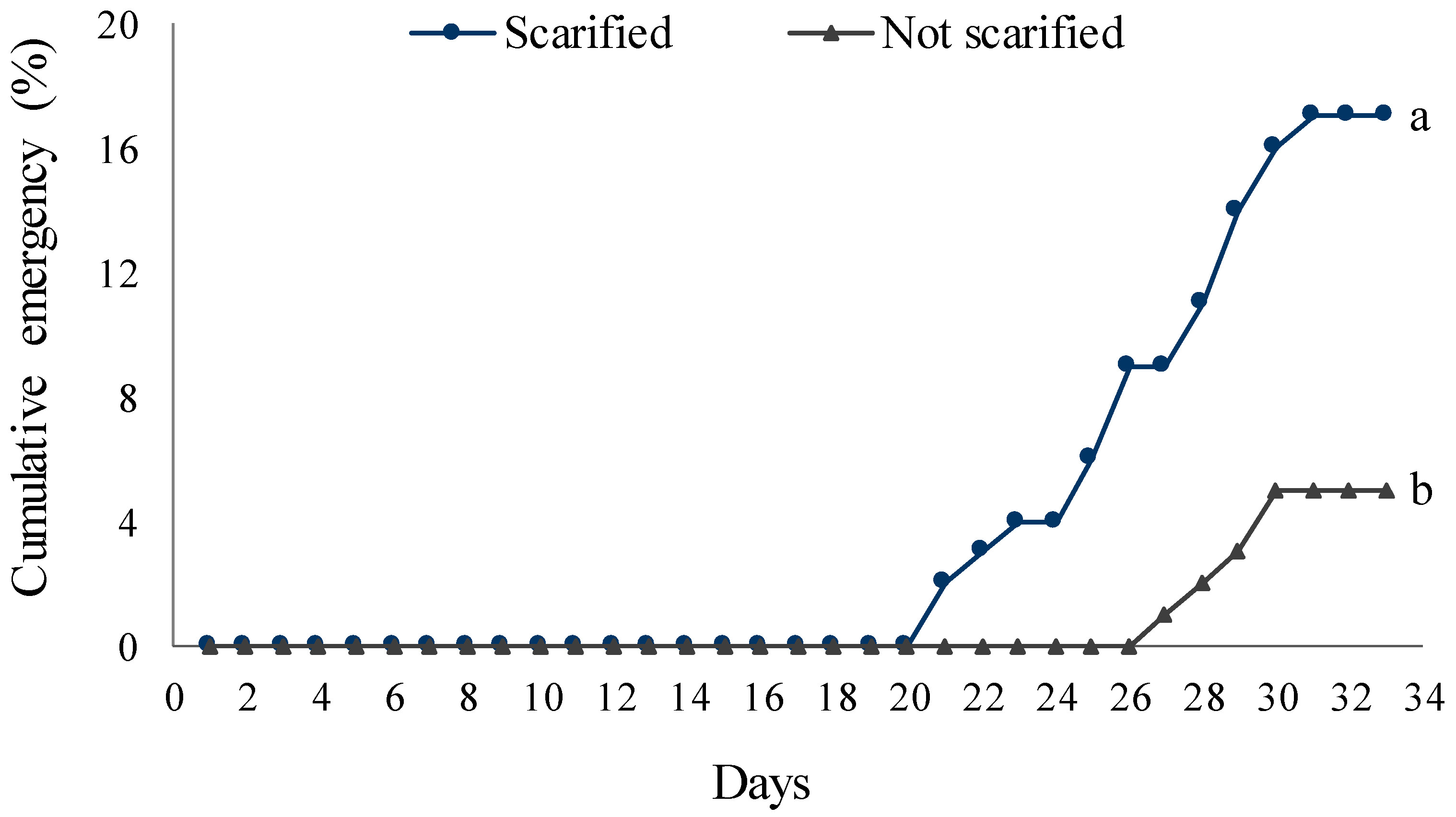
Mechanical scarification significantly increased seedling emergence compared with nonscarified seeds, with an earlier emergence time of six days, demonstrating the efficiency of this method in overcoming dormancy. In nonscarified seeds, a lower percentage was observed at the end of emergence during the experimental period, and a late start to emergence was observed, confirming the occurrence of seed physical dormancy in H. martiana (Figure 5).
Although germination capacity has been observed in scarified and nonscarified seeds of H. martiana, methods that promote faster germination are desirable to ensure that their commercial availability is viable in the shortest possible time and ensure greater homogeneity in the seedling stand [28], as evidenced in Figure 5.
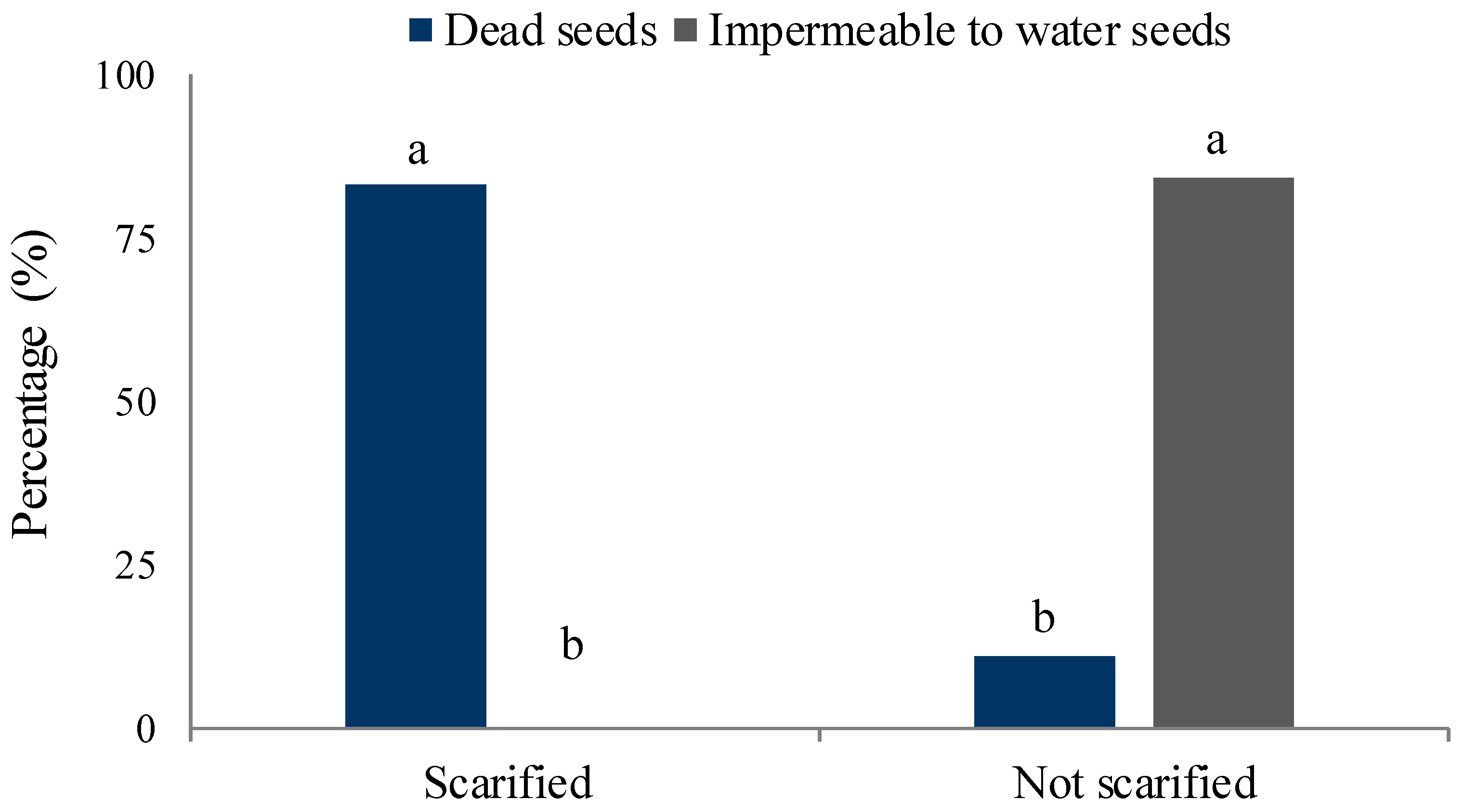
At the end of the emergence test, scarified seeds represented a greater proportion of dead seeds than nonscarified seeds did (Figure 6). This result indicates that, although scarification allowed for water absorption, the high humidity around the seeds may have favored deterioration processes. Furthermore, scarification can increase the susceptibility of seeds to attack by microorganisms, such as bacteria and fungi, which can compromise embryo viability. Although restricted oxygen diffusion under high humidity conditions can also limit germination [29], no direct data were obtained in this study that would allow us to confirm this mechanism.
The high proportion of impermeable to water seeds observed in the treatment without scarification indicates that the seed tegument acts as a physical barrier to imbibition, hindering water absorption and delaying the onset of germination metabolism. This pattern is characteristic of species in the Fabaceae family and constitutes a relevant adaptive strategy in environments subject to water seasonality, since it allows the formation of a persistent seed bank in the soil and germination synchronized with periods more favorable to seedling establishment [9].
Previous studies indicate that physical dormancy is established during the final stages of seed maturation, when seed dehydration promotes seed physical dormancy, whereas in earlier developmental stages seed water content remains high [24,30]. Under these conditions, alterations in the synthesis or signaling of abscisic acid (ABA) could potentially favor the early activation of germination metabolism [1], although this hypothesis was not directly tested in the present study.
In the Fabaceae family, the occurrence of viviparity is considered rare and was initially recorded in a few genera, such as Castanospermum A.Cunn. ex Mudie, Inga Mill, Mora R.H.Schomb. ex Benth. and Pithecellobium Mart. [5,25] and was subsequently reported in the genus Vigna Savi [31]. However, there are no records of viviparity associated with species with physical dormancy, which reinforces the unusual nature of the phenomenon observed in H. martiana.
In an integrated manner, the results indicate that H. martiana maintains seed physical dormancy as its predominant reproductive strategy, acting as the main regulatory mechanism for germination and seedling establishment. Viviparity, although recorded recurrently throughout the years evaluated, occurs in a restricted manner, concentrated in certain individuals and without evidence of ecological functionality under the analyzed conditions. In this sense, the phenomenon does not constitute a dominant adaptive strategy, but rather a punctual expression of physiological plasticity associated with the final stages of seed maturation.
These results suggest that viviparity may represent a possible transitional stage within the reproductive system of H. martiana, which is predominantly regulated by physical dormancy. The coexistence of these two behaviors, early germination and seed physical dormancy, indicates that species with orthodox seeds may exhibit greater physiological plasticity than traditionally assumed. This finding broadens the understanding of the dynamics of germination mechanisms in seasonal environments, where variations in water availability can influence reproductive success. Thus, viviparity in H. martiana does not constitute a consolidated adaptive strategy, but it highlights the existence of alternative physiological trajectories during seed maturation, potentially relevant in scenarios of environmental variation.

4. Conclusions

Viviparity in the seeds produced by the studied H. martiana mother plant was recurrent over four consecutive years, with a relatively stable frequency, characterizing early germination while seeds were still attached to the fruit.
Due to the absence of interannual variation, this phenomenon does not appear to be restricted to extreme environmental events but may represent one possible physiological response during fruit ripening in this individual.
Emergence tests confirmed seed physical dormancy as the main mechanism controlling germination, despite the occurrence of viviparity, demonstrating that early germination does not replace this regulatory mechanism.
Because quantitative analyses were restricted to a single mother plant within the studied population, these results should be interpreted as evidence of the occurrence of viviparity in this population rather than as a generalized pattern across the species.
Viviparity was concentrated in a limited number of individuals within the studied population, suggesting that the phenomenon may be associated with specific physiological conditions of the mother plant rather than representing a generalized pattern across the species.

Author Contributions

J.N.d.S.: Substantial contribution in the concept and design of the study; substantial contribution to the production of figure boards; contribution to manuscript preparation, adding intellectual content. G.V.G.d.P.: Contribution to critical revision, adding intellectual content. C.M.R.: Contribution to critical revision, adding intellectual content. E.L.F.d.S.: Contribution to critical revision, adding intellectual content. A.d.G.S.: Contribution to critical revision, adding intellectual content. E.U.A.: Substantial contribution in the concept and design of the study; contribution to critical revision, adding intellectual content. All authors have read and agreed to the published version of the manuscript.

Funding

This research received no external funding.

Institutional Review Board Statement

Not applicable.

Informed Consent Statement

Not applicable.

Data Availability Statement

The original contributions presented in the study are included in the article. The data presented in this study are available on request from the corresponding author.

Acknowledgments

The authors express their gratitude to the Coordination for the Improvement of Higher Education Personnel (CAPES, Brazil) for the support granted through the doctoral scholarship awarded to the first author. They also thank the National Council for Scientific and Technological Development (CNPq, Brazil) for the research productivity grants awarded to the last author, as well as for the senior postdoctoral fellowship (process 1018672024-7) granted to the fifth author.

Conflicts of Interest

The authors declare no conflicts of interest.

Abbreviations

ABAAbscisic acid
ANOVAAnalysis of variance
CCACenter for Agricultural Sciences
CVCoefficient of variation
DFDegrees of freedom
DFCADepartment of Phytotechnics and Environmental Sciences
DSDead seed
EEmergence
GAGibberellins
IWSImpermeable to water seed
INMETInstituto Nacional de Meteorologia
LASSeed Analysis Laboratory

References

  1. Bewley, J.D.; Bradford, K.J.; Hilhorst, H.W.M.; Nonogaki, H. Seeds: Physiology of Development, Germination and Dormancy, 3rd ed.; Springer: New York, NY, USA, 2013; 376p. [Google Scholar]
  2. Zhou, X.X.; Cai, L.L.; Fu, M.P.; Hong, L.W.; Shen, Y.J.; Li, Q.Q. Progress in the studies of vivipary in mangrove plants. Chin. J. Plant Ecol. 2016, 40, 1328–1343. [Google Scholar] [CrossRef]
  3. Cota-Sánchez, J.H. Vivipary in the Cactaceae: Its taxonomic occurrence and biological significance. Flora 2004, 199, 481–490. [Google Scholar] [CrossRef]
  4. Cota-Sánchez, J.H.; Reyes-Olivas, A.; Sánchez-Soto, B. Vivipary in coastal cacti: A potential reproductive strategy in halophytic environments. Am. J. Bot. 2007, 94, 1577–1581. [Google Scholar] [CrossRef] [PubMed]
  5. Farnsworth, E. The ecology and physiology of viviparous and recalcitrant seeds. Annu. Rev. Ecol. Evol. Syst. 2000, 31, 107–138. [Google Scholar] [CrossRef]
  6. Debbarma, S.; Banik, B.; Mili, M.; Bora, D.; Das, S.; Datta, B.K.; Baijnath, H. Cryptovivipary: A rare phenomenon in monoecious species of Ficus L. (Moraceae). S. Afr. J. Bot. 2024, 167, 391–398. [Google Scholar] [CrossRef]
  7. Cota-Sánchez, J.H.; Reyes-Olivas, A.; Abreu, D.D. Vivipary in the cactus family: A reply to Ortega-Baes’ et al. evaluation of 25 species from northwestern Argentina. J. Arid Environ. 2011, 75, 878–880. [Google Scholar] [CrossRef]
  8. Mendes, C.R.L.G.; Valerio, Z.; Neves, T.G.; Ferreira, G. Controle fisiológico da dormência: Metabolismo que impede a germinação. In Dormência de Sementes: Provocações e Reflexões, 1st ed.; Ferreira, G., Ed.; Júlio de Mesquita Filho: Botucatu, Brazil; Instituto de Biociências de Botucatu: Botucatu, Brazil, 2022; pp. 89–116. [Google Scholar]
  9. Marcos-Filho, J. Fisiologia de Sementes de Plantas Cultivadas, 2nd ed.; FEALQ: Piracicaba, Brazil, 2015; 660p. [Google Scholar]
  10. Flora do Brasil—Lista de espécies da flora do Brasil. In Flora e Funga do Brasil; Hymenaea; Jardim Botânico do Rio de Janeiro: Rio de Janeiro, Brazil, 2026. Available online: https://floradobrasil.jbrj.gov.br/FB83203 (accessed on 17 January 2026).
  11. Lorenzi, H. Árvores brasileiras: Manual de Identificação e Cultivo de Plantas Arbóreas Nativas do Brasil, 3rd ed.; Instituto Plantarum: Nova Odessa, Brazil, 2009; 368p. [Google Scholar]
  12. Silva, J.N.; Pádua, G.V.G.; Silva, M.J.; Rodrigues, M.H.B.S.; Medeiros, M.L.S.; Rodrigues, C.M.; Souza, A.G.; Alves, E.U. Physiological variability in seeds of a natural population of Hymenaea martiana Hayne in Paraiba, Brazil. Rev. Caatinga 2025, 38, e13013. [Google Scholar] [CrossRef]
  13. Brazilian Institute of Geography and Statistics (IBGE). Territorial Meshes (Malhas Territoriais). 2020. Available online: https://www.ibge.gov.br/geociencias/organizacao-do-territorio/malhas-territoriais.html (accessed on 21 November 2025).
  14. Francisco, P.R.M.; Santos, D. Climatologia do Estado da Paraíba; EDUFCG: Campina Grande, Brazil, 2017; 75p. [Google Scholar]
  15. Arruda, L.V.; Monte Rodrigues, L.P.; Silva, I.C.; Souza, R.S. Configuração geoambiental e dinâmica do espaço agrário atual do brejo paraibano (PB), Paraíba, Brasil. Rev. Ciênc. Geogr. 2022, 26, 72–102. [Google Scholar] [CrossRef]
  16. Nascimento, R.L.X.; Souza, C.C.; Grassi, G.; Oliveira, M.A.N. Caderno de Caracterização: Estado da Paraíba; Codevasf: Brasília, Brazil, 2022; 129p. [Google Scholar]
  17. National Institute of Meteorology (INMET). Meteorological Database for Education and Research (BDMEP). 2023. Available online: https://bdmep.inmet.gov.br/ (accessed on 18 June 2025).
  18. Ministério da Agricultura; Pecuária e Abastecimento. Ministério da Agricultura; Pecuária e Abastecimento. In Regras Para análise de Sementes; Secretaria de Defesa Agropecuária, MAPA/ACS: Brasília, Brazil, 2009. [Google Scholar]
  19. R Core Team. R: A Language and Environment for Statistical Computing, Version 4.4.2; R Foundation for Statistical Computing: Vienna, Austria, 2024. Available online: https://www.R-project.org/ (accessed on 18 January 2026).
  20. Wickham, H.; Vaughan, D.; Girlich, M. Tidyr: Tidy Messy Data, R Package Version 1.3.2. 2026. Available online: https://tidyr.tidyverse.org (accessed on 18 January 2026).
  21. Wickham, H.; Chang, W.; Henry, L.; Lin Pedersen, T.; Takahashi, K.; Wilke, C.; Woo, K.; Yutani, H.; Dunnington, D.; Van Den Brand, T.; et al. ggplot2: Create Elegant Data Visualisations Using the Grammar of Graphics, R Package Version 4.0.0. 2025. Available online: https://CRAN.R-project.org/package=ggplot2 (accessed on 18 January 2026).
  22. Taiz, L.; Zeiger, E.; Møller, I.M.; Murphy, A. Fisiologia e Desenvolvimento Vegetal, 6th ed.; Artmed: Porto Alegre, Brazil, 2017; 888p. [Google Scholar]
  23. Baskin, C.C.; Baskin, J.M. Seeds: Ecology, Biogeography, and Evolution of Dormancy and Germination, 2nd ed.; Academic Press: San Diego, CA, USA, 2014; 1586p. [Google Scholar]
  24. Guariz, H.R.; Oliveira, H.C.; Sperandio, H.V.; Paula, J.C.B.; Shimizu, G.D.; Aparecido-Junior, W. Germination potential of Hymenaea courbaril L. in different maturation stages. Semina Ciênc. Agrár. 2021, 42, 3667–3684. [Google Scholar] [CrossRef]
  25. Thakur, V.; Khethagoudar, M.C.; Nawalagatti, C.M. Vivipary in greengram (Vigna radiata) and maize (Zea mays). Indian J. Agric. Sci. 2022, 91, 1818–1820. [Google Scholar] [CrossRef]
  26. Pérez-Noyola, F.J.; Flores, J.; Yáñez-Espinosa, L.; Jurado, E.; De La Rosa-Manzano, E.; Badano, E. Complete vivipary behavior detected in the epiphytic Tillandsia recurvata L. (Ball moss) in the Chihuahuan Desert in two continuous years. J. Arid Environ. 2020, 174, 103993. [Google Scholar] [CrossRef]
  27. Hong, T.D.; Ellis, R.H. Storage. In Tropical Tree Seed Manual; Vozzo, J.A., Ed.; United States Department of Agriculture Forest Service: Washington, DC, USA, 2002; pp. 125–136. [Google Scholar]
  28. Smiderle, O.J.; Souza, A.G. Scarification and doses of Acadian®, Stimulate® and Trichoderma spp. promote dormancy overcoming in Hymenaea courbaril L. seeds? J. Seed Sci. 2022, 44, e202244009. [Google Scholar] [CrossRef]
  29. Wang, X.; He, L.; Li, J.; Bai, S.; Teng, Y.; Hui, W. Seed coat-derived ABA regulates seed dormancy of Pyrus betulaefolia by modulating ABA and GA balance. Front. Plant Sci. 2025, 16, e1667946. [Google Scholar] [CrossRef] [PubMed]
  30. Santos, G.N.L.; Farias, S.G.G.; Silva, D.Y.B.O.; Bezerra, R.; Ribeiro, A.; Matos, D.C.P. Maturação fisiológica e dormência em sementes de Parkia platycephala Benth (Fabaceae). Rev. Agroneg. Meio Ambient. 2022, 15, 1–18. [Google Scholar] [CrossRef]
  31. Rodrigues, J.K.; Cavalcanti, J.H.F.; Silva, P.O.; Borges, E.E.D.L.; Nina-Junior, A.D.R.; Carvalho-Gonçalves, J.F. Unraveling relationships of prompt germination among four species of Inga Mill detected by morpho-anatomical and histochemical traits. Flora 2021, 285, 151941. [Google Scholar] [CrossRef]
Figure 1. Locations of the mother plants of Hymenaea martiana in the municipality of Areia, Paraíba, Brazil, where the fruits were collected [13].
Seeds 05 00019 g001
Figure 2. Average temperature and accumulated precipitation recorded during the four years of data collection in the municipality of Areia, Paraíba, Brazil, were used to characterize the climatic conditions during the study period of Hymenaea martiana. Data source: INMET [17].
Seeds 05 00019 g002
Figure 3. Vivipary in seeds of Hymenaea martiana. (A) Seeds inside the fruit still surrounded by the soft, farinaceous pulp; the image on the right shows a longitudinal section of the pulp revealing the emission of the primary root while the seed is still inside the fruit. (B) External view of the seed showing the emission and elongation of the primary root after removal of the pulp.
Seeds 05 00019 g003
Figure 4. Proportion of fruits containing at least one viviparous seed in Hymenaea martiana over four consecutive years (2019–2022). Error bars represent 95% confidence intervals estimated using the exact binomial method.
Seeds 05 00019 g004
Figure 5. Cumulative emergence over 33 days for scarified and nonscarified seeds of Hymenaea martiana. Lowercase letters indicate significant differences according to Tukey’s test (p ≤ 0.05).
Seeds 05 00019 g005
Figure 6. Percentages of dead seeds and impermeable to water seeds of Hymenaea martiana after the emergence test under scarified and nonscarified treatments. Lowercase letters indicate significant differences between pregermination treatments according to Tukey’s test (p ≤ 0.05).
Seeds 05 00019 g006
Table 1. Summary of analysis of variance for emergence (E) and percentage of dead (DS) and impermeable to water (IWS) seeds of scarified and nonscarified Hymenaea martiana seeds (Factor 1).
Variation FactorMean Squares
DFE (%)DS (%)IWS (%)
Factor 11288.00 **10,658.00 **14,112.00 ***
Residue69.3323.3010.7
CV (%) 24.108.806.70
*** and ** indicate significance at 0.1% and 1%, probability, respectively, according to the F test. Legend: DF—degrees of freedom, CV—coefficient of variation.
Disclaimer/Publisher’s Note: The statements, opinions and data contained in all publications are solely those of the individual author(s) and contributor(s) and not of MDPI and/or the editor(s). MDPI and/or the editor(s) disclaim responsibility for any injury to people or property resulting from any ideas, methods, instructions or products referred to in the content.