Case Report

When Gray Hair Meets the Great Imitator: Syphilis Masquerading as Age-Related Decline in an Elderly Couple


Dermatology Unit, Department Medical Sciences and Public Health, University of Cagliari, 09124 Cagliari, Italy
*
Author to whom correspondence should be addressed.
Venereology 2026, 5(2), 13; https://doi.org/10.3390/venereology5020013
Submission received: 9 March 2026 / Revised: 16 April 2026 / Accepted: 20 April 2026 / Published: 23 April 2026
(This article belongs to the Special Issue Decoding the Skin: HIV, STIs, and the Venereologist Perspective)

Abstract

Background: In older people, syphilis diagnosis might be undervalued due to both clinical conditions and age-related changes that obscure symptom presentation and physician discomfort with sexual history-taking, creating a dual barrier to timely recognition. Methods: Case presentation with literature review. Results: An 80-year-old woman was referred to the Dermatology Department of Cagliari University by her oncologist, with a 2-month history of intermittent episodes of pruritus associated with papular–nodular skin lesion eruptions, accompanied with asthenia, night sweats, and unintentional weight loss, indicative of a paraneoplastic syndrome or an adverse drug reaction. Careful evaluation indicated the need to perform serological testing, which confirmed secondary syphilis (RPR 1:64 and TPHA 1:5120). Specific questioning regarding sexual behaviors pointed out oral and anal intercourse. The 83-year-old husband did not have active lesions at visit but reported a self-healing generalized skin rash, episodes of asthenia, arthralgia, and headache he had never suffered before. Blood tests showed positive RPR 1:64 and TPHA 1:5120. Targeted sexual history assessment disclosed patient’s engaging with commercial sex workers, clarifying the chain of transmission in this conjugal STI case. Treatment with Benzathine penicillin G 2.4 million units IM in a single dose resulted in complete recovery in both patients. Conclusions: The observation highlights the importance of maintaining a high index of suspicion for syphilis even at advanced age. Persistent stigma regarding elderly sexuality should be faced, and targeted interventions are necessary to improve the clinician’s ability to identify STIs in older adults, but also to reduce sexual stigma and taboo persistence in the general population.

1. Introduction

Syphilis still presents a major global public health concern despite being a preventable and treatable infection. According to the World Health Organization (WHO), an estimated 6.3 million of new cases of syphilis occur annually worldwide among women and men aged 15–49 [1]. In addition, congenital syphilis has re-emerged as a serious public health issue with a dramatic increase of approximately 740% in the number of diagnoses in the United States compared to the past decade [2]. While the major focus has traditionally been on young people, the current challenge is the rising trend among the elderly, observed in different countries since the first decade of the 2000s [3,4,5,6]. Although syphilis remains a notifiable infectious disease, requiring prompt notification to public health authorities in many countries, including Italy, the reported data likely underestimate the true burden of the disease. The underdiagnosis of syphilis in elderly patients results from a constellation of factors: symptom masking by multiple comorbidities and age-related decline, atypical presentations that mimic common geriatric conditions, and provider bias that inhibits comprehensive sexual history assessment in this population [1,2,3].
The following case exemplifies how ambiguous clinical presentations and signs are, highlighting the importance of maintaining a high index of suspicion for syphilis even at an advanced age.

2. Case Report

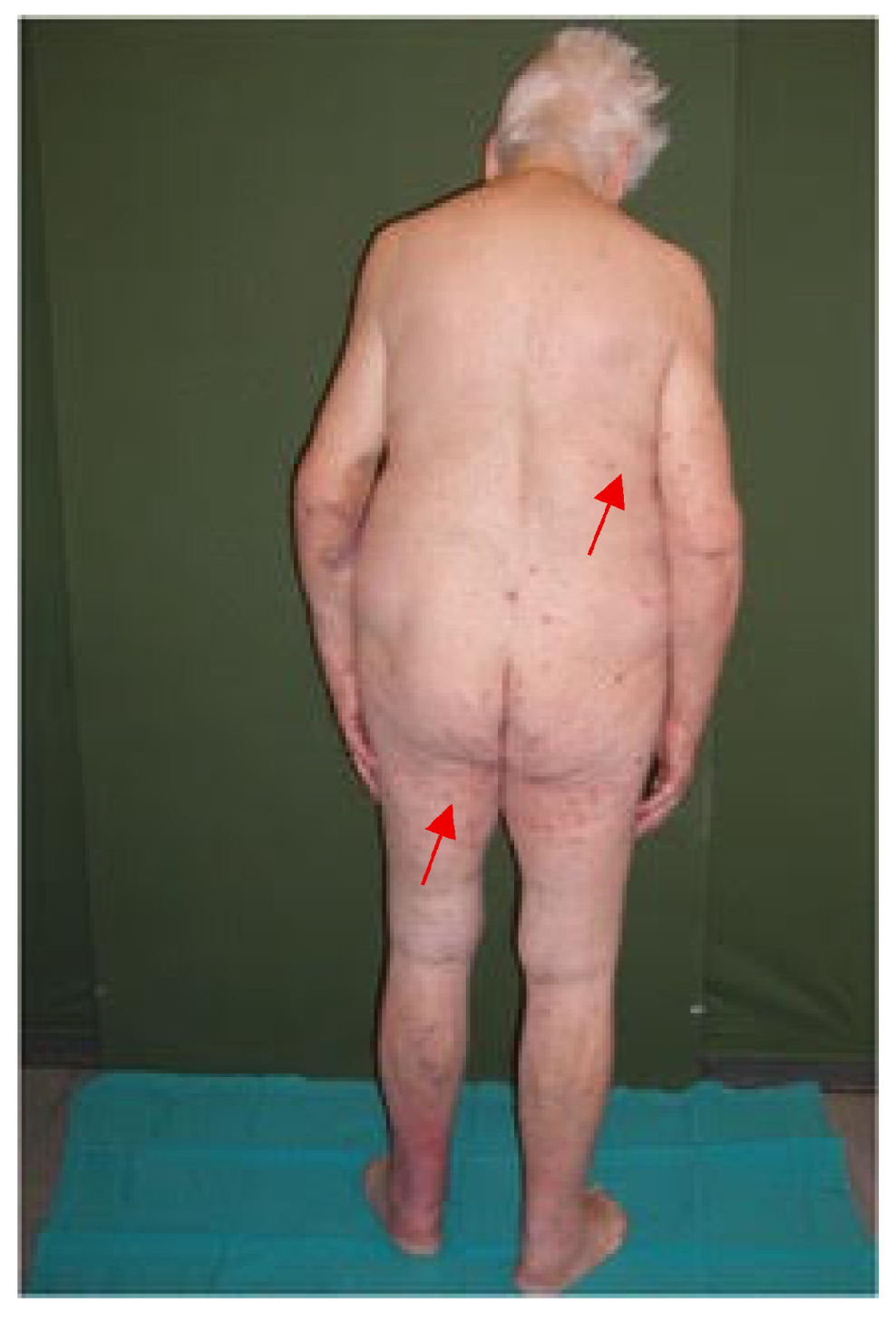
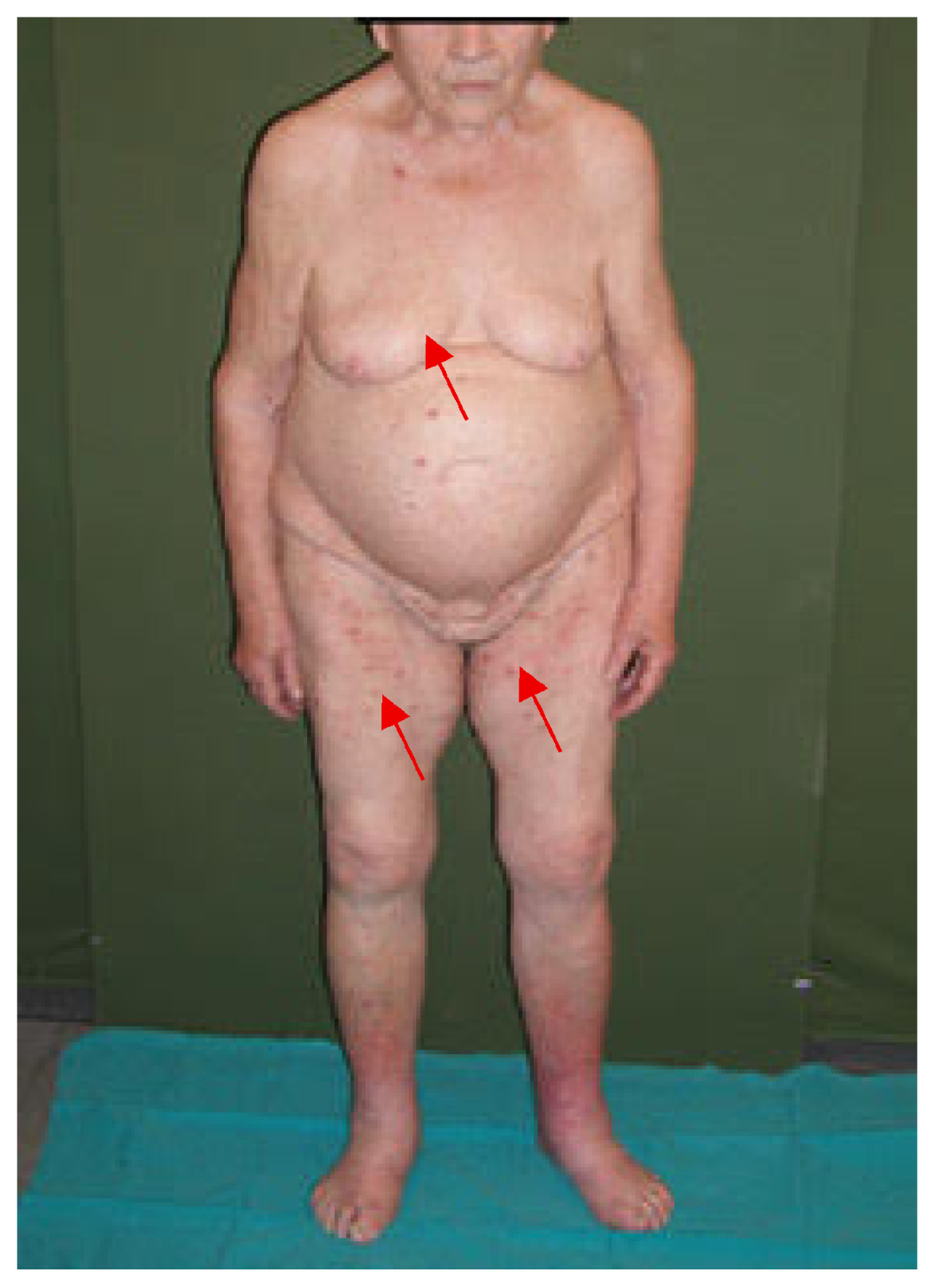
An 80-year-old woman was referred to the Dermatology Department of Cagliari University by her oncologist, with a 2-month history of intermittent episodes of pruritus associated with papular–nodular skin lesions, initially involving the lower limbs and later spreading to the rest of the body (Figure 1 and Figure 2). The patient was also asthenic, and she complained of night sweats and of unintentional weight loss of approximately 3 kg. Pathological anamnesis reported a hysterectomy for uterine fibroma performed about 45 years earlier and a more recent right breast ductal carcinoma, treated 2 years ago with quadrantectomy followed by radiotherapy, for which she was still undergoing oral therapy with Letrozole. The main clinical suspicions for dermatology consulting included drug eruption, cutaneous T cell lymphoma, and paraneoplastic disease. A skin biopsy was scheduled; however, some characteristics of the skin rash needed to be assessed together with routine blood tests, tumor markers, and screening for venereal diseases. The results were all normal except RPR 1:64 and TPHA 1:5120. A more careful anamnesis detected a history of tonsillitis 2 months earlier, which had been treated with oral penicillin and which might have decapitated primary syphilis. Upon direct inquiry into sexual practices, the patient disclosed engaging in oral and anal intercourse, typically at her husband’s request. Subsequently, a few days later, the husband was also evaluated: an 83-year-old man on treatment for benign prostatic hypertrophy with tamsulosin and arterial hypertension with Olmesartan. No skin lesions were present at the moment of observation, but he reported a generalized skin rash occurring about a month earlier and a couple of months of worsening episodes of asthenia, arthralgia, and headache, which he had never suffered before. He had an odontogenic abscess about 4 months earlier, which was treated with amoxicillin. Blood tests were performed with findings of RPR 1:64 and TPHA 1:5120. Targeted sexual history assessment disclosed patient’s engaging with commercial sex workers due to self-described unmet sexual needs within the marriage. These findings clarified the chain of transmission and highlighted the importance of partner evaluation in conjugal STI cases. In both cases, a diagnosis of secondary syphilis was made, and they were treated according to CDC guidelines with Benzathine penicillin G 2.4 million units IM in a single dose, resulting in healing and negative laboratory tests at 6 months, except for the serological scar.

3. Discussion

This case highlights how ageism in clinical practice challenges critical diagnoses, posed by polypharmacy, comorbidities, and age-related physiological changes, potentially delaying geriatric sexual health discussions. Provider discomfort when dealing with direct sexual history inquiry might represent a professional bias that affects patient care. While syphilis resurgence is a well-known condition in young and middle-aged adults [1,2,3,4,5,6,7], the diagnostic suspicion remains disproportionately low when dealing with elderly patients. Sexuality constitutes a fundamental aspect of human well-being [8]. With the increase in life expectancy and general economic welfare, the number of elderly people has also increased at a global level, together with extended social and sexual opportunities [9]. Despite these premises, the diagnosis of sexuality-related pathologies is still a challenge in clinical practice.
To complicate things, syphilis is indeed a great imitator, even more so in the elderly, where symptoms such as fatigue, arthralgia, and loss of appetite are considered part of age-related complaints. A history of tonsillitis in the female patient and odontogenic abscess in her husband, both treated with oral penicillin, might explain the absence of a primary chancre, with direct manifestations of secondary syphilis. Such condition was described as decapitated syphilis in 1947 [10,11]; but it has not been frequently reported since then, which is strange, considering the frequency of the use of antibiotics nowadays, often through self-medication. The same can happen in immunocompromised individuals due to diseases [12] and due to pharmacological immunosuppression [13].
Skin eruptions can be misattributed to medication reactions, and from a geriatric point of view sudden occurrence of cutaneous lymphoma or paraneoplastic disorders is more frequent than sexually related diseases [14,15]. The paradox in geriatric healthcare is more evident if we consider that this octogenarian couple had a privileged access to comprehensive medical care—including regular monitoring by general practitioners, specialists, and oncologists within a well-resourced healthcare system—despite which their sexual health remained a conspicuous omission from their clinical assessments. There is an implicit, yet incorrect, assumption among healthcare providers that older patients are not sexually active or that they are not engaging in behaviors that put them at risk [16,17]. If medical professionals demonstrate hesitancy in addressing sexual health with older adults, patients themselves face even greater barriers to disclosing their sexual history due to generational stigma, perceived irrelevance of sexual concerns at advanced age, and fear of judgment. Consequently, the male partner’s high-risk extramarital encounters with commercial sex workers went undetected and unaddressed by the healthcare team, inadvertently exposing his wife to serious infectious disease transmission. Dermatologists in Italy have a strong venereology training and play a central role in the routine sexual health assessment, regardless of age. It is of fundamental importance, in front of the patient, to set aside any prejudice and overcome any social stigma concerning not only sexuality but also other factors such as the religious beliefs [18,19]. Patients’ approach to marital sexuality may reflect traditional cultural norms. Doctors should also be informed about the sexual trends of the population they deal with [20]. In the presented case the wife’s participation in sexual activities, despite personal disinclination, reflected internalized beliefs about female roles within marriage that prioritized spousal satisfaction over personal autonomy. This psychological framework not only compromised her ability to refuse unwanted sexual contact but also prevented her from questioning or addressing her husband’s extramarital activities, ultimately placing her health at serious risk.
The final interesting consideration regarding different kinds of stigma and discrimination in sexual and reproductive healthcare is provided by the Bohren et al.’s review, concluding that interventions performed to reduce such stigma are few and do not constitute a systematic, standardized, or homogeneous training program integrated into healthcare professionals’ curricula [21]. Given the rising incidence of STIs among older adults and the persistent barriers caused by stigma, it is important to develop targeted interventions aimed at improving healthcare professional’s clinical history-taking ability [22] and at reducing healthcare provider stigma, specifically regarding sexuality in the elderly in order to facilitate earlier diagnosis and timely treatment of STIs in this emerging patient population.

4. Conclusions

In older people, syphilis and all STI diagnoses in general present a complex issue, which might be undervalued due to both clinical factors, including comorbid conditions and age-related changes that obscure symptom presentation, as well as physician discomfort with sexual history-taking in octogenarians, creating a dual barrier to timely recognition. Persistent stigma about elderly sexuality should be faced improving awareness among healthcare providers. Targeted interventions and training are necessary to improve clinician’s ability to identify STIs in older adults, but also to reduce sexual stigma and taboo persistence in the general population.

Author Contributions

G.V. writing—original draft, F.P. clinical contribution, A.M. clinical contribution, L.M. clinical contribution, N.A. clinical contribution, L.A. editing review—editing revision. All authors have read and agreed to the published version of the manuscript.

Funding

This research received no external funding.

Institutional Review Board Statement

Ethical review and approval were not required for this study because it is a retrospective case report and does not involve experimental interventions.

Informed Consent Statement

Written informed consent has been obtained from the patients to publish this paper. It has been granted the use of these images.

Data Availability Statement

The data supporting the findings of this study are available within the article.

Conflicts of Interest

The authors declare no conflicts of interest.

Abbreviation

The following abbreviation is used in this manuscript:
STIssexually transmitted infections

References

  1. World Health Organization. Global Progress Report on HIV, Viral Hepatitis and Sexually Transmitted Infections; WHO: Geneva, Switzerland, 2023. [Google Scholar]
  2. Centers for Disease Control and Prevention. Sexually Transmitted Disease Surveillance 2022; U.S. Department of Health and Human Services: Atlanta, GA, USA, 2023.
  3. Minichiello, V.; Rahman, S.; Hawkes, G.; Pitts, M. STI epidemiology in the global older population: Emerging challenges. Perspect. Public Health 2012, 132, 178–181. [Google Scholar] [CrossRef] [Scilit] [PubMed]
  4. European Centre for Disease Prevention and Control. Monitoring of the Responses to Sexually Transmitted Infection Epidemics in EU/EEA Countries, 2024; ECDC: Stockholm, Sweden, 2025. [Google Scholar]
  5. Htet, K.Z.; Lindrose, A.R.; O’Connell, S.; Marsh, J.; Kissinger, P. The burden of chlamydia, gonorrhea, and syphilis in older adults in the United States: A systematic review. Int. J. STD AIDS 2023, 34, 288–298. [Google Scholar] [CrossRef] [Scilit]
  6. Kumar, B.; Kaushal, I.; Narayanan, B.; Narang, T. Sexually transmitted infections in the elderly: A growing concern in geriatric care. Indian J. Sex. Transm. Dis. AIDS 2025, 46, 16–21. [Google Scholar] [CrossRef] [Scilit]
  7. Cunha, J.A.; Marques Dos Santos, M.; Costa de Lima, K. Acquired syphilis in older people in Brazil from 2010–2020. PLoS ONE 2024, 19, e0296481. [Google Scholar] [CrossRef] [Scilit] [PubMed]
  8. Lee, D.M.; Nazroo, J.; O’Connor, D.B.; Blake, M.; Pendleton, N. Sexual health and well-being among older men and women in England: Findings from the English Longitudinal Study of Ageing. Arch. Sex. Behav. 2016, 45, 133–144. [Google Scholar] [CrossRef] [Scilit] [PubMed]
  9. Grabovac, I.; McDermott, D.T. Sexuality and sexual activity in older age: An age old issue? Lancet Reg. Health West. Pac. 2023, 39, 100831. [Google Scholar] [CrossRef] [Scilit]
  10. Aparicio, A. Tres casos de probable sífilis de-capitada (sin chancro) atribuibles al tratamiento penicilínico de la gonorrea [Three cases of probable de-capitated syphilis (without chancre) attributable to the penicillin treatment of gonorrhea]. Arch. Mex. Venereol. Dermatol. 1947, 6, 59–71. (In Spanish) [Google Scholar] [PubMed]
  11. Talhari, C.; Arriel, K.; Serra, M.S.; Veasey, J.V. Acquired syphilis: Update on clinical, diagnostic and therapeutic aspects⋆. An. Bras. Dermatol. 2025, 100, 407–421. [Google Scholar] [CrossRef] [Scilit] [PubMed] [PubMed Central]
  12. Cillino, S.; Di Pace, F.; Trizzino, M.; Li Vecchi, V.; Di Carlo, P. Chancre of the eyelid as manifestation of primary syphilis, and precocious chorioretinitis and uveitis in an HIV-infected patient: A case report. BMC Infect. Dis. 2012, 12, 226. [Google Scholar] [CrossRef] [Scilit] [PubMed] [PubMed Central]
  13. Pipitò, L.; Ganci, I.; Cicero, A.; Medaglia, A.A.; D’Avenia, S.; Mandalà, E.; Calà, C.; Di Carlo, P.; Cascio, A. A Case of Syphilis with Ocular Involvement: Persistent Negative Serology in a Patient with Multiple Sclerosis. Open Forum Infect. Dis. 2024, 11, ofae563. [Google Scholar] [CrossRef] [Scilit] [PubMed] [PubMed Central]
  14. Lagassy, M.; Lefebvre, A.; Carvalho, P.; Joly, P.; Roca, F.; Pressat Laffouilhere, T.; Grosjean, J.; Tetart, F. Skin-adverse drug reactions in the elderly: An underestimated and avoidable issue. Ann. Dermatol. Venereol. 2025, 152, 103445. [Google Scholar] [CrossRef] [Scilit] [PubMed]
  15. Bach, M.S.; Peña-Robichaux, V. Cutaneous signs of internal malignancy. Curr. Geriatr. Rep. 2024, 13, 173–188. [Google Scholar] [CrossRef] [Scilit]
  16. Syme, M.L.; Cohn, T.J. Examining aging sexual stigma attitudes among adults by gender, age, and generational status. Aging Ment. Health 2016, 20, 36–45. [Google Scholar] [CrossRef] [Scilit] [PubMed]
  17. Cameron, J.; Santos-Iglesias, P. Sexual activity of older adults: A systematic review of the literature. Int. J. Sex. Health 2024, 36, 145–166. [Google Scholar] [CrossRef] [Scilit] [PubMed]
  18. Schmidt, E.K.; Hand, B.N.; Simpson, K.N.; Darragh, A.R. Sexually transmitted infections in privately insured adults with intellectual and developmental disabilities. J. Comp. Eff. Res. 2019, 8, 599–606. [Google Scholar] [CrossRef] [Scilit] [PubMed]
  19. Churchill, S.A.; Appau, S.; Ocloo, J.E. Religion and the risks of sexually transmissible infections: Evidence from Britain. J. Relig. Health 2021, 60, 1613–1629. [Google Scholar] [CrossRef] [Scilit]
  20. Eleuteri, S.; Giorgio, M.; Illiano, L.; Grilli, S.; Nesi, G.; Tafaro, L.; March, M.R. Sexuality in geriatric patients: A correlation between sexual activity and quality of life of elderly men. J. Men’s Health 2025, 21, 34–40. [Google Scholar]
  21. Bohren, M.A.; Vazquez Corona, M.; Odiase, O.J.; Wilson, A.N.; Sudhinaraset, M.; Diamond-Smith, N.; Berryman, J.; Tunçalp, Ö.; Afulani, P.A. Strategies to reduce stigma and discrimination in sexual and reproductive healthcare settings: A mixed-methods systematic review. PLoS Glob. Public Health 2022, 2, e0000582. [Google Scholar] [CrossRef] [Scilit] [PubMed]
  22. Bogaert, E.; Roels, R. Sexual health in patient care: Shortcomings in medical training and experienced barriers in sexual history taking. BMC Med. Educ. 2025, 25, 338. [Google Scholar] [CrossRef] [Scilit] [PubMed] [PubMed Central]
Figure 1. Scattered erythematous papular-nodular lesions on the back of the 80-year-old woman (pre-treatment). Red arrows papular–nodular pattern.
Venereology 05 00013 g001
Figure 2. Same patient’s lesions from the frontal perspective (pre-treatment). Red arrows papular–nodular pattern.
Venereology 05 00013 g002
Disclaimer/Publisher’s Note: The statements, opinions and data contained in all publications are solely those of the individual author(s) and contributor(s) and not of MDPI and/or the editor(s). MDPI and/or the editor(s) disclaim responsibility for any injury to people or property resulting from any ideas, methods, instructions or products referred to in the content.