Article

Demographics and Prevalence of HBV, HCV, and Syphilis Among the Female Sex Workers of Daulatdia, Bangladesh: A Cross-Sectional Study


1
Department of Microbiology, Gono Bishwabidyalay, Dhaka 1344, Bangladesh
2
Gonoshasthaya Samaj Vittik Medical College Hospital, Dhaka 1344, Bangladesh
3
Department of Microbiology, Jahangirnagar University, Dhaka 1342, Bangladesh
4
School of Pharmacy, Brac University, Dhaka 1212, Bangladesh
5
Department of Biochemistry & Molecular Biology, Gono Bishwabidyalay, Dhaka 1344, Bangladesh
*
Author to whom correspondence should be addressed.
Venereology 2026, 5(1), 3; https://doi.org/10.3390/venereology5010003
Submission received: 20 October 2025 / Revised: 11 December 2025 / Accepted: 5 January 2026 / Published: 7 January 2026

Abstract

Background: In Bangladesh, a number of sex workers are involved in commercial sex work in different brothels in both legal and illegal settlements due to reasons such as lack of social support, depression, forced sex, abuse, violence, polyamory, being kidnapped, and unemployment. In this study, we tried to evaluate the demographic characteristics and prevalence of viral and sexually transmitted diseases (STDs) among the study population. Methods: A total of 250 female sex workers were interviewed and tested from the Daulatdia brothel of Rajbari district, Bangladesh, who had been working there for at least 1 month. Through questionnaires, demographic data were collected. Primarily, lateral flow immunoassay (LFIA) tests were used to investigate HCV (Hepatitis C Virus), HBV (Hepatitis B Virus), and Syphilis, which were reconfirmed using enzyme-linked immunosorbent assay (ELISA) in cases of positive results. Results: The mean age was 27.51 ± 6.69 years with a range of 18–50 years. Most of them (n = 243, 97.98%) had elementary knowledge of STDs. We determined that overall, 96 (38.40%) were positive for either of these diseases. Individually, 10 (4.00%), 18 (7.20%), and 68 (27.20%) were positive for HCV, HBV, and syphilis, respectively. Conclusions: Our observation indicates that females of all ages should be strictly protected from forced sex work. Current sex workers should be educated regarding the dangers and protective mechanisms of STDs. In addition, as a public health concern, regular clinical check-ups and STD associated diagnoses are necessary to ensure the safety of FSW from these highly infectious and concerning diseases. Due to their socio-economic condition, proper treatment and rehabilitation are highly recommended.

1. Introduction

Sexually transmitted diseases, commonly known as STDs, remain a significant concern in global health, presenting substantial challenges to healthcare systems, public health organizations, and the scientific community [1]. These public healthcare obstacles include managing the increasing incidence of infections, the emergence of new outbreaks, and the resurgence of previously less frequent sexually transmitted infections (STIs) [2,3]. Additionally, the appearance of newly identified pathogens and resistance to conventional antibiotics and treatment modalities compounds these issues [4,5]. Insufficient resources and training among healthcare personnel, coupled with a lack of awareness, negative attitudes, and ineffective practices regarding prevention and control, further exacerbate the situation [6,7,8]. Moreover, the healthcare burden associated with long-term health complications caused by STDs intensifies the difficulties, thereby complicating the overall healthcare landscape [1].
STDs cause a wide range of health problems, from mild, short-term symptoms like painful urination, unusual discharge, sores or blisters on the genitals, itching, rashes, fever, and abdominal discomfort to long-lasting or chronic health issues [9]. These can lead to serious complications such as pelvic inflammatory disease (PID), infertility, ectopic pregnancies, neurological damage, weakened immune systems, increased risks for certain cancers, higher susceptibility to other STI pathogens like HIV, and various congenital problems in infected mothers, including congenital infections, stillbirths, birth defects, or even fetal death if left untreated [10,11,12]. STDs are caused by a wide range of pathogens, including various bacterial species [13,14]. According to the WHO report, 374 million treatable STD infections were detected among people aged 15–49 in 2020. In 2022, where syphilis alone was responsible for an estimated 8 million cases among adults in this age group, with 1.1 million pregnant women infected, leading to over 390,000 adverse birth outcomes [7]. Although STDs are common in all continents, their rates vary significantly. The highest number of cases is reported in Sub-Saharan Africa and in South and Southeast Asia, while developed regions like Western European countries tend to have lower STD rates [15,16,17].
Numerous factors are directly connected to the transmission and subsequent STIs. Engaging in unprotected sex without condoms, having multiple sexual partners, a history of previous STIs, sharing needles while injecting drugs, and involvement with sex workers all significantly raise the risk of exposure to STI pathogens [7,18,19]. Certain populations face a higher risk of STIs, including adolescents and young adults, especially women, who are more vulnerable due to biological, cultural, and behavioral factors and often encounter barriers to healthcare access [20,21,22]. Female sex workers (FSWs) particularly tend to have higher rates of STDs compared to their male counterparts. This increased vulnerability comes from both biological factors and various socioeconomic issues, e.g., financial dependence, pressure to participate in sex work, a higher likelihood of having multiple partners, and challenges in accessing STD prevention and treatment services [20,23,24,25]. STDs among sex workers vary widely across different continents and even within individual countries [26,27]. Higher prevalence rates are often seen in developing regions, mainly because of limited healthcare access, economic vulnerability, and the complex link between these factors and sex work [28,29]. For instance, some studies show alarmingly high levels of gonorrhea and syphilis in developing nations across Africa and Asia, especially in South Asia, while researches conducted in European countries report much lower rates [30,31].
Bangladesh, a South Asian country struggling with poor healthcare and public health infrastructure, faces challenges from rising trends in STIs, especially among vulnerable groups like FSWs [32]. In Bangladesh, approximately 200,000 women and girls are involved in commercial sex work across urban, semi-urban, and rural regions, either independently or within brothels [33]. Although the overall pooled prevalence of pathogen-specific STDs and STIs in Bangladesh has not yet been reported, several studies examining various types of commercial FSWs in different locations have shown a range of STD frequencies and causative pathogens. For example, a recent study conducted in Dhaka city, Bangladesh, found an overall STI prevalence of 43.6% among FSWs [34]. A significant number of FSWs conduct sex work in various brothels across multiple districts, such as Rajbari, Jashore, Bagerhat, Tangail, Faridpur, Patuakhali, Khulna, Mymensingh, and Jamalpur. Recent mapping and size estimation studies conducted among brothel-based sex workers across 22 districts in 2022 and 2023 recorded a total of 3482 FSWs [35].
A variety of interconnected factors contribute to the transmission and spread of STD pathogens, leading to higher rates among FSWs in Bangladesh. One key reason is the high-risk sexual behaviors linked to this occupation, which often involve transactional sex with other groups at high risk for STDs, such as those with injectable drug addictions [34,36]. Additional factors include a high client turnover, heterosexual intercourse, and overlapping relationships with other intermediary contact populations across different socio-economic levels, as well as poor practices related to STD prevention and sexual health, such as inconsistent condom use [32,37,38]. Other major contributors include adverse socio-economic and cultural conditions, e.g., deep-rooted poverty and limited access to education and healthcare [20,39]. Socio-structural and environmental factors, along with broader social policy issues such as gender inequality, especially in impoverished rural areas, further complicate the situation [34,40]. Coercion and exploitation that lead women into commercial sex work, sex trafficking, and internal migration from rural areas to larger cities like Dhaka also play a significant role [41,42]. The ongoing movement between brothel-based, hotel-based, or street-based sex work, along with the criminalization of sex work, affects the human rights and marginalization of FSWs, forcing them to remain in their occupations [34,43,44]. Limited access to healthcare, including STD diagnosis, treatment, counseling, and regular STI screenings, combined with a lack of knowledge about the causes, transmission, and prevention of STDs, further promotes the spread of infections and results in higher prevalence among FSWs in Bangladesh [34,45,46].
The public health crisis caused by STDs is worsened by a lack of data regarding their prevalence, risk factors, and demographic information among various groups of FSWs in Bangladesh, highlighting a critical need for focused research. Our study seeks to address this gap by assessing the prevalence of syphilis, HBV, and HCV among female sex workers in the Daulatdia brothel, the largest in Bangladesh.

2. Materials and Methods

2.1. Study Population, Sample Size, and Ethical Approval

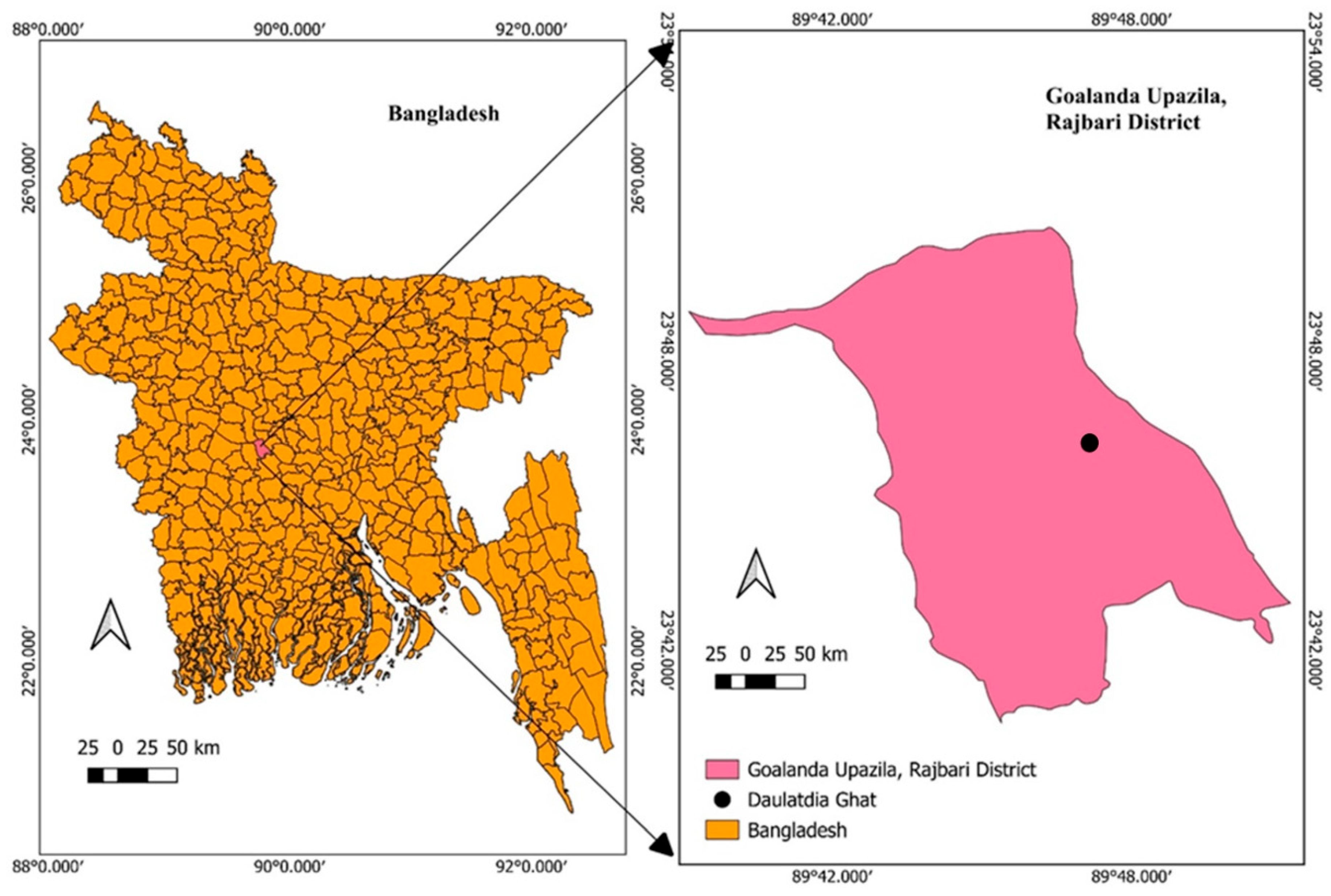
This study was carried out among the FSWs of Daulatdia brothel at Goalondo Upazila of Rajbari district in Bangladesh during May to August 2025 (Figure 1). We were unable to obtain the exact number of total FSWs due to various restrictions; however, the number was approximately a thousand. From different reports, we could know that the number previously varied from 1300 to 2000 individuals [47,48]. Therefore, by calculating the sample size, we determined that with 5% margin of error, a 90% confidence interval (90%CI), and a 50% response distribution, if we consider the number of FSW as 1000, then the sample from 214 individuals would be sufficient. However, for the 95%CI, the number would increase to 278 individuals. For 90%CI, if we suppose the population is 1300 or 2000, the sufficient sample size would be 225 or 239, and for 95%CI, it would be 297 or 323. Therefore, our primary target was to include approximately 300 FSW who have been working there for more than 1 month, with a wide age range and no restriction on age group. We primarily stated the study plan to the area through the leader of the FSW. However, among those present FSWs (n = ~1000), 250 agreed to the interview and blood test, with an age range of 18 to 50 years, who were living and working there for at least one month or more. The rest of the FSW did not give us consent to interview them. As there were some new FSW who started working less than 1 month, regarding this issue, we suppose our sample size (n = 250) is sufficient for this study. The ethical approval for this study was obtained from the Center for Multidisciplinary Research, Gono Bishwabidyalay, Dhaka (Registration ID: CMR/EC/024).

2.2. Data Collection Through Questionnaire

Different information, including age, marital status, education, knowledge of STD/STI, working schedule, duration as a sex worker, usage of barrier protection, usage of syringe, types of clients, clients per day, was collected through face-to-face interviews using a structured questionnaire (Supplementary File). To make them understand, questions and options were translated in detail. Regarding the knowledge of STD/STI, if participants could answer a minimum of 30% of the total questions related to STD/STI, we regarded them to have a moderate level of knowledge of STD/STI, and if they answered below 30% we regarded them to have a very limited level of knowledge regarding STD/STI. If they could not answer any of the questions, they were regarded as having no knowledge about STD/STIs at all.

2.3. Sample Collection and Test

Initially, for each participant’s point of care (POC) testing was arranged. For that purpose, only 2–3 µL of blood was required, which was collected using a finger-prick method using a sterile needle. After observing the primary test result, for the positive cases, enzyme-linked immunosorbent assay (ELISA) was applied for further confirmation of each disease (i.e., HCV, HBV, and Syphilis). For the ELISA test, blood samples (2–3 mL) of the positive POC test participants were recollected using standard venipuncture technique, followed by the separation of serum using centrifugation. All the testing kits and reagents for POC and ELISA tests for HCV (HCVC0100 and BXE0781A), HBV (HBSWB100 and BXE0741A), and syphilis (TPS00100 and BXE0995A), respectively, were sourced from Biorex Diagnostics Limited, Antrim, UK, with a relative test accuracy ranging from 98.9% to 99.8%.

2.4. Statistical Analysis

The statistical analysis was done using Microsoft Excel 2010, RStudio software (version 4.3.0), and the “metafor” package (version 4.2-0) of R and RevMan (version 5.4). The sample size variations were analyzed using the sample size calculator, Raosoft 2004 Inc., Seattle, WA, USA (http://www.raosoft.com/samplesize.html) (accessed on 1 May 2025).

3. Results

3.1. Participants’ Characteristics

Participants’ demographics and characteristics revealed that the age range of the overall participants (n = 250) was 18–50 years, with a mean ± standard deviation (SD) of 27.51 ± 6.69 years. While categorized in four different age groups, the highest number of participants (n = 179, 71.60%) was found in 21–30 years of age group, followed by 31–40 years (n = 43, 17.2%) and <20 years (n = 19, 7.6%) of age group, whereas the 41–50 group had the lowest number of participants (n = 9, 3.6%). Different marital status was observed, including married (36.40%), unmarried (28.80%), and divorced (34.80%). More than half (53.60%) of them did not have any academic background, whereas 42% of them had an educational background of primary level. Interestingly, nine (3.6%) of them completed SSC, and two (0.8%) completed the HSC level.
Regarding the occupational information, 97.2% were assessed to have at least a minimum to moderate level of knowledge (answered >20% questions) about STDs or STIs. Most of them (94.8%) were full-time workers, and almost half (45.6%) of the total participants were working there for more than 5 years. 92.4% of the participants claimed that they use barriers as protection during intimacy. However, most of them (76.80%) used syringes mainly for the use of different sex deriving drugs.
Regarding clients, most of them are new (68.8%) as compared to regular ones (31.20%). Again, most of the participants (53.2%) need to take care of 3–4 clients per day, whereas some (5.6%) need to handle more than 5 clients per day (Table 1).

3.2. Prevalence of Diseases

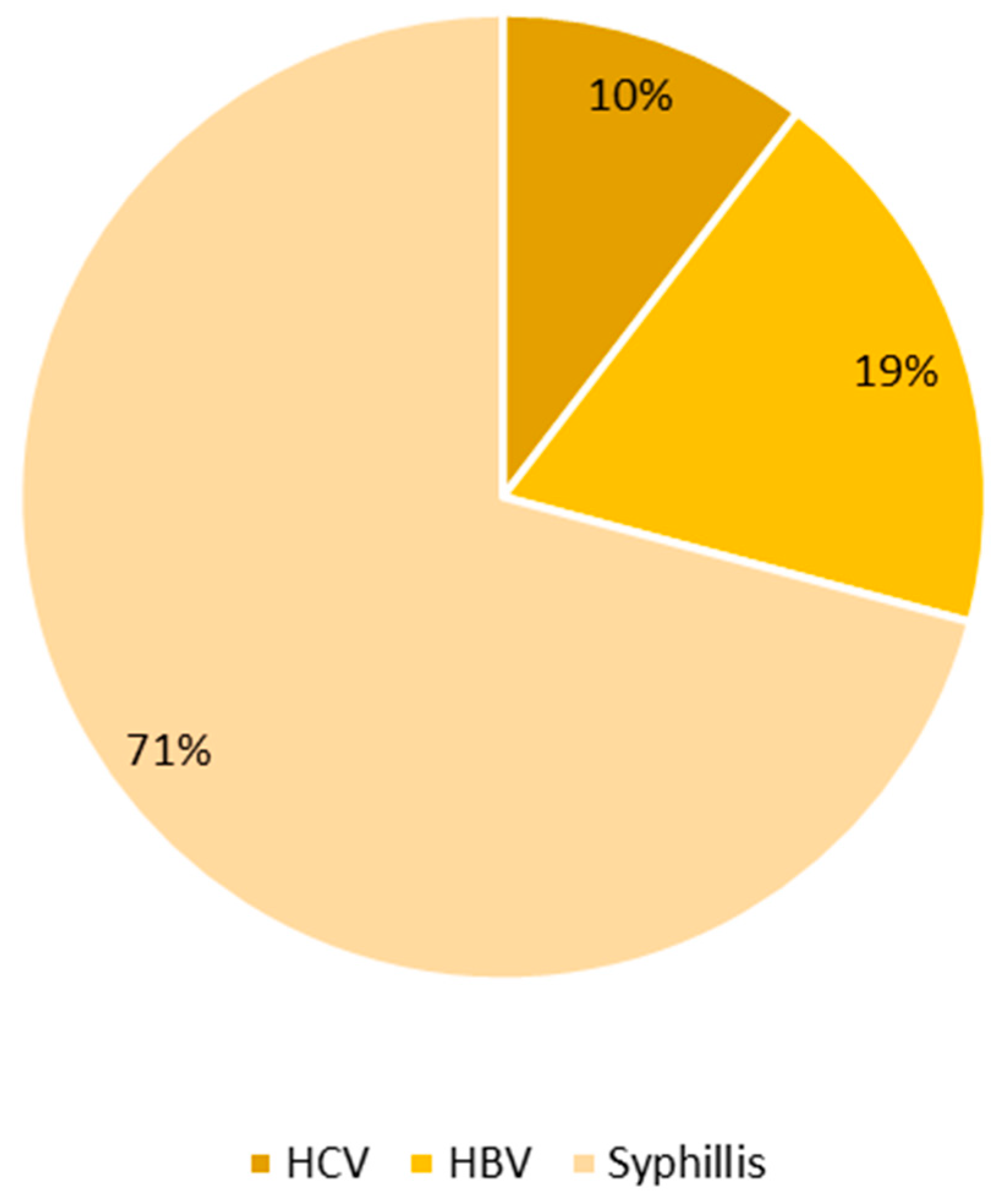
Assessing the overall study participants regarding HCV, HBV, and syphilis, the overall disease prevalence was determined as 38.4% (95%CI: 32.3–44.7) (n = 96). Separately, HCV, HBV, and syphilis were detected in 10 (4%, 95%CI: 1.9–7.2), 18 (7.2%, 95%CI: 4.3–11.1), and 68 (27.2%, 95%CI: 21.8–33.2) participants. Interestingly, no participant was detected to have had more than one infection or disease (Table 2, Figure 2). Additionally, no negative test result was obtained in ELISA after the sample was initially tested as positive in the LFIA, further confirming the high accuracy of the LFIA test. Other than LFIA and ELISA, no polymerase chain reaction (PCR) test was done to identify the DNA or RNA of the pathogens; therefore, it was not possible to identify whether they were currently (i.e., active infection) or previously infected.

3.3. Age Group-Based Disease Prevalence

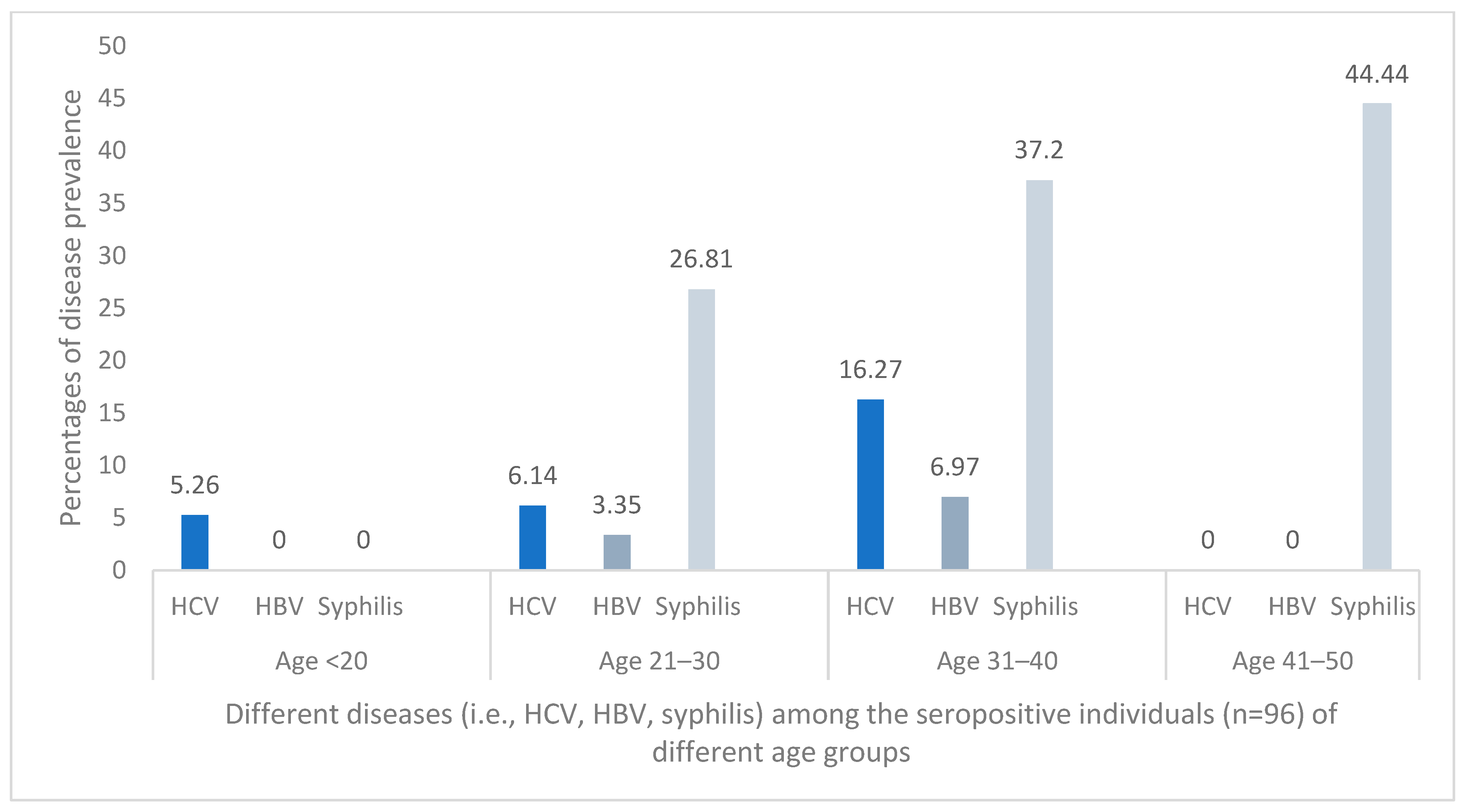
Comparing the disease prevalence based on different age groups (i.e., <20 years old, 21–30 years old, 31–40 years old, 41–50 years old) of study participants. Interestingly, the rate of infection was found to be increasing with increasing age, considering the age groups. Besides, all three sexually transmitted diseases, i.e., syphilis, HBV, and HCV, were prevalent among FSWs aged 21 to 30 and 31 to 40 years, whereas, the variation in prevalence through odds ratio analysis (OR) between age group 21–30 and age group 31–40 was found to be significant for both HBV (p < 0.02, OR: 0.29; 95%CI: 0.10–0.81) and syphilis (p < 0.03, OR: 0.40; 95%CI: 0.17–0.93). HCV, HBV, and syphilis were detected in the age groups of 21–30 years, as 6.14%, 3.35% and 26.81% and 31–40 years, as 16.27%, 6.97% and 37.2% respectively. However, only HCV was found in the <20 years group with a prevalence of 5.26% and only syphilis was detected in the 41–50 years group with a prevalence rate of 44.44% (Figure 3).

3.4. Association of Usage of Syringe and Protection Barrier with Infection Prevalence

We assessed the association between the use of the syringe and the protection barrier among FSW with the infection rate. As a result, initially we found that the OR between the usage of syringes and overall infection (OR: 5.31; 95%CI: 3.60–7.83; p < 0.00001), HCV infection (OR: 79.45; 95%CI: 39.55–159.58; p < 0.00001), and HBV infection (OR: 42.67; 95%CI: 24.31–74.87; p < 0.00001) were respectively significant. Again, we determined that the OR between the usage of protection barriers and overall infection (OR: 19.50; 95%CI: 11.45–33.22; p < 0.00001), HCV infection (OR: 291.79; 95%CI: 132.86–640.84; p < 0.00001), HBV infection (OR: 156.70; 95%CI: 80.19–306.21; p < 0.00001), and syphilis infection (OR: 32.54; 95%CI: 18.88–56.09; p < 0.00001) was also significant, respectively.

4. Discussion

The transmission of STIs among FSWs in Bangladesh, alongside the rising prevalence of specific STDs, may constitute a significant public health crisis. This situation underscores the urgent need for targeted prevention measures, further research, and heightened attention from the scientific community, healthcare providers, and public health sectors [49]. However, a considerable lack of data on this issue presents challenges in accurately assessing the current healthcare crisis and designing effective STD management strategies to mitigate transmission rates and address the upward prevalence of these infections. Reduced social acceptances, the criminalization of sex work, and the quasi-legal status of commercial sex further exacerbate the crisis, complicating efforts to locate FSWs and conduct necessary research within their communities [50]. Existing studies have largely categorized FSWs into types such as residence-based, street-based, or brothel-based and focused primarily on the prevalence rates of specific major pathogens responsible for STDs, including bacterial agents associated with syphilis and gonorrhea, and viral agents such as HIV. Consequently, significant gaps remain in the data concerning other sexually transmitted viruses, including viruses such as HBV, HCV, HPV, and cytomegalovirus. Furthermore, most published research in this domain has been conducted several years prior, which hampers the accurate representation of the current prevalence and epidemiological status of FSWs in Bangladesh [49,51,52,53]. The present study was meticulously designed and conducted to narrow the knowledge gap regarding the current prevalence rates, associated risk factors, and epidemiological status of three major STDs, e.g., as syphilis, HBV, and HCV, among the diverse population of FSWs engaged in commercial sex work at Daulatdia brothel, the largest brothel in the country, located in the Rajbari district near Dhaka (Figure 1).
Our study, which encompassed 250 FSWs, revealed a concerningly high prevalence of syphilis, with 27.2% (68/250) of the participants testing positive in both primary and confirmatory assays (Table 2). Prior studies conducted in Bangladesh have reported similarly high prevalence rates of syphilis among various FSW populations. For instance, Sarkar et al. (1997) documented a syphilis positivity rate of 57.1% among 296 brothel-based FSWs [54]. Conversely, a cross-sectional study conducted between 2002 and 2003 across four randomly selected brothels in Jessore, Patuakhali, and Faridpur districts reported a significantly lower prevalence of syphilis at 6.6% (29/439) [51]. Despite the discrepancies in these findings, the upward trend in syphilis prevalence among brothel-based FSWs is consistently evident, as illustrated by the results of our current study.
Moreover, various studies targeting different categories of FSWs, such as street-based workers in multiple urban settings in Bangladesh, have also reported alarming prevalence rates of syphilis. For example, a 1999 etiology study involving 269 street-based FSWs in Dhaka indicated that 32.6% (66/202) were syphilis-positive [52]. Similarly, Mondal et al. reported a 17.3% (26/150) prevalence among 150 street-based FSWs in Rajshahi city, and a more recent investigation by Kawser et al. found a 38.2% (189/492) positivity rate among 495 FSWs in Dhaka [34,53]. These findings align with studies conducted on FSW populations in India, which exhibit comparable socioeconomic and sociocultural conditions, as well as shared issues related to low social self-esteem, marginalization, sex trafficking, and criminalization. Research by Reza-Paul et al. in Mysore reported a syphilis prevalence of 24.7% (97/393), while a cohort study by Ghosh et al. in West Bengal found a prevalence of 37.1% (12/35) among human papillomavirus-positive FSWs [55,56]. Other studies have reported similarly high rates of syphilis among FSWs in different regions of India, such as Boily et al. (24.9%), Medhi et al. (15.3%), and Mainkar et al. (15.8%) in their studies conducted in Mysore, Nagaland, and Maharashtra [57,58,59]. Additionally, syphilis prevalence remains a significant concern among FSWs in other Asian countries, including Pakistan, Japan, China, Indonesia (RPR), and Thailand, as evidenced by various studies conducted in these regions [60,61,62,63,64].
Syphilis among FSWs in these studies was mainly diagnosed using a dual-screening method, which included a non-treponemal test like the rapid plasma reagin (RPR) test for initial screening and the Treponema pallidum hemagglutination assay (TPHA), a treponemal test that detects antibodies against Treponema pallidum for confirmation [51,52,55,58]. Some studies used the venereal disease research laboratory (VDRL) test as the primary non-treponemal test instead of RPR [54,56]. Rapid POC tests with different kits, such as the Wantai anti-TP antibody rapid test and the Abbott Bioline HIV/syphilis Duo test kit, were utilized by Shah and Tao et al., respectively, to detect syphilis among FSWs [60,62].
Several factors likely contribute to the elevated prevalence of syphilis among the current population of brothel-based FSWs. High-risk sexual practices, particularly the inconsistent use of protective barriers, are identified as major contributors to the transmission and subsequent infection of syphilis [65,66]. Notably, 19 participants (7.6%) reported inconsistent condom use during sexual encounters. While the majority of the study population claimed to utilize barriers consistently, difficulties in negotiating condom use often arise due to their limited ability to advocate for safer sexual practices assertively (Table 1) [67,68]. In the context of consistent condom usage, FSWs remain at a heightened risk of syphilis transmission, primarily through pathways such as kissing and direct contact with syphilitic lesions present on the skin or mucous membranes of infected clients, as well as via blood exposure, particularly through needle sharing during intravenous drug use [69]. However, analyzing the OR between the usage of barrier and infections, including overall infection and individual infections, including HCV, HBV, and syphilis, respectively, we determined a significant variation between them. This indicates an inverse association between the usage of a protective barrier and the chances of infection. Our study revealed that 76.8% of the participants reported utilizing syringes for drug administration, which is likely a significant contributor to the transmission of syphilis. Furthermore, a considerable proportion of the participants engaged in full-time sex work for extended durations, with 37.6% working between 1 and 5 years and 45.6% for more than 5 years (Table 1). This prolonged engagement, coupled with high client turnover, exacerbates their risk of syphilis infection, leading to a notable prevalence within this population. The increased risk of exposure is attributed to the nature of full-time sexual engagements with numerous clients daily over extended periods, all of which potentially elevate the likelihood of transmission and resultant high prevalence rates of syphilis among the studied population [66,70].
Additionally, the prevalence of Hepatitis B Virus (HBV) and Hepatitis C Virus (HCV) was assessed within this population, revealing an infection rate of 7.2% for HBV and 4% for HCV among the FSWs. Both HBV and HCV can be sexually transmitted and represent significant public health concerns regarding the prevalence of sexually transmitted diseases (STDs) in sex work populations, particularly among FSWs (Table 2) [71]. The limited availability of data regarding the prevalence of HBV and HCV among FSWs, especially those operating within brothel settings, hampers comparative analyses of our findings and the determination of trends in prevalence rates. However, a cross-sectional study conducted in 2015 among FSWs in Dhaka City reported a prevalence of 3.6% for HBV positivity. Although this previous study focused on FSWs outside of brothels, it suggests a potential upward trend in HBV prevalence among FSWs in Bangladesh [34].
Comparative studies from various Asian and non-Asian countries indicate prevalence rates of HBV and HCV consistent with our findings. For instance, a study involving 497 STD patients at a clinic in Pune, India, in 1996 showed that 3.6% of participants tested positive for HBsAg [72]. Recent findings by Praseeda et al. in a red-light area of Mumbai between 2007 and 2008 reported an increase, with 7.6% (19/250) of FSWs testing positive for HBV and 2.8% (7/250) for HCV, suggesting an upward trend in these infections [73]. In China, a meta-analysis conducted by Su et al. reported an HBV prevalence of 10.71% (95% CI: 7.30–15.48) and an HCV prevalence of 0.96% (95% CI: 0.73–1.25) among FSWs [74]. Additionally, high prevalence rates of HBV have been observed in several non-Asian countries, such as 17.1% (123/720) in Nigeria, 18.2% (63/348) in Burkina Faso, and 23.6% (106/449) in Brazil, indicating that the prevalence of HBV among FSWs in Bangladesh remains relatively lower [75,76,77]. These studies used ELISA methods to detect HBV and HCV among the participants [72,73,75,76].
Potential explanations for the observed increase in HBV transmission among our study participants include unprotected sexual activities, inconsistent condom usage, early initiation of sexual activity, prolonged working hours, and engagement with multiple new clients [75,78,79]. Conversely, factors contributing to HCV transmission among participants may include unprotected sexual practices that risk breaking the skin or blood exposure, such as anal intercourse or instances involving genital sores [80,81,82]. The significant prevalence of HBV and HCV among our study population may largely be attributed to syringe use for drug administration, as 76.8% of subjects reported such practices (Table 1). This is particularly concerning given the established link between injecting drug use, often involving shared needles and syringes, and the infection rates of HBV and HCV [82,83,84]. However, statistically, we found significant differences between the number of participants who used a syringe and the infection rates, including overall infection or individual infections (i.e., HCV, HBV, or syphilis), which indicates that, plausibly, most of them administered unused or new syringes during the usage of drugs other than a few. This also further verifies the higher prevalence of knowledge of STDs/STIs among the included FSW of this study.
Additional factors, including marital status and levels of educational attainment, are likely to play critical roles in enhancing transmission rates, leading to higher prevalence rates of STDs. A notable segment of the study population was identified as unmarried (28.8%) or separated (34.8%), which could increase vulnerability to STIs due to engagement in sexual risk-taking behaviors, inconsistent use of barrier methods, and the negative social issues surrounding sex work (Table 1) [26,85]. Moreover, 53.6% of the participants reported having no formal education, while 42% had only completed primary education. The lack of formal education likely contributes to limited knowledge regarding STIs, their transmission, and preventive measures, thereby presenting barriers to accessing comprehensive sexual health resources [86,87]. Although 97.2% of the study population claimed awareness of STDs or STIs, the interplay of educational deficits and associated factors likely adds to the remaining vulnerability of the individuals to STIs (Table 1).
Again, the current study examined age-related variations in the prevalence of syphilis, HBV, and HCV among participants by categorizing the population into four distinct age groups (Figure 3). This subgroup analysis elucidates the age-related trends influencing the prevalence of these infections within the study population. This age-related subgroup analysis indicates a notable absence of syphilis and HBV among FSWs under the age of 20. This absence may be attributed to the relatively short duration of involvement in commercial sex, which likely correlates with reduced exposure risks to STIs. Conversely, all three sexually transmitted diseases, i.e., syphilis, HBV, and HCV, were prevalent among FSWs aged 21 to 30 and 31 to 40 years. Besides, the variation in prevalence through OR analysis between these two age groups (i.e., age group 21–30 and age group 31–40) was found to be significant for both HBV (p < 0.02, OR: 0.29; 95%CI: 0.10–0.81) and syphilis (p < 0.03, OR: 0.40; 95%CI: 0.17–0.93). The increased demand for younger FSWs among clients may lead to heightened client turnover and potentially multiple sexual engagements per day, thereby escalating the risk of STI exposure, which is responsible for the observed prevalence in these age groups [34,88,89]. Another possible reason for the high prevalence of HBV among FSWs aged 20 years or older might be neonatal HBV infection caused by vertical transmission or childhood exposure, since HBV vaccination programs in Bangladesh were initiated in a phased manner in 2003, with nationwide rollout completed by 2005. However, the inclusion of the HBV birth dose in the childhood vaccination schedule was not feasible due to logistical challenges, particularly the high incidence of home births [90]. In contrast, elderly participants aged 41 to 50 years demonstrate an elevated prevalence of Syphilis (44.44%) (Figure 3). These actions may lead to compromised mucosal integrity within the genitourinary tract and increased blood exposure, exacerbated by socioeconomic vulnerabilities and limited client availability [91,92].
To effectively mitigate the incidence of STDs among brothel-based FSWs in Bangladesh, a comprehensive and multifaceted intervention strategy is imperative. This strategy should prioritize promoting consistent and correct use of protective barriers, alongside distributing free or subsidized condoms. Behavioral interventions, coupled with risk reduction counseling, are also essential components of this approach. Furthermore, enhancing healthcare services is critical; this can be achieved by providing regular, free, or subsidized STD screening at healthcare clinics, ensuring timely diagnosis and treatment with appropriate antibiotics to manage infections early and effectively curb transmission rates. In addition, robust immunization initiatives, particularly those focused on HBV vaccination, must be prioritized, as vaccination is highly effective in preventing HBV infection. It is equally important to establish training programs to enhance FSWs’ knowledge of STIs and preventive practices, including maintaining good hygiene and avoiding needle sharing, which is critical given the absence of an HCV vaccine. Moreover, it is essential to develop and enforce policy and legislative measures that address the underlying structural determinants contributing to the spread of STDs, as well as criminalization, social dishonor, and social marginalization of FSWs, particularly within the brothel-based context in Bangladesh.

5. Limitations of the Study

We could not include more FSW in our study, and could not measure the other crucial diseases, including HIV, among the participants. We could not do a longitudinal analysis with a higher number of participants and a more appropriate methodological approach towards cross-sectional survey design. Again, we could not assess the viral DNA or RNA through PCR test, besides POC (LFIA), and ELISA tests, as the LFIA may have lower accuracy as compared to the molecular tests. Furthermore, this single-centered brothel-based study may limit generalizability, which we acknowledge as a limitation as well.

6. Conclusions

A multifaceted approach involving the encouragement of the regular use of protective barriers, offering counseling focused on behavior and risk reduction, and providing training to improve knowledge and prevention of STIs is necessary to reduce the STDs among FSW in Bangladesh. Furthermore, challenges remain, such as stopping criminalization and marginalization, starting meaningful policy reforms, and ensuring a strong healthcare system that offers accessible diagnostic, treatment, and rehabilitation services.

Supplementary Materials

The following supporting information can be downloaded at https://www.mdpi.com/article/10.3390/venereology5010003/s1. Supplementary File: Survey Questionnaire.

Author Contributions

Conceptualization, R.B. and S.S.K.; methodology, S.S.K., R.B., M.A.H., and M.Z.A.; software, M.A.H., M.Z.A., and S.S.K.; validation, R.B. and S.S.K.; formal analysis, S.S.K., M.A.H. and M.Z.A.; investigation, S.S.K., M.A.H., and M.Z.A.; resources, M.A.H., M.Z.A., and A.R.; data curation, M.A.H., M.Z.A., A.R., and I.K.; writing—original draft preparation, D.Z.I., M.A.H., M.Z.A., A.R., and I.K.; writing—review and editing, D.Z.I. and S.S.K.; visualization, A.R., I.K., and S.S.K.; supervision, S.S.K.; project administration, R.B. and S.S.K.; All authors have read and agreed to the published version of the manuscript.

Funding

This research received no external funding.

Institutional Review Board Statement

The study was conducted in accordance with the Declaration of Helsinki, and the protocol was approved by the Ethics Committee of the Center for Multidisciplinary Research of Gono Bishwabidyalay (CMR/EC/024) on 1 April 2025.

Informed Consent Statement

Informed consent was obtained from all subjects involved in the study.

Data Availability Statement

The original contributions presented in this study are included in the article. Further inquiries can be directed to the corresponding author.

Conflicts of Interest

The authors declare no conflicts of interest.

References

  1. Elendu, C.; Amaechi, D.C.; Elendu, I.D.; Elendu, T.C.; Amaechi, E.C.; Usoro, E.U.; Chima-Ogbuiyi, N.L.; Agbor, D.B.A.; Onwuegbule, C.J.; Afolayan, E.F. Global perspectives on the burden of sexually transmitted diseases: A narrative review. Medicine 2024, 103, e38199. [Google Scholar] [CrossRef]
  2. Balaji, S.; Bhargava, A.; Aggarwal, S. Emerging and re-emerging sexually transmitted diseases: A review of epidemiological evidences. Indian J. Sex. Transm. Dis. AIDS 2022, 43, 20–26. [Google Scholar] [PubMed]
  3. World Health Organization. New Report Flags Major Increase in Sexually Transmitted Infections, Amidst Challenges in Hiv and Hepatitis; World Health Organization: Geneva, Switzerland, 2024. [Google Scholar]
  4. Krupp, K.; Madhivanan, P. Antibiotic resistance in prevalent bacterial and protozoan sexually transmitted infections. Indian J. Sex. Transm. Dis. AIDS 2015, 36, 3–8. [Google Scholar] [CrossRef]
  5. Unemo, M.; Bradshaw, C.S.; Hocking, J.S.; de Vries, H.J.; Francis, S.C.; Mabey, D.; Marrazzo, J.M.; Sonder, G.J.; Schwebke, J.R.; Hoornenborg, E. Sexually transmitted infections: Challenges ahead. Lancet Infect. Dis. 2017, 17, e235–e279. [Google Scholar] [CrossRef]
  6. Madamanchi, D.; Gangurde, S.; Rathod, H.; Ray, S.; Nagar, A.; BS, A.; Nair, G.R.; Vajjala, S.M.; Shivale, S.; Chauhan, S. The Plight of Healthcare Providers in Managing and Preventing Sexually Transmitted Infections (STIs)/Reproductive Tract Infections (RTIs): A Qualitative Study. Cureus 2024, 16, e66162. [Google Scholar] [CrossRef] [PubMed]
  7. Malla, N. Sexually Transmitted Infections; BoD–Books on Demand: Hamburg, Germany, 2012. [Google Scholar]
  8. Chesang, K.; Hornston, S.; Muhenje, O.; Saliku, T.; Mirjahangir, J.; Viitanen, A.; Musyoki, H.; Awuor, C.; Githuka, G.; Bock, N. Healthcare provider perspectives on managing sexually transmitted infections in HIV care settings in Kenya: A qualitative thematic analysis. PLoS Med. 2017, 14, e1002480. [Google Scholar]
  9. Wihlfahrt, K.; Günther, V.; Mendling, W.; Westermann, A.; Willer, D.; Gitas, G.; Ruchay, Z.; Maass, N.; Allahqoli, L.; Alkatout, I. Sexually transmitted diseases—An update and overview of current research. Diagnostics 2023, 13, 1656. [Google Scholar] [CrossRef]
  10. Aral, S.O. Sexually transmitted diseases: Magnitude, determinants and consequences. Int. J. STD AIDS 2001, 12, 211–215. [Google Scholar] [CrossRef]
  11. Hufstetler, K.; Llata, E.; Miele, K.; Quilter, L.A. Clinical updates in sexually transmitted infections, 2024. J. Women’s Health 2024, 33, 827–837. [Google Scholar]
  12. Singhal, P.; Naswa, S.; Marfatia, Y. Pregnancy and sexually transmitted viral infections. Indian J. Sex. Transm. Dis. AIDS 2009, 30, 71–78. [Google Scholar] [CrossRef]
  13. Igietseme, J.U.; Omosun, Y.; Black, C.M. Bacterial sexually transmitted infections (STIs): A clinical overview. Mol. Med. Microbiol. 2015, 3, 1403–1420. [Google Scholar]
  14. Buder, S.; Schöfer, H.; Meyer, T.; Bremer, V.; Kohl, P.K.; Skaletz-Rorowski, A.; Brockmeyer, N. Bacterial sexually transmitted infections. J. Der Dtsch. Dermatol. Ges. 2019, 17, 287–315. [Google Scholar]
  15. Newman, L.; Rowley, J.; Vander Hoorn, S.; Wijesooriya, N.S.; Unemo, M.; Low, N.; Stevens, G.; Gottlieb, S.; Kiarie, J.; Temmerman, M. Global estimates of the prevalence and incidence of four curable sexually transmitted infections in 2012 based on systematic review and global reporting. PLoS ONE 2015, 10, e0143304. [Google Scholar]
  16. Da Ros, C.T.; da Silva Schmitt, C. Global epidemiology of sexually transmitted diseases. Asian J. Androl. 2008, 10, 110–114. [Google Scholar] [CrossRef]
  17. Mitjà, O.; Padovese, V.; Folch, C.; Rossoni, I.; Marks, M.; i Arias, M.A.R.; Telenti, A.; Ciuffi, A.; Blondeel, K.; Mårdh, O. Epidemiology and determinants of reemerging bacterial sexually transmitted infections (STIs) and emerging STIs in Europe. Lancet Reg. Health–Eur. 2023, 34, 100742. [Google Scholar] [PubMed]
  18. Haider, M.R.; Kingori, C.; Brown, M.J.; Battle-Fisher, M.; Chertok, I.A. Illicit drug use and sexually transmitted infections among young adults in the US: Evidence from a nationally representative survey. Int. J. STD AIDS 2020, 31, 1238–1246. [Google Scholar] [CrossRef] [PubMed]
  19. Sathiyasusuman, A. Associated risk factors of STIs and multiple sexual relationships among youths in Malawi. PLoS ONE 2015, 10, e0134286. [Google Scholar]
  20. Eng, T.R.; Butler, W.T. Factors that contribute to the hidden epidemic. In the Hidden Epidemic: Confronting Sexually Transmitted Diseases; National Academies Press (US): Washington, DC, USA, 1997. [Google Scholar]
  21. National Academies of Sciences, Engineering, and Medicine. Sexually Transmitted Infections: Adopting a Sexual Health Paradigm; The National Academies Press: Washington, DC, USA, 2021. [Google Scholar]
  22. Paul, S.; Sharma, A.; Dayal, R.; Mehta, M.; Maitra, S.; Seth, K.; Nagrath, M.; Ramesh, S.; Saggurti, N. Vulnerability to Sexually Transmitted Infections (STI)/Human Immunodeficiency Virus (HIV) among adolescent girls and young women in India: A rapid review. PLoS ONE 2024, 19, e0298038. [Google Scholar]
  23. Aral, S.O.; Hawkes, S.; Biddlecom, A.; Padian, N. Disproportionate impact of sexually transmitted diseases on women. Emerg. Infect. Dis. 2004, 10, 2029. [Google Scholar] [CrossRef]
  24. Diabaté, S.; Chamberland, A.; Geraldo, N.; Tremblay, C.; Alary, M. Gonorrhea, Chlamydia and HIV incidence among female sex workers in Cotonou, Benin: A longitudinal study. PLoS ONE 2018, 13, e0197251. [Google Scholar]
  25. Scorgie, F.; Chersich, M.F.; Ntaganira, I.; Gerbase, A.; Lule, F.; Lo, Y.-R. Socio-demographic characteristics and behavioral risk factors of female sex workers in sub-saharan Africa: A systematic review. AIDS Behav. 2012, 16, 920–933. [Google Scholar]
  26. Anteneh, Z.A.; Agumas, Y.A.; Tarekegn, M. Sexually transmitted diseases among female commercial sex workers in Finote Selam town, northwest Ethiopia: A community-based cross-sectional study. HIV/AIDS-Res. Palliat. Care 2017, 9, 43–49. [Google Scholar] [CrossRef]
  27. UNAIDS. HIV and Sexually Transmitted Infection Prevention Among Sex Workers in Eastern Europe and Central Asia; World Health Organization: Geneva, Switzerland, 2006. [Google Scholar]
  28. Yamani, L.N.; Astutik, E.; Qurniyawati, E.; Lusida, M.I.; Getaneh, Y.; Kelly, M. Associations between socio-demographics, sexual knowledge and behaviour and sexually transmitted infections among reproductive-age women in Southeast Asia: Demographic Health Survey results. BMC Public Health 2025, 25, 738. [Google Scholar]
  29. Williams, A.J.; Ali, T.S.P.; Griffith, I.D.; Jeremie, S.T.; Mahabir, S.; Sudan, C.A.; Stüven, K.C.; Ivey, M.A. Prevalence and risk factors associated with sexually transmitted infections among adults attending an STI clinic in a small island developing state. BMC Infect. Dis. 2025, 25, 923. [Google Scholar] [CrossRef]
  30. Huang, Y.; Yan, R.-L.; Ye, Y.-F.; Li, L.-M.; Deng, B.-Q.; Zhou, Z. Global, regional, and national burden and trends of syphilis among women of childbearing age from 1990 to 2021. Front. Public Health 2025, 13, 1580964. [Google Scholar]
  31. Otani, M.; Rowley, J.; Grankov, V.; Kuchukhidze, G.; Bivol, S. Sexually transmitted infections in the non-European Union and European economic area of the World Health Organization European region 2021–2023. BMC Public Health 2025, 25, 1545. [Google Scholar] [CrossRef] [PubMed]
  32. Khanam, R.; Reza, M.; Ahmed, D.; Rahman, M.; Alam, M.S.; Sultana, S.; Alam, A.; Khan, S.I.; Mayer, K.H.; Azim, T. Sexually transmitted infections and associated risk factors among street-based and residence-based female sex workers in Dhaka, Bangladesh. Sex. Transm. Dis. 2017, 44, 22–29. [Google Scholar]
  33. Khan, A.M.; Dalal, K.; Eusufzai, S.Z.; Shohid, S.; Das, R.; Hossain, S.J.; Shahed, L.; Alam, T.; Ferdous, K.S.; Hawlader, M.D.H. Comparative analysis of emotional and behavioral problems among adolescent offspring of female sex workers and residents of urban slum, Bangladesh. Discov. Ment. Health 2025, 5, 93. [Google Scholar]
  34. Kawser, M.; Khan, M.N.I.; Hossain, K.J.; Islam, S.N. Social and structural determinants associated with the prevalence of sexually transmitted infections among female commercial sex workers in Dhaka City, Bangladesh. PLoS Glob. Public Health 2024, 4, e0002797. [Google Scholar]
  35. Mapping and Size Estimation of Key Populations and HIV Risk Behaviors in Bangladesh. Available online: https://www.aidsdatahub.org/resource/mapping-and-size-estimation-key-populations-and-hiv-risk-behaviors-bangladesh (accessed on 16 October 2025).
  36. Institute of Epidemiology, Disease Control and Research (IEDCR) and icddr,b Behavioural and Serological Surveillance Amongst Key Populations at Risk of HIV in Selected Areas of Bangladesh, 2016. 2016. Available online: https://asp.portal.gov.bd/sites/default/files/files/asp.portal.gov.bd/page/4129b6d9_3565_48d5_8f89_ef37abb51732/2020-08-10-22-53-441586ce07ccd5e787b792da60812279.pdf (accessed on 16 October 2025).
  37. Nasirian, M.; Kianersi, S.; Hoseini, S.G.; Kassaian, N.; Yaran, M.; Shoaei, P.; Ataei, B.; Fadaei, R.; Meshkati, M.; Naeini, A.E. Prevalence of sexually transmitted infections and their risk factors among female sex workers in Isfahan, Iran: A cross-sectional study. J. Int. Assoc. Provid. AIDS Care 2017, 16, 608–614. [Google Scholar]
  38. Llavero-Molino, I.; Sánchez-Torres, M.; Hueso-Montoro, C.; González-García, A.; García-García, I.; Jiménez-Bautista, F.; Pérez-Morente, M.Á. Epidemiological Profile and Risk Factors Related to Sexually Transmitted Infections in Sex Workers in Granada (Spain). Nurs. Rep. 2025, 15, 82. [Google Scholar] [CrossRef]
  39. Sherman, S.G.; Tomko, C.; White, R.H.; Nestadt, D.F.; Silberzahn, B.E.; Clouse, E.; Haney, K.; Galai, N. Structural and environmental influences increase the risk of sexually transmitted infection in a sample of female sex workers. Sex. Transm. Dis. 2021, 48, 648–653. [Google Scholar] [CrossRef]
  40. Sia, D.; Tchouaket, É.N.; Hajizadeh, M.; Karemere, H.; Onadja, Y.; Nandi, A. The effect of gender inequality on HIV incidence in Sub-Saharan Africa. Public Health 2020, 182, 56–63. [Google Scholar] [CrossRef]
  41. Shoji, M.; Tsubota, K. Sexual exploitation of trafficked children: Survey evidence from child sex workers in Bangladesh. J. Comp. Econ. 2022, 50, 101–117. [Google Scholar] [CrossRef]
  42. Noell, J.; Rohde, P.; Seeley, J.; Ochs, L. Childhood sexual abuse, adolescent sexual coercion and sexually transmitted infection acquisition among homeless female adolescents☆,☆☆. Child Abus. Negl. 2001, 25, 137–148. [Google Scholar] [CrossRef]
  43. Birger, L.; Peled, E.; Benyamini, Y. Stigmatizing and inaccessible: The perspectives of female sex workers on barriers to reproductive healthcare utilization—A scoping review. J. Adv. Nurs. 2024, 80, 2273–2289. [Google Scholar] [CrossRef] [PubMed]
  44. Mahapatra, B.; Bhattacharya, R.; Atmavilas, Y.; Saggurti, N. Measuring vulnerability among female sex workers in India using a multidimensional framework. PLoS ONE 2018, 13, e0204055. [Google Scholar]
  45. Wahed, T.; Alam, A.; Sultana, S.; Rahman, M.; Alam, N.; Martens, M.; Somrongthong, R. Barriers to sexual and reproductive healthcare services as experienced by female sex workers and service providers in Dhaka city, Bangladesh. PLoS ONE 2017, 12, e0182249. [Google Scholar]
  46. Shuva, N.Z.; Taisir, R.; Mallick, P.S. Information behavior and HIV/AIDS/STI awareness among Bangladeshi female sex workers: Do informational programs help? Inf. Dev. 2023, 42, 421–440. [Google Scholar]
  47. Daulatdia. Available online: https://en.wikipedia.org/wiki/Daulatdia (accessed on 1 December 2025).
  48. Daulatdia, M.R. Sex Workers Living in Severe Hardship as Number of Clients Drop. 2023. Available online: https://www.dhakatribune.com/bangladesh/nation/326691/daulatdia-brothel (accessed on 1 December 2025).
  49. Shirin, T.; Rahman, S.; Rabbi, F.J.; Kabir, M.H.; Mamun, K. Prevalence of sexually transmitted diseases and transmission of HIV in Dhaka, Bangladesh. Bangladesh J. Med. Microbiol. 2009, 3, 27–33. [Google Scholar][Green Version]
  50. Jenkins, C.; Rahman, H. Rapidly changing conditions in the brothels of Bangladesh: Impact on HIV/STD. AIDS Educ. Prev. 2002, 14, 97–106. [Google Scholar] [CrossRef]
  51. Nessa, K.; Waris, S.A.; Alam, A.; Huq, M.; Nahar, S.; Chawdhury, F.A.H.; Monira, S.; Badal, M.U.; Sultana, J.; Mahmud, K.F. Sexually transmitted infections among brothel-based sex workers in Bangladesh: High prevalence of asymptomatic infection. Sex. Transm. Dis. 2005, 32, 13–19. [Google Scholar] [CrossRef]
  52. Rahman, M.; Alam, A.; Nessa, K.; Hossain, A.; Nahar, S.; Datta, D.; Alam Khan, S.; Amin Mian, R.; Albert, M.J. Etiology of sexually transmitted infections among street-based female sex workers in Dhaka, Bangladesh. J. Clin. Microbiol. 2000, 38, 1244–1246. [Google Scholar] [CrossRef]
  53. Mondal, N.I.; Hossain, K.; Islam, R.; Mian, A.B. Sexual behavior and sexually transmitted diseases in street-based female sex workers in Rajshahi City, Bangladesh. Braz. J. Infect. Dis. 2008, 12, 287–292. [Google Scholar] [CrossRef][Green Version]
  54. Sarkar, S.; Islam, N.; Durandin, F.; Siddiqui, N.; Panda, S.; Jana, S.; Corbitt, G.; Klapper, P.; Mandal, D. Low HIV and high STD among commercial sex workers in a brothel in Bangladesh: Scope for prevention of larger epidemic. Int. J. STD AIDS 1998, 9, 45–47. [Google Scholar] [CrossRef]
  55. Reza-Paul, S.; Beattie, T.; Syed, H.U.R.; Venukumar, K.T.; Venugopal, M.S.; Fathima, M.P.; Raghavendra, H.; Akram, P.; Manjula, R.; Lakshmi, M. Declines in risk behaviour and sexually transmitted infection prevalence following a community-led HIV preventive intervention among female sex workers in Mysore, India. Aids 2008, 22, S91–S100. [Google Scholar]
  56. Ghosh, I.; Ghosh, P.; Bharti, A.C.; Mandal, R.; Biswas, J.; Basu, P. Prevalence of human papillomavirus and co-existent sexually transmitted infections among female sex workers, men having sex with men and injectable drug abusers from eastern India. Asian Pac. J. Cancer Prev. 2012, 13, 799–802. [Google Scholar] [CrossRef] [PubMed]
  57. Boily, M.-C.; Pickles, M.; Lowndes, C.M.; Ramesh, B.M.; Washington, R.; Moses, S.; Deering, K.N.; Mitchell, K.M.; Reza-Paul, S.; Blanchard, J. Positive impact of a large-scale HIV prevention programme among female sex workers and clients in South India. Aids 2013, 27, 1449–1460. [Google Scholar] [PubMed]
  58. Medhi, G.K.; Mahanta, J.; Kermode, M.; Paranjape, R.S.; Adhikary, R.; Phukan, S.K.; Ngully, P. Factors associated with history of drug use among female sex workers (FSW) in a high HIV prevalence state of India. BMC Public Health 2012, 12, 273. [Google Scholar] [CrossRef] [PubMed]
  59. Mainkar, M.M.; Pardeshi, D.B.; Dale, J.; Deshpande, S.; Khazi, S.; Gautam, A.; Goswami, P.; Adhikary, R.; Ramanathan, S.; George, B. Targeted interventions of the Avahan program and their association with intermediate outcomes among female sex workers in Maharashtra, India. BMC Public Health 2011, 11, S2. [Google Scholar] [CrossRef]
  60. Shah, S.A.; Zubair, M.; Soomro, A.; Sheikh, R.; Zhamalbekova, A.; Abidi, S.H. Analysis of seroprevalence and risk factors for syphilis and HIV among female sex workers and transgender individuals in different cities of Sindh, Pakistan. PLoS ONE 2025, 20, e0312683. [Google Scholar]
  61. Kasamatsu, A.; Otsuka, M.; Takahashi, T.; Arima, Y.; Arashiro, T.; Ito, H.; Yamagishi, T.; Ohama, Y.; Nakayama, S.-I.; Akeda, Y. Epidemiology of syphilis among female sex workers and pregnant women during a period of increasing syphilis among women in Japan, 2019–2021. Sex. Transm. Infect. 2024, 100, 55–56. [Google Scholar] [PubMed]
  62. Tao, X.H.; Jiang, T.; Shao, D.; Xue, W.; Ye, F.S.; Wang, M.; He, M.H. High prevalence of syphilis among street-based female sex workers in Nanchang, China. Indian Dermatol. Online J. 2014, 5, 449–455. [Google Scholar] [CrossRef] [PubMed]
  63. Majid, N.; Bollen, L.; Morineau, G.; Daily, S.F.; Mustikawati, D.E.; Agus, N.; Anartati, A.S.; Natpratan, C.; Magnani, R. Syphilis among female sex workers in Indonesia: Need and opportunity for intervention. Sex. Transm. Infect. 2010, 86, 377–383. [Google Scholar] [CrossRef] [PubMed]
  64. Hongjaisee, S.; Khamduang, W.; Kham-Kjing, N.; Ngo-Giang-Huong, N.; Tangmunkongvorakul, A. Seroprevalence and associated factors of HIV, syphilis, hepatitis B, and hepatitis C infections among sex workers in Chiangmai, Thailand during easing of COVID-19 lockdown measures. PLoS ONE 2024, 19, e0316668. [Google Scholar]
  65. Kakchapati, S.; Singh, D.R.; Rawal, B.B.; Lim, A. Sexual risk behaviors, HIV, and syphilis among female sex workers in Nepal. HIV/AIDS-Res. Palliat. Care 2017, 9, 9–18. [Google Scholar]
  66. Gedfie, S.; Kassahun, W.; Jemal, A.; Gashaw, M.; Bazezew, A.; Nigatie, M.; Kumie, G.; Misganaw, T.; Tefera, Z.; Alemu, B.B. Prevalence and associated factors of syphilis among female sex workers in East Africa: A systematic review and meta-analysis. Front. Public Health 2025, 13, 1543119. [Google Scholar]
  67. Bandyopadhyay, K.; Banerjee, S.; Goswami, D.N.; Dasgupta, A.; Jana, S. Predictors of inconsistent condom use among female sex workers: A community-based study in a red-light area of Kolkata, India. Indian J. Community Med. 2018, 43, 274–278. [Google Scholar]
  68. Jie, W.; Xiaolan, Z.; Ciyong, L.; Moyer, E.; Hui, W.; Lingyao, H.; Xueqing, D. A qualitative exploration of barriers to condom use among female sex workers in China. PLoS ONE 2012, 7, e46786. [Google Scholar]
  69. Cai, R.; Tan, J.; Chen, L.; Richardus, J.H.; de Vlas, S.J. Prevalence and risk factors of syphilis infection among female sex workers in Shenzhen, China: An observational study (2009–2012). Trop. Med. Int. Health 2013, 18, 1531–1538. [Google Scholar]
  70. Platt, L.; Rhodes, T.; Judd, A.; Koshkina, E.; Maksimova, S.; Latishevskaya, N.; Renton, A.; McDonald, T.; Parry, J.V. Effects of sex work on the prevalence of syphilis among injection drug users in 3 Russian cities. Am. J. Public Health 2007, 97, 478–485. [Google Scholar]
  71. Metaferia, Y.; Ali, A.; Eshetu, S.; Gebretsadik, D. Seroprevalence and associated factors of human immunodeficiency virus, treponema pallidum, hepatitis B virus, and hepatitis C virus among female sex workers in Dessie City, Northeast Ethiopia. BioMed Res. Int. 2021, 2021, 6650333. [Google Scholar] [CrossRef]
  72. Risbud, A.; Mehendale, S.; Basu, S.; Kulkarni, S.; Walimbe, A.; Arankalle, V.; Gangakhedkar, R.; Divekar, A.; Gadkari, D.; Paranjape, R. Prevalence and incidence of hepatitis B virus infection in STD clinic attendees in Pune, India. Sex. Transm. Infect. 2002, 78, 169–173. [Google Scholar] [CrossRef] [PubMed]
  73. Anuradha, D. A Study on the HBV and the HCV Infections in Female Sex Workers and their Co-Infection with HIV. J. Clin. Diagn. Res. 2013, 7, 234. [Google Scholar] [CrossRef]
  74. Su, S.; Chow, E.P.; Muessig, K.E.; Yuan, L.; Tucker, J.D.; Zhang, X.; Ren, J.; Fairley, C.K.; Jing, J.; Zhang, L. Sustained high prevalence of viral hepatitis and sexually transmissible infections among female sex workers in China: A systematic review and meta-analysis. BMC Infect. Dis. 2015, 16, 2. [Google Scholar] [CrossRef]
  75. Forbi, J.; Onyemauwa, N.; Gyar, S.; Oyeleye, A.; Entonu, P.; Agwale, S. High prevalence of hepatitis B virus among female sex workers in Nigeria. Rev. Do Inst. De Med. Trop. De São Paulo 2008, 50, 219–221. [Google Scholar]
  76. Ouedraogo, H.G.; Kouanda, S.; Goodman, S.; Lanou, H.B.; Ky-Zerbo, O.; Samadoulougou, B.C.; Dabire, C.; Camara, M.; Traore, Y.; Baral, S. Hepatitis B, C and delta viruses’ infections and correlate factors among female sex workers in Burkina Faso, West-Africa. Open Virol. J. 2019, 13, 9–17. [Google Scholar] [CrossRef]
  77. Passos, A.D.C.; Figueiredo, J.F.d.C.; Martinelli, A.d.L.C.; Villanova, M.G.; Nascimento, M.P.d.; Gaspar, A.M.C.; Yoshida, C.F.T. Hepatitis B among female sex workers in Ribeirão Preto-São Paulo, Brazil. Rev. Bras. Epidemiol. 2007, 10, 517–524. [Google Scholar] [CrossRef]
  78. Nakiggala, J.; Lwenge, M.; Nakalembe, D.; Tamale, B.N.; Nalugya, A.; Galiwango, J.; Wejuli, J.M.; Tebandeke, K.; Isunju, J.B.; Mugambe, R.K. Uptake of the hepatitis B vaccine among brothel-based female sex workers in Kampala, Uganda. BMC Public Health 2024, 24, 3380. [Google Scholar] [CrossRef] [PubMed]
  79. Daka, D.; Hailemeskel, G.; Fenta, D.A. Prevalence of Hepatitis B Virus infection and associated factors among female sex workers using respondent-driven sampling in Hawassa City, Southern Ethiopia. BMC Microbiol. 2022, 22, 37. [Google Scholar] [CrossRef] [PubMed]
  80. Bedassa, B.B.; Ebo, G.G.; Yimam, J.A.; Tura, J.B.; Wariso, F.B.; Lulseged, S.; Eticha, G.T.; Wolde, T.K.; Abrahim, S.A. Prevalence and factors associated with hepatitis B and C virus infections among female Sex workers in Ethiopia: Results of the national biobehavioral Survey, 2020. PLoS ONE 2022, 17, e0269510. [Google Scholar] [CrossRef]
  81. Barua, P.; Laskar, N.; Medhi, G.; Apum, B.; Mahanta, J. Sexual Transmission of Hepatitis C Virus Among Female Sex Workers in India. Int. J. Infect. Dis. 2008, 12, e416–e417. [Google Scholar] [CrossRef][Green Version]
  82. Goldenberg, S.M.; Montaner, J.; Braschel, M.; Socias, E.; Guillemi, S.; Shannon, K. Dual sexual and drug-related predictors of hepatitis C incidence among sex workers in a Canadian setting: Gaps and opportunities for scale-up of hepatitis C virus prevention, treatment, and care. Int. J. Infect. Dis. 2017, 55, 31–37. [Google Scholar] [CrossRef]
  83. Piot, P.; Goilav, C.; Kegels, E. Hepatitis B: Transmission by sexual contact and needle sharing. Vaccine 1990, 8, S37–S40. [Google Scholar] [CrossRef]
  84. Neaigus, A.; Gyarmathy, V.A.; Miller, M.; Frajzyngier, V.; Zhao, M.; Friedman, S.R.; Des Jarlais, D.C. Injecting and sexual risk correlates of HBV and HCV seroprevalence among new drug injectors. Drug Alcohol Depend. 2007, 89, 234–243. [Google Scholar] [CrossRef][Green Version]
  85. Weitzman, P.F.; Zhou, Y.; Kogelman, L.; Mack, S.; Sharir, J.Y.; Vicente, S.R.; Levkoff, S.E. A web-based HIV/STD prevention intervention for divorced or separated older women. Gerontol. 2020, 60, 1159–1168. [Google Scholar]
  86. Solomon, M.; Smith, M.; Del Rio, C. Low educational level: A risk factor for sexually transmitted infections among commercial sex workers in Quito, Ecuador. Int. J. STD AIDS 2008, 19, 264–267. [Google Scholar] [CrossRef]
  87. Rusli, R.; Puspandari, N.; Setiawaty, V. The Correlation between Educational Level and Incidence of Syphilis among Female Sex Workers within 7 Cities in Indonesia in 2007. Int. J. Med. Health Sci. Res. 2015, 2, 141–149. [Google Scholar][Green Version]
  88. Joffe, G.P.; Foxman, B.; Schmidt, A.J.; Farris, K.B.; Carter, R.J.; Neumann, S.; Tolo, K.-A.; Walters, A.M. Multiple partners and partner choice as risk factors for sexually transmitted disease among female college students. Sex. Transm. Dis. 1992, 19, 272–278. [Google Scholar] [CrossRef] [PubMed]
  89. Jung, M. Risk factors of sexually transmitted infections among female sex workers in Republic of Korea. Infect. Dis. Poverty 2019, 8, 75–82. [Google Scholar] [CrossRef]
  90. Paul, R.C.; Rahman, M.; Wiesen, E.; Patel, M.; Banik, K.C.; Sharif, A.R.; Sultana, S.; Rahman, M.; Liyanage, J.; Abeysinghe, N. Hepatitis B surface antigen seroprevalence among prevaccine and vaccine era children in Bangladesh. Am. J. Trop. Med. Hyg. 2018, 99, 764. [Google Scholar] [CrossRef] [PubMed]
  91. Mahapatra, B.; Lowndes, C.M.; Mohanty, S.K.; Gurav, K.; Ramesh, B.M.; Moses, S.; Washington, R.; Alary, M. Factors associated with risky sexual practices among female sex workers in Karnataka, India. PLoS ONE 2013, 8, e62167. [Google Scholar] [CrossRef] [PubMed]
  92. Shokoohi, M.; Karamouzian, M.; Bauer, G.R.; Sharifi, H.; Hooshyar, S.H.; Mirzazadeh, A. Drug use patterns and associated factors among female sex workers in Iran. Addict. Behav. 2019, 90, 40–47. [Google Scholar] [CrossRef] [PubMed]
Figure 1. Geographical location of the study area (Dautaldia, Goalanda Upazilla, Rajbari District, Bangladesh).
Venereology 05 00003 g001
Figure 2. Percentages of HCV, HBV, and syphilis among total seropositive individuals (n = 96). HCV = Hepatitis C Virus; HBV = Hepatitis B Virus.
Venereology 05 00003 g002
Figure 3. Percentage-based prevalence of HCV, HBV, and syphilis among the seropositive individuals (n = 96) with different age groups. Here, the variation of prevalence between two HBV groups through odds ratio (OR) analysis (i.e., between age group 21–30 and age group 31–40) was found to be significant (p < 0.02, OR: 0.29; 95%CI: 0.10–0.81), and between two syphilis groups (i.e., between age group 21–30 and age group 31–40) was found to be significant (p < 0.03, OR: 0.40; 95%CI: 0.17–0.93). HCV = Hepatitis C Virus; HBV = Hepatitis B Virus.
Venereology 05 00003 g003
Table 1. Characteristics of the study participants.
CharacteristicsVariablesParticipant Number, nPercentage, %
General Demographics
Age in yearsAge range18–50-
Mean (±SD) Age27.51 ± 6.69 -
<20197.60
21–3017971.60
31–404317.2
41–5093.6
Marital statusMarried9136.40
Unmarried7228.80
Divorced8734.80
EducationNo education13453.60
Primary10542.00
SSC093.60
HSC020.80
Occupational information
Knowledge of STD/STIPresent24397.20
Absent72.80
Work scheduleFull Time23794.80
Part Time135.20
Duration as a sex worker
(in year)
<14216.80
1–59437.60
>511445.60
Using barriersSometimes197.60
Always23192.40
Use of syringeYes19276.80
No5823.20
Types of ClientsRegular7831.20
New17268.80
Clients (per day)<210341.20
3–413353.20
>5145.60
Here, SD = standard deviation; STD = sexually transmitted disease; STI = sexually transmitted infection; SSC = secondary school certificate; HSC = higher secondary certificate.
Table 2. Prevalence of HCV, HBV, and syphilis among the study participants.
DiseaseTotal Participant NumberNumber of Seropositive CasesPercentage, %95%CI
Only HCV250104.001.9–7.2
Only HBV187.204.3–11.1
Only Syphilis6827.2021.8–33.2
HCV and HBV0--
HCV and syphilis0--
HBV and syphilis0--
HCV, HBV, and syphilis0--
HCV/HBV/syphilis9638.4032.3–44.7
Here, 95%CI = 95% confidence interval; HCV = Hepatitis C Virus; HBV = Hepatitis B Virus.
Disclaimer/Publisher’s Note: The statements, opinions and data contained in all publications are solely those of the individual author(s) and contributor(s) and not of MDPI and/or the editor(s). MDPI and/or the editor(s) disclaim responsibility for any injury to people or property resulting from any ideas, methods, instructions or products referred to in the content.