Skip to Content
VenereologyVenereology
  • Article
  • Open Access

5 January 2026

Determinants of HIV/AIDS Knowledge, Attitudes, and Practices Among High School Students in Burayu Town, Ethiopia


,
and
1
Biotechnology Research Center, Institute of Advanced Science and Technology, Addis Ababa University, Addis Ababa P.O. Box 1176, Ethiopia
2
Department of Microbial Sciences and Genetics, College of Natural and Computational Sciences, Addis Ababa University, Addis Ababa P.O. Box 1176, Ethiopia
*
Author to whom correspondence should be addressed.

Abstract

Background: HIV is one of the deadliest viruses in the world and the leading cause of mortality and morbidity in the Sub-Saharan African countries, including Ethiopia. Millions of new HIV infections are reported every year among the population in the 15–24 age group. Particularly, adolescents are vulnerable to HIV infection due to a lack of adequate information and engagement in risky sexual practices. Thus, the assessment of knowledge, attitudes, and practices (KAPs) is one of the cornerstones in the fight against HIV/AIDS for designing appropriate prevention strategies. This study aimed to assess the KAPs regarding HIV/AIDS among high school students in Burayu town, Ethiopia. Methods: A cross-sectional study design was conducted on students from three higher secondary schools in Burayu town from February to June 2022. A total of 394 students were selected using a stratified proportional sampling technique. Data were collected using pre-tested and self-administered questionnaires and analyzed by SPSS version 26. Descriptive statistics were conducted, and logistic regression was used to determine the associations between variables. A p-value ≤ 0.05 was considered significant in all cases. Results: Out of the 394 students, the majority of respondents (70%) had sufficient knowledge about HIV/AIDS transmission and prevention, while only 61% demonstrated a positive attitude towards people living with HIV/AIDS (PLWHA). In bivariate analysis, a higher level of knowledge was significantly associated with a positive attitude towards PLWHA at OR 23.4, 95% CI, 2.9–185.5, p = 0.003, and not having had sexual practice at OR 4.1, 95% CI, 1.2–13.9, p = 0.025. In multivariate analysis, sexual practice was significantly (p ≤ 0.05) associated with the level of knowledge, age, gender, and places of residence at AORs values of 5.5, 9.7, 3.4, and 5.5, respectively. Conclusions: This study suggests that students with high levels of knowledge had a positive attitude towards PLWHA and less sexual practice compared to students with low levels of knowledge. Furthermore, students’ sexual practice was significantly associated with knowledge level, age, gender, and place of residence. This underscores the urgent need for targeted education to empower vulnerable groups, foster positive attitudes and practive, and curb HIV/AIDS transmission for improved health outcomes.

1. Background

HIV/AIDS continues to be a major public health issue. Globally, 39 million people were living with HIV/AIDS (PLWHA), and 630,000 people died due to HIV/AIDS-related illnesses at the end of 2022 [1,2]. Almost 860,000 out of the global 1.5 million new HIV infections were reported from the WHO African Region [3]. The WHO African Region is the most affected region, with 25.6 million PLWHA in 2022 [2]. Furthermore, an estimated 420,000 people died in the African Region from HIV-related causes in 2021, which accounted for 64.6% of the global burden [3]. The 15–24-year-old age group was at a higher risk of acquiring HIV infection due to a lack of knowledge about HIV testing [4,5,6].
In Sub-Saharan Africa (SSA), about six out of seven new HIV infection cases occur among adolescents aged 15–19 years, and young women aged 15–24 years [7]. For example, in 2019, about 82% of new HIV infections among young women globally were from SSA [5]. Adolescence refers to a transitional phase between childhood and adulthood characterized by physiological, cognitive, and emotional changes. These changes include the development of sexual characteristics, abstract thought, fantasizing about roles in different situations, increased sexual interests, and highlighted peer influences [8]. According to the current estimate from UNAIDS, globally about 3.5 million young people between the ages of 15–24 years are living with HIV/AIDS, with a prevalence of 0.3%. However, only one-third of young people have deep insight into the disease in SSA [9].
Heterosexual contact is considered the primary mode of transmission of HIV/AIDS in the world, including in developing countries. Blood transfusion from infected blood and blood products, occupational transmission, and prenatal transmission are other routes of transmission of HIV/AIDS [10,11,12]. The spread of HIV/AIDS among the community is determined by the knowledge and attitude toward the sexuality of its members and by their actual sexual behavior [13]. So, community-based HIV/AIDS prevention programs should emphasize changes in knowledge, attitudes, and practices. Such efforts would contribute to the commitment to end the AIDS epidemic as a public health threat by 2030 as part of the Sustainable Development Goals (SDGs). The WHO has designed a global health sector strategy for HIV/AIDS with a particular emphasis on the innovative combination of prevention packages for adolescent girls and young women, particularly in SSA [14].
According to the 2016 Ethiopian Demographic and Health Survey (EDHS) report, only 20% of women and 38% of men aged 15–49 have comprehensive knowledge of HIV/AIDS. Only 30% of women and 49% of men knew that a healthy-looking person could have HIV/AIDS. In addition, 48% of women and 35% of men have a positive attitude towards PLWHA to attend schooling without discrimination. Furthermore, 20% of women and 51% of men had used condoms during their last sexual intercourse [15]. A study conducted in 2013 among 240 high school students in the Northern part of Ethiopia, Mekelle City, revealed that 86% had good knowledge and 66% had regularly used condoms during sexual intercourse; however, a very low level of attitude towards the disease was reported [16]. Another study in Ethiopia indicated that 68% and 55% had comprehensive knowledge of HIV/AIDS transmission and prevention, respectively [17].
Generally, boosting knowledge on HIV/AIDS can be a powerful means of promoting positive attitudes and building safe practices among the population [18]. Therefore, the assessment of adolescents’ KAPs towards HIV/AIDS transmission and prevention is helpful to understand the gaps and devise appropriate HIV/AIDS control programs to reduce the incidence and burden of HIV/AIDS in the general population. Higher secondary school students are a vulnerable age group of society, and studying this active segment of the population is important to achieve the national HIV/AIDS prevention strategy [19,20]. Thus, this study aimed to assess the knowledge, attitude, and practices of higher secondary school students on HIV/AIDS in Burayu town, Oromia region, Ethiopia.

2. Methods

2.1. Study Area and Design

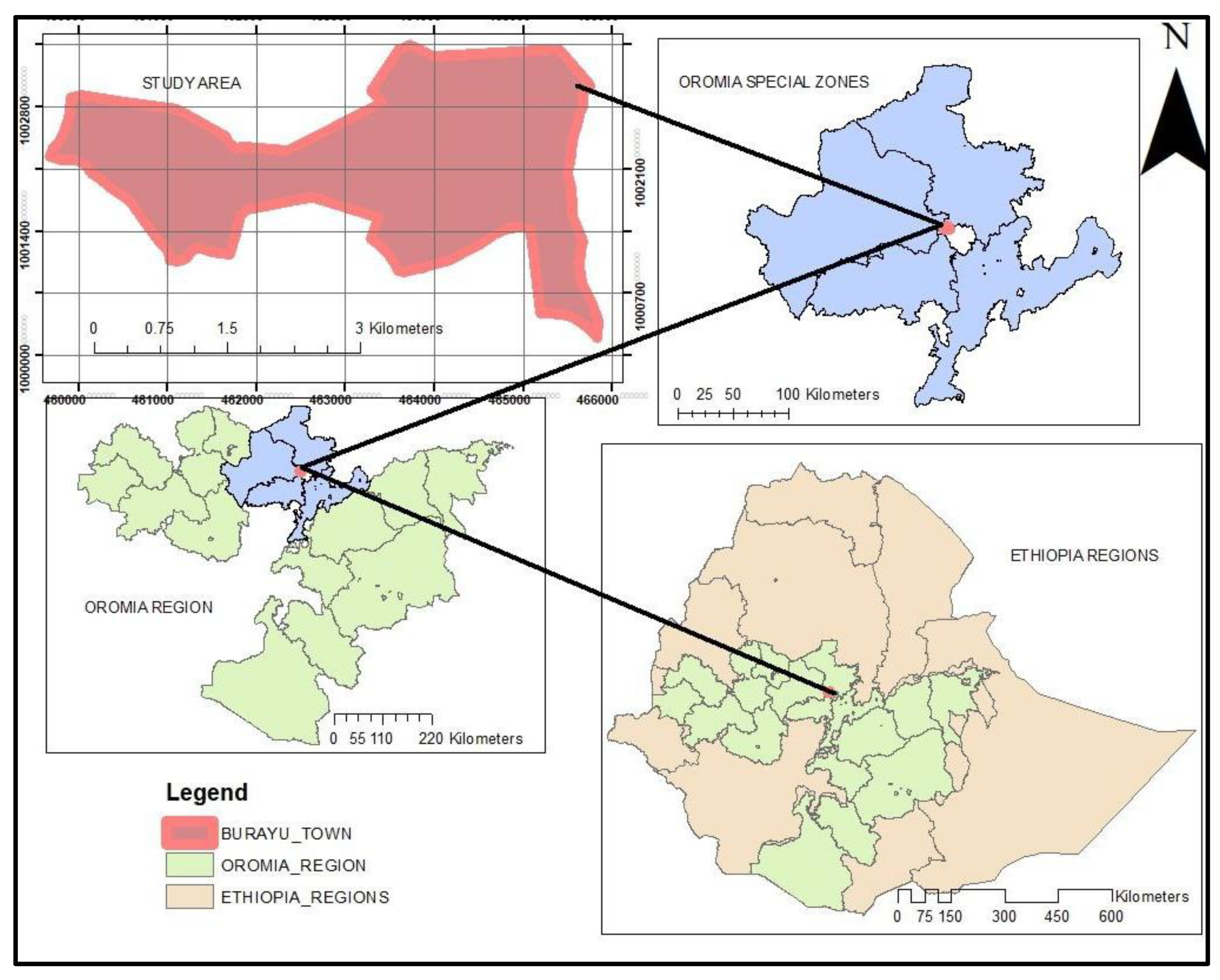
A cross-sectional study was conducted from February to June 2022 on Burayu Higher Secondary School students in Burayu town. Burayu has an estimated population size of 400,000 inhabitants with three government-run higher secondary schools. The town is located 15 Km away from the capital city, Addis Ababa [21]. Administratively, Burayu town is under Sheger City Administration, Oromia regional state, Ethiopia, located from 9°02′ to 9°02′30″ N latitudes and 38°03′30″ to 38°41′30″ E longitudes (Figure 1). It is bounded by Addis Ababa City to the east, Sululta District to the north, Walmera District to the west, and Sabata Hawas District to the south and northwest. Burayu town administration consists of six administrative units (Kebeles). This location was selected due to rapid population growth and high levels of informal settlements, driven by migration from rural areas and former residents of Addis Ababa seeking cheaper housing. Due to the huge influx of migrants and rapid population growth rate, which suggests a mix of economic backgrounds, and with many adolescents seeking employment opportunities, these factors might be indirectly influencing the youth to participate in unprotected sexual practices.
Figure 1. Description of the study area.

2.2. Study Population and Sampling

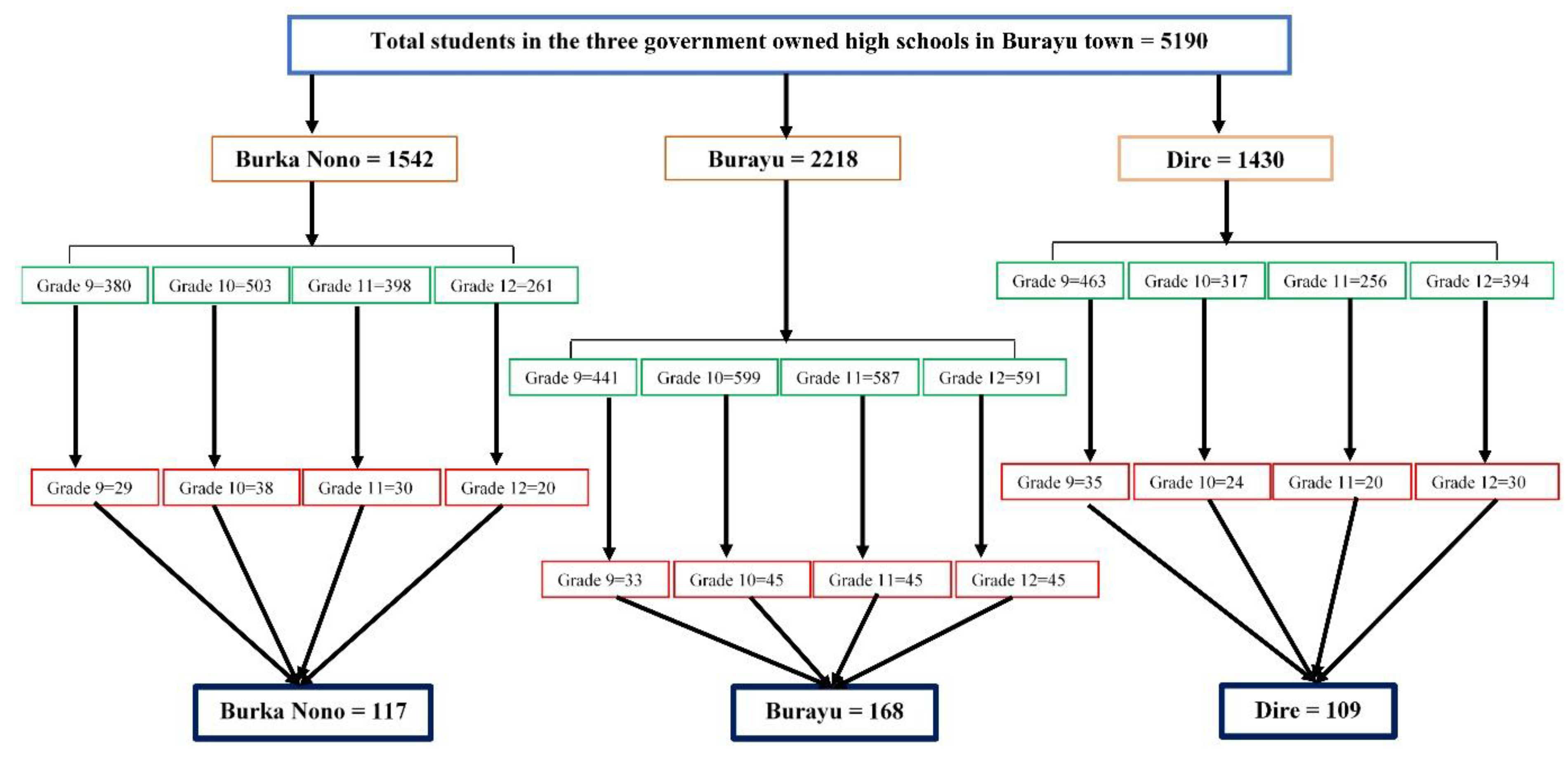
The study population included all active students from grades 9 to 12 in the three government schools in Burayu town, namely, Burka Nono, Dire, and Burayu Higher Secondary Schools, during the academic year of 2021–2022. The sample size was determined by a single population proportion formula, with an estimated HIV/AIDS prevalence rate of 50% (p = 0.5) by considering that 50% of the study participants are knowledgeable, at a 95% confidence interval (Zα/2 = 1.96) and 5% marginal error (d = 0.05) [22]. A total of 394 study participants were selected from 5190 students enrolled in the three schools employing a stratified proportional sampling technique.
The number of samples from each high school was determined by applying a sampling ratio n/N (394/5190) = 0.0759 multiplied by the number of students in each high school. The sample was stratified first by grade, then by section [23]. Finally, the student population from each grade was selected proportional to the size using a simple random sampling technique to obtain the total sample size from the list of student names found in the class attendance. The total students for each high school was 1542 for Burka Nono, 2218 for Burayu, and 1430 for Dire Higher Secondary School. From the total sample size (394), 117 (30%) were from Burka Nono, 168 (42.6%) from Burayu, and 109 (27.66%) from Dire Higher Secondary School. The schematic presentation of the stepwise study participants’ selection procedure is illustrated in Figure 2.
Figure 2. Schematic stepwise sampling procedure of study participants. Students from all three government Higher Secondary Schools were enrolled proportionally across grades to ensure the desired sample size was achieved.

2.3. Inclusion and Exclusion Criteria

The study included students aged 14–25 who were enrolled in grades 9 through 12 at the three government-run Higher Secondary Schools and consented to participate. Students were excluded if they refused to give consent, interrupted or discontinued their education, were penalized by the school administration, or fell outside the 14–25 age range.

2.4. Data Collection

Data were collected using pre-tested and self-administered questionnaires prepared in three languages: Amharic, Afan Oromo, and English. The questionnaire was adapted from previous studies associated with KAPs on HIV/AIDS, with some modifications [16,24]. The questionnaire was first developed in English, then translated into both Amharic and Afan Oromo (local spoken languages) and checked for correctness of the translation by fluent speakers of both languages. To ensure the quality of data collection, the questionnaire was pre-tested on a similar group of 20 (5%) students at Holeta Higher Secondary School, and the content, completeness, and suitability of the target study were validated. Furthermore, we followed a manual double-entry when transferring the paper data to an electronic format and performed post-data entry verification.

2.5. Study Variables and Measurement

The main outcome variables (dependent variables) in this study were knowledge of HIV/AIDS (transmission, prevention, and control), attitude towards PLWHA, and sexual practices. There were 19 knowledge-related questions, and “1” was coded for the right answer, while “0” was coded for the wrong answer. From the overall 19 knowledge-related questions, the total knowledge score was calculated and then categorized into three groups: low knowledge (score ≤ 50%), medium knowledge (scores between 51 and 74%), and high knowledge (score ≥ 75%), which were used in the descriptive statistics. Attitude-related questions were five in number; “1” was coded for a positive attitude and “0” for a negative attitude, and the total score was categorized into two groups: respondents with at least one negative response were considered to have a negative attitude towards PLWHA, and respondents with all positive responses were considered to have a positive attitude towards PLWHA. Sexual experiences were categorized into two groups: respondents engaging in sexual practices and those with no sexual practice. The independent variables were the socio-demographic characteristics (age, gender, place of residence, level of education, marital status, and others).

2.6. Data Analysis

Completeness and consistency of the data were checked and double-entered into SPSS version 26 software and analyzed. The data were processed and analyzed by descriptive statistics, percentage, and frequency. The association between variables was measured and tested using the chi-square test and odds ratio. Binary and multivariate logistic regression analyses were performed to determine the independent variables that had an association with the dependent variable, students’ sexual practices. A p-value ≤ 0.05 was considered significant in all cases.

2.7. Ethics Approval and Consent to Participate

The ethical clearance letter was obtained from the Institutional Review Board (IRB) of the College of Natural and Computational Sciences, Addis Ababa University (Ref. No. CNCSDO/295/13/2021). The study was conducted in accordance with the Declaration of Helsinki. Oral and written informed consent were obtained from all study participants after explaining the nature and purpose of the study. For participants between 15 and 18 years of age, approval to participate in the survey was obtained from the school administration (many of whom were parents/guardians of students in those schools), following a review of the questionnaire to be administered to the students, while students gave assent to participate. Furthermore, information provided by the participants was kept anonymous and confidential.

3. Results

3.1. Socio-Demographic Characteristics

A total of 394 students (197 males and 197 females) participated in the study. The average age of participants was 19.5 years. Participants were recruited from grades 9 to 12 in relatively equal proportions. In total, 369 (94%) of respondents were urban dwellers, 382 (97%) of the participants were living with their parents, and 383 (97%) of participants were single or not married. Regarding parents’ education status, 377 (96%) of the participants’ fathers and 114 (29%) of participants’ mothers were illiterate. In total, 140 (36%) of the students’ fathers were working in private businesses, and 21 (5%) were daily laborers. Similarly, 121 (31%) of the mothers were working in private business, 107 (27%) were housewives, and 11 (3%) were daily laborers. The detailed sociodemographic data is presented in Table 1.
Table 1. Socio-demographic characteristics of study population.

3.2. Information on HIV/AIDS

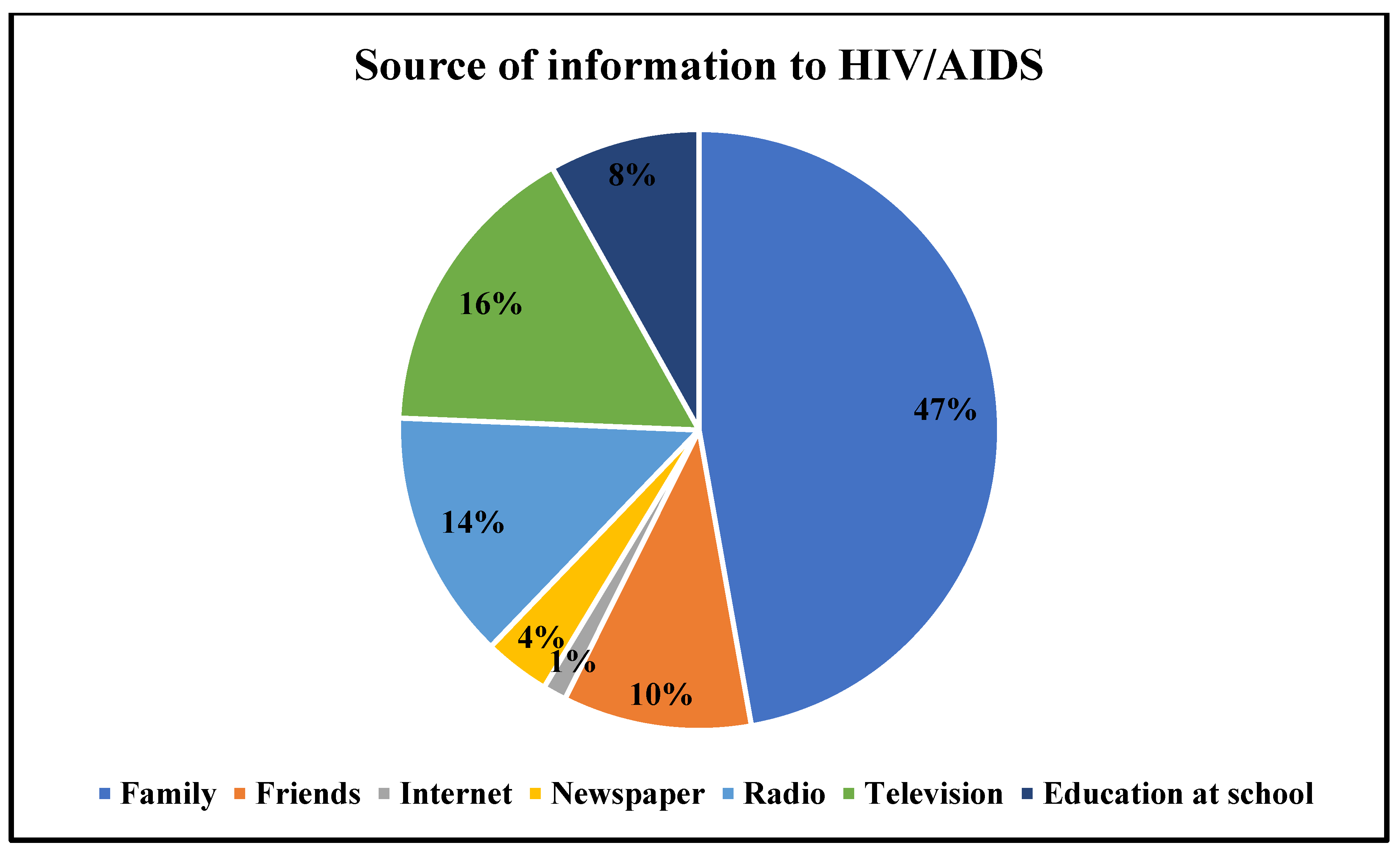
Students had various sources of information about HIV/AIDS. The primary source of information for the students was family (47%), followed by television (16%) and radio (14%). Internet and newspapers were the least common sources, at 1% and 4%, respectively (Figure 3).
Figure 3. Main sources of information for HIV/AIDS.

3.3. Knowledge of HIV/AIDS Transmission, Prevention, and Control

About 97% of the study participants knew that HIV/AIDS is transmitted through sexual intercourse, 85% through blood transfusion, 74% from mother to child during birth, and 93% through the use of contaminated sharp materials. Only half of the participants knew all modes of HIV/AIDS transmission, while 14%, 10%, and 9% of the respondents wrongly perceived the mode of transmission of HIV/AIDS, such as a shared toilet, eating, and coughing, respectively. Some of the participants did not know the mode of HIV/AIDS transmission at all.
The majority of participants had a high knowledge of the different HIV/AIDS prevention methods; 96%, 85%, and 67% of the respondents knew that avoiding sharp materials, the use of condoms, and abstinence prevented HIV/AIDS, respectively. Furthermore, 67% of the respondents considered avoiding tattoos as an HIV/AIDS preventive measure. However, only 36% of the respondents correctly knew all the possible HIV/AIDS prevention methods.
A significant proportion of the participants had good knowledge about the different control methods for HIV/AIDS; 72% knew testing, 73% knew faithfulness, and 87% knew abstinence could control the spread of HIV/AIDS. However, only 20% of the respondents knew all the HIV/AIDS control methods, and 59% of the respondents either were wrongly informed or did not know HIV/AIDS control methods. The knowledge status of study participants about HIV/AIDS transmission is depicted in Table 2.
Table 2. Participants’ knowledge about HIV/AIDS transmission, prevention, and control.

3.4. Attitude Towards People Living with HIV/AIDS

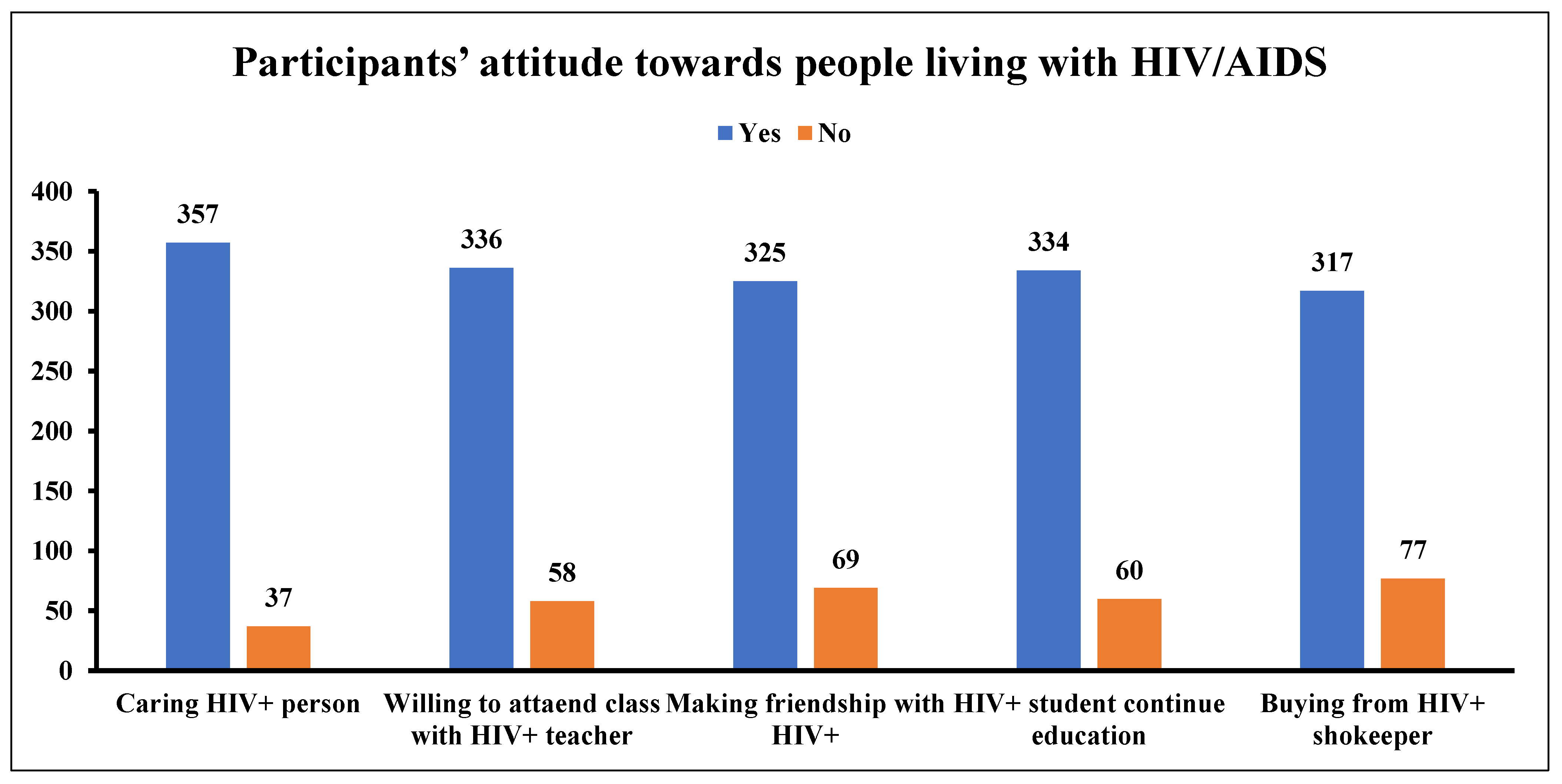
About 91% of the respondents were willing to give care to PLWHA, 85% allowed HIV-positive teachers to teach them, 82% were willing to maintain their friendship with HIV-positive students, 85% thought that HIV-positive students could continue to study in the school, and 80% were willing to buy from HIV-positive shopkeepers. A significant number of respondents had a positive attitude towards PLWHA, as indicated in Figure 4.
Figure 4. Participants’ attitude towards people living with HIV/AIDS.

3.5. Sexual Practice Towards HIV/AIDS Prevention

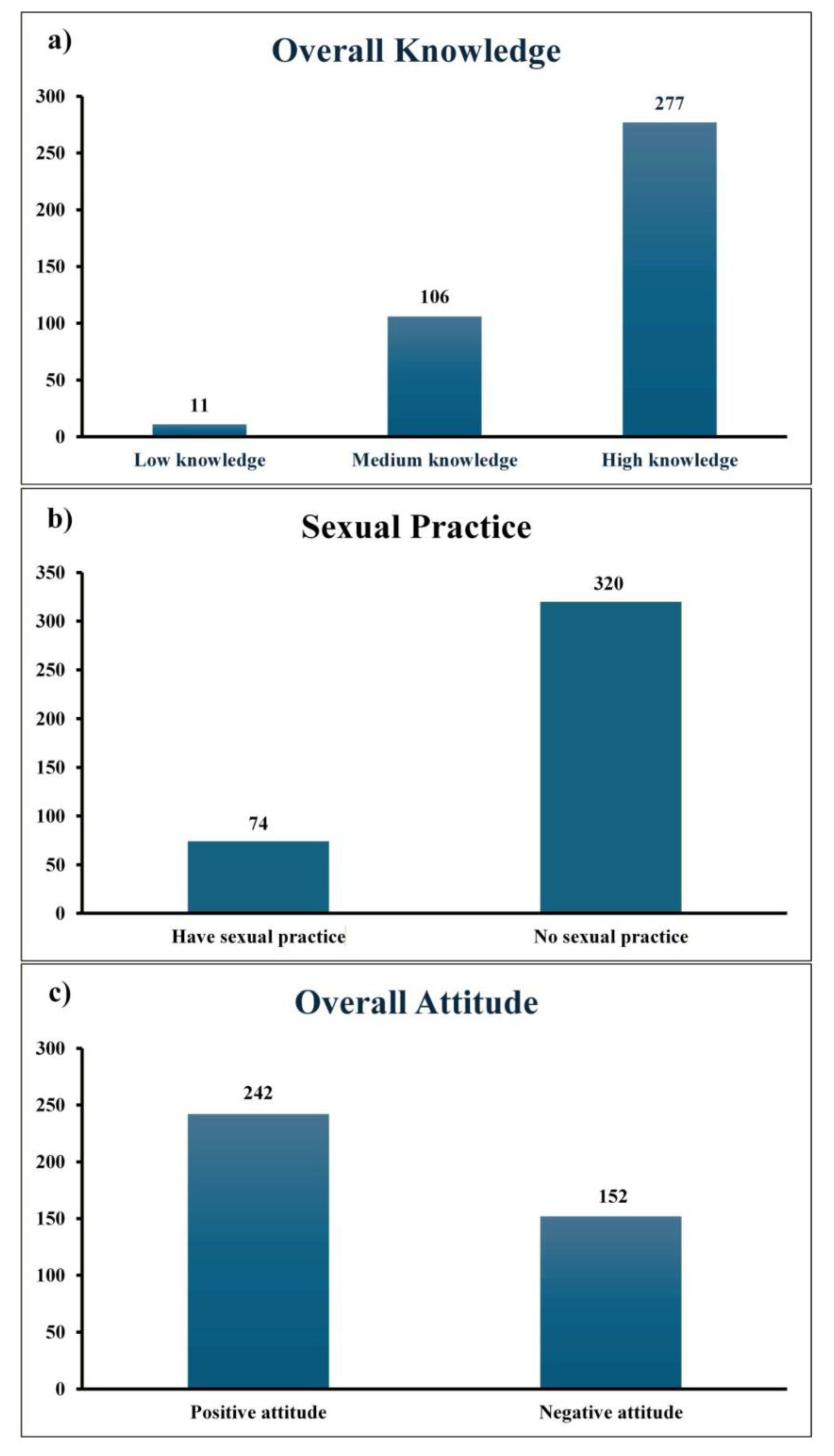
In total, 320 (81%) of the respondents never had a sexual experience. Of the 19% of students who had a sexual experience, 35% of them did not use condoms during sex, and only 45% used condoms in the last encounter. Furthermore, 42% of the respondents who have had a sexual experience were not willing to stop sex when a condom broke during sex, and 18% had sex under the influence of alcohol and drug use. The detailed data on the sexual practices of students is presented in Figure 5.
Figure 5. The overall KAPs of study participants.
Sexual practices of the students showed a statistically significant relationship with students’ knowledge, age, gender, grade level, and their parents’ living status at p ≤ 0.05 (Table 3). The percentage of students who had never started sex was higher among students who had a high knowledge level (83%), were female (89%), were of a younger age (96%), were of a lower grade level (93%), and were living together with both parents (82%).
Table 3. Participants’ sexual practices and sociodemographic characteristics (n = 394).

3.6. Overall KAPs on HIV/AIDS

The average knowledge score recorded was 15.5 ± 2.5 out of 19, where 5 and 19 were recorded as the minimum and maximum correct responses. In total, 277 (70%) of the study participants had a high level of overall knowledge with a score above 75% and only 3% of them had a low level of overall knowledge, with a score below 50%. The average attitude towards PLWHA was 4.2 ± 0.8, with a minimum positive score of 0 and a maximum score of 5. Furthermore, 61% of the participants had a positive attitude towards PLWHA. The study participants’ overall KAPs are presented in Figure 4.

3.7. Logistic Regression Analysis

The bivariate regression analysis revealed that the level of knowledge was significantly associated with the students’ attitudes towards PLWHA and sexual practice. Students with a high level of knowledge were likely to have positive attitudes (COR = 23.4, 95% CI = 2.9–185.5, p ≤ 0.05) towards PLWHA (Table 4). Similarly, students with a high level of knowledge had fewer sexual practices (OR = 4.1, 95% CI = 1.2–13.9, p ≤ 0.05) compared to students with low levels of knowledge.
Table 4. Logistic regression analysis (bivariate) shows the association of overall knowledge level and students’ attitude and sexual practices.
Based on the multivariate logistic regression analysis, knowledge of HIV/AIDS, age, gender, and place of residence were significantly associated with students’ sexual practices. Students with higher knowledge were more likely to refrain from sexual practice compared to students with low levels of knowledge on HIV/AIDS (AOR = 5.5, 95% CI = 1.04–29.09, p ≤ 0.05). Furthermore, students younger than 18 years of age, female students, and students who came from rural areas were less likely to have engaged in sexual practice as compared to their counterparts, as presented in Table 5.
Table 5. Logistic regression analysis (multivariate) shows the association of students’ knowledge, age, gender, and place of residence with their sexual practices.

4. Discussion

Knowledge, attitudes, and practices (KAPs) studies are essential tools prior to the implementation of any intervention to identify knowledge gaps, cultural beliefs, or risky behaviors [17]. Improving knowledge about HIV/AIDS among young people is a key action to reduce the risk of infection through increased condom use and to improve attitudes towards HIV-positive subjects [17].
This study aimed to assess the KAPs regarding HIV/AIDS prevention among higher secondary school students in Burayu town. In this study, 70% of the participants had high levels of knowledge of HIV/AIDS transmission, prevention, and control, with an overall knowledge score of 15.5. This study found that 50% of the participants had the correct knowledge on all the transmission methods of HIV/AIDS. A similar result was reported from a study conducted among high school students in Iraq, where 45% of the students had good overall knowledge of HIV/AIDS [25]. Other studies conducted in Ghana and South Africa revealed that 62% and 44.7% of the students had good knowledge about HIV/AIDS, respectively [26,27]. Our results were lower than those from the study conducted among high school students in Addis Ababa, where, on average, 76% of the respondents had good knowledge about HIV/AIDS [28]. However, the current study results were higher than those from a study conducted among students found in 14 high schools in Eastern Ethiopia, where about 25% of the students had comprehensive HIV/AIDS knowledge [17].
In the current study, 36% of the students demonstrated comprehensive knowledge of HIV prevention methods. This finding indicates a lower level of knowledge compared to previous studies conducted in the Mekelle, 75% [16]; Addis Ababa, 80% [29]; Bahir Dar, 57% [30]; and Bale, 47% [10] regions of Ethiopia. However, this study reported a higher level of knowledge than the EDHS 2016 report, which found that 24% of women and 39% of men aged 15–24 possessed comprehensive knowledge about HIV prevention [29].
Furthermore, 85% of the students knew that condom use and abstinence can prevent HIV transmission. A similar result was reported from Addis Ababa, where 87% of the students knew condom use can control HIV transmission [28]. The result of the current study is higher than that of a study conducted in Wombera, Ethiopia, where only 63% of the students knew that condom use controls HIV transmission [31]. The prevalence of knowledge on the prevention of HIV transmission through abstinence was higher in the current study compared to the study conducted in Addis Ababa, 46% [28], and in Bale, 67% [10], but lower than a study conducted in Bahir Dar, where 93% of the respondents knew that abstinence is used to prevent HIV [30]. The lower prevalence of the overall knowledge of HIV prevention methods (36%) is a dangerous sign, because the students may not follow the correct HIV prevention methods in their day-to-day lives.
The proportion of respondents who knew all the HIV/AIDS control methods was 20% in the current study. By comparison, 73% of the respondents knew that faithfulness could help to control HIV transmission. In addition, 91%, 85%, 87%, and 50% of the respondents believed that HIV cannot be transmitted by handshaking, hugging, sharing clothes, and mosquito bites, respectively. However, the reported knowledge of faithfulness as a prevention method was relatively lower than in a study conducted in Bale, Ethiopia, where 84% of students knew faithfulness could prevent HIV transmission [10]. Several studies reported misconceptions on the control of HIV transmission; in a study conducted in Addis Ababa, 30% responded that avoiding sharing clothes helps to control HIV transmission [28].
Generally, the higher prevalence of poor knowledge on HIV control methods is a serious sign, as this could mean a significant percentage of the students may not apply the right HIV/AIDS control method. The lower prevalence of comprehensive knowledge on HIV/AIDS might be due to the lack of attention given to HIV/AIDS, with more emphasis being given to other diseases, including COVID-19. Since family is the major source of information (Figure 1) for the students about HIV/AIDS, low-educated parents may be the source of misconceptions for students. Contrary to our study, Tanzania high school students developed awareness primarily from school-based education [32]. Therefore, the provision of proper information regarding HIV/AIDS transmission and control via education to the general community might be of importance.
Furthermore, this study revealed that students with higher levels of knowledge are more likely to have a positive attitude towards PLWHA. In total, 61% of the respondents had a positive attitude towards PLWHA; 91% would care for an HIV-positive person, 85% would allow an HIV-positive teacher to teach them, 82% were willing to make friendship with HIV-positive students, 82% believed that HIV-positive students could continue their education with HIV-negative students, and 80% of them were willing to buy items from HIV-positive shopkeepers.
These results were higher than those in the EDHS report, which found that 48% of women and 35% of men thought that children living with HIV/AIDS should not attend school, and 55% of women and 47% of men would not buy from HIV-positive shopkeepers [15]. The study in Addis Ababa reported that the average positive attitude of respondents towards the prevention and control of HIV/AIDS was 79% [28]. A study from Ghana reported that 79% of the respondents were willing to care for PLWHA, 75% willing to make friends with HIV-positive individuals, and 78% of students and 76% of teachers believed that HIV-positive students should continue their education. On the contrary, 68% of the respondents did not want to buy from an HIV-positive shopkeeper [26].
Another study conducted among Bahir Dar University students in Ethiopia reported that students with good knowledge and positive attitudes demonstrated safer sexual practices compared to students with low levels of knowledge [30]. Based on this finding, 92% of the students had a positive attitude toward HIV-positive friends [30]. Generally, this study found that students had better attitudes towards PLWHA (61%). This might be due to the visible presence of PLWHA accessing anti-HIV/AIDS resources within the community.
In this study, the prevalence of sexual activity was 19%. Among these participants 66% reported frequent condom use; however, 45% did not use a condom during their last encounter, a finding consistent with a study conducted in Gondar city [33]. Furthermore, 42% of males noted that they would cease intercourse if a condom broke. In comparison, a higher prevalence of sexual activity (26%) was reported among high school students in Mekelle, though a larger proportion of those participants (75%) demonstrated better condom utilization practices [16].
A study in Addis Ababa showed a lower prevalence of condom use, with 16% of the students reporting regular use [28]. Another study from Ghana reported that, while 26% of the students had a sexual experience, 52% did not use condoms during sexual intercourse [26]. According to an EDHS report, the prevalence of condom use among men aged 15–49 was 51% [15]. The Federal HIV/AIDS Prevention and Control Office (HAPCO) also emphasizes the comprehensive use of condoms among adolescent groups as one of its six strategic pillars [34]. Other studies in Laos (Asia) and Jiangsu Province in China showed that male high school and college students with medium-to-high knowledge of HIV/AIDS were significantly more likely to engage in safe sexual practices [18,35].
Similar findings were reported among high school students in South Africa and Somalia; students with a high level of knowledge had a more positive attitude toward PLWHA and safer HIV/AIDS preventive practices compared to students with low knowledge levels (CORs of 12.6 and 2.7, respectively) [24,36]. In the current study, students with high levels of knowledge were 23.4 times more likely to demonstrate positive attitudes towards PLWHA. Additionally, students with high knowledge levels were 4.1 times less likely to be sexually active compared to those with low knowledge levels.
Generally, this study identified a significant number of students who were at high risk of HIV/AIDS infection due to unsafe sexual practices, as they lacked knowledge of HIV/AIDS control, transmission, and prevention methods. Although the curriculum had certainly incorporated sexual and reproductive health, several barriers remained, including cultural taboos, low literacy and education, lack of school involvement, and parental communication gaps [37]. Therefore, first, we strongly suggest that the government/policy makers ensure the proper integration of HIV/AIDS education into school curricula, and strong follow-up should be in place to confirm sexual and reproductive health communication. Second, we urge non-governmental organizations (NGOs) and other stakeholders to develop community outreach programs tailored to adolescents and to foster effective collaboration for the development of comprehensive, culturally appropriate, and sustainable prevention and care programs in the study area.

5. Conclusions

This study highlights that students’ attitudes and sexual practices appear to be associated with their level of knowledge, age, gender, and place of residence. Furthermore, the study population exhibited misconceptions regarding HIV/AIDS transmission, prevention, and control, as well as discriminatory attitudes toward people living with HIV (PLWHA), and risky sexual behaviors. This finding underscores an urgent need to develop and implement extensive HIV/AIDS health education programs targeting vulnerable populations.

Author Contributions

A.G.B. provided scientific support, restructured, and edited the manuscript. Y.T. planned the study, collected and analyzed data, and drafted the manuscript. F.T. participated in the design, collection, and analysis of data, provided scientific supervision throughout the research, and commented on the manuscript. All authors have read and agreed to the published version of the manuscript.

Funding

This research was funded by the Addis Ababa University School of Graduate Studies.

Institutional Review Board Statement

The study was conducted in accordance with the Declaration of Helsinki, and approved by the Institutional Review Board (or Ethics Committee) of Institutional Review Board (IRB) of the College of Natural and Computational Sciences, Addis Ababa University (Approval number: CNCSDO/295/13/2021, Approval date: 29 January 2021).

Data Availability Statement

All data generated from this study are included in this published article.

Acknowledgments

We would like to thank the study participants of Burayu Town secondary high schools and the schools’ management for their permission and facilitation to conduct the study.

Conflicts of Interest

The authors declare that they have no competing interests.

References

  1. UNAIDS. Global HIV & AIDS Statistics—FACT Sheet 2022. Available online: https://www.unaids.org/sites/default/files/media_asset/UNAIDS_FactSheet_en.pdf (accessed on 10 December 2022).
  2. WHO. HIV and AIDS Key Facts. 2023. Available online: https://www.who.int/news-room/fact-sheets/detail/hiv-aids?gclid=Cj0KCQjwxuCnBhDLARIsAB-cq1pknSoaR_iKKEnt3OicJmQNBqXiq-4glLywF57U-aLrO5240jA41WsaAs-2EALw_wcB (accessed on 21 January 2023).
  3. WHO. Key Facts HIV 2022. Available online: https://cdn.who.int/media/docs/default-source/hq-hiv-hepatitis-and-stis-library/key-facts-hiv-2021-26july2022.pdf?sfvrsn=8f4e7c93_5 (accessed on 9 December 2022).
  4. Anwuri, G.C.; Dunn, M.S.; Schulze, F. Determinants of Voluntary HIV/AIDS Counseling and Testing among Community College Students in the United States. Int. J. Matern. Child Health AIDS 2017, 6, 109–120. [Google Scholar] [CrossRef]
  5. UNAIDS. Young People and HIV. Global Targets on HIV Relating to Young People. 2021. Available online: https://www.unaids.org/sites/default/files/media_asset/young-people-and-hiv_en.pdf (accessed on 21 February 2023).
  6. Risher, K.A.; Cori, A.; Reniers, G.; Marston, M.; Calvert, C.; Crampin, A.; Dadirai, T.; Dube, A.; Gregson, S.; Herbst, K.; et al. Age patterns of HIV incidence in eastern and southern Africa: A modelling analysis of observational population-based cohort studies. Lancet HIV 2021, 8, e429–e439. [Google Scholar] [CrossRef]
  7. UNAIDS. Danger: UNAIDS Global AIDS Update 2022. 2022. Available online: https://www.unaids.org/sites/default/files/media_asset/2022-global-aids-update-summary_en.pdf (accessed on 17 February 2023).
  8. Mekonnen, M.; Behailu, T.; Wakgari, N. Knowledge, attitude, and practice regarding HIV/AIDS among people with disability in Hawassa City, Southern Ethiopia. Adv. Public Health 2018, 2018, 9649610. [Google Scholar] [CrossRef]
  9. Dadi, T.K.; Feyasa, M.B.; Gebre, M.N. HIV knowledge and associated factors among young Ethiopians: Application of multilevel order logistic regression using the 2016 EDHS. BMC Infect. Dis. 2020, 20, 714. [Google Scholar] [CrossRef]
  10. Mohammed, A.Y.; Tefera, T.B.; Ahmed, M.B. Knowledge, attitude and practice on HIV/AIDS prevention among batu terara preparatory school students in Goba Town, Bale Zone, Southeast Ethiopia. Prim. Health Care Open Access 2015, 5, 1–6. [Google Scholar] [CrossRef]
  11. Bharmal, R.; Tiwari, R. HIV and AIDS: Basic Elements and Priorities; Springer: Berlin/Heidelberg, Germany, 2007. [Google Scholar]
  12. Kilmarx, P.H. Global epidemiology of HIV. Curr. Opin. HIV AIDS 2009, 4, 240–246. [Google Scholar] [CrossRef]
  13. Shiferaw, Y.; Alemu, A.; Girma, A.; Getahun, A.; Kassa, A.; Gashaw, A.; Alemu, A.; Teklu, T.; Gelaw, B. Assessment of knowledge, attitude and risk behaviors towards HIV/AIDS and other sexual transmitted infection among preparatory students of Gondar town, north west Ethiopia. BMC Res Notes 2011, 4, 505. [Google Scholar] [CrossRef]
  14. WHO. Global Health Sector Strategy on HIV 2016–2021: Towards Ending AIDS. 2016. Available online: https://www.who.int/publications/i/item/WHO-HIV-2016.05 (accessed on 13 January 2023).
  15. Central Strstical Agency. Ethiopia Demographic and Health Survey 2016; Central Statistical Agency: Addis Ababa, Ethiopia, 2017. Available online: https://dhsprogram.com/pubs/pdf/FR328/FR328.pdf (accessed on 29 December 2022).
  16. Tadese, A.; Menasbo, B. Knowledge, attitude and practice regarding HIV/AIDS among secondary school students in Mekelle City, Ethiopia. Afr. J. AIDS HIV Res. 2013, 1, 1–7. [Google Scholar]
  17. Oljira, L.; Berhane, Y.; Worku, A. Assessment of comprehensive HIV/AIDS knowledge level among in-school adolescents in eastern Ethiopia. J. Int. AIDS Soc. 2013, 16, 17349. [Google Scholar] [CrossRef]
  18. Thanavanh, B.; Harun-Or-Rashid, M.; Kasuya, H.; Sakamoto, J. Knowledge, attitudes and practices regarding HIV/AIDS among male high school students in Lao People’s Democratic Republic. J. Int. AIDS Soc. 2013, 16, 17387. [Google Scholar] [CrossRef]
  19. Cheetham, N.; Bridges, E.; Kalina, L. Youth and the Global HIV Pandemic: Reaching Key Affected Populations and Empowering a Generation; Advocates for Youth: Washington, DC, USA, 2012. [Google Scholar]
  20. UNICEF. Opportunity in Crisis: Preventing HIV from Early Adolescence to Young Adulthood; UNICEF: New York, NY, USA, 2011. [Google Scholar]
  21. Bayuma, T.B.; Abebe, B.G. Analyzing actors’ interaction behavior in land transactions in informal settlement settings: A case study of Burayu city, Ethiopia. Heliyon 2023, 9, e19515. [Google Scholar] [CrossRef]
  22. Daniel, W. Biostatistics: A Foundation for Analysis in the Health Sciences, 7th ed.; R Wiley: New York, NY, USA, 1999; pp. 141–142. [Google Scholar]
  23. Kanaki, K.; Kalogiannakis, M. Sample design challenges: An educational research paradigm. Int. J. Technol. Enhanc. Learn. 2023, 15, 266–285. [Google Scholar] [CrossRef]
  24. Adeboye, A.; Yongsong, Q.; Akinwumi, O.; James, N. Knowledge, attitude and practices of HIV/AIDS among high school students in Eastern Cape, South Africa. J. Hum. Ecol. 2016, 54, 78–86. [Google Scholar] [CrossRef]
  25. Othman, S.M. Knowledge about HIV/AIDS among high school students in Erbil city/Iraq. Glob. J. Health Sci. 2015, 7, 16. [Google Scholar] [CrossRef]
  26. Tarkang, E.E.; Lutala, P.M.; Dzah, S.M. Knowledge, attitudes and practices regarding HIV/AIDS among senior high school students in Sekondi-Takoradi metropolis, Ghana. Afr. J. Prim. Health Care Fam. Med. 2019, 11, 1–11. [Google Scholar]
  27. Shamu, S.; Khupakonke, S.; Farirai, T.; Slabbert, J.; Chidarikire, T.; Guloba, G.; Nkhwashu, N. Knowledge, attitudes and practices of young adults towards HIV prevention: An analysis of baseline data from a community-based HIV prevention intervention study in two high HIV burden districts, South Africa. BMC Public Health 2020, 20, 1249. [Google Scholar] [CrossRef]
  28. Befekadu, M. Knowledge of and Practice of HIV/AIDS Among High School Students in Selected Sub Cities of Addis Ababa. 2019. Available online: https://etd.aau.edu.et/items/2f4c395c-49ab-4cf9-94a0-e12392ac1ec7 (accessed on 25 December 2022).
  29. Central Statistical Agency. Ethiopia demographic and health survey 2016. In Addis Ababa, Ethiopia, and Rockville; CSA and ICF: Rockville, MD, USA, 2016; pp. 1–551. [Google Scholar]
  30. Mulu, W.; Abera, B.; Yimer, M. Knowledge, attitude and practices on HIV/AIDS among students of Bahir Dar University. Sci. J. Public Health 2014, 2, 78–86. [Google Scholar]
  31. Birhanu, S.; Kumsa, F.; Temesgen, M. Knowledge, Practices and Challenges on HIV/AIDS Among High School Students in Wombera District, Benishangul Gumuz, Ethiopia; International Institute of Science, Technology and Education: New York, NY, USA, 2020. [Google Scholar]
  32. Mkwambe, M.C.; Kayungo, S.J.; Deng, Y. Knowledge, Perception, and Attitude Toward Voluntary Counseling and Testing for HIV Among Secondary School Students in Iringa Rural District: Descriptive Cross-Sectional Study. JMIR Public Health Surveill. 2025, 11, e66739. [Google Scholar] [CrossRef]
  33. Terefe, B.; Techane, M.A.; Assimamaw, N.T. Comprehensive knowledge, attitudes, behaviors, and associated factors of HIV/AIDS in Gondar City Public Health Facilities Among HIV Testing and Counselling Service Users, Northwest Ethiopia, 2022; an ordinal logistic regression analysis. HIV/AIDS-Res. Palliat. Care 2023, 15, 713–726. [Google Scholar] [CrossRef]
  34. FHAPCO. HIV Prevention in Ethiopia National Road Map 2018–2020, Ethiopia. 2018. Available online: https://ethiopia.unfpa.org/sites/default/files/pub-pdf/HIV%20Prevention%20in%20Ethiopia%20National%20Road%20Map%202018%20-%202020%20FINAL_FINAL.pdf (accessed on 29 December 2022).
  35. Li, H.; Wu, Q.; Gao, E.; Zhang, Y.; Yin, D. HIV/AIDS-related knowledge and attitudes toward people living with HIV among college students in Xuzhou, Jiangsu Province, China: A cross-sectional survey. Front. Public Health 2024, 12, 1398980. [Google Scholar] [CrossRef]
  36. Hussein, S.A.; Osman, M.M.; Abdulle, Y.S.; Hussein, A.A.; Md, A.A.T.; Nur, A.M.; Fuje, M.M.; Yusuf, M.F.; Adem, R.; Osman, A.A. Knowledge, attitude, and practice of HIV/AIDS transmission and prevention among barbing and beauty salon operators in Mogadishu, Somalia, 2024. BMC Public Health 2025, 25, 696. [Google Scholar] [CrossRef]
  37. Gizaw, A.T.; Muktar, S.A.; Wondimagegene, Y.A.; Abayneh, M.; Sefere, B.Z.; Tareke, K.G.; Yilma, A.N. Barriers to sexual and reproductive health communication in Southwest Ethiopia: Perspectives of parents, youths, and teachers. Front. Reprod. Health 2025, 7, 1444603. [Google Scholar] [CrossRef]
Disclaimer/Publisher’s Note: The statements, opinions and data contained in all publications are solely those of the individual author(s) and contributor(s) and not of MDPI and/or the editor(s). MDPI and/or the editor(s) disclaim responsibility for any injury to people or property resulting from any ideas, methods, instructions or products referred to in the content.

Article Metrics

Citations

Article Access Statistics

Multiple requests from the same IP address are counted as one view.