Review

Axial Spondyloarthritis in Familial Mediterranean Fever: Bridging the Gap Between Autoinflammation and Autoimmunity


1
Clinic of Rheumatology, University Hospital “St. Marina”, 9010 Varna, Bulgaria
2
Clinic of Rheumatology, University Hospital “St. Ivan Rilski”, 1612 Sofia, Bulgaria
*
Author to whom correspondence should be addressed.
Rheumato 2026, 6(3), 17; https://doi.org/10.3390/rheumato6030017

Submission received: 30 March 2026 / Revised: 13 July 2026 / Accepted: 16 July 2026 / Published: 20 July 2026

Abstract

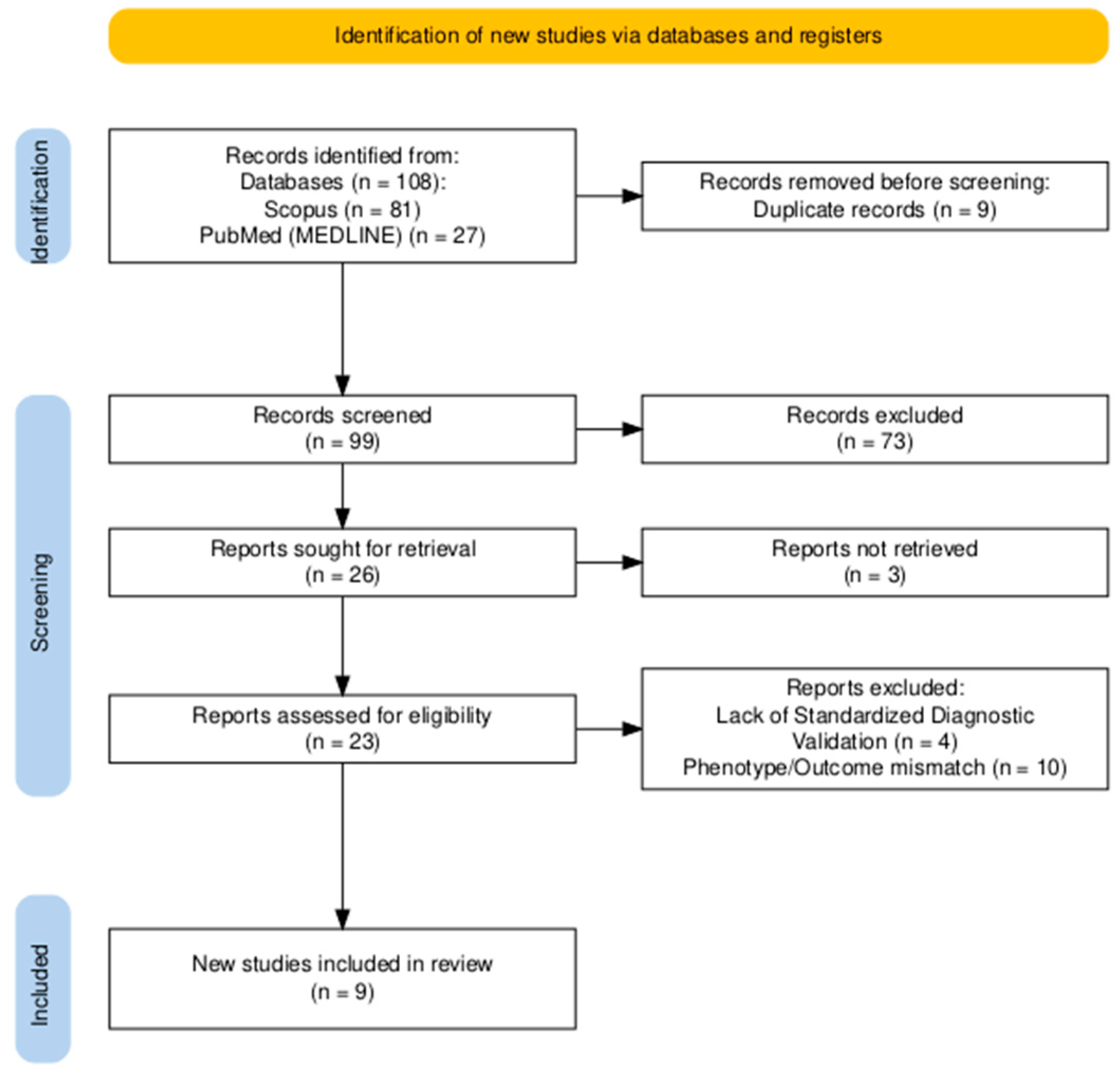
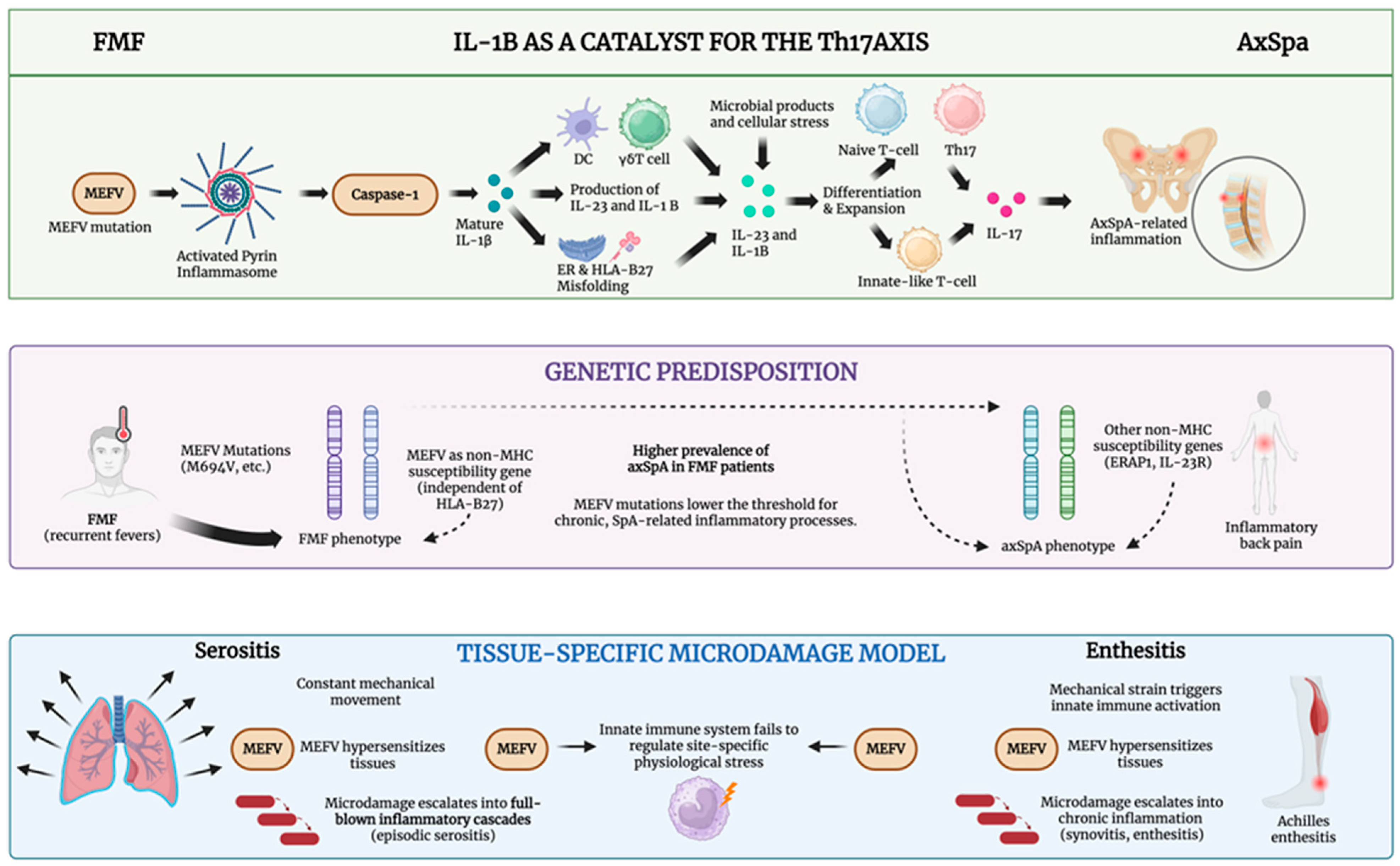
The clinical and pathogenetic intersection of Familial Mediterranean Fever (FMF) and axial spondyloarthritis (axSpA) represents a compelling frontier in modern rheumatology, challenging the traditional binary classification of inflammatory diseases. FMF is a monogenic autoinflammatory disorder caused by mutations in the MEFV gene, characterized by dysregulation of the pyrin inflammasome and surges in interleukin-1β (IL-1β), while axSpA is an immune-mediated condition linked to the HLA-B27 antigen and the IL-23/IL-17 axis. Following a structured search of PubMed/MEDLINE and Scopus, this review integrates PRISMA-informed screening of epidemiological data with a comprehensive narrative synthesis of the molecular pathogenesis and clinical management of this association. The analysis demonstrates a substantially elevated prevalence of spondyloarthritis among FMF patients compared to the general population. It explores the molecular “bridge” where innate immune activation provides the requisite cytokine milieu for the expansion of Th17 cells that drive spinal inflammation. Clinical evidence defines a distinct FMF-associated spondyloarthritis phenotype, characterized by a balanced sex distribution, early onset, and high risk of destructive hip involvement and AA amyloidosis, particularly in M694V carriers. Management strategies focus on dual biologic blockade in refractory cases, targeting both the upstream IL-1 pathway and downstream TNF or IL-17 effectors. This report identifies critical knowledge gaps, emphasizing the need for large-scale clinical trials to optimize outcomes for this complex patient population.
Keywords: familial Mediterranean fever; axial spondyloarthritis; autoinflammation; autoimmunity familial Mediterranean fever; axial spondyloarthritis; autoinflammation; autoimmunity