
Systematic Review

Effectiveness of Aquatic Exercise in the Management of Fibromyalgia Syndrome: A Systematic Review and Meta-Analysis

by
Sebastián Eustaquio Martín Pérez
1,2,3,*,
Jennifer Díaz García
1,
David García Linares
1,
Luis Gabriel Barboza Baldó
1 and
Isidro Miguel Martín Pérez
3,*
1
Faculty of Health Sciences, Universidad Europea de Canarias, 38300 La Orotava, Santa Cruz de Tenerife, Spain
2
Faculty of Medicine, Health and Sports, Universidad Europea de Madrid, 28670 Villaviciosa de Odón, Madrid, Spain
3
Escuela de Doctorado y Estudios de Posgrado, Universidad de La Laguna, 38203 San Cristóbal de La Laguna, Santa Cruz de Tenerife, Spain
*
Authors to whom correspondence should be addressed.
Rheumato 2026, 6(1), 5; https://doi.org/10.3390/rheumato6010005
Submission received: 1 November 2025 / Revised: 15 January 2026 / Accepted: 22 January 2026 / Published: 2 February 2026

Abstract

Background/Objectives: Fibromyalgia syndrome (FMS) is a chronic condition characterized by widespread pain, fatigue, sleep disturbances, and psychological symptoms. Aquatic exercise offers the benefits of physical activity with reduced mechanical stress. This meta-analysis evaluated the effectiveness of AE on pain, functional physical status, and health-related quality of life. Methods: A PRISMA-guided systematic review and meta-analysis (PROSPERO CRD42025115158) included randomized and non-randomized trials up to October 2025 from MEDLINE (PubMed), Cochrane Library, PEDro, CINAHL Complete, SPORTDiscus, and Academic Search Ultimate. Eligible participants were adults diagnosed with FMS undergoing AE programs, alone or combined with other modalities. Standardized mean differences (SMD) with 95% confidence intervals were pooled using random- or fixed-effects models. Methodological quality, risk of bias, and certainty of evidence were evaluated using the PEDro scale, the RoB 2.0 tool, and the GRADE approach. Results: 27 trials (n = 1785; >95% women; mean age 44–62 years) were included. AE significantly improved pain (SMD = −0.92; 95% CI: −1.03 to −0.80; p < 0.00001), physical function (SMD = −0.74; 95% CI: −0.84 to −0.63; p < 0.00001), and HRQoL (SMD = 0.57; 95% CI: 0.42 to 0.72; p < 0.00001). Effects were consistent across time frames, though overall heterogeneity was considerable (Tau2 = 4.93; I2 = 97%). The mean PEDro score was 5.2/10, and RoB 2.0 indicated moderate methodological limitations mainly due to a lack of blinding. Evidence certainty was low for the main outcomes and moderate for adverse events. Conclusions: Aquatic exercise is an effective and safe complementary therapy for patients with FMS, alleviating pain while enhancing function and quality of life. However, methodological variability and small sample sizes warrant further high-quality trials to confirm these findings and explore underlying mechanisms.

1. Introduction

Fibromyalgia syndrome (FMS) is a chronic and heterogeneous condition of idiopathic origin, characterized by widespread musculoskeletal pain, fatigue, sleep disturbances, cognitive dysfunction, and psychological symptoms such as anxiety and depression [1,2,3]. Although its etiology remains uncertain, FMS represents one of the leading causes of chronic generalized pain worldwide, with prevalence estimates ranging from 0.2% to 6.6%, depending on the diagnostic criteria and population studied [4]. In the United States, this condition affects more than 5 million people, representing approximately 2–5% of the adult population [5].
Beyond its epidemiological relevance, FMS imposes a considerable social and economic burden. In Spain, the estimated annual cost ranges from EUR 1.8 to EUR 7.1 billion, largely driven by productivity losses and the demands of informal caregiving [6]. The level of patient dependency emerges as a critical factor shaping work capacity and the extent of required external support [7].
Although FMS is an established clinical entity, its diagnosis and management remain challenging because of the lack of specific biomarkers and the marked variability in clinical manifestations [8,9]. From a pathophysiological standpoint, the syndrome is characterized by an altered central pain processing, neuroendocrine dysregulation, autonomic imbalance, and low-grade inflammation [10,11,12]. Although pharmacological treatments—such as antidepressants, anticonvulsants, and analgesics—are commonly prescribed, their effects are often modest and short-lived, and adverse events frequently limit both adherence and long-term effectiveness [13,14].
In recent years, therapeutic strategies have increasingly shifted toward multimodal and non-pharmacological approaches, with exercise therapy emerging as a cornerstone in the management of chronic pain [15,16]. Exercise provides a wide spectrum of physiological and neurobiological benefits through the activation of descending pain-inhibitory pathways, neuroplastic modulation of central sensitization, and regulation of the immune system and inflammatory responses [17,18]. These effects contribute to autonomic and neuroendocrine balance, reflected in reduced sympathetic overactivity, enhanced parasympathetic tone, lower stress reactivity, and improvements in sleep quality and mood stability [19,20].
Nevertheless, not all exercise modalities are equally well tolerated by patients with FMS. In fact, land-based exercise often triggers symptom exacerbation, exercise intolerance, and kinesiophobia, which may compromise adherence and increase the risk of relapse and program discontinuation [21,22,23]. This clinical limitation underscores the need for interventions that preserve the physiological benefits of exercise while minimizing mechanical stress and pain perception [24]. Within this context, aquatic exercise (AE)—structured therapeutic exercise performed in water under professional supervision—has emerged as a promising alternative [25], as the unique physical and thermal properties of water, including buoyancy, hydrostatic pressure, viscosity, and thermal conductivity, reduce joint loading, facilitate controlled movement, and promote muscle relaxation [26,27].
Furthermore, immersion in thermoneutral or warm water enhances circulatory dynamics, reduces muscle stiffness, and improves psychological well-being [28]. From a neurophysiological perspective, these evident benefits are attributable to the aquatic environment’s capacity to support autonomic homeostasis, attenuate central and peripheral sensitization, and activate mechanoreceptive and baroreceptive feedback mechanisms, thereby contributing to overall analgesic and anxiolytic effects [29,30].
Consequently, AE enables individuals with FMS to engage in physical activity with lower perceived pain and greater tolerance, fostering adherence and functional recovery [31]. Clinical trials consistently show that AE improves aerobic capacity, muscle strength, physical functionality, and health-related quality of life (HRQoL) without exacerbating symptoms. Moreover, AE has the potential to improve co-occurring symptoms such as fatigue, depression, and sleep disturbances prevalent in this population [32].
Despite this, the current literature remains heterogeneous in study design, intervention protocols, and outcome assessment tools, which makes it difficult to establish standardized recommendations. Therefore, this systematic review and meta-analysis aims to synthesize and critically evaluate the available evidence on the application of AE in FMS management, with a particular emphasis on linking physiological mechanisms to clinical outcomes.

2. Materials and Methods

2.1. Data Sources and Search Strategy

The systematic review and meta-analysis were conducted following the Preferred Reporting Items for Systematic Reviews and Meta-Analyses (PRISMA) statement (Supplementary Table S1) [33]. Moreover, the review protocol was prospectively registered in the International Prospective Register of Systematic Reviews (PROSPERO) database (CRD42025115158; https://www.crd.york.ac.uk/PROSPERO/view/CRD420251151583 (accessed on 20 September 2025)). A comprehensive literature search was performed from 21 September 2025 to 21 October 2025 to identify all available studies evaluating the effectiveness of AE-based rehabilitation on pain, functionality, and QoL in patients with FMS. The databases searched included MEDLINE (PubMed), Cochrane Library, PEDro Database, CINAHL Complete, SportDiscus, and Academic Search Ultimate.
In MEDLINE (PubMed), the search strategy combined Medical Subject Headings (MeSH) and free-text terms, using the following Boolean equations: (“fibromyalgia”[MeSH Terms]) AND (“hydrotherapy”[tiab]); (“fibromyalgia”[MeSH Terms]) AND (“swimming”[MeSH Terms]); and (“fibromyalgia”[MeSH Terms]) AND (“aquatic”[tiab]) AND (“exercise”[tiab] OR “rehabilitation”[tiab]). In the Cochrane Library, searches were conducted using free-text terms related to fibromyalgia and aquatic interventions, combined with Boolean operators. The applied equations were: (“fibromyalgia syndrome”[tiab]) AND (“water exercise”[tiab] OR “hydrotherapy”[tiab]); (“fibromyalgia”[tiab]) AND (“aquatic exercise”[tiab]); and (“fibromyalgia”[tiab]) AND (“pool exercise”[tiab] OR “water therapy”[tiab]).
For the PEDro database, simplified keyword combinations were employed due to database-specific constraints. The following strategies were used: (“fibromyalgia”) AND (“hydrotherapy”); (“fibromyalgia”) AND (“pool exercise” OR “water-based exercise”); and (“fibromyalgia”) AND (“aquatic rehabilitation” OR “aquatic therapy”). In CINAHL Complete, the search combined fibromyalgia-related terms with aquatic exercise and rehabilitation concepts using Boolean operators as follows: (“fibromyalgia”[tiab]) AND (“hydrotherapy”[tiab]); (“fibromyalgia”[tiab]) AND (“aquatic exercise”[tiab] OR “rehabilitation”[tiab]); and (“fibromyalgia”[tiab]) AND (“pool exercise”[tiab] OR “water therapy”[tiab] OR “aquatic therapy”[tiab]).
The SPORTDiscus search strategy focused on exercise-based aquatic interventions and included the following equations: (“fibromyalgia”[tiab]) AND (“aquatic exercise”[tiab]); (“fibromyalgia”[tiab]) AND (“pool exercise”[tiab] OR “water-based program”[tiab]); and (“fibromyalgia”[tiab]) AND (“hydrotherapy”[tiab] OR “aquatic rehabilitation”[tiab]). Finally, in Academic Search Ultimate, searches were performed using combinations of fibromyalgia and water-based therapeutic approaches, applying the following equations: (“fibromyalgia”[tiab]) AND (“water therapy”[tiab]); (“fibromyalgia”[tiab]) AND (“aquatic therapy”[tiab] OR “hydrotherapy”[tiab]); and (“fibromyalgia”[tiab]) AND (“pool exercise”[tiab] OR “aquatic resistance training”[tiab] OR “exercise in water”[tiab]).
The literature search was conducted independently by two reviewers (J.D.G. and L.G.B.B.) while a third reviewer (D.G.L.), blinded to study details, screened all retrieved records based on titles and abstracts and subsequently evaluated full texts for eligibility. Any disagreements were resolved by a fourth author (S.E.M.P.), who served as a referee. The complete search strategy is presented in Table S2.

2.2. Study Selection

The inclusion criteria for study selection were as follows: (1) clinical trials, randomized or non-randomized; (2) studies published from 1 January 2021 to 21 October 2025, and (3) publications available in English, Spanish, French, or Portuguese. In addition, (4) participants were required to have a diagnosis of FMS based on the 2016 American College of Rheumatology (ACR) criteria [34], and (5) the interventions had to include AE, either as a stand-alone program or combined with other treatment modalities such as land-based exercise, educational or psychological support, excluding passive hydrothermal interventions (e.g., balneotherapy or spa therapy) Finally, (6) studies were required to report at least one clinically relevant outcome, prioritized as follows: pain intensity, stiffness (e.g., objective or perceived), fatigue, cognitive disturbances (e.g., concentration or memory), sleep quality, functionality, health-related quality of life (HRQoL), psychological outcomes, including stress perception and depression and pain-related cognitive–behavioral factors such as kinesiophobia and catastrophizing.

2.3. Data Extraction

Data extraction was independently carried out by two authors (J.D.G. and L.G.B.B.). In the event of discrepancies, a third author (D.G.L.) resolved disagreements. Relevant data were collected using a standardized template based on PICO questions, including information on authorship, year and country of publication, study design, objectives, results, and participant characteristics (e.g., disease status, medical intervention, sample size, gender, distribution, etc.), as well as details of intervention and control groups, measured outcomes, and conclusions. These procedures were conducted in accordance with the Cochrane Handbook for Systematic Reviews of Interventions (version 5.1.0) [35]. The reliability of the data extraction table was verified through cross-checking a representative sample of the included studies.

2.4. Methodological Quality Assessment: PEDro Scale

The methodological quality of the clinical trials included in this review was assessed using the PEDro scale [36]. This tool comprises 11 items, each scored with one point, and is designed to evaluate both the internal validity of randomized controlled trials (criteria 2–9) and the adequacy of statistical information to allow interpretation of the results (criteria 10–11). Trials achieving scores of 9–10 were classified as having “Excellent“ methodological quality, those scoring 6–8 as “Good”, and those scoring below 4 as “Poor“.

2.5. Risk of Bias Assessment (RoB 2.0)

The risk of bias in the included randomized clinical trials was evaluated using the Cochrane Risk of Bias 2.0 tool (RoB 2.0) [37]. This tool assesses potential bias across five domains: (1) the randomization process; (2) deviations from intended interventions; (3) missing outcome data; (4) outcome measurement; and (5) selection of the reported result. A rating of low risk of bias suggests that systematic errors are unlikely to meaningfully influence the study’s findings, whereas a high risk of bias indicates decreased confidence in the validity of the results. Discrepancies between reviewers were resolved through discussion, with a third reviewer (S.E.M.P.) consulted when consensus was needed.

2.6. Certainty of Evidence (GRADE)

The overall certainty of the evidence was evaluated using the Grading of Recommendations, Assessment, Development and Evaluation (GRADE) framework [38]. This method assesses five domains: study design, imprecision, indirectness, inconsistency, and publication bias. Based on these criteria, the quality of evidence was classified into four levels: high (all domains satisfied), moderate (one domain not satisfied), low (two domains not satisfied), or very low (three or more domains not satisfied).

2.7. Synthesis of Results

Meta-analyses were performed using Review Manager (RevMan v.5.3; Cochrane Collaboration, Oxford, UK) [39] when at least two studies reported comparable outcomes. For analyses stratified by study duration, data were grouped into short-term (<4 weeks), medium-term (5–20 weeks), and long-term (>20 weeks), following prior research. When unit conversion was not feasible, the standardized mean difference (SMD) was used.
Results are presented as SMDs with 95% confidence intervals (CI). Statistical heterogeneity was evaluated using the I2 statistic, with thresholds of 0–40% indicating low heterogeneity, 30–60% moderate heterogeneity, 50–90% substantial heterogeneity, and 75–100% considerable heterogeneity. A fixed-effects model was applied initially; however, when I2 exceeded 40%, a random-effects model was employed.

3. Results

3.1. Data Sources and Search Strategies

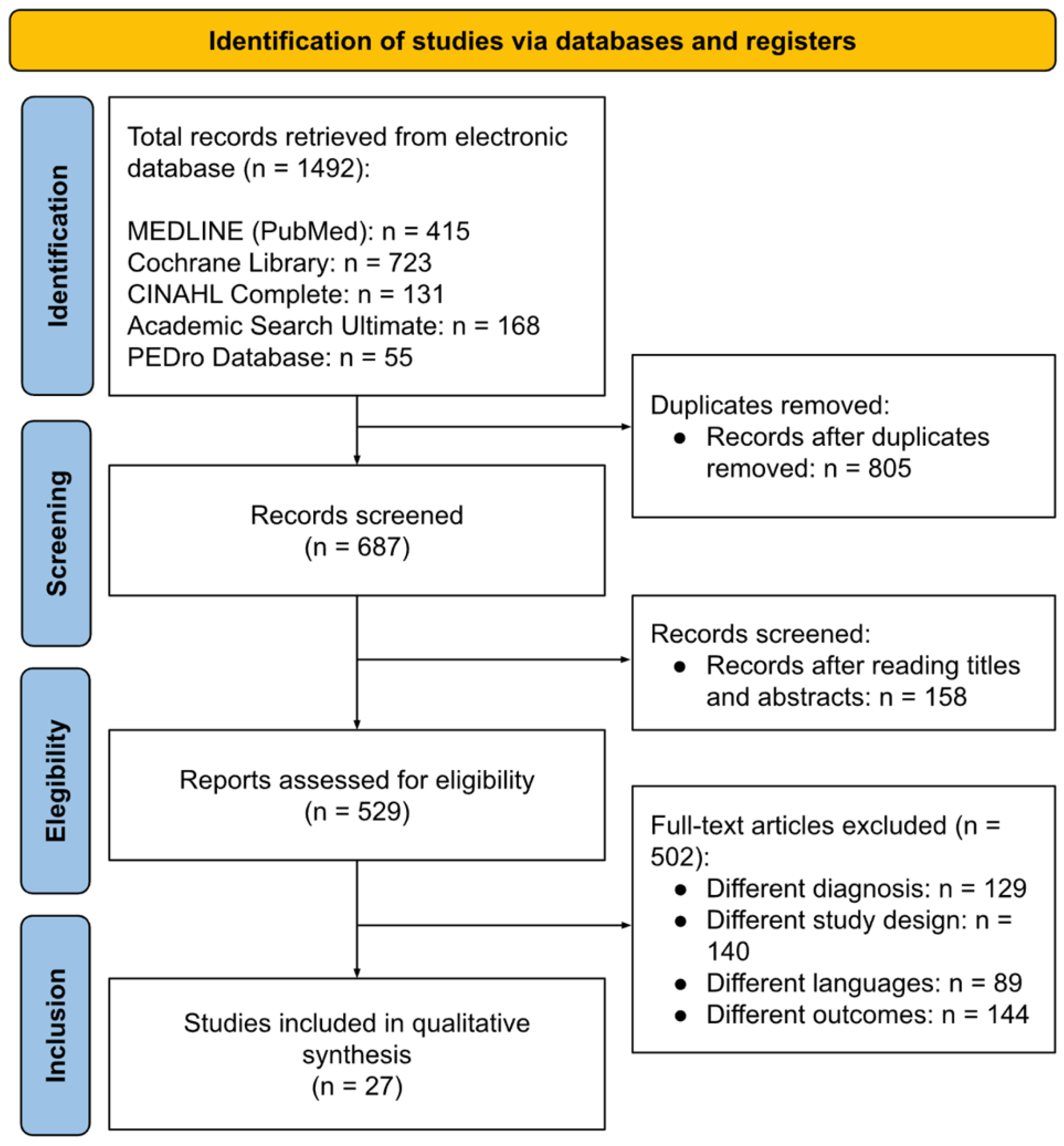
A total of 1492 records were identified through database searches, including MEDLINE (PubMed) (n = 415), the Cochrane Library (n = 723), CINAHL (n = 131), Academic Search Ultimate (n = 168), and the PEDro Database (n = 55). After duplicate records were removed (n = 805), 687 unique studies remained for title and abstract screening. This process led to the full-text assessment of 529 articles for eligibility.
Of these, 502 were excluded for the following reasons: differing study designs (n = 140), publication in languages other than English, Spanish, French, or Portuguese (n = 89), interventions that did not satisfy the inclusion criteria (n = 129), or outcome measures not relevant to the research question (n = 144). In the final stage, 27 studies were included in the qualitative synthesis and meta-analysis. The study selection process is presented in Figure 1.

3.2. Study Characteristics

Following the study selection process, 27 studies met the predefined eligibility criteria [40,41,42,43,44,45,46,47,48,49,50,51,52,53,54,55,56,57,58,59,60,61,62,63,64,65,66]. Of these, 21 were prospective randomized controlled trials (RCTs) [40,41,42,43,45,47,48,49,50,51,52,53,54,55,56,57,58,60,61,63,64,65], 4 were prospective single-blinded RCTs [44,49,50,62], 1 was an assessor-blinded RCT [46], and 1 was a multicenter RCT [59]. Except for a single study conducted in individuals with myalgic encephalomyelitis/chronic fatigue syndrome [44], all studies involved participants diagnosed with FMS. Overall, n = 1785 participants were included, more than 95% of whom were women, with mean ages ranging from 44 to 62 years.
Most interventions involved supervised AE performed in pools maintained at 30–34 °C, with sessions conducted 2–3 times per week for 45–60 min, over a period of 8 to 32 weeks. The AE protocols commonly incorporated aerobic activities (e.g., walking, jogging, deep-water running, mobility or functional drills) [40,41,42,43,48,49,57,58,60,61,62,64,65], often complemented by different strategies of resistance training using floats or elastic implements [40,43,57,58,61]. Several programs included flexibility, stretching, postural control, and relaxation components [41,47,55,60,64]. In addition, aquatic Pilates-based approaches [49,63], and 1 study compared aquatic HIIT with MICT [46].
The comparison arms varied and included land-based exercise programs matched for frequency and intensity [40,43,49,62,63], home-based stretching protocols [41,50,55], usual care or waiting-list controls [42,47,53,57,61,64,65], and aerobic exercise performed in seawater [48]. Further, several studies also examined multimodal spa therapy or balneotherapy [45,56,59], and one incorporated exergaming (e.g., Wii Fit) as a comparator [54]. Follow-up durations ranged from short-term post-intervention assessments at 3 weeks [45,56] to long-term evaluations extending to 6–12 months [44,45,47,59,62]. Detraining effects, examining the persistence or loss of benefits after intervention cessation, were reported in 2 trials [64,65].
The included studies were conducted across several regions, including Brazil [42,43,48,49,51,52], Spain [40,54,57,58,61,62,63,64,65], Turkey [41,50,56,63], Norway [46,55], Sweden [60], Switzerland [47], Germany [45], France [59], Canada [53], and Australia [44], indicating the international relevance and widespread clinical adoption of AE in the management of FMS. Detailed information is provided in Table S3.

3.3. Methodological Quality Assessment (PEDro Scale)

Overall, the methodological quality of the 27 included studies ranged from acceptable to good, with an average PEDro score of 5.2/10 (SD = 0.8). 9 studies (33.3%) were rated as good quality [40,42,45,47,52,54,59,62,63], while the remaining 18 trials (66.7%) were rated as acceptable [41,43,44,46,48,49,50,51,53,55,56,57,58,60,61,64,65,66]. None of the included trials met the criteria for an excellent quality rating.
The most frequent methodological shortcomings were the absence of therapist blinding in all studies and the limited use of participant blinding, which was implemented in only a minority of trials [49,62]. In addition, concealed allocation and intention-to-treat analyses were inconsistently applied. Nevertheless, most studies reported adequate random allocation, baseline comparability, and outcome reporting, providing a reasonably solid methodological foundation for evaluating the effects of AE interventions in FMS. More details are explained in Table 1.

3.4. Risk of Bias Assessment (RoB 2.0)

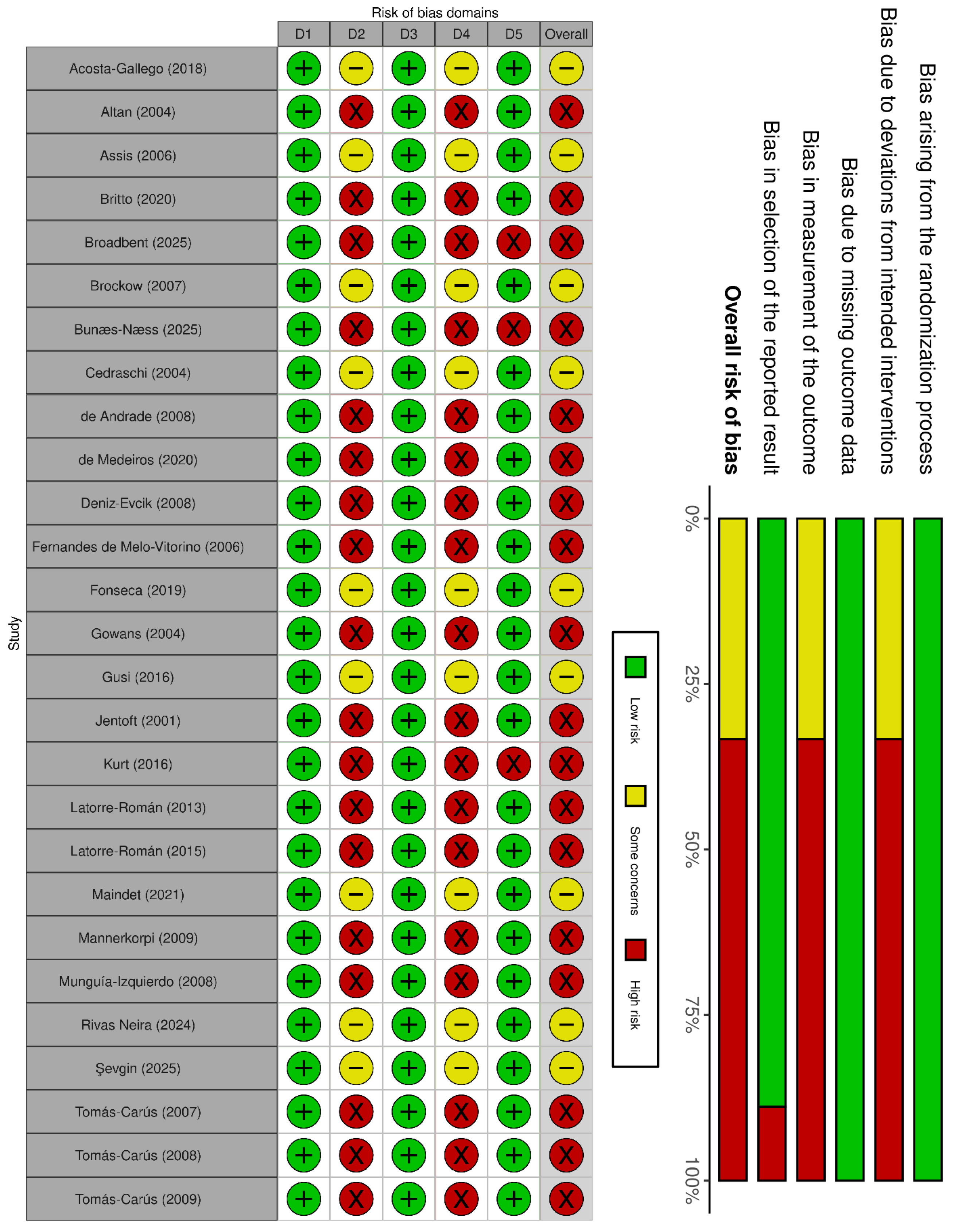
The overall risk of bias among the randomized clinical trials, as evaluated using the RoB 2.0 tool, ranged from low to moderate. As illustrated in Figure 2, the majority of studies demonstrated a low risk of bias related to the randomization process and selective outcome reporting [40,41,42,43,44,45,46,47,48,49,50,51,52,53,54,55,56,57,58,59,60,61,62,63,64,65,66]. Conversely, a high risk of bias associated with the absence of blinding of participants and study personnel was commonly observed across most trials, with the exceptions of Mannerkorpi et al., 2009 [60], Fernandes de Melo-Vitorino et al., 2006 [51], and Tomás-Carús et al., 2009 [65].
With respect to allocation concealment, several studies were judged to raise some concerns or to be at high risk of bias [40,42,43,48,52]. Bias related to incomplete outcome data and outcome measurement was generally assessed as low to moderate, although a small number of studies were rated as having a high risk in these domains [41,44,46,50,56,63]. Overall, the lack of participant and personnel blinding emerged as the main source of bias across the included studies [40,41,42,43,44,45,46,47,48,49,50,51,52,53,54,55,56,57,58,59,60,61,62,63,64,65,66], while other domains such as randomization, selective reporting, and data completeness were largely considered adequate.

3.5. Certainty of Evidence (GRADE)

The strength of the evidence was evaluated using the GRADE approach. For outcomes of pain reduction and physical function, analyzed across 27 RCTs [40,41,42,43,44,45,46,47,48,49,50,51,52,53,54,55,56,57,58,59,60,61,62,63,64,65,66], the overall certainty was rated as low. This rating was mainly downgraded due to a serious risk of bias, as most studies lacked participant or assessor blinding, and serious imprecision stemming from the relatively small sample sizes in the included trials.
Similarly, QoL, analyzed in 8 RCTs [41,43,47,52,54,60,62,65], and fatigue, assessed in 6 RCTs [42,48,51,55,59,63], were both graded as low-certainty evidence, reflecting the same methodological limitations. Although some inconsistency was observed among QoL outcomes—largely attributable to the heterogeneity of measurement tools—it did not warrant additional downgrading.
In contrast, adverse events, reported in 10 RCTs [41,44,46,49,50,56,57,58,61,64], demonstrated moderate-certainty evidence. This higher rating was supported by the absence of serious bias, inconsistency, or indirectness, and the consistent finding of no major adverse events across studies. Nonetheless, some imprecision remained due to the relatively small sample sizes in certain trials. Further details are provided in Table 2.

3.6. Data Synthesis

3.6.1. Effectiveness of AE vs. Control in Patients with FMS in Pain Intensity

In the short-term subgroup (<4 weeks), 2 RCTs [45,56], including n = 109 participants. AE resulted in a significant reduction in pain intensity compared with control interventions, with a pooled standardized mean difference (SMD = −0.93; 95% CI: −1.21 to −0.66; p < 0.00001) and no heterogeneity (I2 = 0%). In these studies, baseline pain scores ranged from approximately 4.5 to 5.5 points, with post-intervention values decreasing to around 3.5–4.0 points in the AE groups.
In the medium-term subgroup (5–20 weeks), 17 RCTs [40,41,42,43,47,48,49,50,51,52,53,54,55,56,57,58,60,61,62], enrolling n = 947 participants, also showed a significant improvement in pain intensity in favor of AE (SMD = −0.89; 95% CI: −1.04 to −0.73; p < 0.00001), with low heterogeneity (I2 = 19%). Across trials reporting numerical data, mean pain scores decreased by approximately 1.5 to 3.0 points on a 10-point VAS/NRS in the AE groups, whereas changes in control groups were small or negligible.
In the long-term subgroup (>20 weeks), 3 RCTs [59,65,66] comprising n = 140 participants confirmed a persistent analgesic effect (SMD = −1.05; 95% CI: −1.30 to −0.80; p < 0.00001), again with no heterogeneity (I2 = 0%). Long-term follow-up data indicated sustained reductions in pain intensity, with post-intervention scores remaining approximately 1.5–2.5 points below baseline levels.
When all studies were pooled (n = 1446 participants), AE was associated with a robust overall reduction in pain intensity (SMD = −0.92; 95% CI: −1.03 to −0.80; p < 0.00001), and low heterogeneity (I2 = 8%). Whenever numerical pain scores were available, absolute baseline and post-intervention values were extracted and are summarized in Supplementary Figure S1, thereby providing direct clinical context to the standardized mean differences.

3.6.2. Effectiveness of AE vs. Control in Patients with FMS in Functionality

In the short-term subgroup (<4 weeks), only 1 RCT [45], including n = 139 participants, assessed functionality using numerical functional scales, primarily the FIQ. AE resulted in a significant improvement in functionality compared with control interventions, with a standardized mean difference (SMD = −0.59; 95% CI: −0.93 to −0.25; p = 0.0007). In this study, mean FIQ scores decreased from approximately 50 points at baseline to around 45 points post-intervention in the AE group, whereas the control group showed minimal change. Heterogeneity was not applicable due to the inclusion of a single study.
For the medium-term (5–20 weeks), 13 RCTs [40,41,42,43,47,48,49,50,51,52,55,56,57,58,61,62,63] enrolling n = 1049 participants demonstrated a significant effect in favor of AE, with a pooled SMD = −0.79 (95% CI: −0.91 to −0.66; p < 0.00001). Heterogeneity was negligible (I2 = 0%), indicating high consistency across studies. Across trials reporting numerical functional outcomes, baseline FIQ scores generally ranged between 45 and 55 points, with post-intervention values typically reduced to 43–48 points in the AE groups, corresponding to mean improvements of approximately 8–12 points, while control groups exhibited smaller or no improvements.
In the long-term subgroup (>20 weeks), 3 RCTs [59,64,65] including n = 266 participants confirmed sustained improvements in functionality (SMD = −0.63; 95% CI: −0.88 to −0.38; p < 0.00001), again with no heterogeneity (I2 = 0%). Long-term follow-up data indicated that functional gains were maintained over time, with mean FIQ reductions remaining in the range of 6–10 points compared with baseline values.
When all studies were combined (n = 1454 participants), AE was associated with a robust overall improvement in functionality (SMD = −0.74; 95% CI: −0.84 to −0.63; p < 0.00001). Overall heterogeneity was negligible (I2 = 0%), suggesting that the beneficial effects of AE on functionality are consistent regardless of follow-up duration. Whenever numerical functional scores were available, absolute baseline and post-intervention values were extracted and are summarized in Supplementary Figure S2, thereby providing direct clinical context to the SMDs and addressing concerns regarding clinical interpretability.

3.6.3. Effectiveness of AE vs. Control in Patients with FMS in Quality of Life

A total of 18 RCTs assessing QoL using standardized instruments—primarily the SF-36, EQ-5D, and PGWB—were included in the meta-analysis, comprising n = 1269 participants. In addition to SMDs, absolute post-intervention scores are reported to enhance clinical interpretability, as suggested by the reviewer.
Overall, AE led to clinically meaningful improvements in HRQoL compared with control conditions (SMD = 0.57; 95% CI: 0.42–0.72; p < 0.00001), with low heterogeneity (I2 = 35%). Across studies, this effect corresponded to higher post-intervention QoL scores in the AE groups, with mean values generally ranging between 57 and 63 points, compared with approximately 49 to 55 points in control groups, depending on the instrument used.
In the short-term subgroup (<4 weeks), two RCTs [45,56] including n = 219 participants showed significant QoL improvements (SMD = 0.57; 95% CI: 0.30–0.84; p < 0.0001; I2 = 0%). Notably, mean QoL scores in the AE groups ranged from 52.8 to 57.1, compared with 41.9 to 51.8 in control groups, indicating an absolute between-group difference of approximately 5–11 points.
Similarly, the medium-term subgroup (5–20 weeks), comprising 9 RCTs [42,49,50,52,57,59,60,61,62,63] with n = 452 participants, demonstrated a significant benefit (SMD = 0.62; 95% CI: 0.43–0.81; p < 0.00001; I2 = 0%). Post-intervention QoL scores consistently favored AE, with experimental group means typically between 58 and 62, compared with 47 to 55 in control groups. Improvements were particularly evident in SF-36 physical functioning, vitality, and pain-related domains, suggesting a close relationship between enhanced functional capacity, reduced pain impact, and overall QoL.
For the long-term subgroup (>20 weeks), seven RCTs [47,54,59,64,65,66] involving n = 598 participants confirmed sustained QoL gains (SMD = 0.57; 95% CI: 0.22–0.91; p = 0.001), despite moderate heterogeneity (I2 = 71%). In this subgroup, AE participants maintained higher QoL scores (approximately 56–71) than controls (49–64) at follow-ups ranging from 6 to 8 months, particularly in physical and social functioning domains and in the EQ-5D health index.
No statistically significant differences were observed between subgroups (χ2 = 0.14; df = 2; p = 0.93), indicating a consistent beneficial effect of AE on QoL across follow-up durations. These results, illustrated in Supplementary Figure S3, demonstrate that the observed SMDs correspond to clinically interpretable absolute improvements in QoL and pain-related functioning, thereby reinforcing the practical relevance of the findings.

3.7. Sensitivity Analysis

Despite the variability in AE protocols across studies—including differences in session duration, frequency, water temperature, and specific exercise components—the pooled analyses showed low statistical heterogeneity (I2 values ranging from 0% to low–moderate levels). This finding reflects a high consistency in the direction and magnitude of effect estimates across trials. To assess the robustness of these results, sensitivity analyses were conducted using a leave-one-out approach, whereby each study was sequentially removed from the meta-analysis. These analyses revealed no substantial changes in pooled effect sizes or heterogeneity indices, indicating that the overall findings were not driven by any single study and supporting the stability of the results.

4. Discussion

The findings of this meta-analysis support the notion that AE—conceptualized as a structured and active form of therapeutic exercise performed in water under professional supervision—is associated with clinically meaningful improvements in pain intensity, physical functionality, and HRQoL in individuals diagnosed with FMS. These effects were consistently observed across short-, medium-, and long-term follow-up periods, supporting AE as a safe and potentially beneficial non-pharmacological intervention. However, while the included trials primarily reported clinical outcomes, the biological and neurophysiological mechanisms that may underlie these benefits were not directly assessed and therefore remain inferential.
Firstly, the robust reduction in pain intensity observed across trials (MD ≈ −0.79; p < 0.00001) may be interpreted in light of existing neurophysiological models of pain modulation in FMS, although causal inferences cannot be drawn. Immersion in thermoneutral water has been shown to stimulate cutaneous mechanoreceptors and cardiovascular baroreceptors, generating afferent input to supraspinal structures involved in descending inhibitory pain pathways within the central nervous system (CNS), such as the periaqueductal gray (PAG) and the rostral ventromedial medulla (RVM) [25,31,67,68].
Experimental evidence suggests that such stimulation may facilitate the release of endogenous opioids, serotonin, and noradrenaline, potentially attenuating nociceptive transmission at the spinal level and counteracting central sensitization mechanisms commonly described in FMS [6,14,15,69,70,71]. Nevertheless, these mechanisms were not directly measured in the included trials and should therefore be regarded as plausible but hypothetical explanatory pathways.
In parallel, biomechanical factors inherent to the aquatic environment may contribute to pain relief. Hydrostatic pressure and buoyancy reduce gravitational loading on muscles and joints, which may diminish peripheral nociceptor activation and attenuate peripheral sensitization processes [72,73]. Additionally, the warm aquatic environment promotes vasodilation, muscle relaxation, and improved tissue oxygenation, potentially facilitating the clearance of proinflammatory metabolites and reducing ischemia-related discomfort [23,24,25,26]. Together, these biomechanical and thermophysiological effects provide a biologically plausible framework for the reductions in pain intensity observed across the included studies, although they were not directly assessed within the trials [74,75,76].
The observed improvements in physical functionality (SMD = −0.74; p < 0.00001) may be related to sensorimotor adaptations induced by movement in water. Reduced gravitational resistance allows motor tasks to be performed under low-load conditions, which may facilitate neuromuscular re-education, enhanced proprioceptive feedback, and improved motor coordination. Prior research suggests that aquatic exercise may support activation of the muscle spindles and Golgi tendon organs, reduce maladaptive co-contraction, and improve joint stability [77,78,79]. These adaptations may be particularly relevant in FMS, where altered motor control and inefficient movement patterns have been consistently reported [80,81]. However, as these neuromuscular mechanisms were not directly evaluated, their contribution remains speculative.
Autonomic modulation represents another potential pathway through which AE may influence functional outcomes. Previous studies have associated aquatic exercise with a shift toward parasympathetic predominance, often reflected by improvements in heart rate variability (HRV) and reductions in sympathetic overactivity—features commonly observed in FMS [82,83]. Improved autonomic regulation may hypothetically mitigate stress-related hyperexcitability and fatigue, thereby supporting functional recovery and exercise tolerance [84]. Nonetheless, autonomic markers were not measured in the present meta-analysis, precluding direct confirmation of this mechanism.
The significant enhancement in HRQoL (SMD = 0.57; p < 0.00001) suggests that AE may exert additional psychophysiological and psychosocial effects beyond physical symptom improvement. Immersion in warm water has been proposed to modulate serotonin and dopamine turnover [29,85], influence hypothalamic–pituitary–adrenal (HPA) axis activity, and reduce circulating proinflammatory cytokines such as IL-6 and TNF-α, which have been implicated in nociplastic pain mechanisms [86]. Although these biomarkers were not assessed in the included trials, such adaptations have been associated with improvements in mood, anxiety, and emotional regulation—key components of perceived quality of life in individuals with FMS.
Furthermore, the group-based nature of many AE programs may introduce contextual psychosocial factors that contribute to therapeutic benefit. Opportunities for social interaction, peer support, and shared therapeutic engagement may positively influence affective–motivational dimensions of pain perception and well-being [7,87], potentially contributing to the sustained physical and psychosocial improvements observed.
Importantly, the biological and neurophysiological mechanisms discussed above remain hypothetical and inferential in nature. None of the included trials directly assessed central pain modulation, autonomic function, inflammatory biomarkers, or neuroendocrine responses. Consequently, these mechanisms should not be interpreted as causal explanations, but rather as plausible biological pathways that may help contextualize the observed clinical benefits of AE, supported by prior mechanistic research but not directly shown within the present meta-analysis.

4.1. Limitations

Despite the robustness of the findings, several limitations should be acknowledged. Although FMS was defined according to the ACR 2016 criteria, several included trials relied on earlier diagnostic frameworks or local adaptations. This variability in diagnostic criteria may have affected symptom severity, clinical phenotype, and the generalizability of the results to routine clinical practice. In addition, variability in AE protocols, water temperature, and outcome measures may have contributed to the observed heterogeneity and affected the pooled effect estimates.
In addition, the limited availability of long-term follow-up data restricts conclusions regarding the durability of treatment effect [15,22,26], and publication bias cannot be excluded [21,23,27,28,31]. Furthermore, AE remains a promising non-pharmacological intervention for FMS [4,6]; however, findings should be interpreted in light of diagnostic heterogeneity, and AE prescriptions should be individualized to optimize therapeutic benefit.

4.2. Future Directions

Future studies should explicitly incorporate mechanistic and longitudinal designs to empirically test the biological hypotheses proposed in this meta-analysis. Specifically, the combination of AE with cognitive-behavioral therapy (CBT) could enhance descending pain inhibition through cortico-limbic modulation [88]. The measurement of proinflammatory cytokines (IL-1β, IL-6, TNF-α), neurotrophic molecules (BDNF), and HRV would further clarify the relationship between central modulation, inflammation, and functional outcomes [89,90]. Understanding these pathways will allow the development of tailored interventions that integrate physical, psychological, and neurobiological perspectives in FMS management.

5. Conclusions

To sum up, this meta-analysis shows that AE improves pain, physical function, and quality of life in individuals diagnosed with FMS, supporting its potential role as a safe complementary therapeutic approach. Nevertheless, due to the study heterogeneity, methodological limitations, small sample sizes, and short-term follow-up, the findings should be interpreted with caution. Well-designed randomized trials with long-term follow-up are needed to confirm these benefits and clarify their mechanisms.

Supplementary Materials

Supporting materials can be accessed at: https://www.mdpi.com/article/10.3390/rheumato6010005/s1: Table S1. PRISMA 2020 Checklist; Table S2. Search strategy; Table S3. Characteristics of included studies; Figure S1. Forest plot of pooled results on the effectiveness of aquatic exercise versus control on pain intensity in patients with fibromyalgia syndrome (FMS); Figure S2. Forest plot of pooled results on the effectiveness of aquatic exercise versus control on functionality in patients with fibromyalgia syndrome (FMS); Figure S3. Forest plot of pooled results on the effectiveness of aquatic exercise versus control on quality of life in patients with fibromyalgia syndrome (FMS).

Author Contributions

Conceptualization, S.E.M.P. and I.M.M.P.; methodology, S.E.M.P.; software, S.E.M.P.; validation, S.E.M.P. and I.M.M.P.; formal analysis, D.G.L.; investigation, J.D.G., D.G.L. and L.G.B.B.; resources, S.E.M.P.; data curation, S.E.M.P. and I.M.M.P.; writing—original draft preparation, J.D.G., D.G.L. and L.G.B.B.; writing—review and editing, S.E.M.P., I.M.M.P., J.D.G., D.G.L. and L.G.B.B.; visualization, S.E.M.P.; supervision, I.M.M.P.; project administration, S.E.M.P.; funding acquisition, I.M.M.P. All authors have read and agreed to the published version of the manuscript.

Funding

No external funding was received for this research.

Institutional Review Board Statement

Not applicable.

Informed Consent Statement

Not applicable.

Data Availability Statement

The data supporting the results reported are included in the manuscript.

Conflicts of Interest

The authors declare no conflicts of interest. Funders had no influence on the study design, data collection, analysis, interpretation, manuscript preparation, or decision to publish.

Abbreviations

The abbreviations used throughout this manuscript are as follows:
AEAquatic Exercise
BDNFBrain-Derived Neurotrophic Factor
CBTCognitive Behavioral Therapy
CIConfidence Interval
CNSCentral Nervous System
DfDegree of Freedom
EQ-5DEuroQol 5-Dimension Health Questionnaire
FMSFibromyalgia Syndrome
HIITHigh-Intensity Interval Training
HPA axisHypothalamic–Pituitary–Adrenal Axis
HRVHeart Rate Variability
I2I-squared statistic
IL-1βInterleukin-1 beta
IL-6Interleukin-6
MDMean Difference
MIDCModerate-Intensity Continuous Training
PAGPeriaqueductal Gray
PGWBPsychological General Well-Being Index
QoLQuality of Life
RCTRandomized Controlled Trial
RVMRostral Ventromedial Medulla
SF-36Short Form Health Survey–36 items
SMDStandardized Mean Difference
TNF-αTumor Necrosis Factor-Alpha
χ2Chi-Squared Test

References

  1. World Health Organization (WHO). International Classification of Diseases; 11th Revision; World Health Organization: Geneva, Switzerland, 2019; Available online: https://icd.who.int/ (accessed on 25 September 2025).
  2. Kocyigit, B.F.; Akyol, A. Fibromyalgia syndrome: Epidemiology, diagnosis and treatment. Reumatologia 2022, 60, 413–421. [Google Scholar] [CrossRef]
  3. Giorgi, V.; Sirotti, S.; Romano, M.E.; Marotto, D.; Ablin, J.N.; Salaffi, F.; Sarzi-Puttini, P. Fibromyalgia: One year in review 2022. Clin. Exp. Rheumatol. 2022, 40, 1065–1072. [Google Scholar] [CrossRef]
  4. Berwick, R.; Barker, C.; Goebel, A.; Guideline Development Group. The diagnosis of fibromyalgia syndrome. Clin. Med. 2022, 22, 570–574. [Google Scholar] [CrossRef]
  5. Soroosh, S. Epidemiology of Fibromyalgia: East Versus West. Int. J. Rheum. Dis. 2024, 27, e15428. [Google Scholar] [CrossRef]
  6. Oliva-Moreno, J.; Vilaplana-Prieto, C. Social costs associated with fibromyalgia in Spain. Health Econ. Rev. 2024, 14, 51. [Google Scholar] [CrossRef]
  7. Martín Pérez, S.E.; Martín Pérez, I.M.; Álvarez Sánchez, A.; Acosta Pérez, P.; Rodríguez Alayón, E. Social support in low-income women with fibromyalgia syndrome from sub-urban and peri-urban areas of Tenerife (Canary Islands, Spain): A mixed-method study. J. Patient Rep. Outcomes 2023, 7, 135. [Google Scholar] [CrossRef] [PubMed]
  8. Favretti, M.; Iannuccelli, C.; Di Franco, M. Pain biomarkers in fibromyalgia syndrome: Current understanding and future directions. Int. J. Mol. Sci. 2023, 24, 10443. [Google Scholar] [CrossRef]
  9. Russo, M.; Santarelli, D.; Georgius, P.; Austin, P.J. A review of etiological biomarkers for fibromyalgia and their therapeutic implications. Pain Physician 2024, 27, 495–506. [Google Scholar] [CrossRef] [PubMed]
  10. Iannuccelli, C.; Favretti, M.; Dolcini, G.; Di Carlo, M.; Pellegrino, G.; Bazzichi, L.; Atzeni, F.; Lucini, D.; Varassi, G.; Leoni, M.L.G.; et al. Fibromyalgia: One year in review 2025. Clin. Exp. Rheumatol. 2025, 43, 957–969. [Google Scholar] [CrossRef] [PubMed]
  11. Jones, E.A.; Asaad, F.; Patel, N.; Jain, E.; Abd-Elsayed, A. Management of fibromyalgia: An update. Biomedicines 2024, 12, 1266. [Google Scholar] [CrossRef]
  12. Martín Pérez, S.E.; Lucas Hernández, L.; Oliva de la Nuez, J.L.; Soussi El-Hammouti, A.; González Cobiella, T.; del Castillo Rodríguez, J.C.; Herrera Pérez, M.; Martín Pérez, I.M. Evaluation of sleep patterns and chronotypes in Spanish women with fibromyalgia syndrome: A descriptive cross-sectional study. J. Sleep Med. 2024, 21, 88–97. [Google Scholar] [CrossRef]
  13. Giorgi, V.; Sarzi-Puttini, P.; Pellegrino, G.; Sirotti, S.; Atzeni, F.; Alciati, A.; Torta, R.; Varrassi, G.; Fornasari, D.; Coaccioli, S.; et al. Pharmacological treatment of fibromyalgia syndrome: A practice-based review. Curr. Pain Headache Rep. 2024, 28, 1349–1363. [Google Scholar] [CrossRef]
  14. Perrot, S. Fibromyalgia: Do I tackle you with pharmacological treatments? Pain Rep. 2025, 10, e1222. [Google Scholar] [CrossRef] [PubMed]
  15. Martín Pérez, S.E.; Rodríguez Niebla, J.; Giraud Pérez, L.; Campo León, R.; López Mejías, A.; Morales Tejera, D.; Martín Pérez, I.M. Effectiveness of Photobiomodulation Therapy in the Management of Fibromyalgia Syndrome: A Systematic Review. Appl. Sci. 2025, 15, 4161. [Google Scholar] [CrossRef]
  16. Martín Pérez, I.M.; Parra Castillo, D.A.; Ruiz de la Fuente, C.P.; Martín Pérez, S.E. Effectiveness of Lifestyle-Based Approaches for Adults with Multiple Chemical Sensitivity: A Systematic Review. Therapeutics 2025, 2, 13. [Google Scholar] [CrossRef]
  17. Rice, D.; Nijs, J.; Kosek, E.; Koltyn, K.; Graven-Nielsen, T.; Polli, A. Exercise-induced hypoalgesia in pain-free and chronic pain populations: State of the art and future directions. J. Pain 2019, 20, 1249–1266. [Google Scholar] [CrossRef]
  18. Kan, S.; Fujita, N.; Shibata, M.; Miki, K.; Yukioka, M.; Senba, E. Three weeks of exercise therapy altered brain functional connectivity in fibromyalgia inpatients. Neurobiol. Pain 2023, 14, 100132. [Google Scholar] [CrossRef]
  19. Martín Pérez, S.E.; Fernández Carnero, J.; Sosa Reina, M.D. Mecanismos y efectos terapéuticos de la terapia manual ortopédica. In Terapia Manual Ortopédica en el Tratamiento del Dolor; Elsevier: Madrid, Spain, 2022; pp. 87–110. [Google Scholar]
  20. Sluka, K.A.; Frey-Law, L.; Hoeger Bement, M. Exercise-induced pain and analgesia? Underlying mechanisms and clinical translation. Pain 2018, 159, S91–S97. [Google Scholar] [CrossRef]
  21. Wlazło, M.; Szlacheta, P.; Grajek, M.; Staśkiewicz-Bartecka, W.; Rozmiarek, M.; Malchrowicz-Mośko, E.; Korzonek-Szlacheta, I. The Impact of Kinesiophobia on Physical Activity and Quality of Life in Patients with Chronic Diseases: A Systematic Literature Review. Appl. Sci. 2025, 15, 2086. [Google Scholar] [CrossRef]
  22. Sarmento, C.V.M.; Liu, Z.; Smirnova, I.V.; Liu, W. Exploring Adherence to Moderate to High-Intensity Exercises in Patients with Fibromyalgia: The Role of Physiological and Psychological Factors—A Narrative Literature Review. Physiologia 2023, 3, 472–483. [Google Scholar] [CrossRef]
  23. De Vera Martín, A.; Salazar, A.D.; Martín Pérez, I.M.; Martín Pérez, S.E. Effectiveness of exercise-based rehabilitation in chronic fatigue syndrome: A systematic review and meta-analysis. Int. J. Exerc. Sci. 2025, 18, 495–530. [Google Scholar] [CrossRef] [PubMed]
  24. Löfgren, M.; Sandström, A.; Bileviciute-Ljungar, I.; Mannerkorpi, K.; Gerdle, B.; Ernberg, M.; Fransson, P.; Kosek, E. The effects of a 15-week physical exercise intervention on pain modulation in fibromyalgia: Increased pain-related processing within the cortico-striatal-occipital networks, but no improvement of exercise-induced hypoalgesia. Neurobiol. Pain 2023, 13, 100114. [Google Scholar] [CrossRef] [PubMed]
  25. Wang, T.; Wang, J.; Chen, Y.; Ruan, Y.; Dai, S. Efficacy of aquatic exercise in chronic musculoskeletal disorders: A systematic review and meta-analysis of randomized controlled trials. J. Orthop. Surg. Res. 2023, 18, 942. [Google Scholar] [CrossRef]
  26. Song, J.A.; Oh, J.W. Effects of aquatic exercises for patients with osteoarthritis: Systematic review with meta-analysis. Healthcare 2022, 10, 560. [Google Scholar] [CrossRef] [PubMed]
  27. Dai, S.; Yuan, H.; Wang, J.; Yang, Y.; Wen, S. Effects of aquatic exercise on the improvement of lower-extremity motor function and quality of life in patients with Parkinson’s disease: A meta-analysis. Front. Physiol. 2023, 14, 1066718. [Google Scholar] [CrossRef]
  28. Barker, A.L.; Talevski, J.; Morello, R.T.; Brand, C.A.; Rahmann, A.E.; Urquhart, D.M. Effectiveness of aquatic exercise for musculoskeletal conditions: A meta-analysis. Arch. Phys. Med. Rehabil. 2014, 95, 1776–1786. [Google Scholar] [CrossRef]
  29. García-López, H.; García-Giménez, M.T.; Obrero-Gaitán, E.; Lara-Palomo, I.C.; Castro-Sánchez, A.M.; Rey, R.R.; Cortés-Pérez, I. Effectiveness of balneotherapy in reducing pain, disability, and depression in patients with fibromyalgia syndrome: A systematic review with meta-analysis. Int. J. Biometeorol. 2024, 68, 1935–1951. [Google Scholar] [CrossRef]
  30. Miki, K.; Yoshimoto, M. Exercise-induced modulation of baroreflex control of sympathetic nerve activity. Front. Neurosci. 2018, 12, 493. [Google Scholar] [CrossRef]
  31. Zamunér, A.R.; Andrade, C.P.; Arca, E.A.; Avila, M.A. Impact of water therapy on pain management in patients with fibromyalgia: Current perspectives. J. Pain Res. 2019, 12, 1971–2007. [Google Scholar] [CrossRef]
  32. Rodríguez-Huguet, M.; Ayala-Martínez, C.; Góngora-Rodríguez, P.; Rosety-Rodríguez, M.Á.; Martín-Valero, R.; Góngora-Rodríguez, J. Aquatic exercise in physical therapy treatment for fibromyalgia: Systematic review. Healthcare 2024, 12, 701. [Google Scholar] [CrossRef]
  33. Page, M.J.; McKenzie, J.E.; Bossuyt, P.M.; Boutron, I.; Hoffmann, T.C.; Mulrow, C.D.; Shamseer, L.; Tetzlaff, J.M.; Akl, E.A.; Brennan, S.E.; et al. The PRISMA 2020 statement: An updated guideline for reporting systematic reviews. BMJ 2021, 372, n71. [Google Scholar] [CrossRef]
  34. Wolfe, F.; Clauw, D.J.; Fitzcharles, M.A.; Goldenberg, D.L.; Häuser, W.; Katz, R.L.; Mease, P.J.; Russell, A.S.; Russell, I.J.; Walitt, B. 2016 revisions to the 2010/2011 fibromyalgia diagnostic criteria. Semin. Arthritis Rheum. 2016, 46, 319–329. [Google Scholar] [CrossRef]
  35. Higgins, J.P.T.; Green, S. (Eds.) Cochrane Handbook for Systematic Reviews of Interventions, Version 5.1.0; updated March 2011; The Cochrane Collaboration: London, UK, 2011. [Google Scholar]
  36. Maher, C.G.; Sherrington, C.; Herbert, R.D.; Moseley, A.M.; Elkins, M. Reliability of the PEDro scale for rating quality of randomized controlled trials. Phys. Ther. 2003, 83, 713–721. [Google Scholar] [CrossRef] [PubMed]
  37. Sterne, J.A.C.; Savović, J.; Page, M.J.; Elbers, R.G.; Blencowe, N.S.; Boutron, I.; Cates, C.J.; Cheng, H.Y.; Corbett, M.S.; Eldridge, S.M.; et al. RoB 2: A revised tool for assessing risk of bias in randomized trials. BMJ 2019, 366, l4898. [Google Scholar] [CrossRef]
  38. Guyatt, G.H.; Oxman, A.D.; Vist, G.E.; Kunz, R.; Falck-Ytter, Y.; Alonso-Coello, P.; Schünemann, H.J.; GRADE Working Group. GRADE: An emerging consensus on rating quality of evidence and strength of recommendations. BMJ 2008, 336, 924–926. [Google Scholar] [CrossRef]
  39. Review Manager (RevMan), Version 5.3; The Nordic Cochrane Centre, The Cochrane Collaboration: Copenhagen, Denmark, 2014.
  40. Acosta-Gallego, A.; Ruiz-Montero, P.J.; Castillo-Rodríguez, A. Land- and pool-based intervention in female fibromyalgia patients: A randomized controlled trial. Turk. J. Phys. Med. Rehabil. 2018, 64, 337–343. [Google Scholar] [CrossRef] [PubMed]
  41. Altan, L.; Korkmaz, N.; Bingöl, U.; Gunay, B. Effect of pool-based exercise on fibromyalgia syndrome: A randomized controlled trial. Rheumatol. Int. 2004, 24, 272–277. [Google Scholar] [CrossRef] [PubMed]
  42. Assis, M.R.; Silva, L.E.; Alves, A.M.B.; Pessanha, A.P.; Valim, V.; Feldman, D.; Neto, T.L.d.B.; Natour, J. A randomized controlled trial of deep water running: Clinical effectiveness of aquatic exercise to treat fibromyalgia. Arthritis Rheum. 2006, 55, 57–65. [Google Scholar] [CrossRef]
  43. Britto, A.; Rodrigues, V.; dos Santos, A.M.; Rizzini, M.; Britto, P.; Britto, L.; Garcia, J.B.S. Effects of water- and land-based exercises on quality of life and physical aspects in women with fibromyalgia: A randomized clinical trial. Musculoskelet. Care 2020, 18, 459–466. [Google Scholar] [CrossRef]
  44. Broadbent, S.; Coetzee, S.; Calder, A.; Beavers, R. Physical function and psychosocial outcomes after a 6-month self-paced aquatic exercise program for individuals with myalgic encephalomyelitis/chronic fatigue syndrome. Eur. J. Appl. Physiol. 2025, 125, 2515–2528. [Google Scholar] [CrossRef]
  45. Brockow, T.; Wagner, A.; Franke, A.; Offenbächer, M.; Resch, K.L. A randomized controlled trial on the effectiveness of mild water-filtered near infrared whole-body hyperthermia as an adjunct to a standard multimodal rehabilitation in the treatment of fibromyalgia. Clin. J. Pain 2007, 23, 67–75. [Google Scholar] [CrossRef]
  46. Bunæs-Næss, H.; E Heywood, S.; Kvæl, L.A.H.; Heiberg, K.E.; Nilsson, B.B. Effects of aquatic high-intensity interval training on aerobic capacity in adults with rheumatic and musculoskeletal diseases: The AquaHigh randomised controlled trial. BMJ Open 2025, 15, e090612. [Google Scholar] [CrossRef]
  47. Cedraschi, C.; Desmeules, J.; Rapiti, E.; Baumgartner, E.; Cohen, P.; Finckh, A.; Allaz, A.F.; Vischer, T.L. Fibromyalgia: A randomised, controlled trial of a treatment programme based on self-management. Ann. Rheum. Dis. 2004, 63, 290–296. [Google Scholar] [CrossRef]
  48. de Andrade, S.C.; de Carvalho, R.F.P.P.; Soares, A.S.; de Abreu Freitas, R.P.; de Medeiros Guerra, L.M.; Vilar, M.J. Thalassotherapy for fibromyalgia: A randomized controlled trial comparing aquatic exercises in sea water and water pool. Rheumatol. Int. 2008, 29, 147–152. [Google Scholar] [CrossRef]
  49. de Medeiros, S.A.; Silva, H.J.A.; do Nascimento, R.M.; Maia, J.B.S.; Lins, C.A.A.; de Souza, M.C. Mat Pilates is as effective as aquatic aerobic exercise in treating women with fibromyalgia: A clinical, randomized and blind trial. Adv. Rheumatol. 2020, 60, 21. [Google Scholar] [CrossRef] [PubMed]
  50. Evcik, D.; Yigit, I.; Pusak, H.; Kavuncu, V. Effectiveness of aquatic therapy in the treatment of fibromyalgia syndrome: A randomized controlled open study. Rheumatol. Int. 2008, 28, 885–890. [Google Scholar] [CrossRef] [PubMed]
  51. Vitorino, D.F.M.; Carvalho, L.B.C.; Prado, G.F. Hydrotherapy and conventional physiotherapy improve total sleep time and quality of life of fibromyalgia patients: Randomized clinical trial. Sleep Med. 2006, 7, 293–296. [Google Scholar] [CrossRef] [PubMed]
  52. Fonseca, A.C.S.; Faria, P.C.; Alcântara, M.A.; Pinto, W.D.; Carvalho, L.G.; Lopes, F.G.; Pernambuco, A.P. Effects of aquatic physiotherapy or health education program in women with fibromyalgia: A randomized clinical trial. Physiother. Theory Pract. 2019, 37, 620–632. [Google Scholar] [CrossRef]
  53. Gowans, S.E.; DeHueck, A.; Voss, S.; Silaj, A.; Abbey, S.E. Six-month and one-year follow-up of 23 weeks of aerobic exercise for individuals with fibromyalgia. Arthritis Rheum. 2004, 51, 890–898. [Google Scholar] [CrossRef]
  54. Gusi, N.; Tomas-Carus, P.; Häkkinen, A.; Häkkinen, K.; Ortega-Alonso, A. Exercise in waist-high warm water decreases pain and improves health-related quality of life and strength in the lower extremities in women with fibromyalgia. Arthritis Rheum. 2006, 55, 66–73. [Google Scholar] [CrossRef]
  55. Jentoft, E.S.; Kvalvik, A.G.; Mengshoel, A.M. Effects of pool-based and land-based aerobic exercise on women with fibromyalgia/chronic widespread muscle pain. Arthritis Care Res. 2001, 45, 42–47. [Google Scholar] [CrossRef]
  56. Kurt, E.E.; Koçak, F.A.; Erdem, H.R.; Tuncay, F.; Kelez, F. Which non-pharmacological treatment is more effective on clinical parameters in patients with fibromyalgia: Balneotherapy or aerobic exercise? Arch. Rheumatol. 2016, 31, 162–169. [Google Scholar] [CrossRef]
  57. Latorre, P.Á.; Santos, M.A.; Heredia-Jiménez, J.M.; Delgado-Fernández, M.; Soto, V.M.; Mañas, A.; Carbonell-Baeza, A. Effect of a 24-week physical training programme (in water and on land) on pain, functional capacity, body composition and quality of life in women with fibromyalgia. Clin. Exp. Rheumatol. 2013, 31, S72–S80. [Google Scholar]
  58. Latorre Román, P.A.; Santos e Campos, M.P.; García-Pinillos, F. Effects of functional training on pain, leg strength and balance in women with fibromyalgia. Mod. Rheumatol. 2015, 25, 943–947. [Google Scholar] [CrossRef]
  59. Maindet, C.; Maire, A.; Vermorel, C.; Cracowski, C.; Rolland, C.; Forestier, R.; Comte, A.; Roques, C.-F.; Serra, E.; Bosson, J.-L. Spa therapy for the treatment of fibromyalgia: An open, randomized multicenter trial. J. Pain 2021, 22, 940–951. [Google Scholar] [CrossRef] [PubMed]
  60. Mannerkorpi, K.; Nordeman, L.; Ericsson, A.; Arndorw, M.; GAU Study Group. Pool exercise for patients with fibromyalgia or chronic widespread pain: A randomized controlled trial and subgroup analyses. J. Rehabil. Med. 2009, 41, 751–760. [Google Scholar] [CrossRef]
  61. Munguía-Izquierdo, D.; Legaz-Arrese, A. Assessment of the effects of aquatic therapy on global symptomatology in patients with fibromyalgia syndrome: A randomized controlled trial. Arch. Phys. Med. Rehabil. 2008, 89, 2250–2257. [Google Scholar] [CrossRef] [PubMed]
  62. Rivas Neira, S.; Pasqual Marques, A.; Fernández Cervantes, R.; Seoane Pillado, M.T.; Vivas Costa, J. Efficacy of aquatic vs. land-based therapy for pain management in women with fibromyalgia: A randomised controlled trial. Physiotherapy 2024, 123, 91–101. [Google Scholar] [CrossRef]
  63. Şevgin, Ö.; Buğday, B.; Baykara, R.A.; Günendi, G.; Akkurt, B.; Atasoy, H.; Hoşbaş, B.D.; Akkurt, M.F.; Karamancıoğlu, B. Efficacy of different exercises in women with fibromyalgia syndrome: A randomised controlled trial. Clin. Exp. Rheumatol. 2025, 43, 1010–1018. [Google Scholar] [CrossRef]
  64. Tomas-Carus, P.; Häkkinen, A.; Gusi, N.; Leal, A.; Häkkinen, K.; Ortega-Alonso, A. Aquatic training and detraining on fitness and quality of life in fibromyalgia. Med. Sci. Sports Exerc. 2007, 39, 1044–1050. [Google Scholar] [CrossRef] [PubMed]
  65. Tomas-Carus, P.; Gusi, N.; Häkkinen, A.; Häkkinen, K.; Leal, A.; Ortega-Alonso, A. Eight months of physical training in warm water improves physical and mental health in women with fibromyalgia: A randomized controlled trial. J. Rehabil. Med. 2008, 40, 248–252. [Google Scholar] [CrossRef] [PubMed]
  66. Tomas-Carus, P.; Gusi, N.; Häkkinen, A.; Häkkinen, K.; Raimundo, A.; Ortega-Alonso, A. Improvements of muscle strength predicted benefits in HRQOL and postural balance in women with fibromyalgia: An 8-month randomized controlled trial. Rheumatology 2009, 48, 1147–1151. [Google Scholar] [CrossRef]
  67. Phillips, K.C.; Verbrigghe, D.; Gabe, A.; Jauquet, B.; Eischer, C.; Yoon, T. The influence of thermal alterations on prefrontal cortex activation and neuromuscular function during a fatiguing task. Int. J. Environ. Res. Public Health 2020, 17, 7194. [Google Scholar] [CrossRef]
  68. Ihsan, M.; Watson, G.; Abbiss, C.R. What are the physiological mechanisms for post-exercise cold water immersion in the recovery from prolonged endurance and intermittent exercise? Sports Med. 2016, 46, 1095–1109. [Google Scholar] [CrossRef]
  69. Brito, R.G.; Rasmussen, L.A.; Sluka, K.A. Regular physical activity prevents development of chronic muscle pain through modulation of supraspinal opioid and serotonergic mechanisms. Pain Rep. 2017, 2, e618. [Google Scholar] [CrossRef]
  70. Mazzardo-Martins, L.; Martins, D.F.; Marcon, R.; Dos Santos, U.D.; Speckhann, B.; Gadotti, V.M.; Sigwalt, A.R.; Guglielmo, L.G.; Santos, A.R. High-intensity extended swimming exercise reduces pain-related behavior in mice: Involvement of endogenous opioids and the serotonergic system. J. Pain 2010, 11, 1384–1393. [Google Scholar] [CrossRef] [PubMed]
  71. De la Corte-Rodriguez, H.; Roman-Belmonte, J.M.; Resino-Luis, C.; Madrid-Gonzalez, J.; Rodriguez-Merchan, E.C. The role of physical exercise in chronic musculoskeletal pain: Best medicine—A narrative review. Healthcare 2024, 12, 242. [Google Scholar] [CrossRef] [PubMed]
  72. Tedeschi, R.; Giorgi, F.; Donati, D. Harnessing the Power of Water: A Scoping Review of Hydrokinesiotherapy as a Game-Changer in Knee Osteoarthritis Management. J. Clin. Med. 2024, 13, 5811. [Google Scholar] [CrossRef]
  73. Psycharakis, S.G.; Coleman, S.G.S.; Linton, L.; Valentin, S. The WATER study: Which aquatic exercises increase muscle activity and limit pain for people with low back pain? Physiotherapy 2022, 116, 108–118. [Google Scholar] [CrossRef]
  74. Bidonde, J.; Busch, A.J.; Webber, S.C.; Schachter, C.L.; Danyliw, A.; Overend, T.J.; Richards, R.S.; Rader, T. Aquatic exercise training for fibromyalgia. Cochrane Database Syst. Rev. 2014, 2014, CD011336. [Google Scholar] [CrossRef]
  75. Bravo, C.; Rubí-Carnacea, F.; Colomo, I.; Sánchez-de-la-Torre, M.; Fernández-Lago, H.; Climent-Sanz, C. Aquatic therapy improves self-reported sleep quality in fibromyalgia patients: A systematic review and meta-analysis. Sleep Breath. 2024, 28, 565–583. [Google Scholar] [CrossRef]
  76. Correyero-León, M.; Medrano-de-la-Fuente, R.; Hernando-Garijo, I.; Jiménez-Del-Barrio, S.; Hernández-Lázaro, H.; Ceballos-Laita, L.; Mingo-Gómez, M.T. Effectiveness of aquatic training based on aerobic and strengthening exercises in patients with fibromyalgia: Systematic review with meta-analysis. Explore 2024, 20, 27–38. [Google Scholar] [CrossRef]
  77. Gliga, A.C.; Neagu, N.E.; Popoviciu, H.V.; Bataga, T. Effects of Adding Aquatic-to-Land-Based Physiotherapy Programs for Shoulder Joint Position Sense Rehabilitation. Healthcare 2022, 10, 332. [Google Scholar] [CrossRef]
  78. Morris, D. Aquatic Therapy to Improve Balance Dysfunction in Older Adults. Top. Geriatr. Rehabil. 2010, 26, 104–119. [Google Scholar] [CrossRef]
  79. Hande, D.; Shinde, S.; Dhumale, A.; Kale, H.Y. Effects of Aquatic-Based Resistance, Balance, and Proprioceptive Training on Ankle-Foot Malalignments in Postmenopausal Obese Women. Cureus 2025, 17, e87571. [Google Scholar] [CrossRef]
  80. Srikuea, R.; Symons, T.B.; Long, D.E.; Lee, J.D.; Shang, Y.; Chomentowski, P.J.; Yu, G.; Crofford, L.J.; Peterson, C.A. Association of Fibromyalgia with Altered Skeletal Muscle Characteristics Which May Contribute to Postexertional Fatigue in Postmenopausal Women. Arthritis Rheum. 2013, 65, 519–528. [Google Scholar] [CrossRef] [PubMed]
  81. Zetterman, T.; Markkula, R.; Partanen, J.V.; Lauerma, H.; Haapasaari, J.; Närvänen, J.; Nieminen, P. Muscle Activity and Acute Stress in Fibromyalgia. BMC Musculoskelet. Disord. 2021, 22, 183. [Google Scholar] [CrossRef] [PubMed]
  82. de Oliveira Ottone, V.; de Castro Magalhães, F.; de Paula, F.; Avelar, N.C.; Aguiar, P.F.; da Matta Sampaio, P.F.; Duarte, T.C.; Costa, K.B.; Araújo, T.L.; Coimbra, C.C.; et al. The effect of different water immersion temperatures on post-exercise parasympathetic reactivation. PLoS ONE 2014, 9, e113730. [Google Scholar] [CrossRef] [PubMed]
  83. Alves, J.C.A.; Zata, D.; Cambri, L.T.; Arsa, G.; Prado, A.K.G. Water-based exercise effects on cardiac autonomic response: A systematic review. Sci. Sports 2023, 38, 453–473. [Google Scholar] [CrossRef]
  84. Corazza, D.I.; Sebastião, É.; Pedroso, R.V.; Andreato, L.V.; Okuno, N.M.; Gobbi, S. Influence of Chronic Exercise on Serum Cortisol Levels in Older Adults. Eur. Rev. Aging Phys. Act. 2014, 11, 25–34. [Google Scholar] [CrossRef]
  85. Takatsu, S.; Ishiwata, T.; Meeusen, R.; Sarre, S.; Hasegawa, H. Serotonin release in the preoptic area and anterior hypothalamus is not involved in thermoregulation during low-intensity exercise in a warm environment. Neurosci. Lett. 2010, 482, 7–11. [Google Scholar] [CrossRef] [PubMed]
  86. Wang, J.; Zhao, D.; Li, J.; Wang, G.; Hu, L.; Shao, J.; Gu, P.; Du, H.; Wang, Y. The impact of water-floating and high-intensity exercise on rat’s HPA axis and interleukins concentrations. Acta Physiol. Hung. 2012, 99, 261–270. [Google Scholar] [CrossRef] [PubMed]
  87. Martín-Pérez, I.M.; Martín-Pérez, S.E.; Martínez-Rampérez, R.; Vaswani, S.; Dorta-Borges, M. Conocimientos, Actitudes y Creencias hacia la Enfermedad en Mujeres con Fibromialgia: Un Estudio Cualitativo Basado en Grupo Focal. Rev. Soc. Esp. Dolor 2023, 30, 79–94. [Google Scholar] [CrossRef] [PubMed]
  88. Jurado-Priego, L.N.; Cueto-Ureña, C.; Ramírez-Expósito, M.J.; Martínez-Martos, J.M. Fibromyalgia: A Review of the Pathophysiological Mechanisms and Multidisciplinary Treatment Strategies. Biomedicines 2024, 12, 1543. [Google Scholar] [CrossRef]
  89. Ladisa, E.; Abbatantuono, C.; Ammendola, E.; Tancredi, G.; Delussi, M.; Paparella, G.; Clemente, L.; Dio, A.D.; Federici, A.; de Tommaso, M. Combined Proxies for Heart Rate Variability as a Global Tool to Assess and Monitor Autonomic Dysregulation in Fibromyalgia and Disease-Related Impairments. Sensors 2025, 25, 2618. [Google Scholar] [CrossRef]
  90. García-Domínguez, M. Fibromyalgia and Inflammation: Unrevealing the Connection. Cells 2025, 14, 271. [Google Scholar] [CrossRef]
Figure 1. PRISMA 2020 flow diagram.
Rheumato 06 00005 g001
Figure 2. Risk of Bias (RoB 2.0) assessment of the included randomized clinical trials. References: Acosta-Gallego et al., 2018 [40]; Altan et al., 2004 [41]; Assis et al., 2006 [42]; Britto et al., 2020 [43]; Broadbent et al., 2025 [44]; Brockow et al., 2007 [45]; Bunæs-Næss et al., 2025 [46]; Cedraschi et al., 2004 [47]; de Andrade et al., 2008 [48]; de Medeiros et al., 2020 [49]; Deniz-Evcik et al., 2008 [50]; Fernandes de Melo-Vitorino et al., 2006 [51]; Fonseca et al., 2019 [52]; Gowans et al., 2004 [53]; Gusi et al., 2016 [54]; Jentoft et al., 2001 [55]; Kurt et al., 2016 [56]; Latorre-Román et al., 2013 [57]; Latorre-Román et al., 2015 [58]; Maindet et al., 2021 [59]; Mannerkorpi et al., 2009 [60]; Munguía-Izquierdo et al., 2008 [61]; Rivas Neira et al., 2024 [62]; Şevgin et al., 2025 [63]; Tomás-Carús et al., 2007 [64]; Tomás-Carús et al., 2008 [65]; Tomás-Carús et al., 2009 [65]. Note(s): Risk of bias was assessed according to the Cochrane RoB 2.0 tool. Green = low risk; Yellow = some concerns; Red = high risk.
Rheumato 06 00005 g002
Table 1. Methodological quality analysis (PEDro Scale).
Author, YearScore (0–10)Quality1234567891011
Acosta-Gallego et al., 2018 [40]6GoodYesYesYesYesNoNoYesYesYesYesYes
Altan et al., 2004 [41]5AcceptableYesYesNoYesNoNoYesYesNoYesYes
Assis et al., 2006 [42]6GoodYesYesYesYesNoNoYesYesYesYesYes
Britto et al., 2020 [43]5AcceptableYesYesNoYesNoNoYesYesNoYesYes
Broadbent et al., 2025 [44]4AcceptableYesNoNoYesNoNoYesYesNoYesYes
Brockow et al., 2007 [45]6GoodYesYesYesYesNoNoYesYesYesYesYes
Bunæs-Næss et al., 2025 [46]4AcceptableYesYesNoYesNoNoYesYesNoYesNo
Cedraschi et al., 2004 [47]6GoodYesYesYesYesNoNoYesYesYesYesYes
de Andrade et al., 2008 [48]5AcceptableYesYesNoYesNoNoYesYesNoYesYes
de Medeiros et al., 2020 [49]5AcceptableYesYesNoYesNoYesYesYesNoYesYes
Deniz-Evcik et al., 2008 [50]4AcceptableYesYesNoYesNoNoYesYesNoYesYes
Fernandes de Melo-Vitorino
et al., 2006 [51]
4AcceptableYesYesNoYesNoNoYesYesNoYesYes
Fonseca et al., 2019 [52]6GoodYesYesYesYesNoNoYesYesYesYesYes
Gowans et al., 2004 [53]5AcceptableYesYesNoYesNoNoYesYesNoYesYes
Gusi et al., 2016 [54]6GoodYesYesYesYesNoNoYesYesYesYesYes
Jentoft et al., 2001 [55]4AcceptableYesYesNoYesNoNoYesYesNoYesYes
Kurt et al., 2016 [56]4AcceptableYesYesNoYesNoNoYesYesNoYesNo
Latorre-Román et al., 2013 [57]5AcceptableYesYesNoYesNoNoYesYesNoYesYes
Latorre-Román et al., 2015 [58]5AcceptableYesYesNoYesNoNoYesYesNoYesYes
Maindet et al., 2021 [59]6GoodYesYesYesYesNoNoYesYesYesYesYes
Mannerkorpi et al., 2009 [60]4AcceptableYesYesNoYesNoNoYesYesNoYesYes
Munguía-Izquierdo et al., 2008 [61]5AcceptableYesYesNoYesNoNoYesYesNoYesYes
Rivas Neira et al., 202 [62]6GoodYesYesYesYesNoYesYesYesNoYesYes
Şevgin et al., 2025 [63]6GoodYesYesYesYesNoNoYesYesYesYesYes
Tomás-Carús et al., 2007 [64]5AcceptableYesYesNoYesNoNoYesYesNoYesYes
Tomás-Carús et al., 2008 [65]5AcceptableYesYesNoYesNoNoYesYesNoYesYes
Tomás-Carús et al., 2009 [66]5AcceptableYesYesNoYesNoNoYesYesNoYesYes
The quality of the included studies was evaluated using a predefined 10-item scoring system (range: 0–10). Studies scoring 4–5 points were classified as Acceptable quality, whereas those with scores of 6 or higher were classified as Good quality.
Table 2. GRADE assessment.
OutcomeNo. of StudiesRisk of BiasInconsistencyIndirectnessImprecisionPublication BiasOverall Certainty of Evidence
Pain reduction
(VAS, tender points)
27 RCTs
[40,41,42,43,44,45,46,47,48,49,50,51,52,53,54,55,56,57,58,59,60,61,62,63,64,65,66]
Serious
(lack of blinding)
Not seriousNot seriousSerious
(small samples)
Possible⬤⬤◯◯
Low
Physical function
(FIQ, 6MWT, stair climbing, balance)
14 RCTs
[42,49,52,54,55,57,58,60,61,62,63,64,65,66]
SeriousNot seriousNot seriousSeriousPossible⬤⬤◯◯
Low
Quality of life
(FIQ total, SF-36, STAI, BDI)
13 RCTs
[43,45,47,49,54,57,58,59,60,62,64,65,66]
SeriousSome concernsNot seriousSeriousPossible⬤⬤◯◯
Low
Fatigue
(FIQ item, SF-36 vitality)
10 RCTs
[40,41,42,43,53,57,61,62,64,65]
Not seriousNot seriousNot seriousSeriousPossible⬤⬤◯◯
Low
Adverse events10 RCTs
[41,43,45,46,49,52,56,59,63]
Not seriousNot seriousNot seriousSeriousUnlikely⬤⬤⬤◯
Moderate
Summary of Findings using the GRADE approach for randomized clinical trials included in the review. The overall certainty of evidence was downgraded mainly due to high risk of bias (lack of blinding in most studies) and imprecision (small sample sizes). Certainty of evidence symbols: ●●●● indicates high certainty, ●●●○ indicates moderate certainty, ●●○○ indicates low certainty, and ●○○○ indicates very low certainty of evidence.
Disclaimer/Publisher’s Note: The statements, opinions and data contained in all publications are solely those of the individual author(s) and contributor(s) and not of MDPI and/or the editor(s). MDPI and/or the editor(s) disclaim responsibility for any injury to people or property resulting from any ideas, methods, instructions or products referred to in the content.