Article

Ultrasonic Atomization of a Refractory High-Entropy Alloy TiZrNbHfTa for Additive Manufacturing

1
Mechanical Engineering Department, J.B. Speed School of Engineering, University of Louisville, Louisville, KY 40292, USA
2
Additive Manufacturing Institute of Science and Technology (AMIST), J.B. Speed School of Engineering, University of Louisville, Louisville, KY 40292, USA
*
Author to whom correspondence should be addressed.
Powders 2026, 5(3), 25; https://doi.org/10.3390/powders5030025

Submission received: 12 June 2026 / Revised: 11 July 2026 / Accepted: 14 July 2026 / Published: 16 July 2026

Abstract

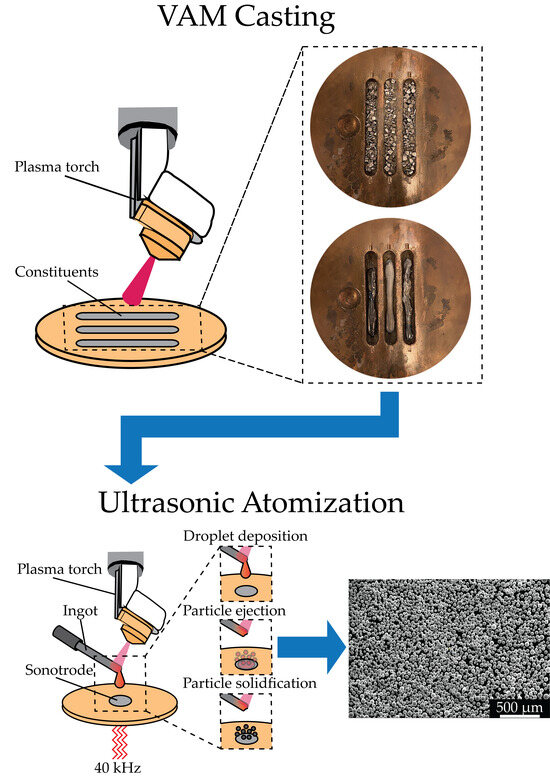
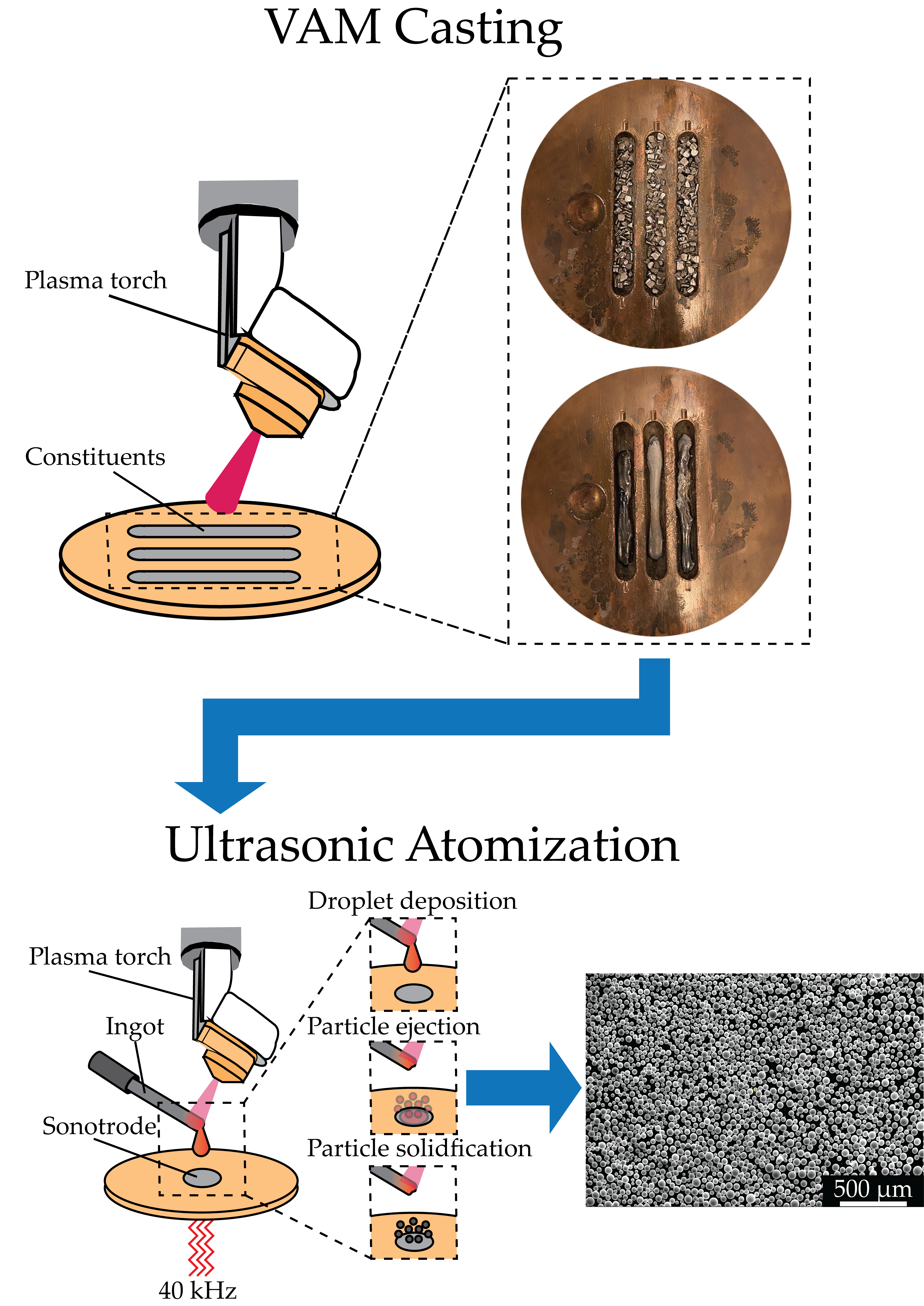
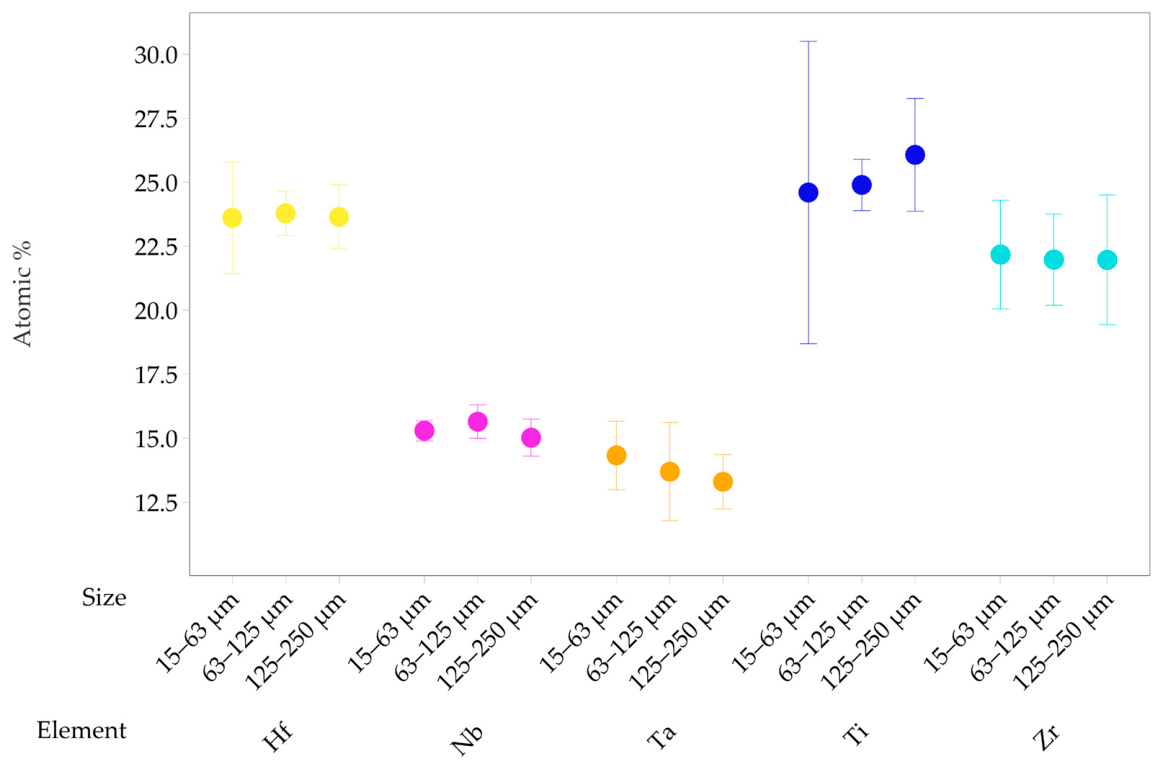
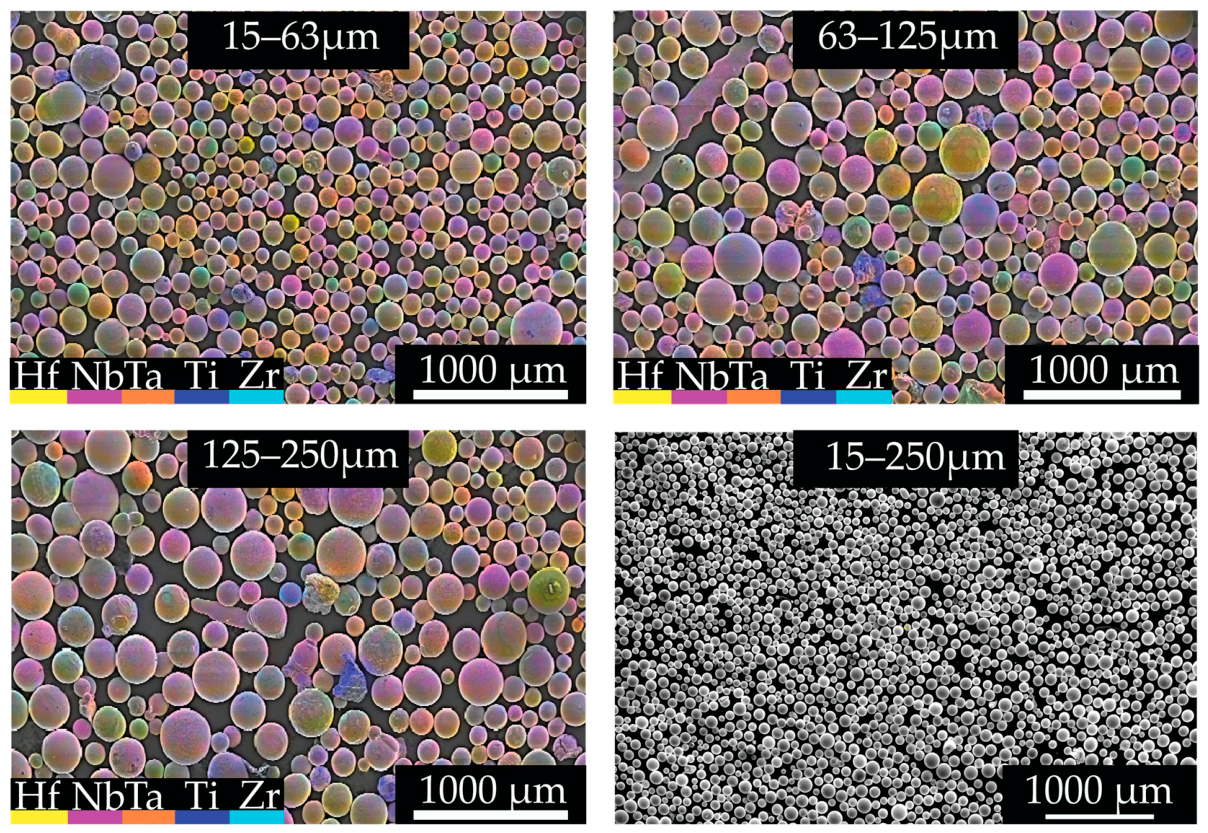
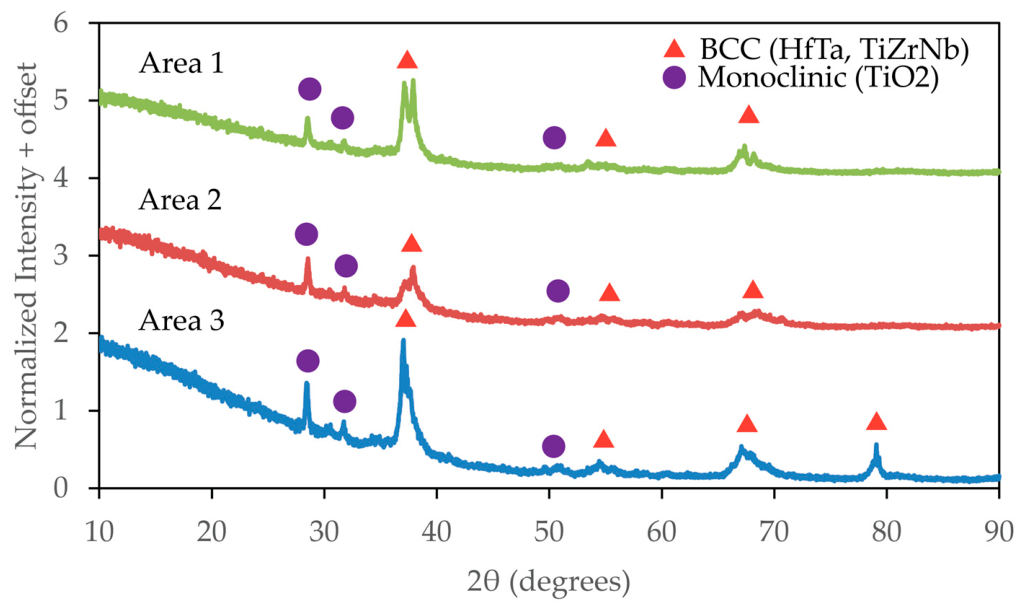
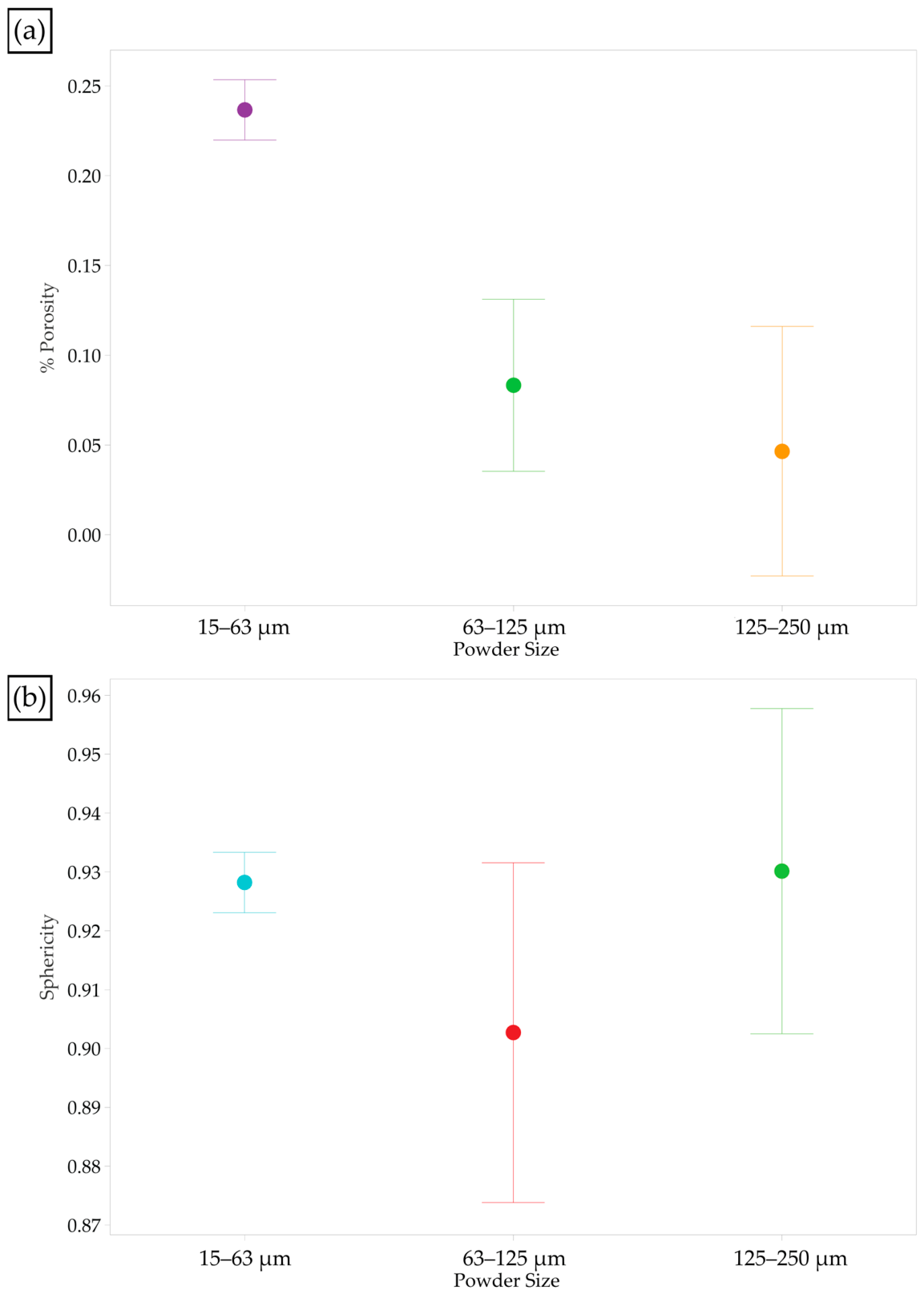
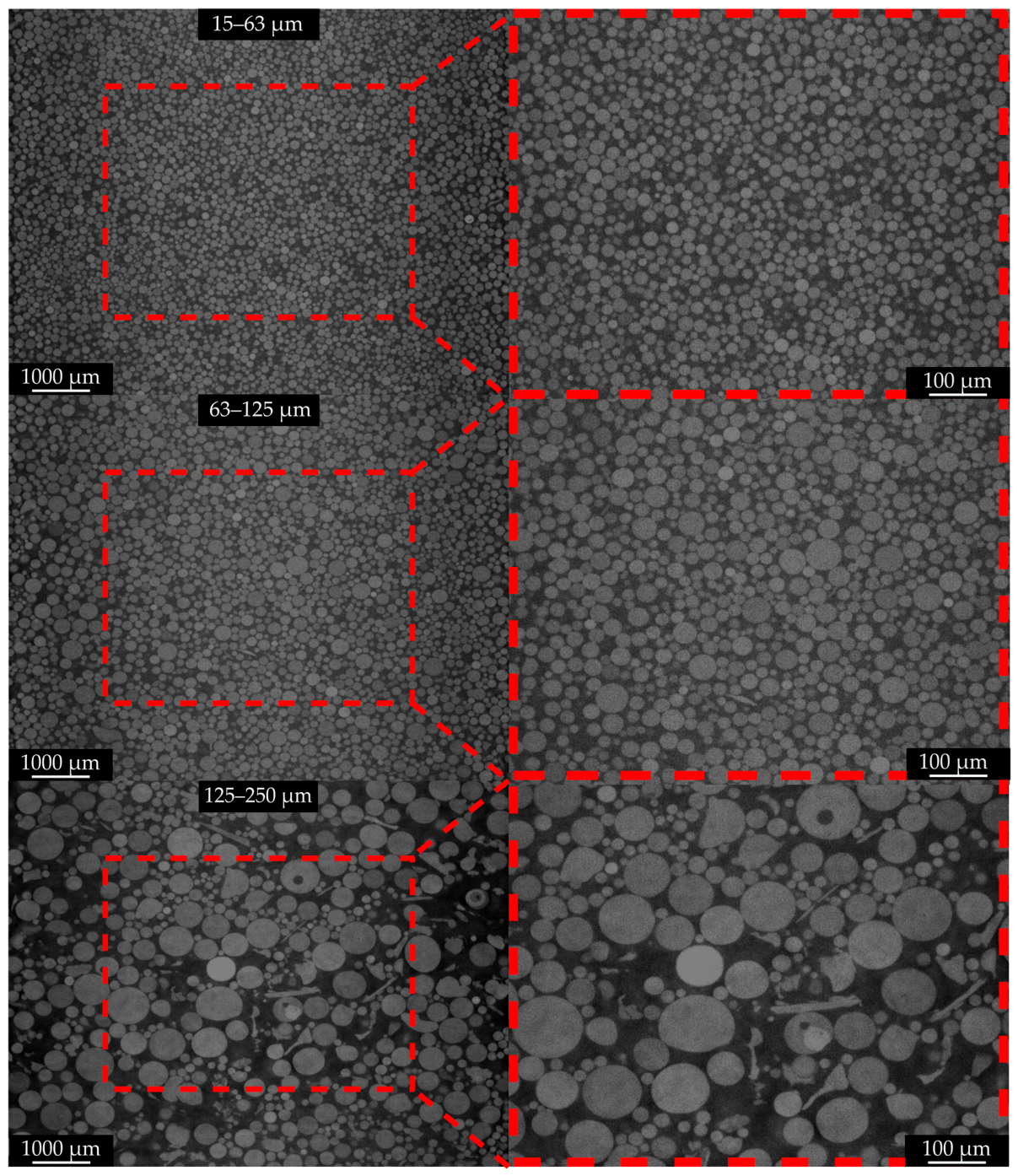
Growing attention in additive manufacturing (AM) of high-entropy alloys has intensified the demand for techniques in creating high-quality powder for AM. This study characterizes the effectiveness of a multifunctional vacuum arc melting (VAM) and ultrasonic-plasma atomization (UPA) system for creating TiZrNbHfTa powder. The focus is to evaluate the morphology, microstructural homogeneity, and phase composition of ultrasonically atomized powder to assess process capability for preparing powder feedstock for AM. Atomized powder was sieved into three size ranges, 15–63 µm, 63–125 µm, and 125–250 µm for characterization by scanning electron microscopy (SEM), electron dispersive spectroscopy (EDS), X-ray diffraction (XRD), and micro-computed tomography (micro-CT). SEM, EDS, and XRD results show that the powder is highly homogenous with an elemental distribution independent of powder size range and a microstructure comprising a BCC solid solution and minor monoclinic Ti oxide. Micro-CT scans indicate low porosity (0.24%, 0.08%, 0.24%) and high sphericity (0.93, 0.90, 0.93) for the 15–63 µm, 63–125 µm, and 125–250 µm distributions, respectively. Overall, the key innovation of this study is the successful application of ultrasonic atomization to produce high-quality TiZrNbHfTa refractory high-entropy alloy powder for additive manufacturing, a technique that has a limited scope of research. Specifically, this work demonstrates that ultrasonic atomization can produce highly homogeneous powder with high sphericity, low porosity, and a particle size distribution suitable for laser powder bed fusion and powder directed energy deposition, establishing ultrasonic atomization as a viable route for producing refractory high-entropy alloy powder for AM.
Keywords: refractory high-entropy alloy; ultrasonic atomization; vacuum arc melting; additive manufacturing; powder refractory high-entropy alloy; ultrasonic atomization; vacuum arc melting; additive manufacturing; powder
Graphical Abstract