Article

Observed Trends in Aviation-Related Weather Hazards at Major Italian Airports Under Changing Climate Conditions


by
Jessica Cagnoni
1,
Patrizio Ripesi
2,*,
Stefano Amendola
3,
Edoardo Bucchignani
4,* and
Myriam Montesarchio
4
1
Department of Biological and Environmental Sciences and Technologies, University of Salento, Via Monteroni 165, 73100 Lecce, Italy
2
ATM System Evolution and Strategic Services Planning, Enav Spa, Via Salaria 716, 00138 Rome, Italy
3
CNMCA, Italian Air Force, Pratica di Mare, 00071 Pomezia, Italy
4
Centro Italiano Ricerche Aerospaziali (CIRA), Via Maiorise, 81043 Capua, Italy
*
Authors to whom correspondence should be addressed.
Meteorology 2026, 5(1), 7; https://doi.org/10.3390/meteorology5010007
Submission received: 30 January 2026 / Revised: 12 March 2026 / Accepted: 13 March 2026 / Published: 20 March 2026

Abstract

Climate change (CC) is widely recognized as a major human concern, affecting society across all aspects and activities. Among various economic sectors, aviation is one of the most affected due to its exposure to adverse weather events. Consequently, adaptation and mitigation actions are becoming increasingly important to reduce the negative effects of CC-driven extreme weather events on aviation operations. In this study, we analyzed 30 years of historical aerodrome meteorological routine reports (METARs) from several major Italian airports to assess multi-decadal changes in aviation weather-related hazards, based on observational evidence such as convection, visibility, and snow and freezing precipitation. Furthermore, we examined the ERA5 reanalysis dataset to assess potential anomalies in the synoptic circulation over the Euro-Mediterranean region that may drive fluctuations in local airport climatology. Our results reveal relevant trends for the considered aviation-related weather hazards, while also indicating meaningful links to variations in local and synoptic patterns. The observed increases in 500 hPa geopotential height, 850 hPa temperature, and convective available potential energy (CAPE) lead to changes in the climatology of the airports considered, including a general enhancement of thermoconvective phenomena, a reduction in events associated with synoptic-scale disturbances, an overall decrease in snowfall, and contrasting trends in fog occurrence depending on local factors.

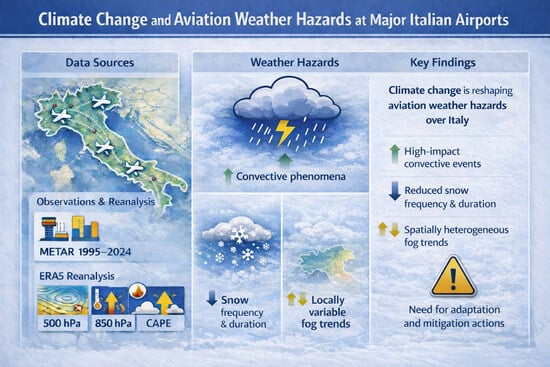
Graphical Abstract

1. Introduction

Climate change (CC) is one of the major global concerns, affecting ecological, environmental, socio-political, and socio-economic spheres [1,2,3]. Recent research based on climate models projects a global mean 2 m air temperature increase of between 2.1 and 3.5 °C by the end of this century, depending on the effectiveness of global decarbonization policies [4,5].
As the temperature rises, several changes in the atmospheric pattern occur, such as:
  • A shift in the jet stream, due to changes in the meridional temperature gradient, potentially weakening the zonal wind component and favoring greater Rossby wave undulation. This may lead to more persistent blocking configurations and quasi-stationary wave patterns, thereby increasing the duration of heatwaves, cold spells, and prolonged precipitation events or droughts [6,7].
  • An increase in the atmospheric water vapor content, leading to an increase in the frequency and intensity of extreme weather phenomena such as storms, hurricanes, heatwaves, heavy precipitation, flooding, and others [8,9].
These events have a profound impact on society, causing significant disruptions, casualties, and substantial economic losses [10]. Among different human activity sectors, aviation is one of the most vulnerable to the disruptive effects of CC due to its exposure to adverse meteorological conditions [11,12,13,14,15]. Weather significantly impacts the air transportation system, from airports to en-route operations, affecting punctuality, safety, and the environment. For example, adverse weather conditions are known to cause up to 40% of network delays measured in Europe [16] and the United States [17]. At the same time, excessive aircraft routing due to diversions, missed approaches, and, more generally, bad-weather avoidance maneuvers, increases CO2 and non-CO2 pollution from extra fuel consumption, thereby increasing the impact of aviation on the climate [18]. Furthermore, extreme weather conditions are responsible for several aviation-related safety issues, as in cases of thunderstorms [19,20,21] and low-level wind shear [22,23,24].
Several studies have recently examined the impact of CC on the aviation industry. The effect of CC on en-route turbulence has been investigated in [25,26,27,28], finding that projected changes in the latitudinal temperature gradient modify the jet stream and lead to an increase in clear-air turbulence (CAT) at transatlantic and global scales. Other studies [29,30] have focused on the effects of heatwaves on airport operations, showing that the expected rise in the frequency and intensity of heatwave events across Europe will reduce the takeoff performance of fixed-wing aircraft, with cascading impacts on payload limitations, scheduling, and overall airport capacity. The ERA5 reanalysis was used in [31,32] to develop a European climatology of environmental proxies associated with hazardous weather conditions that disrupt air traffic, identifying several trends consistent with a changing climate. In a recent review [33], the authors provided a comprehensive summary of research on the impact of CC on aviation, with particular emphasis on required adaptation measures. Finally, the WMO recently compiled all the topic findings into a detailed compendium [34], summarizing current knowledge on the effects of CC on weather hazards and aviation operations worldwide.
Considering the national scale, a limited but growing body of literature has begun to address climate risks for Italian airports. In recent research, ref. [35] high-resolution regional climate projections were applied to assess future climatic trends at Rome-Fiumicino Airport, highlighting potential implications for infrastructure resilience and operational safety. Resilience strategies for Milano Malpensa Airport under increasing adverse weather conditions were evaluated in ref. [36], while ref. [37] analyzed the intensification of mid-latitude storms and their operational impacts across European airports, with relevance to the Italian context. Furthermore, recent analyses by the INGV have documented an increase in turbulence in European and Mediterranean airspace, highlighting the potential risks to Italian aviation [38].
Although global interest in this topic is rapidly increasing, to the best of our knowledge, there is currently no dedicated assessment of how climate change is already affecting weather-related aviation hazards in Italy. Most existing studies rely primarily on future climate projections, whereas a comprehensive analysis of ongoing trends and observed changes in aviation-relevant weather hazards remains lacking. This aspect is especially significant given that Italy is one of the major players in the European aviation sector, and considering that the impacts of CC remain highly heterogeneous, affecting some regions more severely than others [39,40]. Since the Mediterranean basin is widely recognized as one of the world’s climate hotspots, as its unique morphology amplifies and intensifies the impacts of climate change compared with other regions [41,42], it is essential to analyze the Italian context in detail, as this area faces significantly heightened climate change impacts. Furthermore, assessing how CC may alter the typical occurrence patterns of adverse weather events is crucial for identifying potential mitigation and adaptation strategies, including enhancing airport infrastructure and operational technologies.
To address this gap, in this study, we analyzed the historical series of aerodrome meteorological routine reports (METARs) from 1995 to 2024 for thirteen major Italian airports, focusing on a list of aviation-related weather hazards to highlight possible changes in the frequency and duration of weather events. The use of observed weather data allows us to focus on what is happening rather than on what we expect to happen, providing strong evidence to validate climate projections. In fact, analyzing weather reports allows us to identify statistically significant trends and changes that have occurred or are underway. Such observation-based evidence is therefore fundamental for characterizing long-term climatic trends, although formal detection and attribution of climate change are beyond the scope of this study.
In addition to the METAR analysis, ERA5 data were used to investigate synoptic-scale and thermodynamic anomalies, in order to provide a physically consistent framework for interpreting the observed trends in weather-related hazards.
The paper is organized as follows. In Section 2, we describe the aerodromes, data, and variables used in this study. In Section 3, we present the results obtained from the analysis of aviation-related weather hazards, grouped by type and climate area. In Section 4, we present a summary of the main findings, including an assessment of their statistical significance. The results are further discussed within a broader physical framework by analyzing the associated large-scale circulation patterns and thermodynamic conditions based on the ERA5 reanalysis. Finally, Section 5 provides conclusions and future perspectives.

2. Materials and Methods

2.1. Data and Methods

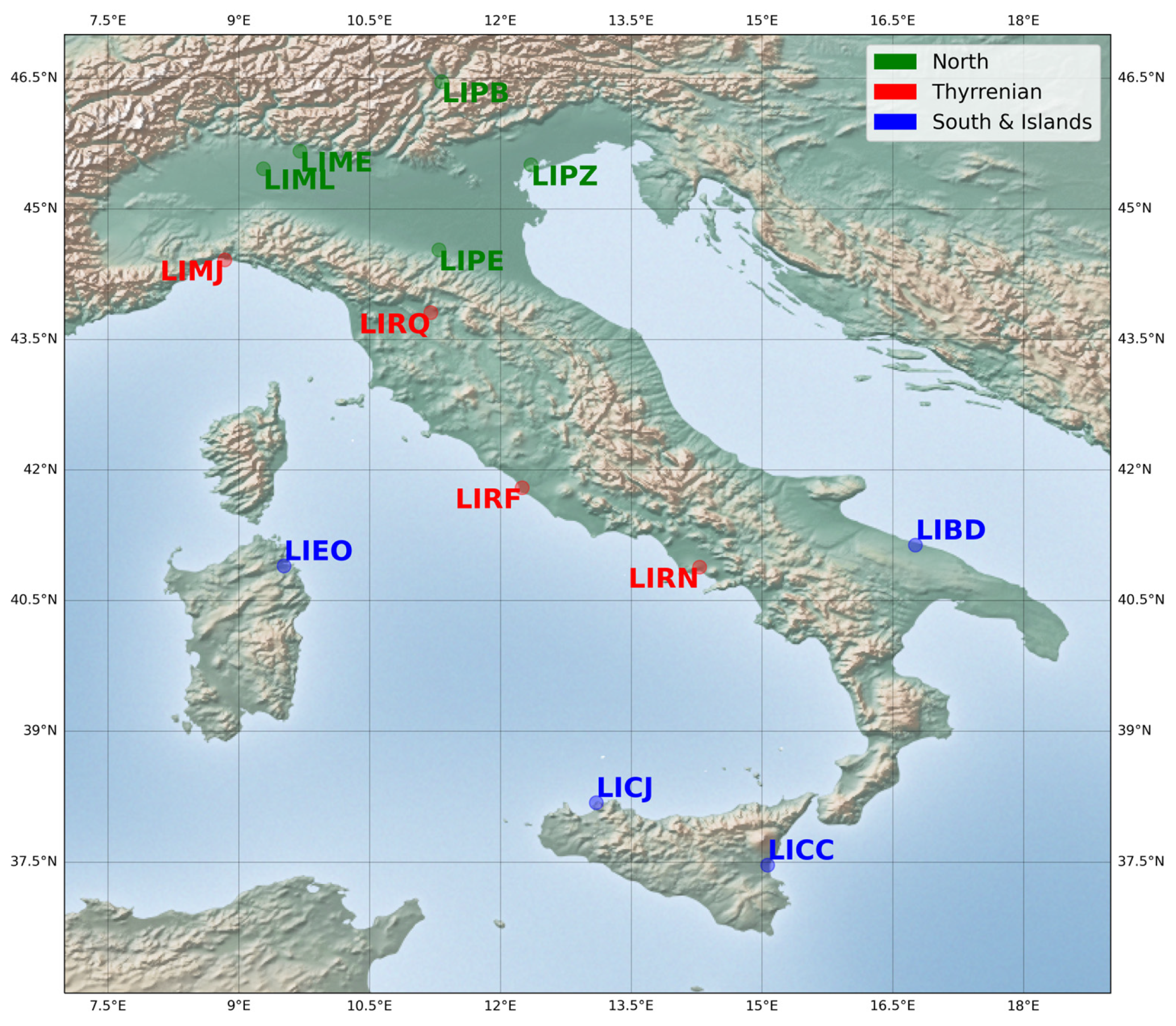
In this study, data from regular and special meteorological aviation reports (METARs and SPECIs) collected from 1995 to 2024 were used for thirteen major Italian airports distributed across the country. Airports were selected considering their national relevance in terms of annual passenger and movement counts, and to uniformly cover the three Italian macro-climatic zones [43] as follows (with the corresponding ICAO codes in brackets):
  • For the North: Bolzano (LIPB), Venezia-Tessera (LIPZ), Bologna (LIPE), Bergamo-Orio al Serio (LIME), and Milano-Linate (LIML);
  • For the Tyrrhenian: Genova (LIMJ), Firenze-Peretola (LIRQ), Roma-Fiumicino (LIRF), and Napoli-Capodichino (LIRN);
  • For the South and Islands: Bari-Palese (LIBD), Catania-Fontanarossa (LICC), Palermo (LICJ), and Olbia (LIEO).
The locations of the listed aerodromes are shown in Figure 1.
The METAR consists of a routine message issued every hour (at HH.50) or half-hour (at HH.20 and HH.50), providing aeronautical users with information on the aerodrome’s meteorological conditions for an area of interest up to 16 km in radius from the airport reference point [44,45]. Meteorological parameters listed in the METAR typically include 10 m wind direction and speed, visibility, precipitation type and intensity, cloud cover extent with base height, temperature, pressure, and other weather phenomena significant to air traffic control and airport operations. These reports are compiled by the Aeronautical Meteorological Observer (AMO) based on data from ground sensors and direct observation. Like a METAR, a SPECI is a meteorological report containing the same set of parameters. The key difference is that a SPECI consists of a special emission issued between scheduled reports for aerodromes providing hourly METARs, to report when weather conditions change significantly relative to the previous observation. Given their overall identical essence, any reference to METARs from now on is also intended to include special reports where available.
Because METAR observations may be affected by data integrity and continuity issues due to temporary AMO unavailability or broader technical failures, their use in data analysis requires careful handling procedures before processing. To this end, we applied a rigorous multi-step data-cleaning process as follows:
  • All the typographical errors (e.g., GB instead of CB and so on) were identified and corrected;
  • Empty records (METAR NIL) or those obtained from fully automated observations (METAR AUTO) were excluded, since the latter may not correctly resolve some of the weather hazards;
  • Redundant entries resulting from METAR correction messages (METAR COR) were removed.
Following data cleaning, approximately 3 per cent of the total METARs were excluded from the analysis. We then performed a statistical analysis of the selected weather phenomena listed in Section 2.2, considering the 30-year climatological mean, the annual frequency of occurrence, and the average duration per event, where the following applies:
  • The frequency of occurrence is expressed as days of hazard per year, corresponding to the number of days in the year during which the hazard was reported in at least one METAR;
  • The average duration per event is calculated by summing the time extensions of the METARs reporting the selected hazard over one year and dividing by the corresponding annual number of days with the hazard.
Multi-year trends were then estimated using ordinary least squares (OLS) regression, and their statistical significance was assessed with the non-parametric Mann–Kendall (MK) test. In addition to METARs, we analyzed the 1981–2024 ERA5 (ECMWF Reanalysis) dataset for 500 hPa Geopotential height, 850 hPa temperature, and Convective Available Potential Energy (CAPE). The ERA5 is the latest global atmospheric reanalysis produced by ECMWF, providing hourly estimates of atmospheric, land, and oceanic variables at 0.25° spatial resolution by combining model simulations with a comprehensive set of observations through data assimilation [46]. In our study, daily aggregated data were analyzed to assess anomalies in Euro–Mediterranean circulation patterns over the period 2011–2024, using the 1981–2010 climatological mean as the reference baseline. Specifically, normalized annual anomalies for 1995–2024, computed relative to the same 1981–2010 period, were investigated for 500 hPa geopotential height, 850 hPa temperature, and CAPE.

2.2. List of Airport Weather Hazards

Adverse weather conditions can cause significant disruption to airport operations, affecting all stakeholders, including pilots, ATC, passengers, and airport management companies. The impact of weather on airport performance, quantified as the deviation between actual and scheduled timestamps, has been extensively investigated by EUROCONTROL through the ATM Airport Performance (ATMAP) weather research contest [47]. This framework assigns severity scores to five categories of adverse weather phenomena: ceiling and visibility (score 5), wind (score 4), precipitation (score 3), freezing conditions (score 4), and hazardous meteorological conditions due to hail, snow, thunderstorms, convective clouds, showers, and so on (score up to 24). These scores reflect the operational effects of these weather factors, which depend on their frequency, intensity, duration, and on the availability of local airport technologies designed to mitigate their adverse impacts.
Following this principle, in our case study, we selected a set of aviation-related weather hazards, including convective clouds, convective precipitation, limited visibility, and snow and frozen precipitation. The selection criteria were based on the operational impact and climatological relevance of the phenomena for the selected Italian airports, ensuring also a sufficient frequency of occurrence to support robust statistical analysis and the identification of potential trends. The selected hazards and their descriptions are summarized in Table 1, while illustrative examples of their operational impact on airport operations are provided in [48,49].

3. Results

In this section, we present the results of analyzing aviation-related weather hazards, grouped by type and climate area (Figure 1; Table 1). First, we examine the seasonal evolution of hazards over the 30-year climatological reference period. Next, we analyze their annual variability over the entire timeframe, focusing on long-term changes. Trends are estimated using OLS regression for the 1995–2024 period and are expressed as the total change in the number of hazard days per year (called the frequency) and in the average duration of hazard events, measured as the mean duration per event.

3.1. Convection

Convection encompasses a range of meteorological hazards rather than a single phenomenon, including vertically developed clouds, turbulence, icing, severe precipitation, lightning, and hail. For this reason, we opted to present the analysis by grouping all convection-related hazard categories into a single discussion.
It is worth noting that errors may arise from inherent limitations in AMOs’ on-eye observations of CBs and TCUs, especially when the convective clouds are obscured or embedded. Additional uncertainties could also affect SH reports associated with heavy precipitation that is not strictly of convective origin. However, because these uncertainties are expected to be random rather than systematic, they are unlikely to bias the long-term trends derived from the statistical analysis. Finally, as the analysis of the mean duration for the hazards considered does not indicate any significant changes over the 30-year record, its results are not presented.

3.1.1. North

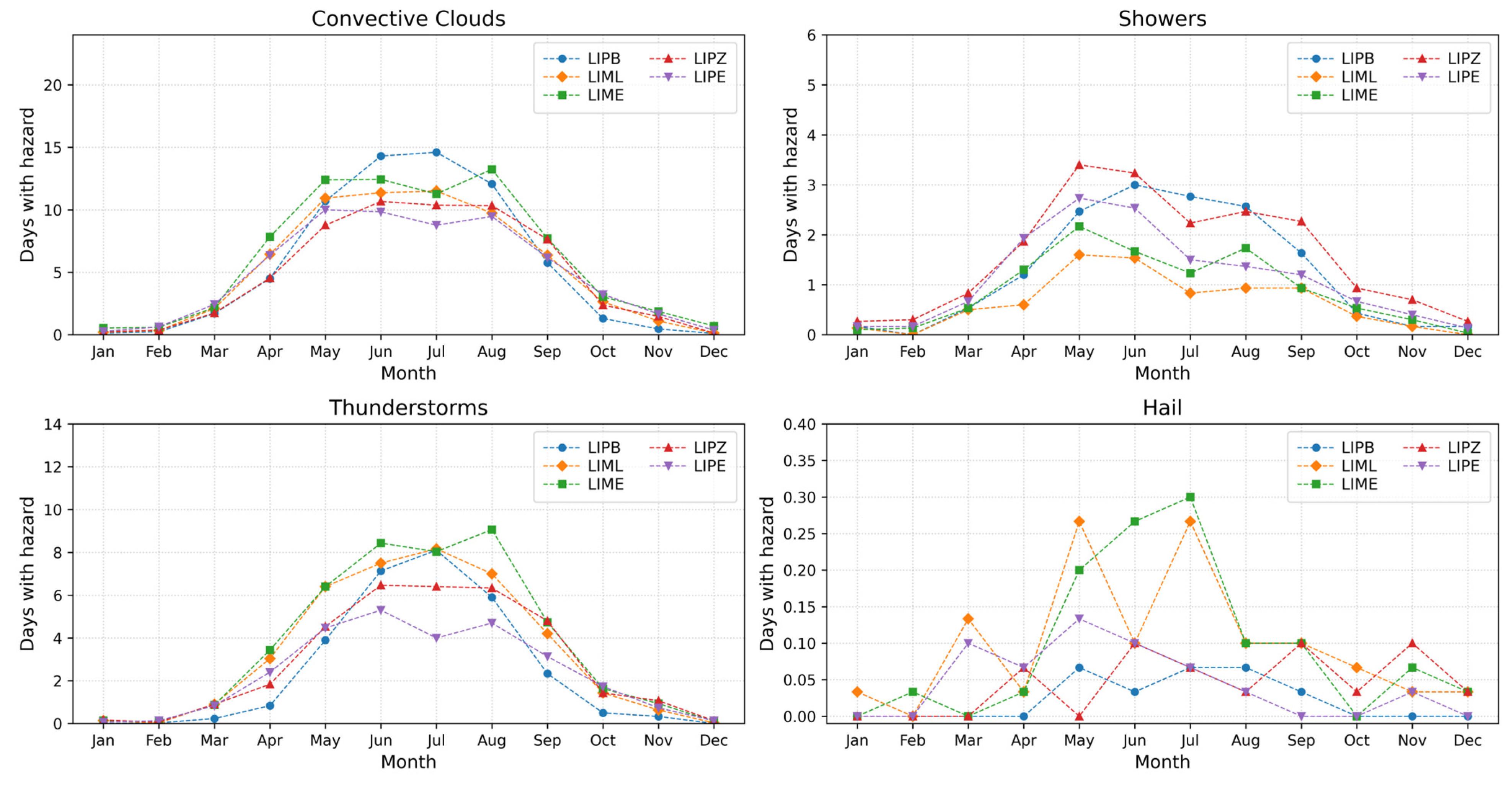
Figure 2 shows the 30-year monthly climatology of convection-related aviation hazards for the selected aerodromes in Northern Italy. As shown, all hazards exhibit a pronounced seasonal cycle, with negligible occurrence in winter and a marked increase from late spring to summer.
Convective cloud occurrence increases sharply from early spring, moving from near-zero winter values to more than ten convective cloud days per month between June and August, consistent with enhanced surface heating and/or orographic lifting along the Alpine foothills. The rapid autumn decline reflects the loss of thermal forcing from reduced daytime heating. Showers follow a similar seasonal evolution, with a maximum generally occurring between May and June and a gradual decrease toward autumn, suggesting a stronger contribution from thermodynamically driven storms. The relatively uniform values in late summer and early autumn imply a transition toward less frequent but more organized precipitation, associated with the passage of the first seasonal frontal disturbances. Thunderstorm activity is more frequent than showers at all aerodromes, mirroring the seasonal distribution of convective clouds and exhibiting a pronounced peak from June to August, with an average of more than eight TS days per month. The abrupt autumn decline reflects the reduced ability of storms to sustain deep, electrified updrafts, despite occasional convective cloud development. Hail occurrences exhibit the same seasonal pattern as thunderstorms, though at a lower frequency.
Overall, the climatological analysis highlights the dominance of thermally driven convection at Northern Italy sites, resulting in a compact, well-defined summer maximum for all convection-related aviation hazards, consistent with the thermal, solar-heating-induced origin of the phenomenon typical of this area [31].
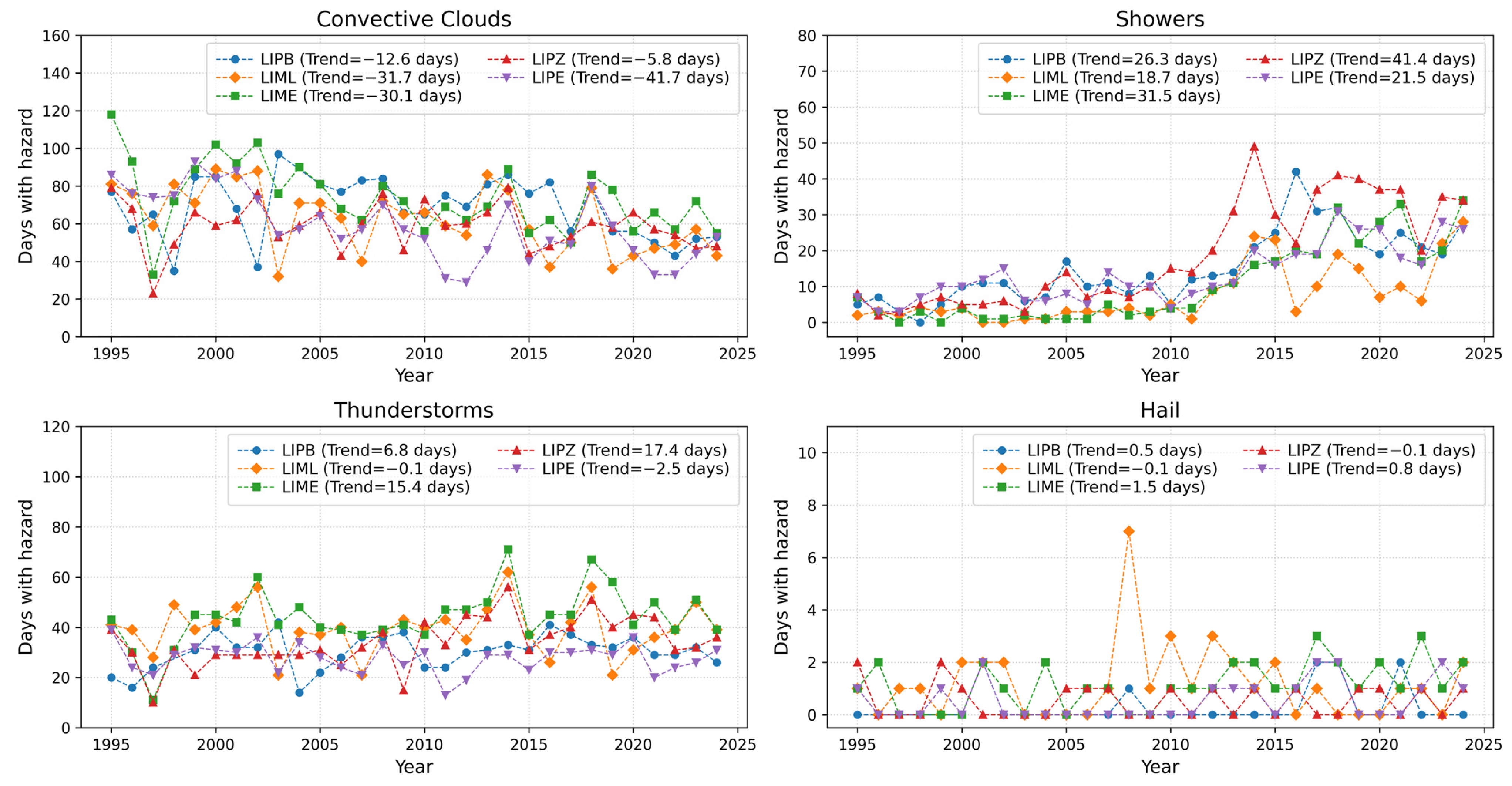
In Figure 3, we show the annual frequency of convection-related hazards from 1995 to 2024. As shown, there is a clear divergence between the long-term evolution of convective cloud occurrence and that of active convective phenomena. Specifically, the annual number of days with reported convective clouds decreases markedly at almost all aerodromes, with 30-year trends ranging from −5.8 convective cloud days per year at LIPZ to −41.7 convective cloud days per year at LIPE.
In contrast, the number of days affected by convective weather phenomena shows a general increase in annual frequency. Thunderstorms exhibit positive trends at most locations, with the strongest increase at LIPZ (+17.4 TS days per year) and LIME (+15.4 TS days per year). Showers show the most pronounced upward trends, with the number of hazard days per year ranging from +18.7 SH days per year at LIML to +41.4 SH days per year at LIPZ. Seasonal analysis indicates that these trends are primarily driven by a general increase in TS and SH conditions during spring and summer at LIPZ, LIME, and LIPB, whereas conditions at LIPE and LIML remain substantially unchanged. Hail events remain comparatively sporadic and are characterized by large interannual variability, with trend estimates near zero at most aerodromes and a maximum increase of +1.5 GR days per year at LIME.
These contrasting trends suggest a profound change in the mechanisms underlying convective activity rather than a simple increase or decrease in convection frequency. While the occurrence of cumulonimbus and towering cumulus clouds becomes less frequent overall, the likelihood of high-impact convective events associated with thunderstorms and intense precipitation generally increases. Although this behavior may seem counterintuitive, it is consistent with the concept of explosive convection [50,51]. In this framework, convective lifting is largely suppressed, allowing substantial thermal energy to accumulate in the lower and mid-troposphere. If this convective inhibition is overcome, as during days of strong surface heating or with unstable atmospheric profiles, strong updrafts develop rapidly, leading to the sudden formation of convective clouds that are more productive in terms of weather phenomena, such as thunderstorms and showers.
This interpretation suggests a convective regime in which a lower frequency of convective clouds is associated with higher frequencies and intensities of convective phenomena, leading to more extreme weather events.

3.1.2. Tyrrhenian

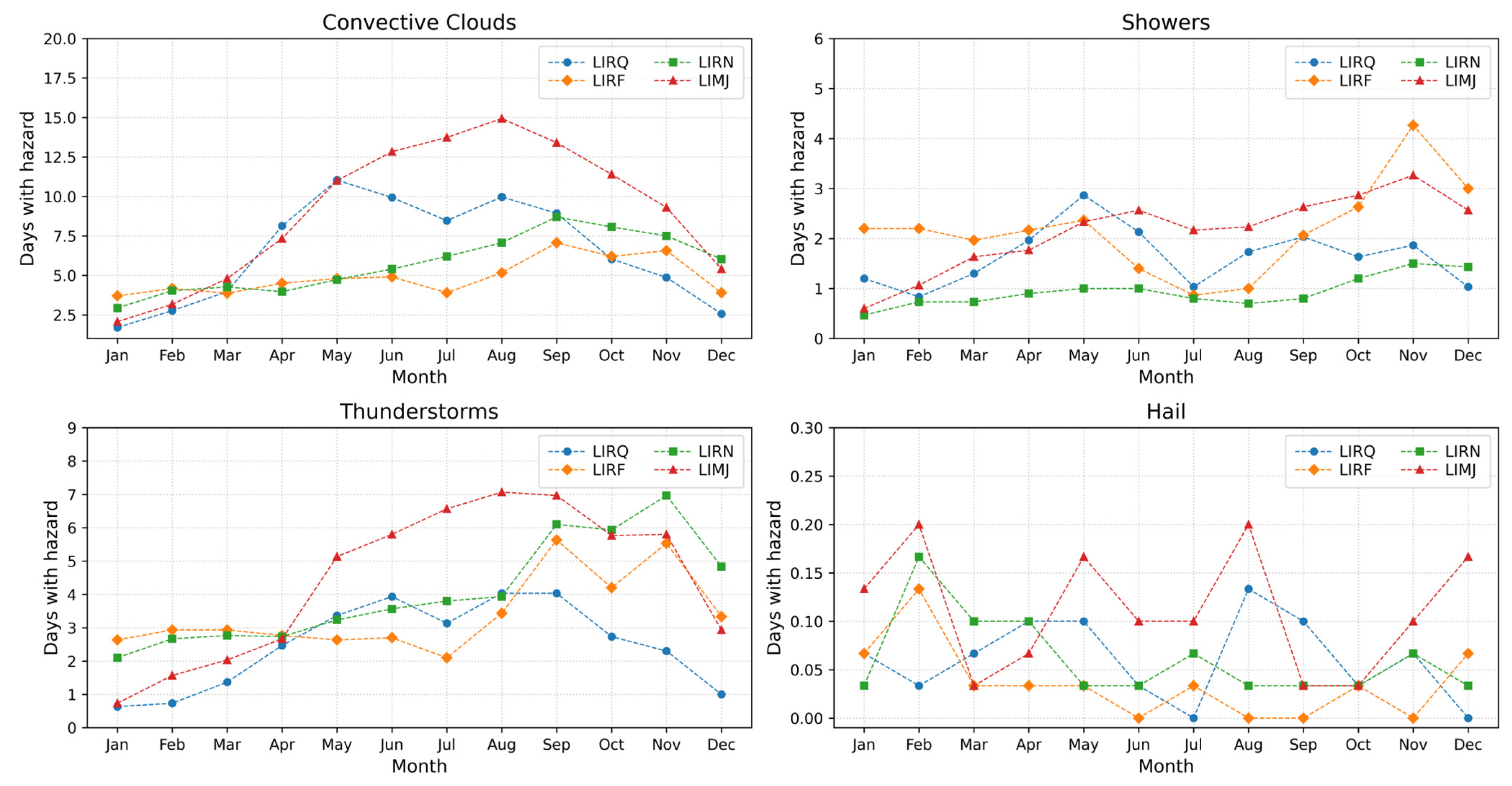
In Figure 4, we present the 30-year monthly climatology of convection-related aviation hazards for the selected aerodromes in the Tyrrhenian area. As is visible, the seasonal variability is strongly influenced by site location.
Regarding convective clouds, aerodromes near orographic areas exhibit a pronounced summer peak of more than ten convective cloud days per month, driven mainly by thermal convection from solar heating. In contrast, airports located in coastal areas show a peak in autumn, reflecting the combined influence of warm sea surface temperatures and synoptic-scale disturbances. It is also noteworthy that LIRF and LIRN display a secondary convective component of thermal origin, while LIMJ presents a secondary convective component related to synoptic-scale disturbances, as evidenced by elevated values during summer and autumn, respectively.
Showers exhibit a similar but less pronounced seasonal pattern, suggesting that a substantial fraction of convective clouds, especially during summer, are either short-lived or inefficient at producing precipitation. Coastal sites experience enhanced activity during autumn months, indicative of a shift toward more dynamically forced convection associated with frontal systems and increased large-scale ascent, which favor more organized and rain-efficient convective structures. Thunderstorms are more frequent than showers at all aerodromes, following the same seasonal distribution of convective clouds but with more pronounced peaks in late summer or autumn at coastal aerodromes, due to the combined effect of higher sea surface temperatures and synoptic perturbations that enhance atmospheric instability. Hail occurrence is sporadic and shows weak seasonality, underscoring the need for a specific combination of strong updrafts, favorable freezing-level heights, and wind shear. Hail events outside the core convective season, notably at LIRF, LIRN, and LIMJ, further support the role of dynamically driven storms rather than purely thermodynamic controls.
Overall, the climatological analysis of the Tyrrhenian sites shows that convective hazards are governed by distinct physical processes that vary seasonally and regionally. Aerodromes near the coast are more influenced by storm-organized convection due to large-scale dynamical forcing. By contrast, inland aerodromes are mainly subject to thermal convection driven by solar heating.
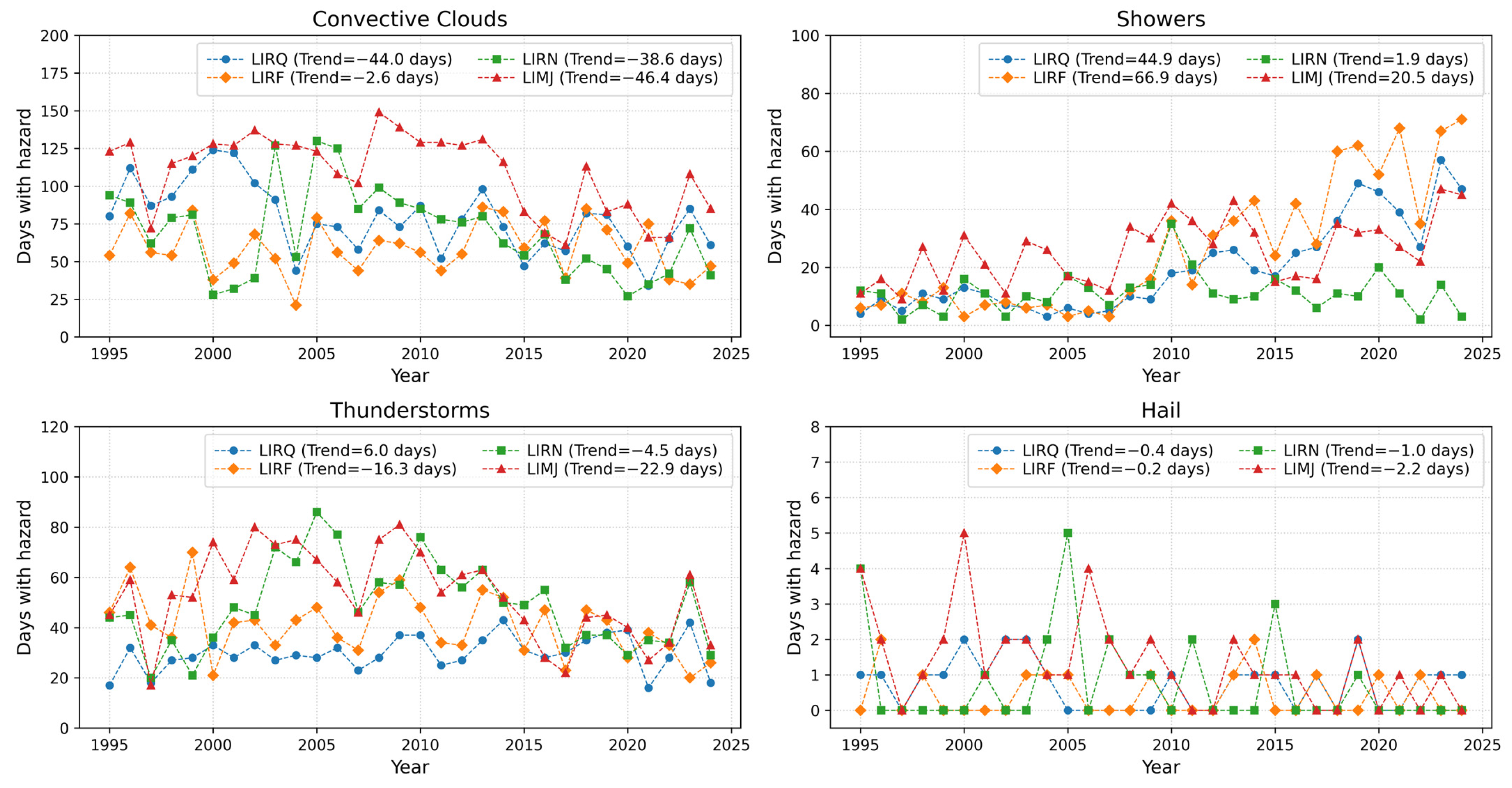
Figure 5 shows the annual frequency of convection-related hazards from 1995 to 2024. As for Northern aerodromes, the analysis reveals a clear divergence between the long-term evolution of convective cloud occurrence and that of active convective phenomena. Specifically, the annual number of days with reported convective clouds, despite marked interannual variability, shows a progressive reduction at almost all aerodromes, with 30-year trends ranging from −2.6 hazard days per year at LIRF to −46.4 hazard days per year at LIMJ.
Days affected by convective weather phenomena show contrasting behavior. Shower frequency increases, with the highest values at LIRF (+66.9 SH days per year), mainly driven by an increase in SH conditions during winter and spring. In contrast, thunderstorm days exhibit weak, regionally mixed trends. LIRF, LIMJ, and LIRN show negative trends, with LIRF and LIMJ reporting −16.3 and −22.9 TS days per year, respectively. Conversely, LIRQ exhibits a marginal increase of +6.0 TS days per year. Seasonal analysis indicates that these trends are primarily driven by a decrease in thunderstorm conditions during autumn and summer at LIRF, whereas at LIMJ the reduction is mainly associated with a decline in summer TS occurrences. Hail events remain comparatively rare, with large interannual variability and low annual counts, where only LIMJ shows a consistent trend of −2.2 GR days per year.
These contrasting trends suggest that changes in convective activity over the Tyrrhenian area may be linked to changes in the synoptic circulation. Because TSs at the Tyrrhenian coastal aerodrome are mainly caused by the interaction between the warm sea and synoptic disturbances, a reduction in their frequency indicates a change in the synoptic circulation that leads to weaker and less frequent frontal development. Nonetheless, LIRQ is the only aerodrome showing a slight increase in the number of TSs, likely due to the different nature of the forcing, which is mainly linked to thermal convection. In contrast, SH exhibits a general increase in the frequency, which may be associated with enhanced precipitation intensity resulting from higher atmospheric water vapor content, driven by rising sea surface temperatures in a warming climate.

3.1.3. South and Islands

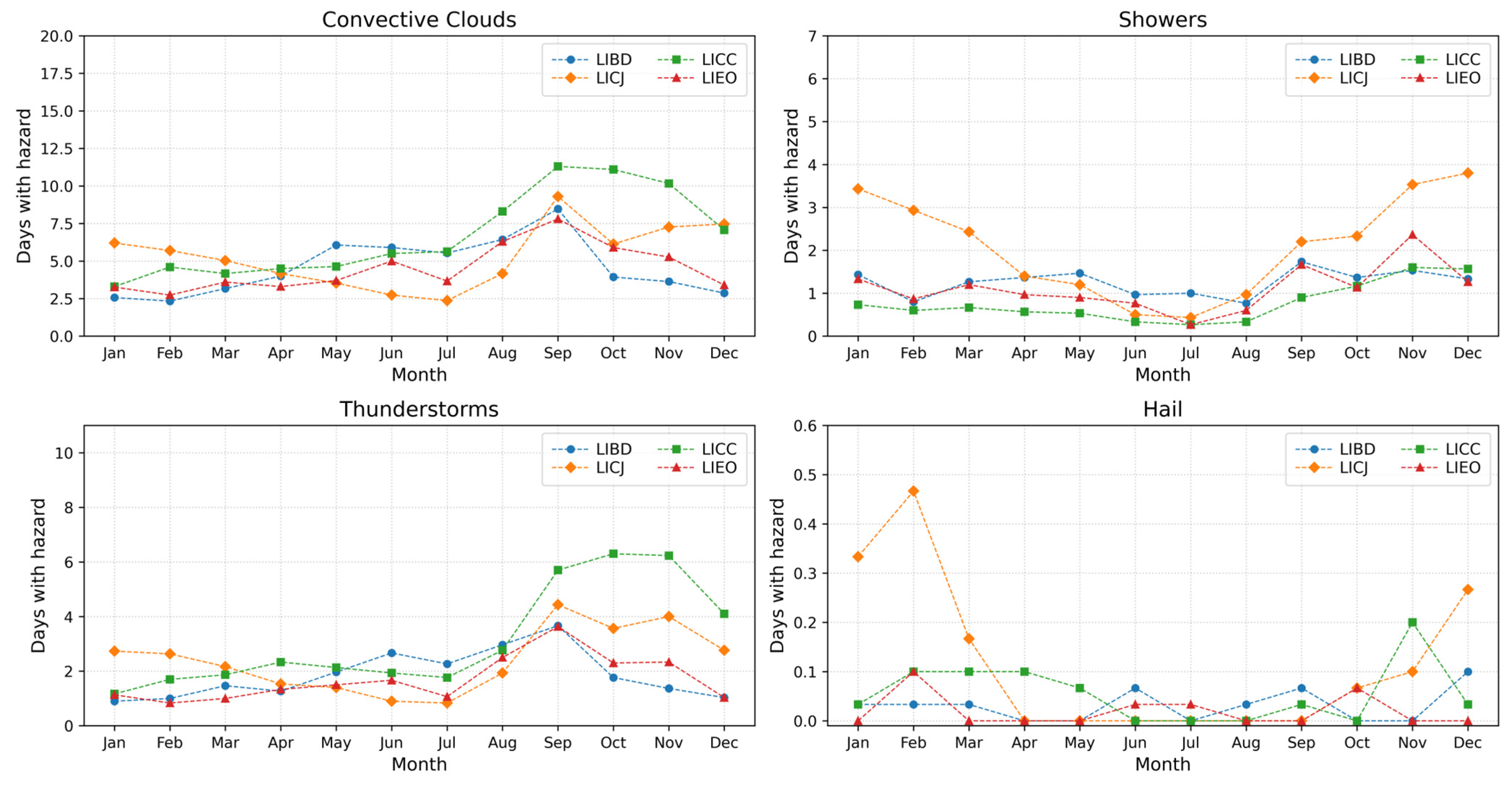
In Figure 6, we present the 30-year monthly climatology of convection-related aviation hazards for the selected aerodrome in the southern and island areas. The graph reveals distinct seasonal behavior, with an increase in the influence of maritime forcing.
Convective clouds exhibit a pronounced seasonal cycle, with minimum frequencies in late winter and a marked increase from midsummer to early autumn, particularly evident over LICC. This behavior suggests that the availability of moisture, elevated sea surface temperatures, and the increased incidence of synoptic-scale disturbances during the transition season primarily determine an increase in the development of convective clouds.
Showers exhibit a weaker but still discernible seasonal modulation, with relatively low frequencies in summer and secondary maxima in autumn and winter, most visible in LICJ and LIEO. This behavior suggests a stronger contribution from large-scale processes outside the peak convective season, modulated by regional circulation patterns. Thunderstorms show a clear late-summer to early-autumn maximum, most notably over LICC, with more than six TS days per month, consistent with enhanced convective instability, higher sea surface temperatures, and increased atmospheric moisture content near the warm season. Conversely, thunderstorm activity is minimal during the winter months at all sites. Hail occurrence is rare and episodic, with no clear seasonal maximum. Isolated events occur in late winter and autumn, consistent with lower freezing-level heights and stronger dynamical forcing. The scarcity of hail in midsummer, despite frequent convection, suggests that elevated freezing levels and warm clouds limit its development.
Overall, the southern regions exhibit a convective hazard regime closely tied to synoptic-scale dynamics and seasonal transitions, underscoring the importance of Mediterranean forcing in shaping the convective hazard climatology.
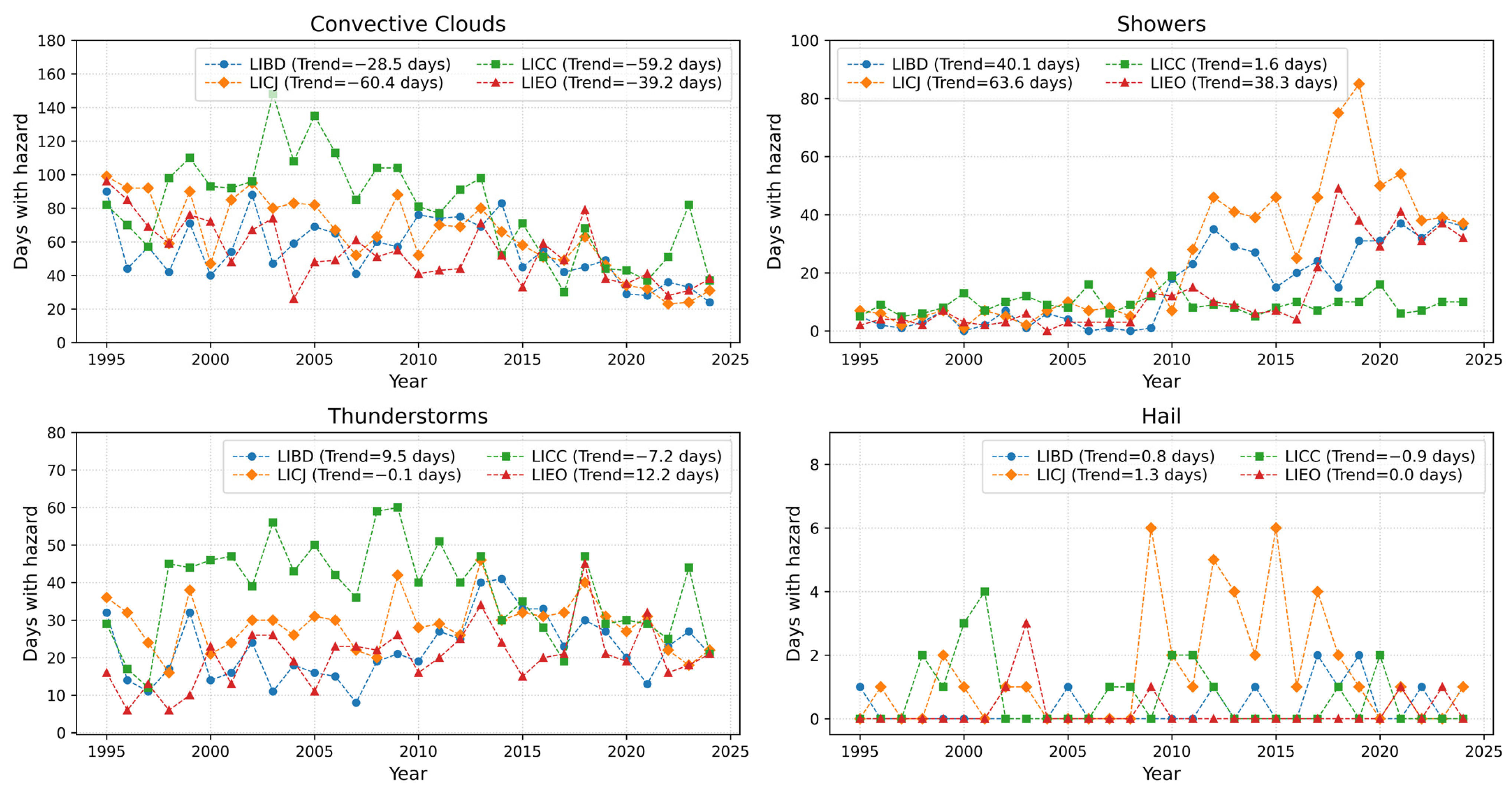
Figure 7 shows the annual frequency of convective-related hazards from 1995 to 2024. As in the other areas, the analysis reveals a marked divergence between the evolution of convective clouds and the corresponding phenomena. All sites exhibit a clear negative trend in convective cloud occurrence, with the most pronounced decrease observed at LICJ and LICC, where the annual number of hazard days declined by 60.4 and 59.2 days, respectively, over the 30-year period. In contrast, shower days show a pronounced upward trend over the period considered, with a maximum at LICJ, where the annual number of shower days increases by 63.6 days. Seasonal analysis indicates that shower trends are primarily driven by increases in SH conditions across all seasons, with the strongest signals occurring during autumn and winter. Thunderstorm days show weaker trends, with slightly positive values at LIBD and LIEO and negative values at LICJ and LICC, depending on site latitude and local climatology. Hail events are sporadic, with trend estimates near zero and large interannual variability.
These results confirm trends observed in other climate regions, namely that convective events are less frequent but more intense, in line with theoretical expectations in a warming climate.

3.2. Snow and Frozen Precipitation

In this section, we present the results of the analysis of snow and frozen precipitation hazards at the selected aerodromes (Figure 1; Table 1). Since these phenomena occur only during the winter, we intentionally omitted the seasonal analysis, as it would add limited interpretive value while unnecessarily increasing the manuscript’s length. However, since the number of hazard days per year is insufficient to fully characterize the long-term evolution for this class of meteorological hazards, we introduce an additional metric based on mean event duration, expressed as the average percentage of hours per event. This allows for a more comprehensive evaluation of changes in operational relevance over the 30-year evolution.

3.2.1. North

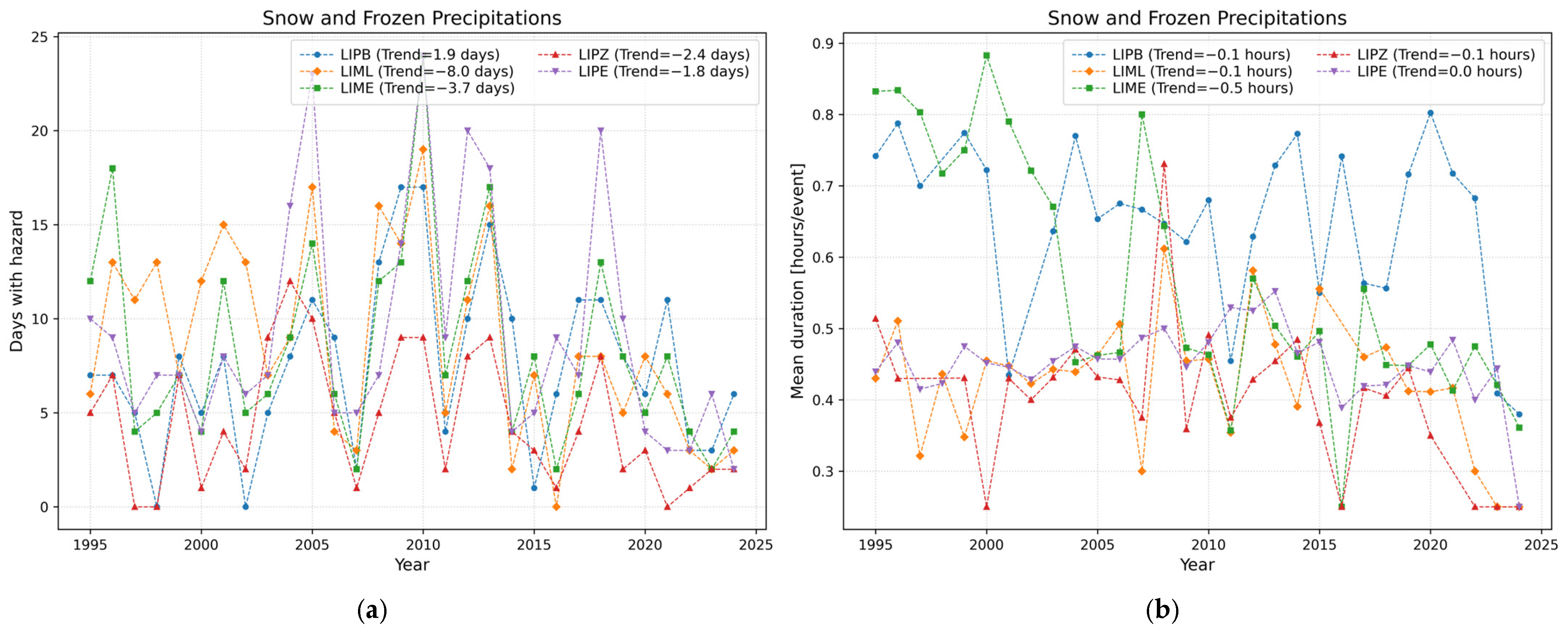
Figure 8 shows the annual distributions related to snow and frozen precipitation events from 1995 to 2024 for the selected northern aerodromes. The left panel displays the annual number of days affected by the hazard, while the right panel shows the corresponding mean event duration.
As shown, the distributions exhibit pronounced interannual variability, with peaks occurring mainly in the mid-2000s and early 2010s, coinciding with the major European cold waves of 2005, 2010, 2012, and 2018. Outside these events, frozen precipitation occurs almost regularly during the winter season at all sites, although a general decrease in both frequency and average duration is observed. The strongest decline in the number of hazard days per year (Figure 8a) is observed at LIML, followed by LIPZ and LIME, with −8, −2.4, and −3.7 snow/ice days per year from 1995 to 2024, respectively. Similarly, the mean duration of snow and frozen precipitation events decreases overall at all sites (Figure 8b), indicating a substantial shortening of individual events. LIME displays the most pronounced reduction in hazard duration, with a mean decrease of about 0.5 h per event, whereas slight declines are observed at LIPB, LIPZ, and LIML.
Although year-to-year fluctuations remain significant, the combined decrease in both frequency and duration suggests a progressive weakening of snow and frozen precipitation events at the northern Italy aerodrome. These changes may be related to variations in both synoptic and local factors, including decreased cold wave frequency, increased surface and high-altitude temperatures, and observed reductions in winter precipitation [52].
This finding is consistent with theoretical expectations under warming climate conditions, likely associated with regional warming and changes in atmospheric circulation patterns that affect winter precipitation regimes.

3.2.2. Tyrrhenian

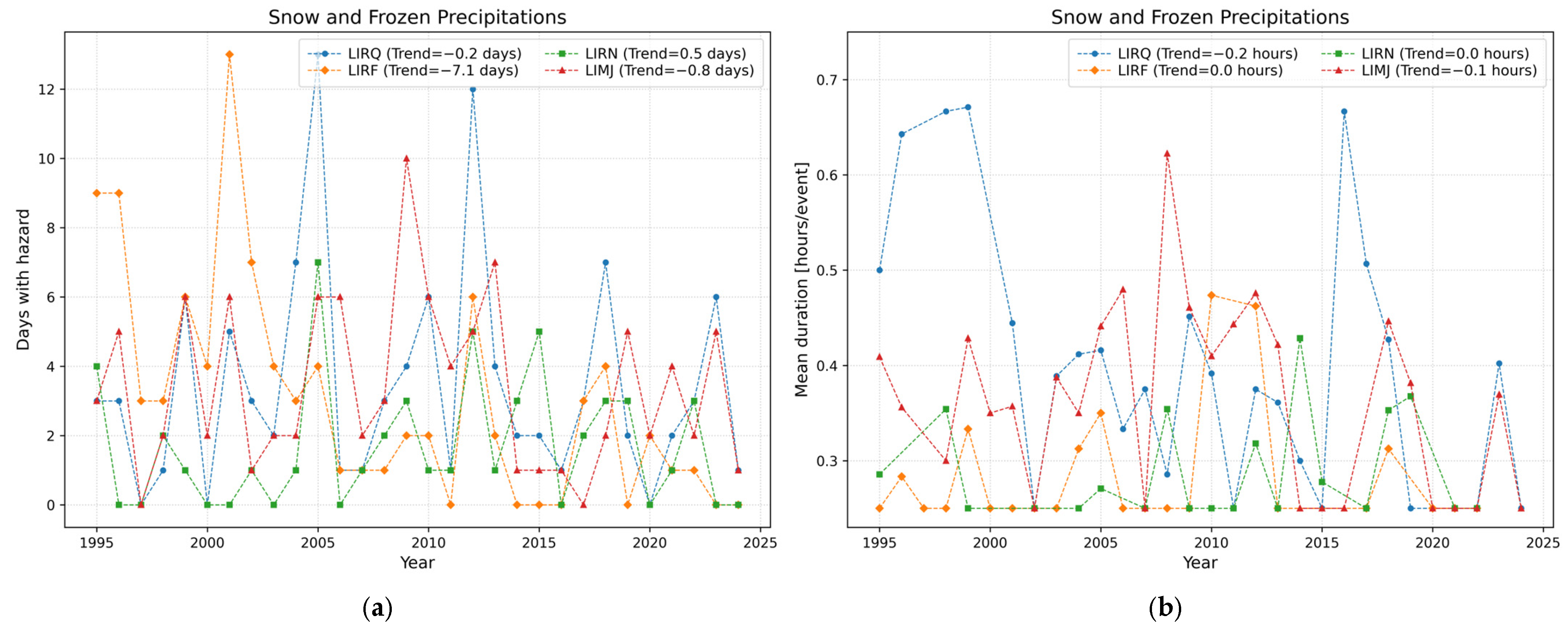
Figure 9 presents the interannual variability of snow and frozen precipitation at the Tyrrhenian selected aerodromes for the considered period, showing the annual number of days affected by the hazard (left) and the mean event duration (right).
As shown in Figure 9a, the annual number of days with the hazard is generally low across all sites, reflecting the region’s predominantly mild winter climate. Sporadic peaks are observed, particularly during the 2000–2010 period, indicating episodic cold winters rather than persistent snow conditions. Trend analysis shows predominantly negative trends at almost all aerodromes, suggesting a gradual reduction in the frequency of snow and frozen precipitation days, with the lowest value of −7.1 hazard days per year at LIRF.
The mean duration of snow and frozen precipitation events is similarly characterized by large year-to-year fluctuations and generally short event lengths, indicating the sporadic nature of the phenomenon. A decreasing trend is observed at LIRQ (−0.2 h) and LIMJ (−0.1 h), indicating a shortening of snow and frozen precipitation events over time, while LIRF and LIRN do not show significant changes.
Overall, the results indicate that snow and frozen precipitation at the Tyrrhenian sites occur mainly as short-lived, sporadic events, with no evidence of sustained or frequent snowfall. The predominance of negative trends in both frequency and duration supports the interpretation of a progressive weakening of cold-season snow conditions, consistent with the limited penetration of cold air outbreaks and the increasing prevalence of marginal thermal conditions during winter. However, these results remain modest in magnitude and are affected by high variability.

3.2.3. South and Islands

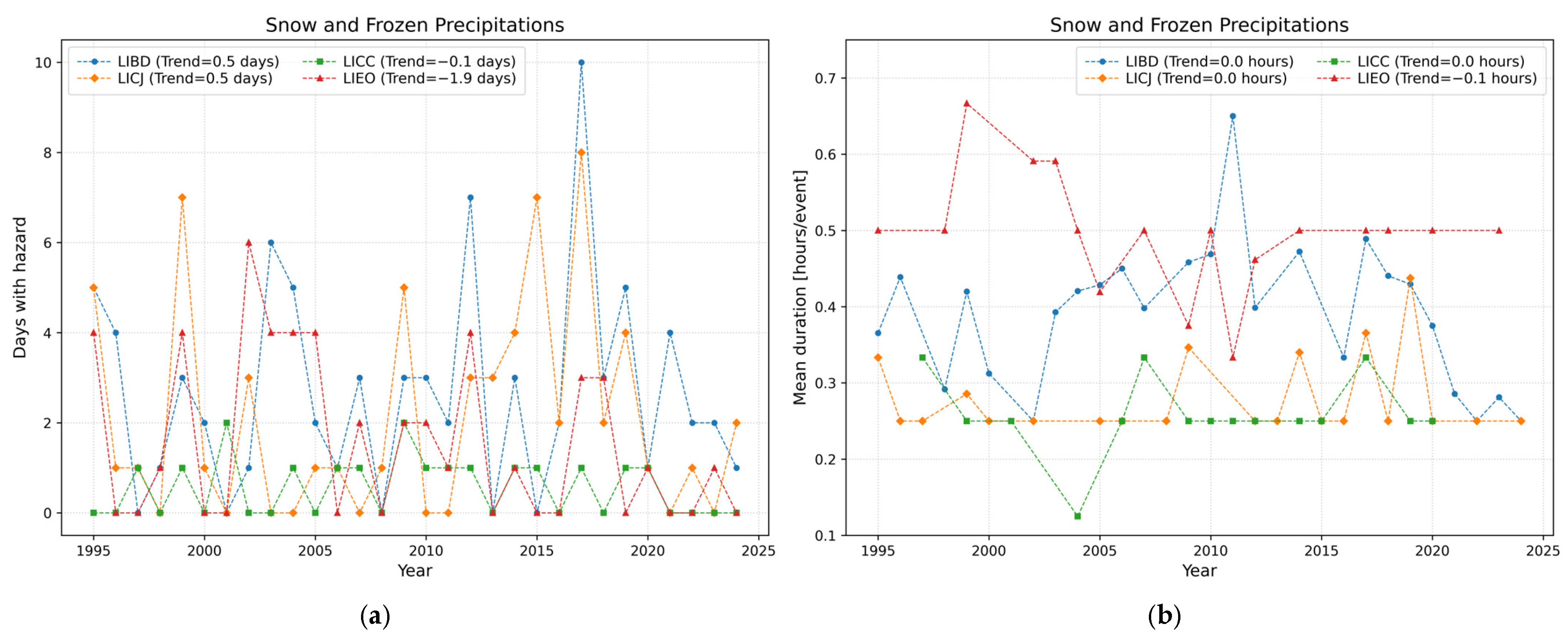
Figure 10 presents the interannual variability of snow and frozen precipitation characteristics at the southern and island airports for the period 1995–2024, showing the annual number of days affected by the hazard (left) and the mean event duration (right).
All stations exhibit low hazard frequencies, reflecting the marginal thermal conditions typical of southern Italian regions. Strong interannual variability is evident, with occasional peaks due to episodic intrusions of cold air, largely associated with snow pellet precipitations rather than snow. Trend analysis indicates weak negative trends at LICC and LIEO, while LIBD and LICJ show a slight positive trend. However, the small magnitudes of these trends suggest that long-term changes in frequency remain limited and are likely dominated by year-to-year oscillations. The mean duration of snow and frozen precipitation events is generally short, without marked trends.
Overall, the combined trend of frequency and duration confirms that snow and ice precipitation for southern airports is sporadic and short-lived. Due to the very low occurrence rate, it is not possible to identify clear trends related to this hazard in that area.

3.3. Limited Visibility

In this section, we present the results of the analysis of meteorological hazards associated with limited visibility at the selected airports (Figure 1). Although poor visibility at airports can be caused by several phenomena, such as fog, heavy rainfall, snow, sand, dust, and smoke, we focus here only on fog (Table 1), since analysis related to heavy rainfall and snow were discussed in the previous sections, while sand, dust, and smoke are extremely rare occurrences.
Because the number of days per year may not fully capture the operational and climatic implications of this hazard, the analysis was complemented by an assessment of the mean duration of fog events, expressed in hours per occurrence. This combined approach provides a more comprehensive evaluation of the potential impacts of long-term changes on fog development.
Possible sources of error in this analysis may arise from treating fog as a single group, including continuous fog, shallow fog, partial fog, and banks of fog. These types of fog can vary greatly in the prevailing airport visibility and the corresponding operational impact of the hazard. However, since the phenomenological class is the same, we preferred to treat the various typologies together. It is worth noting that, in this study, fog was treated strictly as a meteorological phenomenon, without accounting for the corresponding aerodrome’s prevailing visibility values. This approach was adopted because visibility under fog conditions often exhibits significant spatial and temporal variability. Consequently, the operational impact cannot be assessed solely by prevailing visibility but also depends on the spatial distribution and structure of the fog (e.g., a localized fog bank affecting the touchdown zone while the reported prevailing visibility exceeds 2000 m). For this reason, the analysis focused exclusively on the occurrence of the phenomenon itself, regardless of prevailing visibility measurements.

3.3.1. North

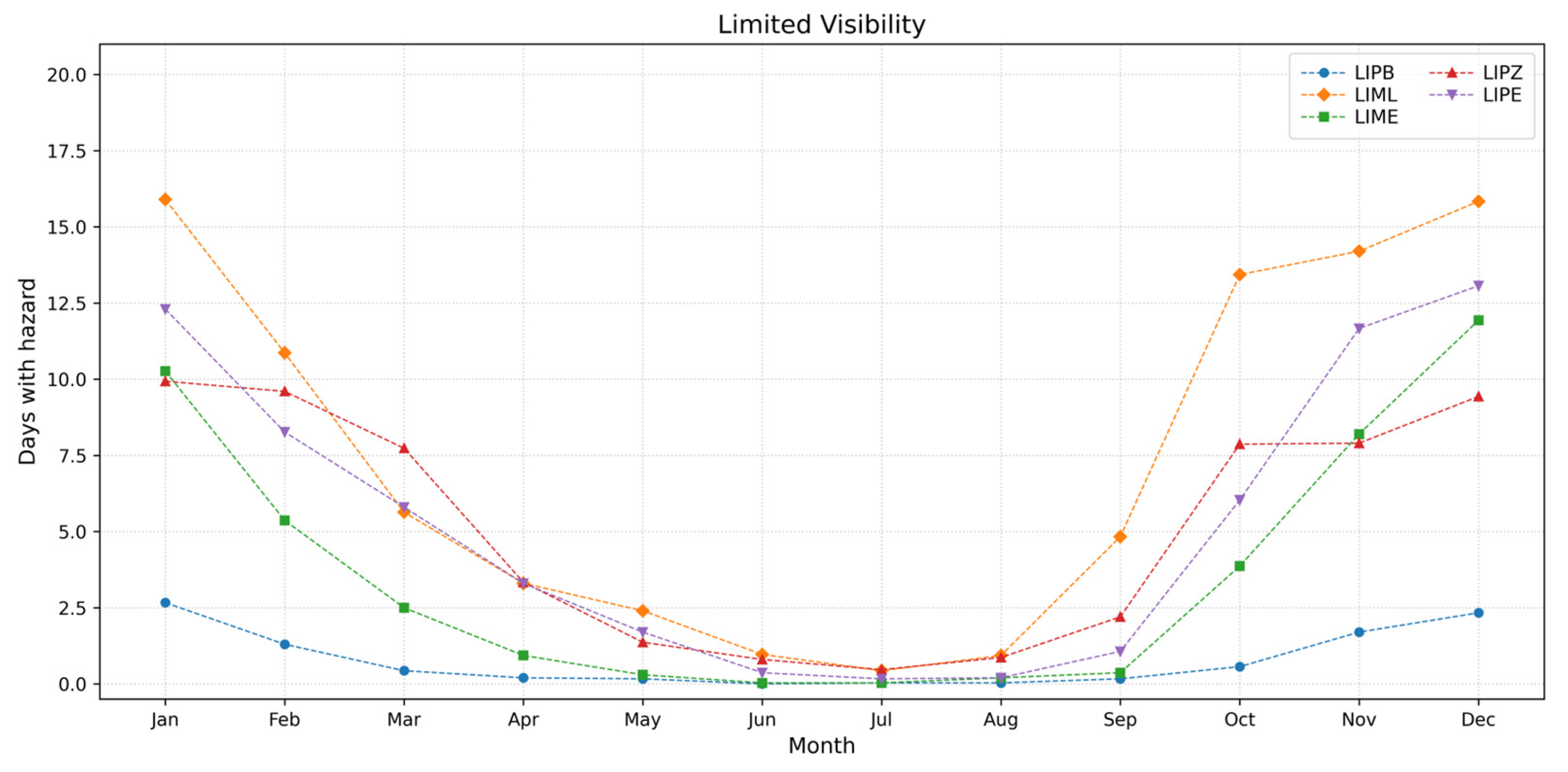
Figure 11 shows the climatological annual cycle of foggy days at the selected airports in Northern Italy. As shown, pronounced seasonality is evident at all sites, with maximum frequencies in the cold season and a marked minimum in late spring and summer. Fog occurrence peaks between November and January, consistent with the dominance of stable boundary-layer conditions over the Po Valley. During this period, long nocturnal cooling, frequent temperature inversions, high relative humidity, and weak synoptic forcing favor the development of radiation fog. The highest winter fog frequencies are observed at LIML and LIPE, with more than 15 and 12 FG days per month, respectively, reflecting the central Po Valley’s strong susceptibility to fog formation. LIME and LIPZ show slightly lower but still substantial winter frequencies, while LIPB consistently records the lowest fog occurrence, due to its different exposure and ventilation conditions. From April to August, fog days sharply decrease across all sites, reaching near-zero values in the summer months, due to enhanced boundary-layer mixing, higher temperatures, and reduced nocturnal stability, which inhibit fog formation.
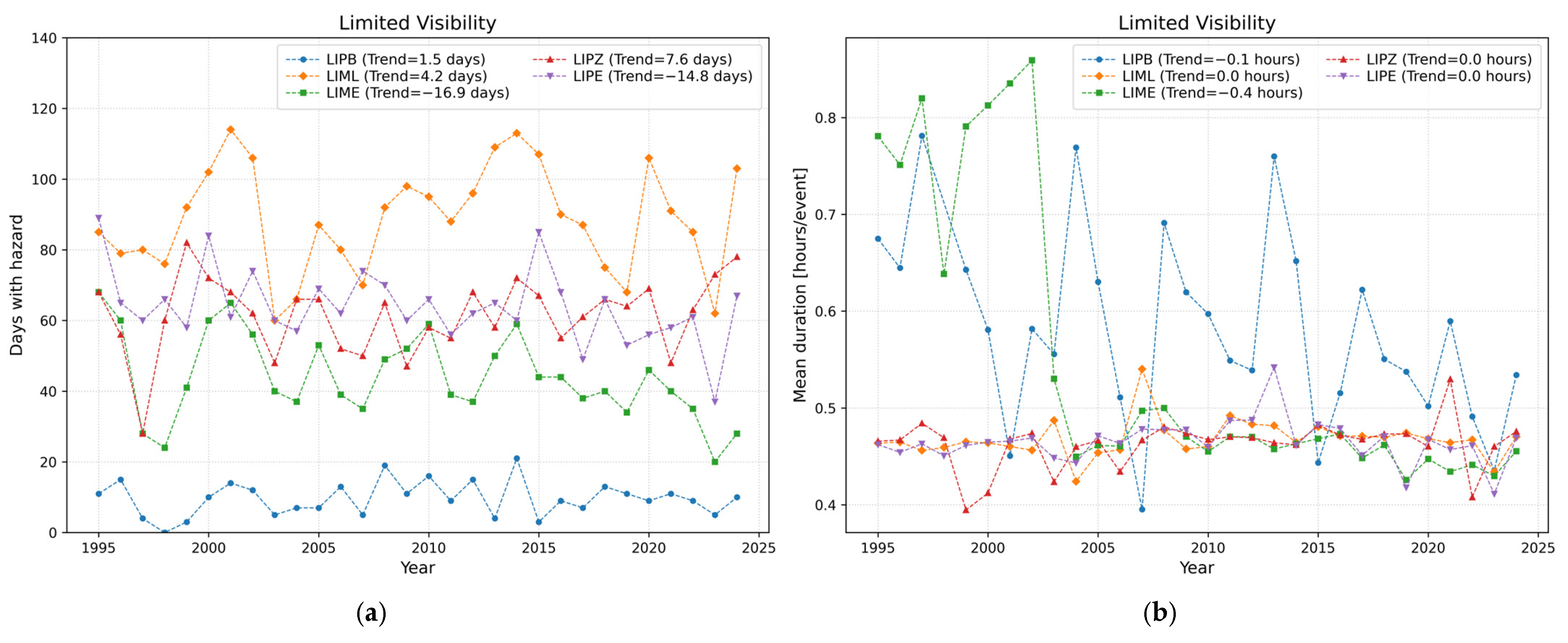
Figure 12 shows the interannual variability of annual fog days over the period considered. As shown in Figure 12a, all stations exhibit substantial year-to-year variability, reflecting the strong sensitivity of fog occurrence to synoptic circulation patterns, boundary-layer stability, and moisture availability.
LIML consistently records the most fog days, with an annual count often exceeding 90 foggy days and pronounced multi-year fluctuations. A weak positive trend is observed at this site, suggesting a slight long-term increase in fog occurrence, though interannual variability dominates the signal. LIPZ also shows relatively high fog frequencies and a modest positive trend, indicating stable or slightly increasing fog conditions over time. In contrast, LIME and LIPE show significant negative trends, with a gradual reduction in the annual number of foggy days of about 17 and 15 days, respectively. Seasonal analysis indicates that in LIME this trend is primarily driven by a decrease in foggy conditions during autumn and winter, while statistics for spring and summer remain largely unchanged. Regarding LIPE, a reduction in the number of foggy days is observed from autumn to spring. These reductions may be linked to changes in regional climate, including rising temperatures, reduced humidity, or enhanced boundary-layer mixing, as well as possible local effects related to urban development. LIPB records the lowest fog frequency throughout the record, typically below 20 days per year, with a weak positive trend. This behavior underscores the comparatively limited exposure of this airport to persistent fog-prone conditions relative to the core Po Valley locations.
Despite changes in frequency, the mean duration of limited-visibility events remains remarkably stable across most stations, with typical durations of 0.45–0.55 h per hour of event. The only exception is LIME, where systematic long-term changes are evident, with a reduction in the mean duration per event of about −0.4 h.
Overall, the figure indicates that while fog remains a recurrent and operationally relevant hazard in Northern Italy, its long-term evolution is spatially heterogeneous. Central Po Valley airports tend to maintain high fog climatology, whereas others show a tendency toward decreasing fog occurrence. These contrasting trends can be explained by the recent increase in drought conditions in Italy, particularly in the northern area. This condition leads to reduced levels of ground moisture, which can affect the local climatology of fog events as we observed: while sites located near local sources of moisture, such as rivers, lakes, and seas, show positive trends (as in the case of LIML and LIPZ), the other sites experience a marked decrease in frequency/duration due to the reduction in rainfall and the corresponding level of soil moisture [52].
It is also worth noting that while the overall trends for LIML show a slight increase in 30-year frequency, the METAR analysis indicates a shift from well-organized continuous fog to more discontinuous fog, such as shallow or banked fog. These results highlight the importance of considering both regional and local factors when assessing long-term changes in fog conditions.

3.3.2. Tyrrhenian

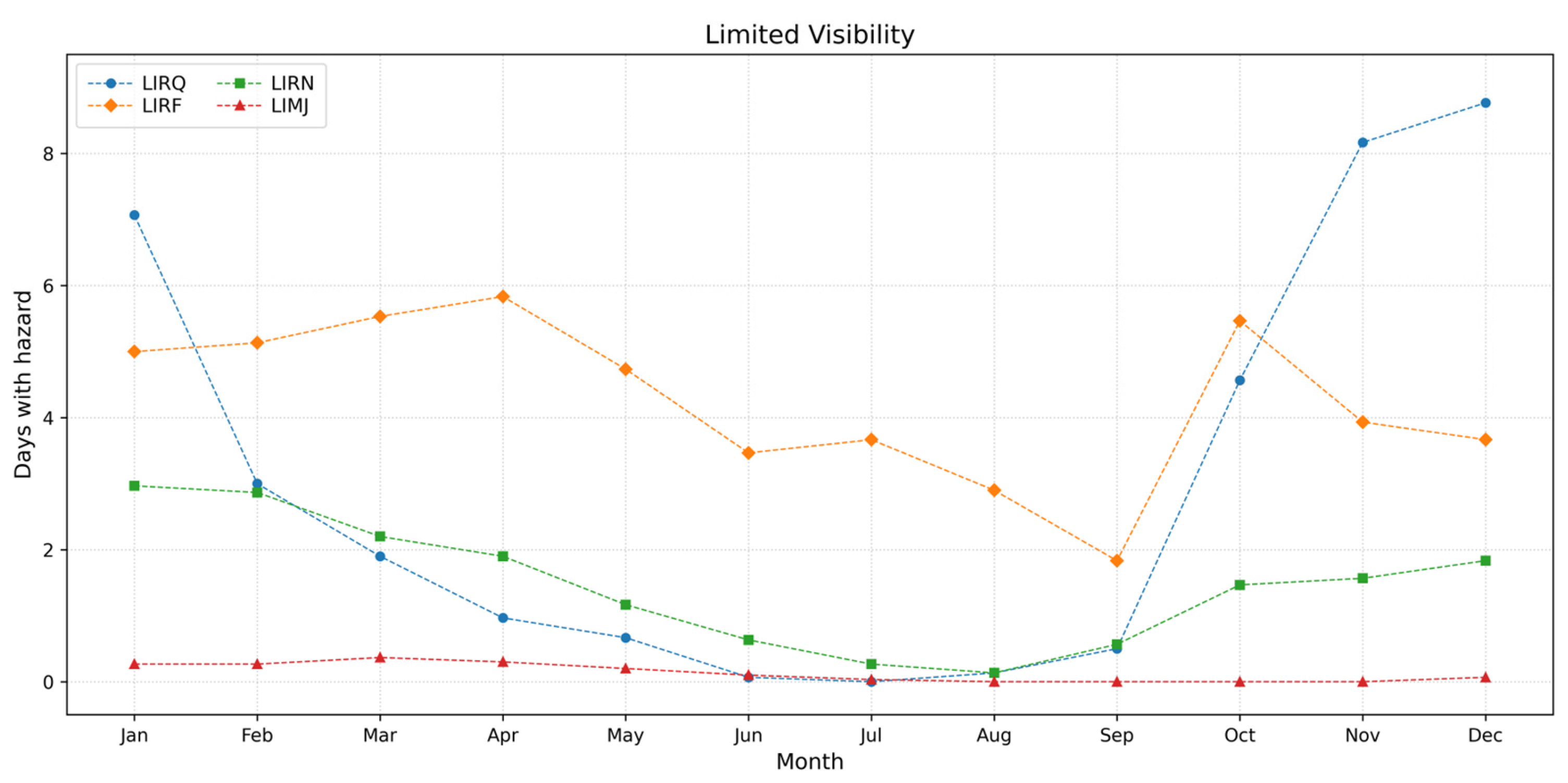
Figure 13 shows the climatological mean annual cycle of fog days at Tyrrhenian aerodromes. Compared with Northern Italy, all stations exhibit substantially lower fog frequencies, highlighting the strong latitudinal and physiographic control on fog occurrence across Italy.
A clear seasonal modulation is evident, with foggy days concentrated in the cold season and with a pronounced minimum in late spring and summer. LIRQ exhibits the strongest seasonal contrast, with relatively high winter values and near-zero fog occurrence in summer. This behavior is consistent with that observed at the northern airport, suggesting that nocturnal radiative cooling and wintertime stability dominate fog formation at this site. LIRN is characterized by generally low fog occurrence, which decreases steadily from winter to summer and remains below three days per month even during the cold season. This pattern is consistent with stronger ventilation and a maritime influence, which limits the persistence of stable boundary layers. LIRF experiences moderate fog frequencies throughout the year, with a winter–spring maximum and an end-summer minimum, but with less pronounced seasonality than LIRQ. The persistence of significant fog days outside of midwinter reflects the influence of local moisture sources. LIMJ records the lowest fog climatology among the stations considered, with values near zero throughout the year and only marginal increases in winter.
Overall, the figure highlights the sharp contrast between northern and central–southern Italian airports in fog climatology. Although a winter maximum is common to all sites, the extent and persistence of limited-visibility conditions are strongly influenced by local factors.
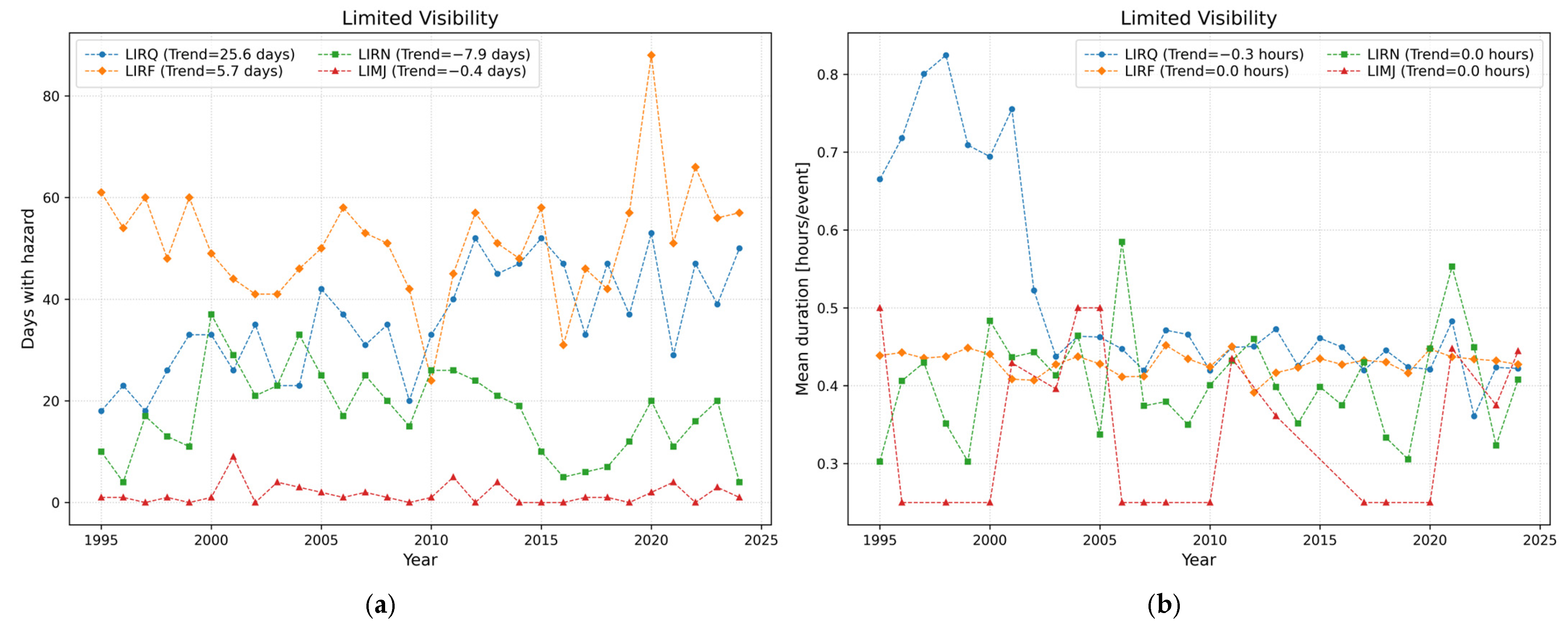
In Figure 14, the interannual variations in (left) the annual number of days affected by limited-visibility hazards and (right) the mean event duration are presented. In terms of frequency (Figure 14a), LIRQ and LIRF record the most fog days. LIRQ shows a strong positive trend, with a mean increase of more than 25 days per year in the annual number of fog days from 1995 to 2024. Seasonal analysis indicates that this trend is driven primarily by increased fog conditions during autumn and winter, while statistics for spring and summer remain substantially unchanged. This pattern reflects both increased fog conditions and local factors such as the proximity of the Arno River to the aerodrome, which provides an additional source of moisture. By contrast, LIRF shows a positive but weaker trend, with an increase of about 6 days per year in the annual number of fog days. LIRN exhibits a slight downward trend, while fog at LIMJ remains rare throughout the period, with negligible long-term change. Pronounced interannual variability is evident across all aerodromes, with episodic peaks superimposed on the long-term trends.
The mean duration per event (Figure 14b) is relatively stable, with substantially less interannual variability than the frequency. LIRQ shows a modest decrease in duration, indicating that although events may be occurring more frequently, they tend to be shorter on average. LIRF, LIRN, and LIMJ exhibit zero trends, indicating no systematic change in fog persistence, suggesting that long-term changes in limited-visibility hazards are driven primarily by changes in occurrence frequency rather than by event longevity.

3.3.3. South and Islands

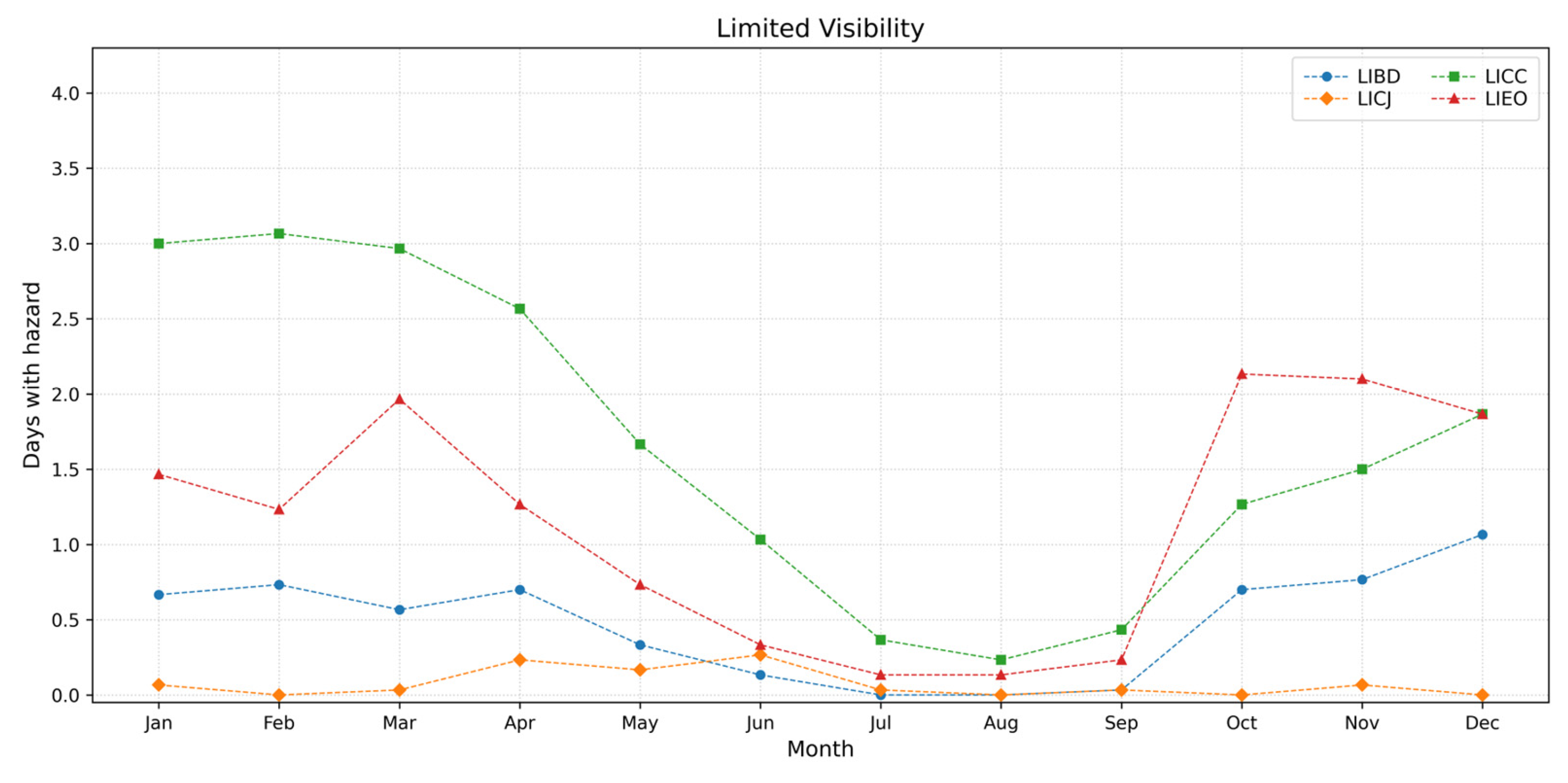
Figure 15 shows the climatological mean annual cycle of fog days at the southern and island aerodromes. As for the other areas, a pronounced seasonal cycle is evident.
LICC dominates throughout the year, with the highest frequency during winter and early spring, peaking around late winter, and a marked minimum in midsummer. This pattern suggests a strong linkage to cold-season fog conditions, such as stable stratification and high moisture availability. LIEO also exhibits clear seasonality, with relatively elevated values in late winter and early spring and a secondary maximum in autumn, indicating a possible influence of transitional-season synoptic conditions. In contrast, LIBD occurrences are generally lower in magnitude but follow a similar annual evolution, with a minimum in summer and a gradual increase toward autumn and early winter, while LICJ remains negligible throughout the year. Overall, the results indicate a pronounced predominance of limited-visibility hazards during the winter season, with a summertime minimum.
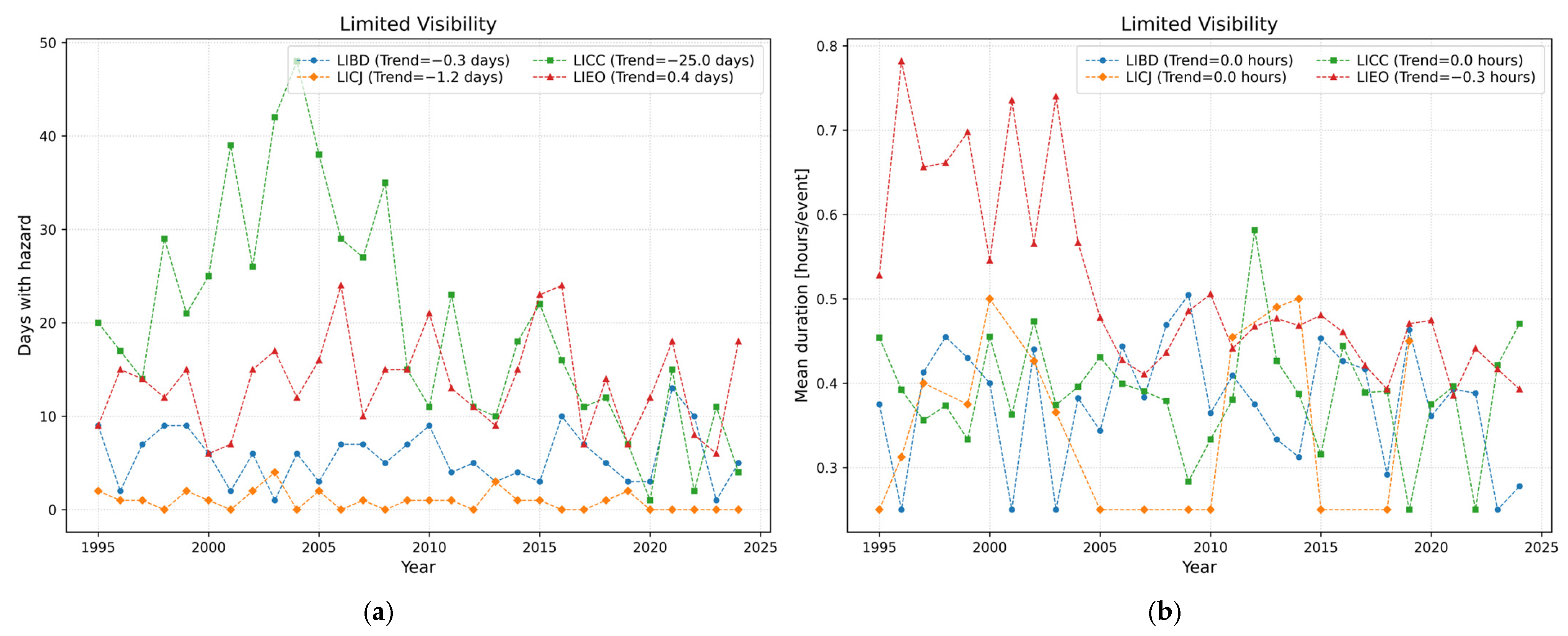
Figure 16 illustrates the interannual evolution of (left) the annual number of days affected by limited-visibility hazards and (right) the corresponding mean event duration. In terms of frequency (Figure 16a), LICC records the strongest trend with −25 fog days per year, indicating a substantial long-term reduction in the occurrence of LICC-related limited-visibility days. Seasonal analysis indicates that this trend is primarily driven by a decrease in foggy conditions during late winter and spring, whereas summer statistics remain substantially unchanged. LIEO is the second most frequent hazard type, exhibiting pronounced interannual variability with episodic peaks but an overall near-neutral long-term trend. LIBD and LICJ remain comparatively infrequent throughout the period, with weak negative trends, highlighting their minor contribution to the total hazard climatology.
The mean duration of events (Figure 16b) is more stable than frequency, with most values confined to a relatively narrow range. The mean duration of fog events was the longest at LIEO, especially during the earlier part of the record, but displays a clear decreasing trend, indicating progressively shorter events over time. At airports LICC, LICJ, and LIBD, no relevant changes in the mean duration of fog events were observed.
Taken together, these results indicate that changes in limited-visibility hazards in the southern region are primarily driven by reductions in fog frequency in LICC and a decrease in fog persistence in LIEO.

4. Discussion

This section examines the previous results in a broader physical context by investigating the associated large-scale circulation and thermodynamic conditions. In particular, the discussion focuses on how seasonal anomalies in geopotential height, convective instability, and temperature contribute to interpreting the observed changes in the hazards analyzed in the previous sections. By linking observational evidence with reanalysis diagnostics of synoptic patterns, we aim to provide a robust understanding of the mechanisms underlying the recent evolution of hazards in the considered region.
Table S1 of the Supplementary Materials summarizes the statistical analyses conducted for each site in Section 3, reporting the minimum and maximum values, mean, and standard deviation for the study period. Table S2 presents the results of the statistical significance assessment using the Mann–Kendall (MK) test [53], which is widely used to detect monotonic trends in time series data, including nonlinear variations over time. A summary of the trends and corresponding statistical significance is also shown in Table A1. As is visible, most convection-related hazards exhibit statistically significant trends, with the sole exception of hail, which is statistically significant only at LIMJ (decreasing trend) and at LIME (increasing trend). Regarding limited visibility hazards, pronounced interannual variability and generally weaker trends reduce statistical significance at several airports. Statistically significant frequency trends are identified only at LIRQ (increasing), LIME, LICC, and LICJ (all decreasing), while the mean duration per event decreases at LIPB, LIRQ, and LIEO. Similarly, for solid precipitation, high interannual variability and the relatively low number of events limit the detection of statistically significant trends. According to the MK test, statistical significance is identified only at LIRF, LIML, LIRQ, LIME, and LIPZ. In particular, LIRF and LIML exhibit a significant decrease in annual frequency, while LIRQ, LIME, and LIPZ show a significant reduction in the mean duration per event.
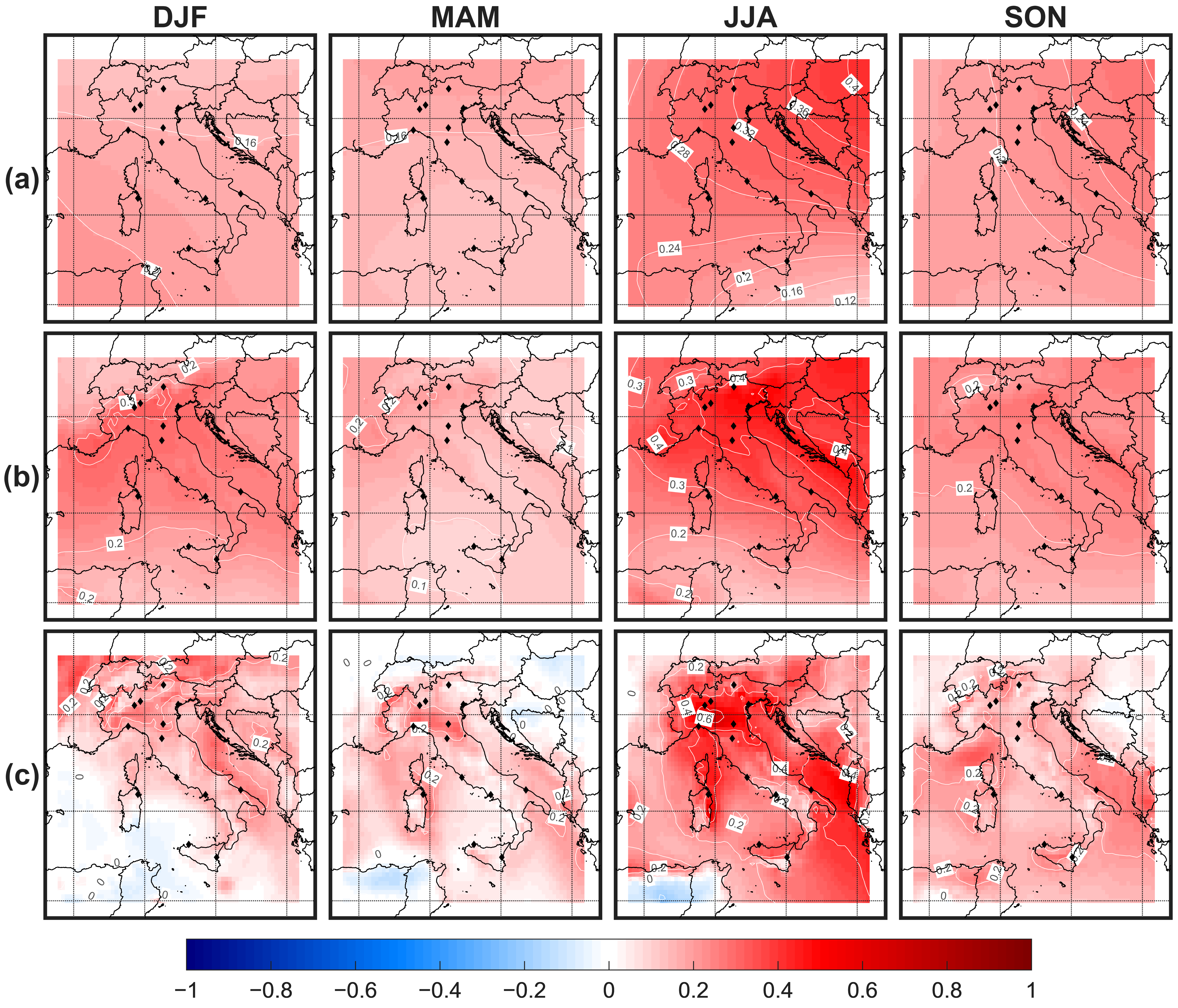
In order to analyze possible links between our local airport scale trends and large-scale pattern variations, in Figure 17 we show the normalized seasonal anomalies of (a) 500 hPa geopotential height, (b) 850 hPa temperature, and (c) Convective Available Potential Energy (CAPE) over Italy, relative to the 2011–2024 period, with respect to the 1981–2010 climatology and normalized by their standard deviations.
As shown in Figure 17a, geopotential anomalies are positive in all seasons, indicating a systematic reinforcement of high-pressure systems over the Euro-Mediterranean area during the last decade. This is reflected in an increase in the number of days with stable meteorological conditions and a decrease in the frequency of synoptic perturbations, especially during summer and autumn, when the strongest positive anomalies are observed over Italy. Positive temperature anomalies (Figure 17b) are evident in all seasons, with a clear amplification during summer (JJA), when values locally exceed +0.4 over large parts of Italy and the central Mediterranean. In the transition seasons, we find weaker but persistent positive temperature anomalies, indicating a prolongation of summer-like meteorological conditions. CAPE anomalies (Figure 17c) exhibit pronounced seasonal and spatial variability. In winter, positive CAPE anomalies are localized and heterogeneous, indicating a limited role for thermodynamic instability. Spring shows weakly positive anomalies over much of the domain, consistent with modest changes in convective potential during the pre-summer season. A pronounced signal emerges in summer, with the greatest values in the Northern area, locally exceeding +0.6, indicating a substantial enhancement of convective instability. Autumn also shows positive CAPE anomalies, suggesting a lengthening of the convectively favorable season.
This analysis highlights changes in large-scale atmospheric patterns, in agreement with the results presented in Section 3. These changes have direct implications for aviation weather–related hazards, as summarized in the following:
  • Convection: Convective clouds and associated phenomena are influenced by positive anomalies in both 500 hPa geopotential height and CAPE, although with opposing effects. Enhanced CAPE increases atmospheric instability and favors convective development, whereas increased 500 hPa geopotential height and 850 hPa temperature act as convection inhibitors. This results in a reduction in the overall frequency of convective clouds, primarily driven by the stabilizing effect of higher geopotential height, alongside an increase in SH and TS events linked to elevated CAPE. This behavior is consistent with the concept of explosive convection discussed in Section 3.1.1. On the contrary, over the sites where convection is mainly associated with synoptic-scale disturbances, increased geopotential height corresponds to a reduced occurrence of Mediterranean perturbations and a consequent decrease in TS frequency, in agreement with the findings discussed in Section 3.1.2 and Section 3.1.3;
  • Snow and frozen precipitations: Snow-related hazards are strongly modulated by positive anomalies in geopotential height and temperature. An increase in 500 hPa geopotential height is associated with a reduced frequency of winter synoptic disturbances and cold-air outbreaks, while higher 850 hPa temperatures lead to an elevation of the snowline. These combined effects result in a decrease in snowfall and frozen precipitation events, in agreement with the findings discussed in Section 3.2;
  • Limited visibility: The increase in the 500 hPa geopotential height favors more stable atmospheric conditions, which can support fog formation. However, the concomitant reduction in precipitation associated with persistent high-pressure systems limits the availability of atmospheric moisture. Furthermore, increasing surface temperatures inhibits fog formation by widening the temperature-dew point difference. Consequently, a general decrease in fog occurrence is observed, except in areas influenced by local moisture sources. These results are consistent with those presented in Section 3.3.
Our findings are consistent with those reported in [54], which investigates hail climatology over the Mediterranean region. In that study, trends in 850 hPa air temperature and CAPE over the same area were analyzed for the period 1959–2021 using the ERA5 reanalysis dataset. The identified increasing trends provide important insight into the evolving atmospheric conditions that favor the occurrence and intensity of hailstorms in the region. In addition, ref. [55] examines precipitation trends in the northern French Alps in relation to the seasonal evolution of the 500 hPa geopotential height field across the Euro-Atlantic and western Mediterranean regions. Their Figure 7 shows a significant increase in 500 hPa geopotential height over the period 1985–2019, consistent with our findings. Finally, ref. [56] presents a comprehensive assessment of ERA5 reanalysis data to investigate trends in tropospheric general circulation over the period 1979–2022, further supporting the large-scale dynamical changes discussed in this study.
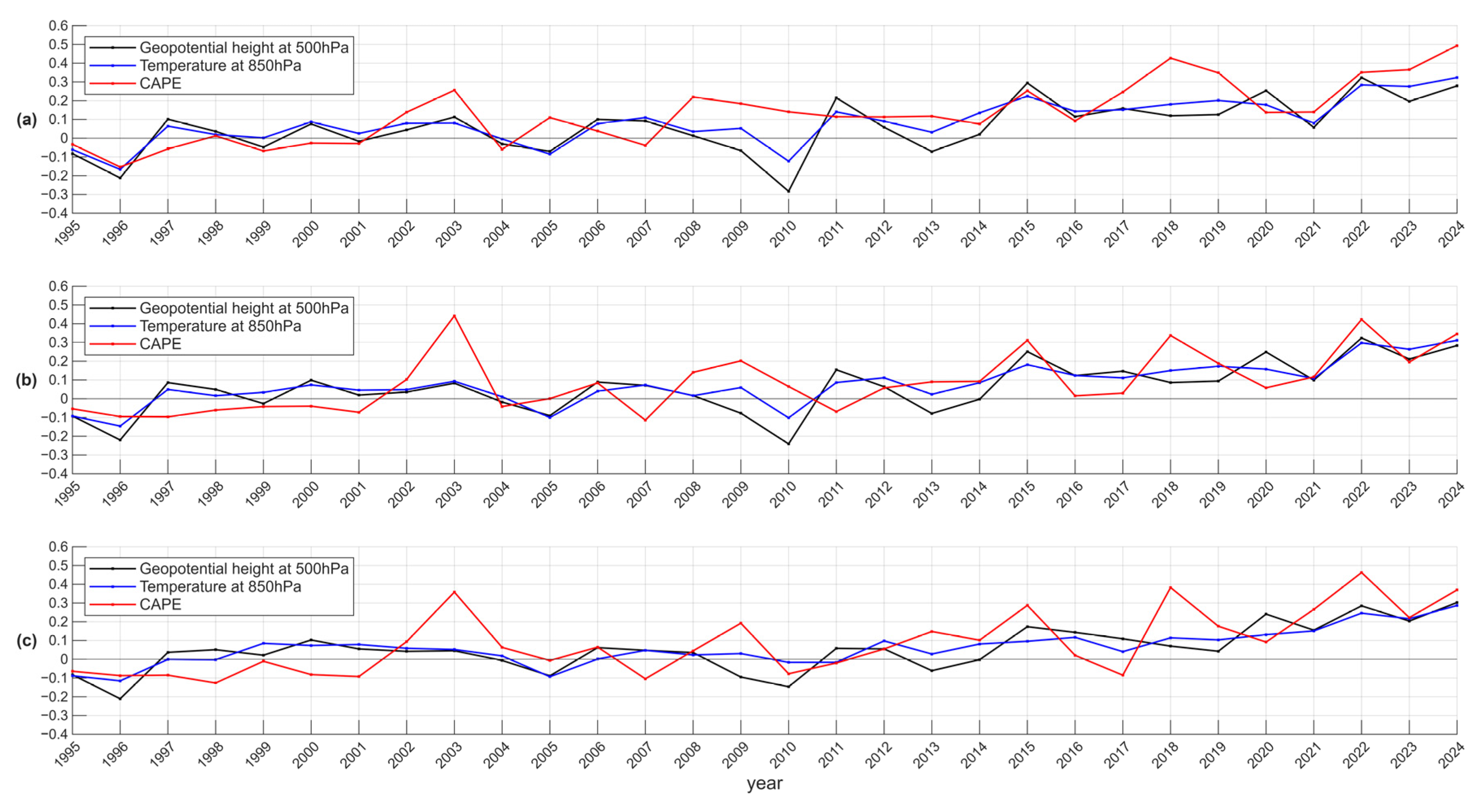
Figure 18 shows the temporal evolution of normalized anomalies over the airports’ location for the three Italian macro-climatic zones investigated. Annual values were computed for each airport by averaging the anomalies from the four surrounding grid points. Then, the individual values thus obtained were averaged along all airports included in each zone.
As can be seen, the three variables show a clear trend toward positive anomalies for the three zones. The temperature anomaly exhibits a gradual and persistent increase, consistent with the overall warming trend. Geopotential height at 500 hPa exhibits enhanced interannual variability, with a predominance of positive anomalies in the recent decade. CAPE exhibits the strongest interannual variability, with marked positive peaks, highlighting an increasing potential for deep convection.
Overall, the combined evolution of these anomalies highlights a regime increasingly dominated by warmer and more stable atmospheric conditions, punctuated by episodic increases in convective instability. This pattern provides a physical basis for the observed changes in convective activity and related aviation weather hazards discussed in Section 3.

5. Conclusions

In this study, we examined long-term trends in a range of aviation weather–related hazards at several major Italian airports. The analysis was based on long-term METAR observations from 1995 to 2024, complemented by ERA5 reanalysis data to assess anomalies in the 500 hPa geopotential height, 850 hPa temperature, and convective available potential energy (CAPE) over the Italian domain.
The results highlight hazard-specific and site-dependent trends. An increase in extreme convective phenomena is observed, reflected in a higher frequency of showers at all sites. Thunderstorms exhibit contrasting trends, with some locations showing an increase in TS frequency, whereas others show a decrease, depending on the dominant convective forcing mechanism. In particular, aerodromes where convection is primarily associated with the development of synoptic-scale disturbances display a reduction in annual TS frequency. Conversely, sites where convection is mainly driven by thermodynamic instability generally show an increase in the annual frequency of TS events. This behavior is consistent with enhanced CAPE and increased atmospheric moisture availability due to rising air temperature, which favors the development of intense, short-lived convective events.
In contrast, a widespread reduction in snowfall frequency is observed across most sites, consistent with decreases in cold-air outbreaks and precipitation events associated with persistent wintertime high-pressure regimes, as well as with increasing lower-tropospheric temperatures. Fog occurrence is more heterogeneous, with contrasting trends across airports, largely driven by local moisture availability and site-specific environmental conditions.
In conclusion, the findings demonstrate significant changes in the frequency and characteristics of aviation-related weather hazards across several Italian aerodromes. Our study provides a comprehensive analysis of long-term climatic trends, identifies observable links to changing climate conditions, and lays the scientific foundation for future, specific mitigation and adaptation initiatives by local and international aviation stakeholders.

Supplementary Materials

The following supporting information can be downloaded at: https://www.mdpi.com/article/10.3390/meteorology5010007/s1, Table S1: Statistics; Table S2: MK test results. In Table S1, we show the extreme minimum and maximum values, the 30-year average, and its standard deviation for the considered weather hazards for all the sites. In Table S2, we show the OLS trends, the Kendall-tau, the MK-p value, and the statistical significance of the trends.

Author Contributions

Conceptualization, P.R., E.B. and M.M.; methodology, P.R.; software, J.C. and M.M.; validation, J.C., P.R., S.A., E.B. and M.M.; formal analysis, P.R.; investigation, J.C. and M.M.; resources, P.R. and S.A.; data curation, P.R. and J.C.; writing—original draft preparation, P.R. and M.M.; writing—review and editing, E.B. and S.A.; visualization, J.C. and M.M.; supervision, P.R.; project administration, P.R. All authors have read and agreed to the published version of the manuscript.

Funding

This research received no external funding.

Institutional Review Board Statement

Not applicable.

Informed Consent Statement

Not applicable.

Data Availability Statement

The ERA5 data presented in this study are openly available in the Copernicus Climate Data Store (Climate Data Store). Historical METARs are accessible from publicly available websites (e.g., https://www.ogimet.com, accessed on 1 July 2025) or are available upon request from the corresponding author.

Acknowledgments

The authors thank Giuseppe Gangemi, Paolo Ciolli, Elisabetta Caruso, Laura Bertoncin, and Elisabetta Trinci (Enav S.p.a.) for providing support during METAR collections. During the preparation of this manuscript, the authors used Grammarly v1.2.241.1851 and ChatGPT-5.3 for correcting typographical errors and improving lexical usage. The authors have reviewed and edited the output and take full responsibility for the content of this publication. This study has been conducted using E.U. Copernicus Marine Service Information.

Conflicts of Interest

Author Patrizio Ripesi was employed by Enav, the Italian ANPS. The company had no role in the design of the study; in the collection, analyses, or interpretation of data; in the writing of the manuscript; or in the decision to publish the results.

Abbreviations

The following abbreviations are used in this manuscript:
AMOAeronautical Meteorological Observer
ATCAir Traffic Control
ATM Air Traffic Management
CAPEConvective Available Potential Energy
CATClear Air Turbulence
CBCumulonimbus
CCClimate Change
ICAOInternational Civil Aviation Organization
TCUTowering Cumulus
WMOWorld Meteorological Organization

Appendix A

In this section, we show a summary of the trends and the corresponding statistical significance analysis of the aviation-related weather hazards investigated in this study. Specifically, trends in the annual frequency represent the total 30-year change in the number of hazard days per year, obtained using OLS regression over the 1995–2024 period. Similarly, trends in the mean duration per event represent the total 30-year change in the average duration of hazard events.
Table A1. Trends in the annual frequency (d/yr) and mean duration per event (h) of aviation-related weather hazards at selected aerodromes. Statistically significant trends identified by the Mann–Kendall (MK) test are shown in bold.
AerodromeConvectionSnow/Frozen
Precipitation
Limited Visibility
LIMLConvective Clouds −31.7 d/yr
Showers +18.7 d/yr
Thunderstorms −0.1 d/yr
Hail −0.1 d/yr
−8.0 d/yr
−0.1 h
+4.2 d/yr
0.0 h
LIMEConvective Clouds −30.1 d/yr
Showers +31.5 d/yr
Thunderstorms +15.4 d/yr
Hail +1.5 d/yr
−3.7 d/yr
−0.5 h
−16.9 d/yr
−0.4 h
LIPBConvective Clouds −12.6 d/yr
Showers +26.3 d/yr
Thunderstorms +6.8 d/yr
Hail +0.5 d/yr
+1.9 d/yr
−0.1 h
+1.5 d/yr
−0.1 h
LIPEConvective Clouds −41.7 d/yr
Showers +21.5 d/yr
Thunderstorms −2.5 d/yr
Hail +0.8 d/yr
−1.8 d/yr
0.0 h
−14.8 d/yr
0.0 h
LIPZConvective Clouds −5.8 d/yr
Showers +41.4 d/yr
Thunderstorms +17.4 d/yr
Hail −0.1 d/yr
−2.4 d/yr
−0.1 h
+7.6 d/yr
0.0 h
LIMJConvective Clouds −46.4 d/yr
Showers +20.5 d/yr
Thunderstorms −22.9 d/yr
Hail −2.2 d/yr
−0.8 d/yr
−0.1 h
−0.4 d/yr
0 h
LIRQConvective Clouds −44.0 d/yr
Showers +44.9 d/yr
Thunderstorms +6.0 d/yr
Hail −0.4 d/yr
−0.2 d/yr
−0.2 h
+25.6 d/yr
−0.3 h
LIRFConvective Clouds −2.6 d/yr
Showers +66.9 d/yr
Thunderstorms −16.3 d/yr
Hail −0.2 d/yr
−7.1 d/yr
0.0 h
+5.7 d/yr
0.0 h
LIRNConvective Clouds −38.6 d/yr
Showers +1.9 d/yr
Thunderstorms −4.5 d/yr
Hail −1.0 d/yr
+0.5 d/yr
+0.0 h
−7.9 d/yr
+0.0 h
LIBDConvective Clouds −28.5 d/yr
Showers +40.1 d/yr
Thunderstorms +9.5 d/yr
Hail +0.8 d/yr
+0.5 d/yr
0.0 h
−0.3 d/yr
0.0 h
LICCConvective Clouds −59.2 d/yr
Showers +1.6 d/yr
Thunderstorms −7.2 d/yr
Hail −0.9 d/yr
−0.1 d/yr
0.0 h
−25.0 d/yr
0.0 h
LICJConvective Clouds −60.4 d/yr
Showers +63.6 d/yr
Thunderstorms −0.1 d/yr
Hail +1.3 d/yr
+0.5 d/yr
0.0 h
−1.2 d/yr
0.0 h
LIEOConvective Clouds −39.2 d/yr
Showers +38.3 d/yr
Thunderstorms +12.2 d/yr
Hail 0.0 d/yr
−1.9 d/yr
−0.1 h
+0.4 d/yr
−0.3 h

References

  1. Gabric, A.J. The Climate Change Crisis: A Review of Its Causes and Possible Responses. Atmosphere 2023, 14, 1081. [Google Scholar] [CrossRef]
  2. Adger, W.N.; Arnell, N.W.; Tompkins, E.L. Successful adaptation to climate change across scales. Glob. Environ. Change 2005, 15, 77–86. [Google Scholar] [CrossRef]
  3. Leal Filho, W.; Azeiteiro, U.M.; Balogun, A.L.; Setti, A.F.F.; Mucova, S.A.; Ayal, D.; Totin, E.; Lydia, A.M.; Kalaba, F.K.; Oguge, N.O. The influence of ecosystems services depletion to climate change adaptation efforts in Africa. Sci. Total Environ. 2021, 779, 146414. [Google Scholar] [CrossRef]
  4. Liu, P.R.; Raftery, A.E. Country-based rate of emissions reductions should increase by 80% beyond nationally determined contributions to meet the 2 C target. Commun. Earth Environ. 2021, 2, 29. [Google Scholar] [CrossRef] [PubMed]
  5. IPCC. Climate Change 2023: Synthesis Report; Contribution of Working Groups I, II and III to the Sixth Assessment Report of the Intergovernmental Panel on Climate Change, Core Writing Team; Lee, H., Romero, J., Eds.; IPCC: Geneva, Switzerland, 2023; pp. 35–115. [Google Scholar] [CrossRef]
  6. Francis, J.A.; Vavrus, S.J. Evidence Linking Arctic Amplification to Extreme Weather in Mid-Latitudes. Geophys. Res. Lett. 2012, 39, L06801. [Google Scholar] [CrossRef]
  7. Coumou, D.; Di Capua, G.; Vavrus, S.; Wang, L.; Wang, S. The influence of Arctic amplification on mid-latitude summer circulation. Nat. Commun. 2018, 9, 2959. [Google Scholar] [CrossRef]
  8. Liu, Q.; Bader, J.; Jungclaus, J.H.; Matei, D. More extreme summertime North Atlantic Oscillation under climate change. Commun. Earth Environ. 2025, 6, 474. [Google Scholar] [CrossRef]
  9. Stott, P. How climate change affects extreme weather events. Science 2016, 352, 1517–1518. [Google Scholar] [CrossRef]
  10. Abbass, K.; Qasim, M.Z.; Song, H.; Murshed, M.; Mahmood, H.; Younis, I. A review of the global climate change impacts, adaptation, and sustainable mitigation measures. Environ. Sci. Pollut. Res. 2022, 29, 42539–42559. [Google Scholar] [CrossRef]
  11. Borsky, S.; Unterberger, C. Bad weather and flight delays: The impact of sudden and slow onset weather events. Econ. Transp. 2019, 18, 10–26. [Google Scholar] [CrossRef]
  12. Enea, G.; Reynolds, T.; Venuti, J.; Polishchuk, T.; Polishchuk, V.; Lemetti, A.; Lau, A.; Solzer, J.; Bölle, T. Comparing Convective Weather Impacts on Air Traffic Management Operations in United States, Canada & Europe. In Proceedings of the 34th International Congress of the Aeronautical Science, Florence, Italy, 9–13 September 2024. [Google Scholar]
  13. Gultepe, I.; Sharman, R.; Williams, P.D.; Zhou, B.; Ellrod, G.; Minnis, P.; Trier, S.; Griffin, S.; Yum, S.S.; Gharabaghi, B.; et al. A review of high impact weather for aviation meteorology. Pure Appl. Geophys. 2019, 176, 1869–1921. [Google Scholar] [CrossRef]
  14. Enea, G.; Reynolds, T.; Weber, M.; Codina, R.D.; Schaefer, D. Analysis of Weather-Driven Air Traffic Management Challenges for Major US and European Airports. In Proceedings of the 14th SESAR Innovation Days 2024, Rome, Italy, 12–15 November 2024. [Google Scholar]
  15. Schultz, M.; Reitmann, S.; Alam, S. Predictive classification and understanding of weather impact on airport performance through machine learning. Transp. Res. Part C Emerg. Technol. 2021, 131, 103119. [Google Scholar] [CrossRef]
  16. EUROCONTROL. Summer 2024 Performance. European Aviation Trends. 2024. Available online: https://www.eurocontrol.int/publication/summer-2024-performance (accessed on 1 September 2025).
  17. Bureau of Transportation Statistics. Causes of National Airspace System Delays. 2024. Available online: https://www.transtats.bts.gov/OT_Delay/ot_delaycause1.asp?6B2r=I&20=E (accessed on 1 September 2025).
  18. EASA. Updated Analysis of the Non-CO2 Climate Impact of Aviation and Potential Policy Measures Pursuant to the EU Emissions Trading System Directive Article 30; Final Report; EASA: Cologne, Germany, 2020. [Google Scholar]
  19. Tafferner, A.; Forster, C.; Hagen, M.; Hauf, T.; Lunnon, B.; Mirza, A.; Guillou, Y.; Zinner, T. Improved thunderstorm weather information for pilots through ground and satellite based observing systems. In Proceedings of the 14th Conference on Aviation, Range, and Aerospace Meteorology 90th AMS Annual Meeting, Atlanta, GA, USA, 22–25 June 2010. [Google Scholar]
  20. Gerz, T.; Forster, C.; Tafferner, A. Mitigating the impact of adverse weather on aviation. In Atmospheric Physics: Background–Methods–Trends; Schumann, U., Ed.; Springer: Berlin/Heidelberg, Germany, 2012. [Google Scholar]
  21. Taszarek, M.; Allen, J.T.; Groenemeijer, P.; Edwards, R.; Brooks, H.E.; Chmielewski, V.; Enno, S. Severe Convective Storms Across Europe and the United States. J. Clim. 2020, 33, 10263–10286. [Google Scholar] [CrossRef]
  22. ICAO. Manual on Low-Level Wind Shear and Turbulence, 1st ed.; International Civil Aviation Organization: Montreal, Canada, 2018. [Google Scholar]
  23. Proctor, F.H.; Hinton, D.A.; Bowles, R.L. A windshear hazard index. In Proceedings of the 9th Conference of Aviation, Range and Aerospace Meteorology, Orlando, FL, USA, 11-15 September 2000; American Meteorological Society: Orlando, FL, USA, 2000. [Google Scholar]
  24. Ripesi, P.; Criscuolo, P. Low-level Wind Shear Prediction based on Machine Learning Techniques: A Case Study of Palermo-Punta Raisi International Airport. In Proceedings of the 14th SESAR Innovation Days 2024, Rome, Italy, 12–15 November 2024. [Google Scholar] [CrossRef]
  25. Williams, P.D.; Joshi, M. Intensification of winter transatlantic aviation turbulence in response to climate change. Nat. Clim Change 2013, 3, 644–648. [Google Scholar] [CrossRef]
  26. Williams, P.D. Increased light, moderate, and severe clear-air turbulence in response to climate change. Adv. Atmos. Sci. 2017, 34, 576–586. [Google Scholar] [CrossRef]
  27. Storer, L.N.; Williams, P.D.; Joshi, M.M. Global response of clear-air turbulence to climate change. Geophys. Res. Lett. 2017, 44, 9976–9984. [Google Scholar] [CrossRef]
  28. Williams, P.D. Transatlantic flight times and climate change. Environ. Res. Lett. 2016, 11, 024008. [Google Scholar] [CrossRef]
  29. Williams, J.; Williams, P.D.; Guerrini, F.; Venturini, M. Quantifying the Effects of Climate Change on Aircraft Take-Off Performance at European Airports. Aerospace 2025, 12, 165. [Google Scholar] [CrossRef]
  30. Williams, J.; Williams, P.D.; Venturini, M.; Padhra, A.; Gratton, G.; Rapsomanikis, S. The Impacts of Climate Change on Aircraft Noise near European Airports. Aerospace 2025, 12, 815. [Google Scholar] [CrossRef]
  31. Taszarek, M.; Kendzierski, S.; Pilguj, N. Hazardous weather affecting European airports: Climatological estimates of situations with limited visibility, thunderstorm, low-level wind shear and snowfall from ERA5. Weather. Clim. Extrem. 2020, 28, 100243. [Google Scholar] [CrossRef]
  32. Taszarek, M.; Allen, J.T.; Brooks, H.E.; Pilguj, N.; Czernecki, B. Differing Trends in United States and European Severe Thunderstorm Environments in a Warming Climate. Bull. Am. Meteorol. Soc. 2021, 102, E296–E322. [Google Scholar] [CrossRef]
  33. Burbidge, R.; Paling, C.; Dunk, R.M. A systematic review of adaptation to climate change impacts in the aviation sector. Transp. Rev. 2023, 44, 8–33. [Google Scholar] [CrossRef]
  34. World Meteorological Organization. Compendium of Findings on the Effects of Climate Change on Weather Hazards and Analysis of the Impacts of Climate Change on Aviation Operations; Standing Committee on Services for Aviation; WMO: Geneva, Switzerland, 2025. [Google Scholar]
  35. Bucchignani, E. Climate Projections and Time Series Analysis over Roma Fiumicino Airport Using COSMO-CLM: Insights from Advanced Statistical Methods. Atmosphere 2025, 16, 843. [Google Scholar] [CrossRef]
  36. Pagliara, F.; Zingone, M. Providing Resilience due to Adverse Weather Events: A Cost-Benefit Analysis for the Case of the Milan Malpensa Airport in Italy. J. Air Transp. Manag. 2023, 113, 102484. [Google Scholar] [CrossRef]
  37. Rapella, L.; Alberti, T.; Faranda, D.; Drobinski, P. Anthropogenic Climate Change Has Increased Severity of Mid-Latitude Storms and Impacted Airport Operations. Weather Clim. Dyn. 2025, 6, 1339–1363. [Google Scholar] [CrossRef]
  38. Alberti, T.; Faranda, D.; Rapella, L.; Coppola, E.; Lepreti, F.; Dubrulle, B.; Carbone, V. Impacts of changing atmospheric circulation patterns on aviation turbulence over Europe. Geophys. Res. Lett. 2024, 51, e2024GL111618. [Google Scholar] [CrossRef]
  39. Giorgi, F. Climate change hot-spots. Geophys. Res. Lett. 2006, 33, L08707. [Google Scholar] [CrossRef]
  40. Turco, M.; Palazzi, E.; von Hardenberg, J.; Provenzale, A. Observed climate change hotspots. Geophys. Res. Lett. 2015, 42, 3521–3528. [Google Scholar] [CrossRef]
  41. Lionello, P.; Scarascia, L. The relation between climate change in the Mediterranean region and global warming. Reg. Environ. Change 2018, 18, 1481–1493. [Google Scholar] [CrossRef]
  42. Lazoglou, G.; Papadopoulos-Zachos, A.; Georgiades, P.; Zittis, G.; Velikou, K.; Manios, E.M.; Anagnostopoulou, C. Identification of climate change hotspots in the Mediterranean. Sci. Rep. 2024, 14, 29817. [Google Scholar] [CrossRef]
  43. Crespi, A.; Brunetti, M.; Lentini, G.; Maugeri, M. 1961–1990 high-resolution monthly precipitation climatologies for Italy. Int. J. Clim. 2018, 38, 878–895. [Google Scholar] [CrossRef]
  44. Enac. Meteorologia per la Navigazione Aerea, 2nd ed.; Enac: Rome, Italy, 2017; pp. 1–212. [Google Scholar]
  45. Ripesi, P. Automatic cumulonimbus and towering cumulus identification based on the Italian weather radar network data. Weather 2024, 79, 163–1699. [Google Scholar] [CrossRef]
  46. Hersbach, H.; Bell, B.; Berrisford, P.; Hirahara, S.; Horanyi, A.; Muñoz-Sabater, J.; Nicolas, J.; Peubey, C.; Radu, R.; Schepers, D.; et al. The ERA5 global reanalysis. Q. J. R. Meteorol. Soc. 2020, 146, 1999–2049. [Google Scholar] [CrossRef]
  47. EUROCONTROL. Algorithm to Describe Weather Conditions at European Airports; Technical Report; Eurocontrol: Brussels, Belgium, 2011. [Google Scholar]
  48. Schultz, M.; Lorenz, S.; Schmitz, R.; Delgado, L. Weather Impact on Airport Performance. Aerospace 2018, 5, 109. [Google Scholar] [CrossRef]
  49. Dalmau, R.; Attia, J.; Gawinowski, G. Modelling the Impact of Adverse Weather on Airport Peak Service Rate with Machine Learning. Atmosphere 2023, 14, 1476. [Google Scholar] [CrossRef]
  50. Lin, J.; Qian, T.; Bechtold, P.; Grell, G.; Zhang, G.J.; Zhu, P.; Freitas, S.R.; Barnes, H.; Han, J. Atmospheric Convection. Atmos. Ocean 2022, 60, 422–476. [Google Scholar] [CrossRef]
  51. Judt, F.; Chen, S.S. An explosive convective cloud system and its environmental conditions in MJO initiation observed during DYNAMO. J. Geophys. Res. Atmos. 2014, 119, 2781–2795. [Google Scholar] [CrossRef]
  52. Zinilli, A.; Di Giuseppe, E.; Di Paola, A.; Quaresima, S.; Pasqui, M. Network dynamics reveal drought synchronization hubs in the Po River Basin. Sci. Rep. 2025, 15, 29107. [Google Scholar] [CrossRef]
  53. Yue, S.; Pilon, P.; Cavadias, G. Power of the Mann–Kendall and Spearman’s rho tests for detecting monotonic trends in hydrological series. J. Hydrol. 2002, 259, 254–271. [Google Scholar] [CrossRef]
  54. Laviola, S.; Monte, G.; Cattani, E.; Levizzani, V. Hail Climatology in the Mediterranean Basin Using the GPM Constellation (1999–2021). Remote Sens. 2022, 14, 4320. [Google Scholar] [CrossRef]
  55. Blanc, A.; Blanchet, J.; Creutin, J.-D. Past evolution of western Europe large-scale circulation and link to precipitation trend in the northern French Alps. Weather Clim. Dyn. 2022, 3, 231–250. [Google Scholar] [CrossRef]
  56. Simmons, A.J. Trends in the tropospheric general circulation from 1979 to 2022. Weather Clim. Dynam 2022, 3, 777–809. [Google Scholar] [CrossRef]
Figure 1. Locations of the aerodromes considered for the study. Colors refer to the North (green), Tyrrhenian (red), and South and Island (blue) climatic zones.
Meteorology 05 00007 g001
Figure 2. Monthly distribution of days with convection-related aviation hazards for LIPB (blue), LIPZ (red), LIML (orange), LIPE (purple), and LIME (green), obtained from METARs over the period 1995 to 2024.
Meteorology 05 00007 g002
Figure 3. Number of days per year with convection-related aviation hazards at LIPB (blue), LIPZ (red), LIML (orange), LIPE (purple), and LIME (green), derived from METARs for the period 1995–2024. The 30-year trends are reported in the corresponding figure label.
Meteorology 05 00007 g003
Figure 4. Monthly distribution of days with convection-related aviation hazards at LIRQ (blue), LIMJ (red), LIRF (orange), and LIRN (green), obtained from METARs over the period 1995 to 2024.
Meteorology 05 00007 g004
Figure 5. Number of days per year with convection-related aviation hazards at LIRQ (blue), LMJ (red), LIRF (orange), and LIRN (green), derived from METARs for the period 1995–2024. The 30-year trends are reported in the corresponding figure label.
Meteorology 05 00007 g005
Figure 6. Monthly distribution of the number of days with convection-related aviation hazards at LIBD (blue), LIEO (red), LICJ (orange), and LICC (green), obtained from METARs over the period 1995 to 2024.
Meteorology 05 00007 g006
Figure 7. Annual number of days with convection-related aviation hazards at LIBD (blue), LIEO (red), LICJ (orange), and LICC (green), derived from METARs for the period 1995–2024. The 30-year trends are reported in the corresponding figure label.
Meteorology 05 00007 g007
Figure 8. Interannual variability and linear trends of snow and frozen precipitation at LIPB (blue), LIPZ (red), LIML (orange), LIPE (purple), and LIME (green), derived from the METARs for the period 1995 to 2024. (a) Annual number of days affected by snow and frozen precipitation; (b) Mean duration of snow and frozen precipitation events (hours per event). The 30-year trends are reported in the corresponding figure label.
Meteorology 05 00007 g008
Figure 9. Interannual variability and linear trends of snow and frozen precipitation at LIRQ (blue), LIMJ (red), LIRF (orange), and LIRN (green), derived from the METARs for the period 1995 to 2024. (a) Annual number of days affected by snow and frozen precipitation; (b) Mean duration of snow and frozen precipitation events (hours per event). The 30-year trends are reported in the corresponding figure label.
Meteorology 05 00007 g009
Figure 10. Interannual variability and linear trends of snow and frozen precipitation at LIBD (blue), LIEO (red), LICJ (orange), and LICC (green), derived from the METARs for the period 1995 to 2024. (a) Annual number of days affected by snow and frozen precipitation; (b) Mean duration of snow and frozen precipitation events (hours per event). The 30-year trends are reported in the corresponding figure label.
Meteorology 05 00007 g010
Figure 11. Monthly distribution of days with limited visibility-related aviation hazards for LIPB (blue), LIPZ (red), LIML (orange), LIPE (purple), and LIME (green), obtained from METARs over the period 1995 to 2024.
Meteorology 05 00007 g011
Figure 12. Interannual variability and linear trends of fog events at LIPB (blue), LIPZ (red), LIML (orange), LIPE (purple), and LIME (green), derived from the METARs for the period 1995 to 2024. (a) Annual number of days affected by fog; (b) Mean duration of fog events (hours per event). The 30-year trends are reported in the corresponding figure label.
Meteorology 05 00007 g012
Figure 13. Monthly distribution of days with limited visibility-related aviation hazards for LIRQ (blue), LIMJ (red), LIRF (orange), and LIRN (green), obtained from METARs over the period 1995 to 2024.
Meteorology 05 00007 g013
Figure 14. Interannual variability and linear trends of fog events at LIRQ (blue), LIMJ (red), LIRF (orange), and LIRN (green), derived from the METARs for the period 1995 to 2024. (a) Annual number of days affected by fog; (b) Mean duration of fog events (hours per event). The 30-year trends are reported in the corresponding figure label.
Meteorology 05 00007 g014
Figure 15. Monthly distribution of days with limited visibility-related aviation hazards for LIBD (blue), LIEO (red), LICJ (orange), and LICC (green), obtained from METARs over the period 1995 to 2024.
Meteorology 05 00007 g015
Figure 16. Interannual variability and linear trends of fog events at LIBD (blue), LIEO (red), LICJ (orange), and LICC (green), derived from the METARs for the period 1995 to 2024. (a) Annual number of days affected by fog; (b) Mean duration of fog events (hours per event). The 30-year trends are reported in the corresponding figure label.
Meteorology 05 00007 g016
Figure 17. Normalized seasonal anomalies of (a) 500 hPa geopotential height; (b) 850 hPa temperature; (c) CAPE for the years 2011–2024 with respect to 1981–2010, based on the ERA5 reanalysis data. The dots indicate the location of the airports.
Meteorology 05 00007 g017
Figure 18. Normalized anomalies for individual years from 1995 to 2024 relative to the average value over 1981–2010, for 500 hPa geopotential height, 850 hPa temperature, and CAPE, respectively, for (a) North, (b) Tyrrhenian, (c) South and Islands.
Meteorology 05 00007 g018
Table 1. List and description of aviation weather hazards investigated.
Weather HazardDescriptionMETAR Encoding
Convective PhenomenaThunderstorms, showers, hailTS, SH, GR
Convective CloudsVertical developing clouds like cumulonimbus and towering cumulusCB, TCU
Snow and Frozen
Precipitation
Solid precipitation like snow, snow grains, graupel, and freezing rainSN, GS, SG,
FZRA
Limited VisibilityDeterioration of the aerodrome’s prevailing visibility due to the presence of fogFG, BCFG,
MIFG, PRFG
Disclaimer/Publisher’s Note: The statements, opinions and data contained in all publications are solely those of the individual author(s) and contributor(s) and not of MDPI and/or the editor(s). MDPI and/or the editor(s) disclaim responsibility for any injury to people or property resulting from any ideas, methods, instructions or products referred to in the content.