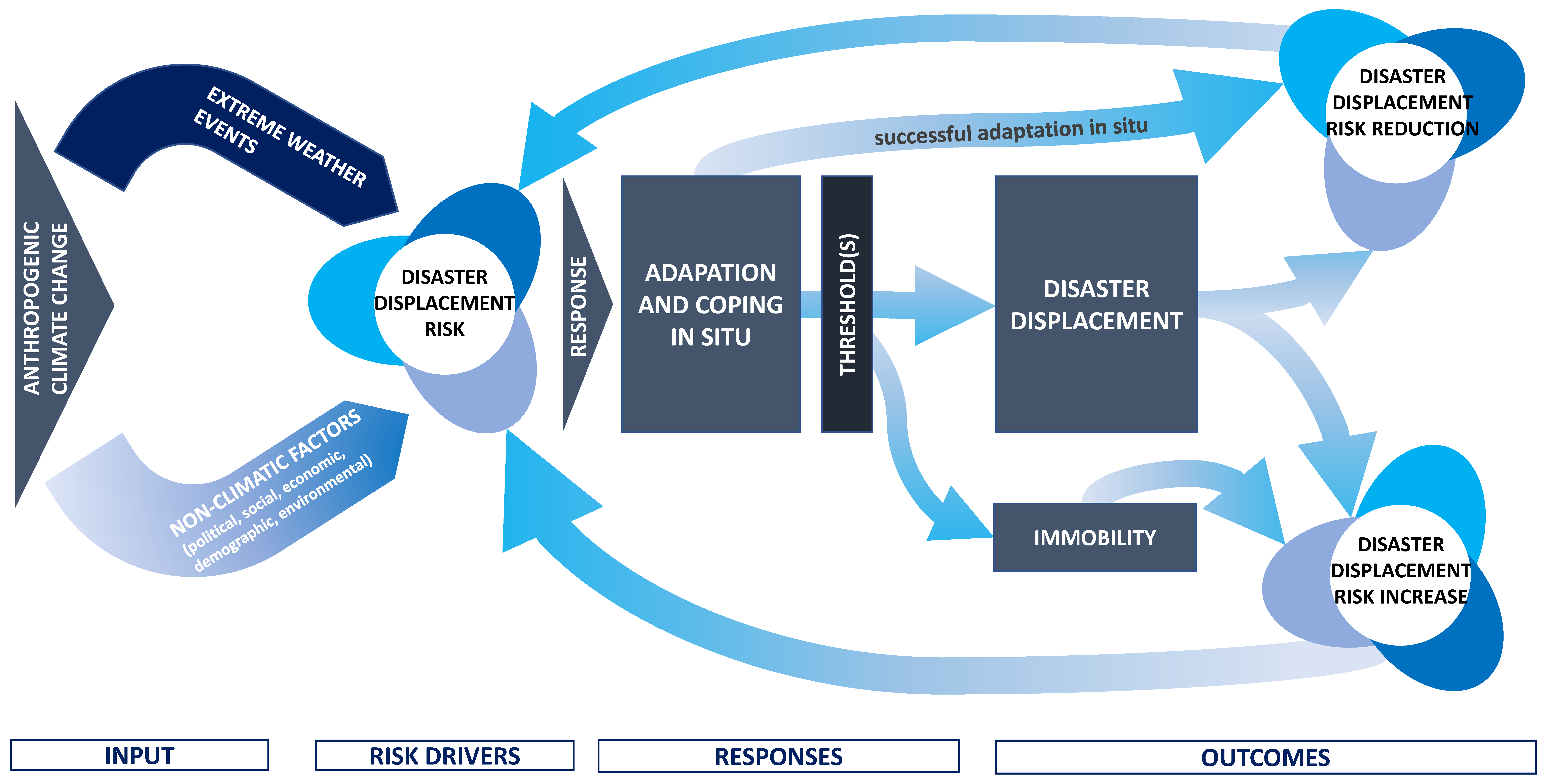


Integrating a Disaster Displacement Dimension in Climate Change Attribution

Abstract
Share and Cite
Thalheimer, L.; Heinrich, D.; Haustein, K.; Singh, R. Integrating a Disaster Displacement Dimension in Climate Change Attribution. Meteorology 2022, 1, 468-476. https://doi.org/10.3390/meteorology1040029
Thalheimer L, Heinrich D, Haustein K, Singh R. Integrating a Disaster Displacement Dimension in Climate Change Attribution. Meteorology. 2022; 1(4):468-476. https://doi.org/10.3390/meteorology1040029
Chicago/Turabian StyleThalheimer, Lisa, Dorothy Heinrich, Karsten Haustein, and Roop Singh. 2022. "Integrating a Disaster Displacement Dimension in Climate Change Attribution" Meteorology 1, no. 4: 468-476. https://doi.org/10.3390/meteorology1040029
APA StyleThalheimer, L., Heinrich, D., Haustein, K., & Singh, R. (2022). Integrating a Disaster Displacement Dimension in Climate Change Attribution. Meteorology, 1(4), 468-476. https://doi.org/10.3390/meteorology1040029