Article

FEED Europe: An Exploratory Study of Food Insecurity Screening and Referral Practices of Dietitians Practicing in Europe


by
Elena Carrillo-Alvarez
1,
Amanda Avery
2,*,
Elwira Gliwska
3,
Katarzyna Janiszewska
3,
Raimon Milà-Villarroel
1 and
Júlia Muñoz-Martinez
1
1
Global Research on Wellbeing (GRoW) Research Group, Facultat de Ciències de la Salut Blanquerna, Universitat Ramon Llull, 08025 Barcelona, Spain
2
Division of Food, Nutrition & Dietetics, University of Nottingham, Sutton Bonington Campus, Leics LE12 5RD, UK
3
The European Federation of the Associations of Dietitians (EFAD), 6705 AZ Wageningen, The Netherlands
*
Author to whom correspondence should be addressed.
Dietetics 2026, 5(2), 36; https://doi.org/10.3390/dietetics5020036
Submission received: 28 April 2026 / Revised: 8 June 2026 / Accepted: 10 June 2026 / Published: 17 June 2026

Abstract

Background/Objectives: Household food insecurity is a modifiable social determinant of health with important implications for diet quality and health outcomes. Dietitians are well positioned to identify and respond to food insecurity; however, little is known about how this is addressed in routine dietetic practice across Europe. This exploratory study examined food insecurity screening and response practices among dietitians practicing in Europe and examined associated correlates using the Capability, Opportunity, and Motivation Model of Behaviour (COM-B). Methods: An online cross-sectional survey informed by the COM-B framework was distributed through the European Federation of Associations of Dietitians’ institutional communication channels between February and June 2024. Participants were recruited using a voluntary, convenience-based sampling strategy through professional networks and social media dissemination. A total of 148 dietitians practicing in European countries responded. The questionnaire assessed routine food insecurity screening practices, COM-B correlates, perceived barriers, actions taken following identification, and learning needs. Quantitative data were analysed descriptively, and open-ended responses were used illustratively to contextualise reported practices. Results: Food insecurity screening was not systematically embedded in routine dietetic practice, with 11.6% of respondents reporting routine screening and 30.2% not asking about food insecurity. Identification of food insecurity did not consistently translate into follow-up action, and responses were predominantly referral-based rather than involving direct material support. While capability and motivation to address food insecurity were generally high, opportunity-related factors—such as time constraints, limited organisational support, and unclear referral pathways—emerged as the main barriers shaping professional behaviour. Substantial heterogeneity was observed across practice settings. Conclusions: In this sample of dietitians practicing in Europe, food insecurity screening and response were variable and often constrained by organisational and contextual factors. These findings highlight the need for system-level support and practice-oriented training to facilitate the integration of food insecurity into routine dietetic care.

1. Introduction

Food security has been defined by the Food and Agriculture Organisation (FAO) as the situation in which “all people, at all times have physical, social and economic access to sufficient, safe and nutritious food which meets the dietary needs and food preferences for an active and healthy life” [1] (p. 5). Despite international recognition of the right to adequate food, food insecurity remains a persistent challenge across high-income countries, including those in Europe. According to the European food-related material deprivation indicator, in 2021, 7.3% of the total population and 17.4% of those at risk of poverty were unable to afford a meal containing meat, fish, or a vegetarian equivalent every other day. At the national level, these proportions vary substantially: less than 1% in Cyprus and under 5% in Estonia, Finland, Denmark, Sweden, Portugal, Luxembourg, the Netherlands, Spain, and Ireland; between 10 and 20% in Germany, Romania, Slovakia, Greece, and Hungary; and up to ~22.5% in Bulgaria. Among people at risk of poverty, these figures more than double across most countries. More recent Eurostat data indicate that these figures have continued to increase across several European countries, highlighting the ongoing and evolving nature of food insecurity in Europe [2].
At the individual and household level, food insecurity constitutes a key pathway through which broader socioeconomic inequalities translate into health disadvantages. Household food insecurity (HFI) is a modifiable social determinant of health that both burdens healthcare systems and compromises the quality of care individuals receive [3]. Evidence consistently shows that HFI is associated with poor diet quality, increased risk of chronic disease, poor mental health outcomes in children and adults, and suboptimal child growth and development [4,5]. Given its profound health implications, there have been increasing calls for systematic screening for HFI within healthcare systems. In the United States, for example, the American Academy of Pediatrics recommends screening for food insecurity, and validated tools have been implemented across a range of settings, including primary and acute care. The Academy of Nutrition and Dietetics further endorses the use of validated screening tools in all healthcare settings, with subsequent referral to community resources and health professionals [6].
In contrast, HFI screening is not routine practice in most European health systems. One professional group with potential to identify and respond to HFI in clinical practice is dietitian-nutritionists [7]. Recent studies indicate that dietitian-nutritionists often recognise food insecurity as clinically relevant, yet many report insufficient training, limited awareness of validated screening tools, and uncertainty regarding referral pathways [8,9]. These findings echo a wider international literature that reports mixed levels of knowledge, beliefs, and practices among dietitians. While some studies demonstrate adequate professional understanding of HFI and its consequences [10], others reveal significant knowledge gaps [3,11]. Notably, even in cases of limited knowledge, dietitians often acknowledge the benefits of screening [11,12]. Reported barriers include lack of time, insufficient communication skills, and unfamiliarity with validated screening tools—factors that limit both screening and referral for patients experiencing FI [3,11,13]. Importantly, most of these studies originate from the United States, the United Kingdom, or Africa, contexts that differ substantially from European healthcare systems and safety nets. European contexts are characterised by substantial heterogeneity in welfare systems, healthcare organisation, food assistance infrastructures, and the professional role of dietitians. Responses to food insecurity are often fragmented across healthcare, municipal social services, charities, and third-sector organisations, with varying levels of coordination and institutionalisation across countries. Understanding how dietitians engage with food insecurity within these heterogeneous systems may therefore help identify both shared and context-dependent implementation challenges [7].
To date, few studies on HFI in healthcare have been underpinned by explicit theoretical frameworks. Yet theory-driven approaches are critical to designing and implementing effective interventions and policies. The Capability, Opportunity, and Motivation Model of Behaviour (COM-B) provides a systematic framework for understanding health professional behaviours. COM-B posits that behaviour arises when three conditions are met: capability (knowledge and skills), opportunity (social and environmental resources), and motivation (emotions, beliefs, and intentions) [14]. This model has been extensively applied to screening behaviours in healthcare, including for alcohol use [15], cervical cancer [16], and cardiometabolic risk in people with severe mental illness [17]. However, it has not yet been applied to HFI screening. Employing COM-B and its associated Theoretical Domains Framework allows for a systematic identification of barriers and enablers to HFI screening and referral, thereby informing the design of targeted, evidence-based interventions [18].
Building on these considerations, the present study applies the COM-B model to investigate the knowledge, beliefs, and practices of dietitians practicing in Europe regarding HFI. The primary hypothesis is that the identification and referral of clients with HFI by dietitian-nutritionists is directly influenced by their knowledge, self-efficacy, and the structural barriers and enablers they encounter. Specifically, this research aims to (1) Describe routine food insecurity screening practices among dietitians practicing in Europe, including asking about food insecurity, use of screening tools, and frequency of identification of food-insecure clients; (2) Assess dietitians’ capability, opportunity, and motivation to address food insecurity, and examine how these domains are associated with routine screening practices; (3) Explore the relationship between routine food insecurity screening practices and actions taken to support food-insecure clients, including referrals to services and provision of resources.

2. Materials and Methods

2.1. Design and Participants

An online cross-sectional survey was distributed among dietitians practicing in Europe from the 28 countries affiliated to the European Federation of Associations of Dietitians (EFAD) as part of the Food Security Education & Empowerment for Dietitians in Europe (FEED Europe) project. The survey was available between February and June 2024, and was disseminated through EFAD communication channels, including newsflash, LinkedIn and Instagram. EFAD delegates, National Dietetics Associations and Higher Education Institutions also distributed the survey among their members. Due to the open and multi-channel dissemination strategy, it was not possible to determine the total number of individuals who received the survey invitation. Therefore, a response rate could not be calculated.
Recruitment followed a convenience, non-probabilistic sampling strategy. We aimed to obtain broad representation across the 28 EFAD-affiliated countries. Eligible participants were dietitians and final-year dietetic students who were practicing or undertaking placements in a European country. Final-year students were included to capture emerging professional practices and exposure to current screening, referral, and care practices within real-world dietetic settings. Although analyses were not formally stratified by student status due to the relatively small number of students included, sensitivity analyses excluding students yielded materially similar findings across key outcomes. Participation was voluntary and anonymous. Ethical approval to conduct the study was received from the Research Ethical Committee of the Ramon Llull University (CER URL 2023_2024_006). All participants provided written informed consent.

2.2. Measures

The questionnaire was adapted from a survey developed by Gallegos et al., in their sister project “Australian dietitians’ and social workers’ household food insecurity knowledge and practice: a cross-sectional survey informed by the COM-B framework” (manuscript under review).
Adaptation aimed to improve contextual relevance and applicability to European healthcare and social support systems while maintaining conceptual alignment with the original instrument and the COM-B framework. Modifications included replacing Australia-specific terminology and professional categories, broadening items to reflect both clinical and community/public health practice contexts, and adapting wording related to referral pathways, social services, and food assistance structures relevant to European settings. Additional items exploring educational needs and training preferences related to food insecurity were also incorporated.
Content and face validity were assessed through iterative review by researchers and dietitians with expertise in food insecurity, public health nutrition, and dietetic practice. Review focused on item relevance, conceptual clarity, contextual appropriateness, and alignment with study objectives. The revised questionnaire was pilot-tested with 22 participants from different European countries to assess comprehension, acceptability, survey flow, and completion time. Feedback from pilot testing led to minor wording refinements and clarification of selected response options to improve comprehensibility across different European practice contexts. It also entailed adjustments to survey layout and navigation prior to dissemination.
The final questionnaire comprised 54 substantive items, in addition to eligibility, consent, and sociodemographic questions. Specifically, the survey included five sociodemographic and professional background questions capturing participants’ professional context. These assessed country of practice, area of work, and work setting(s), with work setting allowing multiple responses to reflect mixed professional roles. Area of work could be further specified using an open-text field when relevant. These variables were used to describe the study population and to explore variation in practices and correlates across professional contexts.
Routine professional practices related to food insecurity screening were assessed using six items capturing whether participants ask clients about food insecurity (binary yes/no), how frequently they encounter food-insecure clients, use of standardised screening questions, whether clients raise food insecurity spontaneously, and frequency of referrals. In addition, awareness of food insecurity among participants’ clients was assessed using a five-point Likert scale. Frequency-based items used ordered response options (e.g., never to very often), while Likert-scale items ranged from strongly agree to strongly disagree and included a ‘prefer not to say’ option.
These items were conceptualised as routine practice behaviours, reflecting how food insecurity screening is embedded in day-to-day professional activity, and were treated as intermediate behavioural outcomes rather than COM-B correlates. To complement these quantitative items, respondents were invited to provide open-ended examples of how they ask about food insecurity in practice. These responses were used to illustrate and contextualise reported screening practices.
Correlates of food insecurity screening were assessed using items informed by the COM-B model of behaviour. Items were organised a priori according to COM-B domains and subsequently refined empirically to improve coherence while retaining theoretical alignment. Capability was assessed using nine items covering both knowledge and self-efficacy, yielding a total score ranging from 0 to 40. Knowledge (0–20) assessed understanding of food insecurity, awareness of screening approaches, and knowledge of how to ask about food insecurity, adapt professional advice, and refer clients appropriately. Self-efficacy (0–20) assessed confidence in identifying food insecurity, asking about food insecurity without causing offence, making appropriate referrals, and engaging clients through trust and rapport. Opportunity was assessed using nine items (score range 0–25) capturing organisational and contextual influences on practice, including perceived organisational expectations regarding food insecurity screening, availability of time and private space, access to screening tools and referral resources, management and colleague support, and the provision of food or referral options. Motivation was assessed using eight items (score range 0–35) capturing beliefs, role perceptions, and expectations related to addressing food insecurity. These included the perceived importance of knowing clients’ food security status, perceived professional role and responsibility, willingness to do more for food-insecure clients, beliefs about the impact of asking about food insecurity, perceived client receptivity, and conditional motivation related to building trust and rapport. All Capability, Opportunity, and Motivation items were measured using five-point Likert scales ranging from strongly agree to strongly disagree, with an additional prefer not to say option. Higher scores reflected greater perceived capability, opportunity, and motivation to address food insecurity in practice. No reverse coding was required. A total COM-B score was calculated by summing domain scores (possible range 0–100), with higher scores reflecting greater perceived capability, opportunity, and motivation to address food insecurity in practice. Composite scores were calculated using complete available item responses and used descriptively to summarise theoretically related COM-B dimensions.
In addition to closed-ended items, open-ended questions invited respondents to provide examples of advice given to food-insecure clients. These responses were used to qualitatively illustrate how perceived capability was enacted in practice.
Perceived barriers to asking about or addressing food insecurity were assessed using nine items capturing a range of situational, organisational, and emotional obstacles, including lack of time, lack of privacy, concern about causing offence, perceived role boundaries, lack of organisational or colleague support, delegation of responsibility to others, and discomfort related to uncovering broader social issues. Barrier items used binary response options (yes/no), with an additional open-text option to report other perceived barriers. Given their conceptual and empirical heterogeneity, these barrier items were analysed descriptively rather than combined into COM-B domain scores, as some barriers could plausibly overlap across capability, opportunity, and motivation dimensions.
Actions taken following identification of food insecurity were assessed using ten multiple-response items capturing referrals, provision of resources, and other forms of support undertaken in the previous year, including the option to report that no actions were taken. Respondents could select more than one action. These items were conceptualised as distal behavioural outcomes. An additional open-ended item invited respondents to describe where they refer food-insecure clients. These responses were used to complement quantitative action data by illustrating referral pathways and contextual variability in available resources.
Finally, seven items assessed perceived learning needs and preferred formats for training and resources related to food insecurity screening and response. Items included perceived need for additional resources (yes/no), preferred types of resources (multiple response), and preferred learning formats (multiple response). Learning needs and preferences were analysed descriptively to inform implications for future professional development and intervention design.
The survey was administered using LimeSurvey and was available in English, although respondents could use browser translation and respond to open-ended questions in their native language if they wished. The survey was fully anonymised, and average completion time was approximately 12–15 min.

2.3. Data Analysis

Data were analysed using IBM SPSS Statistics (version 28), and responses with less than 50% completion were excluded. Responses with frequency lower than 0.5% (i.e., field of work food service and sports nutrition) were aggregated to “other”. Disability center (n = 2, 1.3%), which corresponds to the variable “Area of work”, was dismissed from the analysis. Percentages were calculated using the full sample denominator unless otherwise specified. Open-ended responses were used illustratively to contextualise reported actions and referral pathways. Prior to analysis, the database was cleaned to identify missing values, inconsistencies, and potential coding errors.
Categorical variables were summarized using absolute and relative frequencies (n, %). Continuous variables were described using mean and standard deviation (SD) when normally distributed, or median and interquartile range (IQR) when non-normally distributed. Normality of continuous variables was assessed using the Shapiro–Wilk test and visual inspection of histograms and Q–Q plots.
For bivariate analysis, associations between categorical variables were examined using Pearson’s chi-square test or Fisher’s exact test, as appropriate. Comparisons of means between two independent groups were performed using Student’s t-test or the Mann–Whitney U test when normality assumptions were not met. Comparisons among more than two groups were conducted using one-way analysis of variance (ANOVA) or the Kruskal–Wallis test. A two-sided p-value < 0.05 was considered statistically significant.

3. Results

A total of 148 respondents from a wide range of European countries were included in the analysis (Table 1). The sample was primarily composed of qualified dietitians (92.6%), working predominantly within healthcare settings. Over half of respondents (55.7%) reported working in tertiary care, and clinical nutrition (51.4%) was the most frequently reported area of practice, followed by public health nutrition (14.9%) and primary care (7.4%).
Routine food insecurity screening practices varied across respondents (Table 2). While most dietitians reported asking about food insecurity at least occasionally, only a small proportion did so routinely (11.6%), and nearly one-third reported not asking about food insecurity at all (30.2%).
Food insecurity was frequently encountered in dietetic practice, with 42.6% of respondents reporting that they identified food insecurity on a weekly basis or more frequently in the past month. Awareness of food insecurity among clients was moderate, with just over half of respondents (53.4%) agreeing that they were aware of food insecurity among their clients, and identification often relied on client disclosure, with 42.6% agreeing that clients raised food insecurity themselves. Use of standardised screening questions was inconsistent, with most respondents reporting using them only sometimes (73.7%).
Referral activity related to food insecurity was limited. Only 19.6% of respondents reported making referrals on a weekly basis or more in the past month, while 42.0% reported no referrals during this period.
Open-ended responses illustrated heterogeneity in how food insecurity was addressed in practice, ranging from indirect or contextual questioning to more explicit discussions when financial difficulties were apparent (e.g., asking about food budgets or access to shops versus directly enquiring about difficulties affording food).
Mean COM-B scores indicated relatively high levels of self-reported capability and motivation to address food insecurity among respondents (Table 3). Capability scores (possible range 0–40), encompassing both knowledge and self-efficacy, were moderate to high (mean = 26.25, SD = 9.11), suggesting that many dietitians felt equipped to recognise, discuss, and respond to food insecurity in their practice. Motivation scores (possible range 0–35) were also relatively high (mean = 21.45, SD = 8.99).
In contrast, perceived opportunity to address food insecurity was lower and more variable (possible range 0–25; mean = 15.42, SD = 8.47), indicating substantial heterogeneity in the organisational and contextual conditions supporting action. Overall, this pattern suggests that while capability and motivation were commonly present, opportunities to act were unevenly distributed across practice settings.
Reported barriers to asking about or addressing food insecurity were heterogeneous (Figure 1). The most frequently reported barrier was concern about causing offence, reported by 28.4% of respondents. Lack of time was reported by 25.7%, followed by lack of organisational or colleague support (14.9%). Lack of privacy during consultations was less commonly reported (8.8%), and delegation of responsibility to other professionals (“someone else does it”) was infrequent (5.4%). Only a small proportion of respondents indicated that addressing food insecurity was not part of their professional role (3.4%).
Notably, over one quarter of respondents (26.4%) reported that nothing would stop them from asking about or addressing food insecurity.
Responses to the item assessing discomfort with uncovering broader social issues revealed mixed views. While one-third of respondents (33.8%) agreed that asking about food insecurity might uncover social issues they felt uncomfortable addressing, similar proportions disagreed (23.6%) or expressed uncertainty (21.6%), and 20.9% preferred not to answer.
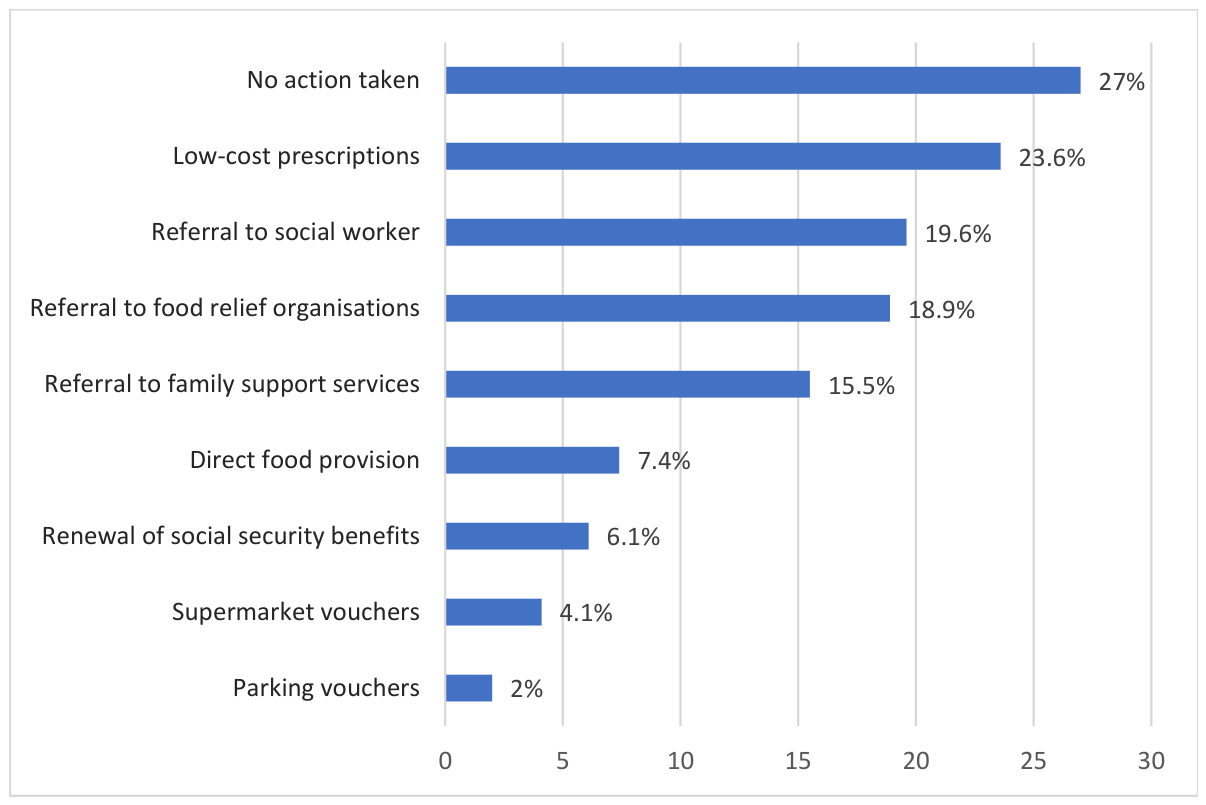
Among respondents, 27.0% reported that no action had been taken in response to identified food insecurity in the past year (Figure 2). Among those who reported taking action, referral-based responses were more commonly reported than direct material support. The most frequently reported actions included arranging low-cost prescriptions (23.6%), referral to social workers (19.6%), and referral to food relief agencies (18.9%). Direct provision of food (7.4%) or financial vouchers (4.1% for supermarket vouchers and 2% for parking vouchers) was less commonly reported.
Many respondents described referral to formal social or healthcare services, particularly social workers or municipal social services. Many also relied on third-sector or community-based organisations, including food banks, NGOs, and churches. Some respondents described adapting dietary advice pragmatically without formal referral. Importantly, several respondents explicitly reported the absence of clear referral options or uncertainty regarding where to refer clients.
Variations in food insecurity screening practices and COM-B correlates were observed across areas of work and practice settings (Supplementary Tables S1–S8). Significant differences by area of work were observed for knowledge (p = 0.014), self-efficacy (p = 0.019), motivation (p = 0.006), and total COM-B score (p = 0.012), with primary care dietitians generally reporting higher scores. Opportunity scores did not differ significantly across areas of work or practice settings. Some reported barriers also varied significantly across professional contexts, although patterns were not consistent across all items. Discomfort with asking about food insecurity because it may uncover broader social issues differed by area of work (p = 0.033), with higher agreement among primary care dietitians. The perception that “someone else does it” also differed significantly across both areas of work (p = 0.010) and work settings (p = 0.007). Across work settings, lack of privacy differed significantly (p = 0.040), particularly in community-based settings. Regarding actions taken following identification of food insecurity, the proportion reporting no action in the previous year differed significantly across areas of work (p = 0.026), with higher proportions observed in the “other” category. Referral to social workers also differed significantly across work settings (p = 0.002), with higher reporting in community-based settings.
Respondents expressed substantial interest in further training on food insecurity, with 63.5% indicating interest in follow-up training. Preferences for learning formats were heterogeneous, with in-person workshops, webinars, and self-paced online courses among the most frequently endorsed formats. No statistically significant differences in preferred learning formats were observed across areas of work.
Open-ended responses indicated that learning needs were primarily focused on how to address food insecurity in a sensitive and practical manner. Respondents highlighted the need for guidance on how to ask about food insecurity without causing offence, access to standardised screening questions, and clearer information on referral pathways and available local resources. Communication skills, empathy, and the ability to adapt dietary advice to financial constraints were also frequently mentioned.

4. Discussion

This exploratory study provides a perspective on how dietitians practicing in Europe currently engage with food insecurity in their professional practice, spanning routine screening behaviours, perceived influences of action, and responses following identification. In our sample of dietitians who responded to the survey, the findings indicate that food insecurity screening is not systematically embedded in routine dietetic practice. While respondents widely recognised the importance of food insecurity to nutritional care, screening practices were variable and often context-dependent rather than standardised.
Exploratory analyses suggested that primary care and public health dietitians may report somewhat greater engagement with food insecurity-related practices and more favourable COM-B scores than those working in other settings. However, in practice, regardless of area of expertise, results suggest that there is limited routine enquiry, with many dietitians reporting that food insecurity was identified through client disclosure rather than through systematic proactive screening. This pattern suggests a largely reactive approach to identification, which is consistent with previous studies reporting low levels of routine screening among health professionals [19]. Such an approach may contribute to under-identification [11], particularly given the stigma and sensitivity surrounding food insecurity [19,20,21], which may prevent clients from raising the issue spontaneously. Qualitative examples of how dietitians asked about food insecurity illustrate reliance on indirect questioning embedded within dietary assessment, rather than the use of explicit or standardised screening tools. Interestingly, although many respondents reported “sometimes” using standardised screening questions, qualitative responses suggested substantial variability in how food insecurity screening was operationalised in practice. This may reflect differences in how respondents interpreted “standardised questions,” but may also indicate uncertainty regarding how to integrate validated food insecurity screening tools consistently into routine consultations.
When food insecurity was identified, it did not consistently lead to follow-up action, and when actions were reported, these most commonly involved referral to other services, particularly social workers or food relief organisations, rather than direct material support. This pattern aligns with previous findings across European contexts, where responses to food insecurity are frequently dispersed across healthcare, social services, and the voluntary sector, with limited coordination [7,11,22], suggesting that dietitians may often function as intermediaries or navigators within fragmented support systems, rather than as direct providers of support. In the European context, this reactive approach may also reflect the heterogeneity of healthcare, welfare, and food assistance infrastructures across countries and practice settings [7]. Where referral pathways are fragmented, unclear, or unavailable, dietitians may be less able to act upon identified food insecurity, making reliance on client disclosure a pragmatic response to limited opportunities for follow-up action. This interpretation is supported by open-ended responses describing uncertainty about where to refer clients or the absence of appropriate referral options in some settings.
Interpreted through the COM-B framework, the findings suggest opportunity-related conditions may play an important constraining role in shaping dietitians’ engagement with food insecurity. Although respondents reported relatively high levels of knowledge, skills, and willingness to act, these did not consistently translate into routine practice. This suggests that environmental and organisational conditions—such as time constraints, limited institutional support, and unclear referral pathways—play a central role in enabling or constraining behaviour. At the same time, some reported barriers—such as concern about causing offence—may also reflect overlap between organisational, communication self-efficacy, and stigma-related dimensions. This disconnect between recognition and action reflects broader challenges observed in social prescribing initiatives, where health professionals may be encouraged to identify social needs without being embedded in systems capable of responding effectively [23,24]. This underpinned the recent US Preventive Services Task Force evidence review, which concluded that there is currently insufficient evidence to recommend universal screening for food insecurity in primary care [25]. Crucially, this conclusion was driven not by the absence of valid screening tools, but by limited evidence that identification is followed by effective interventions or leads to improved health outcomes. The absence of strong evidence supporting universal screening programmes can be understood as a structural limitation of opportunity: without consistent, accessible, and coordinated responses following identification, the potential benefits of screening remain constrained. Thus, integrating food insecurity enquiry into routine dietetic assessment may require not only valid screening tools, but also accessible referral pathways and organisational capacity to respond effectively following identification.
More broadly, the findings align with literature describing the expanding role of health professionals in addressing social determinants of health within routine care, including through screening, referral, and social prescribing approaches [23,24,26]. However, implementation remains shaped by professional role boundaries, organisational expectations, availability of referral infrastructures, and perceived responsibility for responding to social needs [23,24,26]. For dietitians, whose practice increasingly intersects with food insecurity and broader determinants of dietary health, these tensions may influence whether food insecurity enquiry is perceived as feasible, legitimate, and actionable within routine consultations [7,27].
This situation may be further amplified by broader dynamics described in the literature on professional roles in healthcare, which highlights how socially and institutionally defined role boundaries shape what professionals perceive as feasible or legitimate action [26,27]. In many contexts, the dietetic role continues to be narrowly framed around individual dietary counselling, rather than engagement with social determinants of health. Such role constriction may limit opportunities for action even when motivation and capability are present, reinforcing the gap between recognition and response.
Respondents also reported interest in further training on food insecurity, highlighting gaps in applied and practice-oriented competencies, including how to ask about food insecurity sensitively, access to standardised screening tools, and awareness of referral pathways. This aligns with the implementation science literature indicating that training focused solely on awareness or knowledge is insufficient to change practice without concurrent development of practical skills and organisational support [28,29].
Taken together, the findings point to the need for clear and realistic protocols that support both screening and follow-up, and that integrate food insecurity into routine nutritional assessment rather than treating it as an optional or exceptional issue. The form this support takes may differ across settings. In primary care and community settings, integration with social workers, municipal social services, and community-based organisations may facilitate referral and follow-up processes. In tertiary or acute care settings, where time constraints and continuity of care may be more limited, brief screening approaches combined with clearer referral protocols and interdisciplinary coordination may be more feasible. Participants expressed a need for greater support in asking about food insecurity sensitively, accessing standardised screening questions, and identifying appropriate local referral pathways and resources. This suggests that training initiatives should prioritise practical skills and contextual knowledge, rather than focusing exclusively on conceptual awareness. At a system level, the findings underscore that strengthening individual capability or motivation alone is unlikely to be sufficient. Without adequate opportunity—through organisational support, protected time, privacy, and coordinated referral pathways—dietitians’ capacity to act on food insecurity is likely to remain constrained.
This study has several limitations that should be considered when interpreting the findings. Participation was voluntary and based on a convenience, non-probabilistic sampling strategy, which may introduce self-selection bias and limit the representativeness of the sample. The distribution of respondents across countries was uneven, with higher representation from a small number of countries, which may affect the transferability of findings across European contexts. Subgroup sizes were small and heterogeneous, particularly for analyses by area of work and practice setting; consequently, these exploratory subgroup analyses should be considered indicative and hypothesis-generating rather than definitive, and inferential results should be interpreted with caution. In addition, the response rate could not be calculated due to the open dissemination strategy, and the survey was conducted in English, which may have influenced participation. Finally, while heterogeneity across countries and settings was evident, in-depth country-level analyses were beyond the scope of this study. Despite these limitations, this study has several strengths, including its explicit theoretical grounding in the COM-B framework, the inclusion of respondents from multiple European countries and practice settings, and its pragmatic integration of quantitative and qualitative data.

5. Conclusions

This study highlights that while dietitians practicing in Europe recognise the importance of addressing food insecurity, their capacity to act is largely shaped by contextual and organisational opportunities. Embedding food insecurity screening and response into routine dietetic practice will therefore require system-level support alongside professional training.

Supplementary Materials

The following supporting information can be downloaded at: https://www.mdpi.com/article/10.3390/dietetics5020036/s1; Tables S1–S8. Table S1: Food insecurity–related behaviours among dietitians by area of work; Table S2: Food insecurity–related behaviours among dietitians by work setting; Table S3: COM-B determinants (knowledge, self-efficacy, opportunity and motivation) related to addressing food insecurity among dietitians by area of work; Table S4: COM-B determinants (knowledge, self-efficacy, opportunity and motivation) related to addressing food insecurity among dietitians by work setting; Table S5: Reported barriers to asking about food insecurity among dietitians by area of work; Table S6: Reported barriers to asking about food insecurity among dietitians by work setting; Table S7: Actions taken in the past year to address food insecurity among dietitians by area of work; Table S8: Actions taken in the past year to address food insecurity among dietitians by work setting.

Author Contributions

Conceptualization, E.C.-A. and A.A.; formal analysis, E.C.-A. and R.M.-V.; investigation, E.C.-A., A.A., E.G. and K.J.; writing—original draft preparation, E.C.-A. and J.M.-M.; writing—review and editing, all authors. All authors have read and agreed to the published version of the manuscript.

Funding

This research was conducted through a research contract with EFAD.

Institutional Review Board Statement

The study was conducted in accordance with the Declaration of Helsinki and approved by the Ethics Committee of Ramon Llull University (CER URL 2023_2024_006). Approval Date: 19 December 2023.

Informed Consent Statement

Informed consent was obtained from all subjects involved in the study.

Data Availability Statement

Data will be made available upon request.

Acknowledgments

The authors would like to thank Danielle Gallegos for inspiring this project and sharing the sister survey from this study.

Conflicts of Interest

Elwira Gliwska and Katarzyna Janiszewska report that their work on the FEED project at the time the survey was conducted was supported by Bayer. The FEED project is broader than the present survey and includes the development of an educational platform on food and nutrition insecurity for dietitians. Bayer had no role in the design, conduct, analysis, or interpretation of the survey.

Abbreviations

The following abbreviations are used in this manuscript: COM-B: Capability, Opportunity, and Motivation Model of Behavior; HFI: Household food insecurity; FI: Food insecurity; EFAD: European Federation of Associations of Dietitians; CER URL: Research Ethical Committee of Ramon Llull University.

References

  1. FAO. Rome Declaration on World Food Security and World Food Summit Plan of Action; FAO: Rome, Italy, 1996. [Google Scholar]
  2. Eurostat. Inability to Afford a Meal with Meat, Chicken, Fish (or Vegetarian Equivalent) Every Second Day. 2026. Available online: https://ec.europa.eu/eurostat/databrowser/view/hlth_dm030__custom_19881864/default/table?lang=en (accessed on 31 March 2026).
  3. Frost, K.; Stafos, A.; Metcalf, A.L.; DeBourge, W.; Friesen, M.; Bryant, R.; Lawver, L.; Bullock, J.; Williams, K. Knowledge and Barriers Related to Food Insecurity Screening in Healthcare Settings. Public Health Nurs. 2022, 39, 770–777. [Google Scholar] [CrossRef] [PubMed]
  4. McKay, F.H.; Haines, B.C.; Beswick, H.; McKenzie, H.; Lindberg, R. The Prevalence, Severity and Experience of Food Insecurity in Australia: An Investigation of Food Aid Use. Health Soc. Care Community 2020, 28, 2399–2407. [Google Scholar] [CrossRef] [PubMed]
  5. Gallegos, D.; Eivers, A.; Sondergeld, P.; Pattinson, C. Food Insecurity and Child Development: A State-of-the-Art Review. Int. J. Environ. Res. Public Health 2021, 18, 8990. [Google Scholar] [CrossRef] [PubMed]
  6. Holben, D.H.; Marshall, M.B. Position of the Academy of Nutrition and Dietetics: Food Insecurity in the United States. J. Acad. Nutr. Diet. 2017, 117, 1991–2002. [Google Scholar] [CrossRef] [PubMed]
  7. Carrillo-Álvarez, E. Perspective: Food and Nutrition Insecurity in Europe: Challenges and Opportunities for Dietitians. Adv. Nutr. 2023, 14, 995–1004. [Google Scholar] [CrossRef] [PubMed]
  8. Kundra, A.; Batool, H.; Moore, S.G.; Aslett-Bentley, A.; Noonan-Gunning, S.; Rice, I.; Smith, J.; Marino, L.V. Supporting those experiencing food insecurity: A scoping review of the role of a dietitian. J. Hum. Nutr. Diet. 2025, 38, e13407. [Google Scholar] [CrossRef] [PubMed]
  9. Burton-Obanla, A.A.; Sloane, S.; Koester, B.; Gundersen, C.; Fiese, B.H.; Arthur, A.E. Oncology Registered Dietitian Nutritionists’ Knowledge, Attitudes, and Practices Related to Food Insecurity among Cancer Survivors: A Qualitative Study. J. Acad. Nutr. Diet. 2022, 122, 2267–2287. [Google Scholar] [CrossRef] [PubMed]
  10. Archer, C.; Gallegos, D.; McKechnie, R. Developing Measures of Food and Nutrition Security within an Australian Context. Public Health Nutr. 2017, 20, 2513–2522. [Google Scholar] [CrossRef] [PubMed]
  11. Douglas, F.; Machray, K.; Entwistle, V. Health Professionals’ Experiences and Perspectives on Food Insecurity and Long-term Conditions: A Qualitative Investigation. Health Soc. Care Community 2020, 28, 404–413. [Google Scholar] [CrossRef] [PubMed]
  12. Greenthal, E.; Jia, J.; Poblacion, A.; James, T. Patient Experiences and Provider Perspectives on a Hospital-Based Food Pantry: A Mixed Methods Evaluation Study. Public Health Nutr. 2019, 22, 3261–3269. [Google Scholar] [CrossRef] [PubMed]
  13. Thompson, C.; Smith, D.; Cummins, S. Understanding the Health and Wellbeing Challenges of the Food Banking System: A Qualitative Study of Food Bank Users, Providers and Referrers in London. Soc. Sci. Med. 2018, 211, 95–101. [Google Scholar] [CrossRef] [PubMed]
  14. Michie, S.; Van Stralen, M.M.; West, R. The Behaviour Change Wheel: A New Method for Characterising and Designing Behaviour Change Interventions. Implement. Sci. 2011, 6, 42. [Google Scholar] [CrossRef] [PubMed]
  15. Rosário, F.; Santos, M.I.; Angus, K.; Pas, L.; Ribeiro, C.; Fitzgerald, N. Factors Influencing the Implementation of Screening and Brief Interventions for Alcohol Use in Primary Care Practices: A Systematic Review Using the COM-B System and Theoretical Domains Framework. Implement. Sci. 2021, 16, 6. [Google Scholar] [CrossRef] [PubMed]
  16. O’Donovan, B.; Mooney, T.; Rimmer, B.; Fitzpatrick, P.; Flannelly, G.; Doherty, L.; Martin, C.; O’Leary, J.; O’Connor, M.; Sharp, L. Advancing Understanding of Influences on Cervical Screening (Non)-participation among Younger and Older Women: A Qualitative Study Using the Theoretical Domains Framework and the COM-B Model. Health Expect. 2021, 24, 2023–2035. [Google Scholar] [CrossRef] [PubMed]
  17. Mangurian, C.; Niu, G.C.; Schillinger, D.; Newcomer, J.W.; Dilley, J.; Handley, M.A. Utilization of the Behavior Change Wheel Framework to Develop a Model to Improve Cardiometabolic Screening for People with Severe Mental Illness. Implement. Sci. 2017, 12, 134. [Google Scholar] [CrossRef] [PubMed]
  18. Barker, F.; Atkins, L.; De Lusignan, S. Applying the COM-B Behaviour Model and Behaviour Change Wheel to Develop an Intervention to Improve Hearing-Aid Use in Adult Auditory Rehabilitation. Int. J. Audiol. 2016, 55, S90–S98. [Google Scholar] [CrossRef] [PubMed]
  19. De Marchis, E.H.; Torres, J.M.; Fichtenberg, C.; Gottlieb, L.M. Identifying Food Insecurity in Health Care Settings: A Systematic Scoping Review of the Evidence. Fam. Community Health 2019, 42, 20–29. [Google Scholar] [CrossRef] [PubMed]
  20. Hatton, C.R.; Bresnahan, C.; Tucker, A.C.; Johnson, J.; John, S.; Wolfson, J.A. Food for Thought: The Intersection between SNAP Stigma, Food Insecurity, and Gender. Soc. Sci. Med. 2024, 361, 117367. [Google Scholar] [CrossRef] [PubMed]
  21. Halverson, M.M.; Appel, E.Y.; Earnshaw, V.A.; Sands, G.; Powell, R.; Rozin, M.; Cruz Cordero, T.; Chrisostam, N.; Kennedy, N.; Katz, S.E.; et al. Food Insecurity-Related Stigma Among Adults in the United States: A Scoping Review. Am. J. Health Promot. 2026, 40, 353–377. [Google Scholar] [CrossRef] [PubMed]
  22. Eldred, D.; Kameg, B.N. Addressing Food Insecurity in Primary Care. J. Nurse Pract. 2021, 17, 799–802. [Google Scholar] [CrossRef]
  23. Bickerdike, L.; Booth, A.; Wilson, P.M.; Farley, K.; Wright, K. Social Prescribing: Less Rhetoric and More Reality. A Systematic Review of the Evidence. BMJ Open 2017, 7, e013384. [Google Scholar] [CrossRef] [PubMed]
  24. Husk, K.; Blockley, K.; Lovell, R.; Bethel, A.; Lang, I.; Byng, R.; Garside, R. What Approaches to Social Prescribing Work, for Whom, and in What Circumstances? A Realist Review. Health Soc. Care Community 2020, 28, 309–324. [Google Scholar] [CrossRef] [PubMed]
  25. O’Connor, E.A.; Webber, E.M.; Martin, A.M.; Henninger, M.L.; Eder, M.L.; Lin, J.S. Preventive Services for Food Insecurity: Evidence Report and Systematic Review for the US Preventive Services Task Force. JAMA 2025, 333, 1340. [Google Scholar] [CrossRef] [PubMed]
  26. Frenk, J.; Chen, L.; Bhutta, Z.A.; Cohen, J.; Crisp, N.; Evans, T.; Fineberg, H.; Garcia, P.; Ke, Y.; Kelley, P.; et al. Health Professionals for a New Century: Transforming Education to Strengthen Health Systems in an Interdependent World. Lancet 2010, 376, 1923–1958. [Google Scholar] [CrossRef] [PubMed]
  27. Carrillo-Alvarez, E.; Puyol-Martin, Y.; Camps, A.; Muñoz-Martinez, J.; Rodriguez-Monforte, M.; Berlanga-Fernandez, S.; Rigau-Sabadell, M. Dietitians as System Builders: Advancing Equity, Sustainability and Health in Community Nutrition and Primary Care. J. Hum. Nutr. Diet. 2026, 39, e70232. [Google Scholar] [CrossRef] [PubMed]
  28. Reeves, S.; Xyrichis, A.; Zwarenstein, M. Teamwork, Collaboration, Coordination, and Networking: Why We Need to Distinguish between Different Types of Interprofessional Practice. J. Interprof. Care 2018, 32, 1–3. [Google Scholar] [CrossRef] [PubMed]
  29. Atkins, L.; Francis, J.; Islam, R.; O’Connor, D.; Patey, A.; Ivers, N.; Foy, R.; Duncan, E.M.; Colquhoun, H.; Grimshaw, J.M.; et al. A Guide to Using the Theoretical Domains Framework of Behaviour Change to Investigate Implementation Problems. Implement. Sci. 2017, 12, 77. [Google Scholar] [CrossRef] [PubMed]
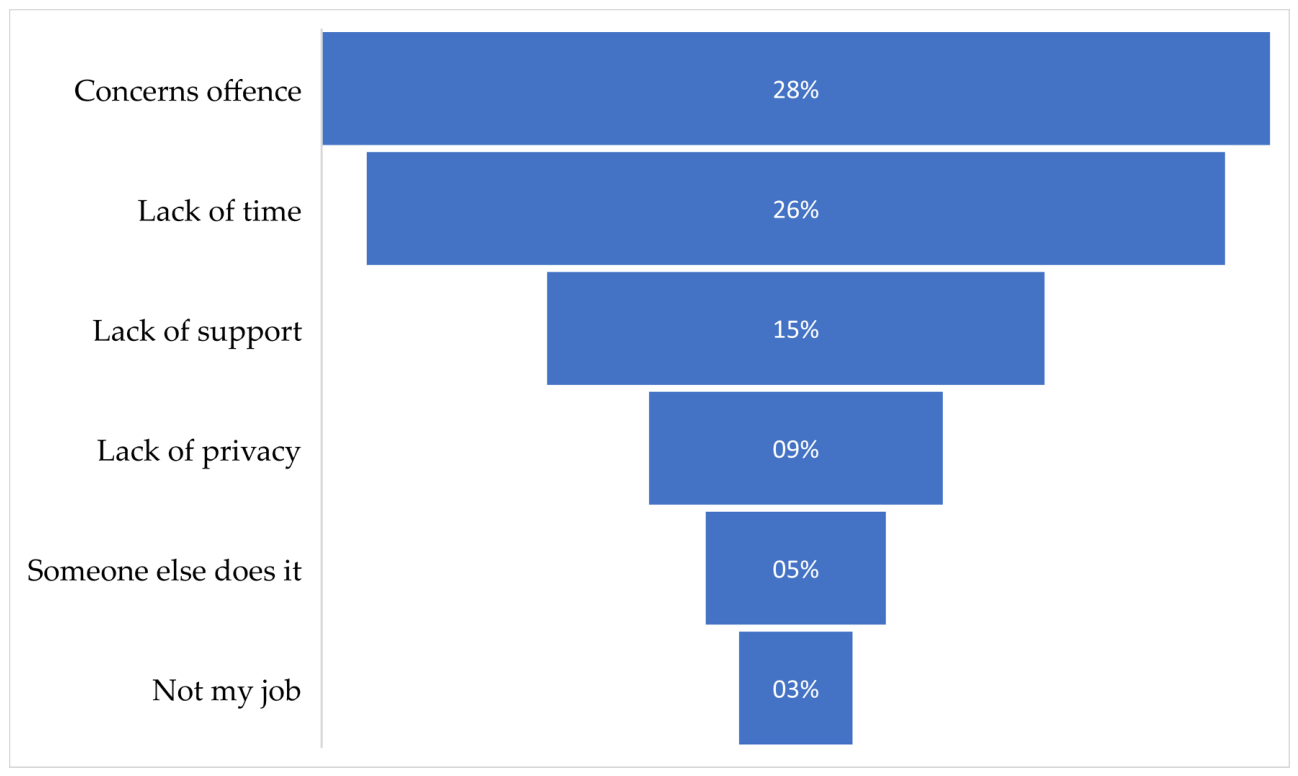
Figure 1. Reported barriers to asking about or addressing food insecurity among dietitians (n = 148). Percentages reflect respondents endorsing each barrier.
Dietetics 05 00036 g001
Figure 2. Actions reported by dietitians in response to identified food insecurity in the past year. Multiple responses allowed (n = 148).
Dietetics 05 00036 g002
Table 1. Socioeconomic and professional characteristics of the sample.
n%
CountryUnited Kingdom2617.6%
Spain2617.6%
Italy2416.2%
Greece117.4%
Sweden74.7%
Germany74.7%
Switzerland53.4%
Portugal53.4%
Hungary53.4%
Turkey42.7%
Ireland42.7%
Poland32.0%
Belgium32.0%
Austria32.0%
Norway21.4%
Croatia21.4%
Others117.4%
StudentNo12886.5%
Yes2013.5%
Dietitian > 12 monthsNo117.4%
Yes13792.6%
Setting placePrimary healthcare2016.4%
Secondary healthcare3427.9%
Tertiary healthcare6855.7%
Area of workClinical Nutrition7651.4%
Public Health Nutrition2214.9%
Primary Care117.4%
Food Service85.4%
Sports Nutrition42.7%
Other2718.2%
Table 2. Awareness, identification, and referral practices related to food insecurity (FI).
n%
Awareness of FI among clientsPrefer not to say3624.3%
Disagree138.8%
Neither agree nor disagree2013.5%
Agree7953.4%
FI raised by clientsPrefer not to say128.1%
Disagree4228.4%
Neither agree nor disagree3120.9%
Agree6342.6%
Frequency of FI identificationNever2317.8%
Once a month or less5139.5%
Every week or more5542.6%
Use of standardised FI questionsSometimes8473.7%
Often1815.8%
Almost always1210.5%
Asking about FINo3930.2%
Yes (sometimes/specific clients)7558.1%
Yes (routinely/always)1511.6%
Frequency of FI-related referralsNever4742.0%
Once a month or less4338.4%
Every week or more2219.6%
Table 3. Mean COM-B scores for capability, opportunity, and motivation to address food insecurity.
Valid NMeanStandard Deviation
Knowledge14814.185.58
Self-efficacy14812.074.91
Opportunity14815.428.47
Motivation14821.458.99
TOTAL14863.1226.35
Disclaimer/Publisher’s Note: The statements, opinions and data contained in all publications are solely those of the individual author(s) and contributor(s) and not of MDPI and/or the editor(s). MDPI and/or the editor(s) disclaim responsibility for any injury to people or property resulting from any ideas, methods, instructions or products referred to in the content.