
The Nature and Impact of Postoperative Dietary Counselling Delivered by Dietitians on Clinical Outcomes After Metabolic and Bariatric Surgery: A Systematic Review


Abstract
1. Introduction
- What are the effects of postoperative DC sessions on clinical outcomes (body weight, body composition, biochemical parameters, and complications) compared to usual care post-MBS?
- Is there an effect of DC frequency on body weight and clinical outcomes?
- What are the typical components of postoperative DC for patients who have undergone MBS?
2. Materials and Methods
2.1. Search Strategy
2.2. Eligibility Criteria
Inclusion and Exclusion Criteria
- Involving adults aged 18 years or older, who were eligible for primary MBS. Eligible participants met the standard BMI criteria (BMI ≥ 40 kg/m2, or ≥35 kg/m2 with obesity-related comorbidities) and underwent procedures including laparoscopic adjustable gastric banding (LAGB), laparoscopic sleeve gastrectomy (LSG), Roux-en-Y gastric bypass (RYGB), one anastomosis gastric bypass (OAGB), or laparoscopic mini gastric bypass (LMGB).
- To be included, studies were required to:
- Assess the effect of DC delivered by dietitian for a minimum duration of 12 weeks post-MBS;
- Compare this intervention to a standard/usual care group or infrequent postoperative DC sessions. The primary outcome of interest across all included studies was weight measurement.
- Studies were excluded if participants underwent uncommon or older surgical procedures, such as biliopancreatic diversion without a duodenal switch, jejunoileal bypass, endoluminal sleeve, vertical banded gastroplasty, unbanded vertical gastroplasty, non-adjustable banded gastroplasty, banded gastric bypass, and stomach folding. Additionally, non-surgical procedure (e.g., stomach balloons, smart capsules, and endoscopic sleeve gastroplasty) and gastrectomy performed for other reasons (e.g., cancers) were excluded.
- The review further excluded studies involving paediatric population as well as pregnant or lactating women post-MBS. Regarding the intervention, studies were excluded if the
- DC was not delivered by a dietitian or if the intervention duration was less than 12 weeks post-MBS. Finally, studies with no comparison group or those with cross-sectional design were excluded.
2.3. Screening and Quality Assessment
2.4. Data Extraction and Synthesis
3. Results
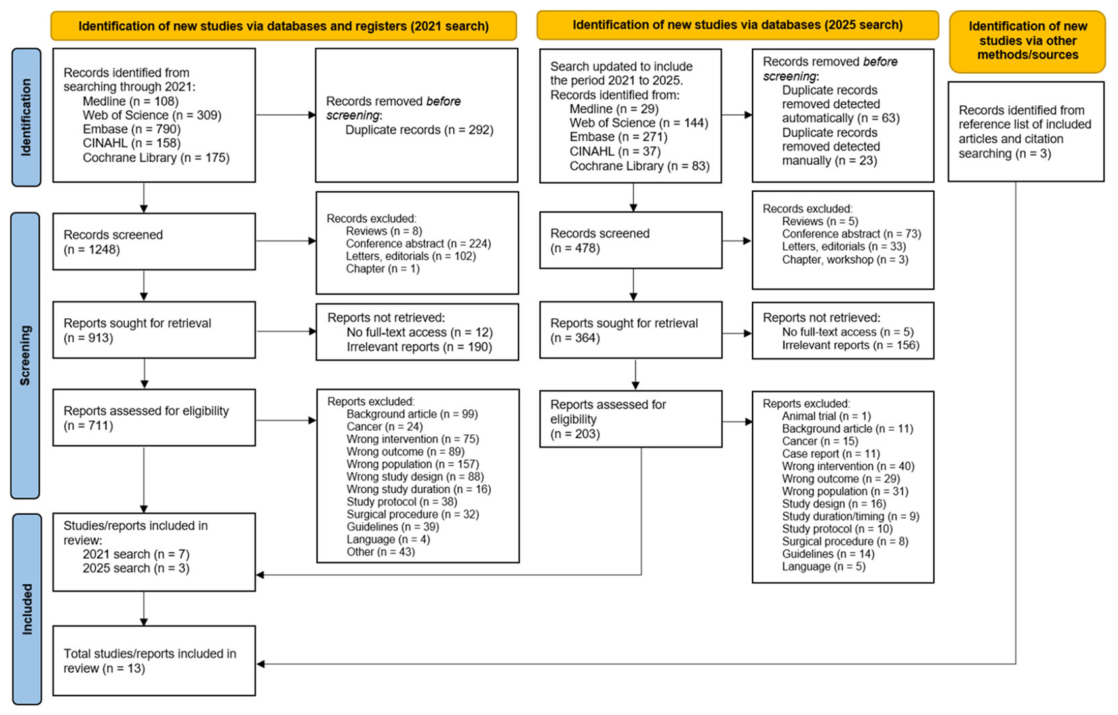
3.1. Characteristics of the Included Studies
3.2. Dietary Counselling and Postoperative Weight Change
3.3. Dietary Counselling and Effects on Secondary Outcomes
3.4. Components of Dietary Counselling
3.4.1. Aim and Content of Dietary Counselling
3.4.2. Session Format, Duration, and Content
3.4.3. Session Delivery Modes and Its Effectiveness
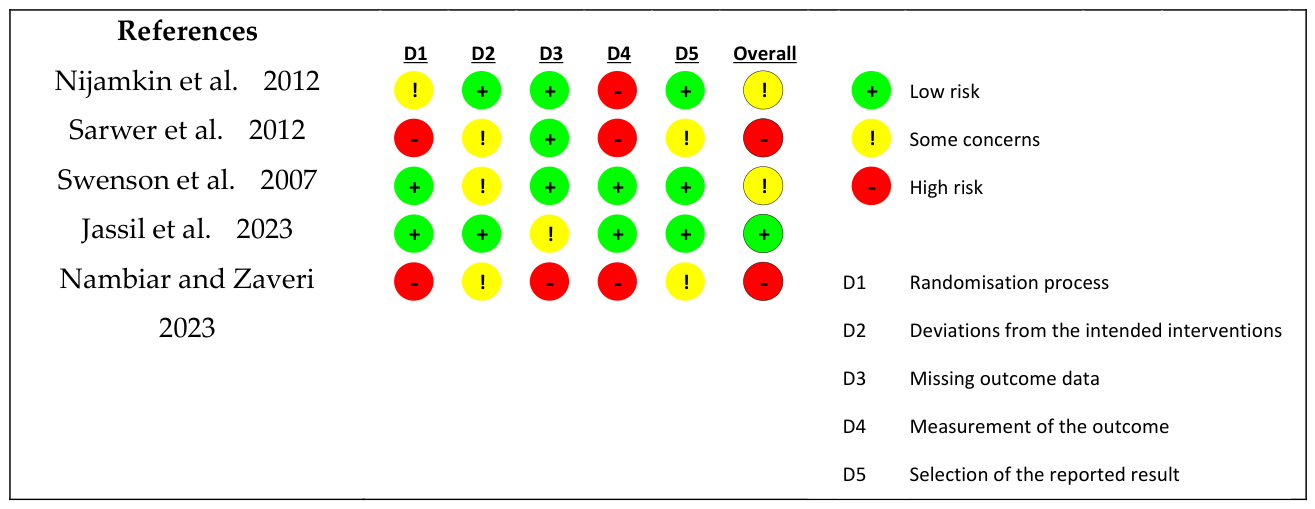
3.5. Quality Assessment and Risk of Bias
4. Discussion
Implications for Research and Practice
5. Strengths and Limitations
6. Conclusions
Supplementary Materials
Author Contributions
Funding
Institutional Review Board Statement
Informed Consent Statement
Data Availability Statement
Acknowledgments
Conflicts of Interest
References
- Albaugh, V.L.; Abumrad, N.N. Surgical treatment of obesity. F1000Research 2018, 7, 617. [Google Scholar] [CrossRef]
- Rawlins, M.L.; Teel, D., II; Hedgcorth, K.; Maguire, J.P. Revision of Roux-en-Y gastric bypass to distal bypass for failed weight loss. Surg. Obes. Relat. Dis. 2011, 7, 45–49. [Google Scholar] [CrossRef] [PubMed]
- Velapati, S.R.; Shah, M.; Kuchkuntla, A.R.; Abu-Dayyeh, B.; Grothe, K.; Hurt, R.T.; Mundi, M.S. Weight regain after bariatric surgery: Prevalence, etiology, and treatment. Curr. Nutr. Rep. 2018, 7, 329–334. [Google Scholar] [CrossRef]
- Tack, J.; Deloose, E. Complications of bariatric surgery: Dumping syndrome, reflux and vitamin deficiencies. Best Pract. Res. Clin. Gastroenterol. 2014, 28, 741–749. [Google Scholar] [CrossRef]
- Holli, B.; Beto, A. Nutrition Counseling and Education Skills a Guide for Professionals, Enhanced seventh ed.; Jones & Barlett Learning: Burlington, MA, USA, 2018; p. 138. [Google Scholar]
- Busetto, L.; Dicker, D.; Azran, C.; Batterham, R.L.; Farpour-Lambert, N.; Fried, M.; Hjelmesaeth, J.; Kinzl, J.; Leitner, D.R.; Makaronidis, J.M.; et al. Practical recommendations of the obesity management task force of the European Association for the Study of Obesity for the post-bariatric surgery medical management. Obes. Facts 2017, 10, 597–632. [Google Scholar] [CrossRef]
- Mechanick, J.I.; Apovian, C.; Brethauer, S.; Garvey, W.T.; Joffe, A.M.; Kim, J.; Kushner, R.F.; Lindquist, R.; Pessah-Pollack, R.; Seger, J. Clinical practice guidelines for the perioperative nutrition, metabolic, and nonsurgical support of patients undergoing bariatric procedures–2019 update: Cosponsored by American Association of Clinical Endocrinologists/American College of Endocrinology, The Obesity Society, American Society for Metabolic & Bariatric Surgery, Obesity Medicine Association, and American Society of Anesthesiologists. Surg. Obes. Relat. Dis. 2020, 16, 175–247. [Google Scholar]
- O’Kane, M.; Parretti, H.M.; Hughes, C.A.; Sharma, M.; Woodcock, S.; Puplampu, T.; Blakemore, A.I.; Clare, K.; MacMillan, I.; Joyce, J.; et al. Guidelines for the follow-up of patients undergoing bariatric surgery. Clin. Obes. 2016, 6, 210–224. [Google Scholar] [CrossRef]
- O’Kane, M.; Parretti, H.M.; Pinkney, J.; Welbourn, R.; Hughes, C.A.; Mok, J.; Walker, N.; Thomas, D.; Devin, J.; Coulman, K.D.; et al. British Obesity and Metabolic Surgery Society Guidelines on perioperative and postoperative biochemical monitoring and micronutrient replacement for patients undergoing bariatric surgery—2020 update. Obes. Rev. 2020, 21, e13087. [Google Scholar] [CrossRef] [PubMed]
- Sherf Dagan, S.; Goldenshluger, A.; Globus, I.; Schweiger, C.; Kessler, Y.; Kowen Sandbank, G.; Ben-Porat, T.; Sinai, T. Nutritional recommendations for adult bariatric surgery patients: Clinical practice. Adv. Nutr. 2017, 8, 382–394. [Google Scholar] [CrossRef]
- Aills, L.; Blankenship, J.; Buffington, C.; Furtado, M.; Parrott, J. ASMBS allied health nutritional guidelines for the surgical weight loss patient. Surg. Obes. Relat. Dis. 2008, 4, S73–S108. [Google Scholar] [CrossRef] [PubMed]
- Marshall, S.; Mackay, H.; Matthews, C.; Maimone, I.R.; Isenring, E. Does intensive multidisciplinary intervention for adults who elect bariatric surgery improve post-operative weight loss, co-morbidities, and quality of life? A systematic review and meta-analysis. Obes. Rev. 2020, 21, e13012. [Google Scholar] [CrossRef]
- Swierz, M.J.; Storman, D.; Jasinska, K.W.; Storman, M.; Staskiewicz, W.; Gorecka, M.; Skuza, A.; Tobola, P.; Bala, M.M. Systematic review and meta-analysis of perioperative behavioral lifestyle and nutritional interventions in bariatric surgery: A call for better research and reporting. Surg. Obes. Relat. Dis. 2020, 16, 2088–2104. [Google Scholar] [CrossRef]
- Kalarchian, M.A.; Marcus, M.D.; Courcoulas, A.P.; Cheng, Y.; Levine, M.D. Preoperative lifestyle intervention in bariatric surgery: A randomized clinical trial. Surg. Obes. Relat. Dis. 2016, 12, 180–187. [Google Scholar] [CrossRef]
- Papalazarou, A.; Yannakoulia, M.; Kavouras, S.A.; Komesidou, V.; Dimitriadis, G.; Papakonstantinou, A.; Sidossis, L.S. Lifestyle intervention favorably affects weight loss and maintenance following obesity surgery. Obesity 2010, 18, 1348–1353. [Google Scholar] [CrossRef]
- Parikh, M.; Dasari, M.; McMacken, M.; Ren, C.; Fielding, G.; Ogedegbe, G. Does a preoperative medically supervised weight loss program improve bariatric surgery outcomes? A pilot randomized study. Surg. Endosc. 2012, 26, 853–861. [Google Scholar] [CrossRef]
- Sarwer, D.B.; Moore, R.H.; Spitzer, J.C.; Wadden, T.A.; Raper, S.E.; Williams, N.N. A pilot study investigating the efficacy of postoperative dietary counseling to improve outcomes after bariatric surgery. Surg. Obes. Relat. Dis. 2012, 8, 561–568. [Google Scholar] [CrossRef]
- Rudolph, A.; Hilbert, A. Post-operative behavioural management in bariatric surgery: A systematic review and meta-analysis of randomized controlled trials. Obes. Rev. 2013, 14, 292–302. [Google Scholar] [CrossRef] [PubMed]
- Stewart, F.; Avenell, A. Behavioural interventions for severe obesity before and/or after bariatric surgery: A systematic review and meta-analysis. Obes. Surg. 2016, 26, 1203–1214. [Google Scholar] [CrossRef] [PubMed]
- Page, M.J.; McKenzie, J.E.; Bossuyt, P.M.; Boutron, I.; Hoffmann, T.C.; Mulrow, C.D.; Shamseer, L.; Tetzlaff, J.M.; Akl, E.A.; Brennan, S.E.; et al. The PRISMA 2020 statement: An updated guideline for reporting systematic reviews. BMJ 2021, 372, n71. [Google Scholar] [CrossRef] [PubMed]
- Chandler, J.; Cumpston, M.; Li, T.; Page, M.J.; Welch, V. Cochrane Handbook for Systematic Reviews of Interventions; Wiley: Hoboken, NJ, USA, 2019; Available online: https://dariososafoula.wordpress.com/wp-content/uploads/2017/01/cochrane-handbook-for-systematic-reviews-of-interventions-2019-1.pdf (accessed on 17 May 2026).
- Sterne, J.A.C.; Savovic, J.; Page, M.J.; Elbers, R.G.; Blencowe, N.S.; Boutron, I.; Cates, C.J.; Cheng, H.Y.; Corbett, M.S.; Eldridge, S.M.; et al. RoB 2: A revised tool for assessing risk of bias in randomised trials. BMJ 2019, 366, l4898. [Google Scholar] [CrossRef] [PubMed]
- Wells, G.; Shea, B.; O’Connell, D.; Peterson, J.; Welch, V.; Losos, M.; Tugwell, P. The Newcastle-Ottawa Scale (NOS) for Assessing the Quality of Nonrandomised Studies in Meta-Analyses. Available online: http://www.ohri.ca/programs/clinical_epidemiology/oxford.asp (accessed on 18 November 2021).
- Popay, J.; Roberts, H.; Sowden, A.; Petticrew, M.; Arai, L.; Rodgers, M.; Britten, N.; Roen, K.; Duffy, S. Guidance on the Conduct of Narrative Synthesis in Systematic Reviews. A Product from the ESRC Methods Programme; Version 1; Lancaster University: Lancaster, UK, 2006; Available online: https://www.academia.edu/16899311/Guidance_on_the_conduct_of_narrative_synthesis_in_systematic_reviews_a_comparison_of_guidance_led_narrative_synthesis_versus_meta_analysis (accessed on 17 May 2026).
- Haidich, A.-B. Meta-analysis in medical research. Hippokratia 2010, 14, 29. [Google Scholar]
- Jassil, F.C.; Carnemolla, A.; Kingett, H.; Doyle, J.; Kirk, A.; Lewis, N.; Montagut, G.; Marvasti, P.; Boniface, D.; Brown, A.; et al. Impact of nutritional-behavioral and supervised exercise intervention following bariatric surgery: The BARI-LIFESTYLE randomized controlled trial. Obesity 2023, 31, 2031–2042. [Google Scholar] [CrossRef] [PubMed]
- Nambiar, V.S.; Zaveri, D. Nutrition health interventions and quality of life following mini gastric bypass surgery—A randomized control trial. Int. J. Diabetes Dev. Ctries. 2023, 44, 313–320. [Google Scholar] [CrossRef]
- Nijamkin, M.P.; Campa, A.; Sosa, J.; Baum, M.; Himburg, S.; Johnson, P. Comprehensive nutrition and lifestyle education improves weight loss and physical activity in Hispanic Americans following gastric bypass surgery: A randomized controlled trial. J. Acad. Nutr. Diet. 2012, 112, 382–390. [Google Scholar] [CrossRef]
- Swenson, B.R.; Saalwachter Schulman, A.; Edwards, M.J.; Gross, M.P.; Hedrick, T.L.; Weltman, A.L.; Northrup, C.J.; Schirmer, B.D.; Sawyer, R.G. The effect of a low-carbohydrate, high-protein diet on post laparoscopic gastric bypass weight loss: A prospective randomized trial. J. Surg. Res. 2007, 142, 308–313. [Google Scholar] [CrossRef]
- Batar, N.; Kermen, S.; Sevdin, S.; Coskun, H.; Guclu, D. Assessment of the correlation between weight status and the frequency of dietician interviews in sleeve gastrectomy patients. Obes. Surg. 2021, 31, 185–193. [Google Scholar] [CrossRef] [PubMed]
- Garg, T.; Birge, K.; Ulysses, R.; Azagury, D.; Rivas, H.; Morton, J.M. A postoperative nutritional consult improves bariatric surgery outcomes. Surg. Obes. Relat. Dis. 2016, 12, 1052–1056. [Google Scholar] [CrossRef]
- Gradaschi, R.; Molinari, V.; Sukkar, S.G.; De Negri, P.; Adami, G.F.; Camerini, G. Effects of the postoepartive dietetic/behavioral counseling on the weight loss after bariatric surgery. Obes. Surg. 2020, 30, 244–248. [Google Scholar] [CrossRef]
- Koffman, L.; Levis, A.W.; Haneuse, S.; Johnson, E.; Bock, S.; McSperitt, D.; Gupta, A.; Arterburn, D. Evaluation of intensive telephonic nutritional and lifestyle counseling to enhance outcomes of bariatric surgery. Obes. Surg. 2022, 32, 133–141. [Google Scholar] [CrossRef] [PubMed]
- Singhal, R.; Kitchen, M.; Bridgwater, S.; Super, P. Dietetic-led management of patients undergoing laparoscopic gastric banding: Early results. Surg. Endosc. 2010, 24, 1268–1273. [Google Scholar] [CrossRef]
- Kessler, Y.; Olmer, L.; Raziel, A.; Goitein, D.; Dankner, R. Associations of dietitian follow-up counselling visits and physical exercise with weight loss one year after sleeve gastrectomy. Eat. Weight Disord. 2020, 25, 143–150. [Google Scholar] [CrossRef]
- Kiriakopoulos, A.; Varounis, C.; Tsakayannis, D.; Linos, D. Laparoscopic sleeve gastrectomy in morbidly obese patients: Technique and short term results. Hormones 2009, 8, 138–143. [Google Scholar] [CrossRef]
- Ledoux, S.; Calabrese, D.; Bogard, C.; Dupre, T.; Castel, B.; Msika, S.; Larger, E.; Coupaye, M. Long-term evolution of nutritional deficiencies after gastric bypass: An assessment according to compliance to medical care. Ann. Surg. 2014, 259, 1104–1110. [Google Scholar] [CrossRef]
- Miras, A.D.; le Roux, C.W. Mechanisms underlying weight loss after bariatric surgery. Nat. Rev. Gastroenterol. Hepatol. 2013, 10, 575–584. [Google Scholar] [CrossRef] [PubMed]
- Brethauer, S.A.; Kim, J.; el Chaar, M.; Papasavas, P.; Eisenberg, D.; Rogers, A.; Ballem, N.; Kligman, M.; Kothari, S.; ASMBS Clinical Issues Committee. Standardized outcomes reporting in metabolic and bariatric surgery. Obes. Surg. 2015, 25, 587–606. [Google Scholar] [CrossRef] [PubMed]
- Majid, S.F.; Davis, M.J.; Ajmal, S.; Podkameni, D.; Jain-Spangler, K.; Guerron, A.D.; King, N.; Voellinger, D.C.; Northup, C.J.; Kennedy, C. Current state of the definition and terminology related to weight recurrence after metabolic surgery: Review by the POWER Task Force of the ASMBS. Surg. Obes. Relat. Dis. 2022, 18, 957–963. [Google Scholar] [CrossRef]
- Tu, Y.; Pan, Y.; Han, J.; Pan, J.; Zhang, P.; Jia, W.; Bao, Y.; Yu, H. A total weight loss of 25% shows better predictivity in evaluating the efficiency of bariatric surgery. Int. J. Obes. 2021, 45, 396–403. [Google Scholar] [CrossRef] [PubMed]


| Study, Country, Design | Participants, MBS Type | DC Intervention, Duration, Timing | Comparison Group Care | Measured Outcomes, Follow-Up Visits | Weight Outcomes | Secondary Outcomes |
|---|---|---|---|---|---|---|
| Observational studies | ||||||
| Garg et al. [31], USA, Retrospective | n = 570, 78% F, LSG, RYGB, LAGB | 5 DC sessions delivered by dietitian and surgeon, 12 m, post-op | 5 visits with surgeon | %EWL, biochemical test, readmission, complications, 3m, 6m, 12m | ↑ %EWL (p-value < 0.06) §. | ↓ Readmission rate and improved biochemical parameters favoured dietitian/surgeon group (p-value < 0.001) *. No significant differences in post-op complications (p-value < 0.43) §. |
| Gradaschi et al. [32], Italy, Retrospective | n = 176, 82% F, LSG, RYGB | 5 DC sessions delivered by dietitian and surgeon, 24 m, post-op | 5 visits with surgeon | BW, BMI, EWL, 24 m | No significant differences in weight-loss between groups §. Better adherence to MBS programme in the intervention group (p-value < 0.01) *. | |
| Kiriakopoulos et al. [36], Greece, Prospective | n = 15, 40% F, LSG | 6 DC sessions delivered by dietitian, 12 m, post-op | 4 follow-up calls by nurse | BMI, TWL, %EWL, appetite 1m, 3m, 6m, 12m | Eight participants who received regular post-op DC at follow-up did better than the others who did not (n = 7) (% EWL 40.4 ± 3.8 vs. 30.2 ± 4.1, respectively). | |
| Singhal et al. [34], UK, Retrospective | n = 1335, 85% F LAGB | 6 dietitian-led DC sessions + 1 surgeon visit + 2 radiologist visits, 24 m, post-op | 6 visits with surgeon and nurse + 1 visit with dietitian + 1 visit with radiologist | WL, %EBMIL. Complications 36 m | %EBMIL was initially lower in the dietitian-led group, but this difference disappeared at the end of 24 m (p-value = 0.056) §. | No significant difference in complications between groups §. |
| Randomised controlled trials | ||||||
| Nijamkin et al. [28], USA, Unblinded | n = 144, 83% F, RYGB | 6 DC group sessions delivered by multidisciplinary team, 6 m, Post-op | 6 sessions with surgeon + brief printed healthy lifestyle guidelines | EWL, physical activity 6m, 12m | At 12 m DC group achieved greater EWL (25% vs. 13%; p-value < 0.001) *. | |
| Sarwer et al. [17], USA, Pilot Unblinded | n = 84, 63% F, RYGB, LAGB | 8 DC sessions by dietitian, 4 m, post-op | Standard care (no formal DC sessions; dietitian available as needed) | %WL, dietary intake, eating behaviour 24 m | No significant differences in weight loss between groups (p-value < 0.08) §. | |
| Swenson et al. [29], USA, Single-blind (investigators) | n = 43, 91% F, RYGB | 4 DC sessions delivered by dietitian (diet: low carb. high prot.), Pre-: 2 wks, Post-op: 12 m | 4 sessions based on standard heart-healthy diet | Body weight (%EWL), height, BMI (%BMIL), body composition, wc, PA, biochemical parameters 12 m | No significant differences in body weight between groups §. | Both groups improved their body composition, but no significant differences between groups §. |
| Study, Country, Design | Participants, MBS Type | DC Intervention, Duration, Timing | Comparison Group Care | Measured Outcomes, Follow-Up Visits | Weight Outcomes | Secondary Outcomes |
|---|---|---|---|---|---|---|
| Observational studies | ||||||
| Batar et al. [30], Turkey, Retrospective | n = 247, 65% F, LSG | High attendance to DC sessions (9 sessions) delivered by RD, 24 m, Pre-/post-op | Low attendance to DC sessions delivered by RD | %EWL, number of dietitian clinic visits, 12 m, 18 m, 24 m | As the frequency of dietitian interviews increased in the first year, the amount of EWL increased in the second year (p-value < 0.01). | |
| Kessler et al. [35], Israel, Prospective | n = 187, 67% F, LSG | ≥3 sessions with RD 5 m, Post-op | <3 sessions with RD | %EWL, %TWL, QoL, 12 m | No association between the number of frequent DC sessions and weight reduction success §. | |
| Koffman et al. [33], USA, Retrospective | n = 955, 78% F, RYGB | Intensive telephone-based nutritional support programme (19 post-op calls by RD), 44 wk (post-op), Pre-/post-op | Standard care ≥ 2 sessions with RD | %TWL, time to hospitalisation, 12 m, 36 m | Intervention group showed 1.97% greater %TWL at 1 year and 2.2% greater %TWL at 3 years post-op compared to the standard care group *. | The intervention group had shorter time to first hospitalisation compared to standard care group (p-value < 0.001) *. |
| Ledoux et al. [37], France, Prospective | n = 144, 90% F, RYGB | Frequent attendance to follow-up DC sessions (time between 2 sessions < 18 m), 24 m, Pre-/post-op | Infrequent attendance to follow-up DC sessions (time between 2 sessions ≥ 24 m) | BW, dietary intake, nutritional parameters, 6 m, 12 m, 24 m, 36 m | Both groups ↓ BW, BMI, and ↑ weight loss, but no significant differences between groups §. | Subjects with infrequent clinic visits had more deficits compared to those with frequent clinic visits (4.2 ± 1.9 vs. 2.9 ± 2.0 deficits per patient, p-value < 0.01). The number of deficits was positively correlated with the time from last DC session attended (r = 0.285, p-value < 0.01). |
| Singhal et al. [34], UK, Retrospective | n = 1335, 85% F, LAGB | 6 DC sessions with RD, 24 m Post-op | 1 DC session with RD | WL, %EBMIL, complications, 3 m, 6 m, 12 m, 24 m, 36 m. | %EBMIL was initially lower in the dietician-led group, but this difference disappeared at the end of 24 months (p-value = 0.056) §. | No significant differences in complications §. |
| Randomised controlled trials | ||||||
| Jassil et al. [26], UK, Single-blind | n = 153, 78% F, RYGB, OAGB, LSG | Standard care + 17 nutritional-behavioural tele-counselling delivered by bariatric dietitians, 12 m, Post-op | 2 sessions of standard care counselling by bariatric dietitian | %WL **, BMI, body composition, PA levels, physical function and strength, HRQoL, depressive symptomatology, and comorbidities, 3 m, 6 m, 12 m | No significant differences in %WL and BMI post-surgery between the intervention and control group (p-value = 0.29) §. | No significant differences in FM and FFM between the intervention and control group §. |
| Nambiar and Zaveri [27], India, Unblinded | n = 120, 58% F, LMGB | ≥3 DC sessions and personalised nutrition health education material by RD, 3 m, Pre-/post-op | 2–3 DC sessions (standard care) | WL, %EWL, medical condition, BMI, QoL, 3 m | ↑ WL, ↑ %EWL, and BMI improvement favours the frequent DC group *. | |
| Sarwer et al. [17], USA, Pilot unblinded | n = 84, 63% F, RYGB, LAGB | 4–8 DC sessions with RD 4 m, Pre-/post-op | 0–3 DC sessions with RD | % WL, dietary intake, eating behaviour, 2 m, 4 m, 6 m, 12 m, 18 m, 24 m | Both groups achieved weight-loss, but not significant differences between the two groups (↑ DC: 20.9% ± 1.8% vs. ↓ DC: 20.6% ± 1.4%) §. | |
| Reference | Nutritional Objective(s) | Type of DC, Way of Delivery | Frequency of DC (Duration) | Micronutrient Supplement Advice | Protein Advice, Recommended Intake (g/d) | Monitoring of Dietary Intake | Physical Activity Advice |
|---|---|---|---|---|---|---|---|
| Batar et al. [30] | Specialised dietitian provided personalised nutrition education on stage diet principles from the ASMBS. | One-on-one, face-to-face, interview with dietitian | 9 sessions (30–60 min) | √ | NR | 24 hr food recall | √ |
| Garg et al. [31] | Participants received specific dietary guidance about: - Mindful eating practices. | One-on-one, face-to-face, clinic visits with surgeon+ RD | 4 sessions (NR) | √ | Yes (60–80) | NR | NR |
| Gradaschi et al. [32] | - Improve adherence to a regular diet; - Promote reduction in glucose and fat consumption; - Decrease nibbling and grazing; - Avoid drinking energy beverages; | One-on-one, face-to-face, clinic visits with surgeon+ RD or phone interview if they could not attend | 4 sessions (NR) | NR | Yes (NR) | NR | NR |
| Jassil et al. [26] | - Follow staged-meal progression. - Self-monitoring of physical activity using Fitbit; - Self-monitoring of body weight. | One-on-one, clinic visits + tele-counselling by bariatric dietitians | 4 in clinic + 17 by telephone (15 min) | √ | Yes ≥60 | Food diary | √ |
| Kessler et al. [35] | - Post-op dietary recommendations based on a gradual progression of food consistency and types; - Information on recommended food quantities. | One-on-one, face-to-face, dietitian consultation visits | 6 sessions (20 min) | √ | Assessed during DC sessions (NR) | NR | √ |
| Kiriakopoulos et al. [36] | - Advised following 4 weeks post-op liquid diet. | One-on-one, face-to-face, DC delivered by dietitian via outpatient clinic | 6 sessions (NR) | NR | NR | NR | NR |
| Koffman et al. [33] | - Progression to solid food; - Nutritional requirements; - Fluid intake; - Long-term weight management; | One-on-one. telephonic DC | 19 calls | NR | NR | NR | √ |
| Ledoux et al. [37] | - Obtain a balanced diet rich in proteins, dairy products, vegetables, and fresh fruits; - Eat slowly and chew well; - Limit sweet consumption to avoid food intolerance or dumping syndrome. | One-on-one, face-to-face, DC sessions delivered by dietitian | 6 sessions (NR) | √ | Yes (NR) | 24 hr food recall | NR |
| Nambiar and Zaveri [27] | DC based on ASMBS 2016 guidelines to cover: - Weight loss and maintenance; - Nutrition therapy; - Identify/manage potential post-op complications; - Meal plan and substitution lists; - Information on weight plateau; - Recommended regular follow-up. | One-on-one (WhatsApp and in-person) + educational material (email and platform), online and offline | 3 sessions + 24/7 WhatsApp (NR) | √ | Yes (NR) | NR | NR |
| Nijamkin et al. [28] | DC by MDT focus on dietary recommendations, behaviour modification strategies, emotional support, and lifelong supplementation. | Group counselling, face-to-face, presented in lecture format | 6 sessions (90 min) | √ | Yes (minimum 60–70) | 24 hr food recall | √ |
| Sarwer et al. [17] | - Assist in transitioning through the 4 phases of the post-op diet (liquid/pureed/soft/regular); - Improve adherence to the regular diet, reduce sugar and fat intake, and decrease overeating, vomiting, and dumping syndrome. | One-on-one, face-to-face or phone interview, post-op DC sessions delivered by dietitian | 8 post-op sessions every other week until 4 months (15 min) | NR | Yes (NR) | FFQ | NR |
| Singhal et al. [34] | - Intensive follow-up with dietitian; - Discussed staged-meal progression. | One-on-one, face-to-face, post-op DC sessions delivered by RD | 7 sessions (NR) | NR | NR | NR | NR |
| Swenson et al. [29] | - Low carbohydrate intake, high protein intake, and moderate fat intake; - Carbohydrate cravings elimination for 2 weeks in accordance with the South Beach Diet plan (semi-solid phase); - Provided written diet instructions, examples of foods to eat and avoid, and sample meal plans. | One-on-one, face-to-face, pre- and post-op DC sessions delivered by dietitian | 6 sessions (NR) | NR | Yes (NR) | NR | Not mentioned within the counselling but assessed |
| Study | Selection * | Comparability ** | Outcome *** | Total Scores | |||||
|---|---|---|---|---|---|---|---|---|---|
| 1 | 2 | 3 | 4 | 1 | 1 | 2 | 3 | ||
| Batar et al. [30] | - | ✸ | ✸ | ✸ | - | ✸ | ✸ | ✸ | 6 |
| Garg et al. [31] | ✸ | ✸ | - | ✸ | ✸ | ✸ | ✸ | - | 6 |
| Gradaschi et al. [32] | ✸ | ✸ | ✸ | ✸ | ✸ | ✸ | ✸ | - | 7 |
| Kessler et al. [35] | - | ✸ | ✸ | ✸ | ✸✸ | - | ✸ | ✸ | 7 |
| Kiriakopoulos et al. [36] | - | ✸ | - | ✸ | - | - | ✸ | ✸ | 4 |
| Koffman et al. [33] | ✸ | ✸ | ✸ | ✸ | - | ✸ | ✸ | ✸ | 7 |
| Ledoux et al. [37] | ✸ | ✸ | ✸ | ✸ | ✸ | ✸ | ✸ | ✸ | 8 |
| Singhal et al. [34] | ✸ | - | ✸ | ✸ | - | ✸ | ✸ | - | 5 |
Disclaimer/Publisher’s Note: The statements, opinions and data contained in all publications are solely those of the individual author(s) and contributor(s) and not of MDPI and/or the editor(s). MDPI and/or the editor(s) disclaim responsibility for any injury to people or property resulting from any ideas, methods, instructions or products referred to in the content. |
© 2026 by the authors. Licensee MDPI, Basel, Switzerland. This article is an open access article distributed under the terms and conditions of the Creative Commons Attribution (CC BY) license.
Share and Cite
Alfailakawi, A.; Moore, S.; Nlebedim, V.; Moore, J.B. The Nature and Impact of Postoperative Dietary Counselling Delivered by Dietitians on Clinical Outcomes After Metabolic and Bariatric Surgery: A Systematic Review. Dietetics 2026, 5, 34. https://doi.org/10.3390/dietetics5020034
Alfailakawi A, Moore S, Nlebedim V, Moore JB. The Nature and Impact of Postoperative Dietary Counselling Delivered by Dietitians on Clinical Outcomes After Metabolic and Bariatric Surgery: A Systematic Review. Dietetics. 2026; 5(2):34. https://doi.org/10.3390/dietetics5020034
Chicago/Turabian StyleAlfailakawi, Aala, Sally Moore, Valentine Nlebedim, and Jennifer Bernadette Moore. 2026. "The Nature and Impact of Postoperative Dietary Counselling Delivered by Dietitians on Clinical Outcomes After Metabolic and Bariatric Surgery: A Systematic Review" Dietetics 5, no. 2: 34. https://doi.org/10.3390/dietetics5020034
APA StyleAlfailakawi, A., Moore, S., Nlebedim, V., & Moore, J. B. (2026). The Nature and Impact of Postoperative Dietary Counselling Delivered by Dietitians on Clinical Outcomes After Metabolic and Bariatric Surgery: A Systematic Review. Dietetics, 5(2), 34. https://doi.org/10.3390/dietetics5020034