Article

Complementary Feeding Practices of Māori, Pacific, and Other Infants in Aotearoa New Zealand

by
Maria Casale
1,*,
Kathryn L. Beck
1,
Cathryn A. Conlon
1,
Lisa A. Te Morenga
2,
Anne-Louise M. Heath
3,†,
Rachael W. Taylor
4,†,
Jill J. Haszard
5,
Lisa Daniels
3,
Neve H. McLean
3,
Alice M. Cox
4,
Emily A. Jones
1,
Ioanna Katiforis
3,
Kimberley J. Brown
1,
Madeleine Rowan
3,
Bailey R. Bruckner
3,
Rosario Jupiterwala
1 and
Pamela R. von Hurst
1
1
School of Sport, Exercise and Nutrition, Massey University, Auckland 0745, New Zealand
2
Research Centre for Hauora and Health, Massey University, Wellington 6140, New Zealand
3
Department of Human Nutrition, University of Otago, Dunedin 9054, New Zealand
4
Department of Medicine, University of Otago, Dunedin 9054, New Zealand
5
Starship Child Health Research & Innovation, Te Whatu Ora Te Toka Tumai, Auckland 1023, New Zealand
*
Author to whom correspondence should be addressed.
Joint Principal Investigators.
Dietetics 2026, 5(1), 18; https://doi.org/10.3390/dietetics5010018
Submission received: 19 December 2025 / Revised: 19 January 2026 / Accepted: 13 March 2026 / Published: 20 March 2026

Abstract

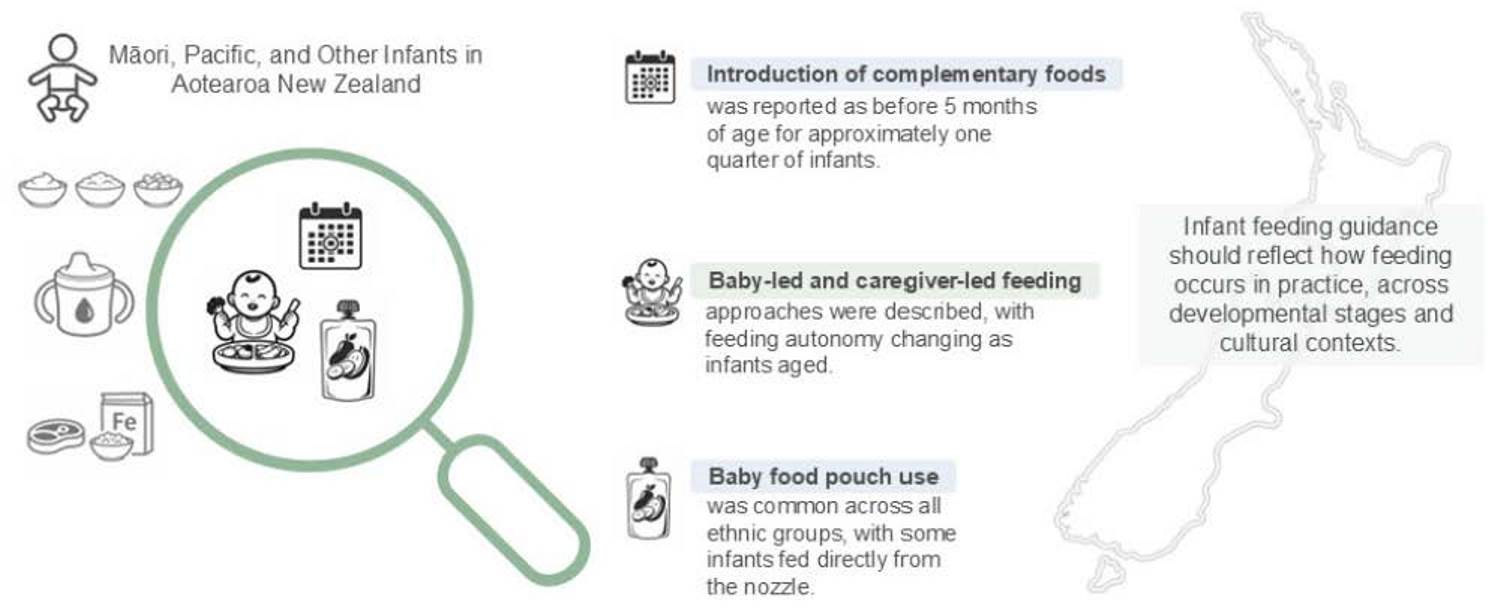
Complementary feeding influences infant growth and health. Māori and Pacific infants in Aotearoa New Zealand experience disproportionate nutrition-related disease, yet complementary feeding data are limited. Caregivers of 625 infants (7–10 months) completed a questionnaire on timing of introduction, baby-led weaning (BLW), and baby food pouch use. Ethnicity was total response; infants not Māori or Pacific were classified as ‘other’. Complementary foods were introduced at around six months for 56.5% of Māori, 62.2% of Pacific, and 80.9% of others; before five months for 40.5%, 34.2%, and 17.3%. BLW prevalence was 29.2% (Māori), 17.1% (Pacific), and 27.3% (other). Although pouches were uncommon when complementary feeding began, by 7–10 months about two-thirds of Māori and Pacific infants were fed pouches sometimes or frequently. Frequent pouch use with mostly or always nozzle feeding occurred in 12.2% of Māori infants, 12.2% of Pacific infants, and 2.7% of other infants. Vegetables and purée were the most common first food and texture. By six months, over half consumed red meat and about half consumed iron-fortified baby rice. These feeding practices have implications for nutrition-related health inequities among Māori and Pacific infants, highlighting the need for culturally centered public health approaches to support whānau with feeding.

Graphical Abstract

1. Introduction

Infant complementary feeding practices impact healthy growth and development. The World Health Organization (WHO) and the Ministry of Health New Zealand recommend introducing complementary foods ‘at’ [1] or ‘around’ [1,2] six months of age, starting with a smooth, thin purée, progressing to a greater variety of foods and textures as the infant grows older, and self-feeding with family foods by 12 months of age. Complementary feeding practices in Aotearoa New Zealand (NZ) have evolved over the past two centuries. In both pre-colonial NZ and the neighbouring Pacific Islands, Māori and Pacific infants shared whānau (family) food, which was texture-modified and warmed through pre-mastication. Rapata et al. (2021) describe the complementary feeding of Māori infants as a natural and instinctive process [3]. Starchy root crops, breadfruit, green bananas, and coconuts are commonly offered as first foods in the Pacific Islands [4]. Infant developmental cues, such as sitting and grasping, informed the timing of introducing complementary foods, with breastfeeding and wet nursing common practices. Today, infants are more commonly introduced to complementary foods at an early age and commercial infant foods are widely available. At the same time, there is less access to traditional community and social structures for Māori that enable care of the infant by the wider whānau [5].
In recent years, there has been an influx of baby food pouches onto the market. Baby food pouches are made of soft, squeezable plastic with nozzles attached from which infants can suck puréed foods directly. In the United States in 2015, and in the United Kingdom in 2019, 56% and 54% of commercial infant foods, respectively, were packaged in pouches [6]. One NZ study from 2019 found that more than half of all commercial infant foods (n = 103, 52.3%) were packaged into pouches [7]. In both NZ and internationally, pouches have more sugar and lower levels of iron compared with equivalent commercial infant food not packaged into pouches [8,9,10,11,12]. Alongside pouch use, the practice of baby-led weaning (BLW) appears to be increasing in NZ. Although the research is limited, BLW appears to be a primarily European phenomenon; however, there is some indication that it may also be increasing in popularity among Māori whānau [13,14].
There are limited data describing the complementary feeding practices of infants in NZ. With a disproportionately high burden of communicable and non-communicable diseases experienced by Māori and Pacific infants and young children, particularly respiratory illnesses, iron deficiency, and dental caries [15,16], there is a growing need to assess and better understand complementary feeding practices. This will help guide appropriate advice to whānau that is relevant and consistent with cultural practices. This supports the principles of the Treaty of Waitangi that all New Zealanders are entitled to equal health outcomes [17], for which access to healthful traditional cultural foods is crucial [18]. This paper will describe complementary feeding methods, first food characteristics, and the timing of complementary food introduction among Māori, Pacific, and ‘other’ (non-Māori/Pacific) infants living in NZ, with particular public health relevance for Māori and Pacific infants given existing nutrition-related health inequities.

2. Materials and Methods

The study design and data collection methods described here are only those relevant to this analysis from the wider First Foods New Zealand (FFNZ) study, with additional detail reported elsewhere [19]. FFNZ was registered with the Australian New Zealand Clinical Trials Registry (ACTRN12620000459921). Ethical approval was granted by the Health and Disability Ethics Committee New Zealand (19/STH/151) and funding was obtained from the Health Research Council (HRC) of New Zealand (grant 19/172).

2.1. Study Design and Participants

First Foods New Zealand (FFNZ) is an observational cross-sectional study of 625 infants aged 7–10 months in NZ. This analysis aims to describe infant feeding practices of Māori, Pacific, and other (non-Māori/Pacific) infants. Infant complementary feeding practices encompass methods of feeding, such as full BLW and traditional spoon-feeding, pouch use, the timing of the introduction of complementary foods, and the types of first foods offered. The sample size was based on the wider study aim of comparing body-mass index (BMI) z-score and plasma ferritin concentration in infants following full BLW and traditional spoon-feeding. This sample size allowed estimation of the prevalence of frequent pouch feeding to a 95% precision level of ±4%.
Infant-caregiver dyads were recruited between July 2020 and February 2022 from two urban centres in NZ: Tāmaki-Makaurau (Auckland) and Ōtepoti (Dunedin). Participants were excluded if the caregiver was unable to speak English (for logistical reasons) or if the infant had recently been part of a nutrition intervention study that might have influenced their diet. English proficiency was a study-wide criterion. Participants were recruited from a range of ethnic and socioeconomic deprivation groups using advertisements and word-of-mouth. When recruiting via social media, care was taken to avoid special interest groups, such as those for BLW or for infants with allergies, to minimise sampling bias. To ensure ethnic diversity that reflected the wider NZ population, recruitment was targeted in suburbs with higher proportions of Māori and Pacific whānau. An English language information sheet was given to all participants and written informed consent was obtained from the primary caregiver. Written informed consent was obtained from caregivers on behalf of themselves and their infants.

2.2. Data Collection

Data were collected using a structured questionnaire administered with a researcher present. The questionnaire encompassed self-identified caregiver and infant ethnicity, household socioeconomic deprivation (NZ Deprivation Index 2018 [20]), and household occupancy; caregiver education, work status, age, and parity; and infant age, sex, enrolment in childcare, and gestational age at birth. Meshblock data were used to determine the level of socioeconomic deprivation based on the NZ Deprivation Index. Infant ethnicity was self-identified by the caregiver. Caregivers could select more than one option from a list of eight categories consistent with the New Zealand Census [21]: Māori, Samoan, Tongan, Cook Island Māori, Chinese, Indian, New Zealand European, Niuean, and Other. Free-text responses were also reviewed and coded where applicable. For the purposes of this manuscript, participants who did not identify as Māori or Pacific were categorised as ‘other’, reflecting the primary analytic focus on Māori and Pacific infants. The ‘other’ category therefore represents a heterogenous group. Ethnicity data are reported as the total response, so that an infant who was identified as being Māori and Pacific contributed data to both those ethnicity categories in the analyses. This was important as many NZ infants belong to more than one ethnic group.
Feeding practices were self-reported by caregivers via questionnaire, with a researcher present to answer any questions. Caregivers were asked about infant age when complementary foods were introduced, with age reported in completed months. Caregivers were also asked about baby food pouch use and method of feeding, reported retrospectively for three time points: at the introduction of complementary foods, at six months of age, and “currently” (defined as the time of study participation, age 7 to 10 months).
Infants were classified as traditionally spoon-fed if “spoon-fed by an adult” or “mostly spoon-fed by an adult, some baby feeding themselves” were selected. Partial BLW was defined as “about half spoon-fed by an adult and half baby feeding themselves” was selected. Full BLW if “baby feeding themselves” and “mostly baby feeding themselves, some spoon feeding by an adult”, consistent with the approach used by Fu et al. [14].
Participants were asked about the frequency of pouch feeding, the use of commercial pouches versus re-usable home-filled pouches. They were also asked how infants were fed from pouches—directly from the pouch nozzle versus from a spoon. Infants were designated as either “frequent” (commercial baby food pouch given 5 or more times per week in the past month), “sometimes” (1–4 times per week), “infrequent” (fewer than once per week), or “never” pouch users. The way in which infants fed from pouches was categorised as “always via the nozzle”, “mostly via the nozzle”, “both via the nozzle and spoon”, “mostly via spoon”, and “always via spoon”. The prevalence of infants feeding directly from the pouch nozzle was stratified by how frequently they consumed pouches.
Data on the first food offered, its texture, consumption of age-inappropriate drinks and the use of traditional cultural foods and practices were collected through the same questionnaire. Participants reported the first food they introduced to their infant using a free-text response. To describe the texture of this food, they selected one option from the following categories: puréed, mashed, chopped, finger food, or other. They were also asked whether they had offered their infant iron-fortified baby rice or red meat at six months of age. To assess use of age-inappropriate drinks, participants were asked the yes/no question: “Are you currently offering your baby any drinks other than water, breast milk or infant formula?”. If the response was “yes”, the participant was then asked to select what they are offering the infant from a list of beverages, which included a free text box to capture any responses outside the provided list. Lastly, participants responded to yes/no questions regarding the use of traditional cultural foods or practices when first introducing solids, and at their infant’s current age. Those who answered “yes” were invited to provide further details in an open-ended response.

2.3. Statistical Analyses

Data were analysed using Stata SE, version 17.0 (StataCorp, College Station, TX, USA) statistical software. Demographic data, the use of baby-food pouches, the prevalence of full BLW, the types and textures of first foods, age at the introduction of complementary foods, the consumption of red meat and iron-fortified baby rice, the use of age-inappropriate drinks, and the use of traditional or cultural foods were summarised using descriptive statistics. Pouch use, full BLW, and traditional spoon-feeding were estimated for the entire sample with 95% confidence intervals. The data are presented as numbers and percentages. Ethnicity data are reported as the total response.

3. Results

A total of 1424 infants were assessed for eligibility, of which 625 eligible infant–caregiver dyads provided written consent and completed the questionnaire. Data were analysed for all 625 infants. The recruitment of the final sample is detailed in a participant flow diagram in Supplementary Figure S1. Within the cohort, 131 infants were identified by their caregiver as Māori, and 82 were identified as Pacific, with 38 of these identifying as both Māori and Pacific. The remaining infants were allocated into a single ‘other’ group, as the primary focus of this manuscript is infants identified as Māori or Pacific. The mean (SD) infant age was 8.4 (0.8) months for Māori, 8.5 (0.9) months for Pacific, and 8.4 (0.8) months for ‘other’ infants. The demographic characteristics are presented in Table 1.
Complementary infant feeding practices are presented in Table 2. The mean (SD) age when complementary foods were introduced was 4.9 (1.1) months for both Māori and Pacific groups, and 5.3 (0.8) months for others. The prevalence of full BLW increased with age across all groups and was lowest amongst Pacific infants, with an overall prevalence of full BLW at the age of participation of 26.7% (95% CI: 23.3, 30.4). Most infants had a first food with a puréed texture (Māori: 78.5%; Pacific: 81.7%; other: 81.1%). More than half of all infants consumed red meat at around six months of age (Māori: 54.6%; Pacific: 63.4%; other: 61.8%), and approximately half consumed iron-fortified baby rice at the same age (Māori: 57.3%; Pacific 56.1%; other: 48.7%). When asked about traditional cultural foods or practices, six Pacific caregivers described using “ma ma” (pre-mastication) to modify the texture and temperature of the infant’s food. Two Pacific and two Māori caregivers reported using a hāngī or umu (underground oven) to cook food. The most common traditional food reported was taro, followed by taro leaves.
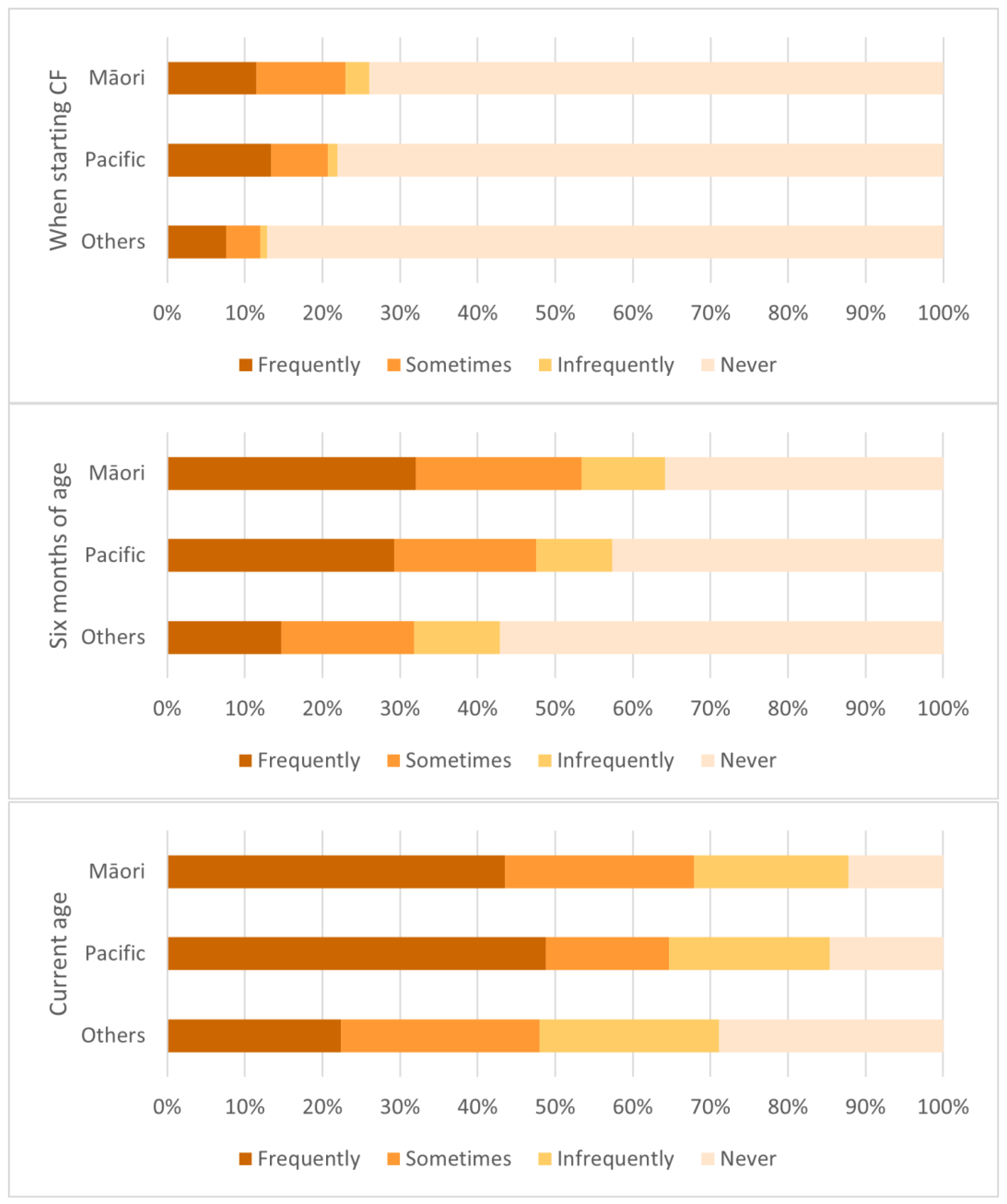
Most infants (78.7% (95% CI: 75.3, 81.9)) were reported to have consumed food from a pouch at least once, with an increasing prevalence of pouch use between the introduction to complementary foods and six months of age. Figure 1 shows the frequency of pouch use by ethnicity at the time of starting complementary foods, at six months of age, and currently. The data within the figure illustrate that pouch use increases with age and is shown as a percentage, with full data reported in Supplementary Table S1.
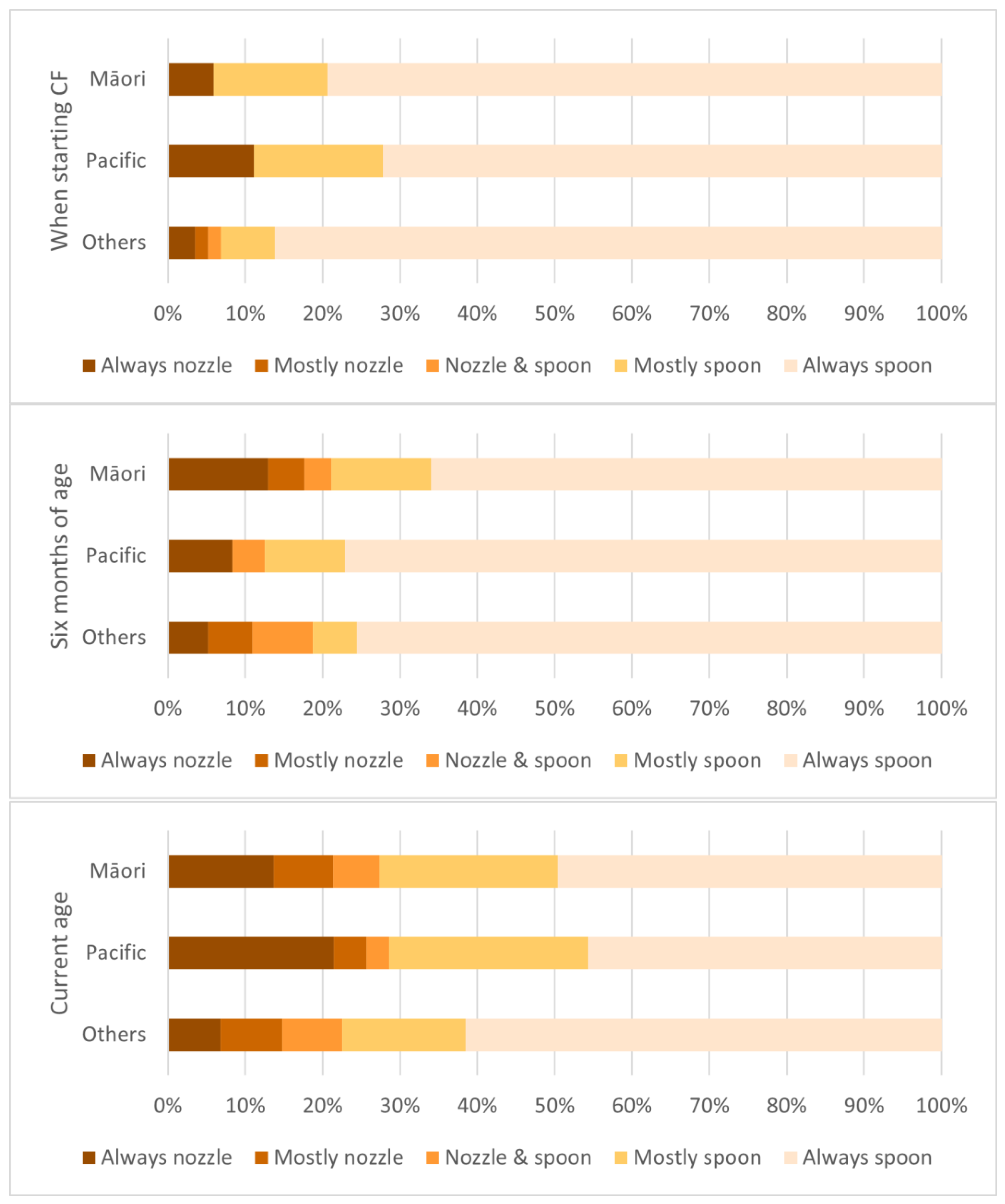
Figure 2 shows the way by which pouches were fed at the time of starting complementary foods, at six months of age, and currently. An increasing proportion of infants from all three groups were fed directly from the nozzle over time, with the percentage shown in the figure and full data shown in Supplementary Table S1.
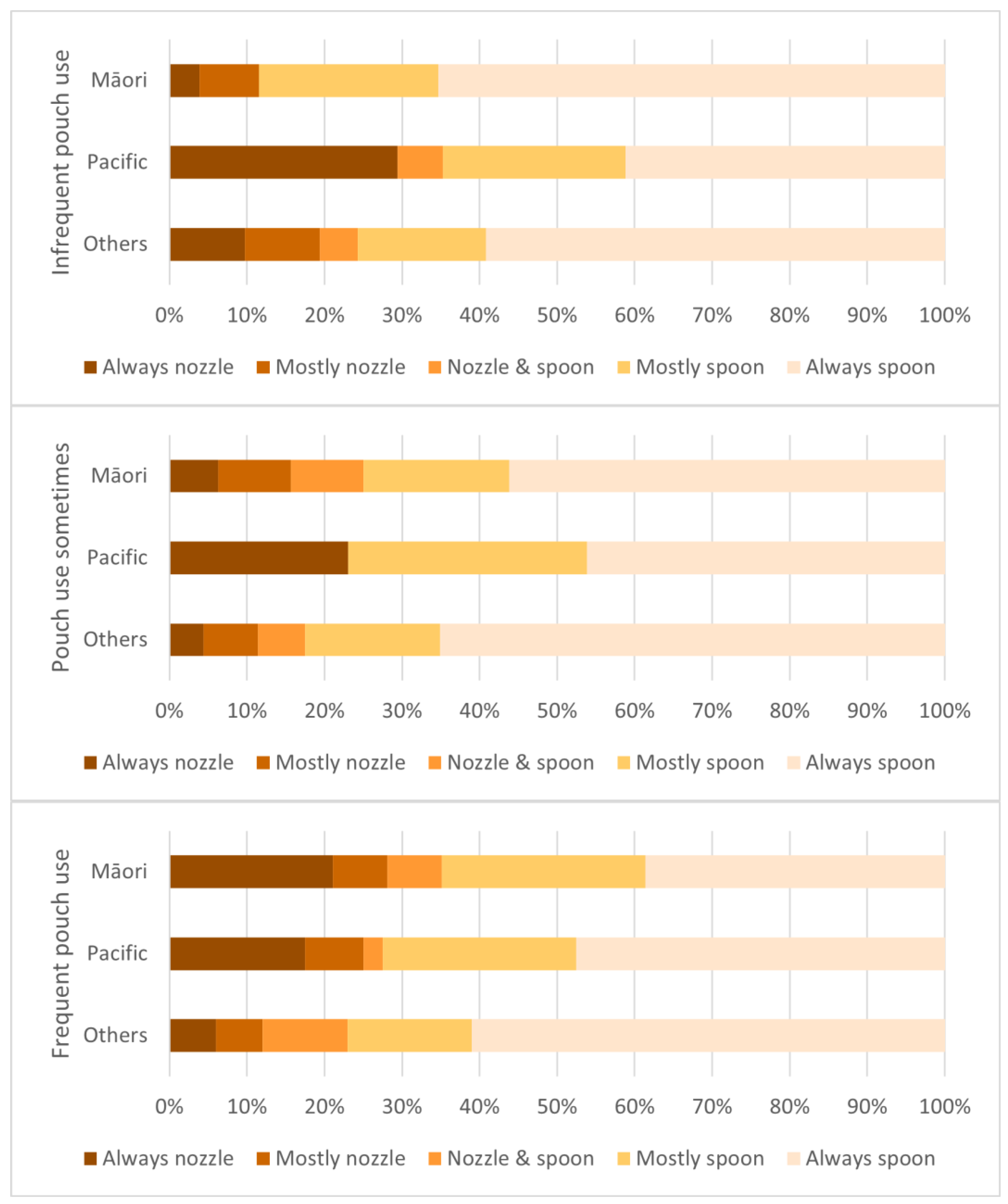
Figure 3 illustrates the frequency of pouch use stratified by whether the infant was fed using a spoon or the pouch nozzle. Among those who ‘frequently’ used pouches, 64.9% (n = 37) of Māori, 72.5% (n = 29) of Pacific, and 77.0% (n = 77) of other infants either always or mostly fed from a spoon. This proportion tended to be higher among those who used pouches ‘sometimes’ (75.0%, n = 24 Māori; 76.9%, n = 10 Pacific; 82.6%, n = 95 other) and ‘infrequently’ (88.5%, n = 23 Māori; 64.7%, n = 11 Pacific; 75.7%, n = 78 other). Proportional data can be seen in Supplementary Tables S2–S4, showing that 12.2% (16/131) of all Māori infants currently consumed pouches frequently and mostly or always consumed them through the nozzle, 12.2% (10/82) of all Pacific infants, and 2.6% (12/450) of all other infants.

4. Discussion

The changing landscape of complementary feeding practices stands to have both positive and negative effects on child growth and development. Given that Māori and Pacific infants bear the greatest burden of inequitable health outcomes related to nutrition in NZ [22,23], it is important that research considers the equity impacts of changing feeding practices.
Although the majority of infants were introduced to complementary food after five months of age, early introduction was more common among Māori and Pacific infants. The prevalence of full BLW varied by ethnicity, with Māori and other infants showing similar rates. These rates were higher than those observed among Pacific infants, among whom “traditional” spoon-feeding most common. The proportion of infants feeding directly from the nozzle increased from the time complementary foods were first introduced to the time of the survey, likely reflecting the widespread availability of commercial food packaged in pouches with nozzles and the infant’s increasing dexterity with age. Overall, more than half of infants consumed either red meat or iron-fortified baby rice at the age of six months, aligning with the Ministry of Health NZ guidance to offer iron-rich foods as first foods [2]. Māori and ‘other’ infants were more likely to consume red meat at six months compared to Pacific infants. Conversely, a higher proportion of Māori and Pacific infants consumed iron-fortified baby rice at this age than ‘other’ infants. The prevalence with which drinks other than infant formula, breast milk, or water were offered was low. The first food offered was predominantly vegetables among all ethnicities. There was limited reporting of culturally specific foods and practices, which may reflect that everyday feeding practices are not necessarily articulated by caregivers as explicitly cultural when they form part of normal family life.

4.1. Timing of Introduction to Complementary Foods

The WHO recommends that complementary foods are introduced when infants are around six months of age [1], advice echoed by the Ministry of Health NZ [2]. Late introduction is associated with increased risks of food allergies, faltering growth [24,25], iron deficiency anaemia [26], poor food acceptance [27], and later development of oral motor skills [28]. Early introduction is associated with increased iron deficiency, gastrointestinal infections [24,29,30], and respiratory illnesses [31]. Infants across all ethnicities in the present study were represented among those who were introduced to solid foods earlier than recommended. Although the mean age of complementary feeding introduction was approximately 5 months, age was reported in completed months, and infants classified as “5 months” may have been closer to 6 months of age. Therefore, while early introduction appears common, precise timing relative to the “around six months” recommendation cannot be determined. However, when age at introduction was examined using categorical cut-offs, rates of early introduction were moderate for Māori and Pacific infants and rates of late introduction were low (<4%). Comparison to other studies is challenging due to differing cutoffs used to define non-timely food introduction. The Growing Up in New Zealand study investigated the early introduction of complementary foods by ethnicity in a cohort of 5725 infants born between 2007 and 2010, and found that 57% of Māori, 46% of Pacific, and 36% of other infants started complementary foods at ≤4 months [32]. Grant et al. (2007) [33] documented the time of food introduction in an ethnically diverse cohort (n = 318) and found that 21% introduced complementary foods between birth and three months of age, 54% between five and six months of age, and 24% at six months or older. The findings from the present study suggest that the practice of early introduction (<5 months) is diminishing (41% of Māori infants, 34% of Pacific infants, and 17% of other infants), but it is still concerning, particularly in light of the higher burden of gastrointestinal and respiratory tract illnesses reported for Māori and Pacific infants [31,33,34,35,36,37].

4.2. Baby-Led Weaning Prevalence

The majority of caregivers among all ethnicities had tried full BLW at least once, but it is not known whether this was a purposeful decision or reflects natural developmental progression without explicit intention. The prevalence of full BLW was measured at three different time points: when initiating complementary feeding, at six months of age, and currently (7–10 months). Infants were most likely to be baby-led weaned at the “current” time point. Infant feeding guidelines recommend the introduction of finger foods between seven and nine months of age; however, because full BLW was defined by the degree to which the infant was self-feeding, it is not clear whether the increased prevalence of full BLW at the ‘current’ time point is due to natural developmental progression or a specific intention by the parent to use full BLW. The rate of full BLW at around six months of age may be a better indicator of the true proportion, as it is probable that a greater proportion of infants naturally have finger foods and self-feed between seven and ten months than at six months. This study found that at six months of age, 13.7% of Māori, 6.1% of Pacific, and 13.6% of other infants were classified as being fully baby-led weaned. This suggests there is a low prevalence of full BLW in all ethnic groups, and although these findings may not be generalisable to the general population, it is a large cohort with diverse socio-economic and ethnic backgrounds.
While this study provides some insight into the prevalence of full BLW in NZ, these data must be interpreted with caution due to a self-selected sample from two urban centres. Full BLW was not referred to during the recruitment stages to help reduce bias. However, it is possible that caregivers who take part in an infant nutrition study have an interest in this area and therefore may be more likely to be aware of and possibly use practices such as full BLW. This may result in overrepresentation in our findings. Two earlier studies of NZ infants have reported both lower [13] and higher [14] rates of full BLW than the current study (13.7% for Māori, 6.1% for Pacific, 13.6% for other). Cameron et al. (2013) [13] conducted a small study (n = 199) that surveyed BLW practices at 6–7 months of age, finding that 8% of the sample used strict BLW. A second online survey in 2018 (n = 876) by Fu et al. (2018) [14] also assessed BLW use at 6–7 months and reported that 18% of the sample used strict BLW. However, all three studies are subject to self-selection bias with the sampling method, and the latter study had an average infant age of 17 months, introducing the potential for recall bias.

4.3. Baby Food Pouch Use

Baby food pouches are relatively new to the market but have rapidly become the predominant form of packaging for commercial infant foods. Studies investigating the prevalence of baby food pouch use are scarce, and few have investigated whether infants are fed directly from the pouch or via spoon. In this study, baby food pouches featured in infant feeding across all ethnic groups, with “frequent” or “sometimes” current use reported for 67.9% of Māori infants, 64.7% of Pacific infants, and 48% of other infants. Among infants who currently used pouches frequently (≥5 times per week), 28.1% of Māori (16/57) and 25.0% of Pacific (10/40) infants were mostly or always fed directly from the nozzle. This method of feeding was also used by 12.0% of other frequent users (12/100). However, this combination of frequent pouch use and predominantly feeding directly from the nozzle remained a minority behaviour for participants overall. The prevalence was 12.2% among Māori infants (16/131), 12.2% among Pacific infants (10/82), and 2.7% (12/450) among other infants. Expert groups have advised against sucking food directly from pouches due to concerns around potential detrimental impacts to dental health as well as nutrient and energy intake [11,38]. Pouches in NZ are higher in total sugars than equivalent commercial infant foods in other forms of packaging, with more than three times as much total sugars in pouches than in equivalent non-pouch foods, largely because of their use of sweet fruits and vegetables [8]. The higher total sugars and acid content of fruit pouches in particular could be expected to increase the risk of developing dental caries. This risk may be exacerbated when the product is sucked directly from the pouch nozzle, as infant teeth are bathed in the food for a longer period of time compared to spoon feeding or eating finger food [11]. Research is urgently needed on the extent to which pouch use is associated with poorer dental health outcomes. An increased total sugar intake may also decrease dietary diversity, prevent adequate nutrient intake through the displacement of other nutrients, and can be associated with increased risk in later life of type 2 diabetes mellitus and cardiovascular disease [39,40,41]. Infants also have an innate preference for sweet tastes and the increased exposure may reinforce this preference long term [41].
Iron is another nutrient of concern with pouch use. A 2021 survey of pouches in NZ revealed that none were fortified with iron, containing a median of just 0.3 mg/100 g [8]. Dry infant cereal in NZ has mandatory minimum requirements for iron fortification of 20 mg/100 g [42]; however, as pouch foods are in wet form, they are exempt from these requirements. Additionally, meat-based pouches contain little meat, with an average of just 5–10% even when the pouch label has beef, lamb, or pork in the title [8]. This presents a particular concern given that the majority of Māori and Pacific infants consume pouches “frequently” or “sometimes” and, historically, are suggested to have higher rates of iron deficiency and iron deficiency anaemia [33,43,44,45,46,47]. However, recent findings from the FFNZ study reported no association between frequent pouch use or full BLW and iron status in infants, after adjusting for confounding factors [48]. Notably, there was a 23% prevalence of suboptimal iron status in the sample reported by McLean et al. (2024) [48], even though more than half of the infants had consumed red meat or iron-fortified baby rice by six months of age—both key dietary sources of iron. However, data were not collected on the amount, frequency, or duration of consumption of these iron-rich foods.
Caregiver attitudes towards iron-fortified foods may influence infant feeding practices. For example, 21.3% of caregivers in the ‘other’ ethnicity group reported disagreement with the use of iron-fortified baby rice cereal at six months, compared with only 3.7% of Pacific caregivers and 0.8% of Māori caregivers. While reasons for this were not explored in the current study, caregiver beliefs may be influenced by messaging from popular parenting literature and online communities. For example, Bhosale (2017), a NZ-based author, discourages the use of baby rice and promotes “whole, minimally processed” foods as first solids [49]. Such perspectives may resonate more with some demographic groups and, if followed without adequate replacement of iron-rich foods, may have negative impacts on infant iron intake and status.
In addition to nutrient composition, concerns have been raised about the potential impact of frequent pouch use on texture exposure and oral motor development [50]. Frequent consumption of smooth purées may limit opportunities for progression to lumpier textures and finger foods that support the development of chewing skills [28]. These concerns are most relevant where puréed foods substantially displace other complementary foods [50]. In the present study, although pouch use was common, patterns of use suggest that pouches were generally used alongside other foods rather than as the sole or predominant form of feeding.
In response to concerns around the nutritional quality of commercial infant foods in general (not just pouches), the Food Regulation Standing Committee is seeking to improve the nutritional composition, labelling, and texture of commercial foods through regulation, with public consultation closing in late 2024 [51], aiming to more closely align infants’ diets with the New Zealand and Australian feeding guidelines.
From a cultural perspective, traditional Māori infant feeding practices emphasise responsive feeding, shared family meals and the use of self-grown, natural whole foods, which foster a strong connection to Te Ao Māori (the Māori world) [3]. Similarly, in Pacific cultures, food plays a central role in togetherness, health, and tradition, with infants typically eating alongside their aiga or fāmili (family) as part of communal meals [52]. These approaches encourage social bonding, food exploration, and the development of eating skills through interaction with caregivers. Pouch feeding may not always align with these traditional practices, particularly when infants self-feed directly from the nozzle, which may reduce opportunities for responsive interactions and shared mealtimes. However, it is likely that many parents use pouches in a way that complements rather than replaces traditional feeding methods—offering pouches as a convenient alternative to home-made purées. For working parents or families with limited access to fresh vegetables, cooking equipment or time, pouches can provide a practical and affordable way to meet some of the nutrient requirements for their infants while still incorporating elements of cultural food traditions. However, it is important that pouches only form part of the diet, for the reasons outlined above. Rather than replacing traditional practices, pouch feeding can be integrated into a balanced approach that supports both cultural values and modern family needs.
It is also important to recognise that baby food pouches have become a common part of infant feeding, reflecting a genuine need and alignment with the lived realities of many families. While concerns exist regarding the lower iron and higher sugar levels in many commercial pouches, these products may represent a convenient and cost-effective option that is nutritionally preferable to discretionary fast foods intended for older children or adults, especially for families with limited access to fresh food or cooking resources. Efforts should therefore focus on mitigating the potential negative impacts of pouch use, such as encouraging the use of iron-rich complementary foods alongside pouch feeding, and advocating for improved product formulation, while appreciating the practical reasons behind their popularity. Understanding the widespread popularity of pouches within diverse communities is essential for developing culturally appropriate, practical, and effective nutrition guidance that supports infant wellbeing.

4.4. Strengths and Limitations

This study has some limitations. First, the sample was self-selecting, which may have introduced bias if caregivers with particular feeding interests were more likely to participate. Although the study population was drawn from areas representing all areas of socio-economic deprivation, most participants were based in two main urban centres, limiting the generalisability of the findings to rural or more isolated communities. In addition, full BLW was assessed based on the amount an infant self-fed between 7–10 months of age, without explicitly asking whether caregivers used a BLW approach. This could lead to an overestimation of BLW prevalence, as this age range often coincides with the natural introduction of finger foods. Due to the grouping of non-Māori and non-Pacific infants into a heterogenous ‘others’ category, subgroup-specific inferences were not possible. Finally, caregivers who were not proficient in English were excluded from the study, which may have limited participation among some Pacific families.
Despite these limitations, the study has several strengths. It is the first to describe complementary feeding practices among NZ infants by ethnicity, offering valuable insights into cultural feeding differences. The large sample size and inclusion of a diverse range of ethnic groups enhance the relevance of the findings to the broader NZ population. Furthermore, the recruitment material did not mention BLW or pouch use, helping to reduce recruitment bias related to caregiver feeding preferences.

5. Conclusions

This study offers important insights into complementary feeding practices among Māori, Pacific and other infants in NZ. Māori and Pacific infants in NZ experience health inequities that intersect with complementary feeding practices. Many caregivers provided nutrient-dense first foods, such as vegetables, red meat and iron-fortified cereals; however, areas of concern remain. By six months of age, over half of all infants were consuming red meat. A similar proportion of Māori and Pacific infants were receiving iron-fortified baby rice, though intake was slightly lower among ‘other’ infants. While more than half were consuming some iron-rich foods at this age, there remains room for improvement across all groups. Early introduction to complementary food was also observed among some Māori and Pacific infants. These patterns may increase the risk of iron deficiency and growth deficits, underscoring the need for targeted support and culturally appropriate interventions.
The common use of baby food pouches highlights their practicality for caregivers. While the lower iron and higher sugar content of pouches has been noted, they can complement a balanced diet when combined with iron-rich and nutrient-dense non-pouch foods. They also provide a more nutritious alternative to less healthful convenience foods. Providing caregivers with clear, evidence-based guidance on complementary feeding, including the appropriate use of commercial infant foods, may support improved health outcomes.
It is essential to prioritise culturally grounded approaches that honour traditional feeding practices and uphold the principles of the Treaty of Waitangi. This means working in partnership with Māori and Pacific communities to design and deliver feeding guidance and ensure equitable access to nutritious foods, including traditional cultural foods.

Supplementary Materials

The following supporting information can be downloaded at: https://www.mdpi.com/article/10.3390/dietetics5010018/s1, Figure S1: Study recruitment flowchart; Table S1: Frequency of pouch use and method of pouch feeding; Table S2: Frequency of pouch use and how pouches were fed by ethnicity in the last month; Table S3: Frequency of pouch use and how pouches were fed by ethnicity around six months of age; Table S4: Frequency of pouch use and how pouches were fed by ethnicity when starting complementary foods.

Author Contributions

Conceptualization and methodology, K.L.B., C.A.C., L.A.T.M., A.-L.M.H., R.W.T., J.J.H., L.D. and P.R.v.H.; formal analysis, J.J.H. and M.C.; data collection, M.C., K.J.B., B.R.B., A.M.C., E.A.J., R.J., I.K., N.H.M. and M.R.; writing—original draft preparation, M.C.; writing—review and editing, K.L.B., C.A.C., L.A.T.M., A.-L.M.H., R.W.T., J.J.H., L.D. and P.R.v.H.; funding acquisition, A.-L.M.H. and R.W.T. All authors have read and agreed to the published version of the manuscript.

Funding

Health Research Council of New Zealand grant (19-172). M.C., E.A.J., and R.J. were supported by a Massey University Doctoral Scholarship; K.J.B. and N.H.M. were supported by the Health Research Council of New Zealand grant; L.D. was supported by a Lotteries Health Research Postdoctoral Fellowship; I.K., N.H.M., and A.M.C. were supported by a University of Otago Doctoral Scholarship.

Institutional Review Board Statement

The First Foods New Zealand study was approved by the Health and Disability Ethics Committees New Zealand (grant number: 19/STH/151, approval date: 13 November 2019). The study is registered with the Australian New Zealand Clinical Trials Registry (registration number: ACTRN12620000459921; registration date: 8 April 2020).

Informed Consent Statement

Informed consent was obtained from all subjects involved in the study.

Data Availability Statement

The data used and/or analysed in the present study are not publicly available due to ethical restrictions related to the consent provided by participants. An ethically compliant dataset may be made available by the Joint Principal Investigators (ALH, RT) upon reasonable request and upon approval by the Health and Disability Ethics Committee New Zealand.

Acknowledgments

The authors would like to acknowledge and thank the whānau (families) who took part in the study; Jenny McArthur for overall coordination of the study and for coordinating the Dunedin study centre; and Rebecca Paul for coordinating the Auckland study centre.

Conflicts of Interest

The authors declare no conflicts of interest. The funders had no role in the design of the study; in the collection, analyses, or interpretation of data; in the writing of the manuscript; or in the decision to publish the results.

Abbreviations

The following abbreviations are used in this manuscript:
BLWBaby-led weaning
BMIBody-mass index
CFComplementary foods
CIConfidence interval
FFNZFirst Foods New Zealand
HRCHealth Research Council
NZAotearoa New Zealand
SDStandard deviation
USUnited States
WHOWorld Health Organization

References

  1. World Health Organization and UNICEF. Global Strategy for Infant and Young Child Feeding; World Health Organization: Geneva, Switzerland, 2003. [Google Scholar]
  2. Ministry of Health. Healthy Eating Guidelines for New Zealand Babies and Toddlers (0–2 Years Old); Ministry of Health: Wellington, New Zealand, 2021. [Google Scholar]
  3. Rapata, H.; Heath, A.-L.M.; Wall, C.; Taylor, R.; Te Morenga, L. Māori first foods: A Māori centred approach to understanding infant complementary feeding practices within Māori whānau. Kōtuitui N. Z. J. Soc. Sci. Online 2021, 17, 336–351. [Google Scholar] [CrossRef]
  4. Malolo, M.; Matenga-Smith, T.O.; Hughes, R. The Staples We Eat; Secretariat of the Pacific Community: Noumea, New Caledonia, 1999. [Google Scholar]
  5. Taonui, R. Tribal Organization—The History of Māori Social Organisation. Available online: http://www.TeAra.govt.nz/en/tribal-organisation/page-6 (accessed on 1 November 2022).
  6. Garcia, A.L.; Curtin, L.; Ronquillo, J.D.; Parrett, A.; Wright, C.M. Changes in the UK baby food market surveyed in 2013 and 2019: The rise of baby snacks and sweet/savoury foods. Arch. Dis. Child. 2020, 105, 1162–1166. [Google Scholar] [CrossRef]
  7. Padarath, S.; Gerritsen, S.; Mackay, S. Nutritional aspects of commercially available complementary foods in New Zealand Supermarkets. Nutrients 2020, 12, 2980. [Google Scholar] [CrossRef]
  8. Katiforis, I.; Fleming, E.A.; Haszard, J.J.; Hape-Cramond, T.; Taylor, R.W.; Heath, A.-L.M. Energy, Sugars, Iron, and Vitamin B12 Content of Commercial Infant Food Pouches and Other Commercial Infant Foods on the New Zealand Market. Nutrients 2021, 13, 657. [Google Scholar] [CrossRef]
  9. Beauregard, J.L.; Bates, M.; Cogswell, M.E.; Nelson, J.M.; Hamner, H.C. Nutrient content of squeeze pouch foods for infants and toddlers sold in the United States in 2015. Nutrients 2019, 11, 1689. [Google Scholar] [CrossRef]
  10. Koletzko, B.; Hirsch, N.L.; Jewell, J.M.; Caroli, M.; Breda, J.R.D.S.; Weber, M. Pureed fruit pouches for babies: Child health under squeeze. J. Pediatr. Gastroenterol. Nutr. 2018, 67, 561–563. [Google Scholar] [CrossRef]
  11. Koletzko, B.; Bührer, C.; Ensenauer, R.; Jochum, F.; Kalhoff, H.; Lawrenz, B.; Körner, A.; Mihatsch, W.; Rudloff, S.; Zimmer, K.-P. Complementary foods in baby food pouches: Position statement from the Nutrition Commission of the German Society for Pediatrics and Adolescent Medicine (DGKJ, eV). Mol. Cell. Pediatr. 2019, 6, 2. [Google Scholar] [PubMed]
  12. Moding, K.J.; Ferrante, M.J.; Bellows, L.L.; Bakke, A.J.; Hayes, J.E.; Johnson, S.L. Nutritional content and ingredients of commercial infant and toddler food pouches compared with other packages available in the United States. Nutr. Today 2019, 54, 305. [Google Scholar] [CrossRef] [PubMed]
  13. Cameron, S.L.; Taylor, R.W.; Heath, A.-L.M. Parent-led or baby-led? Associations between complementary feeding practices and health-related behaviours in a survey of New Zealand families. Br. Med. J. Open 2013, 3, e003946. [Google Scholar] [CrossRef]
  14. Fu, X.; Conlon, C.A.; Haszard, J.J.; Beck, K.L.; von Hurst, P.R.; Taylor, R.W.; Heath, A.-L.M. Food fussiness and early feeding characteristics of infants following Baby-Led Weaning and traditional spoon-feeding in New Zealand: An internet survey. Appetite 2018, 130, 110–116. [Google Scholar] [CrossRef]
  15. Shackleton, N.; Broadbent, J.M.; Thornley, S.; Milne, B.J.; Crengle, S.; Exeter, D.J. Inequalities in dental caries experience among 4-year-old New Zealand children. Community Dent. Oral Epidemiol. 2018, 46, 288–296. [Google Scholar] [CrossRef]
  16. Schluter, P.J.; Lee, M. Water fluoridation and ethnic inequities in dental caries profiles of New Zealand children aged 5 and 12–13 years: Analysis of national cross-sectional registry databases for the decade 2004–2013. BMC Oral Health 2016, 16, 21. [Google Scholar] [CrossRef] [PubMed]
  17. Ministry of Health. Te Tiriti o Waitangi Framework; Ministry of Health: Wellington, New Zealand, 2020. [Google Scholar]
  18. McKerchar, C.; Bowers, S.; Heta, C.; Signal, L.; Matoe, L. Enhancing Māori food security using traditional kai. Glob. Health Promot. 2015, 22, 15–24. [Google Scholar] [CrossRef]
  19. Taylor, R.W.; Conlon, C.A.; Beck, K.L.; von Hurst, P.R.; Te Morenga, L.A.; Daniels, L.; Haszard, J.J.; Meldrum, A.M.; McLean, N.H.; Cox, A.M. Nutritional Implications of Baby-Led Weaning and Baby Food Pouches as Novel Methods of Infant Feeding: Protocol for an Observational Study. JMIR Res. Protoc. 2021, 10, e29048. [Google Scholar] [CrossRef]
  20. Atkinson, J.; Salmond, C.; Crampton, P. NZDep2018 Index of Deprivation, Interim Research Report; University of Otago: Wellington, New Zealand, 2019. [Google Scholar]
  21. Statistics New Zealand. Ethnicity (Information About This Variable and Its Quality). Available online: https://datainfoplus.stats.govt.nz/Item/nz.govt.stats/7079024d-6231-4fc4-824f-dd8515d33141? (accessed on 27 January 2025).
  22. Tkatch, M.T.; Towers, A.J.; Keller, H.H.; Wham, C.A. Nutrition risk prevalence and associated health and social risk factors in Māori and non-Māori: Results from the New Zealand Health, Work and Retirement Study. Australas. J. Ageing 2022, 41, 59–69. [Google Scholar] [CrossRef]
  23. Gerritsen, S.; D’Souza, A.; Goodsell-Matthews, T.; Pillai, A.; Swinburn, B.; Wall, C. Food Hardship and Early Childhood Nutrition: Findings from Growing up in New Zealand with a Focus on Food Hardships Among Tamariki Māori and Pacific Children; Ministry of Social Development: Wellington, New Zealand, 2020. [Google Scholar]
  24. Przyrembel, H. Timing of introduction of complementary food: Short-and long-term health consequences. Ann. Nutr. Metab. 2012, 60, 8–20. [Google Scholar] [CrossRef]
  25. Butte, N.F.; Lopez-Alarcon, M.G.; Garza, C. Nutrient Adequacy of Exclusive Breastfeeding for the Term Infant During the First Six Months of Life; World Health Organization: Geneva, Switzerland, 2002. [Google Scholar]
  26. Wang, F.; Liu, H.; Wan, Y.; Li, J.; Chen, Y.; Zheng, J.; Huang, T.; Li, D. Age of complementary foods introduction and risk of anemia in children aged 4–6 years: A prospective birth cohort in China. Sci. Rep. 2017, 7, 44726. [Google Scholar] [CrossRef] [PubMed]
  27. Agostoni, C.; Decsi, T.; Fewtrell, M.; Goulet, O.; Kolacek, S.; Koletzko, B.; Michaelsen, K.F.; Moreno, L.; Puntis, J.; Rigo, J. Complementary feeding: A commentary by the ESPGHAN Committee on Nutrition. J. Pediatr. Gastroenterol. Nutr. 2008, 46, 99–110. [Google Scholar] [CrossRef] [PubMed]
  28. Coulthard, H.; Harris, G.; Emmett, P. Delayed introduction of lumpy foods to children during the complementary feeding period affects child’s food acceptance and feeding at 7 years of age. Matern. Child Nutr. 2009, 5, 75–85. [Google Scholar] [CrossRef]
  29. Ministry of Health. Food and Nutrition Guidelines for Healthy Infants and Toddlers (Aged 0–2): A Background Paper (4th Ed—Partially Revised December 2012); Ministry of Health: Wellington, New Zealand, 2008. [Google Scholar]
  30. Dewey, K. Guiding Principles for Complementary Feeding of the Breastfed Child; Pan American Health Organization/World Health Organization: Washington, DC, USA, 2003. [Google Scholar]
  31. Wilson, A.C.; Forsyth, J.S.; Greene, S.A.; Irvine, L.; Hau, C.; Howie, P.W. Relation of infant diet to childhood health: Seven year follow up of cohort of children in Dundee infant feeding study. Br. Med. J. 1998, 316, 21–25. [Google Scholar] [CrossRef]
  32. Ferreira, S.S.; Marchioni, D.M.L.; Wall, C.R.; Gerritsen, S.; Teixeira, J.A.; Grant, C.C.; Morton, S.M.; de Castro, T.G. Prevalence and maternal determinants of early and late introduction of complementary foods: Results from the Growing up in New Zealand cohort study. Br. J. Nutr. 2022, 129, 491–502. [Google Scholar] [CrossRef]
  33. Grant, C.C.; Wall, C.R.; Brunt, D.; Crengle, S.; Scragg, R. Population prevalence and risk factors for iron deficiency in Auckland, New Zealand. J. Paediatr. Child Health 2007, 43, 532–538. [Google Scholar] [CrossRef]
  34. Kramer, M.S.; Kakuma, R. The optimal duration of exclusive breastfeeding. In Protecting Infants Through Human Milk: Advancing the Scientific Evidence; Pickering, L.K., Morrow, A.L., Ruiz-Palacios, G.M., Schanler, R.J., Eds.; Springer: New York, NY, USA, 2004; pp. 63–77. [Google Scholar]
  35. Wright, C.M.; Parkinson, K.; Drewett, R. Why are babies weaned early? Data from a prospective population based cohort study. Arch. Dis. Child. 2004, 89, 813–816. [Google Scholar] [CrossRef] [PubMed]
  36. Armentia, A.; Banuelos, C.; Arranz, M.; Del Villar, V.; Martín-Santos, J.M.; Gil, F.M.; Vega, J.; Callejo, A.; Paredes, C. Early introduction of cereals into children’s diets as a risk-factor for grass pollen asthma. Clin. Exp. Allergy 2001, 31, 1250–1255. [Google Scholar] [CrossRef] [PubMed]
  37. Huh, S.Y.; Rifas-Shiman, S.L.; Taveras, E.M.; Oken, E.; Gillman, M.W. Timing of solid food introduction and risk of obesity in preschool-aged children. Pediatrics 2011, 127, e544–e551. [Google Scholar] [CrossRef] [PubMed]
  38. Theurich, M.A.; Fewtrell, M.; Baumgartner, J.; Perkin, M.R.; Breda, J.; Wickramansinghe, K.; Weber, M.W.; Koletzko, B. Moving Complementary Feeding Forward: Report on a Workshop of the Federation of International Societies for Pediatric Gastroenterology, Hepatology and Nutrition (FISPGHAN) and the World Health Organization Regional Office for Europe. J. Pediatr. Gastroenterol. Nutr. 2022, 75, 411–417. [Google Scholar] [CrossRef]
  39. Johnson, R.K.; Appel, L.J.; Brands, M.; Howard, B.V.; Lefevre, M.; Lustig, R.H.; Sacks, F.; Steffen, L.M.; Wylie-Rosett, J. Dietary sugars intake and cardiovascular health: A scientific statement from the American Heart Association. Circulation 2009, 120, 1011–1020. [Google Scholar] [CrossRef]
  40. Slavin, J. Beverages and body weight: Challenges in the evidence-based review process of the Carbohydrate Subcommittee from the 2010 Dietary Guidelines Advisory Committee. Nutr. Rev. 2012, 70, S111–S120. [Google Scholar] [CrossRef]
  41. Fidler Mis, N.; Braegger, C.; Bronsky, J.; Campoy, C.; Domellöf, M.; Embleton, N.D.; Hojsak, I.; Hulst, J.; Indrio, F.; Lapillonne, A. Sugar in infants, children and adolescents: A position paper of the European society for paediatric gastroenterology, hepatology and nutrition committee on nutrition. J. Pediatr. Gastroenterol. Nutr. 2017, 65, 681–696. [Google Scholar]
  42. Food Standards Australia New Zealand. Australia New Zealand Food Standards Code—Standard 2.9.2—Food for Infants. Available online: https://www.legislation.gov.au/Details/F2017C00334 (accessed on 12 August 2022).
  43. Akel, R.; Frankish, J.; Powles, C.; Tyler, K.; Watt, J.; Weston, H.; Prior, I. Anaemia in Maori and European infants and children on admission to hospital. A co-operative survey from six New Zealand hospitals. N. Z. Med. J. 1963, 62, 29–33. [Google Scholar]
  44. Moyes, C.; O’Hagan, L.; Armstrong, C. Anaemia in Maori infants—A persisting problem. N. Z. Med. J. 1990, 103, 53. [Google Scholar]
  45. Grant, C.; Wall, C.; Wilson, C.; Taua, N. Risk factors for iron deficiency in a hospitalized urban New Zealand population. J. Paediatr. Child Health 2003, 39, 100–106. [Google Scholar] [CrossRef] [PubMed]
  46. Wall, C.R.; Brunt, D.R.; Grant, C.C. Ethnic variance in iron status: Is it related to dietary intake? Public Health Nutr. 2009, 12, 1413–1421. [Google Scholar] [CrossRef] [PubMed][Green Version]
  47. Emery, D.; Barry, D. Comparison of Maori and non-Maori maternal and fetal iron parameters. N. Z. Med. J. 2004, 117, U909. [Google Scholar] [PubMed]
  48. McLean, N.H.; Haszard, J.J.; Daniels, L.; Taylor, R.W.; Wheeler, B.J.; Conlon, C.A.; Beck, K.L.; von Hurst, P.R.; Te Morenga, L.A.; McArthur, J. Baby Food Pouches, Baby-Led Weaning, and Iron Status in New Zealand Infants: An Observational Study. Nutrients 2024, 16, 1494. [Google Scholar] [CrossRef]
  49. Bhosale, J. The Nourished Baby; Bhosale Wellness Group: Auckland, New Zealand, 2017. [Google Scholar]
  50. Tournier, C.; Forde, C.G. Food oral processing and eating behavior from infancy to childhood: Evidence on the role of food texture in the development of healthy eating behavior. Crit. Rev. Food Sci. Nutr. 2024, 64, 9554–9567. [Google Scholar] [CrossRef]
  51. Australian Government Department of Health and Aged Care. Commercial Foods for Infants and Children. Available online: https://consultations.health.gov.au/chronic-disease-and-food-policy-branch/commercial-foods-for-infants-and-children/ (accessed on 27 January 2025).
  52. Akbar, H.; Radclyffe, C.J.; Santos, D.; Mopio-Jane, M.; Gallegos, D. “Food is our love language”: Using Talanoa to conceptualize food security for the Māori and Pasifika Diaspora in South-East Queensland, Australia. Nutrients 2022, 14, 2020. [Google Scholar] [CrossRef]
Figure 1. Frequency of pouch use by ethnicity when starting complementary foods, at 6 months of age, and currently (Māori: n = 131, Pacific: n = 82, other: n = 450). ‘Infrequently’: <4 times per month; ‘Sometimes’: 1–4 times per week; ‘Frequently’: 5+ times per week. Māori: n = 131; Pacific: n = 82; ‘other’: n = 450. Abbreviations: CF: complementary foods.
Dietetics 05 00018 g001
Figure 2. How pouches were fed by ethnicity when starting complementary foods (Māori: n = 34, Pacific: n = 18, other: n = 58), at 6 months (Māori: n = 85, Pacific: n = 48, other: n = 192), and at the current age (Māori: n = 117, Pacific: n = 70, other: n = 338). Category of how pouches fed were self-selected by the caregiver. Abbreviations: CF: complementary foods.
Dietetics 05 00018 g002
Figure 3. Frequency of infant pouch use stratified by whether they were fed using a spoon or the pouch nozzle. ‘Infrequent’ pouch use: Māori: n = 26, Pacific: n = 17, other: n = 103; ‘Sometimes’ pouch use: Māori: n = 32, Pacific: n = 13, other: n = 115; ‘Frequent’ pouch use: Māori: n = 57, Pacific: n = 40, other: n = 100; ‘Infrequently’: <4 times per month; ‘Sometimes’: 1–4 times per week; ‘Frequently’: 5+ times per week.
Dietetics 05 00018 g003
Table 1. Demographic characteristics (n = 625).
Total Response Ethnicity
MāoriPacificOthers
n13182450
Infant age (mo), mean (SD)8.4 (0.8)8.5 (0.9)8.4 (0.8)
Infant sex, n (%)
 Female57 (43.5)35 (42.7)215 (47.8)
Total response infant ethnicity a, n (%)
 Māori131 (100)38 (46.3)0
 Pacific Island38 (29.0)82 (100)0
 New Zealand European99 (75.6)45 (54.9)372 (82.7)
 Southeast Asian0028 (6.2)
 East Asian<5 (–) f<5 (–) f40 (8.9)
 South Asian<5 (–) f<5 (–) f25 (5.6)
 Other European6 (4.6)7 (8.5)49 (10.9)
 Others<5 (–) f018 (4.0)
Term infant born b, n (%)
 Pre-term (<37 weeks)13 (9.9)8 (9.8)29 (6.4)
 Term (≥37 weeks)118 (91.1)73 (89.0)421 (93.6)
Respondent age (years), mean (SD)30.1 (5.5)30.3 (6.0)33.5 (4.3)
Highest level of education of caregiver, n (%)
 School34 (26.0)23 (28.1)48 (10.7)
 Polytechnic or similar48 (36.6)21 (25.6)69 (15.3)
 University48 (36.6)37 (45.1)333 (74.0)
Caregiver, n (%)
 Mother130 (99.2)80 (97.6)445 (98.9)
Maternal parity, n (%)
 Primiparous54 (41.2)39 (46.3)229 (50.9)
Respondent employment status, n (%)
 Employed full time17 (13.0)6 (7.3)52 (11.6)
 Employed part time32 (24.4)14 (17.1)96 (21.3)
 Other c82 (62.6)62 (75.6)302 (67.1)
Number of children living in household, n (%)
 One47 (35.9)28 (34.2)223 (49.6)
 Two43 (32.8)28 (34.2)142 (31.6)
 Three21 (16.0)11 (13.4)67 (14.9)
 Four or more20 (15.3)15 (18.3)17 (3.8)
Number of adults living in household, n (%)
 One11 (8.4)<5 (–) f13 (2.9)
 Two92 (70.2)47 (57.3)399 (88.7)
 Three14 (10.7)14 (17.1)19 (4.2)
 Four or more14 (10.7)17 (20.7)19 (4.2)
Childcare used d, n (%)27 (20.6)16 (19.5)76 (16.9)
Area-level socioeconomic deprivation e, n (%)
 1–3 (Low)27 (20.6)14 (17.1)144 (32.0)
 4–752 (39.7)35 (42.7)214 (47.6)
 8–10 (High)52 (39.7)33 (40.2)92 (20.4)
a Ethnicity is reported as total response and is self-identified by the caregiver and is greater than 100 due to many participants identifying as more than one ethnicity. b Gestational age-data missing for one Pacific participant; level of education—data missing for one Māori and one Pacific participant; no. of children living in household—data missing for one non-Māori/Pacific participant. c “Other” value includes not employed, paid and un-paid parental leave. d “Childcare” refers to formal early childhood education or home-based care, but not a nanny or childcare provided by an extended family member/friend. e Socioeconomic deprivation level defined using the New Zealand Deprivation (NZDep) indices of 2018 [18]. NZDep index is area based, uses NZ census variables, and is calculated for meshblocks (geographic units containing ~100 people). “Low” refers to levels 1–3, “High” refers to levels 8–10. f Cells with counts <5 have been suppressed to protect participant confidentiality.
Table 2. Infant complementary feeding practices by ethnicity (n = 625).
MāoriPacificOthers
n13182450
Age complementary foods introduced, mean (SD) months4.9 (1.1)4.9 (1.1)5.3 (0.8)
 <4 months, n (%)9 (6.9)8 (9.8)<5 (–)
 4.0–<5 months, n (%)44 (33.6)20 (24.4)75 (16.7)
 5.0–<7 months, n (%)74 (56.5)51 (62.2)364 (80.9)
 ≥7 months, n (%)<5 (–)<5 (–)8 (1.8)
Complementary feeding approach when first introduced to solids, n (%)
 Baby-led weaning15 (11.5)<5 (–)56 (12.4)
 Partial baby-led weaning5 (3.8)<5 (–)18 (4.0)
 Traditional spoon-feeding111 (84.7)78 (95.1)376 (83.3)
Complementary feeding approach at 6 months, n (%)
 Baby-led weaning18 (13.7)5 (6.1)61 (13.6)
 Partial baby-led weaning22 (16.8)5 (6.1)44 (9.8)
 Traditional spoon-feeding91 (69.5)72 (87.8)345 (76.7)
Current complementary feeding approach, n (%)
 Baby-led weaning38 (29.2)14 (17.1)123 (27.3)
 Partial baby-led weaning32 (24.6)21 (25.6)109 (24.2)
 Traditional spoon-feeding60 (46.2)47 (57.3)218 (48.4)
Ever used baby-led weaning
 Don’t know what it is27 (20.8)22 (26.8)30 (6.7)
 Yes, all or most of the time23 (17.7)10 (12.2)80 (17.8)
 Yes, some of the time50 (38.5)29 (35.4)206 (45.8)
 Yes, tried it but stopped9 (6.9)<5 (–)22 (4.9)
 No21 (16.2)17 (20.7)112 (24.9)
Texture of first food, n (%)
 Puréed102 (78.5)67 (81.7)365 (81.1)
 Mashed10 (7.7)11 (13.4)31 (6.9)
 Chopped00<5 (–)
 Finger food17 (13.1)<5 (–)44 (9.8)
 Other<5 (–)<5 (–)9 (2.0)
Baby rice consumed at ~6 months of age, n (%)
 Yes75 (57.3)46 (56.1)219 (48.7)
 No, offered but baby refused12 (9.2)12 (14.6)47 (10.4)
 No, I don’t agree with it18 (13.7)8 (9.8)96 (21.3)
 No, I don’t think it’s safe<5 (–)<5 (–)9 (2.0)
 No, my baby hadn’t started solids<5 (–)<5 (–)<5 (–)
 No, another reason22 (16.8)11 (13.4)76 (16.9)
Frequency of baby rice consumption, n (%)
 Never56 (42.8)36 (43.9)231 (51.3)
 Infrequently (<4 times per month)5 (3.8)<5 (–)17 (3.8)
 Sometimes (1–4 times per week)25 (19.1)16 (19.5)73 (16.2)
 Frequently (5+ times per week)45 (34.4)29 (35.4)129 (28.7)
Red meat consumed at ~6 months of age, n (%)
 Yes71 (54.6)52 (63.4)278 (61.8)
 No, offered but baby refused9 (6.9)<5 (–)23 (5.1)
 No, I don’t agree with it6 (4.6)<5 (–)25 (5.6)
 No, I don’t think it’s safe11 (8.5)8 (9.8)32 (7.1)
 No, my baby hadn’t started solids7 (5.4)<5 (–)17 (3.8)
 No, another reason26 (20.0)13 (15.9)75 (16.7)
Frequency of red meat consumption, n (%)
 Never60 (45.8)30 (36.6)172 (38.2)
 Infrequently (<4 times per month)7 (5.3)6 (7.3)28 (6.2)
 Sometimes (1–4 times per week)49 (37.4)32 (39.0)182 (40.4)
 Frequently (5+ times per week)15 (11.5)14 (17.1)68 (15.1)
Other drinks currently offered
 Cow’s milk, soy milk, or other milk alternative7 (5.3)<5 (–)<5 (–)
 Tea<5 (–)00
 Fruit juices/drinks13 (9.9)13 (15.9)14 (3.1)
 Coconut water<5 (–)<5 (–)0
First food offered, n (%)
 Baby rice30 (23.1)24 (29.3)84 (18.7)
 Fruit37 (28.5)20 (24.4)98 (21.8)
 Vegetables50 (38.5)29 (35.4)234 (52.0)
 Bread/cereals<5 (–)<5 (–)13 (2.9)
 Other8 (6.15)6 (7.3)8 (1.8)
 Meat<5 (–)<5 (–)13 (2.9)
Traditional foods or practices used when starting complementary foods, n (%) yes12 (9.2)16 (19.5)26 (5.8)
Traditional or cultural foods are currently given to baby, n (%) yes12 (9.2)17 (20.7)23 (5.1)
Cells with counts <5 have been suppressed to protect participant confidentiality.
Disclaimer/Publisher’s Note: The statements, opinions and data contained in all publications are solely those of the individual author(s) and contributor(s) and not of MDPI and/or the editor(s). MDPI and/or the editor(s) disclaim responsibility for any injury to people or property resulting from any ideas, methods, instructions or products referred to in the content.