
Proceeding Paper

The Effects of Therapeutic Cannabis and Cannabinoids in Parkinson’s Disease: An Overview of Meta-Analyses †

1
Studio Medico Dott. Antonelli, 42025 Cavriago, RE, Italy
2
Società Italiana di Igiene, Medicina Preventiva e Sanità Pubblica, 00144 Rome, RM, Italy
3
Studio Cardiologico Dott. Donelli, 42025 Cavriago, RE, Italy
*
Author to whom correspondence should be addressed.
Presented at the 2nd International Electronic Conference on Medicine, 11–13 November 2025, Available online: https://sciforum.net/event/IECMD2025.
Med. Sci. Forum 2026, 43(1), 3; https://doi.org/10.3390/msf2026043003
Published: 20 February 2026
(This article belongs to the Proceedings of The 2nd International Electronic Conference on Medicine)

Abstract

Background. Cannabis and cannabinoids have been investigated for their potential therapeutic effects in Parkinson’s disease, but clinical research findings remain scant and inconsistent. This study provides a systematic overview of peer-reviewed meta-analyses assessing their impact on health outcomes in patients with Parkinson’s disease. Methods. A comprehensive search of PubMed, EMBASE, Web of Science, and Google Scholar (from database inception to April 2025) identified meta-analyses evaluating cannabis-based interventions in Parkinson’s disease. Eligible studies reported pooled estimates of effects on neurological symptoms. The most significant findings from the included studies were summarized and qualitatively analyzed. Results. After screening 975 research items, six meta-analyses of clinical and preclinical studies, primarily randomized controlled trials (RCTs), were included. One meta-analysis of five RCTs demonstrated that pure cannabidiol (CBD) or synthetic tetrahydrocannabinol (THC) significantly improved PD symptoms (SMD = −0.41, p = 0.004). Another meta-analysis combining two RCTs and two non-RCTs reported a significant improvement in the Unified Parkinson’s Disease Rating Scale (UPDRS) total score (MD = −4.19, p = 0.03). With regard to pain management, cannabinoids were found effective in one study. Preclinical meta-analyses in animal models showed notable motor improvements, including enhanced rotarod performance (MD = 31.63 s, p = 0.003) and reduced pole test completion times (MD = −1.51 s, p = 0.028). Conclusions. While meta-analyses of clinical studies suggest some benefits of specific cannabinoid formulations, findings are still uncertain. Preclinical data, however, demonstrate interesting motor improvements. Further well-designed RCTs are warranted to clarify the therapeutic role of cannabis in Parkinson’s disease management.

1. Introduction

Parkinson’s disease is a progressive neurodegenerative disorder characterized primarily by motor symptoms such as bradykinesia, rigidity, tremor, and postural instability, often accompanied by non-motor complications including sleep disturbances, anxiety, and cognitive decline [1]. Despite advances in pharmacological and neurosurgical interventions, many patients continue to experience suboptimal symptom control, adverse effects, or diminishing efficacy over time. As such, there is growing interest in complementary approaches that may provide additional therapeutic benefits and improve quality of life [2].
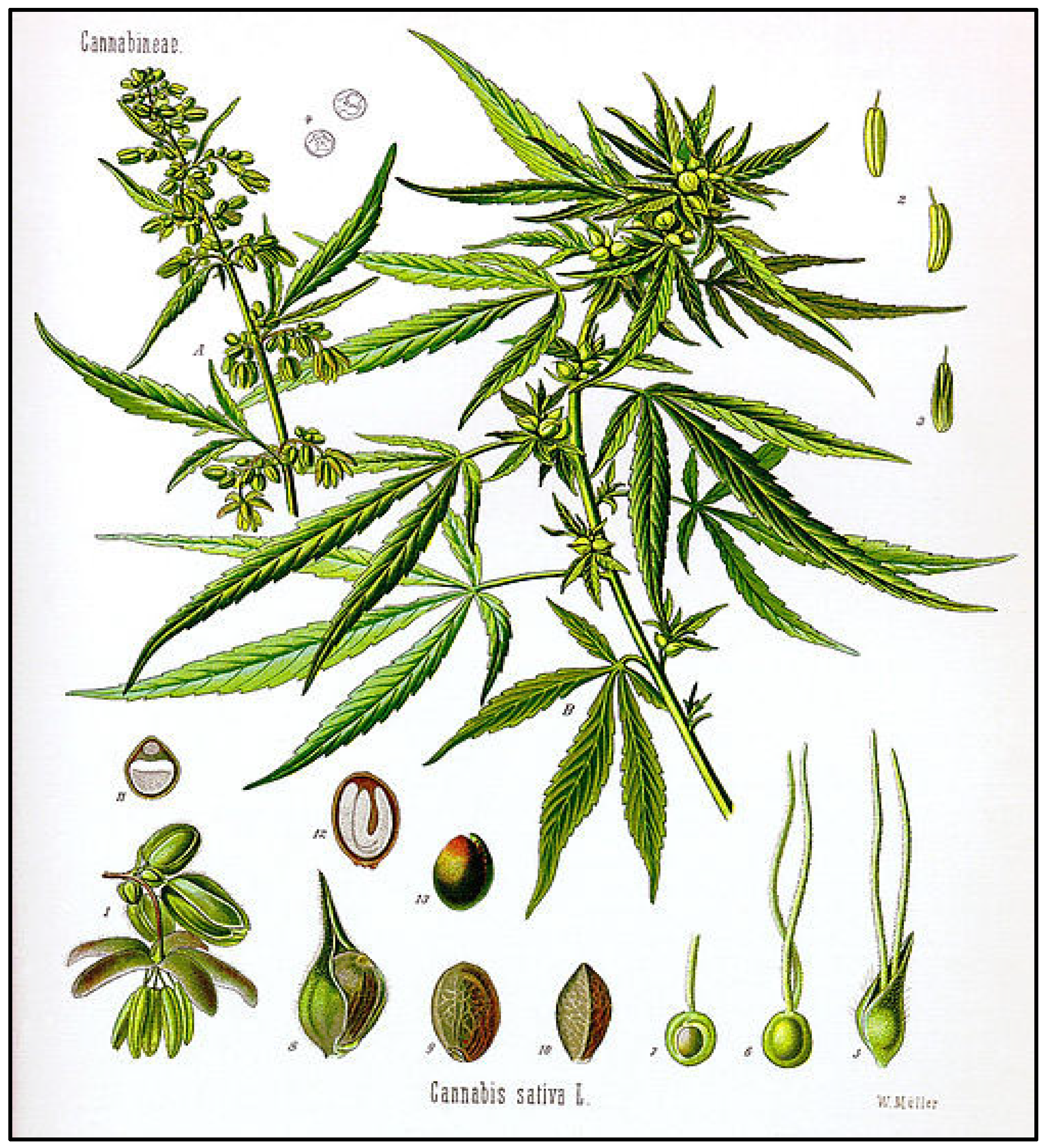
Cannabis, a plant long known for its medicinal properties, includes different recognized subspecies, most notably Cannabis sativa and Cannabis indica. Cannabis sativa (Figure 1) is typically characterized by a taller growth habit with narrow leaflets and marked phytochemical variability across strains, whereas Cannabis indica exhibits a shorter, more compact morphology with broader leaflets and distinct cannabinoid composition profiles. From a pharmacological standpoint, cannabis and its bioactive constituents, particularly cannabinoids such as tetrahydrocannabinol (THC) and cannabidiol (CBD), have garnered increasing attention for their potential neuroprotective, anti-inflammatory, and symptom-modulating properties [3,4]. Emerging mechanistic studies suggest that the endocannabinoid system may play a modulatory role in basal ganglia function and neuroinflammation, both of which are central to the pathophysiology of Parkinson’s disease [5,6]. Preclinical research has demonstrated promising effects on motor performance and neuroprotection in animal models [7,8], while early clinical trials and observational studies have reported variable outcomes in humans [9,10,11,12,13].
Parkinson’s disease was selected as the specific focus of this literature overview because it represents a neurodegenerative condition with a sufficiently mature and disease-specific body of clinical and meta-analytical evidence on therapeutic cannabis and cannabinoids. Furthermore, the involvement of the endocannabinoid system [14,15] in Parkinson’s disease provides a biological rationale for targeted investigation, enabling a more meaningful synthesis than would be feasible within a broader and more heterogeneous neurodegenerative framework.
Figure 1. Botanical illustration of Cannabis sativa from Franz Eugen Köhler’s Medizinal-Pflanzen (1887)—public domain image [16].
Msf 43 00003 g001
The aim of this review is to provide a systematic synthesis of existing meta-analytical evidence regarding the effects of therapeutic cannabis and cannabinoids on health outcomes in patients with Parkinson’s disease. The novelty of the present work lies in its comparative synthesis of existing meta-analyses, with particular emphasis on differences in study inclusion, cannabinoid formulations, assessed outcomes, and overlap of primary clinical trials.

2. Methods

This study provides a comprehensive overview of meta-analyses, following a streamlined version of the PRISMA guidelines [17]. To be considered for inclusion, meta-analyses were required to report a pooled estimate of the effects of therapeutic cannabis, its extracts, or derivatives on health outcomes in individuals with Parkinson’s disease or in experimental models of the condition. Additionally, eligible studies were required to be published in peer-reviewed journals and to be available in English or to include an English-language abstract. The inclusion criteria were as follows:
  • Population (P): individuals diagnosed with Parkinson’s disease based on internationally recognized clinical criteria, or animal models that accurately replicate the disease.
  • Intervention (I): administration of therapeutic cannabis or cannabinoids via oral or inhalation routes, for any duration.
  • Comparison (C): other therapeutic approaches or placebo.
  • Outcomes (O): any health-related parameter, including motor symptom changes and quality of life improvements.
  • Study design (S): meta-analyses of laboratory experiments or clinical studies, with a particular emphasis on Randomized Controlled Trials (RCTs).
An extensive search of PubMed, EMBASE, Web of Science, and Google Scholar was conducted for relevant meta-analyses published from database inception to April 2025, using the following search terms in titles or abstracts: “cannabis”, “hemp”, “marijuana”, “cannabinoid*”, “CBD”, “cannabidiol”, “THC”, “tetrahydrocannabinol”, and “Parkinson*”. Filters were applied to pre-select meta-analytical studies.
As an example, the search strategy for PubMed was the following: (“cannabis”[Title/Abstract] OR “hemp”[Title/Abstract] OR “marijuana”[Title/Abstract] OR “cannabinoid*”[Title/Abstract] OR “CBD”[Title/Abstract] OR “cannabidiol”[Title/Abstract] OR “THC”[Title/Abstract] OR “tetrahydrocannabinol”[Title/Abstract]) AND “Parkinson*”[Title/Abstract].
One author (E.M.) screened all retrieved studies, with a second author (M.A.) verifying the results for reproducibility. Data were manually extracted by M.A. using an Excel spreadsheet, and any disagreements were resolved through discussion. The extracted data included sample size (number of studies and participants), intervention characteristics, major study endpoints, year of the literature search, and key findings of each meta-analysis.
To assess the methodological quality of the included meta-analyses, adherence to internationally recognized reporting and appraisal standards was evaluated. Meta-analyses of clinical studies were additionally assessed using the AMSTAR 2 (A MeaSurement Tool to Assess Systematic Reviews 2) checklist [18], which is specifically designed to appraise the methodological rigor of systematic reviews and meta-analyses of randomized and non-randomized studies of healthcare interventions. Given the specific and relatively narrow research niche addressed in this overview, the AMSTAR 2 appraisal was applied with a pragmatic and flexible approach, emphasizing overall methodological transparency and internal consistency rather than strict exclusion based on isolated checklist items. Compliance with reporting guidelines such as PRISMA or MOOSE, as recommended by the EQUATOR Network [19], was also examined. PRISMA provides a standardized checklist for reporting systematic reviews and meta-analyses of clinical trials, while MOOSE outlines evidence-based methods for meta-analyses of observational studies.
The most significant findings from the included studies were summarized in a table and qualitatively analyzed in the subsequent sections of the article.

3. Results

The search retrieved 975 research items—PubMed (12), Embase (24), WoS (739), and Google Scholar (200)—and six meta-analyses evaluating the effects of therapeutic cannabis and cannabinoids on Parkinson’s disease were identified [8,20,21,22,23,24] (the most relevant characteristics of these studies are presented in Table 1). One study was excluded because it was a student thesis, representing gray literature that did not meet our peer-review eligibility criteria [25]. Among the included meta-analyses, one synthesized data from five RCTs involving patients with Parkinson’s disease, reporting a significant improvement in disease symptoms with pure CBD or synthetic THC (SMD = −0.41, p = 0.004) [20]. Other meta-analyses, which included both RCTs and non-RCTs, assessed various cannabis extracts and their impact on the Unified Parkinson’s Disease Rating Scale (UPDRS), though results were mixed, with some failing to show statistically significant benefits (see Table 1 for further details). With regard to pain management in Parkinson’s disease, a study confirmed that cannabinoids are an effective treatment option [24]. Additionally, a meta-analysis of 41 laboratory studies using animal models of Parkinson’s disease demonstrated significant motor function improvements, including enhanced rotarod test performance (MD = 31.63 s, p = 0.003) and reduced pole test completion time (MD = −1.51 s, p = 0.028) [8].
Most included meta-analyses adhered to the PRISMA guidelines, ensuring methodological rigor. The quality of the included clinical meta-analyses [20,21,22,23,24] varied across reviews, ranging from high to lower confidence levels (see the Supplementary Materials for further details). Overall, most meta-analyses met key AMSTAR 2 criteria related to comprehensive literature searches, study selection, data synthesis, and consideration of risk of bias. Lower confidence ratings were primarily driven by limitations in reporting, such as incomplete documentation of protocol registration, funding sources of included studies, and assessment of publication bias, rather than by fundamental methodological flaws. Given the relatively limited number of available clinical trials and the specialized nature of this research field, these findings were interpreted cautiously, recognizing that some AMSTAR 2 shortcomings may reflect structural and historical constraints of the evidence base rather than substantive weaknesses.
Table 2 shows the degree of overlap among clinical studies included in the meta-analyses, revealing that fewer than 50% of the studies are shared across them, indicating a relatively low level of overlap.
Table 1. Summary of quantitative evidence about the health benefits of therapeutic cannabis and cannabinoids for Parkinson’s disease.
ReferenceYear (Literature Search)Review GuidelinesPooled AnalysisHealth OutcomesInterventionNumber of Studies
[20]2021PRISMASMD = −0.41 [95% CI: −0.69 to −0.13; p = 0.004] (*)Disease symptoms (5 studies, 152 patients)Pure CBD or synthetic THC5 RCTs involving patients with PD
[21]2017-MD = −4.19 [95% CI: −7.99 to −0.39; p = 0.03] (*)UPDRS total score (4 studies, 80 patients)Pure CBD or cannabis extracts with different CBD:THC ratio2 RCTs and 2 non-RCTs involving patients with PD
[22]2020PRISMAMD = −0.21 [95% CI: −4.15 to 3.72; p = 0.92]UPDRS motor score (3 studies, 68 patients)Mostly pure CBD, synthetic THC, or cannabis extracts with unspecified CBD:THC ratio6 RCTs and 9 non-RCTs involving patients with PD
[24]2018PRISMASMD = −2.02 [95% CI: −2.84 to −1.43; p < 0.05] (*)Pain (1 study, 34 patients)Cannabinoids (unspecified composition)25 RCTs involving patients with PD
[23]2021PRISMAMD = 0.39 [95% CI: −4.52 to 5.29; p > 0.05]UPDRS total score (2 studies, 38 patients)Cannabis extracts with balanced CBD:THC ratio, pure CBD, and synthetic THC5 RCTs and 18 non-RCTs involving patients with PD
[8]2022PRISMAMD = 31.627 s [95% CI: 10.98 to 52.27 s; p = 0.003] (*)Rotarod test (9 studies)Different cannabinoids administered orally for 28–60 days41 laboratory studies with animal models (mostly mice) of PD
MD = −1.51 s [95% CI: −2.85 to −0.16; p = 0.028] (*)Pole test (8 studies)
SMD = 0.36 [95% CI: −0.58 to 1.29; p = 0.453]Open field test (6 studies)
Table description: Studies are ordered by sample size. Legends: CBD = Cannabidiol. CI = Confidence Interval. MD = Mean Difference. PD = Parkinson’s disease. PRISMA = Preferred Reporting Items for Systematic reviews and Meta-Analyses. SMD = Standardized Mean Difference. THC = Tetrahydrocannabinol. UPDRS = Unified Parkinson Disease Rating Scale. (*) = Significant result (p < 0.05) in favor of cannabis-based interventions.
Table 2. Overlap of clinical studies among the included meta-analyses.
Meta-Analyses Described in This Literature Overview
Urbi et al., 2022 [23]Qureshi et al., 2018 [24]Thanabalasingam et al., 2021 [22]Guillermo et al., 2018 [21]Bilbao and Spanagel 2022 [20]
-Chagas et al., 2014 [26]
----de Almeida et al., 2021 [27]
----de Faria et al., 2020 [28]
---Peball et al., 2020 [29]
----Sieradzan et al., 2001 [30]
----Mesnage et al., 2004 [31]
--Carroll et al., 2004 [32]
----Lotan et al., 2014 [33]
----Shohet et al., 2016 [34]
Table description: This table illustrates the overlap of primary clinical studies included across the meta-analyses considered in this overview. Checkmarks (✓) indicate inclusion of a given clinical study within each meta-analysis.

4. Discussion

From a mechanistic standpoint, cannabinoids are thought to exert their effects on neurological disorders primarily through CB1 and CB2 receptors: CB1 receptors modulate neurotransmission, potentially reducing pain perception and spasticity, while CB2 receptors influence immune function and may help mitigate neuroinflammation [35,36]. Cannabinoids have emerged as a promising therapeutic approach for Parkinson’s disease due to their strong presence in the basal ganglia and their modulatory effects on dopaminergic, glutamatergic, and GABAergic signaling, with experimental evidence showing cannabinoid agonists like WIN-55,212-2 (similar to THC) offer neuroprotection by reducing excitotoxicity, glial activation, and oxidative stress [37]. In addition to CBD and THC, other minor phytocannabinoids have also shown potential for treating neurological conditions, including Parkinson’s disease [38].
From a clinical perspective, the primary symptoms targeted by cannabinoid treatment in patients with Parkinson’s disease include treatment-resistant dyskinesia, anxiety, agitation, pain, and persistent sleep disturbances, in particular when first-line therapies prove insufficiently effective [11]. Especially in elderly and frail patients, some experts recommend beginning treatment with pure CBD, gradually increasing the dose, and, if there is no therapeutic response, consider adding THC-containing extracts [11]. However, no standardized or internationally approved treatment protocols are currently available, and while some scientific evidence exists, treatment decisions are still largely based on the physician’s clinical experience. In general, the appropriate cannabis formulation and dosage should be carefully individualized, following a thorough discussion of the potential efficacy, side effects, accessibility, and costs: current evidence suggests that formulations with higher THC content may offer greater therapeutic benefit; however, THC is also associated with stronger psychotropic effects and an increased risk of psychosis, which is a significant concern in the elderly Parkinson’s disease population [39]. Overall, therapeutic cannabis products containing THC and CBD appear to be generally safe when used under controlled clinical conditions, with most studies reporting no severe adverse events [35]. All the same, mild side effects such as dizziness, dry mouth, and fatigue are common, especially with extracts high in THC, and individual factors like genetic variations can increase the risk of more serious reactions, including hallucinations [40]. As such, medical supervision and regular follow-up are essential to ensure safe use and to promptly address any adverse effects.
The inconclusive findings from meta-analyses on the efficacy of cannabinoids for managing Parkinson’s disease symptoms may stem from several factors: the limited number of clinical trials, the absence of standardized treatment protocols, the substantial variability in cannabis formulations (ranging from pure CBD to extracts with higher concentrations of THC), and the fact that each meta-analysis is based on a different set of clinical studies, contributing to heterogeneity in the evidence base. Given that treatment plans must be individualized and consider potential interactions with other medications, a one-size-fits-all approach is not practical. Moreover, cannabinoids are often used as an add-on therapy, particularly in advanced stages of Parkinson’s disease or in cases that are resistant to conventional treatments: as a result, their perceived efficacy may be diminished due to the severity and complexity of the underlying condition. Nonetheless, some clinical studies have reported improvements in both symptoms and quality of life in patients with Parkinson’s disease treated with pure CBD, THC, or combined cannabinoid extracts [20,21]. These positive findings are further supported by observational studies, which offer valuable real-world clinical evidence beyond controlled trial settings [41,42,43]. Some researchers have hypothesized that patients with Parkinson’s disease may benefit the most from cannabis treatment for non-motor symptoms, such as pain, anxiety, and sleep disturbances [12]. Overall, while preclinical studies have shown promising results [8], further well-designed clinical research is essential to better understand the potential role of cannabinoids in treating neurodegenerative conditions such as Parkinson’s disease.

5. Conclusions

In conclusion, while current evidence from meta-analyses and clinical studies suggests that certain cannabinoid formulations may offer symptomatic relief for patients with Parkinson’s disease, clinical research findings remain inconclusive due to limited trials, heterogeneous preparations, and the absence of standardized treatment protocols. Cannabinoids are often used as adjunct therapies in advanced or treatment-resistant cases, which may obscure their true efficacy. Encouraging results from preclinical studies highlight their potential neuroprotective effects, supporting further exploration. Future research should prioritize large-scale, well-designed randomized controlled trials that standardize dosing, isolate specific cannabinoid compounds, and stratify patients by disease stage and symptom profile. Additionally, studies investigating long-term safety, interactions with conventional medications, and the role of minor cannabinoids could provide valuable insights to guide clinical practice.

Supplementary Materials

The following supporting information can be downloaded at: https://www.mdpi.com/article/10.3390/msf2026043003/s1, Table S1: Methodological quality assessment of the included clinical meta-analyses according to the AMSTAR 2 checklist. Overall confidence ratings were assigned according to the AMSTAR 2 guidance, based on the presence of weaknesses in critical and non-critical domains.

Author Contributions

Conceptualization, M.A.; Methodology, M.A.; Validation, M.A. and D.D.; Investigation, M.A. and E.M.; Data Curation, M.A. and E.M.; Writing—Original Draft Preparation, M.A.; Writing—Review and Editing, M.A., E.M. and D.D.; Supervision, M.A. and D.D.; Project Administration, M.A. All authors have read and agreed to the published version of the manuscript.

Funding

This research received no external funding.

Institutional Review Board Statement

Not applicable.

Informed Consent Statement

Not applicable.

Data Availability Statement

No new data were created or analyzed in this study. Data sharing is not applicable to this article.

Conflicts of Interest

Michele Antonelli is a member of the Clinn network, a professional network of physicians prescribing therapeutic cannabis. The Clinn network management had no role in the collection, analysis, or publication of the data presented in this case report. The other authors declare no conflicts of interest.

References

  1. Bloem, B.R.; Okun, M.S.; Klein, C. Parkinson’s Disease. Lancet 2021, 397, 2284–2303. [Google Scholar] [CrossRef]
  2. Donley, S.; McGregor, S.; Wielinski, C.; Nance, M. Use and Perceived Effectiveness of Complementary Therapies in Parkinson’s Disease. Park. Relat. Disord. 2019, 58, 46–49. [Google Scholar] [CrossRef]
  3. Viana, M.d.B.; de Aquino, P.E.A.; Estadella, D.; Ribeiro, D.A.; Viana, G.S.d.B. Cannabis sativa and Cannabidiol: A Therapeutic Strategy for the Treatment of Neurodegenerative Diseases? Med. Cannabis Cannabinoids 2022, 5, 207–219. [Google Scholar] [CrossRef] [PubMed]
  4. Cassano, T.; Villani, R.; Pace, L.; Carbone, A.; Bukke, V.N.; Orkisz, S.; Avolio, C.; Serviddio, G. From Cannabis sativa to Cannabidiol: Promising Therapeutic Candidate for the Treatment of Neurodegenerative Diseases. Front. Pharmacol. 2020, 11, 124. [Google Scholar] [CrossRef] [PubMed]
  5. Shafiee, A.; Rafiei, M.A.; Jafarabady, K.; Eskandari, A.; Abhari, F.S.; Sattari, M.A.; Amini, M.J.; Bakhtiyari, M. Effect of Cannabis Use on Blood Levels of Brain-Derived Neurotrophic Factor (BDNF) and Nerve Growth Factor (NGF): A Systematic Review and Meta-Analysis. Brain Behav. 2024, 14, e3340. [Google Scholar] [CrossRef] [PubMed]
  6. Borgonetti, V.; Governa, P.; Montopoli, M.; Biagi, M. Cannabis sativa L. Constituents and Their Role in Neuroinflammation. Curr. Bioact. Compd. 2019, 15, 147–158. [Google Scholar] [CrossRef]
  7. Alves, A.d.D.F.; Dias, F.C.R.; Cadena, P.G.; Silva, V.A., Jr. Use of Phytocanabinoids in Animal Models of Parkinson’s Disease: Systematic Review. Neurotoxicology 2024, 105, 34–44. [Google Scholar] [CrossRef]
  8. Urbi, B.; Lee, Y.; Hughes, I.; Thorning, S.; Broadley, S.A.; Sabet, A.; Heshmat, S. Effects of Cannabinoids in Parkinson’s Disease Animal Models: A Systematic Review and Meta-Analysis. BMJ Open Sci. 2022, 6, e100302. [Google Scholar] [CrossRef]
  9. Bougea, A.; Koros, C.; Simitsi, A.-M.; Chrysovitsanou, C.; Leonardos, A.; Stefanis, L. Medical Cannabis as an Alternative Therapeutics for Parkinsons’ Disease: Systematic Review. Complement. Ther. Clin. Pr. 2020, 39, 101154. [Google Scholar] [CrossRef]
  10. Varshney, K.; Patel, A.; Ansari, S.; Shet, P.; Panag, S.S. Cannabinoids in Treating Parkinson’s Disease Symptoms: A Systematic Review of Clinical Studies. Cannabis Cannabinoid Res. 2023, 8, 716–730. [Google Scholar] [CrossRef]
  11. Costa, A.C.; Joaquim, H.P.G.; Pedrazzi, J.F.C.; Pain, A.d.O.; Duque, G.; Aprahamian, I. Cannabinoids in Late Life Parkinson’s Disease and Dementia: Biological Pathways and Clinical Challenges. Brain Sci. 2022, 12, 1596. [Google Scholar] [CrossRef]
  12. Figura, M.; Koziorowski, D.; Sławek, J. Cannabis in Parkinson’s Disease—The Patient’s Perspective versus Clinical Trials: A Systematic Literature Review. Neurol. Neurochir. Pol. 2022, 56, 21–27. [Google Scholar] [CrossRef] [PubMed]
  13. Bravo-Soto, G.A.; Juri, C. Are cannabinoids effective for Parkinsons disease? Medwave 2017, 17, e6974. [Google Scholar] [CrossRef] [PubMed]
  14. Giuffrida, A.; Martinez, A. The Endocannabinoid System and Parkinson Disease. In The Endocannabinoid System; Academic Press: Cambridge, MA, USA, 2017; pp. 63–81. [Google Scholar] [CrossRef]
  15. Stampanoni Bassi, M.; Sancesario, A.; Morace, R.; Centonze, D.; Iezzi, E. Cannabinoids in Parkinson’s Disease. Cannabis Cannabinoid Res. 2017, 2, 21–29. [Google Scholar] [CrossRef] [PubMed]
  16. Cannabis sativa (Köhler). Available online: https://it.wikipedia.org/wiki/File:Cannabis_sativa_(K%C3%B6hler).jpg (accessed on 15 November 2025).
  17. Moher, D.; Liberati, A.; Tetzlaff, J.; Altman, D.G.; PRISMA Group. Preferred Reporting Items for Systematic Reviews and Meta-Analyses: The PRISMA Statement. BMJ 2009, 339, b2535. [Google Scholar] [CrossRef]
  18. Shea, B.J.; Reeves, B.C.; Wells, G.; Thuku, M.; Hamel, C.; Moran, J.; Moher, D.; Tugwell, P.; Welch, V.; Kristjansson, E.; et al. AMSTAR 2: A Critical Appraisal Tool for Systematic Reviews That Include Randomised or Non-Randomised Studies of Healthcare Interventions, or Both. BMJ 2017, 358, j4008. [Google Scholar] [CrossRef]
  19. Simera, I.; Moher, D.; Hoey, J.; Schulz, K.F.; Altman, D.G. The EQUATOR Network and Reporting Guidelines: Helping to Achieve High Standards in Reporting Health Research Studies. Maturitas 2009, 63, 4–6. [Google Scholar] [CrossRef]
  20. Bilbao, A.; Spanagel, R. Medical Cannabinoids: A Pharmacology-Based Systematic Review and Meta-Analysis for All Relevant Medical Indications. BMC Med. 2022, 20, 259. [Google Scholar] [CrossRef]
  21. Guillermo, J.G.C., Jr.; Gochioco, D.C.T.; Merin, J.I.G.; Matibag, V.I.P.; Zialcita, M.K.M. Use of Cannabis in the Improvement in the Unified Parkinson’s Disease Rating Scale Score of Parkinson’s Disease: A Meta Analysis. Philipp. J. Neurol. 2018, 21, 10–15. [Google Scholar]
  22. Thanabalasingam, S.J.; Ranjith, B.; Jackson, R.; Wijeratne, D.T. Cannabis and Its Derivatives for the Use of Motor Symptoms in Parkinson’s Disease: A Systematic Review and Meta-Analysis. Ther. Adv. Neurol. Disord. 2021, 14, 17562864211018561. [Google Scholar] [CrossRef]
  23. Urbi, B.; Corbett, J.; Hughes, I.; Owusu, M.A.; Thorning, S.; Broadley, S.A.; Sabet, A.; Heshmat, S. Effects of Cannabis in Parkinson’s Disease: A Systematic Review and Meta-Analysis. J. Park. Dis. 2022, 12, 495–508. [Google Scholar] [CrossRef]
  24. Qureshi, A.R.; Rana, A.Q.; Malik, S.H.; Rizvi, S.F.H.; Akhter, S.; Vannabouathong, C.; Sarfraz, Z.; Rana, R. Comprehensive Examination of Therapies for Pain in Parkinson’s Disease: A Systematic Review and Meta-Analysis. Neuroepidemiology 2018, 51, 190–206. [Google Scholar] [CrossRef] [PubMed]
  25. DeVera, L.R.; Pacaña, A.M.Q. Cannabis sativa as a Possible Treatment for Alleviating Both Motor and Nonmotor Symptoms of Parkinson’s Disease: A Meta-Analysis. Bachelor’s Thesis, De La Salle University, Manila, Philippines, 2023. [Google Scholar]
  26. Chagas, M.H.N.; Zuardi, A.W.; Tumas, V.; Pena-Pereira, M.A.; Sobreira, E.T.; Bergamaschi, M.M.; dos Santos, A.C.; Teixeira, A.L.; Hallak, J.E.C.; Crippa, J.A.S. Effects of Cannabidiol in the Treatment of Patients with Parkinson’s Disease: An Exploratory Double-Blind Trial. J. Psychopharmacol. 2014, 28, 1088–1098. [Google Scholar] [CrossRef] [PubMed]
  27. de Almeida, C.M.O.; Brito, M.M.C.; Bosaipo, N.B.; Pimentel, A.V.; Tumas, V.; Zuardi, A.W.; Crippa, J.A.S.; Hallak, J.E.C.; Eckeli, A.L. Cannabidiol for Rapid Eye Movement Sleep Behavior Disorder. Mov. Disord. 2021, 36, 1711–1715. [Google Scholar] [CrossRef]
  28. de Faria, S.M.; de Morais Fabrício, D.; Tumas, V.; Castro, P.C.; Ponti, M.A.; Hallak, J.E.; Zuardi, A.W.; Crippa, J.A.S.; Chagas, M.H.N. Effects of Acute Cannabidiol Administration on Anxiety and Tremors Induced by a Simulated Public Speaking Test in Patients with Parkinson’s Disease. J. Psychopharmacol. 2020, 34, 189–196. [Google Scholar] [CrossRef]
  29. Peball, M.; Krismer, F.; Knaus, H.-G.; Djamshidian, A.; Werkmann, M.; Carbone, F.; Ellmerer, P.; Heim, B.; Marini, K.; Valent, D.; et al. Non-Motor Symptoms in Parkinson’s Disease Are Reduced by Nabilone. Ann. Neurol. 2020, 88, 712–722. [Google Scholar] [CrossRef]
  30. Sieradzan, K.A.; Fox, S.H.; Hill, M.; Dick, J.P.; Crossman, A.R.; Brotchie, J.M. Cannabinoids Reduce Levodopa-Induced Dyskinesia in Parkinson’s Disease: A Pilot Study. Neurology 2001, 57, 2108–2111. [Google Scholar] [CrossRef]
  31. Mesnage, V.; Houeto, J.L.; Bonnet, A.M.; Clavier, I.; Arnulf, I.; Cattelin, F.; Le Fur, G.; Damier, P.; Welter, M.L.; Agid, Y. Neurokinin B, Neurotensin, and Cannabinoid Receptor Antagonists and Parkinson Disease. Clin. Neuropharmacol. 2004, 27, 108–110. [Google Scholar] [CrossRef]
  32. Carroll, C.B.; Bain, P.G.; Teare, L.; Liu, X.; Joint, C.; Wroath, C.; Parkin, S.G.; Fox, P.; Wright, D.; Hobart, J.; et al. Cannabis for Dyskinesia in Parkinson Disease: A Randomized Double-Blind Crossover Study. Neurology 2004, 63, 1245–1250. [Google Scholar] [CrossRef]
  33. Lotan, I.; Treves, T.A.; Roditi, Y.; Djaldetti, R. Cannabis (Medical Marijuana) Treatment for Motor and Non-Motor Symptoms of Parkinson Disease: An Open-Label Observational Study. Clin. Neuropharmacol. 2014, 37, 41–44. [Google Scholar] [CrossRef]
  34. Shohet, A.; Khlebtovsky, A.; Roizen, N.; Roditi, Y.; Djaldetti, R. Effect of Medical Cannabis on Thermal Quantitative Measurements of Pain in Patients with Parkinson’s Disease. Eur. J. Pain 2017, 21, 486–493. [Google Scholar] [CrossRef] [PubMed]
  35. Hakami, A.Y.; Alshehri, F.S. Therapeutic Potential of Cannabinoids in Neurological Conditions: A Systematic Review of Clinical Trials. Front. Pharmacol. 2025, 16, 1521792. [Google Scholar] [CrossRef] [PubMed]
  36. Bhunia, S.; Kolishetti, N.; Arias, A.Y.; Vashist, A.; Nair, M. Cannabidiol for Neurodegenerative Disorders: A Comprehensive Review. Front. Pharmacol. 2022, 13, 989717. [Google Scholar] [CrossRef] [PubMed]
  37. More, S.V.; Choi, D.-K. Promising Cannabinoid-Based Therapies for Parkinson’s Disease: Motor Symptoms to Neuroprotection. Mol. Neurodegener. 2015, 10, 17. [Google Scholar] [CrossRef]
  38. Stone, N.L.; Murphy, A.J.; England, T.J.; O’Sullivan, S.E. A Systematic Review of Minor Phytocannabinoids with Promising Neuroprotective Potential. Br. J. Pharmacol. 2020, 177, 4330–4352. [Google Scholar] [CrossRef]
  39. de Freitas, M.E.T.; Fox, S.H. Advice to People with Parkinson’s in My Clinic: Cannabis. J. Park. Dis. 2024, 14, 873–881. [Google Scholar] [CrossRef]
  40. Pizzolato, K.; Thacker, D.; Toro-Pagán, N.D.; Hanna, A.; Turgeon, J.; Matos, A.; Amin, N.; Michaud, V. Cannabis Dopaminergic Effects Induce Hallucinations in a Patient with Parkinson’s Disease. Medicina 2021, 57, 1107. [Google Scholar] [CrossRef]
  41. Aladeen, T.S.; Mattle, A.G.; Zelen, K.; Mesha, M.; Rainka, M.M.; Geist, T.; Myers, B.; Mechtler, L. Medical Cannabis in the Treatment of Parkinson’s Disease. Clin. Neuropharmacol. 2023, 46, 98–104. [Google Scholar] [CrossRef]
  42. Sousa, A.; DiFrancisco-Donoghue, J. Cannabidiol and Tetrahydrocannabinol Use in Parkinson’s Disease: An Observational Pilot Study. Cureus 2023, 15, e42391. [Google Scholar] [CrossRef]
  43. Venderová, K.; Růzicka, E.; Vorísek, V.; Visnovský, P. Survey on Cannabis Use in Parkinson’s Disease: Subjective Improvement of Motor Symptoms. Mov. Disord. 2004, 19, 1102–1106. [Google Scholar] [CrossRef]
Disclaimer/Publisher’s Note: The statements, opinions and data contained in all publications are solely those of the individual author(s) and contributor(s) and not of MDPI and/or the editor(s). MDPI and/or the editor(s) disclaim responsibility for any injury to people or property resulting from any ideas, methods, instructions or products referred to in the content.