Article

The Connected Belonging Questionnaire (CBQ) as a Youth Voice Measure: Operationalizing an Intersectional Lens to Engage Young People


Department of Education, Faculty of Humanities and Social Sciences, University of Bath, Bath BA2 7AY, UK
*
Author to whom correspondence should be addressed.
Youth 2026, 6(2), 49; https://doi.org/10.3390/youth6020049
Submission received: 30 January 2026 / Revised: 1 April 2026 / Accepted: 7 April 2026 / Published: 16 April 2026
(This article belongs to the Special Issue NEET Youth: Experiences, Needs, and Aspirations)

Abstract

A sense of school belonging predicts NEET outcomes for adolescents. However, young people from marginalized groups often have a lower sense of school belonging than their majority peers. Emerging understandings of belonging as a complex, agentic process shaped by multiple relational, contextual, cultural and structural factors have posed problems for real-world applications of belonging. NEET young people tend to be viewed through a lens of risk factors, with a lack of research accounting for their experiences and feelings. While recent research recognizes the intersectional effects of disadvantage, or ‘compound disadvantage’, on NEET outcomes for young people from certain social groups, there is a lack of viable alternatives for educators and policymakers to account for these differential experiences of belonging in order to be able to respond to them. Connected Belonging is a relational and identity-building approach to enhancing young people’s wellbeing through supporting their connectedness and sense of self across the eight social domains of their lives. This paper outlines the development and validation of a young people’s survey, which enables education professionals to attend to and respond to the differing belonging experiences of diverse groups, operationalizing an intersectional lens on school belonging. After introducing the views of young people about systemic priorities to better support their engagement in education, training or work (EET), gathered through a youth voice event as part of a parallel research project, the paper outlines the process of developing, piloting and validating the tool. We argue that this survey tool has the potential to support improved attention to the views and experiences of diverse young people in a systematic, regular fashion. Furthermore, it offers potential for the evaluation of supportive actions grounded in youth voice.

1. Introduction

Reducing the number of young people who become NEET has become an urgent national priority, sharpened by growing evidence that educational disengagement is the outcome of complex interacting forces, or what has been termed compound disadvantage (Impetus, 2025). Recent policy guidance in the UK has responded to this heightened need by urging local authorities not only to track participation but to predict risk, intervene earlier, and build stronger ecosystems of support (Department for Education, 2023, 2025). Yet emerging analyses show that the pipeline into NEET is already visible early in young people’s trajectories: shaped by experiences of recognition, belonging, identity affirmation, and relational support across school years (Impetus, 2025; Parker et al., 2022). In this paper, we argue that school belonging is a foundational dimension of early prevention, addressing both academic and social identity factors associated with later exclusion.
Recent policy and practice developments show that local authorities in the UK are investing heavily in NEET risk-identification tools, which increasingly use data analytics to flag vulnerable young people. For example, Greater Manchester Combined Authority (2024) and the West Midlands Combined Authority (2024) have developed locality dashboards that integrate attainment, exclusion, SEND, care experience, and attendance indicators to predict risk and coordinate targeted interventions, while Somerset County Council has gone further in integrating Police data, identifying data points according to a holistic model that maps the key domains of risk1. The What Works Centre for Local Economic Growth (2024) and Youth Futures Foundation (2024) similarly document the growth of predictive tools and multi-agency dashboards across English local authorities, highlighting how local systems are now expected to synthesize complex youth data to design earlier, more precise preventive support. The Careers and Enterprise Company is currently exploring options to synthesize such tools with resources that help educators to plan and deploy ameliorative actions.2 This rapidly expanding policy landscape underscores the need for robust, theory-grounded measures of young people’s lived experiences that can complement administrative datasets—particularly measures capable of identifying psychosocial risks long before they appear in participation or attainment metrics.
School belonging has emerged as one of the strongest predictors of long-term participation and NEET outcomes. Longitudinal evidence shows that adolescents with low perceived belonging are substantially more likely to become NEET by early adulthood, even after controlling for prior attainment and socio-economic status (Parker et al., 2022). The predictive power of belonging is echoed in a broader international literature demonstrating its influence on academic motivation, attendance, well-being, and dropout intentions (K. Allen et al., 2018; Uslu & Gizir, 2017). However, despite its policy relevance, existing belonging measures used by schools tend to be narrow, inconsistent, or conceptually limited. Many rely on generic school-climate scales or brief satisfaction surveys, offering little insight into the identity-related processes that shape participation (K.-A. Allen, 2025).
In this paper, we outline the process by which our Connected Belonging team developed, piloted and validated a student report survey that aims to capture a more nuanced and interdisciplinary model for educational settings to support belonging, encompassing the various social domains of the young person’s daily life worlds (see Brown et al., 2025a). The unique contribution of the measure lies in its comprehensive conceptualization of belonging across eight domains, including two that are rarely addressed in school-based assessments: social identity and individual identity. These domains draw on Social Identity Theory, Identity Process Theory, intersectionality (Crenshaw, 1991), and narrative approaches to identity that foreground how pupils interpret recognition, safety, agency, and cultural affirmation within school. Earlier work in this program (e.g., Brown et al., 2025a, 2025b; Brown & Shay, 2021) demonstrated that belonging is not a single emotional construct but a multi-layered relational and identity-based experience. The OECD (2021) Belonging Index, used internationally, has advanced consistency in measurement but remains comparatively narrow, focusing primarily on peer and teacher relationships rather than identity affirmation, security, or agency. This leaves a gap for a measure capable of diagnosing the more nuanced, intersectional drivers of disengagement highlighted in recent syntheses (Steenwegen et al., 2025).
Against this backdrop, the Connected Belonging team advances a scalable, self-report tool designed to complement local authority NEET-tracking systems by providing insight into young people’s lived experiences of school long before administrative risk markers emerge. By integrating identity-based belonging domains into early-warning systems, local areas can deepen their understanding of how marginalization, cultural misrecognition, and relational strain shape participation—strengthening preventive pathways aligned with national NEET reduction priorities.

2. Background: Young People’s Views on Priority Actions to Support Engagement in EET

This section reports on views gathered during a young person’s engagement event to explore their views on systemic priorities to better support young people’s engagement. Forty three young people, aged 14–25 who were NEET or had experience of barriers to EET, attended a half day workshop at the University of Bath, supported by partner organizations who focused on mentoring, coaching, youth work and NEET-support charities; council-led services for care-experienced young people and those with special educational needs and disabilities (SEND); careers services; schools; colleges; and youth voice organizations.
These views were collected as part of a parallel project, which gives context to our co-production of policy recommendations on NEET prevention in the UK and provides background to the importance of developing the Connected Belonging Questionnaire (CBQ). This engagement offered a valuable opportunity to reflect on the relevance of the Connected Belonging framework in light of young people’s priorities. They are included at the outset to draw attention to the ways the framework chimes with young people’s perspectives and experiences. Young people’s recommendations emphasized the importance of relationships, belonging and connected systems of support. Their priorities are summarized under three themes: promoting strong relationships in schools and colleges; fostering a sense of belonging; and the importance of connected systems of support.

2.1. Promoting Strong Relationships in Schools and Colleges

Young people called for schools to prioritize understanding the reasons behind disengagement rather than defaulting to sanctions. They urged staff to improve communication and recognize that stress from school or home often underlies behavior:
“Ask them why they don’t want to go to lesson, ask them why they’re acting out, ask why they’re vaping in the toilets or skipping lessons. The chances are its stress. Either at home or from school. These kids NEED support. If you start there, everything else will be better, grades, attendance, their future and they will leave with a positive experience.”
They felt schools should “focus on engagement not attendance,” listen to and believe students, and invest in trained pastoral staff. While teachers were seen as important, young people recognized that subject teachers cannot meet all support needs, highlighting the importance of specialist roles. They felt schools need to “employ more student support who are trained to deal with and help children who need it,” and who can “focus on the actual children, NOT their actions.’
Tackling a lack of understanding of SEND, neurodivergence, chronic illness and trauma were repeatedly raised. Young people wanted teachers to be “more sensitive,” to “speak to SEND students with respect” and be better trained to work with diverse needs. They emphasized the importance of “reasonable adjustments being accepted” and of recognizing the impact of past experiences on behavior and engagement.
This suggests that tools to support schools’ engagement with young people’s experiences of belonging, connectedness and engagement, helping them consider the differing experiences of demographic groups, could enhance institutional responsiveness to these challenges and inform the positive relationships that underpin engagement.

2.2. Focusing on Students’ Sense of Belonging in School

Young people wanted more inclusive approaches to teaching that recognize different learning styles, communication needs, emotional well-being, and life circumstances. They argued for broader definitions of success that value skills, interests, dedication and career aspirations alongside academic achievement.
They called on schools to acknowledge a wider range of skills and abilities, rather than “producing kids to a certain ‘standard’,’’ and to “change the way lessons are taught to suit EVERYONE.” One group explained that schools should consider:
“How young people communicate, their attention span, learning style, emotional intelligence, so the perspective isn’t solely academic but about their ability to engage. How do they respond to engaging with friends? Community? School? Working with children’s services and considering emotional impact on their lives and how that might influence what environment would allow them to thrive.”
They also emphasized the importance of spaces and activities that support emotional regulation, including “more places to go and calm down.” Some recommended more physical activities, such as boxing, to help channel emotions in healthy ways, arguing this will “help young people learn healthier ways to respond and channel their feelings.”
Uniform policies were seen as a source of stress, expense, and conflict, contributing to feelings of alienation rather than belonging. Feeling uncomfortable meant they did not feel like themselves. Young people called for uniforms to be removed or simplified to end the “constant battles” that damaged their connections with staff. Support for individuality and comfort was felt to be more important.
Overall, these recommendations highlight the importance of recognizing and affirming diverse identities and nurturing connectedness with staff and peers in fostering belonging and sustained engagement.

2.3. Connected Systems of Support

Finally, young people stressed the need for stronger connections between schools, colleges, councils, families and support services. They suggested that belonging should extend beyond school walls, encompassing family relationships, community connections and their development as citizens. They felt that “schools and councils” should be “working together to provide affordable transport.” Similarly, they wanted “colleges to properly communicate to other organizations” and “more communication with families.” They prioritized schools “communicating with the young person and parents in a non-patronizing way.” Feeling connected as part of a coherent, collaborative system which communicated respectfully with them was seen as essential to supporting belonging, progression and preventing NEET outcomes.

3. Literature Review

3.1. Belonging and NEET

A growing body of research highlights the importance of young people’s sense of school belonging on future disengagement. A low sense of school belonging in adolescence predicts NEET status aged 16 and 20 (Parker et al., 2022). Furthermore, time spent NEET impacts future relationships and engagement in work and society more broadly, with a long-term scarring effect on future occupation (Ralston et al., 2016) and on loneliness (Bauger & Hagen, 2025). Research suggests that the poorer mental health outcomes experienced by young people not in education, employment and training stem not just from the economic disadvantage entailed, but from the associated loss of personal and social resources (Chen & Chan, 2025). This suggests that attention to adolescents’ sense of school belonging is a crucial consideration in NEET prevention.
However, a broader conceptualisation of young people’s sense of belonging (Johnson, 2026) would be valuable in terms of thinking about school belonging through a NEET prevention lens. Critiques of concepts of school belonging highlight its individualistic framing, reliance on psychological conceptions (Kuttner, 2023) and normative and assimilationist lens (Brown & Shay, 2021; Brown et al., 2025b). Given that risks to NEET are interconnected (Brown et al., 2021) and that young people in certain social groups face ‘compound disadvantage’ (Impetus, 2025), which hugely increases their likelihood of becoming or remaining NEET, a focus purely on school-level aspects of belonging offers an unhelpfully narrow lens.
Minoritized children have been shown to experience lower belonging in a mainstream school setting, but stronger belonging in settings where opportunities to connect with others through shared cultural experiences were valued (Steenwegen et al., 2025). This highlights how consideration of connectedness not just to the school but to other important social groups that they are part of can enhance their belonging in an education setting. Young people’s connectedness and belonging in school are impacted by, and impact on, their relationships in other social domains, including gender, ethnicity, race and class, and engagement with the ways this impacts children’s emotional responses is a key part of better understanding how a sense of belonging can be supported for diverse children in schools (Kustatscher, 2017).
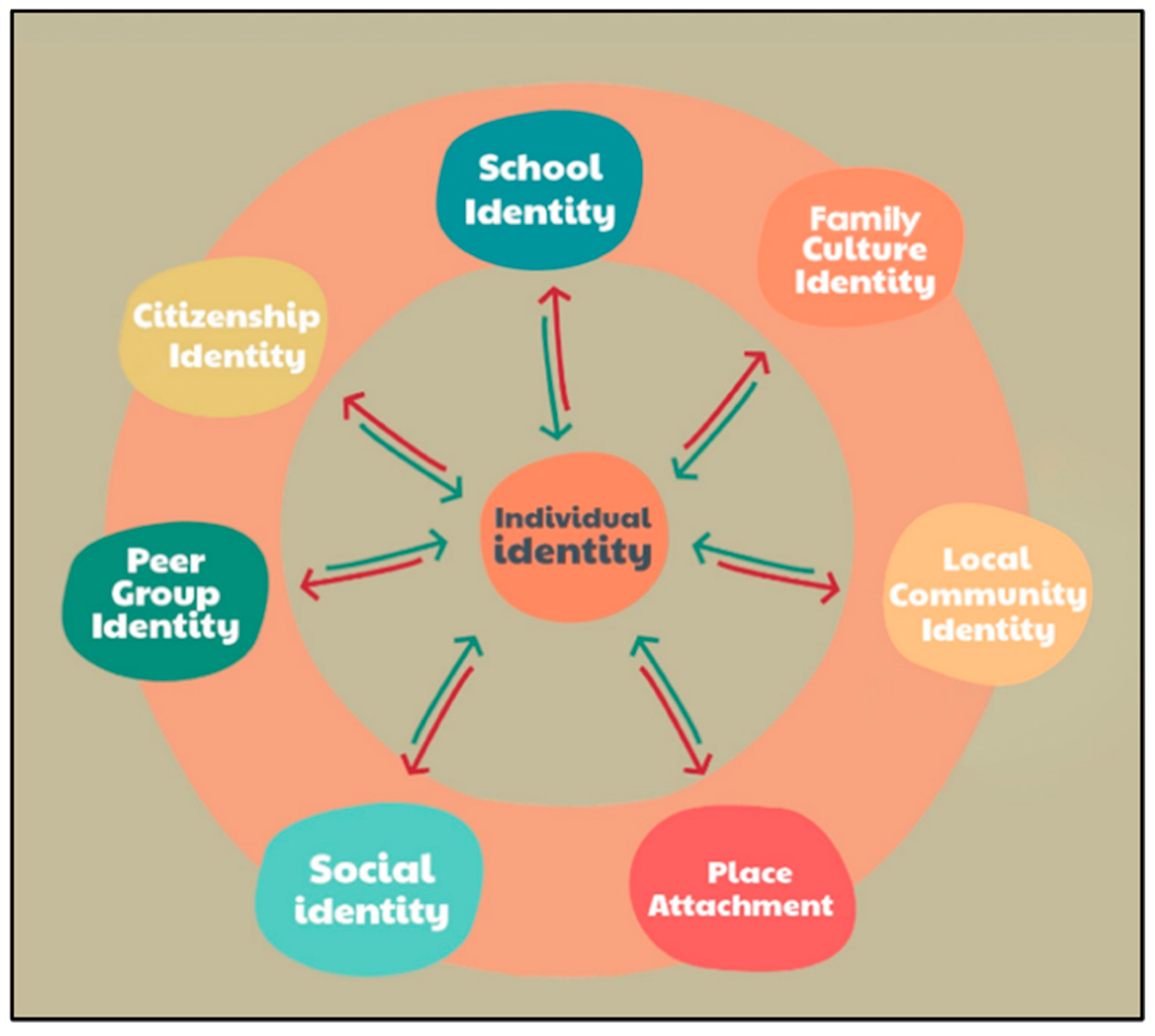
The theoretical framework of Connected Belonging (see Figure 1) reflects the importance of students’ sense of belonging across the different arenas of their lives to supporting their well-being and engagement in school (Brown et al., 2024). It frames school belonging as a process of identity construction, which is negotiated interpersonally, socially and spatially (S. G. Russell & Mantilla-Blanco, 2022; McGillicuddy & Machowska-Kosciak, 2021). Following White (2015), the model recognizes belonging as being contextual and relative to particular places and relationships. This suggests that a sense of belonging within and across the peer group, family unit, cultural group, school community, local community and wider world is an important component that can impact an individual’s sense of belonging within education and work settings.
Research indicates that a student’s sense of belonging and identity in other social domains can support engagement within school (Kuttner, 2023). For instance, family social capital and connectedness impact the likelihood of spending time NEET (Broschinski & Feldhaus, 2025) and school engagement (Fredricks et al., 2019), with children from socio-economically disadvantaged homes experiencing additional ‘binds’ which can prevent them from forming a meaningful sense of belonging in the school community (Brown, 2015). Similarly, experiences of discrimination outside of school can negatively impact a sense of belonging and safety in school (S. G. Russell & Mantilla-Blanco, 2022) while a strong sense of ethnic or racial identity can support a stronger sense of school belonging and connection (Dotterer et al., 2009).
This suggests that a strong connectedness in other social domains can bring identity resources like trust and validation, generating a sense of belonging. Conversely, it suggests that a lack of connectedness, or challenges with a sense of identity in one domain, can negatively impact a sense of belonging in other domains. Developing a school belonging measure, grounded in a holistic, intersectional lens on school belonging, could furnish a more nuanced understanding of the sense of belonging different groups experience, supporting schools to take informed and tailored action that accounts for intersectional identities and structural factors (Johnson, 2026).
To feel a sense of belonging, it is important that our sense of ourselves as a unique individual is accepted and valued, but also that our social identities are validated and respected. Furthermore, Eccles (2009) posits that personal (individual) identity and collective (social) identities play an important role in motivated action. Her research delineates identity formation not just in terms of the development of individual skills and characteristics, but also of evolving perceptions about values and expectations. An adolescent, while developing their individual identity, will, over time, encounter multiple collective identities, views of the world, and self, which they can incorporate, reject or respond to. This is particularly significant from the point of view of NEET prevention and school belonging. Development of a measure that supports schools to access nuanced insights into the belonging experiences of diverse groups and attend to young people’s feelings in education settings (Kustatscher, 2017) may help the development of supportive interventions and address exclusionary processes that may otherwise go unnoticed.
The Connected Belonging model (see Figure 1) therefore represents the importance to the young person of belonging across the social domains of their lives to their identity development and progression. The domains around the edge of the modal are all social domains which shape the individual’s feelings of belonging, self-esteem, self-awareness, self-value and sense of who they are. Individual identity is situated at the centre of the diagram for two reasons. Firstly, this reflects the views of young people in the empirical research which informed the model: that feeling able to be themselves and feel authentic in school and in social domains was central to their wellbeing. Secondly, it signals that space for individual identity needs to be made within each of the social domains, while individual identity must not be at the cost of the social domains. For schools supporting young people’s development, this diagram highlights the importance of attention to broader development for the young person, through and beyond the school, when supporting their sense of belonging. For instance, a young person’s sense of school identity can support their individual identity development by helping them recognize their skills, strengths and abilities. Equally, when individual learning needs are not met, or cultural identities are not respected, school identity can negatively impact individual identity by shaping beliefs about their ability to learn, their value or self-worth. Two-way arrows on the diagram highlight this interconnection.

3.2. Measures of Belonging

A lack of consensus on the conceptualization of school belonging (K.-A. Allen et al., 2021) means that while diverse instruments exist, offering valuable insights into varied constructs emerging from different disciplines, no existing measure was sufficiently broad to adapt.
As Davies et al. (2025) highlight, clarifying a conceptual framework and measurement tools for school belonging is essential in order to be able to develop and evaluate interventions. The long-standing Psychological Sense of School Membership Scale (Goodenow, 1993) has been widely used, but evaluations suggest that it measures three factors, rather than being a unidimensional measure (Ye & Wallace, 2013/2014). Factor analysis suggested the interrelated concepts of identification and participation in school, perception of fitting in among peers and generalized connection are represented. For schools to be able to target interventions, it is important that any developed measure has an explicit factor structure that supports targeted response.
The School Connectedness Scale has a stable factor structure (Lohmeier & Lee, 2011) but is limited in its framing, measuring connectedness to adults in school, peers and to the school itself. The Sense of Belonging scale can be adapted to different settings, but has been validated with adults rather than young people and does not enable consideration of connectedness in different social domains.
The Watts Connectedness Scale offers a broader conceptualization of connectedness across multiple domains, echoing our aims with Connected Belonging, though it is not developed for a target group of young people in a school setting. The focus on connectedness to ‘self’, ‘others’ and ‘world’ broadly reflects our framing (Mellinger et al., 2024). This measure of connectedness to ‘self’ reflects our notion of individual identity; connectedness to ‘others’ is further subdivided in our measure into specific groups of others, namely peers, family and school adults. Connectedness to the ‘world’ is a particularly important aspect to be included, both in terms of enabling an intersectional lens so the measure can be relevant to diverse groups, but also in considering adolescents as they move into independence and society. In our measure, this is again subdivided into ‘local community’ and ‘citizenship identity to reflect more proximal and distal social domains. The inclusion of ‘social identity’ to specifically consider experiences from particular identities is intended to further broaden the applicability for multiple groups.
Finally, place attachment is a key aspect of the affective dimension of belonging (Escalera-Reyes, 2020). This is particularly important in school settings where aspects of the environment and how different groups are represented (Brezicha & Miranda, 2022) within it can strongly impact a sense of being safe (Macdonald, 2023), at home (Mulrooney & Kelly, 2020), welcome, valued (Cheryan et al., 2009) and recognized (Kuttner, 2023). Incorporating spatial dimensions, as well as affective and relational dimensions of belonging within the Connected Belonging survey tool, recognizes the importance of this aspect of development, particularly in relation to adolescent identity development (Erdoğdu, 2025). Place attachments’ connection as an early stage in the development of a sense of community, which is linked to the development of citizen participation (Escalera-Reyes, 2020), suggests that notions of ownership and stewardship within the school environment are key aspects to be included within the measure.

4. Materials and Methods

In this study, we used a mixed-methods, sequential design to develop and evaluate a youth self-report measure of Connected Belonging grounded in intersectional theory and youth voice. The methodological approach followed established best-practice guidance for scale development in social and behavioural research, which combines qualitative exploration, iterative piloting, and quantitative psychometric evaluation (Boateng et al., 2018; DeVellis & Thorpe, 2022). The aim was to produce a group-level instrument suitable for use in educational and local authority contexts, rather than for individual diagnosis.
The research was conducted in three phases. Our formative phase drew on qualitative consultation with young people, educators and professionals supporting engagement and wellbeing. This informed our conceptual framing and priority domains of belonging, ensuring that the measure was grounded in lived experience and reflected the relational, identity-based and structural dimensions of belonging highlighted by marginalized young people. Secondly, the draft survey was piloted twice with secondary school pupils in comprehensive, mainstream school settings in Southwest England. These pilots focused on item clarity, acceptability, and stability over time, and informed iterative item refinement. Lastly, the revised instrument was administered to a larger secondary school sample to enable formal psychometric evaluation, including assessments of internal consistency, test–retest reliability, and construct validity through exploratory factor analysis.
Survey administration took place during the school day, using anonymous self-report questionnaires completed online. Demographic data were collected in a manner designed to support intersectional analysis while minimizing burden and protecting pupil anonymity. Ethical approval was obtained from the University of Bath, with informed consent procedures appropriate to age and institutional requirements. The methodological focus throughout was on producing a theoretically coherent, practically usable, and empirically robust measure capable of complementing administrative NEET risk data with young people’s own accounts of belonging.

4.1. Developing the Survey

Early consultation with staff from schools and Mental Health in Schools Teams in Southwest England on the Connected Belonging model confirmed the framework’s relevance for their professional roles but highlighted a need for an evidence base to support wider engagement with the model. The research team therefore aimed to develop a student survey that can:
  • help schools measure students’ sense of belonging and connection across each of the eight domains in the Connected Belonging model (see Figure 1).
  • support schools to take an intersectional lens when considering their students’ sense of belonging. (see Table 1).
Firstly, we reviewed existing tools measuring belonging and connectedness, which were relevant to the 8 conceptual domains of Connected Belonging (see Table 2). We prioritized scales validated for use with children, adolescents and students, but had to cast our net wider to explore the domains of citizenship identity, local community identity, due to a lack of existing measures.
While existing scales of school belonging and connectedness (Gehlbach, 2015; Goodenow, 1993; Deighton et al., 2013) combine measures relating to connections with peers, adults, the school setting and climate, we were seeking to differentiate these elements to reflect separate, though closely linked, aspects of belonging. Likewise, more general belonging and connectedness scales (Lee & Robbins, 1998; Mellinger et al., 2024; D. Russell et al., 1980; Malone et al., 2012; Karcher & Sass, 2010) combined measures relating to different social contexts and social groups, whereas we sought to separate these to distinguish between school, family, local community and wider world so as to enable supportive actions and interventions to be targeted and evaluated.
Consideration of social identity to strengthen consideration of intersectional experiences of belonging was more challenging, as this is the gap we were seeking to address. We reviewed the Ethnic Identity Scale (EIS) (Umaña-Taylor et al., 2014) and explored items containing wording such as ‘people like me’ (see Goodenow, 1993) that encouraged respondents to reflect on the social groups they consider themselves to be part of when considering a particular experience of belonging or marginalization. For clusters of questions where we found a lack of validated surveys to draw on, for instance, Local Community Identity and Citizenship Identity, we devised original question wordings to probe aspects of the concept as identified through the literature.
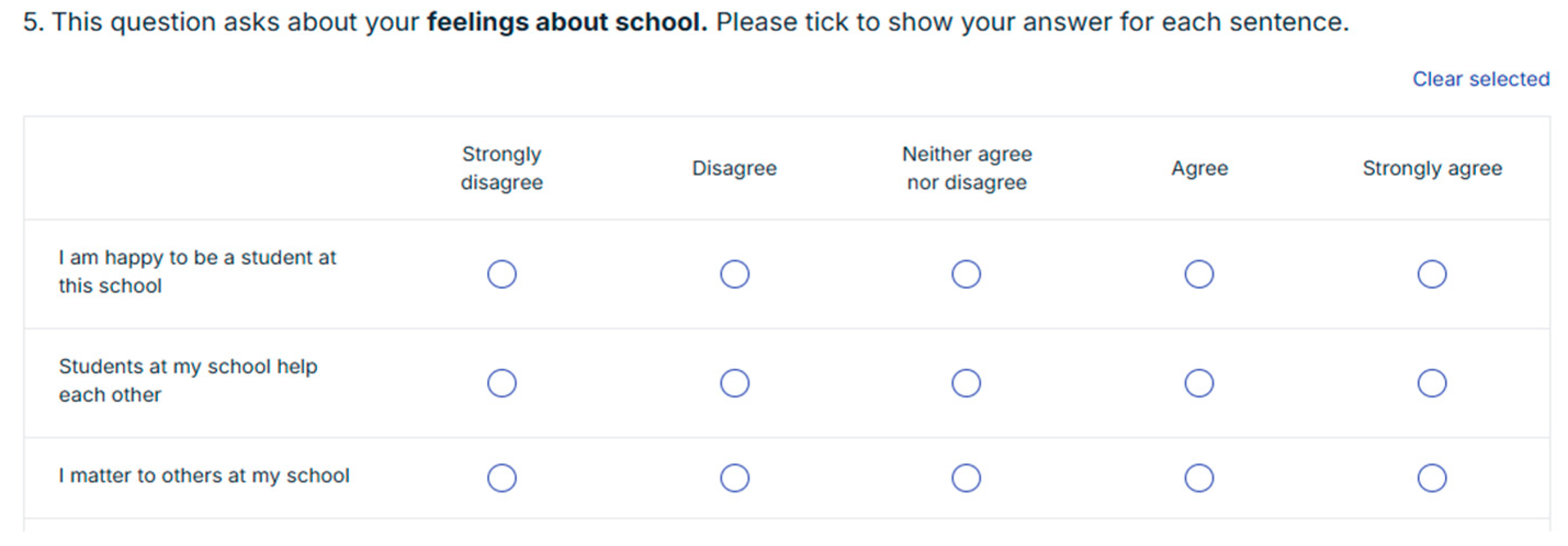
The questionnaire design organized statements into clusters underneath an overarching topic. As the survey contains multiple sections, it was important to orient respondents. The statements helped clarify whether they were being asked to comment on peers, school or their individual identity, for instance, making the ‘pragmatic meaning’ (Schwarz, 1999) clear. Figure 2 contains an example of an opening statement framing a cluster of questions.
Our Likert rating scale contained 5, verbally anchored response options: strongly disagree; disagree; neither agree nor disagree; agree; strongly agree (see Figure 2). This format is found to improve test–retest reliability (Weng, 2004); an important feature for a tool to potentially evaluate the impact of supportive interventions. Given the young age of the respondents and the number of items to respond to, reducing cognitive load was an important consideration, and this is supported by consistency and verbally labelled response options (Artino & Gehlbach, 2012; Sue & Ritter, 2007).
The final section of the survey contained 4 self-report questions about gender/gender identity, religion, ethnicity, and membership of key social groups (young carer, care leaver, neurodivergent, refugee, asylum seeker and having an impairment or disability). This was included at the end so that students felt more comfortable. We used standardized gender, ethnicity and religion categories from the Office for National Statistics (ONS) and the option to tick ‘I don’t want to answer this question’ to maximize the likelihood that young people felt comfortable answering these questions (Sue & Ritter, 2007). The question on gender offered the following response options: female (cisgender); male (cisgender); female (transgender); male (transgender); other gender identity; I don’t want to answer.
Our short opening screen asked young people whether they consented and were happy to take the survey to ensure their informed consent. It reminded them that their responses were anonymous and confidential to reduce the risk of social desirability bias (Sue & Ritter, 2007) that might result if students thought their teachers could see their answers.
A draft survey was shared with 4 experts for content validity analysis. Experts included a Psychology Professor with expertise and experience in adolescent mental health and wellbeing; a Diversity, Equity and Belonging Leader in Education and Senior Education Practitioners. Their suggestions informed amendments to the wording to maximize clarity for students.

4.2. Validating the Survey

This section reports the psychometric evaluation of the Connected Belonging Questionnaire (CBQ), with the aim of establishing its suitability as a standardized, group-level measure of secondary-school-aged students’ sense of belonging across school, community, identity and civic domains. Validation focused on three complementary properties: internal consistency, temporal stability (test–retest reliability), and construct validity assessed through exploratory factor analysis (EFA).
Consistent with best practice in scale development (DeVellis & Thorpe, 2022; Boateng et al., 2018), the survey was administered following two pilot administrations with secondary school pupils, which focused on item stability and refinement, and was subsequently delivered to a substantially larger secondary school sample.
The validation proceeded in three stages. First, the CBQ was administered twice as a pilot instrument to secondary school students, allowing assessment of internal consistency and item stability across time. Second, temporal stability was evaluated using test–retest intraclass correlation coefficients (ICCs) in matched pilot samples. Third, following item refinement informed by these pilot analyses, construct validity was evaluated through EFA of the revised instrument administered to a new, larger sample.

4.3. Internal Consistency

Internal consistency was assessed using Cronbach’s alpha (α) for each of the eight theoretically specified Connected Belonging domains (school, social identity, peers, family/cultural group, community, place attachment, citizenship, and individual identity), as well as for the total scale. Coefficients were interpreted using established guidelines (George & Mallery, 2016, see Table 3) and considered appropriate for group-level research and policy use, rather than individual diagnosis.

5. Results

This section details the results of the analyses of the pilot data.

5.1. Pilot Internal Consistency and Item Refinement

For this survey, the initial 64-item pilot instrument demonstrated excellent overall internal consistency (α = 0.956), alongside variation at the domain level reflecting differences in conceptual breadth across belonging domains (see Table 4). Domains capturing more immediate and relational experiences of belonging (e.g., school belonging and individual identity) performed strongest, whereas domains designed to capture structurally mediated and intersectional experiences (e.g., social identity, family and cultural belonging, and place attachment) showed comparatively lower alpha values.
Item–total statistics from both pilot administrations identified several items with weak or negative corrected item–total correlations. These items were reviewed for redundancy, ambiguity, or misalignment with secondary school students’ reported experiences and were either removed or reworded. Following refinement informed by pilot reliability and test–retest findings, the revised secondary school instrument comprised 52 items, with the total scale remaining excellent (α = 0.953), indicating that item reduction did not compromise reliability.

5.2. Test–Retest Reliability (Temporal Stability)

Temporal stability was also assessed using test–retest intraclass correlation coefficients (ICC) in matched samples (n = 257). Two-way mixed-effects models with absolute agreement were estimated, treating time as a fixed effect and participants as random (Koo & Li, 2016). ICC values were interpreted as poor (<0.50), moderate (0.50–0.75), good (0.75–0.90), or excellent (>0.90).
Overall, ICCs indicated moderate to good temporal stability across pilot samples (see Table 5). This pattern supports the interpretation of the CBQ as measuring relatively stable perceptions of belonging, while also allowing for expected developmental and contextual change between administrations.

5.3. Exploratory Factor Analysis

Exploratory factor analysis (EFA) was conducted on the revised secondary school Connected Belonging Questionnaire to examine its underlying structure and to inform final scale composition. Principal Axis Factoring with Promax rotation was used to allow for correlated dimensions of belonging. Sampling adequacy was excellent (KMO = 0.963), and Bartlett’s test of sphericity was significant (χ2(1326) = 22,525.82, p < 0.001), confirming the suitability of the data for factor analysis.
Eight factors exceeded the Kaiser criterion (eigenvalue > 1) and were retained. This is consistent with the instrument’s theoretically specified eight domains. Inspection of the scree plot and the rotated pattern matrix further supported the interpretability and stability of an eight-factor solution. Given well-documented concerns that the eigenvalue-greater-than-one rule can overestimate factor numbers, factor retention was guided by a combination of statistical criteria, theoretical coherence, and interpretability rather than eigenvalues alone (Clark & Watson, 2019; Fabrigar et al., 1999).
Table 6 presents the exploratory factor analysis (EFA) results, showing the empirically derived factor structure with items loading at or above the pre-specified threshold (≥0.45), alongside internal consistency estimates for each factor. Factors are presented numerically to reflect the statistical output prior to theory-led interpretation and refinement. Across factors, most retained items demonstrated fair to excellent loadings according to Tabachnick and Fidell’s (2007) guidelines, and reliability estimates ranged from acceptable to good for group-level research use. The EFA solution broadly aligned with the original conceptual framework, while also indicating areas of conceptual overlap and boundary blurring between domains, which informed subsequent theory-informed refinement.

6. Discussion

This section starts by exploring the implications of the EFA for the survey design, exploring the research team’s decision-making and how this was guided by the literature. Following this, we discuss the broader lessons learnt from the pilot, highlighting the important potential of this scale for operationalizing an intersectional lens on school belonging to both enable closer attention to young people’s feelings and experiences and to help target and evaluate supportive action with the aim of improving school belonging for all young people.

6.1. Interpreting EFA Results and Theoretical Refinement

Although the EFA provided strong empirical guidance, it was not treated as a purely mechanical decision rule. Several items loaded onto factors that differed from their original conceptual placement. For example, items relating to respect and recognition within school contexts loaded alongside peer-focused items, which shows the relational nature of belonging experiences in adolescence (Brown et al., 2025b). In such cases, items were reallocated to factors where their substantive meaning was strongest, rather than strictly following statistical clustering. This approach reflects established recommendations that EFA should be used as a tool for theory refinement rather than theory replacement. In addition, in this study, EFA was used as an exploratory, data-informed aid to examine the items’ internal structure and support scale refinement (e.g., identifying meaningful item groupings and underperforming items), rather than as a basis for replacing substantive theory or investigator judgment (DeVellis & Thorpe, 2022; Tavakol & Wetzel, 2020). As recommended in the measurement literature, the factor structure suggested by EFA should be treated as provisional and, where feasible, evaluated in subsequent work using confirmatory factor analysis (CFA) (ideally in an independent sample) to test whether the hypothesized dimensionality fits the data (Boateng et al., 2018; Tavakol & Wetzel, 2020)
In addition, a small number of items with loadings below the threshold were retained or reinstated within factors on theoretical grounds. These items captured dimensions central to the CBQ’s purpose, such as experiences of marginalization, cultural recognition, civic opportunity, and identity affirmation, which are known to exhibit greater response heterogeneity and lower internal homogeneity. Prior psychometric literature cautions that when measuring broad, socially complex constructs (e.g., stigma, exclusion, identity, civic orientation), item sets may be heterogeneous, which can result in modest internal consistency and more complex factor patterns. Importantly, efforts to maximize internal consistency by narrowing item content can compromise construct validity by reducing content coverage.
Table 7 presents the proposed final factor structure of the Connected Belonging Questionnaire, integrating items supported by the exploratory factor analysis with items retained or repositioned on theoretical grounds. Items marked with an asterisk (*) indicate statements included on substantive and conceptual grounds rather than solely on the basis of their highest statistical loading. This two-stage presentation enhances transparency by distinguishing between the factor structure suggested by the data and the theory-informed decisions underpinning the proposed final instrument.
As item groupings in Table 7 were refined to preserve conceptual coherence and content validity rather than to optimize internal consistency, reliability coefficients are not reported for this configuration. Reporting such estimates at this stage would risk misrepresenting the psychometric status of the instrument, as the proposed structure has not yet been subjected to confirmatory testing.
Retaining theoretically meaningful items despite weaker loadings is widely accepted in early-stage scale development, particularly when the aim is to capture complex, multidimensional social constructs rather than narrow latent traits. Methodologists emphasize that over-reliance on factor loadings can lead to construct underrepresentation and loss of conceptual breadth (Clark & Watson, 2019). Accordingly, EFA results were not applied mechanically (e.g., by deleting items solely based on simple loading rules), because some theoretically meaningful constructs may show weak or cross-loadings. This is consistent with Clark and Watson’s (2019) discussion of ‘orphan’ and ‘interstitial’ constructs, where item retention decisions should remain guided by substantive theory and content coverage. (Clark & Watson, 2019). Therefore, the final CBQ structure prioritizes content validity, theoretical coherence, and applicability to policy-relevant research on belonging and marginalization, alongside acceptable psychometric performance. The resulting eight-factor solution reflects a balanced integration of empirical evidence and conceptual intent, supporting the use of the CBQ as a multidimensional measure of connected belonging among secondary school students.

6.2. Operationalizing an Intersectional and a Spatial Lens

Exploratory Factor analysis identified eight underlying concepts in the survey data, aligning very closely with our eight domains of Connected Belonging. Four of these factors reflected a slightly different conceptual focus from our original conception of the domains that we explore in this section.
Firstly, while our measures targeting social identity originally targeted a general sense of feeling accepted, respected and fitting in, factor analysis clustered measures specifically relating to experiences of marginalization and exclusion. Given that recent study findings suggest that a lack of ‘perceived social acceptance’ may be a contributor to mental health disparities between NEETs and non-NEETs (Chen & Chan, 2025, p. 1011), the survey’s ability to measure young people’s subjective sense of marginalization and social exclusion would be valuable. As an intersectional lens is enabled by the cohort demographic data and self-report survey items regarding respondents’ ethnicity, religion, gender, sexuality, special educational needs and socio-economic background, we felt a clear focus on experience of marginalization to be preferable to a cluster of questions which explore experiences of both inclusion and marginalization, potentially leading to conceptual confusion. Moving beyond viewing specific groups as ‘marginalized’ or not, to focus on how individuals perceive their lives in relation to others and cultural ideals and norms, whether they “experience their lives as marginalized” (Mowat, 2015, p. 470) may help in targeting supportive actions to ameliorate a low sense of school belonging. We have therefore retained questions with generic statements about people ‘like me’ to support an intersectional lens while ensuring the surveys’ applicability to all respondents. Following this initial validation, Social Inclusion Identity remains a provisional domain that we aim to strengthen in the following iterations through testing existing and additional items with additional cohorts before finalizing the domain name.
Given young people’s critiques at the consultation, that schools focus on too narrow a range of students and prioritize a ‘standard’ and or idealized student, we hope this survey could foster more critical reflection in institutions as to the policies, structures and approaches which may be contributing to a sense of marginalization. While the survey is anonymous, so identifying individuals would be neither possible nor desirable, this cluster of questions has potential for informing schools about groups of their young people who would benefit from proactive intervention to support.
A second cluster of questions, which underwent a narrowed focus following EFA were those focusing on Family and cultural identity. Where our original conceptions saw cultural identity as closely allied to family identity, the measures with strong conceptual coherence within this category were those focusing on family, not culture. With demographic data supporting disaggregation to consider the experiences of respondents from different ethnic, racial and socio-economic groups, there was already redundancy in attempting to also consider this through the family and culture domain statements themselves. As this Factor now contains insufficient items, the next iteration will revise wording and introduce amended items to test conceptual coherence, seeking to develop a robust factor that more comprehensively captures the conceptual breadth by including the dimension of shared values or cultural dimension.
Finally, conceptions of Place Attachment and Local Community Attachment were subtly and helpfully reframed by the process of exploratory factor analysis. Originally, place attachment was conceptualized as a distinct category, with questions exploring their feelings of attachment to different places within and outside school. Local community attachment was specifically focused on their sense of fitting in and being part of their local area. EFA returned a slightly different structure. While questions relating to place attachment in school mapped onto the School Identity question cluster, EFA highlighted two distinct concepts and related clusters of questions across the two principles. Firstly, a cluster of questions relating to Local Community Place attachment enabled a focus on young people feeling a sense of acceptance and attachment in the local area. A second cluster of questions focused on Community Participation. This cluster related to participating in communities and activities both outside and inside school. This distinction between place attachment and participation was felt to be important to retain, as it distinguishes between behaviours and feelings more clearly. Given that young people who engage in extracurricular activities tend to report higher levels of school belonging and that the well-being of young people from socioeconomically disadvantaged backgrounds appears to be especially strengthened by structured leisure time (O’Donnell et al., 2024), the survey’s capacity to focus specifically on activity participation as a key component in belonging is a strength.
The results of the exploratory factor analysis suggest significant potential for the Connected Belonging survey to operationalize an intersectional lens on school belonging that may support NEET prevention within schools. Schools participating in the pilot felt the framework to be highly valuable. Having become accustomed to scrutinizing their students’ academic attainment in relation to their social demographic data, considering their sense of well-being and belonging in terms of these was not something they had done before.
With recent research indicating a close interrelation between connectedness, belonging and engagement and the importance of intervention approaches that address interpersonal and environmental strategies (Davies et al., 2025), Connected Belonging offers a valuable starting point for designing, tailoring and monitoring the impact of interventions. With young people at our engagement event highlighting the significance of their connectedness to staff not just in school but also within the broader system, the conceptual framework of Connected Belonging supports consideration of this, factoring in the importance of their place in the community and wider world, as they prepare for their steps beyond school and into further education, employment or training.

6.3. Future Directions for Scale Development and Validation

Further validation is necessary to address the inconsistencies in Factor 7 and strengthen Factor 8, which requires additional items to reflect the conceptual breadth of the factor title. This testing of item refinements arising from the EFA is especially important for these two domains, which capture structurally mediated and intersectional experiences, such as marginalization, social identity and family–cultural belonging, which are theoretically central but psychometrically more complex.
A key priority for further research is therefore further piloting with larger and more diverse samples to enable confirmatory factor analysis (CFA). While exploratory factor analysis provided strong initial support for an eight-factor structure aligned with the Connected Belonging framework, CFA conducted in an independent sample is required to formally test the stability, dimensionality and fit of the proposed model. This will allow stronger claims to be made regarding construct validity and will support the refinement of factor boundaries where conceptual overlap is expected, given the relational nature of belonging.
A second future direction concerns the potential development of age-phase adaptations and contextual versions of the tool. While the current instrument was designed for secondary school settings, future work could explore adaptations for post-16 settings, alternative provision, or transitions between school and further education or training. Such work would strengthen the tool’s relevance across the points at which NEET risk often intensifies and would allow examination of whether particular belonging domains shift in salience across developmental and institutional contexts.

6.4. Implications for Practice, Policy and Systems

The CBQ has significant potential as a group-level diagnostic and evaluative tool for schools, multi-academy trusts and local authorities seeking to strengthen early prevention of disengagement. Its primary contribution lies in providing systematic insight into young people’s lived experiences of belonging, recognition and exclusion, which are not visible in administrative datasets but are known to precede later disengagement. Used alongside existing attendance, attainment and safeguarding data, the CBQ can help education systems move beyond deficit-based risk profiling towards a more relational and identity-attuned understanding of vulnerability.
However, its use raises important practical considerations. Schools are currently experiencing substantial data-collection fatigue, and any additional tool must minimize burden and be clearly linked to action. The CBQ is designed to be administered periodically rather than continuously, and future work should explore optimal administration intervals that balance responsiveness with feasibility. Importantly, the tool is not intended to replace professional judgement or relational knowledge of pupils, but to complement these by identifying patterns that may otherwise remain hidden, particularly for marginalized groups whose disengagement is normalized or overlooked.
There is also scope to explore technical solutions that enable schools to have greater ownership and control over data use, including the development of a standalone digital platform. Such a platform could allow schools to visualize group-level trends, compare domains over time, and evaluate the impact of targeted interventions, while avoiding unnecessary data duplication. At the same time, where there are small numbers of certain groups of students, the challenge of protecting student anonymity is central. The quality and honesty of responses depend on young people’s trust that their data will not be used punitively or to identify individuals. Future development must therefore prioritize privacy-by-design approaches, aggregation thresholds, and clear communication with students and families about how data are used. Small numbers of students in particular groups will limit statistical analysis for individual school settings, but may become more valuable in relation to certain minority groups for reporting at Local Authority or Regional levels.
Linking CBQ findings to existing held data also requires careful governance. While triangulation with demographic or contextual information can enhance intersectional analysis, small numbers of pupils from particular groups in individual schools may limit the ability to draw reliable conclusions. This is particularly relevant for groups such as Gypsy, Roma and Traveller pupils, looked-after children, refugee and asylum seekers, or those from certain ethnic or religious minority groups. In such cases, findings should be interpreted cautiously and at appropriate levels of aggregation, for example, across clusters of schools or local areas, rather than at the individual school level.

6.5. Limitations

Several limitations of the present study should be acknowledged. First, while the tool was piloted in both rural and urban settings, the samples were geographically limited, and further validation is needed across regions with different demographic, cultural and institutional characteristics. Second, although the CBQ enables intersectional analysis in principle, small subgroup sizes may constrain statistical power in practice, reinforcing the need for cautious interpretation and complementary qualitative inquiry. Third, as a self-report instrument, the CBQ captures perceptions rather than objective conditions, though these perceptions are precisely what theory and evidence suggest matter for engagement and well-being. Fourth, factors 7 and 8 require further development and testing to ensure adequate items for robust conclusions to be drawn.
Finally, it is important to emphasize that no survey can substitute for close relationships, dialogue and sustained engagement with young people. The CBQ is not a diagnostic tool for individuals, nor a replacement for pastoral care or youth voice practices. Rather, it offers an additional mechanism through which schools and systems can listen more systematically to young people’s experiences, identify relational and identity-based risks earlier, and enhance their capacity to respond thoughtfully and inclusively.

7. Conclusions

This paper has presented the development and initial validation of the Connected Belonging Questionnaire, a youth self-report measure designed to operationalize an intersectional, relational and identity-informed model of school belonging. Grounded in young people’s lived experiences and interdisciplinary theory, the CBQ addresses a critical gap in current educational measurement by capturing dimensions of belonging that are known to shape engagement and NEET trajectories but remain largely invisible within administrative data systems.
The findings demonstrate that it is both conceptually and empirically feasible to measure belonging across multiple social domains, including those related to identity, marginalization, place and citizenship. The exploratory factor analysis broadly supported the proposed eight-domain framework, while also highlighting the inherently relational and overlapping nature of belonging experiences in adolescence. By prioritizing content validity and theoretical coherence alongside psychometric robustness, the CBQ advances a model of measurement suited to complex social phenomena rather than narrow latent traits.
Importantly, the CBQ is intended for group-level use, supporting schools and systems to identify patterns of inclusion and exclusion, to inform preventive action, and to evaluate the impact of relational and structural interventions. In the context of growing investment in predictive NEET dashboards and early-warning systems, the tool offers a complementary perspective that centers young people’s voices and experiences, strengthening the ethical and practical foundations of prevention.
At the same time, the study underscores the need for careful, staged development, further validation, and responsible implementation. Belonging cannot be reduced to a metric, and measurement must remain anchored in trust, anonymity and meaningful response. Used thoughtfully, the Connected Belonging Questionnaire has the potential to support a shift in how schools and policymakers understand risk, moving from surveillance to recognition and from deficit to connection, in efforts to reduce disengagement and support young people’s trajectories into education, employment and training.

Author Contributions

Conceptualization, A.D. and C.B.; methodology, A.D. and Y.D.O.; validation, Y.D.O.; formal analysis, A.D. and Y.D.O.; investigation, A.D. and Y.D.O.; resources, A.D.; data curation, Y.D.O.; writing—original draft preparation, A.D., C.B. and Y.D.O.; writing—review and editing, A.D., C.B. and Y.D.O.; project administration, A.D.; funding acquisition, A.D. All authors have read and agreed to the published version of the manuscript.

Funding

This research received no external funding.

Institutional Review Board Statement

The study was approved by the Institutional Review Board of The University of Bath (protocol code: 2045-5706 on 4 June 2024).

Informed Consent Statement

Informed consent was obtained from all subjects involved in the study.

Data Availability Statement

Data are available on request from the corresponding author.

Conflicts of Interest

The authors declare no conflicts of interest.

Abbreviations

The following abbreviations are used in this manuscript:
CBQConnected Belonging Questionnaire
NEETNot in education, employment or training
EETEducation, employment or training
SENDSpecial educational needs and disabilities

Notes

1
See Transform Family View Platform, Somerset Council, contact joanne.harris@somerset.gov.uk.
2
See the Careers and Enterprise Company’s Presentation on RONI pilot to DfE. Contact the corresponding author for further information.

References

  1. Allen, K., Kern, M. L., Vella-Brodrick, D., Hattie, J., & Waters, L. (2018). What schools need to know about fostering school belonging: A meta-analysis. Educational Psychology Review, 30, 1–34. [Google Scholar] [CrossRef]
  2. Allen, K.-A. (2025). School belonging: Evidence, experts, and everyday gaps. Educational Psychology Review, 37(3), 84. [Google Scholar] [CrossRef]
  3. Allen, K.-A., Kern, M. L., Rozek, C. S., McInerney, D. M., & Slavich, G. M. (2021). Belonging: A review of conceptual issues, an integrative framework, and directions for future research. Australian Journal of Psychology, 73(1), 87–102. [Google Scholar] [CrossRef] [PubMed]
  4. Artino, A. R., & Gehlbach, H. (2012). AM last page. Avoiding four visual-design pitfalls in survey development. Academic Medicine, 87(10), 1452. [Google Scholar] [CrossRef]
  5. Bauger, L., & Hagen, S. (2025). Loneliness in young adults: The role of NEET status and social determinants in Norway. European Journal of Public Health, 35, 2. [Google Scholar] [CrossRef]
  6. Boateng, G. O., Neilands, T. B., Frongillo, E. A., Melgar-Quiñonez, H. R., & Young, S. L. (2018). Best practices for developing and validating scales for health, social, and behavioral research: A primer. Frontiers in Public Health, 6, 149. [Google Scholar] [CrossRef]
  7. Brezicha, K. F., & Miranda, C. P. (2022). Actions speak louder than words: Examining school practices that support immigrant students’ feelings of belonging. Equity & Excellence in Education, 55(1–2), 133–147. [Google Scholar] [CrossRef]
  8. Broschinski, S., & Feldhaus, M. (2025). Family social capital and NEET experiences in the transition from school to work: A longitudinal study from Germany. YOUNG. [Google Scholar] [CrossRef]
  9. Brown, C. (2015). The educational binds of poverty. In Educational binds of poverty (1st ed., pp. 21–41). Routledge. [Google Scholar] [CrossRef]
  10. Brown, C., Douthwaite, A., Costas Batlle, I., & Savvides, N. (2024). A multi-stakeholder analysis of the risks to early school leaving: Comparing young peoples’ and educators’ perspectives on five categories of risk. Journal of Youth Studies, 27(3), 414–438. [Google Scholar] [CrossRef]
  11. Brown, C., Douthwaite, A., Donnelly, M., & Olaniyan, Y. D. (2025a). Resilience through belonging: Schools’ role in promoting the mental health and well-being of children and young people. Behavioral Sciences, 15(10), 1421. [Google Scholar] [CrossRef]
  12. Brown, C., Douthwaite, A., Donnelly, M., & Shay, M. (2025b). Connected Belonging: A relational and identity-based approach to schools’ role in promoting child wellbeing. British Educational Research Journal, 51, 1927–1965. [Google Scholar] [CrossRef]
  13. Brown, C., Rueda, P. O., Batlle, I. C., & Sallán, J. G. (2021). Introduction to the special issue: A conceptual framework for researching the risks to early leaving. Journal of Education and Work, 34(7–8), 723–739. [Google Scholar] [CrossRef]
  14. Brown, C., & Shay, M. (2021). From resilience to wellbeing: Identity-building as an alternative framework for schools’ role in promoting children’s mental health. Review of Education, 9(2), 599–634. [Google Scholar] [CrossRef]
  15. Chen, X., & Chan, R. C. H. (2025). Loss of material, personal, and social resources and their impact on mental health among young people not in employment, education, or training. Journal of Adolescence, 97, 2104–2114. [Google Scholar] [CrossRef] [PubMed]
  16. Cheryan, S., Plaut, V. C., Davies, P. G., & Steele, C. M. (2009). Ambient belonging: How stereotypical cues impact gender participation in computer science. Journal of Personality and Social Psychology, 97(6), 1045–1060. [Google Scholar] [CrossRef] [PubMed]
  17. Clark, L. A., & Watson, D. (2019). Constructing validity: New developments in creating objective measuring instruments. Psychological Assessment, 31(12), 1412–1427. [Google Scholar] [CrossRef]
  18. Crenshaw, K. (1991). Mapping the margins: Intersectionality, identity politics, and violence against women of color. Stanford Law Review, 43(6), 1241–1299. [Google Scholar] [CrossRef]
  19. Davies, C. A., Cordier, R., Graham, P., Littlefair, D., Speyer, R., & Melo, D. (2025). Interventions to improve connectedness, belonging, and engagement in secondary schools: A systematic review and meta-analysis. Education Sciences, 15(5), 582. [Google Scholar] [CrossRef]
  20. Deighton, J., Tymms, P., Vostanis, P., Belsky, J., Fonagy, P., Brown, A., Martin, A., Patalay, P., & Wolpert, W. (2013). The development of a school-based measure of child mental health. Journal of Psychoeducational Assessment, 31, 247. [Google Scholar] [CrossRef]
  21. Department for Education. (2023). Participation of young people: Statutory guidance for local authorities. DfE. [Google Scholar]
  22. Department for Education. (2025). Local area risk and prevention of NEET: Data dashboards and targeted support guidance. DfE. [Google Scholar]
  23. DeVellis, R. F., & Thorpe, C. T. (2022). Scale development: Theory and applications (5th ed.). SAGE Publications, Inc. [Google Scholar]
  24. Dotterer, A. M., McHale, S. M., & Crouter, A. C. (2009). Sociocultural factors and school engagement among African American youth: The roles of racial discrimination, racial socialization, and ethnic identity. Applied Developmental Science, 13(2), 61–73. [Google Scholar] [CrossRef]
  25. Eccles, J. (2009). Who am I and what am I going to do with my life? Personal and collective identities as motivators of action. Educational Psychologist, 44(2), 78–89. [Google Scholar] [CrossRef]
  26. Erdoğdu, M. Y. (2025). Development of a Place Attachment Scale for Adolescents (PASA) and determination of its psychometric qualities. BMC Psychiatry, 13, 120. [Google Scholar] [CrossRef] [PubMed]
  27. Escalera-Reyes, J. (2020). Place attachment, feeling of belonging and collective identity in socio-ecological systems: Study case of pegalajar (Andalusia-Spain). Sustainability, 12(8), 3388. [Google Scholar] [CrossRef]
  28. Fabrigar, L. R., Wegener, D. T., MacCallum, R. C., & Strahan, E. J. (1999). Evaluating the use of exploratory factor analysis in psychological research. Psychological Methods, 4(3), 272–299. [Google Scholar] [CrossRef]
  29. Fredricks, J. A., Reschly, A. L., & Christenson, S. (Eds.). (2019). Handbook of student engagement interventions: Working with disengaged students. Elsevier. [Google Scholar]
  30. Gehlbach, H. (2015). Seven survey sins. The Journal of Early Adolescence, 35(5–6), 883–897. [Google Scholar] [CrossRef]
  31. George, D., & Mallery, P. (2016). Frequencies. In IBM SPSS statistics 23 step by step (pp. 115–125). Routledge. [Google Scholar]
  32. Goodenow, C. (1993). The psychological sense of school membership among adolescents: Scale development and educational correlates. Psychology in the Schools, 30, 79–90. [Google Scholar] [CrossRef]
  33. Greater Manchester Combined Authority. (2024). NEET and risk of NEET: Predictive analytics and targeted support toolkit. GMCA. [Google Scholar]
  34. Hagerty, B. M. K., & Patusky, K. (1995). Developing a measure of sense of belonging. Nursing Research, 44(1), 9–13. [Google Scholar] [CrossRef]
  35. Impetus. (2025). Youth jobs gap: Exploring compound disadvantage. Impetus. Available online: https://impetus-org.files.svdcdn.com/production/assets/publications/Report/Impetus_YouthJobsGap_ExploringCompoundDisadvantage.pdf?dm=1747140359 (accessed on 6 April 2026).
  36. Johnson, R. M. (2026). Reframing belonging in higher education: An intersectional ecological model for research, policy, and practice. Educational Psychology Review, 38, 1. [Google Scholar] [CrossRef]
  37. Karcher, M. J., & Sass, D. (2010). A multicultural assessment of adolescent connectedness: Testing measurement invariance across gender and ethnicity. Journal of Counseling Psychology, 57(3), 274–289. [Google Scholar] [CrossRef]
  38. Koo, T. K., & Li, M. Y. (2016). A guideline of selecting and reporting intraclass correlation coefficients for reliability research. Journal of Chiropractic Medicine, 15(2), 155–163. [Google Scholar] [CrossRef]
  39. Kustatscher, M. (2017). The emotional geographies of belonging: Children’s intersectional identities in primary school. Children’s Geographies, 15(1), 65–79. [Google Scholar] [CrossRef]
  40. Kuttner, P. J. (2023). The right to belong in school: A critical, transdisciplinary conceptualization of school belonging. AERA Open, 9. [Google Scholar] [CrossRef]
  41. Lee, R. M., & Robbins, S. B. (1998). The Relationship between social connectedness and anxiety, self-esteem, and social identity. Journal of Counseling Psychology, 45, 338–345. [Google Scholar] [CrossRef]
  42. Li, M., Frieze, I. H., & Cheong, J. (2014). Psychological Place Attachment Scale (PPAS) [Database record]. APA PsycTests. [Google Scholar] [CrossRef]
  43. Li, M., Frieze, I. H., Nokes-Malach, T., & Cheong, J. (2013). Do friends always help your studies? Mediating processes between social relations and academic motivation. Social Psychology of Education, 16, 129–149. [Google Scholar] [CrossRef]
  44. Lohmeier, J. H., & Lee, S. W. (2011). A school connectedness scale for use with adolescents. Educational Research and Evaluation, 17(2), 85–95. [Google Scholar] [CrossRef]
  45. Macdonald, M. M. (2023). Using a mosaic-based approach to construct children’s understanding of safe space in school. Educational and Child Psychology, 40(3), 113–130. [Google Scholar] [CrossRef]
  46. Malone, G. P., Pillow, D. R., & Osman, A. (2012). The general belongingness scale (GBS): Assessing achieved belongingness. Personality and Individual Differences, 52(3), 311–316. [Google Scholar] [CrossRef]
  47. McGillicuddy, D., & Machowska-Kosciak, M. (2021). Children’s right to belong?—The Psychosocial impact of pedagogy and peer interaction on minority ethnic children’s negotiation of academic and social identities in school. Education Sciences, 11(8), 383. [Google Scholar] [CrossRef]
  48. Mellinger, C., Fritzson, A., Park, B., & Dimidjian, S. (2024). Developing the sense of belonging scale and understanding its relationship to loneliness, need to belong, and general well-being outcomes. Journal of Personality Assessment, 106(3), 347–360. [Google Scholar] [CrossRef] [PubMed]
  49. Mowat, J. G. (2015). Towards a new conceptualisation of marginalisation. European Educational Research Journal, 14(5), 454–476. [Google Scholar] [CrossRef]
  50. Mulrooney, H. M., & Kelly, A. F. (2020). The university campus and a sense of belonging: What do students think? New Directions in the Teaching of Natural Sciences, (15). Available online: https://journals.le.ac.uk/index.php/new-directions/article/view/3590/3252 (accessed on 6 April 2026). [CrossRef]
  51. O’Donnell, A. W., Redmond, G., Gardner, A. A., Wang, J. J. J., & Mooney, A. (2024). Extracurricular activity participation, school belonging, and depressed mood: A test of the compensation hypothesis during adolescence. Applied Developmental Science, 28(4), 596–611. [Google Scholar] [CrossRef]
  52. OECD. (2021). OECD PISA global competence and sense of belonging indicators: Technical manual. OECD Publishing. [Google Scholar]
  53. Parker, P., Allen, K.-A., Parker, R., Guo, J., Marsh, H. W., Basarkod, G., & Dicke, T. (2022). School belonging predicts whether an emerging adult will be Not in Education, Employment, or Training (NEET) after school. Journal of Educational Psychology, 114(8), 1881–1894. [Google Scholar] [CrossRef]
  54. Ralston, K., Feng, Z., Everington, D., & Dibben, C. (2016). Do young people not in education, employment or training experience long-term occupational scarring? A longitudinal analysis over 20 years of follow-up. Contemporary Social Science, 11(2–3), 203–221. [Google Scholar] [CrossRef]
  55. Russell, D., Peplau, L. A., & Cutrona, C. E. (1980). The revised UCLA loneliness scale: Concurrent and discriminant validity evidence. Journal of Personality and Social Psychology, 39(3), 472–480. [Google Scholar] [CrossRef] [PubMed]
  56. Russell, S. G., & Mantilla-Blanco, P. (2022). Belonging and not belonging: The case of newcomers in diverse US schools. American Journal of Education, 128(4), 617–645. [Google Scholar] [CrossRef]
  57. Schwarz, N. (1999). Self-reports: How the questions shape the answers. The American Psychologist, 54(2), 93–105. [Google Scholar] [CrossRef]
  58. Steenwegen, J., Brummer, E. C., Clycq, N., & Vanhoof, J. (2025). Belonging across contexts: Constructions of belonging for minoritized children in two educational spaces. Children’s Geographies, 23(4), 450–466. [Google Scholar] [CrossRef]
  59. Sue, V. M., & Ritter, L. A. (2007). Writing survey questions. In Conducting online surveys (pp. 38–58). SAGE Publications, Inc. [Google Scholar] [CrossRef]
  60. Tabachnick, B. G., & Fidell, L. S. (2007). Using multivariate statistics (5th ed.). Pearson Education. [Google Scholar]
  61. Tavakol, M., & Wetzel, A. (2020). Factor analysis: A means for theory and instrument development in support of construct validity. International Journal of Medical Education, 11, 245–247. [Google Scholar] [CrossRef]
  62. Umaña-Taylor, A. J., Quintana, S. M., Lee, R. M., Cross, W. E., Jr., Rivas-Drake, D., Schwartz, S. J., Syed, M., Yip, T., Seaton, E., & Ethnic and Racial Identity in the 21st Century Study Group. (2014). Ethnic and racial identity during adolescence and into young adulthood: An integrated conceptualization. Child Development, 85(1), 21–39. [Google Scholar] [CrossRef] [PubMed] [PubMed Central]
  63. UNESCO. (2017). Measurement of global citizenship education. Background Paper on Global Citizenship Education. Available online: https://unesdoc.unesco.org/ark:/48223/pf0000229287 (accessed on 6 April 2026).
  64. Uslu, F., & Gizir, S. (2017). School belonging of adolescents: The role of teacher-student relationships, peer relationships and family involvement. Educational Sciences-Theory & Practice, 17(1), 63–82. [Google Scholar] [CrossRef]
  65. Watts, R., Kettner, H., Geerts, D., Gandy, S., Kartner, L., Mertens, L., Timmermann, C., Nour, M. M., Kaelen, M., Nutt, D., Carhart-Harris, R., & Roseman, L. (2022). The watts connectedness scale: A new scale for measuring a sense of connectedness to self, others, and world. Psychopharmacology, 239(11), 3461–3483. [Google Scholar] [CrossRef] [PubMed] [PubMed Central]
  66. Weng, L.-J. (2004). Impact of the number of response categories and anchor labels on coefficient alpha and test-retest reliability. Educational and Psychological Measurement, 64(6), 956–972. [Google Scholar] [CrossRef]
  67. West Midlands Combined Authority. (2024). Youth NEET risk identification framework: Early warning indicators and locality dashboards. WMCA. [Google Scholar]
  68. What Works Centre for Local Economic Growth. (2024). Local authority case studies on NEET prevention: Data tools, predictive models and targeted interventions. WWG. [Google Scholar]
  69. White, S. C. (2015). Relational wellbeing: A theoretical and operational approach, Bath Papers in International Development and Wellbeing, No. 43, University of Bath, Centre for Development Studies (CDS), Bath. Available online: https://hdl.handle.net/10419/128138 (accessed on 6 April 2026).
  70. Ye, F., & Wallace, T. L. (2014). Psychological sense of school membership scale: Method effects associated with negatively worded items: Method effects associated with negatively worded items. Journal of Psychoeducational Assessment, 32(3), 202–215, (Original work published 2013). [Google Scholar] [CrossRef]
  71. Youth Futures Foundation. (2024). Local area NEET risk modelling and multi-agency dashboards: Evidence review. YFF. [Google Scholar]
Figure 1. The Connected Belonging Model.
Youth 06 00049 g001
Figure 2. Introductory statements to orient respondents to the target concept in a group of questions.
Youth 06 00049 g002
Table 1. Demographic Data collected through the survey.
Demographic Data Supplied Anonymously by Schools for Each Respondent Self-Report Demographic Data Within the Survey by Each Respondent
Free School Meal eligibility Gender
Pupil Premium eligibility Religion
Special Educational Needs
English as a Second/Additional Language
Looked After Child status
Child in Need status
Ethnic Group
Refugee status
Asylum seeker status
Care experience
Young Carer status
Neurodivergence
Impairment of disability
Table 2. The existing scales reviewed, which informed our Connected Belonging measure.
Belonging DomainExisting Scales Informing our Measure
School Identity
Social Identity
Peer Identity
Family Identity
Local Community Identity
Place Attachment
Citizenship Identity
Individual Identity
Table 3. Interpretation of Cronbach’s alpha (George & Mallery, 2016).
Cronbach’s Alpha (α)Interpretation
α > 0.90Excellent
α > 0.80Good
α > 0.70Acceptable
α > 0.60Questionable
α > 0.50Poor
α < 0.50Unacceptable
Table 4. Cronbach’s alpha for secondary CBQ domains before and after item refinement.
Domainα Pilot 1Items Pilot 1α Pilot 2Items Pilot 2
School Identity0.836100.8459
Social identity0.61080.7466
Peer identity0.76680.6885
Family & cultural0.62470.6106
Community0.73370.7286
Place attachment0.64780.7337
Citizenship0.82480.7766
Individual Identity0.86680.8587
Table 5. Test–retest reliability of CBQ domains.
Domain Secondary Pupils ICCn (Secondary)
School Identity0.842236
Social identity0.746223
Peer identity0.676227
Family & cultural0.759222
Community0.775225
Place attachment0.765221
Citizenship0.767219
Individual Identity0.815215
Table 6. Exploratory Factor Analysis Results.
FactorItemsFactor LoadingsInternal Consistency (Alpha)
Factor 1 0.807
Students have a say in how spaces are used at school0.883
Students have a say in decisions about our school0.849
Relationships between students and staff are positive at my school0.632
There is a place I can go to in school where I feel safe0.559
School helps me to see things from other people’s points of view0.536
Students have a say in how spaces are used at school0.883
Factor 2 0.757
I feel I fit in with the people around me 0.841
I matter to others at my school 0.666
I get along well with other students in my class 0.661
I am treated with as much respect as other students in my school 0.601
I feel that people at school understand me as a person 0.600
People like me are treated with as much respect as other people 0.564
I have positive interactions online with other students from my school0.554
My friends and I talk openly with each other about personal things0.535
Students at my school help each other 0.516
I do not feel alone −0.507
Factor 3
I like who I am 0.711
I accept who I am for my qualities and weaknesses 0.693
I feel excited thinking about the future 0.519
I get support to think about future plans that really motivate me 0.511
Factor 4 0.794
I like hanging around where I live/in my neighbourhood 0.677
I feel proud of where I live 0.657
I feel safe in the area where I live 0.588
There are places in my area for me and my friends to be together 0.492
I don’t feel like I belong in the area where I live 0.473
Factor 5 0.70
I am part of a club, team or group out of school 0.865
I get involved in activities and events where I live 0.698
I am very included in lots of activities at my school 0.470
Factor 6 0.660
It is important to talk about world problems in school (e.g., climate change, wars, inequality, poverty) 0.713
I’ve learned about ways I can make a difference on world problems (e.g., climate change, wars, inequality, poverty) 0.559
Factor 7 0.521
It is hard for people like me to be accepted at my school 0.625
In my school, people from families like mine are not treated the same as other families0.535
I have no sense of togetherness with my peers 0.473
Factor 8 0.802
I have close bonds with my family 0.680
My family understand me 0.582
Table 7. Proposed final factor structure for the CBQ.
FactorHeading and ItemsFactor Loadings
1School Belonging (Institutional voice, safety and support)
Students have a say in how spaces are used at school * PLACE0.883
Students have a say in decisions about our school0.849
Relationships between students and staff are positive at my school0.632
There is a place I can go to in school where I feel safe * PLACE0.559
2Peer identity
I feel I fit in with the people around me * SOCIAL 0.841
I matter to others at my school * SCHOOL0.666
I get along well with other students in my class 0.661
I am treated with as much respect as other students in my school * SCHOOL0.601
I feel that people at school understand me as a person * SOCIAL 0.600
People like me are treated with as much respect as other people * SOCIAL IDENTITY0.564
I have positive interactions online with other students from my school 0.554
My friends and I talk openly with each other about personal things 0.535
Students at my school help each other * SCHOOL0.516
I do not feel alone −0.507
3Individual identity
I accept who I am for my qualities and weaknesses 0.693
I like who I am 0.711
I get support to think about future plans that really motivate me 0.519
I feel excited thinking about the future * CITIZENSHIP0.511
4Local Place Attachment
I like hanging around where I live/in my neighbourhood * COMMUNITY0.677
I feel proud of where I live * COMMUNITY0.657
I feel safe in the area where I live 0.598
There are places in my area for me and my friends to be together 0.492
I don’t feel like I belong in the area where I live * COMMUNITY0.473
5Community Participation (in and out of school)
I am part of a club, team or group out of school 0.865
I get involved in activities and events where I live 0.968
I am very included in lots of activities at my school * SCHOOL0.470
6Citizenship Identity
It is important to talk about world problems in school (e.g., climate change, wars, inequality, poverty) 0.713
I’ve learned about ways I can make a difference on world problems (e.g., climate changes, wars, inequality, poverty) 0.559
School gives me opportunities to volunteer, improve the world or make a difference to other people’s lives * CITIZENSHIP0.451
7Social Inclusion Identity (Marginalization/exclusion perception)
It is hard for people like me to be accepted at my school 0.625
In my school, people from families like mine are not treated the same * FAMILY 0.535
I have no sense of togetherness with my peers * PEER0.473
8Family Culture Identity
I have close bonds with my family 0.680
My family understand me0.582
* Items marked with an asterisk (*) indicate statements that were retained or repositioned on theoretical grounds rather than solely on the basis of their highest exploratory factor loading. These items originated from different a priori domains in the original questionnaire (and were reassigned where their substantive meaning aligned more closely with the emergent factor interpretation. For example, items initially framed under School or Social Identity were incorporated into Peer Identity, where they reflected interpersonal recognition and peer belonging, while selected Community and Place items were retained within Place Attachment to preserve the spatial and affective dimensions of belonging.
Disclaimer/Publisher’s Note: The statements, opinions and data contained in all publications are solely those of the individual author(s) and contributor(s) and not of MDPI and/or the editor(s). MDPI and/or the editor(s) disclaim responsibility for any injury to people or property resulting from any ideas, methods, instructions or products referred to in the content.