Article

Forecasting Energy Storage Requirements for Energy Complex with Solar Power Plant and Battery Energy Storage System

by
Volodymyr Derii
1,
Artur Zaporozhets
1,2,3,*,
Tetiana Nechaieva
1 and
Yaroslav Havrylenko
1
1
Department of Forecasting the Electric Power Complex Development, General Energy Institute of National Academy of Sciences of Ukraine, 03150 Kyiv, Ukraine
2
International Institute for Applied Systems Analysis, 2361 Laxenburg, Austria
3
Green Technology Research Center, Yuan Ze University, Taoyuan 320, Taiwan
*
Author to whom correspondence should be addressed.
Solar 2026, 6(3), 22; https://doi.org/10.3390/solar6030022
Submission received: 24 March 2026 / Revised: 19 April 2026 / Accepted: 24 April 2026 / Published: 28 April 2026
(This article belongs to the Section Solar Energy Systems and Integration)

Abstract

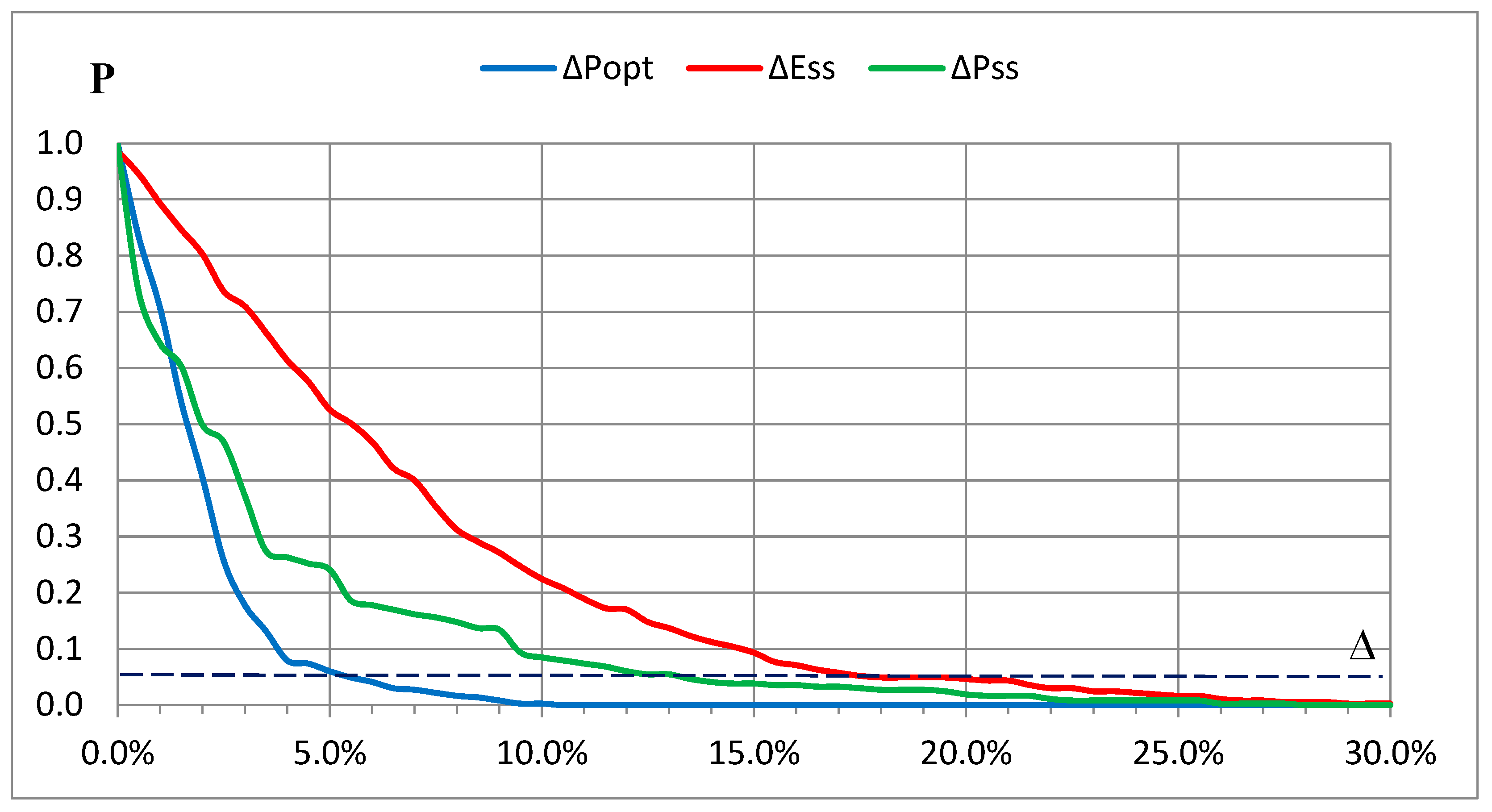
Despite the many advantages of renewable energy sources, the stochastic nature of their generation creates a mismatch between electricity production and demand timing. Without appropriate storage solutions, surplus energy remains unused. Although battery energy storage systems are increasingly applied to improve the flexibility and reliability of power systems, there is still a research gap in forecasting the optimal power and storage capacity of solar power plant–battery energy storage system energy complexes operating in parallel with the grid under short-term forecasting conditions, particularly when economic aspects such as partial leasing of storage capacity are considered. Therefore, the development of energy complexes based on solar power plants with the integration of battery energy storage systems, as well as the development of corresponding computational models, becomes critical for ensuring the stability, flexibility, reliability, and efficiency of power systems. Battery energy storage systems are widely used due to their availability, high response speed, significant energy density, and sufficient power capacity; however, their cost remains relatively high. This paper proposes a methodology and a calculation model for determining the optimal forecasted capacity and the rational storage requirements of an energy complex consisting of a solar power plant and a battery energy storage system operating in parallel with the grid at constant power under short-term forecasting conditions (day-ahead or longer). The proposed approach makes it possible to minimise the costs of energy companies associated with the short-term lease of part of a battery energy storage system when they do not own one, or, if such a system is available, to lease out its unused capacity and obtain corresponding profits. The validation of the computational model uses a dataset of hourly daily power outputs of solar power plants in the Integrated Power System of Ukraine for 2018. Statistical analysis of the obtained results shows that the probability of occurrence of maximum deviations for the optimal capacity of the energy complex (5.4%), as well as for the power and capacity of the battery energy storage system (13% and 18%, respectively), does not exceed 0.05 during the year. The results confirm that the proposed methodology provides a reliable basis for determining optimal parameters of solar power plant–battery energy storage system energy complexes and enables economically efficient use of storage capacity through short-term leasing mechanisms. Although the proposed methodology is applied using solar power plant generation data for the national power system as a whole, it can also be used for individual solar power plants located in different regions and countries with different climatic conditions. Certainly, the calculated coefficients differ, but the methodology itself and the sequence of its application remain the same.

1. Introduction

The global energy transition, driven by climate challenges and the need to reduce CO2 emissions, is facilitating a shift from traditional fossil fuels to renewable energy sources (RES) [1]. The growing role of solar power plants (SPPs) and wind power plants (WPPs) demonstrates that renewable energy sources can form the foundation of a future low-carbon energy system [2,3]. In 2022, the total installed capacity of renewable electricity sources worldwide amounted to about 3372 GW [4]. In 2023, their capacity increased significantly, with the total installed RES capacity reaching approximately 3865 GW. By the end of 2023, the installed capacity of solar power plants was about 1418 GW [5]. The year 2024 brought an unprecedented annual increase. According to the International Renewable Energy Agency (IRENA) and aggregated industry reports, approximately 585 GW of new renewable energy capacity was added in 2024, bringing the total global RES capacity to around 4448 GW by the end of the year. The largest share of this growth (more than 75%) was attributed to SPPs, whose capacity additions exceeded approximately 452 GW in 2024, resulting in a total installed solar capacity of more than 2.2 TW by the end of 2024 [6]. Leading international agencies predict that growth rates will remain particularly high for solar power plants, which are expected to play a leading role in the expansion of renewable generation. According to estimates by the International Energy Agency (IEA), during the period 2025–2030, an additional increase of approximately 4600 GW of renewable capacity is expected. Solar power plants are projected to account for about 80% of total capacity growth during this period, making them the dominant source of renewable energy by the end of the decade [7].
In Ukraine, the renewable energy sector has also demonstrated significant growth, both in new capacity additions and in its potential for further development. As of January 2023, the total installed capacity of solar power plants amounted to 6.3 GW of utility-scale installations and 1.4 GW of residential systems [8], despite the military aggression of Russia against Ukraine. In 2024, Ukraine added 800–850 MW of new solar capacity [9], both in large-scale solar power plants and residential households. According to the Ukrainian Solar Energy Association, the share of solar generation within the renewable energy mix continues to increase, indicating strong investment and practical interest in solar development. In line with strategic documents such as the National Renewable Energy Action Plan [10] and the National Energy and Climate Plan until 2030 [11], Ukraine has set ambitious targets for renewable energy development. In particular, the country aims to reach 12.2 GW of installed solar power capacity by 2030 and to increase the share of renewable energy sources in final energy consumption to 27% [12].
Over the past few years, Ukraine has adopted laws and regulatory acts that establish a legal framework for the development of battery energy storage systems (BESS) and for supporting renewable energy generation. In particular, the Law of Ukraine No. 2046-IX “On Amendments to Certain Laws of Ukraine Regarding the Development of Energy Storage Systems” of 15 February 2022 [13], officially recognises BESS as a new type of participant in the electricity market. The law introduced new terms (“energy storage system,” “energy storage operator,” and “fully integrated network elements”), provided for licensing of energy storage activities, and regulated the legal and commercial conditions for BESS operation, including in combination with renewable energy sources.
The Law of Ukraine No. 3220-IX “On Amendments to Certain Laws of Ukraine Regarding the Recovery and ‘Green’ Transformation of the Energy System of Ukraine” [14], which entered into force in June 2023, became a key driver for the BESS deployment in Ukraine. This law created the necessary legal framework and introduced economic mechanisms integrating BESS into the electricity market as an independent activity. It transformed BESS from unregulated technical equipment into a fully recognised, financially attractive investment and a critically important element in the modernisation of the Ukrainian power system. In turn, the market regulator, the National Energy and Utilities Regulatory Commission (NEURC), through its resolutions, has defined and approved licensing conditions for conducting energy storage activities [15], procedures for connecting BESS to the grid, commercial metering procedures, and tariffs for transmission and distribution services during BESS operation. These measures contribute to attracting investments in flexible generation capacities and/or BESS and stimulate the development of competition in the auxiliary services market [16].
Considering the rapid growth in installed SPP capacity, political goals related to energy independence and decarbonization, and the lack of sufficiently comprehensive studies in Ukraine that systematically assess the storage requirements for the forecasted capacity of energy complexes (ECs), research on forecasting and optimising the parameters of BESS is highly relevant. This task is of key importance for ensuring the reliability, economic efficiency, and stability of the country’s future power system.
Despite the numerous advantages of renewable energy sources, their stochastic generation creates a mismatch between electricity production and demand. Without adequate storage solutions, surplus energy may remain unused. Therefore, the development of ECs based on solar power plants integrated with BESS and other technologies [17,18] becomes critical for ensuring the stability, flexibility, and reliability of the power system. This approach aligns with current international trends in the development of hybrid ECs based on renewable energy sources and energy storage, as confirmed by studies conducted in Europe and other regions of the world [19,20,21,22,23].
Worldwide, active research is being conducted on ECs based on SPPs and BESS. These studies analyse the characteristics of their joint operation, the efficiency of charge–discharge cycles, the economic feasibility of using different types of BESS, and issues related to minimising the required capacity and power of storage systems within ECs.
In study [24], a comprehensive review of BESS applications in power networks was conducted, covering aspects ranging from power support and power quality improvement to market services and cycle optimisation. The study demonstrates that for the effective integration of SPP + BESS ECs, the energy management strategy and control modes are of key importance, including power limitations and depth of discharge (DoD). The economic feasibility largely depends on the electricity market structure and tariff policies.
Study [25] analyses current trends in BESS development, key technological directions, issues of battery degradation, control strategies, and applications in distributed power networks. The authors note that future research should focus on the coordination of solar inverters and BESS power conversion systems (PCS) operating in grid-forming and grid-support modes, as well as on cycle optimisation considering battery degradation and multi-objective optimisation problems (cost, services, and reliability).
The study [26] considers issues related to the optimal operation of BESS in DC microgrids, both autonomous and grid-connected, as well as charge–discharge control algorithms. The authors conclude that properly selected optimisation strategies (aimed at minimising costs and increasing self-sufficiency) significantly reduce storage capacity requirements while having only a minor impact on system reliability.
In paper [27], it is noted that the increasing share of solar power generation in the total energy production leads to a decrease in frequency and power stability. Therefore, integrating BESS with solar power plants operating in grid-forming mode (i.e., capable of regulating frequency and power) becomes critical for maintaining power system stability. To ensure reliable operation of SPP + BESS as a grid-forming system, coordination between power flows, generation modes, charge/discharge processes, and transitions between operating states (charging, discharging, and grid-dependent operation) is required.
In patent [28], a method for controlling linear variations in the power output of a solar power plant is proposed, based on operational forecasting and the determination of its maximum, minimum, and instantaneous power. The application of this method enables minimising the required capacity of the BESS used to compensate for maximum power fluctuations and reducing cyclic loading of the storage system. This extends the service life of the BESS, reduces electricity losses, lowers the operational and financial costs of the solar power plant, and prevents complete discharge of the storage system.
Papers [29,30] analyse the possibilities of optimising the storage capacity of BESS in SPP–BESS ECs. The proposed approaches are based on the Pareto principle, where, as a result of statistical analysis, the inflection point of the curve representing the relationship between storage requirements and the probability of their coverage is determined. This critical point is considered optimal for selecting the BESS storage capacity, beyond which further capacity increases become impractical. In this case, the probability of covering the storage needs of the solar power plant is approximately 0.95. In study [29], multi-objective optimisation using genetic algorithms was applied to minimise investment costs of the SPP–BESS energy complex (EC). Simulation of various scenarios enabled the identification of a Pareto frontier to determine the maximum capacity of the solar power plant and the optimal capacity of the BESS. In paper [30], based on statistical analysis of historical SPP power output data and long-term modelling combined with the application of the Pareto principle, indicators for assessing the reliability of electricity generation by an SPP–BESS EC were determined. In particular, the installed power output factor (CPOF) is the ratio of the EC’s constant output power delivered to the grid to the SPP’s peak power. The parameter S2P represents the normalised storage capacity of the BESS and is defined as the ratio of the required storage capacity (MWh) to the SPP’s peak power (MW). Long-term forecasting (monthly or longer) of the output power of the EC and the required storage capacity is performed by selecting combinations of constant set power levels and storage ranges around the following values: CPOF = 0.12 and S2P = 2 h; CPOF = 0.10 and S2P = 1.65 h; or CPOF = 0.06 and S2P = 0.9 h.
In [31], an approach to the optimal scheduling of charging and discharging modes of a battery energy storage system (BESS) in a microgrid with solar generation connected to the grid is proposed. The method is based on dynamic programming to determine the optimal schedule of energy flows between the solar power plant (SPP), BESS, and the grid, taking into account forecasts of generation and load. It is shown that optimization of charging cycles improves the economic efficiency of system operation and reduces the required installed storage capacity.
In [32], the problem of optimal control of BESS within renewable energy communities based on solar generation forecasting is investigated. The authors apply a combined approach integrating machine learning methods for forecasting electricity generation and mixed-integer linear programming (MILP) to determine the optimal charging and discharging strategy of BESS. The results demonstrate a reduction in electricity costs and an increase in the level of solar energy self-consumption.
In [33], the optimal operating mode of BESS in a grid-connected photovoltaic system is studied using dynamic programming. The authors show that optimization of the charging schedule makes it possible to maximize economic benefits from electricity purchase and sale tariffs and to reduce the load on the power grid during peak demand periods.
In [34], an approach for determining the optimal BESS capacity and charging schedule based on photovoltaic generation forecasting using deep learning methods (LSTM, RNN) is proposed. The results confirm that the use of neural networks improves the accuracy of solar generation forecasting and enhances the efficiency of energy storage utilization.
In [35], a hybrid energy management model for an SPP + BESS combining machine learning algorithms (XGBoost) for generation forecasting and reinforcement learning methods for optimizing charging modes is developed. The study shows that the use of adaptive algorithms allows accounting for the stochastic nature of solar generation and improves the stability of the EC operation.
In [36], the application of the Model Predictive Control (MPC) method for optimal control of battery energy storage systems in renewable energy systems is considered. MPC allows taking into account forecasted generation values, battery state-of-charge (SOC) constraints, as well as economic parameters of system operation. It is shown that this approach ensures optimal coordination between solar power generation, energy storage operation, and grid operating modes.
In [37], a two-level optimal scheduling strategy for the use of battery energy storage systems in solar power plants is proposed, enabling primary frequency regulation and simultaneous energy arbitrage according to peak–valley electricity prices. The proposed strategy ensures full utilization of BESS capacity and improves the overall revenue of the solar power plant. The authors demonstrate that the use of short-term forecasting of solar generation and load allows BESS to be effectively applied for energy arbitrage, power system balancing, and the provision of ancillary services.
The study by Valedsaravi et al. [38] considers a large-scale Power-to-X facility supplied by photovoltaic generation, wind power, and BESS with an hourly time resolution. The authors go beyond simple power balancing and introduce a model that simultaneously accounts for degradation of LFP batteries and electrolyzer degradation, as well as the impact of different BESS control strategies on the long-term economics of the project. The study shows that the selected BESS operating mode affects the levelized cost of hydrogen, and that minimizing costs often requires oversizing renewable generation capacity, which leads to renewable energy curtailment.
Another study by Valedsaravi et al. [39] presents a techno-economic comparison of grid-connected and islanded operating modes for a renewable Power-to-X microgrid. The authors emphasise that the choice between on-grid and off-grid configurations depends not only on the structure of the equipment but also on power balance requirements, system stability, and resilience. The study highlights that, when integrating BESS into EC, not only the selection of storage power and capacity is important, but also the grid connection configuration and its impact on system stability. However, the focus of this study is a Power-to-X microgrid for hydrogen production rather than forecasting the required energy capacity of BESS in an SPP + BESS complex operating under a day-ahead constant power output schedule.
In [40], the problem of predicting graphite anode degradation in lithium-ion batteries using a pseudo-two-dimensional model is investigated. The authors show that simplified models are insufficient for accurate prediction of battery condition and its macro- and micro-parameters, and that the concentration dependence of electrolyte parameters can significantly affect results, especially at high C-rates. The study emphasises that accurate estimation of BESS parameters should account for physical limitations and degradation processes of the energy storage system.
As can be seen from the conducted review, most modern studies focus on the operation of already installed BESS and are devoted to optimizing charging and discharging modes using machine learning methods, MPC, and mathematical programming. However, the problem of short-term forecasting of the optimal power and minimization of storage capacity requirements for an EC consisting of a SPP and a BESS operating in parallel with the grid has not yet been fully resolved.
The publications mentioned above do not address methods for short-term forecasting of the required energy capacity and power of BESS, as well as the output power of the EC for the day-ahead period, as required by the Law of Ukraine “On the Electricity Market”, as well as by the Transmission System Code and the Distribution System Code.
This paper is a logical continuation of the studies presented in [41,42]. It incorporates both the results of previous research and the findings of further investigations in this field. The aim of the studies on the power generation profiles of WPPs and SPPs conducted in [31,41,42] was to determine the maximum feasible energy capacity and power requirements for an EC. As a result of these studies, it was established that to ensure constant power operation of the EC, each 1 MW of installed SPP power capacity requires approximately 1.3 MWh of storage capacity and 0.37 MW of BESS power. These results can be used in the design and construction of BESS, both for existing SPPs and for those that are currently under development.
The objective of this study is to develop a mathematical computational model for operational forecasting of the required BESS energy capacity, BESS power, and the energy requirements at the beginning of EC operation. Such information is necessary to minimise the costs of companies associated with the short-term lease of part of a BESS when they do not own one, or, if such a system is available, to lease out its unused part of capacity and obtain corresponding financial benefits.

2. Materials and Methods

During the scientific research presented in this paper, the following methods were applied: statistical analysis, factor analysis, formalisation, and modelling. The following assumptions were adopted for conducting the study:
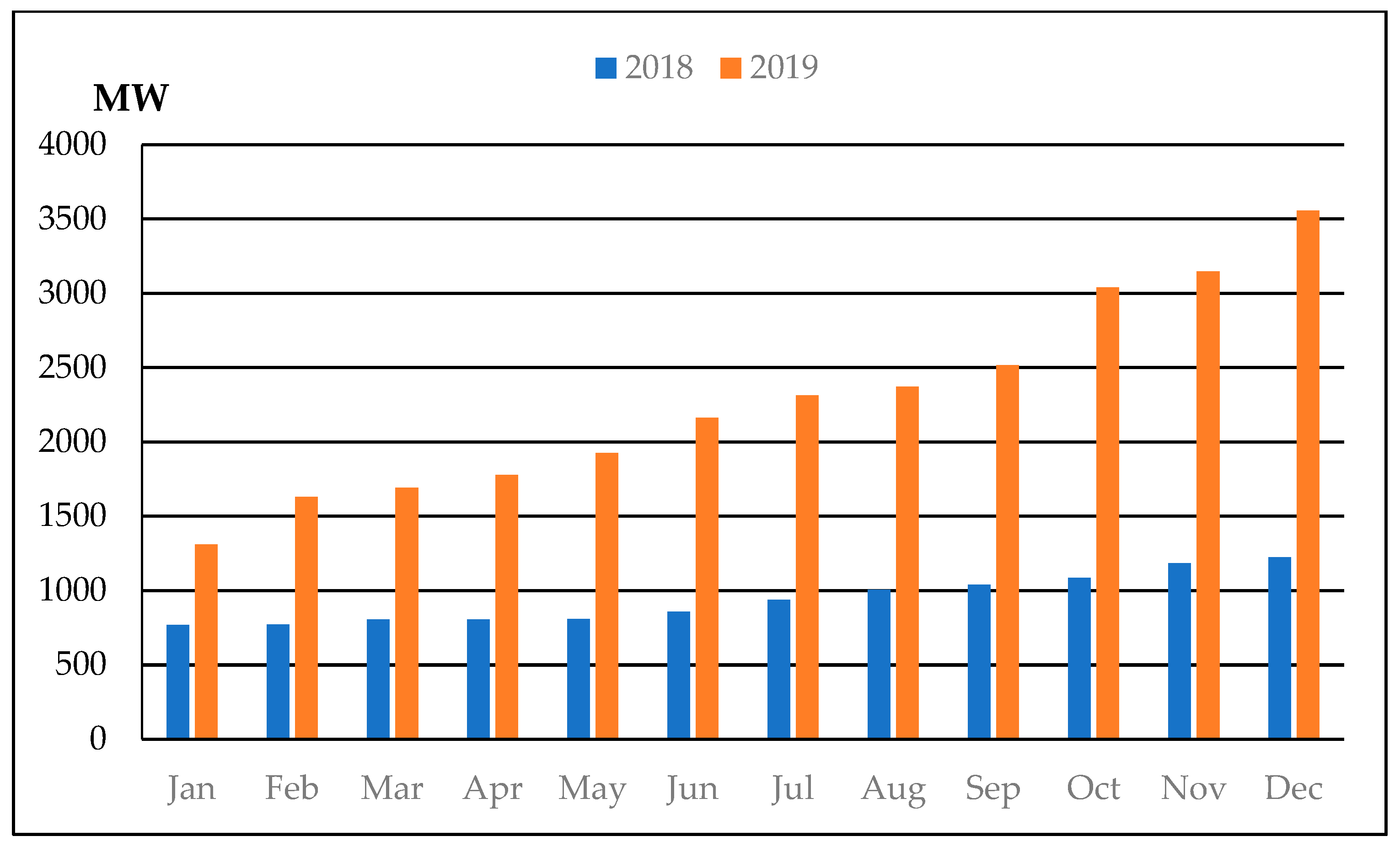
Due to the lack of available data on electricity generation from individual SPPs, it was assumed that all SPPs of the Integrated Power System (IPS) of Ukraine operate as a single large power plant. This assumption enabled the use of available datasets containing hourly power output from solar power plants in the IPS of Ukraine for 2018 and 2019. During these years, large-scale and chaotic construction, as well as the rapid commissioning of new SPP capacities, took place, as shown in Figure 1.
  • The EC consists of an SPP and a BESS, is connected to the grid, and operates at a constant power level to supply the base load.
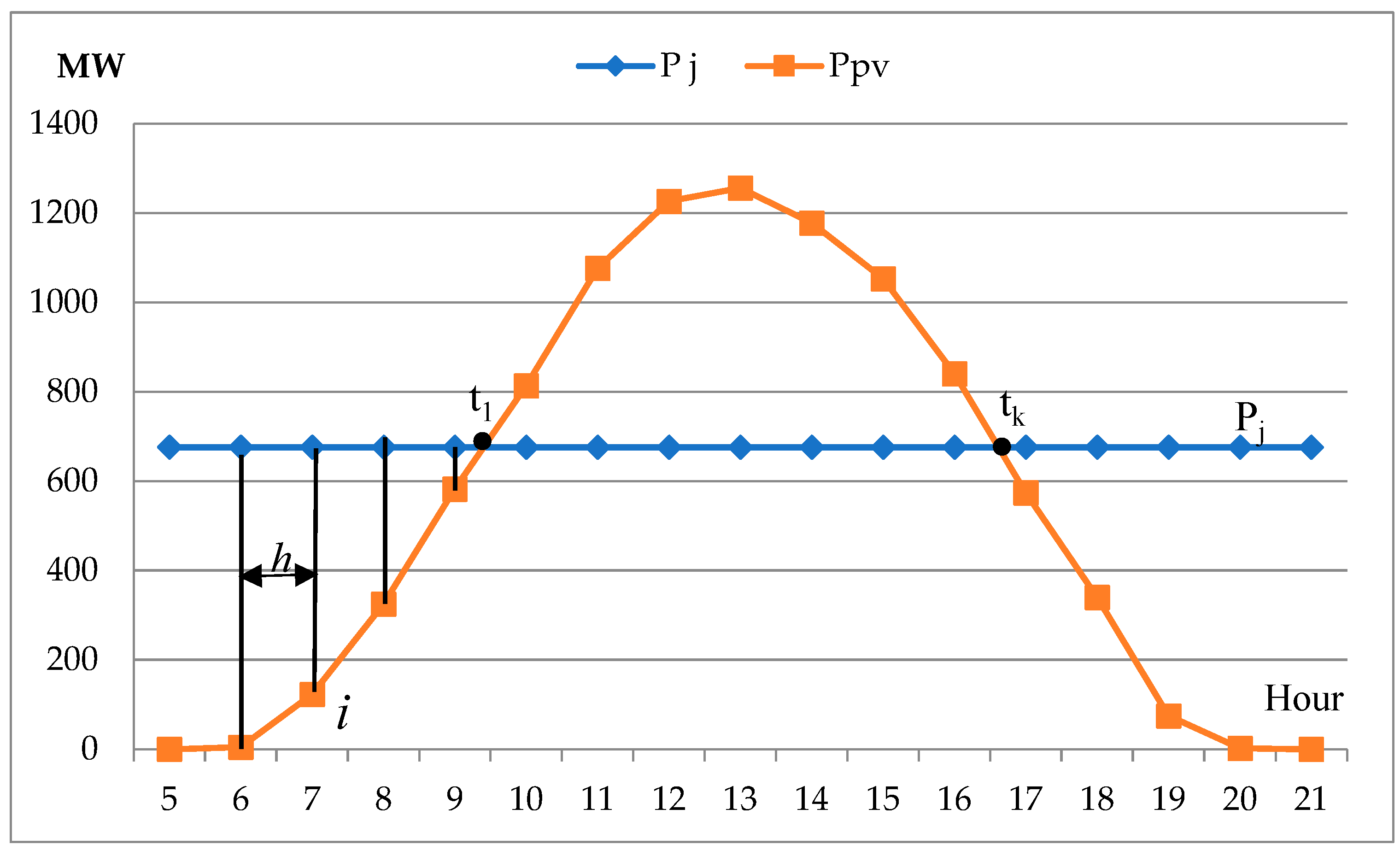
  • The EC begins operation at the start of the morning increase in electrical load in the grid, for example, at 06:00 a.m. However, before the start of the complex operation, during the nighttime period when electricity prices are low, the BESS is charged from the grid. The amount of accumulated energy must be sufficient to maintain the specified power level of the complex during its joint operation with the SPP until the moment when the SPP power output becomes sufficient to fully cover the connected load (point t1, Figure 2). At this moment, the BESS must be fully discharged.
During the daylight period, when the SPP generation exceeds the specified load level, the excess electricity is stored in the BESS over the time interval tk–t1. This stored energy is later used to maintain the specified power level during periods of low solar activity and in the evening hours, or it can be shifted to periods of maximum demand.
Let us consider the power output profile of the SPP for 24 April 2019, as shown in Figure 2.
In the first approximation, the amount of energy (and, accordingly, the required storage capacity of the BESS) that must be accumulated before the start of the EC operation and stored during the daytime period can be determined using Formulas (1) and (2), respectively.
E j s t a r t = i = 0 n P j P i j p v h ;
E j p v = m a x i   t 1     t k E i 1 j p v + P i j p v P j h ,
where E j s t a r t the amount of energy that must be accumulated before the start of the EC operation on the j-th day; P j —the output power of the EC on the j-th day; n—the number of time intervals h, including the momentt1, when P j = P n p v ; h—the discretization interval of the daily power profile; P i j p v —the power of the SPP in the i-th hour of the j-th day; E J p v —the storage requirement for excess SPP generation on the j-th day; E i 1 j p v —the energy stored in the BESS during the previous hour of the j-th day.
From Formulas (1) and (2) as well as Figure 2, it can be observed that as the output power level of the EC increases, the need for storing excess electricity during the daytime decreases. However, at the same time, the required energy to be accumulated during the nighttime period before the start of operation increases, and vice versa. This indicates that there is an intersection point between the functional dependency curves representing the required grid energy before the start of the complex operation and the storage requirements for excess electricity generated by the SPP during the daytime, depending on the complex’s output power level. In fact, this is an optimisation problem solved using linear programming by the graphical method. The objective function of the optimisation is to minimise the energy storage capacity required by the EC. The determination of the optimal EC output power was carried out using a dataset of hourly daily power outputs of SPPs in the IPS of Ukraine for 2019. The modelling results showed that at the optimal power level, the amount of electricity that must be accumulated in the BESS from the grid during the nighttime period is equal to or close to the amount of energy that must be stored during the daytime period. Under these conditions, the BESS’s minimum storage capacity requirements are met. Using the Solver add-in in the Excel environment, the optimal forecasted power level was calculated for each day in 2019.
Based on the performed optimisation and analysis of the results of statistical studies, average monthly calculation coefficients were determined for the operational forecasting of the energy capacity and power of the BESS, as well as for the amount of energy required at the start of the EC operation:
  • Calculation coefficient for determining the optimal power of the EC:
k m p _ e к = j = 1 N m P j m o p t p j m a v r / N m ;
  • Calculation coefficient for determining the BESS capacity (and the required amount of energy at the beginning of the EC operation):
k m e s = j = 1 N m E j m s t a r t p j m o p t / N m ;
  • Calculation coefficient for determining the BESS power:
k m p _ e s = j = 1 N m P j m m a x p j m o p t / N m ,
where P j m o p t —optimal power of the EC on the j-th day of the m-th month; P j m a v r —average power of the SPP on the j-th day of the m-th month; Nm—number of days in month m; E J m s t a r t —required energy (BESS capacity) at the start of EC operation on the j-th day of the m-th month; P j m m a x —maximum required BESS power on the j-th day of the m-th month for the EC.

3. Results

The average monthly values of the above coefficients and their relative standard deviations are presented in Table 1.
Similar calculations were performed for 2018, and the results are presented in Table 2.
The sequence for forecasting the output power of the EC and determining the day-ahead energy storage requirements is as follows:
  • Based on meteorological forecast data, the expected values of solar irradiance, ambient temperature, and the presence of atmospheric precipitation (rain/snow) are estimated, as well as geometric parameters, in particular the angle of incidence of solar radiation on photovoltaic panels;
  • According to the forecasted weather conditions, the total predicted amount of electrical energy that can be generated by the SPP during the day is determined;
  • The forecasted average power level of the SPP during its generation period is then calculated using the following formula,
P j m p r _ a v r = E j m Δ t ,
where E j m —forecasted amount of energy that will be generated by the SPP on the j-th day of the m-th month; Δ t —duration of SPP generation on the j-th day of the m-th month.
The optimal value of the forecasted power P j m p r _ o p t , the required storage capacity (energy required at the start of EC operation) E J m s t a r t and the BESS power P j m m a x on the j-th day of the m-th month are determined using the formulas presented below:
P j m p r _ o p t = k m p _ e s P j m p r _ a v r ;
E J m s t a r t = k m e s P j m p r _ o p t ;
P j m m a x = k m p _ e s P j m p r _ o p t .
The actual BESS capacity sizing for such a complex can be determined using the following formula:
C j m B E S S = E J m s t a r t k D o D · k c y c l . c o n v ,
where
  • k D o D —depth of discharge (DoD) of the energy storage system (depends on the equipment manufacturer—90–100%);
  • k c y c l . c o n v —cyclic conversion coefficient (depends on the energy storage system equipment manufacturer).
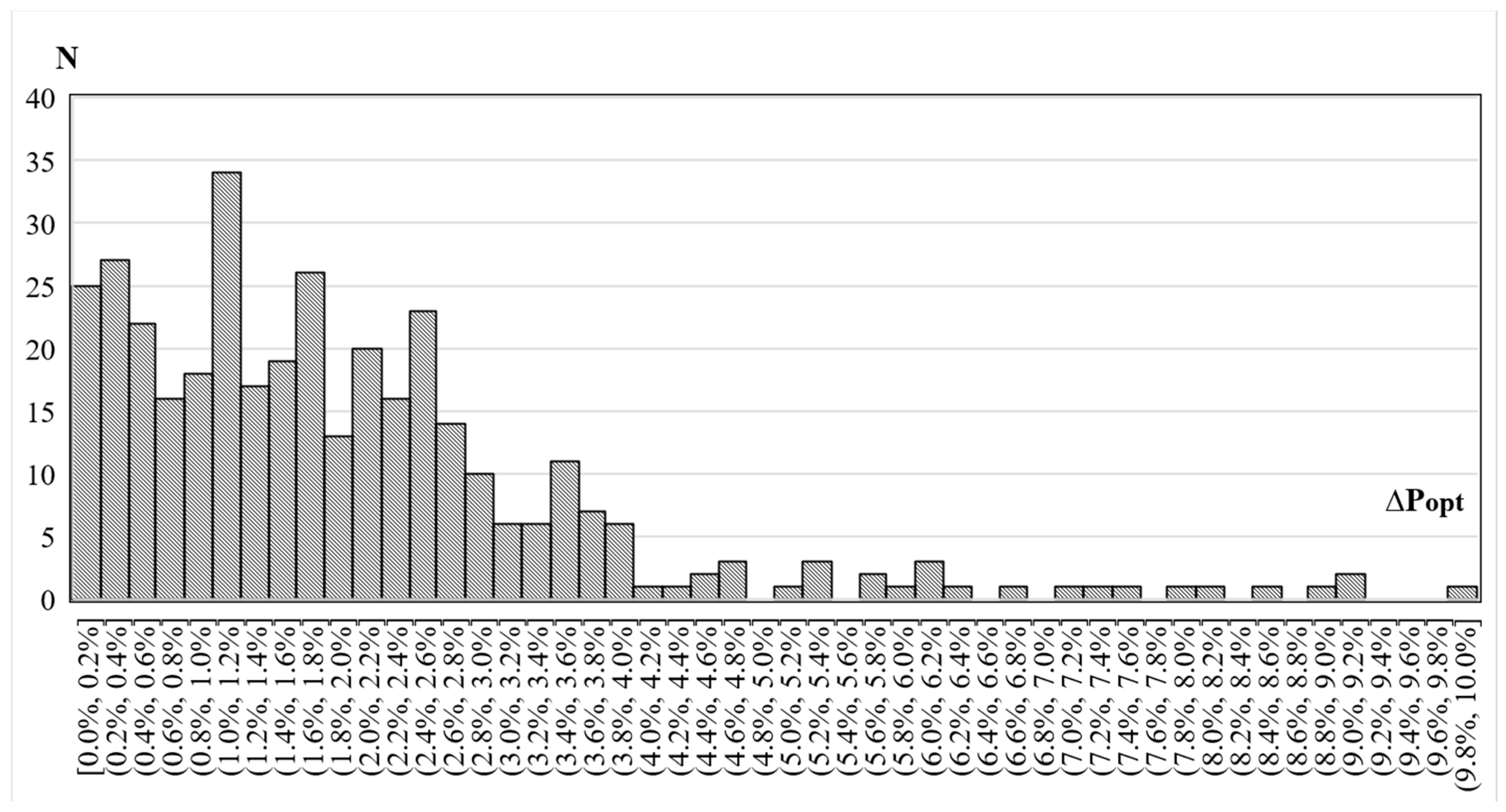
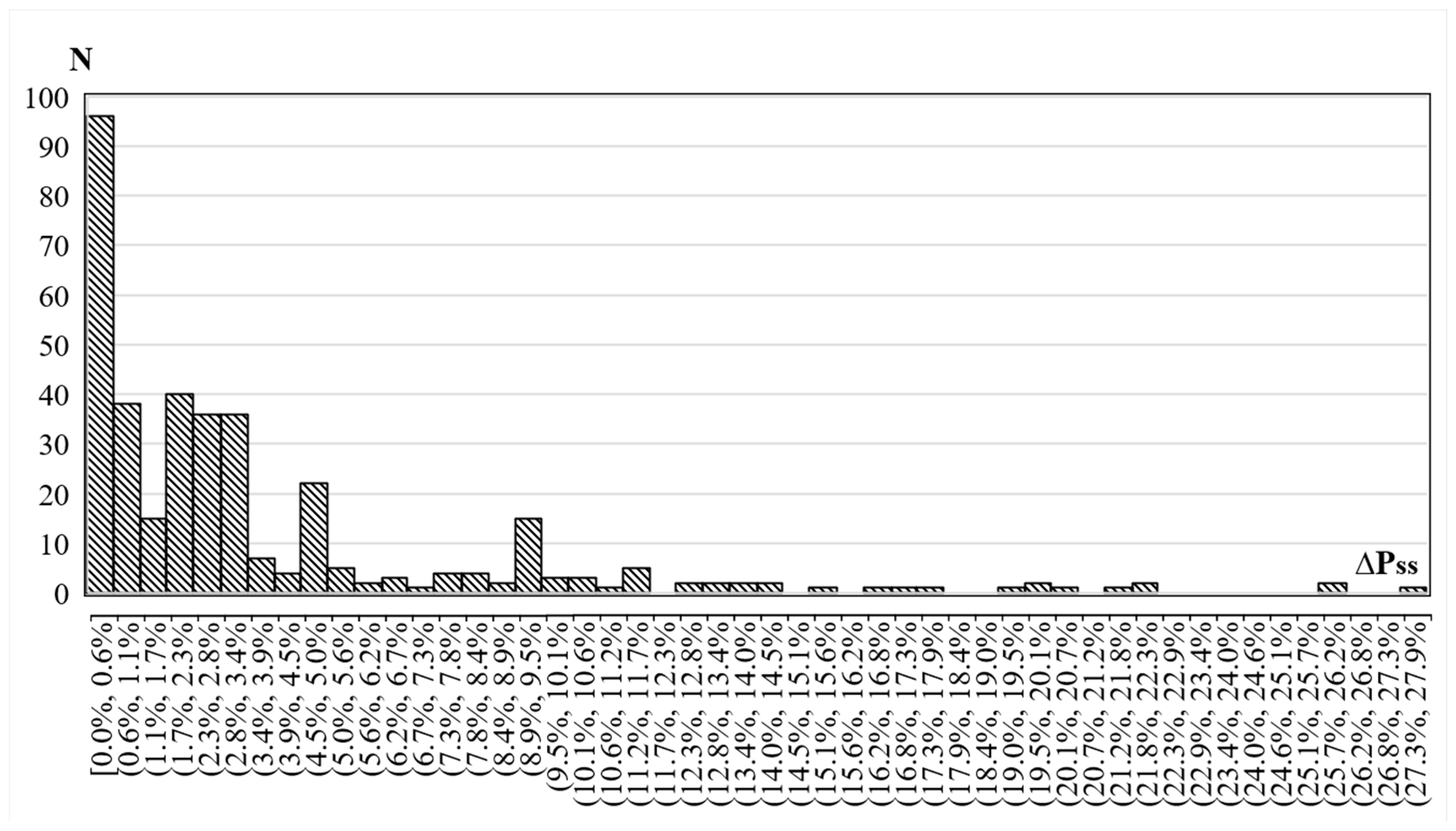
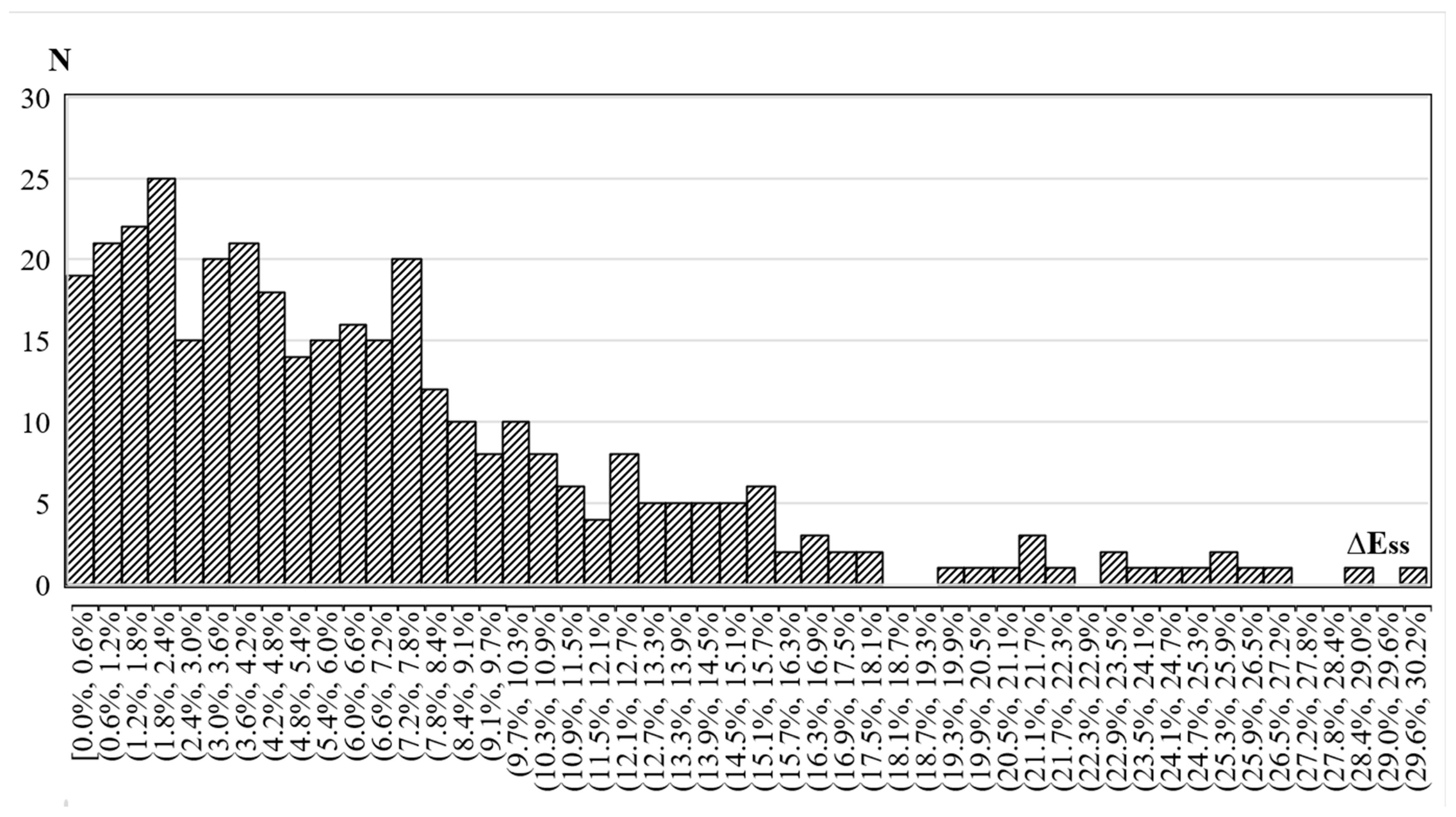
Formulas (7)–(9) represent the computational model, the validation of which was carried out using a dataset of hourly daily power outputs of SPPs in the IPS of Ukraine for 2018. Next, for each day of 2018, the proposed method was used to determine the indicators of the optimal EC power, as well as the required BESS capacity and power, and their relative deviations from the actual calculated values (hereinafter referred to as the actual) values ΔPopt, ΔEss, ΔPss, respectively. Based on the results of the statistical analysis, histograms of the distribution of the number (N) of these deviations from their actual values (%) and charts of the probability (P) of appearance of deviations during the year were constructed. These histograms and charts are presented in Figure 3, Figure 4, Figure 5 and Figure 6.

4. Discussion

The study showed that, in order to ensure minimal energy storage requirements of the EC, the following condition must be satisfied: the amount of electrical energy that needs to be stored in the energy storage system from the grid during the night period should be equal or close to the amount of energy that needs to be stored during the daytime period. In fact, this represents a new criterion for optimising the energy storage capacity.
From Table 1, it can be seen that the standard deviations of the coefficients do not exceed 10%, which is relatively high for BESS. However, considering that such deviations are typical only for winter months with low solar irradiance, this error does not significantly affect the ability of the EC to maintain the scheduled output power. From Table 2, it can be seen that despite the rapid expansion of SPP construction in Ukraine during 2018 and 2019 (Figure 1), and the corresponding commissioning of new capacities, the similarity of the calculated coefficients for these years remains quite high.
As shown in Figure 3, Figure 4 and Figure 5, significant deviations of the optimal power, as well as the required BESS capacity and power, from their actual values using the proposed method occur very rarely—only once or several times per year.
Statistical analysis of the obtained results (Figure 6) showed that the probability of deviation of the optimal power by 5.4%, and the required energy storage capacity and power by 18% and 13%, respectively, from the actual values does not exceed 0.05.
It should be noted that the largest standard deviations of the calculated coefficients (and, consequently, of the calculated indicators) are observed in December, January, and February, when the generation power of SPPs is minimal. Accordingly, the data used during these periods may not be entirely accurate. In addition, the maximum deviations of the calculated optimal EC power and its BESS capacity and power requirements from the actual values could have been significantly smaller if the available datasets of hourly solar power output of the IPS of Ukraine for 2018 and 2019 had included information on forced curtailment of SPP generation. Information on the commissioning of new SPP capacities was also available.
Although the proposed methodology was applied to the country’s power system as a whole, it can also be used for individual SPPs located in different regions of various countries with different climatic conditions. To determine the calculated coefficients for each individual SPP, it is necessary to perform statistical analysis of actual power generation profiles over several years using the methodology proposed in this paper. To improve accuracy, average values of the coefficients over these years should be used. In addition, the averaging period can be reduced (for example, from a month to a shorter period such as a ten-day interval or a week). Naturally, the calculated coefficients will differ, but the methodology itself and the sequence of its application will remain the same.
The constant power operation mode of the EC was selected solely to minimise its storage requirements. After completing the energy storage process during the daytime, the EC can operate in other modes, for example, an energy-shifting mode during peak demand periods.

5. Conclusions

  • For the first time, a methodology and calculation model are proposed which, using calculated coefficients, make it possible to determine the optimal power and energy storage requirements of an energy complex consisting of a solar power plant and an energy storage system operating in parallel with the grid under short-term forecasting conditions (day-ahead or longer).
  • A high consistency of the calculated coefficients across different years is demonstrated, based on statistical analysis of actual daily profiles of hourly cumulative power of solar power plants within the Integrated Power System (IPS) of Ukraine.
  • It is proven that, at the optimal power of the energy complex, minimizing storage requirements requires that the amount of electrical energy to be stored in the energy storage system from the grid during the night period should be equal or close to the amount of energy that needs to be accumulated from the solar power plant during the daytime period.
  • The proposed methodology and calculation model make it possible to minimize the costs of energy companies for short-term leasing of part of an energy storage system if their own system is not available, or, if available, to lease out unused storage capacity and obtain corresponding economic benefits.

Author Contributions

Conceptualization, V.D. and A.Z.; methodology, V.D. and T.N.; software, Y.H.; validation, V.D. and Y.H.; formal analysis, A.Z.; investigation, V.D. and A.Z.; resources, Y.H.; data curation, Y.H.; writing—original draft preparation, V.D., A.Z., T.N. and Y.H.; writing—review and editing, V.D. and A.Z.; visualization, V.D. and Y.H.; supervision, A.Z. and T.N.; project administration, A.Z. and T.N.; funding acquisition, A.Z. and T.N. All authors have read and agreed to the published version of the manuscript.

Funding

This research received no external funding.

Data Availability Statement

The data presented in this study are available on request from the corresponding author due to special restrictions on access to data regarding the functioning of critical infrastructure.

Acknowledgments

This work was supported by projects “Integrated modeling for robust management of food-energy-water-social-environmental (FEWSE) nexus security and sustainable development” (IIASA-NASU, 22-501 (R-45-T)), “Comprehensive analysis of robust preventive and adaptive measures of food, energy, water and social management in the context of systemic risks and consequences of COVID-19” (0122U000552, 2022–2026), “Development of the structure and ensuring the functioning of self-sufficient distributed generation” (0125U001572, 2025–2026), and “Improving the hierarchical system of mathematical and software-information tools for research on the development directions of integrated power systems in the transition to a low-carbon economy” (0122U000236, 2022–2026) funded by the National Academy of Sciences of Ukraine.

Conflicts of Interest

The authors declare no conflicts of interest.

Abbreviations

The following abbreviations are used in this manuscript:
BESSBattery Energy Storage System
CPOFCoefficient of Power Output Factor
DCDirect Current
DoDDepth of Discharge
ECEnergy Complex
IEAInternational Energy Agency
IPSIntegrated Power System
IRENAInternational Renewable Energy Agency
NEURCNational Energy and Utilities Regulatory Commission
PCSPower Conversion System
RESRenewable Energy Sources
S2PStorage-to-Power Ratio
SPPSolar Power Plant
WPPWind Power Plant

References

  1. Rahdan, P.; Zeyen, E.; Gallego-Castillo, C.; Victoria, M. Distributed photovoltaics provides key benefits for a highly renewable European energy system. Appl. Energy 2024, 360, 122721. [Google Scholar] [CrossRef]
  2. Our World in Data. Installed Capacity for Different Renewable Technologies. Available online: https://ourworldindata.org/grapher/installed-global-renewable-energy-capacity-by-technology (accessed on 24 March 2026).
  3. Ukrhydroenergo. IEA: By 2025 More Than One-Third of the World’s Electricity will be Generated from RES. Available online: https://uhe.gov.ua/media_tsentr/novyny/iea-do-2025-roku-ponad-tretyna-elektroenerhiyi-u-sviti-vyroblyatymetsya-z-vde (accessed on 24 March 2026).
  4. International Renewable Energy Agency. Record Growth in Renewables Achieved Despite Energy Crisis. Available online: https://www.irena.org/News/pressreleases/2023/Mar/Record-9-point-6-Percentage-Growth-in-Renewables-Achieved-Despite-Energy-Crisis (accessed on 24 March 2026).
  5. Holder, M. IRENA: Record global renewables growth still not enough to meet 2030 goals. BusinessGreen, 12 July 2024. Available online: https://www.businessgreen.com/news/4334818/irena-record-global-renewables-growth-meet-2030-goals (accessed on 24 March 2026).
  6. International Renewable Energy Agency. Record-Breaking Annual Growth in Renewable Power Capacity. Available online: https://www.irena.org/News/pressreleases/2025/Mar/Record-Breaking-Annual-Growth-in-Renewable-Power-Capacity (accessed on 24 March 2026).
  7. International Energy Agency. Renewable Electricity. Available online: https://www.iea.org/reports/renewables-2025/renewable-electricity (accessed on 24 March 2026).
  8. Solar Energy Association of Ukraine (ASEU). The Situation in the Industry: Current State of Ukrainian Solar Energy. Available online: https://www.aseu.solar/en/about-6 (accessed on 24 March 2026).
  9. SNEC PV. Ukraine Solar Market Expanded by up to 850 MW in 2024. Available online: https://www.snec-pv.com/article/ukraine-solar-market-expanded-by-up-to-850-mw-in-2024 (accessed on 24 March 2026).
  10. Cabinet of Ministers of Ukraine. On Approval of the National Action Plan on Renewable Energy for the Period Until 2030 and the Plan of Measures for Its Implementation (Order No. 761-r). Available online: https://zakon.rada.gov.ua/go/761-2024-%D1%80 (accessed on 24 March 2026).
  11. Ministry of Energy of Ukraine. National Energy and Climate Plan Until 2030. Available online: https://me.gov.ua/view/bb0b9ef5-ea96-4b8a-8f2f-471faf32c9df (accessed on 24 March 2026).
  12. Energy Partnership Ukraine. Ukraine’s 2025 Solar Market Outlook. Available online: https://energypartnership-ukraine.org/milestones/default-title/ (accessed on 24 March 2026).
  13. Verkhovna Rada of Ukraine. On Amendments to Certain Laws of Ukraine Regarding the Development of Energy Storage Facilities (Law No. 2046-IX). Available online: https://zakon.rada.gov.ua/go/2046-20 (accessed on 24 March 2026).
  14. Verkhovna Rada of Ukraine. On Amendments to Certain Laws of Ukraine Regarding the Restoration and “Green” Transformation of Ukraine’s Energy System (Law No. 3220-IX). Available online: https://zakon.rada.gov.ua/go/3220-20 (accessed on 24 March 2026).
  15. National Commission for State Regulation of Energy and Utilities. On Approval of Licensing Conditions for Conducting Business Activities in Energy Storage (Resolution No. 798). Available online: https://www.nerc.gov.ua/acts/pro-zatverdzhennya-licenzijnih-umov-provadzhennya-gospodarskoyi-diyalnosti-zi-zberigannya-energiyi (accessed on 24 March 2026).
  16. National Commission for State Regulation of Energy and Utilities. NEURC Created Regulatory Conditions for the Construction of New Flexible Generation and Energy Storage Facilities. Available online: https://www.nerc.gov.ua/news/novina (accessed on 24 March 2026).
  17. Derii, O.; Nechaieva, T.; Zgurovets, O. Technological possibilities of increasing the resilience of the power and district heating systems of Ukraine. Energy Technol. Resour. Sav. 2024, 81, 5–21. [Google Scholar] [CrossRef]
  18. Khodakivskyi, V.; Karpenko, D.; Bilous, I.; Savickas, R. Ensuring energy security in Ukraine: The role of cogeneration and sustainable funding for district heating systems. Rocz. Ochr. Srod. 2025, 27, 196–210. [Google Scholar] [CrossRef]
  19. Babak, V.P.; Kulyk, M.M. Increasing the efficiency and security of integrated power system operation through heat supply electrification in Ukraine. Sci. Innov. 2023, 19, 100–116. [Google Scholar] [CrossRef]
  20. Kulyk, M.; Nechaieva, T.; Zgurovets, O.; Shulzhenko, S.; Maistrenko, N. Comparative analysis of energy-economic indicators of renewable technologies in market conditions and fixed pricing on the example of the power system of Ukraine. In Systems, Decision and Control in Energy IV; Springer: Cham, Switzerland, 2023; Volume 454, pp. 433–449. [Google Scholar] [CrossRef]
  21. Havrylenko, Y.; Derii, V. The energy complexes based on solar power plants and battery energy storage systems. Syst. Res. Energy 2025, 3, 17–30. [Google Scholar] [CrossRef]
  22. Zaporozhets, A.; Kostenko, G.; Zgurovets, O.; Deriy, V. Analysis of global trends in the development of energy storage systems and prospects for their implementation in Ukraine. In Power Systems Research and Operation; Springer: Cham, Switzerland, 2024; Volume 512, pp. 69–87. [Google Scholar] [CrossRef]
  23. Hotra, O.; Kulyk, M.; Babak, V.; Kovtun, S.; Zgurovets, O.; Mroczka, J.; Kisała, P. Organisation of the structure and functioning of self-sufficient distributed power generation. Energies 2024, 17, 27. [Google Scholar] [CrossRef]
  24. Zhao, C.; Andersen, P.B.; Træholt, C.; Hashemi, S. Grid-connected battery energy storage system: A review on application and integration. Renew. Sustain. Energy Rev. 2023, 182, 113400. [Google Scholar] [CrossRef]
  25. Chatzigeorgiou, N.G.; Theocharides, S.; Makrides, G.; Georghiou, G.E. A review on battery energy storage systems: Applications, developments, and research trends of hybrid installations in the end-user sector. J. Energy Storage 2024, 86, 111192. [Google Scholar] [CrossRef]
  26. Grisales-Noreña, L.F.; Ocampo-Toro, J.A.; Montoya-Giraldo, O.D.; Montano, J.; Hernández, J.C. Optimal operation of battery storage systems in standalone and grid-connected DC microgrids using parallel metaheuristic optimization algorithms. J. Energy Storage 2023, 65, 107240. [Google Scholar] [CrossRef]
  27. Yin, K.; Xiao, Y.; Shen, X.; Zhu, Y.; Yang, Y. Review of photovoltaic–battery energy storage systems for grid-forming operation. Batteries 2024, 10, 288. [Google Scholar] [CrossRef]
  28. Method of Controlling Linear Power Changes with Forecasting in Periodic Operation of Power Plants. Patent UA126682C2, 12 January 2023. Available online: https://patentimages.storage.googleapis.com/75/b8/10/86ff8b789afb41/UA126682C2.pdf (accessed on 24 March 2026).
  29. Gonçalves, A.; Cavalcanti, G.O.; Feitosa, M.A.F.; Dias Filho, R.F.; Pereira, A.C.; Jatobá, E.B.; de Melo Filho, J.B.; Marinho, M.H.N.; Converti, A.; Gómez-Malagón, L.A. Optimal sizing of a photovoltaic/battery energy storage system to supply electric substation auxiliary systems under contingency. Energies 2023, 16, 5165. [Google Scholar] [CrossRef]
  30. Tejero-Gómez, J.A.; Bayod-Rújula, Á.A. Analysis of photovoltaic plants with battery energy storage systems (PV-BESS) for monthly constant power operation. Energies 2023, 16, 4909. [Google Scholar] [CrossRef]
  31. Yaniv, A.; Beck, Y. Optimal battery scheduling in solar-plus-storage grid-connected microgrid for profit and cost efficiency: A use case on an Israeli microgrid. J. Energy Storage 2024, 77, 109697. [Google Scholar] [CrossRef]
  32. Talluri, G.; Lozito, G.M.; Grasso, F.; Iturrino Garcia, C.; Luchetta, A. Optimal Battery Energy Storage System Scheduling within Renewable Energy Communities. Energies 2021, 14, 8480. [Google Scholar] [CrossRef]
  33. Li, Y.; Peng, J.; Jia, H.; Zou, B.; Hao, B.; Ma, T.; Wang, X. Optimal battery schedule for grid-connected photovoltaic-battery systems of office buildings based on a dynamic programming algorithm. J. Energy Storage 2022, 50, 104557. [Google Scholar] [CrossRef]
  34. Aksan, F.; Suresh, V.; Janik, P. Optimal Capacity and Charging Scheduling of Battery Storage through Forecasting of Photovoltaic Power Production and Electric Vehicle Charging Demand with Deep Learning Models. Energies 2024, 17, 2718. [Google Scholar] [CrossRef]
  35. Liu, X.; Gou, Z. Hybrid forecasting and optimization framework for residential photovoltaic-battery systems: Integrating data-driven prediction with multi-strategy scenario analysis. Build. Simul. 2025, 18, 1587–1609. [Google Scholar] [CrossRef]
  36. Li, Y.; Vilathgamuwa, D.M.; Quevedo, D.E.; Lee, C.F.; Zou, C. Ensemble Nonlinear Model Predictive Control for Residential Solar-Battery Energy Management. IEEE Trans. Control. Syst. Technol. 2023, 31, 2188–2200. [Google Scholar] [CrossRef]
  37. Hu, H.; Ma, Y.; Zhang, X.; Han, C.; Hao, Y. Day-ahead and hour-ahead optimal scheduling for battery storage of renewable energy power stations participating in primary frequency regulation. Front. Energy Res. 2024, 12, 1424389. [Google Scholar] [CrossRef]
  38. Valedsaravi, S.; Vegelin, R.; Olveira, A. Operational Framework for Large-Scale Power-to-X Plants Fed by Renewable Energies Incorporating BESS and Electrolyzer Degradation. IEEE Access 2025, 13, 215994–216012. [Google Scholar] [CrossRef]
  39. Valedsaravi, S. Techno-Commercial Evaluation of Renewable Energy-Based Power-to-X Plants: A Comparative Analysis of Grid-Connected Versus Islanded Facilities. IEEE Access 2025, 13, 37408–37422. [Google Scholar] [CrossRef]
  40. Qian, X.; Wu, W.; Wang, Y.; Liu, L.; Ye, J.; Fu, L.; Wang, Z.; Chen, Y.; Wang, T.; Wu, Y. Predicting graphite anode capacity fade in lithium-ion batteries using a pseudo-two-dimensional model. J. Energy Storage 2026, 141, 119229. [Google Scholar] [CrossRef]
  41. Derii, V.; Nechaieva, T.; Zgurovets, O. Studying the needs of power systems in electricity storage in the case of massive implementation of power plants of non-guaranteed capacity. Energy Technol. Resour. Sav. 2025, 84, 51–64. [Google Scholar] [CrossRef]
  42. Havrylenko, Y.V.; Derii, V.O. Certificate of Copyright Registration for the Work No. 141419: Method for Determining the Optimal Capacity and Power of Energy Storage Systems in Joint Operation with Solar Power Plants; Ukrainian National Office of Intellectual Property and Innovation: Kyiv, Ukraine, 2025. [Google Scholar]
Figure 1. Installed capacity of SPPs in Ukraine during 2018–2019.
Solar 06 00022 g001
Figure 2. Power curve of the SPP for 24 April 2019.
Solar 06 00022 g002
Figure 3. Distribution of the number (N) of deviations of the optimal EC power calculated by the proposed method from the actual values (ΔPopt) during the year.
Solar 06 00022 g003
Figure 4. Distribution of the number (N) of deviations of the BESS power calculated by the proposed method from the actual values (ΔPss) during the year.
Solar 06 00022 g004
Figure 5. Distribution of the number (N) of deviations of the BESS capacity requirements calculated by the proposed method from the actual values during the year.
Solar 06 00022 g005
Figure 6. Probability (P) of the appearance of deviations (ΔPopt, ΔEss, ΔPss) depending on their values.
Solar 06 00022 g006
Table 1. Calculation coefficients for forecasting the energy capacity and power of the BESS.
Coefficient k m p _ e к k m e s k m p _ e s
MonthAverageRelative SD, %AverageRelative SD, %AverageRelative SD, %
January0.8922.50%3.1409.99%1.0549.69%
February1.0502.00%2.85010.26%1.0041.46%
March1.1982.53%2.4148.88%1.0041.46%
April1.1531.59%2.8367.80%0.9970.36%
May1.2350.67%3.3356.79%0.9921.45%
June1.2350.67%3.2873.17%0.9950.80%
July1.2330.87%3.2802.99%0.9970.31%
August1.1851.28%3.5174.30%0.9891.04%
September1.2521.51%2.8045.51%0.9762.43%
October1.1353.08%3.1198.16%1.0093.04%
November1.1281.76%2.9916.84%1.0255.75%
December1.1421.39%3.1437.13%1.0698.52%
Table 2. Comparison of average monthly calculated coefficients for 2018 and 2019.
Month k m p _ e к k m e s k m p _ e s
20182019δ*20182019δ*20182019δ*
January0.8930.8920.1%3.2403.1403.1%1.1321.0546.9%
February1.0681.0501.8%2.9462.8503.3%1.0621.0045.5%
March1.2111.1981.3%2.5912.4146.8%1.0621.0045.5%
April1.1221.153−3.0%2.6042.836−8.9%0.9200.997−8.4%
May1.1541.179−2.5%3.2143.335−3.8%1.0000.9920.8%
June1.2121.235−2.3%3.2193.287−2.1%0.9920.995−0.3%
July1.2161.233−1.7%3.2123.280−2.1%0.9940.997−0.3%
August1.1541.185−3.1%3.3623.517−4.6%0.9750.989−1.4%
September1.2411.252−1.1%2.9172.8043.9%0.9890.9761.3%
October1.1301.135−0.4%3.0393.119−2.6%1.0021.009−0.8%
November1.1041.128−2.5%2.8222.991−6.0%1.0291.0250.5%
December1.1121.142−3.1%2.9923.143−5.1%1.0321.069−3.6%
Note: δ*—deviation of calculated coefficients in 2019 relative to 2018.
Disclaimer/Publisher’s Note: The statements, opinions and data contained in all publications are solely those of the individual author(s) and contributor(s) and not of MDPI and/or the editor(s). MDPI and/or the editor(s) disclaim responsibility for any injury to people or property resulting from any ideas, methods, instructions or products referred to in the content.