
Article

Feedback Control Design for Time-Delay Systems Based on the Manabe Polynomial Concept Under Unmodeled Input Delay


by
Stefan Brock
Institute of Robotics and Machine Intelligence, Poznan University of Technology, ul. Jacka Rychlewskiego 1, 61-131 Poznań, Poland
AppliedMath 2026, 6(3), 51; https://doi.org/10.3390/appliedmath6030051

Submission received: 2 February 2026 / Revised: 4 March 2026 / Accepted: 17 March 2026 / Published: 19 March 2026

Abstract

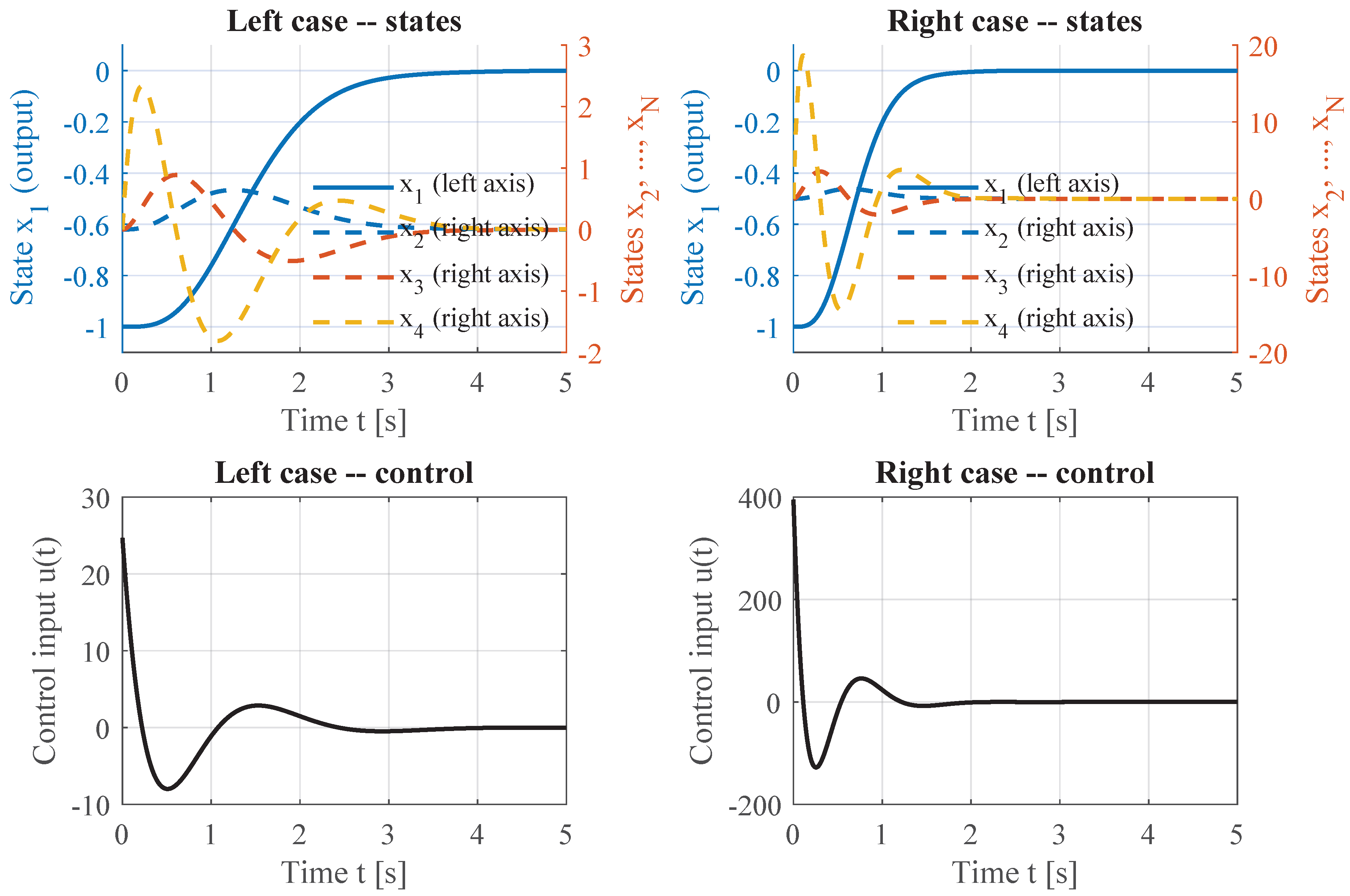
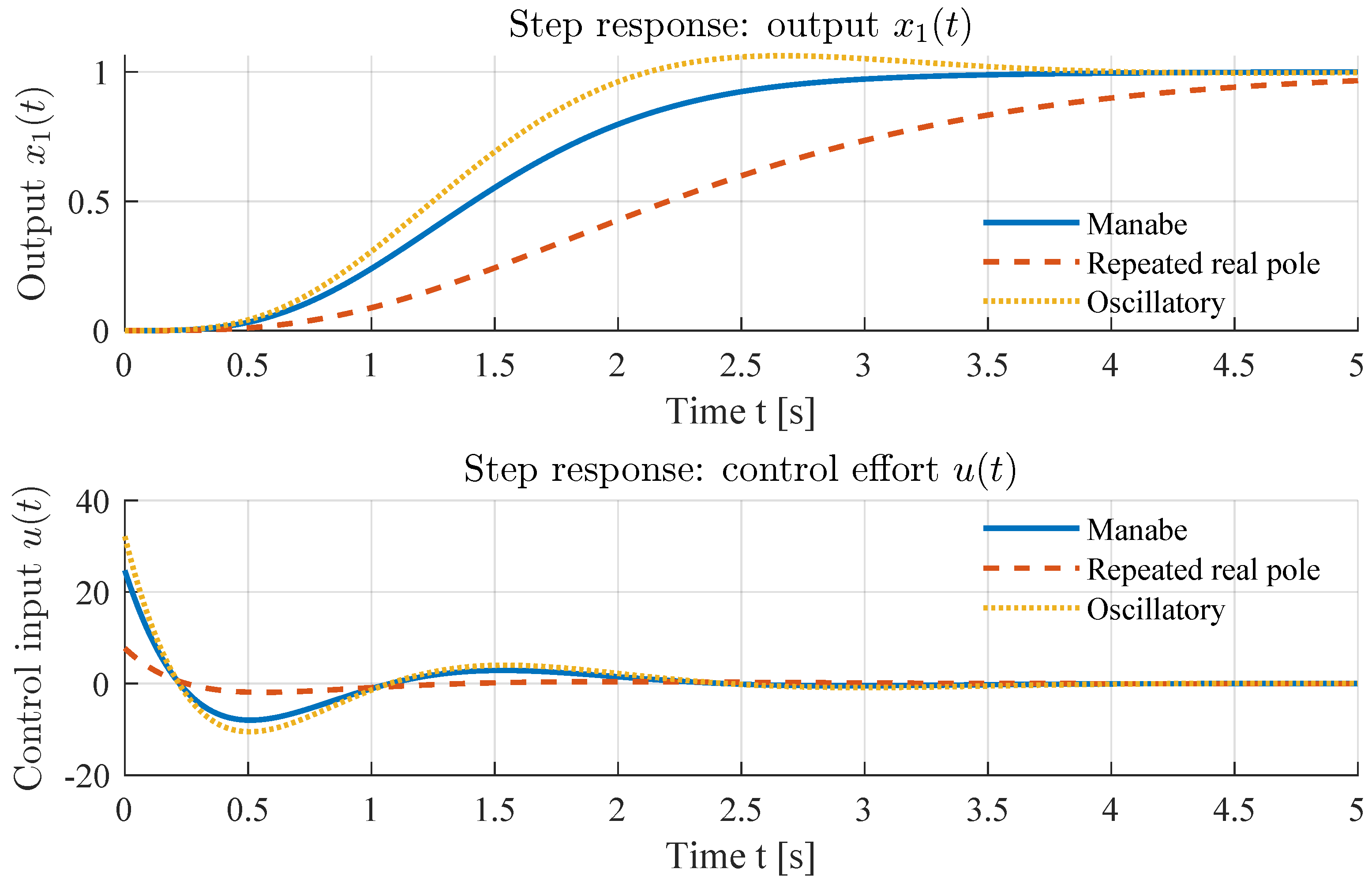
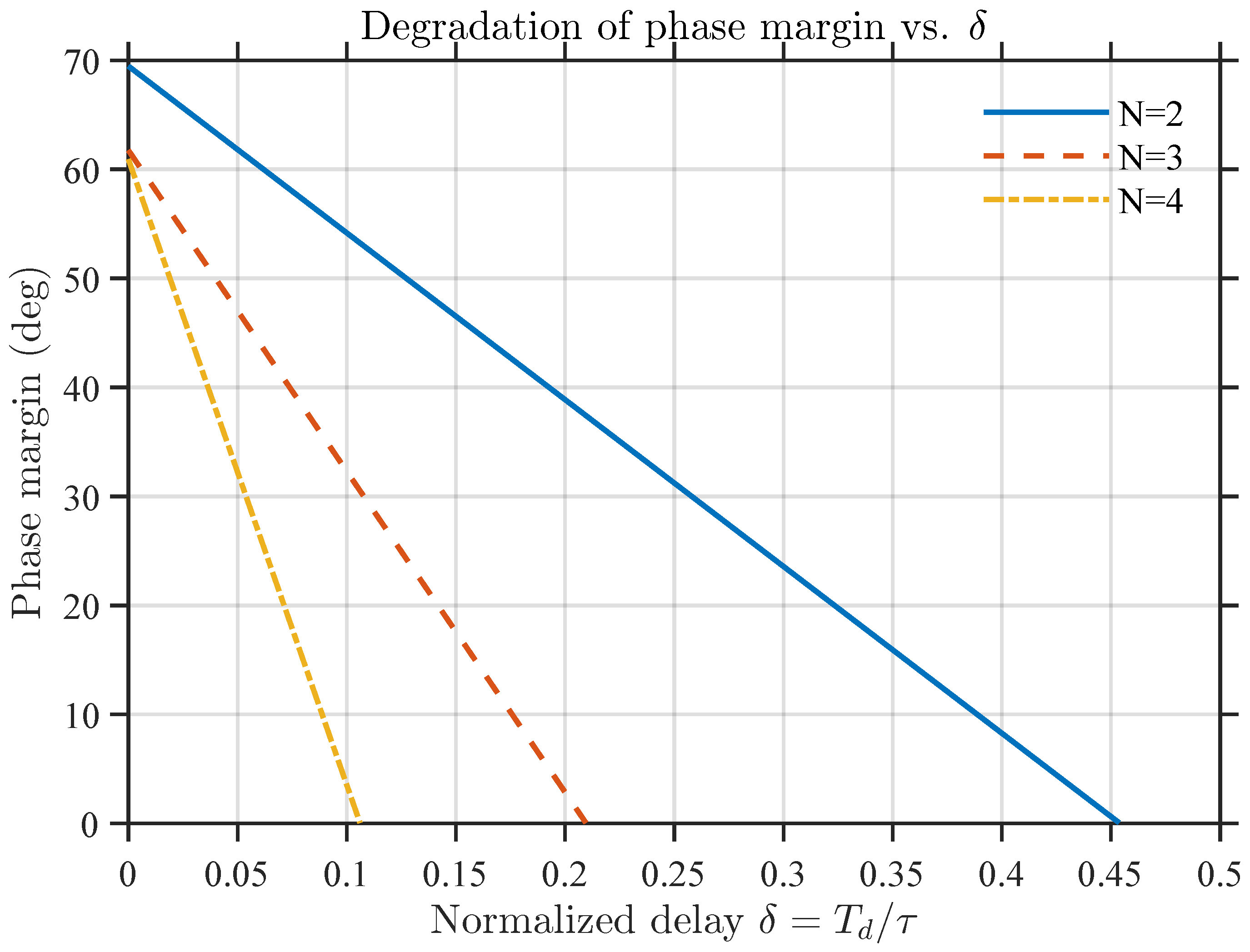
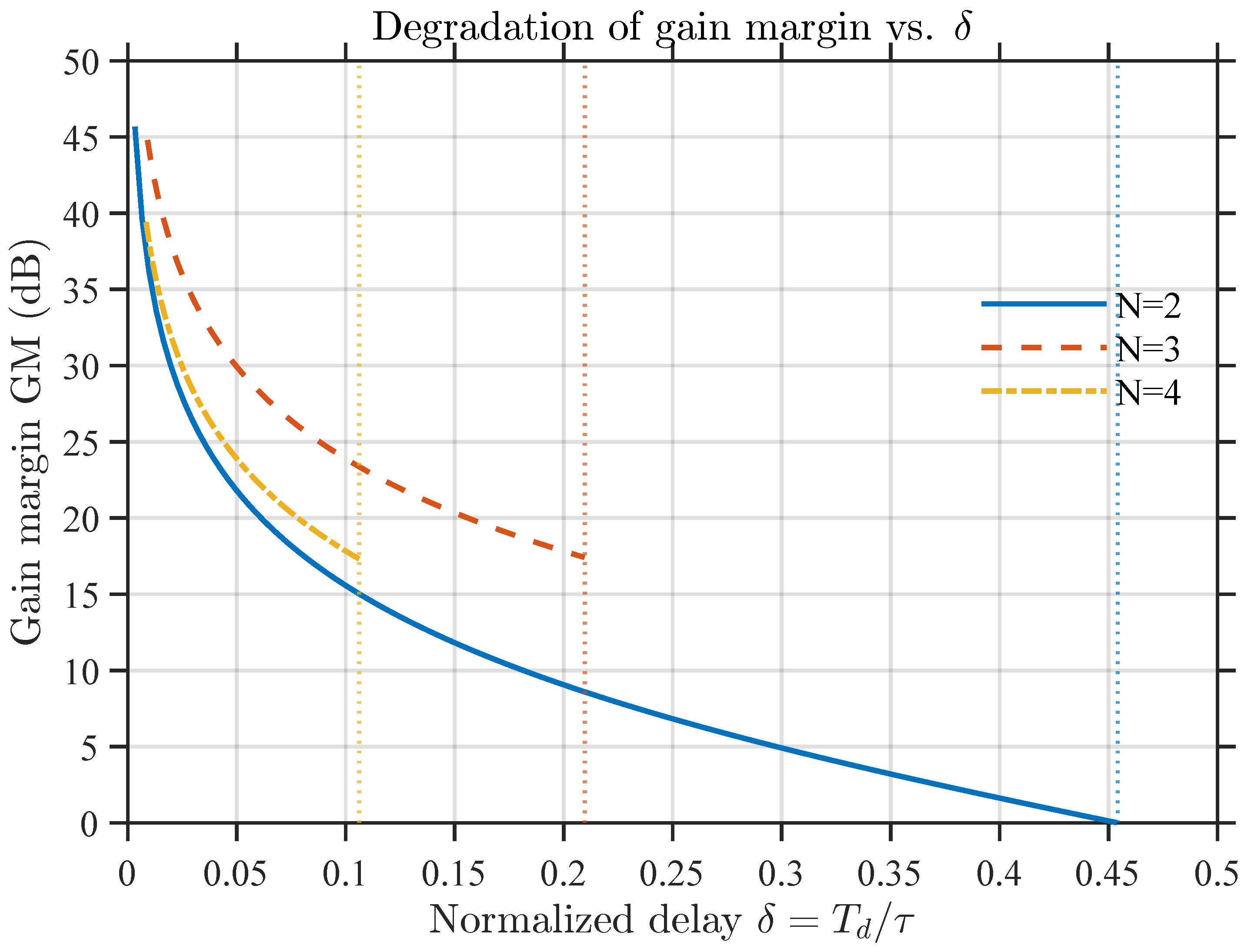
Time delays are inherent in modern motion-control and electric-drive loops due to sensing, filtering, sampling and computation, communication, and actuation scheduling. When such delays are only partially known, they can markedly reduce stability margins and narrow the admissible range of state-feedback gains, especially in high-bandwidth servo applications. This paper develops a design-oriented state-feedback framework for delay-affected plants based on the Manabe polynomial concept and the Coefficient Diagram Method (CDM). The plant is represented as a chain of integrators of order two to four with an effective input gain, and the feedback gain is synthesized for the nominal delay-free model by matching a standard Manabe/CDM characteristic polynomial using the classical CDM stability-index pattern. When an unmodeled input delay is present, the closed loop is governed by a delay-dependent characteristic equation. By introducing a normalized representation, the analysis yields explicit delay-stability limits that directly translate into a lower bound on the equivalent time constant used for tuning. The degradation of the phase margin and gain margin with increasing normalized delay is quantified as design charts, and a simple phase-margin-based inequality is proposed for selecting the tuning time constant, with gain-margin checks recommended as a verification step.
Keywords: time-delay systems; unmodeled input delay; Manabe polynomial; coefficient diagram method (CDM); state-feedback; pole placement; chain of integrators; servo drives; robustness margins; phase margin; gain margin time-delay systems; unmodeled input delay; Manabe polynomial; coefficient diagram method (CDM); state-feedback; pole placement; chain of integrators; servo drives; robustness margins; phase margin; gain margin