1. Introduction
Pneumonia is an inflammatory disease characterized by the invasion of the alveoli by fluid and immune cells in the setting of infection and leading to impaired gas exchange and breathing distress [
1] Bacteria and viruses account for the varied causes of this illness, as well as, more infrequently, fungi and protozoa. The clinical picture, therefore, ranges across mild forms of community-acquired pneumonia and life-threatening forms requiring aggressive medical management and high-level respirator support.
Despite advancements in antimicrobial therapies and supportive medical care, pneumonia remains a leading cause of global morbidity and mortality rates. In the year 2021, the disease was responsible for an estimated 2.1 million deaths worldwide, including more than 500,000 children under the age of five and more than one million individuals aged 70 years and above [
2]. When assessed in the broader context of lower respiratory tract illness, these illnesses collectively represented 2.18 million deaths in 2021, underscoring the global burden they continue to impose [
3]. Childhood pneumonia, in particular, produces a disproportionate burden and causes more than 700,000 child deaths [
4]. Pneumonia impacts around 450 million people annually, the greatest burden exhibiting a high incidence and fatality in low- and middle-income countries. The severity of this illness was aggravated during the COVID-19 pandemic, during which approximately 80% of the patients who became critically ill developed pneumonia and often required mechanical ventilation. Simultaneously, pneumonia is responsible for more than 1.2 million annual global deaths, and a significant proportion of these stem from respiratory illness.
At a mechanistic level, pneumonia violates the lung’s basic function of gas exchange. In normal lungs, oxygen diffuses readily across the alveolar–capillary membrane into the bloodstream. In pneumonia, however, inflammatory exudates, infiltration of immune cells, and consolidation of the alveolus significantly hinder diffusion and cause hypoxemia and generalized oxygen shortage [
5]. This oxygen shortage propels multi-organ failure and exacerbates the severity of the disease.
Notably, pneumonia is also closely associated with oxidative stress, which is defined as the excessive production of reactive oxygen species (ROS). The ROS produced by epithelial cells, macrophages, and neutrophils act as a significant antimicrobial agent of the innate immune system. However, they cause damage to the alveolar epithelial and endothelial cell integrity in excess, enhance inflammatory processes in excess, and induce oxidative damage in the lung parenchyma. Beyond their role in acute syndromes, redox imbalances are a key driver of chronic pulmonary pathology. This dysfunction provides a mechanistic bridge between acute lung injury in acute respiratory distress syndrome (ARDS) and the development of persistent complications such as pulmonary fibrosis [
6].
Pneumonia redox biomarkers are measurable indicators of oxidative stress, such as glutathione and malondialdehyde, and they provide an account of the balance between oxidative damage from the immune response and the internal antioxidant defense of the body. Research into the redox biomarkers in pneumonia is central to understanding a critical paradox: oxidative stress is essential for microbial killing, but is also a primary mediator of tissue injury. Current research aims to quantify this balance to predict clinical outcomes. Key markers include the enzymatic antioxidants (such as superoxide dismutase and catalase), which decrease in concentration as they scavenge the reactive species; the non-enzymatic antioxidants (such as glutathione and vitamin C, E), which get depleted; and the byproducts of direct damage (such as malondialdehyde due to lipid oxidation and 8-hydroxy-2′-deoxyguanosine [8-OHdG] due to DNA oxidation), which increase. The clinical usefulness of the biomarkers lies in their ability to classify the severity of the disease, predict the progression to secondary complications such as ARDS and monitor therapeutic management.
Therefore, oxygen in pneumonia is a paradox: a necessary element in maintaining cellular respiration and immune defense but also a cause of tissue damage in the event of the dysregulation of redox signaling.
Even though oxidative stress and redox imbalance are established as contributors to the pathogenesis of pneumonia and acute lung injury, there remain limitations in clinically translating redox-modulating therapies. The difficulty of modulating these therapies is highlighted, documenting the dual role of reactive oxygen species in host defense and tissue injury. Also, most of the antioxidant- and nanotechnology-based interventions have failed in providing consistent clinical benefits in human studies, even when they have shown encouraging preclinical studies. Hence, this paper embraces a critical translational perspective by focusing not only on the molecular mechanisms, but also on clinical downfalls, safety issues and regulatory constraints that can affect the successful bench-to-bedside transfer. This work also aims to identify the prospects and the limitations for redox-directed interventions in pneumonia, by assimilating biological, pharmacological and regulatory considerations.
This review examines the central paradox of oxygen in the pathophysiology and management of pneumonia: its role in sustaining cellular function and immunity, and its capacity to impose tissue injury through dysregulated redox pathways. A critical gap exists in effectively integrating standard oxygen therapy with novel and targeted approaches to locally modulate the redox environment in the lungs. This article aims to bridge this divide, evaluating advanced drug delivery systems to control oxidative signaling. Topics include conventional oxygen therapy, advanced redox-modulating interventions such as inhalable antioxidants and ROS-responsive nanoparticles, and the application of nanomedicine in targeting pulmonary infections. Special emphasis is placed on clinical translation, regulatory considerations, and future directions toward personalized redox-guided therapy. Ultimately, this synthesis seeks to reconcile oxygen’s indispensable role in host defense with its potential to exacerbate pulmonary injury, thereby informing novel therapeutic avenues in pneumonia management.
2. Pathophysiological Role of Oxygen and ROS in Pneumonia
2.1. Oxygen Metabolism and Dysregulation
In the healthy lung, oxygen uptake is a tightly regulated process that depends on the integrity of the alveolar–capillary barrier and the matching of ventilation and perfusion. Oxygen normally diffuses rapidly across the thin (0.2–0.6 μm) alveolar–capillary membrane; such transfer is considered perfusion-limited arterial oxygenation, and is primarily governed by blood flow rather than diffusion capacity. [
7,
8]
Pneumonia profoundly disrupts this balance. Inflammatory exudates rich in fibrin, neutrophils, microbes, and cellular debris fill alveoli, transforming normally aerated spaces into consolidated, non-functional tissue. Blood perfusing these regions bypasses ventilation, creating an intrapulmonary shunt. Unlike ventilation/perfusion (V/Q) mismatch, shunted blood cannot be corrected by supplemental oxygen, which explains why hypoxemia in severe pneumonia is often refractory to oxygen therapy [
9]. Simultaneously, vascular and epithelial permeability increase, leading to interstitial and alveolar edema. This thickens the diffusion barrier and reduces the available surface area for gas exchange. In parallel, mucus hypersecretion and airway obstruction cause regional underventilation, exacerbating V/Q mismatch [
10]. Collectively, these alterations generate a spectrum of gas-exchange defects—from partially correctable mismatches to fixed shunts resistant to oxygen supplementation [
11].
Beyond impairing systemic oxygenation, pneumonia reshapes the microenvironment of infected tissue. Hypoxic niches develop within consolidated or collapsed regions, compelling resident and immune cells to shift from oxidative phosphorylation to glycolysis, reprogram their redox balance, and activate hypoxia-sensing pathways [
12]. Central to this response is hypoxia-inducible factor-1α (HIF-1α). Under normoxia, HIF-1α is hydroxylated by prolyl hydroxylases and rapidly degraded. Hypoxia stabilizes HIF-1α, enabling its nuclear translocation and transcriptional activation of genes involved in glycolysis, angiogenesis, and inflammation [
13]. Importantly, HIF-1α can also be stabilized independently of oxygen by microbial products, pro-inflammatory cytokines, and ROS, thereby linking infection-driven inflammation to hypoxic signaling pathways [
14].
These pathological processes are tightly interwoven with oxidative stress. Hypoxic areas recruit neutrophils and macrophages that release large amounts of ROS via NADPH oxidase (NOX2), mitochondrial leakage, and myeloperoxidase (MPO) activity [
15]. ROS play indispensable roles in antimicrobial defense: damaging pathogens, facilitating neutrophil extracellular trap formation, and amplifying microbicidal activity. However, excessive ROS generation damages host structures, including surfactant lipids, membrane proteins, and components of the alveolar–capillary barrier. This oxidative damage to host structures is biochemically quantifiable; elevated levels of biomarkers such as malondialdehyde, 8-isoprostane, and oxidized glutathione provide direct evidence of ROS-induced injury in pneumonia. Glutathione acts as a major intercellular redox buffer which exists primarily as a redox couple, composed of GSH (reduced glutathione) and GSSG (oxidized glutathione). Under physiological conditions, the cellular environment is highly reducing, maintaining a high GSH/GSSG ratio. Oxidative stress shifts this balance towards GSSG, hence making the GSH/GSSG ratio a sensitive indicator of the cellular redox status [
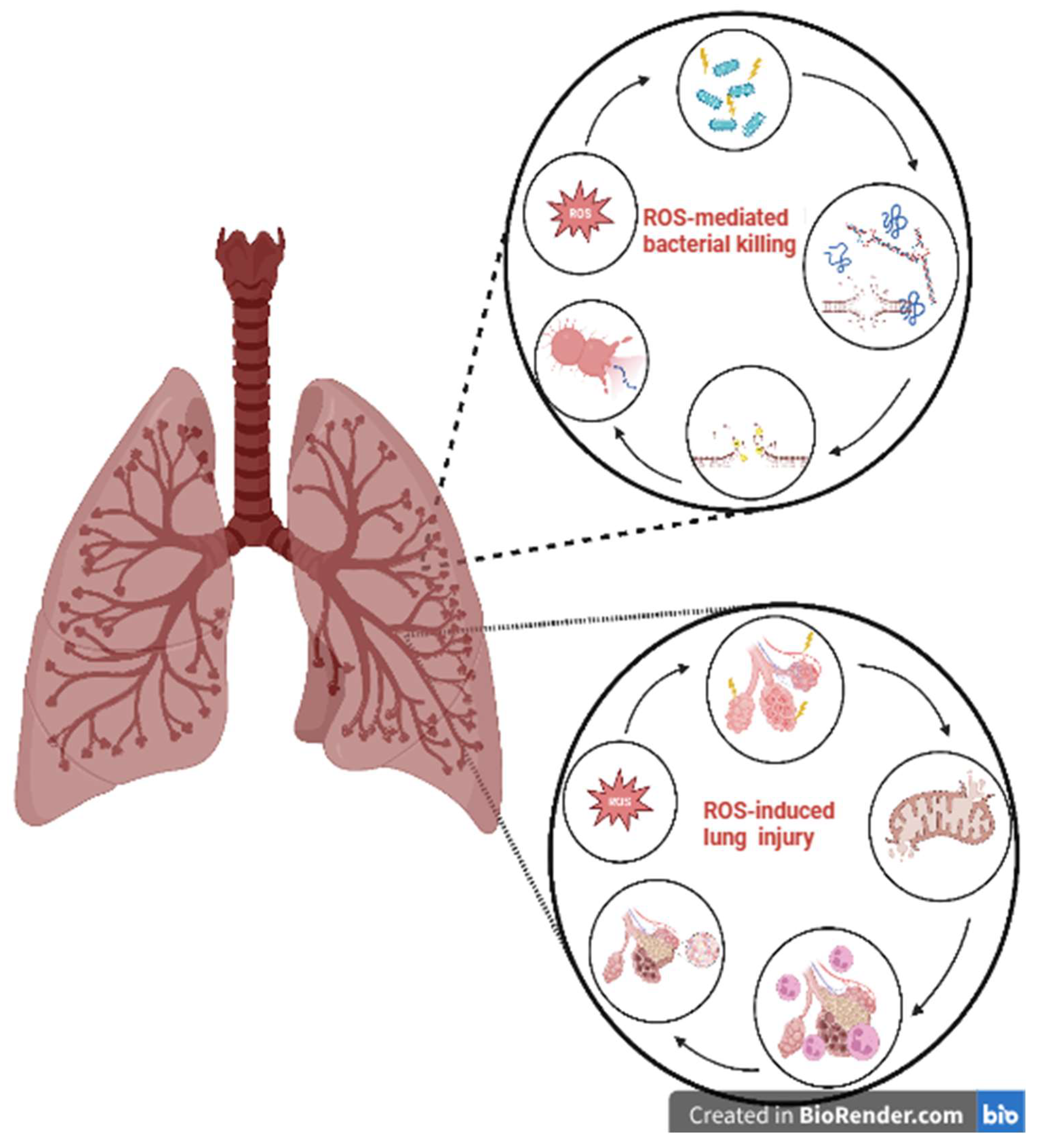
16]. The resulting oxidative injury exacerbates vascular leakage, edema, and epithelial disruption, creating a self-perpetuating cycle where hypoxia, inflammation, and tissue injury amplify each other (
Figure 1) [
17].
HIF-1α orchestrates key adaptations in this hostile environment. By promoting glycolysis, it supplies ATP under oxygen-limited conditions while supporting immune effector functions. HIF-1α also enhances production of antimicrobial mediators such as inducible nitric oxide synthase, antimicrobial peptides, and pro-inflammatory cytokines, and prolongs neutrophil survival [
18,
19]. While these actions aid pathogen clearance, persistent HIF-1α activity can drive excessive inflammation and delay resolution [
20].
The relationship between oxygen and lung defense is governed by a self-perpetuating cycle. ROS can stabilize the HIF-1α protein, which in turn shifts cellular energy production and further influences ROS generation. This cycle is dual-edged, where the outcome may be effective pathogen elimination or worsened tissue injury, which depends entirely on its intensity and duration [
21]. This explains why oxygen therapy helps some lung conditions but not others, and why new treatments aiming to control ROS or HIF-1α must be precisely adjusted. The aim of modern therapies is to achieve a delicate balance between the body’s innate ability to fight infection while protecting the lungs from an inflammatory response. This understanding is now guiding the development of smarter, more targeted interventions for pneumonia [
22].
2.2. Reactive Oxygen Species: Sources and Amplification
Within the inflamed lung microenvironment of pneumonia, ROS presents a fundamental paradox. A successful immune response requires a tightly coordinated surge in ROS production, which is generated through mitochondrial activity, NADPH oxidase activation, and MPO pathways. Specialized immune cells, primarily neutrophils and macrophages, orchestrate this oxidative burst to eliminate pathogens. The critical challenge lies in sustaining this microbe-killing capacity while preventing the uncontrolled ROS spillover that leads to collateral tissue damage. This delicate balance is central to the pathology of the disease.
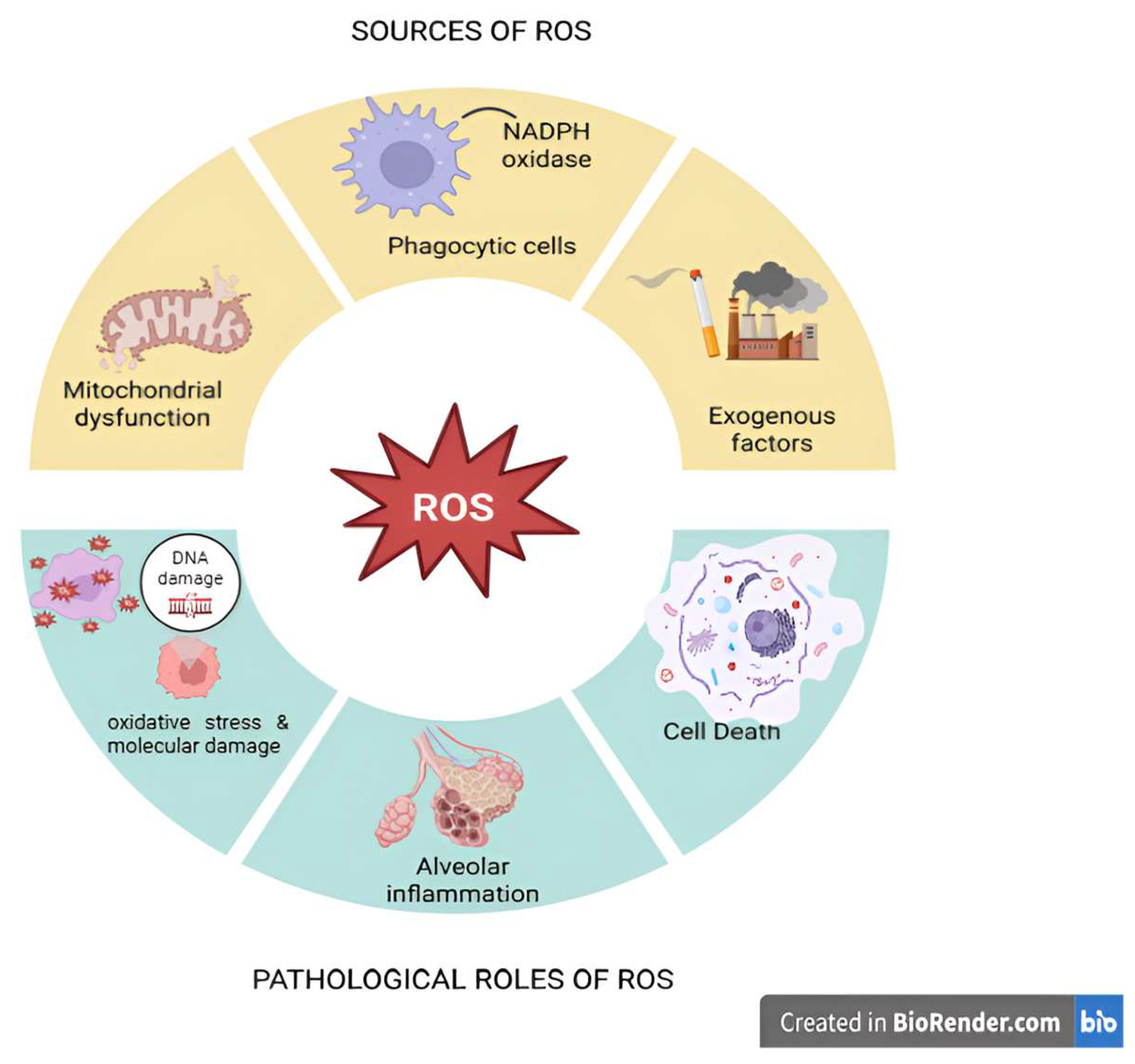
During the initial stages of an infection, one of the body’s first rapid-response mechanisms involves the generation of mitochondrial ROS (mtROS). Under normal conditions, mitochondria only generate minimal amounts of these reactive molecules. This low baseline production is a natural consequence of the metabolic activity within the electron transport chain, occurring predominantly at complexes I and III. However, the detection of a pathogen changes this. Specialized receptors on immune cells, such as the TLRs (Toll-like receptors), identify pathogen-associated molecular patterns (PAMPs). This recognition initiates a signaling cascade that relies on mitochondrial antiviral signaling proteins, which in turn direct mitochondria to move forward and congregate around phagosomes. This relocalization enhances local mtROS production, serving dual functions: direct antimicrobial activity and signaling. mtROS activate redox-sensitive transcription factors such as NF-κB and stimulate the NLRP3 inflammasome, thereby linking metabolic cues to immune activation [
23]. While regulated mtROS support bacterial and viral clearance, persistent mitochondrial dysfunction amplifies oxidative stress and promotes host tissue injury [
24] (
Figure 2).
The NADPH oxidase (NOX2) complex is the archetypal driver of the phagocytic oxidative burst. Upon microbial recognition, cytosolic NOX2 subunits assemble with membrane-bound flavocytochrome b558 to form the active enzyme complex. This holoenzyme transfers electrons from NADPH to oxygen, producing large amounts of superoxide radical anions. The importance of this mechanism is underscored by chronic granulomatous disease, in which defective NOX2 activity results in recurrent, severe infections. Superoxide radical anions are rapidly converted into hydrogen peroxide, which subsequently serves as a substrate for MPO. Abundantly expressed in neutrophil azurophilic granules, MPO catalyzes the conversion of H
2O
2 and chloride ions into hypochlorous acid (HOCl), one of the most potent oxidants in human biology [
25]. Together, superoxide and hypochlorous acid (HOCl) form a synergistic system capable of eliminating bacteria, fungi, and viruses within minutes. Hypochlorous acid (HOCl) is a highly reactive, potent oxidizing antimicrobial molecule generated during the neutrophil respiratory burst by the enzyme myeloperoxidase, between the reaction of hydrogen peroxide and chloride ions. It contributes to the host defense by employing a broad-spectrum antimicrobial activity that destroys the bacterial membranes and inactivates the pathogen. Winter and colleagues detail that HOCl can be used as a respiratory antiseptic on mucosal surfaces owing to this particular characteristic [
26]. At the same time, it strongly reacts with other host biomolecules like lipids, proteins and nucleic acids. This may lead to halogenative stress, tissue damage and the impairment of cellular functions when it is produced excessively, especially during the conditions of chronic inflammation. This dual behavior underscores the role of HOCl as both an essential immune effector and a mediator for oxidative tissue injury in inflammatory lung conditions.
Neutrophils and macrophages are the dominant cellular sources of ROS during pneumonia. Neutrophils mount rapid, high-amplitude oxidative bursts primarily dependent on NOX2 and MPO activity, but they also deploy mtROS in certain contexts. ROS are crucial for the formation of neutrophil extracellular traps, chromatin webs decorated with antimicrobial proteins that immobilize pathogens [
27]. Macrophages, in contrast, generate ROS more gradually and in concert with cytokine secretion, antigen presentation, and T-cell modulation. This ensures that direct antimicrobial activity is integrated with the regulation of adaptive immunity. However, when ROS generation exceeds physiological limits, both neutrophils and macrophages can transition from protective to pathogenic roles, driving chronic inflammation, oxidative damage to alveolar structures, and impaired resolution of infection.
Beyond primary production, ROS amplification occurs through secondary pathways, including the formation of peroxynitrite through the rapid reaction of nitric oxide with superoxide radical anions, iron-catalyzed Fenton reactions generating hydroxyl radicals, and ROS-induced lipid peroxidation. These downstream processes further compromise epithelial and endothelial integrity, sustain edema, and propagate inflammatory signaling, thereby exacerbating pneumonia severity. The clinical relevance of these pathways is confirmed by the observation that biomarkers of oxidative stress—such as elevated MPO, 8-isoprostane, and nitrotyrosine—are consistently detected in patients with pneumonia and their levels correlate with disease severity. High circulating levels of MPO directly reflect the neutrophil activation and degranulation. Similarly, 8-isoprostane, a stable product of arachidonic acid peroxidation, serves as a reliable marker of lipid membrane damage caused by radicals like the hydroxyl radicals. Furthermore, the presence of nitrotyrosine residues on proteins provides a specific molecular signature of peroxynitrite formation, linking superoxide and nitric oxide pathways to tissue nitrative stress. The concentrations of these biomarkers often correlate with the clinical measures of the disease severity (
Table 1) [
28,
29].
Understanding the sources and amplification of ROS provides a mechanistic basis for developing targeted interventions that modulate oxidative stress without compromising antimicrobial defense.
2.3. Oxidative Stress in Disease Progression
The progression of infectious diseases, particularly pneumonia, is profoundly influenced by the equilibrium between reactive oxygen species generated by the host and its intrinsic antioxidant mechanisms. This relationship is fundamentally dualistic: a tightly regulated burst of ROS is a critical component of innate immunity, enabling the targeted elimination of pathogens, but when this response becomes excessive or poorly controlled, it shifts from a defensive tool to a driver of tissue injury. An overproduction of ROS that surpasses the body’s capacity to neutralize it leads to a state of oxidative stress, which in turn precipitates significant structural and functional changes within the lungs and throughout the body. This oxidative damage not only exacerbates the acute severity of the infection but is also implicated in the development of long-term sequelae that remain after the initial pathogen has been eliminated.
One of the initial pathological events in pulmonary infections involves ROS-mediated injury to the epithelial and endothelial barriers. The alveolar epithelium and capillary endothelium collectively form the essential air–blood barrier, responsible for efficient gas exchange and containment of pathogens. An excess of ROS, originating from activated immune cells such as neutrophils and macrophages as well as from mitochondrial sources, promotes the oxidation of lipid membranes, compromises tight junction integrity (e.g., occludins, claudins, ZO-1), and impairs the function of pulmonary surfactant [
36,
37]. The consequent loss of barrier function facilitates microbial spread, fluid leakage into the alveolar spaces, and susceptibility to secondary infections. Furthermore, oxidative stress in the endothelium disturbs vascular regulation by uncoupling endothelial nitric oxide synthase. This process diminishes nitric oxide bioavailability, encouraging vasoconstriction, platelet aggregation, and the formation of micro-thrombi [
38]. These alterations to both the alveolar and vascular compartments collectively contribute to the clinical manifestations, namely impaired gas exchange leading to refractory hypoxemia and a state of hypercoagulability.
The development of lung damage is primarily due to the combined consequences of infection, inflammation and the disruption of the normal lung functions. The structural veracity of the alveolar–capillary barrier is compromised in diseased conditions like pneumonia and ARDS, which have high-intensity inflammatory signaling. This leads to alveolar damage, increased vascular permeation, protein-rich edema and, consequently, the infiltration of the immune cells into the lung parenchyma. Concurrently, the excessive recruitment of the neutrophils and macrophages and their activation intensifies this local tissue injury. This is facilitated through the release of proteases, amplification of the inflammatory mediators and the induction of the epithelial and endothelial apoptosis. This damage further impairs the exchange of gases and also propagates secondary injury, thereby promoting the progression to acute respiratory distress syndrome or ARDS. Long et al. emphasize that this progressive failure of the barrier integrity and the regulation of the immune cells initiates the change from localized infection to ARDS [
39].
This compromise of barrier function is closely associated with the development of alveolar–capillary leakage and a pronounced cytokine storm. ROS serve as powerful activators of redox-sensitive signaling pathways, including transcription factors like NF-κB and AP-1, STAT3, and Nrf2. This activation triggers an exaggerated production of pro-inflammatory cytokines such as TNF-α, IL-1β, and IL-6 [
40]. The synergistic effect of oxidative stress and inflammatory cytokines heightens vascular permeability, encourages the infiltration of leukocytes, and results in the flooding of alveoli with protein-rich fluid. In severe pneumonia presentations, this self-perpetuating inflammatory cascade manifests as hypoxemia, decreased lung compliance, and pulmonary infiltrates visible on imaging. Mitochondrial ROS also contribute by enhancing the activation of the NLRP3 inflammasome, thereby further elevating levels of IL-1β and IL-18 and sustaining the cytokine storm. Given their central role, these mechanisms have become focal points for therapeutic investigation, with strategies aimed at modulating the NLRP3 inflammasome and scavenging mitochondrial ROS emerging as potential adjunctive approaches to mitigate tissue injury in severe respiratory failure [
41].
A primary clinical outcome of these mechanisms is the onset of acute respiratory distress syndrome. This is marked by widespread alveolar damage, impaired gas exchange, and profound respiratory failure. For many patients, the injury does not resolve. Continued oxidative stress and dysregulated repair processes can lead to pulmonary fibrosis—a long-term complication vividly illustrated by post-COVID-19 cases [
42]. The irreversible scarring and loss of lung function, a characteristic of fibrosis, significantly impairs the quality of life. Furthermore, the initial pulmonary event initiates a consequential systemic crisis. The inflammatory mediators and oxidative molecules released into the circulation provoke endothelial dysfunction, increasing the risk of life-threatening multi-organ complications such as coagulopathy and cardiac events. Consequently, the ultimate clinical trajectory of pneumonia is often dictated by the severity of these downstream systemic effects, highlighting that managing the initial lung injury is only a part of the therapeutic challenge.
The significance of oxidative stress is confirmed by specific, measurable biomarkers in patients. A distinct rise in byproducts like malondialdehyde, with a concurrent decline in enzymes such as superoxide dismutase, not only reflects the oxidative assault but has also proven to be a reliable predictor of adverse clinical outcomes, offering a tangible link between molecular damage and disease progression [
43,
44]. Plasma concentrations of MPO- and NOX2-derived peptides have also emerged as predictive indicators of mortality in septic pneumonia [
45]. Collectively, these findings highlight the central role of oxidative stress not only in driving the pathophysiology of pneumonia and its complications, but also as a reservoir of measurable biomarkers that can inform clinical decision-making, risk stratification, and therapeutic monitoring. Importantly, the integration of these biomarkers into clinical practice could also provide a foundation for precision-guided interventions, particularly in evaluating the efficacy of antioxidant and redox-responsive therapeutic strategies.
Even with their robust mechanistic rationale, most of the antioxidant-based treatments have failed to produce a steady risk-to-benefit ratio in patients with severe pneumonia, acute lung injury and acute respiratory distress syndrome. Randomized trials that evaluated the effect of high-dose intravenous Vitamin C have reported varied outcomes, with minimal or no reproducible improvement in mortality or ventilator-free days in multicenter studies [
46]. Similarly, studies with N-acetylcysteine have also failed in demonstrating consistent benefits in conditions of ARDS and Sepsis. Inadequate pulmonary bioavailability, suboptimal administration timings and the inefficacy of the systemic antioxidants to attain the therapeutic concentrations, particularly in the alveolar compartments, are the possible reasons for these unsatisfactory results. Hence, these findings advocate that the non-targeted antioxidant therapy unaided is not sufficient to counteract the localized oxidative injury in the infected lung tissue [
47].
3. Conventional Oxygen-Centered Therapeutics Strategies
3.1. Oxygen Therapy in Pneumonia
The administration of supplemental oxygen is a fundamental aspect of supportive care for patients with pneumonia, particularly those experiencing hypoxemia or respiratory distress. The central aim of this intervention is to ensure adequate oxygen delivery to tissues while avoiding complications associated with excessive oxygen exposure. While oxygen alleviates hypoxemia, inappropriate dosing can exacerbate oxidative stress, linking therapy directly to redox-mediated lung injury. Refinements in delivery systems and evidence-based recommendations have led to more sophisticated supplementation strategies. These strategies are tailored to the individual’s clinical severity and oxygenation status, encompassing a spectrum from low-flow devices to full mechanical ventilatory support.
For individuals with mild hypoxemia, a low-flow nasal cannula (1–6 L/min) is typically the initial intervention, raising FiO
2 to approximately 24–40%. Although straightforward and generally well-tolerated, its effectiveness diminishes in patients with significant respiratory effort or advanced pneumonia [
48]. In these situations, high-flow nasal oxygen has become a preferred alternative. High-flow nasal oxygen (HFNO) delivers warmed and humidified oxygen at high flow rates (up to 60 L/min), ensuring a more reliable FiO
2, reducing anatomical dead space, and generating low-level positive airway pressure. This physiological rationale is substantiated by robust clinical investigations. Seminal work, such as the FLORALI trial, revealed that high-flow nasal oxygen significantly decreased the requirement for mechanical intubation in cases of acute hypoxemic respiratory failure—a frequent consequence of severe pneumonia—when contrasted with conventional oxygen delivery or non-invasive positive pressure ventilation. This body of evidence was notably augmented during the COVID-19 pandemic, where numerous randomized controlled trials consistently reported that HFNO enhanced gas exchange and lowered the incidence of tracheal intubation in patients experiencing severe hypoxemia. These findings have collectively reinforced its position in international guidelines as a fundamental respiratory support strategy for managing severe pneumonic respiratory failure [
49,
50].
For critically ill patients with hypoxemia refractory to non-invasive measures, mechanical ventilation is indicated. Lung-protective ventilation is standard for pneumonia patients who develop ARDS. This approach employs low tidal volumes (~6 mL/kg predicted body weight) and maintains plateau pressures below 30 cm H
2O to minimize ventilator-induced lung injury (VILI). Supportive interventions, such as prone positioning or, in selected cases, extracorporeal membrane oxygenation, may be required for patients with severe oxygenation deficits. For the most severe cases where gas exchange remains critically impaired despite these maximal efforts, extracorporeal membrane oxygenation (ECMO) serves as a salvage therapy. Its deployment is typically considered when mechanical ventilation fails to maintain adequate oxygenation, as indicated by a PaO
2/FiO
2 ratio persistently below 80 mmHg or in the context of uncompensated hypercapnia with acidemia (pH < 7.25), as outlined in the international consensus guidelines. This intervention aims to provide full respiratory support, facilitating ultra-long protective ventilation strategies and allowing the injured lungs to heal [
51].
Beyond conventional approaches, hyperbaric oxygen therapy has been explored in exceptionally severe pneumonia complicated by sepsis or multi-organ failure. Hyperbaric oxygen therapy (HBOT) involves breathing pure oxygen intermittently in a pressurized chamber (>1 atmosphere absolute), resulting in supraphysiological oxygen levels in blood and tissues. Preclinical studies suggest HBOT may enhance bacterial clearance, modulate systemic inflammation, and improve tissue oxygenation. However, clinical evidence remains limited, and HBOT is currently considered experimental rather than standard therapy [
52].
A critical consideration in oxygen therapy is the potential for oxygen toxicity, mediated by ROS overproduction under hyperoxic conditions. Excess FiO
2 can trigger mitochondrial dysfunction and activate NADPH oxidase, leading to ROS-mediated injury. Hyperoxia adversely affects pulmonary surfactant, increases alveolar–capillary membrane permeability, and amplifies inflammatory cascades, potentially worsening lung injury: This underscores the dual role of oxygen essential for tissue survival but potentially harmful when over-administered [
53,
54].
Current guidelines from the World Health Organization and other professional bodies emphasize titrating oxygen to individual patient needs. For most adults, Peripheral Oxygen Saturation (SpO
2) should be maintained between 90 and 94%, and slightly lower (88–92%) for patients with chronic hypercapnic respiratory failure, such as coexisting Chronic Obstructive Pulmonary Disease (COPD) [
55]. For pediatric pneumonia, the WHO recommends initiating oxygen when SpO
2 drops below 90%, ensuring the availability of low-flow and high-flow systems even in resource-limited settings [
56]. In adult pneumonia and ARDS, a conservative approach is advised: avoid sustained FiO
2 > 60% unless necessary and systematically reduce support as tolerated. Future directions in oxygen therapeutics are increasingly focused on precision medicine, investigating advanced continuous monitoring of tissue oxygenation to guide delivery. These evolving strategies seek to optimize the therapeutic window—ensuring adequate cellular oxygen supply while meticulously limiting excess exposure that potentiates reactive oxygen species-mediated harm—thereby refining a fundamental intervention to improve pulmonary and systemic outcomes [
57].
3.2. Systemic Antioxidant Therapies
Recognizing the dual function of reactive oxygen species in facilitating microbial killing and propagating tissue damage, systemic antioxidant administration has been investigated as a complementary strategy in pneumonia management. The rationale for this approach is to restore redox balance by neutralizing excess ROS, replenishing endogenous antioxidant systems, and mitigating oxidative injury to lung tissue. N-acetylcysteine, Vitamin C, and Vitamin E are among the most extensively studied compounds for this purpose. While antioxidant and redox-modulating strategies show significant promise in animal studies, reliably reproducing these benefits in human patients has been difficult. This translational gap is the central challenge to be addressed in the field. Clinical trials have frequently reported inconclusive outcomes, leaving the definitive efficacy of these approaches unsettled. Ensuring that these therapeutics reach their intended targets within the lung at adequate concentrations represents a pivotal challenge that necessitates the development of optimized dosing regimens and efficient drug delivery systems for clinical success.
N-acetylcysteine (NAC) confers protection against oxidative damage through a dual mechanism. Its thiol group enables the direct scavenging of reactive oxygen species, while simultaneously providing L-cysteine for the biosynthesis of glutathione. This dual capacity to neutralize threats and bolster endogenous defense makes NAC a valuable therapeutic agent. In the context of an infection, the protective effects of NAC are threefold: it restores critically low glutathione reserves, it directly eliminates toxic reactive oxygen species like hydroxyl radicals, and it improves airway clearance by breaking apart disulfide linkages within thick mucus [
58]. Animal studies suggest NAC can moderate neutrophil oxidative bursts, reduce cytokine-driven inflammation, and protect alveolar epithelial cells from oxidative injury. In human pneumonia trials, NAC has been associated with modest benefits, including improved sputum expectoration, enhanced oxygenation, and reduced hospitalization duration in selected patient cohorts. A notable consideration in these clinical outcomes is the route of administration; intravenous delivery is posited to achieve more predictable systemic concentrations and superior pulmonary bioavailability compared to the variable absorption of oral formulations, which may influence its therapeutic efficacy [
59]. However, its impact on major endpoints—such as mortality reduction or prevention of ARDS—remains inconclusive, confining its use to a supportive role within broader therapeutic regimens.
Vitamin C has also been widely studied for its antioxidant properties. It neutralizes various ROS, facilitates regeneration of oxidized Vitamin E, and supports endothelial nitric oxide synthase function. Additionally, it enhances neutrophil chemotaxis and phagocytic capacity. During severe pneumonia, systemic Vitamin C stores can be rapidly depleted [
60]. Clinical studies suggest that high-dose intravenous administration may reduce vasopressor requirements, moderate multi-organ dysfunction, and accelerate radiographic resolution of pulmonary infiltrates in critical cases [
61]. However, larger randomized trials show mixed outcomes, with no consistent evidence of survival benefit. This has not precluded ongoing investigation; contemporary clinical trials continue to evaluate the efficacy of high-dose intravenous Vitamin C, particularly in populations with sepsis and ARDS, aiming to better define its potential role in critical care. Oral administration is limited by intestinal absorption thresholds, necessitating intravenous delivery to achieve potentially therapeutic plasma concentrations.
Vitamin E, a lipid-soluble antioxidant, protects cellular and mitochondrial membranes from lipid peroxidation. Animal models of viral pneumonia indicate supplementation can attenuate oxidative lung injury and improve pulmonary mechanics [
62]. Nonetheless, evidence from human studies is less compelling. Large clinical trials have not consistently demonstrated reductions in mortality or severe complications, and there is concern that very high doses may exert pro-oxidant effects, particularly in critically ill patients with pre-existing redox imbalance. Consequently, its application in the intensive care unit (ICU) necessitates a careful risk–benefit consideration; dosing must be precisely calibrated to avoid surpassing the narrow therapeutic window beyond which antioxidant activity may paradoxically transition into pro-oxidant harm, potentially exacerbating the very oxidative stress it aims to mitigate [
63].
Despite mechanistic rationale, systemic antioxidant therapy faces significant practical challenges. Bioavailability is a major limitation: NAC undergoes first-pass hepatic metabolism, oral Vitamin C has absorption ceilings, and Vitamin E distribution depends on lipid transport, often impaired during critical illness. Furthermore, achieving therapeutic drug concentrations in the alveoli—where neutrophils and macrophages generate concentrated ROS—is difficult [
64]. This disconnect between systemic delivery and local site-of-action helps explain why promising preclinical findings often fail to translate into consistent clinical benefits. These limitations have prompted investigation into more-targeted therapeutic strategies.
4. Advanced Drug Delivery Strategies Targeting Oxidative Stress
4.1. Nanoparticle-Based Formulations
To overcome the poor targeting and stability that can occur with systemically administered antioxidants, nanomedicine provides a sophisticated solution (
Table 2). Engineered nanocarriers such as liposomes and polymeric nanoparticles can be designed to enhance drug solubility and shield their payload from premature degradation. A key advantage is their ability to passively accumulate in inflamed lung tissue via the enhanced permeability and retention effect, which takes advantage of the leaky vasculature, which is characteristic of pneumonic lesions. By concentrating the therapeutic action directly at the site of disease, these platforms minimize systemic exposure and off-target effects and thereby offer a substantially improved therapeutic window over conventional approaches [
65].
Liposomes, spherical vesicles composed of phospholipid bilayers, are highly versatile carriers. Water-soluble antioxidants such as Vitamin C or N-acetylcysteine can be encapsulated within the aqueous core, whereas lipid-soluble compounds like Vitamin E can be incorporated into the bilayer membrane. Liposomal formulations prolong circulation time, enhance compound stability, and can be delivered via inhalation for direct pulmonary action. Experimental models of bacterial pneumonia demonstrate that liposomal Vitamin E reduces oxidative damage markers more effectively than free Vitamin E and supports structural recovery of lung tissue. These promising preclinical results underscore a significant translational potential for human application, where delivery platforms such as nebulization or dry-powder inhalers could be adapted for liposomal antioxidants to achieve targeted pulmonary deposition and maximize therapeutic benefit in patients.
Polymeric nanoparticles, commonly fabricated from PLGA, chitosan, or PEG, allow controlled and sustained release of therapeutic cargo. An innovative advancement in this domain is redox-sensitive nanoparticles, engineered to remain stable under physiological conditions but to release their payload upon exposure to high levels of reactive oxygen species. For example, disulfide-bridged nanoparticles can release NAC locally in areas of elevated oxidative stress, restoring glutathione and attenuating cellular damage. This inherent responsiveness enables a site-specific therapeutic action, concentrating antioxidant effects precisely where pathological ROS concentrations are highest while minimizing systemic exposure and the potential off-target effects, thereby representing an inherently therapeutic strategy.
Solid lipid nanoparticles present a promising delivery platform by merging a favorable safety profile with an exceptional loading capacity for fat-soluble antioxidants. The solid matrix of the nanoparticle core acts as an innovative protector barrier, which effectively shields oxidation-prone compounds like vitamin E from degradation throughout the manufacturing process and during aerosolisation for inhalation. This inherent stabilization is a critical advancement and directly contributes to enhance payload integrity and more efficient drug delivery to the pulmonary system, thereby increasing their viability after treatment strategy.
An innovative approach in pneumonia management involves using nanoscale platforms engineered for the co-delivery of antimicrobial and antioxidant agents. This approach concurrently targets the dual pathology of microbial invasion and host-derived oxidative injury. Studies demonstrate that nanoparticles loaded with Ciprofloxacin and NAC exhibit superior efficiency in eradicating pathogens, mitigating inflammation and preserving pulmonary architecture compared to monotherapies. A critical translational advantage is the compatibility with inhalation delivery, which maximizes drug concentration at the disease site while minimizing systemic distribution. This site-specific action enhances therapeutic efficacy and promises a reduced side effect profile, representing a significant advance in targeted pulmonary medicine.
The use of EPR or enhanced permeability and retention-based targeting approaches for the treatment of inflamed lung tissue remains highly debated. In contrast to solid tumors, consistent extravasation by the nanoparticles is limited in pneumonia, which is possibly due to the heterogeneous and spatially variable inflammation, along with the temporally transient alterations in the vascular permeability [
78]. Additionally, pulmonary surfactant, mucus hypersecretion and rapid macrophage-mediated clearance affect the penetration and retention of these nanoparticles. Furthermore, studies have demonstrated that a considerable amount of the inhaled or intravenously administered nanoparticles are rapidly concealed by the reticuloendothelial system or cleared away from the surface of the airways. Therefore, the passive targeting approaches based on the EPR may be unreliable in pneumonia, which emphasizes the need for active targeting strategies [
79].
4.2. Inhalable Antioxidant Formulations
Inhalation therapy represents a strategic advancement over systemic treatment by overcoming the fundamental challenge of inadequate drug delivery. This site-specific pharmacotherapy enables a high local concentration of the antioxidants to be deposited precisely, which allows them to promptly counteract the damaging ROS. As the therapy acts predominantly within the lungs, it mostly bypasses systemic circulation, thereby enhancing on-target efficacy while minimizing off-target exposure and its associated risks. Furthermore, because inhaled drugs are not initially processed by the liver, a greater proportion of the active ingredient remains available. For conditions like pneumonia and ARDS, this means therapeutic intervention can be focused precisely within the delicate alveolar space exactly when oxidative damage is occurring, offering a potential to improve patient recovery [
80].
Researchers are investigating various methods for this approach, including both nebulizers and dry-powder inhalers, to deliver antioxidants like NAC, vitamin C, and glutathione. Inhaled NAC has proven more effective than its oral counterpart at breaking down thick mucus and directly countering oxidative stress. Animal models also suggest that aerosolized Vitamin C, especially when encapsulated in nanoparticles, can achieve a prolonged protective effect within the lung tissue. These advanced delivery systems represent a significant step toward practical clinical use, promising to make potent, localized antioxidant therapy accessible in a wider range of medical environments [
81,
82,
83].
A highly promising avenue involves nanocarrier-mediated delivery of antioxidant enzymes, including superoxide dismutase and catalase, via inhalation. These enzymes efficiently neutralize ROS but are limited by inherent instability and rapid systemic degradation. Encapsulation within protective carriers such as PEGylated liposomes or biodegradable polymeric nanoparticles preserves catalytic activity, shields the enzymes from enzymatic breakdown, and ensures effective alveolar deposition. Further refinement through redox-responsive design—where nanocarriers incorporate cleavable linkages (e.g., disulfide bonds) that degrade specifically in oxidative environments—could enhance site-specific release, ensuring maximal enzymatic activity precisely within inflamed lung regions characterized by elevated ROS levels. In rodent models, inhalation of catalase-loaded nanoparticles significantly reduced lung fluid accumulation and improved survival outcomes [
84].
Combination inhalers represent another emerging strategy. Formulations co-delivering an antioxidant with a corticosteroid or antimicrobial agent enable a multifaceted therapeutic approach: the antioxidant mitigates ROS-induced tissue damage, the corticosteroid controls excessive inflammation, and the antimicrobial agent targets the underlying infection [
85]. Such systems may permit lower corticosteroid doses, reducing the risk of adverse effects associated with prolonged steroid therapy, while enhancing overall efficacy (
Table 3).
4.3. ROS-Scavenging and Oxygen-Releasing Biomaterials
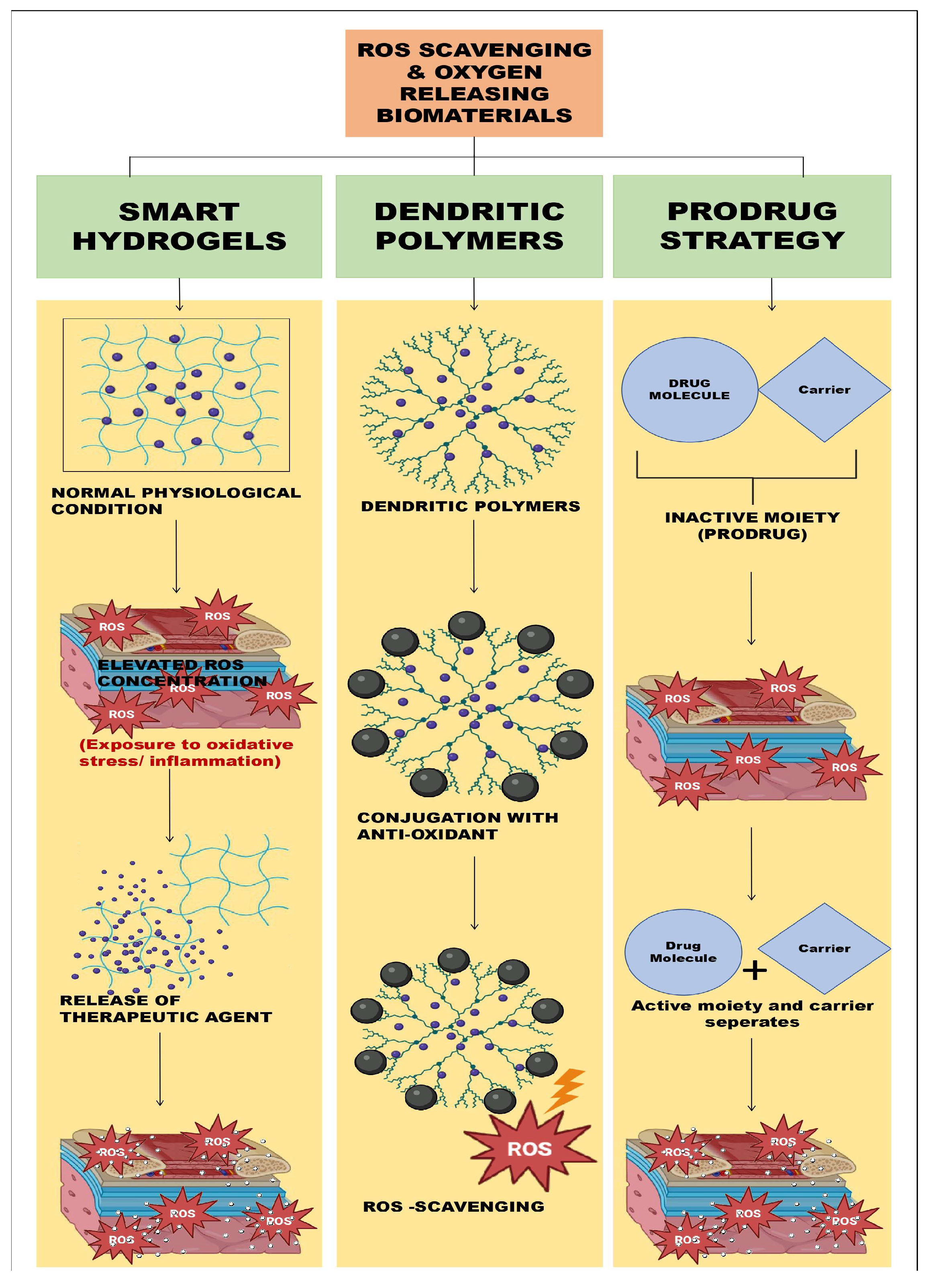
ROS-scavenging and oxygen-releasing biomaterials are designed to sense and actively adapt to the pathological oxidative microenvironment of the diseased lung tissue. (
Figure 3).
5. Innovative Oxygen Modulation Therapies in Pneumonia
Severe pulmonary conditions, including pneumonia and acute respiratory distress syndrome, are characterized by localized oxygen deficiency. This critical state results from a confluence of factors that includes disrupted blood flow, injury to the lungs’ cellular lining, microscopic blood clots, and inflamed air sacs, which severely compromise gas exchange. Conventional oxygen therapies frequently fall short of reversing this profound hypoxia. To overcome this limitation, innovative biomaterial platforms have emerged as a therapeutic frontier. These systems are engineered to actively manage oxygen levels directly at the disease site, employing two strategies: the local production of oxygen to alleviate deficiency or the selective removal of excessive oxygen in these inflammatory environments. A significant advantage of these approaches is their inherent ability to interact with reactive oxygen species pathways, thereby presenting a dual strategy that not only ameliorates hypoxia but also mitigates associated oxidative stress. This represents a novel integrated therapeutic paradigm.
A prominent oxygen-generating strategy involves the use of calcium peroxide (CaO
2). When hydrated, CaO
2 hydrolyses to yield hydrogen peroxide (H
2O
2), which is hazardous to biological material. It then decomposes into oxygen and water, with the help of a catalyst. Encapsulating CaO
2 within polymeric matrices allows controlled and sustained release of oxygen. For example, Suvarnapathaki et al. [
65] showed that polycaprolactone scaffolds incorporating CaO
2 facilitated oxygen release for periods up to 35 days and promoted cellular survival under hypoxic conditions. Comparable outcomes were observed using 3D-printed CaO
2–Polycaprolactone scaffolds, which provided adjustable oxygen release and maintained osteoprogenitor viability in anoxic environments. More recently, silica-coated calcium peroxide@silica (CPO@SiO
2) nanoparticles have been engineered to refine oxygen release kinetics and improve biocompatibility, mitigating oxidative damage markers such as malondialdehyde while supporting cell viability during hypoxia. Although these studies were conducted in tissue and bone models, their findings provide a mechanistic basis for adapting such platforms to alveolar delivery in respiratory diseases.
In contrast, oxygen-depleting biomaterials present distinct advantages in contexts where excess oxygen aggravates disease. Under hyperoxic conditions, the inflamed lung experiences elevated ROS production via mitochondrial and NADPH oxidase activity, worsening tissue injury. Elevated oxygen levels also promote the survival of aerobic and facultative anaerobic pathogens within biofilms, increasing their resistance to antimicrobial agents. To counteract these effects, oxygen-scavenging systems utilizing enzymes such as glucose oxidase have been developed. These systems consume oxygen during the conversion of glucose to gluconic acid and hydrogen peroxide, effectively lowering local oxygen tension. Preclinical evidence indicates that glucose oxidase-embedded hydrogels can suppress aerobic bacterial growth and improve antibiotic effectiveness, while nanoscale formulations have been shown to reduce ROS-driven inflammation in models of lung injury.
Manganese dioxide (MnO
2)-based nanomaterials represent a particularly versatile strategy. These nanozymes catalyze the decomposition of endogenous hydrogen peroxide into oxygen, especially under acidic or hypoxic conditions, thereby alleviating oxygen deficiency while also neutralizing ROS. Additionally, MnO
2 nanoparticles exhibit catalase-like activities, further supporting redox homeostasis. Murphy et al. demonstrated that polymer-coated MnO
2 nanoparticles (e.g., PLGA or PEG formulations) enable controlled oxygen release, reduce hypoxia, suppress HIF-1α activation, and improve survival in models of metastatic disease. Other studies confirm that MnO
2 nanoparticles help reoxygenate tissues, modulate immune cell function, and alleviate oxidative damage, enhancing overall tissue recovery. These multifunctional properties position MnO
2 nanomaterials as promising candidates for inhalable therapies aimed at simultaneous oxygenation and antioxidant support in pulmonary diseases [
96]. Biomaterial-based strategies—whether geared toward oxygen generation or consumption—highlight the critical importance of precise oxygen modulation in managing lung pathology. By enabling sustained oxygen release in hypoxic regions or targeted oxygen reduction in hyperoxic microenvironments, these platforms leverage ROS-involved mechanisms to achieve therapeutic benefits. Future developments will likely focus on inhalable carriers, integration with antioxidant or anti-inflammatory agents, and thorough validation in models of pneumonia and ARDS. Such advances may pave the way for targeted, biomaterial-driven treatments that concurrently tackle hypoxia and oxidative injury in respiratory disorders.
6. Targeting Redox-Sensitive Molecular Pathways
The transcription factor Nuclear Factor Erythroid 2–Related Factor 2 (Nrf2) serves as a keystone regulator of cellular antioxidant responses, orchestrating the expression of genes central to cytoprotection and redox homeostasis—including heme oxygenase-1 (HO-1), NAD(P)H quinone oxidoreductase-1 (NQO1), and glutathione peroxidase (GPx). In pneumonia and ARDS, overwhelming reactive oxygen species (ROS) production can impair Nrf2 signaling, thereby exacerbating oxidative damage, alveolar injury, and inflammatory pathways. Consequently, pharmacological activation of Nrf2 has emerged as a promising strategy to bolster endogenous defenses and mitigate pulmonary damage. Agents such as dimethyl fumarate, sulforaphane, and bardoxolone methyl have shown protective effects in experimental models of lung injury. Bardoxolone methyl, for instance, reduced inflammation and oxidative stress in LPS-induced acute lung injury through Nrf2-mediated actions. Research indicates that targeting the Nrf2 pathway presents a compelling strategy for mitigating lung injury following viral infection. Experimental models of influenza and RSV reveal that Nrf2-activating compound Sulforaphane exerts a dual antiviral and immune-regulatory effect, notably boosting macrophage function and improving the outcomes in subsequent bacterial pneumonia. The critical role of Nrf2 is further underscored by studies in deficient murine models, which develop exacerbated pulmonary inflammation and fibrosis after infection. Collectively, these insights indicate the enhancement of Nrf2 signaling as a novel therapeutic avenue, not only for reducing oxidative damage but also for actively regulating the path of physiological progression of respiratory damage, hence offering a multifaceted approach to improving pulmonary resilience [
97,
98,
99].
The pathogenesis of pneumonia is critically driven by a cycle of inflammation and oxidative stress. The NF-κB and Mitogen-Activated Protein Kinase (MAPK) signaling pathways play a pivotal role in this process, which orchestrates the release of pro-inflammatory mediators, such as TNF-α, IL-6, and IL-1β. These inflammatory cascades are themselves potentially activated by the ROS generated. This ROS search directly contributes to the alveolar damage, loss of epithelial integrity and vascular leakage. Given this vicious cycle, therapeutic strategies that concurrently inhibit are emerging as a promising complement to antioxidants, offering a dual-pronged approach to disrupt the core mechanisms of lung injury [
100,
101,
102,
103].
Emerging therapeutic paradigms are utilizing the pathological oxidative environment of pneumonia to achieve targeted drug delivery. Redox-responsive nanocarriers, including engineered liposomes and polymeric nanoparticles, are designed to deploy anti-inflammatory payloads in areas of high ROS concentration. This site-specific action enables localized inhibition of pro-inflammatory pathways while circumventing broader systemic exposure. Although primarily validated in preclinical settings, these systems represent a significant advance in the spatiotemporal control of inflammation. Complementing this approach, the direct pharmacological inhibition of upstream MAPK signaling nodes has demonstrated efficacy in animal models of pneumonia. Together, these strategies show a shift towards precision interventions that disrupt the inflammatory cascades at critical points.
7. Clinical Translation and Regulatory Considerations
For evaluating the redox-targeted therapies for pneumonia, preclinical in vivo models have a central role, but their translational relevance is controlled by the significant biological differences and variations in experimental design. Comparisons have been done using different murine models with varied pathogens like
Streptococcus pneumoniae,
Staphylococcus aureus,
Klebsiella pneumoniae,
Acinetobacter baumannii, and influenza A virus—showing evident differences in various histopathological features, lesion distribution and the recruitment of the inflammatory cells. These highlight that no single model can uniformly restate the diverse pathologies as observed in the human pneumonia etiologies [
104]. Furthermore, a comprehensive review of the murine bacterial pneumonia models has shown considerable differences in the host immune status, age of the animal, route of infection and the sample processing protocols. All of these have been found to influence the disease severity and the immune/redox outcomes and, hence, reduce the reproducibility of the studies [
105]. For instance, several factors like the lung colonization efficiency, inflammatory biomarker profiles and histopathology are affected by the route of infection, with intratracheal and oropharyngeal instillation generating more reliable pulmonary infection than the intranasal administration in murine
A. baumannii models [
106]. Altogether, these observations showcase that the conventional murine models provide important mechanistic perspectives, but they do not totally capture the heterogeneity of the human pneumonia, hence limiting the direct translational interference.
The translation of redox-based findings from experimental models to early clinical investigation represents a significant advancement in the management of pneumonia and ARDS. N-acetylcysteine, which exhibits a dual mechanism of action by serving as a direct antioxidant and a precursor for the synthesis of glutathione, is a leading candidate in this field. Clinical studies administering NAC via intravenous or inhaled routes demonstrate its capacity to restore systemic redox balance, which is an effect evidenced by the replenishment of glutathione, augmented antioxidant defenses in circulating cells and subsequent improvements in hemodynamic function. Certain trials also document shortened durations of lung injury and better systemic oxygenation, with some patients requiring less respiratory support; however, consistent reductions in mortality have not been observed. Despite these variable outcomes, NAC is generally regarded as safe and is often utilized as supplemental therapy, including in viral pneumonias such as COVID-19, where prolonged oxidative stress contributes to pulmonary compromise. Other inhaled antioxidants—such as glutathione and ascorbic acid—are also under investigation, particularly as adjuncts during recovery from severe respiratory illness, though clinical evidence remains limited. Regimens that combine antioxidants with anti-inflammatory agents, including corticosteroids or macrolides, have been proposed for their potential to simultaneously mitigate oxidative damage and excessive immune responses [
107,
108].
The path to clinical implementation of these redox-targeting treatments necessitates careful adherence to regulatory standards. Agencies such as the U.S. FDA and the EMA require comprehensive nonclinical and clinical assessment of inhaled therapies, particularly those incorporating novel delivery technologies such as nanocarriers or oxygen-modulating compounds. Inhalable redox-based therapeutic strategies often involve strict safety, quality and performance requirements for their regulatory evaluation. Regulatory evaluation focuses on the particle deposition characteristics, pulmonary safety, and long-term biocompatibility. For complex nanomedicines, batch-to-batch reproducibility, physicochemical stability and manufacturing at large scales remain the major regulatory hitches. One of the major limitations of the redox-targeted therapies in pneumonia and ARDS is the deficiency of validated biomarkers that can quantify factors like oxidative stress and disease severity and guide patient stratification. A number of biomarkers have been investigated for redox imbalance for several diseases, specifically for pneumonia and ARDS. For patients with severe lung injury, specific biomarkers like the malondialdehyde (MDA), 8-OHdG and advanced oxidation protein products (AOPPs) are found to be elevated. These are further correlated with inflammation and patient outcomes, which makes them useful for predicting disease severity and oxidative burden. Similarly, elevated levels of ferritin, lactate dehydrogenase and total thiol depletion have been found associated with the ARDS development in COVID-19 patients. This has helped distinguish between severe and milder disease with higher discriminative accuracy and also demonstrated the potential for early risk stratification [
109]. Additionally, changes in the levels of endogenous antioxidant defenses like the reduced glutathione levels, along with the decreased activity of the antioxidant enzymes like the superoxide dismutase (SOD) and glutathione peroxidase, have also been reported in pneumonia and correlated with disease severity and hypoxemia. Evolving evidence also suggests that the higher levels of the circulating mitochondrial DNA (mtDNA) reflect mitochondrial dysfunction, which may be indicative of ARDS and advanced glycation end products, or AGEs can be used as diagnostic markers in COVID-19 cohorts. Both of these may serve as useful biomarkers to analyze the severity of the disease and for guiding the treatment [
110].
Substantial development challenges also impede clinical translation. Preserving the stability and functional integrity of antioxidants during manufacturing processes—such as nebulization, spray-drying, or aerosol generation—poses notable difficulties, as these can induce molecular breakdown, aggregation, or deactivation. Ensuring isotonicity, sterility, and microbial stability throughout storage introduces additional complexity. Even when a stable formulation is achieved, efficient drug delivery to the distal airways remains uncertain. Host defense mechanisms—including mucociliary clearance, alveolar macrophages, and the pulmonary surfactant system—hinder nanoparticle absorption and diminish drug bioavailability within the alveolar epithelium. Research suggests that pulmonary surfactant can inhibit nanoparticle penetration by several orders of magnitude, highlighting the importance of tailored carrier engineering. Dry-powder inhalers, meanwhile, must overcome poor flow dynamics and dispersion issues inherent to fine particulate masses. Scaling production from laboratory to industrial levels introduces further obstacles related to batch uniformity, sterility assurance, and economic viability [
111].
In conclusion, while antioxidant-based interventions such as NAC show potential in alleviating oxidative stress and facilitating lung recovery in pneumonia and ARDS, their clinical benefits remain variable and often modest. Regulatory bodies maintain a cautious yet open stance, mandating thorough evaluation of inhaled and nanoformulated products to ensure safety and performance. At the same time, persistent obstacles in formulation science, pulmonary delivery, and scalable manufacturing continue to hinder widespread clinical adoption. Addressing these limitations will be essential for transforming redox-modulating strategies from experimental concepts into dependable therapies for severe respiratory infections.
8. Biological Risks and Safety Considerations of Redox-Modulating Therapies
Even though the therapeutic strategies that target oxidative stress appear to be conceptually attractive, the uncontrolled suppression of ROS may affect the essential antimicrobial defense mechanisms. ROS has a central role in the innate immune defense, especially in the pathogen clearance mediated by neutrophils. The NADPH oxidase complex is activated during the respiratory oxidative burst, which generates superoxide radical anions and hydrogen peroxide. These are further converted by MPO into highly reactive oxidants like HOCl, which contribute to the rapid microbial killing. Hence, the pharmacological suppression of these pathways affects the antimicrobial defense mechanisms and increases the vulnerability to infections. The clinical and experimental studies further emphasize that the treatments that target oxidative stress must carefully balance the suppression of the pathological ROS levels, while maintaining the antimicrobial functions that are required for effective host defense.
Other than immune defense impairment, these therapies may also impose safety concerns that are associated with pulmonary toxicity and the disruption of the physiological redox signaling. The immoderate administration of the antioxidants can affect cellular redox homeostasis and paradoxically instigate reductive stress and mitochondrial dysfunction and alter the inflammatory signaling pathways. Additionally, the emerging nanoparticle-based antioxidant delivery systems accumulate inside the alveolar macrophages and pulmonary tissues, which triggers inflammatory responses, oxidative imbalance and long-term tissue remodeling.
Another major safety consideration is associated with the disturbances to physiological redox homeostasis, which governs the cellular adaptation to stress. In the pulmonary tissues, the strictly balanced oxidant–antioxidant balance sustains processes like epithelial repair, immune cell communication and metabolic adaptation during infections. The therapeutic strategies that are designed to repress the oxidative stress may shift this balance toward an abnormal reductive state, also referred to as reductive stress. This impairs the normal cellular responses and also promotes mitochondrial dysfunction. It also affects cytokine signaling, interferes with immune responses and, finally, compromises tissue recovery after an inflammatory injury. Additionally, unmanaged antioxidant activity may blunt the adaptive cellular responses that depend on the temporary oxidative signals, which disrupts the homeostatic feedback mechanisms that are necessary for maintaining pulmonary functions. These considerations also emphasize the need for carefully controlling redox-modulating therapies [
112,
113].
These safety concerns can be addressed using therapeutic strategies that can modulate the oxidative stress with precise spatial, temporal and dose control. Rather than the complete suppression of ROS, restoring the physiological balance while still preserving the essential ROS-mediated antimicrobial functions is the major focus of the emerging approaches. Dose-optimized antioxidant therapies, targeted drug delivery systems and redox-responsive drug carriers can be utilized for this purpose. These selectively release the therapeutic agents in environments that are characterized by excessive oxidative stress. Additionally, nanoparticle-based antioxidant platforms are also being engineered in increasing numbers, using materials that are biocompatible and biodegradable, so as to reduce their pulmonary accumulation and inflammatory responses.
These strategies aim to reduce the pathological oxidative injury without affecting the redox signaling or the innate immune defense mechanism. Hence, they can improve the safety profile of the redox-modulating intervention in pulmonary diseases.
9. Future Directions and Challenges
The principles of precision medicine are increasingly shaping the development of redox-targeting therapies for pneumonia. Substantial inter-patient variability in oxidative stress, oxygenation, and immune function highlights the need for personalized treatment strategies. The integration of biomarker-guided approaches—including real-time assessment of reactive oxygen species via exhaled breath or blood markers, and tissue oxygenation using near-infrared spectroscopy or blood gas monitoring—could allow clinicians to stratify patients and tailor interventions accordingly. For instance, individuals experiencing hypoxemia-driven oxidative stress may benefit most from oxygen-generating therapies, whereas those with hyper-inflammatory profiles might derive greater advantage from oxygen-depleting systems or high-concentration antioxidant formulations. This personalized approach aims to reduce risks associated with non-specific therapy while enhancing clinical outcomes [
114].
Artificial intelligence is poised to transform pulmonary redox therapy by providing improved visualization and mapping of oxidative stress and oxygen distribution in the lungs. AI-enhanced imaging modalities, such as advanced quantitative CT and functional MRI, are being developed to identify areas of localized hypoxia or inflammation with high precision. Coupled with smart inhalers equipped with biosensors, these technologies may enable real-time monitoring of patient compliance, breathing technique, and oxidative activity. Future inhalers could integrate microfluidic delivery systems to administer redox-modulating agents with enhanced spatial and temporal precision, evolving inhalation therapy from a uniform approach to an adaptive, data-driven intervention [
115].
Given the simultaneous dysregulation of oxidative balance and immune response in pneumonia, combination therapies are gaining attention. Nanocarriers engineered to co-deliver antioxidants and immune-modulating agents such as checkpoint inhibitors, cytokine antagonists, or Toll-like receptor modulators are under investigation for their ability to simultaneously mitigate oxidative damage and immune dysregulation. Preclinical studies have demonstrated promising outcomes using nanoparticles that scavenge ROS while delivering genetic material encoding anti-inflammatory cytokines, effectively reducing neutrophil-driven inflammation and lung tissue injury. Additionally, pairing redox modulators with conventional antimicrobial agents may help overcome resistance mechanisms, particularly by disrupting biofilms that thrive in oxidative microenvironments, without compromising host defenses [
116,
117].
The translation of these innovative therapeutic strategies faces several significant barriers. Existing animal models have limitations in capturing the complexity of human pneumonia, including the influence of comorbidities and immune responses. Clinically, the absence of reliable biomarkers for oxidative stress hinders precise patient stratification and trial efficacy. From a transitional standpoint, major challenges include the scalable manufacturing of nanocarriers under quality control and the development of rapidly deployable stable formulations suitable for acute care settings, particularly those with limited resources. Addressing these hurdles will necessitate a concerted interdisciplinary approach, which merges the advances in biomaterial engineering, predictive analysis and clinical trial design, to realize the full potential of these novel interventions [
118].
10. Conclusions
The pathophysiology of pneumonia is critically driven by a disruption in the physiological equilibrium, where the relationship between oxygen delivery and reactive oxygen species generation becomes dysregulated. This imbalance has a dual impact, which critically influences both microbial eradication and the extent of post derived tissue injury. Although essential for immune defense at moderate levels, excessive ROS production directly propagates lung damage by compromising the alveolar–capillary barrier, an effect which is correlated with adverse clinical trajectories. Inadequate tissue oxygenation creates a pathogenic cycle that further disrupts this redox balance. Therefore, the interplay between hypoxia and oxidative stress represents a central self-perpetuating mechanism in pneumonia severity, highlighting it as a critical target for novel therapeutic strategies.
A paradigm shift is underway in the treatment of severe respiratory infections, moving beyond direct pathogen targeting to correcting the underlying pathological condition. Normal interventions like systemically delivered antioxidants, inhalable nanocarriers, oxygen-generating materials and engineered systems responsive to reactive oxygen species are designed to reconstitute pulmonary redox hemostasis and oxygen tension. By restoring this fundamental physiological balance, these advanced strategies aim to act synergistically with the immune defenses and potentiate the efficacy of conventional antimicrobial agents, thereby expanding the therapeutic action against complex pneumonia.
The clinical translation of these redox-modulating therapies, however, faces considerable challenges. Key obstacles include ensuring long-term biocompatibility and product stability, navigating complex regulatory pathways, and accounting for significant heterogeneity in patient oxidative stress profiles. The future advancement of this field is poised to depend on personalized medicine strategies. Such approaches would leverage specific biomarkers to guide therapy and utilize intelligent delivery platforms to clinically tailor interventions to individual patient needs.
Ultimately, therapeutic strategies that precisely regulate pulmonary oxygen availability and correct redox imbalances constitute a promising frontier in pneumonia management. Such interventions could significantly improve clinical outcomes by increasing survival, hastening recuperation and demonstrating utility across the infectious etiologies. Translating this potential into patient benefit will require a dedicated interdisciplinary effort to bridge fundamental discovery with clinical application, ensuring these novel mechanisms yield a practical and effective treatment modality.