
Article

Perceptions and Awareness on the Perceived Effectiveness of Nature-Based Solutions in Selected Coastal Communities of Rivers State, Nigeria


by
Chinomnso C. Onwubiko
1,2,* and
Denis W. Aheto
1,2,*
1
Department of Fisheries and Aquatic Sciences, School of Biological Sciences, College of Agriculture and Natural Sciences, University of Cape Coast, Cape Coast P.O. Box 5007, Ghana
2
Africa Centre of Excellence in Coastal Resilience (ACECoR), Centre for Coastal Management, University of Cape Coast, Cape Coast P.O. Box 5007, Ghana
*
Authors to whom correspondence should be addressed.
Submission received: 18 June 2025 / Revised: 18 July 2025 / Accepted: 11 August 2025 / Published: 23 February 2026

Abstract

Nature-based Solutions (NbS) have emerged as transformative approaches to address societal challenges, support biodiversity, and enhance human well-being. Globally, NbS are recognized for their potential to mitigate climate change impacts such as coastal flooding. Despite growing policy interest, limited empirical evidence exists on their real-world effectiveness, particularly in Africa. The core objective of this study was to evaluate how community perceptions, awareness, and demographic factors influence the acceptance and effectiveness of NbS for flood risk reduction in selected coastal communities of Rivers State, Nigeria. Specifically, it aimed to assess community perceptions and awareness of NbS, identify demographic, geographic, and psychosocial factors influencing these perceptions, and analyze how risk perception and local knowledge affect acceptance. The study addressed three key questions: (1) How do community perceptions affect NbS acceptance and implementation? (2) What factors shape awareness and understanding of NbS in Kula, Oyorokoto, and Bonny? (3) How do perceptions vary across demographic groups? To answer these, a structured survey of 1224 respondents was conducted: 61% were male and 39% female, with most aged 31–50 years (80%). Education emerged as a key factor—about 49% of respondents had at least secondary or post-secondary education, which showed a significant link with positive perceptions of NbS (χ2 = 460.98, p < 0.001, Cramer’s V = 0.434). Occupation also shaped views: traders (36.8%) and fishers (24.5%) formed the majority, with occupational patterns showing moderate influence (χ2 = 112.68, p < 0.001, Cramer’s V = 0.215). Overall, awareness was the strongest predictor, with communities reporting higher NbS awareness demonstrating significantly greater acceptance (OR = 0.06, p < 0.001). These findings highlight that targeted awareness-raising, education, and community engagement are critical to promoting mangrove conservation, afforestation, and ecosystem restoration, ultimately strengthening resilience to climate-induced risks in coastal communities.

1. Introduction

Perceptions are shaped by societal influences, and they significantly affect how individuals and communities respond to various challenges. This interplay between perception and behavior is particularly important in addressing societal and environmental issues, as previous studies have shown [1,2,3]. Perceptions are not only crucial for understanding behavioral responses but also serve as tools to evaluate the sustainability and effectiveness of innovations, including Nature-based Solutions (NbS) such as mangrove reforestation in the Niger Delta, coastal wetland conservation in Senegal’s Saloum Delta, dune stabilization using native vegetation along South Africa’s coastline, floodplain restoration along the Tana River in Kenya, and community-led afforestation projects in Mozambique’s coastal regions. Perception studies have been widely applied to evaluate innovations across various fields, providing insights into their effectiveness and social acceptance [4,5,6,7,8]. Moreover, perceptions play a critical role in understanding how communities assess and respond to disasters, further emphasizing their importance in societal resilience [9].
Nature-based solutions (NbS), which leverage natural systems to address environmental and societal issues, have gained prominence in recent years. A study by [10] highlighted the significance of securing the full engagement and consent of indigenous communities to ensure the long-term sustainability of NbS interventions. This emphasis on community participation has resulted in a growing awareness of disaster risks and has spurred stakeholders to consider more holistic approaches to disaster risk reduction [11,12,13,14].
As an umbrella concept, NbS encompasses a wide range of strategies aimed at addressing societal challenges, particularly those related to environmental degradation and climate change. NbS have been framed as win–win solutions due to their adaptive capacity and cost-effectiveness [15,16,17]. They offer significant co-benefits, such as enhancing biodiversity, improving human well-being, and fostering sustainable livelihoods, while simultaneously addressing issues like flood risk [17] and coastal erosion [18,19,20,21]. In Africa’s coastal and flood-prone regions, practical examples include mangrove restoration in Nigeria and Mozambique to protect shorelines and support fisheries, wetland rehabilitation in Kenya’s Tana Delta to buffer floods [22], and urban green infrastructure in Durban, South Africa, to manage stormwater and urban flooding [23]. Recent studies further highlight how NbS, like coastal reforestation and ecosystem-based adaptation, can reduce vulnerability to sea-level rise and storm surges in West Africa. However, despite this growing body of literature, several key aspects remain understudied in the African context. For instance, there is still limited understanding of how NbS perform across diverse environmental and socio-economic settings, especially where rapid urbanization, weak governance, or land tenure complexities hinder implementation [24]. Additionally, the integration of indigenous and local knowledge into NbS design and implementation remains underexplored, despite its potential to enhance the relevance, acceptance, and sustainability of NbS on the continent [25,26,27].
The unique contribution of this study lies in its focus on addressing these knowledge gaps. Specifically, it aims to explore the perceptions of local communities in three vulnerable coastal communities in Rivers State, Nigeria—Kula, Oyorokoto, and Bonny—regarding the effectiveness of NbS to mitigate flood risk and enhance resilience to climate change. By focusing on these understudied regions, this research provides valuable insights into how NbS can be tailored to local contexts and how community perceptions influence the success and adoption of these solutions.
However, the successful implementation of NbS is highly dependent on the involvement of local and indigenous communities throughout the design, implementation, and monitoring phases [28,29,30,31]. This underscores the need for local knowledge, trust-building, and collaborative decision-making to ensure the long-term success of NbS initiatives.
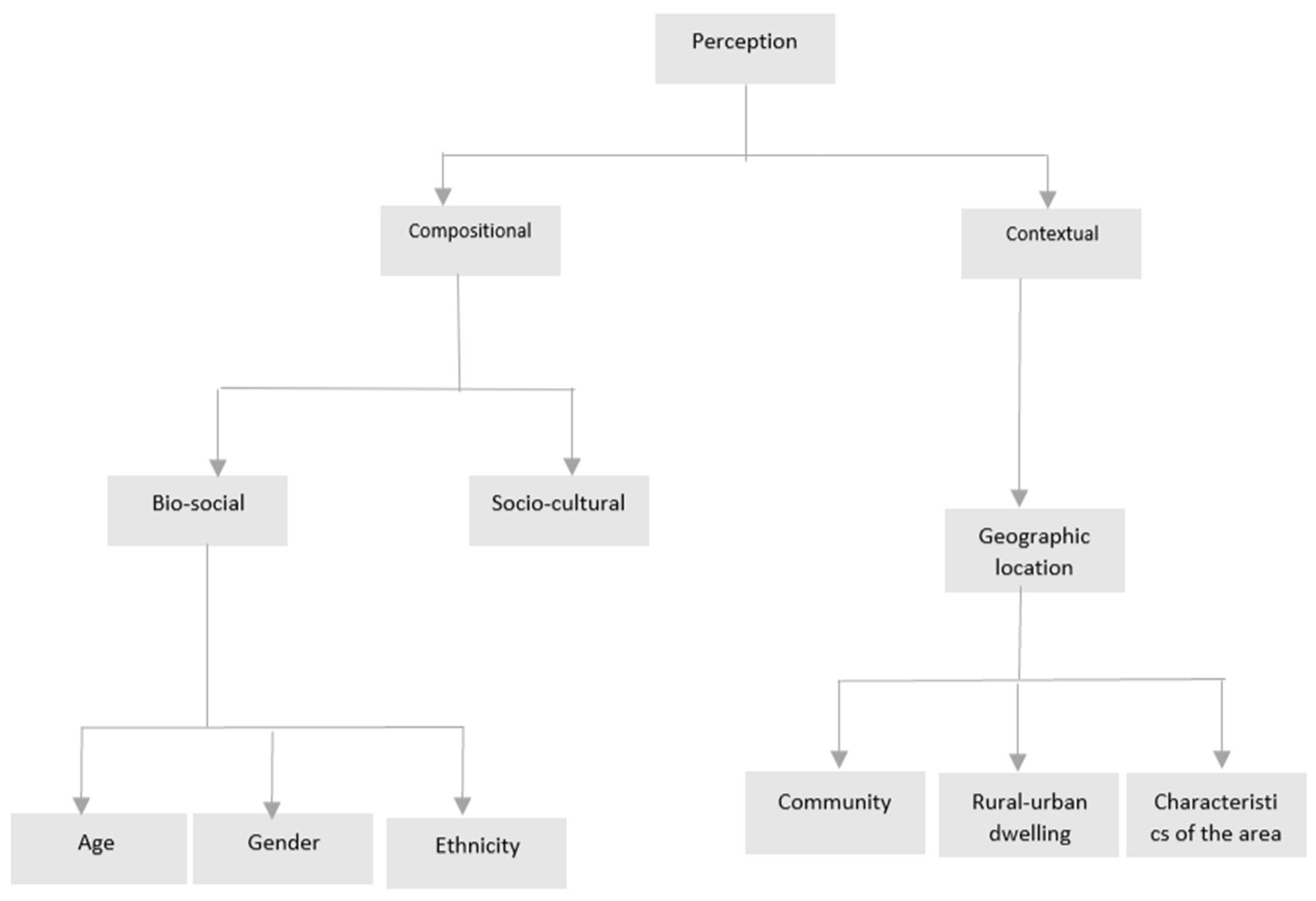
Demographic factors (education, income level, marital status, and number of children), structural or geographical factors (natural environment, hazard risks, and length of residence), and psychosocial factors (knowledge, risk perception, and hazard awareness) have been identified to potentially influence effectiveness and perception of NbS (Figure 1).

2. Literature Review

One of the primary challenges in the widespread adoption of NbS is the negative perceptions that can arise from misconceptions or a lack of understanding. These negative perceptions can create barriers to implementation, particularly when communities do not fully grasp the co-benefits or feel disconnected from the decision-making processes [32,33]. Another significant challenge is the limited public participation in NbS projects, which is a key principle for their success [34,35]. Public participation is essential for fostering a sense of ownership and ensuring that the solutions are tailored to the needs and values of the local communities. However, public misconceptions, especially regarding the effectiveness and sustainability of NbS, often hinder this participation [36,37,38]. Therefore, there is a need for stakeholders to enhance awareness and communication about the co-creational benefits of NbS, which could shift public preferences away from traditional “grey” infrastructure solutions [39,40,41].
Perception is deeply influenced by various factors [42], including an individual’s understanding of risk, awareness of natural co-benefits, and beliefs about the effectiveness of solutions [43,44]. Despite the growing global awareness of NbS as integrated approaches to addressing societal challenges, there remains a lack of concrete evidence on their effectiveness in different contexts. While NbS have been incorporated into policy and practice in regions like Europe and parts of Africa, there is still a significant gap in understanding how well these solutions work in practice, particularly in vulnerable communities [45,46,47,48]. This gap in evidence on the effectiveness of NbS has necessitated the need for further research and case studies, such as this study.
The Sendai Framework for Disaster Risk Reduction 2015–2030 emphasizes the importance of public engagement and participation and also recognizes the need for integrating societal perspectives into disaster risk management [49]. Similarly, the European Union Water Framework Directive advocates for public participation in water management to enhance environmental sustainability [50]. Thus, this study aims to assess the perceptions and awareness of the perceived effectiveness of NbS in three selected coastal communities—Kula, Oyorokoto, and Bonny—in Rivers State, Nigeria. By focusing on these communities, this research seeks to fill the existing knowledge gaps and provide valuable insights into how NbS can be effectively implemented in regions facing significant environmental challenges. Through this study, we hope to contribute to the growing body of literature on NbS and support efforts to foster greater public engagement and resilience in the face of climate-induced risks.
Despite existing frameworks, indigenous stakeholders are less engaged in NbS projects than in conventional grey infrastructure measures [51]. This may stem from limited evidence on NbS effectiveness and insufficient public dialogue with indigenous communities, identified as key knowledge gaps in previous studies [52,53,54,55]. Key barriers to NbS success include inadequate institutional capacity, resource limitations, and poor public communication, as highlighted in a study by [56].
The perception and effectiveness of NbS are influenced by demographic factors (education, income, marital status, family size) and structural factors (residence duration, environment, hazard exposure). Psychosocial factors, including hazard awareness, knowledge, and risk perception, shape community views on risks and their willingness to adopt NbS [57].
In the broader field of marine science and engineering, this study’s relevance lies in its focus on understanding how community perceptions influence the acceptance and success of nature-based solutions (NbS) within vulnerable coastal regions. Marine science increasingly emphasizes the integration of ecological and societal aspects, particularly in response to climate change and environmental degradation, which are prevalent in coastal areas. This research enhances understanding of NbS effectiveness in flood-prone areas, strengthening knowledge on ecosystem-based approaches for coastal hazard mitigation. Furthermore, this study offers insights into coastal communities’ socio-ecological resilience, essential for developing sustainable solutions that balance environmental goals with community needs. Integrating community engagement, awareness, and perceptions into marine science and engineering enhances NbS longevity by aligning technical designs with social acceptance amid global climate challenges. Therefore, this study proposes the following objectives and hypotheses:
Research Objectives
  • To assess community perceptions and awareness of NbS as a flood risk mitigation strategy in selected coastal communities of Rivers State, Nigeria.
  • To identify demographic, geographic, and psychosocial factors influencing public perceptions of NbS.
  • To analyze the role of risk perception and local knowledge in shaping community acceptance of NbS interventions.
Research Questions
1.
How do community perceptions influence the acceptance and implementation of nature-based solutions (NbS) in coastal communities of Rivers State, Nigeria?
Aligned Objective: To analyze the role of risk perception and local knowledge in shaping community acceptance of NbS interventions.
2.
Research Question: What are the key factors shaping public awareness and understanding of NbS in Kula, Oyorokoto, and Bonny communities?
Aligned Objective: To assess community perceptions and awareness of NbS as a flood risk mitigation strategy in selected coastal communities of Rivers State, Nigeria.
3.
Research Question: How do perceptions of flood risks and NbS effectiveness vary across different demographic groups within these communities?
Aligned Objective: To identify demographic, geographic, and psychosocial factors influencing public perceptions of NbS.
Research Hypothesis:
  • H1: Positive perceptions of nature-based solutions (NbS) significantly increase the likelihood of their adoption and successful implementation in flood-prone coastal communities.
  • H2: Higher levels of community awareness and understanding of the effectiveness of NbS are positively correlated with greater participation in NbS projects and enhanced resilience to climate-induced flood risks.
  • H3: Demographic, psychosocial, and environmental factors significantly shape community perceptions of NbS and influence their willingness to engage with NbS projects.
Perception and awareness are critical to the success of nature-based solutions (NbS) [58], influencing public acceptance, policy support, and stakeholder engagement. In Europe, the PHUSICOS project emphasizes collaborative planning through Living Labs, integrating diverse stakeholder views into NbS design [59]. In Asia, urban areas show greater awareness of NbS benefits like flood mitigation, while rural communities focus on economic gains [60]. In Africa, limited awareness hinders participation, despite potential livelihood benefits, such as mangrove restoration. A study by [60] highlighted that risk perception, trust, competing societal interests, and awareness of ecosystem services significantly shape public acceptance, emphasizing the need for effective communication and collaboration. Similarly, ref. [61] noted that poor perception of living shorelines has hampered their adoption for erosion and storm protection. Also, a study by [62] stressed citizen perceptions as crucial for planning green infrastructure, while ref. [63] linked public perception to NbS effectiveness, calling for more research on local community acceptance.
Flooding is a particularly relevant issue in this context. Globally, floods are the second most frequent disaster, causing widespread damage to both people and property [64]. The frequency and severity of floods are expected to increase due to climate change, with projections from the Intergovernmental Panel on Climate Change (IPCC) indicating more intense rainfall and rising sea levels [65,66]. Additionally, increased land-use and land-cover changes, such as deforestation and urbanization, have exacerbated flood risks in many regions [67]. Rivers State, Nigeria, is no exception to these trends, as it has experienced severe flooding in recent years, with devastating impacts on local communities [68,69].
Against this backdrop, the United Nations declared the Ocean Decade (2021–2030) as the Decade of Ecosystem Restoration, acknowledging the role that healthy ecosystems play in disaster risk reduction. The success of ecosystem restoration efforts, including NbS, depends heavily on local perceptions and their integration into decision-making processes. The role of perceptions in solving environmental challenges has been widely documented [2,62,67].

2.1. Nature-Based Solutions (NbS) and Global Context

Nature-based Solutions (NbS) have gained significant attention as sustainable approaches to address climate change adaptation, disaster risk reduction, and biodiversity conservation, particularly in coastal regions. These solutions leverage natural processes and ecosystems to enhance resilience against climate-induced hazards such as sea-level rise, storm surges, and coastal erosion. However, despite their growing popularity, there remain substantial gaps in our understanding of their long-term effectiveness, socio-economic implications, and governance challenges.
Recent research has emphasized the potential of NbS to provide multiple co-benefits, including improved biodiversity, carbon sequestration, and enhanced livelihoods for coastal communities. However, many studies tend to focus on their theoretical advantages rather than critically assessing their practical implementation and long-term performance. This study aims to fill these gaps by conducting a comprehensive evaluation of NbS in vulnerable coastal areas, with a particular focus on their socio-political dimensions, governance frameworks, and real-world effectiveness.
Furthermore, the role of local community engagement in the success of NbS cannot be overstated. Effective implementation requires not only scientific and technical knowledge but also an understanding of the social and economic contexts in which these solutions are deployed. By integrating perspectives from local stakeholders, policymakers, and practitioners, this research seeks to ensure that NbS are designed and implemented in a way that aligns with community needs and aspirations. This is especially crucial in regions where traditional knowledge and cultural practices intersect with modern conservation and adaptation strategies.
Despite the promising potential of NbS, several critical challenges persist. Many existing studies present NbS in an overly positive light, often overlooking the complexities and trade-offs involved. Issues such as land tenure conflicts, socio-economic displacement, and governance constraints can significantly affect the success and sustainability of NbS initiatives. Additionally, there is a lack of empirical validation regarding their long-term ecological and socio-economic impacts, which raises concerns about their scalability and replicability in different contexts.
By addressing these challenges, this research aims to contribute to a more nuanced and evidence-based discourse on NbS. The findings will provide valuable insights for policymakers, practitioners, and researchers, guiding the design and implementation of NbS that are socially inclusive, environmentally sustainable, and contextually appropriate for vulnerable coastal regions. Ultimately, this study underscores the importance of adaptive, co-beneficial approaches to coastal management that balance ecological conservation with socio-economic development, in addition to the shortcomings of existing studies on NbS in Africa.

2.2. Research Gap in the African Coastal Context

While nature-based solutions (NbS) have been increasingly promoted as sustainable, cost-effective approaches to addressing climate change impacts, disaster risk reduction, and environmental degradation, their application in African coastal contexts remains understudied. Existing research has largely concentrated on ecological and biophysical benefits, with limited emphasis on the socio-cultural, governance, and economic dimensions that critically influence adoption and long-term sustainability. In particular, empirical studies focusing on African coastal communities rarely examine how local perceptions, environmental cognition, and traditional ecological knowledge shape the acceptance and effectiveness of NbS. Moreover, there is a paucity of longitudinal assessments that evaluate the real-world performance of NbS in reducing flood risk, enhancing livelihoods, and building socio-ecological resilience over time. The scarcity of interdisciplinary studies that integrate community participation, behavioral science, and environmental psychology further constrains the development of context-specific strategies. Consequently, these knowledge gaps limit the evidence base needed to guide inclusive policies and the co-creation of NbS interventions that reflect the priorities, values, and lived realities of vulnerable African coastal populations.

2.3. Shortcomings of Existing Studies on Nature-Based Solutions (NbS) in African Coastal Communities

2.3.1. Limited Empirical Research and Context-Specific Case Studies

While there is a growing body of literature on NbS, empirical studies focusing on African coastal communities remain limited. Most research originates from the Global North, and findings are often extrapolated to African contexts without adequate consideration of the region’s socio-ecological specificities. The lack of locally grounded case studies means that proposed NbS interventions may not align with the distinct environmental, cultural, and governance realities of African coastal communities.

2.3.2. Insufficient Integration of Indigenous and Local Knowledge

Empirical research on NbS in African coastal communities often overlooks indigenous ecological knowledge and community-driven conservation practices. Existing studies frequently adopt top-down approaches, focusing on scientific and technical perspectives without adequately incorporating the lived experiences and traditional knowledge of local populations. This omission can result in low community engagement and reduced success in NbS implementation.

2.3.3. Lack of Interdisciplinary and Transdisciplinary Approaches

Many NbS studies in African coastal areas are conducted within narrow disciplinary silos, often emphasizing either ecological or socio-economic aspects while neglecting the interconnectedness of environmental, social, and governance dimensions. Effective NbS strategies require interdisciplinary research that bridges natural and social sciences, as well as transdisciplinary collaborations that include policymakers, practitioners, and community stakeholders.

2.3.4. Weak Policy Linkages and Governance Challenges

Empirical studies often fail to adequately analyze the governance structures that influence the success of NbS in African coastal communities. Issues such as fragmented policies, unclear land tenure rights, and limited institutional capacity frequently impede the scaling and replication of successful NbS projects. The absence of studies that critically examine these governance challenges limits the ability to develop actionable policy recommendations.
Figure 1. Determinants of human perception: Compositional and contextual factors [64].
Coasts 06 00007 g001

3. Materials and Methods

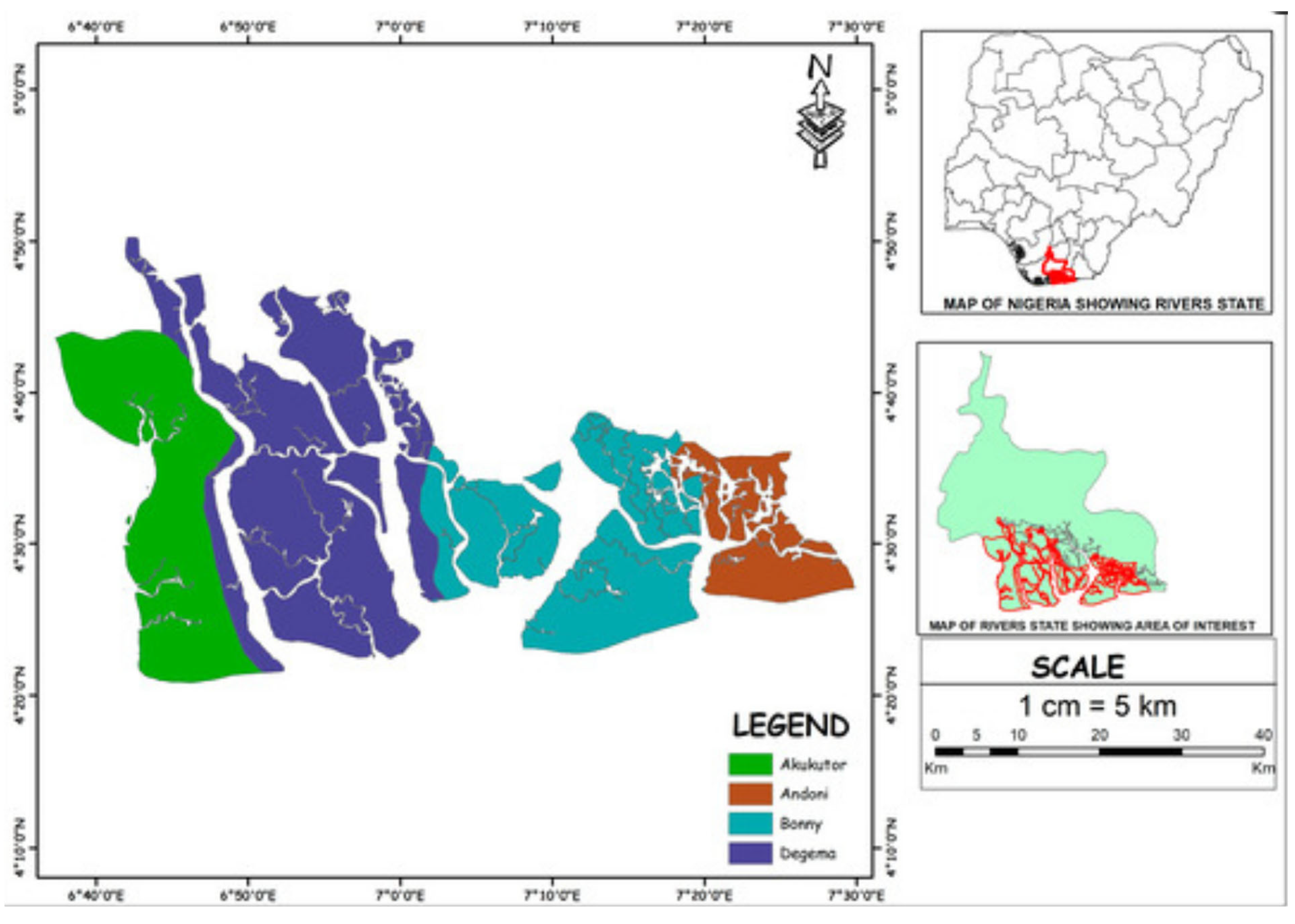
The study was carried out in Kula, Oyorokoto, and Bonny communities in Rivers State, Nigeria [Figure 2]. Rivers State, located in the heart of the Niger Delta in southern Nigeria, provides a compelling case for studying flood risk and nature-based solutions because of its unique socio-economic, environmental, and geopolitical characteristics. The Niger Delta is recognized as among the largest and most ecologically significant deltas globally, encompassing a complex system of rivers, creeks, estuaries, and mangrove forests. Rivers State, in particular, exemplifies this landscape, with its intricate web of waterways and coastal communities that are increasingly susceptible to the impacts of climate change, including SLR, flooding, and coastal erosion.
The total number of responses recorded in the study was 1224; 90 were from the Kula community, 23 were from the Oyorokoto community, and 1111 were from the Bonny community. The LGAs and the communities were purposively selected as a result of their proximity to the Atlantic Ocean. These communities are made up of males and females in a ratio of 3:2. Their major occupations are farming and fishing and every fish-related trade. The men usually fish while the women carry out the fish-related activities like fish processing and renting of engine boats. The average resident in any of these communities has a basic school certificate education (). The total population, both mainland and island, includes Andoni (306,200), Akukutoru (226,300), and Bonny (302,000).

3.1. Study and Survey Design

Surveys are widely used to assess perceptions because they offer comparability, reproducibility, and flexible implementation [31,69,70]. They can be conducted in person or online, allowing for efficient data collection [71]. A structured questionnaire was chosen as the main research tool due to its effectiveness in capturing diverse perceptions and awareness levels within the target population. Standardized questions ensure responses are comparable across respondents, making this method well-suited for examining how perceptions and awareness shape views on the effectiveness of nature-based solutions (NbS) for flood risk reduction.
The questionnaire’s structured format enabled the collection of both qualitative and quantitative data, supporting an in-depth analysis of factors influencing community attitudes toward NbS. This method also allowed a large number of participants to be surveyed within a short time frame. As the study focuses on community perspectives, questionnaires provided a direct way to gather individual viewpoints, experiences, and levels of awareness. To ensure fairness and representativeness, a simple random sampling method was used, giving every eligible individual an equal chance of selection. A total of 1224 responses were gathered: 90 from Kula, 23 from Oyorokoto, and 1111 from Bonny. This approach minimized selection bias and improved the validity and generalizability of the findings.
Despite its strengths, using questionnaires can introduce biases. Sample bias may occur if respondents do not fully reflect the wider community. To limit this risk, random sampling targeted individuals aged 30 to 70, as this group is more likely to have observed environmental changes. This age focus supported the relevance and generalizability of the results.
Questionnaire design bias is another concern if questions are unclear or leading. To address this, the survey was developed using insights from the literature and an exploratory reconnaissance survey conducted in May 2022. This preliminary work helped identify key socio-cultural and logistical factors relevant to the study area. The questionnaire was then pre-tested in a similar community to refine questions, ensuring they were clear, unbiased, and culturally appropriate.
Response bias is another challenge, as participants may provide socially desirable answers rather than their true opinions. To minimize this, their anonymity and confidentiality were assured to encourage honest responses. Moreover, research assistants were trained to administer the survey in a neutral and non-leading manner, ensuring that respondents felt comfortable providing their genuine perspectives.
A simple random sampling method was employed to ensure that every individual within this demographic had an equal chance of participating in the survey. The survey instrument was structured into four distinct sections, each containing approximately 10 questions. These sections focused on gathering demographic information, socio-economic data, and the participants’ perceptions and awareness of climate change, flooding, and nature-based solutions. A total of 1224 responses were collected.
The primary objective of this study was to assess perceptions and awareness as the factors that influence the perceived effectiveness of the implementation of NbS in reducing flood risks. By addressing the research question, “How do perceptions and awareness influence the perceived effectiveness of the implementation of nature-based solutions (NbS) in reducing flood risks?”, the study aimed to shed light on the underlying drivers of community attitudes toward NbS, which impact their effectiveness if implemented. This research question seeks to explore the role that people’s perceptions (how they view and understand NbS) and awareness (their knowledge and understanding of flood risks and the benefits of NbS) play in determining how well nature-based solutions reduce flood risks.
In essence, it is assessing whether factors like perceptions and awareness affect the successful implementation, acceptance, or impact of NbS in managing flood risks. For example:
  • Do people who are more aware of NbS benefits support their implementation more strongly?
  • Are misconceptions or lack of awareness about NbS limiting their adoption or effectiveness?
  • How does local community involvement and understanding influence the success of flood risk reduction strategies?
The study aims to uncover these dynamics to improve the design and implementation of NbS for better outcomes. The literature review provided the theoretical foundation for the study, while primary data was collected through questionnaire surveys and field observations. Data collection was carried out using Kobo Toolbox, an Open Data Kit (ODK) system developed by the Harvard Humanitarian Initiative and the United Nations Office for the Coordination of Humanitarian Affairs (OCHA). The survey questions were designed based on insights gathered from the literature review and an exploratory survey conducted during a reconnaissance visit to the study sites. The reconnaissance survey, carried out in May 2022, identified several logistical, socio-cultural, and economic factors that helped refine the survey questions and guided the planning of subsequent field trips.
To ensure the reliability of the survey instrument, it was pre-tested in a similar environment to identify and address any inconsistencies in the questions. Following this, an electronic version of the survey was developed using Kobo Collect software, v2021. 2.4, which allowed the research assistants to test the form and make necessary improvements. The research assistants were trained on the use of the electronic form to ensure accurate data collection.
Data collection took place between July 2022 and November 2023, during which 1224 responses were recorded. The data was securely stored on the Kobo Toolbox platform and subsequently exported into a Microsoft Excel format for further analysis. Data analysis was conducted using the IBM Statistical Package for the Social Sciences (SPSS) software, version 27, allowing for the systematic examination of perceptions and awareness as factors influencing the perceived effectiveness of NbS in reducing flood risks in the selected communities.
This methodological framework provided a robust means of investigating community perspectives on NbS, enabling the study to contribute valuable insights into the factors that shape public understanding and acceptance of nature-based flood reduction measures.
The study employed chi-square tests and logistic regression to analyze the data. The chi-square test was used to examine associations between categorical variables, such as awareness levels and perceived effectiveness of nature-based solutions (NbS). This non-parametric test is suitable for identifying significant relationships in categorical data without assuming a specific distribution.
Logistic regression was applied to model the likelihood of perceiving NbS as effective, given multiple predictor variables, including perceptions, awareness, and socio-demographic factors. Since the dependent variable is binary (effective vs. not effective), logistic regression is more suitable than linear regression. It allows for the estimation of odds ratios while accounting for potential confounders. This approach provides a deeper understanding of how various factors together shape perceptions of NbS effectiveness. By employing these methods, the study ensured robust statistical analysis suited to the nature of the research questions and data structure.

3.2. Questionnaire Design and Validation

The questionnaire was developed based on a comprehensive literature review and insights from an exploratory reconnaissance survey conducted in May 2022. The reconnaissance survey helped identify sociocultural, economic, and logistical factors relevant to the study area, which guided the refinement of the survey questions.
To ensure reliability and validity, the survey instrument underwent a pre-testing phase in a similar environment. The pre-test aimed to identify and correct inconsistencies, ambiguities, or leading questions that could bias responses. Based on feedback from the pre-test, necessary revisions were made to improve clarity and cultural appropriateness.
Following validation, an electronic version of the survey was developed using Kobo Toolbox, an Open Data Kit (ODK) system. The electronic format facilitated real-time data entry, minimizing data loss and transcription errors. Research assistants were trained on how to administer the survey and use the electronic form to ensure standardized data collection.

3.3. Data Collection and Analysis

Data were collected using Kobo Toolbox for secure storage and easy management. Completed survey data were exported to Microsoft Excel and analyzed in IBM SPSS (version 27) to systematically examine how perceptions and awareness influence the perceived effectiveness of NbS for flood risk reduction. This approach ensured rigorous analysis of community perspectives, providing valuable insights into factors shaping public understanding and acceptance of nature-based flood measures.

4. Results

4.1. Measurement of Variables

4.1.1. Gender Distribution

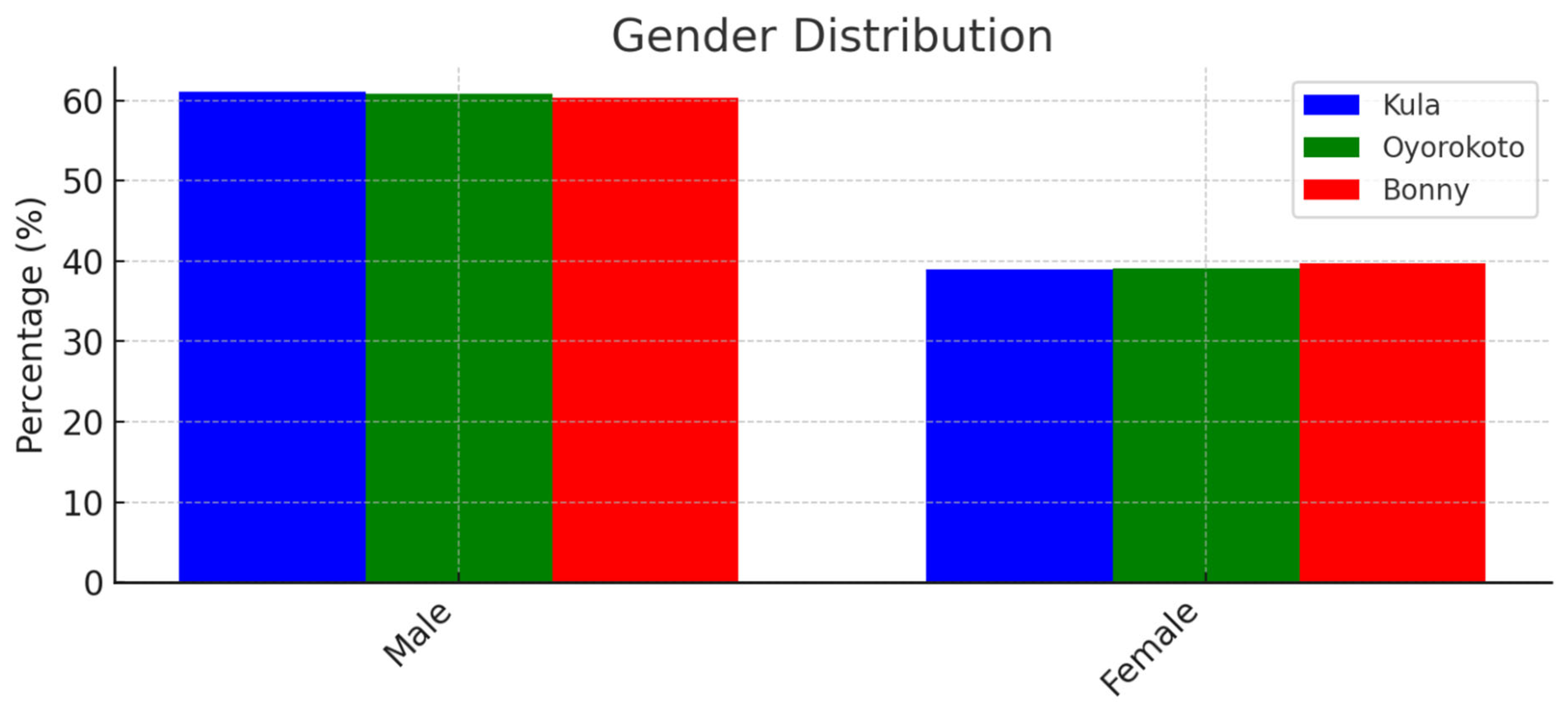
Across the three communities, respondents were predominantly male: Kula (61.1% male), Oyorokoto (60.9% male), and Bonny (60.3% male), aligning with national trends [71,72]. Overall, 60.4% were male and 39.6% female. The chi-square test showed no meaningful effect of gender on perceived NbS effectiveness (χ2 = 11, p = 0.004, Cramer’s V = 0.095).

4.1.2. Marital Status

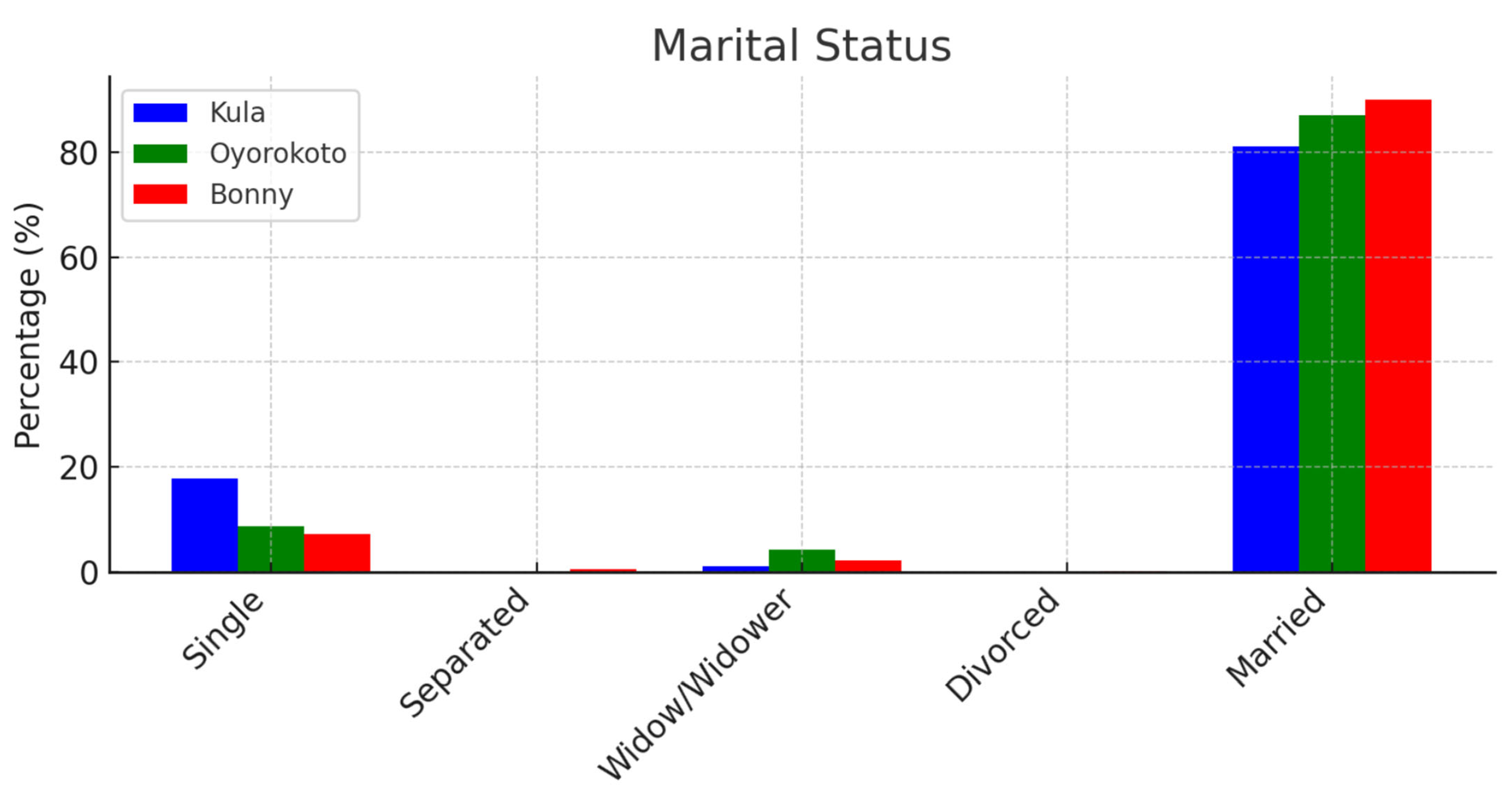
Most respondents were married (57.9%), followed by single (33.7%) and divorced/separated (0.2%). Kula and Oyorokoto reported no cases of separation or divorce, likely due to strong tribal norms, while Bonny’s slightly higher rate may reflect its diverse, migrant population. Marital status did not significantly affect perceived NbS effectiveness (χ2 = 12.98, p > 0.113).

4.1.3. Occupation

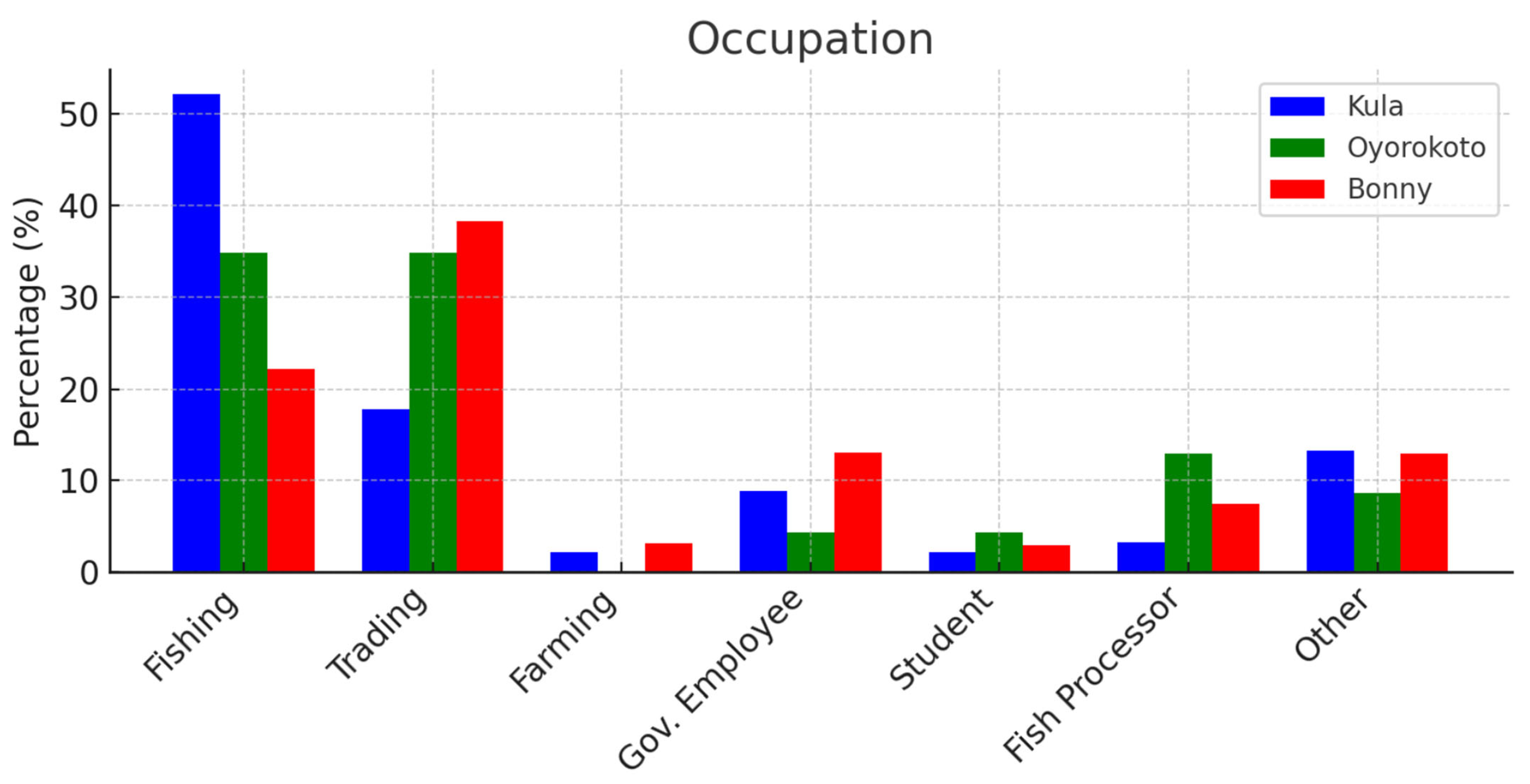
Trading (36.8%) and fishing (24.5%) were the main occupations. Fishing dominated in Kula (52.2%), trading in Bonny (38.3%), and Oyorokoto respondents engaged in both (34.8%). The occupational mix reflects coastal livelihoods and economic diversification. A significant chi-square result (χ2 = 112.68, p < 0.001, Cramer’s V = 0.215) indicates that occupation moderately affects NbS perceptions. This highlights the need to align NbS strategies with local livelihoods.

4.1.4. Educational Attainment

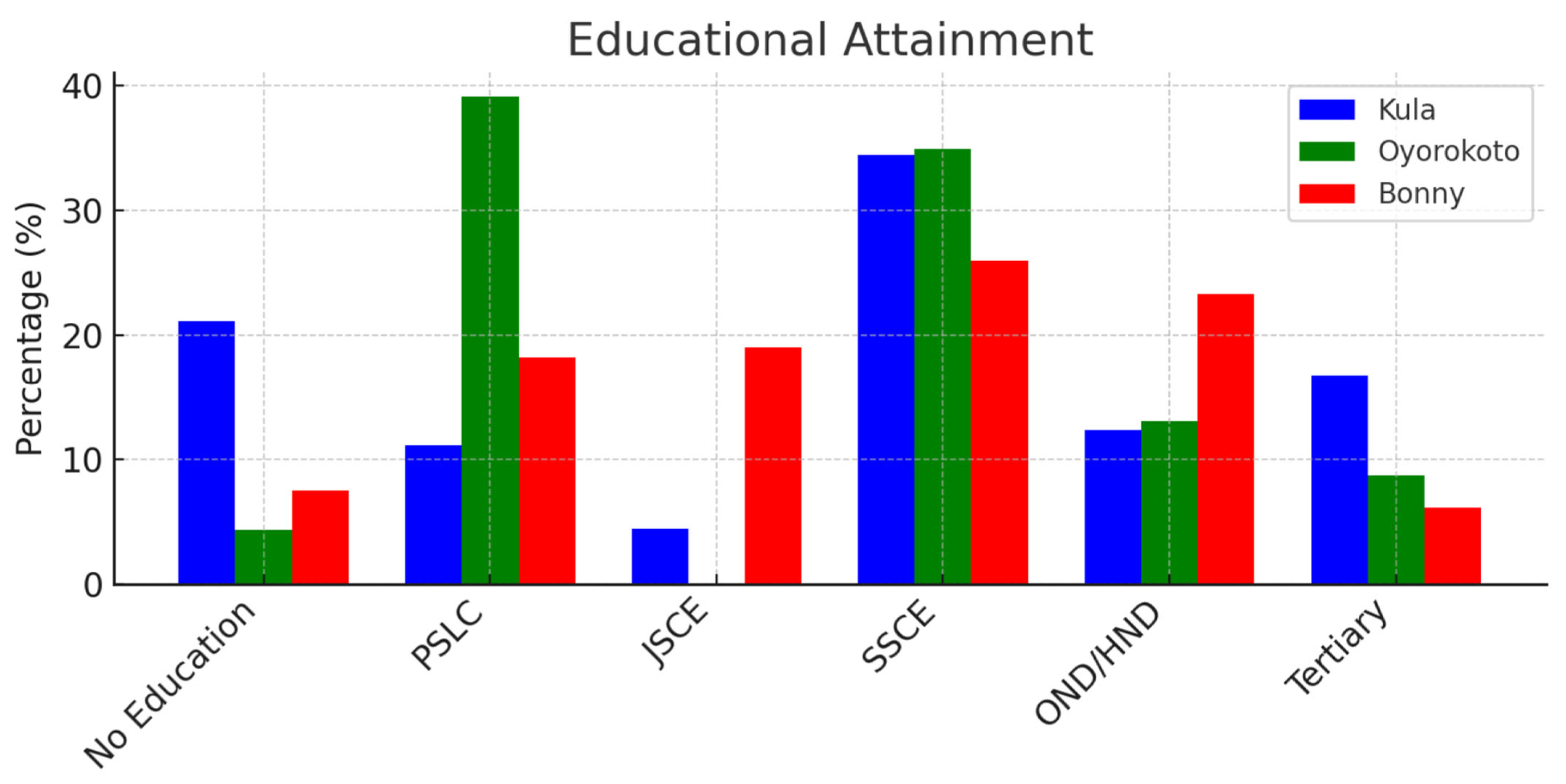
Education levels varied: Kula had the highest proportion without formal education (21.1%), while Oyorokoto had the highest with primary education (39.1%). Bonny led in junior school certificates (19%) and OND/HND holders. Overall, most respondents had secondary (26.7%) or OND/HND (22.3%) education. Education significantly influenced perceived NbS effectiveness (χ2 = 460.98, p < 0.001, Cramer’s V = 0.434), showing that higher education correlates with greater understanding and acceptance.

4.1.5. Ethnicity

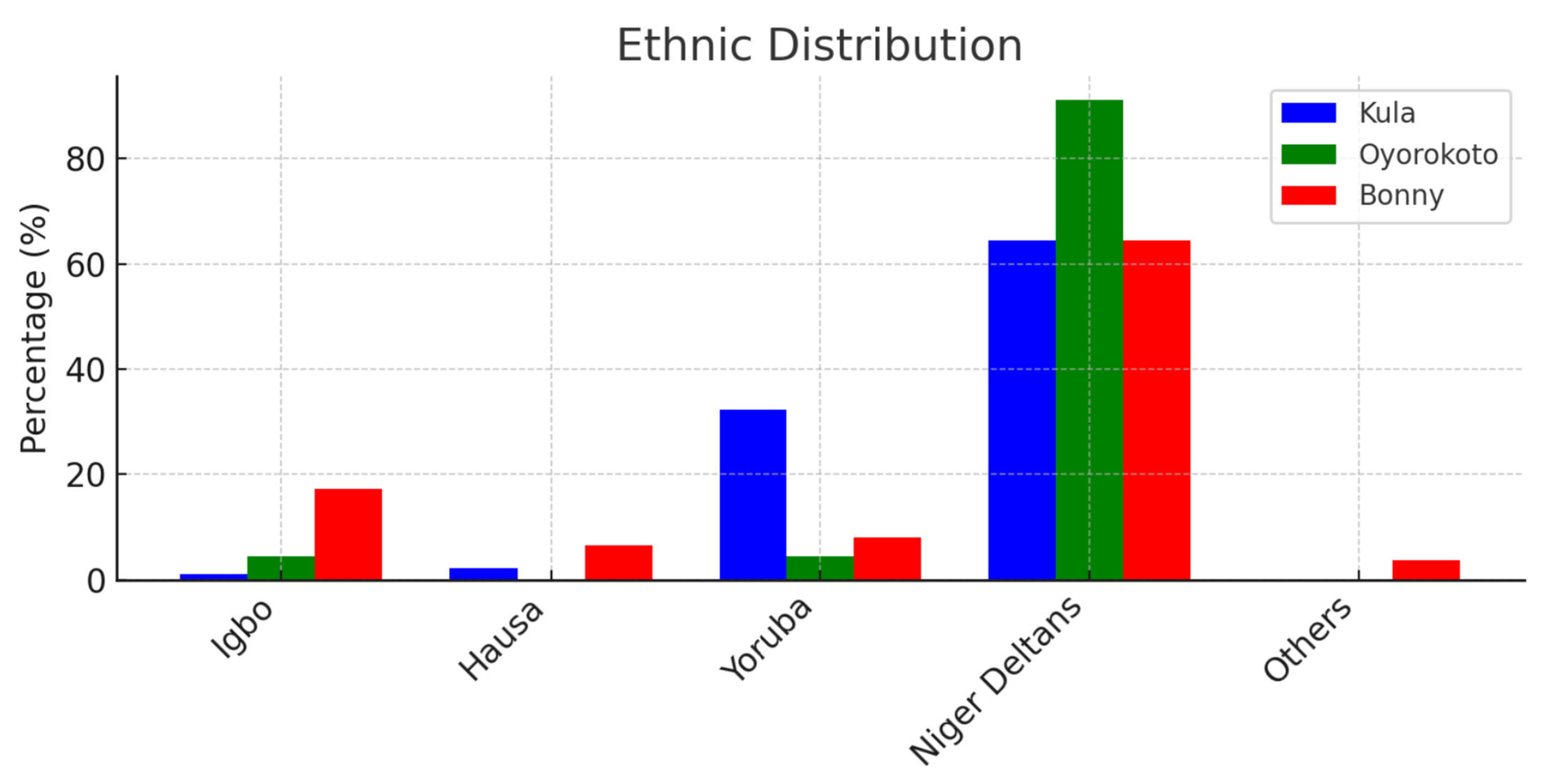
Most respondents were Niger Deltans (65%), followed by Igbos (15.8%), Yorubas (9.7%), Hausas (6.1%), and other groups (3.4%). Yorubas were notable in Kula (32.3%), Igbos in Bonny (17.3%), and Oyorokoto was more mixed. Ethnicity showed a weak but significant link to NbS perceptions (χ2 = 143.98, p < 0.001, Cramer’s V = 0.232), implying cultural background may subtly shape attitudes toward NbS.

4.1.6. Annual Income of the Respondents

The highest earners annually were respondents from Bonny (99.7%); this is followed by respondents in Kula (98.9%) and then Oyorokoto (91.3%). The results show that the respondents in Kula have the highest annual income (98.9%); this is followed by respondents in Bonny (99.7%) and Oyorokoto (91.3%). The chi-square test was statistically significant, χ2 (1, N = 1224) = 1470, p < 0.001, with a Cramer’s V value of 0.719. This means that the variables are highly related, and the likelihood that this relationship is due to random chance is very low. This could be as a result of respondents with higher incomes having better access to information, resources, or personal experiences that shape their perceptions, and also higher income might also correlate with other factors, such as education or occupation, which influence their understanding and evaluation of the perceived effectiveness of NbS.
Table 1 presents the results of a logistic regression analysis examining the influence of awareness and perception on the perceived effectiveness of Nature-based Solutions (NbS). Logistic regression analysis shows that the model is significant (χ2 (3) = 657.96, p < 0.001, n = 1224).
The logistic regression analysis shows that awareness significantly influences the perceived effectiveness of NbS, with a strong effect (OR = 0.06, p < 0.001). These findings highlight the critical role of awareness and some levels of perception in shaping the perceived effectiveness of NbS.

4.1.7. Perception of the Respondents About the Effectiveness of Nature-Based Solutions

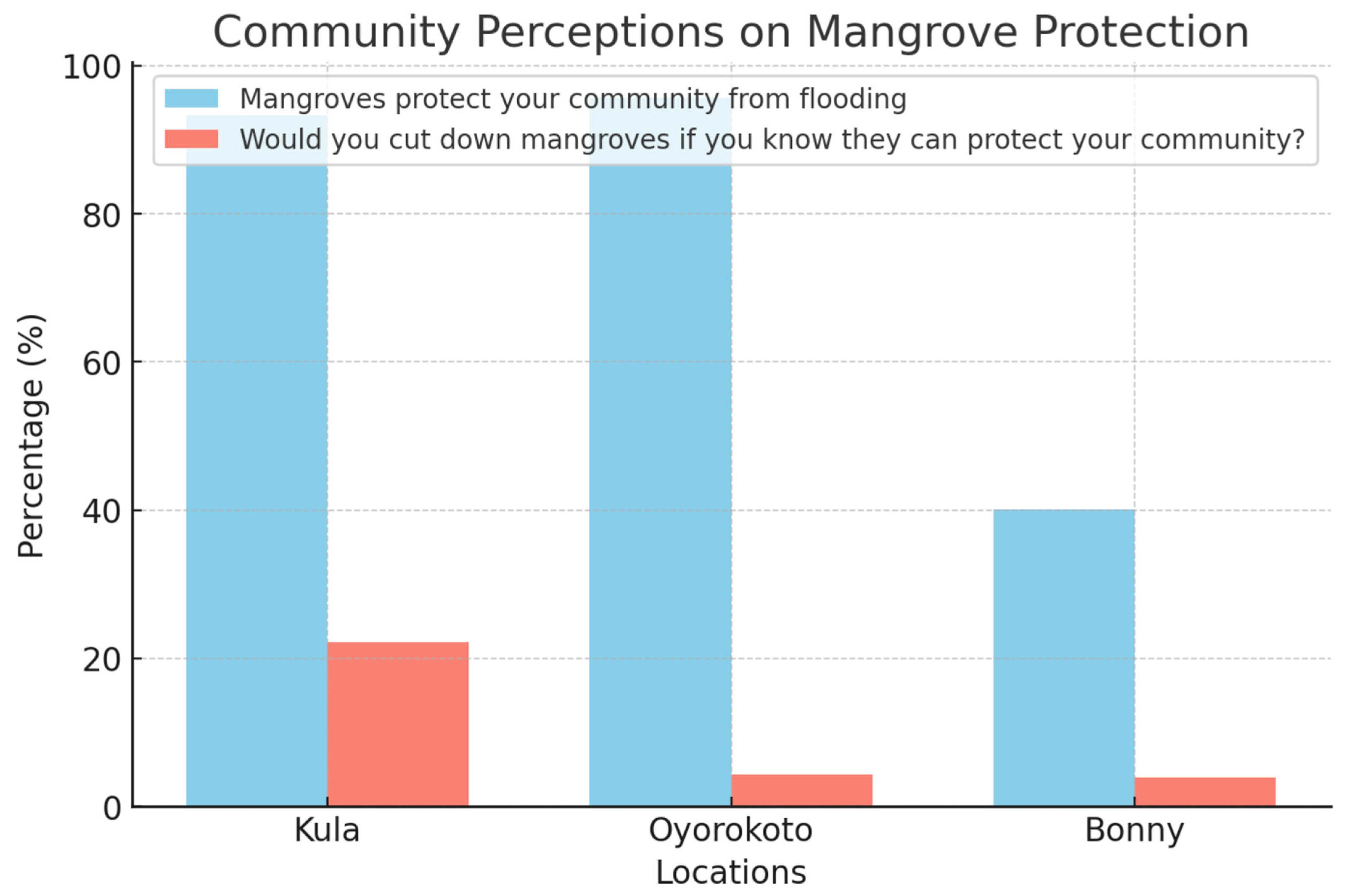
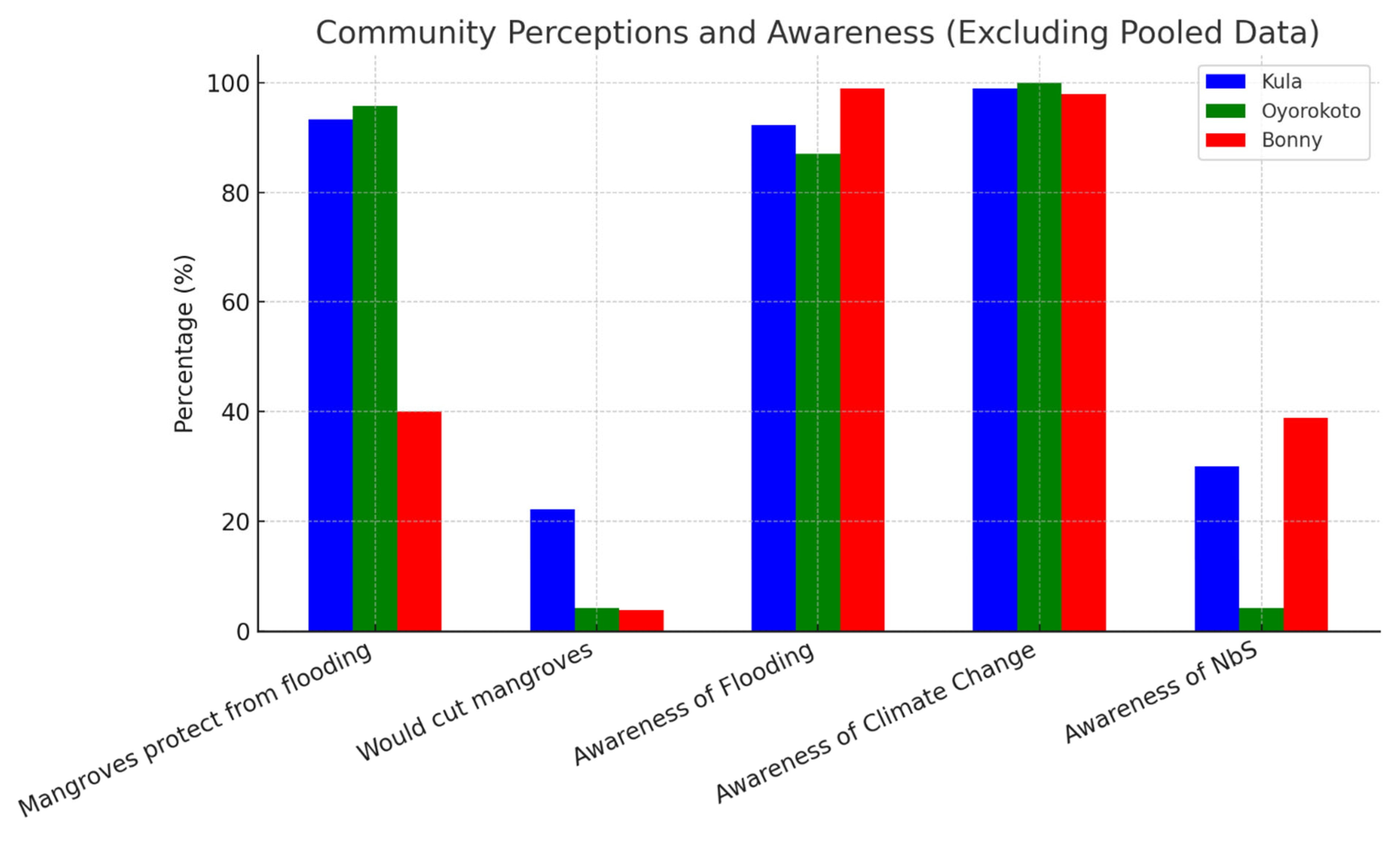
Figure 3 shows the perception of the respondents about the perceived effectiveness of NbS. The indicators on perception were focused on mangrove relevance to the respondents. The indicators include “Do mangroves protect your community from flooding?” and “Would you cut down mangroves if you knew they could protect your community?”.
The result revealed that 95.7% of the respondents from Oyorokoto responded in the affirmative, followed by respondents from Kula (93.3%) and the respondents from Bonny (40.1%). When respondents were asked if they would cut down mangroves if they knew it could protect their community, 22.2% of the respondents in Kula answered in the affirmative, followed by 4.3% of the respondents from Oyorokoto, while the least was Bonny (3.9%). The result indicates overall that respondents did not think NbS were effective in controlling floods. Although the respondents believe in the protective ability of mangroves against flooding, they would still cut down mangroves (see Figure 3). This could be a result of the numerous benefits derived from mangroves by the communities, which include food, timber, and a source of income. Previous studies have outlined the benefits of mangroves as a source of livelihood and in fish smoking [73,74,75].
The result also reveals a low perception of respondents towards mangroves, as more than 50% of the respondents do not perceive nature-based solutions to be effective in flood reduction. While most respondents believe risk can be reduced through NbS, a range of attitudes between careful optimism and absolute doubt were expressed; this could have originated from a lack of evidence-based and its co-creational benefits [74]. A study by [76] reported a low perception of flood risk in the area.

4.1.8. Socio-Economic Characteristics of the Respondents

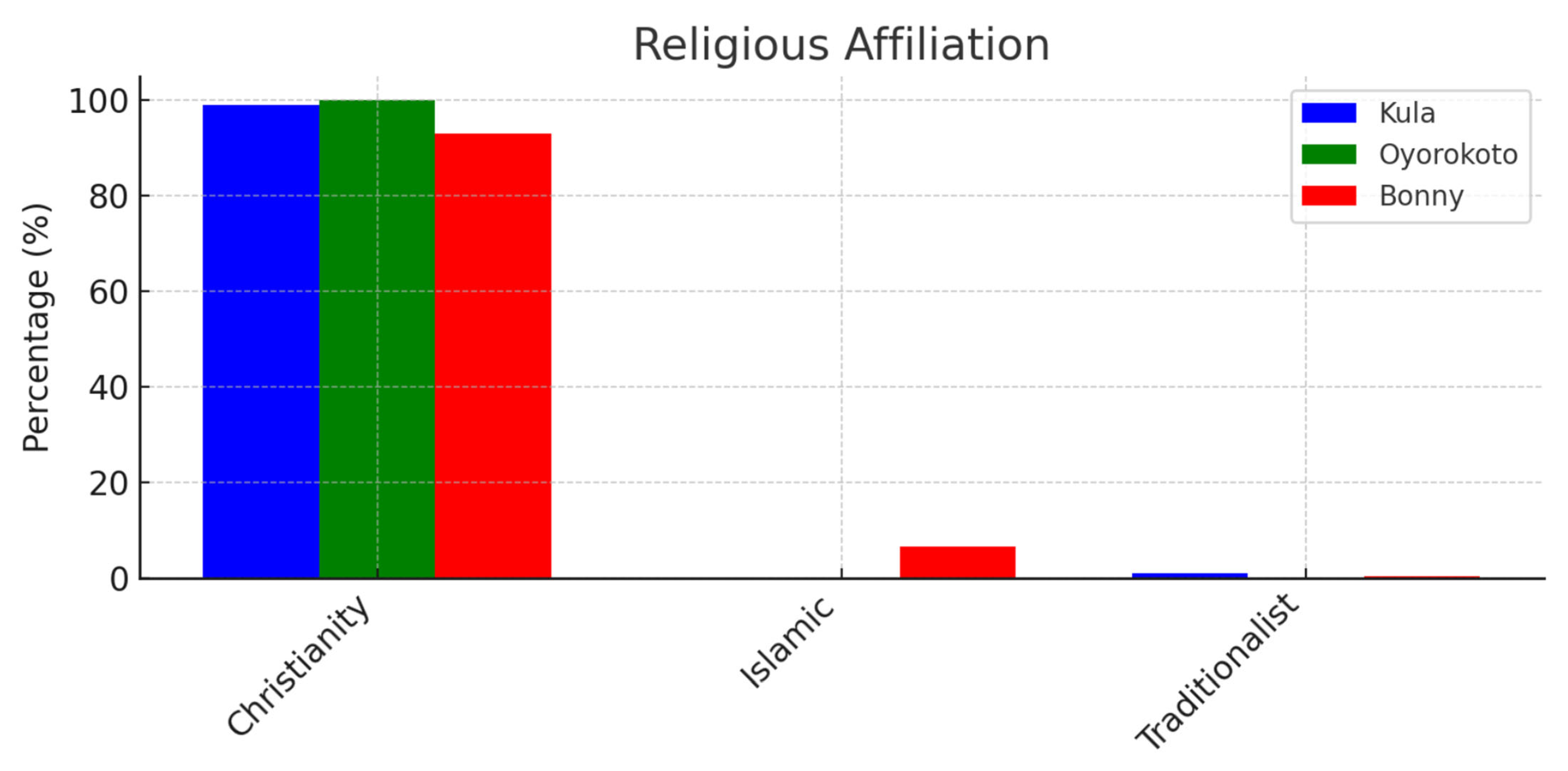
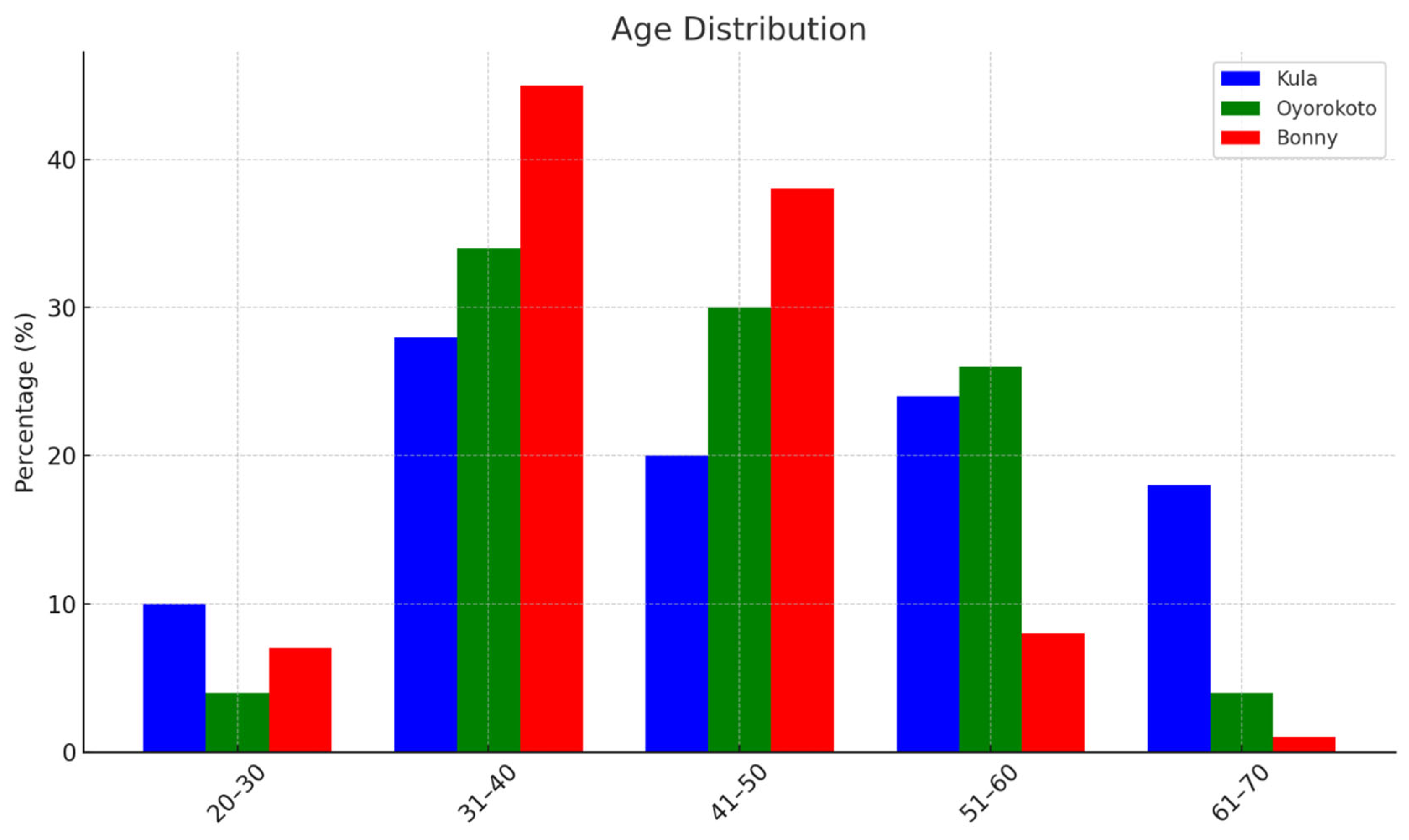
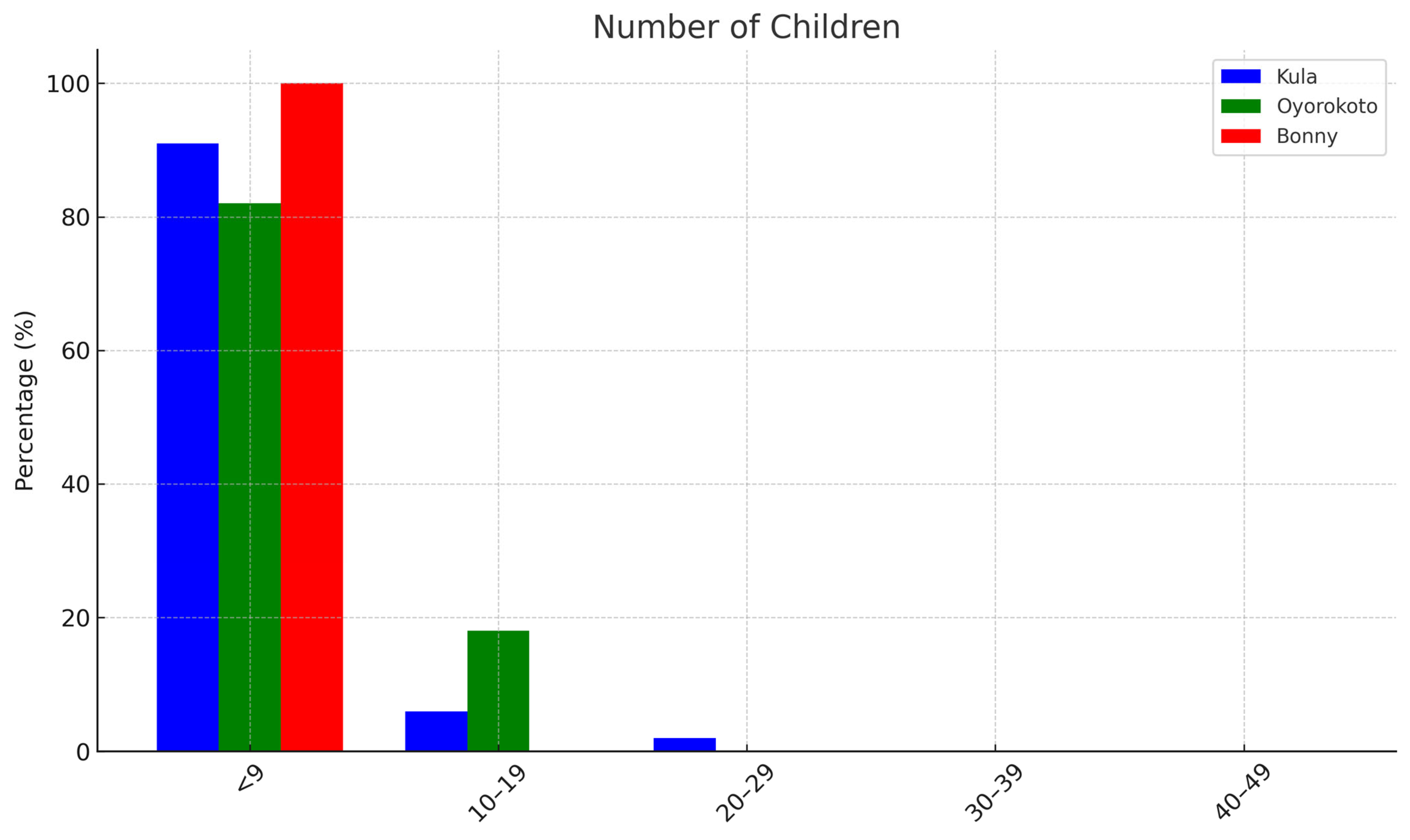
Socio-economic characteristics such as age, marital status, gender, educational attainment, occupation, ethnic distribution, religious affiliation, number of children, and annual income of the respondents were measured (Figure 4, Figure 5, Figure 6, Figure 7, Figure 8, Figure 9, Figure 10, Figure 11 and Figure 12). Occupation, age, educational attainment, ethnic distribution, and annual income of the respondents were significant (p < 0.001), as well as the “awareness” and “perception 0” categories. The logistic regression model was used to assess the relationship between respondents’ perceptions and awareness of the effectiveness of NbS; the chi-square was used to measure the significance between the variables, while Cramer’s V test was used to measure the effect size, where age, occupation, educational attainment, and ethnic distribution showed positive relationships and varying degrees of strengths, signifying that an increase in these demographic variables will lead to an increased perception and awareness of the effectiveness of NbS. The study findings showed that there was a positive relationship between “awareness,” “perception 0” category, “age,” and “educational attainment”.
Respondents from Kula (93.3%) and Oyorokoto (95.7%) believe mangroves protect their community from flooding, while support is lower in Bonny (40.1%). Most respondents in all areas are unlikely to cut down mangroves, recognizing their protective role.
  • Awareness of Environmental Issues: Awareness of flooding and climate change is high across all communities, with 98.2% of respondents overall aware of flooding and 98.0% aware of climate change.
  • Awareness of Nature-based Solutions: Awareness of nature-based solutions is relatively low, especially in Oyorokoto (4.3%), with a pooled awareness of 37.6%.
These results indicate strong regional differences, suggesting that while environmental awareness is high, more efforts are needed to raise awareness of nature-based solutions.

5. Discussion

This study provides critical insights into the social dimensions influencing the perceived effectiveness of Nature-based Solutions (NbS) for flood risk reduction in coastal communities of the Niger Delta. By unpacking demographic, socio-economic, and cultural variables, the findings highlight opportunities and challenges for implementing sustainable, community-centered NbS.
The study demonstrates that demographic variables—particularly age, education level, occupation, income, and to a lesser extent, ethnicity—significantly influence how communities perceive the effectiveness of Nature-based Solutions (NbS) for flood risk mitigation. Higher levels of formal education are linked to greater awareness and understanding of NbS, aligning with findings that education enhances environmental literacy and openness to adopting innovative solutions. Age also plays a role, with older respondents generally showing more positive attitudes towards NbS, likely due to their accumulated local knowledge and firsthand experience of environmental changes and climate risks. Occupational roles shape perceptions as well, with those whose livelihoods depend directly on natural resources, such as fishing, often demonstrating greater interest in interventions that protect or restore these resources. Income levels influence access to information and adaptive capacity, meaning that households with higher earnings are better positioned to understand and engage with NbS initiatives. Although ethnicity shows a weaker link, cultural norms embedded in ethnic identities can subtly shape how communities value conservation practices. Together, these demographic factors interact to shape risk perception, local knowledge, and ultimately, community acceptance and support for NbS implementation.

5.1. Community Awareness, Perception, and Evidence Base

A consistent theme emerging from the data is that while many community members recognize the potential of NbS for flood risk reduction, there remains a spectrum of attitudes ranging from cautious optimism to skepticism. This reflects broader concerns found in the literature about the long timelines and perceived uncertainties of NbS effectiveness [41,48]. Studies such as [10,77] similarly show that without clear, locally relevant evidence of co-benefits—like biodiversity conservation or livelihood support—communities may hesitate to fully embrace NbS. This aligns with calls for more participatory research and co-production of evidence [78,79]. Local participatory monitoring can strengthen trust and demonstrate the tangible benefits of NbS, building the community’s confidence in its capacity to reduce climate-related hazards.

5.2. Socio-Demographic Influences on Acceptance

This study shows that education, age, and income are significant drivers shaping how communities perceive and accept NbS—echoing earlier findings [44,65]. Higher levels of formal education appear to increase awareness and understanding of innovative flood mitigation measures, strengthening local capacity to participate in adaptation initiatives [44]. This finding reinforces calls for targeted educational outreach and awareness campaigns as integral components of sustainable coastal management [72,80].
Age-related trends reveal that older residents often view NbS more positively, likely because they have witnessed long-term environmental changes and risks [72,80]. Harnessing intergenerational knowledge can therefore enrich NbS design and improve community ownership and continuity.
Annual income emerged as another important factor, consistent with evidence that households with greater economic resources are better equipped to adopt and maintain adaptation measures [80]. This highlights the need for income-sensitive NbS designs that address economic vulnerabilities and ensure the benefits reach lower-income groups.

5.3. Livelihoods: Linking Economic Realities and NbS Uptake

Local livelihood patterns strongly influence how communities perceive and engage with NbS. In the Niger Delta’s coastal communities, fishing and trading dominate the local economy [80]. Occupational shifts—such as the move from fishing to petty trading in Bonny—illustrate communities’ adaptive responses to changing economic conditions.
When NbS are aligned with local livelihoods—for example, by promoting sustainable fisheries, mangrove-friendly aquaculture, or eco-tourism—community support and stewardship increase [44,65]. Designing context-specific, livelihood-integrated NbS helps ensure that interventions deliver both ecological and economic benefits.

5.4. Gender and Cultural Dimensions: Enablers for Inclusive Implementation

While this study found no strong statistical link between gender and perceptions of NbS effectiveness, the gendered division of labor in coastal communities remains relevant. Women often play indirect but critical roles in processing, trading, and household-level adaptation [72,80]. Their active inclusion in NbS planning and governance is therefore vital to ensure equitable, sustainable outcomes [73,74].
Ethnic diversity showed only a weak link to NbS perceptions but still points to underlying cultural factors that can shape community attitudes. Cultural beliefs, norms, and traditional practices can either support or hinder environmental stewardship [75]. Recognizing these cultural dimensions—and engaging diverse groups respectfully—strengthens local ownership of NbS.

5.5. Integrating Findings: Implications for Marine Science and Coastal Management

Overall, this study reinforces that successful NbS implementation relies as much on social and cultural dynamics as on technical solutions. For marine science and coastal engineering, this calls for integrated approaches that combine ecological restoration with community education, participatory design, and inclusive governance.
Building trust and co-management structures that draw on local knowledge and address socio-economic inequalities can close the gap between policy ambitions and community realities. Well-designed NbS can deliver multiple co-benefits—reducing flood risks, conserving biodiversity, and supporting resilient livelihoods—in line with global commitments to ecosystem-based disaster risk reduction [71,72].

5.6. Conclusion

In summary, the path to effective NbS in the Niger Delta and similar coastal settings depends on integrating demographic realities, livelihood needs, and cultural contexts at every stage of design and implementation. Future research should deepen participatory processes, build local monitoring capacity, and foster cross-sector collaboration to unlock the full socio-ecological benefits of NbS.

6. Limitations of NbS Implementation

6.1. Technical Barriers

Successful NbS require technical expertise for design, monitoring, and long-term management—often lacking at the local level. Closing this gap will require capacity-building, training, and partnerships with research institutions.

6.2. Economic Barriers

While cost-effective in the long term, NbS can demand significant upfront investment, especially for large-scale projects like wetland restoration. Public–private partnerships, blended finance, and incentive schemes can help mobilize the needed resources.

6.3. Socio-Cultural Barriers

Community acceptance is essential but can be hindered by conflicting traditional beliefs, land tenure issues, or competing land uses. Participatory planning, inclusive dialogue, and pilot projects demonstrating benefits can help overcome resistance and secure community buy-in.

7. Potential Solutions and Recommendations

To enhance the practicability and effectiveness of NbS, a multi-stakeholder approach should be adopted. Collaboration between government agencies, academic institutions, private sector players, and local communities is crucial for ensuring that NbS initiatives are well-designed, adequately funded, and socially accepted. Additionally, policy frameworks that integrate NbS into national and regional development plans should be strengthened to provide legal backing and institutional support for their implementation.
In conclusion, while NbS offers promising solutions for mitigating flood risks and enhancing ecosystem resilience, addressing the technical, economic, and socio-cultural challenges is necessary for their successful implementation. Through targeted capacity-building, innovative financing mechanisms, and participatory approaches, NbS can be effectively integrated into climate adaptation strategies, ultimately benefiting both communities and the environment.

8. Conclusions

This study highlights the complex interplay between socio-demographic factors and the perceived effectiveness of Nature-based Solutions (NbS) for flood risk reduction. While most respondents acknowledged the potential benefits of NbS, their attitudes varied based on factors such as education, age, and occupation. The findings emphasize the critical role of education in shaping perceptions, with higher educational attainment correlating with greater acceptance of NbS. Similarly, older individuals exhibited a more favorable outlook, suggesting that intergenerational perspectives may enhance community buy-in.
Occupational roles also influence perceptions, particularly in coastal communities where livelihoods depend on natural resources. Fishers, traders, and farmers exhibited differing levels of confidence in NbS, reinforcing the need for strategies that integrate both environmental and socio-economic considerations. The study also revealed that gender and marital status had minimal impact on perceived NbS effectiveness, whereas ethnicity played a statistically significant but weak role.
These findings underscore the importance of targeted educational initiatives, participatory engagement, and inclusive decision-making processes in implementing NbS. By addressing knowledge gaps and ensuring community involvement, NbS can gain broader acceptance, ultimately contributing to sustainable coastal management, climate resilience, and biodiversity conservation. Further research is necessary to assess long-term NbS outcomes and develop adaptive strategies tailored to local socio-economic dynamics.

9. Comparison with Studies on NbS Adoption in Coastal Regions

The findings of this study align with and expand upon existing research on nature-based solutions (NbS) adoption in coastal regions. For example, ref. [74] investigated the socio-economic and policy drivers influencing NbS implementation in East Asian coastal communities. Their study highlighted the importance of strong institutional frameworks and public participation in successful NbS adoption. Similarly, this study found that governance structures and stakeholder engagement were critical determinants of NbS uptake in Nigeria’s coastal communities. However, whereas ref. [74] emphasized centralized policy interventions, the present study reveals a stronger influence of community-driven initiatives in the Nigerian context.
Ref. [75] examined NbS adoption in South Asian coastal regions, particularly focusing on the role of financial incentives and traditional ecological knowledge. Their findings underscored how financial barriers often impede large-scale NbS implementation, despite high levels of awareness among coastal residents. This aligns with our results, where economic constraints were identified as a major limiting factor. However, ref. [75] also noted that indigenous knowledge systems played a crucial role in NbS sustainability, a factor that was observed but less pronounced in the Nigerian case.
By situating this study within a broader global context, it becomes evident that while common challenges—such as financial constraints and governance issues—persist across regions, the specific pathways to successful NbS adoption vary based on local socio-political dynamics. Future research should explore cross-regional collaborations to identify best practices that can be adapted to different coastal settings.
The findings from this study can be compared with similar studies on NbS adoption in coastal regions outside Nigeria. Here are key comparisons:

9.1. Community Perceptions and Acceptance of NbS

This Study (Rivers State, Nigeria): Findings indicate that local perceptions of flood risks and trust in NbS significantly influence acceptance. Socio-economic factors and previous experiences with flooding also shape receptivity.
Other Studies:
In Bangladesh, studies have shown that while coastal communities recognize the benefits of mangrove restoration, short-term economic trade-offs (e.g., loss of fishing areas) can hinder acceptance [76].
In the Netherlands, high public trust in government-led NbS (e.g., sand dunes and floodplain restoration) has resulted in strong adoption, mainly due to well-established public participation and scientific communication [77].

9.2. Demographic Variations in Risk Perception and NbS Effectiveness

This Study (Rivers State, Nigeria): Findings suggest that younger individuals and those with formal education are more likely to perceive NbS as effective. Conversely, older and less-educated individuals tend to favor conventional flood control measures.
Other Studies:
In Fiji, indigenous knowledge influenced risk perception, leading to stronger support for NbS among older generations compared to younger ones, who leaned towards engineered solutions [81].
In Brazil, gender differences were observed, with women being more supportive of NbS due to their role in managing household risks [78].

10. Broader Implications

Comparing these findings suggests that NbS adoption is influenced by a combination of social, economic, and cultural factors. While barriers such as lack of awareness and skepticism exist globally, tailored engagement strategies, integrating local knowledge, and improving education on NbS effectiveness can enhance acceptance across different coastal regions.

11. Community Involvement in Study Design and Its Implications

In this study, community members primarily participated as respondents rather than as active contributors to the study design. While their perspectives were essential in shaping the findings, the absence of direct involvement in designing the research framework may have implications for result validity and applicability. Participatory research approaches, where community stakeholders co-develop research questions, methodologies, and data interpretation, have been shown to enhance the relevance and accuracy of findings [79].
The lack of such engagement in this study could introduce biases, particularly in how survey instruments and interview questions were structured. Without direct input from community members, certain local knowledge, priorities, or contextual nuances may not have been fully captured. This limitation suggests that while the results provide valuable insights into nature-based solutions (NbS) adoption in coastal Nigeria, they might not entirely reflect community-driven perspectives or priorities.
Future studies could address this by incorporating participatory research methodologies, such as co-design workshops, focus group discussions, or community-led data collection. This would not only improve result validity but also foster a sense of ownership among local stakeholders, potentially increasing the long-term adoption and sustainability of NbS interventions.

12. Study Limitations

While this study provides valuable insights into the adoption of nature-based solutions (NbS) in coastal Nigeria, several limitations should be acknowledged to contextualize the findings and inform future research.

12.1. Response Biases

One key limitation is the potential for response biases, particularly social desirability bias and recall bias. Participants may have provided responses that they believed were socially acceptable or aligned with perceived expectations, rather than their true opinions or experiences. This is particularly relevant in discussions surrounding environmental sustainability, where respondents might overstate their engagement with NbS or downplay barriers to adoption. Similarly, recall bias could have influenced responses, as participants may not accurately remember past events or decision-making processes related to NbS implementation.
Mitigating these biases in future research could involve the use of triangulation methods, such as combining survey data with direct observations, expert interviews, or geospatial analysis, to validate self-reported information.

12.2. Generalizability of Findings

Given that this study focuses on coastal areas in Nigeria, findings may not be fully generalizable to other regions with different socio-political, economic, or environmental contexts. While some insights may be transferable, variations in governance structures, cultural perceptions of nature, and available funding for NbS could influence adoption rates and effectiveness elsewhere. Previous studies by [74,75] on NbS effectiveness in other coastal areas provide a broader perspective. Their research provides a wider perspective on the applicability of the findings of this study beyond the study areas.

12.3. Limited Community Involvement in Study Design

This study primarily involved community members as respondents rather than active collaborators in the research design. This could have led to an incomplete representation of local priorities, particularly in terms of identifying barriers to NbS effectiveness.

13. Recommendations for Future Research

To address these limitations, future research should consider the following:
  • Utilize mixed-methods approaches (e.g., surveys, focus groups, ecological assessments) to reduce biases.
  • Incorporate longitudinal studies to track NbS effectiveness over time.
  • Conduct comparative analyses across different coastal regions.
  • Implement participatory research methods to ensure greater community involvement in study design and interpretation.

14. Policy Recommendations

While NbS offers sustainable and cost-effective approaches to coastal resilience, their widespread adoption requires targeted policy interventions and strategic implementation measures. This study suggests the following policy recommendations:
1.
Integrate NbS into National and Local Climate Adaptation Policies:
Governments at national and sub-national levels should formally recognize and integrate NbS into existing climate adaptation and disaster risk reduction strategies. This includes embedding NbS principles within urban planning, coastal zone management, and infrastructure development policies to ensure a systematic approach to nature-based resilience.
2.
Enhance Community Participation and Co-Design Approaches:
A bottom-up approach to NbS planning is crucial. Community members should be actively engaged in the design, implementation, and monitoring of NbS initiatives. Establishing participatory governance structures, such as local NbS committees, can help align projects with community needs and ensure long-term sustainability.
3.
Strengthen Institutional and Financial Support for NbS:
The study highlights financial constraints as a major barrier to NbS adoption. Policymakers should consider the following:
a.
Increase public investment and subsidies for NbS projects.
b.
Establish incentive mechanisms (e.g., tax benefits, carbon credits).
c.
Encourage private sector participation.
Facilitate access to international climate funds (e.g., Green Climate Fund, Adaptation Fund) to support large-scale NbS implementation.
4.
Develop NbS-Specific Capacity-Building Programs:
Capacity-building initiatives targeting government officials, local practitioners, and community leaders should be developed to enhance technical knowledge and implementation skills for NbS. Universities, research institutions, and NGOs can play a pivotal role in providing training workshops and knowledge-sharing platforms.
5.
Promote NbS Evidence-Based Decision-Making:
Robust monitoring and evaluation (M&E) frameworks should be established to track NbS effectiveness and inform policy adjustments. Investing in longitudinal research, ecological assessments, and socio-economic impact studies can provide empirical data to guide future NbS investments and improvements.
6.
Encourage Multi-Stakeholder Collaboration:
Effective NbS implementation requires collaboration between government agencies, private sector actors, civil society organizations, and academic institutions. Establishing multi-stakeholder platforms will help harmonize efforts, share best practices, and scale up successful NbS interventions.
By adopting these policy and implementation recommendations, Nigeria can enhance its resilience to coastal risks while maximizing the ecological, economic, and social benefits of NbS. Future research should focus on long-term impact assessments and comparative case studies to refine strategies for scaling NbS adoption across diverse coastal contexts.

15. Definition of Key Terms

1.
Perceived Effectiveness
Perceived effectiveness refers to how individuals or communities subjectively evaluate the success or impact of a given intervention—in this case, Nature-based Solutions (NbS). It is influenced by factors such as personal experience, community awareness, cultural beliefs, and observable environmental or socio-economic changes. This perception may differ from scientifically measured effectiveness, which is based on quantitative assessments of ecological, economic, and social outcomes.
2.
Nature-based Solutions (NbS)
NbS are strategies that leverage natural processes and ecosystems to address societal challenges, such as climate change, disaster risk reduction, and biodiversity loss. Examples include mangrove restoration, wetland conservation, and the use of green infrastructure to mitigate coastal erosion and flooding.
3.
Adoption of NbS
Adoption refers to the willingness and practical implementation of NbS by individuals, communities, or institutions. It involves awareness, decision-making, resource allocation, and long-term maintenance of nature-based approaches.
4.
Response Bias
Response bias occurs when survey or interview participants provide answers that do not accurately reflect their true beliefs or experiences, often due to social desirability, misunderstanding of questions, or interviewer influence.
5.
Community Engagement
Community engagement refers to the active involvement of local populations in the planning, decision-making, and implementation of NbS initiatives. This includes participatory approaches such as stakeholder consultations, co-design of solutions, and local capacity-building. High levels of engagement can improve the sustainability and acceptance of NbS interventions.
6.
Logistic Regression
Logistic regression is a statistical method used to model the probability of a categorical outcome (e.g., whether a community adopts NbS or not) based on predictor variables such as demographic characteristics, environmental awareness, and policy influence. This method is commonly used when the dependent variable is binary (e.g., Yes/No, Adopt/Not Adopt).
7.
Chi-Square Test
The chi-square test is a statistical method used to determine if there is a significant association between categorical variables (e.g., whether educational background influences NbS adoption). It helps identify patterns and dependencies within survey data.
8.
Ecosystem Services
  • Ecosystem services are the benefits people obtain from natural ecosystems, categorized as the following:
  • Provisioning services (e.g., food, water, timber).
  • Regulating services (e.g., climate regulation, flood control).
  • Cultural services (e.g., recreation, spiritual value).
  • Supporting services (e.g., nutrient cycling, soil formation).
9.
Sociocultural Barriers
Sociocultural barriers refer to social, cultural, or traditional beliefs that may hinder the acceptance and implementation of NbS. These can include a lack of trust in external interventions, resistance to change, or prioritization of conventional infrastructure solutions over nature-based approaches.
10.
Policy Integration
Policy integration involves incorporating NbS into existing legal, regulatory, and institutional frameworks to ensure long-term sustainability and funding. Effective policy integration requires alignment with national adaptation strategies, climate action plans, and local governance structures.

Author Contributions

C.C.O.: conceptualization, writing—original draft, review and editing, methodology, data curation, visualization, formal analysis. D.W.A.: conceptualization, review and editing, resources, supervision. All authors have read and agreed to the published version of the manuscript.

Funding

This research is part of the doctoral thesis of the first author, which was funded by the World Bank through the African Centre of Excellence in Coastal Resilience (ACECoR), Centre for Coastal Management, University of Cape Coast, Ghana. Grant Number is credit number 6389-G.

Institutional Review Board Statement

This study was approved by the Institutional Review Board of the University of Cape Coast (UCCIRB/CANS/2022/03).

Informed Consent Statement

Informed consent was obtained from all subjects involved in the study.

Data availability statement

The data used in this study is available upon request.

Acknowledgments

The authors are grateful to the World Bank through the African Centre of Excellence in Coastal Resilience (ACECoR), Centre for Coastal Management, and the Department of Fisheries and Aquatic Science, University of Cape Coast, Ghana, for providing funds for this study.

Conflicts of Interest

The authors declare no conflicts of interest.

References

  1. Kinzig, A.P.; Ehrlich, P.R.; Alston, L.J.; Arrow, K.; Barrett, S.; Buchman, T.G.; Daily, G.C.; Levin, B.; Levin, S.; Oppenheimer, M.; et al. Social norms and global environmental challenges: The complex interaction of behaviors, values, and policy. BioScience 2013, 63, 164–175. [Google Scholar] [CrossRef]
  2. Dempsey, R.C.; McAlaney, J.; Bewick, B.M. A critical appraisal of the social norms approach as an interventional strategy for health-related behavior and attitude change. Front. Psychol. 2018, 9, 2180. [Google Scholar] [CrossRef]
  3. World Bank. World Development Report 2015: Mind, Society, and Behavior; World Bank Group: Washington, DC, USA, 2015. [Google Scholar]
  4. Hermans, T.D.; Smith, H.E.; Whitfield, S.; Sallu, S.M.; Recha, J.; Dougill, A.J.; Thierfelder, C.; Gama, M.; Bunderson, W.T.; Museka, R.; et al. Role of the interaction space in shaping innovation for sustainable agriculture: Empirical insights from African case studies. J. Rural. Stud. 2023, 100, 103012. [Google Scholar] [CrossRef]
  5. Moore, A.C.; Kumble, S. Community-based conservation and restoration in coastal wetlands: A review. Wetlands 2024, 44, 62. [Google Scholar] [CrossRef]
  6. Hopkins, T.S.; Bailly, D.; Elmgren, R.; Glegg, G.; Sandberg, A.; Støttrup, J.G. A systems approach framework for the transition to sustainable development: Potential value based on coastal experiments. Ecol. Soc. 2012, 17, 39. [Google Scholar] [CrossRef]
  7. Renn, O.; Laubichler, M.; Lucas, K.; Kröger, W.; Schanze, J.; Scholz, R.W.; Schweizer, P.J. Systemic risks from different perspectives. Risk Anal. 2022, 42, 1902–1920. [Google Scholar] [CrossRef]
  8. Seddon, N.; Chausson, A.; Berry, P.; Girardin, C.A.J.; Smith, A.; Turner, B. Understanding the Value and Limits of Nature-Based Solutions to Climate Change and Other Global Challenges. Phil. Trans. R. Soc. B 2020, 375, 20190120. [Google Scholar] [CrossRef] [PubMed]
  9. Begg, C.; Callsen, I.; Kuhlicke, C.; Kelman, I. The role of local stakeholder participation in flood defense decisions in the United Kingdom and Germany. J. Flood Risk Manag. 2018, 11, 180–190. [Google Scholar] [CrossRef]
  10. Macherera, M.; Chimbari, M.J. A review of studies on community based early warning systems. Jàmbá J. Disaster Risk Stud. 2016, 8, 11. [Google Scholar] [CrossRef]
  11. Seddon, N.; Smith, A.; Smith, P.; Key, I.; Chausson, A.; Girardin, C.; House, J.; Srivastava, S.; Turner, B. Getting the message right on nature-based solutions to climate change. Glob. Change Biol. 2021, 27, 1518–1546. [Google Scholar] [CrossRef] [PubMed]
  12. Lambert, S.; Scott, J. International disaster risk reduction strategies and indigenous peoples. Int. Indig. Policy J. 2019, 10, 2. [Google Scholar] [CrossRef]
  13. Cohen-Shacham, E.; Walters, G.; Janzen, C.; Maginnis, S. Nature-Based Solutions to Address Global Societal Challenges; IUCN: Gland, Switzerland, 2016; Volume 97, pp. 2016–2036. [Google Scholar]
  14. CBD. Voluntary Guidelines for the Design and Effective Implementation of EbA to Climate Change Adaptation and Disaster risk Reduction and Supplementary Information; CBD Technical Series No. 93; Secretariat of the Convention on Biological Diversity: Montreal, QC, Canada, 2019; Available online: https://www.cbd.int/doc/publications/cbd-ts-93-en.pdf (accessed on 10 October 2023).
  15. Jongman, B. Effective adaptation to rising flood risk. Nat. Commun. 2018, 9, 1986. [Google Scholar] [CrossRef] [PubMed]
  16. Kaufmann, M.; Priest, S.; Hudson, P.; Löschner, L.; Raška, P.; Schindelegger, A.; Slavíková, L.; Stričević, R.; Vleesenbeek, T. Win–win for everyone? Reflecting on nature-based solutions for flood risk management from an environmental justice perspective. In Nature-Based Solutions for Flood Mitigation: Environmental and Socio-Economic Aspects; Springer International Publishing: Cham, Switzerland, 2021; pp. 399–423. [Google Scholar]
  17. Renaud, F.G.; Sudmeier-Rieux, K.; Estrella, M.; Nehren, U. (Eds.) Ecosystem-Based Disaster Risk Reduction Adaptation in Practice; Springer International Publishing: Cham, Switzerland, 2016; Volume 42. [Google Scholar]
  18. van Wesenbeeck, B.K.; de Boer, W.; Narayan, S.; van der Star, W.R.; de Vries, M.B. Coastal and riverine ecosystems as adaptive flood defences under a changing climate. Mitig. Adapt. Strateg. Glob. Change 2017, 22, 1087–1094. [Google Scholar] [CrossRef]
  19. Anderson, C.C.; Renaud, F.G. A review of public acceptance of nature-based solutions: The ‘why’, ‘when’, and ‘how’ of success for disaster risk reduction measures. Ambio 2021, 50, 1552–1573. [Google Scholar] [CrossRef] [PubMed]
  20. Bark, R.H.; Martin-Ortega, J.; Waylen, K.A. Stakeholders. views on natural flood management: Implications for the nature-based solutions paradigm shift? Environ. Sci. Policy 2021, 115, 91–98. [Google Scholar] [CrossRef]
  21. Ferreira, V.; Barreira, A.P.; Loures, L.; Antunes, D.; Panagopoulos, T. Stakeholders’ engagement on nature-based solutions: A systematic literature review. Sustainability 2020, 12, 640. [Google Scholar] [CrossRef]
  22. Kairo, J.G.; Dahdouh-Guebas, F.; Bosire, J.; Koedam, N. Restoration and management of mangrove systems—A lesson for and from the East African region. S. Afr. J. Bot. 2001, 67, 383–389. [Google Scholar] [CrossRef]
  23. Wiid, N.; Ziervogel, G. Adapting to climate change in South Africa: Commercial farmers’ perception of and response to changing climate. S. Afr. Geogr. J. 2012, 94, 152–173. [Google Scholar] [CrossRef]
  24. Nalau, J.; Becken, S.; Schliephack, J.; Parsons, M.; Brown, C.; Mackey, B. The role of indigenous and traditional knowledge in ecosystem-based adaptation: A review of the literature and case studies from the Pacific Islands. Weather Clim. Soc. 2018, 10, 851–865. [Google Scholar] [CrossRef]
  25. Chausson, A.; Turner, B.; Seddon, D.; Chabaneix, N.; Girardin, C.A.J.; Kapos, V.; Key, I.; Roe, D.; Smith, A.; Woroniecki, S.; et al. Mapping the effectiveness of nature-based solutions for climate change adaptation. Glob. Change Biol. 2020, 26, 6134–6155. [Google Scholar] [CrossRef]
  26. Adedoja, T.B.; Adegboyega, S.A.; Fakpor, A.M. Projected ecosystem service dynamics: A predictive model for assessing changes in ecosystem service values in Lagos coastal zones. Ife J. Sci. 2025, 27, 185–200. [Google Scholar] [CrossRef]
  27. Adedoja, T.; Adegboyega, S.; Fakpor, A. Quantifying Ecosystem Services and Environmental Dynamics in Lagos State’s Coastal Zones. Afr. J. Inter/Multidiscip. Stud. 2024, 6, 1–12. [Google Scholar] [CrossRef]
  28. Puskás, N.; Abunnasr, Y.; Naalbandian, S. Assessing deeper levels of participation in nature-based solutions in urban landscapes—A literature review of real-world cases. Landsc. Urban Plan. 2021, 210, 104065. [Google Scholar] [CrossRef]
  29. Han, S.; Kuhlicke, C. Reducing hydro-meteorological risk by nature-based solutions: What do we know about people’s percep-tions? Water 2019, 11, 2599. [Google Scholar] [CrossRef]
  30. Raymond, C.M.; Frantzeskaki, N.; Kabisch, N.; Berry, P.; Breil, M.; Nita, M.R.; Geneletti, D.; Calfapietra, C. A framework for assessing and implementing the co-benefits of nature-based solutions in urban areas. Environ. Sci. Policy 2017, 77, 15–24. [Google Scholar] [CrossRef]
  31. IUCN Global Standard for Nature-based Solutions. In A User-Friendly Framework for the Verification, Design and Scaling Up of NbS; IUCN: Gland, Switzerland, 2020.
  32. Zingraff-Hamed, A.; Hüesker, F.; Lupp, G.; Begg, C.; Huang, J.; Oen, A.; Vojinovic, Z.; Kuhlicke, C.; Pauleit, S. Stakeholder mapping to co-create nature-based solutions: Who is on board? Sustainability 2020, 12, 8625. [Google Scholar] [CrossRef]
  33. Kabisch, N.; Frantzeskaki, N.; Pauleit, S.; Naumann, S.; Davis, M.; Artmann, M.; Haase, D.; Knapp, S.; Korn, H.; Stadler, J.; et al. Nature-based solutions to climate change mitigation and adaptation in urban areas: Perspectives on indicators, knowledge gaps, barriers, and opportunities for action. Ecol. Soc. 2016, 21, 39. [Google Scholar] [CrossRef]
  34. Ramírez-Agudelo, N.A.; Porcar Anento, R.; Villares, M.; Roca, E. Nature-based solutions for water management in peri-urban areas: Barriers and lessons learned from implementation experiences. Sustainability 2020, 12, 9799. [Google Scholar] [CrossRef]
  35. Waylen, K.A.; Holstead, K.L.; Colley, K.; Hopkins, J. Challenges to enabling and implementing Natural Flood Management in Scotland. J. Flood Risk Manag. 2018, 11, S1078–S1089. [Google Scholar] [CrossRef]
  36. Ewalt, J.D. Coastal residents’ perceptions of the function of and relationship between engineered and natural infrastructure for coastal hazard mitigation. Ocean Coast. Manag. 2017, 146, 144–156. [Google Scholar] [CrossRef]
  37. Loos, J.R.; Rogers, S.H. Understanding stakeholder preferences for flood adaptation alternatives with natural capital implications. Ecol. Soc. 2016, 21, 32. [Google Scholar] [CrossRef]
  38. Ruangpan, L.; Vojinovic, Z.; Di Sabatino, S.; Leo, L.S.; Capobianco, V.; Oen, A.M.P.; McClain, M.E.; Lopez-Gunn, E. Nature-based solutions for hydro-meteorological risk reduction: A state-of-the-art review of the research area. Nat. Hazards Earth Syst. Sci. 2020, 20, 243–270. [Google Scholar] [CrossRef]
  39. Essandoh, P.K.; Armah, F.A.; Afrifa, E.K.; Pappoe, A.N. Determination of ambient noise levels and perception of residents in halls at the University of Cape Coast, Ghana. Environ. Nat. Resour. Res. 2011, 1, 181. [Google Scholar] [CrossRef][Green Version]
  40. Anderson, C.C.; Renaud, F.G.; Hanscomb, S.; Munro, K.E.; Gonzalez-Ollauri, A.; Thomson, C.S.; Pouta, E.; Soini, K.; Loupis, M.; Panga, D.; et al. Public acceptance of nature-based solutions for natural hazard risk reduction: Survey findings from three study sites in Europe. Front. Environ. Sci. 2021, 9, 678938. [Google Scholar] [CrossRef]
  41. Mallette, A.; Smith, T.F.; Elrick-Barr, C.; Blythe, J.; Plummer, R. Understanding preferences for coastal climate change adaptation: A systematic literature review. Sustainability 2021, 13, 8594. [Google Scholar] [CrossRef]
  42. Santoro, S.; Pluchinotta, I.; Pagano, A.; Pengal, P.; Cokan, B.; Giordano, R. Assessing stakeholders’ risk perception to promote Nature Based Solutions as flood protection strategies: The case of the Glinščica river (Slovenia). Sci. Total Environ. 2019, 655, 188–201. [Google Scholar] [CrossRef]
  43. Triyanti, A.; Bavinck, M.; Gupta, J.; Marfai, M.A. Social capital, interactive governance, and coastal protection: The effectiveness of mangrove ecosystem-based strategies in promoting inclusive development in Demak, Indonesia. Ocean Coast. Manag. 2017, 150, 3–11. [Google Scholar] [CrossRef]
  44. Center, A.D.R. Sendai Framework for Disaster Risk Reduction 2015–2030; United Nations Office for Disaster Risk Reduction: Geneva, Switzerland, 2015. [Google Scholar]
  45. European Commission. Directive 2000/60/EC of the European Parliament and of the Council of 23 October 2000 establishing a framework for community action in the field of water policy. Off. J. Eur. Communities L 2000, 327, 1–72. [Google Scholar]
  46. Triyanti, A.; Chu, E. A survey of governance approaches to ecosystem-based disaster risk reduction: Current gaps and future directions. Int. J. Disaster Risk Reduct. 2018, 32, 11–21. [Google Scholar] [CrossRef]
  47. Acreman, M.; Smith, A.; Charters, L.; Tickner, D.; Opperman, J.J.; Acreman, S.; Edwards, F.; Sayers, P.; Chivava, F. Evidence for the effectiveness of nature-based solutions to water issues in Africa. Environ. Res. Lett. 2021, 16, 063007. [Google Scholar] [CrossRef]
  48. Anderson, C.C.; Renaud, F.G.; Hanscomb, S.; Gonzalez-Ollauri, A. Green, hybrid, or grey disaster risk reduction measures: What shapes public preferences for nature-based solutions? J. Environ. Manag. 2022, 310, 114727. [Google Scholar] [CrossRef]
  49. Kabisch, N.; Korn, H.; Stadler, J.; Bonn, A. Nature-Based Solutions to Climate Change Adaptation in Urban Areas: Linkages Between Science, Policy, and Practice; Springer Nature: London, UK, 2017. [Google Scholar]
  50. Monty, F.; Murti, R.; Furuta, N. Helping Nature Help Us: Transforming Disaster Risk Reduction Through Ecosystem Management; IUCN: Gland, Switzerland, 2016. [Google Scholar]
  51. Hoffmann, R.; Muttarak, R. Learn from the past, prepare for the future: Impacts of education and experience on disaster pre-paredness in the Philippines and Thailand. World Dev. 2017, 96, 32–51. [Google Scholar] [CrossRef]
  52. Lupp, G.; Huang, J.J.; Zingraff-Hamed, A.; Oen, A.; Del Sepia, N.; Martinelli, A.; Lucchesi, M.; Wulff Knutsen, T.; Olsen, M.; Fjøsne, T.F.; et al. Stakeholder Perceptions of Nature-Based Solutions and Their Collaborative Co-Design and Implementation Processes in Rural Mountain Areas—A Case Study From PHUSICOS. Front. Environ. Sci. 2021, 9, 678446. [Google Scholar] [CrossRef]
  53. Bilkovic, D.M.; Mitchell, M.; Mason, P.; Duhring, K. The role of living shorelines as estuarine habitat conservation strategies. Coast. Manag. 2016, 44, 161–174. [Google Scholar] [CrossRef]
  54. Anderson, C.C. Public Acceptance of Nature-Based Solutions: Towards Sustainable Natural Hazard Risk Reduction. Ph.D. Thesis, University of Glasgow, Glasgow, UK, 2022. [Google Scholar]
  55. Sturiale, L.; Scuderi, A.; Timpanaro, G. Citizens’ perception of the role of urban nature-based solutions and green infrastructures towards climate change in Italy. Front. Environ. Sci. 2023, 11, 1105446. [Google Scholar] [CrossRef]
  56. Bempah, S.A.; Øyhus, A.O. The role of social perception in disaster risk reduction: Beliefs, perception, and attitudes regarding flood disasters in communities along the Volta River, Ghana. Int. J. Disaster Risk Reduct. 2017, 23, 104–108. [Google Scholar] [CrossRef]
  57. Thieken, A.H.; Cammerer, H.; Dobler, C.; Lammel, J.; Schöberl, F. Estimating changes in flood risks and benefits of non-structural adaptation strategies—A case study from Tyrol. Austria Mitig. Adapt. Strateg. Glob. Change 2016, 21, 343–376. [Google Scholar] [CrossRef]
  58. IPCC. Managing the Risks of Extreme Events and Disasters to Advance Climate Change Adaptation; Field, C.B., Barros, V., Stocker, T.F., Qin, D., Dokken, D.J., Ebi, K.L., Mastrandrea, M.D., Mach, K.J., Plattner, G.-K., Allen, S.K., et al., Eds.; A Special Report of Working Groups I and II of the Intergovernmental Panel on Climate Change; IPCC: New York, NY, USA, 2012. [Google Scholar]
  59. Hirabayashi, Y.; Mahendran, R.; Koirala, S.; Konoshima, L.; Yamazaki, D.; Watanabe, S.; Kim, H.; Kanae, S. Global flood risk under climate change. Nat. Clim. Change 2013, 3, 816–821. [Google Scholar] [CrossRef]
  60. Olanrewaju, L.; Umeuduji, J.E. Exploration of hydro-geomorphological indices for coastal floodplain characterization in Rivers State, Nigeria. Ghana J. Geogr. 2017, 9, 67–87. [Google Scholar]
  61. Akukwe, T.I.; Krhoda, G.O.; Oluoko-Odingo, A.A. Principal component analysis of the effects of flooding on food security in agrarian communities of southeastern Nigeria. Int. J. Hydrog. Energy 2018, 2, 205–212. [Google Scholar]
  62. Adeyemo, O.K.; Ubiogoro, O.E.; Adedeji, O.B. Oil exploitation, fisheries resources and sustainable livelihood in the Niger Delta, Nigeria. Nat. Faune. 2009, 24, 56–61. [Google Scholar]
  63. Shafique, M.; Kim, R.; Kyung-Ho, K. Green roof for stormwater management in a highly urbanized area: The case of Seoul, Korea. Sustainability 2018, 10, 584. [Google Scholar] [CrossRef]
  64. Wizor, C.H.; Week, D.A. Geospatial mapping and assessment of flood-prone communities in the core Niger Delta, Nigeria. Asian J. Adv. Res. Rep. 2020, 9, 6–20. [Google Scholar] [CrossRef]
  65. Alaba, O.O.; Olubusoye, O.E.; Olaomi, J.O. Spatial patterns and determinants of fertility levels among women of childbearing age in Nigeria. S. Afr. Fam. Pract. 2017, 59, 143–147. [Google Scholar] [CrossRef]
  66. Chima, U.D.; Larinde, S.L. Deforestation and degradation of mangroves in the Niger Delta Region of Nigeria: Implications in a changing climate. In Proceedings of the 38th Annual Conference of the Forestry Association of Nigeria, Port Harcourt, Nigeria, 7–11 March 2016; Volume 38. [Google Scholar]
  67. Eleanya, K.; Agbeja, B.O.; Ijeomah, H.M. Socio-Economic Importance of Mangrove Forests in Akassa Island of Niger Delta, Nigeria. PAT J. 2015, 11, 1–11. [Google Scholar]
  68. Elum, Z.A.; Lawal, O. Flood risk perception, disaster preparedness and response in flood-prone urban communities of Rivers State. Jàmbá J. Disaster Risk Stud. 2022, 14, a1303. [Google Scholar] [CrossRef]
  69. Buchecker, M.; Salvini, G.; Di Baldassarre, G.; Semenzin, E.; Maidl, E.; Marcomini, A. The role of risk perception in making flood risk management more effective. Nat. Hazards Earth Syst. Sci. 2013, 13, 3013–3030. [Google Scholar] [CrossRef]
  70. Terpstra, T. Emotions, trust, and perceived risk: Affective and cognitive routes to flood preparedness behavior. Risk Anal. Int. J. 2011, 31, 1658–1675. [Google Scholar] [CrossRef]
  71. Brace, I. Questionnaire Design: How to Plan, Structure and Write Survey Material for Effective Market Research; Kogan Page Publishers: London, UK, 2018. [Google Scholar]
  72. Schernewski, G.; Schumacher, J.; Weisner, E.; Donges, L. A combined coastal protection, realignment, and wetland restoration scheme in the southern Baltic: Planning process, public information, and participation. J. Coast. Conserv. 2018, 22, 533–547. [Google Scholar] [CrossRef]
  73. Faivre, N.; Sgobbi, A.; Happaerts, S.; Raynal, J.; Schmidt, L. Translating the Sendai Framework into action: The EU approach to ecosystem-based disaster risk reduction. Int. J. Disaster Risk Reduct. 2018, 32, 4–10. [Google Scholar] [CrossRef]
  74. Molnar-Tanaka, K.; Surminski, S. Nature-based solutions for flood-management in Asia and the Pacific. OECD Development Centre Working Papers, 2024; 351, pp. 1–49. [Google Scholar]
  75. Murtaza, N.; Pasha, G.A.; Hamidifar, H.; Ghani, U.; Ahmed, A. Enhancing flood resilience: Comparative analysis of single and hybrid defense systems for vulner able buildings. Int. J. Disaster Risk Reduct. 2025, 116, 105078. [Google Scholar] [CrossRef]
  76. Sutton-Grier, A.E.; Gittman, R.K.; Arkema, K.K.; Bennett, R.O.; Benoit, J.; Blitch, S.; Burks-Copes, K.A.; Colden, A.; Dausman, A.; DeAngelis, B.M.; et al. Investing in natural and nature-based infrastructure: Building better along our coasts. Sustainability 2018, 10, 523. [Google Scholar] [CrossRef]
  77. Wamsler, C.; Wickenberg, B.; Hanson, H.; Olsson, J.A.; Stålhammar, S.; Björn, H.; Falck, H.; Gerell, D.; Oskarsson, T.; Simonsson, E.; et al. Environmental and climate policy integration: Targeted strategies for overcoming barriers to nature-based solutions and climate change adaptation. J. Clean. Prod. 2020, 247, 119154. [Google Scholar] [CrossRef]
  78. Carvalho, P.N.; Finger, D.C.; Masi, F.; Cipolletta, G.; Oral, H.V.; Tóth, A.; Regelsberger, M.; Exposito, A. Nature-based solutions addressing the water-energy-food nexus: Review of theoretical concepts and urban case studies. J. Clean. Prod. 2022, 338, 130652. [Google Scholar] [CrossRef]
  79. Dushkova, D.; Kuhlicke, C. Making co-creation operational: A RECONECT seven-steps-pathway and practical guide for co-creating nature-based solutions. MethodsX 2024, 12, 102495. [Google Scholar] [CrossRef]
  80. Shah, M.A.R.; Renaud, F.G.; Anderson, C.C.; Wild, A.; Domeneghetti, A.; Polderman, A.; Votsis, A.; Pulvirenti, B.; Basu, B.; Thomson, C.; et al. A review of hydro-meteorological hazard, vulnerability, and risk assessment frameworks and indicators in the context of nature-based solutions. Int. J. Disaster Risk Reduct. 2020, 50, 101728. [Google Scholar] [CrossRef]
  81. Nalau, J.; Becken, S. Ecosystem-based adaptation to climate change: Review of concepts. In Griffith Institute for Tourism; Research Griffith University: Gold Coast, QLD, Australia, 2018. [Google Scholar]
Figure 2. Map of Nigeria showing Rivers State and the study area.
Coasts 06 00007 g002
Figure 3. Perception of the respondents about nature-based solutions.
Coasts 06 00007 g003
Figure 4. Age distribution of the respondents. Dependent variable: Effectiveness of NbS; N = 1224; Source: Field survey (2022).
Coasts 06 00007 g004
Figure 5. Gender distribution of the resspondents. Dependent variable: Effectiveness of NbS; N = 1224; Source: Field survey (2022).
Coasts 06 00007 g005
Figure 6. Marital status of the respondents. Dependent variable: Effectiveness of NbS; N = 1224; Source: Field survey (2022).
Coasts 06 00007 g006
Figure 7. Occupation distribution of the respondents. Dependent variable: Effectiveness of NbS; N = 1224; Source: Field survey (2022).
Coasts 06 00007 g007
Figure 8. Educational attainment of the respondents. Dependent variable: Effectiveness of NbS; N = 1224; Source: Field survey (2022).
Coasts 06 00007 g008
Figure 9. Ethnic distribution of the respondents. Dependent variable: Effectiveness of NbS; N = 1224; Source: Field survey (2022).
Coasts 06 00007 g009
Figure 10. Religious affiliation of the respondents. Dependent variable: Effectiveness of NbS; N = 1224; Source: Field survey (2022).
Coasts 06 00007 g010
Figure 11. Number of children of the respondents. Dependent variable: Effectiveness of NbS; N = 1224; Source: Field survey (2022).
Coasts 06 00007 g011
Figure 12. Community Perceptions and Awareness of the respondents. Dependent variable: Effectiveness of NbS; N = 1224; Source: Field survey (2022).
Coasts 06 00007 g012
Table 1. Logistic regression results for awareness and perception factors influencing the effectiveness of NbS (Source: Author’s field data).
Odds RatioSEp-Values95% CI
Awareness 0.060.17<0.0010.04–0.08
perception 00.150.17<0.0010.11–0.21
perception 10.590.40.1960.27–1.31
Constant 0.15<0.001
Disclaimer/Publisher’s Note: The statements, opinions and data contained in all publications are solely those of the individual author(s) and contributor(s) and not of MDPI and/or the editor(s). MDPI and/or the editor(s) disclaim responsibility for any injury to people or property resulting from any ideas, methods, instructions or products referred to in the content.