Article

Inhibitory Effects of Imidazole Dipeptides and 2-Oxo-Imidazole Dipeptides on Intracellular ROS Generation and Degradation of Protein and DNA


by
Yasunari Yamada
1,
Kohei Hayashi
1,
Kenji Yoshimochi
1,
Tsunehisa Hirose
1,
Motoshi Shimotsuma
1,
Takefumi Kuranaga
2,
Hideaki Kakeya
2,
Shozo Tomonaga
3 and
Makoto Ozaki
1,*
1
Nacalai Tesque, Inc., Ishibashi Kaide-cho, Muko 617-0004, Kyoto, Japan
2
Department of System Chemotherapy and Molecular Sciences, Division of Medicinal Frontier Sciences, Graduate School of Pharmaceutical Sciences, Kyoto University, Yoshida, Kyoto 606-8501, Japan
3
Division of Applied Biosciences, Graduate School of Agriculture, Kyoto University, Sakyo-ku, Kyoto 606-8502, Japan
*
Author to whom correspondence should be addressed.
AppliedChem 2026, 6(1), 15; https://doi.org/10.3390/appliedchem6010015
Submission received: 11 November 2025 / Revised: 3 February 2026 / Accepted: 23 February 2026 / Published: 1 March 2026

Abstract

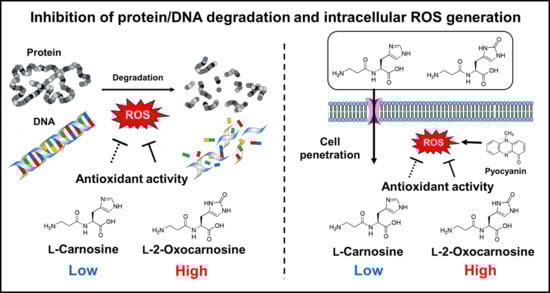
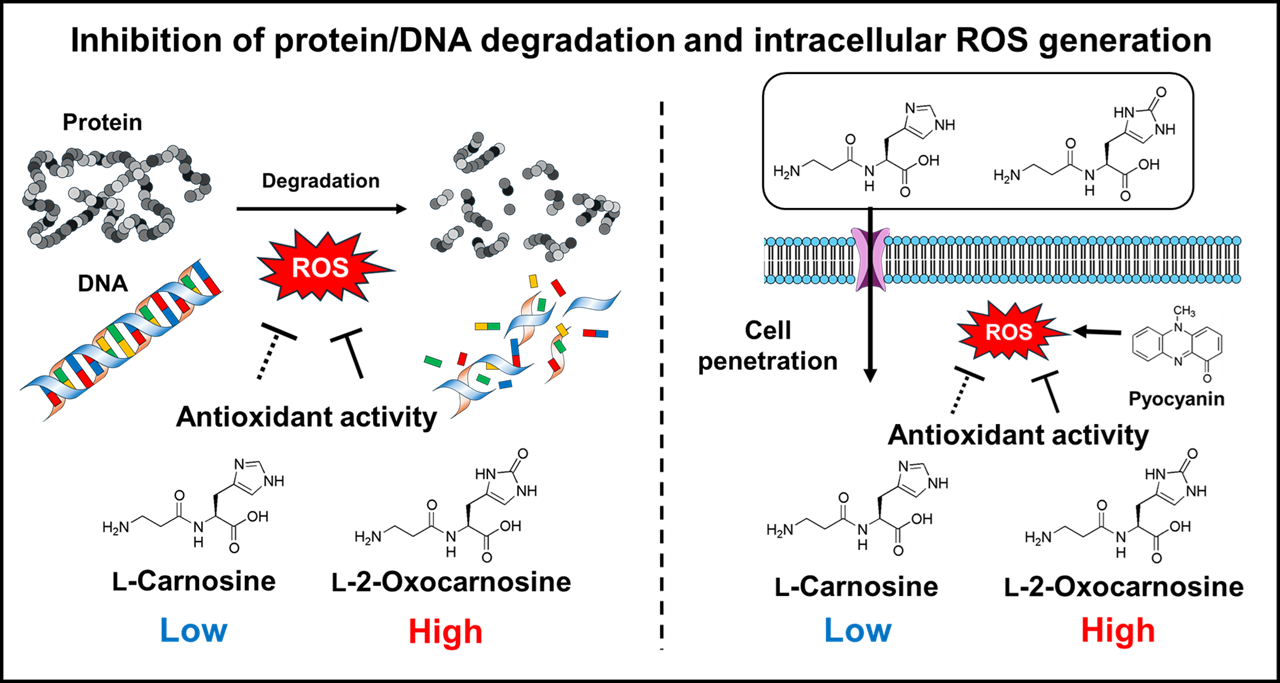
Imidazole dipeptides (IDPs), including carnosine, anserine, and balenine, are functional food ingredients found in meats. They have been reported to exhibit high antioxidant activity. 2-Oxo-imidazole dipeptides (2-oxo-IDPs) are present in trace amounts in various tissues and show notably higher antioxidant activity compared with IDPs. Trace amounts of 2-oxo-IDPs are also present in commercial IDP reagents, suggesting that they affect the antioxidant activity of IDPs. Trace amounts of 2-oxo-IDPs were detected in IDP reagents from various manufacturers by HPLC. Some reagents with trace amounts of 2-oxo-IDPs exhibited higher antioxidant activity in a DPPH radical-scavenging assay compared with high-purity IDP reagents devoid of 2-oxo-IDPs. Therefore, it is important to use highly purified IDP reagents to measure antioxidant activity accurately. The antioxidant activity of highly purified IDPs and 2-oxocarnosine (2-oxo-Car) was evaluated through their ability to protect protein and DNA from ROS. 2-Oxo-Car markedly inhibited the protein and DNA degradation by ClO and ONOO compared with IDPs. Moreover, 2-oxo-Car was not cytotoxic, even at high concentrations, and suppressed pyocyanin-induced ROS generation in C2C12 cells compared with IDPs and glutathione. Overall, 2-oxo-IDPs are effective antioxidants and are equivalent or superior to known water-soluble antioxidants, such as glutathione and vitamin C.

Graphical Abstract

1. Introduction

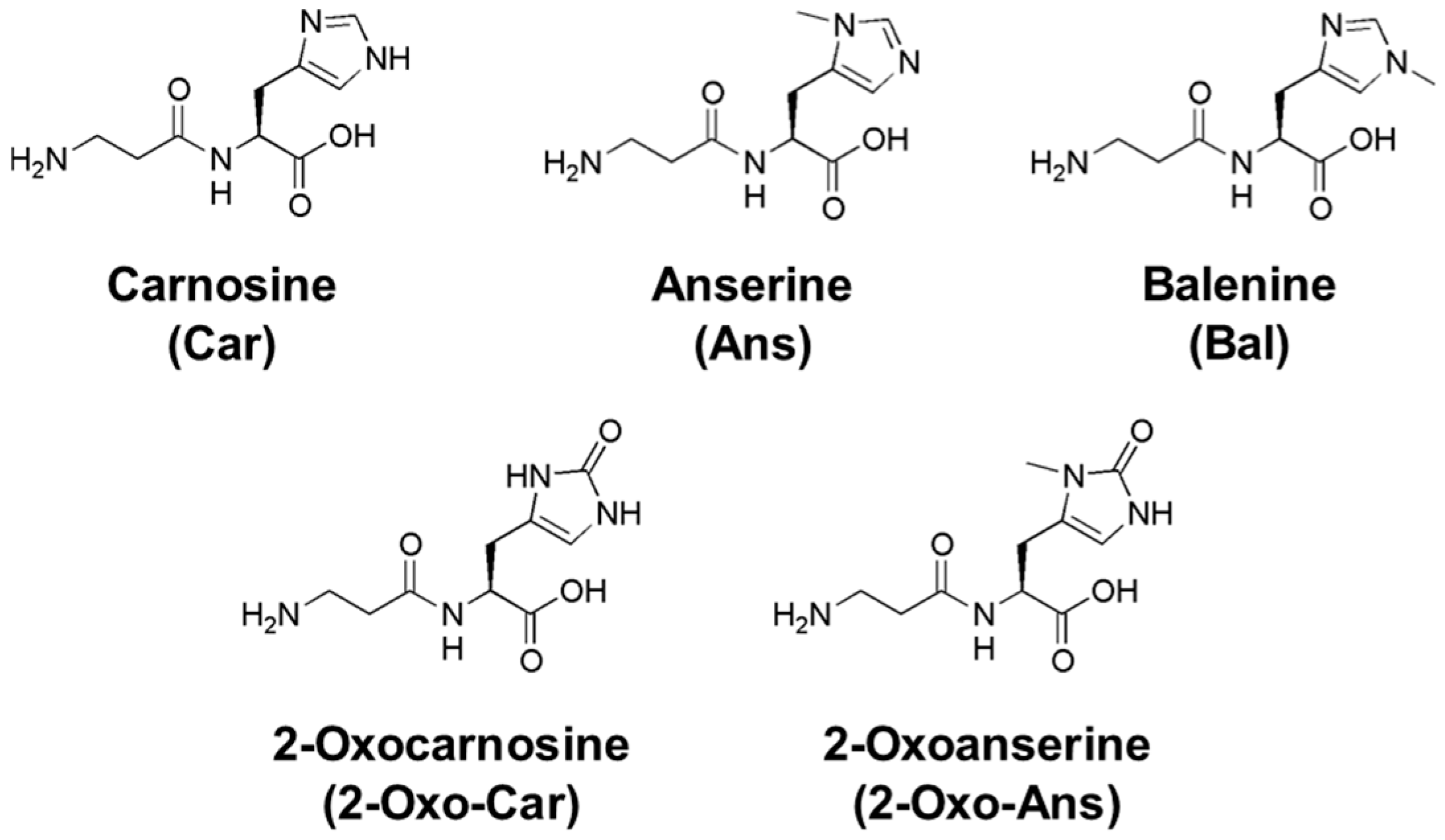
Imidazole dipeptides (IDPs), including carnosine (β-alanyl-L-histidine, Car), anserine (β-alanyl-Nπ-methyl-L-histidine, Ans), and balenine (β-alanyl-Nτ-methyl-L-histidine, Bal), are functional food ingredients with antioxidant properties (Figure 1) [1,2,3,4,5,6]. IDPs are primarily found in vertebrate muscle tissue and brain [7,8], and their types and content vary widely among animal species and tissues [9,10]. They are endogenously synthesized under strictly regulated conditions by Car synthase, Car N-methyltransferase, and carnosinase [7]. When IDPs are ingested orally, they are absorbed through the intestine and degraded into amino acids by carnosinase, which is present in the bloodstream. Because Car synthase is highly active in energy-consuming tissues, such as skeletal muscle and brain, the resulting amino acids [L-histidine (L-His) and β-alanine (βAla)] are transported to these tissues where they are resynthesized into Car [11,12]. In humans, Car is abundant in skeletal muscle (approximately 2–20 mM) [8], whereas Ans and Bal are nearly absent because Car N-methyltransferase is expressed at low levels [7,13]. Although the physiological functions of these IDPs are unknown, they may function as scavengers of ROS, such as O2, OH·, and NO [14,15,16,17], as buffers for the accumulation of lactic acid in muscle tissues [18,19], and as chelating agents for metal ions, such as Fe2+, Zn2+, and Cu2+ [20,21,22]. Human and animal experiments have indicated that the continuous intake of IDPs improves high-intensity muscular performance and exerts anti-fatigue and anti-aging effects [7,23,24,25,26]. Furthermore, IDP supplementation aids in the prevention and management of oxidative stress-related diseases, such as cardiovascular disease, type 2 diabetes mellitus, Alzheimer’s disease, and cataracts [6,27,28,29,30,31]; however, the antioxidant capacities of IDPs measured in vitro are significantly lower compared with those of other water-soluble antioxidants, such as vitamin C (VC) and glutathione (GSH) [32]. Therefore, a contradiction exists between the relative antioxidant capacity of IDPs measured in vitro and their disease prevention and amelioration effects.
Recently, Ihara et al. demonstrated that 2-oxo-imidazole dipeptides (2-oxo-IDPs), in which the 2-position of the imidazole group is oxidized, are present in trace amounts in various mouse tissues by LC–MS/MS coupled with a stable isotope dilution method [33,34]. Notably, 2-oxocarnosine (2-oxo-Car, Figure 1) and 2-oxoanserine (2-oxo-Ans) have been detected in beef, chicken, pork, lamb, and mutton (0.027–0.26% of the total IDPs content) [35]. In vitro assays, DPPH radical-scavenging, FRAP, and ORAC assays, indicate that 2-oxo-Car and 2-oxo-Ans have significantly higher antioxidant capacity (approximately 35,000 times) compared with those of IDPs [33,36]. Moreover, several studies have reported that 2-oxo-IDPs inhibit neuronal cell death more strongly because of rotenone-induced oxidative stress and ONOO-dependent tyrosine nitration compared with IDPs [33,37]; however, there are few reports on the antioxidant activity of 2-oxo-IDPs, and many aspects remain unclear.
Kasamatsu et al. reported that commercial Car reagents contain trace amounts of 2-oxo-Car, which alters their antioxidant activity [36]. Therefore, to determine the precise antioxidant activity mechanism of each IDP and 2-oxo-IDP, highly purified IDP and 2-oxo-IDP reagents must be used. The effect of IDP reagent purity and contamination of 2-oxo-IDP in IDP reagents, including Car, Ans, and Bal from various manufacturers, on antioxidant activity was determined using HPLC analysis and a DPPH radical-scavenging assay. Concurrently, the antioxidant and chelating activities of highly purified 2-oxo-Car and IDPs without 2-oxo-IDPs were compared with those of other water-soluble antioxidants. Increased production of ROS in the body promotes protein and DNA degradation, leading to disease development and accelerated aging. Car and Ans inhibit protein and DNA degradation by ROS [14,38]; however, the effect of other IDPs and 2-oxo-IDPs is unknown. Therefore, the inhibitory effects of highly purified 2-oxo-Car and IDPs without 2-oxo-IDPs on protein and DNA degradation induced by three ROS types (ClO, OH·, and ONOO) in vitro were determined by SDS-PAGE and agarose gel electrophoresis, respectively. Furthermore, the cytotoxicity and inhibitory effects on various ROS generated by pyocyanin for each IDP and 2-oxo-Car were measured and compared with those of other water-soluble antioxidants.

2. Materials and Methods

2.1. Materials

Car was obtained from the following sources: Angene International Limited (Nanjing, China), BLD Pharmatech Ltd. (Shanghai, China), Tokyo Chemical Industries (Tokyo, Japan), FUJIFILM Wako Pure Chemical Industries (Osaka, Japan), Peptide Institute, Inc. (Osaka, Japan), Sigma-Aldrich (St. Louis, MO, USA), and Nacalai Tesque, Inc. (Kyoto, Japan). Ans was obtained from the following sources: BLD Pharmatech, Angene International Limited, Tokyo Chemical Industries, Chem Scene (Monmouth Junction, NJ, USA), Tronto Research Chemicals, Inc. (North York, ON, Canada), and Nacalai Tesque. Bal, 2-oxo-Car, VC, GSH, methanol (HPLC grade), acetonitrile (HPLC grade), chloroform, formic acid, TFA (HPLC grade), 1,4-dioxiane, ethanol, hydrogen peroxide, sodium hypochlorite, ovalbumin, 100 mM phosphate buffer (pH 7.0), D-MEM, start solution, stop solution, delabeling agent solution for side chain, and L-FDVDA were obtained from Nacalai Tesque. λ DNA and CM-H2DCFDA were purchased from Thermo Fisher Scientific (Waltham, MA, USA). Pyocyanin was obtained from Cayman Chemical (Ann Arbor, MI, USA).

2.2. HPLC Analysis for IDP Reagents and 2-Oxo-IDPs

HPLC was performed using a SHIMADZU HPLC system (Shimadzu Corporation, Kyoto, Japan). IDP standards were separated using a COSMOSIL 3PBr (3.0 mm I.D. × 250 mm, particle size: 3 µm, Nacalai Tesque) column with 100 mM phosphate buffer (pH 7.0) using an isocratic mode at a flow rate of 1.0 mL/min at 30 °C. UV detection was performed at 220 nm and 250 nm. The purity of the IDP reagents was calculated based on the peak area values derived from each IDP obtained by HPLC analysis.

2.3. DPPH Radical-Scavenging Assay

The Antioxidant Assay Kit was obtained from DOJINDO Laboratories (Kumamoto, Japan). DPPH reagent was dissolved in 10 mL of ethanol. Next, 20 µL of each antioxidant (Car, Ans, Bal, 2-oxo-Car, and GSH, final conc. 5–40 μM) and 80 µL of assay buffer were added to a 96-well plate. Then, 100 µL of DPPH solution was added to the sample solution and incubated in the dark for 30 min at room temperature. The absorbance (Abs.) of each sample at 517 nm was measured using a microplate reader (Infinite 200 PRO M Plex, Tecan Japan Co., Ltd., Kanagawa, Japan). The antioxidant activity of each IDP reagent obtained from different manufacturers was measured at a concentration of 10 mg/mL. The reactivity of DPPH was calculated as follows: reactivity of DPPH (%) = 100 − {(Abs. at 517 nm of antioxidant samples)/(Abs. at 517 nm of control sample)} × 100.

2.4. FRAP Assay

A FRAP solution was prepared by mixing 300 mM sodium acetate buffer (pH 3.6), 10 mM TPTZ, and 20 mM FeCl3 (10:1:1, v/v/v). The FRAP solution (180 μL) was incubated in the dark at 37 °C for 30 min before the addition of 20 μL of antioxidants (Car, Ans, Bal. 2-oxo-Car, and GSH, final conc. 5–40 μM). After incubating for 15 min at 37 °C, the Abs. at 596 nm was measured using a microplate reader (Infinite 200 PRO M Plex). Trolox (final 5–40 µM) and H2O were used as standard and blank controls, respectively. The results are expressed as the Trolox equivalent antioxidant capacity (TEAC) based on the Trolox standard curve.

2.5. Chelating Capacity Assay

In a 96-well plate, 5 µL of 2 mM FeCl2, 100 µL of IDPs, 2-oxo-Car, or GSH (final conc. 50–800 µM) or EDTA (final conc. 2.5–800 µM), were mixed with 95 µL of ultrapure water (H2O). After a 3-min incubation at room temperature (25 °C), the reaction was inhibited by the addition of 10 µL of 5 mM ferrozine (Dojindo Laboratories). After another incubation for 10 min, the Abs. at 562 nm was measured using a microplate reader (Infinite 200 PRO M Plex). The chelating capacity of Fe2+ was calculated as follows: chelating capacity of Fe2+ (%) = (Abs. at 562 nm of antioxidant samples − Abs. at 562 nm of blank sample)/(Abs. at 562 nm of control sample − Abs. at 562 nm of blank sample) × 100.

2.6. Preparation of ROS Solutions

ClO solution was prepared by diluting sodium hypochlorite with ultrapure water. An OH· solution was prepared by the Fenton reaction using ferric chloride. Briefly, 100 µL each of 0.1 M FeCl3, 0.1 M ascorbic acid, and 0.1 M EDTA solutions were mixed in a vial, and 1 mL of 0.13 M or 0.065 M hydrogen peroxide was added. The mixture was incubated at 37 °C for 1 h to generate hydroxyl radicals. The concentration of OH· was expressed as the concentration of added hydrogen peroxide. ONOO solution was prepared by a modified method using a quenching reactor described by Radi et al. [39]. Specifically, 12.5 mL of 0.6 M sodium nitrite, 25 mL of 0.6 M HCl, and 0.7 M of hydrogen peroxide were combined into each syringe (Terumo Corporation, Tokyo, Japan) and inserted into a silicone tube. While mixing, the solution was poured into a beaker containing 25 mL of 1.5 M NaOH. Finally, 1 g of manganese oxide powder was added to decompose the excess hydrogen peroxide.

2.7. Protein Degradation Assay

Ovalbumin was dissolved in 1× PBS (Nacalai Tesque) to a concentration of 1 mg/mL and filtered (Merck, Darmstadt, Germany). Next, 200 µL of the protein solution was placed in a 1.5 mL centrifugal tube and mixed with 25 µL of 20 mM of each antioxidant solution (Car, Ans, Bal, 2-oxo-Car, VC, and GSH). The reaction mixtures were allowed to stand at room temperature for 10 min, and 25 mL of each ROS solution was added. The samples were incubated at 37 °C for 30 min (ClO), 60 min (OH·), and 120 min (ONOO). Next, 10 µL of each reaction mixture was added to an equal volume of a 2-fold concentrated sample buffer solution, containing 20% 2-mercaptoethanol and glycerin for SDS–PAGE. The samples were applied to a 10–20% Bullet PAGE Plus Precast Gel (Nacalai Tesque) and electrophoresed at 400 V for 10 min. The gels were stained with Bullet CBB Stain Lite solution (Nacalai Tesque). The inhibition effects of the antioxidants on protein degradation were assessed using a Chemi-Doc Touch MP Imaging system (Bio-Rad Laboratories, Inc., Hercules, CA, USA). The protein degradation inhibition effects were calculated as follows: inhibition effects = (band intensity of ovalbumin monomer and dimer of the sample with antioxidants − band intensity of ovalbumin monomer and dimer of the control sample)/(band intensity of ovalbumin monomer and dimer of the blank sample) × 100%.

2.8. Preparation of λ DNA Solution

A mixture of 5 µL of 3 M sodium acetate buffer and 210 µL of ethanol was added to 100 µL of λ DNA, centrifuged at 15,000 rpm for 10 min at 10 °C, and the supernatant was removed. The precipitate was washed with 500 µL of ice-cold 70% ethanol, centrifuged at 15,000 rpm for 5 min, and the supernatant was removed. Ethanol washing was repeated twice, and the precipitate was dried at room temperature. The dried λ DNA was dissolved in PBS to a concentration of 0.5 µg/µL and stored in a refrigerator overnight. The DNA, which contained sufficient moisture, was dissolved by pipetting slowly.

2.9. DNA Degradation Assay

Based on the experiment of Takahashi et al. [38], we established a DNA degradation assay for ROS to evaluate the antioxidant activity of IDPs and 2-oxo-Car. The system was constructed by adding 5 µL of antioxidant and 5 µL of ROS dissolved in PBS to 40 µL of 1× PBS containing 2 µg of λ DNA in a total volume of 50 µL. Briefly, 5 µL of 20 mM antioxidant dissolved in 1× PBS was added to 40 µL of PBS containing 2 µg of λ DNA, mixed, and left for 3 min. Next, 5 µL of ROS was added and placed in a 37 °C incubator to react with ClO (high conc.) for 30 min, with ClO (low conc.) and OH· for 60 min, and with ONOO for 120 min. The DNA solution was mixed with Loading Dye Brilliant Color (6×) (Nacalai Tesque) and subjected to agarose gel electrophoresis. A 10× TAE (Nacalai Tesque) solution was diluted to 1× TAE with ultrapure water for electrophoresis. Agarose gels (0.8%) were prepared by adding agarose to 1× TAE, heating in a microwave to dissolve, and cooling to below 60 °C. The agarose was poured into an electrophoresis chamber and allowed to solidify at room temperature. The agarose gel was immersed in an electrophoresis tank (ATTO Corporation, Tokyo, Japan, WSE-1710) filled with 1× TAE, 3 µL (ClO) or 6 µL (OH· and ONOO) of each sample was added, and electrophoresis was conducted at 100 V for 30 min (ClO) or 40 min (OH· and ONOO). The gel was washed with ultrapure water and stained with a 1:2000 ethidium bromide solution for 1 h. After washing the gel with ultrapure water, the bands were detected using a ChemiDoc MP (Bio-Rad).

2.10. Cell Culture

C2C12 cells (ECACC, accession numbers: 91031101, UK) were cultured in D-MEM supplemented with 10% fetal bovine serum (Thermo Fisher Scientific, Waltham, MA, USA). The cells were cultured in a 6 cm dish (Corning Inc., Corning, NY, USA) at 37 °C in a 5% CO2 atmosphere.

2.11. Cell Viability Assay

C2C12 cells (5.0 × 10³ cells/well) were seeded into 96-well plates and cultured at 37 °C in a 5% CO2 atmosphere for 24 h. The culture medium was removed, and the cells were treated with a mixture of 10 µL of IDPs, 2-oxo-Car, VC, or GSH (1 mM, 5 mM, 20 mM, and 50 mM) in 1× PBS, and 90 µL of culture medium at 37 °C in a 5% CO2 atmosphere for 24 h. After incubation, the medium was removed, and the cells were washed three times with 100 µL of 1× PBS. Then, 100 μL of medium and 10 μL of Cell Count Reagent SF (Nacalai Tesque) were added to each and incubated at 37 °C for 2 h. The Abs. at 450 nm was measured using a UV spectrophotometer (Infinite 200 PRO M Plex). Cell viability was calculated as follows: (Abs. at 450 nm of the cells treated with IDPs, 2-oxo-Car, VC, or GSH − Abs. at 450 nm of blank sample)/(Abs. at 450 nm of the cells without IDPs, 2-oxo-Car, VC, and GSH − Abs. at 450 nm of blank sample) × 100%.

2.12. Confirmation of Intracellular IDPs and 2-Oxo-Car by LC–MS

C2C12 cells (1.4 × 10⁵ cells/well) were seeded into 6-well plates and cultured at 37 °C in a 5% CO2 atmosphere for 24 h. The culture medium was removed and the cells were treated with mixtures of 200 µL of 20 mM IDPs or 2-oxo-Car in 1× PBS and 1.8 mL of culture medium at 37 °C for 24 h. After incubation, the medium was removed and the cells were washed twice with 2 mL of 1× PBS. Next, 1 mL of H2O was added to each well, and the cells were removed from the plate using a scraper. The cells were transferred into a microtube, and 500 µL of H2O was added to each well after scraping. The culture plate was washed twice, the wash solution was collected in a microtube, and 2 mL of the cell suspension was sonicated for 10 min using an ultrasonic irradiator (Branson 2510, Yamato Scientific Co., Ltd., Tokyo, Japan). The samples were centrifuged at 12,000× g for 10 min at 4 °C. The supernatant (500 µL) was transferred into a new centrifuge tube and dried using a Smart Evaporator C1 (BioChromato, Inc., Kanagawa, Japan). The residue was suspended in 250 µL of H2O, followed by the addition of 250 µL of acetonitrile. The samples were centrifuged at 12,000× g for 10 min at 4 °C. The supernatant (400 µL) was filtered through a Cosmospin Filter H (0.45 µm pore size, Nacalai Tesque) at 5000× g for 10 min at 4 °C. The filtrate (350 µL) was transferred to a glass vial (GLCTV-801, SHIMADZU GLC Ltd., Tokyo, Japan) and dried using a Smart Evaporator C1. The residue was dissolved in 100 µL of H2O. The samples were labeled with the highly sensitive labeling reagent L-FDVDA. The solutions used in the labeling reaction included the start solution (labeling initiator), the side-chain delabeling solution (including 6-mercapto-1-hexanol), and the stop solution (reaction-stopping reagent). L-FDVDA was dissolved in 1,4-dioxane to a concentration of 10 mg/mL. Then, 100 µL of labeling solution and 100 µL of start solution were added to 100 µL of sample solution, and the mixture was incubated for 1 h at 50 °C. Next, 100 µL of side-chain delabeling reagent solution was added to the labeled sample solution, mixed by vortexing for 5 s, and incubated at 50 °C for 15 min. After the addition of 100 µL of stop solution, the sample solution was analysed by LC–MS.

2.13. LC–MS Measurements

LC–MS analysis was conducted using a Nexera Lite HPLC system (Shimadzu) coupled with a single quadrupole mass spectrometer (LCMS–2050, Shimadzu). Lysate samples were separated using a COSMOSIL 3PBr column (3.0 mm I. D. × 150 mm; particle size, 3 µm) and an eluent mixture of 20% acetonitrile in H2O (containing 0.1% formic acid) as solvent A with a gradient ranging from 7.5% to 7.5% to 50% (0–10–35 min) and 60% acetonitrile in H2O (containing 0.1% formic acid) as solvent B at a flow rate of 0.4 mL/min at 40 °C. In the LC–MS measurements, the nebulizing gas flow was set to 2.0 L/min, the drying gas flow was 5.0 L/min, the heating gas flow was 7.0 L/min, and the desolvation temperature was maintained at 450 °C. Data acquisition was performed in positive ion mode with a detector voltage of 1.0 kV. IDPs and 2-oxo-Car labeled with L-FDVDA were detected at m/z 578.6 (Car), m/z 592.6 (Ans and Bal), m/z 594.6 (2-oxo-Car), m/z 507.6 (L-His), m/z 521.6 [Nτ-methyl-L-histidine (Nτ-Me-His) and Nπ-methyl-L-histidine (Nπ-Me-His)], and m/z 441.5 (βAla).

2.14. Confirmation of Penetration of IDPs and 2-Oxo-Car

C2C12 cells (3.0 × 10⁴ cells/well) were seeded into 24-well plates and cultured at 37 °C in a 5% CO2 atmosphere for 24 h. The medium was removed, and the cells were incubated with a mixture of 50 µL of 20 mM Flu-Car in 1× PBS and 450 µL of culture medium at 37 °C for 24 h. The medium was removed and the cells were washed twice with 500 µL of 1× HBSS (+) (Nacalai Tesque). Next, 500 µL of 1× HBSS (+) was added to each well, and the fluorescence intensity of the cells treated with Flu-Car was measured at an excitation wavelength of 490 nm and an emission wavelength of 530 nm using a fluorescence spectrophotometer (Infinite 200 PRO M Plex, Tecan). The Flu-Car in the cells was observed using a fluorescence microscope (CKX53, Olympus Corporation, Tokyo, Japan).

2.15. Measurement of Intracellular ROS Production

CM-H2DCFDA was used to assess intracellular ROS production. C2C12 cells (1.4 × 10⁵ cells/well) were seeded into 6-well plates and cultured for 24 h in an incubator containing 5% CO2. The medium was removed and the cells were treated with 2 mM IDPs, 2-oxo-Car, and GSH for 24 h. The medium was gently removed, and the cells were exposed to pyocyanin (0.1 mM) for 3 h. The medium was removed, and the cells were washed twice with HBSS (+). The supernatant was removed, and 2 mL of 5 µM CM-H2DCFDA, dissolved in serum-free D-MEM, was added to each well and incubated for 30 min in a 37 °C incubator containing 5% CO2. The cells were washed with HBSS (−) (Nacalai Tesque), incubated with 1 mL of Accumax (Nacalai Tesque) for 3 min, transferred to a 1.5 mL tube, and centrifuged at 5000 rpm for 5 min. The supernatant was discarded, 500 μL of HBSS (−) was added, and the mixture was centrifuged at 5000 rpm for 5 min. The supernatant was discarded, 1 mL of HBSS (−) was added, and the mixture was gently pipetted. The fluorescence intensity was measured using a flow cytometer (Attune NxT, Life Technologies, Carlsbad, CA, USA).

2.16. Statistical Analyses

All data were expressed as the mean ± standard deviation (SD). Statistical significance between multiple groups was calculated with a one-way ANOVA, followed by Tukey’s post hoc test. p-values < 0.05 were considered statistically significant.

3. Results and Discussions

3.1. Effect of Trace Amounts of 2-Oxo-IDPs Contained in IDP Reagents on Antioxidant Activity

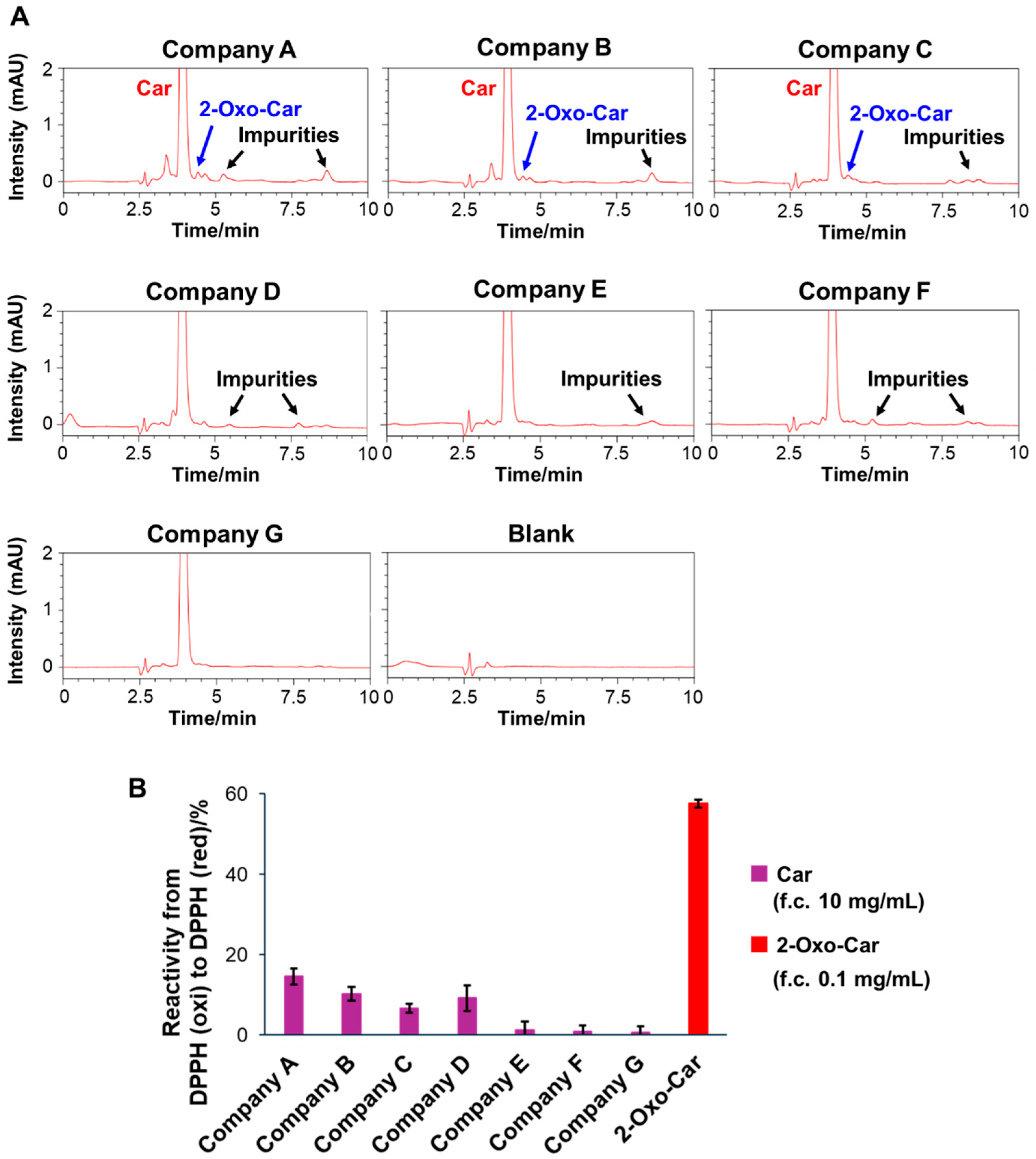
For the accurate determination of the antioxidant capacity of IDPs, it is important to use high-purity IDPs without 2-oxo-IDPs and salts, such as nitrate. Therefore, contamination of 2-oxo-IDPs in IDP reagents obtained from various manufacturers without salts was evaluated by HPLC and a DPPH radical-scavenging assay. Highly hydrophilic IDPs cannot be separated because they are not retained on octadecyl (C18) columns, which are widely used for reversed-phase (RP) HPLC. Previously, an accurate method was developed for simultaneously separating and quantifying IDPs by RP–HPLC using a PBr column that was modified with a 3-(pentabromobenzyloxy)propyl group on silica gel [9,10,40]. Using this column, Car, Ans, Bal, and 2-oxo-Car were completely separated in the isocratic mode with a 100 mM phosphate buffer (pH 7.0) mobile phase (Figure S1). The HPLC chromatograms were obtained for the Car reagents from each company at UV 250 nm (Figure 2A). The peak derived from 2-oxo-Car was detected in Car reagents from 3 (A–C) of 7 companies (Figure 2A). In contrast, peaks derived from 2-oxo-Car were not detected in Car reagents from companies D–G; however, several peaks associated with unknown impurities that were not detected in the blank sample were observed in Car reagents from companies D–F. The peaks derived from 2-oxo-Car and the impurities were not observed in the Car reagent obtained from company G. These results indicate that trace amounts of 2-oxo-Car or unknown impurities are contaminants of the Car reagents obtained from some manufacturers.
The same experiments were conducted with Ans and Bal. First, the purity of the Ans reagents from each company was evaluated by HPLC (at 220 nm). As shown in Figure S2, the peak derived from Car and Bal was detected in the Ans reagents obtained from 5 (companies H–L) of 6 companies at levels ranging from 0.4% to 4.4%. In contrast, no peaks for Car or Bal were observed in the Ans reagent obtained from company M, whereas the purity was high (>99.9%) (Figure S2). Bal was only analyzed from one company because it is not widely available. A slight peak derived from Car was observed for the Bal reagent (Figure S3); however, the purity was high (99.6%). These results indicate that the Ans reagents from most manufacturers are contaminated with other IDPs. 2-Oxo-Ans and 2-oxobalenine (2-oxo-Bal) are not commercially available. Therefore, 2-oxo-Ans and 2-oxo-Bal were synthesized from Ans (company L) and Bal by O2 bubbling using ascorbate and a Cu catalyst to identify 2-oxo-Ans and 2-oxo-Bal in the Ans and Bal reagents, respectively [33]. Peak positions derived from 2-oxo-Ans (7.4 min) and 2-oxo-Bal (9.8 min) were identified by HPLC (Figure S4A,B) and LC–MS (Figure S5A,B), respectively. Subsequently, the trace amounts of 2-oxo-Ans present in the Ans reagents from each company were identified by HPLC (at 250 nm). 2-Oxo-Ans was detected in reagents obtained from all manufacturers, except company M (Figure S6). The peak intensity of 2-oxo-Ans was in the following order: company H > J > K > I > L (Figure S6). In contrast, although some unknown peaks were detected in the Ans reagent from company M, no peaks derived from 2-oxo-Ans were observed. Moreover, some weak peaks were detected in the Bal reagent, but no peaks derived from 2-oxo-Bal were observed (Figure S7). These results indicate that for IDPs, trace amounts of 2-oxo-Ans and unknown impurities were present in the Ans reagents from most manufacturers.
Next, antioxidant activity of IDP reagents from each company was measured using a DPPH radical-scavenging assay. The DPPH free radical used in this assay is a purple-hued long-lived organic nitrogen radical [oxidized form (oxi)]. When an antioxidant is added to the DPPH solution, a color change from purple (oxi) to yellow [reduced form (red)] for the corresponding hydrazine is observed. The antioxidant capacity of antioxidants toward DPPH was determined by monitoring the decrease in absorbance at 517 nm. 2-Oxo-Car [final concentration (f.c.) 0.1 mg/mL] exhibited high antioxidant activity (Figure 2B), whereas the antioxidant capacity of each IDP reagent (f.c. 0.1 mg/mL) was significantly lower. To determine the effect of 2-oxo-IDPs on the antioxidant activity of each IDP reagent, the IDP concentration was changed from 0.1 to 10 mg/mL (f.c.), and the DPPH radical-scavenging assay was performed. The antioxidant activity of Car reagents obtained from companies A–C, the HPLC analysis of which showed peaks derived from 2-oxo-Car, was higher compared with that of Car reagents obtained from companies E–G (Figure 2B). Therefore, high-purity IDP reagents without 2-oxo-IDPs are required to accurately evaluate the antioxidant capacity of IDPs.
The antioxidant activity of Ans reagents from companies H–K was evaluated. HPLC analysis revealed that peaks derived from 2-oxo-Ans were higher than those obtained from companies L and M (Figure S8). For the Ans reagent from company M, 2-oxo-Ans was not detected and did not show antioxidant activity, which is consistent with the results in Figure S6. However, although 2-oxo-Ans was observed in the Ans reagent from company L, no antioxidant activity was observed. The peak intensity of 2-oxo-Ans from company L was lower compared with that of 2-oxo-Ans from companies H–K (Figure S6). Because 2-oxo-IDPs exhibit antioxidant activity several tens of thousands of times higher compared with that of IDPs [36], slight differences in the 2-oxo-Ans content of the Ans reagents may affect the presence or absence of antioxidant activity. Bal without 2-oxo-Bal was also evaluated; however, it showed no antioxidant activity. These results indicate that IDPs contaminated with 2-oxo-IDPs have higher antioxidant activity compared with highly purified IDPs without 2-oxo-IDPs. Consequently, the correct evaluation of the antioxidant activity of IDPs requires the use of highly pure reagents devoid of 2-oxo-IDPs.

3.2. Antioxidant Capacity of Highly Purified IDPs and 2-Oxo-Car

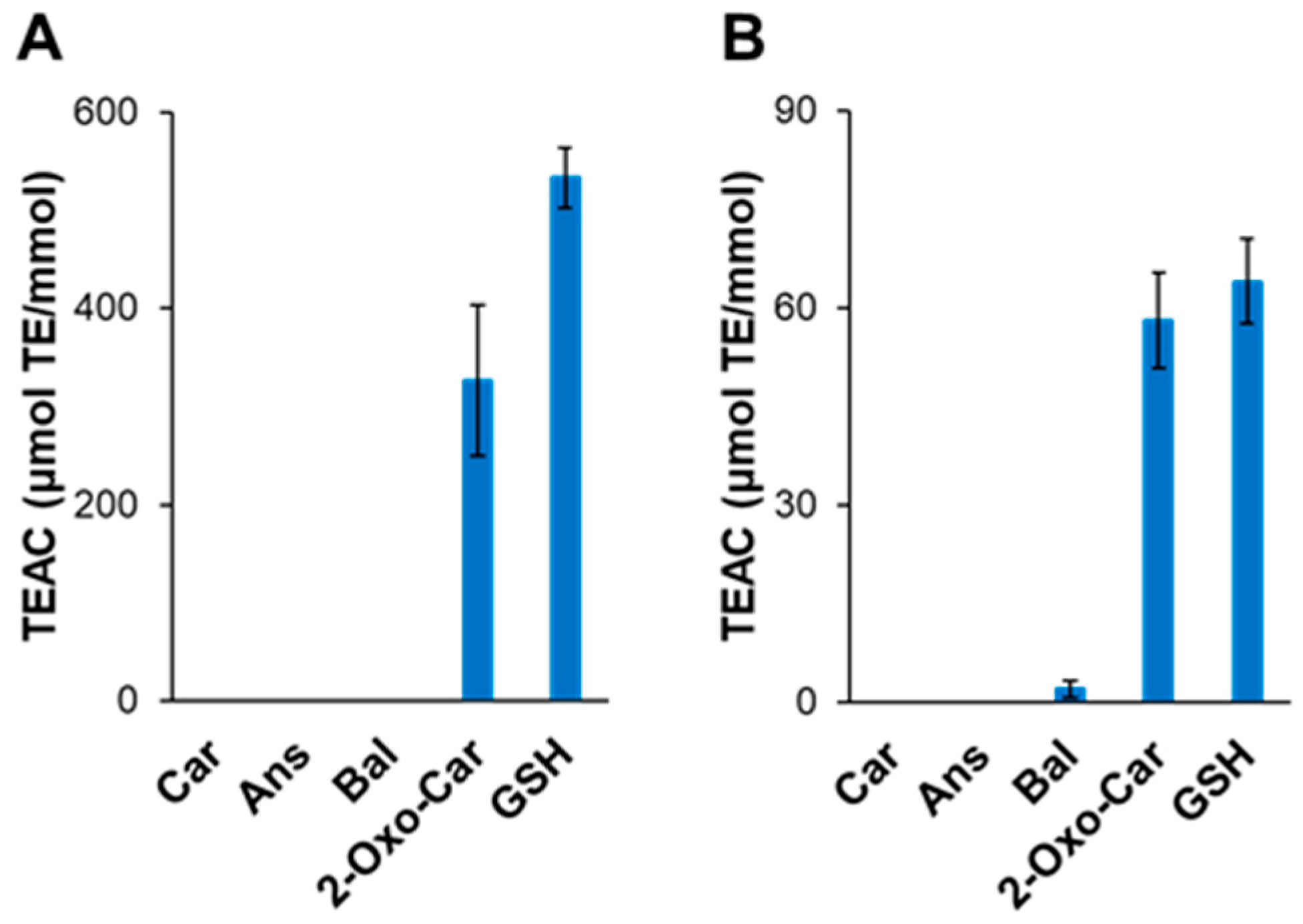
High-purity Car (company G), Ans (company M), and Bal, without 2-oxo-IDPs, were used to assess the function of each IDP. Commercially available, high-purity 2-oxo-Car without IDPs (Figure S9) and GSH were also used to compare their functionality with IDPs. First, the antioxidant capacity of each antioxidant was determined using the DPPH radical-scavenging and FRAP assays. The FRAP assay relies on the reduction of Fe3+-TPTZ to Fe2+-TPTZ, exhibiting an intense, navy-blue color, through electron transfer with an antioxidant [41]. For both assays, the antioxidant capacity of each antioxidant is expressed as the TEAC, which was calculated based on the antioxidant activity of Trolox. For the DPPH radical-scavenging assay, 2-oxo-Car and GSH showed concentration-dependent scavenging of DPPH radicals in the 5–100 μM range. The TEAC values for 2-oxo-Car and GSH were 326.8 ± 76.6 and 532.8 ± 30.5 μmol TE/mmol, respectively (Figure 3A). In contrast, Car, Ans, and Bal showed no inhibitory effects of DPPH radicals over the same concentration range (Figure 3A). The results indicate that 2-oxo-Car has greater antioxidant capacity than that of the IDPs. In the FRAP assay, the absorbance at 596 nm, which indicates the amount of Fe2+-TPTZ, increased in a concentration-dependent manner for 2-oxo-Car and GSH, and their TEAC values were 58.2 ± 7.3 and 64.1 ± 6.5 μmol TE/mmol, respectively (Figure 3B). In contrast, no increase in the absorbance was observed for IDPs using the same concentration range. Our results were generally consistent with those of Kasamatsu et al. [36] and indicate that the oxidative modification at the C-2 position of the imidazole group of Car produces an antioxidant capacity comparable to that of GSH. Some studies have indicated that IDPs exhibit low antioxidant activity in DPPH radical-scavenging and ORAC assays [33,36,42]. Manhiani et al. suggested that the hydrogens on the methylene carbon next to the imidazole ring in IDPs are likely the proton donor that terminates the oxidation reaction induced by free radicals [42]. Moreover, the radical-scavenging activity of Car was higher compared with that of L-His; however, the activity was very low (11.47%) at 25 mM. The 2-oxo-imidazole group in 2-oxo-IDPs has a high electron-donating property because of its chemical structure. As a result, 2-oxo-Car may exhibit higher antioxidant activity compared with the IDPs. The antioxidant activity of IDPs is mediated by various mechanisms, including metal ions and radical-scavenging capacities; however, the detailed mechanism remains unclear. Further studies are needed to elucidate the mechanistic details underlying the antioxidant activity of the 2-oxo-IDPs.

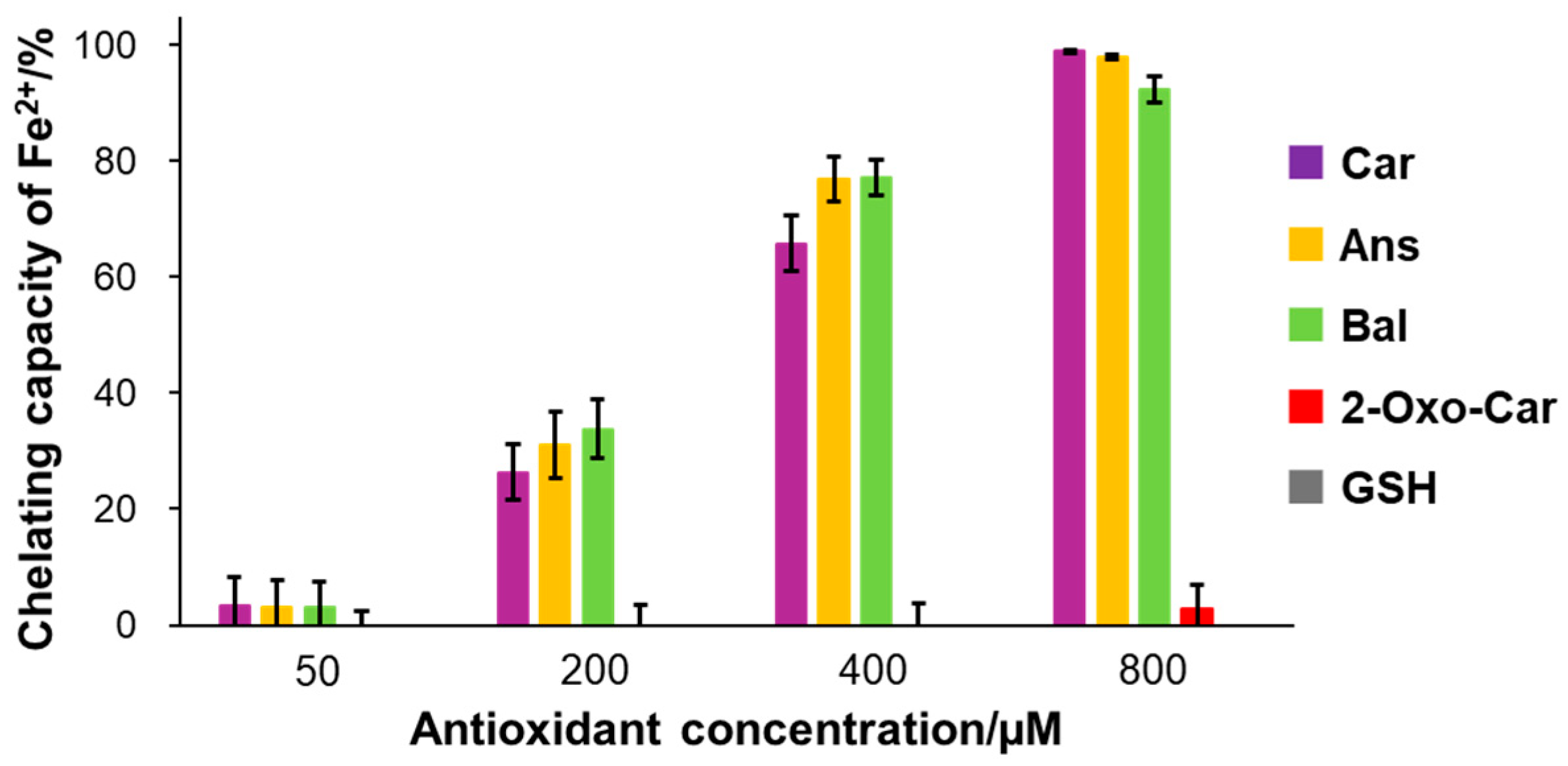
3.3. Chelating Capacity of High-Purified IDPs and 2-Oxo-Car

OH∙ with a high oxidizing capacity is generated by the reduction of H2O2 by metal ions, such as Fe2+ and Cu+. OH∙ production in cells is suppressed by the elimination of H2O2 by catalase and peroxidase and by the reduction of metal ion concentrations by metal-binding proteins, such as ferritin [43,44]. IDPs exhibit antioxidant activity and chelating capacity and may be useful as inhibitors of OH∙ production. Therefore, chelating capacity of highly purified IDPs and 2-oxo-Car was determined using ferrozine. All IDPs chelated Fe2+ depending on their concentration (Figure 4). Furthermore, there was no difference in the chelating ability of Fe2+ among the IDPs. In contrast, 2-oxo-Car and GSH showed no chelation (Figure 4). This may result from oxidation at the 2-position of the imidazole group, which causes a loss of the chelating site. When the chelating capacity of the IDPs was compared with that of EDTA, which is a strong chelating agent, the chelating capacity of the IDPs was 1/16 that of EDTA (Figure S10). These results indicate that 2-oxo-Car does not exhibit chelating capacity.

3.4. Inhibition of ROS-Induced Protein Degradation by IDPs and 2-Oxo-Car

Major ROS species, such as ClO, OH∙, and ONOO, are constitutively produced in living organisms. They induce protein and DNA degradation in a concentration-dependent manner [14,38]. The inhibitory effects of IDPs, 2-oxo-Car, and the water-soluble antioxidants, VC and GSH, on protein degradation induced by three ROS types were determined using ovalbumin as a model protein.
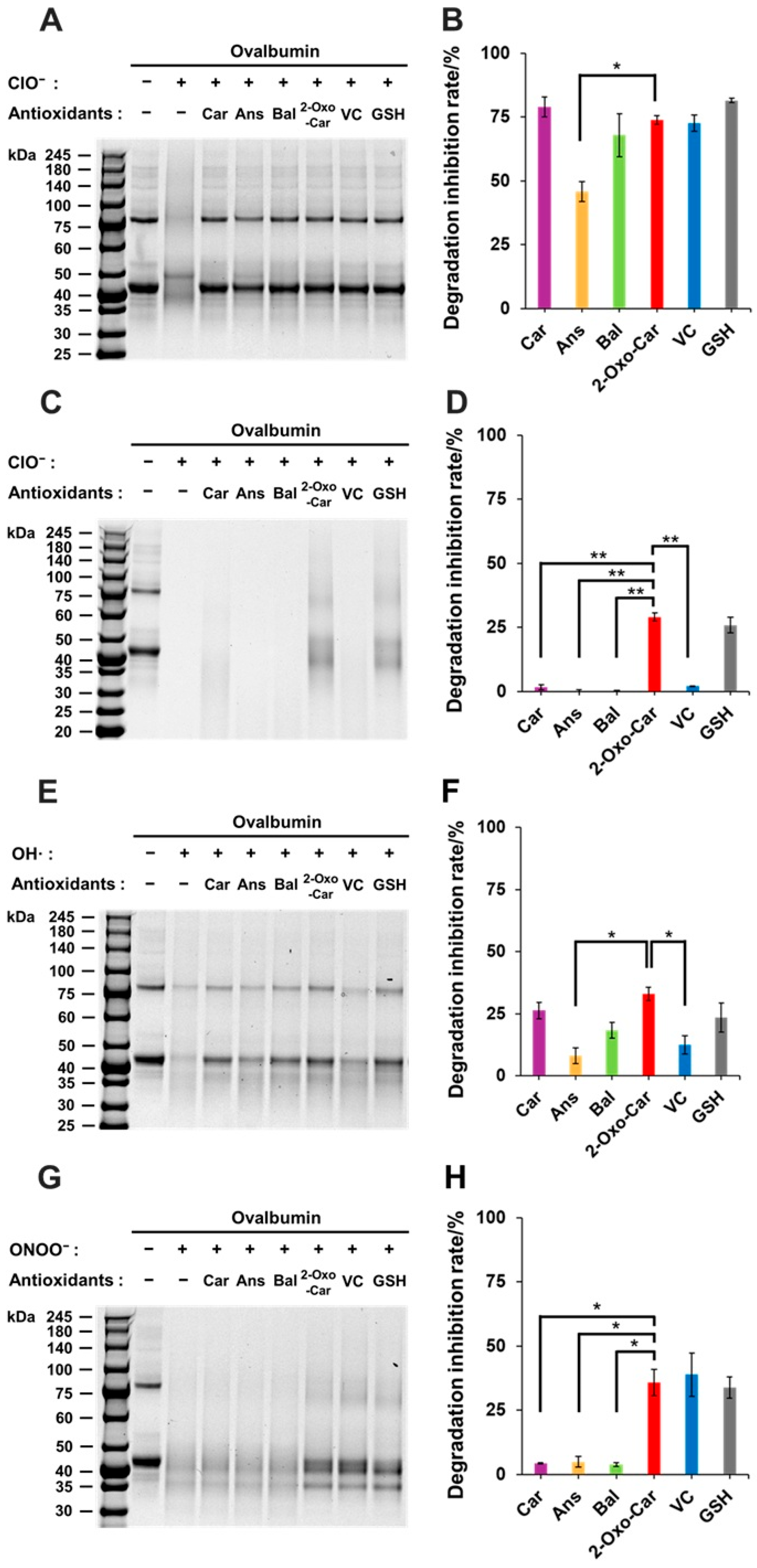
All reagents, including Car, Ans, Bal, and 2-oxo-Car, and the antioxidants (VC and GSH), showed inhibitory effects on ClO-induced protein degradation (low concentration: 0.5 mM); however, the inhibitory effect of Ans (45.9%) was slightly lower compared with those of the other IDPs (67.9–78.9%, Figure 5A,B and Figure S11A). Using a high ClO concentration (5 mM), only 2-oxo-Car (29.1%) and GSH (25.9%) inhibited protein degradation (Figure 5C,D and Figure S11B). Car, 2-oxo-Car, and GSH showed relatively high inhibitory effects (>25%) against OH∙-induced protein degradation, whereas minimal degradation was observed with Ans (8.1%) and VC (12.6%) (Figure 5E,F and Figure S11C). IDPs exhibited few inhibitory effects against ONOO-induced protein degradation, whereas 2-oxo-Car, VC, and GSH showed a relatively high inhibitory effect (33.9–38.9%, Figure 5G,H and Figure S11D). These results indicate that 2-oxo-Car more effectively inhibits protein degradation induced by various ROS types compared with IDPs.
2-Oxo-Car has a higher reactivity to ClO and ONOO compared with Car [36], which correlated with the inhibitory effect on protein degradation in the present study; however, the inhibitory effects of Car and 2-oxo-Car on OH∙-induced protein degradation were different when compared with their direct reactivity with radicals [36]. OH∙ is generated by the Fenton reaction between metal ions and hydrogen peroxide, and the amount generated is affected by the metal ion chelating activity. Therefore, the results of this assay reflect the radical-scavenging ability and the metal ion chelating activity. As shown in Figure 4, the IDPs exhibited chelating activity for Fe2+; therefore, they may inhibit protein degradation through two effects: suppression of the Fenton reaction via chelating activity and radical-scavenging ability. In contrast, 2-oxo-Car did not show chelating activity for Fe2+; however, 2-oxo-Car had a marked inhibitory effect on protein degradation compared with the IDPs. This suggests that 2-oxo-Car has radical-scavenging activity that is higher compared with the combined effects of the chelating and antioxidant activities of the IDPs. Some studies have indicated that IDPs dynamically change their antioxidant activity depending on the type of metal ion present [1,16]. The antioxidant activity of 2-oxo-Car and metal ions is unknown, and further detailed studies are warranted.

3.5. Inhibition of ROS-Induced DNA Degradation by IDPs and 2-Oxo-Car

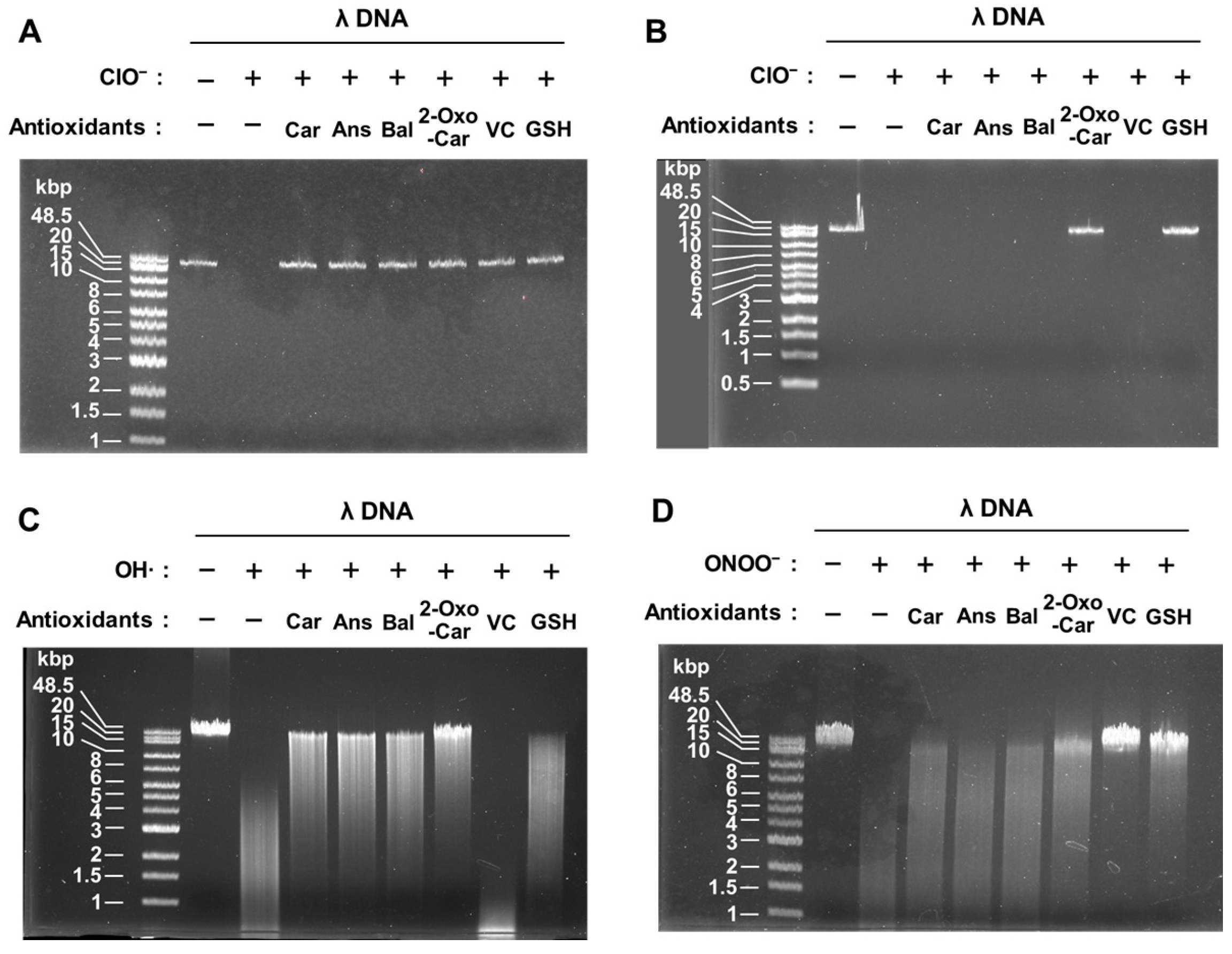
The inhibitory effects of each IDP and 2-oxo-Car on DNA degradation induced by three types of ROS were determined using λ DNA. The inhibitory effects of each IDP and 2-oxo-Car on ClO-induced DNA degradation showed the same tendency as that observed for protein degradation, with all compounds inhibiting degradation at low concentrations (Figure 6A and Figure S12A). Only 2-oxo-Car and GSH inhibited DNA degradation at high concentrations (Figure 6B and Figure S12B). The inhibitory effects of IDPs and 2-oxo-Car on OH∙-induced DNA degradation were slightly different from those on the protein. The highest inhibitory effect was observed with 2-oxo-Car, followed by IDPs and GSH (Figure 6C and Figure S12C). In contrast, the DNA band was shifted downward in the presence of VC compared with that in the control, indicating DNA degradation activity. VC markedly reduces metal ion concentrations, which may reduce Fe3+ to Fe2+ to promote the Fenton reaction and accelerate DNA degradation. In the presence of 2-oxo-Car, the smearing below the major DNA band was decreased (Figure 6C and Figure S12C), indicating that it has a slightly higher inhibitory effect on DNA degradation compared with other antioxidants. For ONOO, the results differed from those observed for protein degradation, with VC showing the highest inhibitory effect, followed by GSH, 2-oxo-Car, and IDPs (Bal and Car) (Figure 6D and Figure S12D). Ans barely inhibited DNA degradation (Figure 6D and Figure S12D). These results indicate that 2-oxo-Car effectively inhibits protein degradation and DNA degradation compared with IDPs. Interestingly, although IDPs did not show antioxidant activity in in vitro assays using organic dyes, IDPs exhibited marked antioxidant activity against some ROS types in protein and DNA degradation assays; however, the inhibition profile for each antioxidant differed slightly depending on whether the ROS target molecule was protein or DNA. Some studies have indicated that IDPs bind to carbonyl and ketone groups in proteins and sugars, which may inhibit protein glycation and polymerization [45,46]. In contrast, there are no reports of IDPs binding to DNA. Thus, the difference in the inhibitory effect on protein and DNA degradation may result from the affinity of each antioxidant for specific biomolecules.

3.6. Suppression of Intracellular ROS by IDPs and 2-Oxo-Car

IDPs are abundant in the skeletal muscles of various animal species and may have antioxidant and anti-fatigue effects; however, the function of IDPs in cultured cells is largely unknown, and it is unclear whether 2-oxo-IDPs act as antioxidants in cells. Therefore, C2C12 cells, a myoblast cell line derived from mouse skeletal muscle commonly used in IDP research, were treated with the ROS inducer pyocyanin and the antioxidant activities of IDPs and 2-oxo-Car were measured.
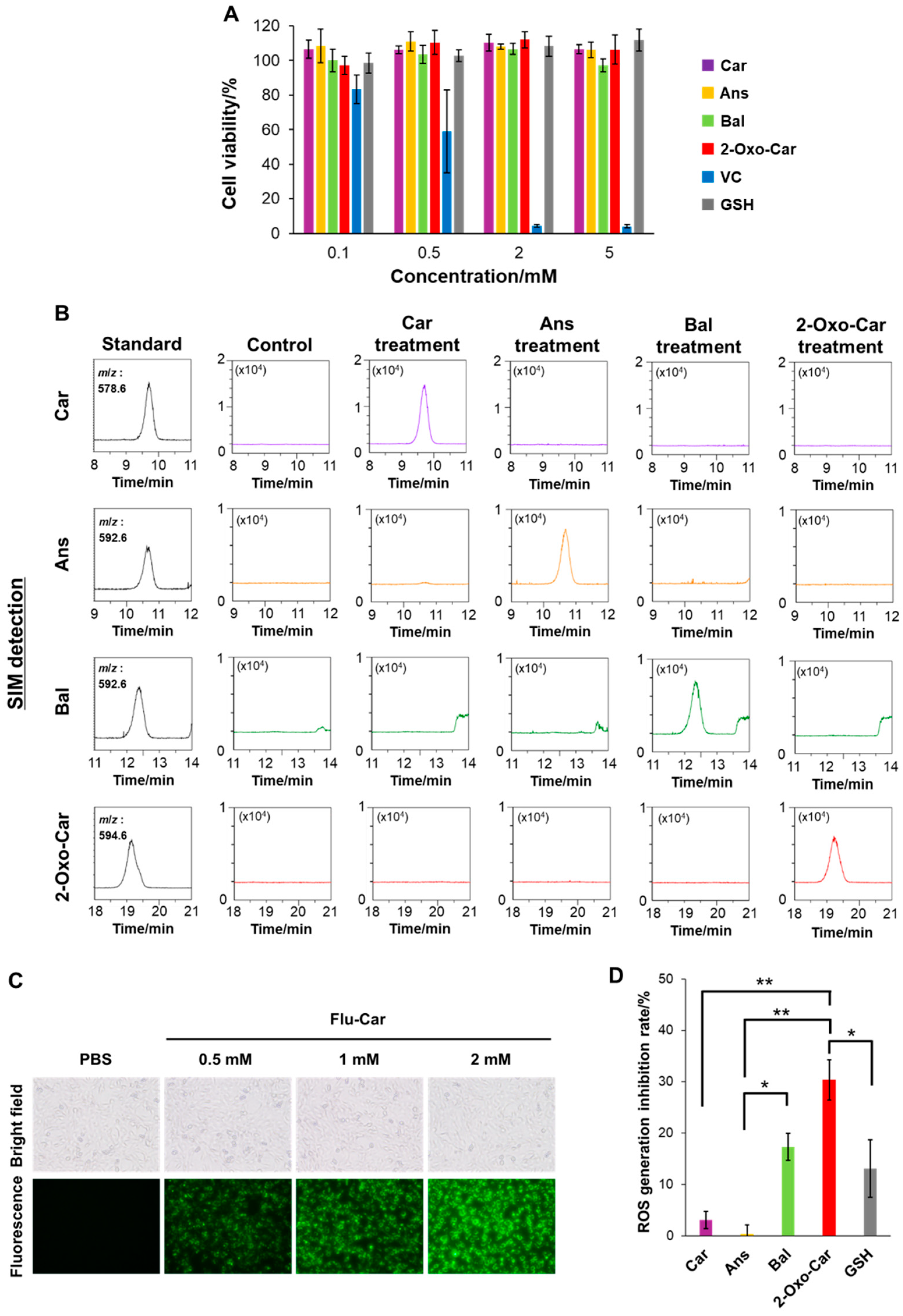
The IDP concentration in the skeletal muscle varies depending on the type of IDPs and the animal species; however, it was reported to be in the range of several mM to several tens of mM [8]. Therefore, we determined the toxicity of IDPs and 2-oxo-Car in C2C12 cells at concentrations ranging from 0.5 to 5 mM. VC and GSH were also evaluated to compare them with known water-soluble antioxidants. IDPs, 2-oxo-Car, and GSH were nontoxic from a concentration of 0.1 to 5 mM, whereas VC exhibited marked cytotoxicity in a concentration-dependent manner (Figure 7A). The results indicate that 2-oxo-Car may be used at high concentrations, similar to the IDPs.
IDPs must be transported into cells to scavenge ROS. To determine whether IDPs and 2-oxo-Car are transported into C2C12 cells, C2C12 cell lysates treated with each IDP and 2-oxo-Car were derivatized with the highly sensitive labeling reagent 1-fluoro-2,4-dinitrophenyl-5-L-valine-N,N-dimethylethylendiamineamide (L-FDVDA) [47,48] and analyzed by LC–MS using a PBr column. For the control sample, the peaks derived from the IDPs and 2-oxo-Car were not detected (Figure 7B). In contrast, the peaks corresponding to the added components were observed in cells treated with IDPs and 2-oxo-Car (Figure 7B). There was no difference in the peak intensities of the detected IDP and 2-oxo-Car. Moreover, the peak intensities derived from the constituent amino acids of the IDPs and 2-oxo-Car, including L-His, Nτ-Me-His, Nπ-Me-His, and βAla, were comparable to those observed in the control sample (Figure S13). The results suggest that IDPs and 2-oxo-Car are transported into C2C12 cells, but not degraded. To observe the intracellular uptake of IDPs in cell culture, we synthesized Flu-Car, 5,6-carboxyfluoresceine conjugated to Car (Figure S14A, B), and treated C2C12 cells for 24 h. The cells were incubated with Flu-Car at concentrations of 0.5, 1, and 2 mM, and its intracellular transport was observed by fluorescence microscopy (Figure 7C). The fluorescence intensity increased and was dependent upon Flu-Car concentration (Figure S15). These results indicate that Car is absorbed by C2C12 cells over a 24-h treatment period. Next, ROS were induced in C2C12 cells pretreated with IDPs and 2-oxo-Car using pyocyanin, and it was determined whether intracellular ROS levels could be suppressed with CM-H2DCFDA (oxidative stress indicator), which is a fluorescent probe that emits fluorescence upon reacting with intracellular ROS. Unlike reagents that generate radicals from outside of the cell, such as H2O2, tert-butyl hydroperoxide (t-BHP), and 2,2′-azobis (2-methylpropionamidine) dihydrochloride (AAPH), pyocyanin generates radicals intracellularly, thus enabling a more accurate assessment of intracellular ROS levels. The fluorescence intensity of CM-H2DCFDA was measured by flow cytometry. After gating the cells on a plot with SSC on the vertical axis and FSC on the horizontal axis, we compared the FITC channel to calculate the mean fluorescence intensity in live cells. Compared with DMSO-treated controls, pyocyanin treatment markedly increased intracellular ROS; however, this increase was suppressed following pretreatment with 2-oxo-Car (30.4%) (Figure 7D). Bal (17.3%) and GSH (13.1%) also suppressed the increase in intracellular ROS. In contrast, Car (3.1%) and Ans (0.3%) minimally suppressed ROS production (Figure 7D). Pyocyanin generates multiple ROS, such as H2O2 and O2, within cells, rather than a single type [49]. The amounts of each IDP and 2-oxo-Car transported into the cells were almost the same (Figure 7B). Therefore, the inhibition rates of each IDP and 2-oxo-Car on pyocyanin-induced ROS production directly reflect the strength of their antioxidant activity (radical-scavenging capacity). GSH suppresses the increase in intracellular ROS induced by pyocyanin, although in a different cell type [50]. This was also observed in the present study; however, the inhibitory effect was markedly lower compared with that of 2-oxo-Car. Some studies have indicated that Bal enhances superoxide dismutase (SOD) activity, which suppresses ROS production, and reduces ROS levels compared with Car and Ans [51,52,53]. Interestingly, the inhibitory effect on pyocyanin-induced ROS production of Bal was also markedly higher compared with that of Car and Ans and comparable with that of GSH. Further studies are needed to elucidate the underlying mechanism of the Bal-mediated suppression of pyocyanin-induced ROS production. In summary, we showed for the first time that 2-oxo-Car exhibits no cytotoxicity and specifically reduces ROS levels within cells compared with IDPs and GSH.

4. Conclusions

It was demonstrated that some commercial IDP reagents contain trace amounts of 2-oxo-IDPs by HPLC. IDP reagents containing trace amounts of 2-oxo-IDPs exhibited a higher antioxidant capacity by DPPH radical-scavenging assay compared with highly purified IDP reagents without 2-oxo-IDPs. Therefore, highly purified IDP reagents without 2-oxo-IDPs should be used to evaluate the antioxidant activity more accurately. 2-Oxo-Car showed a high antioxidant capacity in FRAP and DPPH radical-scavenging assays and more strongly inhibited protein and DNA degradation by various ROS, such as ClO and ONOO, compared with IDPs. Moreover, 2-oxo-Car showed no cytotoxicity, even at high concentrations, and suppressed pyocyanin-induced ROS generation more effectively compared with IDPs and GSH in C2C12 cells. Differences in the rate of ROS production inhibition were observed among some IDPs; however, the reasons may be clarified by analyzing the SOD activity and oxidative stress response genes. Because the detailed mechanisms of 2-oxo-IDPs remain unclear, we are determining the differences in the function and metabolic mechanisms of 2-oxo-IDPs and highly purified IDPs without 2-oxo-IDPs in vivo.

Supplementary Materials

The following supporting information can be downloaded at: https://www.mdpi.com/article/10.3390/appliedchem6010015/s1, Figure S1: Separation patterns of Car, Ans, Bal, and Oxo-Car using a PBr column; Figure S2: Checking the purity of Ans reagents of each company using a PBr column (at 220 nm); Figure S3: Checking the purity of Bal reagent using a PBr column; Figure S4: Separation patterns of 2-oxo-Ans and 2-oxo-Bal using a PBr column; Figure S5: MS spectra of 2-oxo-Ans and 2-oxo-Bal; Figure S6: HPLC chromatograms of Ans reagents of each company (at 250 nm); Figure S7: HPLC chromatogram of Bal reagent (at 250 nm); Figure S8: Reactivity of DPPH in Ans reagents of each company; Figure S9: Checking the purity of 2-oxo-Car reagent using a PBr column (at 220 nm); Figure S10: Chelating capacity of Fe2+ ion of EDTA; Figure S11: Electrophoresis images of showing the inhibition of ovalbumin degradation by various ROS using IDPs, 2-oxo-Car, VC, and GSH; Figure S12: Electrophoresis images of showing the inhibition of λ DNA degradation by various ROS using IDPs, 2-oxo-Car, VC, and GSH; Figure S13: LC-MS chromatograms of the lysate samples from C2C12 cells treated with each IDP and 2-oxo-Car obtained from an analysis using a PBr column after labeling with L-FDVDA; Figure S14: Checking the purity of Flu-Car using an C18 column; Figure S15: Fluorescence intensity of Flu-Car transported into the cell.

Author Contributions

Conceptualization, T.H., S.T. and M.O.; methodology, Y.Y., K.H., K.Y., T.K. and M.O.; formal analysis, Y.Y. and M.O.; investigation, Y.Y. and M.O.; writing—original draft preparation, Y.Y. and M.O.; writing—review and editing, Y.Y., K.H., K.Y., T.H., M.S., T.K., H.K., S.T. and M.O.; supervision, T.H., M.S., H.K., S.T. and M.O.; project administration, M.O.; funding acquisition, M.S. All authors have read and agreed to the published version of the manuscript.

Funding

This research received no external funding.

Institutional Review Board Statement

Not applicable.

Informed Consent Statement

Not applicable.

Data Availability Statement

Data presented in this study are available from the corresponding author on the request.

Conflicts of Interest

Authors Yasunari Yamada, Kohei Hayashi, Kenji Yoshimochi, Tsunehisa Hirose, Motoshi Shimotsuma and Makoto Ozaki were employed by the Nacalai Tesque, Inc. The remaining authors declare that the research was conducted in the absence of any commercial or financial relationships that could be construed as a potential conflict of interest.

Abbreviations

The following abbreviations are used in this manuscript:
HPLChigh performance liquid chromatography
LC-MSliquid chromatography-mass spectrometry
LC-MS/MSliquid chromatography–tandem mass spectrometry
SDS-PAGEsodium dodecyl-sulfate polyacrylamide gel electrophoresis
ROSreactive oxygen species
ClOchlorine monoxide
OH∙hydroxyl radical
ONOOperoxynitrite
O2superoxide anion
NOnitric oxide
TFAtrifluoroacetic acid
DPPH assay2,2-diphenyl-1-picrylhydrazyl assay
FRAP assayferric reducing/antioxidant power assay
ORAC assayoxygen radical absorbance capacity assay

References

  1. Decker, E.A.; Crum, A.D.; Calvert, J.T. Differences in the antioxidant mechanism of carnosine in the presence of copper and iron. J. Agric. Food Chem. 1992, 40, 756–759. [Google Scholar] [CrossRef]
  2. Babizhayev, M.A.; Seguin, M.C.; Gueyne, J.; Evstigneeva, R.P.; Ageyeva, E.A.; Zheltukhina, G.A. L-Carnosine (β-alanyl-L-histidine) and carcinine (β-alanylhistamine) act as natural antioxidants with hydroxyl-radical-scavenging and lipid-peroxidase activities. Biochem. J. 1994, 304, 509–516. [Google Scholar] [CrossRef] [PubMed]
  3. Hipkiss, A.R. Carnosine, a protective, anti-ageing peptide? Int. J. Biochem. Cell Biol. 1998, 30, 863–868. [Google Scholar] [CrossRef] [PubMed]
  4. Reddy, V.P.; Garrett, M.R.; Perry, G.; Smith, M.A. Carnosine: A versatile antioxidant and antiglycating agent. Sci. Aging Knowl. Environ. 2005, 2005, pe12. [Google Scholar] [CrossRef]
  5. Derave, W.; Ozdemir, M.S.; Harris, R.C.; Pottier, A.; Reyngoudt, H.; Koppo, K.; Achten, E. β-Alanine supplementation augments muscle carnosine content and attenuates fatigue during repeated isokinetic contraction bouts in trained sprinters. J. Appl. Physiol. 2007, 103, 1736–1743. [Google Scholar] [CrossRef]
  6. Caruso, G.; Godos, J.; Castellano, S.; Micek, A.; Murabito, P.; Galvano, F.; Caraci, F. The therapeutic potential of carnosine/anserine supplementation against cognitive decline: A systematic review with meta-analysis. Biomedicines 2021, 9, 253. [Google Scholar] [CrossRef]
  7. Boldyrev, A.A.; Aldini, G.; Derave, W. Physiology and pathophysiology of carnosine. Physiol. Rev. 2013, 93, 1803–1845. [Google Scholar] [CrossRef] [PubMed]
  8. Kohen, R.; Yamamoto, Y.; Cundy, K.C.; Ames, B.N. Antioxidant activity of carnosine, homocarnosine, and anserine present in muscle and brain. Proc. Natl. Acad. Sci. USA 1988, 85, 3175–3179. [Google Scholar] [CrossRef]
  9. Ozaki, M.; Nakade, T.; Yamada, Y.; Hirose, T.; Shimotsuma, M.; Tomonaga, S. Rapid separation and quantification of imidazole dipeptides in meats using a PBr column packed with 3-(pentabromobenzyloxy) propyl group modified silica gel. J. Chromatogr. B 2025, 1262, 124660. [Google Scholar] [CrossRef]
  10. Ozaki, M.; Nakade, T.; Sekiguchi, M.; Shimotsuma, M.; Hirose, T.; Kawase, T.; Tsuji, A.; Kuranaga, T.; Kakeya, H.; Tomonaga, S. Simultaneous analysis of imidazole dipeptides, constituent amino acids, and taurine in meats using the highly sensitive labeling reagent L-FDVDA and PBr column. J. Agric. Food Chem. 2024, 72, 27538–27548. [Google Scholar] [CrossRef]
  11. Stellingwerff, T.; Decombaz, J.; Harris, R.C.; Boesch, C. Optimizing human in vivo dosing and delivery of β-alanine supplements for muscle carnosine synthesis. Amino Acids 2012, 43, 57–65. [Google Scholar] [CrossRef] [PubMed]
  12. Stenesh, J.J.; Winnick, T. Carnosine–anserine synthetase of muscle. 4. Partial purification of the enzyme and further studies of β-alanyl peptide synthesis. Biochem. J. 1960, 77, 575. [Google Scholar] [CrossRef] [PubMed]
  13. Crush, K.G. Carnosine and related substances in animal tissues. Comp. Biochem. Physiol. 1970, 34, 3–30. [Google Scholar] [CrossRef]
  14. Yanai, Y.; Shiotani, S.; Hagiwara, S.; Nabetani, H.; Nakajima, M. Antioxidant combination inhibits reactive oxygen species mediated damage. Biosci. Biotechnol. Biochem. 2008, 72, 3100–3106. [Google Scholar] [CrossRef]
  15. Klebanov, G.I.; Teselkin, Y.O.; Babenkova, I.V.; Popov, I.N.; Levin, G.; Tyulina, O.V.; Vladimirov, A.A. Evidence for a direct interaction of superoxide anion radical with carnosine. IUBMB Life 1997, 43, 99–106. [Google Scholar] [CrossRef]
  16. Tamba, M.; Torreggiani, A. Hydroxyl radical scavenging by carnosine and Cu(II)-carnosine complexes: A pulse-radiolysis and spectroscopic study. Int. J. Radiat. Biol. 1999, 75, 1177–1188. [Google Scholar]
  17. Nicoletti, V.G.; Santoro, A.M.; Grasso, G.; Vagliasindi, L.I.; Giuffrida, M.L.; Cuppari, C.; Rizzarelli, E. Carnosine interaction with nitric oxide and astroglial cell protection. J. Neurosci. Res. 2007, 85, 2239–2245. [Google Scholar] [CrossRef]
  18. Artioli, G.G.; Gualano, B.; Smith, A.; Stout, J.; Lancha, A.H. Role of beta-alanine supplementation on muscle carnosine and exercise performance. Med. Sci. Sports Exerc. 2010, 42, 1162–1173. [Google Scholar] [CrossRef]
  19. Harris, R.C.; Tallon, M.J.; Dunnett, M.; Boobis, L.; Coakley, J.; Kim, H.J.; Wise, J.A. The absorption of orally supplied β-alanine and its effect on muscle carnosine synthesis in human vastus lateralis. Amino Acids 2006, 30, 279–289. [Google Scholar] [CrossRef] [PubMed]
  20. Lei, S.; Zhang, Z.; Wang, J.; Yu, X.; Jiang, J.; Wang, Y.; Wang, S. Carnosine-copper chelator-modified small-diameter vascular grafts for the promotion of anticoagulation and endothelial regeneration. Chem. Eng. J. 2024, 493, 152468. [Google Scholar] [CrossRef]
  21. Kawahara, M.; Tanaka, K.I.; Kato-Negishi, M. Zinc, carnosine, and neurodegenerative diseases. Nutrients 2018, 10, 147. [Google Scholar] [CrossRef]
  22. Zhao, J.; Posa, D.K.; Kumar, V.; Hoetker, D.; Kumar, A.; Ganesan, S.; Baba, S.P. Carnosine protects cardiac myocytes against lipid peroxidation products. Amino Acids 2019, 51, 123–138. [Google Scholar]
  23. Budzeń, S.; Rymaszewska, J. The biological role of carnosine and its possible applications in medicine. Adv. Clin. Exp. Med. 2013, 22, 739–744. [Google Scholar]
  24. Sale, C.; Artioli, G.G.; Gualano, B.; Saunders, B.; Hobson, R.M.; Harris, R.C. Carnosine: From exercise performance to health. Amino Acids 2013, 44, 1477–1491. [Google Scholar] [CrossRef]
  25. Banerjee, S.; Poddar, M.K. Carnosine research in relation to aging brain and neurodegeneration: A blessing for geriatrics and their neuronal disorders. Arch. Gerontol. Geriatr. 2020, 91, 104239. [Google Scholar] [CrossRef] [PubMed]
  26. Babizhayev, M.A.; Deyev, A.I.; Savel’Yeva, E.L.; Lankin, V.Z.; Yegorov, Y.E. Skin beautification with oral non-hydrolized versions of carnosine and carcinine: Effective therapeutic management and cosmetic skincare solutions against oxidative glycation and free-radical production as a causal mechanism of diabetic complications and skin aging. J. Dermatol. Treat. 2012, 23, 345–384. [Google Scholar]
  27. Hisatsune, T.; Kaneko, J.; Kurashige, H.; Cao, Y.; Satsu, H.; Totsuka, M.; Matsuda, H. Effect of anserine/carnosine supplementation on verbal episodic memory in elderly people. J. Alzheimer’s Dis. 2016, 50, 149–159. [Google Scholar] [CrossRef]
  28. Dursun, N.; Taşkın, E.; Öztürk, F. Protection against adriamycin-induced cardiomyopathy by carnosine in rats: Role of endogenous antioxidants. Biol. Trace Elem. Res. 2011, 143, 412–424. [Google Scholar] [CrossRef] [PubMed]
  29. Attanasio, F.; Cataldo, S.; Fisichella, S.; Nicoletti, S.; Nicoletti, V.G.; Pignataro, B.; Savarino, A.; Rizzarelli, E. Protective effects of L- and D-carnosine on alpha-crystallin amyloid fibril formation: Implications for cataract disease. Biochemistry 2009, 48, 6522–6531. [Google Scholar]
  30. Hipkiss, A.R. Depression, diabetes and dementia: Formaldehyde may be a common causal agent; could carnosine, a pluripotent peptide, be protective? Aging Dis. 2017, 8, 128. [Google Scholar] [CrossRef]
  31. Caruso, G.; Pietro, L.; Cardaci, V.; Maugeri, S.; Caraci, F. The therapeutic potential of carnosine: Focus on cellular and molecular mechanisms. Curr. Res. Pharmacol. Drug Discov. 2023, 4, 100153. [Google Scholar] [CrossRef]
  32. Abdelkader, H.; Longman, M.; Alany, R.G.; Pierscionek, B. On the anticataractogenic effects of L-carnosine: Is it best described as an antioxidant, metal-chelating agent or glycation inhibitor? Oxidative Med. Cell. Longev. 2016, 2016, 3240261. [Google Scholar]
  33. Ihara, H.; Kakihana, Y.; Yamakage, A.; Kai, K.; Shibata, T.; Nishida, M.; Yamada, K.; Uchida, K. 2-Oxo-histidine-containing dipeptides are functional oxidation products. J. Biol. Chem. 2019, 294, 1279–1289. [Google Scholar] [CrossRef]
  34. Kakihana, Y.; Kasamatsu, S.; Uchida, K.; Ihara, H. Distribution and quantitative analysis of homoanserine and its 2-oxo derivative in mouse tissues. Free Radic. Res. 2021, 55, 579–588. [Google Scholar]
  35. Komae, S.; Kasamatsu, S.; Ihara, H. 2-Oxo-imidazole dipeptides in meat. Biosci. Biotechnol. Biochem. 2022, 86, 1576–1580. [Google Scholar] [CrossRef] [PubMed]
  36. Kasamatsu, S.; Komae, S.; Matsukura, K.; Kakihana, Y.; Uchida, K.; Ihara, H. 2-Oxo-imidazole-containing dipeptides play a key role in the antioxidant capacity of imidazole-containing dipeptides. Antioxidants 2021, 10, 1434. [Google Scholar] [CrossRef] [PubMed]
  37. Matsukura, K.; Komae, S.; Kasamatsu, S.; Ihara, H. 2-Oxo-imidazole dipeptides inhibit peroxynitrite-dependent tyrosine nitration. Biochem. Biophys. Res. Commun. 2023, 668, 77–81. [Google Scholar] [CrossRef]
  38. Takahashi, M.; Yanai, N.; Shiotani, S.; Endo, J.; Hagiwara, S.; Nabetani, H. The degradation of DNA molecules by reactive oxygen species and the protective activity of naturally occurring antioxidants derived from foods. J. Jpn. Soc. Food Sci. 2011, 58, 208–215. [Google Scholar][Green Version]
  39. Radi, R. Peroxynitrite, a stealthy biological oxidant. J. Biol. Chem. 2013, 288, 26464–26472. [Google Scholar] [CrossRef]
  40. Ozaki, M.; Shimotsuma, M.; Hirose, T. Separation of nicotinamide metabolites using a PBr column packed with pentabromobenzyl group modified silica gel. Anal. Biochem. 2022, 655, 114837. [Google Scholar] [CrossRef]
  41. Xiao, F.; Xu, T.; Lu, B.; Liu, R. Guidelines for antioxidant assays for food components. Food Front. 2020, 1, 60–69. [Google Scholar] [CrossRef]
  42. Manhiani, P.; Northcutt, J.K.; Dawson, P.L. Comparative study of antioxidant activity between carnosine and its amino acid constituents. J. Food Res. 2023, 12, 69–76. [Google Scholar] [CrossRef]
  43. Tehrani, H.S.; Moosavi-Movahedi, A.A. Catalase and its mysteries. Prog. Biophys. Mol. Biol. 2018, 140, 5–12. [Google Scholar] [CrossRef]
  44. Orino, K.; Lehman, L.; Tsuji, Y.; Ayaki, H.; Torti, S.V.; Torti, F.M. Ferritin and the Response to Oxidative Stress. Biochem. J. 2001, 357, 241. [Google Scholar] [CrossRef]
  45. Hipkiss, A.R.; Michaelis, J.; Syrris, P. Non-enzymatic glycosylation of the dipeptide L-carnosine, a potential anti-protein-cross-linking agent. FEBS Lett. 1995, 371, 81–85. [Google Scholar] [CrossRef]
  46. Hipkiss, A.R.; Brownson, C. A possible new role for the anti-ageing peptide carnosine. Cell Mol. Life Sci. 2000, 57, 747–753. [Google Scholar]
  47. Kuranaga, T.; Minote, M.; Morimoto, R.; Pan, C.; Ogawa, H.; Kakeya, H. Highly sensitive labeling reagents for scarce natural products. ACS Chem. Biol. 2020, 15, 2499–2506. [Google Scholar] [CrossRef]
  48. Morimoto, R.; Matsumoto, T.; Minote, M.; Yanagisawa, M.; Yamada, R.; Kuranaga, T.; Kakeya, H. Highly sensitive determination of amino acids by LC-MS under neutral conditions. Chem. Pharm. Bull. 2021, 69, 265–270. [Google Scholar] [CrossRef] [PubMed]
  49. Rada, B.; Leto, T.L. Pyocyanin effects on respiratory epithelium: Relevance in Pseudomonas aeruginosa airway infections. Trends Microbiol. 2013, 21, 73–81. [Google Scholar] [CrossRef] [PubMed]
  50. Muller, M. Glutathione modulates the toxicity of, but is not a biologically relevant reductant for, the Pseudomonas aeruginosa redox toxin pyocyanin. Free Radic. Biol. Med. 2011, 50, 971–977. [Google Scholar] [CrossRef]
  51. Ishihara, K.; Watanabe, R.; Kato, T.; Seko, T.; Matsuda, T.; Omura, Y.; Maegawa, T. Isolation of balenine from opah (Lampris megalopsis) muscle and comparison of antioxidant and iron-chelating activities with other major imidazole dipeptides. Food Chem. 2021, 364, 130343. [Google Scholar] [CrossRef] [PubMed]
  52. Leinsoo, T.A.; Abe, H.; Boldyrev, A.A. Carnosine and related compounds protect the double-chain DNA from oxidative damages. J. Evol. Biochem. Phys. 2006, 42, 570–574. [Google Scholar]
  53. Yang, M.; Sun, L.; Kawabata, Y.; Maegawa, T.; Taniyama, S.; Tachibana, K.; Hirasaka, K. Balenine, imidazole dipeptide, induces activation of superoxide dismutase in myotubes. Fish. Sci. 2021, 87, 403–409. [Google Scholar] [CrossRef]
Figure 1. Chemical structures of Car, Ans, Bal, 2-oxo-Car, and 2-oxo-Ans used in this study.
Appliedchem 06 00015 g001
Figure 2. (A) HPLC chromatograms for the blank sample (H2O) and Car (20 mg/mL) obtained from companies A–G. The analysis was performed using a COSMOSIL 3PBr (4.6 mm I.D. × 250 mm, particle size: 3 µm). A 100 mM phosphate buffer (pH 7.0) was used as the mobile phase in isocratic mode for 10 min at a flow rate of 1 mL/min with a column temperature of 30 °C. The injection volume was 5 µL, and UV detection was performed at 250 nm. (B) The reactivity of DPPH in Car from companies A–G and 2-oxo-Car. The data are presented as the mean ± SD (N = 3).
Appliedchem 06 00015 g002
Figure 3. Antioxidant capacity of Car, Ans, Bal, 2-oxo-Car, and GSH determined by (A) DPPH radical-scavenging assay and (B) FRAP assay. The data are expressed as TEAC and are presented as the mean ± SD (N = 3).
Appliedchem 06 00015 g003
Figure 4. Chelating capacity of Fe2+ ion of IDPs, 2-oxo-Car, and GSH. The data are presented as the mean ± SD (N = 3).
Appliedchem 06 00015 g004
Figure 5. Antioxidant activity of IDPs, 2-oxo-Car, VC, and GSH against protein degradation by (A) and (C) ClO (low conc.: 0.5 mM and high conc.: 5 mM), (E) OH∙ (10 mM), and (G) ONOO (5 mM). The degradation inhibition rates for IDPs, 2-oxo-Car, VC, and GSH on protein degradation by (B) and (D) ClO (low conc.: 0.5 mM and high conc.: 5 mM), (F) OH· (10 mM), and (H) ONOO (5 mM). The band intensity was quantified using Image Lab software version 6.0.1 (Bio-Rad). The data are presented as the mean ± SD (N = 3). * p < 0.05; ** p < 0.01. Comparisons among multiple groups were done using a one-way ANOVA, followed by Tukey’s post hoc test.
Appliedchem 06 00015 g005
Figure 6. Electrophoresis images showing the inhibition of λ DNA degradation by (A,B) ClO (low conc. 0.5 mM and high conc. 5 mM), (C) OH∙ (5 mM), and (D) ONOO (1 mM) using IDPs, 2-oxo-Car, VC, and GSH.
Appliedchem 06 00015 g006
Figure 7. (A) Cytotoxicity of IDPs, 2-oxo-Car, VC, and GSH against C2C12 cells. (B) LC–MS chromatograms of lysate samples from C2C12 cells treated with the IDPs and 2-oxo-Car obtained from an analysis using a PBr column after labeling with L-FDVDA. (C) Fluorescence microscopy images of C2C12 cells treated with or without Flu-Car. (D) Inhibition rates of pyocyanin-induced ROS generation by the IDPs, 2-oxo-Car, and GSH were calculated by flow cytometry. The data are presented as the mean ± SD (N = 3). * p < 0.05; ** p < 0.01. Comparisons among multiple groups were assessed using a one-way ANOVA, followed by Tukey’s post hoc test.
Appliedchem 06 00015 g007
Disclaimer/Publisher’s Note: The statements, opinions and data contained in all publications are solely those of the individual author(s) and contributor(s) and not of MDPI and/or the editor(s). MDPI and/or the editor(s) disclaim responsibility for any injury to people or property resulting from any ideas, methods, instructions or products referred to in the content.