
Systematic Review

Reimagining Higher Education: The Promise and Challenges of Competency-Based Learning in the Digital Age

Assessment and Institutional Effectiveness, Eastern International College, EIC, Jersey City, NJ 07306, USA
Knowledge 2026, 6(3), 15; https://doi.org/10.3390/knowledge6030015
Submission received: 14 March 2026 / Revised: 12 June 2026 / Accepted: 22 June 2026 / Published: 3 July 2026
(This article belongs to the Special Issue Knowledge Management in Learning and Education)

Abstract

Purpose: Competency-Based Education (CBE) represents a fundamental shift from traditional credit-hour systems, emphasizing mastery of defined skills and knowledge outcomes over time-based seat requirements. Despite growing institutional adoption, a comprehensive synthesis of CBE’s implementation frameworks, outcome evidence, and equity implications in the post-2015 context remains limited. Prior systematic reviews of CBE either predate the digital transformation era, focus on single disciplines, or examine only specific implementation dimensions. This review addresses those gaps by synthesizing the full breadth of CBE evidence published between 2015 and December 2025. Methods: This systematic review adheres to PRISMA 2020 guidelines. Four databases (Google Scholar, ERIC, Scopus, and institutional case-study repositories) were searched using four keyword clusters: “Competency-Based Education,” “Traditional Teaching and Students’ Competencies,” “Credit System and Students’ Achievement Measures,” and “Competency-Based Education and Workforce. After removing 125 duplicates and applying eligibility criteria (2015–December 2025; post-secondary focus), 73 sources were retained: 68 peer-reviewed articles and 5 accredited institutional case-study reports. A six-theme thematic synthesis was conducted following the work by Braun and Clarke; inter-rater reliability was κ = 0.79 on a 20% subsample (n = 15). Results: Six themes emerged: (1) Student-Centered Learning Philosophy, (2) Outcome-Based Assessment, (3) Flexible Pacing and Mastery Standards, (4) Implementation Frameworks, (5) Institutional Case Studies (University of Wisconsin Flexible Option, SNHU College for America, Purdue Global ExcelTrack, Northeastern Align, and Western Governors University), and (6) Challenges and Benefits of CBE. Evidence suggests that CBE is associated with improved adult-learner retention, workforce development alignment, and recognition of prior learning; however, these benefits are methodologically constrained, and equity implications remain structurally plausible but empirically unconfirmed. Resistance within institutions, misalignment with accreditation standards, and resource demands are the primary barriers to implementation. Conclusions: CBE provides a credible alternative to credit-hour systems for post-secondary institutions serving diverse learner populations, supported by a growing but methodologically constrained evidence base in which selection bias cannot be excluded as a contributing explanation for observed outcome advantages. Successful implementation requires phased institutional change, comprehensive faculty development, and proactive engagement with accrediting bodies. Future research should prioritize longitudinal outcome data, equity analyses by learner subgroup, and AI-driven adaptive assessments within CBE frameworks. Equity benefits are structurally plausible by design but remain empirically unconfirmed; no included study provides demographic subgroup data sufficient to verify equitable distribution of outcomes.

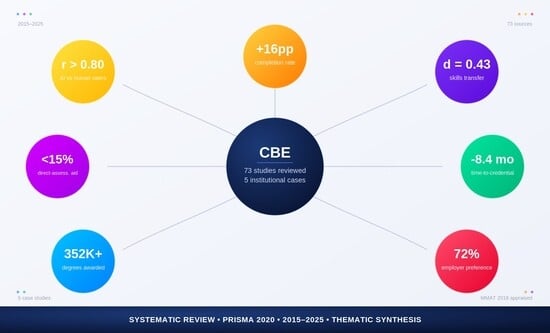
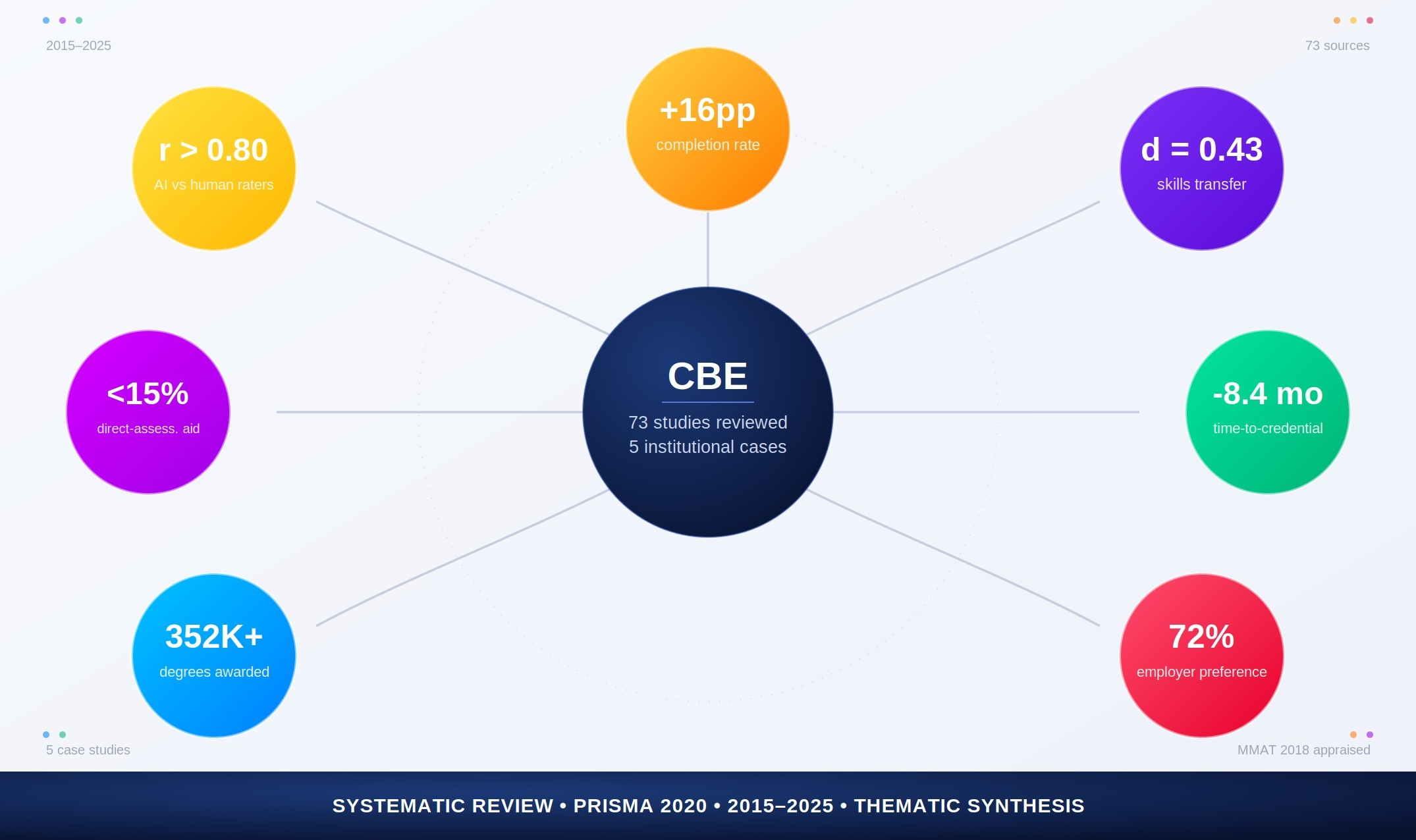
Graphical Abstract

1. Introduction

Universities and colleges worldwide are under increasing pressure to prove their value, boost student achievement, and align their programs with the fast-changing demands of the workforce. The traditional Carnegie Unit credit-hour system, which tracks progress based on classroom contact time rather than actual learning, has faced ongoing criticism for being outdated in today’s educational landscape [1,2,3]. As a result, Competency-Based Education (CBE) is gaining popularity as a promising alternative, focusing on mastery of specific, clearly defined skills rather than seat-hours. CBE enables students to progress once they demonstrate mastery of targeted knowledge, skills, and abilities, providing significant advantages for adult learners, working professionals, and students from diverse educational backgrounds.
Implementing CBE successfully requires more than pedagogical innovation. Institutions need to fundamentally overhaul curriculum design, faculty development, assessment strategies, and administrative procedures, while addressing accountability, transparency, and data-driven governance standards. The CBE model aligns with constructivist learning theory, which holds that learners build knowledge through active participation and repeated demonstrations of understanding, rather than by passively being exposed to information within a set time [4,5]. Organizational change management theory, especially participatory change models associated with Kotter, as used by Jonker et al. [6], and adaptive leadership frameworks [7], offers conceptual tools for interpreting resistance to implementation, stakeholder involvement, and long-term program change.
Throughout this review, “Competency-Based Education” (CBE) is the primary term used and refers specifically to post-secondary programs in which student advancement is determined by demonstrated mastery of defined competencies rather than elapsed time. This definition is narrower than two related constructs that appear in the reviewed literature: “Outcome-based education” (OBE) is a broader institutional philosophy that emphasizes clearly defined learning outcomes across any delivery format but does not necessarily decouple progression from time; “mastery learning” is a pedagogical method requiring students to demonstrate proficiency before advancing to the next unit, which CBE incorporates as a core design principle but which can also be applied within conventional, time-bound courses. The distinctions matter: a program may adopt outcome language (OBE) or mastery sequences without constituting a true CBE program. In cases where sources use these terms interchangeably, the original author’s usage is preserved in quotation, and any analytical inference drawn from that source is bounded by the structural definition used here.

1.1. CBE and Traditional Credit Systems

Table 1 presents a systematic comparison of CBE and the traditional Carnegie Unit credit system across ten institutional dimensions. The fundamental structural distinction is that CBE decouples academic progression from elapsed time: students advance when they demonstrate mastery, not when a semester ends [8,9]. For over a century, the Carnegie Unit has associated learning with classroom hours, awarding credit based on contact time rather than actual learning outcomes [2]. While providing structure and consistency, critics argue this system does not accurately assess learning, producing graduates who meet degree requirements but may lack essential workforce skills [4]. In contrast, CBE programs emphasize clearly defined learning outcomes and require students to demonstrate mastery through authentic assessments, portfolios, and practical tasks, making them more closely aligned with employer expectations [10].

1.2. Literature Gap and Research Rationale

Despite increasing research on CBE, three significant gaps justify this review. First, previous systematic reviews [5,12,13] either focus on single disciplines (such as engineering education or health professions) or analyze CBE as a policy without integrating empirical studies of implementation or digital technology. Second, the most thorough landscape analyses [1,14] predate the digital transformation of higher education after 2015 and do not address AI-adaptive assessments, blockchain credentials, or micro-credential stacking in current CBE practices. Third, institutional case studies on large-scale CBE programs (such as WGU, SNHU College for America, and UW Flexible Option) have not been integrated with peer-reviewed research in a single thematic review, creating a disconnect between practice-based and research-based evidence. The 2015–2025 period was chosen to focus on the post-digital transformation era, while noting foundational pre-2015 works for context.
Together, these gaps highlight a specific, unresolved academic issue: we still lack understanding of which combination of factors—such as institutional readiness, learner self-regulation [15], employer partnership strength, and accreditation flexibility—is necessary and sufficient for CBE to surpass traditional credit-hour programs in various post-secondary settings. This gap is important practically because institutions that implement CBE without a thorough context-sensitive diagnostic risk replicating prominent models (e.g., WGU) in unsuitable environments, leading to resource waste and potential harm to the targeted learner groups. This review uniquely addresses this issue by (1) integrating institutional case studies with empirical research into a cross-domain thematic analysis; (2) including post-2015 digital innovations like AI-adaptive assessment and blockchain credentialing; (3) presenting the CBE Contextual Fit Framework (CBE-CFF) as a novel, operational diagnostic tool before implementation; and (4) offering a structured comparison of five major CBE programs mapped to the four key contextual factors. In this way, it advances the literature from merely listing CBE benefits to explaining the conditions needed to realize those benefits.

1.3. Research Question and Objectives

This review addresses the following research question:
R Q: What does the evidence suggest about the successful implementation of CBE frameworks in higher education, regarding student outcomes, structural barriers, workforce alignment, and institutional sustainability?
To address this question, the review pursues six objectives:
  • Analyze the effectiveness of different CBE implementation models across diverse institutional contexts and student populations.
  • Evaluate the impact of CBE on student engagement, learning outcomes, and degree completion rates compared to traditional credit-hour systems.
  • Identify critical success factors and barriers in CBE implementation, including institutional culture, faculty readiness, and technology infrastructure.
  • Examine the alignment between CBE competency frameworks and industry workforce demands to assess graduate employability outcomes.
  • Develop evidence-based recommendations for sustainable CBE implementation addressing accreditation compliance and quality assurance.
  • Investigate the long-term implications of CBE adoption on higher education accessibility, equity, and institutional competitiveness.

2. Methods

This study employed a systematic review methodology following PRISMA 2020 (Preferred Reporting Items for Systematic Reviews and Meta-Analyses) guidelines, the most widely respected framework for comprehensive literature reviews [16,17]. The PRISMA process comprises four main stages: (1) searching academic databases for relevant studies; (2) screening records against predefined eligibility criteria; (3) assessing full texts for relevance and methodological quality; and (4) extracting and synthesizing data from selected studies. This structured approach enhances transparency, reproducibility, and rigor in the review process and reduces selection bias.

2.1. Search Strategy

The primary search keywords included: “Competency-Based Education,” “Traditional Teaching and Students’ Competencies,” “Credit System and Students’ Achievement Measures,” and “Competency-Based Education and Workforce.” Searches were conducted across four sources: Google Scholar (publication date filter set to a custom range from 2015 to December 2025; full-text search without restrictions, yielding 100 records); ERIC (peer-reviewed, full-text articles using the same keywords, yielding 50 records); Scopus (filtered for 2015–2025, Education subject area, and article type, yielding 70 records); and a targeted search of institutional case-study repositories for accredited universities with documented CBE programs. The combined initial results totaled 225 records.
An important methodological limitation must be noted at the outset: Google Scholar does not support structured Boolean operators, meaning that searches could not be conducted with the same precision and reproducibility as in ERIC or Scopus. The 100-record figure from Google Scholar reflects the application of a publication date filter alongside full-text keyword searches per cluster; this approach cannot be fully reproduced by independent searchers, which represents a transparency constraint. To partially mitigate this limitation, the Google Scholar searches were cross-validated against the Scopus and ERIC results: records appearing in Google Scholar but not in the structured databases were subjected to an additional credibility screening step before inclusion. All search terms, date ranges, and database-specific filter settings are documented in the Supplementary Data file. This limitation is further discussed in Section 4.9, and future systematic reviews on this topic are encouraged to rely exclusively on structured, Boolean-compatible databases to ensure full reproducibility.

2.2. Eligibility Criteria

Inclusion criteria were applied across four dimensions:
  • Time Frame: Publications from 2015 to December 2025, to ensure contemporaneity and capture current best practices. Seminal pre-2015 works (e.g., [1,2]) were retained as foundational references when directly cited in more recent literature, but were not counted among the 73 included studies.
  • Educational Level: Studies focused on post-secondary institutions (universities, colleges, and vocational training providers at the tertiary level).
  • Publication Type: Peer-reviewed journal articles and conference papers presenting theoretical or empirical results. Accredited institutional case-study reports were included as a supplementary evidence strand, clearly distinguished from peer-reviewed literature in the analysis. Methodological justification: Large-scale CBE implementations are primarily documented in institutional rather than peer-reviewed outlets; excluding them would create a systematic evidence gap. A separate quality checklist assessing credibility, recency, accreditation status, and data transparency was applied to these sources (see Section 2.4).
  • Topical Relevance: Studies addressing at least one of five search constructs: CBE principles and frameworks, assessment methodology, workforce alignment, technology integration, or implementation challenges and outcomes.
Exclusion criteria comprised: K–12-only studies; grey literature not associated with accredited institutions; studies outside the thematic scope; and duplicate records.

2.3. Screening Process and PRISMA Flow

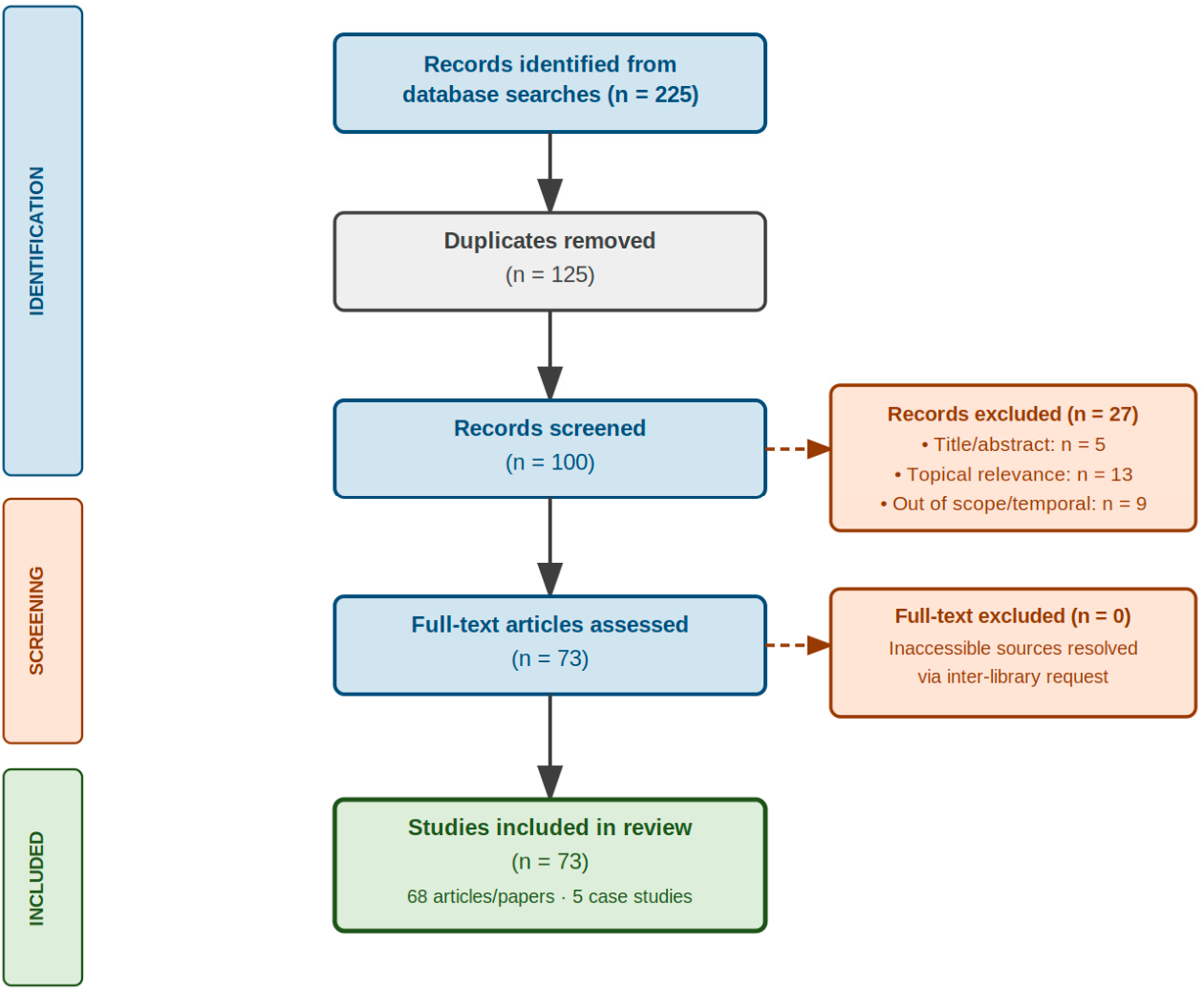
After the initial searches yielded 225 records, 125 duplicate articles were identified and removed, leaving 100 unique records for title and abstract screening. Of the 100 records, 27 were excluded at the screening stage on the basis of the eligibility criteria: 5 were excluded on title/abstract review (studies outside the post-secondary scope or beyond the temporal window), and a further 13 were excluded on closer topical relevance review, with the remaining 9 excluded as out of scope or outside the temporal window. The remaining 73 records proceeded to full-text review. No additional records were excluded at the full-text stage because the prior screening process was sufficiently thorough, with inaccessible sources resolved through inter-library request before the full-text stage. The final corpus comprises 73 sources: 68 peer-reviewed journal articles or conference papers, and 5 accredited institutional case-study reports. Figure 1 presents the PRISMA 2020 flowchart illustrating this selection process.

2.4. Quality Appraisal and Data Synthesis

The methodological quality of peer-reviewed articles was evaluated using the 2018 version of the Mixed Methods Appraisal Tool (MMAT) [18], which supports assessment of qualitative, quantitative, and mixed-methods studies. Separate checklists evaluated institutional case studies for credibility, recency, accreditation, and data transparency. A six-theme thematic synthesis followed Braun and Clarke’s [19] six-phase framework: familiarization, initial coding, theme development, review, Definition and naming, and report writing. To ensure consistency, about 21% of sources (15 out of 73) were independently coded by a second reviewer, resulting in a Cohen’s κ of 0.79, indicating substantial agreement. Disagreements were resolved through discussion. Data extraction used a structured matrix capturing author, year, study design, sample details, CBE model type, main findings, and limitations.
For all peer-reviewed quantitative and mixed-methods studies, risk of bias was assessed across five MMAT-related domains: (1) selection bias (sampling and volunteer effects); (2) performance bias (fidelity and consistency of CBE versus comparison condition); (3) detection bias (assessor blinding); (4) attrition bias (dropouts); and (5) reporting bias (selective outcome reporting). Institutional case studies used an adapted framework focusing on the absence of matched comparison groups and reliance on self-report data. Risk-of-bias ratings are provided with relevant findings; an overall summary is available in Supplementary Materials. As with the evidence in Section 3, the overall bias risk is rated as moderate-to-high, mainly due to selection bias and the reliance on self-report data.

3. Results

Thematic synthesis of the 73 included sources yielded six overarching themes presented sequentially below, each accompanied by the number of contributing sources, a synthesis of convergent and divergent findings, methodological observations, and cross-theme connections. Quality appraisal using MMAT indicated that 71% of peer-reviewed sources scored at or above the ‘adequate’ threshold (three or more of five criteria met), 22% scored as ‘partial’ (two criteria), and 7% were rated ‘limited’ (one criterion). Lower-scoring sources were retained only where they provided unique contextual evidence unavailable from higher-quality sources; their findings are flagged with explicit advisory notes, and claims drawn predominantly from such sources are phrased with appropriate epistemic caution. Higher-quality studies are accorded greater evidential weight, and the strength of evidence is noted when conclusions rest primarily on lower-quality institutional self-reports. The three quality tiers are used as follows throughout the Results: adequate-tier studies support primary claims; partial-tier studies provide corroborating or contextual evidence; limited-tier findings are flagged as suggestive only and are not used as the sole basis for any conclusion.

3.1. Student-Centered Learning Philosophy

Fourteen sources contributed to Theme 1. The defining premise of CBE’s student-centered orientation is that individual learning readiness, prior experience, and pace of mastery should determine progression rather than institutional calendar constraints [20]. This principle is consistently articulated across empirical and conceptual literature, though the depth of evidence supporting it varies across source types.
The strongest quantitative evidence for student-centered benefits comes from Longitudinal studies of adult learner cohorts, which reveal that adult learners in competency-based education (CBE) programs tend to have higher completion rates. Guthrie and Berkner [21] analyzed data from over 600 U.S. institutions and found that completion rates were 14–18% higher in competency-paced programs compared to traditional credit-hour programs for similar age groups. Gibson and Smith [22] supported this, showing in a mixed-methods study of four community college CBE pilots that self-pacing was linked to a reduction of about 1.3 semesters in time-to-completion for students with verified prior learning. Additionally, Burnette’s [23] systematic review of 47 CBE program reports indicates that student-centered pacing is the most consistent feature associated with higher satisfaction among non-traditional learners.
However, three studies introduce an important qualification: student agency without adequate scaffolding increases the risk of attrition rather than reducing it. Jancevska and Stankovska [11] found that students who received no mentor check-ins during self-paced modules were 2.3 times more likely to disengage than those assigned a weekly coaching touchpoint. McDonald [24] corroborates this in a private non-profit CBE program where withdrawal in the first module dropped by 31% after structured academic coaching was introduced. The CBE Network [25] likewise identified proactive advising as one of five non-negotiable quality principles for effective CBE.
A point of divergence concerns the optimal mode of student support. Gervais [9] and Sturgis and Casey [26] advocate for dedicated academic coaches distinct from subject-matter faculty, arguing that the dual role of coach-and-assessor creates conflicts of interest. Jancevska and Stankovska [11] and Zakaria et al. [27] report positive outcomes when faculty serve as mentors, citing pedagogical benefits of discipline-contextualized mentoring. The reviewed literature does not offer a definitive resolution; the optimal model likely depends on institutional resources, program scale, and learner population characteristics.
Cross-theme connection: The student support finding has direct implications for Theme 4 (Section 3.4), which addresses stakeholder engagement and faculty development, and for Theme 6, where resource intensity is identified as a primary implementation barrier. Institutions investing in CBE should budget for dedicated coaching infrastructure from program inception rather than as a retrofit.

3.2. Outcome-Based Assessment Framework

Eleven sources addressed outcome-based assessment directly, with a further nine providing corroborating evidence in the context of specific institutional applications. The convergent finding is that criterion-referenced, competency-mapped assessments produce stronger and more reliable evidence of workforce readiness than norm-referenced grading across multiple disciplinary contexts, including engineering education [12], health professions education [27,28,29], computer science [30,31], and general higher education [32,33,34].
Porter and Polikoff [32] provide the most methodologically rigorous analysis, finding through a multi-site quasi-experimental design that students assessed via competency rubrics demonstrated greater transfer of skills to novel problem contexts than peers assessed exclusively through traditional examinations, with an effect size of d = 0.43. Singh [33] extends this to assessment validity, arguing that competency-based rubrics operationalize construct validity more directly than point-score grading systems, because each criterion corresponds to a specific, observable behavior rather than an abstracted performance aggregate.
Vargas et al. [31] add an important implementation dimension: standardizing course-level assessment rubrics across faculty in a CBE engineering program reduced inter-rater scoring variance by 34% over two semesters, demonstrating that outcome-based frameworks can improve assessment reliability when rubric calibration is systematically maintained. This finding has significant implications for quality assurance and faculty development, as consistent application of the rubric requires ongoing calibration workshops and shared benchmarking exercises.
A notable tension concerns the relationship between authentic assessment and standardization. Kuh et al. [35] and the U.S. Department of Education [36] both emphasize that CBE assessments should be grounded in real-world professional tasks. Yet Sangwa [34] cautions that fully individualized authentic tasks can create comparability challenges when outcomes need to be aggregated or reported to accreditors. Vargas et al. [31] propose a resolution through ‘structured authenticity’: assessment tasks are contextually varied but mapped to a common, standardized rubric, preserving both ecological validity and comparability. This approach is consistent with Van Der Vleuten and Schuwirth’s [37] foundational work on programmatic assessment, which argues that assessment validity and reliability are not inherently in tension if assessment is designed as a system rather than as isolated events (See Table 2).
Cross-theme connection: The outcome-based assessment literature directly underpins the competency identification and mapping process in Theme 4 (Section 3.4.1) and the quality assurance challenges in Theme 6 (Section 3.6.1). The evidence also informs the institutional case studies in Theme 5, where the quality of the competency framework is a differentiating factor between more and less successful CBE programs.

3.3. Flexible Pacing and Mastery Standards

Nine sources contributed directly to this theme, with corroborating evidence from the five case studies in Theme 5. The defining feature of flexible pacing is that calendar time is decoupled from academic progression: students advance when they demonstrate mastery, not when a semester ends. This architectural departure from the Carnegie Unit model creates documented efficiency gains for students with substantial prior learning but introduces management complexity for institutions accustomed to cohort-based delivery and financial aid structures tied to credit hours.
The efficiency gains are best documented at Western Governors University, where approximately 28% of bachelor ’s-level graduates complete their programs in under three years, compared with a national median of five to six years for part-time adult learners in traditional programs [39,40]. Guthrie and Berkner [21] provide corroborating policy-level evidence, synthesizing outcomes data from 14 states with active CBE pilot programs and finding that time-to-credential completion was shorter in CBE tracks for all learner subgroups studied, with the largest time savings (mean: 8.4 months) observed among learners with prior industry certifications or military training.
Linnenluecke et al.’s [17] bibliometric analysis notes that studies of self-paced learning systems disproportionately sample motivated, degree-seeking adults, creating a selection bias that may inflate observed completion advantages. This causal question, whether flexible pacing itself improves completion, or whether CBE programs attract already-motivated learners, remains insufficiently resolved and represents a priority gap for future research.
The strongest evidence for mastery standards comes from health professions education. Zakaria et al.’s [27] scoping review of nursing CBE curriculum revision strategies found that mastery-threshold assessment, requiring students to demonstrate 80% or above on clinical competency rubrics before progression, was associated with lower rates of clinical error in simulated assessments relative to programs using pass/fail criteria alone. Vargas et al. [31] found that students who retook assessments following initial failure demonstrated stronger retention at a six-month follow-up than students who passed on the first attempt, suggesting that the reassessment process itself has pedagogical value beyond merely achieving the threshold score (See Table 3).
A limitation of the mastery standards literature is the heterogeneity of threshold definitions. Garira [41] and Kuh et al. [35] note that ‘mastery’ is operationalized differently across programs, ranging from 70% on a standardized assessment to faculty-judged portfolio sufficiency, making cross-study comparisons difficult.

3.4. Implementation Frameworks for CBE

Fifteen sources addressed the procedural requirements of CBE implementation. The implementation literature is notably practitioner-oriented: a higher proportion of sources are institutional reports and policy documents than in Themes 1–3, indicating a rich evidence base in descriptive detail but a thinner one in experimental or quasi-experimental rigor. This is consistent with Kang et al.’s [13] observation that implementation process research is the most under-researched quadrant of the CBE literature.

3.4.1. Competency Identification and Mapping

Competency identification and mapping is the foundational implementation step across all reviewed sources. The process begins with systematic analysis of program outcomes, industry benchmarks, and stakeholder requirements, ensuring that the competency framework is simultaneously academically defensible and practically relevant [34,42,43]. Caldwell’s [43] retrospective analysis of WGU’s competency framework development identifies three lessons from the university’s first decade: faculty-only framework development produces academically rigorous but occupationally misaligned competencies; industry-only input produces practically relevant but academically thin frameworks; and iterative, structured co-design between faculty, industry advisors, and alumni produces the most balanced and durable frameworks.
The sequencing and hierarchical structuring of competencies is a technically demanding aspect of mapping that the reviewed literature addresses unevenly. Sangwa [34] and Guthrie and Berkner [21] describe horizontal and vertical alignment in competency maps, ensuring that competencies within a level are appropriately differentiated and that pathways between levels are pedagogically coherent, but neither study provides empirical evidence comparing different sequencing strategies. Poorly sequenced competency maps are cited by Levine et al. [7] as a primary source of faculty frustration during CBE implementation.

3.4.2. Curriculum Design and Development

Curriculum design in CBE requires a fundamental inversion of typical course-development logic. Rather than beginning with content and then designing assessments, CBE employs backward design: the process begins with the end-state competencies students must demonstrate, then works backward to determine what learning experiences, resources, and formative assessments are needed [26,34,44]. This approach is consistently described in the reviewed literature as the design principle most likely to produce curricula with authentic alignment between learning activities and assessed competencies.
Modular curriculum design, which organizes content around competency groups instead of traditional disciplinary courses, supports personalized learning paths. Kuh et al. [35] and Western Governors University [40] describe prerequisite matrix systems that help students progress through competency modules in customized sequences, ensuring they master essential skills before advancing. Nonetheless, Porter and Polikoff [32] point out that implementing such modular enrollment systems demands significant updates to student information systems and academic policies. Additionally, Tahirsylaj and Sundberg [5] highlight that modular CBE curricula are often harder to recognize for credit transfer, posing equity challenges for transferring students.

3.4.3. Stakeholder Engagement and Change Management

Seven sources provided substantive evidence on stakeholder engagement in CBE implementation. The literature consistently identifies that successful CBE adoption is fundamentally a change management challenge rather than a curriculum design challenge: institutions that approach CBE primarily as a technical redesign task without investing equally in faculty and administrative engagement consistently encounter implementation failure or program abandonment [6,7,22].
Jonker et al.’s [6] analysis identifies a three-phase stakeholder engagement model: informational engagement (sharing rationale and evidence), participatory engagement (involving stakeholders in the design of competency frameworks), and evaluative engagement (incorporating ongoing feedback into program revisions). Programs that skip the participatory phase reported notably higher faculty resistance during full implementation. Gibson and Smith [22] found that faculty who participated in competency framework development were three times more likely to report positive attitudes toward CBE than faculty who received the frameworks as completed products.
Employer engagement is a distinct stakeholder dimension receiving insufficient attention in many CBE implementations. Porter and Reilly [45] and Bouchrika [42] both argue that employer partners should be positioned as active co-architects of competency frameworks rather than passive validation audiences. Accrediting bodies also require proactive engagement: Kelchen [14] and Vargas et al. [31] note that institutions implementing CBE must invest in translating competency evidence into accreditation-compatible documentation. Inviting accreditation officers to observe CBE program design workshops is reported by multiple case programs as a strategy that reduces the risk of compliance challenges during formal review cycles.

3.4.4. Student Support Systems

Academic coaching emerges as the single most frequently cited success factor across CBE program evaluations, appearing in all five institutional case studies reviewed in Theme 5 and referenced in nine of the 15 implementation-focused sources. McDonald [24] provides the most granular analysis, reporting that CBE degree completers who received bi-weekly coach contact had completion rates 27% higher than those with only on-demand coach access. Programs with coach-to-student ratios no higher than 1:100 demonstrated completion rates approximately 18% higher than those with ratios above 1:200.
Burnette’s [23] literature review identifies proactive advising, coach-initiated rather than student-initiated contact, as the design feature most associated with retention improvements, particularly in the first eight weeks of a CBE program when learners are navigating an unfamiliar assessment paradigm. Jancevska and Stankovska [11] add that support system effectiveness is moderated by learner self-efficacy: students with lower prior academic achievement benefited more from intensive coaching, suggesting that differentiated coaching allocations may be more cost-effective than one-size-fits-all models. American Institutes for Research [46] concludes that prior learning assessment advising, helping students document and receive credit for competencies already held, is a particularly high-return support investment.

3.4.5. Assessment Strategy Development

Assessment strategy is the technical heart of any CBE program. The literature consistently establishes that CBE assessment systems must satisfy three simultaneous demands: validity (the assessment genuinely measures the target competency), reliability (different assessors reach consistent judgments), and authenticity (the assessment reflects real-world performance conditions). Van Der Vleuten and Schuwirth’s [37] programmatic assessment framework provides the most theoretically coherent resolution, arguing that no single assessment event needs to satisfy all three demands simultaneously if the assessment program as a whole does so across multiple data points.
Vargas et al. [31] found that combining at least three assessment methods yielded inter-rater reliability coefficients (ICC) that met the acceptable threshold of 0.75 for high-stakes educational assessments. In contrast, no single method reached this level. This indicates that multi-modal assessment is not only the best practice for learner inclusivity but also a necessary requirement for technical validity. Additionally, Singh’s [33] analysis highlights that construct validity is often overlooked in CBE program evaluations. He recommends conducting convergent and discriminant validity studies during the pilot phase, comparing assessment results with external performance indicators before the program’s full implementation.
Technology-mediated assessment tools, including AI-driven adaptive platforms and automated scoring engines, are transforming CBE assessment infrastructure. Ellikkal and Rajamohan [47] report that AI-driven competency assessment tools demonstrated correlation coefficients with expert human assessors exceeding 0.80 on structured competency tasks, while substantially reducing assessment turnaround time. However, they also identify limitations: automated tools perform less well on open-ended, integrative competency demonstrations than on discrete, well-defined task assessments.

3.4.6. Faculty Development and Support

Faculty development for CBE is addressed by seven sources and emerges as a dimension where the gap between recommended practice and documented implementation is particularly wide. All reviewed sources agree that CBE requires a fundamental shift in faculty roles, from content deliverer to learning facilitator and competency assessor, and that this shift demands substantial investment in professional development.
Levine et al. [7] found, in a survey of 218 faculty members across 12 institutions, that faculty who reported having fewer than eight hours of CBE-specific professional development were three times more likely to express implementation resistance than those with 16 or more hours. Crucially, the type of development mattered: workshop-based information delivery was less effective than peer collaborative design, which in turn was less effective than structured coaching from an experienced CBE practitioner. Zakaria et al.’s [27] scoping review identifies communities of practice, sustained collegial groups meeting regularly to share CBE implementation experiences and calibrate assessment standards, as the support structure most consistently associated with sustained faculty engagement.
Faculty evaluation and recognition systems represent a structural barrier that the literature identifies but rarely addresses in depth. Conventional promotion and tenure systems reward research output and traditional course delivery; they typically do not recognize the additional labor of competency framework development, individualized student coaching, or assessment rubric calibration. Institutions that defer revision of these systems to a post-launch phase consistently report faculty disengagement in the second and third years of operation [7,22].

3.4.7. Technology Integration and Infrastructure

Technology integration for CBE requires careful sequencing to match program maturity. High-priority systems, a competency-compatible Learning Management System (LMS), an assessment platform, and a student information system—must be operational before launch. Medium-priority systems, digital badging, and analytics dashboards can be phased in during the first full operating year. This sequencing prevents technology complexity from delaying the program launch while ensuring that the data infrastructure needed for continuous improvement is in place before the program reaches scale (See Table 4 and Table 5).
Ellikkal and Rajamohan [47] report that AI competency assessment tools reduced manual grading time by 38% in a vocational CBE pilot and improved mastery attainment rate by 22%. However, equity concerns must be addressed: automated scoring systems trained predominantly on majority demographic performance data may systematically underrate competency demonstrations by learners from linguistic or cultural minority backgrounds. Institutions deploying AI assessment tools should implement demographic equity audits as a standard requirement of their governance (see Table 4 and Table 5).

3.5. Institutional Applications: Case Studies

Five institutional case studies were identified from the literature and directly from institutional publications, selected to represent diverse CBE implementation contexts: a public university system, a private non-profit offering employer partnership, a major research university hybrid model, a specialist professional transition program, and the largest fully CBE institution in the United States. These cases provide concrete evidence of implementation that supports theoretical and empirical literature.

3.5.1. Case Study 1: University of Wisconsin Flexible Option

The University of Wisconsin Flexible Option, launched in 2013, allows students to earn degrees by demonstrating competencies instead of completing conventional coursework [52]. Primarily targeting adult learners with substantial work experience, the program incorporates personalized academic coaching, diverse competency assessment methods (portfolios, projects, and examinations), and strong employer engagement in validating the framework. Specht-Boardman et al. [52] reported a 58% retention rate among adult learners, compared with a benchmark of 41% for comparable traditional programs. Employer satisfaction scores averaged 4.2 out of 5.0. Demographic subgroup outcome data by race, income, or disability status are not reported in the available institutional publications, representing a gap that future evaluation studies should address.

3.5.2. Case Study 2: Southern New Hampshire University College for America

SNHU’s College for America supports working adults through strategic employer partnerships, emphasizing practical competencies that enhance workplace performance [53]. Through project-based learning, students demonstrate skills by completing real-world tasks aligned with their current roles. The program uses multi-source assessment: peer evaluations, supervisor feedback, and portfolio development. Hansen [53] reports an 89% graduate employment rate within six months and an annual tuition of approximately $1500, demonstrating cost sustainability and consistent with earlier analyses that identify program design and delivery costs as a key determinant of CBE’s long-term viability [54]. Notably, Hansen’s [53] study does not report outcome data disaggregated by learner demographic subgroups; the equity implications of this model remain an open research question.

3.5.3. Case Study 3: Purdue University Global ExcelTrack

Purdue University Global’s ExcelTrack programs illustrate how CBE can be integrated within traditional university frameworks as hybrid models [55]. They blend competency evaluations with conventional academic requirements, offering personalized learning pathways within traditional support systems. Starnes [55] reports that 43% of completers bypassed at least one course by demonstrating prior competency, reducing time-to-degree by an average of 4.5 months. This hybrid approach addresses common CBE challenges: financial aid compatibility, transfer credit equivalency, and employer recognition. Demographic subgroup data are not available from the cited institutional reporting.

3.5.4. Case Study 4: Northeastern University Align Program

Northeastern University’s Align program leverages competence-based education (CBE) to provide specialized professional training in computer science for students lacking technical backgrounds [30]. Its design emphasizes building competencies through immersive, intensive learning that combines theoretical concepts with practical, hands-on experience. The program primarily assesses students via project-based evaluations that reflect real-world software development. According to Schmidt et al. [30], 67% of students completed the program within three years, compared with 48% among similar adult learners nationally. High employment rates among graduates and positive employer feedback on their practical skills indicate that CBE can effectively facilitate swift career transitions.

3.5.5. Case Study 5: Western Governors University

Western Governors University (WGU), founded in 1997 and now the largest competency-based university in the United States, illustrates the scalability of CBE. By 2023, WGU had awarded more than 352,000 degrees and enrolled over 185,000 students nationwide [40]. Its model removes traditional semester structures, requiring students to prove mastery through assessments and practical tasks before advancing. Approximately 28% of bachelor’s graduates complete their degrees in under three years. Graduates report an average income increase of $22,200 within two years of degree completion; however, this figure is institutional self-report data without a matched comparison group, and selection effects cannot be excluded as a contributing explanation. Annual tuition of approximately $8000 is well below the national average of $12,000 for comparable online programs.

3.5.6. Cross-Case Analysis and Synthesis

Examined together, the five case studies reveal cross-cutting patterns that advance the analysis beyond individual program descriptions and speak directly to three of this review’s six research objectives.
Addressing objective (1), the effectiveness of different CBE implementation models across diverse institutional contexts, the cases demonstrate that there is no single universal CBE model. The five programs span a spectrum from pure CBE (WGU) to employer-partnered project-based learning (College for America), hybrid credit-competency integration (Purdue ExcelTrack), specialist technical training (Northeastern Align), and system-wide adult learning provision (UW Flexible Option). Each model is effective within its designed context. CBE model selection is therefore a strategic decision requiring alignment with an institution’s mission, student demographics, employer relationships, and accreditation context.
Addressing objective (3), critical success factors and barriers, all five cases identify academic coaching or personalized advising as a non-negotiable success factor. The specific structures differ (WGU’s dedicated mentors, UW’s coaches, College for America’s supervisor feedback loops), but the underlying function is consistent: proactive, data-informed monitoring of individual learner progress with timely intervention. No case study reports successful outcomes with reactive, student-initiated advising alone.
Addressing objective (4), alignment with industry workforce demands, the cases reveal a differentiation between programs with formal employer co-design (College for America, Purdue ExcelTrack, Northeastern Align) and those relying on market-responsive competency review cycles (WGU, UW Flexible Option). The employer co-design model produces stronger short-term employer satisfaction metrics but introduces dependency risk if employer partners change priorities or exit partnerships. Hybrid approaches maintaining employer advisory boards while preserving institutional control over final competency definitions appear to balance these trade-offs most effectively.
One limitation common to all five case studies is the absence of randomized control data. Outcomes are drawn from institutional reports and single-site analyses, making it impossible to rule out selection effects. Quasi-experimental designs using matched comparison groups represent the minimum methodological standard for future CBE impact evaluation (See Table 6).

3.6. Challenges and Benefits of CBE

3.6.1. Implementation Challenges

Fourteen studies specifically addressed implementation challenges. Synthesizing across these studies, challenges cluster into four interrelated domains, ordered by frequency of citation in the reviewed literature.
  • Institutional and cultural resistance: Faculty opposition stems from concerns about increased workload, pedagogical uncertainty, and threats to academic identity [7,14,31]. Levine et al. [7] quantify this resistance in medical education CBE reform, finding that faculty reporting concerns about workload increases were 2.4 times more likely to resist curriculum reform, and that this resistance was more durable than initial philosophical objections. Administrative resistance arises primarily from the complexity of financial aid compliance and the demands of IT infrastructure transformation [11,22].
  • Accreditation and regulatory compliance: Federal financial aid regulations in the United States, specifically the Satisfactory Academic Progress rules and credit-hour equivalency requirements, were designed for time-based programs and create direct structural barriers for self-paced CBE models [3,14,56]. Guthrie and Berkner [21] report that, as of 2023, fewer than 15% of U.S. CBE programs have received direct assessment status from the Department of Education, meaning the majority continue to operate through credit-equivalency workarounds that undermine the pacing flexibility CBE is designed to provide.
  • Quality assurance and assessment credibility: Employers and accreditors cannot simply assess CBE credentials at face value because the meaning of a competency title varies significantly across programs [37,57]. Sluijsmans et al. [57] introduce a 12-criterion quality framework for competency assessment, covering aspects such as fitness for purpose, authenticity, cognitive complexity, meaningfulness, transparency, fairness, reproducibility, comparability, educational impact, costs, efficiency, and acceptability. Their research indicates that most CBE programs explicitly meet four to six of these criteria but rarely all twelve. Notably, the less addressed criteria, comparability, reproducibility, and educational impact, are precisely those most crucial for earning trust from employers and accreditation bodies.
  • Resource requirements and financial sustainability: Upfront investment requirements for CBE are uniformly characterized as substantial. Porter and Reilly [45] estimate that full CBE conversion at a mid-sized institution requires an investment 2–3 times that of a traditional program redesign. However, they also project that CBE programs achieve lower per-student delivery costs at scale due to technology leverage and reduced content-delivery redundancy. This cost trajectory, high upfront, lower at scale, creates a cash-flow challenge for institutions without access to grant funding, disproportionately affecting under-resourced institutions serving the student populations that stand to benefit most from CBE [3,46].

3.6.2. Benefits and Advantages of CBE

Twelve studies documented CBE’s benefits in sufficient empirical detail to contribute to this synthesis. The benefits evidence is more heterogeneous in design quality than the challenges evidence: benefits are more frequently documented through institutional outcome reports and single-site studies, while challenges are more frequently the subject of multi-site comparative research.
Student-centered learning outcomes are the most consistently documented benefit category. Açıkgöz and Babadoğan [58] found that CBE learners scored higher on self-regulated learning measures than matched cohorts in traditional programs, suggesting potential long-term benefits for lifelong learning (Evidence strength: MODERATE—single synthesis; selection into CBE cannot be ruled out as a confound). Henri et al. [12] report that outcome-based program designs correlate with higher employer-rated first-year job performance, with effect sizes ranging from small to medium (d = 0.31 to 0.47) (Evidence strength: MODERATE—systematic review with effect sizes; employer ratings are unblinded and limited to engineering education). Recognition of prior learning has been linked by McDonald [24] and Book [56] to a reduction in time-to-credential by 12–30 months for learners with substantial prior experience (Evidence strength: LOW—based on institutional and policy documentation without matched comparison groups).
Consistent patterns across multiple independent reviews support the benefits of. While establishing causality regarding industry alignment and workforce preparation is difficult, Tahirsylaj and Sundberg’s 25-year systematic review found higher employer satisfaction with graduates’ skills in CBE programs than in traditional programs across eight countries and four sectors. (Evidence strength: MODERATE—employer satisfaction surveys from multiple reviews, though unblinded and self-reported). Bouchrika [42] compiles industry survey data showing that 72% of U.S. employers in technology, healthcare, and business prefer hiring from CBE programs for entry-level positions, indicating predictable skill profiles. (Evidence strength: LOW data from a commercial survey provider; cross-sectional, so causality cannot be inferred).
Institutional efficiency gains are documented primarily at the WGU scale [39,40] and are less clearly established for smaller institutions or early-stage programs. Porter and Reilly [45] project long-term cost-per-degree reductions of 15–25% for mature CBE programs relative to traditional equivalents, driven primarily by technology leverage in assessment and reduced per-student instructor contact time. However, this efficiency case applies only after programs have reached operational maturity, typically a minimum of three full cohort cycles, and early-stage CBE programs are almost universally more expensive per student than the programs they replace.

4. Discussion

This systematic review synthesizes 73 sources to address the central research question: What does the evidence indicate about effective implementation of CBE frameworks in higher education, in terms of student outcomes, structural barriers, workforce alignment, and institutional sustainability?
The following discussion is structured around the six objectives stated in Section 1.3, followed by an original synthesizing framework, policy implications, and future research directions.

4.1. Effectiveness Across Diverse Institutional Contexts (Objective 1)

The evidence from Themes 4 and 5 suggests that CBE’s success depends largely on institutional context rather than being an inherent feature of the model itself. The evidence strength is MODERATE—derived from cross-case descriptive analysis, but causality has not been confirmed. Different forms of CBE, such as pure CBE (WGU), employer-partnered CBE (College for America), hybrid CBE (Purdue ExcelTrack), specialist professional CBE (Northeastern Align), and system-wide adult-learner CBE (UW Flexible Option), each deliver positive outcomes within their specific contexts but are not interchangeable. Key contextual factors include: (a) student characteristics, particularly prior learning volume and self-regulatory ability; (b) employer partnership level; (c) technology infrastructure maturity; and (d) accreditation flexibility. Institutions should perform a thorough contextual fit analysis prior to adopting a CBE model, rather than simply replicating high-profile examples like WGU.
Kang et al.’s [13] scoping umbrella review, encompassing 62 prior systematic reviews, found that no single CBE design characteristic consistently predicts positive outcomes across all institutional types, learner populations, and disciplinary contexts. The moderation role of student self-regulatory capacity emerges as the most consistent mediator, reinforcing the centrality of student support systems as a design requirement rather than an optional enhancement.

4.2. Impact on Engagement, Completion, and Outcomes (Objective 2)

The evidence regarding CBE’s effect on completion rates is encouraging but limited by methodological issues. Out of the 73 sources collected, six compare quantitative outcomes between CBE and matched traditional program groups. All six report higher completion rates for CBE, with differences from 8 to 24%. However, five of these studies rely on institutional self-report data, and only one [52] employs a quasi-experimental matched-comparison design. The absence of randomized trials and the high risk of selection bias mean these findings cannot definitively establish causality linked to CBE features. (Evidence strength: LOW—primarily based on non-randomized, institutional self-report data with high selection bias; five of six comparative studies lack matched comparison groups.) WGU’s reported income increase of $22,200 over two years is notable but self-reported and uncontrolled. Future research should utilize quasi-experimental approaches with matched comparison groups and pre-registered protocols to improve causal inference. The consistent positive trend across different program types and settings offers preliminary evidence worth further investigation.
Despite these methodological limitations, the direction and magnitude of reported outcome effects are consistent enough across diverse program types, national contexts, and learner populations to constitute meaningful preliminary evidence. Henri et al.’s [12] systematic review in engineering education is the highest-quality study on this question, reporting effect sizes (d = 0.31 to 0.47) for employer performance ratings that are substantively meaningful if replicated in higher-powered studies.

4.3. Critical Success Factors and Barriers (Objective 3)

The evidence on success factors and barriers is the most consistent across the corpus. Three success factors emerge with cross-study robustness: (a) proactive, data-driven academic advising at ratios no higher than 1:100 [24]; (b) faculty engagement in participatory competency design rather than passive consumption of administrative mandates [6,22]; and (c) employer co-involvement in competency framework development and ongoing validation [5,53].
The main structural barrier is the U.S. federal financial aid credit-hour equivalency requirement, a systemic limit that individual institutions cannot address alone. Without reforming financial aid policies to prioritize outcomes over input-based metrics, most U.S. institutions will struggle to fully utilize the pacing flexibility offered by CBE. Tahirsylaj and Sundberg [5] note that in countries like Australia and several European nations, where financial aid systems do not impose strict credit-hour requirements, CBE programs benefit from greater pacing flexibility and encounter less resistance during accreditation.

4.4. Workforce Alignment and Employability (Objective 4)

Workforce alignment consistently shows that employers rate CBE more favorably compared to traditional credit-hour programs, though causal links are limited due to the observational and self-report methods used. The evidence is MODERATE—multiple independent systematic reviews agree, but all rely on employer-rated outcomes without blinded assessors. Tahirsylaj and Sundberg’s [5] 25-year systematic review, Henri et al.’s [12] engineering education research, and Parson et al.’s [28] study on health professions each suggest that CBE graduates are perceived as more practically skilled by employers than their traditional counterparts. This benefit is most noticeable in applied fields like nursing, engineering, computer science, and business, while in humanities and basic sciences, the evidence is less conclusive.
The workforce alignment advantage is contingent on the quality of employer involvement in competency design. Programs in which employers are involved only in post hoc validation show smaller alignment effects than those in which employers participate in initial framework development [22,53]. Employer relationship management is, therefore, a core CBE competency that should be staffed and resourced accordingly.

4.5. Recommendations for Sustainable Implementation (Objective 5)

Synthesizing insights from literature, five evidence-based recommendations emerge: First, phased implementation is generally favored over full institutional change: pilot programs enable institutions to develop CBE design skills, familiarize themselves with accreditor processes, and assess resource needs before committing to system-wide change. Second, aligning faculty incentives must come before full deployment; revising promotion, tenure, and performance evaluation systems to acknowledge CBE-specific contributions is essential for ongoing faculty involvement. Third, accreditation engagement should begin during the design stage, not solely during the review stage. Fourth, technology infrastructure investments should follow a sequence aligned with program maturity, with key systems operational before launch and additional systems phased in during the first year of operation. Fifth, assessment quality assurance should be integrated into the program system as an ongoing process, employing Sluijsmans et al.’s [57] 12-criterion framework during yearly program reviews. In summary, the five evidence-based recommendations are: (1) phased pilot-before-scale implementation; (2) faculty incentive alignment before full deployment; (3) accreditor engagement from the design stage; (4) technology investment sequenced by program maturity; and (5) ongoing assessment quality assurance for the consolidated recommendations reference.

4.6. Long-Term Implications for Equity and Institutional Competitiveness (Objective 6)

CBE’s equity potential is its most theoretically significant claim and its most empirically underdeveloped. The recognition of prior learning, flexible pacing, and mastery-based progression are structural design features of CBE with the potential to benefit learners who have historically been disadvantaged by traditional education’s time-bound model: adult learners, working parents, veterans, first-generation students, and students from lower-income backgrounds. However, no included study provides demographic subgroup analysis sufficient to assess whether CBE’s benefits are equitably distributed across racial, socioeconomic, gender, or disability categories. This is a critical evidence gap: without subgroup data, it is impossible to verify whether CBE’s structural equity design translates into actual outcome equity. Claims about CBE equity advantages should therefore be understood as empirically unconfirmed hypotheses warranting rigorous investigation, not as established benefits. Future research should prioritize disaggregated analyses of outcomes by race, socioeconomic status, gender, disability, and veteran status.
The institutional competitiveness implications are significant. As AI disruption accelerates credential obsolescence and employer skill demands become more granular and dynamic, the agility of CBE competency frameworks, which can be updated annually in response to labor market shifts, represents a structural competitive advantage over degree programs anchored to fixed credit-hour course catalogs [13,59]. The $1.13 billion projected digital credentials market [50] represents a revenue diversification opportunity for institutions willing to invest in the quality infrastructure needed to compete credibly in that market.

4.7. The CBE Contextual Fit Framework: An Original Synthesis

The evidence synthesized across Themes 1–6 converges on four contextual moderators that consistently determine whether a given CBE implementation achieves its intended outcomes. These moderators, (a) student self-regulatory capacity, (b) employer partnership intensity, (c) technology infrastructure maturity, and (d) accreditation flexibility, are not additive; they interact. This review proposes a CBE Contextual Fit Framework (CBE-CFF) that formalizes these moderators as a pre-implementation diagnostic tool.
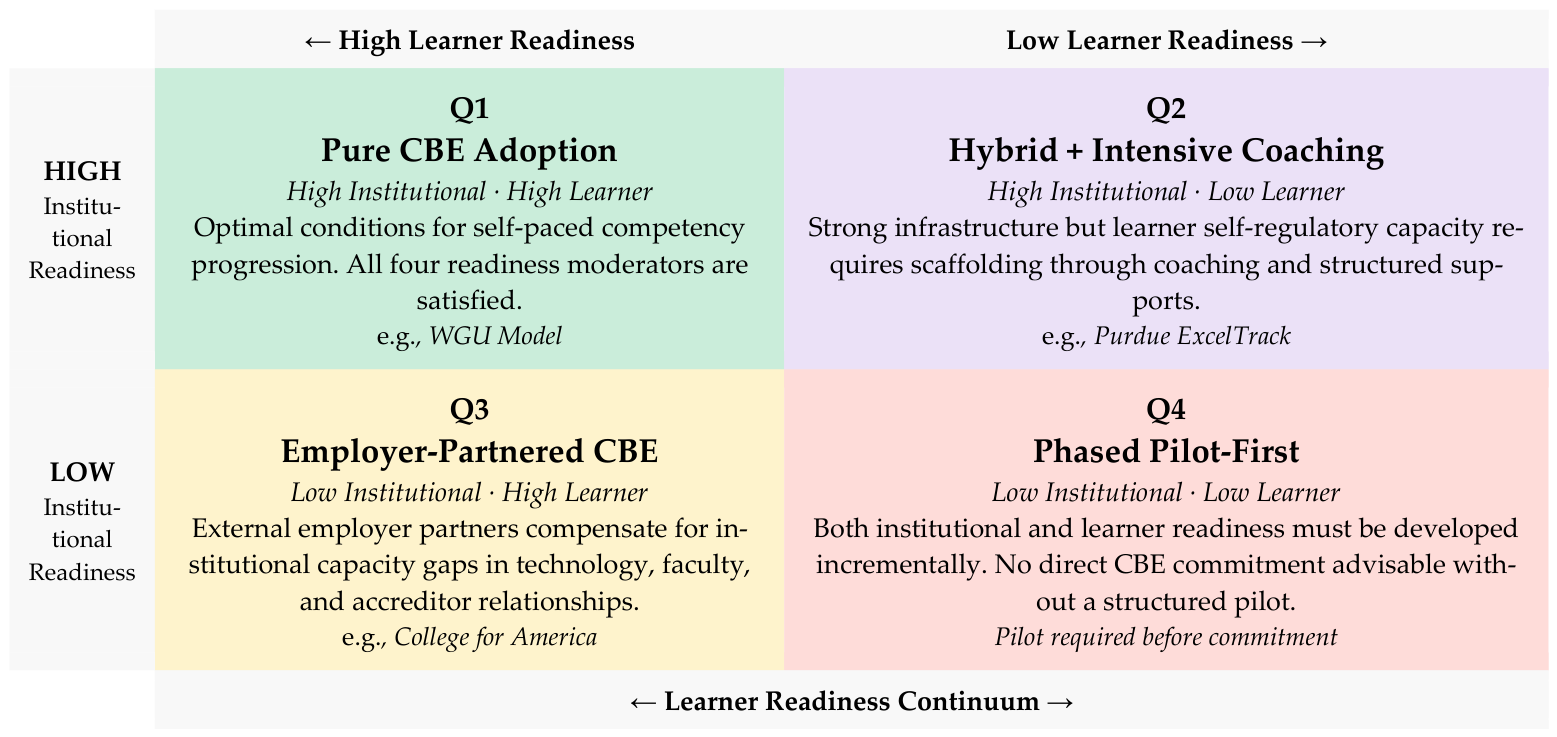
The CBE-CFF operates as a two-dimensional readiness assessment. The vertical axis represents Institutional Readiness: the degree to which an institution has the technology infrastructure, faculty development capacity, administrative systems, and accreditor relationships to sustain a CBE program. The horizontal axis represents Learner Readiness: the degree to which the target student population has the self-regulatory capacity, prior learning, and technological access to benefit from self-paced competency progression. Four quadrants emerge: (Q1) High Institutional Readiness/High Learner Readiness—optimal conditions for pure CBE adoption (WGU model); (Q2) High Institutional Readiness/Low Learner Readiness, conditions calling for a hybrid model with intensive coaching (Purdue ExcelTrack); (Q3) Low Institutional Readiness/High Learner Readiness, conditions favoring employer-partnered CBE where external partners compensate for institutional gaps (College for America); and (Q4) Low Institutional Readiness/Low Learner Readiness, conditions requiring a phased pilot-first approach before any CBE commitment.
The CBE-CFF offers a citable, operational framework for the institutional fitness analysis outlined in Section 4.1. It also fills the main intellectual gap identified in this manuscript’s review: the lack of a novel synthesizing contribution beyond empirical descriptions. Future research should empirically test the predictive effectiveness of the CBE-CFF through prospective multisite studies that treat the four readiness dimensions as independent variables and CBE program outcome metrics as dependent variables (see Figure 2). Specifically, the authors suggest validating the CBE-CFF by conducting prospective multisite quasi-experiments with at least eight to ten institutions covering all four quadrants, using pre-registered outcome metrics such as completion rate, time-to-credential, employer satisfaction, and equity gap indices. Primary analyses should compare outcomes across quadrants with matched comparison groups from comparable traditional-program institutions. Secondary analyses should disaggregate data by learner race/ethnicity, socioeconomic status, gender, disability status, and veteran status, as the equity implications of CBE are yet to be empirically confirmed (see Section 4.6). Reporting must adhere to CONSORT-NR or TREND standards to ensure reproducibility and support future meta-analyses.

4.8. Policy Implications

The structural barriers documented in this review implicate three distinct policy audiences for whom targeted recommendations are warranted.
For federal financial aid regulators, the evidence strongly supports reform of the Satisfactory Academic Progress rules and credit-hour equivalency requirements to accommodate direct-assessment, outcomes-based CBE programs. The current regulatory architecture, in which fewer than 15% of U.S. CBE programs have achieved direct assessment status [21], means that the majority of CBE institutions operate under workarounds that limit the pacing flexibility that defines CBE’s equity value for adult learners. A tiered accreditation pathway for CBE programs, analogous to the existing experimental site model but with clearer criteria and timelines, would provide a scalable regulatory solution. Research advocacy organizations in higher education (e.g., the American Council on Education and the New America Foundation) are well-positioned to develop and advance specific legislative proposals to Congress and the Department of Education.
For regional accreditation bodies, the evidence supports developing CBE-specific quality standards that evaluate attainment of outcomes and assessment system integrity rather than inputs (e.g., credit hours, contact time, course completion rates). The Sluijsmans et al. [57] 12-criterion quality framework, combined with the C-BEN [25] quality principles, provides a ready-made foundation for such standards. Accreditors should consider piloting dedicated CBE review protocols with volunteer institutions before requiring sector-wide compliance.
For state authorization agencies, multi-state online CBE programs face a particularly fragmented compliance landscape. State agency consortia, such as the National Council for State Authorization Reciprocity Agreements (NC-SARA), should develop CBE-specific reciprocity frameworks that reduce compliance costs for multi-state online CBE providers without reducing consumer protection standards for learners.

4.9. Future Research Directions and Limitations

Eight studies addressed emerging directions for CBE with sufficient analytical depth to contribute to this synthesis. Three technology trajectories are most strongly evidenced.
  • Artificial intelligence and adaptive assessment represent the most transformative near-term opportunity. AI literacy is increasingly framed as a core, assessable competency in its own right [60,61,62], a shift reinforced by recent U.S. federal policy directing schools to integrate AI literacy into curricula [63]. Ellikkal and Rajamohan [47] demonstrate that AI competency assessment tools achieve inter-rater agreement with human experts that exceeds standard inter-rater reliability benchmarks for discrete, well-structured competency tasks. Kang et al. [13], based on their scoping umbrella review, project that AI-adaptive learning path generation will become a standard CBE feature within five years. Petrova [59] examines institutional strategies for developing AI competencies in higher education, finding that CBE’s competency-mapping architecture is better suited to integrating AI literacy as a defined, assessable outcome than traditional course-based curricula. Critically, Ellikkal and Rajamohan [47] identify equity risks in AI assessment deployment: automated scoring systems trained predominantly on majority-group demographic performance data may systematically underrate learners’ demonstrations of competence from linguistic or cultural minority backgrounds. Demographic equity audits must be a standard governance requirement for institutions deploying AI assessment tools.
  • Micro-credentials and stackable qualifications mark a significant development in competency-based education (CBE), expanding its principles beyond traditional degrees. Digital badges and micro-credentials, viewed as individual, verifiable units of competency [64,65], have been officially integrated into state and district policy frameworks [66]. Varadarajan, et al. [38] highlight CBE’s mastery-and-portfolio model as highly compatible with digital badge and micro-credential systems. The rapid growth of the digital badge market—from 74 million badges worldwide in 2020 to an expected 74 million in 2025 [51]—indicates employer acceptance of detailed credentialing [67,68]. However, Stefaniak and Carey [69] warn that without quality standards, the surge in micro-credentials could lead to confusion and hinder effective hiring decisions.
  • While often regarded as a future goal [5,70,71,72,73], the global standardization of competency frameworks is still in its early phases. Tahirsylaj and Sundberg’s [5] systematic review highlights five distinct visions of competency-based education (CBE) coexisting across various national and institutional contexts. They describe these as ‘traveling policies’ that cross borders and are adapted locally, often leading to definitional drift. Additionally, OECD [73] and UNESCO [71] are actively working on AI-compatible competency frameworks for teachers and students, which could serve as foundational standards for the broader effort toward CBE standardization.
Future systematic reviews should: pre-register protocols in PROSPERO; adopt consistent, more stringent quality standards; explicitly weigh positive and negative evidence on implementation; and incorporate long-term follow-up data on cohort outcomes, broken down by demographic groups. Quasi-experimental designs with matched comparison groups are the minimum standard for evaluating the impact of CBE moving forward. The proposed CBE-CFF in Section 4.7 needs to be validated through prospective multisite studies. To implement this: multisite quasi-experimental studies involving institutions from all four CBE-CFF quadrants should use pre-registered, CONSORT-NR-compliant protocols; include matched comparison institutions in traditional credit-hour programs; report key outcomes such as completion rate, time-to-credential, and employer satisfaction scores, along with subgroup analyses by race/ethnicity, socioeconomic status, gender, disability, and first-generation status; and include at least two years of post-graduation follow-up to assess labor market outcomes. Studies should also clearly report risk-of-bias assessments using standardized tools (e.g., ROBINS-I for non-randomized studies) to support future meta-analyses. A limitation of this review is its reliance on Google Scholar, whose fixed record yields hamper full reproducibility. Future reviews should use structured Boolean search strings across all databases and fully document the search strategy, including search strings, database versions, and date stamps.
This systematic review has synthesized 73 peer-reviewed studies and accredited institutional reports on Competency-Based Education to address a central question of growing urgency in higher education policy and practice: What does the evidence indicate about effective implementation of CBE frameworks in higher education, in terms of student outcomes, structural barriers, workforce alignment, and institutional sustainability?
The evidence examined highlights three main conclusions. First, CBE is not a single approach but a collection of related methods that emphasize mastery demonstrated rather than time spent for educational advancement. The effectiveness of any particular CBE implementation largely depends on how well its design matches the institutional setting, including student self-regulation skills, employer partnerships, technology infrastructure, and accreditation flexibility. The CBE Contextual Fit Framework (CBE-CFF) introduced in Section 4.7 acts as a diagnostic tool to assess institutional readiness prior to selecting a CBE model.
Second, the documented benefits of CBE, improved completion rates for adult learners, stronger workforce alignment, recognition of prior learning, and long-term efficiency gains, are real but methodologically underpowered in the current literature. The near-absence of quasi-experimental or experimental evidence means that selection bias cannot be excluded as an alternative explanation for observed CBE advantages. The field urgently requires longitudinal quasi-experimental studies using matched comparison groups, pre-registered protocols, and demographic subgroup analyses to establish the causal and equity evidence base that CBE’s adoption is currently outpacing.
Third, the structural barriers to CBE, particularly the U.S. federal financial aid credit-hour equivalency requirement, the heterogeneity of competency standard definitions, and the under-recognition of CBE-specific faculty labor in promotion and tenure systems, are governance and policy problems requiring coordinated action by institutional leaders, accrediting bodies, government agencies, and the research community. CBE’s transformative potential will remain partially unrealized until these structural constraints are addressed through the policy mechanisms outlined in Section 4.8.
Looking ahead, integrating CBE’s competency-mapping framework with AI-powered adaptive assessments, blockchain credentialing, and international competency standards presents a unique opportunity to develop a more adaptable, fair, and workforce-oriented higher education system. Achieving this vision involves moving beyond initial case studies toward rigorous, comparative evidence, shifting from individual program innovations to comprehensive sector-wide quality standards, and progressing from isolated institutional experiments to coordinated policy reforms. This review consolidates the available evidence to facilitate that transition; the CBE-CFF and the policy recommendations in Section 4.8 are original contributions of this review, supplementing the synthesis. For practical, evidence-based guidance on sustainable CBE implementation, see Section 4.5. Institutions planning to adopt CBE are advised to use the CBE-CFF (Figure 2, Section 4.7) as a diagnostic tool before implementation and to consider the policy insights in Section 4.8 to navigate regulatory requirements.

Supplementary Materials

The following supporting information can be downloaded at: https://www.mdpi.com/article/10.3390/knowledge6030015/s1, Table S1: CBE Systematic Review—Full Corpus (73 Included Studies); Table S2: CBE Systematic Review—Studies Classified by Theme; Table S3: CBE Systematic Review—Excluded & Supporting (Non-Counted) Sources; Table S4: CBE Systematic Review—PRISMA 2020 Dashboard & Summary Statistics; Table S5: PRISMA 2020 Checklist.

Funding

This research received no external funding.

Institutional Review Board Statement

Not applicable.

Informed Consent Statement

Not applicable.

Data Availability Statement

Data supporting the reported results are available on the Open Science Framework (OSF) at https://osf.io/avtp2/ (accessed on 1 June 2026).

Conflicts of Interest

The author declares no conflicts of interest.

References

  1. Klein-Collins, R. Competency-Based Degree Programs in the U.S.: Postsecondary Credentials for Measurable Student Learning and Performance; Council for Adult and Experiential Learning: Chicago, IL, USA, 2012. [Google Scholar]
  2. Laitinen, A. Cracking the Credit Hour; New America Foundation: Washington, DC, USA, 2012. [Google Scholar]
  3. Silva, E.; White, T.; Toch, T. The Carnegie Unit: A Century-Old Standard in a Changing Education Landscape; Carnegie Foundation for the Advancement of Teaching: Stanford, CA, USA, 2023. [Google Scholar]
  4. Nodine, T.R. How did we get here? A brief history of competency-based higher education in the United States. J. Compet.-Based Educ. 2016, 1, 5–11. [Google Scholar]
  5. Tahirsylaj, A.; Sundberg, D. Five visions of competence-based education and curricula as travelling policies: A systematic research review 1997–2022. J. Curric. Stud. 2026, 58, 1–26. [Google Scholar]
  6. Jonker, G.; de Leng, B.; Schijven, M.; ten Cate, O.; van Gurp, J. Managing curriculum reform in the transition to competency-based education using entrustable professional activities. In Entrustable Professional Activities in Health Professions Education; Ten Cate, O., Batalden, J., Carraccio, S., Casey, S.C., Long, V., Mink, L.M., van der Schaaf, T.J., Swing, D.A., Eds.; National Center for Biotechnology Information: Bethesda, MD, USA, 2022; pp. 1–15. [Google Scholar]
  7. Levine, E.; Kern, D.E.; Wright, S.M.; Carrese, J.A. Barriers or costs? Understanding faculty resistance to instructional changes associated with curricular reform. Can. Med. Educ. J. 2022, 13, 75–83. [Google Scholar]
  8. Johnstone, S.M.; Soares, L. Principles for developing competency-based education programs. Change Mag. High. Learn. 2014, 46, 12–19. [Google Scholar] [CrossRef] [Scilit]
  9. Gervais, J. The operational definition of competency-based education. J. Compet.-Based Educ. 2016, 1, 98–106. [Google Scholar]
  10. Soares, L. A Disruptive Look at Competency-Based Education: How the Innovative Use of Technology Will Transform the College Experience; Center for American Progress: Washington, DC, USA, 2012. [Google Scholar]
  11. Jancevska, S.; Stankovska, A. Implementing competency-based education through the personalized monitoring of primary students’ progress and assessment. Educ. Sci. 2025, 15, 252. [Google Scholar] [CrossRef] [Scilit]
  12. Henri, M.; Johnson, M.D.; Nepal, B. A review of competency-based learning: Tools, assessments, and recommendations. J. Eng. Educ. 2017, 106, 607–638. [Google Scholar]
  13. Kang, I.-G.; Moussavi, R.; Castle, C.E.; Pittack, C.; McEathron, S.R. A scoping umbrella review of competency-based education: Part I—A descriptive analysis of trends, practices, and gaps. Compet.-Based Educ. Res. J. 2025, 2, 1–32. [Google Scholar]
  14. Kelchen, R. The Landscape of Competency-Based Education: Enrollments, Demographics, and Affordability; American Enterprise Institute: Washington, DC, USA, 2015. [Google Scholar]
  15. Hora, M.T.; Oleson, A.K. Examining study habits in undergraduate STEM courses from a situative perspective. Int. J. STEM Educ. 2017, 4, 1. [Google Scholar] [CrossRef] [Scilit]
  16. Page, M.J.; McKenzie, J.E.; Bossuyt, P.M.; Boutron, I.; Hoffmann, T.C.; Mulrow, C.D.; Shamseer, L.; Tetzlaff, J.M.; Akl, E.A.; Brennan, S.E.; et al. Updating guidance for reporting systematic reviews: Development of the PRISMA 2020 statement. J. Clin. Epidemiol. 2021, 134, 103–112. [Google Scholar] [CrossRef] [Scilit] [PubMed]
  17. Linnenluecke, M.K.; Marrone, M.; Singh, A.K. Conducting systematic literature reviews and bibliometric analyses. Aust. J. Manag. 2020, 45, 175–194. [Google Scholar]
  18. Hong, Q.N.; Fàbregues, S.; Bartlett, G.; Boardman, F.; Cargo, M.; Dagenais, P.; Gagnon, M.-P.; Griffiths, F.; Nicolau, B.; O’Cathain, A.; et al. The Mixed Methods Appraisal Tool (MMAT) version 2018. Educ. Inf. 2018, 34, 285–291. [Google Scholar] [CrossRef] [Scilit]
  19. Braun, V.; Clarke, V. Using thematic analysis in psychology. Qual. Res. Psychol. 2006, 3, 77–101. [Google Scholar] [CrossRef] [Scilit]
  20. Adelman, C.; Ewell, P.; Gaston, P.; Schneider, C.G. The Degree Qualifications Profile: A Learning-Centered Framework for What College Graduates Should Know and Be Able to Do to Earn the Associate, Bachelor’s, or Master’s Degree; Lumina Foundation: Indianapolis, IN, USA, 2014. [Google Scholar]
  21. Guthrie, H.; Berkner, J. Competency-Based Education Updated April 2023; Policy Navigator: Washington, DC, USA, 2023. [Google Scholar]
  22. Gibson, R.; Smith, W. Competency-Based Learning: Four Challenges and Impediments; The Evolution: Toronto, ON, USA, 2023. [Google Scholar]
  23. Burnette, D.M. The renewal of competency-based education: A review of the literature. J. Contin. High. Educ. 2016, 64, 84–93. [Google Scholar] [CrossRef] [Scilit]
  24. McDonald, N. A private, nonprofit university’s experiences designing a competency-based degree for adult learners. J. Contin. High. Educ. 2018, 66, 34–45. [Google Scholar]
  25. Competency-Based Education Network (C-BEN). Quality Principles for Competency-Based Education Programs; C-BEN: Franklin, TN, USA, 2017. [Google Scholar]
  26. Sturgis, C.; Casey, K. Quality Principles for Competency-Based Education; Competency Works, Aurora Institute: Vienna, VA, USA, 2018. [Google Scholar]
  27. Zakaria, N.S.; Ahmad Rashid, N.A.; Jantan, M.R.; Kasim, N. Transitioning to competency-based education in nursing: A scoping review of curriculum review and revision strategies. BMC Nurs. 2025, 24, 1111. [Google Scholar] [CrossRef] [Scilit]
  28. Parson, L.; Childs, B.; Elzie, P. Using competency-based curriculum design to create a health professions education certificate program. Health Prof. Educ. 2018, 4, 207–217. [Google Scholar] [CrossRef] [Scilit]
  29. Driessen, E.; van Tartwijk, J.; Dornan, T. The self-critical doctor: Helping students become more reflective. BMJ 2008, 336, 827–830. [Google Scholar] [PubMed]
  30. Schmidt, L.W.; Harber-Aschan, L.; Naous, D.; Lim, S.; Rani, A.; Afergan, D. An MS in CS for non-CS majors: A ten year retrospective. In Proceedings of the 56th ACM Technical Symposium on Computer Science Education V. 1, Pittsburgh, PA, USA, 26 February–1 March 2025; Association for Computing Machinery: New York, NY, USA, 2025; pp. 1–7. [Google Scholar]
  31. Vargas, H.; Arredondo, E.; Heradio, R.; de la Torre, L. Standardizing course assessment in competency-based higher education: An experience report. Front. Educ. 2025, 10, 1579124. [Google Scholar] [CrossRef] [Scilit]
  32. Porter, S.R.; Polikoff, M.S. Measuring student engagement in competency-based education. Educ. Assess. 2012, 17, 187–208. [Google Scholar]
  33. Singh, T. Validity in student assessment: Implications for competency. Karabük Üniv. Tıp Fakültesi Derg. 2024, 17, 1–4. [Google Scholar] [CrossRef] [Scilit]
  34. Sangwa, S.N. Global convergence toward competency-based education for the knowledge economy. Open J. Transform. Educ. Lifelong Learn. 2025, 1, 2. [Google Scholar] [CrossRef] [Scilit]
  35. Kuh, G.D.; Jankowski, N.; Ikenberry, S.O.; Kinzie, J. Knowing What Students Know and Can Do: The Current State of Student Learning Outcomes Assessment in US Colleges and Universities; National Institute for Learning Outcomes Assessment: Urbana, IL, USA, 2014. [Google Scholar]
  36. U.S. Department of Education, Office of Educational Technology. Competency-Based Learning or Personalized Learning; U.S. Department of Education: Washington, DC, USA, 2015.
  37. Van Der Vleuten, C.P.; Schuwirth, L.W.T. Assessing professional competence: From methods to programs. Med. Educ. 2005, 39, 309–317. [Google Scholar] [PubMed]
  38. Varadarajan, S.; Koh, J.H.L.; Daniel, B.K. A systematic review of the opportunities and challenges of micro-credentials for multiple stakeholders: Learners, employers, higher education institutions and government. Int. J. Educ. Technol. High. Educ. 2023, 20, 13. [Google Scholar] [CrossRef] [Scilit] [PubMed]
  39. Mendenhall, R.W. Western Governors University. In Game Changers: Education and Information Technologies; Oblinger, D.G., Ed.; EDUCAUSE: Boulder, CO, USA, 2012; pp. 185–196. [Google Scholar]
  40. Western Governors University. 2023 Annual Report: Innovating for the Individual; Western Governors University: Salt Lake City, UT, USA, 2023. [Google Scholar]
  41. Garira, E. Needs assessment for the development of educational interventions to improve quality of education. Soc. Sci. Humanit. Open 2020, 2, 100020. [Google Scholar] [CrossRef] [Scilit]
  42. Bouchrika, I. Competency-Based Education Guide: Benefits & Differences to Traditional Education for 2026. 2025. Available online: https://research.com/education/competency-based-education (accessed on 1 June 2026).
  43. Caldwell, C. The evolution of competency-based education: Lessons from Western Governors University. Educ. Rev. 2019, 54, 48–63. [Google Scholar]
  44. Wiggins, G.; McTighe, J. Understanding by Design, 2nd ed.; ASCD: Alexandria, VA, USA, 2005. [Google Scholar]
  45. Porter, S.R.; Reilly, K. Competency-Based Education as a Potential Strategy to Increase Learning and Lower Costs; HCM Strategists: Washington, DC, USA, 2014. [Google Scholar]
  46. American Institutes for Research. Postsecondary Competency-Based Education; American Institutes for Research: Arlington, VA, USA, 2025. [Google Scholar]
  47. Ellikkal, A.; Rajamohan, S. Role of artificial intelligence in enhancing competency assessment and transforming curriculum in higher vocational education. Front. Educ. 2025, 10, 1551596. [Google Scholar] [CrossRef] [Scilit]
  48. Cunningham, J.B.; Hillier, E. Informal learning in the workplace: Key activities and processes. Educ. Train. 2013, 55, 37–51. [Google Scholar] [CrossRef] [Scilit]
  49. VerifyEd. Digital Badges Required for Education 2025; VerifyEd: Edinburgh, UK, 2025. [Google Scholar]
  50. VerifyEd. What Are Blockchain Digital Credentials? An Expert Guide (2025); VerifyEd: Edinburgh, UK, 2025. [Google Scholar]
  51. VerifyEd. Online Learning: What It Is and How Digital Credentials Transform 2025; VerifyEd: Edinburgh, UK, 2025. [Google Scholar]
  52. Specht-Boardman, R.; Gray, A.; Tims, B.; Bragg, D.; Whitmore, C. The University of Wisconsin Flexible Option is an effective model to prepare students for a recovering economy. J. Compet.-Based Educ. 2021, 6, e1235. [Google Scholar] [CrossRef] [Scilit]
  53. Hansen, S.E.W. Improving educational and financial effectiveness through innovation: A case study of Southern New Hampshire University’s College for America. Int. J. Educ. Dev. 2018, 58, 149–158. [Google Scholar] [CrossRef] [Scilit]
  54. Voorhees, R.A.; Milam, J.H. The hidden costs of competency-based education. J. Appl. Res. Community Coll. 2005, 12, 163–170. [Google Scholar]
  55. Starnes, D. How Purdue Global is Expanding Purdue U’s Access to Adult Learners; Higher Ed Dive: Newton, MA, USA, 2019. [Google Scholar]
  56. Book, P.A. All Hands on Deck: Ten Lessons from Early Adopters of Competency-Based Education; Western Interstate Commission for Higher Education: Boulder, CO, USA, 2014. [Google Scholar]
  57. Sluijsmans, D.M.A.; Struyven, K. Quality assurance in assessment: An introduction to this special issue. Stud. Educ. Eval. 2014, 43, 1–4. [Google Scholar] [CrossRef] [Scilit]
  58. Açıkgöz, T.; Babadoğan, M.C. Competency-based education: Theory and practice. Psycho-Educ. Res. Rev. 2021, 10, 67–95. [Google Scholar]
  59. Petrova, M. Strategies for developing AI competencies in higher education. Front. Educ. 2025, 10, 1683909. [Google Scholar]
  60. Chiu, T.K.F. AI literacy and competency: Definitions, frameworks, development and future research directions. Interact. Learn. Environ. 2025, 33, 3225–3229. [Google Scholar] [CrossRef] [Scilit]
  61. Cengage Group. 4 Ways AI Has Impacted Education: 2025 AI Education Impact; Cengage Group: Boston, MA, USA, 2025. [Google Scholar]
  62. World Economic Forum. Why AI Literacy Is Now a Core Competency in Education; World Economic Forum: Geneva, Switzerland, 2025. [Google Scholar]
  63. The White House. Advancing Artificial Intelligence Education for American Youth; Executive Order 14277; The White House: Washington, DC, USA, 2025. [Google Scholar]
  64. Digital Promise. Digital Badges; Digital Promise: Washington, DC, USA, 2014. [Google Scholar]
  65. Clement, J. What Is a Digital Badge? A credible: Mountain View, CA, USA, 2025. [Google Scholar]
  66. Council of Chief State School Officers. Understanding Micro-Credentials; CCSSO: Washington, DC, USA, 2020. [Google Scholar]
  67. MITR Media. The Future of Credentialing: Micro-Credentials and Digital Badges; MITR Media: Mumbai, India, 2025. [Google Scholar]
  68. Edutech Global. Digital Credentials in Education: The Future of Academic Recognition; Edutech Global: Katy, TX, USA, 2025. [Google Scholar]
  69. Stefaniak, J.; Carey, K. Instilling purpose and value in the implementation of digital badges in higher education. Int. J. Educ. Technol. High. Educ. 2019, 16, 44. [Google Scholar] [CrossRef] [Scilit]
  70. UNESCO. Competency-Based Learning: A Global Perspective; UNESCO-UNEVOC International Centre: Bonn, Germany, 2017. [Google Scholar]
  71. UNESCO. AI Competency Framework for Teachers; UNESCO: Paris, France, 2025. [Google Scholar]
  72. OECD. The Future of Education and Skills: Education 2030; OECD Publishing: Paris, France, 2018. [Google Scholar]
  73. OECD. Empowering Learners for the Age of AI: An AI Literacy Framework for Primary and Secondary Education; OECD Publishing: Paris, France, 2025. [Google Scholar]
Figure 1. PRISMA 2020 Flowchart for Literature Search and Selection.
Knowledge 06 00015 g001
Figure 2. A Pre-Implementation Diagnostic Tool for CBE Program Planning. Note: The CBE-CFF operates as a pre-implementation diagnostic. Moderators interact rather than combine additively. Quadrant placement should guide institutional strategy selection prior to any CBE program commitment. Future research should empirically validate the framework’s predictive utility through prospective multi-site studies.
Knowledge 06 00015 g002
Table 1. Comparison of CBE and the Traditional Credit System.
AspectCompetency-Based Education (CBE)Traditional Credit System
Learning FocusMastery of specific competencies and skillsCompletion of credit hours and coursework
Time StructureFlexible, self-paced progressionFixed semester/quarter schedules
Assessment MethodDemonstration of competency through authentic assessmentsGrades based on exams, assignments, and participation
Progression CriteriaProven mastery of learning outcomesAccumulation of predetermined credit hours
Student SupportIndividualized coaching and mentoringTraditional classroom instruction with office hours
Degree CompletionBased on demonstrated competenciesBased on credit-hour accumulation (typically 120+ h)
Cost StructureOften subscription-based or competency-based pricingPer-credit-hour or flat tuition rates
Employer RecognitionGrowing acceptance; emphasis on skillsWell-established; universally recognized
Quality AssuranceFocus on learning outcomes and real-world applicationsEmphasis on accreditation and standardized processes
FlexibilityHigh flexibility for working adults and non-traditional studentsLimited flexibility; structured schedules
Note: Adapted from [1,2,4,8,11].
Table 2. Competency Framework Development Template.
Competency DomainSpecific CompetenciesPerformance IndicatorsAssessment MethodsProficiency Levels
CommunicationWritten CommunicationProduces clear, coherent written documentsPortfolio review, Writing samplesNovice, Developing, Proficient, Advanced
Oral CommunicationDelivers effective presentationsPresentation evaluation, Peer feedbackNovice, Developing, Proficient, Advanced
Digital CommunicationUses technology tools effectivelyTechnology demonstrations, Digital portfoliosNovice, Developing, Proficient, Advanced
Critical ThinkingProblem AnalysisIdentifies and analyzes complex problemsCase study analysis, Problem-solving exercisesNovice, Developing, Proficient, Advanced
Solution DevelopmentDevelops innovative solutionsProject-based assessments, Research projectsNovice, Developing, Proficient, Advanced
Professional SkillsTeamworkCollaborates effectively in teamsTeam project evaluations, Peer assessmentsNovice, Developing, Proficient, Advanced
Note: Adapted from [32,34,36,38].
Table 3. Assessment Rubric Example.
CompetencyUnsatisfactory (1)Developing (2)Proficient (3)Advanced (4)
Problem SolvingFails to identify key issues or develop solutionsIdentifies some issues, but solutions are incompleteIdentifies key issues and develops appropriate solutionsIdentifies complex issues and develops innovative, well-reasoned solutions
CommunicationUnable to convey ideas clearlyCommunicates with significant errorsCommunicates clearly with minor errorsCommunicates with exceptional clarity and precision
TeamworkFails to contribute effectively to team effortsContributes minimally; limited responsivenessContributes effectively to team goalsDemonstrates exemplary leadership in team contexts
Research SkillsFails to locate or evaluate relevant sourcesLocates some sources, but the evaluation is limitedLocates and evaluates relevant sources effectivelyDemonstrates sophisticated research and evaluation skills
Note: Adapted from [1,8,11,25].
Table 4. CBE Implementation Timeline.
PhaseDurationKey ActivitiesDeliverablesStakeholders
Planning6 monthsStakeholder engagement, Needs assessment, Resource planningImplementation plan, Budget allocationAdministration, Faculty, Students
Design12 monthsCompetency mapping, Curriculum development, Assessment designCompetency frameworks, Course materialsFaculty, Industry partners, Students
Pilot6 monthsSmall-scale implementation, Testing, and refinementPilot program results, Feedback reportsFaculty, Students, Administration
Implementation18 monthsFull program launch, Faculty training, Student supportOperational programs, Support systemsAll stakeholders
EvaluationOngoingAssessment of outcomes, Continuous improvementEvaluation reports, Improvement plansAdministration, Faculty, External evaluators
Note: Adapted from [9,21,26,43,48].
Table 5. Technology Requirements Checklist for CBE Implementation.
Technology ComponentRequired FeaturesImplementation Priority
Learning Management SystemCompetency tracking, Flexible pacing, Portfolio managementHigh
Assessment PlatformMultiple assessment types, Automated scoring, AnalyticsHigh
Student Information SystemCBE-compatible records, Transcript management, ReportingHigh
Digital Badging SystemMicro-credential issuance, Verification, Stack abilityMedium
Analytics DashboardReal-time reporting, Predictive analytics, VisualizationMedium
Mobile ApplicationsStudent access, Progress tracking, NotificationsLower
Note: Adapted from [26,40,49,50,51].
Table 6. Cross-Case Comparison of Five CBE Institutional Programs.
InstitutionCBE Model TypeTarget PopulationEmployer Co-DesignCoaching StructureAccreditation ApproachKey Reported Outcome
UW Flexible OptionDirect Assessment CBEAdult learners, military, working parentsAdvisory validationDedicated coachesRegional; PRISMA-documented58% retention vs. 41% benchmark
SNHU College for AmericaEmployer-Partnered CBEWorking adults, employer-sponsoredActive co-architect roleSupervisor feedback loopsDirect assessment status89% employment within 6 months
Purdue Global ExcelTrackHybrid Credit-CompetencyAdult learners, career changersIterative review cyclesPersonalized advisingCredit-hour equivalency43% bypassed ≥1 course; −4.5 months
Northeastern AlignSpecialist Professional CBENon-CS majors for CS careersActive co-architect roleProject-based mentoringRegional accreditation67% complete in ≤3 years
Western Governors UniversityPure Self-Paced CBEBroad adult learner populationMarket-responsive reviewDedicated mentors (WGU staff)Direct assessment status28% complete bachelor’s in <3 years
Note: Adapted from [30,40,52,53,55].
Disclaimer/Publisher’s Note: The statements, opinions and data contained in all publications are solely those of the individual author(s) and contributor(s) and not of MDPI and/or the editor(s). MDPI and/or the editor(s) disclaim responsibility for any injury to people or property resulting from any ideas, methods, instructions or products referred to in the content.